
Salar de Uyuni Travel Guide 2026: Complete Bolivia Salt Flats Guide
Key Takeaways for Your 2026 Salar de Uyuni Trip
- Salar de Uyuni covers 10,582 square kilometers, making it the world’s largest salt flat and Bolivia’s premier natural attraction
- Three-day tours from Uyuni cost $150-280 USD per person in 2026, including accommodation, meals, and transportation
- The wet season (December-April) creates the famous mirror effect, while the dry season (May-November) offers geometric salt patterns
- Altitude reaches 3,656 meters—plan 2-3 days for acclimatization before visiting
- Book tours at least 2-3 weeks in advance during peak season (June-August and December-February)
- Budget travelers can explore Salar de Uyuni for $80-120 USD per day including tours, accommodation, and meals
Introduction to Salar de Uyuni 2026
Salar de Uyuni stands as South America’s most otherworldly landscape and Bolivia’s greatest natural treasure. This vast prehistoric salt lake bed stretches across 10,582 square kilometers of the Bolivian Altiplano, creating a blindingly white expanse that transforms into the world’s largest natural mirror during the rainy season. For travelers planning their 2026 visit, Salar de Uyuni offers an experience unlike anything else on Earth—a place where the horizon disappears, perspective becomes meaningless, and the boundary between sky and earth dissolves entirely.
The salt flats formed approximately 40,000 years ago when the ancient Lake Minchin dried up, leaving behind a crust of salt that reaches depths of up to 10 meters in some areas. This geological wonder contains an estimated 10 billion tons of salt and holds roughly 70% of the world’s lithium reserves beneath its surface. Beyond its scientific significance, Salar de Uyuni has become one of South America’s most photographed destinations, drawing travelers from around the world to capture its surreal landscapes and create the iconic forced perspective photographs that have made this location famous on social media.
Planning a trip to Salar de Uyuni requires understanding the unique challenges of this remote destination. The salt flats sit at an elevation of 3,656 meters, requiring proper acclimatization. The nearest town, Uyuni, serves as the gateway for most visitors, though tours also depart from the more developed tourist hub of San Pedro de Atacama in Chile. This comprehensive 2026 guide covers everything you need to know to plan an unforgettable journey to Bolivia’s white desert.
People Also Ask About Salar de Uyuni 2026
How much does it cost to visit Salar de Uyuni in 2026?
A standard three-day tour from Uyuni costs $150-280 USD per person in 2026, covering transportation, basic accommodation, and meals (check with tour operators for current rates as pricing may vary). Day trips from Uyuni cost $35-60 USD per person. Budget travelers staying in Uyuni town spend $25-45 USD per night on accommodation and $15-25 USD daily on meals. Mid-range hotels in Uyuni charge $60-100 USD per night. The complete budget for a four-day trip ranges from $320-650 USD including flights from La Paz, tours, and all expenses.
When is the best time to visit Salar de Uyuni in 2026?
The best time depends on what you want to experience. For the famous mirror effect, visit during the wet season from December through April when a thin layer of water covers the salt, creating perfect reflections. For clear geometric salt patterns and easier travel conditions, the dry season from May through November offers bright white landscapes and more predictable weather. June through August brings peak tourism and coldest temperatures, while September through November provides excellent conditions with fewer crowds.
Do I need a tour to visit Salar de Uyuni in 2026?
Yes, independent access to Salar de Uyuni is extremely difficult and not recommended. The salt flats have no roads, markers, or infrastructure—only experienced guides with GPS knowledge can navigate safely. All visitors explore via organized tours departing from Uyuni, Tupiza, or San Pedro de Atacama. Self-driving is dangerous due to lack of landmarks, risk of getting stuck, and absence of rescue services. Tour operators provide 4×4 vehicles, experienced drivers, accommodation, and meals.
What should I pack for Salar de Uyuni in 2026?
Essential items include high-SPF sunscreen (UV radiation is extreme at altitude), quality sunglasses, warm layers for freezing nights, a good camera with extra batteries (cold drains batteries quickly), cash in Bolivianos (no ATMs in the salt flats), altitude sickness medication, and a headlamp. Temperatures range from -10°C at night to 20°C during the day. Bring a swimsuit for hot springs, comfortable hiking shoes, and colorful props for creative photography.
Extended multi-day tours – 5+ days
Featured Bolivian Altiplano Multi-Day Tour Packages
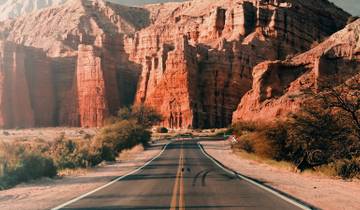
12 days
Salta to La Paz Travel Pass
- ✓ Comprehensive Bolivian Altiplano tour
- ✓ Expert local guides included
- ✓ All accommodation arranged
- ✓ Transportation provided
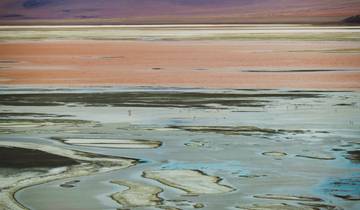
4 days
Uyuni Salt Flats & Desert Adventure 4D/3N (Atacama to Atacama)
- ✓ Comprehensive Bolivian Altiplano tour
- ✓ Expert local guides included
- ✓ All accommodation arranged
- ✓ Transportation provided

9 days
Across the Altiplano: La Paz, Uyuni & Atacama
- ✓ Comprehensive Bolivian Altiplano tour
- ✓ Expert local guides included
- ✓ All accommodation arranged
- ✓ Transportation provided
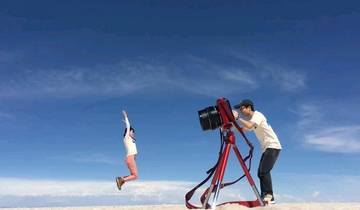
4 days
From La Paz: Uyuni Salt Flats ending in Atacama
- ✓ Comprehensive Bolivian Altiplano tour
- ✓ Expert local guides included
- ✓ All accommodation arranged
- ✓ Transportation provided
Multi-day tour packages powered by TourRadar. Prices and availability subject to change.
Essential Planning Information for 2026
Costs and Pricing Breakdown 2026
Understanding the costs for Salar de Uyuni helps budget your 2026 trip effectively. Standard three-day tours from Uyuni cost $150-280 USD per person depending on group size and inclusions—budget options run $150-180 USD with basic shared accommodation, while mid-range tours cost $200-280 USD with better vehicles and upgraded lodging (check tour operators for current rates as pricing may vary). Premium private tours cost $400-600 USD per person for exclusive experiences.
Day trip options from Uyuni provide a budget-friendly introduction: sunrise tours cost $35-45 USD, sunset tours run $35-45 USD, and full-day excursions covering multiple sites cost $50-60 USD per person. These tours include transportation, guide services, and basic lunch but exclude park entrance fees.
Flight costs from major Bolivian cities remain consistent in 2026. La Paz to Uyuni flights cost $80-150 USD one-way with Boliviana de Aviación and Amaszonas. Sucre to Uyuni flights cost $70-120 USD. Bus travel offers significant savings: La Paz to Uyuni runs $15-25 USD for the 10-12 hour journey, while Potosí to Uyuni costs $8-12 USD for the 4-hour trip.
Entry Requirements and Documentation 2026
Visiting the Eduardo Avaroa Andean Fauna National Reserve, which most multi-day tours traverse, requires paying an entrance fee of 150 BOB ($22 USD) for foreign visitors. This fee covers access to the reserve’s lagoons, geysers, and volcanic landscapes. Guides collect this fee at the reserve entrance, and payment is cash-only in Bolivianos or US dollars.
Travelers crossing to or from Chile must carry their passport for border formalities. The Hito Cajón border crossing operates daily, with immigration procedures handled at the Chilean and Bolivian border posts. Ensure your passport has at least six months validity and sufficient blank pages. Citizens of most Western countries receive visa-free entry to Bolivia for 90 days, though US citizens must obtain a visa ($160 USD) in advance or at the border.
Getting to Salar de Uyuni 2026
By Air to Uyuni in 2026
Uyuni’s Joya Andina Airport receives daily flights from La Paz, making air travel the fastest option for reaching the salt flats. Boliviana de Aviación operates the most reliable service with morning departures from La Paz at 7:30 AM, arriving Uyuni at 8:20 AM. Return flights depart Uyuni at 8:50 AM. Amaszonas provides additional service with varied schedules. Flight time is 50 minutes, compared to 10-12 hours by bus.
Book flights 2-4 weeks in advance during peak season (June-August and December-February) as routes operate small aircraft with limited capacity. The airport sits 2 kilometers from Uyuni town center—taxis cost 10-15 BOB ($1.50-2 USD), or many tour operators include airport pickup.
By Bus to Uyuni in 2026
Bus travel connects Uyuni to Bolivia’s major cities at budget-friendly prices. From La Paz, overnight buses depart the main bus terminal between 7:00 PM and 9:00 PM, arriving Uyuni 6:00-8:00 AM. Companies including Todo Turismo, Panasur, and Trans Omar operate this route. Semi-cama seats cost $15-20 USD, while full-cama beds run $22-28 USD. The journey takes 10-12 hours depending on road conditions.
From Potosí, buses depart throughout the day, with the journey taking 4-5 hours and costing $8-12 USD. From Sucre, direct buses run overnight, taking 9-10 hours for $18-25 USD. Tupiza to Uyuni takes 5 hours and costs $10-15 USD, with morning departures allowing same-day tour connections.
From San Pedro de Atacama 2026
Many travelers begin their Salar de Uyuni adventure from San Pedro de Atacama, Chile, joining cross-border tours that end in Uyuni. This three-day journey costs $180-350 USD and traverses some of South America’s most spectacular high-altitude landscapes. Tours depart San Pedro daily at 7:30-8:00 AM, crossing the border at Hito Cajón before continuing to Bolivia’s colorful lagoons, geysers, and finally the salt flats.
The reverse route—Uyuni to San Pedro—operates identically, making this an excellent way to connect Bolivia and Chile without backtracking. Border crossing procedures add 1-2 hours to the journey. Tour prices include three days of transportation, two nights accommodation, and all meals.
Tour Options for Salar de Uyuni 2026
Day Tours from Uyuni 2026
Day trips provide an accessible introduction to the salt flats without committing to multi-day expeditions. Sunrise tours depart at 4:00-5:00 AM, arriving at the salt flats for dawn’s magical light—the pink and orange hues reflecting off the white surface create extraordinary photography opportunities. These tours cost $35-45 USD and return to Uyuni by 11:00 AM.
Sunset tours leave Uyuni at 2:00-3:00 PM, spending the afternoon exploring the salt flats before watching the sun sink into the endless white horizon. Golden hour provides optimal conditions for the famous forced perspective photography. Costs run $35-45 USD with return by 9:00 PM.
Full-day tours departing at 10:00-10:30 AM cover the Train Cemetery, Colchani salt processing village, and extensive time on the salt flats including Isla Incahuasi (Fish Island) with its giant cacti. These comprehensive excursions cost $50-60 USD per person plus 30 BOB ($4.50 USD) for Isla Incahuasi entrance.
Three-Day Tours 2026
The classic three-day tour remains the most popular way to experience Salar de Uyuni and the surrounding Altiplano. Standard itineraries follow this general structure:
Day 1: Depart Uyuni morning, visit Train Cemetery and Colchani village, spend afternoon on salt flats including Isla Incahuasi, watch sunset from the salt, overnight at a salt hotel near the flats.
Day 2: Cross the salt flats at sunrise, enter Eduardo Avaroa National Reserve, visit Laguna Cañapa, Laguna Hedionda (with flamingos), the Stone Tree rock formation, and Laguna Colorada (Red Lagoon). Overnight at basic refuge near Laguna Colorada.
Day 3: Wake at 4:30 AM for Sol de Mañana geysers at dawn, bathe in hot springs at Polques, visit Laguna Verde beneath Licancabur Volcano, then either return to Uyuni (arriving 6:00-7:00 PM) or cross to San Pedro de Atacama.
Budget tours cost $150-180 USD with basic shared refuges, local meals, and standard 4×4 vehicles. Mid-range tours run $200-280 USD with upgraded accommodation, better food quality, and newer vehicles. Premium options including salt hotels and private transportation cost $350-500 USD.
Four-Day Tours 2026
Extended four-day tours add valuable flexibility and reduce daily driving distances. The extra day allows for longer stops at each location, better photography opportunities, and less rushed itineraries. These tours typically add visits to the Valley of Rocks, additional lagoons, and more extensive exploration of the Eduardo Avaroa Reserve.
Four-day tours from Uyuni cost $220-380 USD for standard options and $400-600 USD for premium experiences. From Tupiza, four-day tours beginning with the Sud Lípez region cost $280-400 USD, offering a different perspective by visiting the salt flats on the final day.
Accommodation Options Near Salar de Uyuni 2026
Uyuni Town Hotels 2026
Uyuni serves as the primary base for salt flat exploration, offering accommodation across all budget levels. Budget hostels and basic hotels line Avenida Ferroviaria near the bus terminal, charging $15-35 USD for private rooms with shared bathrooms. Popular budget options include Hostal Marith, Piedra Blanca Backpackers, and Tonito Hotel, all providing heated rooms, hot showers, and tour booking services.
Mid-range hotels cost $50-90 USD per night and offer private bathrooms, heating, breakfast, and tour coordination. Hotel Jardines de Uyuni and Hotel de Sal Luna Salada in town provide comfortable bases with reliable amenities. At the upper end, boutique hotels charge $100-180 USD, featuring modern facilities, quality restaurants, and panoramic views.
Salt Hotels 2026
Unique to this region, salt hotels constructed entirely from salt blocks offer an unforgettable experience. Located at the edge of the salt flats, these hotels provide stunning sunset and sunrise views directly over the white expanse. Rooms, furniture, and even some decorative elements are carved from salt.
Palacio de Sal, the original luxury salt hotel, charges $180-280 USD per night for rooms with private bathrooms, heating, and full meal service. Luna Salada Hotel offers mid-range salt accommodation at $100-160 USD, while budget salt hotels near the flats charge $50-80 USD for more basic rooms. Staying at a salt hotel adds approximately $30-100 USD to standard tour packages.
Accommodation During Multi-Day Tours 2026
Multi-day tours include accommodation in the price, but quality varies significantly. Budget tours ($150-180 USD total) provide basic shared refuges—dormitory-style rooms with 4-8 beds, communal bathrooms, no heating, and limited electricity. Bring a sleeping bag rated to -10°C for these options.
Mid-range tours ($200-280 USD) include improved refuges with smaller shared rooms (2-4 beds), functioning showers, and sometimes heating. Premium tours ($350+ USD) upgrade to private rooms in salt hotels or the best available refuges with hot water and electricity throughout the night.
Best Time to Visit Salar de Uyuni 2026
Wet Season (December-April) 2026
The wet season transforms Salar de Uyuni into the world’s largest mirror. Rain falling on the salt flats creates a thin layer of water—sometimes just centimeters deep—that reflects the sky with perfect clarity. During these months, the boundary between earth and sky disappears entirely, creating the surreal photographs that have made Salar de Uyuni famous worldwide.
Peak mirror conditions occur January through early March when rainfall is most consistent. However, heavy rain can flood the flats enough to make vehicle access dangerous or impossible. Tours may be canceled or rerouted during extreme weather. February sees the highest rainfall, creating the best reflections but also the greatest risk of disruption.
Wet season temperatures range from 0-15°C with significant daily variation. Afternoon thunderstorms are common, so morning visits provide more reliable conditions. Despite weather challenges, the mirror effect draws photographers and travelers who prioritize this unique experience over accessibility.
Dry Season (May-November) 2026
The dry season offers the classic salt flat experience: endless white hexagonal patterns stretching to every horizon under deep blue skies. Without surface water, the geometric salt formations become visible, creating striking patterns that extend for kilometers. This is the ideal time for forced perspective photography with sharp shadows and clear definition.
June through August brings peak tourism coinciding with the South American winter. Days are sunny and dry but nights plunge to -15°C or colder. The combination of clear skies, minimal tourists compared to European summer, and excellent salt patterns makes this period popular despite frigid temperatures.
September through November offers a sweet spot: pleasant temperatures (5-18°C), few tourists, stable weather, and occasional light rains that can create partial mirror effects. This shoulder season provides excellent value as tour prices sometimes decrease and availability improves.
Month-by-Month Conditions 2026
January-February: Best mirror effect, warmest temperatures, highest rainfall, tour disruptions possible. Temperatures: 5-15°C day, 0-5°C night.
March-April: Mirror effect fading, decreasing rain, excellent photography conditions. Temperatures: 3-14°C day, -3 to 3°C night.
May-June: Dry season begins, salt patterns emerge, increasing cold. Temperatures: 0-12°C day, -10 to -5°C night.
July-August: Peak dry season, clearest skies, coldest nights, peak tourism. Temperatures: -2 to 12°C day, -15 to -8°C night.
September-October: Warming temperatures, fewer crowds, occasional rain beginning. Temperatures: 3-15°C day, -5 to 0°C night.
November-December: Wet season transitioning, mirror effect starting, increasing tourism. Temperatures: 5-16°C day, -2 to 3°C night.
Budget Planning for Salar de Uyuni 2026
Budget Traveler Costs 2026
Budget travelers can experience Salar de Uyuni for $80-120 USD per day including tours. Accommodation: Hostal Marith at $8-12 USD dorm bed, Hotel Jumari at $15-20 USD private room. Meals: Market lunch $2-3 USD, restaurant dinner $5-8 USD, breakfast at hostel $3-4 USD. Day tour: $35-45 USD. Local transport: Walking or 5 BOB taxi rides.
Sample budget day (excluding multi-day tour): Hostel $12 USD, breakfast $3 USD, lunch $3 USD, dinner $6 USD, sunset tour $40 USD, incidentals $5 USD. Total: $69 USD.
Three-day tour budget option: $160 USD tour, $24 USD Uyuni accommodation (2 nights before/after), $30 USD meals in town, $22 USD park fee, $15 USD tips. Total tour period: $251 USD.
Mid-Range Traveler Costs 2026
Mid-range travelers spend $150-220 USD per day for comfortable experiences. Accommodation: Hotel Jardines de Uyuni $60-80 USD. Meals: Restaurant breakfast $8-12 USD, lunch $10-15 USD, dinner $15-25 USD. Tours: Mid-range three-day tour $230-280 USD. Flights: La Paz to Uyuni round-trip $180-280 USD.
Sample mid-range day (in town): Hotel $70 USD, breakfast $10 USD, lunch $12 USD, dinner $20 USD, full-day tour $55 USD, drinks/snacks $15 USD. Total: $182 USD.
Complete mid-range 5-day trip: Flights $220 USD, 3-day tour $250 USD, Uyuni hotels (2 nights) $140 USD, meals in town $60 USD, tips $30 USD, park fee $22 USD. Total: $722 USD.
Luxury Traveler Costs 2026
Premium travelers investing $300-500+ USD per day access exclusive experiences. Accommodation: Palacio de Sal $200-280 USD, luxury Uyuni hotels $150-200 USD. Private tours: Exclusive 4×4 with personal guide $400-600 USD per day. Premium three-day tour with salt hotel: $500-800 USD per person.
Complete luxury 5-day trip: Private charter flight $600 USD, premium 3-day tour $650 USD, Palacio de Sal upgrade (included in tour) $0, pre/post Uyuni hotel $300 USD, fine dining $150 USD, photography guide $200 USD. Total: $1,900+ USD.
Sample 2026 Itineraries
Three-Day Salt Flat Adventure 2026
Day 1: Arrival and Sunset Tour
Arrive Uyuni via morning flight from La Paz ($90-130 USD). Check into Hotel Jardines de Uyuni ($65 USD). Lunch at Minuteman Revolutionary Pizza ($12 USD). Join 2:30 PM sunset tour ($40 USD): explore Train Cemetery, Colchani village salt processing, and witness sunset over the infinite white expanse. Dinner at Lithium Club ($18 USD).
Flight $110 USD, hotel $65 USD, lunch $12 USD, sunset tour $40 USD, dinner $18 USD. Total day cost: $245 USD per person.
Day 2: Full-Day Salt Flat Exploration
Depart 10:00 AM for full-day tour ($55 USD). Visit Train Cemetery (photography stop), Colchani salt mounds, extensive salt flat photography session including forced perspective shots. Lunch prepared by guide (included). Afternoon at Isla Incahuasi ($4.50 USD entrance) hiking among thousand-year-old cacti. Return Uyuni 6:30 PM. Dinner at Tika Restaurant ($15 USD).
Tour $55 USD, Isla Incahuasi $4.50 USD, dinner $15 USD. Total day cost: $74.50 USD per person (excluding accommodation $65 USD).
Day 3: Sunrise and Departure
4:30 AM sunrise tour pickup ($40 USD). Watch dawn break over the salt flats as stars fade and colors shift from purple to pink to gold. Return to Uyuni 10:30 AM. Brunch at hotel ($10 USD). Noon flight to La Paz ($90-130 USD) or onward bus connection.
Sunrise tour $40 USD, brunch $10 USD, flight $110 USD. Total day cost: $160 USD per person.
Three-Day Total: $479.50 USD per person
Five-Day Complete Uyuni Experience 2026
Day 1: Arrival in Uyuni
Overnight bus from La Paz (departed previous evening, $22 USD full-cama). Arrive Uyuni 6:30 AM. Breakfast at hotel ($8 USD). Rest and acclimatize. Afternoon walking tour of town. Dinner at local restaurant ($10 USD). Stay Hotel Jumari ($45 USD).
Bus $22 USD (paid previous day), breakfast $8 USD, dinner $10 USD. Total day cost: $40 USD per person (excluding accommodation $45 USD).
Days 2-4: Three-Day Salt Flat Tour
Mid-range three-day tour: $240 USD all-inclusive. Day 2: Salt flats, Isla Incahuasi, salt hotel overnight. Day 3: Laguna Cañapa, Laguna Hedionda, Laguna Colorada, refuge overnight. Day 4: Sol de Mañana geysers, hot springs, Laguna Verde, return Uyuni 6:00 PM. All meals, accommodation, and transport included. Park entrance $22 USD paid separately.
Tour $240 USD, park entrance $22 USD. Total three-day cost: $262 USD per person.
Day 5: Departure
Morning rest. Late breakfast at Extreme Fun Pub ($12 USD). Visit town market for souvenirs ($20 USD). Lunch at Minuteman Pizza ($12 USD). Afternoon flight to La Paz ($110 USD) or Sucre ($85 USD).
Breakfast $12 USD, souvenirs $20 USD, lunch $12 USD, flight $110 USD. Total day cost: $154 USD per person.
Five-Day Total: $501 USD per person (budget-mid range mix)
Money-Saving Strategies for 2026
Booking and Timing Tips 2026
Book tours in Uyuni rather than online or through La Paz agencies. Street-level tour operators on Avenida Ferroviaria and Avenida Potosí offer prices 20-40% lower than pre-booked options. Arrive in Uyuni with at least one full day before your planned tour departure to compare options, negotiate prices, and find last-minute deals.
Travel during shoulder seasons (April-May and September-November) for lower prices and better availability. Tour operators sometimes reduce prices by 10-20% during these periods to fill vehicles. Weekday departures may also offer slight discounts compared to weekend starts.
Form your own group to reduce per-person costs. Most 4×4 vehicles carry six passengers—finding five compatible travelers allows negotiating better rates than joining random groups. Hostel bulletin boards and travel Facebook groups facilitate group formation.
Budget Accommodation Strategies 2026
Stay at budget hostels near the bus terminal: Hostal Marith, Piedra Blanca Backpackers, and Toñito Hotel offer $8-15 USD dorm beds with hot showers, luggage storage, and tour booking. These rates include breakfast at some properties.
Skip salt hotel upgrades unless photography is your priority. Standard tour accommodation, while basic, saves $50-150 USD compared to salt hotel options. Bring a good sleeping bag (-10°C rating) to stay warm in basic refuges without paying premium prices.
Food and Transportation Savings 2026
Eat at Uyuni’s market for meals under $3 USD. The central market serves substantial lunches of soup, main course, and drink for 15-20 BOB ($2-3 USD). Street stalls offer empanadas and salteñas for 5-10 BOB each.
Take buses instead of flights when time permits. La Paz to Uyuni by bus costs $15-25 USD versus $80-150 USD for flights. The overnight journey saves a hotel night while you sleep. Book semi-cama for reasonable comfort at the lowest price.
Bring snacks and water from town. Multi-day tours include meals, but snacks at refuges cost 2-3x normal prices. A bag of snacks from Uyuni’s shops costs $5-10 USD and lasts the entire tour.
Practical Tips for Salar de Uyuni 2026
Health and Safety 2026
Altitude acclimatization is essential before visiting Salar de Uyuni. At 3,656 meters, the salt flats sit at elevations where altitude sickness affects many visitors. Spend at least 2-3 days at high altitude (La Paz at 3,640m or Sucre at 2,810m) before arriving in Uyuni. Symptoms include headache, nausea, fatigue, and shortness of breath. Drink coca tea, stay hydrated, avoid alcohol, and consider acetazolamide (Diamox) for prevention.
Sun protection is critical. The combination of high altitude, reflective white salt, and thin atmosphere creates intense UV radiation. Apply SPF 50+ sunscreen every two hours, wear quality sunglasses (UV400 or polarized), and bring a wide-brimmed hat and lip balm with SPF. Even on cloudy days, UV radiation remains dangerous.
Bring essential medications as pharmacies are limited in Uyuni and nonexistent during tours. Pack altitude sickness medication, pain relievers, anti-diarrheal medicine, and any personal prescriptions. Stomach issues are common due to altitude, different food, and basic cooking facilities on tours.
Photography Tips 2026
The salt flats offer unparalleled photography opportunities, but the environment challenges equipment. Bright conditions require low ISO settings (100-200) and small apertures (f/8-f/16) for sharp images. Bring a polarizing filter to manage reflections and enhance sky contrast. During mirror conditions, remove the polarizer to capture reflections.
Forced perspective photography requires collaboration. Position subjects at different distances from the camera, using the featureless landscape to eliminate scale references. Popular props include dinosaur toys, Pringles cans, and colorful objects. Morning and evening light creates dramatic shadows that enhance perspective tricks.
Protect your gear from salt and cold. Keep cameras in sealed bags when not shooting—fine salt particles damage sensors and mechanisms. Batteries drain rapidly in cold temperatures; keep spares warm in your pocket and swap frequently. Bring lens cleaning supplies as salt dust accumulates quickly.
What to Pack for 2026
Essential clothing layers include thermal base layers, fleece mid-layer, warm down jacket, windproof outer shell, warm hat covering ears, gloves, and thick socks. Temperatures swing from -15°C at night to 20°C during sunny afternoons. Bring a swimsuit for hot springs at Polques.
Practical items include a headlamp (essential for pre-dawn activities and basic refuges without reliable electricity), refillable water bottle, hand sanitizer, toilet paper, wet wipes, and a small daypack for daily essentials. Cash in Bolivianos and US dollars is essential—no ATMs exist on tours and Uyuni’s ATMs frequently run empty.
Photography and electronics require extra batteries (at least 3x normal usage due to cold), memory cards, charging cables, and a power bank. Electrical outlets exist at some accommodations but may be limited. Bring a universal adapter as Bolivia uses American-style two-prong outlets.
Booking Your 2026 Salar de Uyuni Trip
Recommended Tour Operators 2026
Red Planet Expedition operates reliable mid-range tours with good safety records and English-speaking guides. Their three-day tours cost $200-250 USD with quality vehicles and organized logistics. Booking available online or at their Uyuni office on Avenida Ferroviaria.
Salty Desert Adventures specializes in photography-focused tours with flexible itineraries and experienced guides. Three-day tours cost $220-280 USD. They accommodate specific photography requests and offer sunrise/sunset timing options.
Quechua Connection focuses on community-based tourism with local guides and accommodation benefiting indigenous communities. Tours cost $180-230 USD with authentic cultural experiences integrated into standard itineraries.
Budget operators along Avenida Potosí offer basic three-day tours for $150-180 USD. Quality varies—inspect vehicles, ask about group size, and read recent reviews before booking. Oasis Bolivia, Esmeralda Tours, and Brisa Tours maintain acceptable standards at budget prices.
Booking Strategies 2026
Peak season (June-August and December-February) requires advance booking of 2-3 weeks for guaranteed departure dates with preferred operators. Contact operators directly via email or WhatsApp for faster responses than online booking forms. Request specific details: vehicle condition, maximum group size, guide language abilities, and accommodation standards.
Shoulder season (April-May and September-November) allows flexible booking 3-7 days in advance. Walk-in booking in Uyuni often yields better prices than online reservations. Spend an afternoon visiting multiple operators, comparing prices, and negotiating—expect 10-20% discounts on listed prices.
Private tours require 1-2 weeks advance booking regardless of season. Specify photography priorities, dietary requirements, and pace preferences. Private vehicles (2-4 passengers) cost $400-600 USD per day for exclusive service.
2026 Updates and Current Information
Infrastructure improvements continue at Salar de Uyuni, with enhanced road conditions on primary routes and upgraded refuge facilities in the Eduardo Avaroa Reserve. Solar power installations at several accommodations provide more reliable electricity for charging devices. The Uyuni airport received terminal improvements increasing passenger comfort.
Environmental sustainability initiatives encourage responsible tourism practices. Tour operators increasingly implement waste management protocols, and visitors should expect to carry out all trash generated during tours. The fragile salt crust suffers damage from careless driving—choose operators committed to following established routes.
Lithium mining operations remain visible from certain areas of the salt flats but currently don’t impact tourist zones. Bolivia continues developing lithium extraction as a national priority, though regulations protect the traditional salt flat areas from industrial activity.
Frequently Asked Questions About Salar de Uyuni 2026
Is Salar de Uyuni safe to visit in 2026?
Yes, Salar de Uyuni is safe for tourists. The primary risks are altitude sickness, sun exposure, and cold temperatures—all manageable with proper preparation. Tour operators maintain good safety records, and serious incidents are rare. Choose reputable operators with maintained vehicles and experienced drivers.
Can I visit Salar de Uyuni independently without a tour in 2026?
Independent visits are not recommended. The salt flats have no roads, markers, or landmarks—navigation requires GPS expertise and local knowledge. Vehicles can become stuck, and rescue services don’t exist. All visitors explore via organized tours for safety and logistics.
How many days do I need at Salar de Uyuni in 2026?
A three-day tour provides a comprehensive experience covering the salt flats, colored lagoons, geysers, and hot springs. Day trips offer a taste of the salt flats for time-limited visitors. Four-day tours add relaxed pacing and additional sites. Plan one or two extra days in Uyuni for acclimatization and flexibility.
What is the altitude at Salar de Uyuni, and how should I prepare in 2026?
Salar de Uyuni sits at 3,656 meters elevation. Spend 2-3 days acclimatizing at similar altitude (La Paz or Cusco) before visiting. Stay hydrated, avoid alcohol, eat light meals, and consider altitude medication. Multi-day tours reach 4,800+ meters at Sol de Mañana geysers—mild symptoms are normal.
Is there phone signal and WiFi at Salar de Uyuni in 2026?
Phone signal exists in Uyuni town but disappears on the salt flats and throughout multi-day tours. Some refuges offer WiFi (often unreliable and slow) for additional fees. Download offline maps and notify contacts of your communication blackout. Signal returns only upon return to Uyuni.
What currency should I bring to Salar de Uyuni in 2026?
Bring Bolivianos (BOB) and US dollars in cash. Uyuni has ATMs but they frequently run empty, especially during peak season. Tour operators accept both currencies. Park entrance fees can be paid in Bolivianos or dollars. Budget $100-200 USD in cash for the tour period beyond pre-paid expenses.
Can I see the mirror effect year-round at Salar de Uyuni in 2026?
No, the mirror effect requires water on the salt surface, occurring primarily December through April during the rainy season. Peak mirror conditions happen January through March. The dry season (May-November) shows geometric salt patterns without reflections. Occasional light rains in shoulder seasons may create partial effects.
Are the salt hotels worth the extra cost in 2026?
Salt hotels offer a unique experience sleeping in structures built entirely from salt blocks. The sunrise and sunset views from hotel terraces over the salt flats are spectacular. For photographers and those seeking memorable accommodation, the $50-150 USD upgrade is worthwhile. Budget travelers comfortable with basic refuges can skip this expense.
What should I do if I get altitude sickness during my tour in 2026?
Mild symptoms (headache, fatigue, shortness of breath) are normal and manageable with rest, hydration, and coca tea. Guides carry oxygen bottles for severe cases. If symptoms worsen significantly (confusion, severe headache, difficulty breathing), inform your guide immediately—evacuation to lower altitude may be necessary. Descent provides rapid relief.
Can I combine Salar de Uyuni with other Bolivia destinations in 2026?
Yes, common combinations include La Paz (cultural capital), Sucre (colonial architecture), Potosí (mining history), Lake Titicaca (Isla del Sol), and crossing to San Pedro de Atacama, Chile. The cross-border tour is especially popular for travelers continuing to Chile’s Atacama Desert. Plan 10-14 days for comprehensive Bolivia coverage including Salar de Uyuni.