
Ushuaia Travel Guide 2026: Gateway to the End of the World
Key Takeaways
- Ushuaia serves as the world’s southernmost city, offering unique sub-Antarctic experiences combined with modern urban amenities and gateway access to Antarctica expeditions
- Accommodation ranges from USD 30-50 hostel dorms to USD 350-500 luxury hotels, with mid-range options at USD 180-280 providing excellent value during 2026 season
- Daily budgets span USD 60-90 for budget travelers, USD 150-220 for mid-range visitors, and USD 350-600+ for luxury experiences excluding accommodation costs
- Summer (December-February 2026) delivers peak conditions with 17-19 hours daylight and optimal weather, though shoulder seasons offer 30-40% lower prices with good conditions
- Major attractions include Tierra del Fuego National Park, Beagle Channel cruises, End of the World Train, and Martial Glacier, all accessible via organized tours or independent travel
- Advanced booking 2-4 months ahead secures better rates for summer 2026 accommodation and guarantees availability for popular Antarctic expeditions and multi-day tours
Discovering Ushuaia in 2026
Ushuaia occupies a dramatic setting on Tierra del Fuego’s southern coast, where the Andes Mountains plunge directly into the Beagle Channel at 54.8° south latitude. Founded in 1884 as a penal colony, this city of 80,000 residents now serves as Argentina’s southernmost urban center and primary gateway for Antarctic expeditions, Tierra del Fuego National Park access, and Patagonian wilderness adventures. The unique geographical position creates a mystique captured in the city’s official title “Fin del Mundo” (End of the World), attracting 350,000+ annual visitors seeking extreme latitude experiences.
Modern Ushuaia balances frontier heritage with contemporary tourism infrastructure, offering comfortable hotels, diverse restaurants, outdoor equipment shops, and cultural institutions within walking distance of pristine wilderness. The compact downtown core along Avenida San Martín concentrates services, while residential neighborhoods climb hillsides providing spectacular channel views. Weather patterns change rapidly throughout the day, with four seasons sometimes experienced within hours, requiring adaptable mindsets and flexible planning approaches.
Planning a 2026 Ushuaia visit involves understanding the city’s dual identity as both destination and basecamp. Independent travelers appreciate the walkable downtown, reliable public transportation to surrounding attractions, and self-guided exploration possibilities. Others prefer organized tours leveraging local expertise for wildlife viewing, glacier access, and channel navigation. The Argentine peso’s favorable exchange rate for international visitors creates excellent value across accommodation, dining, and activity categories, though prices remain higher than mainland Argentine cities due to remote location and importation costs.
People Also Ask About Ushuaia 2026
How much does it cost to visit Ushuaia in 2026?
Daily costs vary significantly by travel style. Budget travelers spend USD 60-90 per day excluding accommodation, covering hostel breakfasts, packed lunches, public transport, and free or low-cost activities. Mid-range visitors allocate USD 150-220 daily for restaurant meals, organized tours, taxis, and paid attractions. Luxury travelers budget USD 350-600+ daily including premium dining, private guides, and exclusive experiences. Accommodation adds USD 30-50 (hostels) to USD 350-500 (luxury hotels) nightly. Check booking platforms for current rates as pricing may vary.
What is the best time to visit Ushuaia in 2026?
December through February 2026 provides optimal conditions with 17-19 hours daylight, temperatures 5-15°C, and all activities operating full schedules. Summer brings peak tourism with highest prices but guaranteed weather for Antarctic departures and outdoor adventures. March-April 2026 offers excellent autumn shoulder season value with 30-40% lower accommodation rates, spectacular fall colors, and good weather windows. Winter (June-August 2026) attracts skiing enthusiasts and budget seekers, with dramatically reduced prices though limited daylight and closed summer activities.
How many days should you spend in Ushuaia in 2026?
Three to four days allows comprehensive Ushuaia exploration covering Tierra del Fuego National Park (full day), Beagle Channel cruise (half day), city attractions and Martial Glacier (full day), plus contingency for weather delays. Two-day minimums work for travelers on tight schedules focusing on top priorities. Week-long stays suit those adding Antarctic expeditions (10-21 days including sailing), multi-day hiking in surrounding mountains, or extended Patagonia exploration using Ushuaia as base.
Do you need advance bookings for Ushuaia in 2026?
Summer season (December-February 2026) requires 2-4 months advance booking for mid-range to luxury accommodation, as hotels fill completely during peak January weeks. Beagle Channel cruises, End of the World Train, and popular tours should be reserved 2-4 weeks ahead. Antarctic expeditions require 6-18 months advance booking depending on ship and departure date. Shoulder seasons (March-April, October-November 2026) allow 2-4 weeks booking windows, while winter permits last-minute arrangements except during ski season weeks.
Extended multi-day tours – 5+ days
Featured Park Tierra Del Fuego National Park Multi-Day Tour Packages
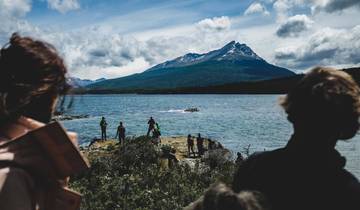
4 days
Ushuaia Explorer: 4-Day Adventure at the End of the World
- ✓ Comprehensive Park Tierra Del Fuego National Park tour
- ✓ Expert local guides included
- ✓ All accommodation arranged
- ✓ Transportation provided
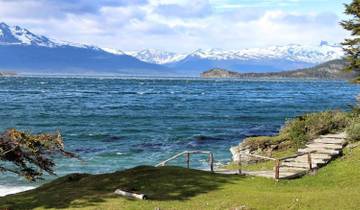
4 days
4-Day Ushuaia Tour
- ✓ Comprehensive Park Tierra Del Fuego National Park tour
- ✓ Expert local guides included
- ✓ All accommodation arranged
- ✓ Transportation provided

4 days
4-Days and 3 Nights Discovery Ushuaia with Airfare from Buenos Aires
- ✓ Comprehensive Park Tierra Del Fuego National Park tour
- ✓ Expert local guides included
- ✓ All accommodation arranged
- ✓ Transportation provided
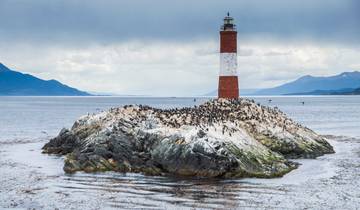
4 days
Patagonia's Final Frontier
- ✓ Comprehensive Park Tierra Del Fuego National Park tour
- ✓ Expert local guides included
- ✓ All accommodation arranged
- ✓ Transportation provided
Multi-day tour packages powered by TourRadar. Prices and availability subject to change.
Essential Planning Information for 2026
Current Costs and Pricing Trends 2026
Ushuaia operates on Argentine pesos (ARS) for most local transactions, though major hotels, tours, and Antarctic operators accept US dollars. The exchange rate provides favorable value for international visitors, with USD 1 buying ARS 800-900 through official channels in early 2026. ATMs dispense pesos at competitive rates minus 3-5% foreign transaction fees, while exchange houses (cambios) on Av. San Martín offer similar rates for cash dollars or euros.
Restaurant meals range from ARS 8,000-12,000 (USD 10-15) for casual cafés to ARS 32,000-48,000 (USD 40-60) for mid-range dining and ARS 64,000-96,000+ (USD 80-120+) for premium establishments. Supermarket provisions cost 30-40% less than restaurant meals, with quality ingredients available at La Anónima and Carrefour for self-catering. Local beer costs ARS 3,200-4,800 at bars (USD 4-6), while imported wine runs ARS 12,000-24,000 bottles (USD 15-30).
Transportation expenses include taxis at ARS 4,000-6,400 for downtown trips (USD 5-8) and ARS 12,000-16,000 to airport (USD 15-20). City buses cost ARS 800-1,200 per ride (USD 1-1.50). Rental cars run USD 70-90 daily for compact vehicles, USD 110-140 for SUVs, plus USD 15-25 mandatory insurance and fuel at ARS 1,600-2,000 per liter (USD 2-2.50). These prices reflect early 2026 conditions; check current rates as peso fluctuations create pricing variability.
Entry Requirements and Documentation 2026
International visitors require valid passports with minimum 6-month validity beyond departure dates. US, Canadian, European Union, UK, Australian, and New Zealand citizens enter Argentina visa-free for tourism stays up to 90 days. No advance visa applications or reciprocity fees exist for these nationalities as of 2026. South American Mercosur citizens enter using national ID cards rather than passports.
COVID-19 related entry requirements had been eliminated by 2024, with 2026 maintaining no vaccination mandates or testing requirements for Argentine entry. However, Antarctica expeditions maintain their own health protocols including comprehensive medical forms, vaccination recommendations, and pre-departure health screenings. Travelers should verify current requirements through cruise operators 2-3 months before departure.
Travel insurance proves highly recommended covering medical emergencies, evacuation, trip cancellation, and adventure activity coverage. Antarctic expeditions require insurance specifically covering polar region evacuation, which standard policies exclude. Comprehensive policies cost USD 80-150 for two-week trips, providing essential protection for remote location medical situations where evacuation to Buenos Aires or Santiago might become necessary.
Internet and Communication Access 2026
Mobile coverage reaches all Ushuaia urban areas and Route 3 corridor to Tierra del Fuego National Park through Movistar, Claro, and Personal networks. 4G LTE provides adequate speeds for messaging, navigation, and basic browsing, though 5G remains limited to downtown core areas. Visitor SIM cards cost ARS 4,000-8,000 (USD 5-10) for tourist plans with 5-15 GB data, purchased at carrier stores or authorized retailers with passport required.
WiFi availability exists at all hotels, most restaurants and cafés, and public spaces along Av. San Martín. Connection speeds vary from adequate for email/messaging to slow for video streaming, with luxury hotels providing the most reliable service. Public libraries and tourist information centers offer free WiFi for travelers without mobile data. Remote areas including Tierra del Fuego National Park wilderness and channel waters lack coverage, requiring download of offline maps and essential information before departure.
Best Time to Visit Ushuaia 2026
Peak Summer Season December-February 2026
Summer delivers Ushuaia’s optimal weather and activity access, with December-January 2026 offering 19 hours of daily sunlight, temperatures 8-15°C, and relatively calm weather systems. All tours operate full schedules, trails remain accessible, and Beagle Channel waters calm for cruising. Antarctic ships depart regularly from Ushuaia port, with late December through early February representing prime Antarctic season when wildlife activity peaks and ice conditions permit maximum landing sites.
Peak season brings maximum visitor numbers with 800-1,500 daily arrivals during January 2026, creating crowded conditions at popular attractions and requiring advance reservations for quality accommodation and tours. Prices reach annual highs with hotels at 100-150% of shoulder season rates, restaurant tables filling by 8 PM, and tour groups frequently sold out. Weather remains unpredictable despite summer designation, with rain showers occurring 12-15 days monthly and wind gusts to 60 km/h possible even on sunny mornings.
Summer advantages include extended daylight allowing ambitious daily itineraries, warm temperatures reducing clothing/gear requirements, and guaranteed operation of all services without weather closures. Antarctic expedition options peak with 4-6 ships departing weekly from Ushuaia, providing maximum choice for expedition styles and dates. Wildlife viewing succeeds optimally with penguin colonies at peak activity, whales feeding in nutrient-rich waters, and seal breeding seasons underway.
Autumn Shoulder Season March-April 2026
Autumn transforms Ushuaia with lenga and ñire forests turning brilliant gold and red, creating spectacular photography opportunities throughout the region. March 2026 maintains relatively stable weather with temperatures 5-12°C and daylight reducing to 14 hours by month’s end. Visitor numbers drop 50-60% from summer peaks, offering easier accommodation booking, uncrowded trails, and authentic local atmosphere as seasonal workers depart.
Accommodation costs decrease 30-40% compared to summer rates, with excellent mid-range hotels available at USD 120-180 nightly versus USD 200-280 in January. Tour operators reduce prices 20-30% for Beagle Channel cruises, national park visits, and other activities, making autumn budget-friendly for comprehensive experiences. Restaurant reservations become unnecessary except at top establishments, and rental car availability improves significantly.
April brings increased rainfall with 15-18 wet days monthly, though precipitation usually arrives as passing showers rather than all-day storms. Trail conditions deteriorate with mud on popular paths, requiring waterproof hiking boots. Antarctic expedition season ends by early March, eliminating this option for April visitors. However, autumn delivers arguably Ushuaia’s most beautiful landscapes and provides excellent value for travelers prioritizing scenery and budget over guaranteed weather and maximum activity options.
Winter Adventure Season June-August 2026
Winter transforms Ushuaia into ski resort and winter sports destination, with nearby Cerro Castor operating Argentina’s southernmost ski area. June-August 2026 brings temperatures -2 to 5°C, significant snowfall creating white landscapes, and only 7 hours of daylight. Skiing, snowboarding, snowshoeing, and dog sledding attract winter enthusiasts, while dramatically reduced prices make Ushuaia accessible for budget travelers willing to accept seasonal limitations.
Winter rates reach annual lows with accommodation at 40-60% discounts from summer peaks, budget hostels at USD 20-30 nightly and mid-range hotels USD 80-140. Restaurants offer winter specials and happy hours, while tour operators provide package deals combining multiple activities. However, many seasonal businesses close June-August, reducing dining and tour options to year-round operators. Beagle Channel cruises operate reduced schedules weather-dependent, and some national park trails close due to snow depth.
Cerro Castor ski season runs mid-June through early October, with July-August 2026 providing optimal snow conditions. The resort offers 29 runs, modern lift infrastructure, equipment rentals, and lessons for all abilities. Winter sports packages combining accommodation, lift tickets, and equipment provide good value for skiers. Non-skiers explore winter landscapes via snowshoe programs, winter wildlife viewing, and photography of dramatic snow-covered mountains and frozen landscapes.
Spring Transition September-November 2026
Spring brings gradually improving conditions as Ushuaia awakens from winter, with September 2026 still experiencing occasional snow and temperatures 2-8°C transitioning to November’s 6-12°C and increasing daylight. October represents the transition month with unpredictable weather mixing winter storms and spring sun. Services resume progressive operation through the season, with September limited and November approaching summer capacity.
Wildlife activity increases dramatically as spring migrations begin, with birds returning to breeding territories and marine mammals appearing in increasing numbers. September-October 2026 provides excellent bird photography opportunities as species establish territories and display breeding behaviors. Wildflowers begin blooming in late October through November, with alpine meadows awakening and providing spectacular color displays.
Accommodation rates transition from winter lows to summer highs throughout spring, with October offering best value at 70-80% of summer prices while services operate increasingly full schedules. November sees prices rising toward summer levels as international tourists arrive for early season Antarctic expeditions. Spring delivers fewer crowds, improving weather, and increasing service availability, making this attractive for budget-conscious travelers seeking compromise between winter discounts and summer guarantees.
Getting to Ushuaia 2026
Air Travel to Ushuaia-Malvinas Argentinas Airport
Ushuaia’s Malvinas Argentinas Airport (USH) serves as the primary gateway, located 4 kilometers southwest of downtown along Route 3. Aerolíneas Argentinas operates 2-3 daily flights from Buenos Aires Aeroparque (AEP) with 3.5-hour flight times aboard Boeing 737 aircraft. LATAM Argentina provides additional Buenos Aires service with 1-2 daily flights, while FlyBondi offers budget connections 3-4 weekly. High season (December-February 2026) sees increased frequency with 5-7 daily Buenos Aires flights total.
Buenos Aires flights cost USD 300-450 round-trip for economy when booked 2-3 months ahead, rising to USD 500-700 for peak January dates or last-minute bookings. Premium economy adds USD 100-150 each way for extra legroom and priority boarding, while business class (available on select Aerolíneas flights) runs USD 800-1,200 round-trip. Book directly through airline websites for best rates, though Argentine residents pay significantly lower peso-denominated fares than international tourists charged in dollars.
Regional connections include flights to/from El Calafate (2 hours, USD 200-300 round-trip) enabling Patagonia circuits combining glaciers and Tierra del Fuego, and Punta Arenas, Chile (1 hour, USD 150-250 round-trip) facilitating Torres del Paine access. Santiago, Chile provides international gateway alternative to Buenos Aires routing, with LATAM offering 1-2 daily flights (4 hours, USD 400-600 round-trip). Winter schedules reduce to 1-2 daily Buenos Aires flights and eliminate some regional connections.
Airport Transportation to Downtown 2026
Taxis from airport to downtown Ushuaia cost fixed ARS 12,000-16,000 (USD 15-20) per vehicle regardless of passenger count, accommodating up to four travelers with standard luggage. Official taxi stands operate immediately outside arrivals, with dispatchers managing queue and preventing overcharging. Payment accepts pesos cash or credit cards, though peso cash receives better rates. Journey time runs 10-15 minutes to downtown hotels along Av. San Martín.
Rental cars offer flexibility for travelers planning extensive regional exploration, with major agencies (Hertz, Avis, Budget, Localiza) maintaining airport desks. Rates start USD 70-90 daily for compact vehicles including airport pickup, though advance online booking 2-4 weeks ahead secures better rates and availability. Insurance adds mandatory USD 15-25 daily. Most visitors rent cars for multi-day Tierra del Fuego exploration rather than airport transfers only, as downtown Ushuaia proves highly walkable.
Shuttle services operated by hotels and tour companies provide prearranged transportation for USD 12-18 per person, though require advance booking and coordination with flight arrivals. Some luxury hotels include complimentary airport transfers for guests, confirming this benefit when booking. Public buses do not service the airport directly, requiring 800-meter walk to Route 3 bus stops for budget-conscious travelers willing to manage luggage.
Overland Routes from Chile 2026
Route 3 connects Ushuaia to mainland Argentina via Chilean Tierra del Fuego, creating scenic overland journey option for adventurous travelers. The 595-kilometer drive from Punta Arenas, Chile takes 10-12 hours including border crossings and ferry traverse of Strait of Magellan. Rental cars from Chilean agencies permit Argentine entry with additional documentation and insurance (arrange 1-2 weeks ahead), while bus services operated by Pacheco and Tecni-Austral run 2-3 times weekly at USD 80-110 one-way.
Border crossings at San Sebastián (Chile-Argentina) require passport presentation and customs declarations, with fresh food, plants, and certain agricultural products prohibited from Argentine entry. Allow 30-60 minutes for border formalities each direction, with longer waits possible during peak summer travel. The route traverses remote steppe landscapes, forested mountain passes, and coastal segments, requiring full tank before departure and emergency supplies (food, water, warm clothing) as services exist only in small settlements.
Ferry crossing from Punta Delgada to Punta Espora (Strait of Magellan Primera Angostura crossing) operates continuously with 20-minute sailing and ARS 24,000-32,000 (USD 30-40) vehicle fees including passengers. Purchase tickets dockside with peso cash preferred. This overland route appeals to road-trippers, motorcycle adventurers, and travelers combining Chilean and Argentine Patagonia, though most visitors prefer faster and more comfortable air travel.
Ferry Connections to Ushuaia 2026
No regular passenger ferry service operates to Ushuaia, as the city’s remote location and challenging Beagle Channel waters prevent scheduled maritime connections. Antarctic expedition ships dock at Ushuaia’s commercial port before/after voyages, though these serve expedition passengers only rather than point-to-point transportation. Private yachts occasionally arrive at the nautical club, while cargo vessels service the port without passenger accommodations.
Multi-day sailing trips from Punta Arenas to Ushuaia via Chilean channels offer expedition-style adventures aboard small vessels, though operate irregularly based on weather and demand rather than fixed schedules. These specialized journeys cost USD 2,000-4,000+ per person for 4-7 day voyages, attracting serious sailors and adventurers seeking remote channel exploration. Contact Chilean tour operators in Puerto Williams or Punta Arenas for occasional opportunities, booking 2-4 months ahead when available.
Accommodation Options for Ushuaia 2026
Budget Hostels and Guesthouses 2026
Budget accommodation concentrates along Av. Gob. Paz, Av. Deloqui, and side streets near downtown core, providing clean, social environments for USD 30-50 per person in dormitories or USD 90-130 for private rooms. Antarctica Hostel stands out with excellent common areas, organized activities, trip planning assistance, and strong traveler community atmosphere. Dorm beds run USD 35-45 nightly including breakfast, while private doubles cost USD 100-120. The location on Av. Antártida Argentina provides easy walking access to downtown in 8-10 minutes.
Cruz del Sur Hostel offers similar quality at slightly lower rates (USD 30-40 dorms, USD 90-110 privates) with full kitchen facilities, lockers, and helpful staff booking tours and activities. Yakush Hostel provides budget option at USD 28-38 dorms, though facilities show age and location requires 15-minute walk to downtown. All budget hostels include breakfast (bread, jam, coffee/tea), WiFi, hot showers, and heating, though room configurations vary with 4-8 bed dorms standard and private rooms limited to 3-5 units per hostel.
Booking 2-4 weeks ahead secures summer 2026 beds, though last-minute availability exists most periods except peak January weeks when hostels fill completely. Many hostels offer discounts for extended stays (5+ nights) or accept work-exchange arrangements requiring 3-4 hours daily tasks in exchange for free accommodation. Budget travelers find these hostels provide not just lodging but valuable community for sharing tips, organizing group tours for better rates, and social connections enhancing the Ushuaia experience.
Mid-Range Hotels and Lodges 2026
Mid-range accommodation delivers comfortable stays with modern amenities, breakfast included, and convenient locations for USD 180-280 nightly during summer 2026 high season. Hotel Lennox occupies central Av. San Martín position with 31 rooms featuring channel views, excellent breakfast buffets, and professional service. Rates run USD 200-260 nightly for superior doubles including buffet breakfast and wine hour. The location provides immediate access to restaurants, shops, and waterfront.
Las Hayas Ushuaia Resort sits hillside above town with panoramic channel and mountain views from 93 rooms and suites. The property offers spa facilities, indoor pool, restaurant, and shuttle service to downtown 3 kilometers away. Summer rates reach USD 240-300 for doubles including excellent breakfast, with autumn discounts bringing prices to USD 140-180. The elevated location requires taxi or shuttle transport but rewards with spectacular views and quiet surroundings.
Tierra de Leyendas Boutique Hotel provides 30 rooms in renovated historic building near waterfront, emphasizing local design elements and personalized service. Rates of USD 180-240 include breakfast, afternoon tea, and evening wine service. Los Acebos Ushuaia Hotel offers 60 rooms with mountain views, restaurant, and central location for USD 200-260 nightly. These mid-range properties balance comfort, service, and value for travelers seeking quality accommodation without luxury pricing.
Luxury Hotels and Resorts 2026
Ushuaia’s luxury tier delivers world-class accommodation with comprehensive amenities, exceptional service, and stunning locations. Arakur Ushuaia Resort & Spa represents the city’s premier property, perched hillside with floor-to-ceiling windows framing Beagle Channel panoramas from all 131 rooms and suites. The 5-star resort features full-service spa, indoor/outdoor heated pools, three restaurants, wine bar, gym, and cinema. Summer rates run USD 400-550 for superior rooms, USD 600-800 for suites, including elaborate breakfast buffet and evening cocktail hour.
Los Cauquenes Resort & Spa occupies waterfront position east of downtown with private beach, pier, and unobstructed channel views. The 54-room property emphasizes tranquility and natural surroundings, with spa treatments using local ingredients, gourmet restaurant, and attentive service. Rates reach USD 350-500 for standard rooms, USD 500-700 for suites with private hot tubs. The remote location (6 km from downtown) requires taxi transport but delivers exclusive atmosphere.
Las Lengas Hotel offers boutique luxury in renovated historic building downtown, with only 20 rooms ensuring personalized attention. The property features contemporary design, excellent restaurant, and central location for USD 300-420 nightly including breakfast and afternoon tea. Luxury accommodation books 3-6 months ahead for summer 2026, with prices dropping 30-40% during shoulder seasons while maintaining high service standards. These properties justify premium pricing through exceptional comfort, exclusive amenities, and memorable experiences beyond simple accommodation.
Vacation Rentals and Apartments 2026
Vacation rentals through Airbnb and Booking.com provide apartment options with kitchens, multiple bedrooms, and home-like comfort for USD 100-200 nightly depending on size and location. One-bedroom apartments near downtown suit couples at USD 100-140 nightly, while 2-3 bedroom units accommodate families or groups for USD 160-220. These rentals prove cost-effective for stays over 4-5 nights and allow self-catering, reducing restaurant expenses significantly.
Apartment advantages include full kitchens for breakfast and simple meals (saving USD 30-50 daily), laundry facilities, more space than hotel rooms, and authentic neighborhood experiences. Disadvantages include absence of daily service, no reception assistance with tours and questions, and variable quality requiring careful review research. Book 2-3 months ahead for summer 2026, reading reviews thoroughly and confirming locations provide easy downtown access.
Many rentals offer long-term discounts for weekly or monthly stays, attractive for digital nomads or extended Patagonia explorations using Ushuaia as base. Winter rentals drop to USD 60-120 nightly for comparable units, with monthly discounts reducing daily costs to USD 40-70. Minimum stay requirements (often 3-5 nights) and cleaning fees (USD 40-80) should factor into cost comparisons with hotels, which prove more economical for 1-2 night stays but lose advantage for extended visits.
Top Attractions and Activities 2026
Tierra del Fuego National Park Day Trips
Tierra del Fuego National Park represents Ushuaia’s premier day trip destination, located 12 kilometers west along Route 3. The 63,000-hectare park protects pristine sub-Antarctic forests, glacial valleys, and Beagle Channel coastline accessible via 6 major hiking trails ranging from easy 1-hour walks to challenging 8-hour summit attempts. Park entry costs ARS 8,400 for international visitors, with public buses (ARS 2,500-3,500 round-trip) departing hourly summer mornings or organized tours (USD 95-140 including transport, guide, and entry) providing comprehensive experiences.
Independent visitors typically spend full days hiking the popular 8-kilometer Coastal Path from Ensenada Bay to Lapataia Bay, allowing 4-5 hours with photography stops and the iconic End of the Road sign visit. Pampa Alta loop adds 2-3 hours providing panoramic mountain and channel views, while Laguna Verde offers gentle 45-minute family-friendly forest immersion. Ambitious hikers attempt Cerro Guanaco summit (8-10 hours round-trip) for spectacular 360-degree panoramas, though this challenging route requires excellent fitness and early starts.
Organized tours eliminate transportation logistics while adding guide interpretation about flora, fauna, geology, and indigenous history. Half-day tours (USD 95-120) cover main highlights in 4-5 hours, while full-day programs (USD 140-180) combine multiple trails with extended hiking time. The End of the World Train option adds unique historical railway experience through Pipo River valley, with combined train-and-park packages starting at USD 140 providing comprehensive single-day itineraries.
Beagle Channel Cruises and Marine Wildlife
Beagle Channel cruises provide essential Ushuaia experiences, navigating historic waters where Darwin sailed aboard HMS Beagle during his famous voyage. Standard 4-6 hour cruises depart Ushuaia’s Tourist Pier multiple times daily, visiting Les Eclaireurs Lighthouse, Isla de los Lobos (sea lion colony), Isla de los Pájaros (cormorant rookery), and sometimes landing at Estancia Harberton for museum visits. These excursions cost USD 95-140 per person including hotel transfers, with booking recommended 1-2 weeks ahead for summer 2026 departures.
Marine wildlife viewing succeeds reliably with South American sea lions hauled out on offshore rocks, their barking audible across water. Imperial and rock cormorants nest in colonies of hundreds, creating dramatic photo opportunities against lighthouse backgrounds. Black-browed albatross and southern giant petrels soar alongside vessels, while Magellanic and occasional gentoo penguins appear swimming in channel waters. Patient observers sometimes spot marine otters and seals on remote shore sections.
Premium cruises aboard smaller vessels (12-20 passengers) provide enhanced wildlife access and personalized guiding for USD 180-250 per person. These excursions use motorized zodiacs navigating closer to wildlife while maintaining ethical viewing distances, with expert naturalist interpretation enhancing understanding. Multi-day channel expeditions extending into Chilean fjords operate seasonally, offering remote wilderness immersion at USD 300-500+ daily all-inclusive rates. Evening sunset cruises add romantic dimension to channel experiences, with champagne service and optimal photography lighting for USD 120-160 per person.
Martial Glacier and Mountain Adventures
Martial Glacier hangs dramatically above Ushuaia on the southern slopes of Monte Martial, accessible via scenic chairlift or hiking trail just 7 kilometers from downtown. The Aerosilla (chairlift) operates 10 AM to 5 PM daily during summer 2026, ascending 1,050 meters for USD 25-35 round-trip. Upper station provides café, viewing platform, and trail access to glacier front (30-45 minute hike), where ice caves and crevasses create stunning alpine landscapes.
Hiking to glacier base without chairlift follows steep trail gaining 600 meters over 4 kilometers, requiring 2-3 hours uphill with good fitness. The trail begins at Martial Refuge (accessible via ARS 2,000 taxi from downtown or 1-hour walk) and climbs through lenga forest before emerging onto exposed moraine. Descent takes 1.5-2 hours, with total round-trip consuming 5-6 hours for fit hikers. Views encompass Ushuaia below, Beagle Channel stretching east-west, and dramatic mountain amphitheater surrounding the glacier.
Winter transforms Martial into skiing destination via Glaciar Martial complex offering basic facilities for backcountry skiing and snowboarding. Summer activities include guided glacier walks (USD 80-120 for 3-4 hours including equipment), mountain biking on chairlift-served trails (bike rentals USD 40-60 daily), and paragliding launches from upper slopes (USD 150-200 for tandem flights). The site attracts 200-300 daily visitors during peak summer but offers relative solitude on shoulder season weekdays.
Museo del Fin del Mundo and Cultural Sites
Museo del Fin del Mundo occupies beautifully restored 1912 building on waterfront, showcasing regional history through indigenous artifacts, natural history displays, maritime equipment, and penal colony documentation. The comprehensive collection covers Yámana and Selk’nam indigenous cultures, European exploration and settlement, wildlife specimens, and Ushuaia’s prison era. Entry costs ARS 6,000 (USD 7-9) with English audio guides available ARS 2,000 additional. Allow 1.5-2 hours for thorough exploration of exhibits spread across two floors.
Museo Marítimo y del Presidio occupies the former prison complex 2 kilometers east of downtown, documenting Argentina’s historic penal colony through reconstructed cells, prisoner histories, and extensive maritime exhibits. The vast complex requires 2-3 hours exploring five distinct museums under one admission (ARS 12,000/USD 15-18). The Presidio Museum proves particularly fascinating with authentic cells, punishment areas, and historical photographs, while maritime sections cover Antarctic exploration, regional navigation, and indigenous watercraft.
Cultural sites include Galería Temática Historia Fueguina presenting indigenous and maritime history through life-size dioramas (ARS 8,000/USD 10-12), and Antigua Casa Beban preserving early 20th-century merchant’s residence as period museum (ARS 4,000/USD 5-7). Art galleries along Av. San Martín display works by regional artists, with Galería del Sol specializing in Patagonian landscapes and indigenous-inspired contemporary pieces. These cultural experiences provide rainy day alternatives and historical context enriching understanding of Ushuaia’s unique heritage.
Laguna Esmeralda and Hiking Adventures
Laguna Esmeralda represents a premier independent hiking destination 20 kilometers north of Ushuaia along Route 3, featuring ethereal turquoise glacial lake beneath towering peaks. The moderate 9-kilometer round-trip trail gains 200 meters over 4-5 hours, traversing peat bogs and lenga forests before emerging at the spectacular lagoon. Trailhead parking accommodates rental cars or taxi drop-offs (ARS 16,000-20,000/USD 20-25 round-trip), with no admission fees required.
The lagoon’s vivid color derives from glacial flour suspended in meltwater, photographing beautifully during calm mornings before afternoon winds disturb the mirror-like surface. Arrive 8-9 AM for optimal conditions and solitude before tour groups arrive 10-11 AM. Trail conditions require waterproof boots year-round as peat bog sections remain perpetually wet, while boardwalks protect fragile ecosystems. Winter visits see the lagoon freeze completely, creating otherworldly blue ice formations popular with cross-country skiers and snowshoers.
Organized tours to Laguna Esmeralda cost USD 80-120 including transportation, guide, and lunch, providing value for travelers without rental cars. These programs typically combine the lagoon hike with nearby attractions like Valle Carbajal and Route 3 scenic stops. Independent hikers appreciate freedom to set pace and extend time at the lagoon, which rewards patience with changing light conditions throughout the day. The relatively accessible distance from Ushuaia makes this ideal for active travelers seeking beautiful wilderness without committing to full-day national park visits.
Antarctic Expedition Departures
Ushuaia serves as the primary departure point for Antarctic expeditions, with 80% of Antarctic tourism ships utilizing the port for embarkation and disembarkation. The classic Drake Passage crossing operates November through March, with 10-21 day expeditions visiting Antarctic Peninsula, South Shetland Islands, and occasionally Weddell Sea or Ross Sea extended routes. Ships range from luxury expedition vessels (50-200 passengers) to research-converted icebreakers, with prices spanning USD 5,000-25,000+ per person depending on duration, cabin category, and operator.
Expedition components include zodiac landings on Antarctic continent and islands, wildlife viewing for penguins (Gentoo, Chinstrap, Adélie), seals, whales, and seabirds, along with opportunities for kayaking, camping, and mountaineering on select voyages. The Drake Passage crossing requires 2 days each direction, with seas varying from calm to challenging 8-meter swells. Motion sickness affects many passengers, requiring medication preparation, while those with weak sea stomachs consider fly-cruise options flying from Punta Arenas to King George Island to avoid the Drake.
Booking Antarctic expeditions requires 6-18 months advance planning for desired dates and cabin categories, especially premium accommodations and December-January peak wildlife season. Last-minute deals occasionally appear 4-8 weeks before departure when operators reduce prices to fill remaining berths, appealing to flexible budget travelers willing to accept limited cabin choice. Ushuaia’s infrastructure supports pre- and post-expedition stays, with many travelers adding 2-4 days exploring Tierra del Fuego before or after their Antarctic voyage.
Dining and Food Experiences 2026
Local Cuisine and Signature Dishes
Fuegian cuisine emphasizes cold-water seafood, grass-fed Patagonian lamb, and wild game, creating distinctive regional flavors. King crab (centolla) represents the signature delicacy, harvested from Beagle Channel depths and served at virtually every restaurant. Preparation styles range from simple boiled with butter to elaborate gratins, with prices running ARS 40,000-64,000 (USD 50-80) for full crabs or ARS 24,000-32,000 (USD 30-40) for half portions. Quality proves exceptional with sweet, delicate meat reward the higher prices versus mainland Argentine seafood.
Cordero fueguino (Fuegian lamb) appears roasted, grilled, or stewed, with local ranches producing exceptionally flavorful grass-fed meat. Guanaco occasionally appears on adventurous menus, though remains less common than lamb. Black merluza (Patagonian toothfish) provides excellent white fish option, while sea bass and hake appear frequently. Wild mushrooms foraged from southern beech forests enhance pastas and risottos during autumn season.
Regional craft beers from Cerveza Beagle and Cape Horn Brewing complement meals, with local IPA, stout, and amber ale styles reflecting international craft beer trends adapted to Patagonian ingredients. Argentine Malbec wines pair beautifully with lamb and grilled meats, while Patagonian Pinot Noir suits lighter seafood preparations. Calafate berry liqueur and desserts showcase the tart indigenous fruit growing throughout the region.
Budget Dining Options 2026
Budget meals start with empanadas at local shops for ARS 1,600-2,400 each (USD 2-3), perfect quick lunches. Panadería La Unión bakery provides excellent sandwiches and pastries for ARS 4,000-6,400 (USD 5-8), while La Alpina offers pizza slices and simple pasta for ARS 6,400-9,600 (USD 8-12). These establishments serve locals and tourists equally, providing authentic experiences at accessible prices.
Casual restaurants along Av. San Martín serve lunch menu del día specials for ARS 12,000-16,000 (USD 15-20) including appetizer, main course, dessert, and beverage. These fixed-price menus provide good value and portion sizes satisfying hearty appetites. Lomitería Tante Sara specializes in Argentine sandwiches (lomitos) for ARS 8,000-12,000 (USD 10-15), offering generous portions perfect for post-hiking meals. La Rueda serves reliable pizza and simple pasta for ARS 10,000-16,000 (USD 12-20) per person.
Supermarket self-catering at La Anónima or Carrefour reduces costs dramatically, with quality provisions for packed lunches and simple dinners. Fresh bread costs ARS 2,000-3,200 (USD 2.50-4), sandwich makings ARS 8,000-12,000 (USD 10-15) for multiple meals, and pasta dinners ARS 6,400-9,600 per person (USD 8-12) including wine. Budget travelers combining hostel kitchens with supermarket shopping easily spend USD 15-25 daily on food versus USD 50-80 for three restaurant meals.
Mid-Range Restaurant Recommendations 2026
Mid-range dining delivers excellent quality at ARS 32,000-48,000 (USD 40-60) per person including appetizer, main, dessert, and beverages. Volver represents top choice for authentic Fuegian cuisine, specializing in king crab preparations, local lamb, and creative regional dishes. The waterfront location and excellent service justify prices at upper mid-range level. Reservations recommended for 8-9 PM dinner service during summer 2026.
Chez Manu serves French-inspired cuisine with Patagonian ingredients, featuring exceptional seafood, tender meats, and refined presentations. Prices run ARS 40,000-56,000 (USD 50-70) per person with excellent wine pairings available. The intimate setting and creative menu make this popular for special occasions, requiring 2-3 day advance reservations in peak season. Bodegón Fueguino offers traditional Argentine parrilla (grill) focusing on grass-fed beef and lamb, with mixed grill platters for ARS 28,000-40,000 (USD 35-50) easily feeding two people.
El Viejo Marino specializes in seafood beyond just king crab, with black merluza, sea bass, squid, and mixed seafood platters at ARS 32,000-44,000 (USD 40-55) per person. The casual atmosphere and reliable quality attract repeat visitors, though the inland location lacks water views. Maria Lola Resto Bar combines restaurant and bar atmosphere with creative small plates perfect for sharing, at ARS 24,000-36,000 (USD 30-45) per person for satisfying meal with drinks.
Luxury Dining Experiences 2026
Kaupé represents Ushuaia’s pinnacle dining experience, perched hillside with floor-to-ceiling windows framing spectacular channel and mountain views. The tasting menu format (ARS 64,000-80,000/USD 80-100 per person) showcases creative Fuegian ingredients with international techniques, featuring items like smoked trout with calafate berry, king crab with saffron foam, and slow-roasted lamb with wild mushrooms. Extensive wine list emphasizes premium Argentine and Chilean selections, with sommelier pairings adding ARS 32,000-48,000 (USD 40-60). Reserve 1-2 weeks ahead for dinner service, requesting window tables for sunset views.
Reinamora offers refined cuisine in intimate 30-seat space, with chef-owner creating daily menus based on market availability. Expect ARS 56,000-72,000 (USD 70-90) per person for multi-course meals emphasizing seasonal ingredients and artistic presentations. The personal service and attention to detail create memorable experiences justifying premium pricing. Che Lagarto at Las Hayas Resort provides luxury hotel dining with panoramic views, serving upscale versions of regional classics at ARS 48,000-64,000 (USD 60-80) per person.
Christopher Wine Bar & Restaurant focuses on wine as centerpiece, offering 300+ label selection emphasizing Argentine varietals with international options. Small plates and charcuterie complement wine flights (ARS 16,000-24,000/USD 20-30 for three wines), while full menu provides refined preparations of local seafood and meats for ARS 40,000-56,000 (USD 50-70) per person. The sophisticated atmosphere attracts wine enthusiasts and those seeking upscale casual dining without formal restaurant protocols.
Sample 2026 Ushuaia Itineraries
Three-Day Essential Ushuaia Experience
Day 1 Morning: Arrive Ushuaia via Buenos Aires flight, taxi to hotel USD 15-20. Check-in and downtown exploration walking Av. San Martín waterfront. Museo del Fin del Mundo visit ARS 6,000. Lunch at La Alpina pizza ARS 12,000-16,000.
Day 1 Afternoon: Beagle Channel cruise 2 PM departure, visiting Les Eclaireurs Lighthouse and sea lion colonies, USD 120 including hotel transfers. Return 6 PM, evening dinner at Volver featuring king crab, ARS 44,000-56,000.
Day 1 Costs: Taxi USD 18, museum USD 8, lunch USD 15, cruise USD 120, dinner USD 55. Total: USD 216 per person excluding accommodation.
Day 2 Morning: Rental car pickup USD 85 daily. Drive to Tierra del Fuego National Park, entry ARS 8,400. Hike Coastal Path (3-4 hours) with packed lunch from hotel USD 18-25.
Day 2 Afternoon: Pampa Alta loop hike (2 hours). Visit Lapataia Bay and End of the Road sign. Return via scenic Route 3 stops. Dinner at Bodegón Fueguino mixed grill ARS 36,000-44,000.
Day 2 Costs: Rental car USD 85, fuel USD 12, park entry USD 10, packed lunch USD 20, dinner USD 45. Total: USD 172 per person.
Day 3 Morning: Chairlift to Martial Glacier USD 30 round-trip. Hike to glacier front (45 minutes), exploration and photography. Café lunch at upper station ARS 12,000-16,000.
Day 3 Afternoon: Return downtown, Museo Marítimo y del Presidio visit ARS 12,000. Last-minute souvenir shopping. Evening restaurant dinner at Chez Manu ARS 48,000-60,000, airport transfer USD 18.
Day 3 Costs: Chairlift USD 30, lunch USD 15, museum USD 15, dinner USD 60, taxi USD 18. Total: USD 138 per person.
Three-day total: USD 526 per person excluding accommodation. Accommodation: budget hostels USD 90-150 (3 nights), mid-range hotels USD 540-840, luxury USD 1,050-1,500. Total trip costs: budget USD 616-676, mid-range USD 1,066-1,366, luxury USD 1,576-2,026.
Five-Day Comprehensive Tierra del Fuego Adventure
Days 1-3: Follow three-day essential itinerary above for core Ushuaia experiences.
Day 4 Morning: Full-day End of the World Train Premium Carriage experience USD 220, departing 9:30 AM. Train ride through Pipo River valley to Parque Nacional station. Light hiking from station, packed lunch provided.
Day 4 Afternoon: Return train 1 PM, arriving Ushuaia 2:30 PM. Rest at hotel, evening craft beer tasting at Cerveza Beagle brewpub ARS 8,000-12,000.
Day 4 Costs: Train USD 220, beer tasting USD 12, casual dinner USD 30. Total: USD 262 per person.
Day 5 Morning: Early departure for Laguna Esmeralda hike, rental car drive to trailhead 30 minutes. Full-day moderate hike (5 hours including stops), packed breakfast and lunch USD 20-25.
Day 5 Afternoon: Return via Valle Carbajal viewpoints. Return rental car. Farewell dinner at Kaupé with sunset views ARS 72,000-88,000 including wine pairing.
Day 5 Costs: Rental car USD 85, fuel USD 10, packed meals USD 22, dinner USD 85. Total: USD 202 per person.
Five-day total: USD 990 per person excluding accommodation. Accommodation for 5 nights: budget USD 150-250, mid-range USD 900-1,400, luxury USD 1,750-2,500. Total comprehensive trip: budget USD 1,140-1,240, mid-range USD 1,890-2,390, luxury USD 2,740-3,490.
Practical Tips for 2026 Visitors
Money and Banking
ATMs along Av. San Martín dispense Argentine pesos at 220,000 ARS maximum withdrawal (USD 250-275) with 3-5% foreign transaction fees typical from international banks. Banco de la Nación Argentina and Banco Macro maintain reliable machines accepting Visa, Mastercard, and Maestro networks. Withdrawals during business hours (9 AM-3 PM weekdays) offer assistance if cards become retained, a not-uncommon occurrence with older ATMs.
Currency exchange houses (cambios) along Av. San Martín accept US dollars and euros for peso exchange at rates competitive with ATMs minus withdrawal fees. Bring crisp, undamaged bills as torn or heavily marked currency faces rejection. Credit cards work at hotels, restaurants, and tour operators, though 3-8% surcharges commonly apply for foreign cards. Carrying ARS 40,000-80,000 (USD 50-100) cash covers daily expenses at smaller establishments refusing cards.
Tipping customs follow Argentine norms with 10% standard for restaurant service (not mandatory but appreciated), rounding up for taxis, and ARS 4,000-8,000 (USD 5-10) for hotel porters and daily housekeeping. Tour guides expect ARS 8,000-16,000 (USD 10-20) per person for full-day services, while private drivers receive 10-15% of tour cost. No tipping exists for counter service at cafés or casual eateries.
Health and Safety
Ushuaia poses minimal health risks with modern medical facilities, safe tap water, and low crime rates. Hospital Regional Ushuaia provides emergency and specialty care, while numerous private clinics offer English-speaking doctors for non-emergency consultations. Travel insurance proves essential covering potential evacuation to Buenos Aires for serious conditions requiring specialist treatment unavailable in Ushuaia.
Altitude-related issues don’t affect Ushuaia itself (sea level), though some mountain hikes reach 1,000+ meters where susceptible individuals notice minor breathlessness. Cold weather injuries (hypothermia, frostbite) prevent through proper layering and weather preparedness. Sun exposure remains significant at this latitude with high UV levels even on cloudy days, requiring sunscreen application and sunglasses. Motion sickness medication proves valuable for Beagle Channel cruises as seas sometimes produce rough conditions.
Crime rates remain low with violent crime rare against tourists. Petty theft occurs occasionally in crowded areas and from unattended rental cars, requiring basic precautions. Walking downtown at night proves safe on main streets, though remote areas and dark side streets warrant taxi use. Emergency numbers include 911 for general emergencies, with operators sometimes speaking English. Tourist police maintain office on Av. San Martín providing assistance with theft reports, translation, and travel problems.
Language and Communication
Spanish dominates as Ushuaia’s primary language, though tourist industry workers commonly speak functional English at hotels, tour operators, and restaurants. Basic Spanish phrases enhance experiences and demonstrate cultural respect, with “hola” (hello), “gracias” (thank you), “por favor” (please), and “cuánto cuesta” (how much) covering essential interactions. Translation apps work effectively with mobile data or offline downloads.
Argentine Spanish features distinct pronunciation from other Spanish-speaking countries, with “y” and “ll” sounds as “sh” rather than standard “y”. The informal “vos” replaces “tú” in most conversations, affecting verb conjugations. Argentines speak relatively quickly, challenging Spanish learners, though tourist contexts involve slower, clearer communication. Most printed materials at museums and attractions include English translations, while tour commentary often occurs in both Spanish and English.
Frequently Asked Questions
Is Ushuaia expensive compared to other Argentine cities?
Yes, Ushuaia costs 40-60% more than Buenos Aires and 50-70% more than most Argentine cities due to remote location requiring importation of most goods. Accommodation, food, and tours reflect these higher costs, though favorable exchange rates for international visitors maintain reasonable value. Budget carefully allowing 20-30% more than typical Argentine travel budgets.
Can you see penguins in Ushuaia?
Penguin colonies don’t exist immediately near Ushuaia, requiring excursions to reach viewing locations. Beagle Channel cruises sometimes spot penguins swimming but don’t visit colonies. Nearby Isla Martillo hosts gentoo and Magellanic penguin colonies accessible via extended Beagle Channel trips (full day, USD 180-250). Alternative options include Punta Arenas, Chile (3-hour drive) for large Magellanic colonies or Antarctic expeditions for multiple species.
Is Ushuaia worth visiting if not going to Antarctica?
Absolutely. Ushuaia delivers excellent standalone destination with unique landscapes, world-class hiking, marine wildlife, distinctive culture, and authentic end-of-the-world atmosphere. Travelers combining national park hiking, Beagle Channel exploration, glacier visits, and regional culture find 3-5 days of engaging activities without Antarctic connections. The city’s accessibility and infrastructure support comfortable exploration of genuine wilderness.
What should you pack for Ushuaia in summer 2026?
Summer packing requires layers for changeable weather: waterproof jacket (essential), fleece or insulated mid-layer, base layers (synthetic or merino), hiking boots (waterproof), rain pants, warm hat and gloves, sun hat and sunglasses, sunscreen, daypack for hiking. Evening temperatures reach 5-8°C requiring warm clothing for dinners and walks. Pack as if visiting Scotland or Alaska rather than typical South American destinations.
How many days in Ushuaia is enough?
Three to four days provides ideal balance covering major attractions without rushing. Two days works as absolute minimum hitting top highlights, while 5-7 days suits enthusiastic hikers, wildlife photographers, or those adding Antarctic expeditions. Match duration to specific interests and travel pace preferences.
Can you do Ushuaia on a budget?
Yes, though requires planning and compromises. Stay at hostels (USD 30-50 dorms), cook own meals using supermarkets, use public transportation, focus on free hiking and city walks, and selectively choose one or two paid tours. Daily costs can reduce to USD 60-90 excluding accommodation versus USD 150-250 for all-tours approach. Budget travelers succeed but must accept limitations on convenience and comprehensive experiences.
What’s the weather like in Ushuaia?
Ushuaia features sub-Antarctic maritime climate with cool summers (8-15°C), cold winters (-2 to 5°C), and frequent precipitation year-round. Weather changes rapidly with four seasons possible in single days. Wind proves persistent especially afternoons. Summer provides most stable conditions though rain occurs 12-15 days monthly. Winter brings snow and reduced daylight. Always pack layers and rain protection regardless of season.
Is Ushuaia safe for solo travelers?
Yes, Ushuaia proves very safe for solo travelers with low crime rates, well-lit downtown streets, reliable public services, and welcoming tourism culture. Solo women travel safely using standard precautions. Hostels provide social environments for meeting other travelers, while tour groups offer companionship for activities. Standard urban awareness suffices rather than special remote location concerns.
Do you need a car in Ushuaia?
Cars provide flexibility for extensive exploration though aren’t essential. Downtown Ushuaia remains entirely walkable, while organized tours reach all major attractions. Rental cars benefit multi-day national park visits, remote trailhead access, and independent schedule control. Balance rental costs (USD 85-110 daily including insurance and fuel) against tour convenience (USD 95-180 per day) based on interests and group size.
What’s the best restaurant in Ushuaia?
Kaupé earns widespread recognition as finest dining with spectacular views and creative cuisine, though premium pricing (USD 80-100+ per person). Mid-range preferences vary by taste: Volver excels for traditional Fuegian seafood, Chez Manu for French-influenced preparations, and Bodegón Fueguino for authentic Argentine grilled meats. Budget travelers favor La Alpina for pizza and Lomitería Tante Sara for sandwiches. All deliver quality at respective price points.