
Patagonia Travel Guide 2026: Argentina & Chile Itineraries
This comprehensive guide provides detailed itineraries for exploring both Argentine and Chilean Patagonia in 2026, with practical information on costs, transportation, accommodation strategies, and activity planning. Whether you’re planning a focused 10-day exploration or an extended 3-week journey, understanding the logistics and options helps you maximize your experience in this extraordinary region.
Key Takeaways
- Patagonia spans both Argentina and Chile, requiring strategic planning for cross-border travel and itinerary design in 2026
- Peak season runs November through March with advance bookings essential 4-6 months ahead for popular routes like Torres del Paine and Los Glaciares
- Budget $180-280 per day for mid-range travel including accommodation, meals, activities, and transportation within Patagonia
- El Calafate (Argentina) and Puerto Natales (Chile) serve as primary base towns for accessing the region’s UNESCO-worthy glaciers and national parks
- Flying into Buenos Aires or Santiago followed by connecting flights to Patagonian gateways saves 40+ hours versus overland travel from capital cities
- Cross-border itineraries combining Argentine and Chilean Patagonia offer the most comprehensive experience of the region’s diverse landscapes and ecosystems
Introduction: Planning Your 2026 Patagonia Journey
Patagonia represents one of Earth’s last great wilderness frontiers, stretching across southern Argentina and Chile with landscapes that range from towering granite peaks to massive tidewater glaciers, from windswept steppes to pristine fjords. Planning a 2026 Patagonian adventure requires understanding the region’s unique geography, cross-border logistics, and the distinct experiences offered by each country’s portion of this remarkable territory.
The region spans roughly 400,000 square miles across both nations, with the Andes Mountains forming a natural border that creates dramatically different ecosystems on either side. Argentine Patagonia features vast steppes, glacier-fed lakes, and the accessible ice fields of Los Glaciares National Park, while Chilean Patagonia offers the dramatic granite towers of Torres del Paine, intricate fjord systems, and some of the world’s most remote wilderness areas.
Your 2026 Patagonia journey will likely focus on several key gateway towns that provide access to the region’s highlights. El Calafate and El Chaltén in Argentina serve the Los Glaciares National Park area including Perito Moreno Glacier and the Fitz Roy massif. Puerto Natales in Chile functions as the primary base for Torres del Paine National Park. Punta Arenas offers access to Tierra del Fuego and Antarctica expeditions, while Ushuaia claims the title of world’s southernmost city.
The 2026 travel season brings enhanced infrastructure improvements including upgraded trails in Torres del Paine, expanded bus services between major towns, and new eco-lodges throughout both countries. Climate considerations remain paramount, as Patagonia’s notorious winds and unpredictable weather patterns require flexible planning and appropriate preparation regardless of season.
People Also Ask About Patagonia Travel 2026
How much does a Patagonia trip cost in 2026?
A comprehensive Patagonia journey costs $3,500-5,500 for two weeks including international flights, domestic transportation, mid-range accommodation, meals, and major activities in 2026. Budget travelers manage $2,500-3,200 by camping, cooking meals, and using public buses, while luxury travelers invest $8,000-12,000+ for premium lodges, private guides, and charter flights. Check current exchange rates for Argentine pesos and Chilean pesos as currency fluctuations affect costs. Daily expenses within Patagonia run $180-280 per person for mid-range travel, $100-150 for budget travel, and $400-600+ for luxury experiences.
Do I need to visit both Argentina and Chile for the best Patagonia experience in 2026?
Visiting both countries provides the most comprehensive Patagonian experience, as each offers distinct landscapes and attractions. Argentine Patagonia features the accessible Perito Moreno Glacier, dramatic Fitz Roy peaks, and vast steppe landscapes, while Chilean Patagonia showcases Torres del Paine’s granite towers, extensive fjord systems, and more verdant ecosystems. A 14-day itinerary allows quality time in both countries with 7 days each side. Travelers with only 7-10 days choose one country based on priorities: Argentina for glacier access and mountain hiking, Chile for dramatic peaks and more developed trail infrastructure.
What is the best itinerary for first-time Patagonia visitors in 2026?
First-time visitors benefit from a 14-day cross-border itinerary focusing on the region’s iconic highlights. Start with 3 days in El Calafate for Perito Moreno Glacier and estancia visits, continue to El Chaltén for 4 days of hiking around Fitz Roy and Torre, cross to Chilean Puerto Natales for 1 day of preparation, spend 5 days trekking the W Circuit in Torres del Paine, and finish with 1 day in Punta Arenas. This route covers the essential experiences while allowing acclimatization and weather flexibility. Book Torres del Paine campsites and refugios 6 months ahead for 2026 peak season.
How difficult is cross-border travel between Argentina and Chile in Patagonia for 2026?
Cross-border travel between Argentine and Chilean Patagonia operates smoothly with regular bus services and straightforward immigration procedures. The primary crossing between El Calafate (Argentina) and Puerto Natales (Chile) takes 5-6 hours including border formalities, with daily bus departures costing $45-65 per person. Border officials conduct agriculture inspections to prevent fruit, vegetable, and meat transfer between countries. Bring your passport, have accommodation addresses ready, and declare all food items. Alternative crossings exist at Futaleufú, Cochrane, and Tierra del Fuego, each serving specific route requirements. Citizens of most Western countries enter both Argentina and Chile visa-free for tourism.
Extended multi-day tours – 5+ days
Featured Patagonia Multi-Day Tour Packages

12 days
Patagonia Highlights: Buenos Aires to Santiago | 12 Days – 4-Star W/All Hotel Pick-Ups
- ✓ Comprehensive Patagonia tour
- ✓ Expert local guides included
- ✓ All accommodation arranged
- ✓ Transportation provided

12 days
Argentina & Chile : El Calafate, Torre Del Paine W/local flights
- ✓ Comprehensive Patagonia tour
- ✓ Expert local guides included
- ✓ All accommodation arranged
- ✓ Transportation provided
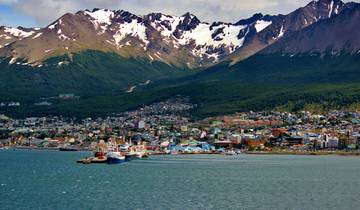
14 days
End of the Earth
- ✓ Comprehensive Patagonia tour
- ✓ Expert local guides included
- ✓ All accommodation arranged
- ✓ Transportation provided

15 days
Full Patagonia Adventure Trip – GROUP TOUR
- ✓ Comprehensive Patagonia tour
- ✓ Expert local guides included
- ✓ All accommodation arranged
- ✓ Transportation provided
Multi-day tour packages powered by TourRadar. Prices and availability subject to change.
Essential Planning Information 2026
Understanding Patagonian Geography and Regions
Patagonia’s vast territory divides into several distinct regions that determine your itinerary planning for 2026. Argentine Patagonia encompasses the provinces of Neuquén, Río Negro, Chubut, and Santa Cruz, while Chilean Patagonia covers the regions of Los Lagos, Aysén, and Magallanes. The Andes Mountains create a weather barrier producing dramatically different conditions on each side.
The Northern Lake District straddling both countries features alpine landscapes, volcanic peaks, and glacial lakes around Bariloche (Argentina) and Puerto Varas (Chile). This region offers excellent hiking, skiing, and scenic drives with more moderate weather than southern Patagonia. The area functions well as an introduction before heading to more extreme southern regions.
Central Patagonia contains some of the region’s most iconic destinations. On the Argentine side, Los Glaciares National Park protects Perito Moreno Glacier and the Fitz Roy massif, accessed via El Calafate and El Chaltén. Chilean central Patagonia features Torres del Paine National Park with its famous granite towers, the Paine Massif, and Grey Glacier, accessed through Puerto Natales.
Southern Patagonia and Tierra del Fuego represent the continent’s final frontier before Antarctica. Ushuaia serves as the gateway to Tierra del Fuego National Park and Beagle Channel expeditions. Punta Arenas provides access to penguin colonies, historical sites, and Antarctica cruises. This region experiences the most extreme weather conditions with strong winds year-round.
2026 Cost Overview and Budget Planning
Patagonian travel costs in 2026 reflect the region’s remote location, limited infrastructure, and high demand during peak season. International flights from North America to Buenos Aires or Santiago cost $800-1,400 round-trip, with connecting flights to Patagonian gateways adding $250-450. Check airline websites for current official rates as pricing varies by season and booking timeline.
Accommodation represents the largest daily expense, with mid-range hotels and hostels charging $80-140 per night for double occupancy in El Calafate, El Chaltén, and Puerto Natales during high season (December-February). Budget hostels offer dorm beds for $25-40 per person, while luxury lodges command $400-800+ per night. Book accommodation 4-6 months ahead for 2026 peak season to secure preferred options.
Meals cost $15-25 for lunch and $25-45 for dinner at mid-range restaurants in tourist towns. Budget travelers reduce costs to $30-45 daily by cooking at hostels with equipped kitchens and shopping at supermarkets. Wine from Argentine and Chilean vineyards enhances meals at $8-15 per bottle in restaurants, $4-8 in shops.
Activity costs vary significantly based on tour selection. Guided glacier walks on Perito Moreno cost $120-150 per person, full-day boat tours to Upsala Glacier run $180-220, and multi-day Torres del Paine guided treks range $1,200-2,500 depending on accommodation level. Independent hikers accessing trails pay only park entrance fees: Los Glaciares charges $30-40 per day, Torres del Paine costs $35-45 per day for foreign visitors.
Local transportation within Patagonia includes buses between major towns costing $15-65 depending on distance, rental cars from $50-90 per day plus fuel at $1.20-1.50 per liter, and in-park shuttle services charging $10-25 per route. Factor these costs into daily budgets when planning multi-destination itineraries.
Climate and Weather Patterns for 2026
Patagonia’s weather defies simple categorization, with conditions varying dramatically by location, elevation, and proximity to the Pacific Ocean or Atlantic coast. Understanding seasonal patterns helps optimize your 2026 itinerary timing and packing preparation.
Summer (December-February) brings the warmest temperatures and longest daylight hours, with daily highs reaching 60-75°F (15-24°C) in lower elevations and 45-60°F (7-15°C) in mountainous areas. This peak season attracts maximum visitors but also offers the most reliable weather for trekking and glacier visits. Strong winds persist throughout summer, averaging 25-40 mph with gusts exceeding 60 mph, particularly in exposed areas like the Fitz Roy zone and Torres del Paine.
Shoulder season (October-November and March-April) provides excellent value with 30-40% lower accommodation costs and smaller crowds. November brings emerging wildflowers and active wildlife, while March offers stunning autumn colors and calmer winds. Temperatures range 50-65°F (10-18°C) with increased precipitation probability. Some high-altitude trails and mountain refugios close during early October and late March.
Winter (June-August) transforms Patagonia into a quieter destination with dramatically reduced tourism. Many trails, campgrounds, and mountain lodges close completely. Temperatures drop to 30-45°F (-1-7°C) with snow at higher elevations. The Lake District around Bariloche and Cerro Catedral offers excellent skiing during winter months, while southern Patagonia becomes extremely challenging for outdoor activities.
Rain occurs year-round in Patagonia, with western Chilean areas receiving significantly more precipitation than eastern Argentine regions due to prevailing Pacific winds hitting the Andes. Puerto Natales and Torres del Paine experience 120-150 rainy days annually, while El Calafate receives only 60-80 rainy days. Pack comprehensive rain gear regardless of season or forecast.
Gateway Cities and Transportation 2026
International Access and Domestic Connections
Reaching Patagonia in 2026 requires strategic planning for international flights and domestic connections. Most international travelers arrive through Buenos Aires (Ezeiza Airport) or Santiago (Arturo Merino Benítez Airport) before continuing to Patagonian destinations via domestic flights.
Buenos Aires serves as the primary gateway for Argentine Patagonia, with Aerolíneas Argentinas, LATAM, and Flybondi operating multiple daily flights to El Calafate (3.5 hours flight time, $180-320 round-trip) and El Chaltén via El Calafate. The airport transfer in Buenos Aires requires 3-4 hours minimum connection time between international arrival and domestic departure, as domestic flights use Aeroparque Jorge Newbery located 20 miles from the international airport.
Santiago provides access to Chilean Patagonia with daily flights to Punta Arenas (3.5 hours, $200-350 round-trip) continuing to Puerto Natales via bus transfer. LATAM and Sky Airline operate these routes with multiple daily departures during peak season. Consider booking domestic flights simultaneously with international tickets to lock in better prices and ensure schedule compatibility.
Overland travel from Buenos Aires to southern Patagonia covers 1,600+ miles requiring 30-40 hours of bus travel each direction. While scenic and economical ($120-180 one-way), this option consumes 3-4 days of valuable trip time. Most 2026 visitors choose flying to maximize time in destination areas rather than in transit.
Getting Around Within Patagonia
Transportation between Patagonian towns and parks combines buses, rental cars, shuttles, and occasionally flights. Understanding options helps you design efficient itineraries and budget appropriately for 2026 travel.
Bus services connect major Patagonian destinations with reliable schedules and comfortable coaches. El Calafate to El Chaltén takes 3 hours via Ruta 40 with 3-4 daily departures costing $35-45 each way. El Calafate to Puerto Natales crosses the border in 5-6 hours with daily service at $45-65. Book tickets 1-2 weeks ahead during peak season through company websites or at bus terminals.
Rental cars provide maximum flexibility for exploring at your own pace, accessing trailheads, and photographing landscapes during optimal lighting. Daily rates run $50-90 for compact cars, $80-120 for SUVs, with mandatory insurance adding $15-25 per day. Fuel costs $1.20-1.50 per liter with gas stations spaced 60-100 miles apart on major routes. Book vehicles 2-3 months ahead for December-January availability.
Shuttle services operate between towns and popular trailheads during high season. El Chaltén offers shuttles to Laguna de los Tres trailhead for $10 per person, while Torres del Paine runs shuttles between park entrance and various trail access points for $15-25. These services reduce parking pressures and ensure trail access for non-drivers.
Hitchhiking remains common and generally safe in Patagonia, particularly along Ruta 40 and near popular national parks. Local etiquette involves offering rides to other travelers and contributing fuel money. This option works best for flexible travelers comfortable with uncertain schedules.
14-Day Cross-Border Patagonia Itinerary 2026
Overview and Logistics
This comprehensive 14-day itinerary covers the iconic highlights of both Argentine and Chilean Patagonia, balancing active trekking with scenic drives, glacier visits, and cultural experiences. The route begins in El Calafate, continues through El Chaltén’s hiking mecca, crosses to Chilean Puerto Natales, explores Torres del Paine’s dramatic landscapes, and concludes in Punta Arenas for departure connections.
Book the following elements 4-6 months ahead for 2026 high season: El Calafate accommodation (Days 1-3), El Chaltén hostels or hotels (Days 4-7), Puerto Natales lodging (Day 8), Torres del Paine refugios or campsites (Days 9-12), and Punta Arenas final night (Day 13). International return flights from Punta Arenas to Santiago connect to worldwide destinations.
Days 1-3: El Calafate and Perito Moreno Glacier
Arrive at El Calafate airport via connecting flight from Buenos Aires. The town functions as the gateway to Los Glaciares National Park and Argentine ice field exploration. Check into accommodation near Avenida Libertador, the main street featuring restaurants, outdoor shops, and tour agencies.
Day 1: Recover from travel with a gentle introduction to the region. Walk along Lago Argentino’s shoreline, visit the Glaciarium ice museum ($18 entry) to understand glaciology and regional ecology, and explore downtown El Calafate’s shops and restaurants. Reserve tours for upcoming days if not pre-booked. Glaciarium entry €15, lunch €18-25, dinner €30-40, snacks €8-12, local bus €3. Total day cost: €74-100 per person (excluding accommodation).
Day 2: Full-day excursion to Perito Moreno Glacier, one of Earth’s few advancing glaciers and the region’s iconic attraction. Tours depart 8 AM from El Calafate, reach the glacier after 90-minute drive through Patagonian steppe, and provide 3-4 hours exploring boardwalks facing the glacier’s 240-foot tall ice wall. Witness ice calving events sending house-sized chunks crashing into Lago Argentino with thunderous roars. Optional glacier walking tour adds 90 minutes on the ice itself wearing crampons and following certified guides ($120-150 including park entry). Standard tour $75, park entry $30, lunch $20-30, dinner $35-45, snacks $10. Total day cost: $170-200 per person (excluding accommodation).
Day 3: Choose between Upsala Glacier boat tour or estancia visit. The Upsala Glacier boat excursion navigates Lago Argentino’s north arm visiting Spegazzini and Upsala glaciers, with icebergs floating in turquoise waters ($180-220 including lunch). Alternatively, visit a traditional Patagonian estancia (ranch) for horseback riding, sheep shearing demonstrations, and asado (barbecue) lunch ($95-130). Return to El Calafate for final evening preparing for El Chaltén transfer. Activity cost $95-220, dinner $30-40, packing supplies $15-20. Total day cost: $140-280 per person (excluding accommodation).
Days 4-7: El Chaltén Hiking Adventures
Transfer to El Chaltén via morning bus (3 hours, $35-45), arriving at Argentina’s trekking capital beneath the soaring Fitz Roy massif. This small mountain village exists solely for outdoor enthusiasts, with world-class hiking trails departing directly from town streets.
Day 4: Acclimatization hike to Laguna Torre, a 12-mile round-trip trail gaining 600 feet elevation over 7-8 hours. The route follows Río Fitz Roy valley through lenga forests before emerging at a glacial lake dominated by Cerro Torre’s iconic vertical spire. Pack lunch, water, and layers as weather changes rapidly. The trail requires no technical skills but demands good fitness. Return to town for dinner at local restaurants specializing in Argentine beef and Patagonian lamb. Packed lunch supplies $12-18, dinner $35-50, beer/wine $8-12, energy snacks $10. Total day cost: $65-90 per person (excluding accommodation).
Day 5: Tackle El Chaltén’s signature trek to Laguna de los Tres, an 16-mile round-trip gaining 2,500 feet elevation in 10-12 hours. The final 1,300-foot scramble up loose scree requires stamina but rewards with face-to-face views of Fitz Roy’s 11,171-foot granite needles reflected in turquoise glacial waters. Start before 7 AM to maximize chances of cloud-free peak views, as afternoon winds bring clouds. Camp Poincenot at mile 7 offers rest before the final ascent. Packed lunch $15-20, trail snacks $12-15, celebration dinner $40-55, drinks $10-15. Total day cost: $77-105 per person (excluding accommodation).
Day 6: Active recovery day with shorter hikes or rest. Options include the 5-mile round-trip to Chorrillo del Salto waterfall (2 hours), the 8-mile Laguna Capri loop offering Fitz Roy views without extreme elevation (4 hours), or complete rest with town exploration and gear maintenance. Visit the ranger station for trail updates and weather forecasts for upcoming days. Many hikers use this day for laundry services ($10-15), restocking food supplies, and booking any final tours. Light lunch $15-22, dinner $30-42, supplies $20-30, laundry $10-15. Total day cost: $75-109 per person (excluding accommodation).
Day 7: Morning departure for Puerto Natales, Chile, via bus crossing the Argentine-Chilean border (5-6 hours total, $45-65). The route traverses vast Patagonian steppes with guanaco sightings before crossing into Chilean lake country. Border formalities take 45-60 minutes with agricultural inspections requiring disposal of fresh fruits, vegetables, and meats. Arrive Puerto Natales by mid-afternoon for accommodation check-in and Torres del Paine preparation. Shop at supermarkets for trekking food supplies if planning independent hiking. Bus ticket $45-65, border snacks $8-12, Puerto Natales dinner $25-38, groceries $40-60. Total day cost: $118-175 per person (excluding accommodation).
Days 8-12: Torres del Paine W Circuit Trek
Day 8: Preparation day in Puerto Natales organizing gear, confirming reservations, and arranging transportation to Torres del Paine National Park entrance (70 miles north, 2 hours). Book bus or van transfer departing 7-8 AM next morning ($25-35 each way). Visit outdoor shops for any missing equipment rentals (sleeping bags $15-25/day, trekking poles $8-12/day, backpacks $12-18/day). Attend mandatory park orientation at ranger station if required. Final gear check $20-40, equipment rentals $35-65, meals $40-60, park entrance pre-purchase $35-45. Total day cost: $130-210 per person (excluding accommodation).
Day 9: Transfer to Torres del Paine, enter park at Laguna Amarga entrance, and begin W Circuit trek at Las Torres sector. Hike to Base Torres viewpoint (12 miles round-trip, 8-10 hours) for the park’s iconic granite towers rising 9,350 feet. The final approach climbs 2,600 feet through boulder fields requiring scrambling. Sunrise views offer optimal photography with towers illuminated by alpenglow. Camp at Refugio Torres or return to Refugio Central depending on reservations. Park entry $35-45, refugio bed with meals $130-160 or camping with meals $90-120. Total day cost: $125-205 per person.
Day 10: Trek from Las Torres to Valle Francés (French Valley), the W Circuit’s central arm. The 14-mile route crosses suspension bridges over glacial rivers and climbs through southern beech forests before reaching Valle Francés lookout offering panoramic views of hanging glaciers and vertical granite walls. Camp at Refugio Francés or Campamento Italiano depending on reservations. Many trekkers rate this valley as the circuit’s most spectacular section. Refugio bed with meals $130-160 or camping with meals $90-120, trail snacks $15-20. Total day cost: $105-180 per person.
Day 11: Continue from Valle Francés to Grey Glacier sector, completing the W Circuit’s western arm. The 13-mile trek crosses Paine Massif’s southern flank with constant views of Paine Grande’s 10,007-foot summit and Cuernos del Paine’s distinctive horns. Arrive at Refugio Grey facing the glacier’s blue ice terminus. Optional glacier kayaking tour adds close encounters with icebergs ($120-150 additional). Refugio bed with meals $130-160 or camping with meals $90-120, optional kayaking $120-150, extra snacks $12-18. Total day cost: $132-328 per person.
Day 12: Exit day from Torres del Paine. Hike from Grey Glacier to Paine Grande boat dock (7 miles, 3-4 hours), take catamaran across Lago Pehoé to Pudeto ($30-40), and catch bus back to Puerto Natales (2.5 hours, $25-35). Arrive by late afternoon for shower, laundry, and celebration dinner at Puerto Natales restaurants. Many trekkers treat themselves to king crab or Patagonian lamb after W Circuit completion. Catamaran $30-40, bus $25-35, laundry $12-18, celebration dinner $45-65, drinks $15-25. Total day cost: $127-183 per person (excluding accommodation).
Day 13: Puerto Natales to Punta Arenas
Morning bus transfer from Puerto Natales to Punta Arenas (3 hours, $20-30), arriving at Chile’s southernmost major city and regional capital. Punta Arenas functions as a departure hub for Antarctica expeditions and offers historical attractions including the Magdalena Island penguin colony. Visit Plaza Muñoz Gamero, the Nao Victoria Museum ($8 entry), and waterfront walks along the Strait of Magellan. Shop for last-minute souvenirs and local chocolates. Evening flight preparation for next day’s departure. Bus ticket $20-30, museum entry $8, lunch $18-28, dinner $30-45, souvenirs $30-50. Total day cost: $106-161 per person (excluding accommodation).
Day 14: Departure from Punta Arenas
Transfer to Punta Arenas airport for connecting flight to Santiago (3.5 hours) and international connections homeward. Build 4-5 hour layover minimum in Santiago between domestic arrival and international departure. Reflect on two weeks exploring some of Earth’s most spectacular wilderness while processing thousands of photographs and unforgettable experiences.
Alternative 10-Day Argentina-Only Itinerary 2026
Focused Argentine Patagonia Exploration
Travelers with limited time or budget constraints create excellent Patagonian experiences focusing exclusively on Argentine highlights. This 10-day itinerary maximizes glacier access and mountain hiking while minimizing border crossings and logistical complexity.
Days 1-4: El Calafate and Los Glaciares National Park – Spend extended time exploring Perito Moreno Glacier with glacier walking tours, Upsala Glacier boat excursions, and estancia visits. Add Laguna Nimez bird watching reserve and evening glacier sunset tours for photography enthusiasts. The extra day provides weather buffer and recovery time before El Chaltén hiking.
Days 5-8: El Chaltén Comprehensive Hiking – Complete both signature trails (Laguna de los Tres and Laguna Torre) plus additional routes including Loma del Pliegue Tumbado for panoramic valley views, Laguna Capri for accessible Fitz Roy perspectives, and Chorillo del Salto waterfall. Serious hikers tackle the technical Paso del Viento route or multi-day Huemul Circuit with camping.
Days 9-10: Return to El Calafate and Buenos Aires – Transfer back to El Calafate for final glacier visit or rest before evening flight to Buenos Aires. Overnight in Buenos Aires near international airport for next-day departure, or extend with 2-3 days exploring Argentina’s capital city including tango shows, steak houses, and Recoleta neighborhood.
This Argentina-focused itinerary reduces costs by eliminating border crossing buses ($45-65 saved), simplifies logistics with single-country entry requirements, and allows deeper exploration of Los Glaciares region attractions often missed in cross-border routes. Total costs run $2,200-3,400 for 10 days including Buenos Aires flights, accommodation, meals, and activities.
Alternative 10-Day Chile-Only Itinerary 2026
Chilean Patagonia Circuit
Chilean Patagonia offers equally compelling experiences with Torres del Paine as the centerpiece supplemented by fjord explorations, penguin colonies, and cultural attractions in southern Chile.
Days 1-2: Punta Arenas Arrival and Penguin Colony – Fly from Santiago to Punta Arenas for 2 days exploring the city’s historical museums, waterfront, and Magdalena Island penguin colony. The island boat tour ($70-90) departs early morning visiting 120,000 Magellanic penguins during breeding season (October-March). Add Strait of Magellan navigation history at the Nao Victoria Museum.
Days 3-8: Torres del Paine Complete Circuit – Transfer to Puerto Natales for Torres del Paine access. Choose between the complete O Circuit (7-9 days circumnavigating the entire Paine Massif) or extended W Circuit with rest days for photography, wildlife watching, and weather flexibility. The O Circuit adds remote wilderness sections with condor sightings and views of glaciers inaccessible on standard routes.
Days 9-10: Puerto Natales and Departure – Return to Puerto Natales for rest and recovery. Options include Milodon Cave natural monument visit ($5 entry), Last Hope Sound boat tours, or simply relaxing at town restaurants before returning to Punta Arenas for Santiago flight connections.
Chilean-only itineraries benefit from simplified currency (single Chilean peso), consistent service standards, and excellent trail infrastructure throughout Torres del Paine. The route provides authentic Patagonian wilderness experiences with marginally lower costs than cross-border alternatives due to eliminated border crossing logistics.
Accommodation Strategies for 2026
Budget Accommodation Options
Budget travelers staying in hostel dormitories and camping reduce accommodation costs to $25-45 per person per night throughout Patagonia. El Calafate and El Chaltén feature excellent hostels with equipped kitchens, hot showers, gear storage, and social spaces for meeting fellow travelers. Book dorm beds 2-3 months ahead for peak season December-February availability.
Camping offers the lowest-cost option with established campgrounds charging $8-15 per person per night. El Chaltén campgrounds provide basic facilities near town center with covered cooking areas protecting from wind. Torres del Paine camping requires advance reservations for all sites 6 months ahead, with costs running $15-25 per person including campsite and gear storage.
Popular budget hostels include América del Sur in El Calafate (dorms $28-38), Rancho Grande in El Chaltén (dorms $32-42), and Erratic Rock in Puerto Natales (dorms $25-35). These establishments offer tour booking assistance, equipment rentals, and detailed trail information from experienced staff.
Mid-Range Hotel Selection
Mid-range hotels and boutique accommodations charge $100-180 per night for double occupancy, offering private bathrooms, comfortable beds, breakfast, and often mountain or lake views. Reserve 3-4 months ahead for peak season rooms in prime locations.
El Calafate mid-range options include Rochester Hotel Conceptual ($120-160), Kau Yatun ($110-150), and Sierra Nevada ($100-140), all within walking distance of downtown restaurants and shops. These properties provide tour booking services and transportation arrangements to airports and trailheads.
El Chaltén’s limited accommodation fills quickly with popular mid-range choices including Destino Sur ($140-180), Hostería Senderos ($120-160), and Lunajuim ($110-150). Morning breakfast views of Fitz Roy from hotel dining rooms justify the premium prices.
Puerto Natales mid-range hotels like Altiplánico Sur ($130-170), Noi Indigo ($140-180), and Simple Patagonia ($100-140) combine comfortable rooms with excellent restaurants and knowledgeable concierge services for Torres del Paine planning.
Luxury Lodge Experiences
Luxury travelers invest $400-800+ per night for premium lodges offering gourmet dining, expert guides, spa services, and privileged locations. These properties provide all-inclusive packages combining accommodation, meals, activities, and transportation for 3-7 day stays.
Eolo Patagonia’s Spirit near El Calafate ($600-900 per night) features 17 suites with steppe views, horseback riding, and private estancia experiences. The property arranges exclusive glacier access and customized photography tours.
Explora Patagonia in Torres del Paine ($800-1,200 per night all-inclusive) anchors luxury trekking with daily guided hikes, gourmet cuisine, and hotel-to-hotel porterage eliminating backpack carrying. The lodge operates year-round with winter programs featuring puma tracking and northern lights viewing.
Awasi Patagonia ($900-1,400 per night all-inclusive) provides private guides and vehicles for each villa, ensuring completely customized daily programs matching guest interests and fitness levels. The 14-villa property overlooks Torres del Paine with sunset views of the Paine Massif.
Packing Essentials for 2026 Patagonia
Clothing and Layering Systems
Patagonia’s unpredictable weather demands comprehensive layering systems accommodating temperature swings from 35-75°F in a single day. The region’s strong winds and frequent rain require specific clothing choices prioritizing weather resistance over fashion.
Base layers include synthetic or merino wool tops and bottoms providing moisture wicking and quick drying capabilities. Pack 2-3 sets for multi-day trekking, as cotton clothing stays wet and becomes dangerous in changing conditions. Temperatures drop 20-30 degrees when sun disappears behind clouds or wind increases.
Insulation layers consist of fleece or down jackets providing warmth without bulk. Pack both lightweight fleece (for active hiking) and heavier insulated jacket (for camp and evening wear). Down jackets compress well for backpacking but lose insulation when wet, while synthetic alternatives maintain warmth in damp conditions.
Outer shell layers protect against Patagonia’s notorious wind and rain. Waterproof/breathable rain jackets and rain pants serve as essential equipment for every hike regardless of forecast. Wind can reach 60+ mph in exposed areas, making sturdy shell layers critical for safety and comfort. Test jacket zippers and seam sealing before departure.
Accessories include warm hat, sun hat with chin strap (wind prevention), buff or neck gaiter, sunglasses with UV protection, and glove layers (lightweight gloves for hiking, heavier mittens for camp). Patagonia’s intense UV exposure at southern latitudes requires diligent sun protection even on cloudy days.
Technical Equipment and Gear
Footwear determines hiking comfort and safety across Patagonia’s varied terrain. Waterproof hiking boots with ankle support handle rocky trails, river crossings, and muddy sections encountered on most routes. Break in boots 4-6 weeks before departure with training hikes carrying loaded backpack weight. Pack backup trail runners or approach shoes for camp wear and river crossings.
Backpacking requires 50-65 liter backpacks for W Circuit and multi-day treks, 25-35 liters for day hiking from town bases. Integrated rain covers protect gear during frequent showers. Organize packing with stuff sacks or dry bags separating clothing, food, and equipment for quick access and water protection.
Trekking poles reduce knee stress on descents and provide stability crossing streams and navigating loose scree. Adjustable poles allow height customization for varying terrain. Many Patagonian trails feature steep approaches where poles significantly improve safety and reduce fatigue.
Navigation tools include offline map apps (Maps.me works well in Patagonia), GPS devices for remote routes, and physical maps as backups. Cell phone coverage exists in major towns but disappears completely on trails and in national parks. Download maps before departing town for each day’s hiking.
Photography equipment considerations address Patagonia’s extraordinary landscapes and challenging conditions. Wide-angle lenses (16-35mm) capture vast panoramas and mountains, while telephoto lenses (70-200mm) work for wildlife and distant peaks. Bring lens cleaning cloths for frequent rain and spray. Protect cameras from wind-blown dust and sand with rain covers or plastic bags during transport.
Food and Cooking Equipment for Independent Trekking
Independent trekkers camping on multi-day routes carry lightweight backpacking stoves, fuel, cooking pots, and complete meal supplies. Torres del Paine allows only gas canister stoves (no liquid fuel) throughout the park. Purchase fuel canisters in Puerto Natales or El Chaltén before entering parks, as trail sales don’t exist.
Meal planning focuses on calorie-dense, lightweight foods providing 3,000-4,000 calories daily for strenuous trekking. Breakfast options include instant oatmeal, granola, and dried fruit. Lunch consists of energy bars, nuts, chocolate, cheese, and crackers for trail eating. Dinner features dehydrated backpacking meals, pasta with sauce, or instant noodles supplemented with dried vegetables and protein powder.
Water treatment addresses Patagonia’s rivers and lakes using filter systems, purification tablets, or boiling. While remote water sources generally run clean, giardia exists throughout the region making treatment mandatory. Carry 2-3 liters capacity for day hiking, as water sources don’t always align with planned stops.
Money-Saving Strategies for 2026
Booking and Reservation Timing
Advance booking 5-6 months ahead for December-February travel secures better prices and guarantees availability for accommodation and refugios. Last-minute travelers face limited options and premium pricing, particularly for Torres del Paine campsites which sell out completely for peak season.
Shoulder season travel during November or March reduces accommodation costs 30-40% while maintaining reasonable weather conditions. November offers emerging wildflowers and active wildlife (Magellanic penguins, guanacos with young), while March provides autumn colors and calmer winds. Some high-altitude trails close during extreme shoulder season timing.
Package deals combining accommodation and tours sometimes offer 10-15% savings versus booking components separately. El Calafate hotels frequently package Perito Moreno tours with room rates, while Puerto Natales properties bundle W Circuit logistics including transportation, camping reservations, and meal plans.
Self-Catering and Cooking
Hostels with equipped kitchens allow self-catering reducing meal costs from $60-90 daily to $25-35 daily for groceries and cooking supplies. Supermarkets in El Calafate (La Anónima, Carrefour Express), El Chaltén (Viento Oeste), and Puerto Natales (Unimarc) stock complete ingredients for breakfast, packed lunches, and dinners.
Group cooking with other hostel guests splits ingredient costs and creates social dining experiences. Many hostels feature communal cooking areas where travelers share recipes, leftover ingredients, and regional specialties. Argentine beef and Chilean wine purchased at supermarket prices deliver gourmet meals at budget costs.
Transportation Optimization
Bus travel versus rental cars saves $40-60 daily when transportation needs align with scheduled routes between major towns. El Calafate to El Chaltén buses ($35-45) cost significantly less than rental car daily rate plus fuel, while providing WiFi and rest during 3-hour transit.
Shared van services split costs among 4-6 passengers for routes like airport transfers or Torres del Paine access. Organize ride-sharing through hostel bulletin boards or online travel forums, reducing per-person costs to $15-25 versus $60-80 for private transfers.
Hitchhiking opportunities exist throughout Patagonia, particularly along Ruta 40 and near national parks during high season. Offer fuel contributions ($10-15) to drivers providing rides, respecting the regional custom of shared transportation among travelers and locals.
Wildlife and Photography Opportunities 2026
Iconic Patagonian Wildlife
Patagonia protects diverse wildlife ecosystems from Andean condors to Magellanic penguins, offering extraordinary viewing opportunities throughout 2026. Understanding species behaviors and seasonal patterns maximizes wildlife encounter chances.
Guanacos (wild relatives of llamas) populate grasslands and mountain valleys throughout Argentine and Chilean Patagonia. These graceful camelids travel in herds of 10-50 individuals, with spring (October-November) bringing newborn chulengo (guanaco babies) providing exceptional photographic subjects. Males establish territories and engage in dramatic ritual fights during mating season.
Andean condors soar above peaks and valleys searching for carrion with 10-foot wingspans. Valle Francés in Torres del Paine and the Laguna de los Tres approach in El Chaltén offer reliable condor viewing as birds ride thermal updrafts along cliff faces. Early morning and late afternoon provide best lighting for photographing these massive raptors against mountain backdrops.
Magellanic penguins nest in coastal colonies during spring and summer (October-March), with Magdalena Island near Punta Arenas hosting 120,000 breeding pairs. Boat tours ($70-90) depart Punta Arenas early morning for 2-hour navigation reaching the island for 1-hour walking among nesting burrows. Penguins tolerate close observation but maintain minimum 6-foot distance respecting nesting areas.
Pumas inhabit Torres del Paine with highest density populations of anywhere in South America. Winter months (June-August) offer best sighting opportunities as pumas descend from mountains hunting guanacos on open plains. Specialized puma tracking tours ($200-300 per day) employ expert trackers for multi-day expeditions targeting encounters with these elusive cats.
Landscape Photography Techniques
Patagonia’s dramatic landscapes demand specific photographic approaches maximizing the region’s extraordinary natural beauty. Strong winds, rapidly changing light, and massive scale present both challenges and opportunities for creating compelling images.
Golden hour lighting during summer extends 2-3 hours around sunrise (5:30-8 AM) and sunset (8-10 PM), bathing granite peaks in warm alpenglow. Position yourself at key viewpoints 30-45 minutes before optimal light arrives, as Patagonian weather changes rapidly and clouds can appear unexpectedly blocking anticipated lighting.
Wind protection for cameras requires extra caution in exposed locations where 40-60 mph gusts create camera shake even with tripods. Use heavy-duty tripods with low center of gravity, add weight to tripod legs with camera bags, and employ cable releases or self-timers eliminating touch during exposure. Shield camera from wind using your body or natural terrain features.
Weather diversity creates dynamic atmospheric conditions with approaching storms, clearing skies, and dramatic cloud formations. Rather than avoiding poor weather, embrace changing conditions for moody images featuring weather systems moving through valleys, windblown vegetation, and atmospheric lighting impossible during clear blue-sky days.
Scale representation challenges arise photographing massive peaks and glaciers. Include human figures, tents, or recognizable objects establishing size relationships. Wide-angle lenses (16-24mm) capture expansive panoramas but can minimize peak height, while telephoto lenses (70-200mm) compress distance showing dramatic vertical relief and glacier details.
Health, Safety and Practical Considerations 2026
Physical Preparation and Fitness
Patagonian trekking demands solid cardiovascular fitness and leg strength for steep climbs carrying backpack weight. Begin training 8-12 weeks before departure with progressive hiking building endurance and elevation gain tolerance. Target 6-8 mile training hikes with 1,500-2,000 feet elevation gain carrying 20-30 pound backpack loads.
Altitude considerations remain minimal throughout most Patagonian destinations, with trails staying below 6,000 feet elevation. Fitz Roy base camp reaches 4,100 feet, Torres del Paine viewpoints top out around 3,500 feet, and most valley hiking stays below 2,000 feet. Altitude sickness risks remain low compared to Andean destinations further north.
Injury prevention focuses on proper footwear, trekking pole use, and reasonable daily distance limits. Ankle sprains from rocky trails represent the most common hiking injuries. Carry comprehensive first aid kit including blister treatment, pain relievers, elastic bandages, and antibiotic ointment. Travel insurance covering emergency evacuation provides critical safety net for serious injuries in remote areas.
Travel Insurance Requirements
Comprehensive travel insurance covering medical emergencies, trip cancellation, and evacuation costs between $80-150 for 2-week Patagonian trips in 2026. Policies should include helicopter evacuation coverage ($50,000+ limits) as ground ambulance access doesn’t exist in remote national parks. World Nomads, Allianz, and IMG offer adventure travel policies covering trekking and mountain activities.
Trip cancellation coverage protects against weather delays, flight cancellations, and medical emergencies forcing trip abandonment. Patagonia’s unpredictable weather can close trails, cancel flights, and strand travelers for days. Insurance reimbursement for non-refundable bookings (refugios, tours, accommodation) provides financial protection against controllable and uncontrollable circumstances.
Communication and Connectivity
Cell phone coverage exists in major towns (El Calafate, El Chaltén, Puerto Natales, Punta Arenas) but disappears completely in national parks and along highways. Download offline maps, trail information, and accommodation details before leaving towns with connectivity. WiFi availability at hotels and cafes provides message checking and photo uploads when in civilization.
Satellite communication devices like Garmin InReach ($15-25 daily rental) provide emergency communication and location sharing throughout remote areas. These devices allow text messaging and SOS activation connecting to rescue services. Serious trekkers tackling O Circuit or extended backcountry routes consider satellite devices essential safety equipment.
Emergency contact protocols before departing for multi-day treks include filing trip itineraries with park rangers, informing accommodation providers of return dates, and establishing check-in schedules with travel partners. Rangers actively monitor overdue hikers and initiate searches when necessary.
Cultural Etiquette and Responsible Travel 2026
Leave No Trace Principles
Patagonia’s fragile ecosystems require strict Leave No Trace adherence protecting the region for future generations. Carry out all trash including organic waste, as Patagonian climates slow decomposition rates. Designated campsites prevent vegetation damage from random camping. Use established trails avoiding shortcut creation across fragile alpine vegetation requiring decades for recovery.
Human waste management follows park-specific regulations. Torres del Paine provides toilets at all refugios and campsites requiring use rather than backcountry disposal. More remote routes without facilities require pack-out systems or proper burial following Leave No Trace protocols: dig 6-8 inch catholes 200 feet from water sources, trails, and camps.
Campfire restrictions throughout most of Patagonia protect forests from wildfire risk in extremely windy conditions. Use only designated fire rings where permits exist. Most parks prohibit campfires completely, requiring backpacking stoves for all cooking needs. Single careless fire can destroy thousands of acres before winds subside allowing suppression.
Respecting Local Communities
Patagonian communities depend on sustainable tourism respecting local customs and economies. Support locally-owned businesses, restaurants, and guide services rather than international chains. Purchase artisan crafts and regional products directly from makers in town markets. Tip guides and service workers 10-15% for excellent service, adjusting for local economic standards.
Language barriers diminish with basic Spanish phrases enabling respectful communication. Learn “buenos días” (good morning), “gracias” (thank you), “por favor” (please), and “cuánto cuesta” (how much). Most tourism workers speak functional English in major towns, but Spanish appreciation fosters better interactions.
Photography etiquette requires permission before photographing local people, gauchos, and estancia workers. Respect refusals graciously without argument or insistence. Share contact information for sending photos if subjects request copies, following through on commitments.
FAQ: Patagonia Travel Planning 2026
When should I book accommodations and tours for 2026 Patagonia trips?
Book accommodation and Torres del Paine refugios 5-6 months ahead for December-February high season, ensuring availability at preferred locations and securing better pricing. W Circuit campsites and refugios sell out 4-6 months before peak season dates. El Calafate and El Chaltén accommodation books faster each year, particularly mid-December through mid-January. Tours like Perito Moreno glacier walks and Upsala boat trips book 2-3 months ahead. Shoulder season (November, March) allows booking 2-3 months ahead with good availability.
Can I trek Torres del Paine without a guide in 2026?
Independent trekking remains allowed throughout Torres del Paine for W Circuit and O Circuit routes with no guide requirements. Reserve all campsites or refugios ahead through park concessionaire websites (Vertice or Fantastico Sur), as random camping prohibitions protect park ecosystems. Carry detailed maps, GPS navigation, and emergency communication devices for backcountry safety. Guided treks offer porter services, expert knowledge, and simplified logistics but cost $1,200-2,500 versus $400-700 for independent trekking including refugio stays.
What physical fitness level do I need for Patagonia hiking?
Moderate to high fitness levels handle most popular Patagonian trails successfully. Perito Moreno viewing platforms require minimal fitness with easy walking on flat boardwalks. Day hikes like Laguna Torre and Laguna de los Tres demand good cardiovascular endurance for 12-16 mile round trips gaining 600-2,500 feet elevation over 7-12 hours carrying day packs. Multi-day W Circuit trekking requires higher fitness levels for consecutive 8-14 mile days with full backpacks. Train 8-12 weeks before departure with progressive hiking building endurance, elevation gain, and pack weight tolerance.
How much Spanish do I need for Patagonia travel?
Basic Spanish phrases improve travel experiences but most tourism workers in major towns speak functional English. Learn greetings, numbers, food terms, and directional words for independence navigating shops, restaurants, and bus stations. Rural areas and smaller towns have limited English speakers making translation apps valuable tools. Download Spanish offline in Google Translate before arriving. Effort attempting Spanish conversation earns local respect even with imperfect grammar and limited vocabulary.
What currency should I bring for Patagonia 2026?
Bring US dollars cash ($500-800 for 2 weeks) for best exchange rates when converting to Argentine pesos or Chilean pesos. Major towns have ATMs accepting international cards with daily withdrawal limits around $200-300 equivalent. Credit cards work at hotels and tour agencies but many restaurants and shops operate cash-only. Divide currency between Argentina and Chile visits based on itinerary timing. Exchange rates fluctuate significantly, particularly for Argentine peso which devalued 50%+ in recent years. Check current rates before departure for accurate budgeting.
Are there laundry facilities in Patagonian towns?
All major Patagonian towns (El Calafate, El Chaltén, Puerto Natales, Punta Arenas) offer laundromat services charging $10-18 for wash and dry of 10-12 pound loads with 4-6 hour turnaround. Hostels provide self-service washing machines for $5-8 with clotheslines for drying. Pack quick-dry synthetic clothing minimizing laundry needs during short trips. Long-term travelers plan laundry days between trekking segments using hostel facilities or professional services.
What’s the best way to see both Perito Moreno Glacier and Torres del Paine in limited time?
Minimum 8-10 days allows quality visits to both iconic destinations. Spend 2 days in El Calafate for Perito Moreno Glacier viewing and optional glacier walking or boat tours. Transfer to Puerto Natales (5-6 hour bus crossing Argentine-Chilean border) for 1 day preparation and shopping. Spend 4-5 days in Torres del Paine completing abbreviated W Circuit hitting Las Torres viewpoint and Valle Francés, or hire day tour transport for key viewpoints without overnight trekking. Return to El Calafate via bus for departure flights. This compressed itinerary sacrifices El Chaltén but captures the two most famous Patagonian attractions.
How dangerous are the winds in Patagonia?
Patagonian winds average 25-40 mph during summer months with gusts exceeding 60-70 mph in exposed areas, particularly around Fitz Roy and Torres del Paine. Winds rarely present safety hazards for prepared hikers but create significant discomfort and fatigue. Secure tent stakes thoroughly with rocks, pack items inside tents rather than vestibules, and use trekking poles for stability in strong gusts. Avoid camping on ridgelines or exposed plateaus where winds strengthen overnight. Morning hours (6-10 AM) typically feature calmer conditions before afternoon winds build. Winter months (June-August) bring even stronger sustained winds making some trails dangerous or impossible.
Can I drink tap water in Patagonian towns and on trails?
Tap water in major towns (El Calafate, El Chaltén, Puerto Natales, Punta Arenas) meets safe drinking standards with municipal treatment. Drink tap water freely at hotels and restaurants in urban areas. Trail water sources require treatment or filtration despite appearing clean, as giardia parasites exist throughout Patagonian watersheds. Use filter systems, purification tablets, or boiling for all backcountry water consumption. Mountain streams above treeline carry lower contamination risks than lowland rivers but treatment remains recommended. Carry 2-3 liters capacity for day hikes as water sources don’t always align with planned stops.
What wildlife dangers exist in Patagonia?
Patagonia poses minimal wildlife dangers compared to other wilderness regions, with no venomous snakes, bears, or large predators threatening hikers. Pumas inhabit Torres del Paine and Los Glaciares but avoid human contact, with zero recorded attacks on humans in modern park history. Observe pumas from distance if encountered without approaching or threatening. Defensive guanacos occasionally kick when cornered but generally flee from humans. Patagonian foxes show curiosity around camps but rarely threaten people or food supplies. Store food properly preventing habituation and maintaining natural behaviors. The greatest “wildlife” danger comes from aggressive geese defending nesting areas near trails during spring.