Underground Umbria: Discovering Etruscan Tombs and Roman Crypts Beneath the Medieval Towns
Beneath Umbria’s medieval hill towns lies a hidden world of Etruscan necropolises and Roman subterranean structures, where centuries of history remain preserved in underground chambers. These archaeological sites reveal continuous occupation spanning three millennia, from Etruscan burial complexes carved into tufa rock to Roman crypts and medieval wells that penetrated earlier layers. Exploring Umbria’s underground heritage offers direct encounters with artifacts, frescoes, and architectural elements that connect the region’s visible medieval character to its pre-Roman and Roman foundations.
Key Takeaways: Underground Umbria’s Archaeological Heritage
- Layered Chronology: Umbria’s underground sites document continuous occupation from the 9th century BCE through the medieval period, with Etruscan tombs, Roman structures, and medieval excavations often intersecting within the same locations.
- Etruscan Necropolises: Major tomb complexes at Orvieto, Perugia, Todi, and Città della Pieve contain chamber tombs with carved architectural details, frescoes, and artifact deposits that illuminate Etruscan funerary practices and social hierarchies.
- Roman Underground Infrastructure: Roman-era crypts, cisterns, drainage systems, and foundation structures beneath Umbrian towns demonstrate advanced engineering and urban planning, with many elements still functioning or visible today.
- Preservation Through Burial: Underground environments protected frescoes, inscriptions, and architectural elements from weathering and human destruction, preserving details lost in surface structures across the Mediterranean.
- Medieval Reuse: Medieval inhabitants excavated wells, cellars, and storage chambers that frequently penetrated Etruscan and Roman layers, creating stratigraphic connections between eras and sometimes inadvertently preserving earlier materials.
- Archaeological Accessibility: Organized archaeological sites, museum collections, and guided underground tours make these discoveries accessible while protecting fragile environments through controlled visitation and conservation protocols.
People Also Ask About Underground Umbria
What makes Umbria’s underground archaeological sites significant?
Umbria’s underground sites preserve exceptional examples of Etruscan funerary art and Roman engineering within their original contexts, offering insights unavailable from isolated museum artifacts. The region’s geological composition—soft tufa rock overlying harder limestone—enabled extensive carving while providing stable environments for preservation. Etruscan chamber tombs contain intact frescoes depicting banquets, musicians, and athletic competitions that survived because burial sealed them from atmospheric exposure and human interference. Roman cryptoportici, underground galleries supporting terraced structures, demonstrate sophisticated solutions to hillside construction challenges. The continuity of occupation means single locations contain stratified evidence of Etruscan, Roman, and medieval activity, creating archaeological records that document cultural transitions and technological evolution. Underground preservation protected painted surfaces, carved reliefs, and structural details that weathered away in surface monuments, making Umbrian underground sites crucial references for understanding broader Etruscan and Roman artistic and architectural traditions throughout central Italy.
Which Umbrian towns have the most important Etruscan underground sites?
Orvieto contains the most extensive and varied Etruscan underground remains in Umbria, including the Necropoli del Crocifisso del Tufo with hundreds of chamber tombs, the Pozzo di San Patrizio well that penetrated Etruscan layers, and the Orvieto Underground network of caves, tunnels, and cisterns carved across 28 centuries. Perugia preserves the Ipogeo dei Volumni, an aristocratic tomb complex with elaborate stucco decorations and inscriptions, plus the Etruscan Well and sections of city walls demonstrating Etruscan engineering. Todi features rock-cut tombs and the extensive network of cisterns and passages beneath the medieval center that incorporate Etruscan foundations. Città della Pieve, Bettona, and Marsciano contain smaller but significant Etruscan burial sites with painted tombs and artifact assemblages. Each location offers distinct perspectives on Etruscan civilization, from Orvieto’s large-scale urban infrastructure to Perugia’s elite funerary architecture and Todi’s integration of Etruscan and Roman construction techniques.
How did medieval construction impact ancient underground structures?
Medieval builders unknowingly created archaeological time capsules by excavating through earlier layers, sometimes preserving Etruscan and Roman materials within their own construction projects. When medieval inhabitants dug wells, cellars, and foundations, they frequently encountered ancient structures and occasionally incorporated them into new buildings. This reuse protected underlying materials from complete demolition while creating stratigraphic sequences archaeologists use to establish chronologies. Medieval wells at Orvieto and Perugia penetrated multiple occupation layers, with their walls displaying sections through Etruscan, Roman, and early medieval deposits. Storage chambers carved for grain and wine sometimes connected to Roman cisterns or Etruscan tomb passages, extending the functional life of ancient engineering. However, medieval construction also destroyed significant portions of underground heritage through quarrying tufa blocks from Etruscan necropolises and filling Roman structures with construction debris. The archaeological value of these interactions lies in the preserved vertical sections showing how successive cultures modified the same spaces, and in cases where medieval builders sealed rather than destroyed earlier materials, unintentionally protecting them for modern investigation.
What can visitors expect when exploring Umbria’s underground sites?
Visiting Umbria’s underground archaeological sites involves descending into carved chambers and tunnels where temperature drops noticeably and artificial lighting reveals ancient architectural details and decorative elements. Most organized sites provide guided tours with multilingual interpretation explaining the archaeological context, construction techniques, and historical significance of each location. At Etruscan necropolises, visitors walk among chamber tombs cut into tufa cliffs, observing carved benches, ceiling beams, and doorframes imitating wooden architecture translated into stone. Some tombs retain painted decorations depicting funerary banquets, mythological scenes, and daily life activities. Roman underground sites showcase engineering achievements including vaulted cisterns, drainage channels, and cryptoportici with precise masonry. Underground passages often connect multiple chambers, creating networks that extend beneath entire town centers. Physical conditions vary—some sites maintain stable environments with minimal moisture, while others show active water seepage that contributes to ongoing preservation challenges. Access typically requires moderate physical ability to navigate steps, low passages, and uneven surfaces. Photography policies differ by site, with some locations prohibiting flash photography to protect pigments while others permit documentation. The experience combines archaeological education with atmospheric immersion in spaces unchanged for millennia.
Extended multi-day tours – 5+ days
Featured Umbria Multi-Day Tour Packages
3 days
Umbria 3-Day Discovery Tour
- ✓ Comprehensive Umbria experience
- ✓ Expert local guides included
- ✓ All accommodation included
- ✓ Transportation provided
5 days
Umbria 5-Day Highlights Experience
- ✓ Comprehensive Umbria experience
- ✓ Expert local guides included
- ✓ All accommodation included
- ✓ Transportation provided
7 days
Umbria 7-Day Cultural Journey
- ✓ Comprehensive Umbria experience
- ✓ Expert local guides included
- ✓ All accommodation included
- ✓ Transportation provided
10 days
Umbria 10-Day Complete Adventure
- ✓ Comprehensive Umbria experience
- ✓ Expert local guides included
- ✓ All accommodation included
- ✓ Transportation provided
Multi-day tour packages powered by TourRadar. Prices and availability subject to change.
Introduction: Umbria’s Subterranean Archaeological Landscape
The medieval hill towns of Umbria—Orvieto perched on its volcanic plateau, Perugia sprawling across multiple ridges, Todi rising above the Tiber valley—present postcard images of perfectly preserved medieval architecture. Yet beneath the visible stone streets and Gothic palaces lies an equally extensive underground realm where Etruscan, Roman, and medieval civilizations left intersecting archaeological records. This subterranean landscape spans nearly three millennia of human activity, from Etruscan chamber tombs carved in the 9th century BCE to Roman infrastructure supporting expanding urban centers to medieval excavations that unknowingly preserved earlier layers.
Umbria’s underground heritage differs fundamentally from the monumental remains visible above ground. While medieval and Renaissance structures dominate the visible townscapes, underground chambers contain the region’s oldest surviving architecture and art. Etruscan necropolises preserve painted tombs depicting scenes lost from all surface monuments, showing how the civilization’s elite commemorated their dead through elaborate funerary banquets, athletic competitions, and mythological narratives. Roman builders created extensive underground infrastructure—cisterns gathering water, cryptoportici supporting terraced construction, drainage systems managing hillside runoff—that remains functional in some locations two thousand years after installation.
The geological character of central Umbria enabled this underground development. Tufa, a soft volcanic stone formed from ancient ash deposits, could be carved with simple iron tools yet hardened with exposure to create stable chambers. Below the tufa layer, harder limestone provided solid foundations while remaining impermeable to water, allowing Romans to create reliable cistern systems. This geological advantage meant that carving underground was often easier than constructing above ground, leading both Etruscans and Romans to develop extensive subterranean architecture.
Archaeological investigation of Umbria’s underground heritage began seriously in the 19th century when excavations at major Etruscan necropolises revealed intact tombs with artifacts that transformed understanding of pre-Roman Italy. The discovery of painted tombs at Orvieto and elaborate family sepulchers at Perugia demonstrated that Etruscan civilization possessed sophisticated artistic traditions and complex social hierarchies. Subsequent decades revealed the extent of Roman underground construction, from massive cisterns beneath Perugia capable of storing millions of liters to the intricate network of passages and chambers under Orvieto’s medieval center.
Contemporary archaeology continues uncovering underground remains as urban development projects, building renovations, and targeted excavations expose previously unknown chambers and passages. Modern conservation techniques stabilize fragile environments, control humidity that threatens painted surfaces, and manage visitor access to minimize deterioration. The result is an expanding network of accessible underground archaeological sites that complement surface monuments and museum collections in documenting Umbria’s multilayered history.
Understanding Etruscan Civilization in Umbria
The Etruscans dominated central Italy from roughly 900 BCE through their gradual absorption into the Roman state during the 4th through 1st centuries BCE. In Umbria, Etruscan civilization reached its peak between the 7th and 4th centuries BCE, when cities like Orvieto, Perugia, and Todi functioned as major urban centers controlling extensive agricultural territories and trade networks. Understanding Etruscan culture requires examining their most elaborate and best-preserved creations—chamber tombs carved into tufa cliffs and outfitted with everything the dead would need for the afterlife.
Etruscan religious beliefs centered on maintaining proper relationships between the living and the dead, the mortal world and divine forces. Elaborate funerary rituals and permanent tomb architecture reflected the conviction that the deceased continued existence in an underworld requiring sustenance, comfort, and entertainment. Wealthy families invested enormous resources in creating chamber tombs that replicated domestic architecture, furnishing them with bronze vessels, pottery, jewelry, weapons, and other possessions. The tomb became the eternal house where the dead received offerings and maintained their social status.
Social hierarchy permeated Etruscan civilization, with power concentrated among aristocratic families who controlled land, resources, and political authority. Tomb size, decoration, and artifact assemblages directly reflected this stratification. Elite chamber tombs contain multiple rooms, carved architectural details imitating wooden beams and rafters, stone benches for depositing bodies, and wall paintings depicting the deceased’s accomplishments and divine protection. More modest tombs might consist of single chambers with minimal decoration but still following the basic pattern of creating permanent underground houses for the dead.
Etruscan artistic traditions visible in tomb decoration demonstrate sophisticated techniques and complex iconography. Painted tombs combine Greek mythological themes with distinctly Etruscan elements, showing cultural exchange while maintaining independent artistic identity. Banquet scenes dominate many tomb paintings, depicting the deceased reclining on couches attended by servants, surrounded by musicians and dancers. These images don’t represent actual funerary banquets but rather idealized eternal celebrations the dead would enjoy. Athletic competitions, hunting scenes, and religious rituals also appear, commemorating activities that defined aristocratic life.
Women held higher status in Etruscan society than in contemporary Greek or early Roman cultures, evidenced by tomb inscriptions listing maternal genealogy and images showing women participating in banquets alongside men. Tomb paintings depict women with elaborate hairstyles, jewelry, and clothing, reclining at banquets in poses reserved for men in Greek art. This relative gender equality disappeared as Roman culture displaced Etruscan traditions, making the tomb evidence particularly valuable for documenting alternative social structures in ancient Italy.
Etruscan language, written in an alphabet derived from Greek but representing a non-Indo-European language, survives primarily in tomb inscriptions. These texts identify the deceased, list family relationships, and sometimes describe accomplishments or provide religious formulas. While scholars can read Etruscan script phonetically, the language itself remains only partially understood, with vocabulary and grammar reconstructed from context and bilingual inscriptions. Umbrian tomb inscriptions contribute to this limited corpus, providing crucial evidence for understanding Etruscan onomastics and social organization.
The Etruscan economy in Umbria combined agriculture with craft production and long-distance trade. Valley floors supported grain cultivation, hillsides produced grapes and olives, and forests provided timber and hunting grounds. Archaeological evidence from tombs reveals participation in Mediterranean-wide trade networks, with Greek pottery, Egyptian scarabs, and amber from the Baltic appearing as grave goods. Local workshops produced bronze vessels, fine pottery, and jewelry that appear in tombs throughout the region, demonstrating sophisticated metallurgical and ceramic technologies.
Urban development followed similar patterns across Etruscan Umbria. Cities occupied defensible hilltop positions commanding agricultural territories and controlling important routes. Massive walls constructed from dressed stone blocks defined urban boundaries and projected power. Within these walls, organized spaces included temples, public squares, residential districts, and eventually Roman-style forums as Etruscan and Roman cultures merged. The underground components—cisterns, drainage systems, and foundation structures—supported these surface developments while creating archaeological records that outlasted most above-ground architecture.
Orvieto: Umbria’s Premier Underground Archaeological Complex
Orvieto presents the most extensive and varied underground archaeological landscape in Umbria, with chambers, tunnels, wells, and cisterns carved across 28 centuries creating a labyrinth beneath the medieval city. The volcanic plateau supporting Orvieto consists of tufa—soft volcanic stone ideal for carving—overlying harder clay, creating perfect conditions for extensive underground development. Etruscan, Roman, and medieval inhabitants all excavated chambers for distinct purposes, producing an underground network that mirrors the complexity of the surface city.
The Necropoli del Crocifisso del Tufo, located below the tufa cliff supporting Orvieto’s western edge, contains the most systematically organized Etruscan cemetery in Umbria. Developed primarily during the 6th and 5th centuries BCE, this necropolis features hundreds of chamber tombs arranged in regular rows along carved streets, creating an underground city of the dead. Each tomb consists of a single chamber accessed through a doorway cut into the cliff face, with the family name carved above the entrance in Etruscan script. Internal arrangements include carved benches along walls where bodies rested, niches for depositing grave goods, and architectural details imitating wooden houses.
The standardized layout and inscribed names make the Crocifisso del Tufo necropolis crucial for understanding Etruscan social organization and onomastics. Unlike elite tombs that emphasize individual family prestige through size and decoration, these tombs represent a broader segment of Orvieto’s population—successful craftsmen, merchants, and lesser aristocrats who could afford permanent burial chambers but not elaborate decoration. The cemetery’s organization suggests municipal planning, with authorities allocating burial plots and perhaps regulating tomb construction. Inscriptions identify over 150 different family names, documenting the diversity of Orvieto’s 6th-century population.
Orvieto Underground, the network of over 1,200 caves, tunnels, wells, and cisterns beneath the medieval city center, represents continuous excavation from Etruscan times through the 20th century. Etruscans carved initial chambers for workshops, storage, and cisterns, taking advantage of tufa’s workability. Romans expanded these systems, adding sophisticated drainage and water management infrastructure. Medieval inhabitants created extensive networks for grain storage, wine production, and waste disposal, often connecting to earlier chambers. Renaissance and modern periods added further excavations, with the dramatic Pozzo di San Patrizio well commissioned by Pope Clement VII creating the most spectacular single element.
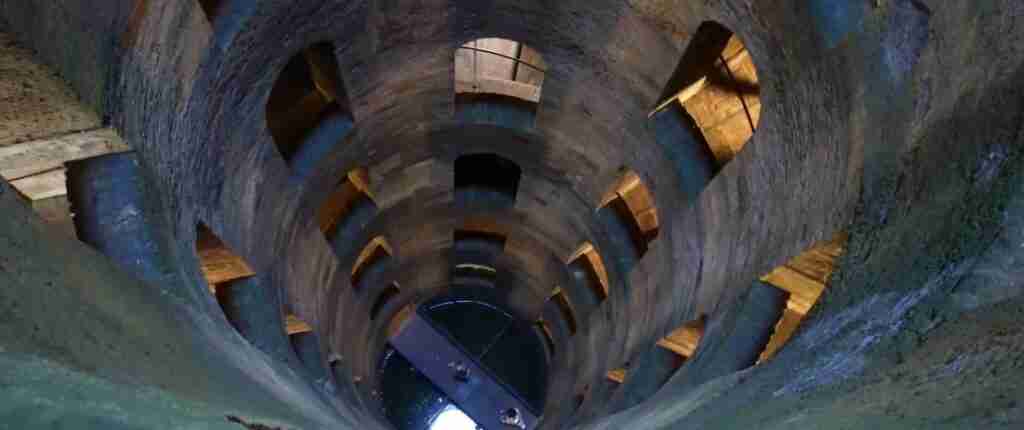
The Pozzo di San Patrizio, constructed 1527-1537 by architect Antonio da Sangallo the Younger, descends 53 meters through Etruscan and earlier geological layers to reach water-bearing rock. This double-helix design features two independent spiral ramps allowing pack animals to descend and ascend simultaneously without meeting, solving the logistics of raising water from extreme depth. The well’s construction exposed Etruscan chambers and Roman structures at various levels, creating vertical archaeological sections that document successive occupation phases. While Renaissance rather than ancient, the Pozzo demonstrates continued exploitation of Orvieto’s underground potential and inadvertently preserved evidence of earlier excavations.
The Pozzo della Cava, another major well system, began as an Etruscan cistern before medieval expansion created the current 36-meter depth. Archaeological investigation revealed nine distinct chambers at different levels, documenting 26 centuries of excavation and use. Etruscan chambers show tool marks from iron implements, demonstrating how ancient masons worked the tufa. Medieval additions include carved stairs, storage niches, and connecting passages to adjacent properties. The site functions as both archaeological monument and interpretive center, with displays explaining excavation techniques, geological context, and historical development.
Cave-cellars beneath Orvieto’s historic center demonstrate medieval wine production integrated with earlier structures. These chambers, carved or adapted from Etruscan and Roman excavations, provided stable temperatures and humidity ideal for aging wine. Some maintain Etruscan architectural details—carved pilasters, beam slots, bench fragments—incorporated into medieval working spaces. The continuous functional use protected these elements while creating archaeological palimpsests where multiple periods of activity overlap in single chambers.
Orvieto’s underground museums and guided tour networks make this archaeological heritage accessible while protecting fragile environments. Organized routes with controlled lighting, temperature monitoring, and visitor limits prevent deterioration while allowing public access. Interpretive displays in Italian and English explain archaeological contexts, construction techniques, and historical significance. The combination of accessible organized sites, ongoing archaeological research, and conservation efforts maintains Orvieto’s position as central Italy’s premier underground archaeological destination.
Perugia’s Etruscan Underground: Wells, Tombs, and City Walls
Perugia, Umbria’s largest city and historically among the most powerful Etruscan centers, preserves exceptional underground remains documenting urban development from the 5th century BCE through the Roman conquest and medieval transformation. The city’s position across multiple ridges required extensive engineering to create buildable platforms, manage water supply, and defend strategic positions. This engineering created underground infrastructure that survives as testimony to Etruscan technical sophistication and urban planning capabilities.
The Etruscan Well, located beneath Palazzo Sorbello in Perugia’s historic center, represents one of ancient Italy’s most impressive water management installations. Constructed in the 3rd century BCE, this well descends 37 meters through solid rock to reach a reliable water source, ensuring supply during sieges. The upper chamber features a circular construction 5.6 meters in diameter, with massive stone blocks precisely fitted without mortar. A travertine covering protected the water from contamination while allowing access for drawing. The well’s engineering demonstrates advanced understanding of hydrology, geology, and stone construction, with techniques that would not be matched in central Italy until Roman imperial projects centuries later.
The well’s location within the city’s fortified center rather than near the perimeter reflects Etruscan siege warfare concerns. Placing this crucial resource deep within defended zones prevented enemies from cutting off water supply, a common siege tactic. The chamber’s size allowed multiple people to draw water simultaneously, enabling rapid provisioning during emergencies. Archaeological evidence suggests the well remained functional through Roman and medieval periods, representing nearly 2,000 years of continuous use before modern piped water systems made such installations obsolete.
The Ipogeo dei Volumni, located three kilometers southeast of Perugia’s center, exemplifies elite Etruscan funerary architecture at its most elaborate. This family tomb complex, created for the Volumni family in the 2nd century BCE, consists of multiple chambers arranged around a central atrium, imitating the layout of aristocratic houses. The main chamber features a carved ceiling reproducing wooden beam construction in stone, walls with architectural moldings, and carved stone furniture including couches where bodies rested. Urns containing cremated remains bear inscriptions identifying family members across multiple generations.
The Volumni tomb’s decoration combines Etruscan traditions with Hellenistic Greek influences, reflecting Perugia’s cultural sophistication in the final centuries before Roman conquest. Stucco reliefs on walls and ceilings depict mythological scenes, architectural elements, and decorative motifs showing skilled craftsmanship. The central atrium arrangement, with family members’ remains organized around a communal space, emphasizes the continuing bonds between deceased relatives and the family’s collective identity across generations. This architectural statement of family prestige and continuity represents the Etruscan aristocratic worldview better than any written source.
Adjacent to the Ipogeo dei Volumni, the larger Necropoli del Palazzone contains dozens of chamber tombs from the same period, representing Perugia’s prosperous middle classes. These smaller tombs follow similar architectural principles but with simpler decoration and single-chamber rather than multi-room layouts. The necropolis’s organization, with tombs arranged along carved streets and pathways, creates a city of the dead that mirrors the organized layout of Etruscan Perugia itself. Inscriptions identify families from diverse backgrounds—craftsmen, merchants, agricultural landowners—documenting the economic and social complexity that supported Perugia’s position as a major Etruscan center.
Perugia’s Etruscan walls, incorporating both surface and underground components, demonstrate defensive engineering capabilities that impressed even Roman conquerors. Constructed from massive travertine blocks fitted without mortar, these walls originally extended seven kilometers and reached ten meters high in places. The Porta Marzia, an Etruscan gate preserved within later Roman and Renaissance construction, shows original 3rd-century BCE masonry with carved decorative elements. Underground foundations and drainage systems associated with the walls reveal how Etruscan engineers managed water flowing down the city’s steep slopes, preventing erosion while maintaining defensive integrity.
The Rocca Paolina fortress, built by Pope Paul III in 1540-1543, inadvertently preserved extensive Etruscan and medieval underground remains. Renaissance construction deliberately buried an entire medieval neighborhood, creating sealed archaeological deposits. Modern excavations beneath the fortress revealed Etruscan wall foundations, Roman-era modifications, and medieval structures in stratigraphic sequence. This accidental preservation makes the Rocca Paolina site crucial for understanding Perugia’s urban development across two millennia, with visible sections showing how successive cultures modified the same strategic location.
Ongoing archaeological work continues revealing Perugia’s underground heritage. Urban renewal projects, building renovations, and targeted excavations regularly expose Etruscan chambers, Roman construction, and medieval adaptations. The University of Perugia’s archaeological programs contribute research while training new generations of specialists in Etruscan and Roman studies. Conservation efforts focus on stabilizing fragile underground environments, controlling water infiltration, and managing visitor access to prevent deterioration while maintaining public engagement with this archaeological heritage.
Todi, Città della Pieve, and Regional Etruscan Underground Sites
Beyond Orvieto and Perugia, numerous smaller Umbrian towns preserve significant Etruscan underground remains that complement the major centers while revealing regional variations in funerary practices, urban development, and cultural expression. These sites demonstrate how Etruscan civilization adapted to different topographic conditions, local resources, and varying relationships with neighboring communities. The geographic distribution of underground archaeological sites reflects the density of Etruscan settlement across Umbria’s river valleys and hilltop positions.
Todi occupies a commanding hilltop position between the Tiber and Naia valleys, with Etruscan origins dating to at least the 8th century BCE. The town’s underground heritage includes both funerary and urban infrastructure elements that document continuous occupation through Etruscan, Roman, and medieval periods. Etruscan chamber tombs scattered around Todi’s periphery follow similar architectural patterns to those at Orvieto and Perugia but show distinctive local characteristics in scale and decoration. Many tombs integrate natural cave formations with carved expansions, taking advantage of existing geological features rather than excavating entirely artificial chambers.
The cistern network beneath Todi’s Roman-era forum represents sophisticated water management engineering that incorporated Etruscan foundations with Roman expansion and medieval additions. The largest cistern, originally constructed in the 1st century BCE during Rome’s transformation of Todi from Etruscan town to Roman colony, measures over 500 cubic meters capacity and features vaulted chambers supported by massive pilasters. Archaeological investigation revealed that Roman engineers incorporated existing Etruscan drainage channels into their design, adapting rather than replacing earlier infrastructure. Medieval additions connected new wells to this system, extending functional use into the modern era.
Città della Pieve, positioned on Umbria’s western edge near the Tuscan border, contains a remarkable concentration of Etruscan painted tombs that rival Orvieto’s examples in artistic quality while displaying distinct stylistic characteristics. The Necropoli di Celle represents the most significant complex, with chamber tombs featuring frescoes depicting funerary banquets, athletic competitions, and mythological scenes. These paintings show technical sophistication in pigment application, compositional arrangement, and iconographic detail, demonstrating that artistic excellence extended beyond major centers to smaller Etruscan communities.
The painted tombs at Città della Pieve reveal cultural connections linking Umbrian Etruscan communities with both Etruscan centers in Tuscany and the broader Mediterranean world. Certain mythological scenes and decorative motifs parallel examples from Tarquinia and Cerveteri, major Etruscan cities in coastal Lazio, suggesting shared artistic traditions or traveling craftsmen. Simultaneously, local variations in composition, color palette, and figural style demonstrate regional artistic identity within the broader Etruscan cultural framework. These paintings contribute crucial evidence for understanding how artistic ideas circulated in pre-Roman Italy.
Bettona, one of Umbria’s smallest medieval towns, preserves substantial sections of Etruscan walls incorporating both surface and underground components. Constructed from the same massive fitted-block masonry visible at Perugia, these walls demonstrate that even minor Etruscan centers possessed impressive defensive infrastructure. Underground drainage systems associated with the walls show sophisticated engineering understanding of water management in hillside urban contexts. Recent archaeological investigation revealed that portions of Bettona’s medieval buildings incorporate Etruscan foundation walls, representing continuous urban occupation across 27 centuries.
Marsciano, positioned in the Tiber valley between Perugia and Todi, functions as a research center for Etruscan archaeology despite having fewer visible monuments than hilltop towns. The area’s numerous Etruscan chamber tombs, primarily in the countryside surrounding the modern town, have yielded extensive artifact assemblages documenting daily life, economic activities, and trade connections. Many tombs contain pottery from diverse sources—Greek imports, local Etruscan production, and pieces showing cultural exchange with neighboring Umbrian peoples—revealing the complex commercial networks that supported Etruscan civilization.
The village of Castel Rubello near Torgiano preserves an important Etruscan tomb complex with unusual architectural features suggesting religious or ritual functions beyond standard burial. The main chamber includes carved niches arranged in patterns that may relate to religious symbolism, carved drainage channels that seem non-functional for water management, and architectural details without parallels in standard funerary architecture. Some archaeologists interpret this site as a combination tomb and sanctuary where living family members conducted religious rituals, though debate continues about specific functions and meanings.
Conservation challenges at smaller Etruscan sites differ from those at major centers like Orvieto and Perugia. Limited funding, fewer professional staff, and lower visitor numbers mean that significant sites may lack organized access, interpretive materials, or systematic monitoring. Simultaneously, reduced visitor pressure creates less wear on fragile painted surfaces and architectural elements. Regional archaeological authorities balance these factors, prioritizing conservation measures while developing sustainable access plans that protect underground environments while making heritage accessible to interested visitors.
Roman Underground Infrastructure: Engineering Beneath Medieval Towns
Roman conquest of Umbria, completed by the early 3rd century BCE, transformed existing Etruscan towns through massive infrastructure projects that included extensive underground components. Roman engineering philosophy emphasized practical functionality over symbolic meaning, creating underground structures designed to solve specific urban problems—water supply, drainage, foundation support, public bath systems—with efficiency and durability. These installations, often still functional or visible after two millennia, demonstrate why Roman engineering remained the standard throughout the medieval period and influenced European infrastructure development into the modern era.
Cryptoportici, underground galleries supporting terraced structures, represent one of Rome’s most distinctive architectural contributions to hillside urban development. These vaulted passages solved the engineering challenge of creating level building platforms on irregular slopes while providing usable underground spaces. Perugia’s Roman cryptoporticus, portions of which remain visible beneath the cathedral square, extends over 150 meters and originally supported the forum’s expansion beyond the natural plateau. The structure features barrel vaults supported by massive pilasters, creating stable underground galleries that bore enormous weight while providing circulation routes and storage chambers.
The construction technique employed in Roman cryptoportici demonstrates advanced engineering understanding. Builders created wooden frameworks defining vault shapes, filled spaces with concrete using pozzolana—volcanic ash that hardens underwater—and faced walls with dressed stone or brick. This combination of materials created structures capable of supporting not just static loads but also the dynamic stresses from earthquakes and ground settlement that challenged ancient builders throughout seismically active central Italy. The cryptoporticus design solved multiple problems simultaneously: creating buildable area on difficult terrain, providing functional underground space, and establishing durable foundations for surface structures.
Water management infrastructure constituted the most extensive category of Roman underground construction in Umbrian towns. Cisterns, aqueducts, drainage channels, and distribution systems required precise surveying, careful construction, and ongoing maintenance to function reliably. Spoleto’s Roman cistern system, portions still supplying water to public fountains, demonstrates the sophistication Romans achieved in hydraulic engineering. The main cistern, measuring approximately 1,000 cubic meters capacity, collected water from springs outside the urban area, distributed it through underground channels to secondary cisterns throughout the town, and provided reserves during dry periods or siege conditions.
The engineering principles governing Roman cistern construction balanced multiple requirements. Chambers needed sufficient capacity for reliable supply, structural strength to resist water pressure and overhead loads, impermeable linings to prevent contamination, and efficient distribution systems to deliver water where needed. Roman engineers achieved these goals through careful site selection, precise surveying establishing gradients for gravity flow, and construction techniques including hydraulic concrete linings that prevented seepage. Many Roman cisterns remained functional through the medieval period and beyond, testifying to both engineering excellence and the difficulty of replacing such infrastructure with medieval technology.
Drainage systems complemented water supply infrastructure by managing runoff from Umbria’s frequent rainfall and preventing erosion on steep hillside sites. Narni’s Roman drainage network, partially exposed through modern archaeological investigation, shows systematic planning with main channels following natural drainages and secondary channels collecting water from individual buildings and streets. The system employed both open channels and covered tunnels, with covered sections protecting against blockage while open portions allowed inspection and maintenance. This infrastructure prevented the water accumulation that undermined buildings and created public health hazards in poorly drained medieval cities.
Roman public bath complexes required extensive underground infrastructure supporting the hypocaust heating systems, water supply and drainage, and fuel storage. Assisi’s Roman bath complex, excavated beneath the medieval town center, reveals chambers that circulated hot air beneath raised floors, underground furnaces that generated heat, and the water channels that supplied multiple bathing pools at different temperatures. The complexity of this infrastructure—requiring coordination between heating, plumbing, drainage, and structural systems—demonstrates the engineering sophistication that made Roman baths possible and the enormous investment cities made in providing this amenity.
The underground foundations supporting major Roman structures often survive where surface buildings have disappeared, providing archaeological evidence for reconstructing ancient urban layouts. Spello’s Roman gates, walls, and public buildings rest on foundation systems that remain substantially intact beneath medieval construction. Archaeological excavation revealed that Roman builders first excavated to bedrock or stable soil, created level platforms using compacted fill and concrete, and then constructed foundations using massive dressed stone blocks. This methodology created enduring structural stability that allowed medieval and Renaissance buildings to safely reuse Roman foundations, maintaining urban continuity across two millennia.
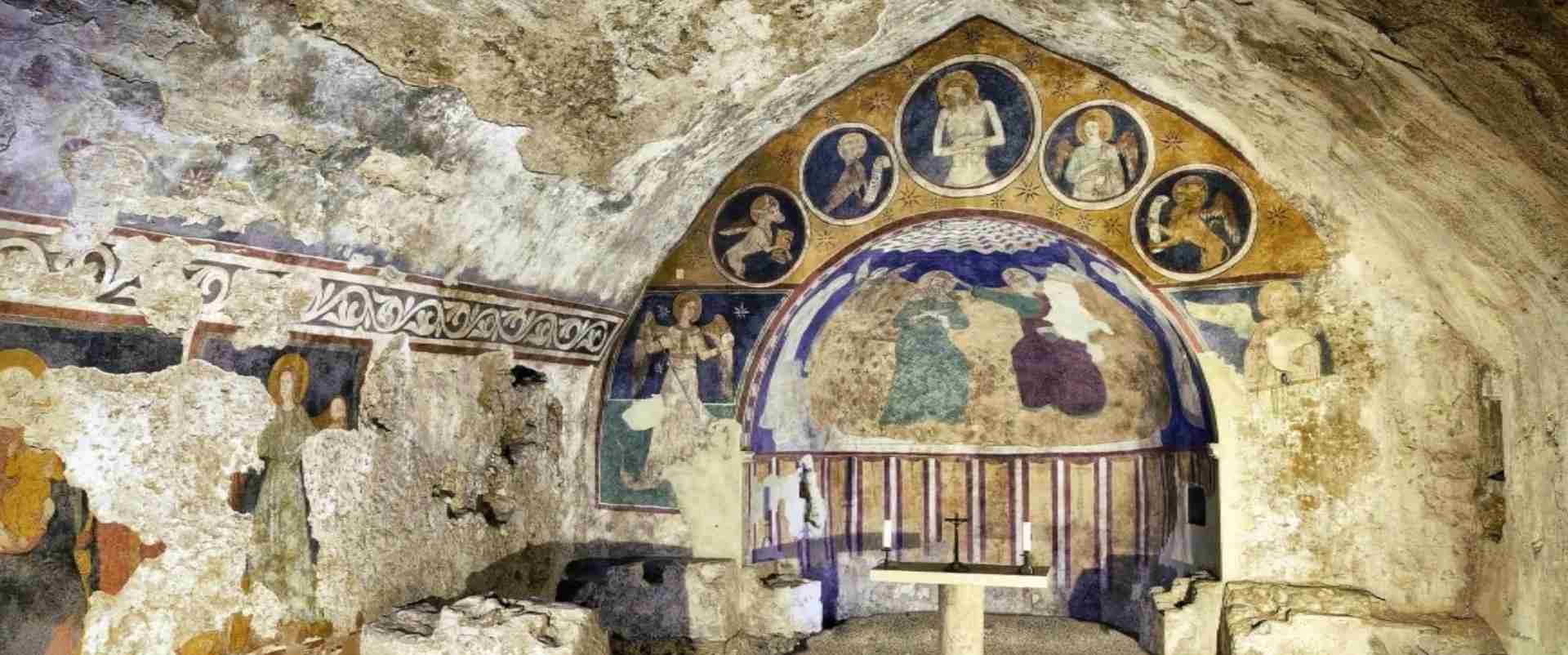
Roman crypts and underground burial chambers, though less common in Umbria than in regions closer to Rome, appear in several towns as part of early Christian development. Spoleto’s Crypt of Sant’Isacco, located beneath the medieval church, originated as a Roman chamber that early Christians adapted for burial and worship. The original Roman masonry remains visible in the lower walls, with early Christian modifications including frescoes, altar installations, and architectural adjustments creating a distinctive blend of Roman structural techniques and Christian religious functions. These adapted spaces document the transition from classical paganism to Christianity and the material transformations accompanying this religious shift.
Medieval Excavations: Connecting and Reusing Ancient Underground Spaces
Medieval inhabitants of Umbrian towns approached underground spaces with practical motivations—storage, waste disposal, water access, defense—that led them to extensively modify, expand, and connect existing Etruscan and Roman chambers. This activity created the complex underground networks visible today while inadvertently preserving earlier archaeological materials through burial and reuse. Understanding medieval excavation patterns reveals how successive cultures interacted with inherited underground heritage, sometimes destroying but often unintentionally protecting ancient remains.
Grain storage drove extensive medieval underground excavation across Umbria. The need for secure, temperature-stable storage protecting harvests from weather, pests, and theft made underground chambers ideal granaries. Medieval excavators often discovered and incorporated existing Etruscan and Roman chambers, expanding them as needed and creating connecting passages between previously isolated spaces. Orvieto’s underground network includes dozens of chambers showing this adaptive reuse, with Etruscan tool marks visible alongside medieval modifications, Roman masonry incorporated into medieval walls, and stratigraphic sequences documenting successive occupation phases.
The functional requirements for grain storage—dry conditions, stable cool temperatures, protection from rodents—meant that ancient chambers required modifications before becoming effective medieval granaries. Workers carved drainage channels to eliminate moisture, plastered walls to prevent infiltration, created ventilation systems balancing air circulation with security, and installed wooden frameworks supporting storage bins. These modifications altered original spaces while leaving sufficient evidence for archaeologists to identify earlier uses and reconstruction original configurations. The result is palimpsest archaeology where multiple functional periods overlap in single chambers.
Wine and olive oil production similarly utilized underground chambers for storage and processing. Perugia’s medieval wine cellars, extensively developed during the 13th and 14th centuries when the city dominated regional wine trade, occupy chambers originally carved by Etruscan or Roman excavators. The stable cool temperatures and high humidity that wine aging requires made these underground spaces superior to surface storage. Medieval modifications included installing large ceramic storage vessels, creating drainage for spilled wine, and carving connecting passages allowing wine movement between processing and aging chambers without surface transport. Archaeological investigation identifies medieval vintner’s tools, ceramic fragments, and organic residues that document wine production techniques alongside the Etruscan and Roman architectural features still visible in cellar walls.
Wells constituted the most invasive category of medieval underground excavation, cutting vertical shafts through all earlier occupation layers to reach water-bearing rock. These excavations created stratigraphic sections exposing the full sequence of urban development, making wells crucial for archaeological chronology. Medieval well-diggers frequently encountered Etruscan tombs, Roman structures, and earlier wells during excavation, sometimes preserving these discoveries by incorporating them into well walls, other times destroying them as impediments. The archaeological value of medieval wells lies in the vertical sections they create, showing how successive cultures built upon and modified the same locations across centuries.
The Pozzo della Cava at Orvieto exemplifies how medieval well excavation documented and preserved earlier remains. Initial excavation in the 13th century encountered Etruscan chambers at multiple depths, which medieval workers sometimes preserved by carving around them rather than removing structural supports. Subsequent deepening during the 15th and 16th centuries added more chambers and connected previously isolated spaces. Modern archaeological investigation identified nine distinct phases of excavation spanning from Etruscan origins through 20th-century modifications, with each phase leaving distinctive tool marks, architectural features, and artifact deposits. This stratigraphic complexity makes individual wells archaeological archives documenting urban development across multiple centuries.
Waste disposal represented another medieval use for underground chambers, particularly those damaged or considered unsuitable for storage. Depositing household waste, construction debris, and organic materials in underground spaces eliminated surface accumulation while creating archaeological deposits rich in artifacts documenting daily life. These midden deposits contain pottery fragments, animal bones, botanical remains, and discarded tools that reconstruct medieval diet, economy, and material culture. Archaeologists value these deposits despite their origin as waste because the underground environment preserved organic materials that would have decomposed on the surface.
Defensive considerations influenced some medieval underground excavations, particularly escape tunnels connecting strategic buildings with locations outside town walls. Todi’s tunnel network includes passages linking the fortress with multiple exits beyond the walls, providing evacuation routes during sieges. These tunnels sometimes utilized existing Etruscan or Roman chambers, connecting and expanding them to create concealed passage systems. The defensive value of underground routes meant that their locations were closely guarded secrets, with maps and knowledge restricted to authorities. This secrecy contributes to archaeological challenges in identifying and mapping medieval tunnel systems, as documentary evidence rarely describes their precise routes.
Religious institutions created underground chapels, burial crypts, and reliquary chambers that adapted existing ancient spaces to Christian purposes. Spoleto’s cathedral crypt, constructed during the 12th century, incorporated Roman foundation walls and earlier Christian burial chambers into a complex underground sanctuary housing saints’ relics. The architectural integration of Roman masonry, early Christian burial sites, and Romanesque construction techniques creates layered spaces where multiple historical periods remain visible. These religious adaptations represent conscious preservation of earlier materials considered sacred through association with martyrs or early Christian communities, contrasting with the more utilitarian reuse visible in storage and waste disposal contexts.
Accessing Underground Sites: Practical Information for Visitors
Exploring Umbria’s underground archaeological heritage requires understanding how sites balance public access with conservation needs, navigating practical requirements for visiting, and recognizing that experiences vary significantly between organized archaeological sites and informal chambers beneath private buildings. Physical conditions underground differ markedly from surface environments, with lower temperatures, higher humidity, uneven surfaces, and artificial lighting creating situations requiring preparation and appropriate expectations.
The Necropoli del Crocifisso del Tufo at Orvieto operates as an open-air archaeological park with organized pathways among the chamber tombs. Visiting requires no advance reservation during regular hours, with entrance near the base of Orvieto’s tufa cliff accessible by a short walk from the funicular station or parking areas. The site provides interpretive panels in Italian and English explaining tomb construction, Etruscan funerary practices, and the archaeological investigation’s history. Walking among the tombs allows close examination of carved doorways, inscriptions identifying families, and internal architectural details. The outdoor location means weather affects comfort but eliminates the confined spaces and artificial lighting characteristic of deeper underground sites.
Orvieto Underground conducts guided tours through selected portions of the chamber network beneath the historic center. Tours depart from the visitor center on Piazza Duomo and last approximately 60-75 minutes, descending through multiple levels of excavations to depths reaching 40 meters. Guides provide historical context, explain excavation techniques, and identify features from different periods. The route includes Etruscan cisterns, medieval storage chambers, Renaissance modifications, and modern archaeological investigation areas. Physical requirements include navigating numerous steps, low passages requiring stooping, and damp conditions with occasional standing water. Photography without flash is generally permitted, though specific restrictions apply in certain chambers containing fragile materials.
Perugia’s Etruscan Well accepts individual visitors during published hours without advance booking except for groups exceeding ten people. The site includes both the well chamber itself and an interpretive museum explaining Etruscan hydraulic engineering, Perugia’s urban development, and archaeological investigation methods. Descent into the well chamber requires navigating stone steps that become increasingly worn and uneven at lower levels. Viewing platforms at multiple depths allow examination of the construction technique, with lighting installed to illuminate the massive stone blocks and the water surface far below. The combination of depth, humidity, and enclosed space can trigger claustrophobia in sensitive individuals, making advance assessment of personal comfort important.
The Ipogeo dei Volumni operates as a museum site with controlled access protecting the tomb’s delicate stucco decorations and maintaining stable environmental conditions. Visiting requires purchasing tickets at the site entrance, with guided tours departing at scheduled intervals. The underground chambers maintain constant cool temperatures and high humidity, with modern climate control systems preventing fluctuations that would damage decorated surfaces. Guides explain the tomb’s architectural features, identify family members from inscriptions, and discuss the broader context of Etruscan funerary practices. Photography policies vary and should be confirmed upon arrival, as flash photography damages pigments while some locations permit photography without flash for personal use.
Accessing smaller archaeological sites at locations like Todi, Città della Pieve, or Bettona often requires contacting local tourism offices or archaeological authorities to arrange visits. Many significant sites remain unstaffed and locked, with access granted through arrangements with municipal offices or property owners. This system protects vulnerable sites from vandalism while accommodating serious visitors willing to coordinate in advance. Making arrangements typically requires Italian language ability or assistance from accommodations or tourism professionals, as smaller sites rarely provide English-language communication options.
Private underground chambers beneath restaurants, hotels, and residences sometimes open to guests or visitors through informal arrangements. Orvieto and Perugia contain numerous establishments occupying medieval buildings with underground spaces incorporating Etruscan or Roman elements. Some restaurants showcase ancient cisterns or chambers as atmospheric dining spaces, while certain hotels provide guests access to archaeological features beneath the property. These informal access opportunities vary by establishment and lack the interpretive information available at organized sites, but they offer glimpses of how underground heritage integrates into continuing urban life.
Physical preparation for underground site visits should include sturdy footwear with good traction for potentially wet and uneven surfaces, layers allowing temperature adjustment as underground chambers are notably cooler than surface temperatures, and flashlights or headlamps supplementing installed lighting for examining details. Many underground environments have limited artificial lighting, both to protect artifacts and to maintain atmospheric character, making personal lights valuable for closer inspection. Medical conditions affecting balance, claustrophobia, or temperature tolerance require consideration before attempting underground visits, as the confined spaces, depths, and environmental conditions create challenges for individuals with these concerns.
Seasonal considerations affect underground visiting conditions. Summer visits benefit from escaping surface heat in cool underground chambers, but increased tourist numbers during peak season can mean crowded conditions at major sites and longer waits for guided tours. Winter provides quieter visiting experiences but may involve reduced hours at some sites and potentially more challenging surface access if weather affects walkways. Spring and fall balance moderate temperatures with reasonable visitor numbers, creating generally optimal visiting conditions.
Combining underground archaeological visits with related surface monuments and museums creates comprehensive understanding of Umbrian heritage. Orvieto’s archaeological museum displays artifacts excavated from the necropoli, providing context for what remains in tombs. Perugia’s Museo Archeologico Nazionale dell’Umbria houses material from the Ipogeo dei Volumni and other regional sites, offering opportunities to examine pottery, jewelry, and other objects at close range. This integration of underground exploration with museum study and surface monument visits develops fuller appreciation of how Etruscan, Roman, and medieval cultures shaped Umbria’s archaeological landscape.
Conservation Challenges and Archaeological Research
Preserving Umbria’s underground archaeological heritage confronts challenges distinct from those affecting surface monuments, with environmental stability, visitor access, biological growth, and structural integrity all requiring specialized approaches. Underground chambers that survived two millennia in sealed conditions often deteriorate rapidly once exposed to air circulation, temperature fluctuations, and biological colonization. Conservation philosophy must balance protecting fragile materials against legitimate public interest in accessing heritage, creating tensions between preservation and education that archaeological authorities continuously negotiate.
Environmental control represents the most critical conservation challenge for decorated underground chambers. Etruscan painted tombs survived because burial created stable microclimates with constant temperature, high humidity, and minimal air circulation. Opening tombs for study and visitation disrupts these conditions, introducing temperature fluctuations, reduced humidity, and air movement that accelerate pigment deterioration. Modern conservation employs climate control systems maintaining conditions approximating original sealed environments, but the inherent conflict between creating viewable spaces and preserving original stability continues challenging conservators.
Biological colonization affects underground sites differently than surface monuments. Algae, lichens, and bacterial growth thrive in the humid, dark conditions characterizing many chambers, creating biofilms that discolor surfaces and digest pigments. Some growth appears within months of opening previously sealed spaces, requiring immediate intervention to prevent permanent damage. Conservation treatments include biocides eliminating existing growth, protective coatings preventing recolonization, and environmental controls limiting conditions supporting biological activity. However, chemical treatments raise their own concerns about long-term effects on original materials, creating difficult decisions about intervention strategies.
Structural stability challenges intensify as underground chambers age and as surface development adds loads to areas above ancient excavations. Medieval and Renaissance construction over Etruscan and Roman sites sometimes created structural relationships where modern buildings depend on ancient underground chambers for support. Deterioration in underground structural elements threatens both archaeological heritage and contemporary buildings, requiring conservation approaches that stabilize ancient features while protecting modern structures. Engineering interventions must avoid damaging original materials while ensuring safety for both visitors and overhead buildings.
Water infiltration constitutes an ongoing threat to underground stability and decorated surface preservation. Umbria’s climate includes substantial rainfall that percolates through porous tufa, creating seepage into underground chambers. This moisture brings dissolved minerals that deposit as crusts, transport salts that crystallize and damage surfaces, and support biological growth. Managing water requires addressing both immediate infiltration through drainage improvements and long-term patterns through surface interventions redirecting rainfall away from vulnerable areas. However, completely eliminating moisture can paradoxically damage materials adapted to humid conditions, requiring careful calibration of acceptable moisture levels.
Visitor management balances educational access against conservation imperatives. Heavy visitation creates multiple threats: physical wear on surfaces from touching and foot traffic, temperature and humidity fluctuations from body heat and respiration, introduction of biological contaminants from clothing and bodies, and accidental damage from careless behavior. Archaeological authorities employ various strategies to manage these impacts, including limiting visitor numbers through timed entry systems, restricting access to particularly fragile areas, installing protective barriers, and educating visitors about appropriate behavior. These measures reduce but cannot eliminate the inherent tension between access and preservation.
Archaeological research continues revealing new aspects of Umbria’s underground heritage while contributing to conservation understanding. Modern excavation techniques emphasize detailed documentation, laboratory analysis of materials, and minimal intervention in stable deposits. Ground-penetrating radar and other remote sensing technologies identify chambers without excavation, allowing assessment of sites before committing to invasive investigation. Digital documentation creates permanent records of current conditions, enabling future researchers to detect deterioration and evaluate conservation interventions’ effectiveness.
The University of Perugia’s archaeological programs and the Superintendency for Archaeological Heritage of Umbria conduct ongoing research addressing both scientific questions and conservation needs. Current projects include detailed mapping of underground chamber networks using three-dimensional laser scanning, analysis of painted surface compositions to understand pigment technologies and guide conservation treatments, and investigation of unexcavated or partially studied sites to expand knowledge of Etruscan and Roman underground construction. These research programs train new generations of specialists while advancing both academic understanding and practical conservation capabilities.
International collaboration brings additional expertise and resources to Umbrian conservation challenges. Projects involving institutions from other Italian regions, European universities, and American archaeological schools contribute specialized knowledge in areas like pigment conservation, structural stabilization, and environmental monitoring. These partnerships also facilitate funding for major conservation interventions beyond local budgets, enabling comprehensive treatments of significant sites. The collaborative approach reflects recognition that Umbria’s underground heritage has value extending beyond regional boundaries, constituting part of global human heritage requiring international investment.
Public engagement supports conservation through building constituencies that value archaeological heritage and pressure authorities to prioritize its protection. Educational programs targeting school groups, university students, and general visitors explain conservation challenges and communicate why certain access restrictions serve long-term preservation goals. When communities understand that limiting access today enables future generations to experience these sites, support for conservation measures increases. This cultural education represents long-term investment in heritage protection, creating social contexts where archaeological conservation receives sustained support despite competing funding priorities.
Interpreting Archaeological Evidence: What Underground Sites Reveal
Umbria’s underground archaeological sites function as primary source documents that historians, archaeologists, and art historians analyze to reconstruct Etruscan, Roman, and medieval cultures. Unlike literary texts that represent elite perspectives and specific authorial intentions, material remains offer more direct evidence of daily practices, technological capabilities, economic systems, and belief structures. Interpreting this evidence requires understanding both what underground preservation protected and what biases the archaeological record contains.
Funerary architecture and decoration reveal Etruscan religious beliefs and social values with specificity unavailable from other sources. Tomb paintings depicting banquets, for instance, show not just what Etruscans ate and drank but also how they arranged social gatherings, what roles men and women played in formal entertaining, and what they believed about the afterlife. The consistent emphasis on banquet scenes across multiple sites suggests that shared meals held central importance in Etruscan concepts of proper living and expectations for existence after death. Archaeological analysis of actual food remains in tomb deposits confirms that the painted banquets represented idealized versions of real practices.
Artifact assemblages from tombs document economic systems, trade networks, and technological achievements with precision. A single wealthy tomb might contain bronze vessels manufactured in Perugia, pottery imported from Athens, amber beads from the Baltic, ivory carved in Egypt, and local ceramic production. This material diversity demonstrates Etruscan participation in Mediterranean-wide trade networks, the wealth certain families controlled, and the technological sophistication required to produce elaborate objects. Archaeologists analyze manufacturing techniques, material sources, and stylistic influences to reconstruct the complex economic and cultural systems supporting Etruscan civilization.
Inscription evidence from tombs provides linguistic data crucial for understanding Etruscan language, which survives primarily in short texts. Names identifying deceased individuals and family relationships document onomastic patterns, revealing conventions for combining personal names, patronymics, and possibly matronymics. Some inscriptions include titles or occupational identifiers, suggesting social roles and hierarchical structures. While most tomb inscriptions remain brief and formulaic, collectively they constitute the largest corpus of Etruscan text available for linguistic analysis, making Umbrian tombs essential for all efforts to understand this still-partially-mysterious language.
Roman underground infrastructure reveals engineering capabilities, urban planning priorities, and the practical challenges ancient cities confronted. The sophisticated drainage systems beneath Umbrian towns demonstrate that Romans understood hydrology, gradient calculations, and materials science at levels not equaled in Europe for over a millennium after Rome’s fall. The substantial investment in water supply infrastructure reflects both technical capability and political will to provide public amenities, revealing how Roman civilization defined urban life. Archaeological analysis of construction techniques, repair phases, and reuse patterns documents how these systems functioned across centuries.
Medieval modifications to ancient underground spaces illuminate how later cultures understood and utilized inherited heritage. When medieval excavators carefully preserved Etruscan tomb elements while adapting chambers for storage, they demonstrated appreciation for ancient craftsmanship even if they lacked historical knowledge of Etruscan culture. Conversely, episodes where Roman structures were destroyed for building stone reveal different priorities where immediate needs outweighed heritage preservation. These varied responses to inherited remains show that medieval relationships with the ancient past were complex and contextual rather than uniformly reverential or destructive.
The archaeological record’s biases require acknowledgment when interpreting evidence. Tomb architecture and wealthy grave goods overrepresent elite perspectives while offering limited information about common people’s lives. Well-constructed underground chambers survive preferentially, creating knowledge bases skewed toward substantial architecture rather than the modest shelters most ancient people inhabited. Preservation favors inorganic materials like stone, metal, and ceramics while organic materials like textiles, wood, and leather rarely survive except in exceptional conditions. These biases mean that archaeological interpretation must carefully consider what evidence absences signify and resist generalizing from privileged perspectives to entire populations.
Comparative analysis with other Etruscan sites throughout central Italy contextualizes Umbrian evidence within broader cultural patterns. When specific tomb designs, artistic motifs, or architectural features appear at multiple locations, they suggest shared traditions or direct cultural transmission. Alternatively, distinctive regional variations visible in Umbrian sites document local interpretations of broader Etruscan civilization. This comparative approach prevents both provincializing Umbrian remains as merely local phenomena and overgeneralizing from Umbrian evidence to all Etruscan culture.
Interdisciplinary collaboration enhances archaeological interpretation by bringing diverse expertise to complex evidence. Classical philologists analyze inscriptions, art historians contextualize painted decorations within broader artistic traditions, geologists identify stone sources and construction materials, chemists analyze pigment compositions and metal alloys, botanists and zoologists identify organic remains, and physical anthropologists study human skeletal material. This collaborative approach produces richer interpretations than any single discipline achieves independently, reflecting archaeology’s increasingly interdisciplinary character.
Frequently Asked Questions About Underground Umbria
Are Umbria’s underground archaeological sites safe to visit?
Organized archaeological sites open to the public meet safety standards including structural inspections, emergency lighting, clearly marked routes, and staff oversight that make visiting extremely safe when following posted guidelines. Sites like the Necropoli del Crocifisso del Tufo, Orvieto Underground, and the Etruscan Well undergo regular structural assessments ensuring that chambers and passages can safely accommodate visitors. Modern installations include non-slip surfaces on stairs, handrails in challenging sections, emergency exits, and lighting systems with battery backup. Dangers arise primarily from visitors ignoring guidelines by touching fragile surfaces, venturing beyond marked routes, or attempting access during closed hours. Following posted rules and guidance from site staff ensures safe experiences. Physical limitations including claustrophobia, balance issues, or respiratory conditions require individual assessment, as underground environments involve confined spaces, uneven surfaces, and lower air circulation than surface locations.
Can I photograph inside the underground sites?
Photography policies vary by site, with most locations permitting photography without flash for personal, non-commercial use while prohibiting flash photography that damages pigments and protective coatings on decorated surfaces. The Necropoli del Crocifisso del Tufo generally allows photography throughout the site since the outdoor location and minimal surviving decoration create fewer conservation concerns. Orvieto Underground permits non-flash photography in most chambers but restricts photography in areas containing particularly fragile frescoes or recent archaeological discoveries. The Ipogeo dei Volumni enforces stricter controls due to the tomb’s exceptional stucco decorations, with photography sometimes prohibited entirely or limited to specific areas and conditions. Always confirm current photography policies upon arrival, as conservation needs may lead authorities to modify rules. Professional photography for commercial use, publication, or research requires advance permission from superintendency authorities and usually involves fees and specific conditions. The fundamental conservation principle is that light exposure, particularly intense or repeated illumination, gradually damages pigments and organic materials, making photography restrictions essential protective measures rather than arbitrary limitations.
What is the best time of year to visit underground sites?
Spring and fall provide optimal visiting conditions by combining moderate surface temperatures with smaller tourist crowds than summer peak season, though underground chambers maintain relatively constant cool temperatures year-round making seasonal timing less critical than for surface monuments. April, May, September, and October typically offer comfortable conditions for walking between sites, reasonable accommodation availability without peak-season premiums, and shorter waits for guided tours. Summer visits benefit from escaping oppressive surface heat in naturally cool underground chambers—a traditional reason Umbrians excavated underground spaces—but encounter larger crowds at major sites and potentially reduced availability for tours without advance booking. Winter provides quiet visiting experiences with minimal tourist pressure, though some smaller sites reduce hours or close entirely during December through February, and surface access to archaeological parks may involve muddy or slippery conditions following rainfall. The underground environments themselves change little seasonally—temperature remains constant around 12-15°C year-round in deep chambers, humidity stays high, and darkness is absolute without artificial lighting regardless of season—making visitor comfort and logistical convenience the primary seasonal considerations rather than archaeological experience quality.
Do I need a guide to visit the sites, or can I explore independently?
Major archaeological sites like the Necropoli del Crocifisso del Tufo allow independent exploration with interpretive signage providing basic information, while complex underground networks like Orvieto Underground require guided tours both for safety and to provide historical context that enhances understanding. The Crocifisso del Tufo functions as an open archaeological park where visitors walk freely among tombs, examining architectural details, reading inscriptions, and exploring at individual pace without staff oversight. Interpretive panels in Italian and English explain tomb construction techniques, funerary practices, and the excavation’s history, allowing self-guided learning. However, the information depth remains necessarily limited compared to knowledgeable guides, and independent visitors miss insights about specific tomb features, archaeological methodologies, and broader cultural contexts that expert interpretation provides. Orvieto Underground’s complex chamber network requires guided tours because the labyrinthine passages, multiple levels, and absence of continuous lighting make independent navigation unsafe. Guides identify features from different historical periods, explain how to interpret architectural details and artifact deposits, and provide safety oversight preventing visitors from becoming lost or encountering hazards. The Etruscan Well and Ipogeo dei Volumni occupy middle positions where independent visits are physically possible but guided tours substantially enhance understanding through expert commentary about engineering techniques, artistic meanings, and archaeological significance that non-specialist visitors would miss.
How physically demanding are underground site visits?
Physical requirements vary substantially across sites, from the relatively easy walking at the Necropoli del Crocifisso del Tufo to the more challenging descent into deep wells and extensive underground networks requiring moderate fitness and mobility. The Crocifisso del Tufo involves walking on gravel paths among tombs with some uneven surfaces and modest elevation changes but nothing approaching serious hiking or climbing. Most visitors with normal mobility manage these conditions comfortably. The Etruscan Well requires descending approximately 120 stone steps to the water surface 37 meters below street level, with steps becoming increasingly worn and irregular at lower depths. The descent and subsequent climb demand reasonable leg strength and cardiovascular fitness, though rest points at multiple levels allow breaks. Orvieto Underground presents more significant challenges with extended walking through passages, numerous stairs both ascending and descending, low ceiling sections requiring stooping, and uneven surfaces sometimes slick with moisture. The complete tour involves navigating perhaps 200-300 steps total across multiple levels. Individuals with knee problems, significant cardiovascular conditions, or severe balance issues should carefully consider whether attempting these physically demanding sites is appropriate. All sites involve cool, humid environments where wearing layers and having adequate footwear with good traction becomes important for comfort and safety.
Are the underground sites accessible for visitors with disabilities?
Most historical underground archaeological sites present significant accessibility challenges for visitors using wheelchairs or with limited mobility due to narrow passages, numerous steps, uneven surfaces, and absence of elevators, though some surface archaeological museums offer accessible alternatives. The inherent architectural characteristics of ancient underground chambers—carved for different purposes than modern accessibility, lacking level floors, incorporating stairs as primary circulation, and featuring tight doorways—create barriers that retrofitting cannot eliminate without destroying the archaeological features visitation seeks to experience. The Necropoli del Crocifisso del Tufo offers the most accessible underground experience, with at least some tombs viewable from pathways manageable for visitors with limited mobility, though entering individual chambers requires navigating steps and uneven thresholds. Sites like the Etruscan Well, Orvieto Underground, and the Ipogeo dei Volumni remain essentially inaccessible for wheelchair users and very difficult for visitors requiring walkers or having significant mobility limitations. However, associated museums including Orvieto’s archaeological museum and Perugia’s Museo Archeologico Nazionale dell’Umbria provide accessible alternatives displaying artifacts excavated from underground sites with interpretive materials explaining tomb architecture, construction techniques, and cultural significance. Virtual experiences including detailed photography, three-dimensional models, and video documentation increasingly offer ways for individuals unable to physically access underground sites to experience and learn about these archaeological treasures. Visitors with accessibility needs should contact sites directly before visiting to discuss specific conditions and available accommodations.
What should I bring when visiting underground sites?
Essential items include sturdy closed-toe footwear with good traction for potentially wet and uneven surfaces, layered clothing allowing temperature adjustment as underground chambers are substantially cooler than surface temperatures, and personal lighting supplementing installed lights for examining details. Athletic shoes, hiking boots, or similar footwear with non-slip soles provide necessary traction on surfaces that may be damp from seepage or condensation. Avoid sandals, flip-flops, or smooth-soled dress shoes that create slipping hazards. Bringing a light jacket or fleece proves valuable even during summer since underground temperatures remain constant around 12-15°C while surface temperatures may exceed 30°C, creating temperature differentials of 15-20°C. Layers allow adjustment between surface and underground environments without carrying bulky outerwear constantly. A small flashlight or headlamp supplements installed lighting for examining architectural details, inscriptions, or painted decorations in shadowed areas, though the primary lighting systems provide adequate illumination for safe movement. Water bottles remain important for hydration, particularly when visiting multiple sites, though drinking inside underground chambers may be prohibited to prevent accidental spills near artifacts. Cameras come with caveats—confirm photography policies before attempting to photograph, and remember that flash photography is almost universally prohibited. Small backpacks or crossbody bags carry these items while keeping hands free for navigating stairs and handrails. Avoid large backpacks or bags that become cumbersome in confined passages. Personal medications, particularly for conditions like asthma that humid underground environments might affect, should accompany visitors requiring them.
How do underground temperatures affect the visiting experience?
Underground chambers maintain relatively constant cool temperatures year-round, typically 12-15°C regardless of surface weather, creating comfortable refuge from summer heat but requiring warm layers during transitioning from the surface. This temperature stability results from the thermal mass of surrounding rock insulating underground spaces from daily and seasonal surface temperature fluctuations. The practical effect means that descending underground during July or August provides immediate relief from 30+°C surface heat, making these visits particularly pleasant during hot weather. However, the 15-20°C temperature drop from surface to underground can feel shocking initially, and extended time in cool humid environments without adequate clothing becomes uncomfortable. During winter visits, when surface temperatures might be 5-10°C, underground spaces actually feel warmer than the surface, though the high humidity can make them feel cooler than the actual temperature. The constant humidity in underground chambers, often 80-90% relative humidity, affects thermal comfort by making air feel cooler than dry air at the same temperature. This combination of cool temperature and high humidity means that what would feel comfortable at 15°C in dry air can feel quite cool at the same temperature with 85% humidity. Thermal comfort becomes highly individual—some visitors find 15°C underground chambers perfectly comfortable while others feel decidedly chilly after 30-60 minutes. The layered clothing approach allowing adjustment solves this variability, letting each person regulate their comfort level.
Can children visit the underground sites?
Children can visit most underground sites with appropriate supervision and preparation, though parents should assess individual children’s comfort with confined spaces, darkness, stairs, and extended periods requiring careful attention to surroundings. The Necropoli del Crocifisso del Tufo accommodates children well since the open-air location, ability to see sky above, and freedom to move among tombs at individual pace create less intimidating conditions than deep underground chambers. Children interested in history, archaeology, or ancient civilizations often find the tangible connection to past peoples engaging in ways that museum displays lack. The ability to enter actual Etruscan tombs where ancient families deposited their dead creates memorable experiences that bring history alive. However, sites like Orvieto Underground or the Etruscan Well present challenges for young children including extended periods walking in dim conditions, numerous stairs requiring careful attention, confined spaces that might trigger anxiety, and the necessity of staying with groups and following guides. Children prone to claustrophobia, highly active children who struggle remaining with groups, and very young children who cannot reliably navigate stairs safely may find these sites inappropriate. Ages six and up with interest in the subject matter generally manage well with proper preparation explaining what to expect. Teenagers with history or archaeology interests often find underground sites fascinating and appreciate the contrast with typical tourist experiences. Some sites offer reduced admission for children or family tickets making visits more economical for families. Educational preparation before visiting—discussing Etruscan civilization, explaining how tombs functioned, showing images of what to expect—increases children’s engagement and comfort with the unfamiliar underground environment.
What ongoing archaeological research is happening at Umbrian underground sites?
Current research programs focus on detailed documentation using advanced technologies, conservation science analyzing materials and deterioration processes, and targeted excavations investigating specific archaeological questions about Etruscan and Roman underground construction. The University of Perugia’s Department of Ancient Studies conducts multiple ongoing projects including three-dimensional laser scanning of major tomb complexes creating precise digital records, ground-penetrating radar surveys identifying unexcavated chambers without invasive excavation, and materials analysis of painted tomb decorations determining pigment compositions and binding media. These non-invasive or minimally invasive approaches reflect modern archaeological emphasis on documentation and analysis over extensive excavation. Excavation projects that do occur concentrate on threatened sites requiring salvage archaeology before urban development, investigation of newly discovered chambers, and research questions addressable only through controlled excavation. Recent work at Orvieto includes mapping the full extent of the underground chamber network, investigating connections between Etruscan excavations and later Roman and medieval modifications, and conducting detailed analysis of ceramic workshops identified in underground chambers. At Perugia, research programs examine the Etruscan Well’s construction sequence, investigate residential quarters around the Ipogeo dei Volumni, and analyze urban development patterns through excavations exposing stratified Etruscan, Roman, and medieval deposits. Conservation science research addresses critical questions about protecting painted tomb surfaces from biological growth, managing humidity in underground chambers without causing damage through excessive drying, and developing treatments for consolidating deteriorating tufa stone. International collaborations bring specialized expertise in areas like remote sensing, pigment analysis, and digital documentation, expanding research capabilities beyond what regional institutions achieve independently.