
Stone, Silence, and Solitude: A Curated Cultural Itinerary Through Umbria’s Medieval Gems
Umbria’s medieval hill towns rise from mist-wrapped valleys like stone ships anchored in time, their weathered facades and silent piazzas preserving eight centuries of Italian cultural heritage. This green heart of Italy, landlocked between Tuscany and Lazio, shelters some of Europe’s most remarkably preserved medieval settlements—places where Franciscan spirituality, Etruscan foundations, and Renaissance artistry converge in architectural harmony. This curated cultural journey explores the region’s most significant medieval towns, revealing the layers of history, art, and atmosphere that make Umbria an essential destination for travelers seeking authentic encounters with Italy’s profound cultural legacy.
Key Takeaways: Umbria’s Medieval Cultural Landscape
- Franciscan Spiritual Heritage: Assisi preserves the world’s most important Franciscan pilgrimage sites, including the UNESCO-inscribed Basilica di San Francesco with its Giotto fresco cycles, representing the birthplace of a religious movement that transformed medieval European spirituality and art.
- Etruscan-Medieval Continuity: Umbrian towns like Perugia, Orvieto, and Todi demonstrate exceptional architectural layering, where Etruscan foundations support Roman structures overlaid with medieval fortifications, creating vertical archaeological narratives spanning three millennia.
- Artistic Treasure Concentration: The region’s compact geography concentrates masterworks by Giotto, Perugino, Pinturicchio, Signorelli, and Fra Angelico within remarkably intimate settings—frescoed chapels, cloistered monasteries, and civic palaces accessible without the crowds of Florence or Rome.
- Medieval Urban Planning Preservation: Towns like Gubbio, Spello, and Bevagna retain virtually intact medieval street patterns, defensive systems, and civic architecture, offering unparalleled examples of 12th-14th century Italian urban design frozen at the moment of their greatest prosperity.
- Cultural Authenticity and Scale: Umbria’s medieval settlements operate as living communities rather than museum-towns, with authentic markets, artisan workshops, and religious observances maintaining cultural continuity while remaining accessible to independent travelers seeking depth over superficial tourism.
- Landscape Integration: The medieval builders of Umbria created towns in profound dialogue with topography—cliff-edge citadels, ridge-crest fortifications, and valley-overlooking sanctuaries that demonstrate sophisticated understanding of defensive strategy, aesthetic composition, and spiritual symbolism through architectural placement.
People Also Ask About Umbria’s Medieval Heritage
What makes Umbria’s medieval towns different from Tuscany’s?
Umbria’s medieval towns preserve a distinct character defined by greater architectural authenticity, deeper religious heritage, and less touristic commercialization compared to their Tuscan counterparts. While Tuscany’s medieval centers like San Gimignano and Siena attract massive visitor flows that have transformed their economies and atmospheres, Umbrian towns like Gubbio, Todi, and Bevagna maintain working communities where medieval architecture frames contemporary Italian life rather than serving primarily as tourist backdrops. The Umbrian medieval experience emphasizes Franciscan and Benedictine spiritual traditions—Assisi’s profound religious significance and the region’s numerous functioning monasteries create contemplative atmospheres absent in more secular Tuscan towns. Architecturally, Umbria demonstrates stronger Etruscan and Roman foundations visible in structures like Perugia’s Etruscan Arch and Spoleto’s Roman theater, creating deeper archaeological layering. The region’s medieval prosperity derived from religious pilgrimage and agricultural wealth rather than banking and commerce, producing civic architecture emphasizing ecclesiastical grandeur over mercantile display. Umbria’s geographical isolation—landlocked and mountainous—preserved medieval street patterns and defensive systems that survived intact while Tuscany’s more accessible cities underwent greater Renaissance and modern transformations. The artistic heritage differs as well: Umbria nurtured the Umbrian School of painting with its distinctive devotional character, while Tuscany pioneered the more humanistic Florentine Renaissance. These distinctions make Umbria essential for travelers seeking medieval Italy’s spiritual depth, architectural authenticity, and contemplative atmosphere beyond Tuscany’s more celebrated but increasingly crowded destinations.
Which Umbrian medieval town offers the richest artistic heritage?
Assisi stands unequivocally as Umbria’s richest repository of medieval and early Renaissance art, anchored by the Basilica di San Francesco’s extraordinary fresco cycles that revolutionized Western painting. The basilica’s Upper and Lower Churches preserve the most complete narrative fresco sequences from the late 13th and early 14th centuries, including Giotto’s legendary 28-scene Life of St. Francis cycle that introduced revolutionary naturalism, emotional expressiveness, and spatial depth to European painting. These works, complemented by Cimabue’s Crucifixion, Simone Martini’s Chapel of St. Martin frescoes, and Pietro Lorenzetti’s Passion cycle, represent the crucial transition from Byzantine formalism to Renaissance humanism. Beyond the basilica, Assisi’s Basilica di Santa Chiara, Chiesa Nuova, and numerous oratories contain significant works by the Maestro di San Francesco and other Duecento masters. However, Perugia rivals Assisi in artistic significance through different strengths: the Galleria Nazionale dell’Umbria houses the region’s most comprehensive collection of Umbrian School masterworks, with exceptional holdings of Perugino, Pinturicchio, Piero della Francesca, and Gentile da Fabriano. Orvieto contributes Luca Signorelli’s apocalyptic Last Judgment fresco cycle in the Duomo’s San Brizio Chapel, one of the Renaissance’s most influential and terrifying visualizations of divine judgment that directly inspired Michelangelo’s Sistine Chapel. The concentration of masterworks within these three cities—Assisi for revolutionary narrative painting, Perugia for Umbrian School devotional art, and Orvieto for High Renaissance drama—makes them essential stops on any serious cultural itinerary, with Assisi’s UNESCO recognition and unparalleled Franciscan spiritual context giving it primacy for most art-focused travelers.
How does Franciscan heritage shape Umbria’s medieval character?
Franciscan spirituality fundamentally defines Umbria’s medieval identity, transforming the region into a sacred landscape where every town, mountain, and forest bears associations with St. Francis of Assisi and the religious revolution he initiated in the early 13th century. The physical manifestations begin with Assisi’s Basilica di San Francesco, constructed immediately after the saint’s death in 1226 as both pilgrimage destination and artistic statement of Franciscan ideals—the basilica’s architecture and decoration created the visual language for depicting Franciscan spirituality that spread across Catholic Europe. The broader Umbrian landscape preserves numerous hermitages, convents, and sanctuaries where Francis and his early followers practiced their radical poverty and nature mysticism: the Eremo delle Carceri clinging to Monte Subasio’s slopes above Assisi, the Santuario di Rivotorto where the first Franciscan community gathered, and dozens of smaller sites marking specific episodes from hagiographic tradition. This Franciscan geography influenced medieval urban development—towns competed to claim Francis connections, constructing churches, oratories, and convents that shaped their architectural character and pilgrimage economies. The artistic impact proves equally profound: the need to visualize Franciscan narratives for pilgrims and devotees drove the development of narrative fresco cycles, naturalistic landscape representation, and emotionally expressive figure painting that revolutionized European art. Giotto’s Assisi frescoes pioneered techniques that would define Renaissance painting precisely because they needed to communicate Franciscan spirituality’s humanity, nature reverence, and emotional accessibility. Beyond art and architecture, Franciscan values of poverty, simplicity, and humility influenced Umbrian civic culture, creating towns that eschewed ostentatious display in favor of modest scale, harmonious proportions, and integration with natural surroundings—the aesthetic and spiritual qualities that make Umbrian medieval towns feel distinctly contemplative compared to more commercially driven Italian cities.
What is the best way to experience Umbria’s medieval towns authentically?
Authentic engagement with Umbria’s medieval heritage requires slow, contemplative travel that prioritizes depth over breadth, allowing time for each town’s distinct character to reveal itself through multiple encounters at different hours and seasons. The essential approach involves extended stays rather than day-trip accumulation—spending three to four nights in a single town like Assisi, Perugia, or Spoleto permits early morning and evening experiences when tourist groups depart, revealing the medieval rhythms that still structure Italian provincial life: morning markets filling medieval piazzas, afternoon quietude when shuttered streets echo footsteps, and evening passeggiata when residents reclaim their historic centers. Timing significantly shapes authenticity: visiting during religious festivals, particularly Assisi’s Feast of St. Francis in early October or Gubbio’s Corsa dei Ceri in May, reveals how medieval traditions continue to organize community identity and yearly cycles. Engaging with functioning Benedictine and Franciscan monasteries through attendance at Vespers or Compline services—most welcome respectful visitors—provides access to the contemplative practices that originally shaped these spaces, hearing Gregorian chant in acoustically designed medieval chapels where it has resonated for centuries. Culinary authenticity matters equally: seeking out family-run trattorias in secondary streets rather than piazza-facing restaurants, attending local markets, and participating in food-focused festivals like Bevagna’s Mercato delle Gaite reveals the agricultural and artisanal continuities connecting medieval and contemporary Umbrian life. The most profound authenticity emerges through walking—medieval towns were designed for pedestrian movement, and only on foot do the carefully orchestrated spatial sequences, sight lines, and threshold transitions reveal their sophisticated design intelligence. Ultimately, authentic experience requires surrender to medieval temporality: accepting slow service, siesta closures, limited English, and the absence of climate control as invitations to adjust modern expectations rather than obstacles to comfort.
Extended multi-day tours – 5+ days
Featured Umbria Multi-Day Tour Packages
5 days
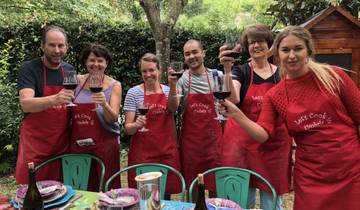
5 Days Italian Cookery Getaway in Umbria
- ✓ Comprehensive Umbria tour
- ✓ Expert local guides included
- ✓ All accommodation arranged
- ✓ Transportation provided

7 days
Authentic Umbria
- ✓ Comprehensive Umbria tour
- ✓ Expert local guides included
- ✓ All accommodation arranged
- ✓ Transportation provided

5 days
Italy: Authentic Puglia by E-Bike 🚴 – White Villages & Southern Flavors – 5 DAYS
- ✓ Comprehensive Umbria tour
- ✓ Expert local guides included
- ✓ All accommodation arranged
- ✓ Transportation provided
8 days
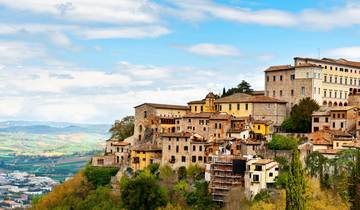
Hilltowns of Umbria, Self-Drive
- ✓ Comprehensive Umbria tour
- ✓ Expert local guides included
- ✓ All accommodation arranged
- ✓ Transportation provided
Multi-day tour packages powered by TourRadar. Prices and availability subject to change.
Introduction: Umbria’s Medieval Landscape as Cultural Sanctuary
The medieval hill towns of Umbria occupy a unique position in Italian cultural geography, preserving architectural, artistic, and spiritual heritage with exceptional integrity while remaining remarkably accessible to independent travelers seeking depth beyond the canonical Italian destinations. This landlocked region, stretching from the Apennine slopes to the Tiber valley, developed its distinctive medieval character through geographical isolation, religious fervor, and strategic position along ancient pilgrimage routes connecting Rome with northern Europe. The results of these historical forces remain visible today in dozens of remarkably preserved settlements where Etruscan foundations support Roman civic structures overlaid with medieval fortifications and Renaissance embellishments, creating vertical archaeological narratives that can be read in single standing walls.
Umbria’s medieval prosperity derived primarily from two sources: agricultural wealth generated by the fertile valleys surrounding fortified hill towns, and religious pilgrimage driven by the Franciscan movement that transformed Assisi into medieval Christianity’s most important devotional destination after Rome and Santiago de Compostela. These economic foundations produced a medieval building boom concentrated in the 12th through 14th centuries, when powerful communes constructed the civic palaces, defensive walls, churches, and fountains that define these towns’ architectural character. The Black Death of 1348 and subsequent economic decline froze this medieval development, preventing the extensive Renaissance and Baroque transformations that reshaped more prosperous Italian cities—a historical misfortune that paradoxically preserved Umbria’s medieval authenticity for contemporary cultural travelers.
The artistic significance of Umbria’s medieval heritage extends far beyond regional importance. The region served as the crucible for revolutionary developments in Western painting, particularly through Giotto’s Assisi frescoes that introduced naturalism, spatial depth, and emotional expressiveness to European art. The Umbrian School of painting that flourished in the 15th century—represented by Perugino, Pinturicchio, and the young Raphael—developed a distinctive style characterized by serene devotional beauty, luminous landscapes, and refined coloration that influenced Renaissance art throughout Italy. These masterworks remain displayed in their original architectural contexts: frescoed chapel cycles, altarpieces in situ, and civic commissions still adorning the palazzo walls for which they were created. This contextual preservation allows visitors to experience medieval and Renaissance art as its makers intended—as integrated elements of architectural and spiritual programs rather than decontextualized museum objects.
The spiritual dimension distinguishes Umbria’s medieval character most profoundly. St. Francis of Assisi’s revolutionary religious vision—emphasizing poverty, humility, nature mysticism, and direct divine encounter—emerged from and transformed this landscape in the early 13th century. The proliferation of Franciscan and Benedictine monasteries, hermitages, and pilgrimage sites created a sacred topography where virtually every mountain, forest, and town claims associations with saints, miracles, and spiritual practices. This religious heritage continues to shape Umbrian life through functioning monastic communities, active pilgrimage traditions, and festival calendars organized around saints’ feast days. The medieval sacred landscape remains accessible and alive rather than fossilized as historical curiosity.
Contemporary Umbria offers cultural travelers several distinct advantages over more celebrated Italian destinations. The region’s relative obscurity means that even the most significant sites like Assisi’s Basilica di San Francesco attract manageable crowds outside major religious holidays, permitting contemplative engagement with masterworks that would require hours-long queues in Florence or Rome. The compact geography concentrates exceptional heritage within small areas—many important medieval towns lie within 30 kilometers of each other, making intensive cultural exploration possible without extensive travel. The preservation of authentic Italian provincial life means that medieval architecture frames functioning communities rather than serving as backdrop for tourism, with markets, workshops, and religious observances maintaining cultural continuity. The absence of mass tourism has preserved traditional hospitality, with family-run accommodations, restaurants, and shops offering personal engagement impossible in more commercialized destinations.
This curated itinerary through Umbria’s medieval gems balances the essential sites that no serious cultural traveler can omit—Assisi’s Franciscan sanctuaries, Orvieto’s cathedral, Perugia’s artistic treasures—with lesser-known towns like Bevagna, Montefalco, and Spello that reveal the quieter dimensions of medieval Umbrian life. The selection emphasizes places where medieval urban fabric remains substantially intact, where significant artistic heritage justifies extended engagement, and where authentic cultural experiences reward travelers willing to move slowly and observe carefully. Each town receives treatment proportional to its cultural significance and the time required for adequate exploration, with detailed guidance on the specific buildings, artworks, and atmospheric qualities that make each destination essential to understanding Umbria’s medieval heritage.
Assisi: Franciscan Spirituality and Revolutionary Art
Assisi rises in pale rose-colored stone along the western slopes of Monte Subasio, its medieval silhouette dominated by the massive Basilica di San Francesco and the Rocca Maggiore fortress commanding the summit ridge. As the birthplace of St. Francis and St. Clare, Assisi functions simultaneously as functioning medieval town, major pilgrimage destination, and open-air museum of revolutionary 13th-14th century art. The town’s UNESCO World Heritage inscription recognizes the Basilica di San Francesco and related Franciscan sites as representing “a unique artistic achievement and an example of a type of architectural ensemble that has significantly influenced the development of art and architecture.” This dual character—sacred landscape and artistic treasury—requires visitors to balance reverential pilgrimage with close aesthetic examination, an experience that reveals how religious devotion and artistic innovation have remained inseparable throughout Assisi’s 800-year Franciscan history.
Basilica di San Francesco: Architecture of Sacred Narrative
The Basilica di San Francesco stands as medieval Christianity’s most ambitious architectural and artistic project, a doubled church constructed in two levels ascending the hillside with structural daring that reflected Franciscan spiritual boldness. The Lower Basilica, begun in 1228 immediately after Francis’s canonization, creates a dark, intimate crypt-like space where heavy Romanesque vaulting and restricted light establish contemplative atmosphere appropriate to the saint’s tomb in the crypt below. The architectural program deliberately evokes early Christian catacombs, placing Francis’s burial in lineage with Christianity’s martyred origins while the surrounding chapels and transepts create a processional pilgrimage circuit decorated with frescoes by Cimabue, Simone Martini, Pietro Lorenzetti, and Giotto’s workshop. The Chapel of St. Martin preserves Simone Martini’s exquisite 1312-1317 fresco cycle depicting the life of St. Martin of Tours, masterworks of International Gothic style where courtly elegance, jewel-like coloration, and refined decorative detail demonstrate Northern European influence on Italian painting at its most sophisticated moment.
The Upper Basilica contrasts dramatically, rising in soaring French Gothic verticality with pointed arches, ribbed vaulting, and vast window expanses that flood the space with light—an architectural translation of Franciscan joy and spiritual illumination. This bright, elevated church houses the most famous and artistically revolutionary fresco cycles in Western art: Giotto’s 28-scene Life of St. Francis along the nave walls, created around 1290-1295, that introduced spatial coherence, naturalistic gesture, emotional expressiveness, and architectural illusionism to European painting. These narratives—Francis renouncing worldly goods, preaching to birds, receiving the stigmata, appearing after death—established visual conventions for depicting Franciscan spirituality that would dominate Catholic art for centuries. The scenes demonstrate Giotto’s revolutionary understanding of how architecture, landscape, and human figures could be organized in coherent three-dimensional space, abandoning Byzantine gold-background flatness in favor of blue skies, rocky hillsides, and architectural settings that create convincing stage-like spaces for sacred drama.
The theological and artistic program uniting both basilica levels reveals sophisticated integration. The Lower Basilica’s darkness and intimacy emphasize Francis’s humility, poverty, and mystical communion with Christ’s suffering, while the Upper Basilica’s light and height celebrate the joy of Franciscan spiritual liberation and the saint’s ultimate glorification. The frescoes work as coordinated visual theology: Cimabue’s damaged but still powerful Crucifixion in the transept establishes Christ’s sacrifice as the model for Franciscan poverty and suffering, while Giotto’s Life of St. Francis demonstrates how one medieval Italian lived that imitation to revolutionary effect. The vault frescoes depicting the Four Doctors of the Church and apocalyptic visions position Francis as the culmination of Christian theological tradition, the saint whose radical Gospel literalism would renew a church perceived as corrupt and worldly. This architectural and artistic complexity requires multiple visits across different hours—morning light transforms the Upper Basilica’s narrative clarity, while afternoon shadows deepen the Lower Basilica’s mystical atmosphere.
Additional Franciscan Sacred Sites
The Basilica di Santa Chiara, constructed 1257-1265 in pink and white striped stone creating distinctive horizontal banding, honors Francis’s spiritual companion Clare of Assisi, founder of the Poor Clares order. The church preserves the Byzantine Crucifix that famously spoke to Francis at San Damiano, commanding him to “repair my church,” as well as Clare’s incorrupt body displayed in the crypt. The architectural severity—massive stone construction, minimal decoration, fortress-like exterior—expresses the Poor Clares’ austere spirituality and contrasts deliberately with the San Francesco basilica’s artistic richness, representing different facets of Franciscan devotion.
The Chiesa di San Damiano, located two kilometers below Assisi’s walls in an olive grove, preserves the humble Romanesque chapel where Francis received his divine calling in 1205 and where Clare established her first convent. The chapel’s small scale, plain stone walls, and simple wooden choir stalls maintain the poverty and humility central to early Franciscan practice, offering stark contrast to the basilica’s monumental grandeur. The adjacent cloister and garden create contemplative spaces where the relationship between Franciscan nature mysticism and architectural setting becomes physically manifest—Francis’s Canticle of the Sun, celebrating “Brother Sun” and “Sister Moon,” emerged from spiritual experiences in places like this where built structures frame rather than dominate natural beauty.
The Eremo delle Carceri clings to Monte Subasio’s forested slopes four kilometers above Assisi, a hermitage complex where Francis and his early followers retreated for prayer and solitude. The site preserves caves where individual friars meditated in isolation, connected by a small chapel and cloister added in the 15th century. The sacred grove of ancient holm oaks surrounding the hermitage represents one of Europe’s most evocative medieval sacred landscapes, where gnarled trees, mountain silence, and views across the Umbrian valley create the physical environment for contemplative spirituality. The walk from Assisi to the hermitage—ascending through olive groves and oak forest on ancient pathways—permits modern pilgrims to experience the relationship between urban ministry and wilderness retreat that structured early Franciscan practice.
Assisi’s Medieval Civic Architecture
Beyond its sacred monuments, Assisi preserves exceptional medieval civic architecture demonstrating how prosperous communes balanced religious devotion with secular power. The Piazza del Comune occupies the site of the ancient Roman forum, with the Temple of Minerva—a perfectly preserved 1st century BCE Roman temple converted into a Baroque church interior—standing as architectural witness to three millennia of continuous urban occupation. The adjacent Palazzo del Capitano del Popolo and Torre del Popolo represent 13th century civic architecture at its most robust, fortress-like stone construction with crenellated towers asserting communal authority.
The Rocca Maggiore commanding Assisi’s summit offers the region’s finest example of medieval military architecture, a massive 14th century fortress with polygonal towers, curtain walls, and keep that demonstrate sophisticated defensive design. The fortress provides panoramic views across the Umbrian valley to Perugia, revealing the strategic position that made Assisi worth fortifying. The walk along the medieval walls connecting the fortress to the lower town follows defensive circuits that remain substantially intact, with towers, gates, and bastions preserving their original configuration.
Experiencing Assisi: Practical and Atmospheric Considerations
Assisi requires a minimum of two full days for adequate engagement with its major sacred sites and artistic treasures, with three days permitting the contemplative pace that suits the town’s spiritual character. The essential pattern involves early morning visits to the basilica complex before tour groups arrive, permitting solitary engagement with the frescoes in the near-sacred silence their creators intended. Midday hours suit exploration of secondary churches and civic spaces when the basilica crowds peak. Late afternoon and evening, after the last coaches depart, reveal Assisi’s residential character as locals reclaim piazzas and streets for their daily rituals.
The town’s religious calendar structures annual rhythms worth experiencing: the Feast of St. Francis on October 4 attracts pilgrims from across the Catholic world for processions, services, and celebrations that demonstrate Franciscan devotion’s continuing vitality. Holy Week observances particularly Good Friday processions maintain medieval traditions with extraordinary intensity. The Calendimaggio spring festival in early May celebrates Assisi’s medieval heritage through costumed pageantry, musical performances, and competitions between the town’s upper and lower districts.
Atmospheric experiences beyond the major monuments reward explorers: the Via San Francesco ascending from the piazza to the basilica preserves medieval commercial character with narrow frontages and intimate scale; the gardens and terraces overlooking the valley reveal why Francis found this landscape conducive to spiritual insight; the early morning mist rising from the valley floor creates the mystical atmosphere captured in Giotto’s landscape backgrounds. Assisi demonstrates how medieval sacred geography continues to function, where architecture, topography, and spiritual tradition remain inseparably unified in daily experience.
Perugia: Etruscan Foundations and Renaissance Glory
Perugia sprawls across a commanding ridge overlooking the Tiber valley and Trasimeno lake, the largest and most urbanized of Umbria’s medieval cities with a complex archaeological and architectural layering that reveals continuous occupation from Etruscan settlement through contemporary university town. The city’s medieval and Renaissance heritage concentrates in the historic center, where the Corso Vannucci—Umbria’s most elegant pedestrian boulevard—connects the Piazza IV Novembre’s cathedral and Fontana Maggiore with the Rocca Paolina fortress, a route that passes the Galleria Nazionale dell’Umbria, Palazzo dei Priori, and dozens of significant churches representing every phase of medieval and Renaissance architecture. Perugia’s scale and architectural complexity exceed other Umbrian towns, requiring extended engagement to appreciate the layers of civic power, religious devotion, artistic patronage, and defensive strategy that shaped its development.
Galleria Nazionale dell’Umbria: The Umbrian School’s Masterworks
The Galleria Nazionale dell’Umbria, housed in the upper floors of the Palazzo dei Priori, preserves Italy’s most comprehensive collection of Umbrian School painting alongside significant Tuscan and central Italian works that contextualize regional artistic development. The gallery’s chronological arrangement permits visitors to trace the evolution from Byzantine-influenced Duecento painting through International Gothic refinement to the luminous devotional beauty of the Quattrocento Umbrian masters. The collection’s strengths concentrate in works by Perugino, Pinturicchio, Gentile da Fabriano, Piero della Francesca, and Fra Angelico, with exceptional holdings demonstrating the technical sophistication and spiritual sensitivity that distinguished Umbrian painting from more dramatic Florentine and Venetian traditions.
Perugino’s works dominate the Renaissance galleries, demonstrating the artist’s characteristic compositional clarity, serene figure types, and atmospheric landscape backgrounds that influenced his most famous pupil, Raphael. The Polyptych of Sant’Antonio from 1470 and the Pietà from 1495 showcase Perugino’s mature style, where idealized figures inhabit meticulously rendered architectural and landscape settings under luminous skies of graduated blue. Pinturicchio’s contributions include exquisitely detailed altarpieces demonstrating his mastery of decorative surface, jewel-like coloration, and narrative complexity within unified compositional fields.
Piero della Francesca’s Polyptych of Sant’Antonio, painted around 1460-1470, represents one of the collection’s greatest treasures, demonstrating the Tuscan master’s revolutionary understanding of perspective, light, and volumetric form. The polyptych’s Annunciation scene establishes architectural space through mathematical perspective with scientific precision, while the figures display the monumental solidity and meditative stillness characteristic of Piero’s mature work. Fra Angelico’s triptych and predella panels exhibit the devotional intensity and technical refinement that made the Dominican painter-monk one of the Quattrocento’s most influential masters.
The collection’s earlier works trace medieval painting’s development through significant Duecento and Trecento masters. The Maestro di San Francesco’s panels from the 1260s demonstrate the transitional period when Byzantine conventions began yielding to Western narrative naturalism. Duccio di Buoninsegna’s small-scale devotional works and Gentile da Fabriano’s International Gothic masterpieces reveal the stylistic currents that flowed through Perugia as a crossroads city connecting Tuscany, the Marche, and Rome. The gallery requires a minimum of two hours for the core collection, with additional time rewarding those interested in tracing stylistic development across two centuries of central Italian painting.
Piazza IV Novembre and the Fontana Maggiore
Perugia’s Piazza IV Novembre functions as Umbria’s grandest medieval civic space, where the Cathedral of San Lorenzo, Palazzo dei Priori, and Fontana Maggiore create an architectural ensemble demonstrating 13th-14th century communal power at its peak. The Fontana Maggiore, completed in 1278 by Nicola and Giovanni Pisano, stands as medieval sculpture’s most sophisticated fountain, a three-tiered polygonal basin carved with 50 relief panels depicting the labors of the months, liberal arts, Old Testament scenes, Aesop’s fables, and allegorical figures representing Perugia’s civic virtues. The iconographic program creates a visual encyclopedia of medieval knowledge, where biblical narrative, classical mythology, agricultural cycles, and civic pride integrate into unified artistic statement. The fountain’s architectural function as primary water source for the medieval city made it practical necessity, but the Pisani’s sculptural program transformed utilitarian infrastructure into public monument celebrating communal identity and intellectual sophistication.
The Palazzo dei Priori occupying the piazza’s west side represents one of Italy’s most impressive medieval civic palaces, a massive Gothic structure begun in 1293 that housed the Priori (city magistrates) and symbolized Perugia’s communal independence. The building’s severe stone facade, punctuated by triple-light windows and crowned by crenellated roofline, projects the authority and permanence that powerful communes sought to express through architecture. The Sala dei Notari on the palazzo’s ground floor preserves exceptional early 14th century frescoes depicting biblical and mythological scenes, while the adjacent Collegio del Cambio contains Perugino’s masterwork fresco cycle (1496-1500) combining Christian virtue figures, classical Sibyls, and idealized portraits in architectural framework that demonstrates Renaissance synthesis of pagan and Christian wisdom.
The Cathedral of San Lorenzo, despite its unfinished facade, preserves significant artistic treasures including the Cappella del Santo Anello containing a supposed relic of the Virgin Mary’s wedding ring, displayed with elaborate ceremonial protocols that demonstrate continuing medieval devotional practices. The cathedral’s asymmetric position—standing at oblique angle to the piazza rather than dominating as axial focus—reveals the medieval prioritization of civic over ecclesiastical power in communal cities where secular authorities competed with bishops for urban control.
Perugia’s Etruscan and Roman Archaeology
Perugia’s pre-medieval foundations remain remarkably visible, with Etruscan walls, gates, and tombs creating vertical archaeological narratives within the medieval urban fabric. The Arco Etrusco (Etruscan Arch), constructed in the 3rd century BCE, demonstrates Etruscan engineering sophistication through massive travertine blocks assembled without mortar in structural system that has supported two millennia of overlying medieval construction. The arch’s inscription records ancient Perugia’s Etruscan name, Augusta Perusia, connecting the contemporary city to its pre-Roman origins. The Pozzo Etrusco, a 3rd century BCE well descending 37 meters into bedrock, reveals the hydraulic engineering that permitted hilltop settlement where natural water sources were absent.
The Hypogeum of the Volumni, located five kilometers from the historic center, preserves the finest Etruscan tomb in Umbria, a 2nd century BCE underground chamber carved from tufa with elaborate decorative program including coffered ceilings, carved pilasters, and funerary urns demonstrating Hellenistic artistic influence on Etruscan culture. The tomb’s preservation and accessibility permit close examination of Etruscan architectural sophistication and burial practices that contextualize the civilization underlying Roman and medieval Umbria.
Medieval Defensive Architecture and Urban Planning
Perugia’s medieval fortifications demonstrate military architecture’s evolution across four centuries of warfare and political conflict. The Rocca Paolina, a massive Renaissance fortress built 1540-1543 by Sangallo the Younger on papal orders to dominate rebellious Perugia, incorporated entire medieval neighborhoods within its structure, creating subterranean streets and buildings that survived as archaeological remains when the fortress was partially demolished after Italian unification. The preserved medieval quarter accessed through the fortress foundations reveals intact 13th-14th century urban fabric: vaulted streets, stone houses, and civic spaces frozen at the moment of their violent incorporation into papal military architecture. This underground medieval city offers eerie experience of historical layering, where Renaissance domination literally built over medieval communal independence.
The surviving medieval gates—Porta San Pietro, Porta Marzia (incorporated into Rocca Paolina), and Porta Sant’Angelo—demonstrate defensive architecture’s sophistication, with massive towers, multiple portcullises, and flanking bastions creating killing zones for defenders. The walls connecting these gates, though substantially rebuilt in later periods, follow the circuit established in the 13th-14th centuries when Perugia reached its maximum medieval extent. Walking the perimeter reveals the topographic strategy underlying Perugia’s defensive strength: the ridge-crest position placed attackers at severe disadvantage approaching uphill across exposed slopes while defenders enjoyed commanding views across the surrounding valleys.
San Pietro Church and Monastic Complex
The Basilica di San Pietro, located just beyond the Porta San Pietro in the southern borgo, preserves one of Umbria’s most artistically significant church interiors, a late-Renaissance renovation of earlier medieval structures that created a unified decorative program of exceptional richness. The nave’s 18 massive columns, each wrapped in elaborately carved wooden choir stalls, create processional rhythm leading to the apse’s Perugino altarpiece. The walls display paintings by Perugino, Caravaggio’s follower Orazio Gentileschi, and numerous Umbrian masters, while the wooden ceiling presents intricate coffering and carved details demonstrating high Renaissance decorative arts at their peak. The adjacent Benedictine monastery, though not always accessible, preserves medieval cloisters and a library containing illuminated manuscripts and incunabula.
Experiencing Perugia: Scale, Complexity, and University Culture
Perugia requires three to four days for comprehensive engagement with its layered heritage, or can serve as base for exploring surrounding Umbrian towns while maintaining access to superior accommodation, dining, and cultural infrastructure. The city’s scale exceeds typical medieval hill towns—over 100,000 residents within the greater urban area—creating atmosphere more cosmopolitan than intimate, with university students (the Università per Stranieri attracts international enrollments) infusing energy absent in sleepier Umbrian centers.
The Corso Vannucci’s evening passeggiata rivals any Italian city for people-watching and atmospheric immersion, as crowds promenade between the duomo and Giardini Carducci enjoying aperitivo, gelato, and social theater. The surrounding vicoli (narrow streets) off the main corso preserve medieval commercial character with artisan workshops, wine bars, and family restaurants serving Umbrian cuisine largely unaltered from traditional recipes.
Perugia’s university character creates cultural programming beyond typical provincial offerings: chamber music series, theater productions, academic lectures, and art exhibitions that complement the historical monuments. The Umbria Jazz festival transforming the city each July represents Italy’s most important jazz event, though the crowds and commercial intensity contrast sharply with the contemplative atmosphere characterizing Umbria’s smaller towns. Travelers seeking medieval Umbria’s quieter dimensions may prefer using Perugia for its museums and urban amenities while basing themselves in Assisi, Spello, or Bevagna for atmospheric immersion.
Orvieto: Gothic Magnificence and Etruscan Mysteries
Orvieto commands a volcanic tufa plateau rising 200 meters above the Paglia valley, its cliff-edge position creating one of Italy’s most dramatic urban silhouettes where the cathedral’s Gothic facade and bell tower punctuate the medieval skyline visible for kilometers across the Umbrian landscape. The city’s strategic position—controlling routes between Rome and Florence—generated medieval prosperity that funded the construction of Umbria’s greatest Gothic cathedral and the civic infrastructure that made Orvieto a papal refuge and artistic center. The underlying tufa rock, easily carved but structurally unstable, permitted extensive underground excavation creating the subterranean city of wells, storage chambers, and passages that rival the surface architecture for archaeological significance. Orvieto rewards extended engagement for its cathedral masterpieces, Etruscan heritage, and the atmospheric contrast between the bright medieval streets and the mysterious tufa underworld.
Duomo di Orvieto: Gothic Architecture and Renaissance Painting
The Cathedral of Santa Maria Assunta stands as Italy’s most spectacular Gothic facade, a geometric composition of horizontal colored marble stripes, vertical pilasters, pointed arches, and mosaic-filled gables that creates visual complexity rivaling any Northern European cathedral. Construction began in 1290 to house the Corporal of Bolsena, a bloodstained cloth from a 1263 eucharistic miracle that attracted pilgrimage and papal attention. The facade’s design, attributed to Lorenzo Maitani with later contributions by Andrea Pisano and Andrea Orcagna, demonstrates how Italian Gothic adapted French architectural principles to Mediterranean taste: the horizontal banding and mosaic decoration create chromatic richness foreign to northern stone Gothic, while the sculptural program emphasizes narrative relief rather than freestanding statuary.
The facade’s four massive pilasters display bronze and marble relief panels depicting biblical narratives from Creation through Last Judgment, with Maitani’s Tree of Jesse and Last Judgment scenes representing Italian Gothic sculpture at its most refined. The bronze doors, cast in the 1960s but incorporating earlier reliefs, and the Rose window with Orcagna’s statuary create focal points within the facade’s intricate surface. The whole composition—rising in three distinct levels crowned by gables, pinnacles, and mosaic lunettes—achieves the vertical aspiration characteristic of Gothic while maintaining the wall-surface emphasis and coloristic richness central to Italian architectural tradition.
The cathedral interior, though less immediately stunning than the facade, houses two of the Renaissance’s most significant fresco cycles. The Cappella di San Brizio preserves Luca Signorelli’s Last Judgment frescoes (1499-1504), six vault and wall sections depicting the Apocalypse, Resurrection of the Flesh, and Damnation of the Condemned with unprecedented anatomical precision, dramatic foreshortening, and terrifying narrative intensity. Signorelli’s muscular nude figures demonstrate revolutionary understanding of human anatomy through direct observation, while the compositional complexity and emotional power directly influenced Michelangelo’s Sistine Chapel Last Judgment created 30 years later. The damned figures dragged to hell by demons, the blessed rising in resurrection glory, and the Antichrist preaching false doctrine create visual theology of exceptional force, making this chapel essential viewing for anyone tracing Renaissance art’s development from serene quattrocento devotion toward Mannerist drama.
The Cappella del Corporale preserves the reliquary containing the miraculous corporal in an elaborate Gothic tabernacle, surrounded by frescoes depicting the Bolsena miracle and eucharistic scenes by Ugolino di Prete Ilario. The chapel’s importance to Orvieto’s medieval identity and pilgrimage economy makes it central to understanding why such a modest-sized city supported cathedral construction of this magnificence—the miracle and its relic generated pilgrimage revenue and papal favor that funded architectural ambition exceeding Orvieto’s demographic or economic scale.
Orvieto’s Medieval Urban Fabric
The Piazza del Duomo and surrounding streets preserve exceptional medieval urban character, with the Palazzo Soliano, Palazzo Papale, and numerous civic buildings creating architectural ensemble that demonstrates papal and communal power. The Palazzo del Popolo, a 13th century structure combining Romanesque and Gothic elements, housed the Captain of the People and symbolized communal authority in tension with papal claims. The building’s fortress-like appearance—massive stone construction, crenellated roofline, defensive tower—reflects the military reality underlying medieval civic pride.
The Quartiere Medievale south of the duomo preserves narrow streets, stone houses, and small piazzas maintaining residential scale absent from the cathedral precinct’s monumental grandeur. The Via della Cava and surrounding vicoli retain craft workshops—ceramics, wood carving, textiles—continuing artisan traditions that structured medieval economic life. The Torre del Moro, a 47-meter civic tower dominating the central crossroads, offers panoramic views revealing Orvieto’s compact scale—the entire historic center walkable in 30 minutes—and the dramatic cliff-edge position that made the city virtually impregnable before artillery warfare.
Orvieto Underground: The Tufa City Beneath the Medieval Streets
Orvieto’s volcanic tufa foundation permitted extensive underground excavation creating a subterranean city of wells, storage chambers, quarries, and passages that rivals the surface architecture for extent and complexity. Over 1,200 documented underground spaces honeycomb the plateau, with many accessible through guided tours revealing the sophisticated engineering that made cliff-top settlement viable despite absent surface water. The Pozzo di San Patrizio (Well of St. Patrick), commissioned by Pope Clement VII in 1527 as siege-resistant water source, descends 53 meters through double-helix stairs permitting laden mules to ascend and descend without meeting—a masterwork of Renaissance engineering that also demonstrates the paranoid defensiveness of 16th century papal politics.
The Orvieto Underground tour system provides access to medieval wells, wine cellars, olive oil storage chambers, and pigeon coops carved from tufa across multiple levels, revealing the industrial and domestic infrastructure supporting the surface city. The cool constant temperature and stable humidity made underground spaces ideal for wine and oil storage, creating Orvieto’s viticultural economy that continues in the contemporary DOC wines. The Etruscan necropolis and temple remains incorporated within medieval structures demonstrate continuity of sacred and functional space across two millennia, where pagan tombs became Christian wine cellars without architectural modification.
Etruscan Heritage and Archaeological Museums
Orvieto preserves Umbria’s richest Etruscan heritage after Perugia, with the Museo Archeologico Nazionale housing the Golini Tomb frescoes and bronzes demonstrating 4th century BCE Etruscan civilization at its artistic peak. The Necropoli di Crocifisso del Tufo, located below the cliff base, contains hundreds of chamber tombs with family names inscribed above doorways, creating archaeological record of Etruscan social organization and burial practices. The tombs’ uniform rectangular chambers with barrel-vaulted ceilings demonstrate standardized architectural forms that contrast with the more elaborate painted tombs of Tarquinia and Cerveteri, suggesting different regional Etruscan traditions.
The Museo Claudio Faina, housed in a Renaissance palazzo facing the duomo, displays the Faina family’s private collection of Greek and Etruscan ceramics, including exceptional Attic black-figure and red-figure vases that demonstrate the extent of Greek trade networks reaching central Italian cities in the 6th-4th centuries BCE. The collection provides context for understanding Orvieto’s pre-Roman prosperity and cultural connections extending across the Mediterranean.
Experiencing Orvieto: Verticality, Wine, and Atmospheric Transitions
Orvieto requires two full days for adequate exploration, with the first dedicated to the duomo and its artistic treasures plus the medieval center, and the second to the underground city and Etruscan sites. The town’s compact scale—far smaller than Perugia—creates intimate atmosphere where chance encounters and discovered details reward wandering. The funicular railway connecting the train station to the historic center provides dramatic ascent revealing the geological foundation and strategic position underlying Orvieto’s development.
The cliff-edge walks, particularly the Anello della Rupe trail circumnavigating the plateau base, offer perspectives on Orvieto’s defensive position and reveal the tufa escarpment studded with cave openings and underground chamber entrances. The contrast between the bright, sunny upper town and the cool, mysterious underground creates atmospheric polarity that structures the Orvieto experience—moving between brilliant mosaic facades and dark tufa chambers, between Gothic vertical aspiration and Etruscan horizontal burials.
Orvieto’s wine culture provides contemporary connection to medieval agricultural traditions, with enotecas offering Orvieto Classico DOC wines descended from varieties cultivated in Etruscan and Roman periods. The wine caves carved from tufa beneath medieval palazzi function as tasting rooms where viticultural continuity spanning three millennia becomes tangible experience rather than abstract historical knowledge.
Spoleto: Roman Grandeur and Medieval Duchy
Spoleto rises in concentric circles ascending Monte Sant’Elia’s slopes, its Roman foundation visible in the theater and forum remains overlaid with medieval fortifications, churches, and the massive Rocca Albornoziana commanding the summit. As capital of the Lombard Duchy of Spoleto from 570-1230 CE, the city developed exceptional medieval architecture demonstrating both northern European influence and local central Italian traditions. The Ponte delle Torri—a spectacular 14th century aqueduct-bridge spanning the ravine between the Rocca and Monteluco mountain—creates one of Italy’s most dramatic architectural images, while the Duomo’s Romanesque facade and Filippo Lippi frescoed apse establish Spoleto’s artistic significance. The city’s contemporary fame through the Festival dei Due Mondi (Festival of Two Worlds), established in 1958 as major international arts festival, creates energetic cultural life that distinguishes Spoleto from quieter Umbrian towns while presenting both advantages and drawbacks for travelers seeking authentic medieval atmosphere versus modern cultural programming.
Duomo di Santa Maria Assunta: Romanesque Facade and Renaissance Interior
Spoleto’s cathedral occupies a small piazza at the base of the Rocca hill, its exceptional Romanesque facade featuring five rose windows, Renaissance portico, and Byzantine-style mosaic creating chromatic and stylistic complexity rare in Umbrian architecture. The facade’s 1207 construction date establishes its Romanesque pedigree, though the mosaic depicting Christ blessing with Virgin and St. John dates to 1547, a Mannerist addition that creates temporal layering. The bronze bust of Pope Urban VIII by Gian Lorenzo Bernini, positioned in the portico, represents one of Baroque sculpture’s greatest masters working in unexpectedly modest provincial context.
The cathedral interior’s supreme treasure resides in the apse, where Filippo Lippi’s fresco cycle depicting the Life of the Virgin (1467-1469) demonstrates late Quattrocento Florentine painting at refined maturity. Lippi’s Annunciation, Nativity, Dormition, and Coronation of the Virgin display the artist’s characteristic combination of monumental figures, architectural settings revealing perspective mastery, and luminous coloration that influenced his most famous pupil, Botticelli. The apse frescoes represent one of Umbria’s most important Renaissance commissions by a major Florentine master, though Lippi’s death in Spoleto during the project’s completion adds poignant biographical detail—his tomb, designed by his son Filippino Lippi, rests in the cathedral’s right transept. The fresco cycle requires close examination with binoculars to appreciate the detailed landscape backgrounds, architectural illusionism, and subtle figure gestures that demonstrate Lippi’s narrative sophistication.
The Cappella Eroli preserves Pinturicchio’s frescoes (1497) depicting the Annunciation and other Marian scenes with the artist’s characteristic decorative richness and jewel-like coloration. The adjacent sacristy houses the cathedral’s treasury including illuminated manuscripts, reliquaries, and liturgical vestments demonstrating medieval and Renaissance decorative arts.
Roman Spoleto: Theater and Forum Archaeology
Spoleto’s Roman theater, constructed in the 1st century CE and restored for modern performances, preserves its orchestra, cavea, and scene building foundations in exceptional condition. The theater’s continued use for Festival dei Due Mondi performances creates remarkable temporal continuity—ancient Roman entertainment architecture hosting contemporary productions in the same acoustic environment designed for classical drama two millennia earlier. The adjacent Museo Archeologico Nazionale displays Roman sculpture, mosaics, and inscriptions excavated from Spoletium, providing context for the city’s importance as Roman colony and municipium.
The Roman forum foundations and cryptoporticus (underground vaulted galleries) beneath the Piazza del Mercato reveal the public space that structured ancient civic life. The well-preserved cryptoporticus, accessible through the municipal archives, demonstrates Roman concrete vaulting techniques and created level surface for the forum above despite the steep hillside slope. These underground galleries, later used as medieval storage and workshop spaces, exemplify the architectural palimpsest characteristic of continuously inhabited Italian cities where each civilization builds upon its predecessors’ foundations.
Medieval Fortifications and the Rocca Albornoziana
The Rocca Albornoziana, constructed 1359-1370 for Cardinal Albornoz as papal fortress dominating rebellious Spoleto, represents 14th century military architecture’s sophistication through massive rectangular plan with cylindrical corner towers, curtain walls, and internal courtyard. The fortress served alternately as papal residence, prison, and military garrison across six centuries before recent restoration converted it to museum housing medieval arms, armor, and decorative arts. The courtyard’s two levels—the Cortile d’Onore for ceremonial functions and the Cortile delle Armi for military purposes—demonstrate how medieval fortifications integrated residential comfort, administrative authority, and defensive capability within unified architectural systems.
The fortress museum’s medieval fresco fragments, sculpture, and architectural elements salvaged from Spoleto’s destroyed or modified churches provide valuable documentation of the city’s artistic heritage. The defensive walls connecting the Rocca to the lower town preserve medieval circuit with towers and gates demonstrating successive building campaigns from Lombard through papal periods.
Ponte delle Torri: Engineering Masterpiece and Sacred Landscape
The Ponte delle Torri spans the gorge separating Spoleto from Monteluco mountain in ten soaring arches rising 80 meters above the stream bed, a 14th century aqueduct-bridge that represents medieval engineering at monumental scale. The bridge’s 230-meter length and vertiginous height create one of Italian architecture’s most spectacular experiences—crossing the bridge permits views down into the wooded ravine and across to the Rocca while the slender Gothic arches create rhythmic frames for the landscape. The structure’s engineering demonstrates sophisticated understanding of arch mechanics and foundation requirements for construction on unstable hillside—the bridge has survived seven centuries of earthquakes, floods, and military conflicts with minimal structural modification.
The bridge connects to the Monteluco sacred forest, a wooded mountain where early Christian hermits established monasteries continuing Umbria’s tradition of wilderness spirituality. The Sanctuary of San Francesco, positioned on Monteluco’s slopes, marks where St. Francis reputedly stayed during his Spoleto visits, creating another node in the Umbrian Franciscan sacred landscape. The forest trails ascending Monteluco offer escape from the city into Mediterranean oak and holm oak woodland preserving semi-wild character despite proximity to urban settlement.
San Salvatore and Lombard Heritage
The Church of San Salvatore, located outside the historic center on the Via Flaminia, preserves one of Italy’s most important early medieval monuments, a 4th-5th century structure demonstrating the transition from late Roman to early Christian architecture. The church’s three-aisled interior uses ancient Roman columns in reuse, while the facade’s triangular pediment and classical proportions reflect Roman temple architecture adapted to Christian liturgical needs. UNESCO inscription in 2011 as part of the Longobardi in Italia serial site recognizes San Salvatore’s exceptional preservation and significance for understanding early medieval architecture’s development from classical precedents.
The church’s austere interior—bare stone walls, simple capital carving, and absent decoration—creates contemplative atmosphere contrasting sharply with later medieval churches’ chromatic richness. The architectural honesty and structural clarity reward careful examination revealing construction techniques and spatial organization at the moment when Christian architecture began defining its own identity distinct from Roman civic buildings.
Experiencing Spoleto: Festival Culture and Medieval Quietude
Spoleto requires two to three days for comprehensive engagement with its Roman, medieval, and Renaissance heritage, though the city’s character varies dramatically depending on timing relative to the Festival dei Due Mondi. During the festival’s three weeks in late June and July, Spoleto transforms into international arts center with performances filling the Roman theater, churches, and piazzas, creating energetic atmosphere that attracts sophisticated audiences but overwhelms the medieval ambiance. Outside festival season, Spoleto reveals quieter character as provincial town where medieval architecture frames ordinary Italian life rather than serving as performance backdrop.
The passeggiata along the Corso Mazzini and through the historic center follows routes established by medieval street patterns, connecting the major monuments while passing artisan workshops, wine bars, and restaurants maintaining Umbrian culinary traditions. The market filling the Piazza del Mercato on weekday mornings continues traditions dating to the medieval forum occupation of this site. The evening hours particularly reveal Spoleto’s topographic drama as lights illuminate the Rocca and Ponte delle Torri visible from throughout the lower town, while the darkened ravine beneath the bridge creates void emphasizing the structure’s daring.
Gubbio: Medieval Purity and Mountain Solitude
Gubbio rises against Monte Ingino’s steep slopes in perfect medieval preservation, its grey stone architecture and vertical street organization creating what many scholars consider Umbria’s most architecturally authentic medieval town. The city’s relative isolation on Umbria’s northeastern margin preserved medieval urban fabric from Renaissance and modern transformations that modified more accessible cities, resulting in extraordinary integrity of 12th-14th century civic and religious architecture. The massive Palazzo dei Consoli dominating the central piazza represents Italian Gothic civic architecture at its most powerful, while the Roman theater, medieval churches, and defensive walls create urban ensemble of exceptional completeness. Gubbio’s annual festivals—particularly the Corsa dei Ceri in May and the Christmas tree formed by lights ascending Monte Ingino—demonstrate how medieval traditions continue structuring community identity in ways that feel remarkably authentic rather than touristically staged.
Palazzo dei Consoli and Civic Architecture
The Palazzo dei Consoli, constructed 1332-1349 from designs attributed to Angelo da Orvieto, represents one of Italy’s most imposing Gothic civic palaces, a massive rectangular structure raised on enormous barrel-vaulted arcades creating the level Piazza Grande platform on the steep hillside. The building’s scale—the great hall spans over 40 meters in length—and austere beauty establish Gubbio’s medieval civic pride despite the city’s modest size. The palazzo’s crown of crenellations, the soaring bell tower, and the monumental staircase ascending from the lower town create architectural composition demonstrating how medieval communes used architecture to assert political authority and cultural sophistication.
The palazzo houses the Museo Civico containing Gubbio’s greatest treasure: the Iguvine Tablets, seven bronze tablets inscribed with Umbrian language religious texts from the 3rd-1st centuries BCE that represent the longest ancient Umbrian inscriptions known. These tablets provide crucial evidence for understanding pre-Roman Umbrian civilization, religion, and language, making them archaeologically significant beyond their local importance. The museum’s medieval ceramics collection demonstrates Gubbio’s historical importance as majolica production center, with Renaissance-period lustred pottery showing exceptional technical sophistication.
The Piazza Grande’s opposing side features the Palazzo Pretorio, a 14th century structure housing municipal offices that balances the Palazzo dei Consoli across the vast stone-paved square. The piazza’s entirely medieval character—no modern intrusions, no parked vehicles, minimal signage—creates rare experience of medieval civic space at urban scale, particularly during early morning or evening hours when shadows emphasize the architectural masses and human presence remains minimal.
Religious Architecture and Artistic Treasures
The Duomo di Gubbio, positioned uphill from the civic center, presents an austere Gothic facade (1194) whose simplicity contrasts with Orvieto’s chromatic complexity or Assisi’s architectural ambition. The single-aisled interior creates unified space under Gothic pointed vault, focusing attention on the apse and altar rather than creating the processional complexity of multi-aisled churches. The interior’s artistic treasures include 16th century frescoes, carved choir stalls, and the adjacent Museo Diocesano containing paintings by Nelli, Boccati, and Umbrian masters demonstrating regional artistic traditions.
The Church of San Francesco preserves exceptional 14th-15th century fresco cycles in the apse depicting the Life of the Virgin by Ottaviano Nelli and workshop, demonstrating International Gothic style as practiced in provincial Umbrian centers. Nelli’s refined coloration, decorative surface treatment, and courtly figure types reflect Northern European influence mediated through Gentile da Fabriano and other traveling masters. The adjacent cloister provides contemplative space maintaining monastic character despite the church’s position within the dense medieval urban fabric.
The Basilica of Sant’Ubaldo, positioned high on Monte Ingino and accessible via funivia (cable car) or steep footpath, houses the remains of Gubbio’s patron saint and the three massive wooden ceri (candles or towers) carried during the Corsa dei Ceri festival. The basilica’s mountain setting creates pilgrimage destination requiring physical effort, while the views from the terrace reveal Gubbio’s complete medieval layout and the broader Umbrian landscape stretching toward Perugia and Assisi.
Roman and Etruscan Foundations
Gubbio’s Roman theater, dating to the 1st century BCE, preserves its cavea carved from hillside with exceptional completeness, the semicircular seating tiers ascending to provide commanding views across the valley. The theater’s continued use for summer performances demonstrates remarkable structural durability and acoustic design that remains functional two millennia after construction. The adjacent Roman residential district foundations and the remains of a Republican-era temple provide context for understanding Iguvium’s importance as Roman municipium controlling strategic mountain routes.
Medieval Urban Planning and Defensive Systems
Gubbio’s medieval street pattern demonstrates sophisticated adaptation to steep topography, with parallel horizontal streets connected by vertical vicoli creating gridded organization following the contours. This urban planning permits efficient movement while maximizing defensive capability—the streets’ narrowness and steep grades created natural obstacles to attacking forces while preserving sight lines for defenders. The medieval walls, punctuated by gates and towers, follow circuits established in the 13th-14th centuries and remain substantially intact on the hillside’s upper reaches.
The Via dei Consoli and surrounding streets preserve remarkable medieval commercial character with craft workshops, particularly ceramics studios continuing Gubbio’s majolica traditions. The stone-vaulted ground floors of medieval houses, originally used as shops and storerooms, maintain their functional character as artisan spaces rather than being entirely converted to tourist commerce. This authentic retention of craft activities makes Gubbio valuable for understanding how medieval urban economies structured daily life through intimate relationship between residential quarters and productive activities.
Experiencing Gubbio: Verticality, Festivals, and Mountain Atmosphere
Gubbio requires one to two days for thorough exploration, with the compact medieval center walkable in several hours though the steep streets and monumental architecture reward slower pace. The city’s vertical organization creates physical experience of medieval urban planning’s relationship to topography—the climb from the lower town to the Palazzo dei Consoli to the cathedral to Sant’Ubaldo creates ascending journey where each level reveals different aspects of civic, religious, and defensive functions segregated by altitude.
The Corsa dei Ceri on May 15 represents one of Italy’s most authentic and physically intense medieval festivals, when teams race the three massive wooden ceri weighing over 400 kilograms from the town center to Sant’Ubaldo basilica on the mountain summit. The ritual’s precise choreography, followed without variation for over 900 years, demonstrates how medieval civic identity continues structuring community participation and annual rhythms. The festival attracts devoted following but remains Gubbio’s own tradition rather than tourist spectacle, making attendance valuable for witnessing medieval cultural continuity in active practice.
The funivia ride ascending Monte Ingino in open baskets creates vertiginous experience revealing Gubbio’s topographic position and the surrounding Apennine landscape. The mountain trails through oak and ilex forest permit extended hiking creating spatial and temporal distance from the medieval town while maintaining visual contact through dramatic overview perspectives. The Christmas tree of lights spanning the mountain face from December through January represents one of the world’s largest such displays, transforming the nighttime landscape and attracting visitors seeking atmospheric spectacle rather than historical depth.
Todi: Hilltop Perfection and Architectural Harmony
Todi occupies a commanding hilltop between the Tiber and Naia valleys, its concentric medieval walls and perfectly preserved historic center earning recognition as exemplar of Italian medieval urban planning in harmonious relationship with landscape. The town’s modest size—population under 20,000 including surrounding frazioni—and relative obscurity compared to Assisi or Orvieto preserve quieter, more intimate atmosphere while exceptional architectural monuments reward extended engagement. The Piazza del Popolo represents one of Italy’s finest medieval civic spaces, where cathedral, civic palaces, and market functions integrate in unified ensemble demonstrating communal organization at its most sophisticated. The Church of Santa Maria della Consolazione, though Renaissance rather than medieval, represents architectural pilgrimage destination for students of Bramante’s influence on central-plan church design.
Piazza del Popolo: Medieval Civic Ensemble
Todi’s Piazza del Popolo functions as textbook example of medieval civic space organization, where the Cathedral of Santa Maria Assunta occupies the piazza’s western side while three secular palaces—Palazzo del Popolo, Palazzo del Capitano, and Palazzo dei Priori—demonstrate communal power along the eastern flank. The cathedral’s Romanesque facade (begun 1190) features three rose windows and portal demonstrating Lombard decorative influence, while the Gothic staircase ascending to the entrance creates dramatic approach. The interior preserves 16th century choir, 14th century frescoes by Spagna and others, and the crypt’s Roman and early medieval foundations revealing archaeological layering.
The Palazzo del Popolo (1213-1228) represents Lombardy-influenced Romanesque civic architecture with characteristic arcaded ground floor, mullioned windows, and crenellated roofline. The Palazzo del Capitano, added 1290, demonstrates the Gothic style succeeding Romanesque as communal wealth permitted architectural elaboration. The connected buildings house the Museo Civico containing Roman and Etruscan archaeological materials, medieval sculpture, and paintings by Spagna and other Umbrian masters. The museum’s pinacoteca preserves the Coronation of the Virgin by Lo Spagna (1511), a major altarpiece demonstrating the Umbrian School’s mature style under Perugino’s influence.
The Palazzo dei Priori (1293-1337), occupying the piazza’s southern side, completes the civic ensemble with imposing Gothic palazzo featuring trapezoidal tower and bronze eagle (symbol of Todi) surmounting the facade. The building continues housing municipal offices, maintaining functional continuity across seven centuries as center of civic administration. The piazza’s spatial proportions—neither too large nor cramped—and the architectural harmony among buildings from different periods create exceptional aesthetic unity demonstrating how medieval builders understood scale relationships and compositional balance.
Santa Maria della Consolazione: Renaissance Pilgrimage Architecture
The Church of Santa Maria della Consolazione, positioned on a terrace below Todi’s walls with commanding valley views, represents one of the Renaissance’s most important central-plan churches, attributed to Bramante or his circle and constructed 1508-1607. The building’s Greek cross plan with four apses, central dome, and corner pilasters demonstrates the Renaissance obsession with centralized geometric perfection and classical architectural vocabulary. The attribution to Bramante remains debated—documentary evidence lacks conclusive proof—but the design’s sophistication and relationship to Bramante’s other central-plan projects (particularly his Tempietto in Rome) make the connection architecturally if not historically certain.
The church’s isolated position on its terrace permits appreciation from all sides, revealing how the design creates four equivalent facades through the symmetrical cross plan. The interior space under the dome creates harmonious proportions and unified volume demonstrating Renaissance spatial ideals. The church’s importance for architectural history extends beyond its aesthetic achievement—it represents the centralized martyrium/pilgrimage church type that fascinated Renaissance architects seeking to embody divine perfection through geometric purity. The building influenced later central-plan churches across Catholic Europe and remains pilgrimage destination for architecture students studying High Renaissance design principles.
Medieval Defensive Walls and Urban Structure
Todi preserves three concentric wall circuits—Etruscan-Roman foundations, medieval extensions, and Renaissance-period bastions—creating archaeological record of urban growth spanning two millennia. The walls’ excellent preservation permits clear reading of defensive evolution: the innermost Etruscan circuit defined the ancient acropolis, medieval walls enclosed expanding borgo quarters, and Renaissance bastions adapted fortifications to artillery warfare. Walking the wall circuits reveals how topographic position contributed to Todi’s defensive strength while the gates—Porta Romana, Porta Perugina, Porta Fratta—demonstrate successive architectural periods and defensive strategies.
The medieval street pattern radiating from the Piazza del Popolo follows contour lines creating relatively level routes punctuated by steps and ramps accommodating the hilltop topography. The Via Ciuffelli and surrounding streets preserve medieval commercial character with craft workshops, wine shops, and small restaurants maintaining scales appropriate to the architectural context. The Church of San Fortunato, positioned uphill from the main piazza, features unfinished Gothic facade (begun 1292) where the architectural ambition—the entrance portal demonstrates exceptional decorative sculpture—exceeded the commune’s financial capacity to complete the design. The interior’s elegant Gothic vaulting and spacious proportions demonstrate how even unfinished medieval projects achieved architectural sophistication.
Experiencing Todi: Quietude, Views, and Architectural Study
Todi requires one to two days for adequate exploration, with the compact historic center permitting thorough coverage in several hours while the atmospheric qualities reward extended stays. The town’s genuine quietude—far fewer tourists than Assisi or Orvieto—creates contemplative environment where medieval architecture frames contemporary Italian provincial life without touristic overlay. The lack of major museums or artistic blockbusters means Todi attracts architecture enthusiasts and travelers seeking atmospheric immersion rather than comprehensive cultural tourism.
The terrace views from the town’s perimeter ramparts and from Santa Maria della Consolazione reveal the Umbrian landscape’s agricultural character—the patchwork of vineyards, olive groves, and grain fields punctuated by isolated farmhouses and castles that has changed minimally since medieval times. These panoramas demonstrate why Renaissance painters depicted idealized Umbrian landscapes in their religious scenes—the combination of cultivated order and natural beauty created visual metaphor for Christian paradise.
Todi’s restaurants and wine bars serve exceptional Umbrian cuisine with emphasis on local ingredients: handmade pastas, roasted meats, truffles, wild asparagus, and pecorino cheese accompanied by Todi DOC wines and Montefalco reds from nearby zones. The market in Piazza del Popolo on Saturday mornings maintains traditions dating to the medieval forum’s commercial function, while the artisan workshops selling ceramics, textiles, and woodwork continue craft traditions that structured medieval economic life.
Spello, Bevagna, and Montefalco: The Valle Umbra Medieval Trilogy
The Valle Umbra—the broad valley extending from Assisi south toward Spoleto—contains three exceptionally preserved medieval towns whose proximity (within 15 kilometers of each other) permits intensive exploration of different expressions of Umbrian medieval urbanism. Spello clings to Monte Subasio’s lower slopes with Roman gates and medieval streets ascending in steep switchbacks, Bevagna spreads across the valley floor preserving intact medieval piazza and Romanesque churches, while Montefalco commands a hilltop earning its “balcony of Umbria” designation through panoramic views extending to Assisi, Spoleto, and the Apennines. Together these towns demonstrate how topography, defensive requirements, agricultural economies, and artistic patronage created distinct medieval urban characters within shared cultural traditions.
Spello: Roman Foundations and Pinturicchio’s Masterwork
Spello’s pink and white stone architecture rises from olive groves in steep terraces, its Roman walls incorporating massive gates—Porta Consolare, Porta Venere with twin cylindrical towers, and Porta dell’Arce—that demonstrate Augustan-period construction continuing to structure medieval urban circulation. The Via Consolare ascending from Porta Consolare to the medieval summit creates spine connecting the town’s major monuments while the perpendicular vicoli stepping uphill provide access to residential quarters maintaining medieval character with minimal modern intrusion.
The Church of Santa Maria Maggiore houses Spello’s supreme artistic treasure: Pinturicchio’s Baglioni Chapel frescoes (1500-1501) depicting the Annunciation, Nativity, and Dispute in the Temple with exceptional decorative richness, brilliant coloration, and architectural settings demonstrating Renaissance perspective mastery. These frescoes represent Pinturicchio at his mature peak, creating surfaces of jewel-like intensity where gold-threaded textiles, landscape details, and architectural ornament receive equal attention with the sacred narratives. The chapel’s intimate scale permits close examination revealing the artist’s refined technique and the patron family members’ inclusion as contemporary witnesses to biblical events. The church’s floor preserves exceptional majolica tiles (1566) by Deruta ceramicists creating geometric and floral patterns demonstrating Renaissance decorative arts at highest refinement.
The Roman amphitheater remains, though fragmentary, demonstrate Spello’s importance as Hispellum, a significant municipium controlling mountain routes. The medieval churches—San Lorenzo, Sant’Andrea, San Claudio—preserve 13th-15th century frescoes and architectural details revealing how prosperous agricultural community supported ecclesiastical patronage. The Infiorata festival in June, when the streets receive elaborate flower-petal carpet designs created by residents, demonstrates how medieval Corpus Domini traditions continue structuring community participation and seasonal rhythms.
Bevagna: Medieval Completeness and Romanesque Purity
Bevagna’s Piazza Silvestri represents Umbria’s most perfectly preserved Romanesque civic ensemble, where the Church of San Silvestro (1195), Church of San Michele Arcangelo (late 12th century), and medieval Palazzo dei Consoli create unified architectural space of exceptional harmony. San Silvestro’s facade, designed by architect Binello whose signature appears on the portal, demonstrates Umbrian Romanesque at refined maturity with geometric precision, classical proportions, and minimal decoration allowing stonework quality and architectural logic to create aesthetic effect. The church’s three-aisled interior preserves original capitals, columns, and spatial organization demonstrating Romanesque structural clarity.
San Michele Arcangelo across the piazza features more elaborate Romanesque facade with multiple sculptural elements, rose window, and portal carvings demonstrating how individual architects working within shared stylistic traditions created distinct solutions. The piazza’s Roman mosaic fragments, visible through protective glass in the pavement, reveal the forum foundations underlying medieval construction—Bevagna occupies the site of Mevania, a Roman municipium whose prosperity derived from position on the Via Flaminia.
The medieval streets radiating from Piazza Silvestri preserve remarkable commercial character with craft workshops demonstrating medieval techniques: hand weaving, candle making, rope production, and parchment preparation. The Mercato delle Gaite festival in June transforms the town into living medieval reconstruction where residents in period costume operate authentic craft workshops, prepare historical recipes, and recreate medieval market culture with exceptional attention to historical accuracy. This festival represents serious historical reenactment rather than superficial pageantry, making it valuable for understanding how medieval economies and daily life actually functioned.
The Church of San Francesco (13th century) preserves frescoes and the adjacent Museo Civico houses Roman mosaics excavated from Mevania’s bath complex, including exceptional 2nd century CE marine scenes demonstrating sophisticated figurative mosaic art. The town walls, though substantially rebuilt in later periods, follow medieval circuits enclosing the compact urban core in defensive system adequate for protecting this valley-floor settlement.
Montefalco: The Umbrian Balcony and Benozzo Gozzoli’s Franciscan Narrative
Montefalco’s hilltop position 473 meters above sea level provides commanding views justifying its “balcony of Umbria” designation—from the ramparts and public gardens the panorama extends to Assisi’s basilica, Spoleto’s fortress, the Apennine peaks, and the valley floor’s patchwork agriculture. The town’s circular plan, rare among Italian medieval settlements, creates unique spatial organization where radial streets converge on the central piazza while concentric routes follow the defensive walls’ circuit. This geometric clarity demonstrates medieval planning’s sophistication when topography permitted ideal solutions unconstrained by pre-existing foundations.
The Church-Museum Complex of San Francesco preserves Benozzo Gozzoli’s magnificent fresco cycle (1450-1452) depicting the Life of St. Francis across the apse walls and vault, one of the 15th century’s most important Franciscan narrative sequences after Giotto’s Assisi cycle. Gozzoli’s frescoes demonstrate mature Quattrocento style under Fra Angelico’s influence (Gozzoli worked as Fra Angelico’s assistant), creating scenes of exceptional narrative clarity, landscape beauty, and decorative richness. The 12 major scenes and numerous smaller panels create comprehensive visual biography demonstrating how Renaissance painting served didactic religious purposes through accessible narrative, naturalistic detail, and emotionally engaging figures.
The adjacent museum rooms house significant paintings by Perugino, local master Francesco Melanzio, and other Umbrian artists, along with medieval sculpture, liturgical objects, and archaeological materials. The complex’s conversion from functioning church to museum permits close examination of the frescoes under controlled lighting while preserving the architectural context for which they were created—a balance between conservation requirements and contextual authenticity.
The medieval walls encircling Montefalco preserve their defensive circuit with minimal gaps, creating walking route that circumnavigates the town in 20 minutes while providing constantly changing panoramic views. The Via Ringhiera Umbra following the northern ramparts lives up to its name (Umbrian Railing) through vertiginous views across the valley. The town’s wine production—Sagrantino di Montefalco DOCG represents one of Italy’s most prestigious reds—creates contemporary connection to medieval viticultural traditions, with numerous enotecas offering tastings of this powerful, tannic wine descended from varieties cultivated since late medieval period.
Experiencing the Valle Umbra Trilogy: Sequential Exploration and Agricultural Landscape
The three towns’ proximity permits intensive one-day circuit or more contemplative two-day exploration with overnight in Spello or Bevagna. The sequential experience reveals how medieval urbanism adapted to different topographies: Spello’s steep hillside terraces requiring switchback streets and creating dramatic vertical organization; Bevagna’s valley floor permitting orthogonal street patterns around forum foundations; Montefalco’s hilltop allowing ideal circular plan with radial organization. Each town preserves distinct medieval character while sharing Umbrian architectural traditions, agricultural economies, and cultural continuities.
The agricultural landscape connecting the three towns demonstrates the Medieval relationship between fortified hilltop settlements and surrounding productive valleys that generated prosperity. The olive groves, vineyards, and grain fields follow cultivation patterns established in Roman and medieval periods, with isolated farmhouses and rural chapels punctuating the landscape. Driving or cycling the secondary roads reveals this agricultural continuity while permitting discoveries of minor Romanesque churches, abandoned castles, and working farms maintaining traditional practices.
The collective experience of Spello’s Pinturicchio chapel, Bevagna’s Romanesque perfection, and Montefalco’s Gozzoli cycle creates concentrated engagement with Umbrian Renaissance painting’s finest achievements within authentic architectural contexts. The absence of crowds—these towns receive fraction of Assisi’s visitor numbers—permits contemplative examination impossible at more famous sites, while the functioning community contexts mean that medieval architecture frames contemporary Italian life rather than existing primarily as tourist attractions.
Secondary Medieval Treasures: Trevi, Narni, and Città della Pieve
Beyond Umbria’s essential medieval destinations, several secondary towns reward travelers seeking depth over breadth, offering significant monuments and atmospheric experiences without comprehensive cultural infrastructures of major centers. These towns function primarily as residential communities where tourism supplements rather than dominates local economies, creating authentic encounters with provincial Italian life within medieval architectural settings.
Trevi: Vertical Streets and Olive Oil Heritage
Trevi rises in conical perfection from the Valle Umbra, its concentric streets spiraling around the hilltop in organization demonstrating adaptation to steep circular topography. The ascent from the valley floor via switchback roads reveals the town’s dramatic position and the silver-grey olive groves that have generated prosperity since Roman times—Trevi’s olive oil maintains reputation for exceptional quality descended from cultivation traditions spanning two millennia. The medieval historic center preserves tight street organization with buildings pressed against each other creating continuous facades, the narrow passages opening occasionally to pocket piazzas offering valley views.
The Pinacoteca Comunale houses the town’s artistic treasures including Perugino’s Adoration of the Shepherds (1521), one of the master’s late works demonstrating refined compositional balance and atmospheric landscape backgrounds. The museum’s medieval sculpture, ceramics, and archaeological materials provide context for understanding Trevi’s historical development from Roman Trebiae through medieval commune to contemporary provincial town. The Church of San Francesco preserves 15th century frescoes and serves as occasional concert venue exploiting the sanctuary’s acoustic properties.
Narni: Fortress Position and Underground Mysteries
Narni commands a rocky spur above the Nera river gorge, its fortress position controlling the Via Flaminia’s passage through the narrow valley making it strategically significant from Roman through medieval periods. The Rocca Albornoz, a 14th century papal fortress similar to Spoleto’s citadel, dominates the summit with massive towers and curtain walls demonstrating military architecture’s sophistication. The medieval center preserves the Piazza dei Priori with Palazzo dei Priori and medieval civic palaces creating ensemble of civic authority, while the Cathedral of San Giovenale maintains Romanesque character despite later modifications.
Narni’s contemporary fame derives from the underground discoveries revealing Roman cisterns, medieval frescoes, and spaces reputedly used by Inquisition tribunals. The Narni Sotterranea guided tours through these subterranean chambers create atmospheric experiences emphasizing mystery and historical imagination though the historical interpretations sometimes exceed documentary evidence. The Roman Ponte Cardona spanning the Nera river, though reduced to single massive arch from its original four-arch structure, demonstrates engineering on monumental scale rivaling Rome’s own bridges.
Città della Pieve: Perugino’s Birthplace and Border Town Character
Città della Pieve occupies hills near the Tuscan border, its brick architecture reflecting Tuscan influence and creating distinct appearance from Umbria’s typical stone construction. The town’s greatest significance derives from being Perugino’s birthplace, with several of the master’s works preserved in original locations including the Adoration of the Magi (1504) in the Oratorio di Santa Maria dei Bianchi, a large-scale fresco demonstrating Perugino’s mature style with characteristic luminous landscape, refined figure types, and architectural settings establishing spatial depth. The fresco’s preservation in situ permits appreciation within the architectural context and devotional program for which it was created.
The medieval street pattern preserves intact organization with the Via della Baciadonne (Street of Kissing Women) earning designation as Italy’s narrowest street at points less than meter wide—the name derives from legend that pedestrians passing could not avoid touching, creating opportunities for romantic encounters. The Palazzo della Corgna, a Renaissance structure built for a condottiere family, demonstrates how provincial centers attracted aristocratic patronage creating architectural monuments disproportionate to town size. The Palio dei Terzieri in August recreates medieval traditions through archery competitions, costumed processions, and neighborhood rivalries maintaining centuries-old identities.
Practical Considerations for Cultural Exploration
Comprehensive engagement with Umbria’s medieval heritage requires planning considerations balancing cultural objectives, seasonal factors, accommodation logistics, and transportation options. The region’s compact geography permits various itinerary configurations depending on available time, depth preferences, and tolerance for intensive cultural consumption versus leisurely immersion.
Recommended Itinerary Frameworks
A minimal engagement covering essential sites requires seven days following this sequence: Assisi three days for the Franciscan complex and atmospheric immersion, Perugia two days for the Galleria Nazionale and civic monuments, Orvieto one day for the cathedral and underground city, Spoleto one day for the duomo and Roman remains. This compressed itinerary sacrifices depth for breadth and permits only surface engagement with each destination’s cultural offerings.
A comprehensive two-week itinerary permits adequate depth: Assisi four days including Eremo delle Carceri and secondary churches, Perugia three days with time for surrounding countryside, Gubbio two days, Orvieto two days including Etruscan sites, Spoleto two days, and one day for the Spello-Bevagna-Montefalco circuit. This pacing allows multiple visits to major monuments across different hours, attendance at Vespers or other religious services, and unscheduled time for atmospheric absorption.
Base location strategies include: single base in Assisi with day trips radiating outward, two bases dividing north (Perugia or Gubbio) from south (Spoleto or Todi), or multiple short stays experiencing each town’s distinct evening and morning atmospheres. Single-base strategies minimize packing disruption but reduce opportunities for dawn and dusk experiences when each town reveals character most authentically. Multiple short stays create logistical complexity but reward travelers prioritizing atmospheric depth over convenience.
Seasonal Considerations and Timing
Spring (April-May) and autumn (September-October) provide optimal conditions combining moderate temperatures, manageable crowds, and seasonal beauty—spring wildflowers transforming hillsides and autumn grape harvests creating agricultural activity visible across the landscape. These shoulder seasons permit comfortable extended walking while major sites remain accessible without summer’s overwhelming visitor numbers.
Summer (June-August) brings intense heat making midday outdoor activity uncomfortable, while Assisi, Orvieto, and Perugia experience heavy tourist flows requiring advance planning for accommodation and restaurant reservations. The compensation includes extended daylight hours permitting early morning and late evening site visits when temperatures moderate, plus festival programming particularly Spoleto’s Due Mondi and Perugia’s Umbria Jazz adding cultural dimensions beyond the historical monuments.
Winter (November-March) creates contemplative atmosphere with minimal tourists and authentic community life fully visible, but many minor sites reduce hours or close entirely, temperatures drop requiring warm clothing, and daylight limitations compress viable touring hours. The Umbrian winter landscape possesses stark beauty—bare trees revealing architectural silhouettes, occasional snow dusting the mountains, and crystalline light creating exceptional photographic conditions—appealing to travelers prioritizing atmosphere over comprehensive site access.
Transportation and Accessibility
Car rental provides maximum flexibility permitting spontaneous exploration and access to minor sites, rural churches, and countryside routes connecting the major towns. However, historic center driving restrictions, limited parking, and narrow medieval streets create challenges requiring comfort with manual transmission, tight maneuvering, and walking from peripheral parking to monuments. Most historic centers forbid non-resident vehicle entry, with automated cameras photographing license plates for violation fines arriving weeks later.
Train connections link the major towns through the Florence-Rome mainline with branches serving Assisi, Spoleto, and Orvieto, while bus networks provide access to Gubbio, Todi, and smaller centers. Public transportation requires schedule coordination and accepting longer journey times, but eliminates driving stress and permits wine tasting without alcohol restrictions. The combination of train for major destinations plus local buses and occasional taxis creates viable carless strategy for patient travelers accepting reduced spontaneity.
Accommodation Strategies
Historic center hotels and boutique B&Bs offer atmospheric immersion within medieval architecture, proximity to monuments permitting multiple daily visits, and evening/morning access when day-trippers depart. The premium pricing reflects scarcity and prime locations, while limited amenities (no parking, no elevators, minimal climate control) challenge travelers expecting modern conveniences. These properties suit travelers prioritizing authentic experience over comfort and willing to accept stairs, summer heat, and winter chill as trade-offs for sleeping within medieval walls.
Agriturismi (farm-stay accommodations) scattered through the countryside provide rural alternatives combining comfort, parking, pools, and local cuisine while requiring driving to historic centers. The agricultural settings demonstrate the landscape-settlement relationships that structured medieval economies, with working farms maintaining olive cultivation, wine production, and livestock raising providing authentic encounters with Umbrian rural traditions. These properties suit travelers seeking balance between cultural tourism and relaxation in pastoral settings.
Culinary Traditions and Regional Specialties
Umbrian cuisine maintains strong connections to medieval agricultural and culinary traditions, with recipes passed through family lines and ingredients sourced from local producers. The absence of coastal access means the menu emphasizes grilled meats, handmade pastas, and preserved products—salumi, pecorino cheeses, dried legumes—reflecting historical preservation techniques necessitated by seasonal food availability. Black truffles from Norcia and Spoleto zones provide luxury ingredient appearing in pasta dishes and meat preparations from October through December.
The region’s wines demonstrate viticultural continuity with medieval grape varieties and vineyard locations—Sagrantino di Montefalco DOCG derives from grapes cultivated since late medieval period for sacramental wine, while Orvieto Classico DOC continues white wine production documented in Etruscan and Roman periods. The wine culture’s accessibility—family-run cantinas welcoming tastings, enotecas offering by-glass selections, and restaurants presenting local vintages—permits engagement with this tradition at all price levels.
Frequently Asked Questions
What distinguishes Umbrian medieval architecture from other Italian regions?
Umbrian medieval architecture demonstrates distinctive characteristics derived from the region’s geological materials, defensive requirements, and cultural traditions. The prevalent use of local limestone and travertine creates harmonious beige, rose, and grey palettes that unify town architecture while the stone’s workability permitted precise ashlar construction creating walls of exceptional regularity and refinement. The absence of marble deposits meant decorative richness derived from proportional clarity and stonework quality rather than colorful inlay or elaborate sculptural programs characteristic of Tuscan or Lombard Romanesque. Umbria’s hilltop settlement patterns necessitated sophisticated adaptation to steep topography, resulting in vertical street organizations, terraced building platforms, and defensive systems exploiting natural escarpments that create spatial sequences and dramatic urban experiences distinct from flat-site cities. The region’s medieval prosperity timing—peaking in the 13th-14th centuries then declining—preserved this architecture from extensive Renaissance and Baroque transformations, resulting in exceptional completeness of medieval urban fabric. The strong Franciscan influence shaped architectural programs emphasizing simplicity, harmonious proportions, and integration with landscape rather than ostentatious display—even the wealthiest communes built with restraint compared to merchant-republic excess in Florence or Venice. The Umbrian School’s artistic traditions influenced architectural decoration, with frescoed church interiors emphasizing serene devotional beauty over dramatic narrative complexity. These characteristics combine to create architectural character emphasizing integrity, proportion, and contemplative qualities that distinguish Umbrian medieval heritage from more flamboyant or commercially assertive Italian traditions.
How much time should serious cultural travelers allocate to Umbria’s medieval heritage?
Serious cultural engagement with Umbria’s medieval heritage requires minimum ten days to two weeks for adequate depth across the essential destinations, with three weeks permitting comprehensive exploration including secondary towns and countryside sites. Assisi alone justifies three to four days for the basilica complex, Franciscan hermitages, and atmospheric absorption beyond superficial monument viewing—the revolutionary Giotto frescoes reward multiple examinations across different lighting conditions, while the broader Franciscan sacred landscape requires extended walking and contemplative time. Perugia demands two to three days for the Galleria Nazionale’s comprehensive Umbrian School collection, the civic monuments, and the underground medieval quarter. Orvieto, Spoleto, and Gubbio each require two full days for adequate engagement with cathedrals, museums, archaeological sites, and urban fabric exploration. The Valle Umbra trilogy of Spello, Bevagna, and Montefalco can be intensively covered in one long day but rewards two days for unhurried appreciation of Pinturicchio’s Baglioni Chapel, Bevagna’s Romanesque perfection, and Gozzoli’s Franciscan narrative. Todi and secondary destinations like Trevi, Narni, or Città della Pieve add one day each when interest and time permit. Beyond monument visiting, the authentic Umbrian experience requires unscheduled time for market visits, festival participation, monastery Vespers attendance, countryside drives through olive groves and vineyards, and the slow meals and passeggiata rituals that structure Italian provincial life—cultural depth emerges from these rhythms as much as from masterwork examination. Travelers attempting comprehensive coverage in less than ten days will achieve breadth but sacrifice the contemplative engagement and atmospheric immersion that reveal Umbria’s profound cultural character. The region rewards travelers willing to move slowly, return multiple times to significant monuments, and surrender to medieval temporality where patience, observation, and receptivity matter more than efficient site accumulation.
Which Umbrian medieval towns maintain the most authentic atmosphere versus tourist-oriented commercialization?
Authentic atmosphere correlating to minimal tourist commercialization manifests most strongly in Bevagna, Gubbio, Todi, and the smaller Valle Umbra towns like Trevi and Spello, where tourism supplements rather than dominates local economies and residents maintain cultural traditions largely unaltered by visitor expectations. Bevagna preserves remarkable authenticity through its continued functioning as agricultural market town where medieval architectural setting frames contemporary Umbrian life—the morning markets, craft workshops using historical techniques, and family-run restaurants serving traditional cuisine demonstrate cultural continuity rather than reconstructed tradition for tourist consumption. The Mercato delle Gaite festival represents serious historical reenactment engaging community participation rather than commercial spectacle, revealing how medieval civic identity continues structuring social organization. Gubbio’s relative isolation and local Corsa dei Ceri festival intensity create similar authenticity—the festival serves Gubbio’s own civic tradition maintained regardless of tourist presence, while the continued craft production particularly ceramics represents unbroken lineages from medieval guild traditions. Todi’s quietude and limited international fame preserve provincial character where medieval spaces accommodate ordinary Italian routines: children playing in piazzas, elderly residents conversing on church steps, shopkeepers maintaining traditional hours including siesta closures. Spello’s steep streets and residential density create authentic neighborhood life despite Pinturicchio’s chapel attracting art-focused visitors—the Infiorata festival engaging residents in elaborate flower-carpet creation demonstrates community traditions predating tourism. Conversely, Assisi’s pilgrimage economy and UNESCO designation have generated extensive tourism infrastructure creating zones where souvenir shops, multilingual restaurant menus, and tour group flows dominate over authentic community life, particularly in streets radiating from the basilica. However, even Assisi preserves authentic dimensions in residential quarters distant from major monuments and during evening hours when tour groups depart. Orvieto demonstrates mixed character: the cathedral precinct and Corso Cavour serve tourist flows, while neighborhoods beyond these zones maintain authentic provincial rhythms. Perugia’s size and university population create genuine urban energy largely independent of tourism, though the historic center’s primary commercial streets increasingly target visitors. The most reliable authenticity markers include: local residents visibly outnumbering tourists in public spaces; shops selling necessities rather than souvenirs; restaurant menus in Italian without multilingual translations and photographs; traditional siesta closures even during tourist season; and religious observances, markets, and festivals maintaining traditional forms regardless of tourist interest. Travelers seeking authentic atmosphere should prioritize extended stays permitting daily rhythm observation, visit during off-season or weekdays when tour groups minimize, explore residential quarters beyond monument concentrations, and engage local markets, churches during services, and family-run establishments where tourism revenue supplements rather than defines business models.
What role do functioning monasteries and religious communities play in experiencing Umbria’s medieval spiritual heritage?
Functioning Benedictine and Franciscan monasteries throughout Umbria maintain living continuity with medieval spiritual traditions, offering travelers opportunities for authentic encounters with contemplative practices, liturgical observances, and monastic hospitality that illuminate the religious motivations underlying much of the region’s architectural and artistic heritage. Many monasteries welcome respectful visitors to attend daily liturgical offices—Lauds, Vespers, Compline—providing access to Gregorian chant performed in acoustically designed medieval chapels where these musical forms have resonated continuously for centuries. The experience of Vespers in Assisi’s San Damiano, Spoleto’s monastery churches, or Subiaco’s Benedictine foundations permits understanding how medieval sacred architecture served as framework for communal prayer rather than passive aesthetic backdrop—the buildings’ spatial organizations, acoustic properties, and decorative programs all designed to support specific liturgical functions. Several monasteries offer guest accommodations permitting extended immersion in monastic rhythms: shared silence during meals, early rising for morning prayers, and evening Compline creating temporal structure radically different from secular tourism’s pace. The hospitality tradition derived from Benedictine Rule’s requirement to welcome strangers as Christ continues operating at foundations like Norcia’s monastery (rebuilding after 2016 earthquake) and various Franciscan houses accepting pilgrims and cultural travelers. These guest stays range from austere dormitory accommodations in functioning contemplative communities to more comfortable foresteria (guesthouse) facilities at monasteries supplementing contemplative life with hospitality ministry. Engagement with monastic communities illuminates aspects of Umbrian medieval heritage invisible through purely architectural or artistic analysis: the relationship between built environment and spiritual practice, the continuity of land management and agricultural techniques from medieval foundations to contemporary organic farming by monastery communities, and the preservation of manuscript illumination, sacred music, and liturgical arts as living traditions rather than museum artifacts. The Benedictine and Franciscan presence particularly connects travelers to the specific spirituality that shaped Umbria’s medieval development—the Franciscan emphasis on poverty, nature mysticism, and joyful devotion manifested in Assisi’s sacred landscape, while Benedictine stability, learning, and liturgical beauty created the institutional foundations supporting medieval cultural production. Visitors approaching monastic communities should understand basic protocols: modest dress covering shoulders and knees; respectful silence in worship spaces; punctuality for liturgical offices which follow precise schedules; and recognition that these remain functioning religious institutions rather than performance venues or living museums. The rewards for travelers willing to adapt to these expectations include profound access to medieval spiritual traditions maintaining authentic practice and the opportunity to experience how contemplative life continues shaping the Umbrian landscape and cultural identity across the centuries separating medieval origins from contemporary expression.
How does Umbrian cuisine reflect medieval agricultural traditions and preservation techniques?
Umbrian cuisine maintains exceptional continuity with medieval agricultural systems, preservation methods, and recipes transmitted through family traditions, creating gastronomic experiences that authentically connect contemporary dining to historical foodways. The region’s landlocked geography and historical poverty necessitated preservation techniques—salting, smoking, drying—that transformed seasonal abundance into year-round provisions, techniques still fundamental to Umbrian culinary identity. The norcineria tradition of pork butchery and curing centered in Norcia developed sophisticated preserved products including prosciutto, salami, guanciale, and lardo that demonstrate salt-preservation mastery refined across centuries when refrigeration’s absence required preserving autumn slaughter for winter and spring consumption. These products appear throughout Umbrian menus in pasta carbonara, strangozzi with guanciale, and antipasto platters presenting artisan salumi largely unchanged from medieval recipes. The regional pasta traditions—thick handmade noodles like umbricelli, strangozzi, and ciriole—reflect grain agriculture and milling technologies descended from medieval milling systems, with water-powered mills continuing to produce stone-ground flours maintaining traditional textures and flavors. The prevalence of legume dishes—lentils from Castelluccio, chickpeas, fava beans—demonstrates the medieval reliance on protein-rich pulses that sustained peasant populations and supported meatless days mandated by religious calendars, with recipes like minestra di lenticchie and pasta e ceci maintaining preparation methods documented in medieval cookbooks. Umbrian viticulture preserves medieval grape varieties and vineyard locations—Sagrantino cultivated for sacramental wine production since Franciscan and Benedictine monastic communities required consecration wines, while Grechetto, Trebbiano, and indigenous varieties continue growing in zones documented in medieval agricultural records. The olive cultivation covering Umbrian hillsides represents continuous practice from Roman and medieval periods when olive oil provided lighting, cooking medium, and liturgical requirement, with some productive trees documented to predate year 1000 CE. The truffle tradition particularly demonstrates continuity of wild food foraging and luxury gastronomy—medieval sources document truffle tribute payments and preparation methods recognizably similar to contemporary recipes where black truffles from Norcia and Spoleto zones enhance pasta, eggs, and meat dishes. The torta al testo—flatbread cooked on hot stone griddles—descends directly from medieval hearth-baking when bread ovens remained communal infrastructure unavailable for daily use, with families preparing unleavened breads on domestic hearthstones. Game meats including wild boar, hare, and venison reflect hunting traditions when forests provided protein supplement to agricultural yields, with medieval recipes for civet stews and roasted preparations surviving in contemporary wild boar ragù and porchetta stuffed with wild herbs. The seasonal eating patterns still structuring Umbrian menus—spring wild asparagus and fresh pecorino, summer vegetables preserved as sott’olio, autumn truffle and wine harvests, winter preserved meats and dried legumes—maintain agricultural rhythms established when food availability followed seasonal production rather than global supply chains. Many family-run trattorias and agriturismi explicitly preserve grandmother recipes and traditional preparation techniques transmitted orally across generations, creating direct lineages to pre-industrial foodways. The slow food movement finding particular strength in Umbria celebrates these continuities while protecting traditional products, heritage livestock breeds, and artisan producers from industrial standardization. Travelers engaging Umbrian culinary traditions through market visits, farm visits, cooking classes, and meals at traditional restaurants encounter medieval agricultural heritage as living practice rather than historical reconstruction—the ingredients, techniques, and seasonal rhythms connecting contemporary tables to the same land management systems, preservation necessities, and flavor preferences that characterized medieval Umbrian sustenance and celebration.
What are the most significant Etruscan archaeological sites accessible from Umbrian medieval towns?
Umbria preserves exceptional Etruscan heritage providing archaeological context for the pre-Roman civilization whose urban foundations, religious sites, and burial customs underlie much medieval urbanism, with major sites accessible from Orvieto, Perugia, and other medieval centers. Orvieto’s Necropoli del Crocifisso del Tufo represents the best-preserved Etruscan cemetery in Umbria, containing hundreds of chamber tombs arranged in regular grid creating ancient city of the dead with streets and family tomb-houses inscribed with Etruscan names above doorways. The standardized rectangular chambers with barrel vaulting demonstrate 6th-4th century BCE architectural sophistication while the name inscriptions provide invaluable evidence for Etruscan language, social organization, and family structures. The Fanum Voltumnae sacred site, though not definitively located, likely centered near Orvieto as the pan-Etruscan religious sanctuary where the twelve cities of the Etruscan League gathered for religious festivals and political assemblies. The Temple del Belvedere foundations on Orvieto’s acropolis reveal monumental sacred architecture contemporary with Rome’s Temple of Jupiter, with terracotta architectural decorations displayed in Orvieto’s archaeological museums demonstrating Etruscan temple aesthetics. Perugia’s Etruscan heritage concentrates in the massive 3rd century BCE walls incorporating the Arco Etrusco (Etruscan Arch), the Porta Marzia with its relief sculpture, and the Pozzo Etrusco demonstrating hydraulic engineering. The Hypogeum of the Volumni five kilometers from Perugia preserves the finest Etruscan chamber tomb in the region, a 2nd century BCE structure carved from tufa with elaborate architectural decoration including coffered ceilings, carved pilasters, and funerary urns showing Hellenistic influence. The tomb’s exceptional preservation permits close examination of Etruscan burial practices, architectural sophistication, and artistic achievements impossible in more damaged sites. Città della Pieve and surrounding territories preserve Etruscan chamber tombs and settlement remains, though less monumentally than Orvieto and Perugia sites. The importance of these archaeological sites for understanding Umbrian medieval heritage lies in revealing the deep historical foundations underlying medieval urbanism—many medieval towns occupy exactly the Etruscan settlement sites, medieval walls often incorporate Etruscan foundations or follow Etruscan defensive circuits, and medieval urban organizations sometimes preserve ancient street patterns and sacred site locations. The Etruscan agricultural terracing still visible in countryside around medieval towns established the land management systems that continued supporting medieval and contemporary cultivation. The religious continuity proves particularly significant: many medieval churches occupy sites of earlier Etruscan temples, creating vertical sacred geography where pagan worship locations transformed into Christian sanctuaries without spatial displacement. The underground chambers beneath medieval towns—wine cellars, storage facilities, workshops—often represent Etruscan quarrying and excavation adapted to medieval uses, creating archaeological layering where multiple civilizations’ material remains coexist in single spaces. Travelers interested in this pre-Roman context should prioritize the Hypogeum of the Volumni near Perugia for exceptional preservation and accessibility, the Orvieto necropolis for scale and urban organization, and Perugia’s urban archaeology for understanding how Etruscan foundations supported medieval development. The regional archaeological museums in Orvieto, Perugia, and Spoleto house artifacts including bronze sculpture, ceramics, inscriptions, and architectural elements that contextualize the in-situ remains. The combination of medieval and Etruscan heritage reveals three-millennia urban continuity unique to central Italian towns where successive civilizations built upon rather than replacing their predecessors’ foundations, creating vertical archaeological narratives readable in single standing walls, underground chambers, and urban street patterns connecting ancient to contemporary without rupture.
What photography opportunities and challenges characterize Umbrian medieval architecture?
Umbrian medieval architecture presents exceptional photography opportunities through dramatic topographic positions, harmonious stone construction, and atmospheric lighting conditions, while also posing technical challenges regarding access, lighting constraints, and crowding at major monuments. The hilltop positions of Assisi, Gubbio, Orvieto, Todi, and other towns create dramatic silhouettes photographable from surrounding valleys, particularly during golden hour when low-angle light illuminates pale stone facades creating luminous effects against darkening skies. Dawn photography captures these towns emerging from valley mist—a common phenomenon in autumn and spring—creating mystical atmospheres with architecture floating above cloud layers. The panoramic views from town ramparts and elevated positions provide overview perspectives revealing urban organizations, defensive systems, and relationships to surrounding agricultural landscapes impossible to appreciate at street level. The coherent stone construction—entire towns built from similar colored limestone creating unified palettes—permits architectural photography emphasizing form, proportion, and material texture rather than chromatic variety, rewarding attention to light quality, shadow patterns, and surface details. The medieval street organization creates photographic opportunities in narrow vicoli where compressed perspectives exaggerate architectural scale and height, doorways and arches create natural framing devices, and the play of light penetrating narrow passages creates dramatic chiaroscuro. The public spaces—particularly Perugia’s Piazza IV Novembre, Bevagna’s Piazza Silvestri, and Gubbio’s Piazza Grande—provide architectural ensembles photographable as unified compositions demonstrating civic space organization. Interior photography faces greater challenges: church restrictions on flash photography and tripod use limit low-light capabilities, while the contrast between dark interiors and bright frescoed surfaces exceeds most sensors’ dynamic range requiring HDR techniques or exposure bracketing. The Assisi basilica’s frescoes present particular challenges—the dim lighting that creates contemplative atmosphere requires high ISO settings, while the uneven illumination creates hotspots and shadows complicating even exposure. Many churches permit photography without flash and tripod, requiring image stabilization and wide-aperture lenses for hand-held shooting at ISO 3200-6400. The seasonal variation affects photography significantly: summer’s harsh midday light creates unflattering contrast on stone architecture requiring early morning and evening shooting, while winter’s low sun angle produces rich warm light throughout the day but limits shooting hours. Spring and autumn provide optimal combinations of favorable light quality, moderate weather permitting extended outdoor shooting, and seasonal landscape beauty—spring wildflowers, autumn grape harvests and foliage color—adding environmental context. The crowding at major sites like Assisi’s basilica and Orvieto’s duomo during peak hours requires patience for compositions excluding other visitors, or acceptance of human presence as part of the living heritage documentation. Early morning visits to popular monuments before tour groups arrive permits unpeopled architectural photography impossible later in day. The atmospheric photography opportunities extend beyond individual monuments to environmental documentation: morning market activities in medieval piazzas, evening passeggiata rituals, religious processions, artisan workshops, and agricultural activities in surrounding countryside that demonstrate how medieval architecture continues framing contemporary life. The technical requirements for comprehensive Umbrian architectural photography include wide-angle lenses for confined interior and street photography, telephoto lenses for details and distant town silhouettes, tripod or reliable image stabilization for low-light interiors, polarizing filters for stone texture enhancement and sky darkening, and graduated neutral density filters for managing high-contrast exterior scenes. The digital workflow benefits from RAW capture preserving maximum shadow and highlight detail for processing flexibility. The ethical considerations include respecting photography restrictions in churches and museums, obtaining permission before photographing individuals particularly during religious observances, and avoiding tripod obstruction in confined medieval streets. The most rewarding photographic experiences combine technical competence with patient observation—returning to locations across different hours and seasons, noting how changing light transforms familiar scenes, and developing intimate knowledge of specific towns permitting discovery of photographic opportunities invisible to brief visitors. The integration of architectural photography with environmental portraiture documenting craftspeople, religious observances, agricultural work, and daily life activities creates comprehensive visual narratives revealing how Umbria’s medieval heritage remains functional framework for contemporary culture rather than preserved historical artifact.
How accessible are Umbrian medieval towns for travelers with mobility limitations?
Umbria’s medieval towns present significant accessibility challenges for travelers with mobility limitations, as the historic centers were designed for pedestrian and pack-animal movement across steep topography with narrow streets, uneven stone paving, numerous steps, and multi-level building access predating modern disability accommodation requirements. However, accessibility varies significantly by town and specific sites, with some destinations and monuments more manageable than others through combination of infrastructure improvements, alternative access routes, and focused itinerary planning. Assisi demonstrates moderate accessibility: the historic center streets maintain generally level gradients along contour lines though cross-streets ascending hillside require climbing, many hotels install elevators in medieval buildings despite architectural constraints, and the basilica complex provides elevator access from lower parking levels directly to the Upper Basilica entrance bypassing the steep approach stairs. The basilica interiors remain largely level permitting wheelchair navigation though doorway narrowness and occasional steps between chapels create obstacles. However, accessing the Eremo delle Carceri or other hillside sites requires significant walking on uneven paths impractical for most mobility-limited visitors. Perugia’s scale and urbanism create greater challenges: the historic center streets include significant gradients and steps, though the MiniMetro automated people-mover connecting parking areas to the center assists with the steep ascent from valley stations. The Galleria Nazionale dell’Umbria maintains elevator access and generally accessible galleries once reached, though the Palazzo dei Priori’s historic structure creates unavoidable constraints. The underground medieval quarter accessed through Rocca Paolina requires descent via escalators then navigation through uneven vaulted streets with minimal modifications. Orvieto provides good accessibility through the funicular railway eliminating the cliff ascent challenge, relatively level streets in the compact historic center, and duomo plaza access permitting exterior appreciation though interior navigation includes steps. Gubbio, Todi, and hilltop towns present severe challenges: steep streets, numerous staircases, uneven paving, and limited infrastructure modifications make independent wheelchair navigation extremely difficult. The Spoleto Ponte delle Torri, Gubbio’s Palazzo dei Consoli monumental stairs, and Todi’s steep vicoli remain inaccessible without assistance. Some specific accommodations exist: certain hotels particularly modern or renovated properties install elevators and accessible rooms; some restaurants provide street-level dining areas; and major churches occasionally offer ramp access to main entrances though interior navigation remains challenging. The accessibility landscape requires specific research and advance planning: contacting hotels to verify accessible room features beyond marketing claims; researching specific monument access provisions through official websites; and realistic assessment of individual capability levels recognizing that even “accessible” medieval environments involve compromises compared to modern facilities. Travelers with mobility limitations seeking Umbrian medieval experiences might consider: focusing on more accessible major sites rather than attempting comprehensive coverage; using car service or accessible van transport between towns eliminating public transportation navigation; scheduling extended time at each location permitting rest and slower pace; and accepting that some experiences—clifftop walks, mountaintop hermitages, underground chambers—remain unavailable requiring substitution of accessible alternatives. The companion travelers assisting mobility-limited visitors should prepare for physical demands of supporting navigation through challenging terrain, researching specific obstacles at each planned destination, and maintaining flexibility to modify itineraries when sites prove more challenging than anticipated. Despite these challenges, significant engagement with Umbrian medieval heritage remains possible through selective focus on accessible monuments, towns, and experiences: Assisi’s basilica interior, Perugia’s art museum, Orvieto’s duomo plaza, and scenic driving through the countryside provide cultural value without requiring navigation of the most challenging environments. The key lies in realistic expectation setting, thorough research, advance planning, and recognition that accessibility in medieval contexts necessarily involves compromises compared to modern purpose-built facilities designed for universal access.
What are the most significant medieval festivals and when do they occur?
Umbria’s medieval festival calendar maintains remarkable continuity with historical traditions, creating annual events where contemporary communities reenact, commemorate, and celebrate medieval civic identities through processions, competitions, religious observances, and cultural performances. The Corsa dei Ceri in Gubbio on May 15 represents one of Italy’s most authentic and unchanged medieval festivals, dating to at least the 12th century when three teams began racing massive wooden ceri (candles/towers) weighing over 400 kilograms from the Piazza Grande to the mountaintop Basilica of Sant’Ubaldo. The ritual’s precise choreography—the morning “alzata” when teams raise the ceri vertical, the afternoon race through steep streets requiring extraordinary physical coordination and endurance, and the evening procession—follows protocols transmitted across generations without written codification, making it living embodiment of medieval collective memory. The festival serves Gubbio’s civic identity rather than tourist spectacle, with participation limited to residents born in Gubbio creating closed community ritual where visitors observe rather than participate. The Calendimaggio in Assisi during early May celebrates spring’s arrival through medieval-themed competitions between the town’s upper and lower districts (Parte de Sopra and Parte de Sotto), with costumed processions, medieval music and dance performances, archery contests, and theatrical presentations culminating in crowning of Lady Spring. The festival reconstructs medieval courtly culture and civic rivalries with serious attention to period costume, music, and choreography, though it serves contemporary community building and tourist attraction rather than maintaining unbroken tradition like Gubbio’s Ceri. The Calendimaggio’s theatrical elements and accessibility to visitors create different dynamic than Gubbio’s closed ritual. The Mercato delle Gaite in Bevagna during late June represents exceptional historical reenactment focusing on medieval economic life, when the town’s four medieval districts (gaite) recreate authentic craft workshops, period cuisine, and market activities. Residents operate functional medieval workshops demonstrating hand-weaving, rope-making, candle production, parchment preparation, and other crafts using historically accurate techniques and tools researched through medieval sources. The festival’s scholarly foundation and emphasis on material culture recreation rather than pageantry creates educational experience revealing how medieval economies actually functioned. The Giostra della Quintana in Foligno (just outside our primary focus but regionally significant) in June and September features baroque-era equestrian tournament where riders representing the town’s ten districts compete in ring-spearing contest requiring exceptional horsemanship. Though the current form dates to mid-20th century revival, it claims medieval antecedents and demonstrates how medieval tournament traditions evolved into baroque spectacle. The Palio dei Terzieri in Città della Pieve in August involves archery competitions and costumed processions between the town’s three historic districts, maintaining medieval civic rivalries and neighborhood identities. The Infiorata festivals—particularly significant in Spello during Corpus Domini (late May/early June)—create elaborate flower-petal carpets along processional routes, a tradition dating to baroque period but maintaining medieval Corpus Domini religious observances. Spello’s Infiorata involves entire community in creating sophisticated figurative and geometric designs from flower petals harvested specifically for the event, with artists planning and executing designs that will exist only hours before the Corpus Domini procession destroys them. The Feast of St. Francis in Assisi on October 4 represents the region’s most important religious festival, attracting pilgrims from across the Catholic world for masses, processions, and celebrations honoring Umbria’s most significant saint. The observances maintain medieval devotional intensity with candlelit processions, church services in multiple languages, and ceremonies conducted by senior church officials including occasional papal participation. Holy Week observances throughout Umbria, particularly Good Friday processions in Assisi, Gubbio, and smaller towns, maintain medieval Passion reenactments with hooded penitents, torchlight processions, and liturgical dramas. The Christmas season brings presepe vivente (living nativity) performances in numerous towns, medieval carol singing, and the famous Gubbio Christmas tree—a modern creation using lights on Monte Ingino to create world’s largest Christmas tree visible across the valley. These festivals vary in historical authenticity, contemporary function, and accessibility to visitors: some like Gubbio’s Ceri maintain closed community ritual with minimal accommodation for outsiders, others like Calendimaggio embrace tourist spectacle while preserving community participation, and religious observances welcome respectful visitors as pilgrims rather than spectators. Travelers planning visits around festivals should understand the differential experiences: medieval civic festivals create intensive community energy and cultural authenticity but also bring crowding, advance booking requirements, and potential for visitor marginalization when events serve internal community functions; religious festivals offer profound spiritual experiences for believers while potentially feeling exclusionary to secular observers; and craft-focused reenactments like Bevagna’s Mercato provide accessible educational experiences without requiring community membership or religious participation. The timing concentration in spring (April-June) and early autumn (September-October) creates festival season when multiple events occur within weeks, permitting festival-focused itineraries but also bringing maximum crowds and accommodation pressures to small towns with limited infrastructure.
How does visiting Umbrian medieval towns support local communities and sustainable cultural heritage preservation?
Responsible cultural tourism in Umbrian medieval towns directly supports local communities and heritage preservation through economic contributions that maintain traditional economies, fund conservation projects, and incentivize retention of architectural and cultural authenticity against pressures toward standardization or abandonment. The economic impact operates through multiple channels: family-run hotels, restaurants, and shops in historic centers generate employment and income that keeps medieval buildings occupied and maintained rather than abandoned to deterioration or converted to second homes and vacation rentals. The artisan workshops producing ceramics, textiles, woodwork, and other craft goods maintain skill transmission across generations—tourism demand for quality handmade products makes these traditional crafts economically viable where purely local markets would be insufficient. The agricultural economies producing regional specialties—olive oil, wine, truffles, salumi, pecorino cheese—benefit from agriturismo tourism and direct sales to visitors, creating markets for traditional agricultural practices that might otherwise yield to industrial monoculture. The monastery guest accommodations and religious tourism support functioning contemplative communities that maintain medieval spiritual traditions and preserve architectural complexes where heritage conservation serves active liturgical needs rather than museum purposes. The festival participation by visitors—though never substituting for genuine community involvement—provides audiences justifying the substantial investments of time and resources required to maintain traditional celebrations, creating external validation reinforcing internal community commitment. The heritage conservation funding derives partly from entrance fees to museums, monuments, and archaeological sites that generate revenues supporting maintenance, restoration, and scholarly research that would be impossible relying solely on public funding. The sustainable tourism principles guiding responsible engagement include: prioritizing locally-owned accommodations, restaurants, and shops over chains and external ownership that extract profits from communities; purchasing authentic artisan products directly from makers rather than souvenir reproductions; engaging guides, cooking classes, and cultural experiences operated by residents; respecting religious observances, monuments, and community spaces as functioning institutions rather than tourist attractions; and supporting preservation organizations through donations or volunteer programs when available. The timing choices affect community impact significantly: visiting during shoulder seasons distributes economic benefits across longer period while reducing peak-season crowding that strains infrastructure and disrupts resident quality of life; staying multiple nights in fewer towns rather than single-night hopping maximizes per-visit economic contribution while reducing transportation environmental impact; and scheduling around rather than during major festivals respects community events while still supporting local economies. The behavioral dimensions include respecting photography restrictions, dress codes in religious sites, siesta closures, and other cultural norms that maintain authentic community character rather than adapting entirely to tourist convenience—visitors willing to adjust expectations to local rhythms rather than demanding accommodation to external preferences support cultural preservation through validating that authenticity has value. The longer-term impacts of sustained cultural tourism can be both positive and negative: economic viability prevents abandonment and decay while providing resources for conservation, but excessive tourism can trigger commercialization that transforms historic centers into tourist-dependent monoeconomies losing resident population and authentic function. The sustainable balance requires visitor numbers sufficient to support heritage conservation and traditional economies without overwhelming community capacity or triggering transformation into museum-towns existing primarily for tourism. Umbria currently maintains relatively sustainable balance compared to more heavily touristed Italian regions, with most towns retaining significant resident populations, functioning local economies beyond tourism, and authentic cultural practices continuing regardless of visitor presence. Travelers committed to supporting this sustainability should actively seek experiences and commerce that benefit local communities directly, demonstrate respect for cultural traditions and community norms, minimize environmental impacts through public transportation or extended single-location stays, and engage heritage sites as meaningful cultural encounters rather than superficial photo opportunities for social media performance. The collective effect of responsible visitors choosing authentic experiences, supporting local economies, respecting community spaces, and engaging cultural heritage with genuine intellectual and emotional investment creates tourism model that supports rather than exploits Umbrian communities and their medieval heritage preservation.