Umbria Travel Guide 2026: Ultimate Planning Resource
Umbria offers Italy’s most authentic cultural experience in 2026 without the crowds overwhelming Tuscany, combining UNESCO World Heritage spirituality, medieval hilltop villages, and culinary traditions at prices 30-40% lower than neighboring regions. This landlocked “green heart of Italy” provides direct access to Renaissance art, Franciscan heritage, and agricultural landscapes while maintaining the slower-paced authenticity that disappeared from more famous destinations decades ago.
Key Takeaways: Planning Your Umbria Trip 2026
- Value Proposition 2026: Umbria delivers 30-40% lower costs than Tuscany across accommodations (€80-150 versus €150-250 nightly mid-range), dining (€30-50 daily versus €50-80), and attractions while offering equivalent cultural depth—budget travelers manage €60-80 daily including lodging, mid-range travelers €120-180
- Transportation Strategy 2026: Regional trains connect major towns (Perugia, Assisi, Spoleto, Orvieto) for €7.75-15 per journey, with Umbria.GO passes providing unlimited regional travel for 1-7 days (€12-35), though rental cars (€30-45 daily) prove essential for reaching hill towns and agriturismos inaccessible by public transport
- UNESCO Heritage Access 2026: Two UNESCO inscriptions anchor cultural tourism—Assisi’s Franciscan sites (free basilica access, €6-10 for associated museums) and Longobards monuments in Spoleto (Basilica di San Salvatore free, Tempietto del Clitunno €3), both requiring advance research as opening hours vary seasonally
- Seasonal Timing 2026: April-May and September-October provide optimal conditions (15-25°C temperatures, minimal crowds, full accommodation availability) versus peak summer (June-August overcrowding, 30-39°C heat) and winter closures (November-March restaurant/hotel limitations, though truffle season November-February attracts culinary travelers)
- Accommodation Planning 2026: Book historic center hotels 2-3 months ahead for spring/fall (Perugia €100-150, Assisi €120-180 nightly doubles), agriturismos require 3-6 month advance reservations for peak seasons (€80-140 nightly with breakfast), last-minute options concentrate in Perugia’s suburbs
- Food Tourism 2026: Umbrian cuisine centers on truffles (black €80-120 per 100g, white €300-500 November-December), norcineria pork products, lentils from Castelluccio, and local wines (Sagrantino di Montefalco, Orvieto Classico) at prices well below Tuscan equivalents—cooking classes €80-150, winery visits €20-40
People Also Ask About Umbria Travel 2026
How many days should I spend in Umbria in 2026?
Plan minimum 5-7 days for comprehensive Umbria exploration in 2026, allocating 2 days for Assisi (UNESCO basilicas, medieval quarters, countryside walks), 1-2 days for Perugia (historic center, Etruscan wells, university atmosphere), 1 day each for Spoleto, Orvieto, and Gubbio, plus flexible time for countryside agriturismos and wine tasting. A 10-14 day itinerary allows deeper immersion including lesser-known towns like Todi, Spello, and Bevagna, cooking classes, truffle hunting experiences, and Lake Trasimeno relaxation. Many travelers combine Umbria with 4-5 days in Tuscany or Rome, but dedicating full time to Umbria rewards with authentic experiences impossible in more touristed regions. The region’s compact size (8,456 square kilometers, roughly Delaware-sized) makes 7-10 days sufficient for thorough exploration while maintaining leisurely pace avoiding schedule pressure.
Is Umbria expensive to visit in 2026?
Umbria ranks among Italy’s most affordable regions in 2026, with daily budgets 30-40% lower than Tuscany or coastal areas. Budget travelers manage €60-80 daily including hostel dormitory or budget hotel (€25-35), supermarket groceries with occasional trattoria meals (€25-35 food), and public transportation (€5-10). Mid-range travelers spend €120-180 daily covering comfortable hotels (€80-150 double), restaurant dining for most meals (€50-80 food), rental car costs (€15-20 daily share between passengers), and museum admissions (€10-15). Luxury travelers budget €250-400+ daily for boutique accommodations (€180-300+), fine dining, private tours, and wine experiences. Specific costs in 2026: three-course trattoria dinners €15-25, pizza €5-8, cappuccino €1.20-1.50, local bus tickets €1.50, museum admissions €3-10, agriturismo accommodation with breakfast €80-140 nightly. Prices increase 15-20% during August peak season and major festivals (Spoleto Festival, Perugia Chocolate Festival), decrease 20-25% during January-March low season. Umbria’s value proposition stems from limited international tourism—fewer than 30% of visitors come from outside Italy, maintaining authentic pricing versus tourist-inflated costs in Florence or Venice.
What’s the best base for exploring Umbria in 2026?
Perugia serves as optimal base for Umbria exploration in 2026, offering superior public transportation connections (rail/bus hub), accommodation variety (€100-150 nightly mid-range hotels in historic center, €60-100 suburbs), daily services (supermarkets, pharmacies, ATMs), and cultural activities while maintaining authentic Italian atmosphere as functioning university city rather than museum town. Perugia’s Fontivegge train station provides direct connections to Assisi (20 minutes, €2.40), Spoleto (1 hour, €7.75), Orvieto (1.5 hours, €9-12), and Florence (2 hours, €18-24). The Minimetrò automated light rail connects Fontivegge station to historic center in 8 minutes (€1.50). Alternative bases include Assisi for spiritual/pilgrimage focus (superior UNESCO site access, more limited services, higher accommodation costs €120-180 nightly), Spoleto for southern Umbria exploration (charming medieval town, good rail connections, limited accommodation variety), or countryside agriturismos for immersive rural experience (requires rental car, advance dinner arrangements, isolation from services). For 2026 planning, base selection depends on priorities: choose Perugia for transportation convenience and daily flexibility, Assisi for concentrated UNESCO heritage, or agriturismo for authentic agricultural immersion.
Do I need to rent a car to visit Umbria in 2026?
Car rental proves optional but highly advantageous for Umbria travel in 2026—public transportation adequately serves major towns (Perugia, Assisi, Spoleto, Orvieto, Gubbio) but rental cars enable access to countryside agriturismos, hilltop villages, wineries, and spontaneous exploration impossible via trains/buses. Train networks connect primary destinations: Perugia-Assisi (20 minutes, €2.40), Perugia-Spoleto (1 hour, €7.75), Perugia-Florence (2 hours, €18-24). Regional buses serve smaller towns like Todi, Bevagna, Montefalco, and Spello, though schedules require advance planning and limit flexibility—buses run hourly during weekdays, reduce to 3-4 daily services weekends. Rental cars cost €30-45 daily for compact manual transmission including basic insurance (check official rental websites for current rates), plus €40-60 weekly fuel. ZTL (restricted traffic zones) encircle all historic centers, enforced by cameras issuing €80-120 fines—park outside ZTLs in designated areas (€1-2 hourly, €15-25 daily). For 2026 strategy: manage without car if limiting visit to Perugia-Assisi-Spoleto-Orvieto circuit and staying in town centers, but rent car for 3-4 days within longer trip to explore Val Nerina, Castelluccio, Lake Trasimeno, and countryside wineries/restaurants requiring vehicle access.
Extended multi-day tours – 5+ days
Featured Umbria Multi-Day Tour Packages
5 days
5 Days Italian Cookery Getaway in Umbria
- ✓ Comprehensive Umbria tour
- ✓ Expert local guides included
- ✓ All accommodation arranged
- ✓ Transportation provided

7 days
Authentic Umbria
- ✓ Comprehensive Umbria tour
- ✓ Expert local guides included
- ✓ All accommodation arranged
- ✓ Transportation provided

5 days
Italy: Authentic Puglia by E-Bike 🚴 – White Villages & Southern Flavors – 5 DAYS
- ✓ Comprehensive Umbria tour
- ✓ Expert local guides included
- ✓ All accommodation arranged
- ✓ Transportation provided
8 days
Hilltowns of Umbria, Self-Drive
- ✓ Comprehensive Umbria tour
- ✓ Expert local guides included
- ✓ All accommodation arranged
- ✓ Transportation provided
Multi-day tour packages powered by TourRadar. Prices and availability subject to change.
Introduction: Discovering Umbria in 2026
Umbria in 2026 represents Italian cultural tourism at a crossroads—increasingly recognized for authentic experiences without crowds yet maintaining accessibility and infrastructure that disappeared from more remote regions. This landlocked central Italian region contains 92 municipalities across 8,456 square kilometers, bordered by Tuscany (west/north), Marche (east), and Lazio (south). The Apennine Mountains traverse eastern Umbria, creating topographic variety from Monte Vettore’s 2,476-meter peak to the Tiber River valley’s 258-meter valley floor. This elevation range produces microclimates supporting agriculture from olive cultivation through chestnut forests to high-altitude lentil production at Castelluccio’s 1,452-meter plateau.
The region’s population of 880,000 (slightly more than South Dakota) concentrates in provincial capitals Perugia (165,000) and Terni (110,000), leaving vast countryside dotted with hilltop villages of 2,000-15,000 residents that preserve medieval/Renaissance character due to 20th-century depopulation. This demographic pattern created Umbria’s contemporary appeal—historic centers remained physically intact through economic stagnation that drove young residents to northern Italian cities, then became assets when heritage tourism emerged during the 1980s-1990s. Unlike Tuscany where foreign buyers transformed hilltop towns into second-home colonies with seasonal populations, Umbrian villages maintain year-round Italian communities creating authentic cultural experiences increasingly rare in central Italy.
UNESCO recognition acknowledges Umbria’s cultural significance through two World Heritage inscriptions. “Assisi, the Basilica of San Francesco and Other Franciscan Sites” (designated 2000) encompasses not merely religious monuments but the entire medieval town expressing Franciscan spirituality through urban fabric, artistic masterpieces, and landscape relationships. “Longobards in Italy: Places of the Power (568-774 AD)” includes two Umbrian monuments—the Basilica di San Salvatore in Spoleto and Tempietto del Clitunno—representing architectural achievements from when Lombard kingdoms ruled central Italy, creating cultural synthesis between Germanic, Roman, and Byzantine traditions. These designations attract heritage-focused travelers but haven’t yet generated mass tourism overwhelming sites as occurred at Venice or Cinque Terre.
Practical considerations for 2026 travel planning center on transportation infrastructure requiring strategic thinking. Regional trains efficiently connect major towns but miss smaller hilltop villages where stations built in valleys remain 2-5 kilometers from historic centers, connected by sporadic buses. Rental cars provide access flexibility but require navigating ZTL restrictions, narrow medieval streets, and limited parking near attractions. Accommodation spans traditional hotels in town centers (€100-150 mid-range doubles), countryside agriturismos offering farm-stay experiences (€80-140 with breakfast), and Perugia’s budget options (€60-100 suburban hotels). Restaurant costs remain remarkably affordable—€15-25 for three-course trattoria dinners, €30-50 daily food budgets including café breakfasts and wine—sustaining the traditional Italian dining culture eroded elsewhere by tourist-menu inflation.
This guide approaches Umbria through practical 2026 planning needs: verified pricing across categories, transportation logistics including seasonal schedule variations, accommodation booking timelines, seasonal considerations affecting both weather and service availability, and day-by-day itinerary building accounting for realistic travel times between destinations. The focus remains on actionable information enabling independent travel planning rather than promotional descriptions or historical overviews available in general guidebooks.
When to Visit Umbria in 2026: Seasonal Planning
Spring Season: April-May 2026 Optimal Conditions
Spring emerges as Umbria’s ideal visiting season in 2026, combining comfortable temperatures (15-23°C daytime), minimal tourist crowds, full service availability, and spectacular countryside greenery following winter rains. April weather remains variable—expect sunny days alternating with rain showers, pack layers accommodating morning coolness (10-12°C) and afternoon warmth. May provides more stable conditions with longer daylight hours (sunrise 6 AM, sunset 8:30 PM by month’s end), perfect for extended sightseeing and countryside drives. Wildflowers carpet Castelluccio’s Piano Grande plateau during late May-early June, creating the fiorita spectacle when poppies, cornflowers, and lentil blossoms transform fields into multicolored tapestries attracting photographers and nature enthusiasts.
Accommodation availability remains excellent during spring 2026—book 4-6 weeks ahead for popular weekends (Easter, May 1 Labor Day, June 2 Republic Day) when Italian domestic tourism peaks, otherwise 1-2 weeks suffices for standard travel dates. Hotels and agriturismos operate full services, restaurants maintain complete menus versus limited winter offerings, and museums observe extended spring/summer hours (9 AM-7 PM typically). Tourist numbers increase gradually through April-May but rarely reach capacity except Easter week in Assisi—expect moderate crowds at Basilica di San Francesco, manageable lines at major museums, and abundant availability at restaurants without reservations.
Spring festivals and events enhance cultural experiences. Assisi’s Calendimaggio (late April/early May) celebrates spring with medieval pageantry, costumed parades, and competitions between town quarters. Spello’s Infiorata (Corpus Domini, late May/early June timing varies by liturgical calendar) creates elaborate flower petal carpets decorating streets overnight for morning processions. Perugia’s EuroChocolate festival (mid-October, not spring but worth noting for 2026 planning) attracts 900,000 visitors focused on chocolate artisans, tastings, and workshops. Todi Festival (late August-early September) programs classical music, theater, and contemporary performances in piazzas and historic venues.
Summer Season: June-August 2026 Peak Tourism
Summer brings peak tourism pressures and heat challenges to Umbria in 2026. June begins summer season with reasonable temperatures (24-30°C), increasing crowds as school vacations commence Europe-wide, and full accommodation occupancy requiring 2-3 month advance bookings. July-August experience intense heat—daytime highs reach 32-39°C regularly, medieval stone towns without air conditioning become uncomfortable midday, and afternoon siestas prove necessary rather than optional. Perugia recorded 39°C maximum in August 2021, while hilltop towns like Orvieto atop volcanic rock experience particularly intense heat radiating from stone surfaces.
Accommodation prices increase 20-30% during July-August 2026 versus spring/fall rates—expect to pay €120-200 for mid-range double rooms previously costing €100-150, with minimum 2-3 night stays required at many properties. Agriturismos fill months ahead for August, when Italians take traditional summer holidays. Restaurants experience capacity strain, particularly in smaller towns—reservations become essential for dinner, and popular establishments book days ahead. Museums and churches reduce hours during August, closing afternoons when heat makes un-air-conditioned spaces unbearable. Afternoon closures (1-4 PM) affect churches, smaller museums, and shops throughout summer.
Summer advantages include extended daylight (sunrise 5:30 AM, sunset 9 PM in June) enabling early morning and evening activities avoiding midday heat, guaranteed sunny weather for outdoor pursuits, and full festival programming. Spoleto Festival dei Due Mondi (late June-mid July) presents internationally renowned opera, theater, dance, and music performances transforming the medieval town into performing arts center. Lake Trasimeno provides summer respite with swimming beaches, boat tours to islands, and lakeside restaurants offering cooler temperatures than inland towns. Summer timing suits travelers prioritizing festivals and lake activities over comfortable sightseeing conditions.
Autumn Season: September-October 2026 Premium Conditions
Autumn rivals spring as optimal Umbria visiting season in 2026, offering warm but comfortable temperatures (18-26°C September, 12-20°C October), decreased crowds as schools resume, harvest season cultural experiences, and spectacular fall foliage transforming countryside. September weather remains reliably sunny with occasional rain increasing toward October—pack light rain gear but expect predominantly clear conditions. Vineyards begin grape harvest (vendemmia) mid-September through early October depending on variety and elevation, with wineries offering participation opportunities in picking, crushing, and fermentation observation.
Accommodation prices return to shoulder-season rates by mid-September 2026 (approximately 15-20% below summer peaks), with availability improving though popular weekends still require advance booking. October provides excellent flexibility—book 2-3 weeks ahead for most properties, with last-minute availability common except October holidays. Restaurants resume normal operations after August closures, featuring autumn menus highlighting truffles (black truffles appear from October), mushrooms (porcini season September-November following rains), chestnuts, and game meats (wild boar hunting season begins November). Truffle festivals proliferate across small towns—Gubbio, Città di Castello, Norcia host weekend markets featuring fresh truffles, truffle-based preparations, and hunting demonstrations with trained dogs.
Fall colors peak late October-early November at higher elevations (Castelluccio, Monti Sibillini) and mid-November at lower valleys, creating stunning countryside drives through vineyards’ golden-red foliage and deciduous forests’ transformation. Wine harvest festivals celebrate new vintages—Montefalco’s Settimana Enologica (September) focuses on Sagrantino wine, while numerous villages host sagre (local festivals) featuring seasonal foods. EuroChocolate festival (mid-October, Perugia) represents autumn’s major event, though massive crowds (900,000+ attendees) create congestion throughout city center. October timing proves ideal for travelers seeking Umbria’s cultural experiences without summer heat or winter limitations.
Winter Season: November-March 2026 Low Season Realities
Winter presents Umbria’s challenging season in 2026—temperatures drop to 4-12°C daytime (December-February), rainfall increases significantly, occasional snow affects higher elevations and mountain roads, and tourist infrastructure contracts sharply. Many agriturismos close November-March entirely, restaurants reduce hours or close Mondays-Wednesdays when few tourists visit, and some hotels in smaller towns shut for winter maintenance. Perugia and larger towns maintain full services, but villages may offer limited dining options requiring advance research or driving to neighboring towns.
Winter advantages include rock-bottom prices (€60-100 for mid-range accommodations previously €120-150), complete absence of tourist crowds enabling solitary experiences at major monuments, and authentic interaction with local residents when towns return to daily life rhythms. Truffle season (black truffles November-March) attracts culinary enthusiasts to Norcia, Spoleto, and Gubbio areas, with truffle-hunting experiences available through specialized operators (€80-150 per person including hunting with dogs and lunch featuring finds). Christmas markets and seasonal celebrations (Christmas Eve, New Year’s, Epiphany) showcase Italian holiday traditions, with living nativity scenes (presepi viventi) particularly notable in Assisi and smaller villages.
Practical winter 2026 considerations: check accommodation availability carefully as many properties close, verify restaurant hours before traveling to smaller towns, expect afternoon closures at churches and museums during coldest months, and prepare for unpredictable weather including snow affecting mountain roads (Castelluccio, Norcia area) and occasional freezing rain. Winter suits travelers prioritizing solitude, authenticity, and culinary experiences over comprehensive sightseeing, cultural events, and pleasant weather conditions.
Getting to Umbria in 2026: Transportation Access
Air Access: Regional and Major Airports
San Francesco d’Assisi Airport (PEG) serves Umbria directly, located 12 kilometers from Perugia and 15 kilometers from Assisi. This small regional airport offers limited international connections—primarily European destinations via Ryanair and seasonal summer routes. In 2026, expect routes to London, Brussels, Malta, and select European cities, with schedules concentrated April-October and reduced winter service. Flight costs vary dramatically by season and advance purchase—€50-120 round-trip from London when booked 2-3 months ahead, €150-250 last-minute or peak-season bookings. Check official airport website for current route offerings as seasonal schedules change annually.
Airport-to-city transfers operate via Busitalia’s AeroLink service connecting airport to Perugia’s Piazza Italia (25 minutes, €4, check schedule as departures coordinate with flight arrivals) and Assisi (€6, 35 minutes). Taxis from airport cost €25-30 to Perugia, €30-40 to Assisi—confirm fares before departure as meters sometimes malfunction or drivers claim fixed rates. Rental car agencies operate at airport (Hertz, Europcar, Budget), offering convenient pick-up for travelers planning countryside exploration immediately upon arrival. Airport facilities remain basic—small terminal with café, limited shops, no hotels nearby requiring transportation to accommodations.
Major international airports serving Umbria via ground connections include Rome Fiumicino (200 kilometers, 2.5-3 hours by train/bus), Rome Ciampino (180 kilometers, 2-2.5 hours), Florence Peretola (170 kilometers, 2 hours), and Bologna Marconi (200 kilometers, 2.5 hours). Rome airports provide most competitive transatlantic fares and flight frequency. From Fiumicino, take Leonardo Express train to Roma Termini (€14, 32 minutes), then Trenitalia regional train to Perugia (€12-18, 2-2.5 hours depending on connection). Direct buses via Sulga operate Rome Tiburtina station to Perugia (€16, 2.5 hours, check current schedules and book tickets online). Florence provides convenient access for travelers combining Tuscany-Umbria itineraries—train from Firenze S.M.N. to Perugia requires Terontola connection (€18-24, 2-2.5 hours total).
Train Connections Within Italy 2026
Train access to Umbria in 2026 operates through two primary stations: Perugia Fontivegge (regional hub) and smaller stations serving individual towns. Trenitalia operates intercity and regional services connecting Umbria to Italy’s national network. High-speed Frecciarossa trains serve Perugia-Florence-Bologna-Milan corridor (Perugia-Milan €45-70, 4 hours), though most Umbrian travel uses slower regional trains costing significantly less.
Key 2026 train routes and approximate costs (regional trains, advance booking not required): Perugia-Assisi €2.40 (20 minutes, departures every 1-2 hours), Perugia-Spoleto €7.75 (1 hour, hourly service), Perugia-Orvieto €9-12 (1.5 hours via Terontola), Perugia-Florence €18-24 (2-2.5 hours via Terontola), Perugia-Rome €15-22 (2-3 hours via Foligno). Check Trenitalia’s official website for current exact pricing as fares vary by time of day and advance purchase. Regional trains don’t require reservations and tickets remain valid two months from purchase—validate in platform machines before boarding to avoid €50 fines.
Ferrovia Centrale Umbra (FCU) operates the Terni-Perugia-Sansepolcro line, traversing Umbria north-south through smaller towns bypassed by national network. This scenic route serves Todi, Deruta, and Umbertide, offering access to destinations impossible via Trenitalia. FCU trains operate less frequently (every 2-3 hours) with reduced weekend service, requiring schedule consultation before planning trips. The line provides authentic local transportation experience—older rolling stock, mixed passenger-commuter service, and stops at tiny villages where trains constitute primary connection to larger towns.
Bus Networks and Local Transportation 2026
Busitalia operates Umbria’s comprehensive bus network connecting towns inadequately served by trains. Suburban bus routes link hilltop villages to valley train stations, intercity services connect major towns, and urban buses serve Perugia and Terni. Bus travel costs less than trains but requires more time—Perugia-Assisi by bus takes 50 minutes versus 20-minute train, though buses deposit passengers in town centers versus stations requiring connecting transport.
Sample 2026 bus fares (verify current pricing on Busitalia website): €1.50 urban Perugia single ticket, €1.30-8.60 suburban routes depending on distance (€1.30 up to 7 kilometers, €8.60 for 110-kilometer routes), €16 Rome-Perugia intercity via Sulga (2.5 hours). Purchase tickets from tabacchi shops, automated machines at major stations, or directly from drivers (€0.50-1 surcharge). Always validate tickets in onboard machines to avoid fines. Sunday and holiday service reduces dramatically—verify schedules before planning weekend trips dependent on bus connections.
Specialized transportation services include Perugia’s Minimetrò, an automated people-mover connecting Fontivegge train station to historic center (7 stops, 8-minute journey, €1.50 single ticket, departures every 2 minutes during peak hours). The Orvieto funicular transports passengers from train station to hilltop town center (€1.30, combined tickets with bus €2.50, departures every 10 minutes). These systems operate 7 AM-9 PM weekdays, reduced weekend hours—essential for avoiding steep climbs or taxi costs (€10-15) between stations and town centers.
Accommodation Planning for 2026
Hotels in Historic Town Centers
Hotels within medieval town centers provide immediate access to attractions, restaurants, and evening atmosphere, commanding premium prices for location convenience. In 2026, expect to pay €100-150 nightly for comfortable mid-range doubles in Perugia, Assisi, Spoleto, or Orvieto (check official hotel websites for current rates as pricing varies seasonally). Budget options (€60-80) exist in Perugia’s suburbs near Fontivegge station, requiring Minimetrò access to historic center. Luxury hotels (€180-300+) occupy converted convents, palazzi, and villas with period furnishings, though Umbria’s luxury market remains limited compared to Tuscany or Rome.
Booking timelines for 2026: reserve 2-3 months ahead for April-May and September-October peak shoulder seasons, 3-4 months for August and major holidays (Easter, Christmas), 2-4 weeks for November-March low season. Popular Assisi hotels fill earliest due to limited capacity and pilgrimage tourism. Use official hotel websites or established booking platforms (Booking.com showing verified guest reviews) rather than aggregator sites lacking cancellation flexibility.
Historic center hotels present parking challenges—ZTL restrictions prevent driving to properties, requiring advance coordination for luggage drop-off and parking directions to legal areas outside restricted zones. Most hotels arrange temporary ZTL permits for guest arrivals (coordinate arrival time precisely, provide license plate number minimum 24 hours ahead), then direct to nearby parking structures (€15-25 daily) or municipal lots. Factor parking costs into accommodation budgets for car-dependent itineraries. Some hotels include parking in rates—verify when booking to avoid unexpected costs.
Agriturismos: Countryside Farm Stays
Agriturismos offer quintessential Umbrian experiences—working farms providing guest accommodations, serving meals featuring farm products, and operating within agricultural landscapes impossible to access from town-based lodging. Regulations require agriturismos derive primary income from agriculture rather than tourism, theoretically ensuring authentic farm operations though enforcement varies and some properties function essentially as countryside hotels with nominal farming activities.
Accommodation types at agriturismos range from simple farmhouse rooms with shared facilities (€60-80 including breakfast) to luxurious suites with private terraces and pools (€140-200+). Most properties occupy restored stone buildings maintaining rustic character with modern bathrooms, though expect countryside realities—insects during warm months, isolation from services, limited cellular reception at some locations. Half-board arrangements (breakfast plus dinner) cost €25-40 additional per person daily, providing home-cooked meals featuring farm produce, local wines, and traditional recipes family preparations.
Agriturismo booking requires 3-6 month advance planning for April-October 2026, particularly for properties offering pools (essential summer amenity given countryside heat). Many establishments require minimum 2-3 night stays, increase to week-long minimums during July-August. Cancellation policies tend toward strict—50% deposits common, forfeited if canceling within 30 days. Research property locations carefully using Google Maps satellite view—some agriturismos occupy wonderfully isolated hillside locations requiring 20-30 minute drives on unpaved roads to nearest towns, creating access challenges for guests without rental cars or those uncomfortable navigating unmapped rural lanes.
Select agriturismos operate restaurants open to outside guests (reservations essential), providing culinary destinations for travelers based in towns. These working farm restaurants showcase farm-to-table concepts predating the term—vegetables picked that morning, meat from farm-raised animals, wine from property vineyards, olive oil from property groves. Expect €30-45 for multi-course fixed-price dinners including wine. Properties advertise restaurant services on websites, though outside guest dining typically limited to weekends during low season.
Budget Accommodations: Hostels and Guesthouses
Budget travelers in 2026 find limited hostel options in Umbria—Perugia offers several with dorm beds €20-30, private rooms €50-70, while smaller towns lack hostel infrastructure entirely. Assisi has 1-2 budget properties near train station (valley location) rather than historic center. Monasteries and religious houses offer pilgrim accommodations in Assisi (€30-50 per person including breakfast, often with curfews and modest facilities), suitable for spiritually-oriented travelers accepting basic conditions and house rules.
Guesthouses and B&Bs fill budget-to-mid-range gap (€60-100 doubles with breakfast), operating in converted apartments or family homes throughout towns and countryside. Quality varies dramatically—some offer hotel-equivalent services in renovated historic buildings, others provide basic rooms in owner-occupied houses with shared breakfast tables. Read reviews carefully, verifying cleanliness, host responsiveness, and neighborhood location. These properties often occupy residential areas away from central piazzas, requiring 5-15 minute walks to main attractions but offering quieter surroundings and lower costs than hotels.
UNESCO World Heritage Sites in Umbria 2026
Assisi: Basilica di San Francesco and Franciscan Sites
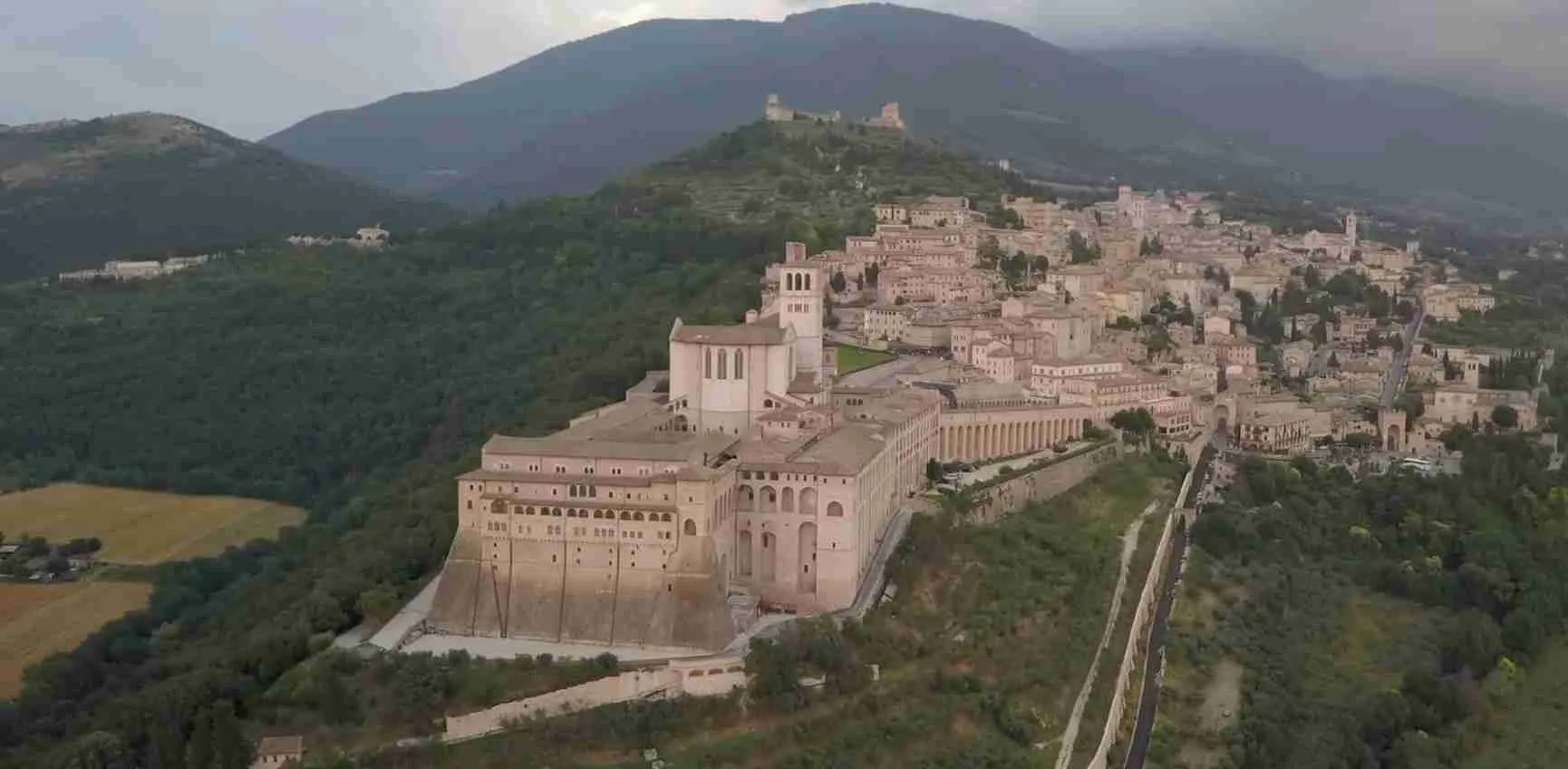
The “Assisi, the Basilica of San Francesco and Other Franciscan Sites” UNESCO inscription (designated 2000) recognizes not merely individual monuments but the entire medieval town’s role in expressing and preserving Franciscan spirituality. The inscription encompasses the Basilica di San Francesco, Cathedral of San Rufino, Basilica di Santa Chiara, city walls and fortresses, Santa Maria degli Angeli with Porziuncola chapel, Eremo delle Carceri hermitage, and essentially the complete municipal territory including landscape visible from town.
The Basilica di San Francesco (free admission, donations welcome, open 6 AM-6:45 PM summer, 6 AM-6 PM winter, verify current hours before visiting) consists of two superimposed churches completed 1228-1253. The Lower Basilica (dimly lit, somber atmosphere) contains St. Francis’s crypt and frescoes by Giotto, Cimabue, Simone Martini, and Pietro Lorenzetti depicting Franciscan spirituality themes. The Upper Basilica (brilliant natural light, soaring Gothic architecture) features Giotto’s famous Life of St. Francis fresco cycle comprising 28 panels narrating the saint’s biography—these images essentially created Francis’s popular iconography across seven centuries. The basilica suffered 1997 earthquake damage killing four during ceiling collapse, spurring extensive restoration completed over subsequent years.
Practical visiting considerations for 2026: arrive before 9 AM or after 4 PM to avoid tour group crowds filling basilica midday. Dress code enforced strictly—covered shoulders and knees required, security staff turn away improperly dressed visitors without exceptions. Photography prohibited inside basilica to protect frescoes from flash damage and maintain contemplative atmosphere. Free guided tours in multiple languages depart regularly from pilgrim information office—worth joining for art historical context impossible to grasp from independent viewing. Allow 1.5-2 hours for thorough basilica visit, additional time for museums (€6, combined ticket covering treasury, Perkins collection, and cloister).
Additional Franciscan sites across Assisi include the Eremo delle Carceri (hermitage 4 kilometers uphill from town, accessible by car or walking trail, free admission, 6:30 AM-7 PM summer, 6:30 AM-5:30 PM winter), where Francis and early friars retreated for contemplation in wooded mountainside location. Santa Maria degli Angeli (valley town below Assisi, 5 minutes by train/bus, free admission) preserves the tiny Porziuncola chapel where Francis founded the Franciscan order, now enclosed within 16th-century baroque basilica. The Rocca Maggiore fortress (€6, combined ticket with Roman forum €8, 10 AM-7 PM summer, shorter winter hours) offers panoramic views over Assisi and valleys, worth climb for photography and medieval military architecture, though lacking exhibits or furnishings.
Longobards Monuments: Spoleto and Clitunno
Two Umbrian monuments form part of the serial transnational UNESCO inscription “Longobards in Italy: Places of the Power (568-774 AD)” designated 2011, recognizing architectural and artistic achievements during Lombard rule over Italian peninsula. These Early Christian/Early Medieval structures demonstrate cultural synthesis between Germanic Lombard traditions, Roman classical heritage, and Byzantine influences, representing unique artistic period bridging Late Antiquity and medieval Europe.
The Basilica di San Salvatore in Spoleto (free admission, 7 AM-7 PM summer, 8 AM-5 PM winter, check for occasional closures) dates to 4th-5th century, significantly predating Lombard period but incorporated into Lombard monumental context. The striking facade reuses Roman materials—Corinthian columns, classical entablatures, and decorative elements salvaged from earlier buildings, creating architectural palimpsest revealing centuries of material recycling and adaptation. The bare interior (frescoes limited to 8th-century fragments) emphasizes architectural form—three aisles divided by columns supporting arched arcades, presbytery raised over crypt, and apse with original construction techniques visible. Located 800 meters from Spoleto’s historic center, requiring 10-15 minute walk or local bus—signs from Piazza Garibaldi indicate walking route.
The Tempietto sul Clitunno (€3 admission, 8:30 AM-7:30 PM summer, 10 AM-6 PM winter, closed Mondays, verify seasonal hours) occupies isolated location along Via Flaminia 13 kilometers north of Spoleto near Clitumnus Springs (separate €5 admission for springs park, different management/tickets). This small temple-form building dating 4th-8th century demonstrates classical revival architecture rare in post-Roman Italy—perfectly proportioned facade with four Corinthian columns, pediment decorated with 8th-century frescoes depicting Christ and saints, and interior chamber with additional fresco fragments. The structure’s survival proves remarkable considering its isolation and small size over 1,500 years.
Reaching Clitunno temple requires private transportation (rental car, taxi, or organized tour) as no public bus serves the site directly. From Spoleto, drive north on SS3 Via Flaminia toward Trevi/Foligno, following brown UNESCO signs—temple parking immediately adjacent to site. Combine visit with Clitumnus Springs 200 meters north (beautiful natural springs forming pools and streams in parkland setting, inspiring Roman poets including Virgil and Pliny, €5 admission, 9 AM-7 PM summer, 10 AM-5 PM winter). Allow 1 hour for temple and springs together, making worthwhile half-day excursion from Spoleto when combined with countryside driving through Trevi and Montefalco areas.
Major Towns and Destinations 2026
Perugia: Regional Capital and University City
Perugia serves as Umbria’s capital and largest city (165,000 population), combining significant Etruscan-Roman-medieval heritage with vibrant contemporary culture driven by two universities enrolling 40,000 students. The walled historic center perches atop a steep hill, encircled by Etruscan walls still visible along Corso Vannucci, with medieval additions and 16th-century Rocca Paolina fortress (partially demolished 19th century). The main pedestrian street, Corso Vannucci, stretches from Piazza Italia to Piazza IV Novembre, lined with palazzi, shops, and cafés frequented by residents and students.
Major sights in Perugia include the Galleria Nazionale dell’Umbria (€8, Tuesday-Sunday 8:30 AM-7:30 PM, closed Mondays, check official site for current 2026 rates and hours), housing Umbrian art from 13th-18th centuries including works by Perugino, Pinturicchio, Fra Angelico, and Piero della Francesca. The collection occupies Palazzo dei Priori floors above city hall, requiring steep internal staircases—not wheelchair accessible. The Fontana Maggiore in Piazza IV Novembre represents medieval civic sculpture masterpiece (1275-1278), decorated with panels depicting calendar months, liberal arts, biblical scenes, and Aesop’s fables—free viewing in main square. The Rocca Paolina underground walkways (free access) preserve streets and houses buried when Pope Paul III built fortress atop medieval neighborhood after crushing 1540 Salt War rebellion—atmospheric subterranean passages connecting historic center to Minimetrò station below.
Perugia’s food scene benefits from student population maintaining affordable prices and late-night hours. University area near Via Bontempi and Via delle Prome features trattorias charging €8-12 for pasta dishes, €12-18 for secondi, with full dinners totaling €20-30 including house wine. The daily market at Piazza Matteotti (morning hours Monday-Saturday) sells produce, cheese, salumi, and prepared foods—shop here for picnic supplies or cooking ingredients if staying in apartments. Via dei Priori concentrates nightlife with wine bars, pubs, and student hangouts operating until 2 AM, creating atmosphere rare in smaller Umbrian towns closing by 11 PM.
Spoleto: Medieval Town and Festival Center
Spoleto (38,000 population) occupies a hillside in southern Umbria, retaining remarkably intact medieval and Renaissance character. The town gained Roman importance as Spoletium, became Lombard duchy capital (570-1230s), then Papal States possession. This layered history creates architectural richness visible in Roman theater, Early Christian basilicas, medieval towers, and Renaissance additions. Spoleto achieves international fame through the Spoleto Festival dei Due Mondi (Festival of Two Worlds, late June-mid July annually), founded 1958 by composer Gian Carlo Menotti, programming opera, theater, dance, and music performances by internationally renowned artists in churches, theaters, and piazzas.
The Duomo di Spoleto (free admission, 8 AM-12:30 PM, 3:30-7 PM, verify current hours) presents Romanesque facade (1198) with Renaissance portico (1491) and baroque interior housing Filippo Lippi frescoes in apse depicting Life of the Virgin. The Ponte delle Torri (Bridge of Towers), a 230-meter-long, 80-meter-high aqueduct-bridge spanning gorge, provides dramatic photo opportunities and access to wooded hillside walks—currently closed for safety inspections (check official Spoleto tourism site for 2026 reopening status). The Rocca Albornoziana fortress (€7, Tuesday-Sunday 10 AM-5 PM, closed Mondays, check current 2026 hours) offers panoramic views and houses museum of medieval warfare, though steep uphill walk from town center (15-20 minutes) deters some visitors.
Accommodation costs in Spoleto remain moderate except during Festival season (late June-mid July), when prices double and bookings require 4-6 month advance planning. Off-festival season, expect €90-140 for comfortable doubles in historic center hotels. The town’s compact size enables exploring on foot—from train station (lower town) to historic center requires either 15-20 minute uphill walk, local bus (€1.50), or taxi (€10-12). Restaurants concentrate along Via del Mercato and around cathedral square—expect €25-40 for three-course dinners at traditional trattorias.
Orvieto: Hilltop Cathedral and Wine Country
Orvieto (20,000 population) commands a dramatic position atop volcanic tufa cliff rising abruptly from valley floor, visible from kilometers away across flat landscape. The town center occupies this cliff entirely, accessible via funicular from train station below (€1.30, combined €2.50 with bus to cathedral, departures every 10 minutes 7:15 AM-8:30 PM). The isolation protected medieval character while creating access challenges overcome by modern transportation—the funicular built 1888 represents engineering achievement enabling contemporary tourism.
Orvieto’s Duomo ranks among Italy’s finest Gothic cathedrals, constructed 1290-1591 following 1263 miracle at nearby Bolsena. The facade displays elaborate Gothic decoration—mosaic-covered surface with golden backgrounds, marble sculptures, bronze doors, and rose window creating visual splendor matching interior frescoes. Luca Signorelli’s Last Judgment cycle (1499-1504) in Cappella di San Brizio influenced Michelangelo’s Sistine Chapel version, depicting apocalyptic scenes with nude figures, demons, and resurrecting dead. Cathedral admission €4 covers nave; Cappella di San Brizio requires additional €5 ticket (combined €9, Monday-Saturday 9:30 AM-7 PM, Sunday 1-5:30 PM, verify current 2026 hours/pricing). Audio guides (€5) provide essential context for understanding iconographic program impossible to grasp from visual inspection alone.
Underground Orvieto offers another dimension—the tufa cliff contains 1,200+ caves and tunnels dug across 2,500 years for wine cellars, cisterns, pigeon roosts, and refuge rooms. Guided tours (€6-8, multiple companies, 45-60 minutes, comfortable shoes and light jacket recommended as caves maintain 14°C year-round) explore selected chambers revealing construction techniques, medieval life patterns, and WWII air raid shelter use. Book tours at tourist office or directly with operators advertising throughout town center.
Orvieto Classico wine production surrounds the town—volcanic tufa soils produce distinctive white wines from Grechetto and Trebbiano grapes. Numerous cantinas within town walls offer tastings (€10-15 for 3-4 wines with light appetizers), while countryside wineries require appointments and transportation. The town’s Saturday market fills Piazza del Popolo with produce, cheese, and porchetta vendors—arrive by 9 AM for best selection before noon closing.
Gubbio: Roman Theater and Medieval Preservation
Gubbio (32,000 population) represents Umbria’s best-preserved medieval town, retaining architectural unity from its 13th-14th century commercial peak. Built against Monte Ingino’s slopes, the stone-built town rises steeply from valley floor through terraced streets, creating atmospheric setting enhanced by absence of modern development visible elsewhere in Umbria. Gubbio’s isolation from major rail routes preserved character while limiting tourism development—reaching the town requires buses from Fossato di Vico train station (20 kilometers away, 35 minutes by coordinated bus service) or private transportation.
The Palazzo dei Consoli (€5, April-October 10 AM-1 PM, 3-6 PM, November-March 10 AM-1 PM, 2-5 PM, closed Mondays, verify current 2026 rates/hours) dominates Piazza Grande, housing Museo Civico displaying the Iguvine Tablets—seven bronze tablets inscribed with Umbrian language text describing ancient religious rites, representing one of Italy’s most important epigraphic discoveries. The vast Piazza Grande itself provides dramatic setting and panoramic valley views, accessible via steep streets or public elevators cutting through hillside. The Roman theater at town’s edge (free access, always open) dates to 1st century BCE, accommodating 6,000 spectators—remarkably well-preserved with seating, orchestra, and stage building remains.
Gubbio’s ceramic tradition continues from medieval period—workshops throughout town produce hand-painted majolica using traditional designs. Expect €20-60 for decorative plates, €80-150 for larger pieces, with reputable shops providing certificates of authenticity and careful shipping arrangements. The Corsa dei Ceri (Race of the Candles) festival on May 15 represents Gubbio’s most famous tradition—teams race carrying massive wooden structures topped with saint statues through town streets in spectacular display requiring year-round preparation by neighborhood associations.
Countryside Experiences and Day Trips 2026
Castelluccio and Piano Grande: Mountain Plateau Landscapes
Castelluccio di Norcia occupies a 1,452-meter-elevation plateau in the Sibillini Mountains (eastern Umbria near Marche border), creating one of central Italy’s most dramatic landscapes. The Piano Grande (Great Plain) spreads across 15 square kilometers of high-altitude plateau surrounded by bare limestone peaks, used since medieval times for lentil cultivation and seasonal sheep grazing. The unique agricultural landscape achieves spectacular beauty during late May-early June when wildflowers carpet fields—poppies, cornflowers, violets, and lentil flowers creating the fiorita (flowering) that attracts photographers and nature enthusiasts across Europe.
The village itself (pre-earthquake population 150) suffered catastrophic damage during 2016-2017 earthquakes that killed 299 people across central Italy. Castelluccio’s buildings collapsed or became structurally unsound, requiring demolition or emergency stabilization. Reconstruction continues in 2026 but tourism infrastructure remains limited—few operating restaurants, no accommodations, restricted parking during peak seasons. Despite damage, the Piano Grande landscape survives intact and continues attracting visitors for hiking, paragliding, photography, and purchasing lentils directly from farmers (Castelluccio lentils carry IGP protected designation, €8-12 per kilogram).
Reaching Castelluccio requires private transportation along mountain roads—no public buses serve the area. From Norcia, drive 30 kilometers on SP477 (approximately 45 minutes, paved but winding mountain road passable standard vehicles). From Perugia, approximately 100 kilometers (1.5-2 hours). The plateau experiences harsh climate—snow common October-May, temperatures below 0°C frequent November-April, and summer heat reaching 30°C+ at midday despite elevation. Visit June-September for accessible conditions, May-early June for fiorita (timing varies by spring weather), winter only with appropriate vehicle/experience. Cell phone coverage unreliable—download offline maps before departure.
Lake Trasimeno: Beaches and Island Villages
Lake Trasimeno, Italy’s fourth-largest lake covering 128 square kilometers, occupies western Umbria near the Tuscany border. This shallow (maximum depth 6 meters), reed-fringed lake provides summer recreation for Umbrian residents and tourists seeking swimming beaches, boat tours, and lakeside dining unavailable in landlocked hill towns. Three inhabited islands—Isola Maggiore, Isola Minore, and Isola Polvese—dot the lake, with Maggiore offering restaurants, shops, and lace-making workshops accessible via ferry from Passignano, Tuoro, or Castiglione del Lago.
Castiglione del Lago (population 15,000) serves as primary lakeside resort town, featuring medieval castle (€5, 10 AM-1 PM, 3-7 PM summer, reduced winter hours), beaches (free access), boat rental facilities (pedal boats €12-15 hourly, motorboats €40-60 hourly), and lakeside promenade restaurants. Train station provides direct connections to Perugia (€4.20, 30 minutes), Florence (€12-18, 1.5 hours), and Rome (€15-22, 2-2.5 hours), enabling easy access without rental car. Accommodations range from lakeside hotels (€90-150 doubles) to campgrounds (€15-25 per tent site). Summer weekends attract Italian families—book ahead for July-August lakeside properties.
Ferry services operated by public transportation system connect lakeside towns and islands (€3-8 depending on route, check Umbria Mobilità website for current schedules as service reduces dramatically October-March). The circumlake bicycle path (70 kilometers, mostly flat terrain along former rail line and secondary roads) provides pleasant full-day or multi-day cycling, with bike rentals available in Passignano and Castiglione (€15-20 daily). Wine production around southern lakeshore focuses on fish-friendly whites—Colli del Trasimeno DOC zone produces Grechetto and Trebbiano wines sold at lakeside restaurants and local cantinas (tastings €10-15).
Norcia: Truffle Capital and Prosciutto Production
Norcia (population 5,000 pre-earthquake, reduced following 2016 damage) represents Umbria’s culinary capital despite remote southeastern location. The town gave its name to norcineria (pork butchery specialty shops found throughout Italy), reflecting centuries of pig farming and meat curing expertise in surrounding mountains. Norcia’s gastronomy centers on black truffles (harvested December-March in nearby forests, sold at shops and Saturday market for €80-120 per 100 grams), prosciutto di Norcia, salumi, pecorino cheese, and lentils from nearby Castelluccio.
The October 30, 2016 earthquake (6.5 magnitude) destroyed many historic buildings including the Basilica di San Benedetto, traditionally believed to mark St. Benedict’s birthplace (though archaeological evidence disputes this claim). In 2026, reconstruction continues with scaffolding throughout the historic center, some businesses operating from temporary structures, and ongoing consolidation work on damaged buildings. Despite challenges, Norcia remains accessible and retains culinary focus—norcinerie shops sell salumi and cheeses, restaurants serve traditional cuisine, and truffle hunters offer guided hunts during season (€100-150 per person including lunch with fresh truffles).
Reaching Norcia requires private transportation—no train station, limited bus service from Spoleto (2-3 daily buses, 1.5 hours, €6-8, verify current schedules). The drive from Perugia covers 100 kilometers (1.5-2 hours) through spectacular mountain scenery along SP209/SS320. Winter conditions can create access difficulties—snow and ice on mountain roads require appropriate tires/chains December-March. Accommodation options reduced following earthquake damage—agriturismos in surrounding countryside provide lodging (€80-120 including breakfast), advance booking essential particularly during truffle season (December-February).
Food and Wine Experiences 2026
Umbrian Cuisine: Traditional Dishes and Ingredients
Umbrian cuisine emphasizes simple preparations of high-quality ingredients, centering on black truffles, pork products, lentils, beans, and game meats. Unlike Tuscan unsalted bread, Umbrian bread contains salt but features other distinctive preparations—torta al testo (flatbread cooked on hot stone griddles, split and filled with greens, sausage, or cheese, €3-5 at street vendors), strangozzi (thick hand-rolled pasta similar to Tuscan pici, traditionally served with black truffle sauce or tomato-basil), and pan nociato (walnut bread, sweet version eaten with cheese). Norcineria traditions produce exceptional salumi—prosciutto di Norcia (18-month cured ham, €30-45 per kilogram), ciauscolo (soft, spreadable salami, €18-25 per kilogram), and mazzafegati (liver sausages with pine nuts and raisins, seasonal winter production).
Lentils from Castelluccio carry IGP protected designation, smaller and more flavorful than commercial varieties, traditionally cooked with garlic, sage, and olive oil or served with sausages (€8-12 per kilogram at markets and specialty shops). Black truffles appear November-March, dramatically cheaper than Piedmont’s white truffles (€80-120 per 100 grams black versus €300-500 white), used to sauce pastas, crown steaks, fold into scrambled eggs, or shave over cheese. Wild boar (cinghiale) preparations dominate autumn-winter menus after November hunting season opens—stewed with tomatoes and wine (€12-16 restaurant portion), transformed into ragù for pappardelle (€10-14), or roasted as second course (€15-20).
Restaurant categories follow Italian standards: trattorias serve traditional regional cuisine in casual settings (€25-40 for three-course dinners with house wine), ristorantes offer more refined preparations and service (€40-60), osterias emphasize wine with simpler foods (€20-35), and agriturismos provide farm-product-based fixed-price dinners (€25-35 per person). Pizzerias throughout the region serve wood-fired pizza (€6-10) as dinner option rather than lunch food common elsewhere in Italy. Street food options include porchetta sandwiches (€4-6, roasted whole pig with herbs, carved to order), torta al testo vendors (€3-5), and pizza al taglio shops selling pizza by weight (€2-4 per serving).
Wine Regions and Tasting Experiences 2026
Umbrian wine production concentrates in three main zones creating distinct regional identities. The Orvieto Classico DOC zone (southwestern Umbria around Orvieto and Lake Corbara) produces white wines from Grechetto and Trebbiano grapes grown on volcanic tufa soils—crisp, mineral-driven wines complementing lake fish and lighter dishes. Traditional abboccato (lightly sweet) versions have largely yielded to modern dry styles preferred by international markets, though some producers maintain traditional methods. Tasting at Orvieto-area wineries costs €15-25 for 3-4 wines with light snacks (advance reservations required, verify availability on winery websites).
The Torgiano/Montefalco zone (central Umbria between Perugia and Spoleto) produces Umbria’s most significant red wines—Torgiano Rosso Riserva DOCG from Sangiovese blends and Sagrantino di Montefalco DOCG from indigenous Sagrantino grape. Sagrantino creates intensely tannic, age-worthy reds requiring years for tannins to integrate—minimum 30 months aging before release, though most producers age longer. These powerful wines (14-15% alcohol) pair with game meats, aged cheeses, and rich pasta dishes, commanding premium prices (€25-45 per bottle retail). Montefalco wineries offer comprehensive tasting experiences (€25-40 including cellar tour, 4-5 wine flight, and local salumi/cheese) requiring advance booking. The Strada del Sagrantino wine route connects producers, providing organized itinerary for self-drive exploration.
The Colli Altotiberini and smaller zones throughout northern and eastern Umbria produce everyday drinking wines at modest prices—local trattorias serve house wine from nearby producers (€8-12 per liter), providing authentic experience of regional wine culture. These simple reds and whites rarely appear in export markets but offer good value for travelers seeking inexpensive accompaniment to meals without premium wine aspirations.
Truffle Hunting and Culinary Workshops 2026
Truffle hunting experiences provide immersive introduction to Umbria’s premier ingredient. Professional tartufai (truffle hunters) offer guided hunts during truffle season using trained Lagotto Romagnolo dogs to locate underground truffles in oak and hazelnut forests. Two-hour morning hunts cost €100-150 per person, typically including 4-6 hour total experience with forest walk, hunting observation as dogs locate and dig truffles, explanation of truffle biology and habitat, and concluding lunch featuring fresh-found truffles prepared simply to showcase aroma. Book through agriturismos, specialized tour operators, or directly with tartufai (advance reservations essential, particularly December-January peak season).
Black truffle season runs November-March with peak availability December-February. White truffles appear briefly October-December in limited locations, commanding premium prices (€300-500 per 100 grams) and requiring specialized hunting—less commonly offered as tourist experience given high value and limited supply. Summer truffles (tuber aestivum, May-August) provide budget option (€40-60 per 100 grams) with milder aroma, sometimes included in less expensive hunting experiences.
Cooking classes throughout Umbria teach traditional preparations ranging from pasta making to complete multi-course dinners. Typical format includes morning market visit selecting ingredients, 3-4 hours hands-on cooking (usually 3-4 dishes), and concluding group lunch eating prepared foods with wine. Costs range €80-150 per person depending on location, class size, and menu complexity. Many agriturismos offer classes for their guests (€60-90 for guest classes, building on accommodation relationship), while Perugia, Assisi, and Spoleto host established cooking schools catering to international visitors (€120-180, English-language instruction, professional kitchen facilities). Reserve cooking classes 4-8 weeks ahead for peak season dates.
Practical Information for 2026
Money and Costs: Payment Methods and ATMs
Italy uses the euro (EUR). Most Umbrian businesses prefer cash, particularly at smaller establishments—trattorias, food shops, market vendors, and rural restaurants often don’t accept cards or impose minimum charges (€10-20) for card payments. ATMs (bancomat in Italian) appear throughout towns in historic centers and near train stations, dispensing €20-50 notes (some offer €10 note option). Daily withdrawal limits vary by bank (typically €250-500), with international cards incurring foreign transaction fees unless waived by home bank. Withdraw larger amounts less frequently to minimize per-transaction fees.
Credit cards gain wider acceptance in 2026 than past years, though cash remains essential. Hotels, larger restaurants, and shops typically accept Visa and Mastercard (American Express less common), but agriturismos, small trattorias, market purchases, and bus tickets require cash. Carry €50-100 daily for incidental expenses—coffee, snacks, small purchases, tipping (optional in Italy, rounding up bills to convenient amounts suffices). Banks operate Monday-Friday 8:30 AM-1:30 PM, 2:45-4 PM (lunch closures common), though ATMs function 24 hours. Exchange offices (cambio) appear in Perugia and tourist centers, offering poor rates versus ATM withdrawals—avoid except emergencies.
Communication: Internet and Phone Access 2026
WiFi availability varies dramatically across Umbria in 2026. Hotels, cafés, and restaurants in major towns provide free WiFi (ask for password, “la password per il WiFi”), while countryside agriturismos may lack reliable internet entirely. Public WiFi networks appear in major piazzas (Perugia, Assisi, Spoleto), requiring registration with Italian phone number—travelers without Italian SIM cards face connection challenges. Cellular data provides more reliable connectivity than public WiFi, especially in countryside locations.
International phone plans from major carriers offer European roaming packages (verify costs with carrier before departure, typically $10-15 daily). Alternatively, purchase Italian SIM cards from mobile providers (TIM, Vodafone, Wind Tre) at authorized shops requiring passport identification and Italian tax code (available free online registration). Prepaid SIM cards with data plans cost €15-25 for month-long service with 20-50GB data, sufficient for maps, messaging, and moderate browsing. Coverage in Umbrian towns proves reliable, though mountain areas and deep valleys experience spotty service.
Health and Safety Considerations
Umbria ranks among Italy’s safest regions with minimal violent crime and low theft rates compared to major tourist cities. Standard precautions suffice—secure valuables in hotel safes, avoid displaying expensive jewelry or electronics conspicuously, watch bags in crowded market areas. Pickpocketing occurs occasionally in Perugia’s university area and Assisi during peak pilgrim seasons but at substantially lower rates than Rome or Florence.
Healthcare in Italy follows public system model with emergency treatment available regardless of insurance status. Visitors should carry European Health Insurance Cards (EHIC for EU citizens) or travel insurance covering medical expenses. Farmacie (pharmacies) identifiable by green cross signs provide basic healthcare advice and over-the-counter medications—pharmacists offer recommendations for minor ailments, direct to doctors for serious issues. At least one farmacia per town maintains 24-hour availability on rotating schedules posted at all pharmacies. In emergencies, dial 112 (unified European emergency number) for ambulance, police, or fire services. Hospitals operate in Perugia, Terni, Foligno, and Spoleto—remote villages require ambulance transport to regional facilities.
Frequently Asked Questions About Visiting Umbria 2026
What’s the difference between Umbria and Tuscany for travelers in 2026?
Umbria and Tuscany share similar landscapes, medieval hilltop towns, and agricultural traditions, but differ dramatically in tourism development and costs. Tuscany suffered mass tourism transformation during the 1980s-2000s—international visitors overwhelmed towns like San Gimignano and Montepulciano, foreign buyers purchased countryside properties driving real estate inflation, and service industries oriented entirely toward tourism rather than local communities. Umbria maintained lower tourism pressure (fewer than 30% international visitors versus 60%+ in Tuscany), preserving authentic Italian character where locals still populate historic centers, shops serve residents’ needs, and restaurants cater to regional rather than international tastes. Cost differences reach 30-40% across accommodations, dining, and services—equivalent hotels cost €100-150 in Umbria versus €150-250 in Chianti, restaurant meals €25-40 versus €40-60. Tuscany offers superior tourism infrastructure (more hotels, English menus, organized tours), while Umbria requires more independent planning but rewards with authentic experiences. Choose Tuscany for first-time Italy visitors wanting established services and international comfort, Umbria for travelers seeking deeper Italian immersion and better value.
Can vegetarians and vegans eat well in Umbria in 2026?
Vegetarian travelers find abundant options in Umbria through traditional bean-based dishes, vegetable preparations, and pasta courses. Lentils from Castelluccio, cannellini beans (fagioli), chickpeas, and fava beans appear extensively in regional cuisine—soups, side dishes, and main courses providing protein alternatives to meat. Pasta dishes include tomato-based sauces, vegetables (asparagus in spring, mushrooms in fall), and truffle preparations (verify no meat in truffle sauces as some include pancetta or sausage). Specify “sono vegetariano/a” (I am vegetarian) when ordering, requesting “senza carne né pesce” (without meat or fish). Most trattorias accommodate by adjusting dishes or assembling vegetable side dishes as main courses. Vegan travelers face greater challenges as dairy products (cheese, butter, eggs) appear extensively in traditional preparations. State clearly “non mangio prodotti animali—niente carne, pesce, uova, formaggio, o latte” (I don’t eat animal products—no meat, fish, eggs, cheese, or milk). Countryside agriturismos prove difficult for vegans as set menus feature meat and cheese prominently—contact in advance to arrange special meals or bring supplementary foods. Perugia’s university environment supports vegetarian/vegan restaurants and health food stores, while smaller towns offer limited options requiring careful menu navigation and staff communication.
How do I handle limited English in rural Umbria 2026?
English proficiency varies dramatically across Umbria—hotels, train stations, and tourist information offices in major towns employ English speakers, while countryside agriturismos, village trattorias, and shop owners often speak minimal English. Basic Italian phrases prove essential: “Parla inglese?” (Do you speak English?), “Mi può aiutare?” (Can you help me?), “Non capisco” (I don’t understand). Translation apps (Google Translate, iTranslate) enable text/photo translation of menus and signs using smartphone cameras—download offline Italian language packs before departure for connectivity-free translation. Many establishments display English menus in tourist areas (Assisi, Perugia, Spoleto), though countryside locations present Italian-only menus requiring translation assistance. Hotel staff often facilitate restaurant reservations and provide directions in English, leveraging their language skills to help guests navigate local interactions. Younger Italians (under 40) typically speak functional English from school education, while older generations (60+) speak Italian exclusively. Patience, gestures, and translation technology generally overcome language barriers. Learning basic food vocabulary (carne=meat, pesce=fish, formaggio=cheese, verdure=vegetables, conto=bill) enables menu navigation and ordering. Most Italians appreciate attempts at their language regardless of proficiency—effort matters more than perfect grammar.
What should I pack for Umbria in different seasons 2026?
Spring (April-May) requires layered clothing accommodating temperature swings—lightweight pants, long-sleeve shirts, sweater or light jacket for mornings/evenings (10-15°C), and sun protection for midday warmth (20-25°C). Rain jacket or compact umbrella essential as spring showers occur frequently. Comfortable walking shoes with good support necessary for cobblestone streets and hillside towns—skip fashion sneakers favoring cushioned hiking shoes or walking boots. Summer (June-August) demands hot-weather clothing—shorts acceptable though covered shoulders required for churches, lightweight breathable fabrics, sun hat, strong sunscreen (SPF 30+), and sunglasses. Heat reaches 30-39°C requiring water bottle and afternoon break planning. Evening temperatures remain warm (25-28°C), eliminating jacket needs. Autumn (September-October) mirrors spring with layers—add warmer jacket for October evenings (10-12°C), keep rain gear handy, pack light gloves for early mornings at higher elevations. Winter (November-March) requires warm clothing for 4-12°C temperatures—insulated jacket, sweater, scarf, gloves, waterproof boots if visiting during wet periods. Hotels and agriturismos provide heating, but old stone buildings retain cold requiring indoor layers. All seasons: electrical adapter (Italy uses Type C/F/L plugs, 230V), portable phone charger, photocopies of passports kept separate from originals, and medications in original packaging with prescriptions.
How accessible is Umbria for travelers with mobility limitations 2026?
Umbria presents significant accessibility challenges due to medieval hilltop town topography, narrow cobblestone streets, and limited infrastructure modifications. Historic centers feature steep inclines, uneven stone paving, steps connecting different street levels, and minimal wheelchair-accessible pathways. Modern accessibility regulations applied to new construction and renovated buildings, but historic protection laws prevent modifying medieval structures with ramps or elevators. Some improvements exist—Perugia’s Minimetrò provides wheelchair-accessible transportation from parking areas to historic center (elevators at all stations), Orvieto’s funicular accommodates wheelchairs between train station and town (staff assistance available), and larger museums install ramps and lifts (Galleria Nazionale dell’Umbria partially accessible via elevator, though steep internal stairs limit full access). Many hotels occupy medieval buildings without elevators—always confirm ground-floor room availability when booking if stairs present difficulties. Smaller towns (Spello, Bevagna, Montefalco) lack accessible services entirely—steep streets and steps preclude wheelchair navigation. For 2026 planning: focus on Perugia (best accessibility infrastructure), select modern hotels with elevators and accessible rooms, research specific monument accessibility before visiting (contact tourist offices for current information), arrange private transportation avoiding train station-to-town connections requiring buses or walking, and accept that some experiences remain inaccessible without assistance. Italian Accessible Tourism organizations provide resources and specialized tour companies arrange accessible itineraries, though costs exceed independent travel due to customized services.
What festivals and events happen in Umbria during 2026?
Major Umbrian festivals in 2026 (verify exact dates before booking as many follow liturgical calendars or traditional schedules): Calendimaggio in Assisi (late April/early May, Thursday-Saturday), medieval spring festival with costume parades, flag throwing, singing competitions between Upper and Lower Town factions, and elaborate evening performances in piazzas. Corsa dei Ceri in Gubbio (May 15 annually, fixed date), dramatic race where teams carry massive wooden structures (ceri) topped with saint statues through town streets—intense physical feat requiring year-round training by neighborhood associations, spectacle attracting 20,000+ spectators to town of 30,000. Spoleto Festival dei Due Mondi (late June-mid July, typically 2.5 weeks), international performing arts festival programming opera, theater, dance, and classical music in churches, Roman theater, and Piazza del Duomo—requires advance ticket purchases (€25-150 depending on performance) and accommodation bookings months ahead. Infiorata in Spello (Corpus Domini, late May/early June depending on liturgical calendar), overnight creation of elaborate flower petal carpets decorating streets for morning religious procession—arrive dawn to photograph completed carpets before procession begins. EuroChocolate in Perugia (mid-October, typically 9-10 days), massive chocolate festival attracting 900,000 visitors with artisan chocolate vendors, tastings, workshops, sculptures, and street performances—expect severe crowding in historic center, book accommodations 2-3 months ahead. Umbria Jazz Festival (mid-July, Perugia), internationally renowned jazz festival with free outdoor concerts in piazzas and ticketed performances in venues (€20-60). Numerous truffle festivals occur throughout autumn-winter in Norcia, Gubbio, Città di Castello, and smaller villages—weekend events featuring truffle markets, tastings, and hunting demonstrations.
Should I buy travel insurance for Umbria trip in 2026?
Travel insurance provides valuable protection for Umbria trips, particularly given cancellation policies at agriturismos and boutique hotels charging 50-100% penalties for late cancellations. Comprehensive policies (€60-120 for week-long trips depending on coverage limits and age) typically cover trip cancellation, medical emergencies, evacuation, lost luggage, and travel delays. Medical coverage proves particularly important for non-EU travelers as Italy’s public healthcare system bills foreign visitors for services (though emergency treatment proceeds regardless of payment ability). Pre-existing medical condition coverage requires purchasing insurance within 14-21 days of initial trip deposits. Rental car insurance warrants consideration—credit card coverage varies and Italian rental agencies pressure customers toward expensive supplemental insurance (€15-25 daily). Compare rental agency insurance costs versus standalone policies from companies like Bonzah or InsureMyTrip offering annual coverage (€80-100) for multiple trips. Adventure activity coverage necessary for paragliding (popular at Castelluccio), via ferrata climbing, canyoning, or other adventure sports not covered by standard policies. Read policy exclusions carefully—many exclude scooter/motorcycle rentals, extreme sports, and pre-existing conditions without special riders. For 2026 trips involving significant advance payments (€1,500+), non-refundable bookings, senior travelers (65+), or travelers with health concerns, insurance provides worthwhile protection. For brief trips with flexible bookings and healthy travelers, insurance becomes optional personal preference weighing peace of mind against additional costs.
How do I arrange transportation between Umbrian towns without a car in 2026?
Public transportation between Umbrian towns operates via trains and buses, though frequency limitations and scheduling complexity require advance planning. Purchase the Umbria.GO multi-day pass (1-day €12, 2-day €18, 3-day €23, 7-day €35—verify current 2026 rates on Umbria Mobilità website) providing unlimited travel on regional trains, buses, Lake Trasimeno ferries, Perugia Minimetrò, and Orvieto funicular within Umbria borders. The pass eliminates per-trip ticket purchases and offers cost savings for active exploration (break-even point approximately 4-5 journeys). Base operations in Perugia for optimal public transportation access—train connections to Assisi (20 minutes, departures hourly), Spoleto (1 hour, every 2 hours), and bus services to Gubbio, Todi, and smaller towns. Day trip strategy: early departure (7-8 AM train), 4-6 hours sightseeing destination, afternoon return (3-5 PM), maximizing daylight hours while accommodating reduced evening service. Research schedules in advance using Trenitalia’s website (trains) and Busitalia’s site (buses), noting Sunday/holiday reductions (service drops 30-50%). Alternative transportation includes private tours/drivers (€200-300 daily for 2-4 passengers, hotel concierges arrange), rideshare services limited to Perugia area (Uber barely functional, local taxi apps Italian-language only), or organized bus tours from travel agencies in Perugia and Assisi (€60-90 per person for full-day itineraries). For 2026 planning without rental car: accept limitations visiting 1-2 towns daily versus car-enabled flexibility, prioritize train-accessible destinations (Perugia, Assisi, Spoleto, Orvieto), allocate 3-4 days minimum for comprehensive exploration accounting for transportation time, and maintain backup plans for schedule disruptions (strikes, delays, cancellations affecting Italian public transportation periodically).
What local customs and etiquette should I know for Umbria 2026?
Italian customs in Umbria follow broader Italian patterns with regional variations. Greetings: use “Buongiorno” (good morning) until 2-3 PM, “Buonasera” (good evening) afterward when entering shops, restaurants, or addressing strangers—this courtesy expected rather than optional. Dress codes: cover shoulders and knees when entering churches (enforcement varies but major basilicas strictly enforce), avoid beach attire in town centers (swimsuits, shirtless men outside beach contexts), and generally dress more formally than equivalent American casual—Italians favor fitted clothing over loose athletic wear. Dining customs: cappuccino drinks only until 11 AM (considered digestively inappropriate after meals—order espresso or caffè macchiato instead), avoid requesting cappuccino after restaurant meals (marks obvious tourist unfamiliarity), never rush meals (2-hour dinners standard, requesting check signals readiness to leave rather than server assumption), split courses rather than everyone ordering full three-course meals (perfectly acceptable to order primi plus contorno, or secondi only), and remember coperto charge (€2-4 per person) covers bread/table setup regardless of consumption. Tipping: not expected though rounding bills to convenient amounts appreciated (€18 bill rounded to €20), never percentage-based tips like American 15-20% custom. Shopping: don’t touch merchandise without permission in food shops (point at items, shopkeeper retrieves them), avoid haggling except at outdoor markets (and even there, limited), and greet shopkeepers when entering/leaving stores. Timing: respect riposo closures (1-3:30 PM or 1-4 PM) when most shops and services shut for lunch/rest—plan sightseeing around these hours, eating lunch 12:30-2 PM, shopping/museums mornings and late afternoons. Photography: ask permission before photographing people directly, avoid flash photography in churches and museums (often prohibited), and remember many churches prohibit all photography (posted signs usually in multiple languages). These customs represent respect for local culture—Umbrians appreciate foreigners attempting cultural adaptation even imperfectly.
How far in advance should I book Umbria accommodations for 2026?
Booking timelines for Umbria accommodations in 2026 depend on season, location, and property type. Peak shoulder seasons (April-May, September-October): book 6-8 weeks ahead for popular destinations (Assisi, Spoleto, agriturismos), 3-4 weeks for Perugia or less-visited towns (Gubbio, Todi), 2 weeks minimum for weekend arrivals when Italian domestic tourism increases. August peak season: reserve 3-4 months ahead for countryside agriturismos (limited inventory fills rapidly during Italian vacation month), 2-3 months for hilltop town hotels, 4-6 weeks for Perugia (larger supply maintains more availability). Major events require earlier booking: Spoleto Festival (late June-mid July) needs 4-6 months advance for Spoleto properties, nearby towns 2-3 months; EuroChocolate in Perugia (mid-October) demands 2-3 months ahead as festival attracts 900,000 visitors overwhelming accommodation capacity; Calendimaggio in Assisi (late April/early May) requires 2-3 months for Assisi properties. Low season (November-March excluding Christmas/New Year holidays): book 2-4 weeks ahead or sometimes last-minute (many properties offer discounted rates seeking occupancy during slow period), though limited hotel closures reduce inventory requiring advance research to verify operating properties. Christmas/New Year holidays follow peak-season timing (2-3 months ahead) despite winter calendar due to Italian domestic tourism and international visitors seeking holiday authenticity. Agriturismos generally require longer lead times (add 2-4 weeks to above timelines) due to limited rooms (typically 4-10 versus 20-40 at hotels) and longer minimum stays (2-3 nights versus single-night flexibility at hotels). For 2026 planning: book as early as practical for guaranteed first-choice properties, maintain booking platform accounts showing cancellation policies before confirming (Booking.com, Agoda display cancellation terms prominently versus direct bookings where policies buried in fine print), and always verify email confirmation received within 24-48 hours—absence of confirmation suggests booking failure requiring immediate follow-up.