Umbria Best Tours & Walking Routes 2026
Umbria’s emerald landscapes and spiritual heritage transform into Italy’s premier walking and touring destination in 2026, offering everything from the legendary 180-kilometer Via di Francesco pilgrimage to family-friendly cycling routes along the historic Spoleto-Norcia railway. Whether you seek guided cultural immersion, self-directed hill town exploration, or challenging mountain trails through the Sibillini range, this landlocked region delivers authentic Italian experiences away from coastal crowds.
Key Takeaways
- Premier Pilgrimage Route 2026: The Via di Francesco spans 180-290 kilometers from La Verna to Assisi (and optionally to Rome), featuring 8-10 stages through landscapes St. Francis himself walked, with credential and certificate available for completing the final 100 kilometers on foot.
- Converted Railway Trail: The Spoleto-Norcia former railway (51 kilometers, 19 tunnels, 24 bridges) celebrates its 100th anniversary in 2026 with special events on June 2, offering accessible walking and cycling through the Valnerina valley.
- Guided Tour Costs 2026: Week-long small-group tours range €2,500-3,000 ($2,700-3,300) per person including accommodations, meals, and guides. Day tours from major cities cost €80-150 ($85-165) depending on duration and inclusions.
- Optimal Walking Season: April through October provides ideal conditions, with spring wildflowers (April-May), summer stability (June-August), and autumn truffle season (September-October) each offering distinct advantages.
- Trail Accessibility 2026: Umbria accommodates all fitness levels from 14-kilometer family cycling routes to 140-kilometer endurance mountain bike challenges, with well-marked paths, pilgrim hostels, and comprehensive support infrastructure.
- Special 2026 Events: The 800th anniversary of St. Francis’s death amplifies pilgrimage focus, while the Vecchia Ferrovia centennial brings enhanced facilities and commemorative celebrations along the Spoleto-Norcia route.
People Also Ask About Umbria Tours and Walking 2026
How difficult is the Via di Francesco walking route in 2026?
The Via di Francesco difficulty ranges from moderate to challenging depending on the specific stage and chosen route. The main trail from La Verna to Assisi covers approximately 180 kilometers divided into 8-10 stages averaging 18-25 kilometers per day, with cumulative elevation gains reaching 35,000+ feet across the full journey. Daily elevation changes typically range 1,000-3,000 feet per stage, requiring good physical condition and experience with multi-day trekking. The northern section through the Casentino forests presents the most challenging terrain with steep mountain paths, while the final approach to Assisi offers more moderate rolling hills. Tour operators often split longer stages to accommodate less-trained walkers, creating 7-day itineraries with shorter daily distances of 12-18 kilometers. Winter attempts (December-February) significantly increase difficulty due to snow, limited daylight, and potential trail closures in mountainous sections.
What are the costs for guided walking tours in Umbria in 2026?
Guided walking tours in Umbria for 2026 range €2,500-3,000 ($2,700-3,300) per person for comprehensive week-long packages including accommodations in 3-4 star hotels or agriturismi, daily breakfasts and most dinners, expert guides, luggage transfers between hotels, and detailed route materials. Mid-range 7-8 day tours from operators like Macs Adventure and SloWays typically cost €1,800-2,200 ($1,950-2,400) with breakfast included and other meals at your expense. Budget self-guided options with basic route information and hostel recommendations start around €800-1,200 ($870-1,300) for a week, covering accommodations only. Single-day guided tours from cities like Perugia or Assisi cost €80-150 ($85-165) per person for 4-6 hour experiences including local transportation and guide services. Private custom tours command premium rates of €3,500-5,000 ($3,800-5,500) per person for week-long exclusive experiences with personalized itineraries.
Can beginners complete Umbria’s walking routes in 2026?
Beginners can successfully complete many Umbria walking routes in 2026 by selecting appropriate difficulty levels and distances. The Spoleto-Norcia former railway offers the most accessible entry point with flat terrain, 51 kilometers total distance divisible into shorter segments, and no technical skills required—families and first-time walkers complete 10-15 kilometer sections comfortably. The Lake Trasimeno perimeter trail provides another beginner-friendly option with gentle rolling terrain and multiple access points for customizable distances. Urban walking routes through towns like Assisi, Spello, and Gubbio combine cultural discovery with manageable 5-8 kilometer distances and paved surfaces. The Via di Francesco’s more challenging mountain stages require intermediate fitness, but tour operators create modified itineraries omitting the most demanding sections. Recommended beginner preparation includes several training walks of 10-15 kilometers in the months before travel, proper footwear broken in before departure, and starting with shorter 3-5 day itineraries rather than attempting week-long treks immediately.
What makes 2026 special for walking in Umbria?
2026 holds exceptional significance for Umbria walking due to the 800th anniversary of St. Francis’s death (October 3, 1226), catalyzing enhanced infrastructure along the Via di Francesco, special pilgrim events throughout the year, and improved waymarking and hospitality services on Franciscan routes. The Spoleto-Norcia railway celebrates its centennial (opened November 1, 1926) with commemorative events on June 2, 2026, including the SpoletoNorcia MTB event moving from its traditional September date to capitalize on the anniversary and Republic Day holiday. The Italian government’s St. Francis Centenary Committee has invested in trail improvements, new signage systems, and expanded pilgrim services specifically for 2026. Cultural programming peaks with special exhibitions in Assisi, Gubbio, and Perugia highlighting Franciscan heritage. Enhanced international attention brings improved English-language materials, expanded tour operator offerings, and better coordination among the 15+ towns along major routes, making 2026 the optimal year for experiencing Umbria’s walking culture at its most accessible and well-supported.
Extended multi-day tours – 5+ days
Featured Umbria Multi-Day Tour Packages
3 days
Umbria 3-Day Discovery Tour
- ✓ Comprehensive Umbria experience
- ✓ Expert local guides included
- ✓ All accommodation included
- ✓ Transportation provided
5 days
Umbria 5-Day Highlights Experience
- ✓ Comprehensive Umbria experience
- ✓ Expert local guides included
- ✓ All accommodation included
- ✓ Transportation provided
7 days
Umbria 7-Day Cultural Journey
- ✓ Comprehensive Umbria experience
- ✓ Expert local guides included
- ✓ All accommodation included
- ✓ Transportation provided
10 days
Umbria 10-Day Complete Adventure
- ✓ Comprehensive Umbria experience
- ✓ Expert local guides included
- ✓ All accommodation included
- ✓ Transportation provided
Multi-day tour packages powered by TourRadar. Prices and availability subject to change.
Introduction: Umbria’s Walking and Touring Renaissance in 2026
Central Italy’s landlocked heart beats strongest on foot. Umbria—the “green heart of Italy”—offers travelers in 2026 an increasingly rare commodity in European tourism: authentic medieval landscapes traversable at walking pace, where St. Francis’s 13th-century footpaths remain largely unchanged and converted railways provide accessible alternatives to mountain trails. Unlike Tuscany’s tour-bus crowds or the Cinque Terre’s reservation systems, Umbria’s network of pilgrimage routes, rail trails, and mountain paths accommodates independent explorers and guided groups equally, from families seeking gentle valley cycling to experienced trekkers challenging the Sibillini peaks.
The region’s 286 documented trails span easy urban walks through frescoed hill towns to multi-day wilderness journeys requiring mountain experience. Tour infrastructure has matured significantly, with small-group operators offering comprehensive packages that handle logistics while preserving the sense of discovery that defines Umbrian exploration. Self-guided walkers benefit from improved waymarking, expanded pilgrim hostel networks, and digital navigation tools that didn’t exist a decade ago. The conversion of historic railway lines into cycling and walking paths since 2014 has opened previously car-dependent valleys to non-motorized tourism, creating accessible entry points for those intimidated by mountain trekking.
2026’s dual anniversaries—St. Francis’s 800th death commemoration and the Spoleto-Norcia railway centennial—bring enhanced services, special events, and international attention that elevate Umbria from overlooked alternative to destination in its own right. The Italian government’s investment in Franciscan route infrastructure combines with grassroots enthusiasm from the 27,000+ participants who’ve completed the SpoletoNorcia MTB event since 2013 to create momentum visible in new trailhead facilities, improved multilingual signage, and expanded accommodation options in previously under-visited towns like Pietralunga and Vallo di Nera.
This guide provides the practical framework for accessing Umbria’s walking and touring opportunities in 2026, from understanding trail difficulty classifications and selecting appropriate routes to budgeting for guided services and planning self-directed itineraries. Whether your interest centers on spiritual pilgrimage, Renaissance art towns, truffle-hunting valleys, or simply walking ancient paths through landscapes that inspired medieval mystics, Umbria delivers without pretense—provided you arrive with clear understanding of terrain, distances, and the physical demands different routes impose.
Via di Francesco: Umbria’s Premier Pilgrimage Route in 2026
The Via di Francesco traces St. Francis’s geographic and spiritual journey through approximately 180-290 kilometers of Tuscan and Umbrian landscapes, depending on whether travelers walk the northern route (La Verna to Assisi) or extend southward toward Rome. The northern section from La Verna’s Franciscan sanctuary to Assisi spans approximately 180 kilometers typically divided into 8-10 walking stages, each covering 18-25 kilometers with elevation changes ranging 1,000-3,000 feet per day. The complete Florence-to-Rome route extends the journey to 518 kilometers across 27 stages, requiring approximately one month for end-to-end completion.
Route geography divides into distinct character zones. The Casentino forest section north of La Verna challenges walkers with steep wooded slopes, isolated hermitages, and limited services—this 40-kilometer stretch requires strong fitness and comfort with remote mountain paths. The central Apennine crossing from La Verna through Città di Castello to Gubbio alternates between ridge walks with panoramic views and valley descents through agricultural lands and small villages. The final 80 kilometers from Gubbio through Valfabbrica to Assisi roll across gentler terrain through olive groves and medieval towns, culminating in the emotional arrival at the Basilica of San Francesco where Francis’s tomb awaits beneath Giotto’s frescoes.
Trail marking follows yellow-blue signage with yellow waymarks from La Verna to Assisi, allowing bidirectional travel. The official Via di Francesco uses white-red markings on the Florence-La Verna section. GPS tracks available through multiple sources provide backup navigation, though the main route stays well-marked through rural Umbria. Accommodation infrastructure includes dedicated pilgrim hostels (€15-25 per night in dormitories), family-run B&Bs (€40-70 per room), and agriturismo farmstays (€50-90 with dinner), creating budget flexibility unavailable on more commercial routes like the Camino de Santiago.
The pilgrim credential system mirrors established pilgrimage traditions. Walkers obtain credentials from Franciscan convents along the route or by requesting forms from pilgrim offices in Assisi or Perugia at least three weeks before departure. Stamps collected at churches, hostels, and town offices document progress. Completing the final 100 kilometers on foot (or 200 by bicycle) qualifies pilgrims for the Testimonium Peregrinationis Peractae certificate issued by the Sacro Convento at the Basilica of San Francesco in Assisi, available daily 10:00 AM-12:30 PM and 2:00 PM-5:30 PM.
Key stage towns provide cultural depth beyond the walking itself. Gubbio preserves its medieval structure virtually intact, from the Palazzo dei Consoli’s towering presence to the ceramics workshops continuing seven-century traditions. Pietralunga’s 15th-century castle walls protect a village where walking routes through surrounding forests connect to the hermitages Francis frequented. Valfabbrica marks the traditional final stage before Assisi, where walkers rest before the emotional final ascent to Francis’s basilica and tomb.
Seasonal considerations significantly impact the Via di Francesco experience. Spring (April-May) brings wildflower displays, comfortable temperatures averaging 15-20°C (59-68°F), and swollen streams requiring attention at ford crossings. Summer (June-August) provides maximum daylight hours and reliable dry weather but exposes walkers to heat stress on shadeless ridge sections—early morning starts become essential. Autumn (September-October) offers ideal temperatures, fall colors, and truffle season in the valleys, though shortening days require careful stage planning. Winter attempts (November-March) demand winter mountaineering skills in the higher elevations, proper cold-weather gear, and acceptance that snow may close sections entirely.
The 2026 St. Francis 800th anniversary brings enhanced services specifically to this route. The Italian government’s Centenario Committee has coordinated improvements including new waymarking posts at confusing intersections, expanded English-language materials at key churches and monuments, and improved coordination among the 15+ municipalities along the path. Special pilgrim events scheduled throughout 2026 create opportunities for group walks with Franciscan scholars and celebrations marking key dates in Francis’s life. Infrastructure improvements completed for the anniversary—including renovated pilgrim hostels and new information centers—will remain as permanent enhancements benefiting future walkers beyond 2026.
Spoleto-Norcia Former Railway Trail: Accessible Walking for All Levels 2026
The Spoleto-Norcia former railway line represents Umbria’s most accessible walking and cycling route, converting 51 kilometers of abandoned rail infrastructure into a gently-graded pathway through the Valnerina valley. Engineers constructed this remarkable line between 1913-1926 with 19 tunnels, 24 bridges, and helical curves maintaining maximum gradients of 4.5 percent—technical achievements that earned it the nickname “little Gottardo of the Apennines.” Service ran from 1926-1968 before automobile competition and the 1979 earthquake sealed the line’s fate. Abandonment lasted until citizen advocacy produced the 2014 conversion to cycling and walking path, now Italy’s most popular rail trail.
The fully converted section runs 30 miles (48 kilometers) from Spoleto’s historic center through Sant’Anatolia di Narco to Piedipaterno, with partial completion extending toward Norcia. The trail surface alternates between compacted gravel and occasional pavement, suitable for road bikes, mountain bikes, hybrid cycles, and walking. The gentle railway grade makes the route accessible for families, seniors, and first-time long-distance walkers—children as young as eight complete sections successfully. Wheelchair users can navigate most sections, though tunnel surfaces and some bridge approaches present challenges.
Infrastructure along the route enhances accessibility. Restored railway stations at Caprareccia, Sant’Anatolia di Narco-Scheggino, Piedipaterno-Vallo di Nera, and Borgo Cerreto serve as rest points with historical exhibits, restrooms, and information panels explaining the line’s construction and operation. The 19 tunnels require flashlights or bicycle lights—total darkness spans hundreds of meters in the longest passages, and tunnel temperatures drop 10-15°C below outside air even in summer. Bridge crossings offer dramatic gorge views, particularly where the line spans the Nera River on steel viaducts built to carry steam locomotives.
The valley setting provides ecological diversity uncommon on converted railways. The Nera River accompanies most of the route, its emerald waters supporting trout and waterfowl. Mixed forests of oak, beech, and chestnut line the upper slopes, while agricultural terraces near Sant’Anatolia produce the region’s celebrated black truffles. Village stops offer authentic restaurants serving local specialties—porchetta, black truffle pasta, and Sagrantino wine—at prices reflecting local rather than tourist economics.
The 2026 centennial celebration on June 2 (Republic Day holiday) transforms the trail into a festival venue. The SpoletoNorcia MTB event introduces five route options ranging from the 14-kilometer Family ride to the new 140-kilometer Endurance challenge circuiting through Cascia and Norcia. The SN Trail Run on May 31 offers running distances of 15, 25, and 45 kilometers. These organized events provide supported experiences with aid stations, mechanical assistance, and medical coverage, though the trail remains open year-round for independent use.
Access points allow customized distances. Spoleto’s Piazza Garibaldi anchors the northern terminus with parking, bus connections, and bike rentals. Sant’Anatolia di Narco at mid-route provides parking and accommodation for those splitting the journey. From Piedipaterno, the partially completed extension toward Norcia follows roads rather than dedicated trail, making this 20-kilometer section better suited for experienced cyclists comfortable sharing narrow mountain roads with vehicle traffic. Bus service between Spoleto and valley towns enables point-to-point walks without backtracking.
Bike rental infrastructure serves the route comprehensively. Shops in Spoleto offer mountain bikes (€25-35 per day), e-bikes (€45-65), and road/hybrid bikes (€20-30), with multi-day discounts available. Many rental operations include helmet, lock, repair kit, and map. E-bike popularity has surged among older visitors and families, as electric assist eliminates concerns about fitness levels on return climbs to Spoleto. Advance reservations ensure availability during peak summer weekends and the centennial celebration period.
The section from Cerreto di Spoleto to Serravalle requires particular attention as it follows active state roads rather than protected trail. Traffic volumes and speeds create hazardous conditions for pedestrians. Walkers should either take buses through this segment or plan very early morning traverses when traffic remains light. Cyclists must maintain extreme vigilance, though the road’s width generally accommodates careful riding. The alternative path from Serravalle to Norcia returns to quieter routes along the Sordo River, though it adds considerable distance and elevation gain beyond the railway’s gentle grades.
Top Walking Trails and Routes in Umbria 2026
Umbria’s 286 documented trails span accessibility levels from urban strolls to technical mountain routes requiring experience and proper equipment. Understanding these classifications helps match ambition to ability while avoiding dangerous mismatches between trail demands and personal capabilities.
Monte Subasio Regional Park Trails
Monte Subasio rises 1,290 meters above Assisi, its limestone slopes protecting forests and meadows where St. Francis retreated for contemplation. The park’s trail network includes the popular Eremo delle Carceri route starting from Assisi’s Porta Cappuccini gate, climbing 2.5 kilometers through oak and holm oak forest to the hermitage at 791 meters elevation. This moderate 5-kilometer round-trip takes 2-3 hours with 500 meters elevation gain, passing the cells where Francis and his followers lived in prayer and poverty.
The Mortaro Grande summit trail extends the challenge, climbing from the Eremo to Monte Subasio’s 1,290-meter peak across open grasslands offering 360-degree panoramas spanning from the Apennines to Lake Trasimeno. This 12-kilometer round-trip requires 4-5 hours with 1,200 meters cumulative elevation, suitable for experienced day hikers with mountain boots and appropriate weather preparation. Spring wildflower displays (April-June) transform the upper meadows, while autumn mists (September-October) create atmospheric but potentially disorienting conditions requiring navigation skills.
Roman Aqueduct Collepino Trail via Spello
This 14-kilometer point-to-point route follows the remarkably preserved Roman aqueduct from Spello to Collepino at the Monte Subasio park gates, passing through olive groves, agricultural lands, and oak woodlands. The ancient engineering provides flat, easy walking along the aqueduct’s maintenance path, interrupted by gentle climbs where the structure ascends hillsides. The trail offers family-friendly hiking suitable for children over eight, with steady gradients avoiding steep sections. Walking time spans 4-5 hours at moderate pace, with spectacular views across the Valle Umbra toward Assisi, Foligno, and the distant Sibillini mountains. Well-signposted trail junctions minimize navigation concerns, though AllTrails reviews with 4.8 stars from 146 users note that post-rain conditions can create muddy sections requiring careful footing.
Lake Trasimeno Perimeter Trail
Lake Trasimeno’s circuit trail traces approximately 70 kilometers around Italy’s fourth-largest lake through rolling hills covered in olive groves and Mediterranean vegetation. The route divides naturally into stages connecting the towns of Passignano sul Trasimeno, Tuoro sul Trasimeno, Castiglione del Lago, and returning to Passignano. Each town provides accommodation, restaurants, and trail access points enabling customized distances from 8-24 kilometers per day depending on fitness and interest level.
The first stage from Passignano to San Savino covers 24 kilometers requiring approximately 9 hours—among the route’s longest and most challenging segments due to its hill-country routing well above the lakeshore. Subsequent stages follow more moderate terrain closer to water level. The sixth stage from Castiglione del Lago to Isola Maggiore contrasts sharply, tracing flat shoreline paths with ferry connections to the island’s fishing village. The complete circuit suits multi-day itineraries or provides shorter day-walk options for those staying in lakeside accommodations.
Gubbio Basilica Sant’Ubaldo Funicular and Walking Path
The climb to Basilica Sant’Ubaldo at 827 meters above Gubbio offers choice between the funicular railway and a 3.5-kilometer walking path through greenery. The walking route ascends steadily through Mediterranean scrubland and oak groves, gaining 500 meters elevation over approximately 90 minutes of uphill trekking. The grade never becomes extreme but sustained climbing requires reasonable fitness. Views expand progressively, rewarding effort with panoramas across Gubbio’s perfectly preserved medieval layout and the surrounding Apennine foothills. Most walkers take the funicular up to visit the basilica housing St. Ubaldo’s remains, then walk the descent to enjoy views without uphill exertion.
Narni Underground and Gole del Nera Walking Trail
This 12-kilometer relatively flat route follows the Nera River gorge from Narni’s ancient bridge (Ponte di Augusto) to the village of Stifone and the Nera Gorges natural area. The path parallels the river on former railway infrastructure divided into separate lanes for pedestrians and cyclists, though crossovers allow interaction. The route suits families and beginners, with modest elevation changes and sturdy gravel surfaces. Allow 3-4 hours for leisurely walking including stops at geological formations and swimming opportunities in river pools. Historical interest centers on the Roman engineering visible at the Ponte di Augusto ruins and medieval fortifications overlooking the gorge narrows.
Monte Cucco Regional Park Wilderness Routes
Monte Cucco’s 1,566-meter limestone massif anchors a 10,480-hectare regional park protecting some of Umbria’s wildest terrain. The park’s extensive cave systems and high-altitude trails demand mountain experience and proper equipment. The Via Normale summit route from Pian delle Macinare trailhead climbs 600 meters over 5 kilometers, requiring 3-4 hours round-trip with rocky footing and exposure to weather changes. Winter snow closes high-elevation routes November through April. This represents authentic mountain terrain, not groomed paths—proper boots, weather monitoring, and navigation skills become essential.
Cammino di San Benedetto: The Way of St. Benedict
This 300-kilometer route from Norcia (Benedict’s birthplace) through Umbria and Lazio to Montecassino monastery offers an alternative to Franciscan pilgrimage. The northern Norcia-to-Subiaco section passes through beautiful wooden landscapes, hills, and picturesque villages with well-maintained waymarking. Unlike the Via di Francesco’s tourist infrastructure, the Benedict route provides more remote, contemplative walking through less-visited terrain. Accommodation relies more on monastery hospitality than commercial establishments, creating authentic pilgrimage character but requiring advance planning and flexibility. The route suits experienced long-distance walkers comfortable with rustic conditions and limited services.
Understanding Trail Difficulty Levels in Umbria 2026
Umbrian trails follow a three-tier difficulty classification system aligned with standard Alpine Club classifications (SAC 1-3), though individual operators may use varied terminology. Understanding these categories prevents dangerous mismatches between ambition and capability.
Easy/Leisurely Trails (SAC 1 Equivalent)
Easy trails feature up to 2 hours walking time covering 1,000 feet maximum elevation gain. Paths follow well-maintained surfaces including paved walkways, compacted gravel, and carefully graded dirt trails. Navigation requires minimal skill as signage appears frequently and routes stay obvious. Suitable footwear includes sturdy walking shoes rather than technical hiking boots. Families with children over six, seniors with moderate fitness, and first-time trail users successfully complete these routes. Examples include the Spoleto-Norcia railway trail sections, urban walks through Assisi’s historic center, and the Lake Trasimeno shoreline paths near Passignano.
Moderate/Balanced Trails (SAC 2 Equivalent)
Moderate trails extend to 5 hours duration with 3,000 feet elevation gain across terrain mixing accessible paths with uneven surfaces including cobblestones, rocky sections, and stairs. Good fitness becomes necessary rather than merely helpful. Sturdy hiking boots provide essential ankle support and traction. Sure-footedness matters on steep sections, loose stones, and occasional exposure to drops. Navigation requires attention as route marking becomes less frequent, though major junctions retain clear signage. Most Via di Francesco stages, the Roman Aqueduct trail, and Monte Subasio’s lower-elevation routes fit this classification. Preparation includes breaking in footwear before departure, building endurance through 10-15 kilometer training walks, and carrying navigation tools beyond sole reliance on trail marks.
Difficult/Challenging Trails (SAC 3 Equivalent)
Difficult trails exceed 5 hours walking time or 3,000 feet elevation gain, often combining both. Terrain includes technical mountain paths with rocky footing, sustained steep gradients, potential exposure to cliffs or significant drops, and sections requiring hands for balance or scrambling. Alpine experience and mountaineering skills become necessary. Technical hiking boots, trekking poles, and proper mountain clothing (layers, rain protection, emergency supplies) shift from optional to required. Weather monitoring becomes critical as conditions change rapidly at elevation. Route-finding skills matter when waymarks disappear in rocky terrain or fog obscures the path. Examples include Monte Cucco summit approaches, the most demanding Via di Francesco mountain stages through the Casentino, and wilderness routes in the Sibillini Mountains. These routes demand realistic self-assessment—turning back when conditions exceed skill represents sound judgment, not failure.
Guided Tour Options and Operators in Umbria 2026
Guided tours eliminate logistics stress while providing expert interpretation of Umbria’s cultural and historical layers. Tour operators range from large international companies running set-departure group tours to small local outfits offering customized private experiences. Understanding the distinctions helps match services to priorities and budget.
Small-Group Walking Tours
Small-group operators typically cap participation at 12-16 travelers, creating intimate experiences while maintaining economic viability. Week-long packages cost €2,500-3,000 ($2,700-3,300) per person including accommodations in carefully selected 3-4 star hotels or authentic agriturismi, daily breakfasts and 4-5 dinners featuring local specialties, expert English-speaking guides providing historical and cultural context, luggage transfers between overnight stops eliminating need to carry full packs, detailed route materials with maps and descriptions, and entrance fees to major monuments and museums. Check official operator websites for current rates as pricing varies by season and specific inclusions.
Macs Adventure specializes in self-guided and small-group Umbrian itineraries. Their signature “Walking in Umbria” tour focuses exclusively on the region, tracing paths from Spoleto to Assisi through historically significant sites including the Way of St. Francis. Seven-day itineraries typically cost €1,800-2,200 ($1,950-2,400) with breakfast included, other meals at participant expense, allowing budget flexibility for those preferring to explore local restaurants independently.
SloWays operates the St. Francis Way from La Verna to Assisi, dividing the approximately 180-kilometer route into seven manageable days by splitting traditional stages to accommodate less-trained walkers. Their packages include carefully vetted bed-and-breakfast accommodations with private bathrooms, daily breakfast, and 24-hour support hotline for navigation questions or emergency assistance. Week-long trips cost approximately €1,600-2,000 ($1,750-2,200) per person double occupancy.
Untold Italy offers cultural-focus tours emphasizing authentic local connections and culinary experiences. Their Umbria small-group departures feature insider access to family-owned wineries, private cooking classes with local chefs, and visits to working truffle operations. Prices range €2,800-3,500 ($3,050-3,800) per person reflecting the premium positioning and exclusive access included.
Large-Group Coach Tours
International operators like Insight Vacations and Collette run large-group tours (typically 30-40 participants) combining Umbria with Tuscany in broader Italian itineraries. The “Country Roads of Tuscany & Central Italy” nine-day tour includes one overnight in Assisi at €2,745-3,050 ($2,990-3,320) per person with frequent sale pricing offering 10 percent discounts. These tours provide comprehensive logistics—coach transportation, professional drivers, guided visits to major sites, most meals, and four-star accommodations—but trade intimacy and flexibility for efficiency and value. Walking remains limited to urban sight-seeing rather than trail experiences.
Private Custom Tours
Private touring eliminates group dynamics, allowing complete customization of pace, focus, and accommodation standards. Week-long private Umbria tours range €3,500-5,000 ($3,800-5,500) per person for small parties (2-4 people), with per-person costs decreasing as group size increases to 6-8 participants. Services include dedicated English-speaking guide, private vehicle and driver for all transfers, accommodation at level specified (from comfortable 3-star to luxury 5-star properties), meals at quality restaurants showcasing regional cuisine, and flexible daily schedules allowing spontaneous adjustments. Private tours suit those with specific interests (art history, food and wine, photography), families with children, or travelers requiring accessibility accommodations not feasible in group settings.
ToursByLocals connects travelers directly with local Umbrian guides who design completely customized itineraries. Pricing varies dramatically based on guide expertise and services included, typically €150-300 ($165-330) per day for guide services alone, with travelers booking their own accommodations and transportation separately. This approach provides maximum flexibility and local knowledge while requiring more advance planning coordination.
Specialized Walking and Culinary Operators
A Week in Umbria operates from the restored 17th-century Palazzo Fiumi-LaPlaca in a small town, hosting groups of up to 14 guests. Week-long packages averaging €2,500-3,000 ($2,700-3,300) include palazzo accommodations, airport transfers, guided tours, cooking classes, wine tastings, and most meals. The owner’s background in illustration and graphic design plus extensive local knowledge creates curated experiences emphasizing art, food traditions, and intimate access to artisan workshops unavailable on standard tours.
Let’s Cook in Umbria focuses specifically on culinary tourism, offering week-long stays combining cooking instruction with cultural excursions. Six hands-on cooking classes at the operator’s farmhouse “La volpe e l’uva” teach traditional Umbrian techniques using local ingredients. Programming includes visits to Deruta’s ceramic workshops, Montefalco’s Sagrantino wineries, and Perugia’s historic center. Traditional farmhouse apartments overlook olive groves just 4 kilometers from Perugia’s center, providing authentic rural setting with urban access. Week-long experiences cost approximately €2,200-2,800 ($2,400-3,050) per person.
Self-Guided Walking Tours: Planning Your Independent Umbria Trek 2026
Self-guided walking appeals to independent travelers who value flexibility and budget control while accepting responsibility for navigation, accommodation booking, and logistics management. Successful self-guided trips require thorough preparation but reward that effort with freedom to adjust daily plans, explore spontaneous discoveries, and travel at personally chosen pace.
Essential Planning Resources
Cicerone Press publishes comprehensive guidebooks including “Walking in Umbria” detailing 40 day walks grouped into six regional areas, and “The Way of St Francis” covering the complete 518-kilometer Florence-to-Rome route in 27 stages. These guides provide detailed route descriptions, elevation profiles, accommodation listings, and 1:100,000 topographic maps. GPX files available for download enable smartphone navigation using apps like AllTrails, Komoot, or Outdooractive, though paper backups remain essential as phone batteries fail and cellular service disappears in valleys and mountain terrain.
AllTrails features 286 hiking trails, 116 mountain biking routes, and 63 backpacking trails in Umbria with user reviews, photos, and difficulty ratings providing crowd-sourced intelligence about current trail conditions. The platform’s offline maps function allows pre-downloading routes before departure, enabling navigation without cellular data. Premium subscription ($36 per year) unlocks additional features including weather forecasts and safety alerts.
Official tourism websites—Umbria Tourism (umbriatourism.it) and Via di Francesco (viadifrancesco.it)—provide current information on trail conditions, accommodation options, and regional events. The Via di Francesco site specifically offers stage descriptions, elevation profiles, and cultural-historical background for each section of the pilgrimage route.
Accommodation Strategy
Umbrian accommodation spans pilgrim hostels (€15-25 per night dormitory beds), family-run B&Bs (€40-70 per room), agriturismi farmstays (€50-90 including breakfast and often dinner), and mid-range hotels (€80-150). Booking strategy depends on season and flexibility. Summer months (June-August) and major holidays require advance reservations at least 2-3 weeks prior, particularly in popular towns like Assisi, Spello, and Spoleto. Shoulder seasons (April-May, September-October) allow more spontaneous booking 2-3 days ahead. Winter (November-March) offers abundant availability but many rural properties close entirely, necessitating verification before planning winter walks.
Booking.com, Airbnb, and Agriturismo.it aggregate accommodation options with English-language interfaces and instant booking. Direct booking by email or phone with individual properties sometimes yields better rates but requires Italian language skills or willingness to navigate translation apps. Pilgrim hostels often operate on donation basis or charge minimal fees (€15-20), though facilities remain basic—dormitory sleeping, shared bathrooms, communal kitchens. These provide authentic pilgrimage experience and opportunities to meet fellow walkers from around Europe.
Navigation and Safety
Trail navigation combines physical waymarking, paper maps, and digital tools. The Via di Francesco uses yellow-blue trail markers with occasional directional signs at key junctions. Spoleto-Norcia trail follows obvious railway grade with impossible-to-miss corridor. Mountain routes in the Sibillini and Monte Cucco parks use painted CAI (Club Alpino Italiano) markers—red-white stripes for primary routes, yellow for secondary paths—but marking density decreases in remote areas requiring map and compass skills.
Safety preparation includes carrying comprehensive first-aid kit with blister treatment, pain relief, antiseptic, and any personal medications. Emergency contact numbers: 112 (European emergency services), 118 (medical emergency), 1515 (forest fire). Mountain rescue operates through local CAI sections—emergency shelter locations appear on detailed topographic maps. Weather can change rapidly, particularly at elevations above 1,000 meters where afternoon storms develop quickly in summer and winter snow arrives unexpectedly October through April.
Water sources along trails include town fountains (generally potable unless marked “non potabile”), springs in mountain areas, and water available for purchase in villages. Carrying 2-3 liters capacity covers most day stages, though summer heat or winter cold increases consumption. Italian tap water quality remains excellent throughout Umbria, making refilling safe at accommodations and public fountains.
Transportation Logistics
Public transportation access to trailheads varies significantly. Major towns (Perugia, Assisi, Spoleto, Orvieto) connect via frequent train and bus services. Umbria Mobilità operates the regional bus network, with schedules available at umbriamobilita.it. Service frequency decreases dramatically in smaller villages and rural areas—some trails accessible only by private vehicle or taxi.
Car rental provides maximum flexibility for accessing remote trailheads and adjusting itineraries spontaneously. International rental agencies operate from Perugia airport and major towns, with compact cars costing €35-55 per day. Italian ZTL (Zona Traffico Limitato) restricted traffic zones in historic centers require careful attention—driving into ZTL without authorization triggers automatic fines of €80-200 mailed to rental companies who add processing fees. Most accommodations provide parking or guidance on authorized access for loading luggage.
Luggage transfer services operated by tour companies (typically €15-25 per bag per day) allow point-to-point walking with light daypacks by transporting main bags between overnight accommodations. This service requires advance booking and works best on established routes like the Via di Francesco where multiple businesses offer it. Remote trails and spontaneous routing make luggage transfer impractical, requiring self-sufficient carrying.
Budget Planning for Self-Guided Walking
Daily costs for self-guided Umbrian walking total approximately €70-130 ($75-140) per person excluding transportation to/from Italy. Accommodation ranges €40-90 per person nightly depending on standard and season. Meals cost €25-50 daily—breakfast included in most accommodation rates, lunch comprising picnic supplies from alimentari shops (€8-12), dinner at local trattorias (€15-30 including house wine). Incidental costs include trail snacks, coffee stops, occasional museum entries, and emergency supplies.
Week-long self-guided trek budget: accommodation €280-630 (seven nights), meals €175-350 (seven days), incidentals €50-100, guide books €30-40, trail insurance €25-50 (recommended). Total approximately €560-1,170 ($610-1,275) per person for the week excluding international flights and transportation to/from trailheads. This represents 50-60 percent savings versus guided group tours while requiring significantly more planning investment and accepting full responsibility for logistics, safety, and problem-solving.
Cultural Experiences and Village Highlights Along Umbrian Routes 2026
Umbria’s appeal transcends pure outdoor recreation—the region’s concentration of medieval hill towns, Renaissance art, and living craft traditions creates opportunities for cultural immersion impossible in wilderness-focused destinations. Understanding key stops along major walking routes helps prioritize where to linger beyond simple overnight rest.
Assisi: Franciscan Epicenter
Assisi’s importance to any Umbrian walking journey extends beyond its status as most routes’ destination or waypoint. The Basilica of San Francesco contains Giotto’s 28-panel fresco cycle depicting Francis’s life, Cimabue’s dramatic Crucifixion, and beneath everything, Francis’s simple tomb drawing pilgrims continuously since his 1230 canonization. The basilica divides into upper and lower churches, each requiring 60-90 minutes for thorough viewing. Entry remains free though donation boxes encourage contributions, and dress codes prohibit shorts, bare shoulders, and disrespectful behavior.
Beyond the famous basilica, Assisi rewards exploration through its medieval streets. Santa Chiara church preserves the San Damiano crucifix that spoke to Francis, initiating his conversion. The Rocca Maggiore fortress crowning the hill offers 360-degree panoramas worth the steep 20-minute climb. The Eremo delle Carceri hermitage four kilometers outside town via hiking trail or funicular provides access to the caves where Francis and early followers retreated—this site maintains extraordinary peace despite tourist season crowds overwhelming the town center.
Gubbio: Medieval Preservation
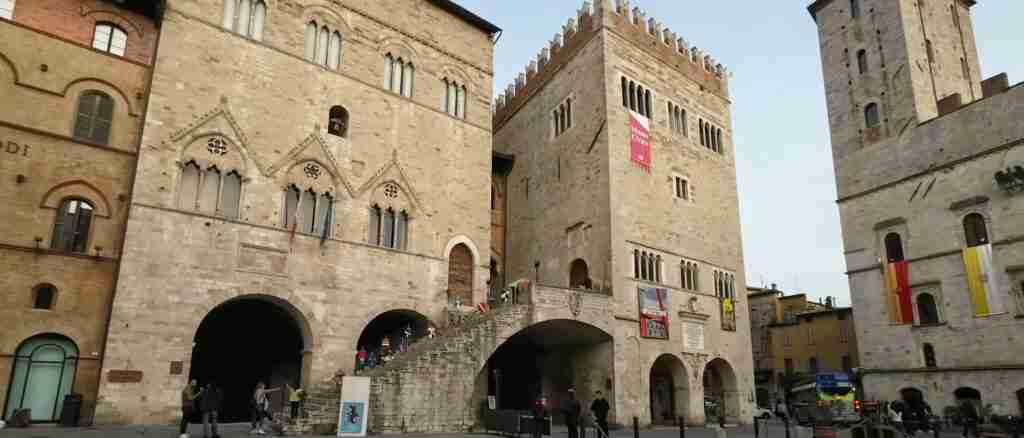
Gubbio preserves its medieval structure with remarkable completeness, its grey stone buildings climbing steep slopes in perfect terraced harmony. The Palazzo dei Consoli dominates the main square, housing the Eugubine Tablets—seven bronze plates inscribed with ancient Umbrian language ritual texts dating to 250-150 BCE, representing one of Italy’s most important pre-Roman linguistic artifacts. The palazzo’s great hall and tower provide city views justifying the €5 entry fee.
Gubbio’s ceramics tradition continues unbroken since the 14th century. Multiple workshops welcome visitors to observe throwing, glazing, and traditional majolica painting techniques. The town’s association with St. Francis centers on the legend of Francis taming a fierce wolf threatening the community—sculptures throughout Gubbio commemorate this story mixing fact and medieval hagiography. The funicular ride to Basilica Sant’Ubaldo provides mountain access without uphill effort, passing ski lifts used for winter sports and summer mountain biking.
Spoleto: Roman and Medieval Layers
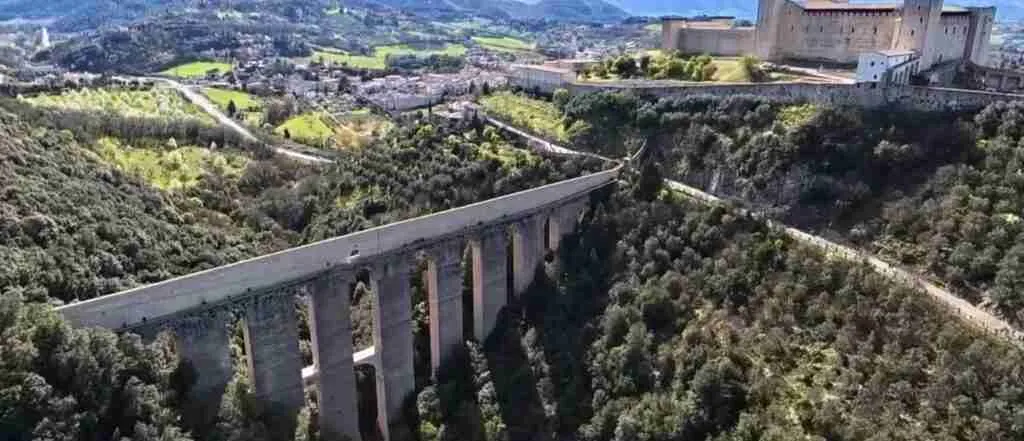
Spoleto combines multiple historical periods in visible stratigraphy. Roman remains include the 1st-century BCE theater still used for Festival dei Due Mondi performances each June-July, and the Arco di Druso marking the forum entrance. Medieval construction produced the 12th-century cathedral with Filippo Lippi’s fresco cycle in the apse, and the Ponte delle Torri—a spectacular 13th-century bridge-aqueduct spanning the gorge on ten 80-meter arches. Walking the 230-meter bridge length takes 10 minutes and provides vertiginous views into the Tessino ravine far below.
The Rocca Albornoziana fortress crowning Spoleto’s heights houses the National Museum of the Duchy of Spoleto, detailing the Lombard period when Spoleto ruled much of central Italy (570-1230 CE). The surrounding Monteluco oak forest protects ancient groves sacred to pre-Roman peoples, later adopted by Christian hermits including Francis—walking trails through these woods provide immediate escape from urban density into primeval nature.
Spello: Hidden Renaissance Gem
Spello receives fewer visitors than its spectacular art deserves. The Church of Santa Maria Maggiore contains Pinturicchio’s Baglioni Chapel frescoes (1501)—among the Renaissance’s finest works executed at the painter’s creative peak. The nativity scene’s architectural background recreates Spello’s own streets with remarkable precision, allowing visitors to recognize unchanged buildings. The €3.50 entry fee represents extraordinary value given the chapel’s artistic importance.
Spello’s flower-filled streets earn it “City of Flowers” designation—every June residents cover streets with elaborate flower petal designs for the Infiorata festival. Beyond this event, geranium-filled window boxes and climbing roses soften the austere medieval stone year-round. The Roman-era Porta Consolare gate preserves Latin inscriptions and provides access to Spello’s stepped lanes climbing toward upper town fortifications.
Montefalco: Wine Country Vantage
Montefalco’s hilltop position 473 meters above sea level commands panoramic views across Umbrian vineyard valleys, earning it “Balcony of Umbria” recognition. The town produces Sagrantino di Montefalco DOCG—among Italy’s most concentrated red wines from indigenous Sagrantino grapes. Multiple wine shops offer tastings, with bottles priced €20-80 depending on aging and producer prestige. The Church of San Francesco museum displays Benozzo Gozzoli’s 1452 fresco cycle illustrating Francis’s life in exquisite detail rivaling even Giotto’s more famous Assisi work.
Bevagna: Roman Market Town
Bevagna preserves its Roman grid plan with remarkable clarity—modern streets follow ancient cardo and decumanus alignments. Roman mosaics in the Terme di Bevagna archaeological site show elaborate marine scenes and geometric patterns from the bath complex serving the town known as Mevania. Medieval construction produced the churches of San Silvestro and San Michele Archangelo, both retaining pure Romanesque facades free of later modifications. The June Mercato delle Gaite festival recreates medieval life with residents in period costume practicing historical crafts and trades in four town quarters competing for authenticity honors.
Best Time for Tours and Walking in Umbria 2026
Seasonal variation dramatically impacts Umbrian walking experiences through weather, trail conditions, daylight hours, and tourism infrastructure availability. Understanding these patterns enables matching travel timing to priorities whether focusing on optimal physical conditions, cultural events, or budget considerations.
Spring Season: April through May
Spring offers ideal walking conditions across April and May. Daytime temperatures range 15-22°C (59-72°F)—warm enough for comfortable exertion without summer heat stress. Wildflower displays peak in late April through May when hillsides explode with poppies, broom, and mountain flowers. Spring rainfall remains significant (8-10 rainy days per month average), requiring waterproof gear and accepting occasional wet days. Trail surfaces can become muddy, particularly in forested sections where drainage remains slow.
Practical advantages include moderate tourist volumes allowing spontaneous accommodation booking 2-3 days ahead, lower prices at hotels and restaurants compared to summer peak, and lengthening daylight providing 13-14 hours between sunrise and sunset by May. Disadvantages center on weather unpredictability—warm sunny days alternate with cool, damp periods requiring layered clothing systems. Mountain trails above 1,200 meters may retain snow patches through April, limiting access to highest routes.
Summer Season: June through August
Summer delivers maximum sunshine reliability with July and August averaging fewer than 5 rainy days monthly. Daytime temperatures reach 28-32°C (82-90°F) in valleys, dropping to more comfortable 20-25°C (68-77°F) at higher elevations. Heat stress becomes primary concern—early morning starts (departing 6:00-7:00 AM) allow covering distance before peak heat, with midday breaks extending from noon until 4:00 PM in shadeless areas. Water consumption increases to 3-4 liters daily requiring careful hydration planning.
Summer brings peak tourism overwhelming major towns like Assisi and Spoleto. Accommodation requires booking 3-4 weeks advance, prices increase 30-40 percent above shoulder season, and popular trail sections see heavy use particularly on weekends. Compensating advantages include maximum trail accessibility with all routes open and maintained, extended daylight up to 15 hours in June and July enabling long-distance days, and reliable weather allowing confident multi-day planning without weather contingencies.
Autumn Season: September through October
Autumn rivals spring as optimal walking period. September maintains summer warmth (22-26°C / 72-79°F) with decreasing tourist crowds post-Italian school holidays. October brings cooler temperatures (15-20°C / 59-68°F), spectacular fall foliage coloring hillside forests, and truffle season beginning in late September when black and white truffle hunting opens across Umbrian valleys. October’s Sagrantino wine harvest in Montefalco creates festival atmosphere with vineyard tastings and wine-centered events.
Practical advantages include comfortable walking temperatures avoiding summer heat, generally stable weather (though October rainfall increases), dramatic fall colors particularly in beech forests, and shoulder-season pricing with accommodation availability improving from summer’s pressure. Daylight shortens progressively from 13 hours in September to 11 hours in October, requiring earlier starts or shorter stages to avoid finishing in darkness. Some rural accommodations begin closing in late October ahead of winter shutdown.
Winter Season: November through March
Winter walking suits only experienced mountain trekkers comfortable with winter conditions. Temperatures drop to 5-10°C (41-50°F) in valleys, below freezing at elevations above 800 meters. Snow becomes likely November through March at elevations exceeding 1,000 meters, creating beautiful but challenging conditions. Daylight shrinks to 9-10 hours December and January, severely limiting daily distance possibilities. Many rural accommodations, restaurants, and even entire small villages effectively close December through February.
Winter appeals to solitude-seekers willing to accept significant limitations. Trails emptiness provides contemplative experiences impossible during tourist season. Umbrian hill towns draped in snow create postcard scenes particularly around Christmas when decorations light medieval squares. However, winter attempts require winter mountaineering skills and equipment including microspikes for icy sections, proper cold-weather layering, navigation skills when fog obscures trails, and realistic acceptance that weather may force changes or cancellations. Winter represents expert-level Umbria walking, not entry-level experience.
Special Events and Festivals in 2026
The 2026 St. Francis 800th anniversary dominates the cultural calendar with special events throughout the year, peaking around the October 3 feast day. Assisi programming includes special exhibitions, concerts in the basilica, and organized group pilgrimages from around Europe. The Spoleto-Norcia railway centennial on June 2 brings the SpoletoNorcia MTB event’s special edition with enhanced route options and commemorative celebrations.
Regular annual events include Spoleto’s Festival dei Due Mondi (late June-early July) presenting opera, theater, and classical music in venues throughout town; Perugia’s Umbria Jazz Festival (July) attracting international musicians; Gubbio’s Corsa dei Ceri (May 15) featuring teams racing carrying 300-kilogram wooden structures through town streets; and Assisi’s Calendimaggio (early May) with medieval pageantry, flag throwing, and music competitions between town quarters.
Practical Logistics: Gear, Fitness, and Safety for Umbria Walking 2026
Successful Umbrian walking requires matching equipment and preparation to chosen routes’ demands. Over-packing creates unnecessary weight burden, while under-preparation leaves gaps in essential safety and comfort items.
Footwear and Clothing
Footwear selection depends entirely on chosen routes. The Spoleto-Norcia railway trail and urban walking require only sturdy walking shoes or light hiking shoes with modest ankle support. Via di Francesco and moderate mountain trails demand mid-height hiking boots providing ankle stability on uneven terrain, with Vibram or equivalent grip soles essential for loose stones and potential mud. Difficult mountain routes require full hiking boots with rigid soles supporting technical terrain.
Breaking in footwear before departure prevents blisters that derail entire trips. Wear chosen boots for multiple 10-15 kilometer training walks with full day-pack weight, identifying and addressing pressure points before departure. Two pairs of hiking socks—thin liner socks plus medium-weight outer socks—reduce friction causing blisters. Carry blister treatment supplies (Compeed or equivalent) from day one rather than waiting for problems to develop.
Clothing strategy follows layering principles. Base layer (synthetic or merino wool, never cotton) manages moisture. Mid layer (fleece or light down) provides insulation. Outer layer (waterproof-breathable shell jacket and pants) protects from wind and rain. Summer walking may eliminate mid layer during day while keeping it packed for mountain weather changes or cool evenings. Winter requires comprehensive cold-weather systems including insulated jacket, warm hat, and gloves.
Sun protection matters intensely on exposed ridges and open hillsides. Wide-brimmed hat, high-SPF sunscreen (minimum SPF 30), and sunglasses prevent burns and heat stress. Italian sun intensity surprises northern European visitors unaccustomed to Mediterranean UV levels.
Backpack and Load Management
Day-pack capacity depends on independence level. Guided tours with luggage transfer require only 18-25 liter packs carrying water, snacks, rain gear, first aid, and daily essentials—loaded weight stays under 5 kilograms. Self-guided walking with luggage transfer uses similar sized packs. Completely independent trekking carrying all gear requires 40-60 liter packs accommodating sleeping bag, extra clothing, and provisions—loaded weight typically reaches 12-18 kilograms.
Pack weight discipline matters immensely. Each unnecessary kilogram multiplies over hundreds of thousands of steps spanning week-long treks, creating fatigue and injury risk. Ruthlessly eliminate “just in case” items. Shared items (first aid kit, maps, repair supplies) distribute among group members avoiding duplication. Test full pack weight on training walks revealing whether loads remain comfortable for sustained carrying.
Navigation Tools and Maps
Digital navigation via smartphone apps (AllTrails, Komoot, Outdooractive) provides real-time positioning and route tracking with downloaded offline maps functioning without cellular service. Carry external battery pack maintaining phone power through full days—10,000-20,000 mAh capacity provides 2-4 full charges depending on phone model and usage. Paper maps remain essential backup when electronics fail—1:50,000 or 1:25,000 scale topographic maps show sufficient detail for mountain navigation. Compass and ability to use it with paper maps provides final backup, though GPS reliability has reduced compass dependence for most recreational trekking.
Water and Nutrition
Water requirements vary dramatically by temperature and exertion level. Spring and autumn walking typically requires 2-3 liters daily. Summer heat increases consumption to 3-4 liters, particularly on exposed routes without shade. Carry capacity meeting needs between reliable refill points—Italian town fountains provide free potable water (unless marked “non potabile”), making villages natural resupply points. Water purification tablets or filters provide backup if town access becomes uncertain, though tap water quality throughout Umbria eliminates health concerns from fountain sources.
Trail nutrition balances weight against energy needs. Italian alimentari shops sell excellent hiking foods—parmigiano cheese, salami, fresh bread, nuts, dried fruit, and chocolate. Morning supermarket stops before day’s walking allow assembling lunch and snacks totaling 2,000-3,000 calories for demanding days. Energy bars and gels provide compact calories but lack the satisfaction of local bread, cheese, and salami lunches consumed with views across Umbrian valleys.
Fitness Preparation
Adequate fitness makes the difference between joyful walking and suffering endurance tests. Minimum preparation for moderate Umbrian routes includes regular walking covering 10-15 kilometers weekly in the 2-3 months before departure, with at least four training walks of 15-20 kilometers including elevation gain simulating trail conditions. Difficult mountain routes demand higher preparation including loaded pack training, hill interval training building leg strength, and potentially gym work strengthening stabilizing muscles preventing ankle and knee injuries.
Age matters less than honest fitness assessment. Well-conditioned 65-year-olds complete challenging routes comfortably while unfit 30-year-olds struggle on moderate trails. Physical preparation represents controllable variable—starting training 12 weeks before departure allows building sufficient conditioning even from relatively sedentary baseline.
Safety Considerations
Solo walking requires extra caution versus group travel. Inform accommodation hosts of daily routes and expected return times. Carry emergency whistle (three short blasts signals distress), basic first aid supplies treating blisters, cuts, sprains, and pain, and comprehensive travel insurance including mountain rescue coverage and medical evacuation. Italian mountain rescue operates through 118 emergency number, with helicopter evacuation common for serious injuries in remote locations.
Weather monitoring becomes critical for mountain routes. Italian meteorological service (meteo.it) provides detailed forecasts including mountain conditions. Afternoon thunderstorms develop rapidly June through August—plan summit attempts and exposed ridge crossings for morning hours, descending to tree cover by early afternoon. Lightning danger on exposed ridges and peaks justifies retreat when storms threaten regardless of proximity to goals.
Wildlife hazards remain minimal. Vipers exist throughout Umbria but encounters rarely occur—stick to established trails and watch hand placement when scrambling rocks. Wild boar populations support hunting but attacks on humans remain extremely rare. Guard dogs protecting sheep flocks present the most common animal concern—give working dogs wide berth, avoid sudden movements, and recognize they’re protecting livestock rather than expressing aggression toward hikers.
Transportation Access to Umbrian Trails and Towns 2026
Reaching Umbrian trailheads requires navigating Italy’s comprehensive but sometimes complex transportation network. Strategic choices between trains, buses, rental cars, and airport transfers significantly impact convenience and costs.
International Air Access
Perugia San Francesco d’Assisi Airport (PEG) serves Umbria directly but offers limited international connections primarily to other Italian cities, London Stansted, and several European destinations. Rome Fiumicino (FCO) and Florence airports provide major international gateways with extensive connections, sitting 170 kilometers south and 150 kilometers north of Perugia respectively. Train connections from both airports reach Perugia in approximately two hours, making them practical Umbria gateways despite distance.
Budget airlines including Ryanair serve Perugia Airport from London, Brussels, and Barcelona with fares often under €100 round-trip booked advance. Rome and Florence airports host full-service carriers with global connections. Airport transfers to Perugia center cost €35-50 via direct bus services, €120-180 for private taxi, or €25-40 via train requiring bus connection to Perugia airport and train from there.
Train Network
Trenitalia operates Umbria’s rail network with main lines connecting Rome-Florence via Orte, Terni, Spoleto, Foligno, Assisi, and Perugia. The Rome Termini to Perugia journey via Foligno takes 2.5-3 hours with multiple daily departures costing €12-25 depending on train type and booking timing. Florence Santa Maria Novella to Perugia requires 2.5 hours and costs €9-20. Advance booking through trenitalia.com or thetrainline.com often yields significantly lower fares than purchasing at stations.
Branch lines serve smaller towns. The Terni-Sansepolcro line passes through the Valnerina valley including stops at Spoleto, Scheggino, and Norcia (road connection), useful for Spoleto-Norcia trail access. The Foligno-Terontola line serves Assisi, Perugia, and Lake Trasimeno communities. Service frequency varies dramatically—major routes see hourly or better frequency while branch lines may offer only 4-6 daily trains requiring careful schedule coordination.
Rail passes provide value for extensive travel but limited utility for focused Umbrian visits. A 3-day Trenitalia Pass covering regional trains costs approximately €110-130, breaking even versus individual tickets only with 8+ separate journeys. Point-to-point tickets suit most itineraries better, particularly utilizing advance purchase discounts.
Regional Bus Service
Umbria Mobilità operates comprehensive bus network connecting towns not served by trains. Schedules appear at umbriamobilita.it with English translation available though sometimes imperfect. Service frequency ranges from hourly on major routes (Perugia-Assisi, Spoleto-Norcia) to 2-3 daily on minor rural connections. Weekend service reduces significantly with some routes operating only Monday-Friday.
Key routes for walkers include Spoleto-Norcia (€5 one-way, 90 minutes, 4-6 daily), Perugia-Gubbio (€4.50, 70 minutes, frequent), and Assisi-Spello (€2, 20 minutes, hourly). Tickets purchase at tabacchi shops, newsstands, or occasionally directly from drivers (with surcharge). Validate tickets in yellow machines aboard buses or face fines from random inspections.
Car Rental Considerations
Rental cars provide maximum flexibility for accessing remote trailheads, creating custom itineraries, and carrying gear without public transport limitations. International agencies (Hertz, Avis, Europcar, Sixt) operate from airports and major towns with advance online booking yielding better rates than walk-in rentals—typically €35-55 daily for compact cars with comprehensive insurance. Manual transmission dominates Italian rental fleets with automatic transmissions commanding €10-15 daily premiums when available.
ZTL (Zona Traffico Limitato) restricted traffic zones in historic centers create significant concern for unfamiliar drivers. Cameras automatically photograph license plates of unauthorized vehicles entering ZTL zones, triggering fines of €80-200 mailed to rental companies who add administrative fees. Most Umbrian town centers prohibit general traffic, requiring parking in designated lots outside walls then walking into historic areas. Accommodations within restricted zones provide temporary access codes—verify access procedures before driving toward any hotel in historic center location.
Parking costs and availability vary dramatically. Major towns charge €1.50-2.50 hourly in paid lots, with free parking often requiring 15-20 minute walks from centers. Many agriturismi and hotels include free parking on property. Street parking uses color-coded systems: white lines indicate free parking, blue lines paid parking, yellow lines reserved for residents. Enforcement remains vigorous with wheel clamps and towing common for violations.
Taxi and Transfer Services
Taxis in Umbrian towns operate on meter rates set by municipalities, typically €1.50-2.00 per kilometer plus initial flag drop of €5-8. Short town-to-trailhead transfers cost €15-30 while longer inter-town journeys reach €80-120. Pre-arranged transfers through tour operators or specialized services (Welcome Pickups, Daytrip) charge premium rates but provide English-speaking drivers, fixed pricing, and reliability—useful for airport connections or luggage movement between distant accommodations.
Ride-sharing apps have limited penetration in Umbria. Uber operates in Perugia but with restricted availability. Traditional taxi services remain dominant requiring phone booking (Italian language often necessary) or picking up at designated taxi stands near train stations and main squares.
Food, Wine, and Culinary Highlights Along Walking Routes 2026
Umbrian cuisine rewards walkers with hearty, honest food emphasizing local ingredients and centuries-old preparations. Understanding regional specialties and where to find authentic versions enhances cultural immersion beyond simple calorie replacement.
Essential Umbrian Dishes
Strangozzi (or stringozzi) represents Umbria’s signature pasta—hand-rolled thick spaghetti traditionally served with black truffle sauce or simple tomato and garlic. Unlike commercial dried pasta, strangozzi’s rough texture grabs sauces while maintaining firm bite. Restaurant prices range €12-18 for primi piatti portions.
Porchetta—whole roasted suckling pig stuffed with wild fennel, garlic, and herbs—appears at butcher shops and street vendors throughout the region. The crispy skin and aromatic meat served on fresh bread creates perfect trail lunches for €5-8 per substantial sandwich. Quality varies enormously with artisan producers in Norcia crafting transcendent versions while mediocre operators sell rubbery commercial preparations.
Lentils from Castelluccio di Norcia hold protected geographic indication (IGP) status for their tiny size, tender texture, and ability to cook without soaking. Soups and stews featuring these lentils appear on winter menus, though 2016 earthquake damage to Castelluccio has reduced production and increased prices. Authentic Castelluccio lentils command €15-25 per kilogram versus €5-8 for standard varieties.
Truffle Culture
Black and white truffles permeate Umbrian cuisine from October through January. Black summer truffles (available May-August) cost €15-30 per plate when shaved over pasta or eggs. White truffles (November-December) represent luxury pricing of €80-150 for modest portions due to their intense perfume and scarcity. Truffle hunting experiences with trained dogs and licensed tartufai (truffle hunters) operate through tour providers and select agriturismi, typically costing €80-120 per person for 2-3 hour forest excursions revealing hunting techniques and truffle habitat.
Beware truffle fraud. Restaurants catering to tourists sometimes use truffle-infused oils and preserved truffles rather than fresh specimens, delivering inferior flavor at fresh-truffle prices. Authentic seasonal fresh truffles should be shaved tableside from whole specimens, never arriving pre-shaved or mixed into dishes invisibly. Seasonal availability matters—”white truffle pasta” served in July uses preserved truffle products, not impossible-to-obtain fresh specimens.
Wine Regions and Tastings
Montefalco produces Sagrantino di Montefalco DOCG—among Italy’s most powerful red wines from indigenous Sagrantino grapes cultivated exclusively in this small zone. The wine’s extreme tannins require minimum 30 months aging before release, with reserves aging 37+ months. Mature Sagrantino costs €30-80 per bottle in wine shops, €50-120 in restaurants. Winery visits with tastings operate by appointment, typically charging €15-30 per person for tours including 3-4 wine samples plus light food pairings.
Orvieto Classico DOC white wine—primarily Grechetto and Trebbiano grapes—creates refreshing dry whites (Orvieto Secco) and lusciously sweet dessert versions (Orvieto Abboccato). The zone’s volcanic tufa caves provided natural temperature-stable aging cellars for centuries. Contemporary Orvieto whites cost €8-15 in shops, delivering exceptional value for quality achieved by top producers.
Torgiano produces both red (Sangiovese-based) and white wines under Torgiano DOC and Torgiano Riserva DOCG designations. The Lungarotti family’s wines dominate production, with their wine museum in Torgiano providing comprehensive exhibits covering viticulture history and techniques. Museum entry costs €6 with guided tastings available for additional €10-15.
Restaurant Strategy
Trattorias and osterias serving local clientele offer better value and authenticity than tourist-focused restaurants near major monuments. Look for handwritten daily menus (often in Italian only), locals filling tables, and simple decor—these signals suggest genuine cooking rather than reheated commercial preparations. Cover charges (coperto) of €2-3 per person plus 10-12 percent service charges add to bill totals, making €15 menu prices actually cost €18-20 after additions.
Lunch typically offers better value than dinner through set-price menus (menu turistico or menu del giorno) including primi, secondi, contorno (side), and wine for €15-22. These fixed-price meals suit budget-conscious travelers and midday refueling, though quality varies. Dinner ristorante service provides more refined cooking at higher prices (€25-40 per person) with à la carte ordering allowing selection of best available dishes.
Alimentari shops and local markets provide self-catering supplies for trail lunches and picnics. Fresh bread (€2-3 per loaf), local cheese (€12-20 per kilogram for pecorino and aged varieties), salami (€15-25 per kilogram), fresh fruit, and wine assembled for €15-20 create superior trail meals compared to commercial sandwiches while supporting local producers directly.
Photography Opportunities and Best Views Along Umbrian Routes 2026
Umbria’s photogenic qualities extend beyond postcard-perfect hill towns to encompass subtle agricultural landscapes, morning mists in valleys, and dramatic mountain weather that rewards photographers willing to wake early and stay late.
Optimal Shooting Times
Golden hour—the first and last hour of daylight—provides warm, directional light revealing texture in stone buildings and depth in valley landscapes. Summer dawn arrives 5:30-6:00 AM with comparable late evening light 8:30-9:00 PM. Winter shortens these windows to 7:30-8:00 AM and 4:30-5:00 PM. Serious photographers plan accommodations allowing morning departure before dawn or evening shooting after dinner, rather than being constrained by midday walking schedules.
Overcast conditions suit detailed architectural photography by eliminating harsh shadows while providing even illumination for frescoes and building details. Rainy weather clears atmospheric haze, producing crystal visibility for distant mountain views immediately after storms pass.
Essential Viewpoints
Assisi from Eremo delle Carceri provides the definitive elevated view across the town’s pink stone buildings spreading down Monte Subasio’s slopes. Morning light from the east illuminates building facades while sunset creates silhouettes emphasizing architectural masses. The 2.5-kilometer walk from Assisi to the hermitage takes 45-60 minutes uphill, with the return descent allowing quick repositioning for changing light.
Spoleto’s Ponte delle Torri spans its gorge on ten soaring arches creating natural framing opportunities for valley views. Photographing from the bridge itself captures vertiginous perspectives into the 80-meter drop, while views from below emphasize the engineering achievement. Late afternoon side-lighting brings out texture in the medieval stonework.
Montefalco’s belvedere viewpoint earns “Balcony of Umbria” designation for panoramas spanning from the Apennines to the Tiber valley. Clear winter days after cold fronts pass provide maximum atmospheric clarity for capturing distant mountain ranges. The vineyards surrounding Montefalco create strong foreground elements framing wider landscape compositions.
Lake Trasimeno perimeter trails offer dawn mist opportunities when temperature inversions create fog layers across water surfaces while hills remain clear. Shooting from elevated trail segments above Passignano catches sun burning through morning fog, revealing the lake and islands progressively as conditions change.
Equipment Considerations
Full-frame camera systems provide superior low-light performance for pre-dawn shooting and interior cathedral photography where tripods often face prohibition. Lightweight mirrorless systems reduce pack weight compared to traditional DSLRs while delivering comparable image quality. Smartphone cameras continue improving, with recent iPhone and Android flagships producing excellent results for social media and modest printing though lacking telephoto reach and extreme low-light capability.
Lens selection balances coverage against weight. A 24-70mm equivalent zoom handles 70 percent of situations from architecture to environmental portraits. Ultra-wide (14-24mm) captures expansive valley views and cathedral interiors. Telephoto (70-200mm or longer) isolates distant villages and hill town details but adds significant pack weight. Serious photographers often carry 24-70mm plus one additional lens matching their primary interest—ultra-wide for landscapes or telephoto for villages and architectural details.
Tripods enhance image quality through longer exposures but add 1-2 kilograms pack weight. Lightweight travel tripods collapse small while sacrificing stability in wind. Many churches prohibit tripods entirely, requiring high-ISO shooting or accepting less-sharp handheld results. Realistic weight discipline often means leaving tripods behind except for photographers making serious landscape work their primary trip purpose.
Language, Communication, and Cultural Etiquette in Rural Umbria 2026
Rural Umbria remains authentically Italian in language and custom, with English fluency concentrated in tourist-focused businesses rather than permeating daily life. Basic Italian phrases and cultural awareness smooth interactions enormously.
Essential Italian for Trails
Core phrases include “Buongiorno” (good morning/day), “Buonasera” (good evening, used from mid-afternoon), “Per favore” (please), “Grazie” (thank you), and “Scusi” (excuse me). “Dov’è il sentiero per…” (where is the trail to…) followed by destination name serves trail navigation when asking directions. “C’è acqua potabile?” (is there drinking water?) identifies fountain safety. “Quanto costa?” (how much does it cost?) handles purchases.
Restaurant essentials include “Il conto, per favore” (the bill, please), “Senza…” (without…) for dietary restrictions, and understanding that “prima colazione” means breakfast, “pranzo” lunch, and “cena” dinner. Menu sections divide into antipasti (appetizers), primi piatti (first courses—pasta, risotto, soup), secondi piatti (main courses—meat, fish), contorni (sides), and dolci (desserts).
Numbers matter for prices, times, and distances: uno (1), due (2), tre (3), quattro (4), cinque (5), sei (6), sette (7), otto (8), nove (9), dieci (10), venti (20), cinquanta (50), cento (100). Time uses 24-hour clock in schedules—le quattordici (2:00 PM), le venti (8:00 PM).
Cultural Expectations
Greeting acknowledgement precedes all interactions. Entering shops, restaurants, or asking strangers for directions without beginning with “Buongiorno” or “Buonasera” marks one as rude foreigner. The ritual greeting establishes social connection before transactional business.
Meal pacing differs fundamentally from North American or British expectations. Lunch and dinner span 90-120 minutes with courses arriving sequentially, not simultaneously. Requesting the check immediately after finishing eating signals dissatisfaction—waiters assume diners want to linger unless explicitly summoned. Wave or make eye contact while saying “Il conto, per favore” to initiate bill delivery.
Tipping practices confuse many visitors. Service charges (servizio) of 10-12 percent already appear on bills, rendering additional tipping unnecessary. Rounding bills up to nearest €5-10 or leaving small change (€1-2) acknowledges good service but substantial percentage tips (15-20 percent American-style) are never expected and sometimes create awkwardness.
Dress codes exist for churches. Bare shoulders, shorts above knee, and revealing clothing prevent entry to major basilicas including Assisi’s San Francesco. Carrying a light scarf or sarong enables covering shoulders and bare legs when necessary. These rules apply regardless of heat, though enforcement varies by church and individual attention.
Mobile Connectivity
European Union roaming regulations allow EU citizens to use domestic mobile plans throughout Italy without additional charges. British and non-EU visitors should verify international roaming rates—often prohibitively expensive—before departure. Purchasing Italian SIM cards (TIM, Vodafone, Wind Tre) provides affordable data and calls, typically €15-25 for month-long plans with 20-50GB data. SIM purchases require passport presentation and sometimes Italian tax identification, though tourist exceptions exist.
Wi-Fi availability varies dramatically. Accommodations generally provide free Wi-Fi though connection quality and speed fluctuate. Restaurants and cafes increasingly offer Wi-Fi with password provided on request. Rural areas between towns often lack cellular coverage entirely, making downloaded offline maps essential for navigation.
Environmental Responsibility and Sustainable Tourism in Umbria 2026
Umbria’s landscapes remain relatively pristine compared to over-touristed regions, with maintaining this character requiring visitor commitment to low-impact practices and supporting businesses aligned with sustainability values.
Leave No Trace Principles
Pack out all waste without exception. Italy provides minimal trailside garbage facilities, assuming users carry trash to towns for proper disposal. Cigarette butts, food wrappers, and toilet paper left on trails degrade experience for following users and damage ecosystems. Carry dedicated trash bags collecting all waste until reaching bins.
Human waste disposal follows standard wilderness protocols. Use facilities in towns before departure and plan routes accessing villages every 4-6 hours. When nature calls between towns, move minimum 60 meters from trails, water sources, and camping areas. Dig 15-20 centimeter catholes, bury waste, and pack out toilet paper rather than burying or burning it. Agricultural lands remain private property—obtain permission before crossing or camping.
Water sources require protection from contamination. Collect drinking water upstream from where washing or swimming occurs. Soap and detergents, even biodegradable versions, contaminate streams—wash minimum 60 meters from water sources allowing soil filtration before wastewater reaches streams. Fontaines and town fountains eliminate need for single-use plastic water bottles—carry reusable bottles refilling at towns.
Supporting Local Economies
Accommodation choices impact community economics significantly. Family-run B&Bs, agriturismi, and small hotels keep tourist spending within communities rather than extracting it to international hotel chains. These small operations employ local residents, source food from nearby farms, and often provide richer cultural interactions than standardized corporate properties. Paying €60-80 at locally-owned B&B generates more community benefit than €100 at international chain properties.
Restaurant patronage follows similar logic. Trattorias serving local clientele use regional ingredients from known suppliers, supporting agricultural producers and maintaining food traditions. Tourist restaurants serving reheated commercial preparations import industrially-produced food generating minimal local economic activity. The quality difference accompanies economic impact—authentic restaurants typically deliver superior cooking alongside better community support.
Shopping at alimentari shops, local markets, and artisan producers rather than supermarkets directs spending toward small businesses. Pecorino cheese, salami, and olive oil purchased from producers or their direct retailers costs marginally more than supermarket versions while ensuring fair compensation for quality ingredients and traditional production methods.
Trail Maintenance and Volunteer Opportunities
CAI (Club Alpino Italiano) sections throughout Umbria maintain trails, build and repair waymarking, and advocate for trail access. International visitors can support this work through CAI membership (€50-80 annually) providing trail insurance plus access to CAI rifugi (mountain huts) at member rates. Some sections welcome volunteers for trail maintenance work days clearing vegetation, repairing erosion, and installing signage, though arrangements require advance contact and Italian language skills for most activities.
The Via di Francesco volunteers (Associazione Cammino di Francesco) maintain pilgrimage route waymarking and operate several donation-based pilgrim hostels. Contributions through their website or direct donations at hostels support ongoing maintenance and hospitality infrastructure benefiting all future pilgrims.
Frequently Asked Questions About Umbria Tours and Walking 2026
Do I need to book Via di Francesco accommodations far in advance in 2026?
Booking requirements depend on travel dates and accommodation preferences. The 2026 St. Francis anniversary increases demand throughout the year, particularly around key dates—October 3 feast day and surrounding weeks require 4-6 weeks advance booking for popular towns like Assisi, Gubbio, and Spoleto. Summer months (June-August) similarly demand 3-4 weeks advance planning. Spring and autumn shoulder seasons (April-May, September) allow 2-3 weeks advance booking, though spontaneous availability exists for flexible travelers willing to adjust itineraries. Pilgrim hostels often operate first-come first-served or accept reservations only 1-2 days ahead, maintaining availability for arriving pilgrims but risking full occupancy on busy weekends. Budget hotels and B&Bs in smaller towns between major centers (Pietralunga, Vallo di Nera, Valfabbrica) retain spontaneous availability even during peak periods.
What fitness level is required for self-guided walking in Umbria?
Required fitness varies enormously by chosen routes. The Spoleto-Norcia railway trail suits beginners and families with minimal fitness—flat grades, short optional distances (10-15 kilometers), and no technical skills required mean anyone capable of sustained leisurely walking completes sections successfully. Easy trails around lakes and through valley floors require similar modest conditioning. Moderate Via di Francesco stages covering 18-25 kilometers daily with 1,000-2,000 feet elevation gain demand higher fitness equivalent to comfortably walking 15 kilometers with loaded day-pack. This fitness level develops through regular walking building to 15-kilometer training walks 2-3 times weekly for 8-12 weeks before departure. Difficult mountain routes in the Sibillini or Monte Cucco parks require strong fitness including ability to sustain effort for 6-8 hours, negotiate steep rocky terrain, and carry full overnight gear if needed. Age matters less than honest conditioning assessment—well-trained 60-year-olds complete moderate routes comfortably while sedentary 30-year-olds struggle. Realistic self-evaluation and appropriate route selection prevent miserable experiences from fitness-route mismatches.
Can I complete the Via di Francesco without speaking Italian?
Yes, though basic Italian phrases significantly enhance the experience and simplify logistics. Waymarking along the Via di Francesco uses internationally understood signage with minimal text, allowing navigation without language skills. Pilgrim hostels and trail-adjacent accommodations accustomed to international walkers often include some English speakers or use translation apps facilitating basic communication. Larger towns (Gubbio, Assisi, Spoleto) contain tourist information offices with English-speaking staff. However, smaller villages along the route maintain authentic Italian character with limited English—ordering meals, asking directions, and handling accommodation check-in require either Italian phrases or willingness to navigate hand gestures and translation apps. Pre-learning 30-40 essential phrases covering greetings, directions, food, and accommodation matters greatly improves interactions while demonstrating respect for local culture. Trail emergencies requiring assistance benefit enormously from ability to communicate clearly, making basic Italian a safety consideration beyond mere convenience.
What’s the best single-week itinerary for first-time Umbria walkers in 2026?
A seven-day Spoleto-to-Assisi itinerary balances cultural highlights, manageable daily distances, and accommodation accessibility for newcomers. Day 1: Arrive Spoleto, explore town including cathedral and Ponte delle Torri. Day 2: Spoleto-Norcia railway trail to Sant’Anatolia di Narco (20 kilometers, easy). Day 3: Continue trail to Vallo di Nera, explore village (12 kilometers). Day 4: Bus to Foligno, walk to Bevagna (12 kilometers, gentle). Day 5: Bevagna to Spello (14 kilometers, moderate). Day 6: Spello to Assisi via Roman aqueduct trail (14 kilometers, moderate). Day 7: Rest day exploring Assisi thoroughly including basilica, Rocca Maggiore, and optional walk to Eremo delle Carceri. This itinerary averages 12-16 kilometers on walking days—achievable for moderately fit beginners. Trail surfaces mix easy railway path, valley agricultural routes, and moderate hillside paths without technical mountain sections. Towns provide abundant accommodation options and restaurants, minimizing logistics stress. The progression builds confidence through initial easy stages before tackling moderate Spello-Assisi finale, culminating in Assisi’s spiritual and cultural significance.
How much does a week of self-guided walking cost in Umbria 2026?
Budget-conscious self-guided walking costs approximately €560-900 ($610-980) per person for seven days excluding international flights. Accommodation at budget hotels and pilgrim hostels averages €40-70 nightly (€280-490 for seven nights). Meals total €25-40 daily (€175-280 for seven days) covering breakfast included in accommodation, picnic lunches from shops (€8-12), and restaurant dinners (€15-25). Incidental costs include trail snacks, occasional museum entries, and emergency supplies (€50-100 weekly). Guidebooks, maps, and trail insurance add €50-80 one-time costs. Mid-range comfort level pushing to 3-star hotels and nicer restaurants increases totals to €800-1,200 ($870-1,300) weekly. Transport within Italy (trains, buses) between start/end points and trailheads adds €50-150 depending on distances. Gear purchases (boots, backpack, trekking poles if not owned) represent separate one-time investments of €200-500 benefiting future trips beyond just Umbria. These costs represent 50-60 percent savings versus €2,500-3,000 guided group tours while requiring significantly more planning effort and accepting responsibility for all logistics, navigation, and problem-solving.
Is Umbria walking safe for solo travelers, particularly women, in 2026?
Umbria ranks among Italy’s safest regions for solo travelers including women. Violent crime rates remain very low, trail environments present minimal harassment concerns, and local culture generally respects solo hikers. Rural Umbria maintains traditional values where elderly residents keep protective watch over villages, solo travelers on trails receive friendly offers of assistance, and accommodation hosts ensure guest welfare. Women walking solo report overwhelmingly positive experiences, with occasional unwanted attention in larger towns (Perugia, Spoleto) but rarely on trails or in small villages. Standard safety precautions apply: inform accommodation hosts of daily plans and expected returns, carry charged phone with emergency numbers, avoid isolated areas after dark in cities, and trust instincts if situations feel uncomfortable. Solo walkers often find companionship with other hikers on popular routes like the Via di Francesco, creating spontaneous trail friendships while maintaining independence. Facebook groups for Via di Francesco pilgrims and WhatsApp groups coordinated by some hostels connect solo travelers seeking companions for specific stages without committing to organized group tours.
Can children complete Umbrian walking routes, and what ages are appropriate?
Age-appropriate route selection makes Umbria accessible for families. The Spoleto-Norcia railway trail suits children from age 7-8 upward, with flat terrain, interesting tunnels and bridges maintaining engagement, and flexible distances allowing 10-15 kilometer days matching young endurance. Lake Trasimeno perimeter sections similarly accommodate families with gentle terrain and frequent towns for breaks. Urban walking through hill towns (Assisi, Spello, Gubbio) works for children 6+ capable of sustained walking and climbing stairs common in medieval layouts. Via di Francesco stages generally suit teenagers (13+) with good fitness rather than younger children, due to daily distances (18-25 kilometers) and cumulative fatigue over multi-day treks. Mountain trails rated difficult should wait until late teens when physical development, judgment, and risk awareness mature adequately. Italian families frequently walk trails together, creating welcoming atmosphere for visiting families. Accommodation owners often provide family rooms and adapt meals for children. Success requires realistic distance expectations—halving adult daily averages for elementary-age children, building rest days into itineraries, and maintaining flexibility to shorten stages if children struggle.
What happens if I get injured or sick during a multi-day walk in 2026?
Italy’s healthcare system provides excellent emergency care with European Health Insurance Card (EHIC) holders from EU countries receiving treatment on same basis as Italian residents. Non-EU visitors should carry comprehensive travel insurance including medical coverage and emergency evacuation—policies specifically covering adventure activities and hiking cost €25-80 for week-long trips depending on age and coverage limits. Minor injuries (blisters, strains, minor cuts) handle through first-aid supplies carried in day-packs and available from farmacie (pharmacies) in every town—Italian pharmacists provide knowledgeable advice for common ailments without requiring doctor visits. Serious injuries on remote trails trigger emergency response through 118 (medical emergency) or 112 (general emergency). Mountain rescue helicopters operate throughout Umbria, evacuating serious cases to hospitals in Perugia, Terni, or Foligno. Cell coverage exists in valleys and towns though high ridges and dense forests create dead zones—satellite communicators (Garmin InReach, SPOT) provide emergency communication backup where cellular fails, though Italian rescue services respond to 112 calls from any phone regardless of SIM card or account status. Travel insurance typically reimburses accommodation costs when injuries force early termination, though policies vary—review coverage details before departure.
Are Umbrian trails accessible year-round or seasonal?
Trail accessibility varies dramatically by elevation and seasonality. Valley-level routes including the Spoleto-Norcia railway trail, Lake Trasimeno paths, and Via di Francesco sections below 800 meters remain walkable year-round, though winter brings short daylight hours (9-10 hours December-January), cold temperatures (5-10°C / 41-50°F), and occasional snow briefly closing paths. Most accommodations and restaurants in small villages close November through March, limiting winter infrastructure severely. Mountain routes above 1,200 meters including Monte Cucco, Monte Subasio’s upper reaches, and Sibillini peaks close effectively November through April due to snow accumulation, icy conditions, and avalanche danger—attempting these routes requires winter mountaineering equipment and skills far exceeding summer hiking capabilities. The optimal hiking season spans April through October, with April-May offering wildflowers and moderate temperatures, June-August providing maximum accessibility and services but heat stress concerns, and September-October delivering ideal walking conditions plus fall colors and truffle season. November-March suits only experienced winter trekkers on low-elevation routes willing to accept severely limited services and accommodation options requiring significant advance planning rather than spontaneous booking.
How does the 2026 St. Francis 800th anniversary specifically impact my trip?
The anniversary brings both advantages and challenges. Enhanced infrastructure completed for 2026 includes improved waymarking along the Via di Francesco with new directional signs at confusing junctions, expanded English-language materials at churches and monuments, renovated pilgrim hostels offering better facilities, and new visitor centers providing route information and historical context. Special events throughout 2026 offer cultural programming including concerts, exhibitions, and guided group pilgrimages with Franciscan scholars—enriching experiences unavailable in non-anniversary years. However, increased visitor numbers strain accommodations and popular trail sections, particularly around October 3 feast day and summer months, requiring earlier booking and potentially encountering crowds at major sites like Assisi’s basilica. The Italian government’s investment through the Centenario Committee creates permanent improvements benefiting 2026 visitors and all future travelers, making this year optimal for experiencing Umbria’s Franciscan heritage with both enhanced facilities and special programming. Budget travelers may find some price increases at accommodations and restaurants capitalizing on anniversary demand, though smaller villages away from primary pilgrimage routes maintain normal pricing.