
Uluru Cultural Significance Guide: Heritage & Global Impact
Key Takeaways
- Uluru holds profound spiritual significance to the Anangu people as the physical embodiment of Tjukurpa (ancestral law and creation stories), with every feature, cave, and waterhole connected to specific ancestral beings and ceremonial practices spanning over 30,000 years of continuous cultural connection
- UNESCO World Heritage dual listing recognizes both natural geological values and cultural landscape significance, making Uluru one of only 39 mixed heritage sites worldwide where natural and cultural criteria converge in exceptional universal value
- The 2019 climbing ban represents a landmark victory for indigenous cultural rights, resulting from decades of Anangu advocacy to protect sacred pathways from disrespectful recreational use and restore traditional ceremonial access
- Global cultural impact extends beyond Australia through Uluru’s symbolic representation of indigenous land rights movements, environmental conservation ethics, and reconciliation between traditional owners and modern nation states
- Joint management between Parks Australia and traditional Anangu owners since 1985 establishes a pioneering model for indigenous co-governance, influencing protected area management policies across 80+ countries worldwide
- Contemporary Anangu community maintains living cultural traditions through ceremonial practices, art production, language preservation, and knowledge transmission to younger generations, ensuring cultural continuity despite colonization pressures
Understanding Uluru’s Profound Cultural Importance
Uluru stands as one of Earth’s most culturally significant landscapes, representing the physical manifestation of creation stories, ancestral law, and spiritual beliefs held by the Anangu Aboriginal people for over 30,000 years. This massive sandstone formation rising 348 meters above the surrounding desert plain functions not merely as a geological feature but as a sacred cultural landscape where every crack, cave, waterhole, and rock formation connects to specific ancestral beings, ceremonial obligations, and knowledge systems governing Anangu society.
The cultural significance transcends simple religious importance, encompassing legal systems, educational frameworks, social organization, environmental management, and philosophical worldviews encoded in Tjukurpa—the foundational law governing Anangu life. Tjukurpa exists simultaneously as creation period, ancestral beings, the events they performed, the marks they left on the landscape, the laws they established, and the ceremonies perpetuating their stories. This multilayered conceptual framework defies simple Western categorization as either religion, history, law, or science, instead representing an integrated knowledge system uniting all these domains.
The landscape itself serves as a three-dimensional archive recording Tjukurpa, with rock formations functioning as mnemonic devices triggering specific story sequences, teaching morals, explaining natural phenomena, establishing social rules, and preserving practical knowledge about water sources, seasonal patterns, food resources, and navigation across vast desert territories. Elders read the landscape as others might read books, interpreting features as chapters in ongoing narratives connecting past, present, and future generations.
Sacred sites around Uluru’s base perform specific ceremonial functions, with men’s sites, women’s sites, and shared sites each supporting particular ritual activities essential to maintaining cosmic balance, ensuring seasonal rains, promoting game animal fertility, initiating young people into adult responsibilities, and transmitting knowledge across generations. These sites remain actively used for ceremonies, with traditional owners conducting rituals following protocols established during creation times and maintained through unbroken transmission across countless generations.
The cultural landscape extends far beyond Uluru’s visible rock mass, encompassing surrounding desert territories traditionally traversed by Anangu groups following seasonal resources, visiting distant relatives, conducting trade in ceremonial objects and valuable materials, and maintaining complex networks of kinship, obligation, and cultural exchange. Uluru functions as a central node within this broader cultural geography, a place where multiple ancestral tracks converge, major ceremonies occur, and different Anangu groups meet to share knowledge, arrange marriages, resolve disputes, and strengthen social bonds.
Colonial contact beginning in the 1870s disrupted but failed to destroy these cultural connections, despite deliberate policies aimed at assimilating Aboriginal people into European society, removing children from families, forbidding language use and ceremonial practices, and dispossessing traditional owners from their lands. The resilience of Anangu cultural traditions through over 140 years of oppression demonstrates the profound strength of Tjukurpa’s hold on community identity and the determination of elders to preserve and transmit sacred knowledge despite overwhelming pressures for cultural abandonment.
Contemporary recognition of Uluru’s cultural significance, culminating in the 1985 land handback to traditional owners and 2019 climbing closure, represents gradual acknowledgment by the Australian nation of indigenous rights, cultural value, and the importance of respecting Aboriginal perspectives on sacred sites. This recognition extends globally through UNESCO World Heritage listing, international indigenous rights movements citing Uluru as inspiration, and worldwide fascination with the site’s spiritual dimensions transcending its geological grandeur.
People Also Ask About Uluru Cultural Significance
Why is Uluru sacred to Aboriginal people?
Uluru embodies sacred significance because the landscape represents the physical manifestation of Tjukurpa—the ancestral law and creation stories forming the foundation of Anangu spiritual belief, social organization, and cultural identity. During creation times, ancestral beings traveled across the land, shaped geographic features through their actions and conflicts, established laws governing human behavior, and transformed into permanent landscape features still visible today. Uluru preserves the marks of these ancestral journeys through specific rock formations, caves, waterholes, and other features each connected to particular creation stories and ceremonial obligations.
The rock itself emerged during creation period events when ancestral beings including the Mala (rufous hare-wallaby people), Kuniya (python), and Liru (poisonous snake) traveled to Uluru, engaged in significant events, performed ceremonies, and left their physical presence in the landscape. Specific features around Uluru’s base mark where these beings camped, fought, hunted, conducted ceremonies, or died, with each location holding specific spiritual power and ceremonial importance. These sites remain actively used for rituals following protocols established during creation times.
Sacred knowledge about Uluru divides into public and restricted categories, with some stories appropriate for sharing with visitors while others remain exclusively for initiated Anangu, further subdivided by gender and ceremonial responsibility. This knowledge restriction reflects the sacred power residing in certain information and places, requiring appropriate cultural preparation before access. The deepest sacred sites around Uluru remain completely closed to non-Anangu, with even many Anangu people restricted from certain locations based on gender, kinship group, or initiation status.
The climbing route up Uluru’s northwestern face follows a traditional ceremonial path used during men’s initiation ceremonies, making recreational climbing particularly offensive to Anangu as it involves uninitiated people, including women and children, traversing a restricted sacred pathway for entertainment purposes. This fundamental disrespect to sacred protocols drove decades of Anangu advocacy for climbing closure, finally achieved in October 2019 when the practice ended permanently.
What does Uluru mean in Aboriginal culture?
Uluru functions as a central organizing point in Anangu cosmology, representing the convergence of multiple ancestral tracks, the location of major creation events, and a place where different Anangu groups meet for ceremonies, knowledge exchange, and social gatherings. The rock serves simultaneously as geographical landmark, ceremonial center, educational institution, historical archive, and spiritual nexus connecting past ancestral times to present community life and future generations.
The name “Uluru” itself comes from the Pitjantjatjara language, though the full cultural meaning extends far beyond simple nomenclature. European naming as “Ayers Rock” (after South Australian Chief Secretary Henry Ayers) reflects colonial appropriation attempts, with the dual naming policy established in 1993 and reversal to “Uluru / Ayers Rock” in 2002 representing gradual recognition of indigenous primacy. The official name change to “Uluru” as primary designation acknowledges Aboriginal cultural authority and connection predating European contact by tens of thousands of years.
Within Tjukurpa framework, Uluru represents the physical evidence of creation period events, with the rock’s current form resulting from ancestral actions and transformations. Different features hold specific meanings: particular caves mark where beings camped, certain waterholes formed where beings died or conducted ceremonies, rock formations record battles between ancestral snakes, and weather patterns around Uluru reflect the continued spiritual presence of creation beings. This multilayered significance means Uluru functions simultaneously on geological, historical, spiritual, ceremonial, and practical levels.
The cultural meaning extends to surrounding territories traditionally traversed by Anangu, with Uluru serving as a reference point for navigation, a destination for ceremonial gatherings, a source of practical resources (waterholes, ochre deposits, shelter caves), and a marker in oral traditions mapping the broader desert landscape. Songs, dances, and stories associated with Uluru connect to wider regional songlines extending hundreds of kilometers across central Australia, linking Anangu to distant groups through shared ceremonial knowledge and kinship networks.
Who are the traditional owners of Uluru?
The Anangu people hold traditional ownership of Uluru under both Aboriginal law (Tjukurpa) and Australian law (Aboriginal Land Rights Act). Anangu comprises multiple family groups including Pitjantjatjara and Yankunytjatjara peoples, with specific individuals holding particular ceremonial responsibilities for different sites and stories around Uluru based on kinship, initiation status, and inherited knowledge from parents and grandparents.
Traditional ownership operates through complex systems of inherited rights, ceremonial responsibilities, and knowledge transmission rather than Western property concepts. Particular families hold specific Tjukurpa associated with different areas around Uluru, creating overlapping jurisdictions where multiple people share interests in particular sites based on different aspects of the creation stories. Senior law men and law women hold deep knowledge about restricted sacred sites and ceremonies, earned through decades of learning and ceremonial participation following cultural protocols.
The handback of Uluru to traditional owners in 1985 represented landmark recognition of Aboriginal land rights, with the ceremony attended by Prime Minister Bob Hawke and witnessed globally as Australia acknowledged prior indigenous ownership. However, the handback included simultaneous leaseback to Parks Australia for 99 years, establishing joint management arrangements balancing Anangu cultural authority with government conservation responsibilities. This compromise enabled traditional owners to regain legal title while ensuring ongoing public access and professional park management.
Contemporary traditional owners include families descended from people who maintained cultural connection to Uluru throughout the colonial period, despite forcible removal to missions and cattle stations, prohibition of ceremonial practices, and deliberate policies aimed at severing Aboriginal people from their lands. The survival of cultural knowledge and maintenance of ceremonial obligations across generations of oppression demonstrates the resilience of Anangu identity and the enduring power of Tjukurpa connecting people to country.
How does Tjukurpa relate to Uluru?
Tjukurpa provides the foundational framework for understanding Uluru’s significance, as the rock represents the physical embodiment of ancestral law and creation stories. Tjukurpa encompasses multiple interconnected meanings: the creation period when ancestral beings shaped the land, the beings themselves who performed these actions, the events that occurred, the marks left on the landscape, the laws established governing human behavior, the ceremonies perpetuating these stories, and the knowledge systems organizing Anangu society.
At Uluru, Tjukurpa manifests through specific creation stories associated with particular landscape features. The Mala (rufous hare-wallaby people) story explains features on Uluru’s eastern and northern sides, describing how the Mala people came to Uluru for ceremonies, were attacked by an evil dingo-like creature sent by offended neighbors whose ceremonial invitation they rejected, and fled south leaving marks of their camp, ceremonial objects, and final transformation in the landscape. These marks remain visible as specific caves, rock formations, and other features around Uluru’s base.
The Kuniya (python) and Liru (poisonous snake) story explains features on the southern side, recounting battles between these ancestral beings whose conflicts created specific rock formations, waterholes, and scarring visible today. The Kuniya marks appear as specific shapes in the rock face, while the battle sites hold particular spiritual power and ceremonial significance. These stories teach moral lessons about proper behavior, revenge consequences, and the importance of following cultural protocols.
Tjukurpa operates as living law rather than historical mythology, with the creation period understood as continuing in the present through ceremonial reenactments, the ongoing spiritual presence of ancestral beings in the landscape, and the obligation of each generation to maintain the ceremonies and knowledge systems established during creation times. Anangu fulfill Tjukurpa obligations through conducting ceremonies at appropriate sites and seasons, teaching stories to younger generations, protecting sacred sites from damage or disrespect, and maintaining the cultural practices ensuring cosmic balance and seasonal cycles continue properly.
Extended multi-day tours – 5+ days
Featured Uluru Multi-Day Tour Packages
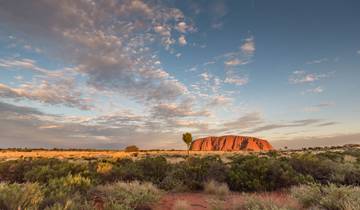
4 days
Uluru Tour with Kata Tjuta & Kings Canyon – Eco Tent (Yulara to Yulara)
- ✓ Comprehensive Uluru tour
- ✓ Expert local guides included
- ✓ All accommodation arranged
- ✓ Transportation provided

3 days
Uluru and Kata Tjuta Experience (Budget, Short Break)
- ✓ Comprehensive Uluru tour
- ✓ Expert local guides included
- ✓ All accommodation arranged
- ✓ Transportation provided
3 days
Uluru & Kata Tjuta Express
- ✓ Comprehensive Uluru tour
- ✓ Expert local guides included
- ✓ All accommodation arranged
- ✓ Transportation provided

2 days
Best of Uluru & Kata Tjuta – 2 days
- ✓ Comprehensive Uluru tour
- ✓ Expert local guides included
- ✓ All accommodation arranged
- ✓ Transportation provided
Multi-day tour packages powered by TourRadar. Prices and availability subject to change.
Ancient Anangu Connection and Tjukurpa
Archaeological evidence confirms Aboriginal presence in the Uluru region extending over 30,000 years, with rock shelters around Uluru’s base containing stone tools, grinding stones, ochre deposits, and other cultural materials documenting continuous habitation across multiple climate shifts, ice ages, and environmental changes. This extraordinary time depth makes Anangu cultural connection to Uluru among the world’s longest continuous cultural traditions, predating ancient Egyptian civilization by over 20,000 years and exceeding the age of most human cultural achievements recognized globally.
The Tjukurpa stories explaining Uluru’s formation and cultural significance transmit across generations through oral tradition, ceremonial performance, rock art, and landscape teaching. Young people learn through progressive revelation as they mature and undergo initiation ceremonies, with basic public stories shared in childhood while deeper sacred knowledge restricted to adults who have completed appropriate ceremonial preparation. This graduated knowledge system ensures proper respect for sacred information while enabling cultural transmission across generations despite changing external conditions.
Rock art around Uluru’s base records both ancestral creation period events and more recent historical changes, with paintings depicting ancestral beings, ceremonial designs, hunting scenes, and contact period imagery including horses, guns, and European clothing. The art functions as visual teaching aid, mnemonic device for story sequences, and sacred object requiring appropriate protocols for creation, viewing, and maintenance. Many art sites remain restricted to initiated Anangu, while others receive designation for public viewing with interpretive information explaining appropriate (non-sacred) aspects of the imagery.
Traditional land use patterns centered on Uluru involved seasonal movements following water and food resources, with family groups dispersing across broader territories during good seasons when temporary waterholes supported game animals and plant foods, then congregating at permanent water sources around Uluru during dry periods. These gathering times enabled major ceremonies requiring multiple family groups, arranged marriages between distant relatives, traded valuable materials including ochre and ceremonial objects, and transmitted knowledge through large-scale ritual performances.
The resource significance of Uluru extended beyond spiritual importance, as the rock’s permanent waterholes in the Mutitjulu area provided reliable water during severe droughts when temporary sources across the surrounding desert dried completely. These waterholes enabled survival during multi-year droughts that would prove fatal without access to permanent water. The combination of spiritual significance and practical life-supporting resources made Uluru an anchor point in Anangu territorial systems, a place people maintained connection to even when dispersed across hundreds of kilometers of surrounding country.
Traditional ecological knowledge associated with Uluru encompasses sophisticated understanding of seasonal patterns, plant and animal behavior, weather prediction, navigation, and sustainable resource use. This knowledge transmits through Tjukurpa stories encoding practical information within creation narratives: stories about ancestral beings teach proper fire management, stories about animal ancestors explain behavioral patterns enabling successful hunting, stories about plant transformation identify food sources and preparation methods. The integration of practical knowledge within spiritual frameworks ensures both dimensions receive proper respect and transmission across generations.
Ceremonial practices at Uluru follow annual cycles linked to seasonal changes, with particular ceremonies conducted at specific times to ensure continued rains, promote animal fertility, maintain cosmic balance, and perpetuate the ancestral presence in the landscape. These ceremonies involve restricted sacred objects, specialized ritual knowledge, specific performance protocols, and participation requirements based on gender, kinship, and initiation status. The ceremonies continue today following protocols established during creation times, representing unbroken cultural continuity across hundreds of generations.
Language preservation connects intimately to cultural maintenance, as Tjukurpa stories exist in Pitjantjatjara and Yankunytjatjara languages containing concepts, grammatical structures, and vocabulary irreplaceable in English translation. Particular landscape features hold names describing their creation story origins, ceremonial functions, or practical characteristics, with these names encoding knowledge about the places. Language loss threatens not merely communication but the conceptual frameworks organizing Anangu understanding of land, law, spirituality, and social relationships.
Sacred Sites and Ceremonial Importance
Uluru’s base circumference of 9.4 kilometers encompasses numerous sacred sites, each associated with specific creation stories, ancestral beings, and ceremonial obligations. These sites divide into men’s sacred sites, women’s sacred sites, and shared sites, with strict protocols governing who may visit, what activities occur there, and what information may be shared publicly. This gender-based division reflects complementary but distinct ceremonial responsibilities within Anangu society, with men and women holding separate sacred knowledge and conducting different ceremonies essential to maintaining cultural continuity.
The Mutitjulu Waterhole on Uluru’s southern side holds particular significance in the Kuniya (python) creation story, marking where the ancestral python woman lives permanently in the waterhole. This site remains restricted for ceremonial purposes, with Anangu conducting regular rituals to maintain the ancestral presence and ensure continued water availability. The waterhole supported human habitation for thousands of years as the most reliable water source in the region, making both practical survival and spiritual significance converge at this critical location.
Kantju Gorge on the southern side preserves cave paintings and marks from the Kuniya and Liru battle, representing one of the most spiritually powerful locations around Uluru. The gorge houses restricted sacred sites closed to all but initiated Anangu, while nearby areas permit supervised visitation with appropriate cultural protocols and ranger guidance. The concentration of sacred sites in this area reflects the intensity of creation period events, with multiple ancestral actions and transformations occurring in close proximity.
Mala Puta on the northern side marks where the Mala people camped before their ceremonial gathering and subsequent flight from the evil spirit creature. The site contains grinding grooves where Mala women ground seeds for food, ceremonial objects they left behind, and transformations visible in rock formations. This area permits visitor access along the Mala Walk with interpretive signs explaining appropriate (non-sacred) aspects of the creation story, providing educational opportunities while respecting restricted sacred knowledge.
Women’s sacred sites around Uluru’s base hold particular significance for ceremonies related to fertility, childbirth, child-rearing, and women’s initiation. These sites remain completely closed to men and non-Anangu visitors, with exact locations unmarked to prevent inadvertent trespass. Women’s sacred knowledge associated with these sites transmits from grandmothers to granddaughters through ceremonial participation and teaching sessions, maintaining exclusively female knowledge lineages parallel to men’s ceremonial traditions.
Men’s initiation sites hold equal importance for ceremonies inducting young men into adult responsibilities, teaching sacred law, and transmitting knowledge about ceremonial obligations. The northwestern climbing route that recreational climbers used until 2019 follows the men’s initiation path, making the climbing practice deeply offensive as it involved uninitiated people (including women and children) traversing restricted sacred space for entertainment. The closure of this route in 2019 restored appropriate respect for men’s ceremonial traditions and enabled traditional ceremonies to resume without profanation.
Ceremonial grounds around Uluru host gatherings involving multiple family groups, with participants traveling from distant communities to attend major ceremonies occurring at specific seasonal times. These ceremonies require extensive preparation including gathering appropriate foods, creating or repainting sacred objects, rehearsing song and dance sequences, and conducting preliminary rituals. The ceremonies themselves may last several days, involving restricted sacred performances visible only to initiated participants and public performances sharing appropriate cultural knowledge with broader community members including youth not yet fully initiated.
The maintenance of sacred sites involves regular visitation, clearing debris, monitoring for damage or erosion, conducting small rituals, and ensuring proper respect from visitors. Anangu rangers employed by Parks Australia combine Western conservation techniques with traditional land management practices, conducting burns following cultural patterns, protecting significant trees and plants, managing visitor impacts on sacred areas, and monitoring cave art for deterioration requiring conservation intervention. This dual approach recognizes both scientific conservation needs and cultural obligations to country.
Site protection from visitor impacts presents ongoing challenges, as even well-intentioned visitors may inadvertently damage sites through touching rock art, disturbing soil in ceremonial areas, photographing restricted sites, or leaving offerings that create maintenance problems. Clear signage, ranger patrols, physical barriers at highly sensitive locations, and visitor education programs combine to reduce impacts while enabling appropriate public access to non-restricted areas. The balance between sharing cultural knowledge and protecting sacred sites requires constant negotiation and adaptation as visitor numbers and behaviors evolve.
Colonial Contact and Cultural Challenges
European exploration of central Australia beginning in the 1860s disrupted Aboriginal life patterns through competition for water resources, introduction of diseases, violent conflicts, and gradual encroachment on traditional lands. Explorer Ernest Giles sighted Uluru in 1872 from distance, while surveyor William Gosse reached the rock in 1873, declaring it “Ayers Rock” after South Australian Chief Secretary Henry Ayers without consulting or acknowledging Aboriginal presence and ownership extending tens of thousands of years.
Pastoral expansion through the 1880s-1920s established cattle stations on Aboriginal lands, appropriating critical water sources, disrupting seasonal movement patterns, and forcing Aboriginal people into mission settlements or station labor. Anangu experienced violent dispossession, with many killed in frontier conflicts, others dying from introduced diseases, and survivors confined to settlements where traditional practices faced prohibition and children underwent forcible removal for assimilation into European society. This traumatic period devastated Aboriginal populations, disrupted cultural transmission, and created lasting intergenerational trauma affecting communities today.
Despite overwhelming oppression, Anangu maintained cultural connection to Uluru through continued ceremonial practice, oral tradition transmission, and determination to preserve sacred knowledge. Elders conducted ceremonies in secret when official prohibition prevented open practice, taught younger generations Tjukurpa despite government policies forbidding Aboriginal language and cultural instruction, and preserved sacred objects and knowledge through decades when assimilation seemed inevitable. This cultural resilience ensured survival of traditions that might otherwise have been lost permanently.
Tourism development beginning in the 1940s brought new challenges as Uluru’s visual grandeur attracted increasing visitor numbers drawn by geological spectacle without understanding or respecting cultural significance. The establishment of accommodation facilities, roads, and tourist infrastructure occurred without Anangu consultation or consent, treating the area as uninhabited wilderness despite continuous Aboriginal habitation and sacred site presence. Early tourism actively encouraged climbing despite Anangu objections, with the activity promoted as essential Uluru experience regardless of cultural offense.
The 1950s-1970s saw intensifying Anangu advocacy for land rights recognition, driven by broader Aboriginal rights movements across Australia. Traditional owners documented their continued cultural connection, explained sacred site significance to anthropologists and government officials, and demanded recognition of prior ownership and cultural authority over their lands. This advocacy gained momentum through the 1970s as Australian society gradually acknowledged the injustice of dispossession and the validity of Aboriginal land claims.
The Aboriginal Land Rights Act (Northern Territory) 1976 provided legal framework for land claims, enabling Anangu to pursue formal recognition of their traditional ownership. Years of evidence compilation, hearings, and negotiations culminated in the October 1985 handback ceremony where Prime Minister Bob Hawke returned title to traditional owners in recognition of their prior ownership and unbroken cultural connection. This landmark event represented the largest land transfer in Australian history and set precedent for subsequent Indigenous land rights claims across the nation.
However, the handback included simultaneous 99-year leaseback to Parks Australia, establishing joint management arrangements requiring traditional owners to permit continued public access and government involvement in park operations. This compromise recognized both Aboriginal ownership and broader Australian interest in the site, creating a pioneering co-governance model balancing indigenous rights with public access and conservation objectives. The arrangement proved controversial among some Anangu who sought full control, while others recognized the practical benefits of government resources supporting park management and cultural preservation.
Climbing controversies dominated post-handback decades, as traditional owners clearly requested visitors not climb despite lacking authority to ban the practice under joint management arrangements. The climb remained open despite Anangu wishes, creating profound cultural offense as thousands of visitors annually climbed the sacred men’s initiation path. The compromise saw installation of signs requesting visitors not climb out of respect for Anangu culture, but these appeals proved ineffective with majority of visitors choosing to climb regardless of expressed wishes by traditional owners.
Visitor deaths and injuries on the climb created additional trauma for Anangu, who bear cultural responsibility for all events occurring on their land under Tjukurpa law. Each death or serious injury during climbing imposed spiritual and emotional burden on traditional owners, who felt profound distress at violations of their sacred site resulting in harm they felt powerless to prevent. This ongoing trauma motivated intensified advocacy for climbing closure, emphasizing both cultural respect and visitor safety concerns.
The path to climbing closure took decades of negotiation, legal review, and cultural advocacy. The joint management board (with Anangu majority representation) voted multiple times to close climbing, but implementation required meeting specific conditions under the original leaseback agreement. These conditions focused on visitor infrastructure adequacy, alternative experience availability, and cultural interpretation quality, ensuring closure would not diminish visitor satisfaction or economic viability. By 2019, these conditions were met, enabling the board to set October 26, 2019 as final climbing date.
The closure implementation saw emotional farewell from some climbing enthusiasts who viewed the activity as traditional tourism experience, while Anangu and their supporters celebrated the restoration of respect to sacred sites. The smooth transition with minimal conflict demonstrated successful cultural education efforts, improved public understanding of Aboriginal perspectives, and broader Australian society’s growing commitment to reconciliation and indigenous rights recognition. The closure stands as landmark achievement in global indigenous cultural protection, inspiring similar initiatives at sacred sites worldwide.
UNESCO World Heritage Recognition
Uluru-Kata Tjuta National Park received UNESCO World Heritage listing in 1987 under natural criteria, recognizing the geological significance of the rock formations and the surrounding desert ecosystem’s unique flora and fauna. The initial listing acknowledged Uluru as one of Earth’s geological wonders, with the massive sandstone formation representing exceptional natural features worthy of global protection and appreciation. However, this natural-only listing ignored the profound cultural significance and 30,000+ year Aboriginal connection to the landscape.
Cultural criteria addition in 1994 corrected this oversight, elevating Uluru to dual World Heritage status recognizing both natural geological values and cultural landscape significance. The expanded listing acknowledged the Anangu cultural connection, Tjukurpa’s exceptional value as living spiritual tradition, the rock art and archaeological evidence documenting continuous habitation, and the landscape’s role as a cultural teaching institution preserving indigenous knowledge across hundreds of generations. This dual recognition places Uluru among just 39 mixed World Heritage sites worldwide where natural and cultural criteria converge.
The UNESCO criteria for cultural heritage recognize Uluru as representing a masterpiece of human creative genius (criterion i), bearing exceptional testimony to a cultural tradition (criterion iii), and being directly associated with living traditions of outstanding universal significance (criterion vi). These criteria acknowledge Tjukurpa as an extraordinary knowledge system, the landscape as a remarkable cultural achievement in harmonizing human society with harsh desert environments, and the ongoing Anangu connection as exceptional example of cultural continuity and resilience.
Natural criteria recognize the park under criterion vii (exceptional natural beauty and aesthetic importance) and criterion viii (outstanding geological features). The massive inselbergs of Uluru and Kata Tjuta represent superlative natural phenomena, with Uluru rising 348 meters above the plain and Kata Tjuta’s 36 domes covering 21.68 square kilometers. The geological processes creating these formations occurred over 600 million years, with the current landscape reflecting complex interactions between rock composition, erosion, weathering, and desert environmental conditions.
The dual listing creates enhanced protection obligations, requiring management to address both natural conservation and cultural preservation. This dual mandate influenced the joint management approach, ensuring traditional owners hold primary voice in decisions affecting cultural sites while scientific experts guide conservation strategies for geological and ecological values. The integration of Western conservation science with traditional land management practices creates a unique governance model respected globally as best practice in indigenous co-management.
UNESCO’s emphasis on outstanding universal value positions Uluru’s significance beyond Australian national importance to global cultural and natural heritage. This universal value designation recognizes that Uluru’s loss or degradation would constitute tragedy not merely for Australia or Anangu people, but for all humanity. The recognition creates international obligations to preserve the site, provides access to UNESCO technical expertise and emergency funding if needed, and elevates global awareness of the site’s exceptional qualities.
Periodic reporting requirements to UNESCO ensure ongoing compliance with World Heritage standards, documenting threats to the site’s values, management effectiveness, and progress on conservation objectives. These reports address visitor impact management, sacred site protection, cultural knowledge transmission, wildlife conservation, climate change adaptation, and balance between public access and preservation. The international oversight provides additional accountability beyond Australian national management frameworks, strengthening protection commitments.
The World Heritage listing enhances tourism appeal while creating challenges managing increased visitation without degrading the values prompting protection. Annual visitor numbers exceeding 250,000 create impacts on trails, viewing platforms, sacred sites, and wildlife, requiring sophisticated management strategies balancing access with preservation. The climbing closure removed the most culturally offensive visitor activity while redistributing visitation to more appropriate experiences including base walks, cultural centre programs, and sunset viewing—all compatible with Anangu cultural values when conducted respectfully.
International recognition through World Heritage status amplifies Anangu voices globally, providing platforms to share cultural perspectives, advocate for indigenous rights, and influence protected area management policies worldwide. Traditional owners participate in international heritage conferences, contribute to UNESCO indigenous heritage programs, and mentor other indigenous groups seeking co-management arrangements or sacred site protection. This global influence extends Uluru’s significance beyond the physical place to symbolic representation of indigenous cultural survival and rights recognition.
Global Cultural Impact and Symbolic Significance
Uluru functions as global icon representing multiple converging narratives: indigenous land rights achievements, sacred site protection, environmental conservation, reconciliation between settler societies and indigenous peoples, and the aesthetic power of natural landscapes as cultural touchstones. This symbolic significance extends far beyond Australia, influencing indigenous rights movements, protected area management philosophies, and public consciousness about cultural heritage preservation worldwide.
The land rights movement achieving the 1985 handback inspired indigenous groups globally seeking recognition of traditional ownership and cultural authority over ancestral lands. The symbolic power of Australia’s most recognizable natural landmark returning to Aboriginal ownership demonstrated that land rights represented achievable political objectives rather than impossible demands. This demonstration effect influenced land rights campaigns in Canada, United States, New Zealand, South America, and other regions where indigenous peoples seek territorial recognition and self-determination.
The climbing closure victory in 2019 similarly resonated globally, demonstrating that indigenous cultural authority can prevail over tourism economics and settler recreational traditions when societies commit to genuine reconciliation. Other sacred sites worldwide facing similar disrespect from recreational tourism users—including Devil’s Tower in Wyoming, Mount Fuji in Japan, and various sites in New Zealand—drew inspiration from Uluru’s successful closure advocacy, strengthening their own campaigns for visitor activity restrictions respecting cultural protocols.
Joint management arrangements pioneered at Uluru influenced protected area governance across 80+ countries, demonstrating that indigenous co-management delivers both better conservation outcomes and enhanced cultural preservation compared to top-down government control excluding traditional owners. The Anangu ranger program combining Western conservation training with traditional ecological knowledge created a model replicated worldwide, recognizing indigenous peoples as essential partners in conservation rather than obstacles to overcome or populations to exclude from protected areas.
Cultural tourism at Uluru pioneered approaches to sharing indigenous culture respectfully, distinguishing between public stories appropriate for visitor education and restricted sacred knowledge requiring protection from commodification. The Cultural Centre’s model of Anangu-controlled interpretation, indigenous guides sharing personal perspectives, and clear boundaries around sacred sites influenced cultural tourism development globally. The recognition that cultural preservation and visitor education can coexist when indigenous communities control interpretation set standards for authentic, respectful cultural tourism worldwide.
Environmental ethics associated with Uluru emphasize respect for natural features as living entities deserving reverence rather than mere recreational resources. The Anangu perspective on Uluru as ancestral presence rather than geological formation challenges Western utilitarian approaches to nature, contributing to broader environmental philosophy recognizing intrinsic value in landscapes beyond human use values. This perspective influenced deep ecology movements, biocentrism, and environmental conservation ethics emphasizing duty and respect over exploitation and use.
Artistic and literary representations of Uluru disseminated globally through photography, film, literature, and visual arts create cultural associations extending beyond direct visitor experience. The rock’s distinctive color shifts from rust red to orange, purple, and deep crimson as sunlight angles change throughout the day inspire artistic interpretations capturing temporal beauty and spiritual atmosphere. These representations shape global consciousness about Australia, Aboriginal culture, and desert landscapes, making Uluru among Earth’s most recognized natural features despite remote location.
Educational significance positions Uluru as teaching case study across disciplines including anthropology, geology, ecology, heritage management, indigenous studies, tourism management, and cultural geography. Universities worldwide incorporate Uluru examples in curricula exploring human-environment relationships, cultural landscape concepts, indigenous knowledge systems, World Heritage management, and co-governance models. This educational impact multiplies the site’s influence beyond direct visitation, shaping professional practices and policy development globally.
Climate change symbolism emerges as Uluru faces threats from altered rainfall patterns, increased temperature extremes, and shifting ecological conditions affecting both natural features and cultural practices. The vulnerability of this iconic landscape to climate impacts illustrates the global stakes in climate action, with the potential loss or degradation of Uluru’s values serving as powerful motivator for environmental responsibility. Anangu perspectives on land care and intergenerational responsibility contribute indigenous voices to climate policy discussions, emphasizing long-term stewardship over short-term exploitation.
Contemporary Anangu Community and Living Culture
The contemporary Anangu community maintains living cultural traditions despite colonization pressures, remote location challenges, and socioeconomic disadvantages affecting many Aboriginal Australians. Approximately 300 Anangu people live in Mutitjulu community adjacent to Uluru-Kata Tjuta National Park, with additional traditional owners residing in communities across the region including Docker River, Imanpa, and Kaltukatjara. These communities preserve cultural practices, speak traditional languages, conduct ceremonies, and transmit knowledge to younger generations.
Ceremonial life continues following annual cycles established during creation times, with initiations, seasonal rituals, and large gatherings involving multiple communities occurring regularly. Senior law men and law women hold deep ceremonial knowledge earned through decades of learning and participation, teaching younger initiated people their ceremonial responsibilities and ensuring proper protocols continue. These ceremonies remain largely hidden from non-Anangu observers, maintaining sacred knowledge protection while ensuring cultural transmission across generations.
Language preservation efforts address ongoing threats to Pitjantjatjara and Yankunytjatjara languages from English dominance, education system pressures, and limited intergenerational transmission. Community language programs, bilingual education initiatives, media productions in traditional languages, and elder-youth teaching sessions work to strengthen language vitality. However, the number of fluent young speakers decreases each generation, creating urgency around documentation and revitalization efforts before critical knowledge holders pass away.
Art production represents significant cultural expression and economic activity, with Anangu artists creating paintings, carvings, and crafts incorporating traditional designs and contemporary innovations. The Maruku Arts cooperative at Uluru provides market access, quality control, and fair payment, ensuring artists receive appropriate compensation for their work while maintaining cultural integrity in representations. Art serves multiple functions: transmitting cultural knowledge, generating income, asserting cultural identity, and sharing appropriate aspects of Anangu culture with broader audiences.
Employment in park management provides income, professional development, and opportunities to combine traditional knowledge with Western conservation practices. Anangu rangers conduct cultural burns following traditional fire management patterns, monitor sacred sites, guide visitors, participate in wildlife surveys, and contribute indigenous perspectives to park planning. This employment enables people to live on country, maintain cultural connections, and earn incomes without relocating to urban centers, supporting community cohesion and cultural continuity.
Education challenges affect community capacity to participate fully in modern Australian society while maintaining cultural traditions. Remote location limits educational infrastructure, with the community school providing primary education but secondary students requiring relocation to Alice Springs or other regional centers. This disrupts family structures, separates youth from cultural transmission, and creates difficult choices between educational advancement and cultural immersion. Efforts to incorporate Anangu culture and language in schooling seek to bridge these tensions with mixed success.
Health disparities reflect broader patterns affecting Aboriginal Australians, with community members experiencing higher rates of chronic diseases, shorter life expectancies, and limited access to specialized health services due to remote location. Traditional bush medicine knowledge and cultural healing practices complement Western medical services, with both systems recognized as valuable in addressing community health needs. However, inadequate funding, staff turnover, and cultural misunderstandings in mainstream health delivery create ongoing challenges.
Housing and infrastructure limitations in Mutitjulu create overcrowding, maintenance challenges, and inadequate facilities affecting daily life quality. Government funding inconsistency, competing priorities, and bureaucratic complexity slow infrastructure improvements despite clear needs. The community advocates for better services while resisting development approaches that would undermine cultural values or impose inappropriate governance structures ignoring traditional decision-making processes.
Intergenerational knowledge transmission occurs through multiple channels: ceremonial participation teaching sacred knowledge, daily activities demonstrating practical skills, storytelling sessions sharing Tjukurpa, artistic apprenticeships developing creative capabilities, and ranger programs combining traditional ecological knowledge with conservation science. However, competing attractions including digital media, urban migration opportunities, and cultural assimilation pressures challenge engagement from some youth, creating anxiety among elders about cultural continuity for future generations.
Cultural resilience despite enormous challenges demonstrates the strength of Anangu identity and the enduring power of Tjukurpa connecting people to country. The survival of language, ceremony, artistic traditions, and cultural knowledge through 150 years of colonization, assimilation policies, dispossession, and ongoing marginalization testifies to community determination preserving heritage for future generations. This resilience inspires indigenous communities globally facing similar challenges, demonstrating that cultural survival remains possible even under sustained oppression.
Cultural Protocols and Visitor Respect
Appropriate visitor behavior at Uluru requires understanding and respecting Anangu cultural protocols, which establish boundaries protecting sacred sites while enabling appropriate public access to non-restricted areas. The fundamental principle guides all interactions: Uluru belongs to Anangu under both Aboriginal law and Australian law, making visitors guests on Aboriginal land obligated to honor traditional owners’ wishes regarding respectful behavior and activity restrictions.
Photography restrictions protect sacred sites from inappropriate imagery reproduction and commercial exploitation. Signs clearly mark areas where photography is prohibited, typically around men’s and women’s sacred sites, certain ceremonial locations, and sensitive cultural features. Visitors must respect these restrictions absolutely, as photographing restricted sites constitutes cultural violation equivalent to vandalizing religious buildings. The restrictions apply equally to professional photographers, casual tourists, and social media users—sacred significance does not diminish because images appear on Instagram rather than professional publications.
The climbing closure since October 2019 removes the most culturally offensive visitor activity, restoring respect to the sacred men’s initiation path. Visitors expressing disappointment at closure inability should recognize their recreational desires cannot justify violating sacred traditions and traditional owners’ clearly expressed wishes. The base walk, Kata Tjuta trails, sunrise/sunset viewing, and Cultural Centre experiences provide comprehensive Uluru engagement without cultural violation, delivering rich experiences respecting Anangu values while enabling deep appreciation of the landscape.
Cultural Centre visitation represents essential Uluru experience, providing context for understanding the landscape’s significance beyond geological spectacle. The Centre’s exhibitions explain Tjukurpa principles, share appropriate creation stories, display traditional tools and practices, and communicate Anangu perspectives on land management, conservation, and cultural preservation. Spending substantial time in the Centre demonstrates respect for cultural knowledge and enhances subsequent experiences around Uluru base, as visitors understand the significance of features they encounter on walks.
Ranger-led activities offer opportunities to learn directly from Anangu guides, who share personal connections to specific sites, explain cultural protocols, and answer questions about appropriate aspects of Anangu life. These guided experiences support indigenous employment, ensure accurate cultural interpretation, and create meaningful cross-cultural exchange benefiting both visitors and traditional owners. Participation in such programs demonstrates commitment to respectful learning rather than superficial sightseeing.
Walking trail protocols require staying on marked paths, avoiding touching or climbing on rock surfaces beyond designated access areas, respecting closure signs around sacred sites, and refraining from taking rocks, plants, or cultural objects as souvenirs. These protocols protect both the physical landscape from erosion and damage and the spiritual integrity of sites whose disturbance violates cultural law. Trail closures during high temperatures or wet conditions reflect both visitor safety concerns and cultural obligations to protect country from damage during vulnerable periods.
Commercial photography and filming require permits ensuring appropriate use of cultural imagery, proper compensation to traditional owners, and adherence to restrictions protecting sacred sites and sensitive cultural content. The permit process provides Anangu control over cultural representation, preventing exploitative or disrespectful uses while enabling appropriate commercial activities generating economic benefits. Visitors undertaking commercial photography without permits violate both park regulations and cultural protocols.
Language respect includes using “Uluru” rather than “Ayers Rock” as primary designation, acknowledging the indigenous name’s primacy and showing respect for Anangu cultural authority. Learning basic Pitjantjatjara greetings and terms demonstrates cultural interest and respect, though visitors should avoid appropriating sacred language or attempting to pronounce restricted ceremonial terms. Simple acknowledgment of being on Anangu land and gratitude for the privilege of visiting shows appropriate humility and cultural awareness.
Waste management reflects the broader principle of treating country with respect, requiring proper disposal of all rubbish in designated bins, avoiding littering, and minimizing environmental impact. The cultural obligation to care for country extends to visitors, whose actions affect the landscape’s integrity and the wildlife depending on pristine environments. Leaving offerings, cairns, or other markers constitutes disrespectful interference with natural and cultural features requiring removal by rangers.
Cultural sensitivity in social interactions with Anangu community members requires awareness that photography, personal questions, and intrusive behavior constitute inappropriate violations of privacy. Community members are not tourist attractions but people living their lives on their own land. Respectful distance, courteous behavior, and recognition of boundaries demonstrate appropriate visitor conduct. Purchases of Anangu art and crafts at the Maruku Arts centre support cultural preservation and economic development while ensuring authentic cultural products and fair artist compensation.
Conservation and Future Protection
Long-term conservation of Uluru’s cultural and natural values requires integrated approaches addressing visitor impacts, climate change, ecosystem protection, cultural knowledge preservation, and adaptive management responding to evolving threats. The joint management framework enables combination of Western conservation science with traditional ecological knowledge, creating comprehensive protection strategies unavailable through either approach alone.
Visitor impact management balances public access with preservation, implementing carrying capacity limits, trail hardening, viewing platform construction, and visitor education programs reducing environmental damage and cultural site disturbance. The removal of climbing eliminated the highest-impact activity, but continued visitation exceeding 250,000 annually creates ongoing pressures requiring sophisticated management. Strategic infrastructure placement, timed entry systems during peak periods, and behavior modification through interpretation all contribute to impact reduction while maintaining visitor satisfaction.
Climate change adaptation addresses threats from altered rainfall patterns, increased temperature extremes, and shifting ecological conditions affecting both natural features and cultural practices. Traditional fire management using cultural burning patterns creates landscape mosaics supporting biodiversity while reducing wildfire risks. Monitoring programs track climate-driven changes in plant communities, wildlife populations, and water availability, enabling early intervention when critical thresholds approach. However, some climate impacts exceed management capacity to mitigate, requiring acceptance that certain changes may prove inevitable despite best efforts.
Cultural knowledge preservation faces urgency as elder knowledge holders age without sufficient younger generation engagement in traditional learning. Documentation projects record Tjukurpa stories, ceremonial procedures, traditional ecological knowledge, and language resources for future reference, though such documentation cannot replace living cultural transmission through ceremonial participation and direct teaching. Supporting conditions enabling cultural practice—including employment enabling people to live on country, educational approaches validating traditional knowledge, and resources for ceremonial materials and activities—creates best conditions for cultural continuity.
Ecosystem protection addresses threats to native plants and animals from invasive species, habitat degradation, and human disturbance. Feral animal control programs target cats, foxes, rabbits, and camels whose impacts threaten native wildlife. Native vegetation restoration replaces exotic plants, repairs erosion damage, and enhances habitat connectivity. Wildlife monitoring tracks population trends, identifies conservation priorities, and measures management effectiveness. These conservation programs reflect both Western ecological science and traditional Anangu land management, recognizing both knowledge systems contribute essential insights.
Sacred site protection from visitor damage requires ongoing vigilance, infrastructure maintenance, ranger patrols, and visitor education. Despite clear signage and rules, some visitors continue touching rock art, entering restricted areas, removing rocks as souvenirs, and photographing prohibited sites. Enhanced enforcement, technological monitoring, and cultural education all contribute to reducing violations. However, the fundamental solution requires cultural attitude shifts where visitors internalize respect for sacred sites rather than merely complying with rules to avoid penalties.
Archaeological site preservation addresses deterioration threats from natural weathering, visitor impacts, and time. Rock art conservation requires specialist interventions stabilizing pigments, controlling water infiltration, and protecting surfaces from damage. Archaeological deposits in rock shelters need protection from disturbance while enabling scientific research advancing understanding of Aboriginal history. The balance between preservation, research, and cultural sensitivity requires careful negotiation with traditional owners who hold cultural authority over how ancestral heritage is managed and interpreted.
Financial sustainability for ongoing management depends on tourism revenue, government appropriations, and partnership funding. Entry fees and tour permits generate substantial revenue, though this dependence on tourism creates vulnerability to visitation fluctuations from economic downturns, pandemics, or other disruptions. Diversified funding including government conservation budgets, UNESCO heritage funding, and philanthropic contributions provides greater stability. However, adequate resourcing remains ongoing challenge given the scope of conservation needs and the remote location’s high operational costs.
Community participation in conservation decisions ensures cultural values guide management approaches and traditional owners maintain authority over their land. The joint management board’s Anangu majority ensures indigenous voices predominate in key decisions, while technical advisory committees provide specialist expertise informing choices. This governance structure represents best practice in indigenous co-management, though power imbalances, resource inequities, and cultural misunderstandings create ongoing challenges requiring continuous negotiation and relationship building.
Future protection depends on sustained commitment from Australian society to honor the 1985 handback’s spirit, respect Anangu cultural authority, and provide resources enabling both cultural preservation and natural conservation. The 99-year lease expires in 2084, potentially enabling traditional owners to renegotiate management arrangements reflecting evolved understandings of indigenous rights, conservation best practices, and appropriate balances between public access and cultural protection. Whatever future governance emerges, success requires centering Anangu voices, values, and vision for their country’s management.
Frequently Asked Questions About Uluru Cultural Significance
What is the cultural importance of Uluru?
Uluru’s cultural importance centers on its role as the physical manifestation of Tjukurpa—the foundational law, creation stories, and knowledge systems governing Anangu society for over 30,000 years. Every feature, cave, waterhole, and rock formation around Uluru connects to specific ancestral beings and creation period events, making the entire landscape a three-dimensional archive recording sacred law, teaching moral lessons, preserving practical knowledge, and providing ceremonial sites essential to maintaining cosmic balance and cultural continuity. The rock serves simultaneously as geographical landmark, ceremonial center, educational institution, historical archive, and spiritual nexus connecting past ancestral times to present community life and future generations.
Why can’t you climb Uluru anymore?
Climbing closed on October 26, 2019 because the route follows a sacred men’s initiation path, making recreational climbing deeply offensive to Anangu who requested for decades that visitors not climb out of respect for cultural protocols. The climbing practice involved uninitiated people, including women and children, traversing restricted sacred space for entertainment purposes, violating fundamental spiritual law and causing ongoing trauma to traditional owners who bear cultural responsibility for all events on their land. The closure restores appropriate respect to sacred sites, enables traditional ceremonies to resume without profanation, and aligns management with Anangu cultural authority over their land.
What do Aboriginal people call Uluru?
Aboriginal traditional owners call the rock “Uluru” in the Pitjantjatjara language, the indigenous name that predates European contact by tens of thousands of years. The name “Ayers Rock” was imposed by European surveyor William Gosse in 1873 without consulting or acknowledging Aboriginal presence and ownership. The official name reverted to “Uluru” as primary designation in 2002, with “Uluru / Ayers Rock” dual naming acknowledging both indigenous cultural primacy and historical European nomenclature. Using “Uluru” rather than “Ayers Rock” demonstrates respect for Aboriginal cultural authority and recognition of prior ownership.
How old is Uluru’s cultural significance?
Archaeological evidence confirms Aboriginal presence in the Uluru region extending over 30,000 years, with cultural connection predating most human civilizations worldwide. However, Anangu cultural understanding holds that Tjukurpa has existed since creation times, an eternal law without definite beginning that continues in the present through ceremonial practice and landscape presence. The oral traditions explaining Uluru’s formation and significance transmit across hundreds of generations through storytelling, ceremonial performance, rock art, and landscape teaching, representing one of Earth’s longest continuous cultural traditions and unbroken knowledge transmission systems.
Can you take photos at Uluru?
Photography is permitted in most areas around Uluru, but specific sacred sites prohibit photography to protect cultural integrity and prevent inappropriate image reproduction. Clear signs mark restricted photography areas, typically around men’s and women’s sacred sites, ceremonial locations, and sensitive cultural features. Visitors must respect these restrictions absolutely, as photographing sacred sites constitutes serious cultural violation. Permitted photography areas include sunset/sunrise viewing platforms, the base walk trail (except restricted sites), Cultural Centre exterior, and most general landscape views. The restrictions protect sacred knowledge from commodification while enabling appropriate visitor documentation of their experiences.
What is Tjukurpa and how does it relate to Uluru?
Tjukurpa encompasses multiple interconnected meanings: the creation period when ancestral beings shaped the land, the beings themselves, the events that occurred, the marks left on the landscape, the laws established governing human behavior, the ceremonies perpetuating these stories, and the knowledge systems organizing Anangu society. At Uluru, Tjukurpa manifests through specific creation stories explaining landscape features—the Mala (wallaby people), Kuniya (python), and Liru (poisonous snake) stories describe ancestral battles, ceremonies, and transformations creating the visible rock formations, caves, and waterholes around Uluru’s base. Tjukurpa operates as living law rather than historical mythology, with ceremonies reenacting creation period events, ancestral beings maintaining spiritual presence in the landscape, and each generation obligated to preserve the knowledge and practices ensuring cosmic balance continues.
Why is Uluru a UNESCO World Heritage Site?
Uluru-Kata Tjuta National Park holds dual UNESCO World Heritage listing recognizing both exceptional natural geological features and outstanding cultural landscape significance. The natural criteria acknowledge the massive sandstone formations as superlative natural phenomena and geological marvels formed over 600 million years. The cultural criteria recognize the exceptional value of Tjukurpa as living spiritual tradition, the 30,000+ year Aboriginal connection to the landscape, the rock art and archaeological evidence documenting continuous habitation, and the landscape’s role as cultural teaching institution preserving indigenous knowledge across hundreds of generations. This dual recognition places Uluru among just 39 mixed World Heritage sites worldwide where natural and cultural criteria converge in exceptional universal value.
Who owns Uluru today?
The Anangu people own Uluru under both Aboriginal law (Tjukurpa) and Australian law (Aboriginal Land Rights Act), with formal title returned to traditional owners in the landmark October 1985 handback ceremony. However, the handback included simultaneous 99-year leaseback to Parks Australia, establishing joint management arrangements balancing Anangu cultural authority with government conservation responsibilities and ensuring continued public access. Traditional ownership operates through complex systems of inherited rights, ceremonial responsibilities, and knowledge transmission, with particular families holding specific Tjukurpa associated with different areas and sites around Uluru based on ancestral connections and ceremonial obligations.
What are the sacred stories of Uluru?
Sacred stories of Uluru include the Mala (rufous hare-wallaby people) narrative explaining northern and eastern features, describing how the Mala came to Uluru for ceremonies, were attacked by an evil spirit creature after rejecting ceremonial invitations from neighbors, and fled south leaving marks of their camp and transformation in the landscape. The Kuniya (python) and Liru (poisonous snake) story explains southern features, recounting battles between these ancestral beings whose conflicts created specific rock formations, waterholes, and scarring visible today. These stories teach moral lessons about proper behavior, consequences of cultural violations, and importance of maintaining ceremonial obligations. Many additional sacred stories remain restricted to initiated Anangu, divided by gender and ceremonial responsibility, preserving deep sacred knowledge requiring appropriate cultural preparation before access.
How do visitors show respect for Uluru’s cultural significance?
Visitors show respect by honoring climbing closure (not climbing under any circumstances), respecting photography restrictions at sacred sites marked by clear signage, spending time in the Cultural Centre learning about Anangu culture and Tjukurpa before walking around Uluru base, staying on designated trails without touching rock surfaces or disturbing cultural sites, using “Uluru” rather than “Ayers Rock” as primary designation, participating in ranger-led activities to learn from Anangu guides, disposing of all waste properly, avoiding taking rocks or plants as souvenirs, purchasing authentic Anangu art from the Maruku Arts cooperative, and generally approaching the landscape with humility and recognition that visitors are guests on Aboriginal land obligated to honor traditional owners’ wishes regarding appropriate behavior. The fundamental principle guides all interactions: respect for Anangu cultural authority and recognition that their sacred sites deserve protection from activities causing offense or damage regardless of visitor recreational desires.