
Ultimate Canada’s North Travel Guide 2026: Yukon, Northwest Territories, and the Northern Lights
Canada’s northern territories—Yukon and the Northwest Territories—offer travelers access to the world’s most spectacular Northern Lights displays, pristine wilderness spanning millions of acres, and authentic Indigenous cultural experiences in the last frontier of North American exploration. This comprehensive guide provides verified 2026 planning information for experiencing the aurora borealis, navigating remote wilderness, and exploring historic gold rush communities beneath the midnight sun.
Key Takeaways About Canada’s Territories in 2026
- Northern Lights Excellence 2026: Yellowknife offers 240 nights per year with aurora viewing opportunities, maintaining a 99% success rate on clear nights during peak season from late August through mid-April 2026.
- Budget Planning 2026: Expect CAD $155-240 ($115-175 USD) per person daily for mid-range comfort, assuming two sharing hotel accommodation, including meals CAD $65-95 ($50-70 USD), lodging CAD $60-90 ($45-65 USD) per person, and activities CAD $30-55 ($20-40 USD).
- Remote Wilderness Access 2026: The territories encompass over 1.5 million square kilometers of pristine wilderness including Kluane National Park (Canada’s highest peaks), Nahanni National Park Reserve (Virginia Falls twice Niagara’s height), and the Dempster Highway connecting Yukon to the Arctic Ocean.
- Gold Rush Heritage 2026: Dawson City preserves authentic 1898 Klondike Gold Rush history with boardwalks, period buildings, and cultural sites including Diamond Tooth Gertie’s Gambling Hall and historic cabins of Robert Service and Jack London.
- Seasonal Extremes 2026: Experience midnight sun from June 19 through July 2026 in Whitehorse (18-20 hours of daylight), or winter aurora viewing with temperatures reaching minus 35 Celsius (minus 31 Fahrenheit) from December through February 2026.
- Indigenous Cultural Immersion 2026: First Nations communities including Gwich’in, Tłı̨chǫ, and Southern Tutchone peoples offer authentic experiences through storytelling, traditional food tastings, cultural centers, and guided wilderness adventures led by Indigenous knowledge keepers.
People Also Ask About Canada’s Territories 2026
When is the best time to see Northern Lights in Canada’s Territories in 2026?
The optimal Northern Lights viewing window in Canada’s territories runs from late August through mid-April 2026, with peak displays occurring during the darkest months from December through February. Yellowknife offers aurora viewing on 240 nights annually beneath the auroral oval—the region of maximum auroral activity encircling the magnetic north pole. Clear winter skies, minimal light pollution, and flat terrain surrounding Yellowknife create ideal viewing conditions with 99% success rates on cloudless nights. The aurora season begins as darkness returns in late August 2026, intensifies through the long winter nights from November through March, and continues through mid-April as spring approaches. September and March 2026 offer comfortable temperatures for aurora viewing (minus 10 to plus 5 Celsius / 14 to 41 Fahrenheit) while December through February provide the longest darkness windows but coldest conditions (minus 25 to minus 40 Celsius / minus 13 to minus 40 Fahrenheit requiring specialized winter clothing).
How much does a Northern Lights trip to Yellowknife cost in 2026?
A complete Northern Lights experience in Yellowknife costs CAD $1,950-3,400 ($1,400-2,500 USD) per person for three nights including accommodation, aurora tours, winter clothing rental, and activities. Check tour operator websites for current package rates as pricing varies seasonally. Mid-range packages at CAD $2,400-2,800 ($1,800-2,100 USD) include hotel accommodation CAD $420-540 ($315-405 USD) for three nights two sharing, three nights of aurora hunting tours CAD $600-750 ($450-560 USD), winter clothing rental CAD $120-180 ($90-135 USD) for parka, snow pants, boots and mitts, daytime activities CAD $360-480 ($270-360 USD) such as dog sledding and cultural tours, and meals CAD $450-650 ($340-490 USD). Budget travelers selecting hostel dormitories CAD $35-50 ($25-40 USD) nightly and basic aurora tours can complete the experience for approximately CAD $1,200-1,600 ($900-1,200 USD) total per person, while luxury packages with premium lodges, private aurora tours, and upgraded activities range from CAD $4,500-7,000 ($3,400-5,300 USD) per person for the same duration.
Is the Dempster Highway safe to drive in 2026?
The Dempster Highway connecting Dawson City to Inuvik remains safe for prepared travelers from June through September 2026, though this 740-kilometer gravel road demands respect, proper vehicle preparation, and contingency planning. The Northwest Territories government maintains the highway as an all-weather route with two ferry crossings at the Peel and Mackenzie Rivers during summer months, replaced by ice bridges from late December through mid-April when river ice reaches sufficient thickness. Travelers driving the Dempster in summer 2026 should carry two full-size spare tires mounted on rims (not space-savers), comprehensive spare parts including fan belts and fuses, extra fuel to double the posted range between stations, emergency supplies including food and water for three days, and satellite communication devices as cellular service remains unavailable along most of the route. Highway conditions change rapidly with weather—rain transforms the calcium-chloride-treated surface into slippery mud while dry periods create dusty conditions reducing visibility. Services exist only at Eagle Plains (approximately halfway) offering fuel, food, and lodging, making this a serious backcountry drive requiring mechanical competence and wilderness self-sufficiency rather than a casual scenic route suitable for standard rental vehicles.
What’s the difference between visiting Yukon versus Northwest Territories in 2026?
Yukon and the Northwest Territories offer distinctly different territorial experiences in 2026 based on accessibility, cultural focus, and wilderness characteristics. Yukon centers around Whitehorse (capital with 28,000 residents) providing easier access via direct flights from Vancouver, Calgary, and seasonal connections from other Canadian cities, well-developed tourism infrastructure including numerous hotels, restaurants, and tour operators, the accessible Klondike Gold Rush heritage in Dawson City reached by paved highway, and proximity to Alaska creating combined Yukon-Alaska itineraries via the Alaska Highway. Northwest Territories focuses on Yellowknife (capital with 20,000 residents) renowned specifically as the aurora viewing capital, more remote wilderness experiences including Nahanni National Park requiring floatplane access, stronger emphasis on contemporary Indigenous governance and Dene/Inuit cultures, and the Dempster Highway connection offering the only road access to Canada’s Arctic Ocean at Tuktoyaktuk. Yukon appeals to travelers seeking gold rush history, mountain wilderness in Kluane National Park, and easier logistics with rental vehicle touring, while Northwest Territories attracts visitors prioritizing Northern Lights photography, fly-in wilderness adventures, and Indigenous cultural immersion in Canada’s most remote regions.
Extended multi-day tours – 5+ days
Featured Yukon And Northwest Territories Multi-Day Tour Packages
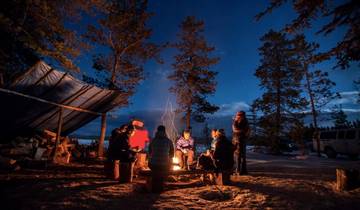
4 days
Aurora Borealis Adventure from Vancouver
- ✓ Comprehensive Yukon And Northwest Territories tour
- ✓ Expert local guides included
- ✓ All accommodation arranged
- ✓ Transportation provided

7 days
Arctic Summer Explorer | Road to the Arctic Sea
- ✓ Comprehensive Yukon And Northwest Territories tour
- ✓ Expert local guides included
- ✓ All accommodation arranged
- ✓ Transportation provided

4 days
Yukon Deluxe Winter Northern Lights Tour
- ✓ Comprehensive Yukon And Northwest Territories tour
- ✓ Expert local guides included
- ✓ All accommodation arranged
- ✓ Transportation provided

4 days
Yukon Winter Retreat: Aurora, Wildlife & Nordic Hot Springs from Vancouver
- ✓ Comprehensive Yukon And Northwest Territories tour
- ✓ Expert local guides included
- ✓ All accommodation arranged
- ✓ Transportation provided
Multi-day tour packages powered by TourRadar. Prices and availability subject to change.
Introduction to Canada’s Northern Territories
Canada’s Yukon and Northwest Territories represent the last great wilderness frontier of North America, where the aurora borealis dances across Arctic skies, First Nations cultures maintain traditions spanning millennia, and pristine landscapes stretch uninterrupted for hundreds of kilometers under the midnight sun. These northern territories offer modern travelers extraordinary opportunities to experience phenomena found nowhere else on Earth—winter nights illuminated by curtains of green and purple light, summer days when the sun never sets, and wilderness so vast and undisturbed that caribou migrations still follow ancient routes across tundra unchanged since the last ice age.
The territories occupy a combined land area larger than Western Europe yet maintain populations under 50,000 residents, creating destinations where authentic wilderness experiences and cultural encounters remain accessible despite increasing global tourism. Whitehorse, Yukon’s territorial capital, serves as the gateway to Klondike Gold Rush heritage in Dawson City, the towering peaks of Kluane National Park, and traditional Southern Tutchone territories. Yellowknife, capital of the Northwest Territories, has earned recognition as the Northern Lights capital of the world, while also providing access to the remote majesty of Nahanni National Park and the Dempster Highway route to the Arctic Ocean.
Planning a 2026 journey to Canada’s territories requires understanding seasonal extremes—winter temperatures plunge to minus 40 Celsius (minus 40 Fahrenheit) while summer days reach plus 30 Celsius (86 Fahrenheit), creating dramatically different experiences in the same locations. The aurora season from late August through mid-April offers the spectacle that draws visitors from around the globe, while the midnight sun period from late May through July enables extended wilderness adventures under continuous daylight. Indigenous communities throughout both territories welcome visitors seeking authentic cultural experiences, from traditional storytelling and bannock-making workshops to guided expeditions led by elders who maintain deep connections to these lands.
This guide provides comprehensive 2026 planning information for experiencing Canada’s northern territories, whether chasing the Northern Lights in Yellowknife, exploring gold rush heritage along the Klondike, or venturing into wilderness areas where grizzly bears outnumber humans and wolves still howl across frozen lakes under winter stars. The territories demand more preparation than southern Canadian destinations—distances are vast, services are limited, and weather can change dramatically—but reward prepared travelers with experiences of raw natural beauty and cultural authenticity increasingly rare in our interconnected world.
Understanding Canada’s Territories: Geography and Climate in 2026
The Yukon Territory and Northwest Territories together encompass 1.5 million square kilometers (580,000 square miles) stretching from the 60th parallel northward to the Arctic Ocean, spanning boreal forests, alpine mountains, subarctic tundra, and Arctic coastal plains. Yukon occupies the northwest corner of Canada adjacent to Alaska, characterized by the Saint Elias Mountains containing Canada’s highest peaks including Mount Logan at 5,959 meters (19,551 feet), while the Northwest Territories extends from Great Slave Lake northward across the barrens to the Arctic coastline, encompassing the Mackenzie River Delta and numerous islands in the Arctic Archipelago.
The territories experience extreme seasonal variation in daylight hours and temperatures. Summer solstice on June 21, 2026 brings 21 hours of daylight to Whitehorse and nearly continuous daylight to Yellowknife (20 hours), while winter solstice on December 21, 2026 reduces daylight to just over 5 hours in both capitals. This dramatic seasonal shift affects not only tourism patterns but also wildlife behavior, vegetation, and the aurora viewing opportunities that attract winter visitors. The midnight sun period from late May through July enables extended hiking, wildlife viewing, and photography during the warmest months when daytime temperatures reach 15-25 Celsius (59-77 Fahrenheit) and wildflowers bloom across tundra landscapes.
Winter dominates the territorial calendar from October through April, with temperatures in Whitehorse ranging from minus 15 to minus 25 Celsius (5 to minus 13 Fahrenheit) and Yellowknife experiencing even colder conditions from minus 20 to minus 35 Celsius (minus 4 to minus 31 Fahrenheit) during deep winter months. These cold temperatures create the crystal-clear skies essential for spectacular aurora displays—warmer winter weather often brings cloud cover that obscures the Northern Lights. The cold-weather season also enables unique activities including dog sledding, ice fishing, snowmobiling, and aurora viewing from heated teepees and specially-designed aurora domes.
Spring and fall serve as brief transition seasons, each lasting approximately 6-8 weeks. September 2026 offers comfortable temperatures (5-15 Celsius / 41-59 Fahrenheit), returning darkness for aurora viewing, and autumn colors transforming boreal forests and tundra landscapes into brilliant displays of red, orange, and gold. March and April 2026 bring increasing daylight and warming temperatures (minus 10 to plus 5 Celsius / 14 to 41 Fahrenheit) while maintaining sufficient darkness for Northern Lights viewing, making these shoulder-season months increasingly popular among travelers seeking milder conditions.
The territories’ position beneath the auroral oval—the ring-shaped region of maximum auroral activity surrounding Earth’s magnetic poles—creates ideal conditions for Northern Lights viewing. Yellowknife sits directly beneath this zone where charged particles from solar wind interact with Earth’s magnetic field, producing the luminous displays visible 240 nights per year. The flat terrain surrounding Yellowknife and minimal light pollution enhance viewing conditions, while the city’s location on the shores of Great Slave Lake creates dramatic foreground elements for aurora photography.
Understanding these geographic and climatic conditions helps travelers plan appropriate 2026 visits. Summer visitors (June through August) experience warm weather, long daylight hours, accessible wilderness, and active wildlife but miss aurora displays. Winter visitors (December through February) encounter the most spectacular Northern Lights but face extreme cold requiring specialized clothing and limited daylight for other activities. Shoulder seasons (September and March through mid-April) offer balanced experiences with moderate temperatures, aurora viewing opportunities, and sufficient daylight for daytime exploration.
Best Time to Visit Canada’s Territories in 2026
Selecting the optimal time to visit Canada’s territories in 2026 depends entirely on travel priorities—Northern Lights viewing, midnight sun experiences, wildlife encounters, or comfortable temperatures for wilderness activities. Each season offers distinct advantages and requires different preparation levels.
Peak Aurora Season: December 2026 Through February 2026
The darkest months of winter provide maximum aurora viewing opportunities with 18-19 hours of darkness nightly in Yellowknife and Whitehorse. December through February 2026 offer the highest probability of witnessing intense Northern Lights displays, though these months also bring the coldest temperatures (minus 25 to minus 40 Celsius / minus 13 to minus 40 Fahrenheit) requiring comprehensive winter gear. Tour operators provide insulated parkas, snow pants, winter boots rated to minus 50 Celsius, and thick mittens included in package prices or available as rentals CAD $25-40 ($20-30 USD) daily. The extreme cold preserves the crystal-clear skies essential for aurora photography, as warmer temperatures often correlate with cloud cover obscuring the displays. This peak season attracts the largest visitor numbers to Yellowknife, driving accommodation prices to annual highs of CAD $180-280 ($135-210 USD) per night for mid-range hotels. Activities beyond aurora viewing include dog sledding CAD $150-220 ($115-165 USD) for 1-2 hour experiences, ice fishing on frozen lakes, snowmobiling expeditions CAD $180-320 ($135-240 USD) for half-day tours, and visits to Indigenous cultural centers offering traditional storytelling and bannock-making workshops.
Shoulder Aurora Season: September 2026 and March Through Mid-April 2026
The shoulder months combine aurora viewing opportunities with more comfortable temperatures and lower travel costs. September 2026 brings returning darkness after the midnight sun period, with temperatures ranging 5-15 Celsius (41-59 Fahrenheit) during early autumn. Aurora displays begin appearing as nights lengthen, though viewing windows remain shorter than deep winter months. Fall foliage transforms boreal forests and tundra landscapes into spectacular displays of color, making September ideal for combining aurora viewing with daytime wilderness exploration and wildlife photography. March through mid-April 2026 offers warming temperatures (minus 10 to plus 5 Celsius / 14 to 41 Fahrenheit), extended daylight for daytime activities, and continued aurora viewing opportunities during still-dark evening hours. Accommodation rates drop 20-30% compared to peak winter season, and smaller visitor numbers reduce crowding at popular aurora viewing locations. These shoulder months appeal to photographers seeking dramatic landscape-aurora combinations and travelers preferring moderate temperatures to extreme winter cold.
Midnight Sun Season: Late May Through July 2026
Summer brings continuous or near-continuous daylight enabling extended wilderness adventures, active wildlife viewing, and comfortable temperatures (15-25 Celsius / 59-77 Fahrenheit) but eliminates Northern Lights viewing entirely. The midnight sun period from approximately May 25 through July 15, 2026 provides 18-21 hours of usable daylight for hiking in Kluane National Park, canoeing the Yukon River, exploring Tombstone Territorial Park, and accessing Nahanni National Park via floatplane. Wildlife remains highly active during summer months—grizzly bears feed intensively preparing for winter hibernation, caribou calves accompany migrating herds, and bird species nest across tundra wetlands. Multi-day wilderness tours operate exclusively during this season when weather conditions permit access to remote areas. Summer attracts families with school-age children and travelers focused on hiking, canoeing, and wildlife experiences rather than aurora viewing. Accommodation prices remain moderate compared to winter peak season, though popular lodges and tours book months in advance requiring early 2026 reservations.
Extreme Shoulder Seasons: Late April Through May 2026 and October Through November 2026
These transitional periods offer the lowest prices and smallest crowds but present challenging conditions. Late April through May experiences spring breakup when ice melts on rivers and lakes, creating hazardous conditions for travel and limiting access to many wilderness areas. October and November bring increasing cold and decreasing services as many tourism operations close for the season, though aurora viewing opportunities return as darkness increases. Budget-conscious travelers willing to accept limited services and unpredictable weather can find significant savings during these months, with accommodation rates 30-50% below peak season and tour operators offering early-season or late-season discounts.
Special Events and Festivals in 2026
Timing visits to coincide with territorial festivals enhances cultural experiences. The Yukon Sourdough Rendezvous in mid-February 2026 celebrates winter heritage with dog sled races, ice carving, and traditional competitions in Whitehorse. Dawson City Music Festival in mid-July 2026 brings performers and audiences to the historic gold rush town for outdoor concerts beneath the midnight sun. The Great Northern Arts Festival in mid-July 2026 in Inuvik showcases Indigenous arts, crafts, performances, and traditional foods. Snowking’s Winter Festival operates March through April 2026 in Yellowknife, featuring an elaborate ice castle on Yellowknife Bay with art installations, performances, and community gatherings. These events require advance booking as accommodation availability tightens significantly.
Getting to Canada’s Territories in 2026
Accessing Canada’s northern territories requires flight connections through southern Canadian hubs, as no rail service extends to Yukon or Northwest Territories and highway access remains limited to specific routes from British Columbia and Alberta. Understanding transportation options and logistics enables efficient 2026 planning.
Air Travel to Whitehorse, Yukon in 2026
Whitehorse’s Erik Nielsen International Airport (YXY) receives daily direct flights from Vancouver (Air Canada and Air North) with flight times of 2.5 hours, and seasonal direct service from Calgary, Edmonton, and Frankfurt (summer months only). Air North, Yukon’s regional carrier, maintains the most frequent service and often offers the most competitive fares CAD $350-650 ($260-490 USD) roundtrip from Vancouver depending on booking timing and season. Peak winter aurora season (December through February 2026) and peak summer season (June through August 2026) drive fares to annual highs of CAD $600-950 ($450-715 USD) roundtrip from Vancouver. Book flights 2-3 months in advance for best availability and pricing, particularly for winter aurora season travel when demand concentrates during the limited holiday and aurora viewing windows. Whitehorse airport offers rental vehicles from major agencies, with advance reservations essential during peak seasons as inventory remains limited compared to southern Canadian cities.
Air Travel to Yellowknife, Northwest Territories in 2026
Yellowknife Airport (YZF) connects via daily direct flights from Edmonton (Air Canada, WestJet, and Canadian North) with flight times of 1.5 hours, plus less frequent service from Calgary and Whitehorse. Edmonton serves as the primary gateway, with connections available from all major Canadian and US cities. Roundtrip fares from Edmonton to Yellowknife range CAD $450-850 ($340-640 USD) depending on season and advance booking, with winter aurora season commanding premium pricing. Canadian North provides the most frequent service and maintains strong on-time performance despite challenging northern weather conditions. Yellowknife’s smaller airport offers limited rental vehicle options, though most aurora viewing experiences include transportation eliminating the need for rental cars. Travelers combining Yellowknife aurora viewing with Whitehorse or Dawson City exploration should consider multi-city flight itineraries rather than roundtrip tickets to maximize territorial experiences.
Highway Access in 2026
Overland access to Yukon follows the Alaska Highway from British Columbia, a 2,237-kilometer journey from the highway’s origin in Dawson Creek, BC to the Alaska-Yukon border, with Whitehorse located at kilometer 1,476. The modern Alaska Highway provides paved two-lane surface with services spaced 100-300 kilometers apart, making this a feasible self-drive option during summer months May through September 2026. Winter highway travel requires winter tires, emergency supplies, and mechanical competence as services close and weather conditions can trap unprepared travelers. Plan 3-4 days driving from Edmonton or Vancouver to Whitehorse accounting for rest stops, wildlife viewing, and inevitable photo opportunities along the scenic route.
No direct highway connects southern Canada to Yellowknife—travelers must either fly directly or complete a challenging wilderness drive via Fort Nelson, BC, the Liard Highway, and connecting territorial highways, covering approximately 1,900 kilometers from Edmonton with long stretches between services. This route remains suitable only for experienced backcountry drivers in well-prepared vehicles during summer months, making flights the practical choice for most Yellowknife visitors.
The Dempster Highway provides the only road access from Yukon to Northwest Territories and Canada’s Arctic Ocean, departing from Klondike Highway 40 kilometers east of Dawson City and extending 740 kilometers through wilderness to Inuvik, NWT, with a further 187-kilometer spur to Tuktoyaktuk on the Arctic coast. This all-gravel highway operates year-round with summer ferry crossings (June through late November) and winter ice bridges (late December through mid-April) at the Peel and Mackenzie Rivers. Services exist only at Eagle Plains (approximately halfway), making this a serious expedition requiring comprehensive preparation including multiple spare tires, emergency supplies, satellite communication, and mechanical self-sufficiency. Rental vehicle companies typically prohibit Dempster Highway travel, requiring privately-owned vehicles or specialized tour company transportation.
Regional Air Services in 2026
Air North and Canadian North operate scheduled regional flights connecting Whitehorse, Dawson City, Old Crow, Inuvik, and other territorial communities. Dawson City service (flight time 1.5 hours from Whitehorse) enables efficient access to Klondike heritage sites without the 6-hour highway drive, particularly valuable for visitors with limited time or winter travelers avoiding challenging road conditions. Smaller charter airlines provide floatplane and helicopter access to remote locations including Nahanni National Park, wilderness fishing lodges, and backcountry hiking areas, with prices ranging CAD $800-2,500 ($600-1,900 USD) per person depending on distance and aircraft size. These regional services require advance booking and remain weather-dependent, with delays and cancellations common during marginal conditions.
Accommodation Options in Canada’s Territories 2026
Accommodation in Canada’s territories ranges from budget hostels and standard hotels to wilderness lodges and aurora-viewing resorts, with limited inventory requiring advance reservations during peak seasons. Understanding options and pricing enables appropriate budget planning for 2026 visits.
Whitehorse, Yukon Accommodation in 2026
Whitehorse offers the territories’ most diverse accommodation selection, with approximately 50 properties spanning all budget categories. Budget-conscious travelers find hostel dormitories CAD $40-60 ($30-45 USD) per person nightly at HI Whitehorse and independent hostels, providing basic but clean accommodation near downtown with shared kitchen facilities reducing meal costs. Mid-range hotels including Best Western Gold Rush Inn, Sternwheeler Hotel, and Coast High Country Inn charge CAD $120-180 ($90-135 USD) per night for two sharing, offering private rooms with standard amenities, on-site restaurants, and convenient downtown locations within walking distance of shops and museums. Upper mid-range properties including Edgewater Hotel and Skky Hotel provide enhanced comfort at CAD $180-240 ($135-180 USD) per night for two sharing, featuring river views, upgraded rooms, and proximity to the Millennium Trail waterfront path. Limited luxury options exist in Whitehorse, with wilderness lodges outside town providing premium experiences. Book Whitehorse accommodation 2-3 months ahead for summer travel and 4-5 months ahead for aurora season, as inventory tightens during peak periods. Many properties offer package deals combining accommodation with tours, creating potential savings versus booking components separately.
Yellowknife, Northwest Territories Accommodation in 2026
Yellowknife’s accommodation market centers on mid-range hotels and specialty aurora lodges, with limited budget options and high seasonal price variation. The Explorer Hotel serves as Yellowknife’s flagship property charging CAD $200-320 ($150-240 USD) per night for two sharing, offering on-site restaurant, fitness facilities, and free airport shuttle making it popular with aurora tour packages. Chateau Nova Yellowknife and Nova Inn Yellowknife provide mid-range comfort at CAD $150-220 ($115-165 USD) per night for two sharing, with basic amenities and convenient locations. Budget travelers face challenges in Yellowknife—hostels are limited and budget motels charge CAD $100-140 ($75-105 USD) nightly while providing minimal services. Booking 5-6 months ahead remains essential for winter aurora season when demand from international visitors drives rates to annual peaks and sells out available inventory. Summer rates drop 20-30% from winter pricing, creating better value for midnight sun season visitors focused on wilderness activities rather than Northern Lights.
Aurora Lodges and Specialized Properties 2026
Dedicated aurora viewing lodges outside Yellowknife provide immersive Northern Lights experiences combining accommodation, guided aurora tours, cultural programs, and traditional Indigenous elements. Aurora Village operates a teepee-style viewing village on the Ingraham Trail 25 kilometers from Yellowknife, with package prices CAD $2,400-3,200 ($1,800-2,400 USD) per person for three nights including accommodation at partner hotels, nightly aurora village access, heated teepees for viewing, Indigenous cultural programming, and professional photography assistance. Blachford Lake Lodge offers remote wilderness aurora viewing accessible only by floatplane or ice road, charging CAD $3,800-5,500 ($2,900-4,150 USD) per person for three-night packages including floatplane transfers, all meals, guided aurora viewing, dog sledding, ice fishing, and wilderness activities. These specialized properties cater to serious aurora enthusiasts and photographers willing to invest in premium experiences with minimal light pollution and maximum viewing comfort.
Dawson City Accommodation in 2026
Dawson City’s historic gold rush character extends to accommodation options, many occupying restored buildings from the 1898-1899 Klondike boom. Downtown Hotel offers heritage ambiance at CAD $140-200 ($105-150 USD) per night for two sharing, while Westmark Inn provides modern comfort at similar rates. Limited inventory in this small community (population 1,400) requires advance booking during summer peak season when Midnight Dome hiking and gold rush heritage sites attract maximum visitors. Many properties close October through April reducing winter options to a handful of year-round hotels. Budget travelers camping at Yukon River Campground CAD $16 ($12 USD) nightly access Dawson’s attractions while minimizing accommodation costs during summer months.
Wilderness Lodges and Remote Properties 2026
Fly-in fishing lodges, wilderness hiking bases, and remote eco-lodges operate throughout the territories during summer months, accessed exclusively by floatplane or helicopter. Nahanni River Adventures charges CAD $8,500-12,000 ($6,400-9,000 USD) per person for 7-10 day Nahanni National Park expeditions including floatplane access, all meals, professional guides, and wilderness camping. Inconnu Lodge on Great Bear Lake offers premier fishing at CAD $7,500-10,500 ($5,650-7,900 USD) per person for one-week packages including floatplane transfers from Yellowknife, guided fishing, all meals, and comfortable wilderness lodge accommodation. These remote properties appeal to serious outdoor enthusiasts seeking authentic wilderness experiences far from road-accessible areas, with all-inclusive pricing reflecting the significant logistics of remote operations.
Camping and Budget Alternatives 2026
Territorial and national park campgrounds provide economical accommodation during summer months, though facilities remain basic and few offer electrical hookups. Yukon government campgrounds charge CAD $16-20 ($12-15 USD) nightly for non-serviced sites, while sites with electrical hookups cost CAD $28-32 ($20-25 USD) nightly. Popular locations including Tombstone Territorial Park require advance reservations through Yukon Parks, as walk-up availability remains uncertain during peak July-August season. Northwest Territories campgrounds follow similar pricing, with some remote locations offering free primitive camping. Winter camping possibilities exist for experienced cold-weather campers, though most territorial campgrounds close October through April when temperatures make canvas tent camping extremely challenging and potentially dangerous without specialized equipment and experience.
Northern Lights Viewing and Aurora Tours 2026
The aurora borealis remains the primary draw for winter visitors to Canada’s territories, with Yellowknife offering world-class viewing conditions and specialized tour infrastructure. Understanding aurora science, viewing strategies, and tour options maximizes the likelihood of witnessing spectacular displays during 2026 visits.
Understanding the Aurora Borealis
The Northern Lights occur when charged particles from solar wind interact with Earth’s magnetic field, funneling toward the poles where they collide with atmospheric gases producing luminous displays. Oxygen collisions create green (most common) and red (rare, at higher altitudes) auroras, while nitrogen interactions produce blue and purple hues. The intensity and frequency of aurora displays correlate with solar activity following an approximate 11-year cycle, with 2026 falling during a moderate activity phase providing regular strong displays but without the exceptional intensity seen during solar maximum years. Auroras appear most frequently in the auroral oval—a ring-shaped zone surrounding Earth’s magnetic poles where geomagnetic field lines funnel solar particles. Yellowknife’s position directly beneath this oval combined with flat terrain, minimal light pollution, and extremely low humidity creating crystal-clear winter skies makes it arguably Earth’s best aurora viewing destination.
Aurora forecasting relies on solar wind measurements taken by spacecraft positioned between Earth and the Sun, providing 15-60 minute advance warning of geomagnetic disturbances likely to produce aurora displays. The Kp index measures geomagnetic activity on a scale from 0 to 9, with Kp 0-1 indicating minimal aurora visible only at high latitudes, Kp 2-3 producing moderate displays visible in Yellowknife and Whitehorse, Kp 4-6 generating strong auroras visible farther south, and Kp 7-9 creating exceptional displays visible at lower latitudes. Tour operators monitor solar activity and Kp forecasts, adjusting viewing locations and departure times to maximize guest experiences. Clear skies remain essential for viewing regardless of aurora intensity—cloud cover obscures even the strongest displays, making weather as important as solar activity for successful aurora tourism.
Aurora Tour Options in Yellowknife 2026
Yellowknife’s established aurora tourism industry offers multiple viewing formats catering to different preferences and budgets. Standard aurora hunting tours operate nightly during aurora season (late August through mid-April 2026), departing hotels around 10 PM and returning approximately 2-3 AM, with pricing CAD $90-130 ($70-100 USD) per person nightly. Check tour operator websites for current pricing as rates vary seasonally. These tours transport guests to multiple viewing locations outside city light pollution, moving between sites based on real-time cloud cover and aurora forecasts to maximize viewing opportunities. Heated buses or vans provide shelter during inactive periods, while guides assist with photography and share aurora science and territorial history. Hot beverages, light snacks, and photography assistance come included, with professional photos often available for purchase. Yellowknife’s compact geography enables tours to access dark-sky locations within 20-45 minutes of downtown, reducing transit time and maximizing viewing duration.
Aurora village experiences at dedicated viewing sites provide more comfort than mobile hunting tours. Aurora Village operates a traditional teepee village on the Ingraham Trail where guests view auroras from heated teepees equipped with wood stoves, comfortable seating, and large windows or open sides enabling aurora viewing while remaining warm. Nightly rates CAD $120-160 ($90-120 USD) per person include transportation from Yellowknife hotels, teepee access throughout the night, hot beverages and snacks, and cultural programming including Indigenous storytelling, traditional drumming, and bannock sampling. The fixed-location format sacrifices flexibility to move based on changing conditions but provides superior comfort during extreme cold nights when temperatures drop below minus 35 Celsius (minus 31 Fahrenheit).
Indigenous-owned aurora tour companies including North Star Adventures offer culturally-focused experiences led by Dene guides sharing traditional knowledge about the aurora and its spiritual significance to northern peoples. These tours combine aurora viewing with storytelling, traditional foods, and perspectives on how Indigenous cultures interpret the Northern Lights. Pricing ranges CAD $110-150 ($85-115 USD) nightly, with small group sizes (maximum 12 guests) enabling personal interaction with guides and intimate cultural experiences unavailable through larger commercial operators.
Multi-night aurora packages combine accommodation, aurora tours, winter clothing rental, and daytime activities into comprehensive experiences. Three-night packages represent the minimum recommended duration, providing aurora viewing on three separate nights to account for weather variability and increasing the probability of witnessing strong displays. Package prices for three nights range CAD $1,950-3,400 ($1,400-2,500 USD) per person including hotel accommodation for three nights two sharing CAD $420-540 ($315-405 USD), three nights of aurora hunting tours CAD $270-390 ($205-295 USD), winter clothing rental CAD $120-180 ($90-135 USD), and daytime activities CAD $360-480 ($270-360 USD) such as dog sledding, ice fishing, or cultural tours. Four and five-night packages provide additional viewing opportunities and activity options while spreading fixed costs across more days, offering better per-day value for serious aurora enthusiasts.
Aurora Photography in 2026
Photographing the Northern Lights requires specific equipment and techniques. Cameras capable of manual exposure control remain essential—smartphones and point-and-shoot cameras lack the long exposure capabilities needed to capture auroras effectively. DSLR or mirrorless cameras with wide-angle lenses (14-24mm focal length ideal) provide best results. Settings for aurora photography include manual mode with shutter speeds 5-25 seconds depending on aurora movement (faster shutter speeds for active displays preventing motion blur), apertures f/2.8 to f/4 maximizing light gathering, and ISO 800-3200 balancing sensitivity with noise. Sturdy tripods withstanding arctic winds remain mandatory, as any camera movement during long exposures ruins images. Remote shutter releases or camera self-timers prevent camera shake from pressing the shutter button.
Tour operators provide varying levels of photography assistance. Some guides offer hands-on camera setup help and compositional guidance, while others focus on general group management with limited individual photography instruction. Serious photographers should inquire about photography-specific tours limiting group sizes to 8-10 guests and including professional photography guidance. These specialized tours cost CAD $150-220 ($115-165 USD) per night but provide superior photography instruction and location access compared to standard tours managing 20-30 guests. Professional aurora photographers offer private workshops CAD $800-1,500 ($600-1,130 USD) nightly for 1-3 guests, providing comprehensive instruction covering camera settings, composition, and post-processing techniques.
Backup batteries remain essential for aurora photography, as extreme cold rapidly depletes lithium-ion battery capacity. Carry 3-4 spare batteries, keeping them warm inside jacket pockets until needed. Cold weather also affects camera LCD screens and mechanical components—allow cameras to acclimatize gradually when moving between extreme outdoor cold and heated indoor spaces to prevent damaging condensation.
Aurora Viewing in Whitehorse and Yukon 2026
Whitehorse offers aurora viewing on clear winter nights, though the city’s position slightly south of the auroral oval compared to Yellowknife reduces display frequency and intensity. Aurora tours from Whitehorse transport guests to dark-sky locations north of the city, with pricing CAD $75-110 ($55-85 USD) per night. Tour infrastructure remains less developed than Yellowknife, with fewer specialized operators and smaller group sizes sometimes providing more intimate experiences. Independent travelers can drive to dark locations including Miles Canyon or Takhini Hot Springs (which offers aurora viewing from outdoor hot pools at premium pricing), though winter driving requires experience with ice and snow conditions. Multi-night Whitehorse aurora packages combine viewing with gold rush heritage exploration in Dawson City, dog sledding, and hot springs visits, appealing to travelers seeking diverse territorial experiences beyond Northern Lights alone.
Aurora Viewing Success Rates and Realistic Expectations 2026
Yellowknife tour operators frequently advertise 99% success rates for guests staying three or more nights, though this figure requires context. Success rates calculate the percentage of guests seeing some aurora activity on at least one night of multi-night packages, not the percentage of individual nights with displays or the likelihood of witnessing exceptional shows. Realistically, approximately 65-75% of winter nights in Yellowknife feature visible aurora displays under clear skies, though intensity varies dramatically from barely-perceptible green glows to brilliant multi-colored displays filling the entire sky. Cloud cover remains the primary obstacle—even during strong geomagnetic storms, clouds obscure auroras completely. Three-night stays provide high probability of experiencing clear skies on at least one night, while shorter visits carry meaningful risk of cloud-obscured conditions preventing any aurora viewing.
Setting appropriate expectations prevents disappointment. Aurora displays captured in professional photography often show colors and details invisible to human eyes due to long camera exposures gathering more light than human vision. While spectacular displays appear brilliant even to naked-eye viewing, moderate displays may appear as greenish or whitish glows dancing across the sky rather than the vibrant multi-colored curtains seen in photographs. Most visitors consider even moderate aurora displays spectacular and memorable, but travelers expecting constant brilliant colors matching professional photos may feel underwhelmed during ordinary displays.
Yukon Territory Destinations and Experiences 2026
Yukon Territory offers diverse experiences from Whitehorse’s territorial capital amenities to Dawson City’s gold rush heritage, Kluane National Park’s mountain wilderness, and Tombstone Territorial Park’s alpine tundra landscapes. Understanding each region enables effective 2026 itinerary planning.
Whitehorse: Territorial Capital
Whitehorse serves as Yukon’s political and commercial center with population 28,000, modern amenities, and attractions exploring northern heritage and natural history. The MacBride Museum documents Yukon history from First Nations cultures through gold rush and modern development, charging admission CAD $14 ($10 USD) and requiring 1-2 hours for thorough exploration. The Beringia Centre focuses on ice age megafauna and human migration across the Bering land bridge connecting Asia to North America, with admission CAD $8 ($6 USD) and excellent displays appealing to families and natural history enthusiasts. The SS Klondike sternwheeler National Historic Site preserves one of Yukon’s last riverboats that transported passengers and freight along the Yukon River during the early 20th century, offering guided tours June through August for CAD $8 ($6 USD).
Miles Canyon displays dramatic basalt cliffs carved by the Yukon River, located 15 kilometers south of downtown Whitehorse via easy paved road access. The canyon rim trail provides viewpoints overlooking the river gorge, with 2-kilometer round-trip hiking requiring minimal fitness. Summer visitors can arrange river float trips through the canyon with local outfitters charging CAD $95-140 ($70-105 USD) for half-day guided excursions. Takhini Hot Springs offers natural mineral springs developed with swimming pools maintained at 38 Celsius (100 Fahrenheit), located 28 kilometers north of Whitehorse with admission CAD $16 ($12 USD) for day use. Winter visitors can combine hot springs soaking with aurora viewing when conditions permit, though this requires purchasing both daytime admission and evening aurora viewing packages at premium pricing.
The Yukon Wildlife Preserve maintains 700 acres of boreal forest habitat housing northern mammals including elk, moose, wood bison, muskox, Arctic fox, and mountain goats. Located 25 kilometers north of Whitehorse, the preserve charges admission CAD $20 ($15 USD) for self-guided viewing along 5-kilometer loop trails, or CAD $30 ($23 USD) for guided bus tours providing closer animal encounters and naturalist interpretation. Winter visits when animals display thick fur coats and active behavior in cold conditions offer superior wildlife photography compared to summer.
Dawson City: Klondike Gold Rush Heritage
Dawson City preserves the authentic character of Canada’s last great gold rush, with boardwalks, false-front buildings, and unpaved streets maintaining the 1898 appearance when 30,000 stampeders seeking Klondike gold transformed this remote junction into a booming frontier metropolis. The town’s National Historic Site designation protects heritage buildings and restricts modern development, creating an immersive step into gold rush history.
Diamond Tooth Gertie’s Gambling Hall operates as Canada’s first legal casino, housed in a heritage building with period decor, can-can dance shows, and gaming tables offering blackjack, roulette, and poker. Admission CAD $15 ($11 USD) includes evening entertainment featuring dancing and period music. The Palace Grand Theatre presents vaudeville-style performances during summer season, with tickets CAD $25-35 ($20-26 USD) for historical comedy and musical shows. The Dawson City Museum explores gold rush history, First Nations heritage, and the social history of Yukon’s development, charging admission CAD $12 ($9 USD) for comprehensive exhibits requiring 90 minutes to explore thoroughly.
Parks Canada offers guided tours of Robert Service’s cabin where the poet wrote “The Cremation of Sam McGee” and other Yukon verses, plus Jack London’s cabin where the author lived during his own gold rush experience inspiring “The Call of the Wild” and other northern stories. Tours cost CAD $8 ($6 USD) and operate June through August with dramatic readings bringing the authors’ works to life. The gold fields surrounding Dawson permit recreational gold panning at designated locations, with equipment rentals CAD $15-25 ($11-20 USD) daily from local outfitters. Bonanza Creek Road provides access to active mining operations and historic claim sites, though most productive areas remain private property closed to public access.
The Midnight Dome viewpoint overlooks Dawson City and the confluence of Yukon and Klondike Rivers, reached via 8-kilometer gravel road climbing to the summit. Midnight sun viewing (late May through July) from the dome enables watching the sun circle the horizon without fully setting. The dramatic landscape panorama encompasses rivers, mountains, and vast boreal forest stretching to the horizon. Interpretive signs explain gold rush routes including the Chilkoot Trail that brought stampeders from Alaska’s coast over mountain passes to Yukon’s interior.
Dawson City operates as a seasonal destination—most heritage sites, accommodations, and restaurants close after Labor Day in early September, not reopening until late May. Winter visitors find a quiet community with minimal services but authentic northern small-town atmosphere, though this eliminates the gold rush tourism infrastructure that operates during summer peak season. The 530-kilometer drive from Whitehorse to Dawson City follows the Klondike Highway, requiring 6-7 hours with stops for scenery, wildlife viewing, and roadside attractions including Five Finger Rapids viewpoint and interpretive centers. Air North operates scheduled flights between Whitehorse and Dawson City (1.5 hours) providing efficient access for visitors with limited time or winter travelers avoiding potentially challenging road conditions.
Kluane National Park and Reserve
Kluane National Park protects 22,000 square kilometers of the Saint Elias Mountains including Mount Logan (5,959 meters / 19,551 feet elevation), Canada’s highest peak. The park contains the world’s largest non-polar icefield, with vast glaciers flowing between mountain peaks creating a landscape more similar to Antarctica than southern Canada. UNESCO World Heritage designation recognizes Kluane’s exceptional glacial and mountain environments, part of an international protected area including Alaska’s Wrangell-St. Elias and Glacier Bay National Parks.
Most of Kluane’s interior remains wilderness accessible only by mountaineering expeditions or flightseeing tours, as the Haines Highway corridor provides the only road access to park boundaries. Day hiking trails near Haines Junction include King’s Throne (16 kilometers round-trip, 1,200 meters elevation gain) ascending to alpine viewpoints overlooking Kathleen Lake with panoramic Saint Elias Mountain vistas. The challenging full-day hike rewards fit hikers with spectacular mountain scenery, though weather can change rapidly requiring preparation for rain, wind, and cold conditions even during summer months. Shorter trails including Dezadeash River Loop (5 kilometers) and Soldier’s Summit (3 kilometers) provide accessible forest and riverside hiking for families and less experienced hikers.
Flightseeing tours over Kluane’s interior glaciers and peaks operate from Haines Junction and Whitehorse, with pricing CAD $250-450 ($190-340 USD) per person for 60-90 minute flights depending on route and aircraft size. These flights provide the only practical access to the park’s glaciated interior, revealing massive ice rivers, jagged peaks, and wilderness on a scale impossible to appreciate from ground level. Clear weather remains essential for flightseeing—tours cancel frequently during marginal conditions, requiring schedule flexibility and backup plans. Mountaineering expeditions attempting Mount Logan or other Saint Elias peaks require extensive alpine experience, expedition logistics, and 2-4 weeks of time, placing these adventures beyond the scope of typical territorial visitors.
Kathleen Lake campground near Haines Junction provides Parks Canada campsites CAD $16-28 ($12-20 USD) nightly depending on services, serving as a base for day hikes and wildlife viewing. Grizzly bears, Dall sheep, and caribou inhabit the park, though dense vegetation and vast wilderness areas reduce sighting frequency compared to more accessible national parks. The Haines Highway between Haines Junction and the Alaska border traverses spectacular mountain scenery including Dezadeash Lake viewpoints, roadside glaciers, and open alpine meadows where Dall sheep occasionally appear on rocky slopes.
Tombstone Territorial Park
Tombstone Territorial Park protects 2,200 square kilometers of rugged tundra landscape in northern Yukon, accessible via the Dempster Highway 72 kilometers north of Dawson City. The park’s dramatic pinnacle mountains, colorful tundra, and Arctic char-filled streams create destination-quality wilderness experiences without the extreme remoteness of fly-in locations. The Tombstone Range’s jagged peaks rising above rolling tundra inspired the park’s name, with Mount Monolith presenting one of Yukon’s most photographed mountains.
Hiking trails range from short interpretive walks to multi-day backcountry routes. Grizzly Lake Trail (12 kilometers round-trip) climbs through alpine meadows to a cirque lake surrounded by peaks, requiring moderate fitness and 5-7 hours including stops for photography and wildlife viewing. The challenging Tombstone Mountain Trail (14 kilometers round-trip) ascends to high alpine ridges with panoramic tundra and mountain vistas, though steep sections and loose rock require caution and proper footwear. Backcountry campers can extend hikes into multi-day treks exploring remote valleys, though all backcountry camping requires registration at the Tombstone Interpretive Centre and bear-proof food storage containers.
Fall colors transform Tombstone into a photographer’s paradise from late August through mid-September, when tundra vegetation turns brilliant red, orange, and gold creating intense color contrasts against gray peaks and blue skies. This brief seasonal window attracts the park’s highest visitation, though small overall visitor numbers mean crowding remains minimal compared to famous national parks. The Tombstone Interpretive Centre near the campground offers exhibits on park ecology, wildlife, and Indigenous history, plus ranger programs during summer season including guided hikes and evening presentations.
Camping at Tombstone Territorial Park campground costs CAD $16 ($12 USD) nightly for basic sites near the interpretive center, with no reservations accepted—sites operate on first-come first-served basis creating uncertainty during peak late August and early September when fall colors reach maximum intensity. The remote location 480 kilometers north of Whitehorse requires significant time investment—most visitors spend minimum 2-3 days to justify the long drive, combining Tombstone with Dawson City exploration and potentially Dempster Highway adventures for those continuing to Northwest Territories.
Northwest Territories Destinations and Experiences 2026
The Northwest Territories offers even more remote wilderness than Yukon, with Yellowknife serving as the primary gateway to aurora viewing, Great Slave Lake water adventures, and fly-in wilderness experiences in Nahanni National Park and beyond.
Yellowknife: Aurora Capital
Yellowknife dominates Northwest Territories tourism, with most visitors arriving specifically for Northern Lights viewing. Beyond aurora tours, the city offers attractions exploring northern heritage, Indigenous cultures, and frontier history. The Prince of Wales Northern Heritage Centre serves as the territorial museum, charging free admission for excellent exhibits covering Dene and Inuit cultures, mining history, and the Northwest Passage explorations. The museum requires 90-120 minutes for thorough exploration, with particularly strong displays on traditional Indigenous technologies and contemporary northern art. The Legislative Assembly offers free public tours showcasing the unique consensus government system used in Northwest Territories, where all members sit as independents without political parties.
Old Town Yellowknife preserves the historic settlement on rocky outcrops overlooking Yellowknife Bay, with colorful houseboats, Bush Pilot’s Monument, and Ragged Ass Road (yes, that’s the actual name) creating a photogenic district contrasting with the modern downtown core. The Wildcat Café operates in a log building from 1937, serving lunch and dinner in summer months in what may be Canada’s most northerly heritage restaurant. The Frame Lake Trail system provides 7 kilometers of paved multi-use paths circling Frame Lake near downtown, offering easy walking, jogging, or cycling with frequent wildlife sightings including ravens, foxes, and occasional moose.
Nature’s North Wildlife Gallery displays mounted northern wildlife specimens including a grolar bear (polar-grizzly hybrid), muskox, wolves, and various birds, charging admission CAD $8 ($6 USD). The Buffalo Airways hangar became famous through the Ice Pilots NWT television series, with aviation enthusiasts welcome to view historic aircraft when operations permit. Great Slave Lake dominates Yellowknife’s geography, with the city built on the lake’s northern shore. Summer visitors can arrange fishing charters targeting lake trout and northern pike, with half-day trips costing CAD $250-350 ($190-265 USD) per person including equipment and guide services. Winter transforms the frozen lake into a temporary road network, with ice roads connecting Yellowknife to seasonal diamond mines and remote communities.
Nahanni National Park Reserve
Nahanni National Park Reserve protects 30,000 square kilometers of the South Nahanni River watershed in the remote Mackenzie Mountains, recognized as a UNESCO World Heritage Site for exceptional wilderness values. Virginia Falls drops 96 meters (315 feet)—nearly twice Niagara Falls’ height—creating the park’s centerpiece attraction. The South Nahanni River flows through four major canyons with walls reaching 1,200 meters (4,000 feet) high, creating one of North America’s premier multi-day river expeditions.
Access to Nahanni requires chartered floatplane or helicopter service from Fort Simpson (200 kilometers east of the park) or Whitehorse (450 kilometers southwest), with no road access to park boundaries. Multi-day river expeditions represent the classic Nahanni experience, with licensed outfitters providing guided trips ranging from 7-10 days floating from Virginia Falls to the park exit at Nahanni Butte. These expeditions cost CAD $8,500-12,000 ($6,400-9,000 USD) per person including floatplane transfers, all meals, camping equipment, professional guides, and river logistics. The trips require no previous paddling experience as guides handle navigation, though physical fitness for long days in canoes or rafts remains necessary.
Day trips to Virginia Falls operate via helicopter from Fort Simpson, charging CAD $1,800-2,500 ($1,350-1,900 USD) per person for the round-trip flight plus 3-4 hours at the falls for hiking and photography. These expensive day visits provide access for travelers unable to commit to multi-day expeditions, though they sacrifice the wilderness immersion and canyon scenery accessible only via the river. Limited availability and weather dependence require booking months ahead and maintaining schedule flexibility as marginal conditions frequently delay or cancel helicopter operations.
Tuktoyaktuk and the Dempster Highway
Tuktoyaktuk represents Canada’s northern frontier, a hamlet of 900 Inuvialuit residents on the shores of the Arctic Ocean accessible via the Inuvik-Tuktoyaktuk Highway completed in 2017. The 187-kilometer highway connection from Inuvik transformed Tuktoyaktuk from seasonal barge-and-ice-road access into a year-round road-accessible Arctic Ocean destination, enabling adventurous road-trippers to reach the Arctic coast via the Dempster-Inuvik-Tuktoyaktuk route.
Tuktoyaktuk’s attractions include pingos (ice-core hills unique to permafrost regions), the Arctic Ocean shoreline where visitors ceremonially “dip their toes” in the Arctic, and Inuvialuit cultural experiences including traditional food tastings and handicraft demonstrations. The community functions primarily as a milestone for overland Arctic adventurers rather than a destination with extensive tourist infrastructure—accommodation remains extremely limited with basic hotel rooms costing CAD $200-300 ($150-225 USD) nightly when available. Most visitors drive from Inuvik, complete Arctic Ocean activities, and return the same day rather than overnighting in Tuktoyaktuk.
Reaching Tuktoyaktuk via the Dempster Highway from Dawson City creates a challenging multi-day adventure covering approximately 1,100 kilometers from Dawson City to Tuktoyaktuk and return. The route includes the 740-kilometer Dempster Highway to Inuvik (one-way from Dawson City), plus the 187-kilometer Inuvik-Tuktoyaktuk Highway, with services existing only at Eagle Plains (Dempster Highway kilometer 370) and Inuvik. Successful completion requires comprehensive preparation including multiple spare tires, emergency supplies, mechanical self-sufficiency, and flexible schedules accommodating potential breakdowns, weather delays, and ferry closures. Most visitors require minimum 5-7 days for the complete Dawson-Inuvik-Tuktoyaktuk round-trip adventure.
Indigenous Cultural Experiences in 2026
First Nations and Inuit peoples maintain strong cultural traditions throughout Canada’s territories, with numerous opportunities for authentic cultural experiences ranging from museums and interpretive centers to guided experiences and community visits.
Cultural Centers and Museums
The Da Kų Cultural Centre in Haines Junction showcases Southern Tutchone heritage through exhibits, traditional craft demonstrations, and cultural programming. Admission CAD $8 ($6 USD) provides access to displays explaining the relationship between Kluane National Park’s landscape and Champagne and Aishihik First Nations traditional territories. The center offers occasional special programs including traditional storytelling sessions, drum-making workshops, and guided interpretive walks combining natural history with cultural perspectives.
The Kwanlin Dün Cultural Centre in Whitehorse serves the local First Nation community while welcoming visitors to explore Southern Tutchone culture through art galleries, rotating exhibits, and public programs. Admission remains free, though special events and performances require ticket purchases. The center’s spectacular contemporary architecture overlooks the Yukon River, with exhibits covering pre-contact lifestyles, contact-era changes, residential school experiences, and contemporary cultural revitalization efforts.
The Northern Life Museum in Fort Smith focuses on the relationship between northern peoples and the challenging environment they inhabit, with exhibits on traditional clothing, transportation technologies, and subsistence strategies. The Tłı̨chǫ Community Services Agency in Behchoko (accessible from Yellowknife) operates cultural programs for visitors during summer months, including traditional hand games, drum dancing, and fish-camp visits where elders demonstrate traditional fish processing and preservation techniques.
Guided Indigenous Experiences
Several Indigenous-owned tour companies provide cultural experiences led by First Nations guides. North Star Adventures in Yellowknife combines aurora viewing with Dene cultural programming, storytelling, traditional foods, and perspectives on aurora’s spiritual significance in Dene worldview, charging CAD $110-150 ($85-115 USD) per night for these culturally-focused tours. The company also offers summer wilderness expeditions including canoeing, hiking, and fishing trips led by Indigenous guides sharing traditional ecological knowledge and connection to the land.
Kluane First Nation Tourism operates from Burwash Landing in western Yukon, offering guided hikes combining alpine scenery with traditional plant knowledge, craft workshops teaching moosehide tanning and beadwork, and storytelling sessions with elders. Prices vary by activity but generally range CAD $75-150 ($55-115 USD) for half-day programs, with advance booking essential as small staff limits daily capacity.
Responsible Cultural Tourism
Authentic Indigenous cultural experiences require respectful engagement. Visitors should ask permission before photographing Indigenous people or cultural activities, purchase crafts directly from artists when possible rather than through intermediaries capturing profits, and approach cultural experiences with genuine interest rather than voyeuristic curiosity. Many Indigenous communities have experienced exploitation through tourism, making thoughtful engagement particularly important. Supporting Indigenous-owned tour companies and cultural centers directly benefits communities maintaining these traditions for future generations.
Outdoor Activities and Wilderness Adventures 2026
Canada’s territories offer exceptional wilderness activities from hiking and wildlife viewing to paddling and fishing, with experiences ranging from roadside day trips to fly-in multi-week expeditions.
Hiking and Backpacking
Day hiking opportunities throughout the territories range from easy riverside strolls to challenging alpine ascents. Near Whitehorse, Montana Mountain (18 kilometers round-trip) and Grey Mountain (8 kilometers round-trip) provide accessible peak ascents with city and river panoramas. Kluane National Park trails including King’s Throne and Auriol Trail offer dramatic mountain scenery, while Tombstone Territorial Park provides the territories’ premier tundra hiking with brilliant fall colors and dramatic peak landscapes.
Multi-day backpacking routes exist in several territorial parks, though trail infrastructure remains minimal compared to southern national parks. The Cottonwood Trail in Tombstone Territorial Park extends 80 kilometers through spectacular tundra landscapes, requiring 4-6 days for through-hiking with primitive camping at designated sites. The Chilkoot Trail crossing from Alaska into British Columbia (not technically in the territories but adjacent to Yukon) represents the famous gold rush route, now maintained as a National Historic Site requiring permits CAD $105 ($80 USD) and 3-5 days for the 53-kilometer trail.
Canoeing and Kayaking
The Yukon River provides classic northern paddling from Whitehorse to Dawson City, covering 730 kilometers of wilderness river through traditional First Nations territories and gold rush history. Most paddlers require 14-21 days for the complete route, with campsite options spaced 20-40 kilometers apart. Outfitters in Whitehorse rent canoes CAD $45-65 ($35-50 USD) daily plus provide shuttle services from Dawson City back to Whitehorse CAD $250-350 ($190-265 USD) per person, as the one-way nature of the trip creates significant logistics. The river flows gently with minimal technical water, making it suitable for novice paddlers with wilderness camping experience, though remoteness demands self-sufficiency in equipment repairs, navigation, and emergency response.
Shorter paddle trips include the Teslin River (3-5 days from Johnson’s Crossing to Teslin), the Big Salmon River (7-10 days), and numerous lake paddling options. The South Nahanni River represents the ultimate Canadian paddling expedition, combining spectacular scenery with serious whitewater challenges requiring advanced paddling skills or professional guide services.
Fishing
Great Slave Lake, Great Bear Lake, and countless smaller waters provide world-class fishing for lake trout, northern pike, Arctic grayling, and other species. Yellowknife-based charter operators offer day trips targeting trophy lake trout in Great Slave Lake’s depths, with half-day trips CAD $250-350 ($190-265 USD) per person and full-day trips CAD $400-600 ($300-450 USD) per person including equipment, guide, and fish cleaning services. Fly-in fishing lodges on Great Bear Lake charge CAD $7,500-10,500 ($5,650-7,900 USD) per person for one-week packages including floatplane transfers, guiding, all meals, and premium lodge accommodation, catering to serious anglers seeking trophy fish in remote wilderness waters.
Most waters in Yukon and Northwest Territories require fishing licenses, available online or from vendors in Whitehorse and Yellowknife. Yukon licenses cost CAD $15-35 ($11-26 USD) annually depending on resident/non-resident status, while Northwest Territories licenses cost CAD $10-30 ($7-23 USD) with some waters requiring special permits. Conservation regulations vary by water body, with catch limits and species restrictions protecting fish populations—check current regulations before fishing as violations carry significant fines.
Wildlife Viewing
The territories host exceptional wildlife populations including grizzly bears, black bears, moose, caribou, Dall sheep, wolves, and numerous bird species. The Yukon Wildlife Preserve near Whitehorse provides guaranteed close viewing of northern mammals in natural habitat settings, while wild encounters remain unpredictable depending on location, season, and luck. Spring and fall concentrate wildlife activity as animals prepare for breeding or winter, while summer disperses animals across vast territories reducing encounter frequency.
Responsible wildlife viewing maintains minimum distances—30 meters (100 feet) for most species, 100 meters (330 feet) for bears—and never involves feeding, calling, or otherwise disturbing animals. Bear safety remains essential in territorial wilderness, requiring bear spray, food storage in bear-proof containers, and camping practices minimizing attraction. Bears inhabit virtually all wilderness areas, with both grizzlies (larger, found in open terrain) and black bears (smaller, forest dwelling) present throughout the territories.
Dog Sledding
Winter dog sledding experiences range from 30-minute introductory rides to multi-day expeditions. Near Whitehorse and Yellowknife, operators offer 1-2 hour experiences CAD $150-220 ($115-165 USD) per person where guests learn mushing basics, help harness dogs, and ride in sleds pulled by teams of eager huskies. Longer excursions including overnight trips and multi-day wilderness adventures cost CAD $500-1,200 ($380-900 USD) per day including meals, wilderness camping, and comprehensive mushing instruction. These immersive experiences appeal to visitors seeking authentic northern winter activities beyond aurora viewing.
Food and Dining in Canada’s Territories 2026
Dining in Canada’s territories combines frontier influences, contemporary Canadian cuisine, Indigenous foods, and international options in territorial capitals, though remote communities offer minimal restaurant selection.
Whitehorse Dining Scene 2026
Whitehorse provides the territories’ most diverse dining, with approximately 40 restaurants spanning casual to upscale categories. Budget meals at cafes and quick-service restaurants cost CAD $15-25 ($11-20 USD) for lunch, while mid-range dinner entrees range CAD $25-40 ($20-30 USD) at establishments including Klondike Rib & Salmon (northern specialties), Antoinette’s (Caribbean-Canadian fusion), and Burnt Toast Café (breakfast and lunch). Upscale dining reaches CAD $40-70 ($30-55 USD) for entrees at restaurants including Giorgio’s Cuccina (Italian-Mediterranean) and The Claim (contemporary Canadian). Full dinners including appetizers, entrees, and beverages total CAD $50-90 ($40-70 USD) per person at mid-range restaurants, or CAD $80-130 ($60-100 USD) at upscale establishments.
Local specialties include wild game dishes featuring bison, elk, and caribou, plus northern fish including Arctic char, lake trout, and northern pike. Several restaurants source ingredients locally when available, though the short growing season and remote location mean most produce arrives from southern Canada. Asian cuisine includes Vietnamese, Thai, Chinese, and Japanese options, while ethnic variety encompasses Greek, Indian, and Mexican. Whitehorse’s dining scene skews more expensive than comparable southern cities due to transportation costs for ingredients and higher operating expenses in remote locations.
Yellowknife Dining in 2026
Yellowknife offers approximately 25 restaurants with similar pricing to Whitehorse—mid-range dinners cost CAD $25-45 ($20-35 USD) for entrees, with full meals totaling CAD $50-85 ($40-65 USD) per person including beverages. The Wildcat Café serves traditional northern fare in a log building from 1937, operating May through September only. Bullocks Bistro specializes in fresh fish flown daily from Great Slave Lake, while The Explorer Hotel’s restaurant provides reliable mid-range dining convenient for aurora tour guests. Dancing Moose Café offers breakfast and lunch in the downtown core, with hearty portions popular among locals and visitors.
Traditional Indigenous foods including bannock (fried bread), Arctic char, muskox, caribou, and “country food” preparations appear on some menus, though availability varies seasonally. Several restaurants feature Indigenous ownership or partnerships, supporting local communities while providing authentic northern dining experiences. International options in Yellowknife include Vietnamese, Korean, Italian, and Indian restaurants serving the city’s diverse population and tourist base.
Dawson City Dining 2026
Dawson City’s seasonal tourism creates a compressed dining scene operating primarily May through September. Restaurants including Drunken Goat Taverna, Klondike Kate’s, and Sourdough Saloon serve casual to mid-range fare CAD $20-40 ($15-30 USD) for entrees, often featuring gold-rush-era decor and heritage building locations. Limited winter dining options restrict choices to a handful of year-round restaurants and the hotel dining rooms at Downtown Hotel and Westmark Inn.
Grocery Shopping and Self-Catering in 2026
Supermarkets in Whitehorse and Yellowknife provide full grocery selection at prices 25-40% higher than southern Canadian cities. A week’s groceries for basic meal preparation costs approximately CAD $130-200 ($100-150 USD) per person, offering significant savings versus restaurant dining for budget-conscious travelers with access to cooking facilities. Dawson City’s limited grocery options and even higher prices make self-catering less practical than in territorial capitals. Remote communities accessible only by air often feature extremely high food costs due to transportation expenses—fresh produce and dairy products can cost double or triple southern prices.
Budget Planning for Canada’s Territories 2026
Planning realistic budgets for territorial travel requires accounting for high costs compared to southern Canada, with accommodation, activities, and transportation commanding premium pricing due to remoteness, short tourism season, and limited infrastructure.
Budget Traveler Daily Costs 2026
Budget travelers combining hostel accommodation, self-prepared meals, and selective activities spend approximately CAD $105-165 ($80-125 USD) per person daily. This includes hostel dormitory CAD $45 ($35 USD) per person, groceries for self-prepared breakfast and lunch plus one budget restaurant meal CAD $40 ($30 USD), local transportation or short activities CAD $20 ($15 USD), and incidental expenses CAD $0-25 ($0-20 USD). Budget travel in the territories requires significant compromises—camping substitutes for hostels in summer (further reducing costs to CAD $80-120 / $60-90 USD daily), cooking all meals rather than eating restaurants, limiting tours and activities to free or low-cost options, and focusing on self-guided exploration rather than commercial experiences. Multi-day aurora packages with included accommodation, tours, and activities do not fit budget travel categories, creating challenges for budget travelers seeking Northern Lights experiences.
Mid-Range Traveler Daily Costs 2026
Mid-range travelers in private hotel rooms, restaurant meals, and regular tours spend CAD $205-280 ($155-210 USD) per person daily assuming two sharing hotel accommodation. This includes hotel CAD $70-110 ($55-85 USD) per person (two sharing room at CAD $140-220 / $105-165 USD nightly), breakfast CAD $15 ($12 USD), lunch CAD $25 ($20 USD), dinner CAD $40 ($30 USD), and daily activities or tours CAD $55-85 ($40-65 USD). This category enables comfortable territorial travel with private accommodation, diverse dining, regular activity participation, and reasonable comfort levels. Mid-range budgets accommodate standard aurora tour packages, day trips to attractions, guided experiences, and occasional splurges on special dining or premium activities.
Luxury Traveler Daily Costs 2026
Luxury travelers seeking premium accommodation, fine dining, private tours, and comprehensive activity participation spend CAD $425-650+ ($320-490+ USD) per person daily. This includes upscale hotel or wilderness lodge CAD $180-280 ($135-210 USD) per person (two sharing at CAD $360-560 / $270-420 USD nightly), meals at better restaurants CAD $105-165 ($80-125 USD) daily, private or premium group tours CAD $140-205 ($105-155 USD), and additional expenses for flightseeing, specialty activities, and premium services. Luxury territorial travel enables fly-in wilderness lodges, private aurora tours, helicopter flightseeing, and premium cultural experiences, though even luxury budgets face limitations in territories where five-star hotels and Michelin-starred restaurants do not exist.
Major Expenses and Cost Drivers 2026
Several factors drive territorial costs significantly above southern Canadian levels. Accommodation prices remain elevated year-round due to limited inventory and high operating costs in remote locations. Transportation costs both to reach the territories and for regional travel add substantial expenses—flights from southern Canada cost CAD $700-1,800 ($530-1,350 USD) roundtrip, rental vehicles charge CAD $75-110 ($55-85 USD) daily, and regional flights or charters carry premium pricing. Tours and activities cost more than comparable southern experiences due to short operating seasons, small group sizes, and specialized equipment requirements. Food costs run 25-40% above southern prices, affecting both grocery shopping and restaurant dining.
Money-Saving Strategies 2026
Strategic planning reduces territorial travel costs without eliminating essential experiences. Traveling during shoulder seasons (September or March-April) provides 20-30% accommodation savings and fewer crowds while maintaining aurora viewing opportunities or comfortable weather for summer activities. Booking tours and accommodations as packages rather than separately often yields 10-15% savings versus component prices. Self-catering reduces food costs 40-50% compared to restaurant dining—travelers with vehicle access can purchase groceries in Whitehorse or Yellowknife and prepare most meals at accommodations with kitchen facilities. Camping during summer eliminates accommodation costs entirely, reducing daily budgets by CAD $60-110 ($45-85 USD) per person. Free activities including hiking, wildlife viewing, museum visits (Prince of Wales Northern Heritage Centre in Yellowknife charges no admission), and self-guided exploration of territorial capitals provide meaningful experiences without tour costs.
Sample Itineraries for Canada’s Territories 2026
These sample itineraries demonstrate realistic territorial experiences at different durations and focus areas, providing frameworks adaptable to specific interests and available time.
Four-Day Yellowknife Aurora Experience
Day One: Arrival in Yellowknife. Transfer from airport to hotel. Evening orientation meeting with aurora tour operator. First aurora hunting tour 10 PM to 2 AM visiting multiple viewing locations outside city. Day Two: Morning city tour visiting Prince of Wales Northern Heritage Centre, Legislative Assembly, and Old Town historic district. Afternoon dog sledding experience (winter) or Great Slave Lake boat tour (summer). Evening aurora tour. Day Three: Morning ice fishing on Great Slave Lake (winter) or flightseeing over wilderness (any season). Afternoon visit to Nature’s North Wildlife Gallery. Evening cultural program with Indigenous storytelling, traditional foods, and drum dancing, followed by final aurora tour. Day Four: Morning free time for shopping local crafts or additional exploration. Afternoon departure from Yellowknife.
Estimated per-person costs assuming two sharing accommodation: Accommodation CAD $560 ($420 USD) for three nights mid-range hotel two sharing, meals CAD $260 ($195 USD) for breakfast, lunch, and dinner daily, aurora tours CAD $390 ($295 USD) for three nights of guided hunting tours, winter clothing rental CAD $180 ($135 USD) for parka, snow pants, boots and mitts, activities CAD $480 ($360 USD) including city tour, dog sledding, ice fishing, wildlife gallery, and cultural program, and miscellaneous CAD $130 ($100 USD). Total approximately CAD $2,000 ($1,505 USD) per person excluding flights.
Seven-Day Yukon Highlights
Day One: Arrival Whitehorse. Pick up rental vehicle. Afternoon exploring downtown, MacBride Museum, and waterfront Millennium Trail. Day Two: Drive to Takhini Hot Springs, Yukon Wildlife Preserve, and Miles Canyon. Evening in Whitehorse. Day Three: Early departure driving Klondike Highway to Dawson City, stopping at Five Finger Rapids and scenic viewpoints. Afternoon arrival Dawson City, explore boardwalks and heritage downtown. Day Four: Full day Dawson City visiting Diamond Tooth Gertie’s, Palace Grand Theatre, Dawson City Museum, Robert Service cabin, and Jack London cabin. Evening drive to Midnight Dome for panoramic sunset views. Day Five: Morning gold panning at Bonanza Creek. Midday departure Dawson City returning to Whitehorse via Klondike Highway. Evening Whitehorse. Day Six: Day trip to Kluane National Park. Hike King’s Throne Trail or Auriol Trail. Evening return Whitehorse. Day Seven: Morning free time Whitehorse. Afternoon return rental vehicle and depart.
Estimated per-person costs assuming two sharing accommodation: Accommodation CAD $910 ($685 USD) for six nights hotels two sharing, vehicle rental CAD $520 ($390 USD) for week including insurance and fuel for approximately 1,400 kilometers, meals CAD $455 ($345 USD) averaging CAD $65 ($50 USD) daily including mix of restaurant and grocery store food, activities CAD $195 ($145 USD) for museums, heritage sites, and gold panning, and miscellaneous CAD $130 ($100 USD). Total approximately CAD $2,210 ($1,665 USD) per person excluding flights.
Ten-Day Ultimate Territories Adventure
Days One-Three: Whitehorse arrival and exploration including city attractions, Takhini Hot Springs, and Yukon Wildlife Preserve. Days Four-Five: Drive to Dawson City via Klondike Highway, explore gold rush heritage sites. Day Six: Drive Dempster Highway to Tombstone Territorial Park, day hiking alpine trails. Camp or lodge at Tombstone. Day Seven: Continue Dempster Highway to Eagle Plains, overnight at Eagle Plains Hotel (only services en route). Day Eight: Complete drive to Inuvik, NWT. Explore Inuvik’s northern character. Day Nine: Day trip to Tuktoyaktuk reaching Arctic Ocean, returning to Inuvik for overnight. Day Ten: Return south on Dempster Highway to Dawson City. Days Eleven-Twelve: Dawson City to Whitehorse, final Whitehorse exploration and departure.
Estimated per-person costs assuming two sharing accommodation: Accommodation CAD $1,560 ($1,175 USD) for eleven nights hotels and remote lodges two sharing, vehicle rental and fuel CAD $910 ($685 USD) for comprehensive insurance and approximately 2,800 kilometers including Dempster Highway, meals CAD $845 ($635 USD) averaging CAD $75 ($55 USD) daily, activities CAD $390 ($295 USD) for museums, heritage sites, guided experiences, and park fees, emergency supplies and contingency CAD $260 ($195 USD) for potential Dempster Highway challenges, and miscellaneous CAD $195 ($145 USD). Total approximately CAD $4,160 ($3,130 USD) per person excluding flights.
Practical Planning Information for 2026
Successful territorial travel requires attention to practical details from weather preparation to communication systems, with planning differences from southern Canadian destinations.
Weather and Clothing Requirements
Winter visitors (November through March) require comprehensive cold-weather gear rated to minus 40 Celsius (minus 40 Fahrenheit). Essential items include insulated parka, wind-resistant snow pants, winter boots rated to minus 50 Celsius with thick insulation and aggressive tread, heavy mittens or gloves, warm hat covering ears, and face protection such as balaclava or neck gaiter. Aurora tour operators provide winter clothing packages included in tour prices or available as rentals CAD $25-40 ($20-30 USD) daily, enabling travelers to avoid purchasing expensive cold-weather gear for single trips. Layering remains essential—thermal underwear, fleece mid-layers, and wind-resistant outer layers provide adaptable warmth. Summer clothing (June through August) requires less extreme preparation—long pants, long-sleeved shirts, fleece jacket, rain gear, and hiking boots suffice for most activities, though evening temperatures can drop near freezing even in summer requiring additional warm layers.
Health and Safety Considerations
Travel medical insurance remains essential for territorial visits, as medical evacuation from remote locations carries costs exceeding CAD $50,000 ($40,000 USD) for serious incidents. Whitehorse and Yellowknife maintain hospitals with emergency services, while smaller communities operate nursing stations providing basic care but lacking specialist services or advanced diagnostic equipment. Travelers with serious medical conditions should consult physicians before booking territorial travel, as remoteness limits medical response options.
Wilderness safety requires appropriate preparation including bear spray (mandatory for backcountry travel), basic first aid supplies, emergency communication devices, adequate food and water, and navigation equipment with backup maps when traveling beyond cellular coverage. Hypothermia risk remains significant even in summer—getting wet in cool temperatures followed by wind creates dangerous conditions requiring fire-starting equipment and emergency shelter materials. Winter wilderness travel demands even more extensive preparation including emergency shelters, extra food and fuel, and avalanche awareness in mountainous terrain.
Communications and Internet Access
Cellular coverage exists in Whitehorse and Yellowknife plus along major highway corridors including the Alaska Highway near Whitehorse and the highway connecting Yellowknife to Behchoko. Remote areas including most of the Dempster Highway, Kluane National Park interior, and wilderness areas maintain zero cellular coverage. Satellite phones or satellite communicators provide emergency communication in remote areas, available as rentals CAD $35-55 ($25-40 USD) daily from outdoor retailers in Whitehorse and Yellowknife. Hotels and most accommodation properties provide WiFi internet access, though speeds may be slower and more expensive than southern equivalents due to satellite-based connections in many locations.
Currency and Payment Systems
Canadian dollars (CAD) serve as the standard currency throughout the territories. Major credit cards including Visa, Mastercard, and American Express receive wide acceptance at hotels, restaurants, tour operators, and retail stores in Whitehorse and Yellowknife. Smaller communities and remote locations may operate on cash-only basis or accept limited cards, making it prudent to carry CAD $200-300 ($150-225 USD) cash when traveling beyond territorial capitals. ATMs exist in Whitehorse and Yellowknife but remain scarce in smaller communities—withdraw adequate cash before departing major centers.
Customs and Border Crossing
International visitors entering Canada through Yukon or Northwest Territories clear customs at Whitehorse or Yellowknife airports, following standard Canadian entry requirements including valid passport, visitor visa if required based on nationality, proof of sufficient funds for the visit, and return travel documentation. Electronic Travel Authorization (eTA) applies to visa-exempt nationals arriving by air, costing CAD $7 ($5 USD) and processing within minutes online. US citizens driving the Alaska Highway enter Canada at border crossings in British Columbia or Alaska, presenting valid passport and declaring goods following standard procedures. Overland travelers should verify current COVID-19 related requirements if any remain in effect during 2026, as pandemic policies evolved throughout 2020-2025.
Frequently Asked Questions About Canada’s Territories 2026
Can I see Northern Lights in summer in Canada’s Territories?
Northern Lights viewing requires darkness, which does not occur during summer months in Canada’s territories. The midnight sun period from late May through July brings continuous or near-continuous daylight eliminating any possibility of aurora viewing. Aurora season begins in late August 2026 as darkness returns, continues through winter when nights reach maximum length, and concludes in mid-April 2026 as spring brings increasing daylight. Late August through September and March through mid-April offer shorter viewing windows (3-6 hours of sufficient darkness) compared to deep winter months (December through February) providing 17-19 hours of darkness nightly. Summer visitors to the territories experience exceptional wilderness access, comfortable temperatures, and active wildlife but must return during aurora season for Northern Lights displays.
How cold does it get in Yellowknife during winter 2026?
Yellowknife experiences extreme winter cold with January and February 2026 bringing average daytime highs of minus 22 Celsius (minus 8 Fahrenheit) and average nighttime lows of minus 32 Celsius (minus 26 Fahrenheit). Individual nights can reach minus 40 Celsius (minus 40 Fahrenheit) during cold snaps, with wind chill creating even more extreme apparent temperatures. These cold conditions create the crystal-clear skies essential for spectacular aurora displays, though they require comprehensive cold-weather preparation and clothing. Aurora tour operators provide insulated winter clothing eliminating the need to purchase expensive arctic-rated gear for short visits. The extreme cold affects battery life in cameras and phones—carry spare batteries kept warm inside jacket pockets until needed, and limit outdoor exposure to 30-60 minute intervals before warming breaks in heated vehicles or buildings.
Do I need a 4WD vehicle for driving in Yukon in 2026?
Standard two-wheel-drive vehicles prove adequate for summer driving on the Alaska Highway and paved territorial highways in Yukon including routes to Dawson City, Haines Junction, and Alaska border crossings. All-wheel drive or four-wheel drive becomes advisable for winter travel when ice and snow create slippery conditions, though proper winter tires carry more importance than drive configuration for safe winter driving. The Dempster Highway requires high-clearance vehicles due to rough gravel surface and limited roadside services, though four-wheel drive remains optional during dry summer conditions. Rental vehicle companies typically restrict Dempster Highway travel in rental agreements, requiring private vehicles or tour company transportation for visitors planning this route. Gravel highways including Top of the World Highway between Dawson City and Alaska experience higher tire damage rates than paved routes—carrying two full-size spare tires (not space-savers) remains prudent for extended gravel highway driving.
How many days should I spend in Canada’s Territories in 2026?
Minimum recommended durations depend on travel focus. Aurora viewing trips to Yellowknife require three nights minimum to account for weather variability and increase probability of seeing displays—single-night visits carry meaningful risk of cloud cover preventing any aurora viewing. Five to seven days enables combining Yellowknife aurora viewing with Whitehorse exploration and connection to Yukon attractions. Ten to fourteen days allows comprehensive territorial exploration including Whitehorse, Dawson City, Kluane National Park, Yellowknife, and potentially Dempster Highway or Nahanni National Park. Shorter visits concentrate on single destinations—Yellowknife for aurora, or Whitehorse with day trips—while longer visits enable multiple regions and diverse experiences. Most visitors find 7-10 days provides satisfying territorial immersion without rushing, balancing comprehensive exploration with practical vacation length constraints.
Can I visit Canada’s Territories on a tight budget in 2026?
Budget territorial travel proves challenging but possible through strategic compromises. Summer camping eliminates accommodation costs reducing daily budgets to CAD $80-120 ($60-90 USD) per person when combining campsite fees, grocery store food, and selective free or low-cost activities. Hostels in Whitehorse provide budget accommodation year-round at CAD $40-60 ($30-45 USD) per person nightly. Self-prepared meals reduce food costs 40-50% compared to restaurant dining. Free activities including hiking, wildlife viewing, and self-guided exploration of territorial capitals provide meaningful experiences without tour costs. However, multi-day aurora packages with included accommodation, tours, and winter clothing do not fit budget categories—witnessing Northern Lights on a strict budget requires DIY approaches including renting a vehicle, purchasing or renting winter clothing separately, driving to dark-sky locations for independent aurora viewing, and accepting risks of unsuccessful viewing due to lack of professional guidance and location knowledge. Budget travelers should recognize that extremely low-budget territorial travel sacrifices comfort, convenience, and access to premier experiences that define many visitors’ territorial journeys.
What wildlife will I see in Canada’s Territories in 2026?
Wildlife sighting probability depends on location, season, and luck. Common sightings along Alaska Highway and territorial roads include ravens, foxes, moose, and occasionally black bears or grizzly bears. The Yukon Wildlife Preserve near Whitehorse guarantees close viewing of northern mammals including elk, moose, wood bison, muskox, caribou, Dall sheep, and mountain goats in natural habitat enclosures. Wild encounters remain unpredictable—some visitors see multiple bears, wolves, and caribou herds, while others see minimal wildlife despite spending equivalent time in similar areas. Spring (April through May) and fall (September through October) concentrate wildlife activity, while summer disperses animals across vast territories reducing roadside encounter frequency. Birds including bald eagles, golden eagles, sandhill cranes, various waterfowl, and numerous songbird species inhabit the territories during summer months, with spring and fall migrations bringing peak diversity. Maintaining appropriate distance from wildlife (minimum 30 meters / 100 feet for most species, 100 meters / 330 feet for bears) ensures both visitor safety and animal welfare.
Do I need special vaccinations for visiting Canada’s Territories in 2026?
Canada’s territories require no special vaccinations beyond standard travel health recommendations. Travelers should maintain current routine vaccinations including tetanus-diphtheria, measles-mumps-rubella, and seasonal influenza. Wilderness activities carry minimal disease risk compared to tropical destinations—mosquito-borne illnesses remain rare in northern latitudes despite abundant mosquitoes during summer months. Water from lakes, rivers, and streams should be treated before drinking even in remote wilderness areas, as giardia (intestinal parasite) exists throughout northern waters including pristine-appearing locations. Boiling water for one minute, using water purification tablets, or employing portable water filters eliminates waterborne pathogen risks. Travelers with health conditions should consult physicians before booking territorial visits, as medical services remain limited in remote areas and specialist care requires evacuation to southern Canadian cities for serious conditions.
Can I use my cell phone in Canada’s Territories in 2026?
Cell phone coverage exists in Whitehorse and Yellowknife plus along major highway corridors near these cities, but vast areas of the territories maintain zero cellular coverage. US cellular carriers’ Canadian roaming agreements function in coverage areas, though roaming charges vary by carrier and plan—verify international roaming rates or purchase temporary Canadian plans through carriers including Bell, Rogers, or Telus before traveling. The Alaska Highway near Whitehorse provides intermittent coverage, while the Dempster Highway maintains virtually no coverage between Dawson City and Inuvik except brief windows near Dawson City, Eagle Plains, and Inuvik. Wilderness areas including Kluane National Park, Tombstone Territorial Park, and remote regions lack cellular infrastructure entirely. Travelers requiring guaranteed emergency communication in remote areas should rent satellite phones or satellite communicators (Garmin inReach, SPOT devices) available from outdoor retailers in Whitehorse and Yellowknife at CAD $35-55 ($25-40 USD) daily plus usage fees for satellite messaging.
What should I pack for aurora viewing in winter 2026?
Essential items for winter aurora viewing include camera equipment if photographing (DSLR or mirrorless camera capable of manual exposure control, wide-angle lens, sturdy tripod, spare batteries), warm non-cotton clothing layers (thermal underwear, fleece mid-layers, thick socks), and hand/foot warmers for extended outdoor exposure. Tour operators provide insulated winter clothing including parkas, snow pants, winter boots, and mittens, though adding personal warm layers underneath improves comfort during hours outdoors at minus 30 Celsius (minus 22 Fahrenheit). Small backpack carries extra layers, hand warmers, snacks, water bottle (insulated to prevent freezing), and personal items. Headlamp or flashlight assists with navigation and camera adjustments in darkness. Facial moisturizer and lip balm prevent dry skin and chapping in extremely dry winter air. Thermos with hot beverage provides welcome warmth during lulls between aurora displays. Most visitors find that specialized winter clothing provided by tour operators proves adequate, with personal additions of warm socks, face protection, and hand warmers enhancing comfort during coldest nights.
How do I get from Yellowknife to Whitehorse in 2026?
No direct flights connect Yellowknife to Whitehorse—travelers must route through Edmonton or Vancouver requiring full-day connections with 4-7 hours total travel time including layovers. Air Canada and Canadian North operate frequent Edmonton-Yellowknife service connecting to Air Canada or Air North Edmonton-Whitehorse flights, while less frequent options route through Vancouver adding travel time. Booking separate tickets on small regional carriers occasionally provides creative routings but carries risks if tight connections miss due to weather delays. No practical road connection exists between Yellowknife and Whitehorse—the theoretical driving route via Fort Nelson, BC, the Liard Highway, and connecting territorial highways covers approximately 1,900 kilometers requiring multiple days of difficult wilderness driving unsuitable for most travelers. The practical solution for visitors seeking both Yellowknife aurora viewing and Yukon exploration involves multi-city flight itineraries (fly into Whitehorse, explore Yukon, fly Whitehorse-Edmonton-Yellowknife, complete Yellowknife aurora experience, fly Yellowknife-Edmonton-home) rather than attempting to connect the territories overland.