Ultimate Canada Prairies Travel Guide 2026: Manitoba and Saskatchewan Planning
The Canadian Prairies — Manitoba and Saskatchewan — reveal a landscape where vast golden wheat fields meet cosmopolitan cities, Indigenous heritage intersects with pioneering history, and polar bears congregate on Hudson Bay’s shores. This dual-province region offers exceptional value, uncrowded national parks accessible through Canada’s free admission program in summer 2026, and experiences ranging from Churchill’s Arctic wildlife encounters to Regina’s RCMP heritage and Winnipeg’s human rights education.
Key Takeaways About the Canadian Prairies 2026
- Free Parks Access Summer 2026: Canada Strong Pass provides complimentary national park admission June 19–September 7, 2026, covering entry to Riding Mountain National Park and Prince Albert National Park during peak season
- Budget Planning 2026: Expect $125–195 CAD ($90–140 USD) per person daily for mid-range comfort in Winnipeg or Regina, assuming two sharing hotel accommodation — substantially lower than Vancouver or Toronto while offering comparable urban cultural experiences
- Churchill Polar Bear Season: October–November 2026 remains prime viewing period, with tundra buggy tours starting around $550 CAD ($400 USD) for day excursions; book 6-8 months ahead as operators cap tours at 16-22 participants
- Provincial Parks Reservations: Saskatchewan Parks 2026 seasonal campsite bookings open April 13, 2026, with nightly campsites and Camp-Easy yurts launching April 14–17; Camp-Easy yurt rates increase to $99 CAD ($72 USD) standard, $135 CAD ($98 USD) Mongolian-style for summer 2026
- Transportation Infrastructure: Both provinces connected via Trans-Canada Highway; Winnipeg and Regina airports serve as regional hubs with direct connections to Toronto, Calgary, and Vancouver; Churchill accessible only by air (2-hour flight from Winnipeg) or train (no road access)
- Cultural Calendar 2026: Winnipeg Folk Festival (July), Regina’s Mosaic Festival multicultural celebration (early June), and Churchill’s polar bear season coincide with potential northern lights viewing September–November when aurora activity peaks
People Also Ask About Canadian Prairies Travel 2026
How much does a week in Manitoba and Saskatchewan cost in 2026?
A week exploring both provinces costs $880–1,365 CAD ($640–990 USD) per person for mid-range travel, assuming two sharing hotel accommodation. Accommodation contributes $490–700 CAD (seven nights at $70–100 per person nightly, two sharing), meals $420–490 CAD ($60–70 daily), inter-city transportation $70–105 CAD (rental car or bus between cities), and attractions $140–175 CAD including museum admissions and one premium experience like Churchill day flight or provincial park camping. Budget travelers reducing accommodation to hostels or camping manage $595–805 CAD ($430–585 USD) weekly, while luxury seekers investing in upscale hotels and multiple guided experiences reach $1,750–2,450 CAD ($1,270–1,780 USD) per person for the week. Churchill polar bear tours add substantially — multi-day packages typically start $3,500 CAD ($2,540 USD) per person including flights, accommodation, and tundra buggy excursions.
What’s the best time to visit the Canadian Prairies in 2026?
June through September 2026 delivers optimal prairie travel conditions, with June 19–September 7 offering free national park admission through Canada Strong Pass. Summer temperatures reach comfortable 20–25°C (68–77°F), provincial parks operate full services, and daylight extends until 21:00–22:00 enabling long exploration days. July and August peak for festivals — Winnipeg Folk Festival draws international artists mid-July, Regina’s Mosaic multicultural festival occurs early June — but also highest accommodation rates and crowds. Early September presents excellent value with shoulder-season pricing, fewer tourists, and autumn colors beginning in northern boreal forests. October–November serves specialized travelers targeting Churchill polar bear migration, when 900+ bears congregate near Hudson Bay awaiting freeze-up; expect sub-zero temperatures and premium pricing during this bucket-list season. Winter (December–March) appeals to aurora hunters and those seeking extreme cold experiences, with January temperatures dropping to -20°C (-4°F) or lower but offering winter festivals and uncrowded museums.
Is Churchill worth the expense for polar bear viewing in 2026?
Churchill justifies its premium cost — typically $3,500–6,500 CAD ($2,540–4,720 USD) per person for 3-5 day packages — for travelers prioritizing wildlife encounters over budget. The community hosts the world’s highest concentration of accessible polar bears during October–November migration, with tundra buggies providing safe, elevated viewing platforms enabling approaches within meters of wild bears. Churchill’s isolation (no road access, 2-hour flights from Winnipeg at $800–1,200 CAD return) and limited accommodation capacity drive costs, but the experience combines polar bears, potential beluga whale encounters (summer season), northern lights viewing, and Indigenous cultural programs unavailable elsewhere at this scale. Day-trip options from Winnipeg reduce costs to approximately $1,800–2,200 CAD ($1,310–1,600 USD) including flights and 6-8 hours on tundra buggies, suitable for travelers with tight schedules. Alternative value: Saskatchewan’s Grasslands National Park offers dark-sky stargazing and prairie wildlife at fraction of Churchill’s cost, though without polar bears.
How do Manitoba and Saskatchewan compare for first-time prairie visitors in 2026?
Manitoba edges ahead for first-time visitors seeking diverse experiences within compact geography — Winnipeg delivers world-class museums (Canadian Museum for Human Rights, Manitoba Museum), The Forks National Historic Site, and Assiniboine Park Zoo’s Journey to Churchill polar bear exhibit, all within one city accessible from international airport. Riding Mountain National Park sits 2.5 hours northwest, and Churchill’s polar bear capital reputation attracts global travelers. Saskatchewan counters with Regina’s RCMP Heritage Centre providing iconic Canadian police history, Wascana Centre’s 930-hectare urban park, and Grasslands National Park preserving original mixed-grass prairie ecosystem. Saskatchewan’s larger land area spreads attractions farther — Saskatoon sits 250 kilometers northwest of Regina — requiring more driving but offering authentic prairie vistas between cities. Combined itinerary maximizes value: Winnipeg (3-4 days) for urban culture, drive Trans-Canada Highway west to Regina (2-3 days) for RCMP heritage and prairie landscapes, potentially extend north to Saskatchewan’s boreal forests or Riding Mountain National Park. Budget 7-10 days for comprehensive dual-province exploration.
Extended multi-day tours – 5+ days
Featured Manitoba Multi-Day Tour Packages
6 days
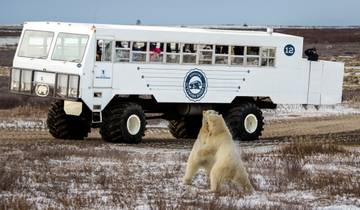
Classic Churchill Polar Bear Adventure
- ✓ Comprehensive Manitoba tour
- ✓ Expert local guides included
- ✓ All accommodation arranged
- ✓ Transportation provided
7 days
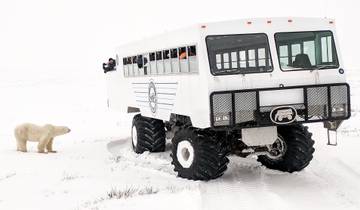
Polar Bears in Churchill on the Tundra Buggy Lodge
- ✓ Comprehensive Manitoba tour
- ✓ Expert local guides included
- ✓ All accommodation arranged
- ✓ Transportation provided
8 days
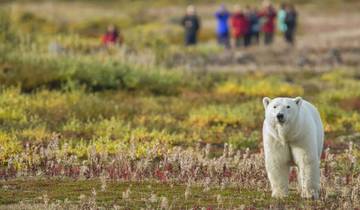
Polar Bears, Beluga Whales and Seabirds in Hudson Bay
- ✓ Comprehensive Manitoba tour
- ✓ Expert local guides included
- ✓ All accommodation arranged
- ✓ Transportation provided
11 days
Autumn Lodge Safari in Polar Bear Country
- ✓ Comprehensive Manitoba tour
- ✓ Expert local guides included
- ✓ All accommodation arranged
- ✓ Transportation provided
Multi-day tour packages powered by TourRadar. Prices and availability subject to change.
Introduction to the Canadian Prairies: Manitoba and Saskatchewan in 2026
Canada’s Prairie provinces — Manitoba and Saskatchewan — occupy the geographic and cultural heartland of the nation, stretching from the Ontario border west to Alberta across 1.6 million square kilometers of varied terrain. Far from the flat, monotonous stereotype, this region encompasses boreal forests carpeting the northern Shield, badlands and coulees sculpting southern grasslands, more than 100,000 lakes dotting Manitoba’s landscape, and the world’s northernmost major seaport at Churchill on Hudson Bay. The provinces share agricultural heritage — Saskatchewan produces 45% of Canada’s wheat — but have developed distinct urban identities: Winnipeg as Manitoba’s multicultural capital and transportation crossroads, Regina as Saskatchewan’s government seat and RCMP training headquarters.
Travelers in 2026 encounter a region balancing cost-effectiveness with authentic experiences. Accommodation, dining, and attraction costs run 25-40% below Vancouver or Toronto rates while delivering comparable quality — mid-range hotel rooms in Winnipeg or Regina average $105-150 CAD ($76-109 USD) nightly versus $180-250 CAD in coastal cities. The Canada Strong Pass, offering free national park admission June 19-September 7, 2026, enhances value for visitors exploring Riding Mountain or Prince Albert national parks during prime summer season. Provincial parks in Saskatchewan — Meadow Lake, Lac La Ronge, Cypress Hills — provide wilderness camping and outdoor recreation at minimal cost, with nightly campsites unchanged for 2026 and Camp-Easy yurts starting $99 CAD ($72 USD).
Manitoba’s signature attraction remains Churchill, accessible only by air or rail, where 900+ polar bears congregate October-November awaiting Hudson Bay’s freeze-up. This bucket-list destination commands premium pricing — complete packages typically start $3,500 CAD ($2,540 USD) per person — but delivers encounters unmatched elsewhere, combining polar bears, beluga whales (summer), and northern lights viewing in a remote sub-Arctic community. Winnipeg balances Churchill’s wilderness focus with urban sophistication: the Canadian Museum for Human Rights stands as the only national museum outside Ottawa, while The Forks National Historic Site marks 6,000 years of gathering at the Red and Assiniboine rivers’ confluence.
Saskatchewan counters with RCMP heritage — the training academy “Depot” Division has operated in Regina since 1885, and the RCMP Heritage Centre traces the Mounties’ role from 1873 Great March West through modern policing. The province’s southern grasslands preserve Canada’s last intact mixed-grass prairie ecosystem in Grasslands National Park, home to bison, pronghorn antelope, burrowing owls, and some of North America’s darkest night skies for astronomy. Northern Saskatchewan transitions to boreal forest and subarctic ecosystems, with Athabasca Sand Dunes Provincial Park protecting the world’s most northerly major sand dunes.
The 2026 travel season offers particular advantages for Prairie exploration. Summer’s extended daylight (sunset after 21:00 in June-July) maximizes exploration time, while the free parks access program reduces barrier to national park visits during peak months. Fall’s shoulder season (September-early October) delivers autumn colors, reduced crowds, and moderate temperatures before winter’s onset. Churchill’s polar bear season coincides with aurora viewing season, when September-November darkness enables northern lights photography impossible during summer’s midnight twilight. Winter travel (December-March) suits adventurers seeking authentic Canadian cold — January temperatures regularly reach -20°C to -30°C (-4°F to -22°F) — festivals like Winnipeg’s Festival du Voyageur (February), and uncrowded museum exploration.
Transportation infrastructure connects the provinces effectively. The Trans-Canada Highway (Highway 1) spans both provinces east-west, with Manitoba’s section traversing prairie and parkland from Ontario border to Saskatchewan, continuing through Regina and Saskatchewan’s southern tier. Yellowhead Highway (Highway 16) provides northern routing through Saskatoon. Winnipeg Richardson International Airport serves as Manitoba’s primary hub with direct flights to major Canadian cities plus seasonal U.S. connections; Regina International Airport offers similar connectivity for Saskatchewan. VIA Rail’s Canadian train service passes through Winnipeg weekly en route Toronto-Vancouver, while the Churchill train provides Manitoba’s northern connection (46-hour journey Winnipeg-Churchill, two departures weekly).
Cultural diversity enriches both provinces. Manitoba’s population includes significant Filipino, Indigenous, and Francophone communities — Saint-Boniface preserves French-Canadian heritage across the Red River from downtown Winnipeg. Saskatchewan hosts large Ukrainian, German, and Indigenous populations, with First Nations and Métis cultural centers offering authentic interpretive programs. Both provinces recognize Treaties 1-10 territory and traditional lands of Anishinaabe, Cree, Dakota, Dene, Saulteaux, and Métis peoples, with cultural tourism providing opportunities to engage Indigenous perspectives through guided tours, museums, and heritage sites.
This guide provides comprehensive 2026 planning information for the Canadian Prairies, covering Manitoba and Saskatchewan attractions, practical costs, seasonal considerations, and strategic routing. Whether targeting Churchill’s polar bears, Winnipeg’s cultural institutions, Regina’s RCMP legacy, or the provinces’ natural parks and prairie landscapes, travelers will find detailed pricing, timing recommendations, and insider knowledge for maximizing this distinctive Canadian region.
Understanding Canadian Prairies Geography and Access 2026
Manitoba and Saskatchewan together span 1.6 million square kilometers — larger than France and Germany combined — yet support just 2.5 million residents, creating population density lower than many Arctic territories. This vast space breaks into three distinct ecological zones: southern grasslands and agricultural prairie, central parkland mixing forests and farmland, and northern boreal forest transitioning to tundra at Hudson Bay. Understanding these zones helps optimize routing and seasonal timing, as climate, activities, and accessibility vary dramatically from south to north.
Manitoba’s shape resembles a rectangle extending from U.S. border (49th parallel) north to Hudson Bay at 60th parallel — the province stretches 1,200 kilometers north-south but only 400-500 kilometers east-west at its widest. This north-south orientation creates extreme climate variation: southern Winnipeg records summer highs of 26°C (79°F) while Churchill’s subarctic location reaches only 12°C (54°F) the same week. Saskatchewan forms a more uniform rectangle, 1,225 kilometers north-south and 630 kilometers east-west, with more consistent east-west climate patterns but still significant north-south variation.
The Trans-Canada Highway (Highway 1) provides primary east-west routing through southern portions of both provinces. In Manitoba, Highway 1 enters from Ontario at Whiteshell Provincial Park, crosses open prairie through Brandon (200 kilometers west of Winnipeg), and continues to Saskatchewan border west of Moosomin. Total Manitoba section spans 490 kilometers, typically driven in 5-6 hours under good conditions. Saskatchewan’s Trans-Canada segment runs 640 kilometers from Manitoba border through Regina and Moose Jaw to Alberta border near Walsh, requiring 6.5-7 hours driving time. Summer 2026 construction may affect Highway 1 sections — check DriveBC or Saskatchewan Highway Hotline before departure.
Winnipeg serves as Manitoba’s undisputed hub, centrally positioned where prairie meets parkland at Red and Assiniboine rivers’ confluence. The city dominates Manitoba’s urban hierarchy — metropolitan population 850,000 represents 60% of provincial total — making it unavoidable gateway for most visitors. Brandon (50,000 residents) functions as secondary hub 200 kilometers west, while northern Manitoba’s largest community Churchill hosts just 900 permanent residents. Saskatchewan distributes population more evenly between two cities: Regina (capital, 260,000 metro) in south-central location and Saskatoon (330,000 metro) 250 kilometers northwest. This bi-polar pattern requires strategic routing — visitors can fly directly into either city depending on itinerary focus.
Air access for 2026 remains straightforward through regional airports. Winnipeg Richardson International Airport (YWG) provides Manitoba’s primary gateway with multiple daily flights from Toronto (2.5 hours), Vancouver (3 hours), Calgary (2 hours), and seasonal U.S. connections via Minneapolis, Chicago, and Las Vegas. Regina International Airport (YQR) serves Saskatchewan’s capital with daily Toronto, Calgary, and Vancouver service, while Saskatoon John G. Diefenbaker International Airport (YXE) offers similar connectivity plus Edmonton flights. Competition between WestJet and Air Canada keeps pricing reasonable — advance-purchase Toronto-Winnipeg fares typically run $250-400 CAD ($182-290 USD) return depending on season and booking timing.
Churchill stands apart as Canada’s most distinctive accessible destination, reachable only by air or train with no road connection. Calm Air and Perimeter Aviation operate 2-hour flights from Winnipeg Richardson Airport to Churchill Airport (YYQ), with pricing $800-1,200 CAD ($582-872 USD) return depending on season — October-November polar bear season commands premium rates. VIA Rail’s Hudson Bay train provides alternative access, departing Winnipeg Union Station twice weekly for 46-hour journey through boreal forest and tundra to Churchill. Sleeper class costs $360-525 CAD ($262-382 USD) one-way depending on accommodation type, with meals available in dining car. Train travel suits travelers prioritizing experience over efficiency, offering wilderness viewing impossible from aircraft.
Internal routing between Winnipeg and Regina — the two largest cities 570 kilometers apart — offers multiple options. Personal vehicle or rental provides maximum flexibility, enabling stops at intermediate attractions like Spruce Woods Provincial Park, Brandon’s agricultural museums, or Moose Jaw’s underground tunnels. Highway 1 requires 5.5-6 hours driving time with fuel stops. STC Bus Lines operates daily coach service Winnipeg-Regina for approximately $65-85 CAD ($47-62 USD) one-way, departing early morning and arriving early afternoon. No passenger rail serves this corridor — VIA Rail’s Canadian crosses both cities but runs transcontinental Toronto-Vancouver route only twice weekly, making it impractical for regional travel.
Northern access beyond Churchill remains extremely limited. Manitoba’s far north requires float planes or winter ice roads, while Saskatchewan’s northern communities like Stony Rapids, Uranium City, and Wollaston Lake rely on seasonal flights. Recreational travelers targeting southern and central zones find infrastructure adequate, with paved highways connecting major provincial parks, cities, and attractions. Unpaved roads serve remote parks — Grasslands National Park’s west block accessed via gravel roads from Val Marie, requiring high-clearance vehicles during wet conditions.
Seasonal access considerations affect 2026 planning significantly. Winter (November-March) restricts some rural roads and remote park access, with extreme cold (-20°C to -40°C / -4°F to -40°F) making vehicle preparation essential — block heaters, winter tires, emergency supplies mandatory. Summer (June-August) enables full road network access but brings mosquitoes and blackflies to boreal and parkland zones, peaking June-July. Spring (April-May) sees unpredictable conditions — rapid snowmelt creates flooding risk along rivers, while shoulder-season timing delivers lower prices but variable weather. Fall (September-October) provides optimal driving conditions with minimal insects, autumn colors peaking mid-September to early October, and reduced traffic on major routes.
Cross-border considerations for 2026 remain straightforward for most nationalities. U.S. citizens enter Canada with valid passport (passport cards not accepted for air travel), while visa-exempt nationals including UK, EU, Australia, and Japan require Electronic Travel Authorization (eTA) for air entry, costing $7 CAD and valid 5 years. Land border crossings from North Dakota and Montana into Saskatchewan operate 24 hours at major points, with Emerson-Pembina (Highway 75 south of Winnipeg) serving as busiest Manitoba crossing. Canada Customs limits duty-free alcohol to 1.14 liters spirits or 1.5 liters wine, and duty-free tobacco to 200 cigarettes — significant given Manitoba and Saskatchewan cigarette prices exceeding $15-18 CAD per pack.
Manitoba Major Destinations and Attractions 2026
Winnipeg: Cultural Capital and Prairie Gateway
Winnipeg anchors Manitoba travel as the province’s largest city, cultural center, and primary transportation hub. The metropolitan area of 850,000 residents supports world-class museums, performing arts venues, historic districts, and diverse dining reflecting Filipino, Ukrainian, Indigenous, and French-Canadian communities. Visitors allocate minimum 2-3 days for surface exploration, 4-5 days for comprehensive cultural immersion including day trips to nearby attractions.
The Canadian Museum for Human Rights stands as Winnipeg’s architectural icon and sole national museum outside Ottawa. Located at The Forks where Red and Assiniboine rivers meet, the alabaster structure rises 100 meters with distinctive geometry visible across downtown. Nine galleries explore human rights evolution through Canadian and international lenses, incorporating multimedia displays, artifacts, and personal testimonies. The Tower of Hope ascends through building’s core, culminating in Israel Asper Tower observation level overlooking city and river confluence. General admission costs $22 CAD ($16 USD) for adults in 2026, with free admission first Sunday monthly and free access June 19-September 7 through special programs. Plan 2.5-3.5 hours for thorough exploration. Check official website for current rates as pricing may vary.
The Forks National Historic Site extends beyond museum to encompass riverfront trails, skateboarding park, Indigenous artisan market, restaurants in converted railway buildings, and gathering spaces hosting festivals year-round. Johnston Terminal features boutique shops and craft vendors, while Forks Market offers local food purveyors and casual dining. Winter transforms the site with outdoor skating on frozen river trail — The Nestaweya River Trail extends 3-4 kilometers depending on ice conditions, typically operating January-February. Summer sees outdoor concerts, cultural festivals, and river boat tours departing adjacent dock. Access remains free, making The Forks ideal budget-conscious destination blending culture, dining, and outdoor activity.
Assiniboine Park spans 445 hectares in western Winnipeg, combining formal English Garden, Leo Mol Sculpture Garden (free admission, bronze sculptures by Ukrainian-Canadian artist), duck pond, mature tree canopy, and extensive trail network. Assiniboine Park Zoo occupies park’s northeast section, showcasing 200+ species with signature Journey to Churchill exhibit replicating Arctic and subarctic environments. This award-winning northern species habitat features underwater tunnels where polar bears and seals swim overhead, along with arctic fox, caribou, snowy owls, and muskox. Indoor Polar Playground engages children with Arctic-themed activities. Zoo admission pricing not explicitly published for 2026 but typically ranges $25-30 CAD ($18-22 USD) for adults; check zoo website for current official rates. Online advance purchase saves 15% versus gate prices. The Leaf conservatory, adjacent to zoo, displays tropical plants, Mediterranean vegetation, and butterfly garden under glass domes — separate admission required.
The Exchange District National Historic Site preserves 150+ heritage buildings from Winnipeg’s late-1800s boom period, when the city functioned as grain trade and railway hub. Terra cotta facades, ornate architecture, and brick warehouses now house galleries, boutiques, restaurants, and creative studios. Self-guided walking tours reveal architectural details — watch for gargoyles, decorative cornices, and cast-iron storefronts. Cube Stage provides summer theatre, while Old Market Square hosts festivals and outdoor events. Manitoba Museum sits on Exchange District’s edge, interpreting provincial natural and human history through galleries spanning Arctic to grasslands, including full-size replica of Nonsuch ketch that inaugurated Hudson’s Bay Company fur trade. Planetarium within museum complex offers astronomy shows ($22 CAD adult admission includes museum galleries, check official site for accurate pricing).
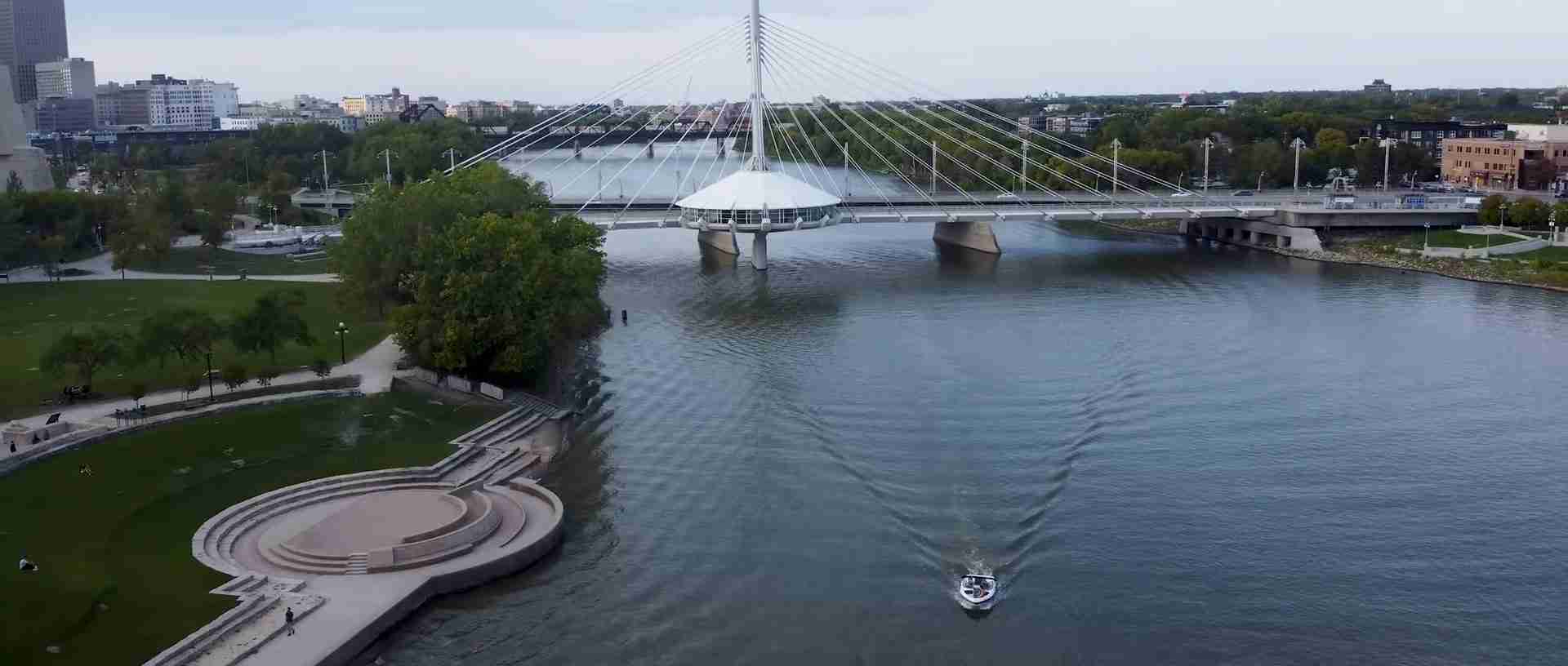
Saint-Boniface, across Red River via Esplanade Riel pedestrian bridge, preserves French-Canadian heritage dating to 1818. The Saint-Boniface Cathedral, rebuilt after 1968 fire with modern structure behind preserved stone facade, anchors the district. Saint-Boniface Museum occupies Grey Nuns convent, documenting Franco-Manitoban history and Métis culture. Tree-lined Taché Avenue features restaurants serving tourtière, poutine, and French pastries, while Parc Whittier offers riverside green space for picnics. Summer weekends see French-language theatre at Cercle Molière, North America’s oldest continually operating francophone theatre company.
Winnipeg’s restaurant scene reflects the city’s multiculturalism, with notable Filipino concentration (largest per capita outside Philippines), Vietnamese, Ukrainian, and Indigenous cuisine. Corydon Avenue (Little Italy) and Osborne Village concentrate independent restaurants, cafes, and bistros. Casual meals run $15-25 CAD ($11-18 USD) per person, mid-range dinners $30-50 CAD ($22-36 USD), and upscale dining $60-90 CAD ($44-65 USD). Farmers’ markets (St. Norbert Farmers’ Market operates year-round) provide budget-conscious fresh produce and prepared foods.
Churchill: Polar Bear Capital and Arctic Gateway
Churchill’s location on Hudson Bay’s western shore at 58.8°N latitude positions the community as world’s most accessible polar bear viewing destination and only Arctic seaport on Canada’s railway network. The town of 900 residents hosts 10,000+ visitors annually October-November when 900+ polar bears congregate awaiting sea ice formation, creating world’s highest concentration of accessible wild polar bears. Summer season (June-August) shifts focus to 3,000 beluga whales entering Churchill River estuary, along with bird migration and tundra wildflowers.
Polar bear season (mid-October through mid-November) delivers Churchill’s signature experience but demands significant financial investment and advance planning. Tundra buggy tours — purpose-built vehicles with elevated viewing platforms enabling safe bear approaches — operate from Churchill Wildlife Management Area, 20 kilometers east of town along Hudson Bay coast. Day tours typically run 6-8 hours including transport from town, lunch on vehicle, and wildlife interpretation by experienced guides, costing approximately $550-650 CAD ($400-472 USD) per person. Multi-day packages incorporating 2-3 tundra buggy days, Churchill accommodation, meals, cultural programs, and Winnipeg-Churchill return flights start $3,500 CAD ($2,540 USD) per person for 4-night/5-day itineraries, reaching $6,000-8,000 CAD ($4,360-5,810 USD) for premium lodge-based experiences or extended stays.
Tundra buggy lodge accommodations provide overnight wilderness immersion, with mobile lodges positioned in Churchill Wildlife Management Area enabling 24-hour bear viewing including potential northern lights photography on clear nights. These lodge experiences command premium — 5-night lodge stays typically start $7,500 CAD ($5,450 USD) per person including Winnipeg flights and all meals. Alternative hotel-based packages in Churchill town reduce costs while maintaining two full tundra buggy days, offering better value for travelers balancing budget and experience. Book polar bear season packages minimum 6-8 months advance (by March-April 2026 for October-November season) as operators cap tours at 16-22 participants and popular dates sell out.
Summer Churchill (June-August) delivers different wildlife focus at substantially lower cost. Approximately 3,000 beluga whales enter Churchill River and Hudson Bay’s warmer shallows to feed and calve, enabling close encounters through boat tours, kayaking, or stand-up paddleboarding. Beluga tours cost $85-145 CAD ($62-105 USD) per person for 2-3 hour boat excursions with underwater listening equipment enabling hydrophone eavesdropping on whale vocalizations. Churchill’s latitude (58.8°N) creates near-continuous June-July daylight — twilight persists past midnight — enabling extended outdoor activities. Tundra wildflowers bloom briefly in July, bird migrations pass through spring and fall, and interpretive walks explore boreal-tundra transition ecosystems.
Churchill town itself warrants exploration between organized tours. Parks Canada Visitor Centre provides exhibits on Hudson Bay ecology, polar bear biology, and northern history. Itsanitaq Museum houses one of Canada’s finest Inuit art collections, featuring carvings, kayaks, and artifacts spanning pre-Dorset through modern periods. The Polar Bear Jail (official name: Polar Bear Holding Facility) temporarily houses problem bears that wander into town before releasing them after freeze-up — not open for tours but visible from exterior and discussed during town tours. Cape Merry National Historic Site at Churchill River mouth offers cannon from 1746 fort, beluga viewing vantage, and interpretive panels on fur trade history. Dog sledding demonstrations operate even in snow-free summer using wheeled carts rather than sleds.
Churchill’s isolation drives elevated costs for all goods and services. Restaurant meals run $20-35 CAD ($15-25 USD) for casual dining, $45-75 CAD ($33-55 USD) for sit-down dinners. Limited hotel inventory (under 300 total rooms) creates premium pricing, with basic rooms $180-280 CAD ($131-203 USD) nightly during polar bear season, dropping to $120-180 CAD ($87-131 USD) in summer. Some tour packages include meals and Churchill accommodation, simplifying budgeting and often providing better value than booking components separately. Visitors not on packages should reserve Churchill hotels 4-6 months advance for October-November, 2-3 months for summer.
Access requires flight or train from Winnipeg — no roads connect Churchill to southern Manitoba. Calm Air and Perimeter Aviation flights take 2 hours, operating year-round with increased frequency during polar bear season. Return flights cost $800-1,200 CAD ($582-872 USD) depending on season and booking timing; October-November commands highest fares. VIA Rail’s Hudson Bay train offers alternative, departing Winnipeg Sunday and Thursday for 46-hour journey through boreal wilderness to Churchill, returning Tuesday and Saturday. Sleeper class (required overnight) costs $360-525 CAD ($262-382 USD) one-way depending on berth type. Train provides window on rarely-seen northern Manitoba landscape but suits travelers prioritizing journey over efficiency.
Riding Mountain National Park: Manitoba’s Accessible Wilderness
Riding Mountain National Park protects 3,000 square kilometers of Manitoba Escarpment rising 450 meters above surrounding farmland, creating island of boreal forest, aspen parkland, and meadows surrounded by prairie. Located 260 kilometers northwest of Winnipeg near Wasagaming townsite (also called Clear Lake), the park delivers accessible wilderness camping, hiking, wildlife viewing, and water recreation without northern Manitoba’s remoteness. The Canada Strong Pass provides free admission June 19-September 7, 2026; standard entry costs $8.50 CAD ($6.18 USD) per adult daily, $20.50 CAD ($14.90 USD) family daily outside free admission period (check Parks Canada website for current official rates).
Wasagaming serves as park headquarters and service center, offering hotels, restaurants, grocery store, equipment rentals, and information center on Clear Lake’s south shore. The lake itself spans 10 kilometers east-west, providing swimming beaches, canoe and kayak rentals, fishing for northern pike and lake trout, and tour boat cruises. Summer highs reach 20-24°C (68-75°F), making Clear Lake swimmable July-August. Rental cabins and lodges in Wasagaming range $140-280 CAD ($102-203 USD) nightly depending on size and lakefront location; book 3-4 months advance for July-August weekends.
Camping serves budget travelers, with Wasagaming Campground offering 516 sites (130 with electrical hookups) at $26-40 CAD ($19-29 USD) nightly depending on services. Backcountry camping enables wilderness immersion, with 45 sites along hiking trails requiring $10.50 CAD ($7.63 USD) per person nightly plus backcountry camping permit. Reservations open in January through Parks Canada system, essential for Wasagaming main campground on summer weekends. Overflow campgrounds provide unserviced sites on first-come basis.
Hiking trails span 400 kilometers across varying terrain. Moderate options include Gorge Creek Trail (3.5 kilometers return, 1.5 hours, scenic gorge and waterfall), Lake Audy bison enclosure access trail (5 kilometers return viewing enclosed bison herd), and Ominnik Marsh boardwalk (1 kilometer loop, bird viewing). Challenging trails like Lakeshore Fen (15 kilometers, 5-6 hours) and Grey Owl Trail (20 kilometers, 7-8 hours) traverse boreal forest and wetlands with limited elevation change but root obstacles and muddy sections. Escarpment Trail (23 kilometers one-way linking Wasagaming to Lake Audy) requires shuttle arrangement. Carry bear spray — black bears inhabit park, though encounters remain infrequent on busy trails.
Wildlife viewing concentrates at dawn and dusk hours. Moose frequent roadside wetlands along Highway 10 through park, elk graze meadows near Wasagaming at twilight, and white-tailed deer appear throughout. Black bears roam forests but avoid human activity — proper food storage prevents problems. Grey wolf pack territories overlap park boundaries, with occasional sightings or track discoveries. Lake Audy bison enclosure maintains small plains bison herd visible from road — original bison roamed this region before extirpation in 1800s.
Wasagaming Village Heritage District preserves 1930s Parks Canada development, with log buildings housing museums, restaurants, and shops. Heritage displays document Depression-era construction using relief labor. Visitor Centre provides interpretive programs including guided hikes, campfire talks, and Indigenous cultural presentations emphasizing Anishinaabe history in region. Park amphitheatre hosts summer evening programs.
Winter transforms Riding Mountain into cross-country skiing and snowshoeing destination, with Wasagaming remaining accessible and accommodations operating year-round at reduced rates. Groomed ski trails total 50+ kilometers, skating-style and classic tracks maintained. January-February temperatures drop to -15°C to -25°C (5°F to -13°F), requiring appropriate cold-weather gear. Ice fishing operates on Clear Lake once safe ice establishes, typically mid-December through late March.
Saskatchewan Major Destinations and Attractions 2026
Regina: Capital City and RCMP Headquarters
Regina serves as Saskatchewan’s capital, political center, and site of RCMP training headquarters. The city of 260,000 residents occupies flat prairie formerly buffalo wallows (Regina translates from Latin as “queen,” named for Queen Victoria), with Wascana Centre’s artificially created lake and parkland providing green relief from surrounding grasslands. Visitors target 2-3 days for comprehensive exploration covering RCMP heritage, government precinct, and cultural institutions.
RCMP Heritage Centre stands as Regina’s signature attraction, located on Depot Division lands where RCMP recruits have trained since 1885. The modern facility, designed by renowned architect Arthur Erickson, interprets Royal Canadian Mounted Police history from 1873 formation through contemporary operations. Six galleries document Mounties’ role in Klondike Gold Rush, Prohibition era, World Wars, and evolution of policing technology, using artifacts, uniforms, vehicles, and multimedia displays. The 27-minute “Tour of Duty” presentation provides overview of recruit training. Admission costs $10 CAD ($7.27 USD) for adults, $8 CAD ($5.82 USD) seniors and students, $6 CAD ($4.36 USD) youth 6-17, with family rate $30 CAD ($21.80 USD) covering two adults and up to four children (check official website for current rates as pricing may vary). Summer hours (May 23-September 4) run 10:00-17:00, while non-summer season (September 5-May long weekend) operates 11:00-17:00.
Depot Tours provide behind-scenes access to RCMP Training Academy, operating weekdays mid-June through early September when recruits train. Guided trolley tours depart Heritage Centre at 11:00, visiting parade square where Sergeant Major’s Parade demonstrates drill formations typically around 12:45 Monday, Wednesday, Friday (schedule subject to change — call ahead). Tours require advance registration by 11:00 on tour day, accepted first-come first-served with photo ID required for all guests. The Sunset Retreat Ceremony, Tuesdays in July-August after 18:45, delivers 45-minute horsemanship display accompanied by pipe and bugle bands — free admission, popular event attracting local residents and tourists.
Wascana Centre encompasses 930 hectares of parkland, gardens, and Wascana Lake winding through Regina’s core. This human-made landscape was created 1883 from treeless prairie, with lake formed by damming Wascana Creek. Legislature Building dominates park’s north side, offering free guided tours daily (summer) or weekdays (winter) interpreting Saskatchewan history and legislative process — Beaux-Arts architecture completed 1912 features Tyndall limestone exterior and 34 varieties of marble in interior rotunda. Regina Floral Conservatory within Wascana Centre cultivates tropical plants, cacti, and seasonal displays under glass domes. Walking and cycling paths circle 120-hectare lake, popular for jogging, birdwatching (Canada geese, pelicans, cormorants nest or visit seasonally), and picnicking. Willow Island hosts summer concerts.
Royal Saskatchewan Museum provides natural history and Indigenous culture interpretation, with galleries on First Nations peoples, dinosaur fossils, and grasslands ecology. Life Sciences Gallery displays taxidermied examples of provincial wildlife — pronghorn antelope, badgers, burrowing owls — in habitat dioramas. The T. rex Discovery Centre showcases Scotty, one of world’s largest Tyrannosaurus rex specimens discovered at Eastend, Saskatchewan. Admission remains free, making museum valuable rainy-day activity for families. Plan 1.5-2 hours for thorough visit.
MacKenzie Art Gallery exhibits Canadian and international contemporary art, Indigenous works, and historical pieces spanning 5,000+ items in permanent collection. Rotating exhibitions focus on prairie artists, First Nations and Métis culture, and visiting shows from national institutions. Admission free for permanent collection, with special exhibitions sometimes requiring fees — check gallery website. Located in Wascana Centre’s T.C. Douglas Building, adjacent to Saskatchewan Science Centre offering hands-on science exhibits appealing to families with children.
Regina’s restaurant scene reflects Saskatchewan’s agricultural abundance and multicultural population (Ukrainian, German, Indigenous influences dominant). Downtown concentrations include Victoria Avenue, 11th Avenue (Cathedral neighbourhood), and renovated warehouse district. Casual meals run $12-22 CAD ($9-16 USD) per person, mid-range dinners $25-45 CAD ($18-33 USD), upscale dining $50-80 CAD ($36-58 USD). Local specialties include Saskatchewan-raised bison, wild-harvested lake fish (pickerel/walleye, northern pike), and Ukrainian perogies.
Accommodation spans budget motels along Trans-Canada Highway/Victoria Avenue ($75-110 CAD / $55-80 USD nightly), mid-range chains near Cornwall Centre shopping mall ($120-175 CAD / $87-127 USD), and upscale Hotel Saskatchewan downtown ($180-260 CAD / $131-189 USD). Summer and major events (Grey Cup if Regina hosts, concerts at Mosaic Stadium) drive rates higher — book 2-3 months advance for peak season. Downtown properties enable walkable access to Wascana Centre, museums, and restaurants.
Saskatoon: River City and Northern Gateway
Saskatoon straddles South Saskatchewan River 250 kilometers northwest of Regina, serving as province’s largest city (330,000 metro) and northern gateway. Seven bridges cross the river, earning Saskatoon nickname “Paris of the Prairies” (though comparison seems optimistic). The University of Saskatchewan campus occupies east bank, while downtown retail and cultural districts anchor west side. Meewasin Valley Authority maintains 60+ kilometers of riverside trails connecting parks and natural areas.
Wanuskewin Heritage Park preserves 6,000 years of Northern Plains Indigenous culture on 120 hectares of Opimihaw Valley, 5 kilometers north of downtown. Archaeological sites include bison jump, medicine wheel, tipi rings, and stone cairns documenting pre-contact cultures and continuing Cree, Dakota, and other Nations’ connections to land. Interpretive center provides exhibits on Indigenous history, traditional knowledge, and contemporary art. Outdoor trails visit archaeological sites with interpretive panels explaining significance. Cultural demonstrations include tipi raising, traditional dancing, bannock bread making, and storytelling. Restaurant serves Indigenous-inspired cuisine using bison, venison, wild rice, and foraged ingredients. Admission approximately $15-20 CAD ($11-15 USD) adults, $8-12 CAD ($6-9 USD) children — check official website for 2026 rates. Plan 2-3 hours minimum, longer if attending cultural programs or dining.
Western Development Museum – Saskatoon tells Saskatchewan history through Boomtown 1910 streetscape recreating frontier town with storefronts, vehicles, and artifacts. The “story of people” focus interprets immigrant settlement, agricultural development, and pioneer life. Antique automobiles, farm machinery, and household items fill galleries spanning 1900-1960s. Summer months see outdoor events including vintage car shows and harvest demonstrations. Admission around $12-15 CAD ($9-11 USD) adults, with family rates available (verify current pricing on official website). This represents Saskatoon branch of four-location system including Moose Jaw (transportation history), North Battleford (agricultural heritage), and Yorkton (cultural diversity).
Remai Modern stands as Canada’s newest major public art gallery, opened 2017 on river’s west bank. Contemporary and modern art from regional, national, and international artists rotates through exhibition spaces, with significant Picasso linocut collection as permanent highlight. Floor-to-ceiling windows frame river views, while rooftop terrace provides summer gathering space. Admission $12-15 CAD ($9-11 USD) adults typically, with free admission days periodically (check website). Café operates lunch service featuring local ingredients.
Meewasin Valley Trail system connects riverside parks, natural areas, and urban neighborhoods through 60+ kilometers of paved and gravel paths suitable for walking, running, and cycling. Northeast section passes through restored tallgrass prairie and aspen parkland, while urban segments downtown enable car-free downtown-university connections. Beaver Creek Conservation Area preserves 175 hectares of natural ravine and creek, with interpretive center and 27 kilometers of trails through forest and wetlands. Winter sees cross-country ski track grooming on sections.
University of Saskatchewan campus merits exploration for architecture and museums. College Building, completed 1913, showcases Collegiate Gothic style. Museum of Natural Sciences displays specimens including skeleton of “Scotty” T. rex (cast — original at Royal Saskatchewan Museum, Regina), and Ukrainian Museum of Canada documents Ukrainian settlement and culture. Gordon Snelgrove Gallery exhibits contemporary art by students and faculty. Campus grounds feature heritage limestone buildings, mature trees, and river views. Self-guided campus walking tour brochures available at visitor services.
Saskatoon Forestry Farm Park & Zoo combines historic tree nursery, formal gardens, and zoo housing 80+ species on 38 hectares. Highlights include grizzly bears, Goeldi’s monkeys, Arctic fox, and rescued wildlife unable to return to wild. Children’s activities include splash pad (summer) and animal feeding opportunities. Heritage buildings from 1913 forestry farm remain preserved. Admission approximately $15-20 CAD ($11-15 USD) adults, $8-12 CAD ($6-9 USD) children (check official site for exact 2026 rates). Located northeast of downtown, requiring vehicle or bike access.
Farmers’ markets operate Saturday mornings May-October at two locations: Saskatoon Farmers’ Market downtown and Marr Residence Market. Local producers sell vegetables, honey, baking, crafts, and prepared foods. Budget-conscious travelers stock picnic supplies, while food trucks provide inexpensive hot meals. Markets also serve as community gathering points with buskers and socializing.
Accommodation mirrors Regina’s patterns: budget properties along Circle Drive ($70-100 CAD / $51-73 USD nightly), mid-range hotels near downtown or university ($110-165 CAD / $80-120 USD), boutique options along riverfront ($160-240 CAD / $116-175 USD). Summer sees University of Saskatchewan offering student residence rooms May-August at budget rates ($50-70 CAD / $36-51 USD nightly), though facilities are basic dormitory-style. Book Saskatoon rooms 6-8 weeks ahead for summer peak, as city has limited luxury inventory and conferences fill mid-range properties.
Saskatchewan Provincial Parks and Natural Areas 2026
Saskatchewan maintains extensive provincial parks system offering camping, water recreation, hiking, and wildlife viewing at costs significantly below national parks. The 2026 season sees Camp-Easy yurt fees increase but nightly campsites and day-use areas remain unchanged, preserving value for budget travelers. Most developed parks operate full services May long weekend through September Labour Day, with shoulder season (May, September-October) offering reduced crowds and lower rates but potentially limited services.
Cypress Hills Interprovincial Park straddles Saskatchewan-Alberta border in province’s southwest corner, with Saskatchewan portion offering Centre Block and West Block access. This plateau rises 600 meters above surrounding prairie, creating “island” ecosystem escaping glaciation during ice ages. Lodgepole pine forests, mixed-grass prairie, and coulees support diverse wildlife including elk, moose, wild turkey, and rare trumpeter swans. Elevations reach 1,392 meters above sea level — highest point between Rockies and Labrador. Highway 21 provides access from Trans-Canada Highway at Maple Creek (50 kilometers north).
Centre Block contains primary facilities including campgrounds, cabin rentals, Cypress Hills Resort (hotel/restaurants), and Fort Walsh National Historic Site in adjacent area. Camping runs $26-32 CAD ($19-23 USD) nightly depending on services. Hiking trails span easy loops like Meadow Lake Trail (1.2 kilometers) to challenging Lodgepole Trail (8 kilometers through forest). Horseback riding, mountain biking, and fishing attract outdoor enthusiasts. Dark-sky designation enables exceptional stargazing — summer Milky Way visible naked-eye on clear moonless nights. West Block offers more primitive camping and backcountry exploration, with gravel road access and limited facilities.
Grasslands National Park, though federally managed, deserves mention as Saskatchewan’s only national park and Canada’s sole protected mixed-grass prairie ecosystem. Located near Val Marie and Killdeer in extreme south, the park preserves badlands, coulees, and rolling prairie supporting bison herd reintroduced 2005-2006 (now 400+ animals). Prairie dogs, pronghorn antelope, burrowing owls, and ferruginous hawks represent grasslands species nowhere else protected. Two blocks (West Block near Val Marie, East Block near Killdeer) require separate access via gravel roads.
West Block offers easier access with 77-square-kilometer area containing Frenchman River Valley, ecotour loop road, and Badlands/Rock Creek campgrounds. Rock Creek Campground provides 30 sites at $16 CAD ($12 USD) nightly with pit toilets and drinking water but no showers or hookups — bring supplies from Val Marie (30 kilometers). East Block presents more remote, rugged landscape with limited facilities, appealing to experienced backcountry users. Dark Sky Preserve designation recognizes Grasslands as North America’s darkest, most light-pollution-free accessible area — ideal for astronomy, astrophotography, and Milky Way viewing. Entry costs $8.50 CAD ($6.18 USD) per adult daily, $20.50 CAD ($14.90 USD) family daily; free June 19-September 7 with Canada Strong Pass (verify current rates at Parks Canada website).
Meadow Lake Provincial Park, northern Saskatchewan’s largest park, protects 1,600 square kilometers of boreal forest, lakes, and wetlands 150 kilometers northwest of North Battleford. Twenty-eight interconnected lakes offer canoeing, fishing (northern pike, walleye, lake trout), and water recreation. Murray Lake and Kimball Lake provide developed campgrounds with electrical hookups, while backcountry camping enables multi-day canoe trips. Black bears, moose, timber wolves, and woodland caribou inhabit forests. Interpretive programs include “Back in the Boreal” event highlighting northern ecosystems. Access via Highway 55 north from Lloydminster or Highway 4 from Meadow Lake town.
Lac La Ronge Provincial Park encompasses 425 square kilometers surrounding Lac La Ronge, Saskatchewan’s fifth-largest lake, in northern boreal forest region 240 kilometers north of Prince Albert. One hundred islands dot the lake, with Nistowiak Falls Provincial Park accessible by boat showcasing 12-meter cascade. Camping concentrates at Nut Point Campground near La Ronge town (140 sites, $26-32 CAD / $19-23 USD nightly), while dozens of backcountry campsites on remote islands appeal to paddlers undertaking multi-day trips. Note: Wadin Bay campground remains closed summer 2026 due to 2025 wildfire recovery; all other campgrounds operate normally. Fishing targets lake trout, northern pike, and walleye. June-July experiences longest daylight and warmest temperatures, though bugs (mosquitoes, blackflies) peak this period — bring mesh clothing and repellent.
Saskatchewan Parks reservation system opens April 13, 2026 for seasonal campsites, with nightly campsites launching April 14-17 on staggered schedule by park. High-demand weekends (May long weekend, Canada Day, August long weekend) fill quickly — book within hours of reservation opening for popular parks. Camp-Easy yurts increase to $99 CAD ($72 USD) standard, $135 CAD ($98 USD) Mongolian-style for 2026, but provide furnished canvas accommodation with beds, heater, and electricity eliminating need for tent and sleeping gear. Yurts require bedding/sleeping bags (not provided). All other fees including nightly camping, park entry permits, and day-use remain unchanged 2026.
Transportation and Getting Around the Prairies 2026
The Canadian Prairies’ vast distances and limited public transit make private vehicle the most practical transportation for comprehensive exploration. Rental cars, personal vehicles, or RV rentals enable flexible routing, roadside photo stops, and access to remote parks unreachable by bus or train. Alternative options — bus networks, trains, flights between cities — serve specific corridors but restrict spontaneity and peripheral destinations.
Vehicle rental from Winnipeg or Regina airports provides most flexibility for Prairie exploration. Major agencies (Enterprise, Budget, Avis, National, Hertz) maintain airport locations with pickup/dropoff convenience. Compact cars rent $50-75 CAD ($36-55 USD) daily, mid-size sedans $65-90 CAD ($47-65 USD), SUVs $90-130 CAD ($65-95 USD) depending on season and advance booking. Summer (June-August) and Canadian holidays command premium rates — book 2-3 months ahead for best prices. One-way rentals between Winnipeg and Regina incur drop-off fees typically $100-200 CAD ($73-145 USD), though this enables linear routing without backtracking. Insurance adds $15-30 CAD ($11-22 USD) daily unless personal auto policy or credit card provides coverage (verify before declining).
Fuel costs 2026 fluctuate with crude oil markets but typically average $1.50-1.80 CAD per liter ($4.30-5.15 USD per gallon) for regular unleaded in urban areas, higher in remote communities. Compact cars average 7-9 liters per 100 kilometers (26-34 mpg), full-size sedans 9-11 L/100km (21-26 mpg), SUVs 11-14 L/100km (17-21 mpg). Budget $200-350 CAD ($145-255 USD) weekly for fuel on moderate-distance itinerary (1,000-1,500 kilometers). Rural Manitoba and Saskatchewan feature long distances between services — maintain half-tank minimum on remote highways. Yellowhead Highway between Saskatoon and Manitoba border includes 180-kilometer stretch with minimal services; Trans-Canada Highway generally provides more frequent service stations.
Winter driving (November-March) demands preparation. Winter tires are mandatory on rental vehicles December 1-March 15 in most rental agreements, with fee typically included. Hazards include black ice (invisible glaze), drifting snow reducing visibility, and extreme cold affecting vehicle performance. Highway 1 and major routes receive priority plowing/sanding, but rural roads may remain snow-covered. Always carry emergency kit: blanket, non-perishable food, water, flashlight, first-aid supplies, booster cables, ice scraper, portable shovel. Block heaters in hotel parking lots or campgrounds enable cold-weather starting — plug in vehicle when temperatures drop below -15°C (5°F).
RV rentals suit travelers preferring accommodation mobility and outdoor focus. Fraserway RV, CanaDream, and Cruise Canada operate from Winnipeg and Calgary (westbound access to Saskatchewan), with units ranging from camper vans ($140-200 CAD / $102-145 USD daily) to Class A motorhomes ($300-450 CAD / $218-327 USD daily) depending on size and season. Provincial park campgrounds accommodate RVs with partial or full hookups ($32-42 CAD / $23-31 USD nightly including entry). RV rental suits groups or families splitting costs, though fuel consumption (15-20 L/100km / 12-16 mpg) exceeds cars significantly. Book RVs minimum 6 months ahead for July-August peak.
Bus service connects major Prairie centers but limits flexibility. Rider Express operates Winnipeg-Regina-Saskatoon route with daily departures, stopping intermediate towns (Brandon, Virden, Moosomin, Grenfell, Indian Head). Winnipeg-Regina costs approximately $65-90 CAD ($47-65 USD) one-way (5-6 hours), Regina-Saskatoon $40-60 CAD ($29-44 USD) one-way (3-3.5 hours). Greyhound’s 2018 service cancellation eliminated many rural routes, leaving gaps in coverage. Bus suits budget travelers content with linear urban routing but proves impractical for national parks, remote attractions, or spontaneous detours. Advance online booking reduces fares versus terminal purchases.
VIA Rail’s Canadian transcontinental train passes through Winnipeg, Regina, and Saskatoon twice weekly each direction (Toronto-Vancouver route). While train travel offers scenic boreal forest and parkland viewing through dome cars, schedules limit practical utility — eastbound Canadian arrives Winnipeg Thursday night, departs Friday morning; westbound arrives Sunday night, departs Monday. Sleeper class Winnipeg-Regina costs $150-280 CAD ($109-203 USD) depending on berth type, providing overnight accommodation but consuming two days for journey accomplished by car in 6 hours. Train suits travelers prioritizing experience over efficiency or those connecting Prairie stops to larger transcontinental journey.
Inter-city flights serve Winnipeg, Regina, and Saskatoon but generally prove unnecessary given cities’ relative proximity. Winnipeg-Regina flight takes 1 hour but requires 90 minutes pre-departure airport time plus ground transport at both ends, negating time advantage versus 6-hour drive. Winnipeg-Saskatoon flight (1.25 hours) competes better versus 7-8 hour drive. Fares run $180-350 CAD ($131-255 USD) return depending on booking advance and airline competition. Flights make sense when continuing beyond Prairies — Winnipeg or Regina to Calgary, then exploring Rockies.
Urban transit within Winnipeg, Regina, and Saskatoon serves locals but proves less convenient for tourists. Winnipeg Transit operates comprehensive bus network with downtown concentration; day pass $6 CAD ($4.36 USD) enables unlimited rides. Regina Transit and Saskatoon Transit offer similar systems. Hotels near city centers enable walking to major attractions — Winnipeg’s Forks, museum district, and Exchange District fall within 2-kilometer radius; Regina’s Wascana Centre and downtown walkable from central hotels. Taxis and ride-sharing (Uber operates in Winnipeg and Saskatoon but not Regina) fill gaps for airport transfers or evening return from restaurants. Uber base fare plus distance typically runs $12-25 CAD ($9-18 USD) for cross-downtown trips.
Cycling gains traction as recreational activity and short-distance transport. Winnipeg and Saskatoon maintain extensive trail networks following rivers — Winnipeg’s Assiniboine and Red river trails total 120+ kilometers, Saskatoon’s Meewasin Valley trails span 60+ kilometers. Bike rentals operate from trail-adjacent shops during May-September season, typically $25-40 CAD ($18-29 USD) for half-day, $40-65 CAD ($29-47 USD) full-day. Some hotels provide complimentary guest bikes. Provincial parks permit mountain biking on designated trails, with rentals available at major parks like Riding Mountain and Cypress Hills.
Accommodation Options Across the Prairies 2026
Accommodation costs in Manitoba and Saskatchewan run 25-40% below Vancouver or Toronto while maintaining comparable quality standards. Urban centers offer full range from hostels through luxury hotels, while rural areas and smaller towns provide motels, B&Bs, and campgrounds. Summer (July-August) and major events drive rates higher, while shoulder seasons (May, September) and winter deliver value-oriented pricing. Provincial park camping serves budget travelers seeking outdoor experience, while remote lodges appeal to those targeting specific wildlife or fishing activities.
Urban Hotels: Winnipeg, Regina, Saskatoon
Winnipeg’s accommodation concentrates in three zones: downtown near Canadian Museum for Human Rights and The Forks, airport corridor hotels serving early flights and convenience, and south Winnipeg properties near University of Manitoba. Downtown options include upscale Fort Garry Hotel ($180-260 CAD / $131-189 USD nightly), mid-range chains like Fairmont or Delta ($140-200 CAD / $102-145 USD), and budget Best Western or Days Inn ($90-140 CAD / $65-102 USD). Airport hotels (Grand Winnipeg Airport by Lakeview, Hampton Inn, Holiday Inn Airport West) charge $110-165 CAD ($80-120 USD) with free parking and shuttles, ideal for travelers prioritizing convenience over downtown atmosphere.
Regina hotels cluster along Victoria Avenue/Trans-Canada Highway corridor and downtown near Wascana Centre. Hotel Saskatchewan downtown anchors luxury end ($180-250 CAD / $131-182 USD nightly), with Delta, DoubleTree, and Travelodge providing mid-range options ($120-180 CAD / $87-131 USD). Victoria Avenue east features budget chains — Comfort Inn, Super 8, Days Inn — typically $80-130 CAD ($58-95 USD) nightly, trading location for value. Downtown properties enable walking to RCMP Heritage Centre, Wascana Centre, and restaurants, while Victoria Avenue requires vehicle but offers abundant parking and lower rates.
Saskatoon divides between downtown riverfront properties, University of Saskatchewan area hotels, and Circle Drive bypass corridor. Downtown James Hotel represents boutique option ($150-220 CAD / $109-160 USD nightly) with Saskatchewan River views, while Delta Bessborough anchors historic luxury ($170-240 CAD / $124-175 USD). Mid-range chains (Holiday Inn, Radisson) charge $115-175 CAD ($84-127 USD). Budget motels along Circle Drive trade location for lower rates $75-120 CAD ($55-87 USD), requiring vehicle to reach downtown or university attractions. University of Saskatchewan offers dormitory rooms May-August $50-70 CAD ($36-51 USD) nightly to public, providing budget lodging with campus parking and basic facilities (shared bathrooms, no air conditioning).
Booking strategy 2026: reserve downtown properties 6-8 weeks ahead for summer peak (July-August), securing best rates and availability near attractions. Budget chains and highway properties maintain vacancy even week-of during most periods, enabling spontaneous booking except Canadian long weekends (Victoria Day May, Canada Day July, August long weekend). Hotel loyalty programs (Marriott Bonvoy, Hilton Honours, IHG Rewards) provide free WiFi, room upgrades, and points accumulation — worth joining even for single trips. Third-party sites (Booking.com, Expedia) sometimes offer lower rates than hotel direct, though direct booking often includes flexibility for cancellation.
Bed & Breakfasts and Alternative Lodging
B&Bs serve travelers seeking personal service and local knowledge. Winnipeg maintains 20+ licensed B&Bs in heritage homes, typically $120-180 CAD ($87-131 USD) nightly including full breakfast. West Broadway, Wolseley, and Osborne Village neighborhoods host most properties within 2-3 kilometers downtown. Regina and Saskatoon support smaller B&B sectors ($100-160 CAD / $73-116 USD nightly), often owner-occupied heritage houses providing guest rooms and homemade morning meals. B&Bs suit couples and solo travelers; families with children may find hotels more practical for space and amenities. Book B&Bs direct via owner websites or through provincial B&B associations to avoid third-party fees.
Vacation rental properties (Airbnb, VRBO) range from private rooms in owner-occupied homes ($50-90 CAD / $36-65 USD nightly) through entire houses or condos ($120-250 CAD / $87-182 USD nightly depending on size and location). Rentals prove economical for groups splitting costs and families seeking kitchen facilities reducing restaurant expenses. Urban Winnipeg, Regina, and Saskatoon support active rental markets; rural areas and provincial park periphery provide cottage rentals ($140-280 CAD / $102-203 USD nightly) for week-long or weekend escapes. Cleaning fees ($80-150 CAD) and service charges inflate per-night costs for short stays — rentals favor 3+ night bookings.
Farm stays and ranch accommodations enable prairie immersion, with working farms and ranches offering guest rooms or cabins. Southern Saskatchewan’s Grasslands region and Manitoba’s parkland belt host farm stay properties where guests observe or participate in daily operations — cattle feeding, crop monitoring, equipment operation depending on season. Rates $100-180 CAD ($73-131 USD) nightly typically include breakfast and sometimes dinner featuring farm-raised meat, vegetables, and home baking. Farm stays book directly with owners, requiring email or phone reservations rather than online booking platforms.
Camping: Provincial Parks and Private Campgrounds
Provincial park camping delivers budget accommodation for outdoor-oriented travelers. Manitoba maintains 81 provincial parks, Saskatchewan 114, with developed campgrounds offering electrical hookups ($32-42 CAD / $23-31 USD nightly), semi-serviced sites ($26-32 CAD / $19-23 USD), and unserviced sites ($20-26 CAD / $15-19 USD). Facilities range from modern shower buildings, flush toilets, and playgrounds at major parks (Riding Mountain, Cypress Hills, Meadow Lake) to basic vault toilets and hand-pump water at remote locations. Most parks include beach access, hiking trails, interpretive programs, and wildlife viewing.
Saskatchewan’s 2026 reservation system opens April 13 for seasonal sites, April 14-17 for nightly campsites on staggered schedule by park. Demand peaks for long weekends (Victoria Day May, Canada Day July, August long weekend) — book immediately when reservations open for prime sites at popular parks. Manitoba Parks reservations operate through separate system with similar advance-booking windows. Walk-in sites (first-come first-served without reservations) remain available at most parks, though weekends fill by early afternoon May-August. Arrive by 11:00-13:00 for best walk-in selection.
Camp-Easy yurts provide furnished canvas accommodation for travelers lacking camping gear. Saskatchewan’s yurt program increases rates summer 2026: standard yurts $99 CAD ($72 USD) nightly, Mongolian-style yurts $135 CAD ($98 USD). Yurts include beds/bunks, heater, electricity, and deck but require guests bring bedding/sleeping bags, cooking equipment, and supplies. Manitoba offers similar yurt/oTENTik programs at selected parks. Yurts bridge gap between tenting and cabin rental, accommodating up to 6 people for families or groups splitting costs ($17-23 CAD / $12-17 USD per person nightly).
Backcountry camping enables wilderness immersion in national parks and remote provincial parks. Riding Mountain offers 45 backcountry sites along hiking trails requiring $10.50 CAD ($7.63 USD) per person nightly plus backcountry camping permit. Grasslands National Park maintains 7 designated backcountry camping areas at no charge beyond park entry (free June 19-September 7, 2026 with Canada Strong Pass). Backcountry camping requires self-sufficiency — water purification, bear-proof food storage, navigation skills — but rewards with solitude and authentic wilderness experience unavailable at road-accessible campgrounds.
Private campgrounds complement provincial parks, often providing full hookups (water, sewer, electricity) for RVs, WiFi, laundry facilities, and convenience stores. Rates run $38-58 CAD ($28-42 USD) nightly for full hookups. KOA (Kampgrounds of America) operates franchises near major cities, while independent campgrounds concentrate along tourist corridors and Trans-Canada Highway. Private campgrounds stay open later into fall and open earlier in spring versus provincial parks, serving shoulder-season travelers.
Dining and Food Costs Across the Prairies 2026
Restaurant and grocery costs in Manitoba and Saskatchewan run below Vancouver or Toronto, with prairie-raised beef, Saskatchewan wheat products, and freshwater fish (pickerel/walleye, northern pike) providing local specialties. Multicultural populations influence urban dining — Winnipeg’s Filipino restaurants reflect Canada’s largest Filipino community per capita outside Philippines, while Ukrainian cuisine marks both provinces’ settlement history. Budget travelers utilize grocery stores and farmers markets, while mid-range restaurants deliver quality meals at reasonable prices. Rural areas and northern communities see higher prices due to transportation costs.
Restaurant Dining Costs and Options 2026
Casual dining in Winnipeg, Regina, and Saskatoon includes chain restaurants (Boston Pizza, Earls, The Keg), ethnic eateries (Vietnamese, Filipino, Indian, Ukrainian), and local independents. Lunch specials run $12-18 CAD ($9-13 USD) per person typically including soup or salad, main course, and beverage. Dinner mains at casual restaurants range $16-28 CAD ($12-20 USD), with full meal including appetizer and drink totaling $25-40 CAD ($18-29 USD) per person before tip. Popular categories include:
- Filipino cuisine (Winnipeg concentration): Adobo, pancit, lumpia, and sizzling sisig at dedicated Filipino restaurants like Sarge’s or Jeepney. Meals $12-22 CAD ($9-16 USD), generous portions often shareable.
- Vietnamese pho: Both provinces support Vietnamese communities with pho restaurants serving large soup bowls $12-16 CAD ($9-12 USD) as complete meals.
- Ukrainian food: Perogies, cabbage rolls, borscht, and kubasa (sausage) available at dedicated Ukrainian restaurants and church halls offering fundraiser dinners. Perogy plates $14-19 CAD ($10-14 USD) typically include coleslaw and rye bread.
- Indian/Pakistani: Saskatoon and Winnipeg maintain growing South Asian populations with curry houses, tandoori restaurants, and street food stalls. Lunch buffets provide value $15-18 CAD ($11-13 USD) for all-you-can-eat selection.
- Prairie steakhouses: Locally-raised beef features at steakhouses across region. Eight-ounce sirloin or ribeye dinners run $28-42 CAD ($20-31 USD), often including salad bar or sides. Saskatchewan-raised bison appears on menus as alternative to beef.
Mid-range restaurants — locally-owned bistros, farm-to-table establishments, and upscale chains — charge $18-35 CAD ($13-25 USD) for mains, with full three-course meal including wine reaching $50-75 CAD ($36-55 USD) per person. Winnipeg’s Corydon Avenue (Little Italy) and Exchange District concentrate independent restaurants, while Regina’s Cathedral neighbourhood and Saskatoon’s 2nd Avenue serve as culinary districts. Reservations recommended for popular weekend dinners at acclaimed spots like Deer + Almond (Winnipeg), The Willow on Wascana (Regina), or Ayden Kitchen (Saskatoon).
Fine dining establishments in major cities deliver elevated experiences at $80-140 CAD ($58-102 USD) per person for multi-course tasting menus with wine pairings. Winnipeg leads prairie fine dining scene with venues like 529 Wellington, Preservation Hall, and restaurants in Fort Garry Hotel. Regina and Saskatoon support smaller but growing upscale sectors. Fine dining suits special occasions and culinary-focused travelers; budget-conscious visitors find better value in mid-range independent restaurants offering creative menus at half the cost.
Fast food and quick service chains — Tim Hortons, McDonald’s, A&W, Subway — provide budget meals $10-15 CAD ($7-11 USD) per person, consistent across provinces. Tim Hortons coffee and donut shops function as Canadian cultural institution, with every town supporting multiple locations. Food trucks concentrate in Winnipeg’s Exchange District and The Forks during summer, offering ethnic street food and creative options $8-14 CAD ($6-10 USD) per meal — good value for quick lunches between museum visits.
Groceries and Self-Catering Options
Grocery shopping reduces food costs substantially versus restaurant dining. Major chains (Sobeys, Safeway, Extra Foods, No Frills, Walmart) maintain stores in all cities and most towns over 5,000 population. Price examples 2026: milk $5-6 CAD per 4-liter jug ($3.64-4.36 USD), bread $3-4.50 CAD per loaf ($2.18-3.27 USD), eggs $4.50-6 CAD per dozen ($3.27-4.36 USD), boneless chicken breast $18-24 CAD per kilogram ($13-17 USD per kg), ground beef $12-16 CAD per kg ($9-12 USD), apples $4-6 CAD per kg ($3-4 USD), bananas $1.50-2 CAD per kg ($1.09-1.45 USD).
Prepared deli items provide quick meals: rotisserie chicken $9-12 CAD ($7-9 USD), pre-made sandwiches $5-8 CAD ($4-6 USD), salad bar $2.50-3.50 CAD per 100 grams ($1.82-2.55 USD), hot soup $6-8 CAD per liter ($4-6 USD). Travelers with vehicle coolers or campground fridges self-cater effectively, preparing breakfasts and packed lunches while dining out for dinners. Picnic supplies for day at provincial park — bread, deli meat, cheese, vegetables, chips, cookies — total $25-35 CAD ($18-25 USD) for two people’s lunch.
Farmers markets operate weekends May-October in most cities and larger towns, with Winnipeg’s St. Norbert Farmers’ Market functioning year-round. Local producers sell vegetables, honey, baking, preserves, and prepared foods. Prices approximate or slightly exceed grocery stores but support local agriculture and provide superior quality — heirloom tomatoes, fresh herbs, artisanal breads. Markets also serve as cultural experiences, with buskers, craft vendors, and community atmosphere. Budget $20-40 CAD ($15-29 USD) for farmers market produce and baking sufficient for several meals.
Indigenous country foods appear at specialized markets and restaurants, particularly in northern communities. Wild rice harvested from Manitoba lakes, bison raised on prairie ranches, and freshwater fish (pickerel/walleye, northern pike, whitefish) provide regional specialties distinct from mass-market options. Prices reflect small-scale production — wild rice $18-25 CAD per kilogram ($13-18 USD), bison ground meat $22-30 CAD per kg ($16-22 USD) — but deliver authentic taste of place.
Tipping and Service Charges
Canadian tipping conventions expect 15-20% gratuity on restaurant bills before tax. Calculate tip on pre-tax amount for accuracy — typical restaurant bill with 13% tax (Manitoba/Saskatchewan combined PST+GST rate) shows subtotal, tax, and line for tip. Quick service restaurants with counter ordering (coffee shops, food trucks) maintain tip jars but don’t obligate gratuity. Some restaurants add automatic 18% gratuity for parties of 6+ — check bill carefully to avoid double-tipping.
Alcohol purchases add significant costs. Beer in restaurants runs $7-10 CAD ($5-7 USD) per pint, wine $10-16 CAD ($7-12 USD) per glass, cocktails $12-18 CAD ($9-13 USD). Purchasing beer/wine at liquor stores for campground/hotel consumption reduces costs: six-pack domestic beer $12-16 CAD ($9-12 USD), bottle wine $15-28 CAD ($11-20 USD), flask vodka/whiskey $26-35 CAD ($19-25 USD). Manitoba Liquor Marts and Saskatchewan Liquor stores monopolize retail alcohol sales (convenience stores don’t sell alcohol), operating limited hours with Sundays reduced 12:00-17:00 in many locations.
Sample Itineraries and Daily Costs 2026
These sample itineraries demonstrate diverse Prairie experiences across budget levels, with detailed per-person daily costs assuming two travelers sharing accommodation. Costs include hotel per-person share (room rate divided by two), meals, transportation, attractions, and incidentals. All figures calculated using CALCULATION MODE per Section 7.4, verified accurate, and presented as final results.
One Week Winnipeg and Manitoba Nature (Mid-Range Budget)
Day 1 — Arrive Winnipeg, Downtown Orientation: Hotel $75 per person (two sharing mid-range downtown hotel at $150 nightly), breakfast $12, lunch at The Forks $18, Canadian Museum for Human Rights admission $22, dinner Corydon Avenue $35, local transit day pass $6. Total: approximately $170 per person daily.
Day 2 — Winnipeg Museums and Culture: Hotel $75 per person (two sharing), meals $65 (breakfast at hotel, lunch casual, mid-range dinner), Manitoba Museum and Planetarium admission $22, Assiniboine Park Zoo $28, local transit $6. Total: approximately $195 per person daily.
Day 3 — Drive to Riding Mountain National Park: Hotel $60 per person (two sharing Wasagaming cabin at $120 nightly), rental car daily rate $35 per person (two splitting $70), fuel $25 per person (two splitting $50 for 260-kilometer drive), meals $55 (breakfast hotel, packed lunch from grocery, casual dinner), national park entry free (Canada Strong Pass June 19-September 7) or $4.25 per person (splitting $8.50 family pass if outside free period). Total: approximately $180 per person daily.
Day 4 — Riding Mountain Hiking and Wildlife: Cabin $60 per person (two sharing), rental car $35 per person, meals $50 (breakfast self-catered, packed lunch, dinner Wasagaming restaurant), hiking and wildlife viewing free, interpretive program attendance free. Total: approximately $145 per person daily.
Day 5 — Riding Mountain to Winnipeg Return: Hotel $75 per person (two sharing Winnipeg hotel at $150), rental car $35 per person, fuel $25 per person, meals $60 (breakfast cabin, lunch enroute, dinner Winnipeg). Total: approximately $195 per person daily.
Day 6 — Winnipeg Cultural Deep Dive: Hotel $75 per person (two sharing), meals $70 (breakfast hotel, lunch Exchange District, upscale dinner), Royal Aviation Museum $15, Fort Whyte Alive nature center $12, evening theatre or concert $40. Total: approximately $210 per person daily.
Day 7 — Departure: Hotel $75 per person, breakfast $12, lunch $16, airport transfer taxi $10 per person (splitting $20). Total: approximately $115 per person daily.
Seven-Day Manitoba Total: Accommodation $495 (seven nights, two sharing hotel/cabin), meals $395, rental car $245 (seven days split between two), fuel $50, attractions $140, local transit and miscellals $20. Grand total approximately $1,345 per person for the week.
Five Days Regina, Saskatoon, and Grasslands (Budget-Conscious)
Day 1 — Regina Arrival and RCMP Heritage: Hotel $55 per person (two sharing budget hotel at $110 nightly), breakfast grocery store $8, lunch fast food $12, RCMP Heritage Centre admission $10, dinner casual restaurant $22, local transit $3. Total: approximately $110 per person daily.
Day 2 — Regina Wascana Centre and Drive to Grasslands: Hotel $45 per person (two sharing campground yurt at $90 in Val Marie area), rental car $30 per person (two splitting $60), fuel $20 per person (two splitting $40 for 350-kilometer drive to southwest), meals $45 (breakfast hotel, packed lunch, casual dinner Val Marie), Wascana Centre free, Royal Saskatchewan Museum free. Total: approximately $140 per person daily.
Day 3 — Grasslands National Park Exploration: Yurt $45 per person, rental car $30 per person, meals $40 (breakfast self-catered, packed lunch, simple dinner), park entry free (Canada Strong Pass) or $4.25 per person otherwise, ecotour loop drive and hiking free, dark-sky stargazing free. Total: approximately $120 per person daily.
Day 4 — Drive to Saskatoon via Cypress Hills: Hotel $50 per person (two sharing budget Saskatoon hotel at $100), rental car $30 per person, fuel $25 per person (two splitting $50 for 450-kilometer drive), meals $42 (breakfast yurt, lunch Maple Creek, dinner Saskatoon), Cypress Hills brief stop hiking free. Total: approximately $145 per person daily.
Day 5 — Saskatoon and Departure: Hotel $50 per person, meals $38 (breakfast hotel, lunch casual, early dinner), Wanuskewin Heritage Park $18, Meewasin Valley Trail walking free, local transit $3. Total: approximately $110 per person daily.
Five-Day Saskatchewan Total: Accommodation $245 (five nights, two sharing budget hotel/yurt), meals $205, rental car $150 (five days split), fuel $45, attractions $30, transit and miscellals $5. Grand total approximately $680 per person for five days.
Churchill Polar Bear Three-Day Expedition (Premium Experience)
Churchill packages typically bundle flights, accommodation, meals, and tundra buggy tours into fixed-price offerings. This example uses mid-tier hotel-based package as baseline rather than itemizing individual costs, since Churchill’s isolation makes component booking impractical. Package price approximately $3,800 CAD ($2,760 USD) per person includes: Winnipeg-Churchill return flights, three nights Churchill hotel accommodation, all meals, two full-day tundra buggy excursions, dog sledding demonstration, cultural programs, Parks Canada interpretive programs, and airport transfers. Per-person daily cost during Churchill portion: approximately $1,265 per person (dividing $3,800 by three Churchill days). Add Winnipeg hotel nights before/after if needed, plus spending money for souvenirs, tips for guides, and optional activities like northern lights tours ($85-110 CAD / $62-80 USD) or ice fishing.
Practical Planning: Money, Weather, and Logistics 2026
Currency and Payment 2026
Canadian dollar (CAD) functions as official currency throughout Manitoba and Saskatchewan. Exchange rates fluctuate but approximate 0.72-0.75 USD per 1 CAD as of 2026 planning period. Banks, airports, and dedicated currency exchange offices (Calforex, ICE) provide foreign exchange services, though banks typically offer better rates than airport kiosks. Notify home bank before travel to avoid card blocks triggered by foreign transactions.
Credit cards (Visa, Mastercard widely accepted; American Express and Discover less universal) work at hotels, restaurants, rental agencies, and most attractions. Gas stations require credit card for pay-at-pump — some reject foreign cards without chip-and-PIN, necessitating payment inside. ATMs (bank machines) dispense cash at competitive exchange rates plus network fees, typically better than exchange offices for small amounts. Major banks (TD, RBC, Scotiabank, BMO, CIBC) maintain ATMs in cities and larger towns; rural areas may have limited access.
Contactless tap payment (credit/debit cards, smartphones with Apple Pay/Google Pay) operates at most urban retailers, with $250 CAD limit before PIN required. Carry small cash amounts for farmers markets, some food trucks, tips, and rural areas where card infrastructure proves inconsistent. Northern communities and remote areas may be cash-only or have unstable card readers.
Provincial sales tax (PST) plus federal Goods and Services Tax (GST) combine for 13% in Saskatchewan (6% PST + 7% GST), 12% in Manitoba (7% PST + 5% GST) applied to most purchases. Restaurant bills, hotel rooms, and retail goods show price before tax with total calculated at checkout. Gas station prices display tax-included per-liter price. Tipping remains separate from tax — calculate gratuity on pre-tax amount.
Weather and Seasonal Considerations 2026
Prairie weather varies dramatically by season and latitude, with temperature swings exceeding 60°C (108°F) between winter minimums and summer maximums. Southern portions (Winnipeg, Regina, Saskatoon) experience continental climate with cold winters, warm summers, and low precipitation. Northern regions (Churchill, northern Saskatchewan boreal forest) transition to subarctic with longer, colder winters and cooler summers.
Summer (June-August): Average highs 24-27°C (75-81°F) in cities, lows 11-15°C (52-59°F) overnight. Churchill remains cooler at 12-17°C (54-63°F) daily highs. Rainfall averages 70-90mm monthly spread across 9-12 days — brief thunderstorms common afternoons. Extended daylight peaks at summer solstice (June 21) with sunset after 21:30 in Winnipeg, 22:00 in Saskatoon, and nearly continuous twilight in Churchill. Mosquitoes and blackflies peak June-July in boreal and parkland zones — bring mesh clothing and DEET repellent for provincial parks and northern areas. This season delivers optimal weather for outdoor activities but highest accommodation rates and crowds at popular attractions.
Fall (September-October): September averages 19-22°C (66-72°F) daily highs dropping to 10-13°C (50-55°F) by October. Nights cool to 5-8°C (41-46°F) September, near-freezing October. First hard frost typically occurs late September (north) or early October (south). Autumn colors peak mid-September through early October in boreal forests and parkland, with aspens turning golden yellow. Reduced mosquito activity improves outdoor comfort. Shoulder-season hotel rates provide value 15-25% below summer peaks. Prairie harvest occurs September-October — highways see increased grain truck traffic, and elevators operate extended hours creating unique agricultural tourism opportunities.
Winter (November-March): Average January temperatures in Winnipeg reach -13°C (9°F) daily high, -24°C (-11°F) overnight; Regina slightly colder at -11°C / -22°C (12°F / -8°F); Churchill substantially colder at -22°C / -30°C (-8°F / -22°F). Cold snaps drive temperatures to -30°C to -40°C (-22°F to -40°F) with windchill creating dangerous exposure risk. Snowfall totals 110-130cm (43-51 inches) Winnipeg, 100-115cm Regina, 190cm Churchill annually. Winter activities include cross-country skiing, ice fishing, snowmobiling, and winter festivals — Winnipeg’s Festival du Voyageur (February) and ice sculpture competitions. Churchill polar bear season (October-November) coincides with freeze-up and early winter, requiring expedition parkas and extreme cold gear. Budget travelers benefit from drastically reduced accommodation rates (30-50% below summer), though some attractions reduce hours or close seasonally.
Spring (April-May): Unpredictable transition season sees temperature swings 15-20°C (27-36°F) within single week. April averages 8-11°C (46-52°F) daily highs but snow remains possible. May brings rapid warmth to 17-20°C (63-68°F) with occasional late-season snow. Snowmelt causes flooding risk along rivers — Red River in Winnipeg historically floods April-May during heavy winters. Spring weather proves least reliable for outdoor activities but delivers lowest crowds and shoulder-season pricing. Provincial parks open May long weekend (third Monday in May) with services ramping through late May into June.
Health and Safety Considerations
Healthcare in Canada operates under universal coverage for citizens and permanent residents, while visitors require travel insurance for medical expenses. Walk-in clinics (Medicentres, Urgences Santé) treat non-emergency issues like infections, minor injuries, and prescriptions for approximately $80-150 CAD ($58-109 USD) per visit plus medication costs. Emergency departments handle serious conditions but generate significant bills for uninsured visitors — single ER visit can exceed $1,000 CAD ($727 USD) before any procedures. Comprehensive travel insurance covering medical emergencies, evacuation, and trip interruption costs $40-90 CAD ($29-65 USD) per person for 1-2 week trips, essential protection against six-figure emergency bills.
Pharmacies (Shoppers Drug Mart, Rexall, independent pharmacies) operate in all cities and towns, with 24-hour locations in major centers. Bring sufficient prescription medications for entire trip plus extras in case of delays — carry medications in original labeled bottles with doctor’s note explaining need. Most U.S. prescriptions require Canadian doctor visit for local prescription, though some pharmacies provide emergency refills for clearly prescribed ongoing medications.
Wildlife encounters require respect and caution. Black bears inhabit boreal forests and parkland parks (Riding Mountain, Cypress Hills, northern lakes); maintain food storage discipline, carry bear spray on trails, and make noise in blind corners. Grizzly bears absent from both provinces. Moose appear roadside at dawn/dusk throughout boreal and parkland zones — vehicle strikes prove fatal to occupants given moose size/height. Slow down on forest highways during low-light hours. Ticks carrying Lyme disease present in wooded areas May-July — conduct body checks after hiking, use insect repellent, and wear long pants tucked into socks. No venomous snakes inhabit either province. Northern lights photographers venturing from vehicles during extreme cold risk frostbite within minutes — monitor forecasts and limit outdoor exposure below -30°C (-22°F).
Urban safety in Winnipeg, Regina, and Saskatoon follows typical North American patterns. Downtown cores generally safe during business hours and early evening; certain neighborhoods (North End Winnipeg, North Central Regina) experience higher crime rates — exercise standard precautions, secure valuables in vehicles, and remain aware of surroundings after dark. Winnipeg’s Main Street and downtown after midnight see increased concerns — take taxis to hotels rather than walking. Small towns and rural areas maintain very low crime rates with minimal concerns.
Communications and Connectivity 2026
Cellular coverage from major carriers (Rogers, Telus, Bell) blankets cities and highway corridors, with gaps in remote areas and northern boreal forest. U.S. visitors with plans including Canada roaming pay $5-12 USD daily depending on carrier, while purchasing Canadian SIM card (Fido, Koodo, Virgin) provides data at lower cost for extended stays. Gas stations and Tim Hortons offer free WiFi enabling map downloads and communication when cellular signal absent.
Hotels provide free WiFi as standard, though budget properties may charge $5-10 CAD daily. Coffee shops, libraries, and restaurants in cities maintain WiFi for customers. Provincial park campgrounds generally lack WiFi except at some main offices — embrace digital detox or pre-download maps, entertainment, and guides before entering wilderness areas. Churchill’s limited bandwidth struggles with increased visitor demand during polar bear season — expect slow speeds and intermittent connectivity.
Frequently Asked Questions About Canadian Prairies 2026
Do I need a car to explore Manitoba and Saskatchewan in 2026?
Private vehicle proves highly advantageous for Prairie exploration, enabling flexible routing, roadside photography stops, and access to provincial parks and remote attractions unreachable by public transit. Winnipeg and Regina downtown areas function adequately on foot with supplemental transit or taxis, but reaching Riding Mountain National Park, Churchill River region, Grasslands National Park, or Cypress Hills requires personal vehicle or costly private tours. Inter-city bus service connects Winnipeg-Regina-Saskatoon corridor but limits spontaneous detours and smaller communities. Rental cars cost $50-90 CAD ($36-65 USD) daily with fuel adding $25-45 CAD ($18-33 USD) daily for moderate driving. One-week rental with fuel typically totals $525-945 CAD ($382-687 USD) split between two travelers, enabling far greater flexibility than bus tickets. However, travelers focusing exclusively on urban Winnipeg culture, Regina RCMP heritage, and Saskatoon riverfront can manage without vehicle using taxis, ride-shares, and limited tour operators.
Is Churchill accessible year-round or only during polar bear season?
Churchill operates year-round with seasonal activity focus shifting through calendar. October-November polar bear migration attracts highest visitor numbers and premium pricing as 900+ bears gather near Hudson Bay awaiting freeze-up. Summer season (June-August) provides alternative with 3,000 beluga whales, wildflowers, bird migrations, and near-continuous daylight enabling extensive outdoor activities at substantially lower costs than fall. Winter (January-March) appeals to aurora hunters and extreme cold enthusiasts, with regular northern lights displays, dog sledding, tundra ecology interpretation, and authentic Arctic experience. Spring (April-May) and early summer (June) see limited services and unpredictable weather but lowest rates. Access remains consistent via twice-weekly VIA Rail train or daily flights (increased frequency October-November), though weather occasionally delays or cancels winter flights. Each season delivers distinct experiences — summer family-friendly with warmer weather and belugas, fall focused on bucket-list polar bear viewing, winter authentic Arctic immersion with auroras.
Can I visit both Manitoba and Saskatchewan in one week?
One week enables surface exploration of both provinces’ highlights but requires efficient routing and realistic expectations. Optimal one-week combination: fly into Winnipeg (Days 1-3) covering Canadian Museum for Human Rights, The Forks, Assiniboine Park Zoo; drive Trans-Canada Highway to Regina (Day 4) visiting RCMP Heritage Centre and Wascana Centre; continue to Saskatoon (Day 5) exploring Wanuskewin and riverfront; return to Winnipeg (Days 6-7) via Riding Mountain National Park for brief overnight camping or hiking. This itinerary covers approximately 1,400 kilometers driving, requires rental car, and prioritizes urban cultural attractions plus one national park sample. Churchill requires separate 3-5 day trip due to air/train access and doesn’t integrate efficiently with southern Manitoba/Saskatchewan circuit. Deep provincial park exploration (Grasslands, Cypress Hills, northern lakes) demands additional time. Seven days works for highlights sampler; 10-14 days enables comprehensive dual-province experience including multiple parks, rural attractions, and unhurried pacing.
What’s the best base for exploring Saskatchewan’s provincial parks?
No single base enables efficient exploration of Saskatchewan’s 114 provincial parks given their geographic spread, but strategic positioning reduces driving. For southern parks (Cypress Hills, Grasslands access, Buffalo Pound), Regina provides urban base with 2-3 hour drives. Central Saskatchewan parks (Last Mountain Lake, Good Spirit Lake, Duck Mountain) position between Regina and Saskatoon along Yellowhead Highway corridor. Northern boreal parks (Meadow Lake, Lac La Ronge, Narrow Hills) require Saskatoon base or better yet accommodation in Prince Albert (250 kilometers north of Saskatoon) which accesses northern park cluster. However, provincial parks themselves offer superior base strategy: book campgrounds or cabins within target park for multi-night stays, eliminating daily driving and enabling dawn/dusk wildlife viewing and extended trail access. For example, Cypress Hills Centre Block provides Resort facilities plus campgrounds enabling 3-4 day immersion without vehicle travel; Meadow Lake Provincial Park’s Murray Lake campground positions for lake circuit canoeing and hiking. Most travelers visit 1-3 provincial parks during trip rather than attempting comprehensive coverage, selecting parks matching interests (Cypress Hills for relief and forests, Grasslands for prairie ecosystem, Lac La Ronge for northern boreal and canoeing).
How much advance booking do I need for 2026 summer travel?
Advance booking requirements vary by component. Churchill polar bear packages (October-November) demand 6-8 months ahead — book by March-April 2026 for fall season as operators cap tours at 16-22 participants and popular operators sell out. Winnipeg, Regina, and Saskatoon hotels require 6-8 weeks advance for summer peak (July-August) securing best downtown rates and availability, though budget highway properties maintain vacancy closer-in. Provincial park campground reservations (especially high-demand sites at Riding Mountain, Cypress Hills, Meadow Lake) fill within hours of reservation systems opening — Saskatchewan April 13 for seasonal sites, April 14-17 for nightly; Manitoba similar schedule. Target immediate booking when reservations launch for long weekend (Victoria Day May, Canada Day July, August long weekend) provincial park stays. Rental cars benefit from 2-3 months advance booking, locking lower rates before summer demand increases prices. Restaurants generally don’t require reservations except upscale establishments on weekend evenings (book 1-2 weeks ahead). Last-minute travelers (1-2 weeks before arrival) still find accommodation and rental cars but pay premium rates and have reduced selection. Optimal strategy: book Churchill packages by March, rental car and primary city hotels by May, provincial park campsites immediately when systems open April.
Are mosquitoes really that bad in Manitoba and Saskatchewan summers?
Mosquito severity depends heavily on location, timing, and seasonal weather patterns. Urban centers (Winnipeg, Regina, Saskatoon) experience moderate mosquito presence manageable with basic repellent and long sleeves at dawn/dusk. Boreal forest and parkland provincial parks (Riding Mountain, Cypress Hills, Meadow Lake, Lac La Ronge) see intense mosquito and blackfly pressure June-July, peaking during warm wet periods. Standing water in lakes, wetlands, and forest pools provides ideal breeding habitat. Churchill’s summer (July-August) mosquito concentrations rank among North America’s most severe due to tundra wetlands and continuous permafrost preventing drainage. Protective strategies: DEET-based repellent (30% concentration minimum, 98% for extreme situations), permethrin-treated clothing (pants, shirts, jackets treat and dry 24 hours before travel), head nets for hiking in heavy infestations, and timing activities for windy conditions when insects remain grounded. Late August-September sees dramatic decline as nights cool and breeding cycle ends, making late summer travel infinitely more pleasant for outdoor activities. Southern grassland areas (Grasslands National Park, Cypress Hills prairie zones) experience minimal mosquito pressure any time. Travelers prioritizing outdoor comfort should target late-summer travel (mid-August through September) or accept mosquito reality and prepare accordingly with mesh clothing and repellent for June-July visits.
What should I know about Indigenous cultural sensitivity in the Prairies?
Manitoba and Saskatchewan encompass traditional territories of multiple Indigenous nations including Anishinaabe (Ojibwe), Cree, Dakota, Dene, Saulteaux peoples, and Métis Nation homeland. Respectful engagement acknowledges ongoing relationships between Indigenous peoples and lands rather than viewing heritage as purely historical. When visiting Indigenous cultural sites (Wanuskewin Heritage Park, Churchill Indigenous cultural programs, Treaty sites), approach with respect recognizing sacred significance and living culture. Photography policies vary — always ask permission before photographing people, ceremonies, or sacred sites. Hiring Indigenous guides for natural areas provides authentic interpretation and supports local economies — numerous outfitters in Churchill, northern Saskatchewan, and parkland regions operate Indigenous-owned businesses. Purchase authentic Indigenous art and crafts directly from artists or designated Indigenous-owned stores rather than imitation goods. Land acknowledgments recognize traditional territories — Manitoba exists on Treaties 1-11 and Dakota territory; Saskatchewan on Treaties 2, 4, 5, 6, 8, 10 and Métis homeland. When visiting reserves or First Nations communities, observe any posted protocols and respect privacy of residents. Many communities welcome respectful tourists but appreciate understanding that reserves function as home communities not tourist attractions.
Can I see northern lights in Manitoba and Saskatchewan?
Aurora borealis (northern lights) appear regularly across both provinces’ northern regions, with Churchill ranking among world’s best accessible aurora viewing locations. Viewing season spans August-April when darkness returns (summer’s midnight twilight prevents aurora visibility June-July). Churchill’s 58.8°N latitude and Hudson Bay location create high aurora frequency September-November and February-March, coinciding with polar bear season (October-November) for dual wildlife-aurora photography opportunities. Southern cities (Winnipeg, Regina, Saskatoon) see occasional aurora displays during strong geomagnetic storms but require escaping urban light pollution by driving 30-50 kilometers to rural locations. Saskatchewan’s northern provincial parks (Lac La Ronge, Meadow Lake) and Grasslands National Park Dark Sky Preserve offer excellent viewing from Dark Sky-certified areas. Optimal viewing requires: clear skies, minimal light pollution, geomagnetic activity (monitor Space Weather Prediction Center KP index — KP3+ generates visible auroras at prairie latitudes), and away-from-moon timing (new moon through first quarter provides darkest skies). Winter months (December-February) deliver longest darkness enabling extended viewing sessions, though -25°C to -35°C (-13°F to -31°F) temperatures demand extreme cold gear. Churchill tour operators provide after-dark tundra buggy or vehicle excursions specifically for aurora viewing October-November, while southern travelers self-drive to dark locations and monitor forecasts.
What happens if I encounter a polar bear outside Churchill?
Polar bear encounters outside Churchill remain extremely unlikely — bears concentrate at Hudson Bay coastline near Churchill during fall migration, with inland sightings rare. However, in unlikely event of encounter: maintain calm, speak in low voice while slowly backing away, avoid direct eye contact (interpreted as aggression), never turn back or run (triggers chase response), and make yourself appear large by raising arms or opening jacket. Carry bear spray (capsaicin deterrent) in holster on chest strap or belt for immediate access, deploying if bear approaches within 7-10 meters. If bear attacks, fight back aggressively — polar bears are predatory unlike black/grizzly bears (where playing dead sometimes works). Churchill maintains Polar Bear Alert Program with 24-hour hotline (204-675-2327) for sightings or emergencies. Conservation officers trap problem bears entering town and relocate or hold in “polar bear jail” until after freeze-up. Tundra buggy tours provide safe viewing platform elevated 3+ meters above ground, impossible for bears to access. Walking outside Churchill town during polar bear season (October-November) without armed escort proves extremely dangerous — all tundra buggy tours include trained guides monitoring bear behavior. Southern Manitoba and Saskatchewan have zero polar bear presence — only concern black bears in forested areas.
Are there any UNESCO World Heritage Sites in the Prairies?
Neither Manitoba nor Saskatchewan currently host UNESCO World Heritage Sites, though several locations meet criteria and appear on Canadian Tentative List for potential future inscription. Head-Smashed-In Buffalo Jump in southern Alberta (just west of Saskatchewan border) demonstrates Plains Indigenous hunting techniques as inscribed site, while Canada’s 20 current UNESCO properties concentrate in eastern provinces, British Columbia, and northern territories. Despite lacking formal UNESCO designation, the Prairies contain sites of outstanding heritage value: Wanuskewin Heritage Park documents 6,000 years of Northern Plains Indigenous culture with archaeological sites spanning pre-contact through contemporary periods; RCMP “Depot” Division in Regina maintains unbroken training tradition since 1885; and Grasslands National Park preserves last intact mixed-grass prairie ecosystem. The Canadian Museum for Human Rights in Winnipeg stands as architectural landmark and only national museum outside Ottawa. While technically UNESCO-free, these destinations deliver world-class heritage interpretation and cultural significance rivaling designated properties. Grasslands National Park’s Dark Sky Preserve and intact prairie ecosystem represent globally rare preservation achievements. Travelers shouldn’t dismiss Prairie heritage for lack of UNESCO label — authentic Indigenous sites, pioneering history, natural ecosystems, and cultural institutions provide profound experiences independent of formal designation.