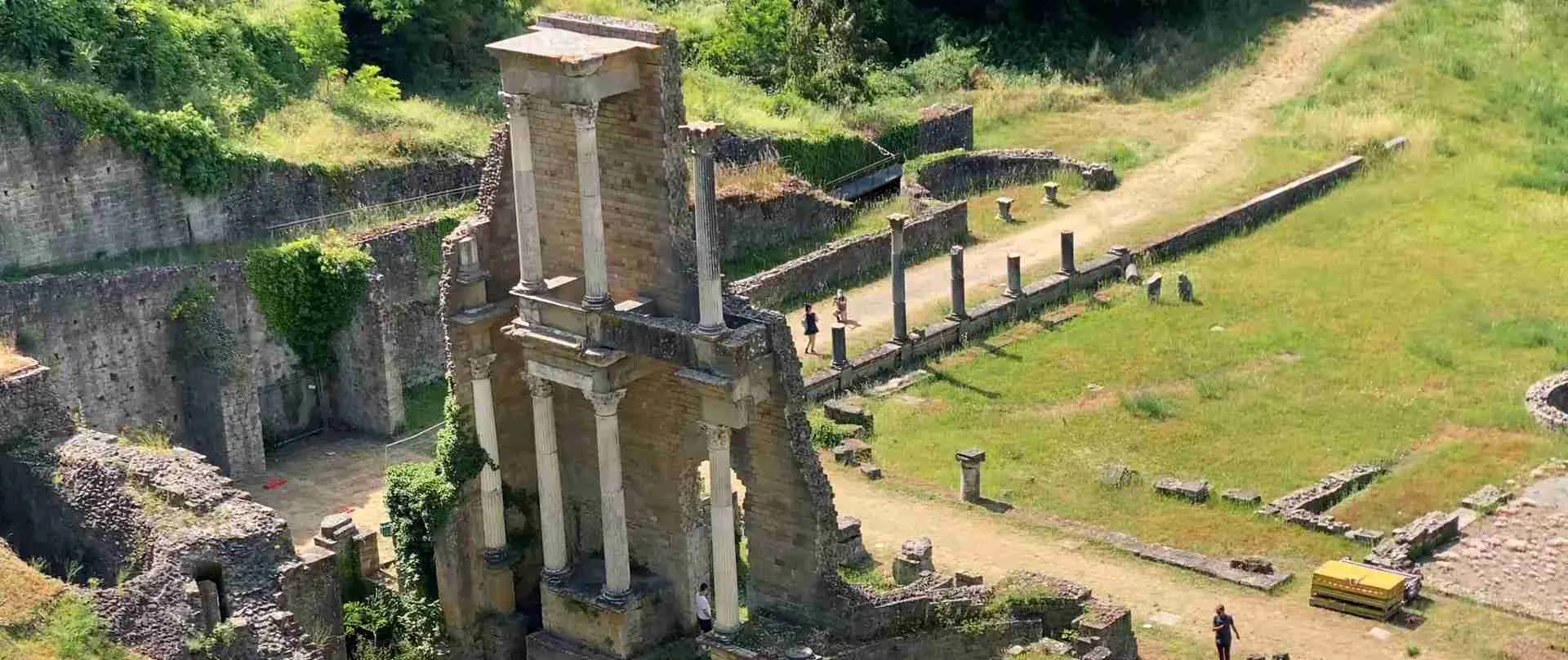
Tuscany Off the Beaten Path 2026: A Medieval and Etruscan Cultural Road Trip
Beyond Florence’s Renaissance crowds and Siena’s Palio spectacle lies Tuscany’s ancient heart: a landscape of Etruscan necropolises carved into volcanic cliffs, medieval hilltowns frozen in amber-colored stone, and winding roads through countryside that inspired the region’s pre-Roman civilizations. This road trip guide navigates Tuscany’s lesser-known cultural treasures in 2026, from the Etruscan museums of Volterra to the tufa-rock architecture of Pitigliano, revealing destinations where travelers encounter local life rather than tourist crowds.
Key Takeaways: Tuscany Off the Beaten Path 2026
- Budget Range 2026: Daily costs range €110-165 per person for budget travelers, €170-260 for mid-range comfort, and €305-490 for luxury experiences, with accommodation and car rental shared between two people.
- Etruscan Heritage Route: Volterra’s Museo Etrusco Guarnacci holds over 600 funerary urns and the iconic “Shadow of the Evening” bronze sculpture, while Populonia’s coastal necropolis and Vetulonia’s warrior tombs provide outdoor archaeological exploration beyond museum walls.
- Medieval Architecture Circuit: Monteriggioni’s perfectly preserved circular walls, San Gimignano’s tower skyline, and Pitigliano’s tufa-cliff foundations represent three distinct medieval construction philosophies shaped by defensive necessity, merchant wealth, and volcanic geology respectively.
- Optimal Itinerary Structure 2026: Seven-day road trips base from Siena or Volterra for geographic efficiency, allocating two days for Etruscan sites, three days for medieval towns, and two days for rural exploration including the Crete Senesi clay hills and Val d’Orcia’s lesser-known villages.
- Car Rental Strategy: Booking car rentals from Rome’s Fiumicino Airport rather than Florence saves €150-200 weekly in 2026, with compact manual transmission vehicles costing €150-300 weekly versus €300-450 from Tuscan pickups, though Rome adds 90 minutes initial driving.
- Seasonal Timing Advantages: April-May and September-October deliver ideal weather for driving and outdoor site exploration, with spring wildflowers in the Crete Senesi and autumn truffle season in San Miniato, while avoiding July-August’s heat and crowds that make hilltown parking impossible.
People Also Ask About Tuscany Off the Beaten Path 2026
How much does a week-long Tuscany road trip cost in 2026?
A week-long Tuscany off-the-beaten-path road trip costs €770-1,155 per person for budget travel, €1,190-1,820 for mid-range comfort, or €2,135-3,430 for luxury experiences in 2026, with all prices based on two people sharing accommodation and car rental. Budget travelers stay in countryside agriturismi at €70-100 per room nightly, rent economy cars at €150-300 weekly, and eat primarily at local trattorias. Mid-range travelers select boutique hotels in historic centers at €120-180 per room, upgrade to larger automatic transmission vehicles, and balance casual dining with occasional fine restaurants. Luxury travelers book restored medieval properties at €250-400 per room, rent premium vehicles, and dine at Michelin-recognized establishments. These totals include accommodation, car rental and fuel, all meals, museum admissions, parking fees, and incidental costs but exclude international flights to Italy.
What makes Volterra’s Etruscan museum worth visiting in 2026?
Volterra’s Museo Etrusco Guarnacci houses the world’s most extensive collection of Etruscan funerary urns with over 600 alabaster and terracotta pieces spanning 700-100 BCE, providing unmatched insight into Etruscan burial practices, social hierarchies, and artistic evolution. The museum’s star artifact remains the “Ombra della Sera” (Shadow of the Evening), a 3rd-century BCE bronze statuette whose elongated Giacometti-like proportions influenced 20th-century sculpture. The Urn of the Spouses showcases the Etruscan practice of depicting married couples reclining together on sarcophagi, a custom later adopted by Romans. The museum occupies a 15th-century palazzo with four floors of exhibits, including extensive coin collections documenting currency evolution under successive Roman emperors, jewelry demonstrating advanced goldsmithing techniques, and domestic artifacts revealing daily Etruscan life beyond funerary contexts. The top floor offers panoramic views across Volterra’s alabaster workshops and surrounding countryside. Unlike Florence’s crowded Uffizi, Volterra’s museum allows extended contemplation of individual pieces without queue pressure, with multilingual information panels recently updated for 2026 providing archaeological context for each display period.
Which medieval towns in Tuscany have the fewest tourists in 2026?
Pitigliano, Monteriggioni, Massa Marittima, and Sovana represent medieval Tuscan hilltowns with minimal tourist infrastructure compared to San Gimignano or Montepulciano, maintaining authentic local populations and daily rhythms undisturbed by tour bus schedules in 2026. Pitigliano perches on volcanic tufa cliffs in southern Tuscany’s Maremma region, its medieval Jewish quarter preserving synagogue, kosher bakery, and ritual bath. Monteriggioni’s circular walls enclose just 20 buildings within its perfect medieval perimeter, appearing exactly as Dante described in Inferno’s 14th-century verses. Massa Marittima’s Piazza Garibaldi showcases Tuscan Gothic architecture without crowds that overwhelm Siena’s Piazza del Campo, while its Cathedral of San Cerbone contains 13th-century frescoes viewed in contemplative silence. Sovana’s single main street lined with Romanesque churches and Etruscan tombs receives afternoon shadows rather than tour groups, its population of 350 maintaining agricultural traditions. These towns lack major hotel chains, international restaurant franchises, and English-language signage beyond basic tourist information, requiring Italian conversational ability for deeper engagement but rewarding travelers with genuine medieval atmosphere and local interaction impossible in heavily touristed destinations.
What driving routes showcase Tuscany’s lesser-known landscapes in 2026?
The Crete Senesi clay hills southeast of Siena, the coastal Etruscan road through Populonia and Piombino, and the volcanic tufa villages of the Maremma region provide Tuscany’s most distinctive lesser-known driving routes in 2026, each offering landscapes and cultural contexts absent from standard Chianti itineraries. The Crete Senesi’s lunar landscape of eroded clay ridges turns golden in late afternoon light, with the SS438 road between Asciano and San Giovanni d’Asso passing isolated farmhouses and April wildflower displays. The Etruscan coast via SP23 connects Populonia’s seaside necropolis with iron-working archaeological sites at Campiglia Marittima and medieval Suvereto’s towers, providing Mediterranean views and coastal winds absent from inland routes. The Maremma’s tufa triangle links Pitigliano, Sovana, and Sorano through volcanic rock formations, Etruscan vie cave (sunken roads carved through stone), and Renaissance Medici fortresses built atop earlier structures. The SP146 through Val d’Orcia avoids main SR2 traffic while accessing Pienza, Monticchiello, and Bagno Vignoni’s thermal springs. These routes require confident navigation of narrow roads without shoulders, occasional unpaved sections near archaeological sites, and limited fuel station availability requiring full tank departures from major towns.
Extended multi-day tours – 5+ days
Featured Tuscany Multi-Day Tour Packages

4 days
The Best of Tuscany: Florence, Chianti & Cinque Terre Escape | 4 Days
- ✓ Comprehensive Tuscany tour
- ✓ Expert local guides included
- ✓ All accommodation arranged
- ✓ Transportation provided
3 days
Taste of Tuscany: A San Gimignano Wine Escape | 3 Days
- ✓ Booking needs min. 2 travelers
7 days
Tuscany to Cinque Terre: Wines, Villages & Unforgettable Walks
- ✓ Comprehensive Tuscany tour
- ✓ Expert local guides included
- ✓ All accommodation arranged
- ✓ Transportation provided
7 days
Tuscany Absolute
- ✓ Comprehensive Tuscany tour
- ✓ Expert local guides included
- ✓ All accommodation arranged
- ✓ Transportation provided
Multi-day tour packages powered by TourRadar. Prices and availability subject to change.
Introduction: Tuscany Beyond the Renaissance Tourist Trail
Tuscany’s international identity centers on Renaissance Florence, the rolling Chianti vineyards, and medieval Siena’s preserved Gothic core, creating tourism patterns that channel millions of annual visitors through predictable corridors while leaving vast territories virtually untouched by organized travel. The region’s earlier civilizations—the enigmatic Etruscans who dominated central Italy from 900-100 BCE and the medieval communes that governed Tuscan hilltowns before Florentine consolidation—remain accessible to travelers willing to navigate secondary roads, engage with Italian-speaking communities, and prioritize cultural depth over photographic checklist completion. This alternative Tuscany requires understanding that architectural significance exists beyond Brunelleschi’s dome, that Etruscan engineering preceded Roman innovations by centuries, and that authentic Tuscan culture persists in working agricultural villages rather than restored vacation rentals.
The 2026 road trip detailed in this guide connects Tuscany’s three lesser-known cultural spheres: the Etruscan archaeological heritage concentrated in Volterra, Populonia, Vetulonia, and coastal sites; the medieval hilltowns that escaped Medici homogenization including Pitigliano, Sovana, Massa Marittima, and Monteriggioni; and the rural landscapes of the Crete Senesi, Maremma, and southern Val d’Orcia that sustained these civilizations. Unlike guided bus tours that impose rigid schedules and superficial interpretations, independent road trips allow extended museum contemplation, spontaneous archaeological site detours, and meal scheduling aligned with Italian rhythms rather than tour operator logistics. The freedom to spend three hours in Volterra’s Etruscan museum understanding funerary art evolution, or to abandon planned itineraries upon discovering an unmarked Etruscan tomb trail, transforms passive sightseeing into active cultural investigation.
Practical considerations shape successful off-the-beaten-path exploration in 2026. Car rental economics favor Rome airport pickups over Florentine locations, with weekly rates €150-300 from Fiumicino versus €300-450 from Florence despite adding 90 minutes initial driving time. Manual transmission vehicles cost 30-40% less than automatics across all rental categories, though American drivers require International Driving Permits costing $20 from AAA offices. ZTL (Zona Traffico Limitato) restricted zones surrounding historic centers impose €100-200 fines per violation captured by cameras, requiring advance research of each destination’s parking regulations and pedestrian-only boundaries. Accommodation strategies balance location convenience with cost efficiency: staying within medieval walls eliminates parking concerns but limits options to boutique hotels at €120-180 nightly, while countryside agriturismi 5-10 kilometers outside towns offer €70-100 rooms with parking but require evening drives after dinner.
Tuscany’s lesser-known destinations operate on Italian provincial schedules rather than international tourist expectations. Museums close Monday with rare exceptions, restaurants shut Tuesday-Wednesday in rotation, and midday closures from 1-4 PM affect shops, ticket offices, and even some churches. Summer brings July-August crowds to previously quiet towns as Italian domestic tourists escape coastal heat, while November-March sees many rural establishments close entirely for off-season renovation. The optimal windows remain April-May for spring wildflowers and Easter festivals, or September-October for harvest season and comfortable driving temperatures. These seasonal considerations affect not just weather but cultural calendar timing: truffle festivals in San Miniato occur October-November, Volterra’s medieval festival happens August, and Crete Senesi landscape photography peaks in late April when clay hills turn green with winter wheat.
This guide structures the Tuscan off-the-beaten-path experience through eight comprehensive sections addressing route planning, Etruscan site interpretation, medieval town exploration, accommodation strategies, dining recommendations, and practical logistics from parking navigation to museum ticket savings. Each destination receives treatment balancing historical context with 2026 operational details, avoiding generic descriptions while providing actionable information for travelers booking trips in the coming year. The emphasis remains on cultural immersion over superficial tourism, archaeological understanding over ruin photography, and genuine local interaction over staged experiences designed for foreign expectations.
Planning Your Tuscany Cultural Road Trip 2026
Successful Tuscany road trip planning in 2026 begins with geographic base selection determining daily driving distances, cultural site accessibility, and accommodation variety. Three strategic bases provide optimal access to the region’s off-the-beaten-path destinations: Siena offers central positioning with direct routes to Volterra (50 kilometers), San Gimignano (35 kilometers), the Crete Senesi (20 kilometers southeast), and Monteriggioni (15 kilometers northwest), while maintaining substantial hotel inventory across budget ranges. Volterra itself serves as an alternative base particularly for travelers prioritizing Etruscan heritage, positioning visitors within walking distance of the Museo Etrusco Guarnacci and day-trip distance to Populonia (90 kilometers), Vetulonia (95 kilometers), and Massa Marittima (60 kilometers). Pitigliano in the deep south provides the most remote base, ideal for multi-day Maremma exploration and total escape from tourist infrastructure, though adding significant driving time to northern destinations like Volterra (130 kilometers) or San Gimignano (140 kilometers).
The seven-day itinerary structure balances driving time against cultural immersion by clustering geographically proximate destinations into focused exploration days rather than attempting comprehensive regional coverage. Day one establishes the base with Siena exploration including the Duomo, Piazza del Campo, and initial orientation to Tuscan medieval architecture. Days two and three concentrate on Etruscan heritage: day two visits Volterra for the Guarnacci Museum and Roman theater ruins, while day three extends to the coastal Etruscan sites at Populonia and potential detour to Vetulonia’s necropolis. Days four and five shift to medieval hilltowns with Monteriggioni, San Gimignano, and Massa Marittima, allowing extended time for tower climbing, wall walking, and Gothic cathedral examination. Day six explores the Maremma’s tufa villages including Pitigliano, Sovana, and potentially Sorano, with evening return to Siena. Day seven provides flexibility for revisiting favored destinations, shopping at local markets, or exploring the Crete Senesi landscape photography opportunities before departure.
Alternative five-day compression maintains Etruscan-medieval balance while eliminating southern Maremma detour: day one Siena establishment and orientation, day two Volterra’s Etruscan museum and medieval center, day three combines Monteriggioni with San Gimignano despite their tourist contrast, day four reaches Massa Marittima and surrounding wine country, day five allows Crete Senesi exploration and departure logistics. The ten-day extension adds Populonia coastal overnight for sunset archaeological site access, southern Val d’Orcia villages including Pienza and Monticchiello, and potential expansion to Cortona’s Etruscan museum in eastern Tuscany. Each itinerary maintains the principle of morning departures for 45-90 minute drives, midday arrival allowing lunch and initial exploration, afternoon deep-dive into primary cultural site, and evening meal in destination town before return to base or overnight stay.
Seasonal considerations fundamentally alter the off-the-beaten-path experience across Tuscany’s calendar. April-May delivers spring advantages including wildflower displays transforming the Crete Senesi’s clay hills into green carpets studded with poppies, comfortable 18-24°C temperatures for hilltown walking, and minimal tourist presence beyond Easter week crowds in major centers like San Gimignano. Spring disadvantages include occasional rain requiring flexible scheduling and some rural restaurants maintaining limited March-April hours before summer season begins. September-October provides the year’s optimal window combining harvest season activities including truffle hunting around San Miniato, wine festival attendance in Chianti villages, 20-25°C temperatures ideal for extended driving, and golden afternoon light photographers prize for Tuscan landscape work. Autumn’s only drawback involves increasing tourist presence as summer departures coincide with Italian fall break crowds.
Summer June-August months bring significant challenges for off-the-beaten-path travel despite clear weather advantages. July-August temperatures reach 32-38°C making midday hilltown exploration exhausting, air conditioning becomes non-negotiable for both accommodation and vehicle rental adding 20-30% costs, and previously quiet destinations like Pitigliano fill with Italian domestic tourists escaping coastal regions. Parking situations in medieval centers become impossible during peak hours, with limited spaces outside walls filling by 10 AM and remaining occupied until evening. August sees many locally-owned trattorias and shops close for annual vacation, particularly mid-August around Ferragosto (August 15) national holiday when Italian families travel. Winter November-March offers the lowest prices and total absence of crowds, but many rural establishments close entirely, museums reduce hours significantly, and shorter daylight limits exploration to 9 AM-5 PM windows. Winter advantages include truffle season extending through February, dramatic storm light for photography, and genuine local life without tourist season modifications.
Car Rental Strategies and Driving Logistics 2026
Car rental cost optimization in 2026 centers on pickup location economics and vehicle specification choices that together determine weekly expenses ranging from €150 to €700 depending on strategy execution. Rome’s Fiumicino Airport (FCO) consistently delivers the lowest Tuscany-bound rental rates, with compact manual transmission vehicles available at €150-300 weekly from international chains including Sixt, Europcar, and Sicily by Car during April-May and September-October booking windows. Florence’s Peretola Airport (FLR) charges €300-450 for identical vehicles and dates due to higher regional demand and limited rental desk competition. The Rome pickup advantage derives from greater airport rental volume and competition among 15+ providers versus Florence’s six major desks, though accepting Rome pickup adds 90 minutes initial driving via A1 autostrada to reach Siena or other Tuscan bases. Travelers flying directly into Florence must weigh the €150-200 weekly premium against the convenience of immediate regional access without autostrada tolls and long-distance driving.
Manual versus automatic transmission selection impacts both availability and cost across the Tuscan rental market. Manual transmission vehicles—standard throughout Europe—cost 30-40% less than automatics while offering substantially greater model availability, particularly in economy and compact categories favored for narrow hilltown streets. Automatic transmission vehicles require advance booking and premium pricing, with weekly rates typically €350-550 for compact automatics versus €200-350 for manual equivalents. American drivers requiring automatics due to licensing restrictions or driving skill limitations face this surcharge as unavoidable, though International Driving Permit regulations increasingly require Americans to demonstrate automatic-only license restrictions. Italian highways and Tuscan secondary roads present minimal challenges for manual transmission operation, with hilltown approaches involving steeper grades than most US driving but manageable for experienced stick-shift operators.
Comprehensive insurance coverage represents the single most important protection against Italian rental car financial exposure, with base rental rates excluding collision damage waiver (CDW) that limits renter liability to zero in accident or theft scenarios. CDW costs €15-25 daily when purchased through rental desk agents, effectively doubling weekly vehicle costs from €200 to €350-400 for a seven-day rental. Alternative coverage through credit card benefits or third-party insurers including Allianz or RentalCover.com reduces insurance costs to €40-80 weekly, though requiring careful policy verification of Italian coverage inclusion and damage claim procedures. Some US credit cards offering rental car coverage specifically exclude Italy due to high claim rates, requiring policy review before depending on card protection. Declining all insurance coverage exposes renters to full vehicle value liability (€15,000-25,000 for compact cars) plus loss-of-use charges during repair periods, making coverage essential rather than optional for any rental exceeding a day.
ZTL (Zona Traffico Limitato) restricted zones surrounding Tuscany’s historic centers represent the primary rental car legal hazard for foreign drivers, with camera-enforced boundaries imposing €100-200 fines per violation mailed to rental companies who add processing fees and charge driver credit cards months post-rental. ZTL zones operate Monday-Saturday typically 7 AM-8 PM with some variations, prohibiting all non-resident vehicles from entering historic centers to protect medieval streets from traffic damage and preserve pedestrian quality. Critical points include: ZTL cameras photograph license plates automatically without warning signs beyond small blue circular markers easily missed, each camera crossing generates separate fine, and rental companies provide driver information to Italian authorities facilitating international ticket enforcement. Successful ZTL avoidance requires advance research of each destination’s boundaries using comunale (city hall) websites or apps including ZTL Parcheggi Italia, identifying authorized parking lots outside restricted zones, and walking final distances into historic centers.
Parking strategies differ fundamentally between larger towns with designated lots and tiny hilltowns with extremely limited spaces. Volterra provides paid parking at Parcheggio Docciola just outside Porta San Francesco for €2 hourly or €12 daily maximum, offering 200+ spaces rarely filling outside August. San Gimignano’s three main lots (P1 Giubileo, P2 Montemaggio, P3 Bagnaia) charge €2 hourly or €20 daily, filling by 11 AM June-September requiring arrival before 10 AM or afternoon visits after 4 PM. Pitigliano’s single lot Parcheggio Garibaldi accommodates 50 vehicles for €1.50 hourly, with space availability generally assured given limited tourist volume. Monteriggioni lacks dedicated lots, requiring roadside parking along SP2 outside walls with no fees but limited spaces filling during weekend lunch hours. Universal parking guidelines include: blue-lined spaces require payment via automated meters accepting coins and credit cards, white-lined spaces remain free but rarely exist near historic centers, yellow-lined spaces reserve exclusively for residents subject to immediate towing, and parking between 8 PM and 8 AM typically becomes free even in paid zones.
Autostrada toll costs affect budgeting for travelers incorporating Rome airport pickup or extended driving distances between Tuscan regions. The A1 Milan-Naples autostrada connecting Rome to Florence charges distance-based tolls collected at exit booths via credit card, Telepass electronic transponder, or cash lanes marked with blue signs. Rome Fiumicino to Siena via Florence costs approximately €15-18 depending on exit point, Florence to Siena costs €5-6, and round-trip Rome-Tuscany-Rome totals €30-36 for a week-long rental. Secondary state roads including SR2 (Via Cassia) and provincial SP roads connecting hilltowns remain toll-free but require significantly longer travel times due to speed limits (90 kph versus 130 kph on autostrada), curves, and village passage. Fuel costs average €1.75-1.95 per liter for benzina (gasoline) and €1.65-1.80 per liter for diesel in 2026, with autostrada service stations charging 10-15% premiums over town stations. A week’s Tuscan driving covering 800-1000 kilometers consumes approximately 60-80 liters depending on vehicle efficiency, totaling €105-155 fuel expense independent of rental rates.
Accommodation Options Across Budget Tiers 2026
Budget accommodation in Tuscany’s off-the-beaten-path destinations ranges €70-100 per room nightly in 2026, with agriturismi (working farm stays), family-run bed and breakfasts, and religious hospitality providing the primary options for travelers minimizing lodging costs while maintaining authentic cultural immersion. Agriturismi operate under Italian regulations requiring at least 50% of served food to originate from the hosting farm, creating genuine agricultural settings in countryside locations 5-15 kilometers outside hilltowns. These properties offer private rooms with en-suite bathrooms and included breakfast featuring farm products including fresh ricotta, honey, jams, and homemade cakes. Notable budget agriturismi include Agriturismo Panierracci near Volterra at €75-90 nightly, Podere San Lorenzo outside Montaiano at €80-95, and Agriturismo Mannaioni near San Gimignano at €70-88. Drawbacks include isolated locations requiring vehicles for all meals beyond breakfast, limited English language capability among hosts, and minimum stay requirements of two-three nights during high season.
Religious hospitality through monastery and convent guest quarters provides alternative budget lodging in historic centers, particularly around Siena and Volterra where religious communities maintain rooms for pilgrims and travelers at €60-85 nightly. Foresteria Valdese in Siena offers simple rooms in a converted palazzo at €70-80 per night including breakfast, while Volterra’s Casa Betania provides basic accommodation at €65-75. Religious lodging typically enforces evening curfews (10-11 PM), limited common areas, and expectations of respectful quiet behavior aligning with community spiritual practice. Benefits include central locations eliminating driving requirements, authentic architectural settings in restored religious buildings, and genuine cultural immersion with Italian guests rather than international tourist crowds. Budget travelers comfortable with modest amenities, earlier dining schedules allowing return before curfew, and Italian-language interaction find religious hospitality offers unmatched value in historic centers otherwise dominated by expensive boutique hotels.
Mid-range accommodation at €120-180 per room nightly occupies restored historic buildings in town centers, converted aristocratic residences, or modern hotels just outside medieval walls. This category provides enhanced amenities including air conditioning (essential June-September), in-room WiFi, some English-speaking staff, and locations within 5-10 minutes walking of central piazzas. Hotel San Lino in Volterra occupies a former convent with pool and restaurant at €125-155 nightly, while Hotel La Locanda provides central Volterra positioning at €135-165. Siena’s Hotel Athena offers views toward the countryside at €140-180, and Pitigliano’s Locanda Il Tufo Rosa delivers boutique character at €110-140. Mid-range properties balance location convenience against cost control, eliminating the evening driving requirements of countryside agriturismi while avoiding luxury hotel premiums. This tier suits travelers prioritizing efficient sightseeing over maximum authenticity, appreciating modern bathroom fixtures and reliable hot water over historic character, and requiring flexible check-in times accommodating variable daily schedules.
Historic center boutique hotels in the €180-280 range occupy 15th-17th century palazzi with architectural preservation requirements maintaining original frescoed ceilings, stone fireplaces, and terracotta floors. These properties deliver Tuscan aesthetic maximalist experiences with antique furnishings, contemporary art collections, and design magazine-worthy interiors while providing modern comfort through updated plumbing, premium mattresses, and high-speed internet. Palazzo Ravizza in Siena combines Renaissance architecture with garden views at €200-250, Hotel Volterra In offers central positioning with modern appointments at €180-220, and Villa Palagione near Volterra provides countryside elegance at €220-280. Boutique hotel advantages include atmospheric common areas for evening relaxation, concierge assistance with restaurant reservations and activity bookings, and small property size (10-20 rooms) allowing personalized service impossible at chain hotels.
Luxury accommodation €250-400 nightly encompasses countryside estates with pool facilities, restored castles and villas, and five-star hotels in regional centers. Borgo Pignano near Volterra operates as a working agricultural estate with luxury rooms at €350-450, offering cooking classes, spa treatments, and extensive grounds. Borgo da Vinci provides countryside elegance at €280-380 with exceptional dining programs. These properties target travelers for whom accommodation represents the experience centerpiece rather than merely sleeping infrastructure, with multi-day stays allowing full property enjoyment including morning yoga, afternoon wine tastings, sunset aperitivi, and multi-course dinners featuring estate products. Luxury tier bookings concentrate on creating complete immersive Tuscan experiences within single properties, with cultural site visits serving as daytrip interruptions to estate-based relaxation rather than the primary travel focus.
Accommodation booking timing significantly impacts availability and rates across all categories. Peak season July-August requires 2-3 months advance booking for any historic center property, with popular weekends (Italian national holidays, local festivals) filling 4-6 months ahead. Shoulder seasons April-May and September-October offer 3-6 weeks booking windows for mid-range properties, though agriturismi maintain availability closer to travel dates given fewer international bookings. Winter November-March sees many smaller properties close entirely for off-season maintenance, though remaining open hotels offer 30-50% discounts from summer rates. Booking platforms including Booking.com and Airbnb provide standard Tuscan accommodation access, though direct hotel website booking sometimes delivers better rates by eliminating platform commission fees. Cancellation policies typically allow free cancellation until 7-14 days before arrival, though peak season and luxury properties increasingly require non-refundable deposits securing competitive weekend dates.
Etruscan Heritage Sites and Museums 2026
Volterra’s Museo Etrusco Guarnacci ranks among Europe’s finest Etruscan museums, housing over 600 funerary urns that provide comprehensive documentation of Etruscan burial practices, artistic evolution, and social organization from the Archaic period through Hellenistic influence. The museum occupies Palazzo Desideri Tangassi, a 15th-century aristocratic residence converted to museum purposes in 1761 when abbot Mario Guarnacci donated his extensive private collection to the city. Four floors organize exhibits chronologically beginning with 9th-century BCE Villanovan culture proto-Etruscan artifacts through 1st-century BCE Roman absorption, with dedicated rooms examining specific themes including female burial practices, warrior aristocracy, and the unique Volterran school of alabaster carving that flourished 3rd-2nd centuries BCE due to local gypsum deposits.
The museum’s ground floor introduces Etruscan civilization through geographic context, settlement patterns, and resource exploitation including iron mining, agricultural development, and alabaster quarrying that funded Velathri’s (Etruscan Volterra) wealth. First floor galleries progress through Orientalizing period (700-575 BCE) urns showing Near Eastern artistic influences, Archaic period (575-480 BCE) works demonstrating Greek stylistic adoption, and Classical period (480-300 BCE) pieces reflecting mainland Greek aesthetic standards. The Urn of the Spouses exemplifies this period’s sculptural sophistication, depicting a married couple reclining on a banquet couch according to Etruscan symposium customs later adopted by Romans. Second floor concentration on Hellenistic period (300-100 BCE) reveals Volterra’s artistic golden age when alabaster carving workshops produced funerary urns for export throughout Etruria, their refined mythological scenes and portrait lids documenting individual facial features, clothing styles, and social status indicators.
The museum’s most iconic artifact, the “Ombra della Sera” (Shadow of the Evening) bronze statuette, occupies a dedicated climate-controlled gallery on the third floor. This 3rd-century BCE votive offering stands 57 centimeters tall with elongated proportions that anticipate 20th-century sculpture, particularly Giacometti’s attenuated figures. The bronze depicts a nude youth with arms extended downward and disproportionately long limbs, likely representing a deity or heroic figure though scholarly interpretations vary. Its preservation stems from 18th-century rediscovery in Volterra countryside rather than tomb excavation, suggesting votive shrine context rather than burial goods. The sculpture’s modern aesthetic appeal derives from its non-naturalistic proportions that coincidentally align with modernist artistic principles, though representing purely Etruscan stylistic choices independent of later movements.
Admission costs €10 for the Guarnacci Museum alone or €16 for a combined ticket including the Roman Theater and Pinacoteca civic art gallery, with tickets valid for site entry within 48 hours of first use. Opening hours run 9 AM-7 PM daily March-October and 10 AM-4:30 PM November-February, with Monday closures November-February only. The museum provides Italian and English audio guides at €5, though information panels throughout galleries appear in Italian, English, and German with comprehensive archaeological context for each display period. Photography without flash remains permitted except in temporary exhibition spaces. Complete museum exploration requires 2.5-3 hours for attentive viewing, though rushed visits covering major highlights compress to 90 minutes. Summer months see moderate afternoon crowds from organized tour groups, while shoulder seasons and winter allow nearly private viewing. The attached museum shop stocks specialized publications on Etruscan archaeology, alabaster carving techniques, and Volterra history unavailable elsewhere.
Populonia represents coastal Etruria’s primary archaeological site, combining necropolis exploration with seaside Mediterranean setting and Gulf of Baratti views. Unlike Volterra’s museum-focused Etruscan experience, Populonia emphasizes outdoor archaeological investigation across two distinct necropolis zones: the San Cerbone necropolis featuring tumulus tombs carved into coastal hillsides, and the elevated San Silvestro mining complex documenting Etruscan iron production. The site operated as ancient Pupluna, Etruria’s only coastal city, controlling iron ore deposits from nearby Elba island and processing metal for export throughout the Mediterranean. This industrial function explains Populonia’s wealth and artistic production evidenced in necropolis tomb goods, though continuous habitation and medieval construction destroyed the ancient urban center leaving only funerary areas for modern excavation.
The San Cerbone necropolis accessed from the lower parking area presents the most visually impressive Etruscan monuments, including the Tomb of the Chariots and Tomb of the Bronze Statuettes dating to 7th-6th centuries BCE. These tumulus tombs follow standard Etruscan construction with circular stone drums surmounted by earth mounds, though coastal erosion and medieval stone quarrying damaged many structures. The tombs’ interior chambers remain closed to public access due to preservation requirements, though glass viewing panels installed 2018-2020 allow visual inspection of decorated interiors and structural details. Walking paths connect tomb clusters across hillside terrain with 100-meter elevation changes, requiring comfortable shoes and moderate fitness levels. The archaeological area extends along 3 kilometers of marked trails, with complete exploration consuming 2-3 hours at walking pace.
Populonia’s upper acropolis area accessed from a separate parking zone contains the Etruscan settlement remains, medieval fortress, and small museum housing excavation finds. The museum displays ceramic imports documenting Populonia’s Mediterranean trade networks, iron working tools and slag samples demonstrating metalworking technology, and funerary goods from more recently excavated tombs. This upper museum operates separately from the necropolis with independent ticketing at €8 adults, though combination tickets covering both zones cost €12. The site’s seasonal operation restricts access: May-September hours run 10 AM-7 PM daily, October-April operates 10 AM-5 PM with Tuesday-Wednesday closures. Peak summer weekends see significant crowds from beach vacationers in nearby Piombino, while April-May and September visits encounter minimal attendance. Populonia reaches 90 kilometers from Volterra via coastal SP23 requiring 100 minutes driving through Cecina and Piombino, positioning the site as an all-day excursion rather than quick stop.
Vetulonia’s archaeological significance derives from its identification as one of the Etruscan dodecapolis (twelve-city league) capitals, though the site lacks Volterra’s museum concentration or Populonia’s coastal drama. The ancient city perched on a hillside 300 meters above the Grosseto plain controlled agricultural hinterlands and provided visual surveillance across coastal approaches. Modern Vetulonia village contains 350 residents and the Isidoro Falchi Civic Archaeological Museum documenting local excavations including the famous Warrior Auvele Feluske stone stele displaying armor, helmet, and weapons representing 7th-century BCE aristocratic military identity. This carved stone monument serves as the museum’s logo and exemplifies Orientalizing period Etruscan art when Near Eastern cultural influences shaped aristocratic self-representation.
The Vetulonia necropolis zones surrounding modern village include the Tomba del Diavolino II, a tumulus tomb with stone circle base and intact chamber accessible via guided tour only, and the Pietrera tumulus, one of central Italy’s largest circular tombs at 60 meters diameter and 14 meters height. These monumental tombs date to the 7th-6th centuries BCE when Vetulonia’s aristocratic families competed through increasingly elaborate funerary architecture, their tumulus construction requiring stone quarrying, earth moving, and engineering expertise demonstrating sophisticated organizational capacity. The tombs’ elevated positioning provides panoramic views across the Grosseto plain toward Elba island, illustrating the strategic importance of Vetulonia’s location. The civic museum occupies modern facilities in village center with €5 admission, maintaining 10 AM-1 PM and 3-6 PM hours April-October with winter closures November-March. Necropolis access remains free with paths marked from village streets, though some tomb interiors close for preservation requiring exterior viewing only.
Cortona’s MAEC (Museo dell’Accademia Etruscan e della Città di Cortona) in eastern Tuscany provides comprehensive Etruscan coverage for travelers extending their itinerary toward Umbria or Arezzo. The museum occupies Palazzo Casali with over 600 artifacts spanning 9th-1st centuries BCE, including the famous Etruscan chandelier, a bronze lighting fixture incorporating Gorgon heads, sirens, and deity figures representing 5th-4th century BCE metalworking mastery. The chandelier stands 60 centimeters diameter and weighs 58 kilograms, with 16 oil lamp positions around its circumference and elaborate figural decoration demonstrating both technical achievement and artistic sophistication. Cortona’s museum charges €10 admission with 10 AM-7 PM hours April-October and reduced winter schedule, representing a worthwhile detour for Etruscan enthusiasts expanding beyond Volterra-Populonia core sites though adding 130 kilometers driving from central Tuscany bases.
Medieval Hilltowns and Architecture 2026
Monteriggioni exemplifies the medieval fortified village reduced to its essential elements: circular defensive walls with fourteen towers enclosing a tiny residential cluster that retains visual perfection despite 700 years of aging. The fortress town occupies a strategic hilltop 15 kilometers northwest of Siena along the Via Francigena pilgrimage route, constructed 1213-1219 by the Sienese Republic to defend against Florentine military threats during the centuries-long Guelph-Ghibelline conflicts that defined Tuscan medieval politics. The circular plan spans 170 meters diameter with walls rising 15 meters from base to rampart walk, their continuous circuit interrupted only by entrance gates at cardinal points. Dante Alighieri referenced Monteriggioni in Inferno Canto XXXI comparing its tower-crowned walls to giants surrounding the ninth circle of hell, establishing literary recognition that persists through modern tourism.
Monteriggioni’s residential core contains just 20 buildings arranged around the central Piazza Roma, housing approximately 35 permanent residents whose cars park outside walls due to narrow internal streets incompatible with vehicle traffic. The Church of Santa Maria Assunta occupies the piazza’s east side, a simple Romanesque structure maintaining original 13th-century proportions despite later additions. The town’s commercial infrastructure consists of three restaurants, two artisan shops, and a permanent medieval armor museum occupying a former residential building. July brings the Medieval Festival when residents costume in period dress, demonstrate 13th-century crafts, and stage archery competitions, drawing thousands of visitors that temporarily overwhelm the tiny settlement. Outside festival periods, particularly weekday mornings October-April, Monteriggioni maintains village quiet with minimal tourist presence allowing contemplative wall walking and photography unobstructed by crowds.
Wall-walking access via stairs at the main gate provides 360-degree views across Chianti hills and Val d’Elsa, with interpretation panels explaining medieval defensive strategies, tower construction techniques, and historical siege events including unsuccessful Florentine attacks 1244 and 1254. The complete rampart circuit requires 20-25 minutes at relaxed pace, with rough stone surfaces demanding attention to footing. Several towers remain inaccessible due to structural concerns, though most allow entry to ground floor chambers displaying medieval life exhibits. No admission fee applies for village access or street walking, though wall circuit and armor museum charge combined €6 adult entry. The settlement’s compact size means thorough exploration including museum, walls, and church consumes 90 minutes, positioning Monteriggioni as a half-day destination combined with nearby San Gimignano or Colle di Val d’Elsa in the same excursion.
San Gimignano presents the opposite medieval paradigm: merchant wealth translated into vertical architectural competition producing 72 family towers by 1300, creating a Manhattan-like medieval skyline that survives partially with 14 towers remaining. The town developed as a Via Francigena pilgrim stop where merchant families accumulated wealth through hospitality services, banking operations, and agricultural trade particularly saffron cultivation that generated the capital financing tower construction. Medieval Italian urban culture viewed tower height as status symbol, with aristocratic and merchant families competing through increasingly ambitious vertical building. San Gimignano’s towers range 30-54 meters height, their defensive function secondary to prestige demonstration though top floors provided refuge during factional street fighting common in Guelph-Ghibelline era Tuscany.
The town’s tourist transformation represents both preservation success and cultural authenticity loss. UNESCO World Heritage status (1990) and dramatic skyline photographs create year-round visitor pressure exceeding any comparable Tuscan destination except Florence and Pisa. July-August sees the town inundated with tour buses depositing thousands of day-trippers who crowd the main street Piazza della Cisterna to Piazza Duomo corridor, making movement difficult and authentic experience impossible. Weekday mornings April-May and September-October before 11 AM offer the only windows for reasonable San Gimignano exploration, with most tour buses arriving post-noon and departing by 4 PM. Winter months see substantially reduced crowds though many shops close November-February and the wind exposure common to hilltop settlements makes extended outdoor wandering uncomfortable below 10°C.
Torre Grossa, the town’s tallest tower at 54 meters, allows climbing access via 218 stone steps rewarding visitors with panoramic views justifying the ascent effort and €9 admission. The tower forms part of the civic museum complex including the Palazzo Comunale with 14th-century Maestà fresco by Lippo Memmi, Dante chamber where the poet allegedly addressed the town council 1300, and civic art collection documenting San Gimignano’s medieval artistic patronage. Combined museum admission costs €13 covering tower, palazzo, and archaeological museum occupying the former hospital of Santa Fina. The Collegiate Church (Duomo) charges separate €5 entry for nave access to 14th-century fresco cycles including Taddeo di Bartolo’s Last Judgment and Bartolo di Fredi’s Old Testament scenes. Complete architectural exploration beyond casual street walking requires 2.5-3 hours and €20-25 combined admissions for primary monuments.
Massa Marittima delivers medieval architecture comparable to Siena or San Gimignano but without the overwhelming tourist presence, maintaining working town character with local shops serving resident needs rather than visitor consumption. The town occupies a mining district where silver, copper, and lead extraction during medieval centuries funded cathedral construction and civic building programs visible in the spectacular Piazza Garibaldi, Tuscany’s finest medieval square outside Siena’s Campo. The Cathedral of San Cerbone dominates the lower town with its Pisan Romanesque façade incorporating marble stripes and blind arcading, while the interior preserves 13th-century Gothic modifications including the Maestà altarpiece and carved pulpit demonstrating advanced sculptural techniques. The cathedral’s crypt contains Saint Cerbonius relics, a 6th-century bishop whose cult sustained pilgrimage traffic during medieval centuries.
Massa Marittima’s upper town (Città Nuova) connects to the lower medieval center via steep lanes passing beneath the Sienese fortress, a defensive complex built 1335 after Siena conquered the previously independent commune. The fortress occupies the ridge separating old and new towns with massive walls, towers, and the distinctive Torre del Candeliere standing 30 meters tall. The fortress and tower allow climbing access via €6 admission providing rooftop views across both town sectors and surrounding mining landscape. The Museo d’Arte Sacra houses religious art from local churches including 13th-century panel paintings, illuminated manuscripts, and liturgical objects, while the Mining Museum documents Massa Marittima’s industrial foundation with underground mine shaft recreation. Combined ticket covering all civic museums costs €15, positioning Massa Marittima as a full-day destination consuming 4-5 hours for thorough exploration plus meal time.
Massa Marittima’s relative tourist obscurity compared to San Gimignano or Monteriggioni creates authentic experience opportunities including restaurant meals with local diners rather than tour groups, market shopping at weekly Thursday morning farmers market in Piazza Garibaldi, and evening passeggiata (stroll) participation when residents occupy public spaces for social interaction. Several traditional workshops including iron forge, ceramic studio, and textile weavers maintain operations in the historic center, their craftwork available for purchase at prices reflecting actual production costs rather than tourist markup. Accommodation options remain limited with 4-5 small hotels concentrated in the €100-140 range, making Massa Marittima more effective as day trip from Volterra (60 kilometers) or Siena (50 kilometers) than overnight base despite its cultural richness.
Pitigliano occupies southern Tuscany’s tufa-rock region where volcanic stone formations created both building material and defensive advantages. The town perches on a narrow tufa promontory with vertical cliff faces dropping 50-70 meters to the valleys below, its buildings appearing to grow from the rock rather than rest upon it. This geological situation made Pitigliano nearly impregnable during medieval conflicts while providing soft stone easily carved for construction, cellars, and defensive tunnels called colombari cut into cliff faces for storage and refuge. The town’s silhouette especially when illuminated at dusk creates one of Tuscany’s most dramatic medieval urban images, though reaching Pitigliano requires commitment: 130 kilometers from Volterra or 80 kilometers from Siena via secondary roads requiring 2+ hours driving.
Pitigliano’s Jewish heritage distinguishes the town from generic Tuscan medieval settlements. A substantial Jewish community established the Ghetto area during 16th century when Medici-ruled Tuscany offered relative tolerance compared to Papal States persecution. The tiny Jewish quarter preserves synagogue, ritual bath (mikveh), kosher bakery building, and Jewish cemetery accessible via €5 guided tour explaining Sephardic Jewish life in rural Tuscany and the community’s eventual 20th-century disappearance through emigration and Holocaust deportation. The synagogue maintains active religious function during Jewish holidays when descendants return for services, creating living heritage rather than museum artifact. The kosher bakery building operates as interpretive space showing traditional Passover matzo production and explaining dietary laws affecting Jewish community life.
The town’s archaeological museum occupies Palazzo Orsini, the ruling family’s fortified residence containing Renaissance frescoes, medieval armory, and Etruscan artifacts from surrounding tombs. The palace’s defensive architecture includes corner towers, drawbridge mechanism (no longer operational), and thick walls designed to resist artillery though these features date more to Renaissance warfare than medieval period. Museum admission costs €6 with 10 AM-1 PM and 3-7 PM hours April-October, winter schedule reducing to weekends only November-March. The vie cave (sunken roads) surrounding Pitigliano represent perhaps the most distinctive archaeological features: 20-meter deep trenches carved through solid tufa rock by Etruscans as defensive roads, tomb access, and communication routes. The Via Cava di Poggio Cani trail departs from town edges for easy hiking access to these atmospheric corridors where moss and ferns grow on vertical rock walls, their tops barely visible above creating narrow sky corridors through ancient pathways.
Sovana functions as Pitigliano’s neighboring village sharing the tufa landscape but maintaining even smaller scale and quieter character. The village occupies a single main street connecting 13th-century duomo at one end with fortress ruins at the other, its population of 350 supporting 2-3 restaurants and minimal tourist infrastructure. Sovana’s importance derives from Etruscan tombs surrounding the modern village including the Tomba Ildebranda, a monumental temple-tomb with carved portico and stairs rising to columned façade, representing the finest preserved Etruscan tomb architecture outside Cerveteri near Rome. The archaeological park containing multiple tombs charges €5 admission with open-field walking connecting tomb sites across 2 kilometers of marked trails. Combined visits to Pitigliano and Sovana with via cave exploration consume full days, making overnight accommodation in Pitigliano worthwhile for travelers prioritizing this region’s unique landscape and archaeological resources.
Daily Budget Breakdowns and Cost Management 2026
Budget tier daily costs in Tuscany’s off-the-beaten-path destinations total €110-165 per person in 2026 through strategic accommodation, dining, and transportation choices that maintain cultural experience quality while minimizing expenses. Accommodation in countryside agriturismi at €70-100 per room divided between two travelers establishes the foundation at €35-50 per person nightly. Car rental costs including comprehensive insurance range €150-300 weekly, equivalent to €21-43 daily divided by two occupants for €11-22 per person daily. Fuel expenses consuming approximately 70 liters weekly at €1.75-1.95 per liter total €120-135 for seven days or €17-19 daily, split to €8-13 per person. Daily meal expenses combining breakfast at agriturismi, lunch at casual trattorias or markets, and dinner at local restaurants total €42-61: breakfast included in accommodation, lunch €12-18 for pasta or panini, dinner €25-35 for three courses with house wine. Museum and site admissions averaging €10-15 daily cover Etruscan museums, medieval wall access, and occasional church entries. Parking fees at €3-8 daily divided by two add €2-4 per person.
Budget travelers minimizing expenses through supermarket shopping for lunch supplies, cooking dinner facilities at agriturismi when available, and limiting museum entries to priority destinations can reduce daily costs to €95-120 per person. This extreme budget approach sacrifices some cultural engagement including restaurant meals that provide linguistic interaction and local food experience, requiring traveler judgment on acceptable compromise between cost control and authentic immersion. Budget accommodation drawbacks include remote locations requiring 15-30 minute drives for dinner options, limited English capability among agriturismo hosts demanding basic Italian skills, and minimum stay requirements restricting flexibility. Budget car rentals via economy class manual transmission vehicles reduce comfort particularly for travelers unaccustomed to stick-shift operation, though compact size provides maneuvering advantages on narrow hilltown approaches.
Mid-range tier daily costs totaling €170-260 per person balance convenience and comfort against cost control, positioning travelers in hotels within walking distance of historic centers while maintaining three daily restaurant meals. Accommodation at €120-180 per room becomes €60-90 per person nightly, with properties offering air conditioning, private bathrooms, and breakfast. Car rental upgrading to intermediate automatic transmission vehicles costs €250-400 weekly or €36-57 daily, divided by two for €18-29 per person. Fuel consumption increases slightly with larger vehicles to €20-30 daily or €10-15 per person. Dining expenses rise to €63-92 daily through sit-down breakfast at €8-12, casual lunch at €20-30, and full trattoria dinner at €35-50. Attraction costs increase to €15-25 daily by accessing all available museums, tower climbs, and guided tours rather than selecting priority sites only. Parking in premium lots near historic centers adds €8-12 daily or €4-6 per person.
Mid-range travelers enjoy operational advantages including flexibility to dine late after evening site visits, spontaneous itinerary modifications without concern for agriturismo dinner reservations, and English-language communication with hotel staff for activity recommendations. This tier’s incremental cost over budget category buys significant convenience reduction particularly for travelers uncomfortable with rural isolation or limited foreign language skills. The trade-off involves substantial daily expense increase (€60-95 more per person daily) primarily flowing to accommodation and dining upgrades providing comfort rather than fundamentally different cultural experiences. Mid-range positioning suits most first-time Tuscany visitors balancing independent travel desires against uncertainty about rural navigation, Italian language requirements, and comfort expectations in agricultural settings.
Luxury tier daily costs at €305-490 per person emphasize experience quality over cost efficiency, with countryside estates, premium vehicles, and fine dining forming the foundation. Accommodation at €250-400 per room translates to €125-200 per person nightly at restored villas with pool facilities, spa services, and multi-course breakfast. Premium car rental including automatic transmission, GPS, and comprehensive insurance costs €400-700 weekly or €57-100 daily, divided for €29-50 per person. Fuel costs increase to €25-40 daily or €13-20 per person through premium vehicles and less attention to fuel efficiency. Dining expenses reach €110-170 daily: breakfast at estate property €15-20, lunch at acclaimed restaurants €35-50, dinner at Michelin-level establishments €60-100. Attraction costs including private guided tours and exclusive experiences add €25-40 daily. Valet parking and premium lot usage costs €10-15 daily or €5-8 per person.
Luxury travelers gain access to experiences unavailable at lower tiers including private archaeological site tours with specialist guides, wine estate visits with winemaker meetings, cooking classes at farmhouse locations, and spa treatments in historic settings. This tier’s value proposition centers on time efficiency and enhanced interpretation rather than merely upgraded facilities: private guides provide art historical context and archaeological explanation creating deeper cultural engagement, estate dinners feature farm-to-table ingredients prepared by skilled chefs, and accommodation properties themselves justify visit as architectural and design experiences. Luxury tier spending requires assessing whether incremental cost (€135-325 more than mid-range daily) delivers proportional experience enhancement for individual travel priorities. Cost-conscious travelers achieving satisfactory cultural immersion at mid-range see limited value justifying luxury premiums, while experience-focused visitors prioritizing comfort, culinary excellence, and expert interpretation find luxury tier essential.
Money-saving strategies applicable across budget tiers include: booking car rentals 8-12 weeks advance for lowest rates particularly from Rome airport, eating main meal at lunch when restaurants offer prix-fixe menus at €15-25 versus €35-50 dinner for identical food quality, visiting museums on free admission days (first Sunday monthly for state museums including some Etruscan sites), purchasing groceries at Coop or Conad supermarkets for picnic supplies rather than restaurant meals, selecting Tuesday-Wednesday travel weeks when hotel rates drop 20-30% below weekend pricing, and staying Monday-Thursday avoiding Friday-Sunday premium rates at popular destinations. Combined ticket options at Volterra (€16 covering three sites versus €24 individual entries), Populonia (€12 for both zones versus €16 separate), and San Gimignano (€13 for civic museums versus €21 individual) deliver measurable savings for travelers visiting multiple attractions per town.
Dining Recommendations and Tuscan Food Culture 2026
Traditional Tuscan cuisine emphasizes simplicity, seasonal ingredients, and historical peasant-origin dishes that sustained agricultural workers before tourism transformed regional economy. This culinary tradition appears throughout off-the-beaten-path destinations in trattoria menus maintaining the same preparations served for generations: ribollita (bread-vegetable soup), pappa al pomodoro (tomato-bread porridge), panzanella (bread-tomato salad), pici pasta (hand-rolled thick spaghetti), wild boar ragù, rabbit stew, roasted meats including bistecca alla fiorentina (massive T-bone steak), and simple grilled vegetables with local olive oil. The emphasis remains on ingredient quality rather than complex preparation, with restaurant success depending on sourcing excellence and traditional technique mastery rather than innovative combinations.
Volterra’s dining scene reflects the town’s alabaster craft heritage and rural position, with trattorias including Osteria della Sera, Ristorante Etruria, and Vecchia Osteria dei Poeti offering traditional menus at €30-45 per person for three courses with house wine. Osteria della Sera occupies a former medieval workshop with stone walls and vaulted ceilings, serving pici with cinghiale (wild boar sauce) at €14, roasted rabbit with herbs at €16, and ribollita soup at €8. Vecchia Osteria dei Poeti specializes in seasonal truffle preparations October-February when local white truffles appear in markets, with fresh egg tagliolini with truffle shavings costing €22-28 depending on market truffle prices. Budget dining options include Pizzeria Ombra della Sera offering Tuscan-style pizza at €8-12, and Il Vecchio Mulino serving panini and simple plates at €6-10 for casual lunch. Volterra lacks high-end dining options comparable to Florence or Siena coastal restaurants, though Ristorante Il Sacco Fiorentino provides upgraded atmosphere and service at €50-65 per person maintaining traditional menu foundations.
Market shopping in Volterra’s Saturday morning farmers market provides picnic supply sourcing and cultural immersion simultaneously. Local producers sell pecorino cheese aged in terracotta containers at €18-25 per kilogram, fresh ricotta at €12 per kilogram, prosciutto and salami at €20-32 per kilogram, seasonal vegetables, bread, and local honey. Assembling market purchases into full meal components costs €15-25 for two people’s substantial lunch including cheese, bread, salami, tomatoes, and fruit. Supermarket shopping at Coop or Conad reduces costs further with cheese at €12-18 per kilogram, bread at €3-5 per loaf, and prepared items including rotisserie chicken or porchetta at €12-16 per kilogram. Picnic locations include the municipal park outside Porta San Francesco, the Roman theater terraces during off-hours, and countryside pull-offs along secondary roads connecting destinations.
San Gimignano’s dining situation divides between tourist-focused establishments on main thoroughfares serving mediocre food at inflated prices to day-trippers, and authentic trattorias on side streets maintaining local patronage through quality and value. Dorando Restaurant on Via di Castello offers Tuscan specialties at €35-50 per person with excellent pici, steak, and seasonal truffle dishes when available. Perucà specializes in wild boar preparations and game meats at similar pricing with outdoor seating in quiet courtyard. Budget options remain limited given San Gimignano’s tourist orientation, though Gustavo Gelateria e Paninoteca provides panini at €6-9 and pizza slices at €3-5 for street food lunch. The town’s Vernaccia wine—Tuscany’s only white DOCG—appears on every restaurant list at €18-30 per bottle, representing the logical pairing for local cuisine despite most Tuscan wines being red. Afternoon gelato at Gelateria Dondoli (World Championship winner 2006 and 2008) costs €3-5 for two scoops, with creative flavors including saffron, Vernaccia wine, and Tuscan cream justifying lines during summer afternoons.
Massa Marittima maintains working-town dining scene with restaurants serving local residents rather than tourists, creating value-forward pricing and authentic atmosphere. Taverna del Vecchio Borgo serves traditional Maremma cuisine at €25-35 per person including acquacotta (local vegetable soup), tortelli filled with ricotta and herbs, and grilled meats. Osteria da Tronca occupies a medieval cellar with stone walls and vaulted ceilings, offering similar traditional menu at comparable pricing. The town’s specialty mining-era dishes include caldaro (chickpea stew), traditionally prepared in large quantities for mine workers and now appearing on menus during winter months. Local bakeries sell schiacciata (Tuscan flatbread) at €3-5 per loaf, providing inexpensive lunch combined with cheese or salami purchases from alimentari (food shops) at €8-12 total for substantial meal.
Pitigliano’s remote southern location preserves Maremma food traditions distinct from Florentine-influenced northern Tuscan cuisine. Local specialties include wild boar preparations reflecting hunting tradition, hand-rolled pici with aglione (wild garlic sauce), and Jewish-origin dishes from the historic ghetto community including sfratti (honey-nut cookies) sold at Il Forno del Ghetto bakery. Restaurants Hosteria Del Ceccottino and Trattoria Il Tufo Allegro serve Maremma-style meals at €30-45 per person with generous portions and house wine included. The town’s limited size means reservation requirements especially weekends when Italian tourists from Rome and coastal areas visit, with tables filling by 8 PM and late seating (9:30-10 PM) typically unavailable outside summer months. Grocery shopping at small alimentari provides picnic supplies though selection remains limited compared to larger town supermarkets, making advanced provision purchases advisable before reaching remote southern destinations.
Dining schedule follows Italian rather than tourist timetables throughout off-the-beaten-path destinations. Restaurants remain closed or serve limited menus before 12:30 PM for lunch and before 7:30 PM for dinner, with service continuing until 2:30 PM lunch and 10:30 PM dinner though kitchens typically close 30-60 minutes before restaurant closing. Late afternoon hours 3-7 PM see restaurants completely shuttered with staff absent for riposo (rest period), creating food access gaps requiring planning. Markets operate morning-only hours typically 8 AM-1 PM with Saturday being primary market day for most towns, though daily markets exist in larger centers including Siena. Bakeries open early (6:30-7 AM) but close by 1-2 PM, requiring morning visits for fresh bread and pastries. Bars serve coffee and cornetto breakfast 7-11 AM, switch to lunch sandwiches and simple plates 12-2 PM, then transition to aperitivo service 6-8 PM before final evening coffee service. Understanding these schedules prevents food access frustration during odd-hour arrivals or late-afternoon hunger.
Sample Week-Long Itinerary 2026
Day One establishes Siena base with afternoon arrival allowing initial historic center exploration without attempting comprehensive coverage. Check into accommodation at Hotel Athena (mid-range) at €140-180 nightly or Agriturismo Marciano (budget) at €80-100 located 8 kilometers southeast. Drive or walk into Siena historic center for Piazza del Campo orientation, ascending Torre del Mangia for city overview at €10 admission if energy permits. Cathedral complex (€15 combined ticket) merits initial visit covering Duomo interior with marble floor and Piccolomini Library frescoes, though saving detailed exploration for potential return. Dinner at Osteria Le Logge or Trattoria La Chiacchera ranges €35-50 per person for traditional Sienese cuisine. Evening passeggiata around Campo provides initial Italian social culture observation and architectural night lighting. Day one total costs: accommodation €70-90 per person, meals €40-50, attraction admissions €15-25, parking €5.
Day Two focuses entirely on Volterra’s Etruscan heritage requiring full day allocation. Depart Siena 8:30-9 AM for 50-kilometer drive via SR68 requiring 60 minutes, arriving Volterra by 10 AM. Park at Parcheggio Docciola (€12 daily) and walk 10 minutes into historic center. Begin with Museo Etrusco Guarnacci at opening for maximum quiet, allocating 2.5-3 hours for comprehensive viewing. The €16 combined ticket includes Roman Theater and Pinacoteca, though single-day coverage of all three sites proves exhausting. Lunch at Osteria della Sera or Il Vecchio Mulino costs €15-25 for pasta and wine. Afternoon explores Roman Theater ruins built 1st century BCE when Volterra came under Roman control, its well-preserved cavea seating and stage foundations demonstrating standard Roman theatrical architecture. Walk Volterra’s medieval walls for town perimeter understanding and countryside views. Optional Pinacoteca visit provides Renaissance painting context including Rosso Fiorentino’s 1521 Deposition, though energy may not sustain additional museum attention. Return to Siena by 6-7 PM with dinner in town or at agriturismo. Day two costs: meals €30-45, admissions €16-25, parking €12, fuel €8-12.
Day Three extends to coastal Populonia requiring full-day commitment due to 180-kilometer round-trip distance from Siena. Early departure by 8 AM essential for maximizing site time, driving via Volterra and continuing west through Cecina to coast. The 90-kilometer journey requires 2 hours including route finding in Piombino area. Arrive Populonia archaeological park by 10-10:30 AM, purchasing €12 combined ticket covering both necropolis zones. Begin with San Cerbone lower necropolis for tumulus tomb exploration and coastal trail walking, allocating 2-2.5 hours. Lunch at Populonia village or nearby Gulf of Baratti beach restaurants costs €20-35 for seafood-focused menu capitalizing on coastal location. Afternoon visits upper acropolis museum and settlement ruins, adding 90 minutes exploration. Populonia’s beach setting tempts swimming detours April-October when water temperatures reach 18-24°C, though full archaeological coverage proves incompatible with beach time requiring prioritization choice. Return to Siena base by 6-7 PM via same route. Day three costs: meals €35-50, admission €12, parking €10, fuel €25-35 due to extended driving.
Day Four combines Monteriggioni and San Gimignano despite their contrasting tourist intensity, geographic proximity enabling dual coverage. Depart Siena 9 AM for 15-kilometer drive to Monteriggioni requiring 20 minutes. Arrive weekday morning or pre-10 AM weekend for minimal crowds, allocating 90 minutes for wall walking, church visit, and village exploration. The €6 admission covers wall circuit and armor museum. Depart Monteriggioni by 11 AM for San Gimignano 25 kilometers north, arriving before noon lunch service begins. Lunch at Dorando or budget panini from Gustavo Gelateria costs €15-35. Afternoon explores Torre Grossa (€13 civic museum ticket) for tower climb and palazzo frescoes, Collegiate Church (€5), and medieval street wandering. Late afternoon gelato at Dondoli adds €3-5. San Gimignano’s concentrated tourist presence peaks 1-4 PM making late afternoon visits more pleasant as tour buses depart. Return to Siena by 6-7 PM. Day four costs: meals €30-45, admissions €20-30, parking €15-25 covering both towns, fuel €10-15.
Day Five directs energy toward Massa Marittima and potentially Vetulonia depending on schedule and energy. Depart Siena 8:30 AM for 50-kilometer drive requiring 70 minutes via rural roads. Arrive Massa Marittima 10 AM, parking below lower town walls at €8 daily. Begin with Cathedral of San Cerbone and Piazza Garibaldi orientation, ascending to Città Nuova and fortress complex. The €15 combined museum ticket covers all civic museums including mining museum, sacred art collection, and fortress tower. Lunch at Taverna del Vecchio Borgo or Osteria da Tronca costs €25-35. Afternoon allows Vetulonia extension (45 kilometers requiring 50 minutes) for necropolis walk and civic museum at €5 admission, though this addition creates rushed coverage of both destinations. Alternative spends full afternoon in Massa Marittima for complete museum exploration and relaxed town wandering. Return to Siena by 6-7 PM. Day five costs: meals €30-45, admissions €15-20, parking €10-15, fuel €15-20.
Day Six undertakes southern Maremma excursion to Pitigliano and Sovana requiring longest driving and earliest departure. Leave Siena 7:30-8 AM for 80-kilometer journey requiring 100 minutes via SR2 and provincial roads. Arrive Pitigliano 9:30-10 AM, parking Parcheggio Garibaldi at €1.50 hourly. Explore Jewish quarter with synagogue tour (€5), Palazzo Orsini museum (€6), and Via Cava Poggio Cani trail requiring 2-3 hours total. Lunch at Hosteria Del Ceccottino costs €30-45 per person. Afternoon drives 10 kilometers to Sovana for Tomba Ildebranda and archaeological park (€5) with necropolis trail walks consuming 90-120 minutes. The day’s extended driving (160 kilometers round-trip) and remote destinations justify overnight at Pitigliano’s Locanda Il Tufo Rosa at €110-140, allowing relaxed evening in town rather than 2-hour return drive to Siena. Day six costs: meals €40-55, admissions €15-20, parking €10-12, fuel €20-25, potential Pitigliano accommodation €55-70 per person.
Day Seven provides Crete Senesi landscape exploration and Siena return or departure flexibility. The clay hills southeast of Siena offer driving routes through lunar terrain, photogenic farmhouses including Podere Belvedere near San Quirico d’Orcia, and medieval villages including Asciano and Buonconvento. Depart late morning for relaxed driving along SP438 and SP14, stopping for photography and countryside viewing. Lunch at Ristorante La Grancia near Serre di Rapolano offers traditional cuisine with landscape views at €25-40 per person. Optional thermal bath visit at Rapolano Terme (€20-30 admission) provides relaxation opportunity. Return to Siena by mid-afternoon for final cathedral complex coverage or shopping, or continue toward Florence airport (75 kilometers) or Rome return (230 kilometers) for evening departures. Day seven costs: meals €30-45, potential thermal bath admission €20-30, fuel €10-20.
Week-long itinerary total costs per person: accommodation €385-630 (6 nights at €60-105 average), meals €240-355 (7 days averaging €35-50), car rental €75-150 (weekly cost divided by two), fuel €115-155 (estimated 800 kilometers), admissions €110-170 (all museums and sites), parking €75-100 (daily fees), totaling approximately €1,000-1,560 per person for complete week. These figures represent mid-range execution with countryside agriturismo/hotel mix, daily restaurant meals, comprehensive site coverage, and moderate comfort standards. Budget reduction to €770-1,000 proves achievable through exclusively budget accommodation, market-sourced meals replacing some restaurant dinners, and selective rather than comprehensive museum visits. Luxury upgrade to €2,100-2,800 derives from boutique hotel selection, fine dining emphasis, and premium vehicle rental rather than fundamentally expanded site coverage or additional days.
Practical Planning Considerations and Travel Tips 2026
International Driving Permit (IDP) requirements for Italy mandate that non-European Union license holders carry IDP documents alongside their home country driver’s license when operating vehicles. US citizens obtain IDPs through AAA offices for $20 with 10-year validity, requiring passport photos and completion of simple application. The IDP provides Italian-language translation of license information enabling police verification during traffic stops, though actual driving authorization derives from the home license itself. Many rental companies enforce IDP requirements at pickup, refusing vehicle release to customers lacking proper documentation despite booking confirmations. Obtaining IDP before departure proves essential, as no mechanism exists for securing documents after arrival in Italy. Some rental locations demonstrate inconsistent enforcement, particularly with large international chains, though risking pickup denial creates significant travel disruption warranting $20 advance investment for compliance certainty.
GPS navigation proves indispensable for off-the-beaten-path driving where secondary roads lack clear signage and villages appear unmarked. Modern smartphone navigation apps including Google Maps and Apple Maps provide accurate Italy routing with offline map downloads enabling continued navigation without cellular data connectivity. Rental car GPS units cost €8-15 daily representing €56-105 weekly premium versus free smartphone navigation, though dedicated GPS devices offer larger screens and dashboard mounting benefits. The critical consideration involves ensuring offline map availability before departing cellular coverage areas: both Google and Apple Maps allow advance regional map downloads requiring WiFi connectivity, preventing mid-drive navigation failure when signals disappear in rural valleys. Paper maps provide emergency backup, with Touring Club Italiano 1:200,000 scale regional maps offering comprehensive road coverage and village identification unavailable on digital platforms’ excessive zoom levels.
Italian driving regulations differ from US standards in several critical areas requiring attention. Speed limits operate at 50 kph (30 mph) in urban areas marked by town name signs, 90 kph (55 mph) on secondary state and provincial roads, and 130 kph (80 mph) on autostrada highways with reduced limits in rain or poor visibility. Speed cameras (autovelox) enforce limits automatically without warning signs, generating tickets mailed to rental companies who charge driver credit cards plus administrative fees months after return. The cameras appear as grey boxes on roadside poles, often positioned at village entrance/exit boundaries where limits change without obvious notification. Seat belt use remains mandatory for all occupants with €80-320 fines for violations. Headlights must illuminate during highway driving regardless of weather or time, with rental cars typically equipped with automatic systems. Right-of-way rules favor traffic already in roundabouts over entering vehicles, opposite to some US jurisdictions where entering traffic proceeds first.
Pharmacy access (farmacia) provides over-the-counter medication and prescription filling, with standard medications for headaches, stomach issues, allergies, and minor ailments available without prescription though under pharmacist consultation. Italian pharmacies operate rotation schedules ensuring 24-hour coverage in larger towns, with current duty pharmacy information posted on all pharmacy doors and available via local tourist information offices. Emergency medical care through Pronto Soccorso (emergency room) operates at regional hospitals with EU Health Insurance Card holders receiving free treatment, while travelers from outside EU require travel insurance coverage for medical expenses. Minor injuries and illnesses often receive treatment at guardia medica (medical guard) clinics operating evening/weekend hours when primary care physicians remain unavailable. The emergency number 112 connects to unified emergency response dispatching police, ambulance, or fire services as situation requires.
Mobile phone connectivity throughout rural Tuscany varies by carrier, with TIM and Vodafone providing strongest coverage in remote areas while smaller carriers experience dead zones in valleys and between hilltowns. EU visitors benefit from roaming agreements eliminating data charges, while US travelers require international plans or local SIM cards for cost-effective connectivity. Local SIM cards from TIM, Vodafone, or Wind cost €15-25 for tourist packages including 10-20 GB data and limited voice minutes, requiring passport for purchase at carrier stores in larger towns. Hotel and restaurant WiFi appears standard across most properties regardless of category, though connection speeds and reliability decrease in countryside locations relying on rural infrastructure. Banking ATMs (Bancomat) exist in all towns covered by this itinerary with Euronet and major Italian banks providing 24-hour cash access, though withdrawal fees of €3-5 per transaction encourage larger less-frequent cash advances. Credit cards acceptance appears universal at hotels and major restaurants, though smaller trattorias and market vendors prefer cash payments making €50-100 daily cash reserves advisable.
Clothing requirements reflect hilltown stone streets and medieval building visits. Comfortable walking shoes with ankle support prove essential given uneven stone paving, steep lanes, and extended walking inherent in car-free historic centers. Many medieval streets feature smooth stone surfaces becoming slippery in rain, requiring rubber-soled footwear with tread. Church visits mandate modest dress covering shoulders and knees, with enforcement varying from casual observation to strict gate-keeping particularly at major monuments. Light layering proves more effective than heavy coats given Tuscany’s mild climate and significant temperature variations between sunny hilltop exposures and shaded medieval lanes. April-May and September-October seasons require rain jacket for occasional showers, while July-August demands sun protection including hats, sunglasses, and sunscreen for extended outdoor exposure. Winter November-March visits need substantial layering as unheated medieval buildings, outdoor archaeological sites, and wind exposure on town walls create significant chill even during mild days.
Photography equipment considerations balance quality aspirations against travel practicality. Modern smartphone cameras capture excellent images for social media and digital viewing, while dedicated cameras enable superior low-light interior photography in museums and churches where flash prohibition creates challenging conditions. Many museums forbid flash photography while allowing ambient-light shooting, requiring fast lenses or image stabilization for hand-held success. Tripod usage receives universal prohibition in museums and churches due to obstruction concerns and potential artifact damage. Drone operation faces severe restrictions throughout historic areas with flight prohibition in most town centers, near archaeological sites, and within Italian airspace requiring advance authorization from ENAC (Italian Civil Aviation Authority) for recreational operation. Sunrise and sunset golden hour photography rewards early/late schedule flexibility, particularly in the Crete Senesi where dramatic landscape lighting occurs during brief windows.
Frequently Asked Questions: Tuscany Off the Beaten Path 2026
Is seven days enough time for a Tuscany cultural road trip in 2026?
Seven days provides adequate time for balanced Etruscan-medieval exploration covering Volterra, Populonia, Monteriggioni, San Gimignano, Massa Marittima, and Pitigliano with Siena as base, though ten days allows more relaxed pacing and additional destinations including Cortona, Val d’Orcia villages, or overnight stays in multiple bases rather than single-location basing. The seven-day structure requires accepting that comprehensive regional coverage remains impossible within the timeframe, prioritizing quality engagement with selected destinations over superficial checklist coverage. Extended stays at individual locations including two nights in Pitigliano for complete Maremma exploration or day-plus in Volterra for archaeological depth require eight-ten day allocations. Five-day compression proves viable by eliminating southern Maremma excursion (Pitigliano/Sovana) and coastal Populonia, focusing entirely on central Tuscany triangle between Siena, Volterra, and San Gimignano.
Can I visit these destinations without a car using public transportation in 2026?
Public transportation reaches only major towns including Siena, Volterra, and San Gimignano via regional buses, while smaller destinations including Monteriggioni, Pitigliano, Sovana, Populonia, and Vetulonia remain inaccessible or impractically serviced by infrequent bus schedules running 2-3 times daily. Volterra connects to Siena via Tiemme bus company requiring 75-90 minutes with 8-10 daily departures costing €7-9, while San Gimignano receives similar service frequency. Massa Marittima requires bus changes and 2.5+ hours from Siena making day trips virtually impossible via public transit. Archaeological sites including Populonia necropolis and Vetulonia tombs lack any public transportation access, located 3-8 kilometers from nearest bus stops without taxi services. Independent travelers without vehicles must hire private drivers, book organized tours, or accept severely limited destination access focusing on Siena-Volterra-San Gimignano triangle exclusively. Private driver services cost €200-350 for full-day excursions with 6-8 hour availability, worthwhile for couples or small groups splitting costs but expensive for solo travelers.
What’s the best base location for exploring Tuscany’s lesser-known sites in 2026?
Siena provides optimal single-base positioning for seven-day itineraries, offering 35-80 kilometer distances to major destinations including Volterra (50 km), San Gimignano (35 km), Monteriggioni (15 km), Massa Marittima (50 km), and manageable 80-90 kilometer reaches to Pitigliano and Populonia for committed day trips. Siena’s accommodation inventory spans all budget categories from €60 hostels to €400 luxury hotels, restaurant diversity exceeds smaller towns, and the historic center warrants dedicated exploration time justifying evening presence. Alternative bases trade broader regional access for destination-specific advantages: Volterra positioning favors Etruscan heritage focus with immediate Guarnacci Museum access and shorter Populonia distances, though increasing San Gimignano and southern Maremma driving times. Dual-base strategies splitting stays between Siena and Pitigliano optimize southern Maremma coverage while maintaining central Tuscany access, though adding accommodation transitions and checkout logistics that single-base approaches eliminate. Travelers prioritizing relaxation over maximum site coverage might select countryside agriturismo or villa rentals accepting increased driving distances for superior property amenities including pools, grounds, and cooking facilities.
Are Etruscan sites and museums suitable for children and families in 2026?
Etruscan museums including Volterra’s Guarnacci present significant challenges for young children under age 10 given extensive artifact displays requiring sustained attention, limited interactive elements, and museum environments demanding quiet behavior throughout 2-3 hour visits. Adolescents with developed history interests and patience for museum settings engage successfully with Etruscan material, particularly when combined with Roman history curriculum from school providing contextual foundation. Outdoor archaeological sites including Populonia necropolis, Vetulonia tumulus tombs, and Sovana’s Via Cava trails offer superior family engagement through exploration-based activities, fresh air, and physical movement that museum confines prevent. The necropolis sites provide scrambling opportunities, hide-and-seek possibilities within tomb complexes, and picnic settings that transform archaeology from passive observation to active discovery. Family road trip success depends on balancing museum visits with outdoor activities, maintaining flexible schedules accommodating child energy patterns, and selecting accommodation with pools or play areas for afternoon downtime after morning cultural activities.
How much Italian language ability do I need for off-the-beaten-path Tuscany travel in 2026?
Basic Italian including greetings, numbers, food vocabulary, and simple question formation enhances off-the-beaten-path experiences significantly while remaining technically optional given that pointing, smiling, and translation apps enable minimal communication for essential transactions. English capability varies dramatically by destination and business type: Siena hotels, major museum staff, and tourist-oriented restaurants maintain English speakers, while countryside agriturismi, local trattorias in Massa Marittima or Pitigliano, and market vendors operate primarily in Italian expecting linguistic adaptation from visitors. The smaller and more authentic the destination, the greater the Italian requirement for meaningful interaction beyond surface-level transactions. Solo travelers benefit more from Italian skills than couples who can divide linguistic burden, while group travelers often include an Italian speaker providing translation support. Practical Italian phrases for road travel include parking inquiries, restaurant reservations, asking directions, and basic menu comprehension, with preparation through apps including Duolingo or Pimsleur providing functional foundation within 30-40 hours pre-trip study.
What are the main safety concerns for solo female travelers in rural Tuscany 2026?
Rural Tuscany maintains very low crime rates with violent crime virtually absent and property crime limited to opportunistic vehicle break-ins in parking areas rather than personal targeting of tourists. Solo female travelers report consistently positive experiences regarding personal safety, with respectful interactions from locals and minimal street harassment compared to urban centers including Rome or Florence. The primary safety considerations involve practical logistics rather than personal security: ensuring reliable vehicle condition for remote driving where breakdowns create isolation challenges, maintaining charged mobile phones with Italian connectivity for emergency communication, and selecting reputable accommodation rather than unvetted private rentals in isolated locations. Solo travelers should inform accommodation hosts or friends of daily itineraries when undertaking isolated archaeological site visits or remote driving, though actual danger remains extraordinarily low. Evening dining alone receives complete social acceptance in Italian restaurants without any stigma or unwelcome attention, though smaller towns offer limited evening activity beyond dining requiring early return to accommodation. Hitchhiking prohibition for solo travelers regardless of gender applies universally given alternative transportation availability and unnecessary risk profile.
Can I visit Tuscany off-the-beaten-path destinations during winter months November-March 2026?
Winter visits remain feasible but require accepting significant operational limitations including museum closures, reduced restaurant hours, accommodation unavailability in smaller destinations, and challenging weather for outdoor archaeological site exploration. Many countryside agriturismi close entirely November-March for seasonal maintenance, while Pitigliano, Sovana, and other remote villages see 50-70% business closures leaving minimal dining options. Major museums including Volterra’s Guarnacci and Populonia archaeological park maintain winter operations with reduced hours, typically 10 AM-4 PM versus 9 AM-7 PM summer schedules. Winter advantages include total tourist absence creating genuine local atmosphere, hotel rates discounted 30-50% from summer peaks, and truffle season extending through February providing culinary specialty access. The trade-offs prove acceptable for travelers prioritizing cost savings and crowd avoidance over operational convenience, though first-time visitors to Tuscany benefit from April-October windows providing fuller destination experience with reliable business operations and comfortable exploration weather.
How do Tuscany’s lesser-known destinations compare to famous sites like Florence and Pisa in 2026?
Off-the-beaten-path Tuscany delivers fundamentally different experiences from Florence’s Renaissance concentration or Pisa’s iconic tower, emphasizing cultural depth over checklist monuments, local interaction over tourist infrastructure, and slower exploration pacing over efficient site-collection. Florence and Pisa provide higher art historical significance, world-class museum collections, and concentrated architectural masterworks accessible via walking circuits, though accompanied by overwhelming crowds, elevated prices, and tourist-focused business environments that eliminate authentic cultural immersion. Volterra, Pitigliano, Massa Marittima, and similar destinations offer genuine working-town atmosphere, Italian-language dominance requiring linguistic adaptation, and archaeological/medieval heritage requiring greater visitor interpretation effort without audio guide hand-holding through significance. The comparison proves inappropriate given entirely different travel value propositions: Florence rewards art history enthusiasts seeking Michelangelo, Botticelli, and Brunelleschi within concentrated urban setting, while off-path Tuscany rewards patient travelers seeking pre-Roman civilizations, medieval architectural preservation, and landscape beauty within rural agricultural contexts. Balanced Tuscany itineraries often combine 2-3 Florence days for Renaissance saturation with subsequent countryside exploration providing contrast and recovery from urban intensity.
What seasonal events or festivals enhance off-the-beaten-path Tuscany visits in 2026?
Volterra’s medieval festival (Volterra AD 1398) occurs last weekend of August, transforming the entire historic center into 14th-century living history with period costumes, craft demonstrations, archery competitions, and medieval market stalls, though the event attracts massive crowds overwhelming the normally quiet town. Massa Marittima hosts Balestro del Girifalco (crossbow competition) twice yearly in May and August, with medieval costume processions and traditional competition between neighborhood teams. San Miniato’s white truffle fair runs every weekend October-November, celebrating the region’s most prized ingredient through market sales, restaurant specials, and cooking demonstrations though significantly increasing accommodation costs and availability pressure. Montalcino’s Jazz & Wine Festival occurs mid-July combining music performances with Brunello wine tastings in the fortress setting. These events provide cultural immersion opportunities but require advance planning: accommodation books months ahead, pricing increases 50-100% during event periods, and crowds contradict the “off-the-beaten-path” premise that attracts many travelers to these destinations outside festival timing.
How much advance booking do I need for Tuscany off-the-beaten-path accommodation in 2026?
Booking timelines vary dramatically by season, accommodation category, and destination tourist pressure. Peak season July-August requires 6-12 weeks advance booking for any historic center hotel in destinations including Volterra or Pitigliano, with countryside agriturismi maintaining greater availability given larger property inventory and less international booking pressure. Shoulder season April-May and September-October allows 2-4 weeks booking windows for most properties outside major holiday weekends including Italian Liberation Day (April 25), Republic Day (June 2), and Ferragosto (August 15) when domestic tourism peaks requiring earlier reservation. Winter November-March sees many smaller properties closed entirely, though operational hotels accept bookings days to weeks in advance given minimal demand. Luxury countryside estates and popular boutique properties require longest advance booking at 3-6 months for peak season dates, while budget agriturismi accommodate last-minute bookings more readily. Flexible travelers willing to adjust itinerary based on availability secure superior rates and property selection versus rigid schedule adherence demanding specific dates regardless of cost or availability.