Turkey UNESCO Road Trip 2026: 22 World Heritage Sites in 3 Weeks Complete Planning Guide
Turkey’s 22 UNESCO World Heritage Sites span 8,000 years of human civilization across seven geographical regions, from the world’s oldest temple at Göbekli Tepe to Byzantine masterpieces in Istanbul. A comprehensive three-week road trip connecting all sites requires careful route optimization, strategic accommodation planning, and realistic daily budgets ranging €100-200 per person depending on travel style, making this one of the world’s most diverse and achievable heritage circuits.
Key Takeaways
- Turkey’s 22 UNESCO sites (20 cultural, 2 mixed) added Sardis and Lydian Tumuli as the newest inscription in 2025, creating the most complete heritage road trip opportunity in the Eastern Mediterranean
- Three-week optimal route covers approximately 4,500 kilometers organized into seven regional segments: Istanbul-Marmara (2 sites), Western Anatolia (7 sites), Central Anatolia (4 sites), Southeastern Anatolia (3 sites), Eastern Anatolia (2 sites), Mediterranean Coast (2 sites), and Black Sea (2 sites)
- Total estimated costs for 2026 range €2,100-4,200 per person (21 days) including car rental €840-1,260, accommodation €630-2,100, UNESCO entrance fees €450-550, fuel €350-450, and meals €630-1,050
- Strategic timing for April-May or September-October 2026 provides optimal weather across all regions, smaller crowds at major sites, and 30-40% lower accommodation costs compared to peak summer months
- Museum Pass options significantly reduce entrance costs: 15-day Turkey Museum Pass (€185 covers most sites) versus individual tickets (€450-550 total), representing potential savings of €265-365 per person
- Route requires advance planning for eastern region winter road closures, Ramadan timing affecting restaurant hours, and Turkish national holidays causing traffic congestion and accommodation shortages in specific periods
People Also Ask About Turkey UNESCO Road Trip 2026
Can you really visit all 22 Turkey UNESCO sites in 3 weeks?
Yes, visiting all 22 UNESCO World Heritage Sites in Turkey within three weeks is achievable with disciplined daily planning and realistic expectations about site visit durations. The optimized route covers approximately 4,500 kilometers with daily driving segments averaging 200-250 kilometers, allowing 2-4 hours of driving time and 4-6 hours for site exploration each day. The feasibility depends on accepting that some sites receive focused half-day visits (Hattusha, Ani) while others warrant full-day immersion (Istanbul Historic Areas, Cappadocia). Road conditions on Turkey’s well-maintained highway system support this timeline, though eastern region segments during early spring or late fall require checking weather-related road closures. The three-week timeframe represents the minimum for comprehensive coverage; travelers preferring deeper exploration should extend to 4-5 weeks, particularly for the Cappadocia and Istanbul regions which each merit 3-4 days rather than the condensed 2-day allocations in the rapid circuit.
What’s the best starting point for a Turkey UNESCO road trip in 2026?
Istanbul serves as the optimal starting and ending point for a Turkey UNESCO road trip in 2026 due to superior international flight connections, competitive car rental rates with one-way drop-off options, and immediate access to four Historic Areas representing the circuit’s western anchor. Starting in Istanbul allows clockwise routing through Western Anatolia’s Aegean coast sites (Ephesus, Aphrodisias, Pamukkale) during the first week when energy levels peak for the densest site concentration, progressing to Central Anatolia’s Cappadocia and Hattusha in week two, then tackling the physically demanding eastern region (Göbekli Tepe, Nemrut, Ani) in week three before returning via the Mediterranean coast. Alternative starting points include Izmir (beneficial for travelers arriving on Aegean coast charter flights) or Antalya (ideal for those combining the road trip with beach time), though both require backtracking to reach Istanbul’s sites. Car rental companies charge €100-200 supplements for one-way rentals between different regions, making Istanbul’s circular route economically advantageous.
How much does a 3-week Turkey UNESCO road trip cost in 2026?
A three-week Turkey UNESCO road trip costs €2,100-4,200 per person in 2026 depending on accommodation preferences and travel style, with transportation representing the most predictable expense category. Budget travelers selecting hostel dormitories (€10-15 nightly) and local restaurants (€15-20 daily for all meals) achieve the €2,100 baseline, while mid-range travelers choosing boutique hotels (€40-60 nightly) and sit-down dining (€30-40 daily) reach €3,000-3,500 totals. Car rental for 21 days averages €840-1,260 (€40-60 daily rate) for economy vehicles with comprehensive insurance, fuel costs €350-450 based on 4,500-kilometer route and current €1.35/liter diesel prices, and UNESCO site entrance fees total €450-550 when purchasing individual tickets versus €185 for the 15-day Turkey Museum Pass representing substantial savings. Two-person teams sharing accommodation and car rental reduce per-person costs by 35-45%, bringing the mid-range budget to €1,950-2,275 per person. Luxury travelers booking cave hotels in Cappadocia (€150-250 nightly) and heritage properties elsewhere reach €5,000-6,500 per person for the three-week circuit.
What’s the most challenging part of the Turkey UNESCO road trip in 2026?
The southeastern and eastern Anatolia segments from Şanlıurfa to Ani (sites 14-19 in the optimized route) present the trip’s greatest logistical and physical challenges through remote geography, longer daily driving distances (300-400 kilometers), limited accommodation options in smaller cities, and seasonal accessibility issues. This 5-6 day portion requires mental preparation for 4-5 hour daily drives through mountainous terrain, acceptance of more basic accommodation standards in cities like Diyarbakır and Kars, and flexibility for weather-related itinerary adjustments particularly for Mount Nemrut (accessible April-October only) and Ani (snow possible March-April, October-November). The cultural shift from tourist-infrastructure-rich western regions to authentically local eastern Turkey challenges travelers accustomed to English-language signage and menus, though the reward includes Turkey’s most distinctive UNESCO sites (Göbekli Tepe, Nemrut, Ani) with minimal tourist crowds. Travelers uncomfortable with this segment can modify the route to cover only western and central sites (14 total UNESCO properties) within 14 days, sacrificing the eastern masterpieces but maintaining higher comfort levels throughout.
Extended multi-day tours – 5+ days
Featured Turkey Multi-Day Tour Packages

3 days
Turkey 3-Day Discovery Tour
- ✓ Comprehensive Turkey experience
- ✓ Expert local guides included
- ✓ All accommodation included
- ✓ Transportation provided

5 days
Turkey 5-Day Highlights Experience
- ✓ Comprehensive Turkey experience
- ✓ Expert local guides included
- ✓ All accommodation included
- ✓ Transportation provided

7 days
Turkey 7-Day Cultural Journey
- ✓ Comprehensive Turkey experience
- ✓ Expert local guides included
- ✓ All accommodation included
- ✓ Transportation provided

10 days
Turkey 10-Day Complete Adventure
- ✓ Comprehensive Turkey experience
- ✓ Expert local guides included
- ✓ All accommodation included
- ✓ Transportation provided
Multi-day tour packages powered by TourRadar. Prices and availability subject to change.
Introduction: Planning Turkey’s Ultimate Cultural Heritage Circuit 2026
Turkey’s 22 UNESCO World Heritage Sites represent one of the world’s most geographically concentrated collections of cultural and mixed heritage properties, spanning civilizations from the Neolithic Revolution at Çatalhöyük (9,000 years old) through the Ottoman Empire’s architectural zenith in Istanbul and Edirne. The 2025 inscription of Sardis and the Lydian Tumuli of Bin Tepe completed a remarkable diversity of site types: ancient cities (Ephesus, Pergamon, Aphrodisias, Troy), religious complexes (Göbekli Tepe, Divriği Mosque), natural-cultural landscapes (Cappadocia, Pamukkale), medieval cities (Safranbolu, Ani), and archaeological mounds (Arslantepe, Hattusha). This comprehensive heritage inventory positions Turkey 14th globally for total UNESCO inscriptions, ahead of cultural powerhouses like Portugal, Poland, and the Czech Republic.
The three-week road trip itinerary detailed in this guide represents the culmination of route optimization balancing geographical efficiency, daily driving sustainability, regional accommodation availability, and seasonal weather patterns across Turkey’s diverse climate zones. Unlike fragmented approaches visiting Istanbul-Cappadocia-Ephesus tourist triangles, this complete circuit requires commitment to eastern Anatolia’s remote segments where sites like Göbekli Tepe (humanity’s oldest known temple, 11,500 years old) and Ani (medieval Armenian capital) reward adventurous travelers with uncrowded access to world-class heritage properties. The feasibility of this ambitious undertaking improved dramatically in recent years through Turkey’s €15 billion highway infrastructure program (2015-2024) creating 3,000 kilometers of new divided highways, reducing Istanbul-Ankara driving time from 6 hours to 4 hours, and opening previously difficult southeastern access routes.
Turkey’s favorable 2026 travel economics make this comprehensive heritage journey achievable for mid-range budgets that would barely cover airfare and hotels for similar-duration European heritage tours. The Turkish Lira’s weakness against major currencies (€1 = ₺36-38 range projected for 2026) creates exceptional value for accommodation, dining, and transportation, while UNESCO site entrance fees recently converted to Euro pricing (€20-40 per major site) remain 40-50% below equivalent Western European heritage property costs. Strategic use of regional Museum Passes (Aegean €95, Cappadocia €65, Mediterranean €85) versus the comprehensive 15-day Turkey Museum Pass (€185) requires calculation based on actual planned site visits, with the full pass becoming economical when visiting 6+ major sites across multiple regions during the three-week period.
This planning guide addresses the practical realities of executing Turkey’s complete UNESCO circuit in 2026: optimal route sequencing minimizing backtracking, realistic daily driving distances maintaining traveler stamina, accommodation booking strategies for remote eastern cities with limited options, entrance fee optimization through Museum Pass timing, seasonal weather considerations affecting mountain pass accessibility, and cultural navigation tips for southeastern Turkey where English fluency decreases and authentic regional hospitality increases. The three-week timeframe represents the minimum viable duration for comprehensive coverage; travelers with flexible schedules benefit from extending to 4-5 weeks, allowing 3-4 days each in Istanbul and Cappadocia rather than the compressed 2-day allocations necessary for the rapid circuit.
Complete List of Turkey’s 22 UNESCO World Heritage Sites 2026
Turkey’s UNESCO World Heritage portfolio consists of 20 cultural properties and 2 mixed properties (combining cultural and natural values) inscribed between 1985 and 2025, representing 40 years of continuous additions to the list. The geographic distribution heavily favors western and central Anatolia (14 sites) over eastern regions (8 sites), though the eastern properties include several of the world’s most archaeologically significant sites. Understanding each property’s inscription criteria, historical significance, and practical visit requirements informs route planning and daily time allocation decisions.
Istanbul and Marmara Region UNESCO Sites (2 properties)
Historic Areas of Istanbul (inscribed 1985): Four distinct conservation zones comprising the Sultanahmet Archaeological Park (Hagia Sophia, Blue Mosque, Topkapı Palace), Süleymaniye Mosque Conservation Area, Zeyrek Conservation Area (Pantocrator Monastery), and Land Walls of Constantinople. The property spans Byzantine (330-1453) and Ottoman (1453-1922) imperial capitals, representing 1,600 years of continuous urban development. Entry costs €25 Hagia Sophia upper gallery, €40 Topkapı Palace main sections, €20 Topkapı Harem, with individual monuments requiring separate tickets. Minimum 2 days required for adequate coverage of the four zones.
Selimiye Mosque and Its Social Complex, Edirne (inscribed 2011): Mimar Sinan’s acknowledged masterpiece completed in 1575, featuring the highest dome (43.28 meters diameter) and most refined proportions in classical Ottoman architecture. The complex includes mosque, madrasa, covered market, and clock house demonstrating Ottoman social welfare infrastructure. Located 235 kilometers northwest of Istanbul near Bulgarian border, entry €10, visit duration 2-3 hours including complex exploration and Edirne’s other Sinan mosques (Üç Şerefeli, Eski Cami).
Western Anatolia Aegean Coast UNESCO Sites (7 properties)
Ephesus (inscribed 2015): Best-preserved Roman provincial capital in the eastern Mediterranean, showcasing urban planning, public architecture, and domestic life from 1st-2nd centuries CE. The 2-kilometer marble street connects Library of Celsus, Great Theatre (25,000 capacity), Terrace Houses, Temple of Hadrian, and commercial agora. Entry €40 main site, €15 Terrace Houses additional, minimum 3-4 hours required. Located 18 kilometers from Kuşadası, 80 kilometers south of Izmir.
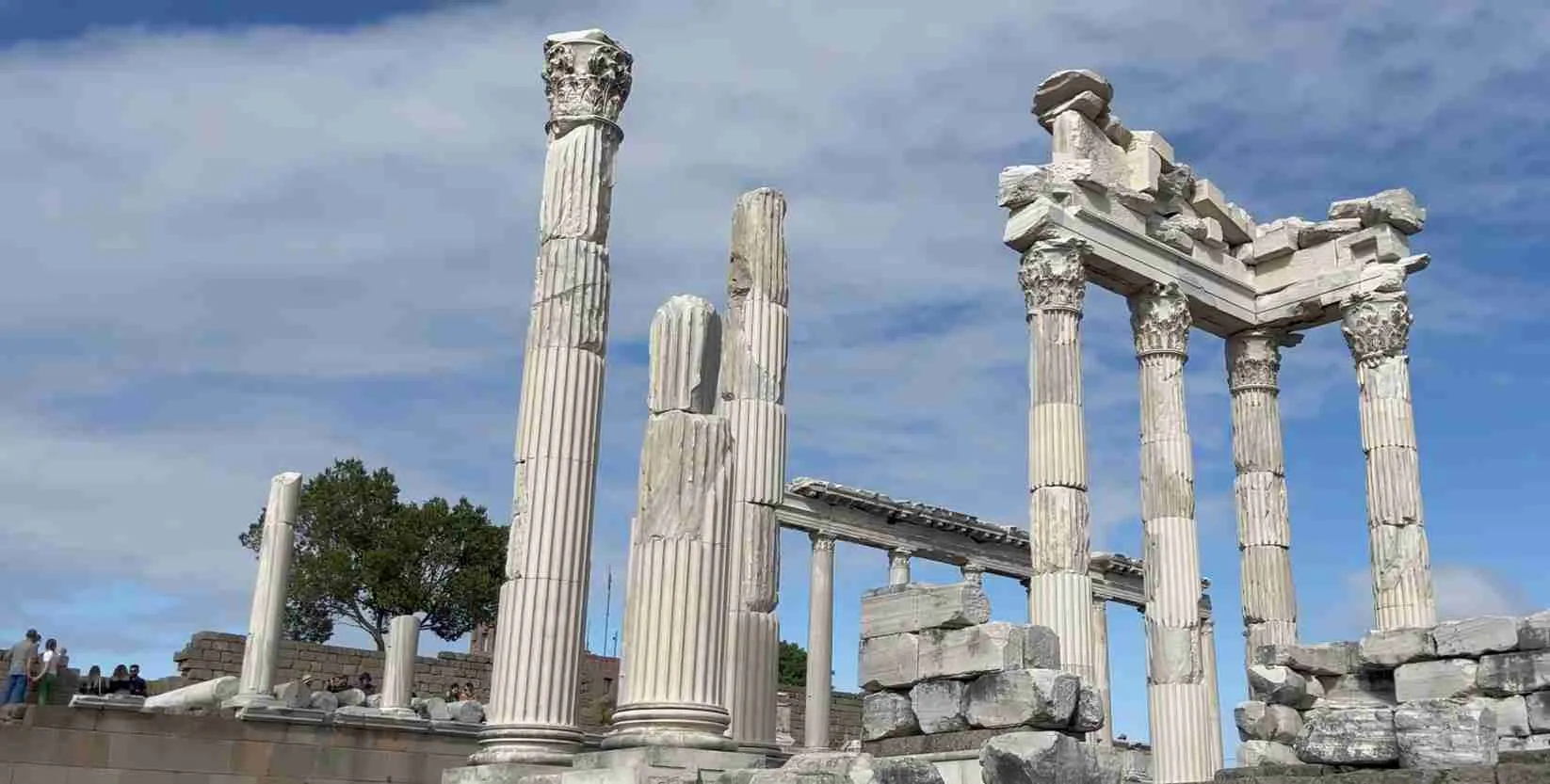
Pergamon and Its Multi-Layered Cultural Landscape (inscribed 2014): Hellenistic capital (3rd-2nd century BCE) known for the 200,000-volume library (second only to Alexandria) and Altar of Zeus (now in Berlin). The acropolis temples, theater, and agora overlook the Asclepeion healing sanctuary in the valley. Entry €25 acropolis, €15 Asclepeion, combined 4-5 hours visit. Located 100 kilometers north of Izmir near Bergama town.
Aphrodisias (inscribed 2017): Sculptors’ city dedicated to Aphrodite, producing masterwork marble statuary exported throughout the Roman Empire. The site preserves the Temple of Aphrodite, Stadium (30,000 capacity), Theater, Hadrianic Baths, and sculpture museum displaying discovered works. Entry €20, visit duration 3 hours. Located 230 kilometers southeast of Izmir, 100 kilometers inland from Aegean coast.
Hierapolis-Pamukkale (inscribed 1988): Mixed property combining the ancient spa city of Hierapolis with Pamukkale’s travertine terraces formed by calcium carbonate-rich thermal springs. The archaeological zone includes theater, necropolis (1,200 tombs), and bath-gymnasium complex, while the natural terraces create the distinctive “cotton castle” landscape. Entry €30 combined site access, visit duration 4-5 hours including thermal pool bathing. Located 250 kilometers east of Izmir near Denizli.
Xanthos-Letoon (inscribed 1988): Capital and religious sanctuary of ancient Lycia, featuring unique Lycian tomb architecture blending Greek temple forms with local traditions. The trilingual Letoon inscription (Lycian-Greek-Aramaic) proved crucial for deciphering the Lycian language. Entry €10 each site, combined 3-4 hours. Located 200 kilometers southeast of Izmir near Fethiye.
Troy (inscribed 1998): Nine successive cities spanning 4,000 years (3000 BCE – 500 CE) at the strategic Dardanelles crossing point, immortalized in Homer’s Iliad. The archaeological layers reveal Bronze Age citadel walls, Hellenistic temples, and Roman theater. Entry €15, visit duration 2-3 hours including museum. Located 350 kilometers north of Izmir near Çanakkale.
Sardis and Lydian Tumuli of Bin Tepe (inscribed 2025): Capital of the Lydian Kingdom where metal coinage was invented under King Croesus (6th century BCE), combined with royal burial mounds at Bin Tepe. The site includes the Temple of Artemis, Lydian fortifications, Roman gymnasium, and Byzantine shops. Entry €15 pending official 2026 pricing, visit duration 3 hours. Located 100 kilometers east of Izmir near Salihli.
Central Anatolia UNESCO Sites (4 properties)
Göreme National Park and Rock Sites of Cappadocia (inscribed 1985): Mixed property combining volcanic landscape erosion creating “fairy chimney” formations with Byzantine monastic rock-cut churches (6th-13th centuries) featuring extensive fresco programs. The property includes Göreme Open Air Museum, Zelve Open Air Museum, and underground cities (Derinkuyu, Kaymaklı). Entry €25 Göreme Museum, €10 Zelve, €10 each underground city, minimum 2 days required for adequate coverage. Located 730 kilometers southeast of Istanbul.
Hattusha: Hittite Capital (inscribed 1986): Bronze Age capital of the Hittite Empire (1600-1200 BCE) controlling Anatolia and challenging Egypt for Near Eastern supremacy. The 6-kilometer city walls incorporate Lion Gate, King’s Gate, and Sphinx Gate, enclosing the Great Temple, royal palaces, and cuneiform tablet archives. Entry €15, visit duration 4 hours for main zones. Located 200 kilometers east of Ankara near Boğazkale village.
Çatalhöyük Neolithic Site (inscribed 2012): Two mounds (East and West) representing 9,000-year-old proto-urban settlement where agriculture and animal domestication enabled humanity’s largest Neolithic population concentration (3,000-8,000 inhabitants). The roofless architecture, bull murals, and goddess figurines revolutionized understanding of Neolithic society. Entry €10, visit duration 2 hours including shelter and museum. Located 50 kilometers southeast of Konya.
Great Mosque and Hospital of Divriği (inscribed 1985): Seljuk architectural masterpiece (1228-1229 CE) featuring three ornately carved stone portals representing the peak of medieval Islamic decorative arts. The mosque and attached hospital (darüşşifa) demonstrate advanced medical facility design. Entry €10, visit duration 2-3 hours. Located 650 kilometers east of Ankara near Sivas, accessible via mountain roads.
Southeastern Anatolia UNESCO Sites (3 properties)
Göbekli Tepe (inscribed 2018): World’s oldest known temple complex (11,500 years old) predating agriculture, pottery, and metalworking, fundamentally challenging theories of civilization’s development sequence. The T-shaped limestone pillars (up to 5.5 meters tall) carved with animal reliefs suggest pre-agricultural societies capable of monumental architecture. Entry €15, visit duration 2-3 hours. Located 15 kilometers northeast of Şanlıurfa.
Nemrut Dağ (inscribed 1987): Royal tomb-sanctuary of King Antiochus I of Commagene (1st century BCE) at 2,134 meters elevation, featuring colossal 8-10 meter stone heads of Greek-Persian deities flanking the burial mound. Sunrise and sunset visits provide optimal lighting for the monumental sculptures. Entry €10, visit duration 3-4 hours including mountain ascent. Located 85 kilometers northeast of Adıyaman, accessible April-October only.
Diyarbakır Fortress and Hevsel Gardens Cultural Landscape (inscribed 2015): 5.8-kilometer circuit of basalt city walls (Roman foundation, Byzantine-Islamic modifications) enclosing the historic city core, combined with 7,000-year-old agricultural gardens along the Tigris River. The fortress includes İçkale citadel and Amida Mound archaeological zone. Entry free for walls, €5 citadel museums, walk duration 4-5 hours. Located 1,050 kilometers southeast of Istanbul.
Eastern Anatolia UNESCO Sites (2 properties)
Archaeological Site of Ani (inscribed 2016): Medieval Armenian capital (10th-11th centuries) controlling Silk Road trade routes, featuring cathedral, churches, mosques, and fortifications reflecting Armenian, Byzantine, and Seljuk architectural synthesis. The abandoned city’s dramatic clifftop setting overlooking the Armenian border creates haunting atmosphere. Entry €10, visit duration 3-4 hours. Located 45 kilometers east of Kars near Armenian border.
Arslantepe Mound (inscribed 2021): Archaeological tell documenting 5,000 years of continuous occupation (6th-2nd millennium BCE) revealing early state formation, palace architecture, and the transition from Chalcolithic to Early Bronze Age. The site’s mudbrick palace complex and administrative tablets demonstrate bureaucratic complexity. Entry €10, visit duration 2 hours including museum. Located 7 kilometers northeast of Malatya.
Black Sea Region UNESCO Sites (2 properties)
Safranbolu (inscribed 1994): Ottoman caravan city (13th-20th centuries) preserving 2,000 timber-frame houses demonstrating vernacular architecture adapted to hillside topography. The city’s three distinct quarters (Çukur bazaar, Kıranköy Christian quarter, Bağlar vineyard houses) showcase Ottoman urban planning. Entry free for town, €5 museum houses, exploration 4-5 hours. Located 400 kilometers northeast of Ankara.
Bursa and Cumalıkızık: Birth of Ottoman Empire (inscribed 2014): First capital of Ottoman Empire (1326-1365) establishing urban pattern and architectural vocabulary defining 600 years of Ottoman development. The property includes Green Mosque, Green Tomb, Bayezid I Complex, Grand Mosque, and intact Ottoman village of Cumalıkızık. Entry free for monuments, €5 museums, combined visit 5-6 hours. Located 150 kilometers southeast of Istanbul.
Optimal Route Planning: 22 Sites in 21 Days 2026
The three-week complete circuit requires accepting that eastern Anatolia’s remote sites necessitate longer driving days (300-400 kilometers) while western Anatolia’s dense site clustering permits shorter distances (150-200 kilometers) with multiple daily visits. The clockwise routing from Istanbul maximizes efficiency by progressing through increasingly remote regions before returning to Istanbul’s superior accommodation and transportation infrastructure. Daily schedules balance driving time (2-4 hours), site visits (3-6 hours), and rest/meals (2-3 hours) within sustainable 10-12 hour active days.
Week 1: Istanbul to Central Anatolia via Aegean Coast (Sites 1-11)
Days 1-2: Istanbul and Edirne (Sites 1-2) – Begin in Istanbul’s Historic Areas covering Sultanahmet Archaeological Park (day 1) and Süleymaniye/Zeyrek/Land Walls zones (morning day 2). Drive 235 kilometers northwest to Edirne for Selimiye Mosque afternoon visit (2-3 hours), return to Istanbul or overnight in Edirne. Combined distance 470 kilometers if returning, 235 kilometers if positioning toward Aegean coast via alternative route.
Day 3: Troy (Site 3) – Drive 350 kilometers south from Istanbul to Çanakkale via morning ferry crossing, visit Troy archaeological site (2-3 hours), overnight Çanakkale or continue 100 kilometers to Ayvalık. Strategic positioning for northern Aegean sites.
Day 4: Pergamon and Sardis (Sites 4, 11) – Visit Pergamon acropolis and Asclepeion (combined 5 hours), drive 100 kilometers south to Sardis for afternoon exploration (2-3 hours), overnight Izmir (50 kilometers further). Total distance 150 kilometers, heavy site visit day.
Day 5: Ephesus (Site 5) – Drive 80 kilometers south to Ephesus for full-day exploration including Terrace Houses (6-7 hours total), overnight Kuşadası or Selçuk. Single-site day warranted by Ephesus’s scale and significance.
Day 6: Aphrodisias and Pamukkale (Sites 6-7) – Drive 180 kilometers inland to Aphrodisias (3 hours visit), continue 70 kilometers to Pamukkale for afternoon/evening (3-4 hours including thermal bathing), overnight Pamukkale town. Total distance 250 kilometers.
Day 7: Xanthos-Letoon (Site 8) – Drive 200 kilometers southwest to Lycian coast, visit Xanthos and Letoon sites (combined 4 hours), overnight Fethiye or Kaş. Optional rest day on Mediterranean coast before turning inland.
Days 8-9: Cappadocia (Site 9) – Drive 550 kilometers northeast to Göreme via Antalya-Konya route (longest single drive segment, 7-8 hours), arrive evening day 8. Full day 9 exploring Göreme Open Air Museum, Zelve, and one underground city (Derinkuyu or Kaymaklı). Overnight Göreme both nights.
Day 10: Çatalhöyük and Hattusha positioning (Site 10) – Drive 250 kilometers north from Cappadocia, visit Çatalhöyük (2 hours), continue 350 kilometers to Boğazkale area for overnight near Hattusha. Total distance 600 kilometers, early start essential.
Day 11: Hattusha (Site 11) – Full morning exploring Hattusha archaeological zone (4-5 hours), afternoon drive 200 kilometers west to Ankara for overnight. Strategic positioning for southeastern route.
Week 2: Central to Southeastern Anatolia (Sites 12-15)
Day 12: Divriği (Site 12) – Drive 450 kilometers east from Ankara to Divriği (6-7 hours via mountain roads), visit Great Mosque (2 hours), overnight Divriği or return 80 kilometers to Sivas for better accommodation. Most remote single-site driving day.
Day 13: Göbekli Tepe positioning – Drive 550 kilometers southeast from Divriği/Sivas to Şanlıurfa (7-8 hours, longest driving day), arrive evening, overnight Şanlıurfa. No site visit, pure positioning day for southeastern circuit.
Day 14: Göbekli Tepe (Site 13) – Morning visit to Göbekli Tepe (2-3 hours including 15-kilometer drive each way), afternoon explore Şanlıurfa city (Halil-ür Rahman Mosque, pool of sacred fish, bazaar), overnight Şanlıurfa.
Day 15: Diyarbakır Fortress (Site 14) – Drive 190 kilometers east to Diyarbakır, afternoon walking the fortress walls and Hevsel Gardens (4-5 hours), overnight Diyarbakır.
Week 3: Eastern Anatolia Return via Mediterranean (Sites 16-22)
Day 16: Nemrut Dağ (Site 15) – Drive 200 kilometers west to Nemrut area, late afternoon ascent for sunset at summit (3-4 hours including mountain road time), overnight in Kahta or Adıyaman. Weather-dependent segment.
Day 17: Ani positioning – Drive 600 kilometers northeast to Kars (8-9 hours, second longest driving day), arrive evening, overnight Kars. Pure positioning for easternmost site.
Day 18: Ani (Site 16) – Morning visit to Ani (3-4 hours including 45-kilometer drive each way), afternoon return drive 180 kilometers west to Erzurum for overnight. Begin westward return.
Day 19: Arslantepe and Safranbolu positioning (Site 17) – Drive 350 kilometers west to Malatya, visit Arslantepe Mound (2 hours), continue 450 kilometers west toward Safranbolu area (overnight en route or push through to Safranbolu). Total distance 800 kilometers, split into two segments.
Day 20: Safranbolu and Bursa (Sites 18-19) – Morning exploring Safranbolu (3-4 hours), drive 350 kilometers west to Bursa for afternoon/evening (Green Mosque, Grand Mosque, Cumalıkızık village, 4 hours combined), overnight Bursa.
Day 21: Return to Istanbul (Site 20) – Drive 150 kilometers northwest to Istanbul, vehicle return, final evening in Istanbul Historic Areas or airport departure.
Transportation Costs and Car Rental Strategies 2026
Car rental for 21 days costs €840-1,260 (€40-60 daily) for economy manual transmission vehicles with comprehensive insurance coverage, representing the circuit’s second-largest expense category after accommodation. Automatic transmission vehicles add €15-20 daily premium (€315-420 total increase), while larger vehicles for 3-4 passengers or extended luggage capacity increase rates to €55-75 daily (€1,155-1,575 for 21 days). Rental rates fluctuate seasonally with April-May and September-October shoulder seasons offering 15-20% lower prices than June-August peak summer, while November-March off-season drops rates an additional 10-15% though eastern route segments become weather-compromised.
One-way rental fees for returning vehicles to different cities than pickup locations range €100-200 depending on distance, making Istanbul circular routes economically advantageous despite requiring the Edirne out-and-back detour on day 2. International rental companies (Avis, Europcar, Enterprise) charge 20-30% premiums over Turkish operators (Garenta, Circular, Filo) but provide superior roadside assistance, English-language support, and transparent insurance policies. Zero-deposit options available from select operators eliminate the €500-1,000 credit card hold standard rental deposits require, though daily rates increase €8-12 to offset the insurance cost.
Fuel Costs and Consumption Estimates 2026
Total fuel costs for the 4,500-kilometer route average €350-450 based on economy vehicle consumption of 6-7 liters per 100 kilometers and diesel prices of €1.35/liter projected for 2026 (current rate €1.25/liter subject to typical 8-10% annual increases). Diesel vehicles provide 20-25% better fuel economy than gasoline equivalents for highway-dominated driving, making the €3-5 daily diesel rental premium economically justified on routes exceeding 200 kilometers daily. Highway toll costs add €80-100 for the complete circuit, with the HGS electronic toll tag system (obtained from rental company, €20 deposit) providing automatic payment versus manual toll plaza stops.
Fuel station density varies dramatically by region, requiring strategic planning for remote segments. Western Anatolia and Marmara region maintain stations every 30-50 kilometers along major highways, while eastern Anatolia stretches (particularly Divriği-Şanlıurfa and Kars-Malatya segments) require fueling at every opportunity with potential 150-200 kilometer gaps between stations. Fuel costs typically run 5-8% higher at highway service stations versus city stations, with provincial capitals (Izmir, Ankara, Diyarbakır, Kars) offering the best prices.
Vehicle Selection and Road Condition Considerations
Economy sedans (Renault Clio, Fiat Egea, Volkswagen Polo class) handle the entire circuit adequately including unpaved access roads to Nemrut summit and Ani archaeological zone, though ground clearance limitations make careful driving essential on these segments. SUV or crossover upgrades (€10-15 daily premium, €210-315 total) provide psychological comfort rather than technical necessity, with the exception of early spring or late fall timing when unpaved mountain roads to Nemrut and Divriği may involve snow/mud conditions warranting higher clearance.
Manual transmission vehicles dominate Turkish rental fleets, with automatic options limited to 20-30% of inventory and requiring advance booking 4-6 weeks ahead during shoulder season, 8-10 weeks for summer peak. International Driving Permits technically required for non-EU license holders though enforcement varies, with rental companies focusing primarily on minimum age requirements (typically 21-25 depending on vehicle class) and credit card payment capability.
Accommodation Strategies Across Seven Regions 2026
Accommodation costs range €630-2,100 per person for 20 nights (21-day circuit) depending on budget category: hostel dormitories €10-15 nightly (€200-300 total), budget hotels/guesthouses €30-40 nightly (€600-800 total), mid-range boutique properties €60-80 nightly (€1,200-1,600 total), and luxury cave hotels/heritage properties €100-150+ nightly (€2,000-3,000+ total). Two-person teams sharing double rooms reduce per-person accommodation costs by 50%, bringing mid-range totals to €600-800 per person or €1,200-1,600 per room for the three-week circuit.
Regional accommodation cost variations require adjusted daily budgets, with Istanbul, Cappadocia, and Aegean coastal areas commanding 30-50% premiums over central and eastern Anatolia cities. Istanbul mid-range hotels average €80-120 nightly in Sultanahmet or Beyoğlu districts versus €40-60 for equivalent quality in Diyarbakır or Kars. Cappadocia’s cave hotel uniqueness drives rates to €100-250 for mid-range properties that would cost €50-80 elsewhere, though the experience justifies the premium for 2-night allocation. Advance booking 6-8 weeks ahead for shoulder season (April-May, September-October) locks favorable rates and guarantees availability in smaller cities (Divriği, Kahta, Boğazkale) with limited tourist infrastructure.
Strategic Accommodation Locations by Route Segment
Days 1-2 (Istanbul-Edirne): Base in Istanbul Sultanahmet district for proximity to Historic Areas sites, or Edirne town center for Selimiye Mosque access if choosing overnight there. Istanbul options €40-150 depending on quality, Edirne €30-70 for equivalent standards.
Days 3-7 (Northern Aegean to Lycian coast): Çanakkale (day 3, €35-80), Izmir or Bergama (day 4, €40-90), Kuşadası or Selçuk (day 5, €35-75), Pamukkale town (day 6, €30-70), Fethiye or Kaş (day 7, €40-100 with coastal location premium). Western Turkey’s dense tourist infrastructure provides abundant options at all price points.
Days 8-11 (Cappadocia-Central Anatolia): Göreme or Uçhisar (days 8-9, €50-250 cave hotels spanning budget to luxury), Sivas or Boğazkale village (day 10, €30-60 limited options), Ankara (day 11, €50-100 urban standards). Cappadocia merits the circuit’s highest accommodation investment for unique cave hotel experience, while Boğazkale/Sivas represent more basic comfort levels.
Days 12-15 (Southeastern circuit): Divriği or Sivas (day 12, €25-50 basic standards), Şanlıurfa (days 13-14, €35-70), Diyarbakır (day 15, €30-60). Southeastern cities offer authentic local hotels rather than tourist-oriented properties, with cleanliness and safety standards consistent but fewer English-speaking staff and Western breakfast options.
Days 16-20 (Eastern Anatolia and return): Kahta or Adıyaman (day 16, €30-60), Kars (days 17-18, €35-70), Malatya or Sivas (day 19, €30-60), Safranbolu (day 20, €40-80 Ottoman mansion hotels), Bursa (day 20, €45-90). Eastern cities’ limited tourism development means basic but adequate standards, while Safranbolu and Bursa offer heritage property charm at western Anatolia pricing.
Booking Platforms and Local Alternatives 2026
International booking platforms (Booking.com, Hotels.com) provide English-language interface, credit card payment, and free cancellation policies for 70-80% of western Turkey properties but limited coverage in eastern cities where local booking services (Otelz.com, Etstur.com) access more inventory. Direct hotel contact via phone or email in smaller cities (Divriği, Boğazkale, Kahta) often negotiates 10-15% better rates than platform commissions allow, particularly for multi-night stays or shoulder season timing. Payment flexibility varies by region, with western properties universally accepting credit cards while eastern Anatolia hotels may require cash for smaller establishments.
Booking insurance considerations for the three-week circuit favor free cancellation options for days 12-18 (Divriği through Kars segment) where weather, road closures, or stamina issues most commonly force itinerary adjustments. Prepaid non-refundable rates save 15-25% on accommodation costs but eliminate flexibility for the eastern route’s inherent unpredictability.
UNESCO Site Entrance Fees and Museum Pass Optimization 2026
Individual entrance tickets for Turkey’s 22 UNESCO sites total €450-550 when purchased separately, with major properties commanding €25-40 entry fees, secondary sites €10-20, and smaller properties €5-15. The Turkey Museum Pass system offers strategic savings opportunities through regional passes (Istanbul €100/5 days, Cappadocia €65/3 days, Aegean €95/7 days, Mediterranean €85/7 days) and the comprehensive 15-day Turkey Museum Pass (€185) covering most national properties. Calculating optimal pass usage requires mapping actual planned visits against pass coverage, as several UNESCO sites fall outside the museum pass system or require additional fees beyond pass entry.
Sites requiring separate tickets despite holding passes include Hagia Sophia upper gallery (€25, only ground-floor worship area covered by pass), Topkapı Palace Harem section (€20, main palace covered), Ephesus Terrace Houses (€15, main Ephesus covered), and Göreme Dark Church (€10, main Open Air Museum covered). These four additional charges add €70 to costs for travelers holding passes who wish comprehensive site access, reducing the pass’s effective savings from the initial calculation. Free-entry sites (Diyarbakır fortress walls, Xanthos-Letoon pending 2026 pricing updates) and low-cost properties (Arslantepe €10, Ani €10, Nemrut €10) further diminish pass value for travelers skipping premium upcharges.
Museum Pass Purchase Strategy for 3-Week Circuit
The 15-day Turkey Museum Pass (€185) becomes economical when visiting 6+ major sites across multiple regions during the validity period, making it suitable for the complete UNESCO circuit with strategic timing. Purchase the pass on day 4 (Pergamon visit) to maximize coverage through day 18 (Ani), encompassing the Aegean-Central-Southeastern-Eastern circuit’s museum-heavy segment while excluding Istanbul (days 1-2, visited before pass activation) and final western sites (days 19-21, visited after expiration). This strategy provides pass coverage for Pergamon (€25), Sardis (€15), Ephesus (€40), Aphrodisias (€20), Pamukkale (€30), Cappadocia sites (€45 combined), Hattusha (€15), Göbekli Tepe (€15), saving €205 on €185 investment for net €20 benefit before considering time savings from skip-the-line entry.
Alternative strategy purchases separate regional passes: Aegean Pass €95 (covering Pergamon, Sardis, Ephesus, Aphrodisias, Pamukkale for total individual ticket value €130, saving €35) plus Cappadocia Pass €65 (covering €45 individual tickets, losing €20) for €160 total investment versus €185 Turkey Pass. This approach provides better value (€160 versus €185) but sacrifices the comprehensive pass’s psychological simplification and skip-the-line convenience at all properties rather than just pass-covered regions.
Budget travelers visiting only “essential” UNESCO sites (Istanbul, Ephesus, Cappadocia, Göbekli Tepe, Ani) save money through individual tickets (total €135-165) versus any pass purchase, accepting longer ticket queue wait times during peak seasons. This selective approach requires disciplined willingness to skip notable properties like Pergamon, Aphrodisias, and Pamukkale that museum passes encourage visiting since marginal entry cost becomes zero once pass is purchased.
Cash Requirements and Payment Options at Sites 2026
Major UNESCO sites (Istanbul properties, Ephesus, Cappadocia, Pamukkale) accept credit cards for ticket purchases, while remote properties (Divriği, Nemrut, Ani, Arslantepe) often require cash Euros or Turkish Lira. Carry €100-150 cash reserve for ticket purchases at smaller sites, remote mountain road tolls, and parking fees (€2-5 at most archaeological sites). ATM availability in provincial capitals (Izmir, Ankara, Diyarbakır, Kars) but limited in smaller cities (Divriği, Kahta, Boğazkale) necessitates strategic cash withdrawals before entering remote segments.
Museum Pass Turkey must be purchased online via official website (muze.gov.tr/muzepass) or at major site ticket offices (Topkapı Palace, Hagia Sophia, Ephesus, Göreme Open Air Museum). Physical card delivery within Turkey takes 3-5 business days while digital pass provides immediate QR code access, making online pre-purchase 2-3 weeks before trip start the optimal strategy. Regional passes similarly available online with instant digital delivery or at major regional sites.
Daily Budget Breakdown by Travel Style 2026
Total three-week costs range €2,100-4,200 per person (€100-200 daily average) with significant variation by travel style category: budget €2,100-2,600 (€100-125 daily), mid-range €2,800-3,500 (€135-165 daily), and comfort-luxury €4,000-5,500 (€190-260 daily). These totals assume two-person teams sharing accommodation and car rental costs; solo travelers add 35-45% to accommodation and transportation categories, raising budget tier to €2,900-3,400, mid-range to €3,800-4,600, and luxury to €5,200-7,200 per person.
Daily budget allocations across five expense categories follow consistent proportional patterns: accommodation 30-35%, food and beverages 25-30%, transportation (fuel, tolls, parking) 15-20%, site entrance fees 12-18%, and miscellaneous (snacks, water, photos, tips) 8-12%. The southeastern and eastern Anatolia weeks (days 12-20) reduce daily costs 20-25% below the Istanbul and Aegean coastal weeks due to lower accommodation rates and restaurant prices in less-developed tourism regions, partially offsetting higher fuel costs from longer driving distances those segments require.
Budget Travel Style Daily Costs 2026
Budget €100-125 daily breakdown: accommodation €15-20 (hostel dormitory or budget guesthouse shared room), food €20-25 (street food breakfast €3-5, casual restaurant lunch €8-10, dinner €8-10), transportation €20-25 (fuel €17-20 daily average for 215-kilometer daily distance, tolls €3-5), UNESCO site entrance €22-26 (with Museum Pass optimization, higher on non-pass days), miscellaneous €10-15. Total budget allocation for 21 days: €2,100-2,600 per person including all categories.
Budget accommodation strategy prioritizes hostel dormitories in major cities (Istanbul, Izmir, Cappadocia €10-15 nightly) and basic guesthouses in smaller cities (€15-25 nightly), accepting simpler facilities and shared bathrooms for cost optimization. Food costs minimize through street food maximization (simit breakfast sandwiches €2-3, döner kebab lunches €5-7, lahmacun dinners €4-6) and supermarket snacking rather than sit-down restaurant meals. Transportation savings come from fuel-efficient manual transmission economy cars (€40 daily rental) and avoiding premium highway tolls where alternative routes exist.
Budget travelers using this daily allocation complete the three-week circuit for €2,100-2,600 total including €840 car rental (€40 daily × 21 days), €300-420 accommodation (€15-20 nightly × 20 nights plus Istanbul arrival evening), €420-525 food (€20-25 daily), €350-450 fuel and tolls, €185 15-day Turkey Museum Pass plus €75-90 additional tickets for sites outside pass coverage or after expiration, and €210-315 miscellaneous. Two-person teams sharing split accommodation and car costs reduce individual burden to €1,650-2,050 per person.
Mid-Range Travel Style Daily Costs 2026
Mid-range €135-165 daily breakdown: accommodation €30-40 (boutique hotel or mid-range property shared double room, €60-80 per room ÷ 2 persons), food €30-40 (hotel breakfast included in many properties, sit-down restaurant lunch €12-18, dinner €18-22), transportation €22-28 (fuel €18-22, tolls and parking €4-6), UNESCO site entrance €22-26 (Museum Pass optimization), miscellaneous €15-20. Total mid-range allocation for 21 days: €2,835-3,465 per person.
Mid-range accommodation balances comfort and character through boutique properties in historic buildings (Safranbolu Ottoman mansions, Cappadocia cave hotels, Aegean coastal properties) at €60-80 nightly, providing private bathrooms, air conditioning, and typically breakfast inclusion. Food budget allows sit-down restaurant meals with mezes, main courses, and desserts rather than street food subsistence, accessing regional cuisine specialties and more comfortable dining environments. Transportation upgrades to automatic transmission rental (€55-60 daily) reduce driving fatigue on 300-400 kilometer eastern segment days.
Mid-range travelers complete the circuit for €2,835-3,465 including €1,155-1,260 car rental (€55-60 daily × 21 days), €600-800 accommodation (€30-40 per person nightly × 20 nights), €630-840 food, €380-480 fuel and tolls, €185 Museum Pass plus €75-90 additional tickets, and €315-420 miscellaneous. Solo travelers bear full accommodation and car costs raising totals to €3,800-4,600 per person.
Comfort-Luxury Travel Style Daily Costs 2026
Comfort-luxury €190-260 daily breakdown: accommodation €60-100 (luxury cave hotel Cappadocia, heritage property elsewhere, €120-200 per room ÷ 2 persons), food €45-65 (upscale restaurants, wine with dinner, hotel breakfast), transportation €28-35 (fuel €22-27 including SUV consumption, premium parking and tolls €6-8), UNESCO site entrance €25-30 (all premium additions like Terrace Houses, Harem, Dark Church included), miscellaneous €25-35. Total luxury allocation for 21 days: €3,990-5,460 per person.
Luxury accommodation strategy prioritizes unique heritage properties: Cappadocia cave hotels with thermal pools and terrace breakfast (€150-250 nightly), Istanbul boutique hotels in restored Ottoman mansions (€120-200), Safranbolu historic mansion conversions (€80-120), providing maximum cultural immersion and comfort. Food budget accesses upscale restaurants specializing in Ottoman cuisine revival, Aegean seafood, southeastern kebab traditions with extensive mezes and local wine pairings. Transportation upgrades to SUV rental (€65-75 daily) provide maximum comfort for long eastern driving segments.
Luxury travelers complete the circuit for €3,990-5,460 including €1,365-1,575 car rental (€65-75 daily × 21 days), €1,200-2,000 accommodation (€60-100 per person nightly × 20 nights), €945-1,365 food, €460-580 fuel and tolls, €185 Museum Pass plus €120-150 additional premium tickets, and €525-735 miscellaneous. Solo luxury travelers reach €5,200-7,200 per person bearing full accommodation and car costs.
Seasonal Timing Optimization for 2026
April-May and September-October shoulder seasons provide optimal conditions for the complete UNESCO circuit, balancing comfortable temperatures across Turkey’s diverse climate zones, minimal precipitation risks for eastern mountain segments, smaller crowds at major western sites, and 30-40% lower accommodation costs than June-August peak summer. Temperature ranges during shoulder seasons span 12-25°C in Istanbul and Aegean regions, 8-20°C in central Anatolia, and 5-18°C in eastern highlands, requiring layered clothing for morning site visits and warm afternoons.
Spring (April-May) advantages include wildflower landscapes throughout Anatolia, optimal photography lighting conditions with clear skies, and Cappadocia balloon flight season beginning with stable weather patterns. Spring disadvantages include potential snow lingering on Nemrut summit access road through mid-April (requiring flexibility to skip if inaccessible), higher precipitation probability in Black Sea region (Safranbolu), and Ramadan timing (April 1-30 in 2026) affecting restaurant hours and alcohol availability in southeastern cities during daylight hours.
Fall (September-October) advantages include harvest season food availability (figs, pomegranates, walnuts), stable weather patterns post-summer heat, and reliably accessible mountain roads before winter snow. Fall disadvantages include earlier sunsets reducing afternoon site visit hours (sunset 6:00-6:30 PM versus 7:30-8:00 PM in spring), potential early snow in eastern highlands after mid-October, and shoulder season accommodation reduced hours in very small cities requiring advance confirmation of property operating status.
Summer Peak Season Considerations (June-August)
Summer advantages include maximum daylight hours (sunrise 5:30 AM, sunset 8:00 PM) extending site visit flexibility, guaranteed road accessibility throughout eastern segments, and extensive accommodation availability with all seasonal properties operating. Summer disadvantages include intense heat in central and southeastern Anatolia (35-42°C afternoon temperatures in Cappadocia, Şanlıurfa, Diyarbakır), massive crowds at major western sites (Ephesus, Istanbul, Cappadocia) requiring early morning visits before tour bus arrivals, accommodation costs 40-50% higher than shoulder season, and air conditioning becoming essential for comfortable room selection.
Heat management strategies for summer timing include early site visit starts (7:00-8:00 AM arrivals before peak heat), midday driving breaks with air-conditioned rest, late afternoon/evening secondary site visits after temperature drops, and extensive water consumption (2-3 liters daily per person, budget €5-8 daily for bottled water). Istanbul and Aegean coastal cities provide relative relief through sea breezes, while Cappadocia’s elevation (1,200 meters) moderates temperatures to 28-35°C versus lower elevation extremes.
Winter Season Limitations (November-March)
Winter travel reduces circuit feasibility through road closures affecting Nemrut summit access (November-March complete closure), potential snow blocking eastern highland routes (Divriği, Erzurum-Kars segment), accommodation closures in seasonal tourism cities (Göreme cave hotels 30-40% closed November-February), and shortened daylight hours (sunset 5:00-5:30 PM) compressing site visit windows. Winter advantages include lowest accommodation costs (40-60% below peak summer), near-empty sites providing contemplative experiences, and Istanbul’s mild maritime climate (8-15°C) maintaining year-round appeal.
Modified winter route eliminating eastern segment mountain challenges covers 14 UNESCO sites (Istanbul, Edirne, Troy, Pergamon, Sardis, Ephesus, Aphrodisias, Pamukkale, Xanthos-Letoon, Cappadocia, Çatalhöyük, Hattusha, Safranbolu, Bursa) within 14-16 days, sacrificing Divriği, Göbekli Tepe, Nemrut, Diyarbakır, Ani, and Arslantepe but maintaining comfortable driving conditions throughout. This abbreviated circuit reduces total distance to 2,800 kilometers and costs to €1,400-2,800 per person depending on travel style.
Food and Dining Strategies Across Regions 2026
Daily food costs range €20-65 per person (€420-1,365 for 21 days) depending on dining category selection: budget street food and casual restaurants €20-25 daily, mid-range sit-down restaurants with regional specialties €30-40 daily, and upscale establishments with extensive mezes and wine €45-65 daily. Regional price variations favor eastern Anatolia where equivalent meal quality costs 30-40% less than Istanbul and Aegean coastal tourist zones, with full multi-course dinners in Diyarbakır or Kars restaurants running €12-18 versus €25-35 for comparable meals in Istanbul or Kuşadası.
Turkish breakfast culture provides exceptional value through hotel breakfast buffets included in most mid-range and luxury accommodation rates (worth €8-12 if purchased separately) featuring bread, cheese, olives, tomatoes, cucumbers, eggs, jams, honey, and unlimited tea. Budget travelers choosing accommodation without breakfast access supermarket breakfast supplies (bread, cheese, yogurt, fruit) for €4-6 daily or bakery breakfast (simit, börek, tea) for €3-5, saving €3-7 daily versus sit-down breakfast café costs.
Regional Cuisine Specialties and Must-Try Dishes
Istanbul and Marmara region specialties include fresh seafood restaurants along Bosphorus (€25-45 per person for fish main course, mezes, raki), street food classics (balık ekmek fish sandwiches €5-8, midye dolma stuffed mussels €1-2 each), and Ottoman palace cuisine revivals (hünkar beğendi, mantı, €18-30 main courses at upscale restaurants). Breakfast in Istanbul’s traditional börekçi pastry shops (€5-8 for börek, tea, yogurt) provides authentic local experience below tourist restaurant pricing.
Aegean coast dining emphasizes olive oil vegetable dishes (zeytinyağlı), fresh seafood in coastal towns (Fethiye, Kuşadası €20-35 per person for grilled fish, salad, appetizers), and Izmir’s specialty köfte meatballs (€8-15 main course portions). Regional meyhane taverns offer extensive meze selections with raki (anise spirit) for €25-40 per person covering 6-8 small plates plus main course, providing cost-effective exposure to diverse Aegean flavors.
Central Anatolia cuisine features pastoral traditions including mantı dumplings (€6-10 portions, Kayseri specialty near Cappadocia), testi kebab pottery-cooked stews (€15-22, Cappadocia signature dish worth premium pricing for theatrical presentation), and substantial soups (mercimek lentil, ezogelin red lentil with bulgur, €3-5 bowls). Cappadocia’s wine production provides quality local wine options (€15-25 bottles) below Istanbul restaurant wine pricing.
Southeastern Anatolia showcases intense spice traditions through Urfa kebab (€10-15, Şanlıurfa signature dish using distinctive sweet chili peppers), lahmacun thin-crust meat flatbread (€3-5 each), and extensive mezze culture including çiğ köfte raw bulgur patties (€5-8 portions) and muhammara red pepper walnut spread. Regional portion sizes substantially exceed western Turkey standards, with single kebab plates often feeding 1.5-2 persons.
Eastern Anatolia specialties include Kars region cheese varieties (kaşar, gravyer, çeçil €8-12 per kilogram from local producers), honey production (€15-25 per kilogram), and substantial breakfast spreads (€6-10 per person at regional hotels). Mountain region meat-heavy cuisine centers on grilled kebabs and stews rather than Aegean vegetable diversity.
Budget Food Strategies and Money-Saving Tips
Supermarket lunch assembly (bread, cheese, tomatoes, cucumbers, olives, fruit) costs €5-8 versus €12-18 restaurant lunch, saving €100-150 over 21 days for budget travelers accepting non-restaurant midday meals. Major supermarket chains (Migros, CarrefourSA, A101, ŞOK) provide consistent availability in cities above 50,000 population, while smaller towns require local market or bakery sourcing. Carry cooler bag or insulated pouch for perishable lunch supplies during driving days between cities.
Lunch as main restaurant meal rather than dinner saves 25-35% on daily food costs, as Turkish restaurants often offer lunch specials (günün yemeği) featuring soup, main course, rice, and salad for €7-12 versus €15-22 evening à la carte equivalents. Business district restaurants near city centers provide best lunch special value versus tourist zone pricing premiums.
Water costs accumulate significantly during summer heat requiring 2-3 liters daily consumption per person. Supermarket bulk water purchases (6-liter bottles €1-1.50, 1.5-liter bottles €0.40-0.60) save 60-70% versus tourist area kiosk pricing (€1.50-2.50 per 500ml bottle). Refill smaller bottles from large container throughout day rather than constant small bottle purchases.
Practical Logistics and Pre-Trip Planning 2026
Visa requirements for Turkey apply differently based on nationality, with EU citizens, UK citizens, and US citizens eligible for e-Visa approval (90 days validity, $50 fee for US citizens, free for UK after 2024 policy change, varying by EU nationality). E-Visa applications process within 24-48 hours through official evisa.gov.tr portal, required before arrival at Turkish airports or land borders. Multiple-entry provisions allow departure and re-entry during 90-day validity period, though the UNESCO circuit’s 21-day duration makes single entry typical.
Travel insurance for comprehensive 21-day heritage road trip should include vehicle collision damage waiver coverage (supplements rental company CDW), medical emergency coverage for remote eastern regions where nearest hospitals may be 200+ kilometers distant, and trip interruption coverage for weather-related road closures or accommodation issues affecting days 12-18 eastern segment. Annual travel insurance policies (€150-300 depending on coverage levels and traveler age) become economical for travelers making multiple international trips yearly versus single-trip policies (€80-120 for 21-day Turkey coverage).
Essential Pre-Departure Preparations
Car rental reservation 6-8 weeks before departure secures optimal vehicle availability and rates, particularly crucial for automatic transmission vehicles representing 20-30% of Turkish rental fleet and booking quickly during shoulder season peak demand. Confirm rental includes comprehensive damage insurance, unlimited mileage (essential for 4,500-kilometer route), additional driver option if traveling with partner for shared driving responsibility, and HGS toll tag for automatic highway toll payment avoiding manual plaza stops.
Accommodation booking timeline varies by property type and season: Istanbul and Cappadocia require 6-8 weeks advance booking for shoulder season mid-range properties, 10-12 weeks for summer peak, ensuring availability in preferred districts (Istanbul Sultanahmet, Cappadocia Göreme/Uçhisar). Eastern Anatolia smaller cities (Divriği, Kahta, Boğazkale) accept shorter 2-4 week booking windows given limited tourist volume, though confirming operating status during intended dates prevents arriving at seasonal closures. Free cancellation booking policies for days 12-18 eastern segment preserve flexibility for weather-related itinerary adjustments without financial penalty.
Museum Pass Turkey purchase 2-3 weeks before departure through official online portal (muze.gov.tr/muzepass) provides digital pass immediate access, avoiding on-site purchase time at major museums during trip. Regional pass strategies require day-of-visit purchase at first site within region (Aegean Pass at Ephesus or Pergamon ticket office, Cappadocia Pass at Göreme Open Air Museum), as physical card activation begins immediately rather than at first use like the digital Turkey Pass.
Technology and Connectivity Planning
Mobile phone connectivity requires either international roaming activation with home carrier (expensive option, €10-15 daily typical charges) or local Turkish SIM card purchase (€15-25 for 30-day tourist packages with 20-50GB data, unlimited domestic calls). Turkcell, Vodafone Turkey, and Türk Telekom provide airport kiosk purchase upon arrival with passport registration required by Turkish telecommunications law. Tourist SIM packages specifically designed for international visitors include English-language support and simplified activation versus domestic plan complexity.
Data requirements for navigation (Google Maps offline map downloads recommended for eastern regions with spotty 4G coverage), translation apps (Google Translate offline Turkish package essential for southeastern Anatolia limited English environments), and accommodation/restaurant research average 3-5GB daily, making 30-day 20-30GB packages adequate for three-week circuit with moderate streaming constraint. Wi-Fi availability in hotels covers evening accommodation research though speed/reliability varies dramatically by region, with Istanbul and Aegean coast providing consistent broadband versus eastern Anatolia often limited to 3-5 Mbps connections.
GPS navigation applications work reliably throughout Turkish road network with Google Maps providing most comprehensive coverage including real-time traffic updates for Istanbul and Ankara urban segments. Offline map downloads for entire Turkey (2-3GB storage requirement) ensure navigation continuity through remote eastern segments where cellular data coverage becomes intermittent. Physical road atlases provide backup navigation for technology failures though Turkish road signage generally maintains adequate clarity for major route following.
Cultural Context and Site Visit Enhancement Strategies
Understanding Turkey’s layered civilizational history—Hittite Bronze Age empires, Hellenistic cultural diffusion, Roman provincial administration, Byzantine Christian dominance, Seljuk Turkic arrival, and Ottoman synthesis—transforms UNESCO site visits from architectural tourism into comprehension of human cultural evolution. Each property represents specific phases within this 8,000-year continuum: Çatalhöyük (Neolithic agricultural revolution), Hattusha (Bronze Age imperial capitals), Troy (Greek mythological geography), Ephesus (Roman urbanization peak), Cappadocia (Byzantine monasticism), Istanbul (Ottoman Islamic power), providing chronological progression when visited in historical rather than geographical sequence.
Pre-trip historical preparation through targeted reading enhances site appreciation exponentially over arriving unprepared. Essential background resources include “Turkey: A Modern History” by Erik-Jan Zürcher for Ottoman-modern context, “Sailing from Byzantium” by Colin Wells for Byzantine cultural transmission, and “Ancient Turkey: A Traveller’s History of Anatolia” by Seton Lloyd for pre-Christian foundations. Site-specific guidebooks (“Ephesus Handbook” by Peter Scherrer, “Cappadocia: History and Architecture” by Spiro Kostof) provide depth exceeding general Turkey guidebooks’ brief UNESCO site summaries.
On-Site Guide Services and Audio Tour Options
Professional local guide hiring transforms major site experiences through expert interpretation exceeding audio guide or independent exploration comprehension. Istanbul Historic Areas merit full-day guide service (€150-200 for 6-8 hours, up to 6 persons) covering Hagia Sophia architectural evolution, Topkapı Palace harem politics, and Blue Mosque Ottoman design philosophy. Ephesus similarly benefits from 3-4 hour guided tours (€80-120) explaining Library of Celsus reconstruction, Terrace Houses fresco programs, and commercial agora trading mechanisms invisible to independent visitors scanning marble ruins without historical framework.
Cappadocia’s geological complexity and dispersed church frescos warrant either guided tours (€100-150 for full-day Göreme, Zelve, underground city coverage) or self-guided exploration with strong audio guide usage (€10-15 rental at Göreme Open Air Museum). The Dark Church’s exceptional 11th-century frescos justify the €10 separate entrance fee beyond standard museum entry, rewarding visitors with the region’s finest Byzantine painting survival.
Budget travelers substituting independent exploration for guide services should invest 30-60 minutes pre-visit research reading site-specific Wikipedia articles, watching YouTube documentary content (Rick Steves Turkey episodes, UNESCO World Heritage site videos), and reviewing archaeological site maps identifying key structures before arrival. This self-education approach reduces guide dependency while maintaining interpretive depth exceeding casual wandering with smartphone photography focus.
Photography Considerations and Optimal Timing
Photography restrictions apply selectively across UNESCO sites with Hagia Sophia interior and Topkapı Palace Harem sections prohibiting photography entirely, Göreme Open Air Museum churches allowing photos without flash (€10 additional photo permit for churches with exceptional frescos), and outdoor archaeological sites (Ephesus, Pergamon, Ani) permitting unlimited photography. Professional photography equipment (tripods, drone usage) requires separate permits (€50-150 depending on site) obtained through Ministry of Culture advance application, impossible to arrange during circuit timeline making handheld/monopod photography the practical maximum.
Optimal photography timing prioritizes early morning light (7:00-9:00 AM) for eastward-facing structures (Library of Celsus at Ephesus, Ani Cathedral), late afternoon/sunset (5:00-7:00 PM) for westward orientations (Nemrut summit sculptures, Cappadocia fairy chimneys), and midday light penetration for columned interiors (Ephesus arcaded street, Pergamon theater). Seasonal daylight hours affect golden hour availability with summer (5:30 AM sunrise, 8:00 PM sunset) providing extended photography windows versus winter (7:00 AM, 5:30 PM) compressed timeframes.
Regional Route Segments: Detailed Navigation Guide 2026
The seven regional route segments comprising the complete circuit each present distinct driving conditions, scenic characteristics, and logistical considerations requiring segment-specific preparation and realistic daily distance expectations. Understanding regional navigation nuances, highway versus secondary road options, urban traffic patterns, and mountain pass considerations prevents common route-planning errors that create unrealistic daily schedules and traveler fatigue.
Segment 1: Istanbul-Marmara Region (Days 1-3, 235-470 kilometers)
Istanbul urban navigation challenges include aggressive traffic culture, complex highway interchange systems, and limited parking near Historic Areas sites requiring acceptance of paid lots (€10-15 daily) or peripheral parking with public transport connections. The Edirne detour (235 kilometers each way) utilizes O-3/E-80 highway offering smooth 2-hour drives each direction, though heavy truck traffic on this Istanbul-Bulgaria route requires defensive driving awareness. Alternative routing continues south from Edirne toward Çanakkale (400 kilometers) rather than returning to Istanbul, saving backtracking but requiring larger vehicle luggage capacity for 21-day circuit supplies versus Istanbul mid-trip hotel storage option.
Çanakkale ferry crossing (30-40 minutes, €5 per vehicle plus €2 per passenger, frequent departures) connects Europe and Asia sides of the Dardanelles, with Troy located on Asian side 30 kilometers south of ferry terminal. Ferry timing affects daily schedule flexibility with departures every 30-60 minutes during daylight (6:00 AM-10:00 PM) but reduced overnight frequency requiring schedule consultation for early/late crossings.
Segment 2: Northern Aegean Coast (Days 4-5, 180-250 kilometers)
Bergama (Pergamon) to Izmir route offers coastal scenic option (O-31 highway paralleling Aegean, 100 kilometers, 2 hours) versus faster inland route (E-87, 100 kilometers, 1.5 hours), with coastal selection providing superior views and small town lunch stops (Ayvalık, Foça) at cost of 30-minute additional driving. Izmir urban traffic density during morning (7:00-9:00 AM) and evening (5:00-7:00 PM) rush hours adds 30-45 minutes to standard driving times, making midday or late evening Izmir transits optimal for schedule efficiency.
Izmir to Ephesus segment (80 kilometers, 1-1.5 hours) follows O-31/E-87 divided highway with minimal challenges, though approaching Ephesus requires exiting to D-550 secondary road for final 15 kilometers including entrance parking. Kuşadası coastal resort location offers superior evening dining and accommodation atmosphere versus inland Selçuk town proximity to Ephesus (3 kilometers), with the accommodation location choice balancing convenience (Selçuk) versus resort amenities (Kuşadası 18 kilometers from site).
Segment 3: Central Aegean to Mediterranean (Days 6-7, 350-450 kilometers)
Ephesus to Pamukkale inland route (250 kilometers, 3.5-4 hours) transitions from coastal plain through Büyük Menderes River valley on D-585 secondary road offering agricultural landscape views and lunch stops in traditional towns (Nazilli, Sarayköy). Aphrodisias detour adds 70 kilometers (1 hour) via rural access road requiring careful navigation as signage diminishes approaching site, though archaeological site isolation contributes to uncrowded visit atmosphere versus Ephesus mass tourism.
Pamukkale to Mediterranean coast (Fethiye) route (200 kilometers, 3.5-4 hours) crosses Babadağ mountain range via D-330 highway offering spectacular valley views and paragliding launch site overlooks near Ölüdeniz beach. Mountain road curves require cautious driving with frequent brake usage on descents, though road surface quality maintains high standards throughout. Lycian coast accommodation selection balances Fethiye urban services versus Kaş smaller town charm, with either location providing Xanthos-Letoon access (45-60 kilometers) via coastal D-400 highway.
Segment 4: Mediterranean to Central Anatolia (Days 8-10, 900-1,000 kilometers)
This route segment constitutes the circuit’s longest continuous drive requiring strategic division across 2-3 days to maintain reasonable daily distances. Fethiye to Antalya coastal option (200 kilometers, 4 hours via D-400 scenic highway) offers stunning Mediterranean views with lunch stops in Kalkan or Kas, while direct inland route to Konya (400 kilometers, 5-6 hours) sacrifices coastal scenery for schedule efficiency. Konya to Cappadocia continues 250 kilometers (3.5 hours) on well-maintained highways crossing Central Anatolian plateau offering vast steppe landscapes and Sultanhani Caravanserai rest stop (€5 entry, worthwhile Ottoman Silk Road architecture).
Çatalhöyük detour from Konya-Cappadocia route adds 100 kilometers roundtrip (1.5 hours total) via rural access roads poorly signed in final 15 kilometers, requiring GPS navigation confidence or advance printed directions. The Neolithic site’s isolation means minimal tourist infrastructure requiring packed lunch supplies versus relying on on-site facilities.
Segment 5: Central Anatolia Circuit (Days 10-12, 800-900 kilometers)
Cappadocia to Hattusha route (250 kilometers, 4 hours) follows D-765 northeast through agricultural valleys and small towns with limited services, requiring Kayseri or Sivas fuel stops before entering 100-kilometer gaps between stations. Hattusha archaeological zone access involves final 15 kilometers on unpaved roads adequate for standard vehicles but requiring slow speeds (30-40 km/h) to avoid suspension damage on rougher sections. Boğazkale village accommodation limited options (3-4 small hotels) make advance booking essential or alternative Sungurlu town lodging (30 kilometers west, more options but daily commute to site).
Hattusha to Divriği segment (450 kilometers, 6-7 hours) crosses mountainous terrain via Sivas provincial capital providing lunch stop and fuel opportunities before continuing 80 kilometers east to Divriği on increasingly narrow mountain roads. This route segment represents the circuit’s most challenging driving with extensive curves, limited overtaking opportunities, and seasonal snow potential (April, November) requiring weather forecast monitoring and potential skip consideration during marginal conditions. Divriği’s remote isolation means basic accommodation standards and limited English-speaking services, though local hospitality compensates through generous treatment of rare foreign visitors.
Segment 6: Southeastern Circuit (Days 13-16, 1,000-1,100 kilometers)
Divriği to Şanlıurfa traverse (550 kilometers, 7-8 hours) constitutes the circuit’s longest single-day drive following D-300 and O-21 highways through increasingly arid southeastern Anatolia landscape. Strategic fuel stops in Malatya and Adıyaman prevent running dry on 150-200 kilometer station-gap segments, while lunch break in Kahta provides rest before final 150-kilometer push to Şanlıurfa. Göbekli Tepe site access from Şanlıurfa (15 kilometers, 30 minutes) uses well-maintained access road with clear signage, though site infrastructure remains minimal with basic visitor center and limited shade requiring sun protection planning.
Şanlıurfa to Diyarbakır route (190 kilometers, 2.5-3 hours) follows O-52 divided highway through agricultural plains with minimal scenic interest but efficient transit, allowing afternoon arrival in Diyarbakır for fortress wall walking and Hevsel Gardens exploration before sunset. Diyarbakır to Nemrut segment (200 kilometers, 3 hours to Kahta base) backtracks partially through Adıyaman before turning north to Nemrut summit access road, with final 50-kilometer mountain ascent requiring 1.5-2 hours slow driving on unpaved sections and sunrise/sunset timing coordination for optimal sculpture lighting.
Segment 7: Eastern Anatolia Return (Days 17-21, 1,800-2,000 kilometers)
Kahta to Kars eastbound segment (600 kilometers, 8-9 hours) represents the circuit’s second-longest drive crossing increasingly rugged eastern Anatolian highlands via Malatya, Elazığ, and Erzurum provincial capitals. This route provides strategic fuel and meal stops every 150-200 kilometers preventing supply chain issues, though increasingly basic restaurant facilities in smaller cities require flexible meal expectations. Kars frontier city atmosphere and proximity to Armenian border create distinct cultural environment versus western Turkey’s tourism infrastructure, with local hotels providing clean basic accommodation at minimal English-language support levels.
Ani archaeological access (45 kilometers each way, 1 hour) follows paved road to site with final approach across open plateau offering dramatic first views of medieval city ruins against Armenian border river valley. Return westbound from Kars through Erzurum, Malatya (Arslantepe stop), and Sivas toward Black Sea region totals 800-900 kilometers requiring 2-3 day division for sustainable driving, with Safranbolu and Bursa final western anchors before Istanbul return (500 kilometers total from Safranbolu to Istanbul via Bursa circuit).
Safety Considerations and Emergency Preparedness
Turkey maintains generally high personal safety standards throughout the UNESCO circuit route with violent crime against tourists extremely rare and petty theft limited primarily to Istanbul crowded tourist zones requiring standard valuables awareness. Traffic safety represents the primary actual risk given aggressive Turkish driving culture, high rural highway speeds (120 km/h legal limit often ignored with 140-160 km/h common), and minimal enforcement of traffic laws outside major cities. Defensive driving posture accepting slower speeds, extensive following distances, and conservative overtaking decisions reduces accident risk substantially versus attempting to match local driver behavior patterns.
Medical emergency preparation requires carrying comprehensive first aid kit including pain relievers, anti-diarrheal medications, antihistamines for allergic reactions, bandages for minor cuts, and personal prescription medications in sufficient quantity for 21-day circuit plus 7-day emergency extension buffer. Private hospital network in major cities (Istanbul, Izmir, Ankara, Adana) provides excellent care at 40-60% below Western European costs, though eastern Anatolia smaller cities offer more basic facilities requiring potential medical evacuation to regional capitals for serious conditions making comprehensive travel insurance essential.
Common Health Issues and Preventive Measures
Gastrointestinal disturbances from unfamiliar cuisine and water quality variations affect 20-30% of travelers during extended Turkey visits, though bottled water consumption and hot-food selection minimize risks substantially. Stick to bottled water (widely available, €0.40-0.60 per 1.5 liters at supermarkets) versus tap water even in major cities, avoid raw salads in smaller southeastern cities where washing water quality uncertain, and select thoroughly cooked foods (grilled meats, hot stews) over room-temperature preparations (mezes, cold appetizers) in rural areas to minimize exposure.
Sun exposure during summer months or high-elevation sites (Nemrut 2,134 meters, Cappadocia plateau 1,200 meters) requires extensive sunscreen (SPF 30+ minimum), wide-brim hat usage, and afternoon shade breaks during 1:00-4:00 PM peak UV periods. Dehydration risks increase substantially during southeastern Anatolia summer heat (38-42°C afternoon temperatures) requiring 3-4 liters daily water consumption versus typical 1.5-2 liter requirements in temperate climates, with headache and fatigue signaling early dehydration warning before serious complications.
Vehicle Breakdown and Emergency Response
Rental car breakdown protocols through major international companies (Avis, Europcar, Enterprise) provide 24-hour English-language roadside assistance with 2-4 hour response times in major cities decreasing to 4-8 hours in remote eastern segments. Carry rental company emergency contact card with vehicle license plate and contract number immediately accessible, download offline GPS location sharing capability for communicating breakdown position, and maintain charged mobile phone at all times for emergency communications.
Personal safety during roadside breakdown requires moving vehicle completely off highway onto shoulder when possible, activating hazard lights, placing warning triangle 100 meters behind vehicle (included in rental car safety kit), and remaining inside locked vehicle if breakdown occurs on busy highway versus standing roadside where passing traffic poses collision risk. Rural road breakdowns in eastern Anatolia may experience limited passing traffic requiring patience awaiting assistance rather than attempting flagging down assistance from uncertain sources.
Money-Saving Strategies and Budget Optimization 2026
Strategic cost reduction across five expense categories (accommodation, food, transportation, entrance fees, miscellaneous) achieves 30-40% total circuit savings versus unplanned baseline spending, bringing mid-range €3,000-3,500 totals down to €2,100-2,400 range through disciplined optimization without sacrificing essential comfort or site access quality. The cumulative effect of multiple small savings (€5-10 per category daily) compounds across 21 days into €200-400 total reductions representing accommodation for 5-7 additional nights or Museum Pass purchase cost.
Accommodation Cost Optimization Tactics
Two-person team formation sharing double rooms versus solo travel’s single supplements reduces accommodation costs 50% immediately (€60 room rate becomes €30 per person versus €60 solo burden), representing €600-800 total savings across 20 nights and converting luxury-tier €4,000-5,000 total costs into mid-range €2,800-3,500 achievability. Online travel communities (TravelFish forums, Lonely Planet Thorn Tree, Reddit r/travel) facilitate partner finding for compatible travel style matches though requiring advance vetting and flexible compromise on daily schedule preferences.
Shoulder season timing (April-May, September-October) versus peak summer achieves 30-40% accommodation cost reductions through lower demand pricing, converting Istanbul mid-range hotels from €90-120 summer rates to €60-80 shoulder equivalents (€200-600 total savings across four Istanbul nights). Extended advance booking 8-12 weeks before arrival locks favorable rates before last-minute demand drives prices upward, particularly crucial for limited-inventory locations (Boğazkale, Divriği, Kahta) where procrastination eliminates preferred properties entirely.
Free cancellation booking strategies for eastern segment days 12-18 preserve weather/road condition flexibility without financial penalty, allowing real-time route modification based on actual mountain pass accessibility and traveler stamina levels reached at circuit midpoint. Accept 15-25% higher rates for cancellation flexibility versus non-refundable prepaid discounts on these specific unpredictable days while locking non-refundable rates for stable western segment guaranteed-schedule portions.
Food and Beverage Budget Reduction
Lunch as primary restaurant meal versus dinner achieves 25-35% daily food cost reduction through günün yemeği (daily specials) pricing €7-12 covering soup, main course, rice, salad versus €15-22 evening à la carte equivalent meals. Business district restaurants serving working locals provide better value than tourist zone establishments (Sultanahmet, Cappadocia Göreme center) charging 40-60% premiums for identical food quality, requiring 10-15 minute walks from main squares to authentic neighborhood eateries.
Supermarket breakfast supplies (bread €1-2, cheese €3-5 per 200g, olives €2-3 per container, tomatoes/cucumbers €1-2 per kilogram, yogurt €2-3 per 500g) assemble complete Turkish breakfast for €5-8 daily versus €12-18 café breakfast costs, saving €100-150 across 21 days for budget travelers choosing accommodation without breakfast inclusion. Portable electric kettle (€15-25 purchase) enables in-room tea/coffee preparation versus café prices (€2-4 per serving), recovering investment cost within first week for tea drinkers consuming 2-3 daily cups.
Alcohol cost control requires understanding Turkish pricing: beer €3-6 in supermarkets versus €8-15 in restaurants (150-200% markup), wine €8-25 supermarket bottles versus €25-60 restaurant equivalents (200-300% markup), raki anise spirit €15-30 supermarket versus €40-80 restaurant. Pre-dinner hotel room drinks before restaurant dinner saves €15-30 daily for two-person teams consuming 2-3 drinks each, though requires carrying purchased bottles in car throughout circuit.
Transportation and Entrance Fee Optimization
Manual transmission vehicle rental saves €15-20 daily (€315-420 total) versus automatic equivalents, worthwhile for drivers comfortable with stick shift accepting initial 1-2 day adjustment period to Turkish traffic patterns. Fuel efficiency improves 15-20% with manual transmissions through direct gear control versus automatic systems, saving additional €50-80 on total 4,500-kilometer fuel consumption. Economy vehicle class selection (versus mid-size or SUV upgrades) reduces rental €10-15 daily (€210-315 total) while providing adequate performance for entire circuit including unpaved Nemrut and Ani access roads.
15-day Turkey Museum Pass (€185) versus individual tickets (€450-550 total) provides €265-365 savings for travelers visiting 6+ major sites across regions, with break-even calculation occurring at approximately 5 major site visits (Pergamon €25, Ephesus €40, Pamukkale €30, Cappadocia €45, Hattusha €15 totaling €155 versus €185 pass cost). Strategic pass activation timing on day 4 (Pergamon) maximizes coverage through day 18 (Ani) while excluding pre-activation Istanbul tickets (purchased separately) and post-expiration final western sites (Safranbolu, Bursa free entry).
Frequently Asked Questions About Turkey UNESCO Road Trip 2026
Do I need an International Driving Permit to rent a car in Turkey?
International Driving Permits are technically required for non-EU license holders renting vehicles in Turkey according to official regulations, though practical enforcement varies by rental company with major international chains (Avis, Europcar) requiring IDP presentation while smaller Turkish operators often accept valid home country licenses alone. The IDP costs €15-25 (varies by issuing country) and processes within 1-2 weeks through automobile associations (AAA in North America, AA/RAC in UK), providing simple insurance against rental desk rejection or police checkpoint complications. EU license holders drive on their home country license without additional requirements. Obtain IDP before departure as Turkish authorities cannot issue permits for foreign licenses, making procurement impossible after arrival if rental company insists on presentation.
Is it safe to drive in Eastern Turkey as a foreign tourist?
Eastern Turkey (Diyarbakır, Şanlıurfa, Kars regions) maintains safe driving conditions for foreign tourists with minimal security concerns in 2026 following dramatic improvements in regional stability over the previous decade. Traffic safety represents the primary actual risk through aggressive local driving culture and high-speed rural highways rather than security threats, requiring defensive driving posture and conservative speed selection. Kurdish regions (southeastern Anatolia) demonstrate welcoming hospitality toward foreign visitors with curiosity about tourist presence often generating friendly assistance rather than hostility. Avoid driving at night in remote areas (increased animal collision risk and reduced emergency response access), stick to major highways avoiding unmarked rural roads near Syrian border (100-kilometer buffer zone), and monitor local news for any temporary travel advisories affecting specific provinces during your planned dates, though such issues rarely arise during typical touring seasons.
Can I visit all 22 sites without staying in very basic accommodation?
Yes, the complete 22-site circuit offers adequate mid-range accommodation (€50-80 per room, private bathroom, air conditioning, breakfast inclusion typical) throughout the route including eastern Anatolia smaller cities, though eastern segment standards trend toward “clean and comfortable” rather than “charming boutique” character available in western regions. Diyarbakır, Kars, and Malatya cities provide modern business hotels serving domestic Turkish travelers at international 3-star equivalents, while Şanlıurfa offers restored caravanserai conversions and Ottoman mansion hotels providing heritage atmosphere. The most basic accommodation segment affects Boğazkale village near Hattusha (3-4 small hotels, simple but clean) and Divriği (2-3 modest properties) where limited tourist volume restricts hotel development, though even these locations maintain acceptable standards for travelers accustomed to budget-conscious European guesthouses. Alternative accommodation strategies position overnight stays in larger cities (Sivas 80 kilometers from Divriği, Ankara 200 kilometers from Hattusha) accepting daily commute inconvenience for superior hotel quality.
What happens if Nemrut summit is closed due to weather during my planned visit?
Nemrut Dağ summit access road closes completely November through March each year due to snow accumulation and reopens April-October depending on spring melt timing, though shoulder season months (April, October) experience weather-dependent temporary closures requiring flexible itinerary backup. Monitor local weather forecasts 3-5 days before planned Nemrut visit through Adıyaman tourism office contacts or hotel desk assistance, recognizing that summit conditions differ substantially from valley base climate. If closure forces skip, allocate the saved day toward extended stays at previous sites (additional Cappadocia day, Diyarbakır deeper exploration) or faster western return routing arriving Istanbul/Bursa earlier for final region deeper coverage. The Nemrut skip disappointment must be weighed against the reality that weather-compromised summit visits with cloud cover or strong winds often provide inferior experiences versus clear-day optimal conditions, making patience for proper conditions strategically wise. Alternative eastern route modifications replace Nemrut with Mardin medieval city (100 kilometers south of Diyarbakır, not UNESCO but exceptional Mesopotamian plain views) or Hasankeyf ancient settlement (pre-dam flooding, visit urgency) providing substitute regional highlights.
How much Turkish language do I need to know for this road trip?
Basic Turkish greetings, numbers, and directional vocabulary (merhaba hello, teşekkür ederim thank you, evet yes, hayır no, sağ right, sol left, numbers 1-100) enhance daily interactions and demonstrate cultural respect, though English suffices for essential transactions throughout the circuit with widely variable fluency by region. Istanbul, Aegean coast, and Cappadocia tourism zones maintain moderate-to-high English proficiency in hotels, restaurants, and major sites, while southeastern and eastern Anatolia cities (Diyarbakır, Şanlıurfa, Kars) experience substantial English fluency decreases requiring translation app assistance (Google Translate offline Turkish package essential) or gesture-based communication. Car rental, accommodation booking, and restaurant ordering proceed adequately through limited English and translation apps, though UNESCO site interpretation quality suffers without guide services or advanced research preparation as on-site explanatory signage often exists only in Turkish. Download offline translation capability before departure, learn basic courtesy phrases showing effort, and embrace the communication challenge as authentic cultural immersion rather than frustration source, recognizing that Turkish hospitality compensates language barriers through generous assistance attempts exceeding typical European service culture expectations.
Should I attempt this route in winter or wait for spring?
Spring (April-May) or fall (September-October) timing provides dramatically superior conditions for the complete 22-site circuit compared to winter (November-March) when road closures, accommodation shutdowns, and shortened daylight hours compromise eastern segment feasibility substantially. Winter travel restricts practical routes to western-central Turkey only (Istanbul, Aegean coast, Cappadocia, Safranbolu, Bursa covering 14 sites) while sacrificing the remote masterpieces (Göbekli Tepe, Nemrut, Ani) that differentiate complete circuit from standard tourist triangle patterns. Nemrut summit road closes completely November-March, Ani experiences snow potential affecting access and photography November-April, Divriği mountain approach roads face weather closures, and Cappadocia cave hotel operating percentage drops 30-40% during winter months limiting accommodation choices. Winter advantages (lowest accommodation costs, empty sites, budget savings 40-50% below summer) cannot overcome the fundamental accessibility and comfort compromises the season imposes on eastern routing. Wait for April-May or September-October shoulder seasons providing optimal weather, full accommodation availability, manageable crowds, and complete route accessibility across all 22 properties.
Can this road trip work for families with children?
Families with children ages 8+ handle the complete UNESCO circuit successfully with adjusted daily driving distances (150-200 kilometers maximum versus 250-300 kilometer adult-only tolerance), increased rest stop frequency, and selective site visit depth varying by child interest levels. Archaeological sites like Ephesus, Troy, and Ani engage older children through dramatic settings and historical narratives, while Cappadocia’s fairy chimneys, underground cities, and balloon flights provide universal appeal across age ranges. Younger children (ages 4-7) manage partial circuits focusing on visually dramatic western sites (Istanbul, Cappadocia, Pamukkale) within 10-14 day timeframes rather than complete 21-day eastern extension demanding sustained attention spans exceeding typical younger child capabilities. Car entertainment strategies require tablets with offline content downloads, audiobook libraries, travel games, and flexible schedule accommodations for child-pacing needs conflicting with aggressive adult itinerary ambitions. Turkish culture’s child-friendly orientation provides unexpected advantages through restaurant staff assistance, hotel family room availability (often suite configurations below Western European family room pricing), and general social tolerance for child presence including fine dining environments where Western norms might exclude children.
What’s the best strategy for Istanbul’s Historic Areas in just 2 days?
Two-day Istanbul allocation requires disciplined site selection prioritizing the four UNESCO conservation zones’ essential highlights while accepting certain secondary attractions must be sacrificed for time constraints. Day 1 focuses Sultanahmet Archaeological Park morning coverage (Hagia Sophia 1.5 hours, Blue Mosque 45 minutes, Topkapı Palace main sections 2 hours, Basilica Cistern 45 minutes) followed by afternoon Land Walls exploration (Chora Church 1 hour, walls walk 1.5 hours), totaling 8-9 hours intensive touring. Day 2 addresses Süleymaniye Conservation Area morning (Süleymaniye Mosque 1 hour, surrounding neighborhood 1.5 hours), followed by Zeyrek Conservation Area afternoon (Pantocrator Monastery/Zeyrek Mosque 1 hour, market area 1 hour), concluding with Bosphorus sunset cruise (2 hours). This compressed schedule sacrifices Topkapı Palace Harem section (requires additional 1.5 hours), Grand Bazaar shopping, and Asian side district explorations that fuller 3-4 day Istanbul stays accommodate, though captures the UNESCO inscription’s defining monuments and character. Purchase fast-track entrance tickets online for Hagia Sophia and Topkapı Palace avoiding 30-60 minute queue wait times during shoulder season, hire morning guide for Hagia Sophia and Topkapı Palace providing expert interpretation impossible through audio guide or independent exploration, and accept afternoon/evening independent touring once foundation understanding established.
Are there any UNESCO sites I should consider skipping to make the route easier?
Strategic site elimination for modified shorter circuits identifies five properties whose remote locations and access challenges create disproportionate time demands relative to world heritage significance rankings: Divriği Great Mosque (450-kilometer mountain detour from main route requiring full day), Arslantepe Mound (isolated location providing primarily specialist archaeological interest), Çatalhöyük (100-kilometer detour for modest on-site interpretation despite profound historical importance), Xanthos-Letoon (200-kilometer coastal detour from Pamukkale-Cappadocia axis), and Bursa-Cumalıkızık (interesting but less essential than route’s ancient site concentration). Eliminating these five properties while retaining the remaining 17 sites reduces total route to 3,200 kilometers completable within 16-17 days rather than full 21 days, sacrificing variety across site types (Seljuk mosque, Neolithic settlement, Lycian tombs, Ottoman capital) for schedule compression and eastern region focus. The modified route maintains all “essential” properties (Istanbul, Troy, Pergamon, Ephesus, Pamukkale, Cappadocia, Hattusha, Göbekli Tepe, Nemrut, Ani) representing Turkey’s most visually dramatic and historically significant UNESCO inscriptions while acknowledging that completist 22-site coverage requires accepting challenging logistics for comprehensive achievement rather than selective excellence.
What’s the realistic minimum budget for completing this entire route?
The absolute minimum budget for completing all 22 UNESCO sites in 21 days totals €1,650-2,050 per person for two-person teams sharing accommodation and car costs, or €2,600-3,200 for solo travelers bearing full accommodation and rental vehicle expenses. This baseline requires aggressive cost optimization across all categories: hostel dormitories and basic guesthouses (€10-15 nightly, €200-300 total), street food and supermarket meals exclusively (€15-20 daily, €315-420 total), economy manual transmission car rental (€40 daily, €840 total split between two persons = €420 each), fuel costs (€350-450 total split = €175-225 each), 15-day Turkey Museum Pass (€185) plus additional tickets (€75-90), and minimal miscellaneous spending (€10 daily, €210 total). This budget allocation eliminates restaurant dining, guide services, alcohol consumption, and accommodation comfort beyond basic shelter, making it achievable but requiring disciplined frugality throughout the circuit and willingness to accept basic eastern Anatolia lodging standards. More realistic comfortable budget travelers should target €2,400-2,800 per person (two sharing) or €3,500-4,200 (solo) allowing mid-range accommodation mix, regular restaurant meals, and occasional comfort upgrades reducing cumulative travel fatigue across three intensive weeks.