
Troy Travel Guide 2026: UNESCO Legendary City of Homer’s Iliad
Troy transforms Homer’s epic poetry into tangible archaeological reality, where nine superimposed cities span 4,000 years from Bronze Age settlements through Roman urbanization, creating one of archaeology’s most celebrated discoveries that earned UNESCO World Heritage status in 1998. Located 30 kilometers from Çanakkale in northwestern Turkey, this legendary site combines literary significance with extraordinary preservation, attracting history enthusiasts who walk among fortification walls where Homeric heroes allegedly battled, while the adjacent modern museum displays treasures revealing daily life across millennia of continuous habitation.
Key Takeaways for Planning Your 2026 Troy Visit
- Strategic Base Location: Çanakkale serves as the essential overnight base 30 kilometers from Troy, offering budget hotels (€25-50), mid-range properties (€50-85), and waterfront dining overlooking the Dardanelles, with frequent dolmuş minibuses connecting to Troy archaeological site throughout the day
- Combined Entrance Costs 2026: Troy Archaeological Site charges €27 entrance, Troy Museum requires separate €27 admission, totaling €54 for comprehensive exploration, though the Turkey-wide Museum Pass (€165 for 15 days) covers both plus 300+ other sites making it economical for travelers visiting multiple Turkish archaeological locations
- Optimal Visit Timing: April-May and September-October 2026 provide comfortable temperatures (18-25°C) avoiding July-August heat (35°C+) when exposed ruins become exhausting, while morning visits (08:30-11:00) offer softer light for photography and fewer tour group crowds than midday arrivals
- Realistic Time Allocation: Troy archaeological site requires 2-3 hours for thorough exploration of nine settlement layers, fortification walls, Trojan Horse replica, and information panels, while Troy Museum needs additional 90-120 minutes, making full-day excursions from Çanakkale the practical minimum for meaningful engagement
- Transportation Efficiency 2026: Dolmuş minibuses depart Çanakkale’s bridge station hourly 07:00-15:00 (€0.30-0.50 per ride, 45 minutes), with return services 09:30-17:30, while taxis cost €20-30 one-way offering flexibility for travelers prioritizing convenience over economy
- Combined Gallipoli-Troy Itineraries: Two-night Çanakkale stays enable morning Gallipoli battlefield tours (WWI historical sites 30 kilometers north) combined with afternoon Troy visits, maximizing regional exploration while maintaining comfortable pacing without exhausting single-day rushes from Istanbul (5+ hours each direction)
People Also Ask About Troy Travel 2026
How much does it cost to visit Troy in 2026?
Troy Archaeological Site entrance costs €27 per adult in 2026 (check the official website for current rates as pricing may vary), with Troy Museum requiring separate €27 admission, totaling €54 for complete archaeological and museum exploration. Children under 12 enter free at both sites, while students with valid international cards receive discounted rates. The Turkey Museum Pass (€165 valid 15 days, covering 300+ museums and archaeological sites nationwide) provides economical access for travelers planning multiple Turkish heritage sites beyond Troy. Transportation adds €0.60-1 for roundtrip dolmuş minibus from Çanakkale or €40-60 for private taxi service, while Çanakkale accommodation ranges €25-50 budget, €50-85 mid-range, creating total one-day Troy excursions costing €80-140 per person including transport, entrance fees, and meals.
Can you visit Troy as a day trip from Istanbul in 2026?
Troy day trips from Istanbul prove theoretically possible but practically exhausting, requiring 5-hour predawn bus departures (06:00-07:00), 10+ hours total road travel, and rushed 2-3 hour site visits returning to Istanbul near midnight. Organized day tours cost €70-90 including transport, guide, lunch, and entrance fees, though participants sacrifice meaningful exploration for transportation logistics. The superior approach involves overnight stays in Çanakkale (5-hour bus from Istanbul, €12-18), allowing morning Gallipoli tours, afternoon Troy visits, evening waterfront dining, and next-day return to Istanbul refreshed rather than road-weary. Two-night Çanakkale itineraries enable comprehensive Gallipoli-Troy exploration plus visits to Assos Ancient City or Bozcaada island, maximizing regional experiences while maintaining sustainable pacing.
What is the best time to visit Troy in 2026?
April-May and September-October 2026 deliver optimal Troy visiting conditions with temperatures 18-25°C allowing comfortable walking across exposed archaeological ruins, fewer tour group crowds than peak July-August, and spring wildflowers or autumn golden light enhancing photography. Summer months (June-August) bring temperatures exceeding 35°C with minimal shade across the excavation site, creating exhausting midday conditions though early morning visits (08:30-10:00) remain tolerable. November-March offers solitude and reduced accommodation costs (30-50% below summer rates) despite cooler temperatures (10-15°C) and occasional winter rain requiring waterproof gear. Spring timing (April-May) particularly suits combining Troy with blooming Gallipoli landscapes, while autumn (September-October) provides warm Mediterranean seas for post-archaeology beach relaxation at nearby Çanakkale coast.
Is Troy worth visiting in 2026?
Troy justifies visitation for archaeology enthusiasts, classical literature readers, and history travelers seeking tangible connections to Western civilization’s foundational myths, though site expectations require realistic calibration given extensive ruined conditions compared to better-preserved sites like Ephesus or Pergamon. The archaeological significance lies in stratigraphic layers revealing 4,000 years continuous occupation rather than imposing standing structures, with fortification walls, gates, sanctuary foundations, and house remnants requiring imagination and contextual knowledge for full appreciation. The 2018 Troy Museum significantly enhanced site value by displaying excavated artifacts (jewelry, weapons, pottery, domestic items) providing material culture context absent from the outdoor ruins alone. Literature enthusiasts gain powerful experiences walking landscapes immortalized in Homer’s Iliad, while photography opportunities include the iconic Trojan Horse replica and panoramic views across the Troad plain toward the Dardanelles. Combined Gallipoli-Troy itineraries increase regional value by pairing Bronze Age archaeology with WWI battlefield history spanning 3,000-year cultural continuity.
Extended multi-day tours – 5+ days
Featured Gallipoli Multi-Day Tour Packages
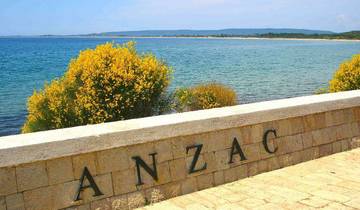
2 days
2 Days Gallipoli and Troy Tour from Istanbul
- ✓ Comprehensive Gallipoli tour
- ✓ Expert local guides included
- ✓ All accommodation arranged
- ✓ Transportation provided
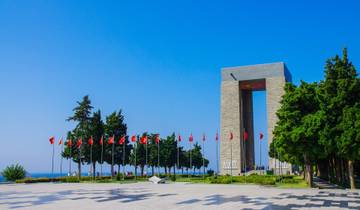
3 days
Western Ballads | 3 days
- ✓ Comprehensive Gallipoli tour
- ✓ Expert local guides included
- ✓ All accommodation arranged
- ✓ Transportation provided
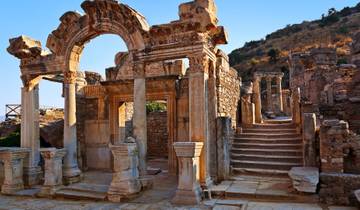
5 days
5 Days – Western Turkey Explorer
- ✓ Comprehensive Gallipoli tour
- ✓ Expert local guides included
- ✓ All accommodation arranged
- ✓ Transportation provided
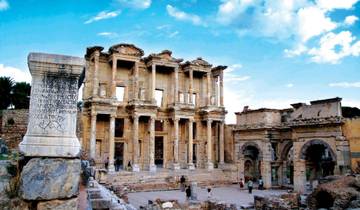
3 days
3 Days Gallipoli, Troy & Pergamon and Ephesus Private Tour from Istanbul
- ✓ Comprehensive Gallipoli tour
- ✓ Expert local guides included
- ✓ All accommodation arranged
- ✓ Transportation provided
Multi-day tour packages powered by TourRadar. Prices and availability subject to change.
Understanding Troy’s UNESCO World Heritage Significance 2026
Troy achieved UNESCO World Heritage designation in 1998 under criteria (ii), (iii), and (vi), recognizing its exceptional testimony to Bronze Age civilizations, its pivotal role in cultural exchange between Anatolia and Mediterranean worlds, and its profound association with Homer’s Iliad shaping Western literary tradition. The site’s universal value derives from stratigraphic preservation of nine distinct settlement layers (Troy I through Troy IX) documenting continuous urban development from 3000 BCE through the 6th century CE, creating an archaeological textbook where successive destructions by earthquake, fire, and warfare prompted repeated rebuilding that preserved earlier remains beneath later construction.
The legendary Troy associated with Homer’s epic corresponds to archaeological layers Troy VI (1700-1250 BCE) or Troy VIIa (1250-1180 BCE), with scholarly debate continuing over which destruction event potentially inspired poetic elaboration into the Trojan War narrative. Troy VI demonstrates sophisticated Late Bronze Age urbanism with massive defensive walls, tower bastions, and elite residential quarters suggesting the powerful citadel described in Homeric verses. The subsequent Troy VIIa shows hasty rebuilding and subdivision of grander Troy VI structures, ending in violent destruction marked by fire traces and scattered human remains potentially consistent with siege and sack, though conclusive links between archaeological evidence and literary accounts remain elusive.
Troy’s strategic location at the southern entrance of the Dardanelles Strait (ancient Hellespont) controlling maritime access between the Aegean Sea and Black Sea regions created exceptional economic and military significance. Bronze Age Troy commanded trade routes connecting Anatolian civilizations with Mycenaean Greece, facilitating cultural exchanges reflected in pottery styles, burial practices, and architectural techniques found throughout excavation layers. This geographical position explains both the site’s prosperity enabling monumental construction and its vulnerability to conflicts over regional hegemony potentially underlying historical events inspiring Homeric poetry.
Modern archaeological understanding began with Heinrich Schliemann’s 1870s excavations driven by determination to prove Homer’s geographical accuracy. Schliemann’s pioneering work suffered from crude methodology including a massive north-south trench cutting destructively through multiple layers seeking “Priam’s treasure,” with spectacular gold jewelry discoveries later proven to predate the Homeric period by a millennium. Subsequent excavations by Wilhelm Dörpfeld (1893-1894), Carl Blegen (1932-1938), and Manfred Korfmann (1988-2005) applied sophisticated stratigraphic techniques revealing the site’s complex occupational history and expanding understanding beyond Schliemann’s treasure-hunting objectives.
The nine principal settlement phases span enormous temporal breadth. Troy I (3000-2550 BCE) represents Early Bronze Age village foundation. Troy II (2550-2250 BCE) displays increased prosperity with monumental gates and the famous Schliemann treasure hoard. Troy VI (1700-1250 BCE) marks the Late Bronze Age citadel with massive fortifications potentially corresponding to Homeric descriptions. Troy VIIa (1250-1180 BCE) shows destruction possibly linked to legendary warfare. Later Greek and Roman cities (Troy VIII-IX, 700 BCE-500 CE) demonstrate continuous cultural importance through Classical antiquity, with Roman Troy developing as the pilgrimage destination Ilium where Alexander the Great and Roman emperors honored Homeric ancestors.
Getting to Troy and Çanakkale in 2026
Çanakkale functions as the essential gateway to Troy, positioned 310 kilometers southwest of Istanbul and 30 kilometers northeast of Troy archaeological site. The city straddles the Dardanelles Strait with ferry connections linking European and Asian shores, creating strategic importance dating to antiquity when Troy commanded these same waterways. Modern travelers base overnight in Çanakkale’s hotels, restaurants, and transportation infrastructure before dolmuş or taxi transfers to Troy ruins.
Istanbul to Çanakkale bus services operate hourly from Istanbul Otogar (main bus terminal accessible via Metro) with major carriers including Metro Turizm, Pamukkale, and Kamil Koç charging 300-500 TRY (€7-12) for the 5-6 hour journey. Buses depart morning through evening (06:00-22:00), with overnight services allowing sleep during travel and morning Çanakkale arrivals. Modern coaches feature WiFi, air conditioning, reclining seats, and refreshment service, with rest stops every 2-3 hours. Advance online booking through company websites or Busbud.com secures preferred departure times and seat selections, particularly important for weekend and holiday periods experiencing heavier demand.
The Istanbul-Çanakkale route crosses the Dardanelles via ferry at either Eceabat (buses drive directly aboard car ferries for the 25-minute crossing included in ticket price) or stops at Lapseki ferry terminal. Some buses terminate at Eceabat on the European Gallipoli shore requiring separate ferry to Çanakkale proper (15-minute crossing, 15-20 TRY pedestrian fare), while others continue through to Çanakkale Otogar on the Asian shore. Verify your bus company’s exact routing when booking to understand whether Çanakkale city center arrival requires ferry transfer.
Çanakkale Airport (CKZ) sits 5 kilometers south of city center with limited domestic flight services primarily from Istanbul and Ankara operated by Turkish Airlines. Flight schedules vary seasonally with summer months offering more frequent connections than winter periods. Airport taxis to city center cost 80-120 TRY (€2-3), while some hotels provide free or paid shuttle services with advance arrangement. The more substantial Balıkesir Koca Seyit Airport (EDO) located 100 kilometers southeast provides additional domestic connections, though ground transfer to Çanakkale (90-120 minutes by bus or taxi) reduces this option’s convenience compared to direct Istanbul bus services.
Car rentals from Istanbul range €30-60 daily for economy vehicles, enabling flexible exploration of Troy, Gallipoli, and regional sites including Assos and Bozcaada island. The 310-kilometer Istanbul-Troy drive follows well-maintained highways (E87/O-3) requiring 4.5-5.5 hours depending on traffic and ferry crossings. Fuel costs approximately €30-40 roundtrip, while highway tolls (collected electronically via HGS or OGS transponder systems) add €5-10. Rental cars require purchasing or arranging transponder access through rental companies to avoid violation fines from automatic toll collection points.
Private transfers arranged through travel agencies or hotel concierges cost €150-250 for Istanbul-Troy-Istanbul roundtrips accommodating 1-4 passengers in sedan vehicles or €200-350 for larger groups in minivans. These services provide door-to-door convenience, flexible timing, and guide services when arranged, though costs exceed public bus transportation significantly. Day tour packages from Istanbul including transport, guide, lunch, and entrance fees run €70-90 per person, economical for solo travelers who would otherwise pay full private transfer costs alone.
Transportation from Çanakkale to Troy 2026
Dolmuş minibuses provide the economical public transport connecting Çanakkale to Troy archaeological site, departing from the dolmuş station located on the southwest side of the Sarı River bridge along Atatürk Caddesi, approximately 600 meters south of Çanakkale Otogar main bus terminal. The minibuses display “TRUVA” or “TEVFİKİYE” destination signs, with Tevfikiye village adjacent to Troy ruins serving as the terminus. Services operate 07:00-15:00 departing approximately hourly with higher frequency mornings (every 30-60 minutes) and reduced afternoon availability, requiring early departures for visits allowing adequate site exploration time.
The dolmuş fare costs 20-30 TRY (€0.50-0.70) per person for the 30-kilometer, 40-50 minute journey traversing agricultural plains and small villages. Payment goes directly to the driver upon boarding, with exact change helpful though drivers generally provide change for reasonable denominations. Minibuses depart when sufficiently full (8-15 passengers) rather than rigid schedules, meaning waits can extend 30-60 minutes during low-demand periods. Summer months (June-September) see most frequent service corresponding to tourist season, while winter schedules become sparse requiring taxi alternatives.
Return dolmuş services from Troy to Çanakkale operate 09:30-17:30 with similar hourly-approximate frequency, though last departures around 17:00-17:30 make afternoon site arrivals risky for missing final transport back to Çanakkale. Travelers should confirm current return schedules with site staff or dolmuş drivers upon arrival to avoid being stranded 30 kilometers from Çanakkale accommodations. The dolmuş stop at Troy sits directly outside the archaeological site entrance adjacent to the parking area, clearly visible and signed.
Taxis from Çanakkale to Troy charge metered rates typically totaling 500-700 TRY (€12-17) one-way or negotiate fixed rates 800-1,200 TRY (€19-28) for roundtrip service including 2-3 hour waiting time while passengers explore the site. This option suits groups of 2-4 passengers splitting costs, travelers with limited time requiring flexible scheduling, or visitors traveling outside dolmuş operating hours. Taxis congregate along Çanakkale waterfront and at the Otogar, with hotels arranging pickup services. Agree on fares before departure or ensure meter activation to avoid overcharging common at tourist-heavy destinations.
Rental cars provide maximum flexibility for independent Troy exploration combined with visits to nearby sites including Alexandria Troas (35 kilometers south), Assos (90 kilometers south), or Gallipoli battlefields (30 kilometers north). Çanakkale car rental agencies cluster near the waterfront and Otogar with daily rates 600-1,200 TRY (€14-28) for economy vehicles. The Çanakkale-Troy route follows well-signed highways requiring 35-45 minutes driving time, with dedicated parking at Troy archaeological site (small fee typically 20-40 TRY). International driving permits supplement home country licenses for non-EU visitors, while insurance verification prevents rental complications.
Çanakkale Accommodation Options 2026
Budget accommodation in Çanakkale ranges €25-50 nightly, centered on basic hotels and guesthouses within walking distance of the waterfront and Otogar. Properties like Artur Hotel and Hotel Limani provide clean rooms with private bathrooms, WiFi, and breakfast buffets targeting backpackers and economical travelers. These establishments lack elaborate amenities but deliver functional comfort in central locations enabling easy access to restaurants, dolmuş stations, and evening waterfront promenades. Hostel dormitories charge €12-20 per bed for travelers prioritizing absolute minimum costs.
Mid-range hotels priced €50-85 nightly offer enhanced comfort with boutique styling, upgraded bathrooms, better breakfast selections, and services including tour booking assistance and airport transfers. Set Özer Hotel, Kervansaray Çanakkale Hotel, and similar 3-4 star properties combine Ottoman-inspired décor with modern amenities, attracting couples and families seeking more refined experiences than budget basics. Many mid-range properties occupy historic buildings along the waterfront providing Dardanelles views and proximity to restaurants serving fresh fish and mezze spreads. Room rates include substantial Turkish breakfast buffets featuring cheeses, olives, tomatoes, cucumbers, eggs, honey, jams, bread, and unlimited tea.
Upscale hotels charging €100-150+ nightly include Doubletree by Hilton Çanakkale, Kolin Hotel Spa & Convention Center, and Parion Hotel, delivering 4-5 star amenities with pools, fitness centers, full-service restaurants, spa facilities, and business centers. These properties serve both tourists and business travelers attending regional conferences and events. Waterfront locations provide stunning sunset views over the Dardanelles toward the Gallipoli peninsula, while comprehensive facilities enable resort-style relaxation between archaeological excursions. High-end properties include extensive breakfast buffets, concierge services arranging private tours, and shuttle services to Troy and Gallipoli sites.
Boutique hotels and converted Ottoman mansions create atmospheric alternatives, particularly in Çanakkale’s historic quarters where restored 18th-19th century buildings maintain original architectural details including carved wooden ceilings, stone courtyards, and traditional hamam bathrooms. These properties charge mid-range to upscale rates (€60-120) while providing intimate scales (5-15 rooms) and personalized service. Breakfast often includes homemade preserves, local cheeses, and family recipes served in scenic courtyard gardens.
Peak season (June-August) sees accommodation costs increase 30-50% above shoulder season rates, with advance booking essential particularly for Anzac Day commemorations (April 25) when Gallipoli-related demand fills Çanakkale hotels months ahead. Off-season (November-March) delivers significant discounts (40-60% reductions) though some seasonal properties close entirely during winter months. Midweek stays (Monday-Thursday) typically cost 10-20% less than weekend rates when domestic tourists from Istanbul supplement international visitors.
Troy Archaeological Site Layout and Highlights 2026
The Troy archaeological site opens 08:30-19:00 April-October and 08:00-17:00 November-March, with €27 adult admission (verify current official rates as prices may vary) collected at the entrance gate adjacent to the large wooden Trojan Horse replica. The Museum Pass Turkey provides access without purchasing separate tickets. Visitors should allow minimum 2-3 hours for meaningful site exploration, though classical history enthusiasts and archaeology professionals often spend 4-5 hours examining details across multiple settlement layers and reading extensive information panels.
The iconic Trojan Horse reconstruction greets arrivals, standing several stories tall with interior stairs allowing visitors to climb inside for photos capturing the legendary stratagem. This modern replica references Homer’s narrative of Greek soldiers hiding within a wooden horse offering presented as a departure gift but actually functioning as a siege engine delivering troops directly inside Troy’s walls. While purely symbolic (no archaeological evidence confirms such devices existed), the horse provides powerful photo opportunities and children’s engagement with literary mythology underlying the site’s fame.
The archaeological layout follows a paved pathway system guiding visitors chronologically through settlement layers, though the complex stratigraphy of superimposed cities creates challenging visual interpretation for non-specialists. Information panels in Turkish and English accompany major features explaining historical contexts, construction techniques, and scholarly debates over chronology and identification. The path winds through excavation trenches, fortification walls, gate structures, sanctuary foundations, and residential quarters representing different periods from Early Bronze Age (Troy I-II) through Roman Imperial (Troy IX).
The Sanctuary of Athena dominates the southern plateau, where foundations mark a Classical Greek temple (Troy VIII, 700-85 BCE) built to honor the goddess whose mythological favor determined the Trojan War’s outcome. The sanctuary’s prominent position and elaborate construction demonstrate Troy’s continued religious significance long after Bronze Age destructions, as Greek colonists and later Roman pilgrims venerated the site as the legendary battlefield where their cultural ancestors achieved immortal glory. Alexander the Great famously visited this sanctuary in 334 BCE before launching his Persian campaign, connecting himself symbolically to Homeric heroes.
The Northeast Bastion and adjacent fortification walls showcase Troy VI engineering (1700-1250 BCE), with massive limestone blocks fitted carefully to create sloping ramparts over 9 meters high topped by mudbrick superstructures now eroded. These formidable defenses testify to Late Bronze Age military architecture designed to resist siege warfare while demonstrating the citadel’s wealth enabling such monumental construction. The walls’ preservation allows touching the same stones that Bronze Age Trojans shaped and positioned, creating tangible connections across 3,300+ years.
Schliemann’s Great Trench cuts devastatingly through multiple settlement layers, a permanent scar from 1870s excavations pursuing “Priam’s treasure” without regard for stratigraphic integrity. This massive cut reveals stacked occupation layers like geological strata, accidentally creating a vertical profile demonstrating settlement continuity while simultaneously destroying invaluable archaeological contexts. The trench illustrates archaeology’s evolution from treasure hunting to scientific investigation, with Schliemann’s destructive techniques now considered archaeological vandalism though his work proved Homer’s geographical descriptions referenced real Bronze Age cities.
The Roman Odeon (Troy IX, 1st-3rd centuries CE) demonstrates later Classical prosperity when Troy developed as Ilium, a pilgrimage destination where Romans honored mythological ancestors. The semicircular stone seating arrangement facing a stage building housed performances, political assemblies, and civic ceremonies, with inscriptions recording benefactions funding construction and maintenance. This structure proves Troy remained culturally significant through Roman Imperial periods, its Homeric associations creating tourism economy millennia before modern visitors arrived seeking connections to literature’s greatest epic.
The Lower City excavations east of the citadel expanded understanding of Troy VI-VIIa dramatically during Manfred Korfmann’s 1988-2005 campaigns, revealing extensive settlement beyond fortress walls with estimated populations 5,000-10,000 residents rather than the few hundred citadel occupants emphasized by earlier excavators. Defensive ditches, residential quarters, and workshop areas demonstrate sophisticated urban planning controlling 200,000 square meters at Late Bronze Age Troy’s maximum extent, supporting identification as the regional power described in Hittite texts and Homeric verses.
Troy Museum Çanakkale 2026
Troy Museum opened in 2018 as a state-of-the-art facility 500 meters from the archaeological site entrance, earning Time Magazine’s recognition among the “World’s Greatest Places” for innovative exhibition design combining scholarship with engaging visitor experiences. The museum requires separate €27 admission (verify official rates as prices vary) beyond archaeological site tickets, though the Museum Pass Turkey covers both locations. Operating hours match archaeological site schedules (08:30-19:00 summer, 08:00-17:00 winter), with visitors typically allocating 90-120 minutes for comprehensive exploration across exhibition galleries.
The architectural design references Homer’s descriptions of Troy’s towers and walls through geometric volumes and stone cladding creating fortress-like exterior profiles. Interior galleries wind through chronological displays following excavation history, settlement periods, daily life artifacts, and interpretive materials explaining Troy’s significance across archaeology, literature, and cultural memory. Natural lighting through skylights and windows creates atmospheric exhibition spaces while displaying artifacts with professional museum standards preventing damage from environmental exposure.
The excavation history gallery recounts Heinrich Schliemann’s pioneering work including his famous (though misidentified) discovery of “Priam’s treasure” – a spectacular gold jewelry hoard actually predating Homer’s Troy by a millennium. Displays explain subsequent excavation campaigns by Dörpfeld, Blegen, and Korfmann, showing how evolving methodology transformed understanding from romantic treasure hunting to scientific stratigraphic archaeology. Photographs, excavation tools, field notebooks, and documentary materials recreate the detective work uncovering Troy’s complex occupational sequence.
Artifact galleries organize chronologically through settlement periods, displaying pottery evolution from simple Early Bronze Age vessels to sophisticated Late Bronze Age Anatolian wares and imported Mycenaean ceramics demonstrating trade networks. Jewelry, weapons, tools, loom weights, spindle whorls, and domestic equipment reveal daily life details absent from monumental architectural remains. Bronze Age weaponry including spearheads, arrowheads, and battle axes connects to Homeric warfare descriptions, though scholars debate whether specific artifacts belonged to combatants in legendary conflicts or simply contemporary inhabitants.
The “Journey to Troy” gallery explores Troy’s impact on Western cultural imagination through art, literature, film, and popular culture spanning 2,800 years from Homer’s composition through modern retellings. Paintings by Peter Paul Rubens and other European masters demonstrate how Troy inspired artistic creativity, while manuscript illuminations, early printed editions, and translations show the Iliad’s transmission across languages and cultures. Film excerpts from multiple Troy-inspired movies including Wolfgang Petersen’s 2004 “Troy” starring Brad Pitt illustrate how each generation reinterprets the legendary narrative.
Interactive digital displays allow visitors to explore 3D reconstructions showing how Bronze Age Troy VI and later Roman Ilium appeared at their peaks, with virtual tours through fortification gates, residential quarters, and sanctuary precincts providing visualizations impossible from ruined foundations alone. These reconstructions derive from archaeological evidence combined with comparative analysis of similar Bronze Age and Classical sites, offering evidence-based imagination of past landscapes. Children particularly engage with these multimedia elements maintaining interest despite archaeological complexity.
The museum shop sells scholarly publications including excavation reports, academic analyses, and general audience books about Troy, Homer, and Bronze Age archaeology unavailable elsewhere. Replica jewelry based on Schliemann’s treasure finds provides souvenir options for visitors seeking meaningful mementos beyond generic tourist trinkets. The cafeteria serves refreshments enabling mid-visit breaks before returning to exhibitions or continuing to the adjacent archaeological site.
Day Trip Itineraries from Çanakkale 2026
The Troy-only itinerary suits travelers focusing exclusively on archaeological and literary heritage, beginning with early dolmuş departure from Çanakkale (07:00-08:00) reaching Troy by 08:00-09:00 for cooler morning conditions and optimal photography light. Visitors explore archaeological site first (2-3 hours) walking among ruins while temperatures remain comfortable, then visit Troy Museum (90-120 minutes) during midday heat when air-conditioned galleries provide relief. Return dolmuş to Çanakkale by 14:00-15:00 allows afternoon waterfront promenades, shopping in bazaars, or museum visits including Çanakkale Naval Museum commemorating Gallipoli campaigns. Evening dining features fish restaurants along the Dardanelles before overnight rest.
The combined Gallipoli-Troy circuit maximizes regional historical significance spanning 3,000+ years from Bronze Age warfare through WWI combat. Full-day organized tours (€50-80 per person) depart Çanakkale 08:00-09:00 visiting Gallipoli battlefields, memorials, and cemeteries (Brighton Beach, Anzac Cove, Lone Pine Cemetery, Chunuk Bair) with English-speaking guides explaining April 1915-January 1916 campaign significance. Tours return to Çanakkale for lunch (13:00-14:00), then continue to Troy (14:30-17:00) for abbreviated archaeological site visits before evening Çanakkale returns. This schedule compresses each location’s exploration but efficiently surveys both regions for time-limited travelers.
The superior Gallipoli-Troy pacing dedicates separate days to each site. Day one explores Gallipoli thoroughly via morning tour (08:00-14:00) allowing deep engagement with WWI history, followed by afternoon Çanakkale relaxation and waterfront dining. Day two focuses exclusively on Troy with early departure (08:00), comprehensive archaeological site exploration (09:00-12:00), museum visit (12:30-14:30), and potential afternoon visit to Alexandria Troas ruins (35 kilometers south, 17:00-18:30) before Çanakkale return. This two-day approach prevents archaeological fatigue while enabling meaningful experiences at each location.
Assos Ancient City (90 kilometers south) makes rewarding day trips combining Athena Temple ruins, acropolis fortifications, and seaside village charm. The 6th century BCE Doric Temple of Athena crowns a dramatic hilltop offering panoramic views across the Aegean to Lesbos island, while ancient harbor ruins and necropolis areas demonstrate regional prosperity during Classical and Hellenistic periods. The modern village of Behramkale tumbles down hillside with stone houses, boutique hotels, and fish restaurants creating atmospheric lunch settings (12:00-14:00) between archaeological exploration. Dolmuş transport from Çanakkale requires changes at Ayvacık (2-hour total journey), making rental cars or organized tours (€60-90) more practical despite higher costs.
Bozcaada island (52 kilometers south, 90-minute journey) provides beach relaxation, wine tasting, and island escape ambiance contrasting with mainland archaeological intensity. Ferries depart Geyikli port (accessible by Çanakkale dolmuş) crossing to this Turkish Aegean island featuring Venetian castle ruins, windmill-dotted landscapes, sandy beaches, and boutique wineries producing crisp whites from local Vasilaki grapes. Day visitors explore castle fortifications (10:00-12:00), beach swim and lunch (12:30-15:00), and winery tours with tastings (15:30-17:00) before return ferries (18:00-19:00) to mainland. Full-day Bozcaada excursions from Çanakkale require early starts (07:00) and late returns (20:00) making two-night Çanakkale stays with overnight Bozcaada island accommodation the preferred relaxed approach.
Troy Historical Context and Homeric Legends 2026
Homer’s Iliad composed circa 750-700 BCE recounts events set approximately 1250-1180 BCE during Late Bronze Age, creating a 450-500 year gap between described warfare and poetic composition. Scholars debate whether Homer drew from historical memory transmitted through oral bardic traditions, invented the narrative entirely, or blended legendary embellishments with genuine historical kernels. The poem’s geographical accuracy describing Trojan landscape features (two springs, fortress location, coastal plains) suggests some topographical knowledge even if military and heroic details were creatively elaborated.
The legendary conflict begins with Paris, Trojan prince, abducting Helen, wife of Spartan king Menelaus, and bringing her to Troy. The Greeks assemble coalition forces under Agamemnon’s leadership besieging Troy for ten years attempting Helen’s recovery and punishing Trojan violation of xenia (guest-friendship) when Paris exploited Menelaus’s hospitality. The epic focuses on events during the war’s final year centering on Achilles’s rage following Agamemnon’s seizure of his war-prize Briseis, with divine interventions by Olympian gods supporting favorite heroes and determining battle outcomes. The climax features Achilles’s return to combat following Hector’s killing of his companion Patroclus, culminating in Achilles killing Hector and desecrating his corpse before eventual restoration to Priam for proper funeral rites.
The Trojan Horse stratagem appears not in the Iliad but in later epic cycle poems and Virgil’s Aeneid, where Greek forces pretend to abandon siege leaving behind a massive wooden horse supposedly dedicated to Athena. Trojan priest Laocoön warns “I fear Greeks even bearing gifts,” but his death by serpents convinces Trojans to accept the horse as victory monument. Greeks hidden inside emerge nightly opening gates for comrades returned from feigned sailing, allowing assault that sacks the city, kills Priam, enslaves women including Hector’s widow Andromache, and disperses survivors including Aeneas who legendarily founds Roman lineage.
Archaeological Troy VI and VIIa both show violent destructions potentially corresponding to legendary warfare dates (1250-1180 BCE). Troy VI ended around 1250 BCE through earthquake damage rather than military conquest based on collapsed wall orientations. Troy VIIa shows rapid rebuilding with subdivided houses suggesting population increase and defensive measures, ending 1180 BCE in catastrophic fire with scattered skeletal remains and bronze arrowheads suggesting warfare. Whether this destruction involved Greeks besieging the citadel remains unprovable, though the archaeological evidence matches Homeric chronology creating tantalizing possibilities.
Hittite texts from Anatolian archives reference “Wilusa” (linguistically equivalent to Greek Ilios/Troy) as a regional power during Bronze Age, with treaties and diplomatic correspondence placing it near the Dardanelles location matching Troy’s geography. These documents describe conflicts involving Wilusa suggesting the region experienced warfare during the Late Bronze Age collapse period when multiple civilizations suffered destructions. The texts never specifically describe Greeks besieging Wilusa, though the evidence proves Troy engaged in Bronze Age geopolitical conflicts creating historical contexts potentially underlying poetic elaborations.
Practical Information for Troy Visitors 2026
Entrance tickets purchased at archaeological site and museum gate kiosks accept cash (Turkish Lira preferred though Euros sometimes accepted at unfavorable rates) and credit cards, with Museum Pass Turkey also honored. Keep entrance tickets throughout visits as occasional inspections verify payment, while tickets sometimes grant discounted museum shop purchases or combined site-museum packages (inquire at ticket windows about current promotions).
Site facilities include restrooms at entrance areas (small fees 2-5 TRY), water fountains providing potable water for refilling bottles (essential given exposed conditions and 2-3 hour walking requirements), and shaded rest areas with benches. The small cafeteria near the Trojan Horse serves snacks, sandwiches, tea, and soft drinks at tourist-inflated prices (1.5-2x normal Çanakkale rates), making packed lunches economical alternatives. Picnic tables in landscaped areas outside main excavations welcome visitors bringing outside food.
Weather preparedness proves essential given site exposure with minimal shade protection. Summer visits (June-September) require sun hats, high-SPF sunscreen (30-50+), sunglasses, and light breathable clothing covering shoulders and legs preventing sunburn during extended outdoor walking. Temperatures regularly exceed 35°C midday July-August making morning visits (08:30-11:00) or late afternoon timing (after 16:00) more comfortable than midday heat. Winter visits (November-March) need layered clothing accommodating 10-15°C temperatures and wind chill from exposure on open plains, plus waterproof jackets for occasional rain showers.
Footwear requires sturdy walking shoes or hiking boots with good tread given uneven ground surfaces including loose stones, excavation trenches, ancient pavements, and inclines accessing different settlement levels. Sandals and flip-flops prove inadequate and potentially dangerous navigating archaeological terrain. Some areas feature wooden boardwalks preventing erosion of fragile remains while facilitating visitor access, though many zones require walking directly on ancient pathways and ruins creating connections to past inhabitants but demanding careful footing.
Photography rights include unlimited non-commercial photography without restrictions or fees, making Troy photography-friendly compared to some archaeological sites prohibiting images or charging camera fees. Tripods generally allowed though officials may request removal if blocking pathways during crowded periods. The iconic Trojan Horse replica provides the most popular photo opportunity, with interior stair access allowing elevated positions despite crowds queuing for similar shots. Optimal photographic light occurs mornings (08:30-10:30) with softer directional illumination enhancing texture on stone walls and creating dramatic shadows, versus harsh midday overhead sun flattening details and creating harsh contrasts.
Guide services available for hire at entrance areas charge 300-600 TRY (€7-14) for 90-minute tours, with English-speaking guides explaining settlement sequences, architectural features, and Homeric connections providing valuable contexts beyond information panels. Quality varies significantly among independent guides, with recommendations from Çanakkale hotels or tourist information offices steering toward knowledgeable professionals versus commission-seeking operators. Self-guided visitors benefit from downloading free audio guide apps before arrival or purchasing guidebooks at site shops and Çanakkale bookstores.
Language assistance extends to Turkish-English signage throughout archaeological areas and museum, though knowledge of classical history, Bronze Age archaeology, or Homeric poetry enhances appreciation significantly. Many European visitors arrive with Iliad familiarity enabling emotional engagement with legendary locations, while Asian and American tourists less steeped in classical education may find archaeological contexts more meaningful than literary associations. Turkish visitors appreciate Troy as national heritage demonstrating Anatolian civilizations predating Greek colonization and Ottoman Empire periods.
Combining Troy with Regional Attractions 2026
The Gallipoli Peninsula Historical National Park preserves WWI battlefields where Allied forces (primarily British Empire and French troops) attempted seizing the Dardanelles Strait against Ottoman defenders during April 1915-January 1916. The campaign resulted in estimated 500,000 total casualties with no strategic gains before Allied evacuation, becoming foundational to Australian, New Zealand, and Turkish national identities through combat narratives emphasizing courage, sacrifice, and military organization. Major sites include Anzac Cove landing beaches, Lone Pine and Chunuk Bair battle positions, national memorials and cemeteries containing thousands of graves, and interpretation centers explaining campaign military and political contexts.
Organized Gallipoli tours from Çanakkale (half-day €40-60, full-day €50-80) provide essential transport and historical explanation across the 35-kilometer peninsula where sites scatter without public transport access. English-speaking guides (many Australian or New Zealand nationals with family connections to Anzac soldiers) deliver emotionally engaging narratives combining military history with individual stories from diaries and letters. Tour schedules typically visit 6-8 major locations over 4-6 hours with cemetery time for reflection, memorial photography, and grave rubbings sought by descendants tracing family members who served.
Alexandria Troas (Eski Stambul) ruins occupy coastal location 35 kilometers south of Troy, representing a major Hellenistic and Roman city founded 310 BCE by Antigonus I and later developed by Romans as prospective capital before Constantine selected Byzantium/Constantinople. Extensive remains include 8-kilometer circuit walls, Roman bath complexes featuring monumental architecture and engineering sophistication, aqueducts, harbor installations, and theater ruins scattered across pastoral landscapes. The site receives minimal visitors despite archaeological significance, offering solitary exploration contrasting with Troy’s touristic intensity. Access requires rental cars or private taxis given absence of public transport.
Assos (ancient Assos, modern Behramkale) provides one of Turkey’s most dramatically sited Classical cities, with 6th century BCE Temple of Athena crowning a volcanic plug offering 360-degree panoramas across the Aegean Sea to Lesbos island and mainland mountains. The acropolis complex includes temple ruins, fortification walls, and administrative buildings, while lower city areas preserve agora, baths, gymnasium, and necropolis with elaborate sarcophagi. Aristotle established a philosophy school at Assos 347-345 BCE before founding Athens’ Lyceum, adding intellectual heritage to architectural and scenic appeal. The modern village features stone houses converted to boutique hotels and fish restaurants creating atmospheric lunch settings after morning archaeological exploration.
Bozcaada island combines Venetian castle ruins, windmills, organic vineyards, and sandy beaches creating multifaceted destination appealing beyond archaeology enthusiasts. The restored Byzantine-Venetian castle dominating harbor entrance operates as museum (₺50 entrance) displaying Ottoman military equipment, maritime artifacts, and historical exhibits. Small-scale wineries including Corvus, Talay, and Amadeus offer tastings of indigenous Vasilaki and Çavuş grape wines produced organically in volcanic soils, with vineyard tours explaining traditional and modern viticulture. Ayazma Beach and Habbele Beach provide swimming, sunbathing, and water sports during summer months, while car-free village lanes lined with Greek revival architecture create relaxing evening exploration.
The Kaz Dağları National Park (Mount Ida of classical mythology) southeast of Çanakkale protects oak and pine forests, mountain streams, and endemic flora celebrated in Homeric verses as divine meeting places during Trojan War. Hiking trails ascending to 1,774-meter Karataş peak traverse varied ecosystems supporting biodiversity including wolves, wild boar, and golden eagles. Mountain villages including Adatepe preserve stone architecture and traditional lifestyles with guesthouses, local restaurants, and artisan workshops offering rural cultural experiences. Day trips from Çanakkale (2-hour drive) combine nature hiking, village lunches, and mythology tourism at locations referenced in Iliad descriptions.
Sample Troy Itineraries 2026
The one-night Çanakkale express itinerary suits time-limited travelers prioritizing Troy above regional comprehensiveness. Day one involves Istanbul departure via early morning bus (06:00-07:00, 5 hours arriving 11:00-12:00 Çanakkale), immediate dolmuş to Troy (12:30 departure, 45 minutes arrival 13:15), afternoon archaeological site and museum visits (13:30-17:30), return to Çanakkale (18:00), waterfront dinner and overnight rest. Day two includes morning Çanakkale exploration visiting Naval Museum and bazaars (09:00-12:00), lunch at fish restaurant (12:30-14:00), afternoon Istanbul return bus (15:00 departure, 20:00-21:00 arrival). Total cost €80-120 per person includes roundtrip bus (€15-20), one night accommodation (€25-50), meals (€20-30), and Troy entrance fees (€27-54).
The two-night Çanakkale comprehensive approach enables relaxed Troy-Gallipoli exploration without rushed single-day compression. Day one mirrors express itinerary through Istanbul-Çanakkale-Troy sequence with evening rest. Day two dedicates to Gallipoli battlefield tour (08:00-14:00, €50-80 including transport, guide, lunch), afternoon Çanakkale museum visits and shopping (15:00-18:00), sunset waterfront promenade and seafood dinner (19:00-21:00). Day three allows morning leisure, Çanakkale market exploration, or optional Bozcaada ferry day trip before afternoon Istanbul return. Total cost €150-220 per person includes roundtrip bus, two nights accommodation, battlefield tour, meals, and entrance fees.
The three-night regional circuit combines Troy-Gallipoli core with Assos extension, optimal for travelers seeking diverse experiences beyond concentrated archaeological focus. Day one follows Istanbul-Troy standard routing. Day two covers Gallipoli battlefields morning with afternoon Assos drive (90 kilometers south, 2 hours), overnight at Assos boutique hotel with dinner at harbor fish tavern. Day three explores Assos acropolis and temple ruins morning (08:00-11:00), coastal swimming at beach coves (11:30-14:00), afternoon Çanakkale return (15:00-17:00), evening waterfront dinner. Day four offers morning leisure before Istanbul departure. Total cost €240-350 per person includes transport, three nights varied accommodation, tours, meals, and entrance fees.
The budget backpacker weekend (Friday-Sunday) minimizes costs through hostel dormitories, self-catered meals, and dolmuş-only transport. Friday evening bus from Istanbul (22:00-03:00 overnight arrival), Saturday Troy independent visit using dolmuş with picnic lunch (08:00-17:00 full day), hostel dinner and social atmosphere (19:00-22:00), Sunday morning Çanakkale exploration (09:00-12:00), afternoon Istanbul return bus (14:00-19:00 arrival). Total cost €50-75 per person includes roundtrip bus (€15-20), one night hostel dormitory (€12-15), self-catered meals (€10-15), Troy entrance (€27), and dolmuş transport (€2-3).
Frequently Asked Questions About Troy 2026
Do you need a tour guide for Troy in 2026?
Tour guides significantly enhance Troy appreciation by explaining the complex nine-layer stratigraphy, identifying which ruins correspond to different time periods, and connecting archaeological evidence to Homeric narratives that motivated excavations and shaped cultural significance. Independent visitors relying solely on information panels grasp basic chronology and major features but miss scholarly debates over Troy VI versus VIIa identification as Homer’s Troy, subtleties in fortification construction techniques revealing defensive strategies, and cultural exchange evidence from imported pottery demonstrating trade networks. English-speaking guides charge €7-14 for 90-minute tours hired at site entrances, while organized day trips from Istanbul or Çanakkale include guides as standard package elements. Budget travelers successfully navigate Troy independently using guidebooks purchased in Çanakkale (€10-15) or free audio guide apps downloaded before arrival, though the experiential depth remains shallower than expert interpretation provides.
Can you climb inside the Trojan Horse at Troy in 2026?
Yes, the large wooden Trojan Horse replica at Troy’s archaeological site entrance features interior stairs allowing visitors to climb several levels inside the structure for elevated photo perspectives overlooking surrounding areas. The horse stands multiple stories tall deliberately designed as interactive tourist feature rather than historically accurate reconstruction, since no archaeological evidence confirms such siege devices existed beyond legendary narratives. Interior capacity limits mean busy periods create queues with 10-20 minute waits, while early morning arrivals (08:30-09:30) or late afternoon visits (after 16:00) encounter fewer crowds enabling quick access. The stairs suit most mobility levels though handrails assist climbing, while the elevated platforms inside provide vantage points for photos capturing the horse’s monumental scale and visitors’ interaction with Troy’s most recognizable symbol.
What is the difference between Troy archaeological site and Troy Museum in 2026?
Troy archaeological site preserves the actual Bronze Age through Roman settlement ruins where excavations uncovered fortification walls, gates, houses, and sanctuaries spanning 3000 BCE-500 CE across nine superimposed city layers. The outdoor ruins provide authentic ancient contexts but require imagination reconstructing complete structures from foundation remnants and partial walls, with minimal artifacts remaining in situ since excavated materials transferred to museums. Troy Museum, opened 2018 at separate location 500 meters from ruins, houses excavated artifacts including pottery, jewelry, weapons, tools, and domestic items providing material culture evidence absent from the outdoor site, plus multimedia exhibits, historical reconstructions, and interpretive displays explaining excavation history and Bronze Age daily life. Both locations require separate €27 entrance fees (Museum Pass Turkey covers both), with comprehensive Troy understanding necessitating visits to both sites allocating total 4-5 hours combined rather than choosing between them.
Is photography allowed at Troy in 2026?
Photography for personal non-commercial use occurs freely throughout Troy archaeological site and museum without restrictions, fees, or permit requirements, making both locations exceptionally photography-friendly compared to sites prohibiting cameras or charging photography fees. Visitors use phones, digital cameras, and video equipment without officials requesting removal except when tripods block crowded pathways during peak tour group arrivals. The Trojan Horse replica provides the most photographed subject with interior access enabling creative angles, while fortification walls, excavation trenches, and museum artifacts offer diverse compositions. Professional photographers conducting commercial shoots or wedding photography require advance permissions and fees, while influencers filming promotional content may face questions about usage intent. Optimal lighting occurs mornings (08:30-10:30) with directional sun emphasizing stone textures, versus midday overhead glare flattening details and creating harsh shadows on ruins.
How do you get from Istanbul to Troy in 2026?
The most practical Istanbul-Troy route involves intercity bus to Çanakkale (5-6 hours, €7-12) followed by dolmuş minibus to Troy (45 minutes, €0.50-0.70), totaling 6-7 hours travel with €8-13 transport costs. Buses depart Istanbul Otogar hourly 06:00-22:00 arriving Çanakkale where dolmuş services run 07:00-15:00 from the station near Sarı River bridge, with return dolmuş 09:30-17:30 enabling same-day visits though overnight Çanakkale stays prove less exhausting. Day tour packages from Istanbul (€70-90 per person) include roundtrip bus, Troy entrance, guide, and lunch, departing 06:00-07:00 and returning 22:00-23:00 after 16-17 hours total, suiting travelers prioritizing single-day efficiency over comfort. Rental cars from Istanbul enable flexible timing and regional site combinations (Troy, Gallipoli, Assos) at €30-60 daily plus €30-40 fuel costs, requiring 4.5-5.5 hours Istanbul-Troy driving. Private transfers cost €150-250 roundtrip for sedan service, ideal for groups splitting costs or travelers valuing door-to-door convenience over public transport economy.
What should you bring to Troy in 2026?
Essential Troy items include sturdy walking shoes with good tread for uneven ancient pavements and excavation areas, sun protection (wide-brim hat, SPF 30-50 sunscreen, sunglasses) critical for exposed site with minimal shade, and refillable water bottle preventing dehydration during 2-3 hour outdoor walking though site fountains provide potable refills. Summer visits (June-September) require light breathable clothing covering shoulders and legs preventing sunburn, while spring/autumn need light jacket for morning coolness and wind chill. Camera or smartphone captures photos of Trojan Horse, fortification walls, and panoramic site views, with extra batteries or power banks maintaining charge. Small backpack carries water, snacks, guidebook or printed information, and purchased souvenirs from museum shops. Optional items include portable sunshade umbrella for extreme summer heat, binoculars viewing distant landscape features referenced in Homeric descriptions, and Iliad translation reading passages on-site where events allegedly occurred, creating literary-archaeological synthesis enhancing emotional engagement with legendary locations.
Are there restaurants near Troy in 2026?
Troy archaeological site and museum feature small cafeterias serving sandwiches, snacks, tea, and soft drinks at tourist-inflated prices (€3-6 for basic meals), adequate for light refreshment but insufficient for substantial dining. The adjacent Tevfikiye village (500 meters from site entrance) contains several modest restaurants serving traditional Turkish meals including kebabs, pide flatbreads, soups, and mezze appetizers at reasonable prices (€5-10 per person), with outdoor seating providing views toward archaeological ruins. However, most Troy visitors prefer returning to Çanakkale (30 kilometers, 45 minutes by dolmuş) for superior dining diversity along the waterfront where fish restaurants specialize in fresh Dardanelles catches including sea bass, sea bream, mackerel, and calamari prepared grilled or fried with accompaniments of salads, rice, and vegetables (€12-20 per person). Packed lunches from Çanakkale hotels or supermarkets provide economical alternatives, eaten at Troy’s designated picnic areas combining budget consciousness with time efficiency avoiding restaurant waits.
Can you visit Troy and Gallipoli in one day from Çanakkale in 2026?
Combined Gallipoli-Troy day trips from Çanakkale prove physically possible though rushed, with organized tours (€50-80) dedicating mornings to Gallipoli battlefields (08:00-13:00, visiting 6-8 sites including Anzac Cove, Lone Pine, Chunuk Bair memorials), midday Çanakkale lunch (13:00-14:00), and afternoons at Troy (14:30-17:00) before evening returns. This schedule allows superficial engagement at both locations but prevents deep historical immersion or leisurely exploration, with 8-9 hour tour durations creating fatigue particularly for elderly visitors or families with young children. The superior approach dedicates separate days to each site: morning Gallipoli battlefield tour (half-day 08:00-13:00), afternoon Çanakkale relaxation and museum visits, next-day Troy visit with early dolmuş departure (08:00) enabling unhurried 4-5 hour archaeological site and museum exploration. Two-night Çanakkale stays accommodate this split schedule without time pressure, transforming rushed single-day marathons into relaxed dual-day experiences appreciating each location’s distinct historical and emotional significance.
What is the Museum Pass Turkey and is it worth it for Troy in 2026?
The Museum Pass Turkey costs €165 providing 15-day unlimited access to 300+ museums and archaeological sites nationwide including Troy Archaeological Site, Troy Museum, Istanbul’s major museums (Topkapı Palace, Hagia Sophia, Archaeological Museums), Ephesus, Pamukkale, Cappadocia sites, and hundreds of additional locations. The pass proves economical for travelers visiting 6+ major sites during Turkish itineraries, breaking even after Troy (€54 combined), Istanbul’s top four museums (€80 combined), and Ephesus (€40), totaling €174 individual entrance costs versus €165 pass price. However, travelers focusing primarily on Troy with limited additional Turkish museum visits pay premium prices for unused access, making individual entrance tickets more economical. The pass requires first-time activation at participating sites starting the 15-day countdown, with subsequent entries showing the card to gate attendants who scan without issuing separate tickets. Purchase locations include major site ticket offices and some travel agencies, though online purchasing suspended since 2022 requiring in-person transactions.
What language is spoken at Troy and do guides speak English in 2026?
Turkish remains the primary language at Troy archaeological site and museum, with information panels appearing in Turkish and English dual translations facilitating self-guided exploration without language assistance. Gate staff and ticketing personnel manage basic English for entrance transactions, though complex questions may require Turkish language or translation apps. English-speaking guides available for hire at site entrance specifically target international tourists with professional-level English explaining archaeological contexts, settlement chronologies, and Homeric connections, charging €7-14 for 90-minute tours. Organized day trips from Istanbul or Çanakkale include English, German, or other European language guides as standard package elements serving international clientele. The 2018 Troy Museum features extensive English translations on exhibition labels, digital displays, and multimedia presentations enabling full comprehension without Turkish knowledge, though audio guide systems (when available) provide additional narrative depth in multiple languages including English, German, French, and Russian serving Troy’s diverse international visitor base.