
Trento Best Tours & Walking Routes 2026: Secret Spots & Lesser-Known Treasures
Trento rewards visitors who venture beyond the obvious. A city of Roman foundations, medieval frescoed palaces, Habsburg-era fortresses, and a Renzo Piano science museum built on the bones of a Michelin factory, it packs more layered history into one compact city centre than most Italian destinations twice its size. This guide covers every major tour and walking route available in 2026 — from the official Saturday heritage walks to the underground Roman city beneath Piazza Battisti, from the Sardagna cable car to secret corners that appear on no tourist map.
Key Takeaways for Trento Tours and Walking Routes 2026
- Museum Pass at €22 pays for itself quickly: The card covers free entry to the Castello del Buonconsiglio (€10), MUSE (€11), S.A.S.S. Tridentum (€5), and all other partner museums plus 48 hours of unlimited public transport including the Sardagna cable car. Three museum visits alone recover the full cost; transport and guided tour discounts add pure value on top.
- Official guided city walks run every Saturday from April to January: The Trento Tourist Office operates a 2-hour historic centre walk starting at 10:00 from Piazza Fiera, bookable from €11 per person. Museum Pass holders receive a further reduction. These fill quickly in summer — book at least a week in advance.
- Underground Trento is the city’s most underrated experience: The S.A.S.S. archaeological space under Piazza Battisti covers 1,700 square metres of first-century Roman urban fabric — streets, mosaics, a glazier’s workshop, and a functioning well — for just €5. The combined ticket also includes the Villa di Orfeo, a nearby Roman villa with intact Orpheus mosaic floors.
- The Orrido di Ponte Alto requires advance booking: This guided canyon walk 5 km from the centre (€6 adults) operates hourly on Saturdays and Sundays from 10:00 to 18:00 with groups capped at 25 people. Slots sell out in summer. Book via the Ecomuseo Argentario website at least several days ahead.
- Castel Beseno justifies a half-day excursion from Trento in 2026: At €7 entry, the largest medieval fortified complex in the entire Trentino region sits 20 km south of Trento. Visitors walk the full circuit of defensive walls, descend into castle kitchens, and try on armour — an experience fundamentally different from urban museum culture.
- Several of Trento’s most atmospheric spots cost nothing: Piazza Duomo, Via Belenzani and its Renaissance frescoed facades, the church of Sant’Apollinare across the Adige, the panoramic terrace of Doss Trento above the city, and the Logge del Palazzo del Podestà are all freely accessible and rarely crowded before 10:00.
People Also Ask About Trento Tours and Walking Routes 2026
What is the best self-guided walking route for first-time visitors to Trento in 2026?
First-time visitors cover Trento’s essential historic layer in a 2.5-hour loop beginning at Piazza Duomo. The route runs north along Via Belenzani — lined with Renaissance palaces carrying frescoed facades that earned Trento the nickname Città Dipinta — then turns onto Via S. Croce toward the Castello del Buonconsiglio. A descent through the medieval wall district passes Porta Veronensis (the Roman gate now visible in the cathedral museum) and returns to the piazza via the Palazzo Pretorio. This walk is entirely free of charge and connects all the city’s great architectural periods in a single circuit. Check visittrento.it for a downloadable route map before departure.
How much do guided tours of Trento cost in 2026?
The official tourist office walking tour of the historic centre costs from €11 per person (2 hours, Saturdays at 10:00 from Piazza Fiera; Museum Pass holders pay a reduced rate). Specialist wine tours of TrentoDoc cellars start from €43-50 per person, 90 minutes including tasting. Private guided city tours through GetYourGuide begin from €12. Guided visits to the Castello del Buonconsiglio on Saturday afternoons at 15:00 cost €3 plus the €10 admission. The Orrido di Ponte Alto guided canyon walk is €6 including admission. All prices are for adult tickets; check official sites for current rates as pricing may vary.
What hidden gems can visitors discover on Trento’s walking routes in 2026?
Trento’s most rewarding hidden sites cluster within easy walking distance of the centre. The Romanesque church of Sant’Apollinare, across the river on the western bank, dates to the twelfth century and stands in near-complete silence regardless of season. The Doss Trento — a hilltop reachable on foot via a 30-minute trail from the city — carries the Mausoleo di Cesare Battisti and artillery-era fortifications with panoramic views over the Adige Valley. Piazza Pasi, a small square completely unknown to tourist itineraries, preserves medieval streetscape untouched by modern signage. The Giardino Garbari botanical garden behind the Castello offers a free, shaded walk through labelled alpine plant collections rarely appearing in any travel guide.
Is the Museum Pass worth buying for Trento tours in 2026?
The Museum Pass at €22 is worth buying if you plan to visit two or more partner museums during your stay. The Castello del Buonconsiglio alone costs €10, MUSE costs €11, and the S.A.S.S. Tridentum costs €5 — those three sites together cost €26 at standard admission, already exceeding the pass price by €4. The 48-hour unlimited public transport (buses, trains across the province, and the Sardagna cable car) adds further value; a cable car return trip costs roughly €5. Museum Pass holders also receive reduced admission on the Saturday city guided tour. For stays of two or more days with any interest in culture, the pass delivers clear savings. Available at museums, APT tourist offices, and online at museumpass.it.
Extended multi-day tours – 5+ days
Featured Trento Multi-Day Tour Packages
7 days
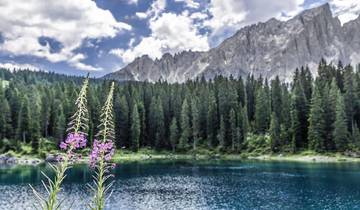
7 Days Northern Lakes and Dolomites Tour – from Milan
- ✓ Comprehensive Trento tour
- ✓ Expert local guides included
- ✓ All accommodation arranged
- ✓ Transportation provided
7 days
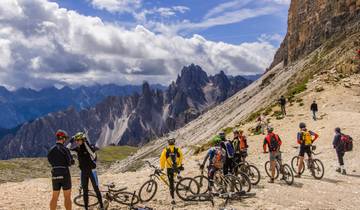
From Merano to Lake Garda
- ✓ Comprehensive Trento tour
- ✓ Expert local guides included
- ✓ All accommodation arranged
- ✓ Transportation provided
7 days
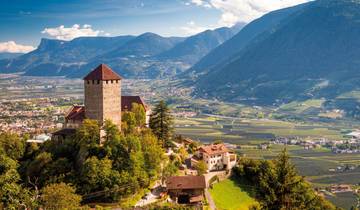
Adige cycle path Nauders – Lake Garda
- ✓ Comprehensive Trento tour
- ✓ Expert local guides included
- ✓ All accommodation arranged
- ✓ Transportation provided

7 days
Adige Cycle Path: Bolzano – Verona – Along the Adige to Romeo & Juliet 7 Days
- ✓ Comprehensive Trento tour
- ✓ Expert local guides included
- ✓ All accommodation arranged
- ✓ Transportation provided
Multi-day tour packages powered by TourRadar. Prices and availability subject to change.
Introduction: Why Trento Rewards Slow, Deep Exploration in 2026
Most visitors to Trento arrive for half a day between more prominent destinations — a pause between Verona and Bolzano, a lunch stop on the Brenner corridor — and leave with the impression of a pleasant but unremarkable Italian alpine city. They are fundamentally wrong. Trento is a place of extraordinary archaeological density and cultural ambition that only fully reveals itself to those who look below the surface, literally and figuratively.
The city sits at a strategic crossroads that humans have occupied continuously for over three thousand years. The Romans founded Tridentum in the first century BC as a garrison controlling the Adige Valley passage between the Mediterranean and central Europe, and their grid of streets, forum, and domestic quarters still exists — buried under medieval and Renaissance Trento, accessible through a remarkable series of archaeological sites that most tourists never find. Above ground, the Prince-Bishops who ruled Trento for five centuries commissioned palaces, frescoes, and a castle complex of genuinely extraordinary quality. The Council of Trent, which met here between 1545 and 1563 and reshaped the entire course of European religious history, left physical traces throughout the centre. And in the last decade, the opening of Renzo Piano’s MUSE science museum has positioned Trento as one of the most architecturally significant cultural destinations in northern Italy.
What this means practically is that Trento supports multiple days of touring without repetition. The walking routes described in this guide do not overlap. Each one reveals a different layer of the city’s identity — the Roman underground, the Renaissance painted streets, the Habsburg fortress towers, the cross-Adige medieval church visible from every photograph of the city but visited by almost no one, the botanical garden on the castle hillside, the canyon gorge five kilometres from the centre that drops forty metres into the Fersina river. In 2026, with the Museum Pass enabling unlimited movement between sites and no queues at most attractions, there has never been a better time to treat Trento as a destination in its own right rather than a transit point.
Walking Trento’s Historic Centre in 2026: Three Essential Routes
Trento’s historic centre is compact enough to cover on foot in a single day and deep enough to sustain three full days of walking. These three routes can be done independently in any order; together they trace the complete evolution of the city from Roman colony to Renaissance capital.
Route 1: The Città Dipinta Circuit (2 hours, free)
Begin at Piazza Duomo, the gravitational centre of Trento’s urban life. The cathedral of San Vigilio, built between the twelfth and thirteenth centuries in local pinkish stone, dominates the square from the east. Its Romanesque exterior conceals a crypt of exceptional importance: the paleocristian basilica beneath the altar contains the original fourth-century church and early Christian mosaics. A separate ticket of €3 covers the crypt; the combined crypt and Museo Diocesano Tridentino costs €7 (check the diocesan museum website for current rates).
Walk north from the piazza along Via Belenzani, the street that gives Trento its Città Dipinta identity. This was the prestige address of the city’s sixteenth-century merchant aristocracy, and their rivalries expressed themselves architecturally. Palazzo Geremia on the left, built around 1490, carries frescoes of the Habsburg court across its entire facade — King Maximilian I, the electoral princes of the Empire, and allegorical figures rendered in a style that bridges Venetian and German Renaissance. Opposite, Palazzo Alberti-Colico offers a more severe Lombard reading of the same idiom. Neither building has an interior open to the public, but the facades are the exhibit; stand on the opposite side of the street to take in the full composition.
Continue north to Via S. Croce and turn right toward the castello district. This street passes the church of Santa Maria Maggiore, where sessions of the Council of Trent were held in the sixteenth century. The nave is barrel-vaulted Renaissance, the Tribune organ one of the finest surviving instruments of its era in northern Italy. Entry is free; opening hours vary with liturgical use, standard hours 8:30-12:00 and 15:00-18:30.
Via Santa Croce continues toward the Castello del Buonconsiglio. Before the castle entrance, pause at the outer walls to observe the cylindrical towers at each corner — these are sixteenth-century bastion architecture intended to deflect artillery fire, a Venetian engineering solution applied here by Cardinal Bernardo Clesio’s architects in the 1530s. The castle visit itself is covered separately below; for this walking route, continue along the base of the walls south to Via Rosmini, then return to Piazza Duomo via Via Roma. Total circuit: approximately 2.5 km.
Route 2: The Medieval Backstreets Circuit (90 minutes, free)
This route covers the portion of the historic centre most visitors skip entirely — the dense medieval fabric east of Via Mazzini between the cathedral and the Adige riverfront. Begin at the Torre Civica on Piazza Duomo’s northern side. This tower marks the northern edge of the Roman forum; beneath its foundations, excavations in the 1990s revealed Porta Veronensis, the principal southern gate of Roman Tridentum. The gate is currently not open for independent visits, but visible through glass panels from the Museo Diocesano entrance at street level.
Head east on Via Cavour past the Palazzo Tabarelli — known as the Palazzo dei Diamanti for the diamond-pointed rustication of its facade, a northern Italian Renaissance motif deployed here with unusual geometric precision. The Palazzo Tabarelli also contains underground archaeological remains of Roman-period residential structures visible through the cellar windows facing Via Garibaldi. Continue to Piazza Pasi, a small square that functions as a neighbourhood junction between three medieval streets. There are no tourist information boards here, no café with a view menu, no souvenir kiosk. The medieval streetscape is entirely intact. Sit on the fountain edge in the early morning and Trento looks like it did five hundred years ago.
From Piazza Pasi, take Via S. Pietro south past the Palazzo Lodron. This Renaissance palace underwent restoration work that exposed a complete Roman quarter beneath its basement — a stretch of cardo minore, remains of a watchtower, a wineshop, and domestic rooms all dateable to the first to third centuries AD. The archaeological space opens as part of Trento’s Tridentum Roman circuit on specific dates; check the Soprintendenza per i beni culturali website for current access conditions. Continue via Piazza Venezia to return to the cathedral square.
Route 3: The Riverfront and Cross-Adige Walk (90 minutes, free)
Most visitors never cross the Adige, treating the river as the western boundary of the city. This is a significant error. The western bank carries some of Trento’s oldest religious architecture and the city’s most atmospheric approach to the distant Castello on the eastern skyline.
Take the Ponte San Lorenzo from near the Piazza Venezia to the western bank. The road leads directly to the church of Sant’Apollinare, a Romanesque structure of the late twelfth century that is simultaneously one of the finest buildings in Trentino and one of the least visited. The facade is elementary: a rose window, a stone portal, carved capitals on the columns at the entrance. The interior holds fragmentary medieval frescoes and an atmosphere of complete, unpretentious antiquity. Opening hours are irregular; the church is regularly open Saturday and Sunday mornings and at other times depending on volunteer custodians.
Return across the Adige on Ponte Piave, slightly further north, and walk south along the eastern embankment (Lungadige). This riverside walk offers the best external views of the Castello del Buonconsiglio rising above the medieval walls, particularly beautiful in late afternoon when the stone catches low western light. Continue south to Piazza del Duomo, completing the loop.
Trento’s Best Official and Specialist Guided Tours 2026
Self-guided walking covers the architecture and urban fabric of Trento effectively. Guided tours add interpretive depth — the hidden history inside buildings, the archaeological context beneath streets, the personal stories connecting individual monuments to larger historical episodes. These are the best organised tour options operating in Trento in 2026.
The Official Saturday City Walk
The APT Trento tourist office runs a 2-hour guided walking tour of the historic centre every Saturday from April to January, departing at 10:00 from the tourist information office at Piazza Fiera. The tour price starts from €11 per person (check visittrento.it for current 2026 rates; Museum Pass holders receive a reduction). This is the most accessible entry point into Trento’s guided tour offer — professionally led, available in Italian and English (confirm language availability when booking), and structured to cover the major monuments in sequence. Meeting point is the tourist office in Piazza Fiera, 15 minutes before the start.
The Castello del Buonconsiglio Guided Visit
The castle museum offers its own guided tours every Saturday afternoon at 15:00 and Sunday morning at 10:30, led by specialist guides from the castle’s own curatorial staff. The tour costs €3 in addition to the standard €10 adult admission (€10 admission + €3 guide = €13 total; Museum Pass holders enter free and pay only the €3 guide supplement). Booking is via the castle website at buonconsiglio.it or by telephone at 0461 492811 Monday to Friday 9:00-13:00. Groups over 15 need to book 10 days in advance. These tours cover the medieval Castelvecchio, the Torre d’Augusto with its Gothic Venetian loggia, the Renaissance Magno Palazzo, and when spaces are available, the Torre Aquila with its extraordinary Cycle of the Months frescos (Torre Aquila access requires an additional €2.50 supplement and entry at fixed intervals of 45 minutes).
Underground Trento Specialist Walks
The Soprintendenza per i beni culturali periodically organises specialist guided walks connecting all Tridentum sites in sequence — S.A.S.S., Villa di Orfeo, Palazzo Lodron, and Palazzo Roccabruna — into a single 2-hour archaeological itinerary. These are offered especially on Sundays during exhibition periods and on special occasions like Natale a Tridentum in December. Participation costs €4 including archaeological site admission (previa prenotazione at 0461 230171, maximum 35 people). These tours are the best way to understand how the Roman urban grid underlies modern Trento’s street plan. Check cultura.trentino.it for scheduled dates.
TrentoDoc Wine Cellar Tours
The Trentino wine appellation most associated with Trento is TrentoDoc, Italy’s oldest methode classique sparkling wine denomination, originated here in 1902 by Giulio Ferrari. Several TrentoDoc producers within or very close to the city offer cellar tours with tastings. On GetYourGuide, a winery tour with TrentoDoc tasting and grappa starts from €50 per person (1 hour; check the listing for current 2026 pricing). The Enoteca Provinciale del Trentino at Palazzo Roccabruna in Via Suffragio offers daily tastings of regional wines in a historic setting without requiring advance booking — an informal alternative to a structured cellar tour. Museum Pass holders may access Palazzo Roccabruna for reduced-price tastings on specific days.
Food and Cooking Experiences
For visitors interested in trentino gastronomy, GetYourGuide lists a 3-hour cooking class at a local home from €150 per person (private group; check current pricing at the listing). Street food tours exploring the city’s traditional dishes — polenta, canederli, speck, luganega sausage — start from approximately €45 per person and combine market visits with tastings at established local producers. The Trento Saturday morning market along Piazza Duomo and Via Belenzani is free to explore independently; the combination of local cheese vendors, valley winegrowers, and mountain produce suppliers offers a compressed introduction to the food culture of the entire Alpine province.
Underground Trento 2026: The Roman City Beneath Your Feet
Tridentum, the Roman city founded in the first century BC and defined by Emperor Claudius in 46 AD as a splendidum municipium, lies in its entirety below modern Trento. Over roughly six centuries of continuous occupation, then centuries of medieval rebuilding above it, the Roman city was gradually buried. The result is an extraordinary archaeological palimpsest: beneath the contemporary streets, beneath the medieval and Renaissance layers, the first-century Roman grid survives almost intact, accessible at four principal points.
S.A.S.S. — Spazio Archeologico Sotterraneo del Sas
The primary access point is the S.A.S.S. in Piazza Cesare Battisti, discovered during renovation work on the Teatro Sociale in the 1990s. The site covers 1,700 square metres of continuous Roman urban fabric from the eastern quarter of Tridentum — an area of the city that includes a long section of the eastern city wall with its tower, the original paved street surface in local red stone, private houses with hypocaust heating systems and mosaic-floored rooms, workshops including a remarkably complete glazier’s shop with vitrification tools still in situ, and a functioning Roman well. A 3D video reconstruction called “Dentro Trento” plays within the space, projecting the original city above the current remains. The site also carries an immersive virtual reality experience (Tridentum VR) in which visitors wear headsets and walk through four major Roman sites in digital reconstruction.
Adult admission to S.A.S.S. costs €5 (reduced €4), and the ticket also includes entry to the Villa romana di Orfeo. Check the official Soprintendenza website for current 2026 rates. Opening hours run Tuesday to Sunday 9:00-13:00 and 14:00-17:30 (extended to 18:00 June through September). The Trentino Archeo Pass at €25 covers unlimited annual access to all provincial archaeological sites including S.A.S.S., Villa di Orfeo, Fiavé palafitte museum, and several others — good value for archaeology-focused visitors spending multiple days in the province.
Villa Romana di Orfeo
The S.A.S.S. ticket includes admission to the Villa romana di Orfeo on Via Rosmini, a Roman residence of the first to second centuries AD preserved beneath a modern building with careful architectural integration. The villa’s defining feature is its mosaic floor: a 50-square-metre composition depicting Orpheus at the centre playing his lyre, surrounded by animals drawn from the full Mediterranean and Eastern zoological repertoire — lions, peacocks, elephants, serpents. The quality of the stonework, with tesserae as small as 4 millimetres, indicates a workshop operating at the highest level of late-Roman decorative art. Opening hours mirror the S.A.S.S. schedule. The site also preserves domestic bath complex structures, a colonnaded courtyard, and, discovered during recent consolidation work, seven human skeletons datable to the fifth and sixth centuries, when the villa had fallen out of domestic use and the area served as burial ground.
Palazzo Lodron and the Cripta Paleocristiana
Two further Tridentum sites complete the underground circuit. The Palazzo Lodron in the piazza of the same name exposes a section of the southern Roman defensive wall, a portion of a cardo minore (secondary north-south street), the remains of a Roman tower, and a workshop interpreted as a wineseller. Access is restricted to guided visits on scheduled dates (check the Soprintendenza website). The Cripta Paleocristiana beneath the Cathedral of San Vigilio contains the remains of the original fourth-century church — the predecessor of the current Romanesque structure — with mosaics and carved elements visible in a well-lit crypt space. This costs €3 for the crypt alone or €7 combined with the Museo Diocesano. Opening hours run 10:00-12:00 and 14:30-17:30 daily (Sunday afternoons only).
Planning the Full Tridentum Circuit
The four main sites form a logical walking circuit entirely within the historic centre. Allow two full hours for S.A.S.S. and Villa di Orfeo; add 30 minutes for the cathedral crypt; schedule Palazzo Lodron on days when guided access is available. Museum Pass holders access the S.A.S.S. free of charge. The free QR-code downloadable audio guide in Italian, English, and German at the S.A.S.S. entrance covers eleven interpretive stops through the site and remains the best single orientation tool for independent visitors.
Secret Spots and Hidden Gems Along Trento’s Walking Routes
Trento’s most memorable spaces carry no entry fee, appear on no tourist itinerary, and are located within ten minutes of the city centre. These are the sites that separate first-time visitors from those who return to the city repeatedly.
Doss Trento: The City’s Forgotten Heights
The Doss Trento is a rocky promontory rising above the northern edge of the city, visible from Piazza Duomo as a dark forested mass. A footpath from Via Monte Grappa ascends to the summit in approximately 25-30 minutes through woodland that feels completely detached from the urban street below. At the top stands the Mausoleo di Cesare Battisti — the circular neoclassical tomb of the Italian irredentist leader executed in the Castello del Buonconsiglio courtyard in 1916 — surrounded by artillery emplacements and military architecture from both World Wars, now partially in ruins and covered by vegetation. The views from the summit are among the best in the entire city: the full Adige Valley to the north and south, the Castello del Buonconsiglio below, Monte Bondone rising to the west. The ossuary crypt is accessible on request at the caretaker lodge. This entire experience costs nothing and takes roughly 90 minutes including the walk up and down.
Giardino Garbari: The Castle’s Secret Garden
The Giardino Garbari occupies the hillside immediately above and behind the Castello del Buonconsiglio, filling the space between the castle walls and the lower slopes of the hill known as Doss Trento. This is a botanical garden of alpine and subalpine plants, labelled with both common and Latin names, threaded with stone paths through informal plantings of mountain flora. In late spring the garden carries flowering wild roses, medicinal herbs, and early summer alpines. In autumn the colours are exceptional. The garden is free of charge and accessible from Via Santa Croce near the castle entrance. Very few tourists find it; even at the height of August season, it functions as a peaceful retreat from the crowded piazza below.
Piazza Pasi and the Medieval Quarter East of Via Mazzini
Piazza Pasi has been mentioned in the walking routes section but deserves emphasis as a destination in its own right. This is Trento’s most intact medieval residential square — no signage, no renovation, no visible tourism infrastructure. The buildings facing it carry stonework and window tracery from multiple centuries of domestic building. Three narrow streets converge here in a way that feels entirely pre-modern. The Trento tourist apparatus has chosen to develop the city’s better-known monuments rather than urbanistically market this quarter, which means it retains a quality of authentic daily life — neighbours talking across the street, laundry on upper-floor wires — that is increasingly rare in Italian historic city centres.
The Romanesque Church of Sant’Apollinare
Sant’Apollinare stands on the western bank of the Adige at the foot of the cliffs below the Doss Trento, in a location of conspicuous beauty and conspicuous neglect by guidebook literature. The church dates to the late twelfth century with additions in subsequent centuries; the bell tower is detached from the main body in a manner typical of the local Romanesque, and both are built in the characteristically warm Trentino stone that catches afternoon light in a particularly vivid way. The interior carries fragments of frescoes across several centuries and retains the proportions and atmosphere of a genuinely old building unaltered for commercial purposes. Getting there requires crossing the Adige on Ponte San Lorenzo and walking north for a few minutes along the western embankment — ten minutes from Piazza Duomo and consistently one of the least visited significant buildings in the city.
Palazzo delle Albere: Renaissance Villa Among Skyscrapers
The Palazzo delle Albere sits in the southern part of Trento’s modern residential and commercial expansion, surrounded by 1970s apartment buildings in a way that initially looks jarring and on reflection is deeply revealing of Italian attitudes to historic preservation. This Renaissance villa was built between 1534 and 1545 as a summer residence for the Prince-Bishops of Trento; it has corner towers, a moat (partially preserved), and external frescoes of which significant fragments survive. The building now functions as an annex of the MUSE and hosts temporary exhibitions; access follows MUSE opening hours with a MUSE ticket. Walking there from the city centre along the riverside takes 20 minutes and passes the modern quarter of Trento built on the former Michelin factory site — the same site now occupied by Renzo Piano’s MUSE building, visible from half a kilometre away as a terraced glass-and-steel form echoing the mountain profiles above.
Via S. Marco and the Northern Walls
A small stretch of late medieval city wall survives between Piazza Verzeri and Santa Maria Maggiore on Via S. Marco — a section carrying a Roman-period tower that was incorporated into the medieval defensive circuit and then into subsequent residential buildings. This is a fragment of urban archaeology visible from the street without entry, entirely unexhibited and identified only by small institutional plaques. For visitors with a particular interest in the physical layers of the city’s history, tracking down these surviving fragments of wall, gate, and tower produces a map of Trento that no guidebook compiles but that reveals the full extent of the Roman and medieval fortified perimeter.
The Sardagna Cable Car Route 2026: A Twenty-Minute Panoramic Escape
The Funivia Trento-Sardagna is Trento’s most distinctive piece of local infrastructure — a two-cabin aerial tramway that has connected the city centre with the village of Sardagna on the Monte Bondone massif since 1952. For tourists, it functions as a rapid panoramic experience requiring no hiking equipment, no car, and no particular planning: a €5 round trip (check Trentino Trasporti for current 2026 fares) covering 400 metres of vertical gain in approximately four minutes. Museum Pass holders use the cable car free on their pass transport allocation.
The lower terminus is at Lungadige Monte Grappa, a 10-minute walk from Piazza Duomo along the river. The cable car runs daily 7:00-22:30, departing every 30 minutes (more frequently in peak hours). The ascent is steep enough to make the city miniaturise rapidly below — after two minutes the Castello del Buonconsiglio is already at eye level and the full length of the Adige Valley becomes visible. At the top, Sardagna is a village of roughly three hundred inhabitants with a small bar, a restaurant, and a network of mountain trails.
The most immediately rewarding walk from the Sardagna top station leads to the Busa degli Orsi viewpoint, a 15-minute level path through meadow and light woodland. The viewpoint offers the broadest panorama of the city available without serious hiking — the entire historic centre visible in one sweep, the Doss Trento rocky promontory to the north, the ribbon of the Adige cutting the valley floor, Monte Bondone’s summit ridge above. This walk requires no special footwear; trail shoes or sturdy trainers are sufficient. In summer the cable car continues operating until 22:30, making a late-afternoon ascent for sunset watching one of Trento’s genuine pleasures.
Visitors wishing to extend the Sardagna experience toward Monte Bondone can take the bus from Sardagna village (check Trentino Trasporti schedules) to the Viote plateau at 1,550 metres, where the MUSE operates a Giardino Botanico Alpino with over 2,000 labelled alpine plant species and, from June to September, a Terrazza delle Stelle stargazing programme on clear evenings. The Alpine Botanic Garden has separate opening hours and admission; check muse.it/giardino-botanico for current 2026 details.
Beyond the City Walls: Day-Trip Walking Routes from Trento in 2026
Trento’s surrounding territory within a 30-kilometre radius carries two destinations that expand the touring experience decisively beyond the city itself: the Orrido di Ponte Alto gorge and Castel Beseno. Both are reachable from Trento without a car; both deliver experiences radically different from urban museum culture; both are systematically undervisited relative to their quality.
The Orrido di Ponte Alto: A Canyon Inside the City’s Watershed
The Orrido di Ponte Alto is a slot canyon cut by the Fersina river into the conglomerate and red limestone of the hills east of Trento, 5 kilometres from the city centre on the road to the Valsugana. What makes it historically extraordinary is that the canyon was actively engineered: from the sixteenth century onwards, Trento’s authorities built successive hydraulic structures here to control the Fersina’s flash-flood behaviour, which had repeatedly devastated the city below. The resulting landscape — a narrow gola some 100 metres deep and 10-15 metres wide, traversed by walkways and spiral staircases bolted into the rock, with two artificial waterfalls dropping 40 metres through the darkness — is one of the most unusual environments in northern Italy.
The visit is guided-only (€6 adult, €4 for children 6-11 years; check ecoargentario.it for current 2026 pricing). Tours depart hourly on Saturdays and Sundays from 10:00 to 18:00 (and 16:00 in some seasons), lasting 45 minutes each. Group size is capped at 25 people; weekends in July and August sell out. Book online or by email at [email protected] in advance. The Ecomuseo dell’Argentario guide covers both the geological formation of the canyon and the sixteenth-century engineering rationale for the artificial cascades. The route ends on a balcony platform positioned directly behind the main waterfall, a location of startling intensity. Arriving by public transport from Trento: bus lines 9 or 10 to Cognola, then 10 minutes on foot downhill to the gorge entrance.
Castel Beseno: The Largest Castle in Trentino
Castel Beseno sits atop a hill between Trento and Rovereto, 20 kilometres south of the city and visible from the A22 motorway as a massive fortified silhouette occupying an entire hilltop. At 16,400 square metres of enclosed area, it is the largest non-urban fortified complex in the Trentino region and one of the most extensive medieval fortresses in the entire southern Alpine arc. The current configuration is substantially sixteenth-century — a Renaissance remodelling of a medieval original — but preserves all the spatial typology of a working castle: concentric rings of defensive walls, cannon emplacements on three bastions, a parade ground large enough for tournament events, a loggia, kitchens, wine cellars, and residential apartments.
Adult admission is €7 (reduced €5 for over 65 and groups of 15+, €4 for ages 15-26; children under 14 free). Museum Pass holders enter free. The 5-castle cumulative ticket covering Buonconsiglio, Beseno, Stenico, Thun, and Caldes costs €20 adult (€15 reduced) and represents strong value for visitors planning to see multiple provincial castles during a longer Trentino stay. Castel Beseno opens Tuesday to Sunday; check buonconsiglio.it for current 2026 hours and any Monday holiday exceptions. Guidebooks to the exhibitions and battle history are available in the castle bookshop. The permanent exhibition in the Sala di Marcabruno covers the 1487 Battle of Calliano through scale models, period weapons, and a well-paced video reconstruction. Visitors can try on medieval armour — a genuinely popular activity with children and adults alike. Getting there without a car: bus services connect Trento’s main station with Besenello; the journey takes approximately 40 minutes. From Besenello village, the castle requires a further 20-minute uphill walk.
Wine and Food Tour Circuits in the Trento Area 2026
Trentino’s wine culture is one of northern Italy’s least-known outside specialist wine circles, which means it offers the combination of genuine quality and minimal tourist-circuit overcrowding that has become rare in better-marketed wine regions. The specific circuit around Trento covers two distinct appellations: TrentoDoc, the city-centred methode classique sparkling wine denomination, and the still wines of the Valle dei Laghi — Nosiola, Rebo, and the extraordinary Vino Santo produced from partially dried Nosiola grapes in the villages west of the city.
TrentoDoc Cellar Visits
The TrentoDoc appellation covers sparkling wines produced by the methode classique exclusively from vineyards within Trentino — principally Chardonnay, Pinot Nero, Pinot Meunier, and Pinot Bianco. Ferrari is the largest and best-known producer, with its cellar at Via del Ponte di Ravina on the southern outskirts of Trento. Structured visits with tasting can be arranged directly through the producer’s website; pricing and availability vary. Several smaller producers within the city’s immediate agricultural belt offer more intimate experiences. On GetYourGuide, a guided winery tour with TrentoDoc tasting and grappa introduction costs from €50 per person for a 1-hour session at a regional producer (check current 2026 listings for availability and exact pricing).
The Enoteca Provinciale del Trentino at Palazzo Roccabruna (Via Suffragio 2, open Tuesday to Sunday 10:00-18:30) provides a low-barrier introduction to both TrentoDoc and the full range of Trentino still wines without requiring advance booking. The enoteca occupies a beautifully restored palace cellar and serves wines by the glass in a setting that doubles as a cultural experience. Museum Pass holders may access special tastings or discounts on specific dates — check the enoteca website or the Museum Pass partner listings for current terms.
Valle dei Laghi and Lago di Toblino
The Valle dei Laghi — a valley of glacial lakes immediately west of Trento, reachable in 20 minutes by car or in about 40 minutes by local bus — is one of the most visually striking and least touristically developed wine landscapes in northern Italy. The valley carries small lakes at different elevations between vineyards on steep terraced slopes, with the most immediately memorable image being Castel Toblino — a small Renaissance castle built on a promontory extending into Lago di Toblino, surrounded by water and framed by the valley walls above. The castle’s former chapel is open to visitors and the lakeside restaurant offers Trentino cuisine in a setting of remarkable beauty.
The Cantina Toblino cooperative covers the Valle dei Laghi Nosiola and Vino Santo production. Cantina Toblino organises cellar visits and tastings, particularly during autumn harvest season. A 90-minute guided cellar experience with tasting of 4-5 wines costs €15-20 per person (check cantinatolino.it for current 2026 pricing and booking conditions). The Vino Santo tasting, which involves wines of 6-8 years minimum barrel ageing from the partially dried Nosiola grape, is one of the most distinctive wine experiences available in Italy for the price.
Walking Routes by Season in 2026: Timing Your Trento Visit
Trento’s touring conditions vary significantly by season. Unlike alpine resort towns whose entire identity rotates around a single-season peak, Trento functions as a year-round cultural destination with a different character in each period.
Spring (April-May): The ideal season for walking. Temperatures run 15-22°C, the Giardino Garbari is in full botanical colour, the Saturday guided walks resume for the new season, and the Orrido di Ponte Alto opens its weekend programme. The MUSE garden terraces around the Renzo Piano building carry early-season botanical plantings, and the Adige riverfront walks are at their most agreeable — shaded, breezy, with the river running high on snowmelt from the mountains above. Castel Beseno’s outdoor circuits are fully walkable. The city centre carries fewer tourists than summer; the Castello del Buonconsiglio’s Torre Aquila (the major premium attraction) is more easily accessible without the mid-summer waiting times.
Summer (June-August): The city’s busiest period. The Adige Valley creates an efficient heat trap from late June to late August, with temperatures regularly reaching 32-35°C between 11:00 and 16:00. Underground tours (S.A.S.S., Villa di Orfeo) become particularly valuable in the midday heat — ambient temperatures inside the archaeological sites remain at approximately 16-18°C year-round. Morning walks starting before 9:00 cover the historic centre before the principal crowds arrive. The Sardagna cable car’s 22:30 last departure enables evening ascents for sunset; the Doss Trento is particularly attractive in early morning or evening light. The Orrido di Ponte Alto is fully open with maximum tour frequency but advance booking is essential. The MUSE Giardino Botanico Alpino is at its optimum botanical moment from late June to late July.
Autumn (September-October): Arguably the finest season. The Trentino wine harvest runs through September; Valle dei Laghi cantina visits are at their most active. The Doss Trento’s forested path turns in colour. Temperatures have dropped to 18-25°C, making the longer walking circuits (Doss Trento ascent, full castello wall circuit, Castel Beseno walking approach from Besenello) comfortable in the middle of the day. The Castello del Buonconsiglio’s temporary exhibition programme reaches its peak autumn programming.
Winter (November-March): Trento transforms during the pre-Christmas period with one of northern Italy’s most atmospheric seasonal markets — Natale a Tridentum, which runs from late November through early January on Piazza Fiera and Piazza Cesare Battisti. The archaeological sites operate their Natale a Tridentum programme of guided evening visits with period theatrical performances. Museum Pass value is maximised in winter as indoor cultural attractions (Castello, MUSE, S.A.S.S.) represent the primary activities. The Sardagna cable car continues operating through winter; snow conditions above Sardagna are unpredictable but on clear winter days the Busa degli Orsi viewpoint offers mountain visibility that summer haze prevents.
Practical Planning for Trento Tours 2026: Tickets, Passes, and Booking
Getting the logistics right in Trento in 2026 requires very little planning relative to more overcrowded Italian cities, but a few specific actions make a significant difference to both cost and experience quality.
The Museum Pass: When to Buy and Where
The Museum Pass costs €22 and covers free entry to all museums and castles in the Trento-Rovereto district plus 48 hours of unlimited public transport from first validation. The transport allocation covers all urban and suburban Trentino Trasporti bus lines, regional train services, and the Sardagna cable car. For visitors spending two days in Trento with any combination of Castello del Buonconsiglio (€10), MUSE (€11), S.A.S.S. (€5), and Sardagna cable car (€5 return), the pass pays for itself even before the transport discount. The card is available at any partner museum, both APT tourist offices (Piazza Fiera in Trento, Rovereto town centre), or online at museumpass.it. Online purchase is recommended in July and August when summer queues at tourist offices can be significant. The museum access component extends to three months with a simple free online registration — essential for visitors returning to Trento as part of a longer regional stay.
Torre Aquila: Trento’s Most Important Booking
The Torre Aquila within the Castello del Buonconsiglio houses the Ciclo dei Mesi — the Cycle of the Months fresco cycle painted between 1390 and 1410 by an unknown master working in a Franco-Flemish style adapted to the northern Italian Alpine setting. This is one of the finest secular fresco cycles surviving from the fourteenth century anywhere in Europe: twelve large scenes of aristocratic and peasant activity through the year, combining natural observation of landscape, animals, and labour with heraldic and courtly iconography of exceptional sophistication. Access is strictly limited to one group of approximately 20 visitors every 45 minutes, accompanied by a castello guide. Admission requires the standard castle ticket plus a €2.50 Torre Aquila supplement. Book the specific time slot online at buonconsiglio.it as soon as your visit date is confirmed — July and August slots can fill 2-3 weeks ahead.
Booking Protocols for Specific Attractions
Several Trento attractions require advance booking that non-Italian visitors sometimes overlook:
- Orrido di Ponte Alto: Book via ecoargentario.it or by email at [email protected]. Groups over 15 must book at least 10 days before the visit. Individual bookings are possible via the online booking portal. Weekend slots in July-August sell out within days of becoming available.
- Castello del Buonconsiglio guided tours: Book by telephone at 0461 492811 Monday to Friday 9:00-13:00. Online ticket purchase for Torre Aquila at buonconsiglio.it. The €1 online booking surcharge per person applies to advance purchases.
- S.A.S.S. Tridentum: No advance booking required for independent visits. Group guided visits require advance reservation via the Soprintendenza (0461 492811 Monday to Friday 9:00-13:00).
- Official city walking tour: Book directly at visittrento.it or through the APT office at Piazza Fiera. Confirm language availability when booking.
- Castel Beseno: No booking required for individual visitors. Group visits (15+) need advance arrangement via the castle system.
Getting Between Sites
All of Trento’s historic centre walking routes are feasible on foot. The Sardagna cable car operates from Lungadige Monte Grappa, a 10-minute walk from Piazza Duomo. MUSE and Palazzo delle Albere are 15-20 minutes south of the centre on foot or one bus stop on urban lines. The Orrido di Ponte Alto is 5 km east by car (10-15 minutes) or accessible via bus lines 9 and 10 from the urban network. Castel Beseno requires bus from Trento main station toward Rovereto, then a connecting local service — total journey approximately 40-50 minutes. Trentino Trasporti route information and real-time departures are available at trentinotrasporti.it and via the Moovit app.
Free Admission Opportunities
Several recurring free-admission opportunities reduce costs significantly. The first Sunday of the month, both S.A.S.S. and Villa di Orfeo offer free entry. The MUSE participates in the national “Domenica al Museo” initiative on specific Sundays (dates at muse.it). On 19 September 2026 (Giornata dei Musei dell’Euregio), MUSE and all territorial sites open free of charge to all visitors. Check current 2026 dates at relevant sites before finalising your itinerary.
Frequently Asked Questions About Trento Tours and Walking Routes 2026
How long do I need to see Trento properly in 2026?
Two full days allows a thorough experience of the city’s principal attractions. Day one covers the historic centre walking circuit, the Castello del Buonconsiglio with Torre Aquila, and the S.A.S.S. underground site. Day two covers MUSE, the Sardagna cable car ascent, and one hidden gems circuit through the medieval backstreets and Sant’Apollinare. A third day accommodates either the Orrido di Ponte Alto, a half-day to Castel Beseno, or the Valle dei Laghi wine route. Visitors limiting themselves to a single day should prioritise Piazza Duomo, Via Belenzani, S.A.S.S., and one of the two major museums.
What is the single most underrated thing to do in Trento in 2026?
The S.A.S.S. underground Roman city at €5 is the most underrated experience in Trento by a significant margin. Very few visitors know it exists before arriving; those who do find it invariably rate it as the highlight of their visit. The combination of physical scale (1,700 square metres of continuous first-century urban fabric), exceptional preservation (mosaic floors, hypocaust heating, stone paving), and interpretive quality (3D video, free audio guide, optional VR experience) produces one of the most complete Roman urban encounters available in northern Italy. The Villa di Orfeo, included in the same ticket, adds the most sophisticated mosaic artwork in the province at no additional cost.
Can I do Trento’s main walking routes without a car in 2026?
All historic centre walking routes are entirely pedestrian. The Sardagna cable car is accessible by foot from the city centre. MUSE is reachable by foot or urban bus. The Orrido di Ponte Alto is accessible via bus lines 9 or 10 from the urban network, then a 10-minute walk. Castel Beseno requires two bus connections totalling approximately 50 minutes from Trento train station. The Valle dei Laghi and Cantina Toblino are reachable by regional bus services from Trento (check Trentino Trasporti for current 2026 schedules). A car significantly reduces travel time for the out-of-town excursions but is not essential for any single destination covered in this guide.
What is the best tour for understanding the history of Trento in 2026?
The official tourist office city walk (Saturday 10:00, from €11) combined with the S.A.S.S. underground visit provides the most complete historical sweep — from first-century Roman Tridentum through medieval and Renaissance development to the Counter-Reformation role of the Council of Trent. For a more focused medieval and Renaissance experience, the castello guided tour (Saturday 15:00, €13 including entry) covers the castle’s architectural evolution and the extraordinary Torre Aquila fresco cycle in depth. For visitors with a specific interest in the Counter-Reformation period, the church of Santa Maria Maggiore, where Council sessions were held, and the Museo Diocesano Tridentino in Piazza Duomo together provide the most complete documentary record.
Is the Orrido di Ponte Alto suitable for children in 2026?
The Orrido di Ponte Alto is suitable for children from approximately age 6-7 and above. The guided walk involves spiral staircases, narrow passages, and platforms above the gorge floor — none of which are dangerous with normal care, but which require sufficient mobility and freedom from acrophobia or claustrophobia. Children of primary school age complete the 45-minute walk without difficulty. Children ages 6-11 pay the reduced rate of €4. The guides are experienced at engaging younger visitors with the engineering history and geological formation of the gorge. The route is covered, so rain cancellations are rare. What the site does not accommodate is pushchairs, wheelchair users, or children under approximately 6.
What is the difference between the Museum Pass and the 5-castle cumulative ticket in 2026?
The Museum Pass (€22) covers all museums and castles across Trento, Rovereto, and the wider province plus 48 hours of unlimited public transport. It is the broader and more flexible option for visitors staying in the city with cultural interests beyond the castle circuit. The 5-castle cumulative ticket (€20 adult, €15 reduced) covers only the five Buonconsiglio network castles — Buonconsiglio itself, Beseno, Stenico, Thun, and Caldes — with no transport component. It is the better option for visitors specifically focused on the castle circuit and not planning to use MUSE or the archaeological sites. For visitors staying two or more days in Trento with any interest in both museums and transport convenience, the Museum Pass delivers more value.
How do I book the Torre Aquila fresco visit in 2026?
Torre Aquila access requires the standard Castello del Buonconsiglio admission (€10) plus the €2.50 Torre Aquila supplement, purchased online at buonconsiglio.it. During the booking process, select a specific entry time — access is granted every 45 minutes, with groups of approximately 20 per session. Museum Pass holders enter the castle free but still pay the €2.50 Torre Aquila supplement. In peak summer, book 2-3 weeks in advance. Off-peak (November through March), booking 1-3 days ahead secures a slot. The 15-minute Torre Aquila visit is included within the castle’s guided tour allocation if you join a Saturday guided visit.
What is the best way to see Trento’s Renaissance painted facades in 2026?
Walk Via Belenzani on a weekday morning before 10:00 when the street is quiet and the low-angle morning light illuminates the facade frescoes from the side, revealing the three-dimensional modelling that flat midday light flattens. Palazzo Geremia at the northern end of the street carries the most intact and artistically significant facade — the Habsburg court scene painted around 1490 in a style that fuses Venetian figural idiom with German heraldic precision. The best photographic angle is from the opposite pavement at mid-street. From Via Belenzani, turn onto Via Mazzini and look south toward Piazza Duomo: the clock tower of the cathedral’s nave and the bell tower of Santa Maria Maggiore compose a skyline that appears in almost every historical image of Trento and is equally striking in person.
Are there free walking tour options in Trento in 2026?
Trento does not currently operate a formal free walking tour on the tip-based model common in larger Italian cities. The official tourist office tours are priced from €11. Several self-guided options are effectively free: the APT tourist office at Piazza Fiera provides free paper maps of the historic centre with suggested routes; the S.A.S.S. archaeological site provides a free downloadable audio guide via QR code at the entrance covering 11 stops; and the Castello del Buonconsiglio provides a free app (available for iOS and Android) offering four guided tour routes through the castle including a family route and an accessibility-adapted route. The historic centre walking routes described in this article are entirely self-guided and cost nothing.
What happens if rain affects my Trento walking plans in 2026?
Trento’s primary covered experiences are comprehensive enough to fill a full rainy day. The Castello del Buonconsiglio is entirely indoor except for the exterior courtyard circuit. MUSE is fully indoor across six floors. S.A.S.S. is underground and temperature-stable at approximately 16°C year-round. The Orrido di Ponte Alto is largely covered by natural rock overhangs and artificial canopies, explicitly described as suitable for visits in rain (a waterproof jacket is recommended for the waterfall platform). The Cathedral, Museo Diocesano, and Santa Maria Maggiore are indoor. Via Belenzani and Piazza Duomo are pleasant in light rain; the porticoes on the south side of the piazza provide continuous covered walking. The Sardagna cable car continues operating in rain but suspends on high-wind days.