
Visiting Trento: Ultimate Planning Resource & Travel Guide 2026
Trento sits at the confluence of Alpine grandeur and Italian culture in the autonomous province of Trentino, a city where medieval castle ramparts frame Renaissance piazzas, world-class science museums occupy Renzo Piano–designed buildings, and the Dolomites rise on three sides as the most dramatic backdrop of any city in northern Italy. This guide covers everything you need to plan a 2026 visit: where to stay by budget, what to see, how much it costs, how to get here and around, and when to go to match Trento’s exceptional event calendar.
Key Takeaways for Visiting Trento in 2026
- Budget travelers spend approximately €70–100 per person daily, assuming two sharing a budget hotel or B&B, covering accommodation, meals, transport, and attractions — with the free Trentino Guest Card eliminating most local transport costs for hotel guests.
- Mid-range visitors spend approximately €135–190 per person daily (two sharing a 3-star hotel), giving access to excellent osterie and trattoirie, key museums, and comfortable central accommodation.
- Luxury travelers invest approximately €245–365 per person daily (two sharing a 4-star property), covering boutique hotels, fine dining, guided tours, and premium day-trip experiences.
- Top attractions include the Castello del Buonconsiglio (adults €10, children under 14 free), MUSE – Museo delle Scienze (adults €11), Piazza Duomo, and the funivia to Sardagna (one-way €3, return €5) — verify current rates at official sites before visiting.
- Best timing: May–June and September–October deliver the ideal balance of mild weather, thinner crowds, and lower accommodation prices; the Trento Film Festival (late April–early May) and the Christmas Market (November–December) are the two unmissable seasonal events.
- One week in Trento costs approximately €490–700 (budget), €945–1,330 (mid-range), or €1,715–2,555 (luxury) per person including accommodation, meals, transport, and activities.
People Also Ask About Visiting Trento 2026
How much does a day in Trento cost in 2026?
A day in Trento costs approximately €70–100 per person for budget travelers (two sharing a B&B), €135–190 for mid-range visitors (two sharing a 3-star hotel), or €245–365 for luxury travelers (two sharing a 4-star property). All figures include accommodation, three meals, local transport, and attraction admissions. Budget-tier visitors benefit enormously from the free Trentino Guest Card, which eliminates local bus and train costs entirely for guests staying at accredited hotels — one of the best value transport schemes in northern Italy.
Is Trento worth visiting in 2026?
Trento ranks among the most undervisited cities in northern Italy despite offering a historic center, a UNESCO Dolomites backdrop, a Renzo Piano–designed science museum, one of Italy’s finest medieval castle complexes, an outstanding food and wine scene anchored by Trentodoc sparkling wines, and access to Lake Garda and the Dolomites as day-trip destinations. The city absorbs far fewer tourists than Verona or Bologna, meaning shorter queues, more authentic restaurant experiences, and easier accommodation bookings in 2026.
What are the top things to do in Trento in 2026?
The five essential Trento experiences are: touring the Castello del Buonconsiglio and its Ciclo dei Mesi frescoes in Torre Aquila; spending a morning at MUSE – Museo delle Scienze in Renzo Piano’s striking Alpine building; exploring Piazza Duomo and the Cathedral of San Vigilio; riding the Sardagna funicular for panoramic views over the Adige valley; and making at least one day trip into the Dolomites. Trento’s compact historic center adds Piazza del Municipio, the Fontana del Nettuno, the Palazzo Pretorio, and the medieval streets of the San Martino neighborhood to a walkable half-day itinerary.
When is the best time to visit Trento in 2026?
May and early June offer the best combination of mild temperatures (15–22°C), fewer crowds than summer, and alignment with major events: the Trento Film Festival runs April 24–May 3, 2026, and the Festival dell’Economia follows May 20–24. September–October is equally compelling as a shoulder season — temperatures remain warm, harvest festivals fill the valleys, and accommodation rates drop 20–30% below summer peaks. December brings the renowned Trento Christmas Market, the city’s most atmospheric season and a genuine alternative to the more crowded Bolzano market.
Extended multi-day tours – 5+ days
Featured Trento Multi-Day Tour Packages
7 days
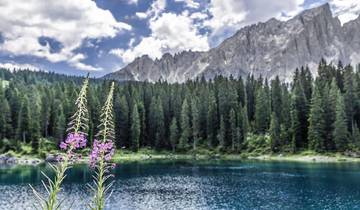
7 Days Northern Lakes and Dolomites Tour – from Milan
- ✓ Comprehensive Trento tour
- ✓ Expert local guides included
- ✓ All accommodation arranged
- ✓ Transportation provided
7 days
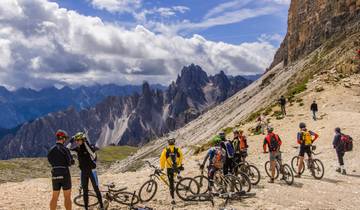
From Merano to Lake Garda
- ✓ Comprehensive Trento tour
- ✓ Expert local guides included
- ✓ All accommodation arranged
- ✓ Transportation provided
7 days
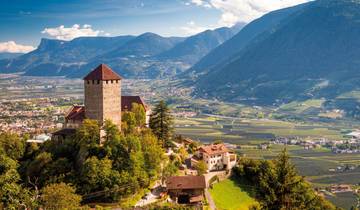
Adige cycle path Nauders – Lake Garda
- ✓ Comprehensive Trento tour
- ✓ Expert local guides included
- ✓ All accommodation arranged
- ✓ Transportation provided

7 days
Adige Cycle Path: Bolzano – Verona – Along the Adige to Romeo & Juliet 7 Days
- ✓ Comprehensive Trento tour
- ✓ Expert local guides included
- ✓ All accommodation arranged
- ✓ Transportation provided
Multi-day tour packages powered by TourRadar. Prices and availability subject to change.
Introduction: Why Trento Belongs on Your 2026 Italy Itinerary
Trento occupies an anomalous position in Italian tourism. With a population of around 120,000, it is a proper city rather than a village attraction, yet it draws a fraction of the crowds that flood Verona, Venice, or Florence. That gap between quality and visitor numbers defines the Trento experience in 2026: castle access without ticket queues, museums with space to breathe, restaurants where locals outnumber tourists, and accommodation at prices that belong to 2015 in comparable Italian destinations.
Historically, Trento was the site of the Council of Trent (1545–1563), the Catholic Church’s landmark response to the Protestant Reformation, which placed the city at the center of European religious and intellectual life for nearly two decades. The Castello del Buonconsiglio, seat of the prince-bishops who governed the city for centuries, preserves frescoes that rank among the finest late-Gothic painting cycles in Europe. The Piazza Duomo, with its 13th-century Romanesque-Gothic cathedral and the Neptune Fountain, looks almost unchanged from engravings made during the Council. The MUSE — designed by Renzo Piano and opened in 2013 — adds world-class contemporary architecture to a medieval skyline.
Geographically, Trento sits on the Adige River at the southern entrance to the Alps, giving it easy access to genuinely spectacular natural scenery. The Dolomites, a UNESCO World Heritage Site inscribed in 2009, lie within an hour of the city center. Lake Garda’s northern tip at Riva del Garda is reachable in under 90 minutes by bus. Bolzano and its extraordinary South Tyrol Museum of Archaeology — home to Ötzi the Iceman — sits 40 minutes north by train. The city functions equally as a destination in its own right and as an exceptionally located base for alpine exploration.
Trentino’s food and wine identity adds an independent reason to visit. The region produces Trentodoc, Italy’s longest-established méthode champenoise sparkling wine, as well as acclaimed Pinot Grigio, Teroldego, and Marzemino reds. Cantine Ferrari, one of Italy’s most celebrated sparkling-wine producers, is based here. Regional cuisine draws from both Italian and Germanic Alpine traditions: canederli (bread dumplings), strangolapreti (spinach dumplings), lucanica sausage, polenta with funghi porcini, and strudel appear on menus throughout the city.
Getting to Trento in 2026
Trento is one of the best-connected small cities in northern Italy by rail, sitting on the main Brennero corridor linking Munich and Innsbruck to Verona, Bologna, and Rome. The station (Trento Centrale) is a 10-minute walk from Piazza Duomo.
By Train
Train is the fastest and most practical way to reach Trento from most Italian cities and from Germany and Austria. Key journey times and fares:
- Verona to Trento: 54–65 minutes on Frecciarossa or regional trains, from €8–14 (Trenitalia regional from €8, Italo from €9). About 41 trains run daily. Check trenitalia.com or italotreno.it for current schedules and fares.
- Milan to Trento: 2–2.5 hours by Frecciarossa (direct) or regional with one change at Verona, €18–35 depending on service and advance booking.
- Venice to Trento: 2–2.5 hours via regional train through Bassano del Grappa or via Verona, €12–22.
- Bologna to Trento: 1.5–2 hours, high-speed Frecciarossa via Verona, €20–40.
- Munich/Innsbruck to Trento: EuroCity trains from Munich take approximately 3.5 hours; Innsbruck to Trento runs about 1.5 hours on the Brennero line.
Book Trenitalia regional trains at trenitalia.com and high-speed Italo at italotreno.it; prices fluctuate significantly by booking window and demand.
By Air
Trento has no commercial airport. The three most practical options are:
- Verona Airport (VRN): 47 miles/75 km south — closest airport to Trento. Aerobus coaches connect to Verona Porta Nuova station (€6–8) where trains to Trento run every 30–60 minutes. Total airport-to-Trento journey: approximately 90 minutes.
- Venice Marco Polo Airport (VCE): 70 miles east — ATVO and ACTV coaches connect to Venice Santa Lucia station (€8–15); trains to Trento take a further 2–2.5 hours.
- Bergamo Orio al Serio (BGY): 74 miles west — primarily a Ryanair hub. Autostradale coaches run to Milan Stazione Centrale (€10–14); trains to Trento from Milan take 2–2.5 hours.
By Car
Trento lies on the A22 Autostrada del Brennero (E45), one of Europe’s most important north-south motorway corridors. The A22 runs from Brenner Pass (Austrian border) south through Bolzano and Trento to Modena. Driving times: Verona 60 minutes, Milan 2 hours, Venice 2 hours. Parking in Trento city center is limited and paid; the main options are Parcheggio Centro Europa (near Castello del Buonconsiglio) and Parcheggio Ferrari (near the train station), both charging €1.50–2 per hour. Day visitors are better served by parking at the station and walking into the historic center.
Where to Stay in Trento 2026: Accommodation by Budget
Trento’s accommodation stock ranges from hostels and farm stays on the periphery to design 4-star hotels within 200 meters of Piazza Duomo. The city is compact enough that most hotels are convenient regardless of specific address — the historic center measures roughly 800 meters north to south and is flat throughout.
Budget Accommodation in Trento 2026 (€65–100 per room per night)
Budget travelers find genuine value in Trento compared to comparable Italian cities. B&Bs, guesthouses, and budget 2-star hotels charge €65–100 per room per night for doubles in 2026, with rates dropping 20–30% in the low season (November–March, excluding Christmas market weeks). Hotel Venezia, near Piazza Duomo, and Hotel Garni Venezia, a 10-minute walk from the station, consistently offer the best-value central options. B&B Hotel Trento, on the city’s western outskirts near Trentino Trasporti’s network, suits travelers with cars or those prioritizing access to ski areas. Check booking.com or directhotels.com for current rates, as prices vary considerably by date.
Mid-Range Hotels in Trento 2026 (€120–170 per room per night)
Mid-range 3-star hotels in Trento deliver comfortable, often well-located rooms at prices well below Verona, Venice, or Milan equivalents. The NH Hotel Trento, with its modern facilities and central location, and Hi Hotels Trento (adults-only wellness hotel near the Albere district) represent the top mid-range options. Hotel Alpine Mugon, on the Via Brennero heading north out of the city, offers mountain views alongside urban access. Rates in this tier average €120–145 in shoulder season and €145–170 at peak summer and Christmas. All mid-range hotels in Trento’s accredited network issue the Trentino Guest Card, which provides free unlimited use of Trentino Trasporti buses, local trains, and the Sardagna funicular for the duration of your stay — a significant saving for visitors planning day trips.
Luxury Hotels in Trento 2026 (€200–300 per room per night)
Luxury accommodation in Trento is concentrated in two distinct property types: grand historic hotels in the city center and elegant hilltop villas overlooking the Adige valley. The Grand Hotel Trento, a fin-de-siècle 4-star property 150 meters from the train station, is the city’s most prominent luxury address, with a terrace restaurant, spa, and rooms ranging €200–280 in season. Hotel Villa Madruzzo, set in the green hills east of the city center, offers a refined country-house ambiance with panoramic terraces and fine dining; prices run €180–260 and include parking and access to the gardens. Be Place Adult-Friendly Hotel, in the Albere district near MUSE, brings a boutique design sensibility with rates of €190–280. All properties issue the Trentino Guest Card. Check official hotel websites for 2026 current rates.
Neighborhoods for Staying in Trento 2026
Trento’s historic center is the primary accommodation zone and the only area within easy walking distance of all major sights. The Albere district, developed on the former Michelin factory site in the city’s southwest quadrant, surrounds MUSE and offers modern hotels and apartments at slightly lower prices than the historic center. San Martino, the hillside neighborhood below Castello del Buonconsiglio, has a handful of B&Bs and apartments in characterful medieval buildings. For visitors planning extensive Dolomites day trips, staying near Trento Centrale station maximizes train access without sacrificing city-center walkability.
Seasonal Accommodation Price Variations in Trento 2026
Trento prices follow a distinct pattern from typical Italian beach destinations. Peak rates occur in: late July to mid-August (domestic summer holidays), the Christmas market period (late November to January 6), the Trento Film Festival week (late April–early May), and the Festival dell’Economia weekend (late May). Shoulder season — May before the festival, June, September, and early October — delivers the best combination of pleasant weather and moderate prices, running 15–25% below peak rates. January–March (excluding public holidays) and November (before the Christmas market) represent genuine low season, with budget hotels available from €55–70 and mid-range from €90–120.
Trento Attractions and Things to Do in 2026
Trento concentrates most of its premier attractions within a 20-minute walk of Piazza Duomo, allowing a full day of sightseeing without any transport. MUSE, the city’s architectural showpiece museum, is the one exception — it sits 1.5 km southwest of the Duomo, an easy walk or a single bus ride.
Castello del Buonconsiglio
The Castello del Buonconsiglio is the most important non-religious monument in Trentino, a multi-building complex occupying the hillside above the city’s eastern edge that served as the residence of the prince-bishops of Trento from the 13th century to Napoleon’s suppression of the episcopal principality in 1803. The complex divides into three main nuclei: Castelvecchio (13th century, with the circular Torre d’Augusto), the Magno Palazzo (Renaissance, commissioned by Cardinal Bernardo Clesio in the 1520s), and the Giunta Albertiana (17th-century Baroque addition). The interiors contain significant collections of medieval and Renaissance art, including the breathtaking Ciclo dei Mesi in Torre Aquila.
Admission (check buonconsiglio.it for current rates): Adults €10, youth 15–26 €6, children under 14 free, seniors 65+ and groups of 15+ €8, Torre Aquila supplement +€2.50. Family ticket 2 adults + minors €20. A 5-castle combined ticket covering Buonconsiglio, Castel Beseno, Castello di Stenico, Castel Thun, and Castel Caldes costs €20 adult/€15 reduced. Summer hours 10:00–18:00, winter hours 9:30–17:00; closed Monday (non-holiday Mondays). Book Torre Aquila access in advance — entry is at fixed times every 45 minutes and group sizes are limited to approximately 20 visitors.
MUSE – Museo delle Scienze
MUSE is one of Italy’s most architecturally distinguished science museums, housed in a Renzo Piano building that opened in 2013 as the centerpiece of the Albere urban regeneration project. Six floors of permanent exhibitions cover Alpine ecology, the evolution of life, global sustainability, and interactive science for children, all within an energy-efficient structure whose stepped aluminum roof profiles echo the surrounding mountain peaks. The building’s biodiversity park and botanical garden extend the visit outdoors at no additional cost.
Admission (verify at muse.it for current rates): Adults €11, reduced €9 (youth 6–26 and seniors 65+), free for children 0–5. Family rates: one parent with minor children €11, two parents with minor children €22. Open Tuesday–Friday 10:00–18:00, Saturday–Sunday and public holidays 10:00–19:00, closed Monday. Trentino Guest Card holders receive free admission. Buy tickets online in advance, particularly for weekends and summer, as the museum sells out on high-demand days.
Piazza Duomo and Cathedral of San Vigilio
Piazza Duomo is Trento’s social and architectural heart, a large medieval square framed by the Romanesque-Gothic Cathedral of San Vigilio (begun 1212), the Baroque Neptune Fountain (1767), and the arcaded façades of former merchant palaces. Entry to the cathedral is free. The Palazzo Pretorio adjacent to the Duomo houses the Museo Diocesano Tridentino, which holds the original tapestries displayed during the Council of Trent, the cathedral’s treasury, and medieval artworks. Admission to the Diocesan Museum is €5 for adults (check diocesitrento.it for current rates and opening hours).
Torre Civica and Piazza Duomo Views
The Torre Civica (also called the Torre Apponale) on Piazza del Municipio rises 52 meters above the adjacent Palazzo del Municipio. For a small climb fee (approximately €2–3, verify locally), the tower delivers the best elevated view over Piazza Duomo and the surrounding rooftops toward the Dolomites. Check visittrento.it for current opening hours and admission.
S.A.S.S. – Spazio Archeologico Sotterraneo del Sas
The S.A.S.S. is an underground Roman-era archaeological site discovered beneath the Piazza Cesare Battisti during 1990s renovation works. The remains include sections of the ancient city of Tridentum, including a Roman road, housing foundations, and drainage systems. Access is free with the Trentino Guest Card or at low cost otherwise; the site provides a striking juxtaposition of Roman infrastructure against the medieval city above.
Sardagna Funicular (Funivia Trento–Sardagna)
The cable car connecting central Trento to the village of Sardagna on Monte Bondone’s lower slopes operates daily 7:00–22:30, managed by Trentino Trasporti. The 5-minute ascent delivers panoramic views over the Adige valley and the city below. A single ticket costs €3 one-way, €5 return; Trentino Guest Card holders ride for free. Sardagna itself is a quiet alpine hamlet with walking paths toward Monte Bondone’s summit — a good starting point for half-day hikes above the city.
Piedicastello and Le Gallerie
The Piedicastello district, northwest of the city center at the foot of Monte Marzola, hosts Le Gallerie di Piedicastello, a pair of former road tunnels converted into an innovative exhibition space. The exhibitions rotate and admission varies; check lagalleriepiedicastello.it for current programs and prices. The 2026 program includes the exhibition “Competition,” running from January 30, 2026 to January 6, 2027.
Monte Bondone
Monte Bondone rises directly above Trento to 2,180 meters, making it one of the few European cities with a genuine alpine ski area within its municipal boundaries. In summer 2026, the mountain offers hiking trails, mountain biking routes, and the Giardino Botanico Alpino Viote (Alpine Botanical Garden). In winter, the ski area operates approximately December–March with lift passes starting around €30–45 per day (check visittrentino.info for current season rates). The Trentino Guest Card provides access to ski bus services connecting Trento to the mountain.
2026 Events in Trento
Trento’s event calendar is one of the strongest of any Italian city its size. Key 2026 events include:
- Trento Film Festival (April 24–May 3, 2026): The world’s oldest and most prestigious international mountain film festival, held in venues across the historic center. Free and ticketed screenings, book presentations, debates with climbers and explorers.
- Festival dell’Economia (May 20–24, 2026): Italy’s leading public economics festival transforms Trento into a gathering of economists, policy experts, and public intellectuals. Most events free or low-cost.
- Feste Vigiliane (June): Trento’s patron saint festival (San Vigilio) brings medieval reenactments, processions, a palio, and street performances to the historic center.
- Autumnus (October): A four-day showcase of Trentino food and wine in Piazza Duomo and surrounding streets.
- Trento Christmas Market (November–January 6, 2027): One of Italy’s finest Christmas markets, renowned for handcrafted wooden decorations, mulled wine, roasted chestnuts, and strudel, and far less crowded than the heavily promoted Bolzano market to the north.
Food and Dining in Trento 2026
Trento’s cuisine occupies a fascinatingly hybrid position between the Italian kitchen and the Austro-Hungarian Alpine tradition. The Trentino-Alto Adige region was part of the Habsburg Empire until 1918, and the legacy appears in dishes like canederli (large bread dumplings in broth, identical to the Austrian Knödel), strangolapreti (spinach gnocchi named for the priests who supposedly ate them too greedily), lucanica di Trento (a thin pork sausage smoked over beech wood), and krapfen (deep-fried doughnuts). These sit alongside impeccably Italian risotti, hand-rolled pasta, and locally sourced trout from the mountain streams of the Adige tributaries.
Budget Dining in Trento 2026 (€15–25 per person per meal)
Budget-tier eating in Trento centers on bars, pizzerie, and the city’s osterie offering affordable lunch menus. A standing breakfast at any Trento bar — espresso plus a brioche or croissant — costs €2–4. The traditional Italian lunch (a fixed-price menu fisso) at osterie around the historic center runs €12–18 for two courses with water and a glass of local wine. Dinner at a budget pizzeria or trattoria near Piazza Duomo costs €18–25 for a full meal including cover and service.
Recommended budget addresses include: Osteria Vineria San Martino (Via San Martino, near Buonconsiglio, average €20–25 per person), Ristorante Pizzeria Uva e Menta (Via Dietro le Mura, excellent regional dishes at €18–25), and the daily market at Piazza Battisti where vendors sell local salumi, cheese, and fruit for self-catering lunches.
Mid-Range Dining in Trento 2026 (€25–45 per person per meal)
Mid-range dining in Trento is exceptionally good value by northern Italian standards. The osterie and ristoranti in this price band serve proper regional menus with local wines from the Trentodoc, Val di Cembra, and Teroldego Rotaliano appellations. A dinner with a full menu including wine, cover, and service at a well-regarded mid-range address costs €30–40 per person. Recommended restaurants include: Ristorante Patelli (Via Dietro le Mura, €30–40), Ristorante al Vò (Vicolo del Vò, reliable Trentino classics, €25–35), and Osteria Il Cappello (Piazzetta Bruno Lunelli, excellent wine list, €35–45).
Trento’s aperitivo culture, strongest between 18:00 and 20:00, provides a secondary budget-friendly option: an Aperol Spritz or local Müller-Thurgau costs €5–8 and comes with complimentary cicchetti-style snacks at better bars. Piazza Fiera and the bars around Piazza Cesare Battisti are the main aperitivo districts.
Upscale Dining in Trento 2026 (€45–80+ per person)
Trento’s fine dining scene punches above its size. Osteria a Le Due Spade (Via Don Arcangelo Rizzi) is historically the city’s most prestigious address, tracing its roots to the Council of Trent era; a dinner tasting menu runs €55–80 per person, and the wine cellar features exceptional Trentodoc and Alto Adige bottles. Scrigno del Duomo Restaurant & Wine Bar (Piazza Duomo) offers a similarly elevated experience with the most dramatic setting in the city — right on the main square, with views of the cathedral façade. Dinner for two at this level costs €100–160, including wine. Book these restaurants in advance, particularly on weekends and during festival periods.
Trentodoc Wine and Local Drinks
Trentodoc is the wine story of Trento, a DOC appellation for méthode champenoise sparkling wines made primarily from Chardonnay (and Pinot Noir, Pinot Meunier, and Pinot Bianco). Cantine Ferrari, the largest and most celebrated Trentodoc producer, offers tours and tastings at its Ravina cantina south of Trento (check cantineferrari.it for current booking and pricing). A glass of Trentodoc at a Trento bar or wine shop costs €6–12; cellar-door bottles start at €15–20 for entry-level Brut. The Trentodoc Festival, held in autumn, concentrates tastings and producer events in central Trento. Other local wine highlights include Teroldego Rotaliano (a structured red from the Rotaliano plain north of Trento), Marzemino di Isera, and Val di Cembra Müller-Thurgau.
Daily Budget Breakdown by Tier in Trento 2026
All figures below are per person, per day, assuming two travelers sharing hotel accommodation.
Budget Daily Costs in Trento 2026 (€70–100 per person)
Budget travelers in Trento benefit from a combination of free admission sites, affordable local food, and the complimentary Trentino Guest Card (eliminating transport costs for hotel guests). A realistic budget day:
- Accommodation: €33–45 per person (two sharing a B&B or budget hotel at €65–90/room)
- Breakfast at a bar: €3–5
- Lunch (menu fisso at an osteria or panino): €10–15
- Dinner (pizza or budget trattoria): €18–22
- Local transport: €2–4 (with Guest Card, near zero; without, a few rides)
- Attractions: €5–10 (free piazzas and churches most days; paid museum admission every two or three days)
Total: approximately €70–100 per person daily. A week at this tier costs approximately €490–700 per person.
Mid-Range Daily Costs in Trento 2026 (€135–190 per person)
Mid-range visitors access MUSE, the Castello del Buonconsiglio, and regional dining without financial stress, staying in comfortable 3-star hotels with reliable facilities. A mid-range day:
- Accommodation: €60–85 per person (two sharing a 3-star hotel at €120–170/room)
- Breakfast (hotel or café): €6–10
- Lunch (osteria or trattoria): €18–25
- Dinner (mid-range ristorante with wine): €30–40
- Local transport (occasional taxi or bus for day trips): €5–8
- Attractions: €15–22 (MUSE, Castello, or day-trip admission)
Total: approximately €135–190 per person daily. A week at this tier costs approximately €945–1,330 per person.
Luxury Daily Costs in Trento 2026 (€245–365 per person)
Luxury travel in Trento delivers an experience that would cost substantially more in Venice or Florence for comparable accommodation and dining quality. A luxury day:
- Accommodation: €100–150 per person (two sharing a 4-star property at €200–300/room)
- Breakfast (hotel or high-end café): €12–18
- Lunch (upscale restaurant): €35–50
- Dinner (fine dining with Trentodoc wines): €60–80
- Transport (taxis, car hire for Dolomites day trip): €15–25
- Attractions and guided tours: €25–40
Total: approximately €245–365 per person daily. A week at this tier costs approximately €1,715–2,555 per person.
Getting Around Trento in 2026
Trento’s historic center is compact and pedestrian-friendly. Most attractions lie within a 15–20 minute walk of each other, and the city’s flat riverside terrain makes walking the default mode of city transport. The main exceptions are MUSE (1.5 km southwest of the Duomo, a 20-minute walk or a 5-minute bus ride), the Castello del Buonconsiglio (15 minutes’ walk northeast of the Duomo), and the Sardagna funicular (near the Adige riverbank on the city’s northwestern edge).
Buses in Trento 2026
Trentino Trasporti operates 24 urban bus lines in Trento, running daily from 6:00 to 24:00 (with modified frequency on Sundays and public holidays). All lines converge at or near Trento Centrale station. Key lines for visitors: Lines 1–17 serve all directions from the station; Lines A and B cover the pedestrian center; Line C covers the southern district. Single urban tickets cost €1.20 for 70 minutes or €1.50 for 120 minutes when purchased in advance (at tobacconists, ticket machines, or the Mio Trentino app); tickets purchased on board cost €2. A day pass costs €3. Guests staying at accredited Trentino hotels receive the Trentino Guest Card, which provides unlimited free use of all urban and provincial bus lines and local trains for the duration of the stay.
Sardagna Funicular
The cable car to Sardagna runs daily 7:00–22:30, departing approximately every 15 minutes from a station at the northern end of Via Fogazzaro (a 10-minute walk from Piazza Duomo). One-way tickets cost €3; return tickets €5. Trentino Guest Card holders ride free. The funicular is the quickest route to Monte Bondone’s lower hiking trails and the village of Sardagna’s panoramic viewpoints.
Trentino Guest Card
Every guest staying at an accredited hotel, B&B, agriturismo, hostel, or campsite in Trentino automatically receives the Trentino Guest Card — a free digital pass (activated via the Mio Trentino app, downloadable from the App Store or Google Play) providing unlimited use of Trentino Trasporti urban and provincial buses, regional trains on Trentino routes, the Sardagna funicular, and discounted or free entry to more than 60 museums and 20 castles across the province. The card activates from check-in and remains valid for the entire stay (up to 20 days). Request a physical card from the hotel at check-in if you do not have a smartphone. The Guest Card does not cover interregional travel (e.g., Trento to Verona) or high-speed trains.
Taxis and Ride-Hailing in Trento 2026
Taxis in Trento operate on metered fares. The central taxi rank is at Trento Centrale station; additional stands are at Piazza Dante and Via Roma. A taxi from the station to Piazza Duomo costs approximately €6–8; to MUSE approximately €8–10. Taxi services are available 24 hours, though pre-booking is advisable late at night. Standard ride-hailing apps (Uber, Bolt) have limited availability in Trento; local taxi apps and the Mio Trentino platform provide booking functionality.
Cycling in Trento 2026
The Adige cycle path (Ciclopista dell’Adige) runs directly through Trento, connecting to a network of cycling routes extending north through the Adige valley toward Bolzano and south toward Lake Garda. The city promotes cycling infrastructure heavily, with dedicated lanes through the historic center. Bike rental is available through several operators near the station; electric bikes are recommended for excursions toward Monte Bondone. Note that the municipal e-motion bike-sharing scheme is reserved for residents.
Day Trips from Trento in 2026
Trento’s central position in the southern Alps makes it one of Italy’s most rewarding bases for day trips. The Dolomites, Lake Garda, Bolzano, Rovereto, and the Val di Non fruit valleys all fall within a 60–90-minute radius, and all are accessible by public transport using the Trentino Guest Card.
Rovereto (20 minutes by regional train)
Rovereto, 25 km south of Trento, pairs a 15th-century Venetian castle with the MART — Museo di Arte Moderna e Contemporanea di Trento e Rovereto — one of Italy’s most important modern art museums. MART admission: adults €11, reduced €8 (check mart.trento.it for current rates and exhibitions). The train from Trento runs every 20–30 minutes; with the Trentino Guest Card, the journey is free. Allow half a day for Rovereto or a full day combining MART with Castel Beseno, the largest castle complex in the entire Alpine arc, located on a hill between Trento and Rovereto (admission via Buonconsiglio 5-castle ticket, adults €20).
Bolzano and Ötzi the Iceman (40 minutes by train)
Bolzano (Bozen), capital of South Tyrol, sits 40 minutes north of Trento on the Brennero line. The South Tyrol Museum of Archaeology houses Ötzi the Iceman — the 5,300-year-old Neolithic mummy discovered in the Ötztal Alps in 1991 — in a purpose-built refrigerated gallery. Admission: adults €15, reduced €10 (check iceman.it for current rates). Bolzano’s medieval old town, Walther Platz, the Lauben arcades, and the Castel Roncolo (Runkelstein Castle) frescoes make a full-day visit easy. Note: Bolzano is in South Tyrol, not Trentino, so the Trentino Guest Card does not cover the Bolzano–Trento train leg (approximately €6–9 each way on Trenitalia regional).
Dolomites Day Trip 2026
The Dolomites UNESCO World Heritage Site extends directly east and northeast of Trento. The most accessible day trips by public transport are via the Trento–Malé–Marilleva railway (from Trento Centrale, approximately 2 hours to Malé; free with Guest Card) into Val di Sole, and via regional bus from Trento bus station into Val di Fiemme and Val di Fassa (approximately 60–90 minutes to Cavalese and Canazei). In summer 2026, the Dolomiti Superbus service operates scenic bus routes connecting multiple Dolomite passes, including the Passo Sella, Passo Pordoi, and Passo Fedaia. Trentino Guest Card holders ride free on designated Guest Card routes. A car dramatically expands Dolomite access and makes visiting Lago di Carezza, the Alpe di Siusi, and the Pale di San Martino feasible in a single day.
Lake Garda from Trento 2026
The northern tip of Lake Garda lies about 45 km southwest of Trento, reached by regional bus from Trento’s autostazione (bus station) in approximately 60–90 minutes. Riva del Garda, at the lake’s northernmost point, combines a compact historic center with the dramatic backdrop of Monte Baldo’s limestone walls. Day trippers find sailing, kayaking, windsurfing, and swimming at the lakefront alongside the Rocca di Riva castle (admission approximately €5; check comune.riva-del-garda.tn.it for current rates). Arco, 10 km north of Riva, adds a cliff-top medieval castle free to walk around the exterior. With the Trentino Guest Card, the bus from Trento to Riva del Garda is free (origin and destination both within Trentino).
Val di Non Apple Road
The Val di Non, northwest of Trento via the Trento–Malé railway, produces the majority of Italy’s Golden Delicious apples in an extraordinary cultivated landscape of terraced orchards. In September–October, the harvest season brings roadside stalls and agritourism open days. Castel Thun, one of the best-preserved medieval castle complexes in Trentino, dominates the valley from a promontory near Taio (admission on the Buonconsiglio 5-castle ticket, adults €20). Lake Tovel, in the Val di Tovel above the Val di Non, is a pristine glacial lake that occasionally turns red due to algal blooms — the only lake in the Alps to exhibit this phenomenon.
Best Time to Visit Trento in 2026: Seasonal Guide
Trento’s climate is continental Alpine — warm summers (20–28°C June–August), cool springs and autumns (8–18°C April–May, September–October), and cold winters (−2 to 6°C December–February) with occasional snow in the city and reliable snow above 800 meters on Monte Bondone. The city is visitable year-round, with each season offering a distinct character.
Spring 2026 (April–June): The Best Overall Season
Spring is Trento’s finest season for most visitors. The Adige valley blooms in apple and cherry blossom from mid-April, temperatures are ideal for walking (12–20°C), and two of the city’s most important annual events — the Trento Film Festival (April 24–May 3) and the Festival dell’Economia (May 20–24) — fall in this window. Accommodation prices are mid-range rather than peak; hotel availability is good for the weeks before and after festival periods. The Castello del Buonconsiglio’s gardens are particularly beautiful in April and May. Late June marks the start of higher prices and domestic tourism.
Summer 2026 (July–August): Warm, Active, Busy
Summer in Trento is warmer than many visitors expect — July and August average 25–28°C with clear mountain light. The Dolomites are at their most accessible for hiking, via ferrata, and cycling, and the Adige riverfront comes alive with outdoor events, markets, and evening strolling. Monte Bondone hosts mountain biking and hiking festivals. Accommodation demand peaks in late July and August (school holidays), pushing mid-range hotel rates to their seasonal highs of €145–170 and budget rooms to €90–100. The city retains its authentic character better than coastal or art-city destinations because domestic tourist demand is spread across the broader Trentino region rather than concentrated in the urban center.
Autumn 2026 (September–October): Harvest Season and Shoulder Prices
September–October is arguably the most underrated time to visit Trento. The heat eases, the Dolomites display extraordinary autumn foliage (larch forests turn gold from mid-October), and the harvest brings Autumnus food and wine festivals to Piazza Duomo. Grape harvest in the Teroldego Rotaliano vineyards north of Trento falls in September, and several Trentodoc producers open their cellars for tastings. Accommodation rates drop 15–25% below summer peaks; crowd levels at Buonconsiglio and MUSE return to manageable levels. The first snowfall on Monte Bondone’s upper slopes can occur from mid-October, signaling the approach of ski season.
Winter 2026 (November–March): Christmas Magic and Alpine Skiing
Trento’s Christmas Market, running from late November to January 6, 2027, is the city’s most photogenic season. The market occupies Piazza Fiera and Via Belenzani adjacent to Piazza Duomo, filling the medieval streetscape with decorated wooden stalls, handcrafted gifts, and the scent of mulled wine and roasted chestnuts. Unlike Bolzano’s internationally famous but heavily commercialized market, Trento’s remains oriented toward local craftsmanship and food. Hotel prices spike during Christmas and New Year’s week (book months in advance) but are lower than expected in early and mid-November. Monte Bondone’s ski area opens approximately December 20, offering a convenient urban ski experience; lift passes run approximately €30–45 daily (check visittrentino.info for 2026/27 season rates). January–February, outside school holidays, is Trento’s quietest and cheapest period.
Money-Saving Strategies for Trento 2026
Trento already offers exceptional value compared to more famous Italian cities, but several strategies reduce costs further without sacrificing experience quality.
Maximize the Trentino Guest Card
The Trentino Guest Card — free at any accredited hotel — is the single most powerful cost-reduction tool in Trento. Unlimited use of buses, regional trains, and the Sardagna funicular throughout Trentino province eliminates transport costs entirely. Free access to MUSE and significantly reduced or free access to Castello del Buonconsiglio and other castles translates to €20–40 in savings per person for a two-day visit. Activate the card on the Mio Trentino app at check-in and use it from the first bus ride.
Book the 5-Castle Combined Ticket
The Buonconsiglio 5-castle ticket (€20 adult, €15 reduced) provides access to Buonconsiglio plus Castel Beseno, Castello di Stenico, Castel Thun, and Castel Caldes. If your itinerary includes a day trip toward Rovereto or the Val di Non, this ticket saves significant money compared to individual admissions. Trentino Guest Card holders receive a 30% discount on the €10 single-castle Buonconsiglio admission, bringing it to €7.
Eat at Lunch, Dine Light in the Evening
Trento’s osterie and trattoirie offer their best value at lunch through fixed-price menu fisso options (€12–18 for two courses plus water and bread). The same restaurant charges 40–60% more for evening à la carte service. Budget-conscious visitors eat their main meal at midday at an osteria and buy a simple dinner of local salumi, cheese, and bread from the Piazza Battisti market or a supermarket. La Coop and Despar supermarkets close to the historic center stock excellent Trentino products at retail prices.
Walk Everywhere in the Historic Center
Trento’s flat historic center is one of its great advantages: Piazza Duomo to Castello del Buonconsiglio is a 12-minute walk; Piazza Duomo to MUSE is 20 minutes. Using buses only for MUSE trips and day excursions, and walking all intra-center movements, eliminates virtually all local transport costs even without the Guest Card.
Time Museum Visits for Free Days
The first Sunday of each month, MUSE offers free admission. The Trentino Day of Cultural Heritage (September 2025 and September 2026 dates — check muse.it for 2026 confirmation) provides free access to MUSE and satellite sites. Arriving in Trento in time for a first-Sunday visit saves €11 per person.
Hidden Costs to Budget For
Several costs catch visitors by surprise in Trento and should be factored into planning:
- Coperto (cover charge): Most sit-down restaurants charge €1.50–3 per person, billed automatically. This is not a tip — tipping is not mandatory in Italy, though leaving small change is appreciated.
- Torre Aquila supplement: The most spectacular element of Buonconsiglio — the Ciclo dei Mesi frescoes — requires a €2.50 supplement per person above standard castle admission. Budget for this separately; it is emphatically worth paying.
- Parking: City-center parking runs €1.50–2 per hour; Parcheggio Centro Europa near Buonconsiglio is the most convenient paid option. Budget visitors save significantly by parking outside the center and using the Guest Card bus.
- Day-trip transport outside Trentino: The Trentino Guest Card does not cover journeys crossing into South Tyrol or Veneto. Bolzano day-trip trains cost €6–9 each way; Verona trains run €8–14. Budget these separately.
- Online ticket booking fees: MUSE charges a €1 pre-sale fee per ticket; Buonconsiglio charges €1 per person for online booking. Walk-up purchase avoids these fees but risks unavailability on busy days.
Trento for Different Traveler Types in 2026
Trento for Families with Children in 2026
Trento ranks among northern Italy’s best family destinations. MUSE was designed explicitly to engage children through interactive exhibits, hands-on science stations, and the dedicated Maxi Ooh! wing for ages 0–5. Children under 14 enter the Castello del Buonconsiglio free; children under 5 enter MUSE free. The Sardagna funicular is a reliable child-pleaser. Monte Bondone offers accessible summer hiking at moderate gradients above Sardagna. The Val di Sole, reachable by the Trento–Malé railway in about 2 hours (free with Guest Card), has adventure parks, rafting, and family cycling trails. Trento’s flat historic center is pushchair-friendly throughout, and the pedestrian zones around Piazza Duomo allow children to move freely. Family accommodation options include the larger 3-star hotels and agriturismo properties in the surrounding hills.
Trento for Solo Travelers in 2026
Solo travelers find Trento comfortable and welcoming. The compact city center eliminates transport costs and navigational complexity. Bar culture, with its standing breakfast and aperitivo traditions, integrates solo visitors naturally into daily Trento life. MUSE and Buonconsiglio provide rich solo experiences without requiring groups. The festival calendar — Film Festival, Festival dell’Economia, Christmas Market — creates easy social contexts for meeting other visitors. Solo travel cost note: hotel rooms booked solo carry full room rates rather than the per-person share used for couple calculations; solo travelers should expect to spend approximately €110–180 per day in the budget-to-mid-range tier, as the accommodation saving from sharing is absent.
Trento for Cultural Travelers in 2026
Cultural travelers will find Trento’s density of high-quality experiences exceptional for a city of 120,000 people. The Council of Trent’s 16th-century legacy runs through the Palazzo Pretorio, the Diocesan Museum’s Council tapestries, and the fresco cycles in both the Cathedral and Castello. The MUSE offers architecture and scientific collections at the highest international standard. Le Gallerie di Piedicastello provides contemporary exhibition programming in genuinely unusual spaces. Day trips to Bolzano (Ötzi the Iceman), Rovereto (MART modern art), and Castel Beseno extend the cultural radius considerably. The Festival dell’Economia in May attracts leading international thinkers and economists whose public lectures are partly free.
Trento for Outdoor Travelers in 2026
Outdoor travelers use Trento as one of Italy’s best alpine base camps. The Dolomites’ via ferrata routes, hiking trails, and Dolomiti Superski system lie within 60–90 minutes; Monte Bondone’s trails start from the Sardagna funicular; the Adige cycle path connects north to South Tyrol and south toward Lago di Garda. River sports — kayaking and canyoning — operate in the Val di Sole and Val Rendena valleys accessible by the Trento–Malé railway. Climbing infrastructure in Arco (40 minutes south) makes that town the world-class sport climbing destination closest to Trento. For mountain runners, the Trento–Bondone hillclimb race is one of Italy’s oldest mountain running events.
Practical Tips for Visiting Trento in 2026
Currency and Payments
Trento uses the euro (€). Card payments are accepted at hotels, museums, and most restaurants; smaller bars, market stalls, and some osterie operate cash-only. ATMs (Bancomat) are available throughout the city center, clustered near Piazza Duomo and around the station. Inform your bank before traveling to prevent blocks on foreign transactions. For day trips outside the city, carrying €50–100 in cash covers markets, smaller admissions, and rural restaurant stops where card terminals may be unreliable.
Language
Italian is the primary language. German is widely spoken, reflecting South Tyrol’s proximity and Trentino’s historical ties to Austria. English is understood in hotels, museums, and upscale restaurants, but less common in small family osterie and local markets. A few phrases of Italian (buongiorno, per favore, grazie, posso avere il conto) improve the quality of interactions noticeably in smaller establishments.
Connectivity
MUSE provides free Wi-Fi (MUSE-free network) throughout the building. Most hotels and cafés offer free Wi-Fi. The Mio Trentino app, which manages the Trentino Guest Card’s transport validation, requires a data connection; download and activate it before arriving in Trento to ensure smooth boarding. EU travelers face no roaming charges; visitors from outside the EU should buy a prepaid Italian SIM from TIM, Vodafone, or WindTre at the Trento Centrale station or nearby phone shops on arrival.
Walking and Navigation
Google Maps and Apple Maps both perform reliably in Trento. The city is small enough that offline map downloads eliminate any navigation anxiety. The historic center’s main axes — Via Belenzani (the Renaissance-frescoed street connecting Piazza Duomo to the north), Via Roma (the main commercial street), and the riverside Lungofiume Adige path — provide orientation landmarks. Piazza Duomo is the effective center of all navigation; if in doubt, walk toward the cathedral spire.
Medical and Emergency Services
Trento’s main hospital is the Ospedale Santa Chiara (Via Lorenz Böhler 5, +39 0461 903111). EU citizens present their EHIC card for public health services; non-EU travelers should carry comprehensive travel insurance. Pharmacies (indicated by a green cross) are distributed throughout the city center and provide minor medical advice and over-the-counter medications; a rotating pharmacy rota ensures 24-hour availability. Emergency services: 112 (all emergencies), 118 (medical), 115 (fire).
Accessibility
Trento’s flat historic center is relatively accessible for visitors with reduced mobility. MUSE is fully accessible. Castello del Buonconsiglio has ongoing accessibility improvements as of 2025–2026, including a new lift installation; some historic areas (upper towers, steep internal stairs) remain challenging. The Sardagna funicular is accessible. Contact individual sites in advance for specific accessibility requirements: Buonconsiglio at +39 0461 492811; MUSE via the contact form at muse.it.
Useful Apps for Trento 2026
Mio Trentino (iOS and Android) manages the Trentino Guest Card, real-time bus times, tourist information, and museum bookings. Trenitalia’s app handles train tickets for regional and high-speed connections. Google Translate with the Italian offline pack covers menu translation and basic signage reading. TheFork (La Forchetta) provides restaurant reservations for mid-range and upscale dining; bookings are strongly recommended for weekends and festival periods.
Frequently Asked Questions About Visiting Trento 2026
How many days should I spend in Trento in 2026?
Two to three days covers Trento’s core historic attractions — Piazza Duomo, the Cathedral, the Castello del Buonconsiglio, and MUSE — plus evening dining and a relaxed exploration of the smaller streets and viewpoints. Three to four days allows for day trips to Rovereto, Bolzano, or a Dolomites valley. Five to seven days is appropriate for travelers planning to use Trento as a base for extensive Dolomites hiking or Lake Garda exploration. Trento is compelling but compact; attempting to stretch a pure city visit to more than three days risks exhausting the sights before exhausting the budget.
How much does a week in Trento cost in 2026?
A week in Trento costs approximately €490–700 per person for budget travelers (two sharing a budget hotel, cooking some meals, using the Guest Card for all transport), €945–1,330 for mid-range visitors (two sharing a 3-star hotel, dining in trattoirie and osterie, one or two day trips), or €1,715–2,555 for luxury travelers (two sharing a 4-star hotel, fine dining nightly, guided excursions). These figures cover accommodation, all meals, transport within Trentino, and attraction admissions.
Is the Trentino Guest Card genuinely free?
Yes. The Trentino Guest Card is included at no additional cost in any booking at an accredited hotel, B&B, agriturismo, hostel, or campsite in the Trentino province. The only requirement is staying at least one night. The card activates via the Mio Trentino app; a physical version is available from the hotel reception for guests without smartphones. The card covers unlimited public transport within Trentino and provides free or discounted admission to the majority of provincial museums and castles for the entire stay up to 20 days. There are no hidden charges.
Can I visit Trento on a day trip from Verona?
Yes. The Verona–Trento train journey takes 54–65 minutes and costs from €8 each way, making a day trip from Verona entirely practical. A day-trip visitor can cover Piazza Duomo, the Cathedral, the Castello del Buonconsiglio (exterior and main floors), and a lunch at an osteria comfortably within 8 hours. MUSE requires approximately 2.5–3 hours; choose between the castle and the museum on a single-day itinerary unless arriving on the early morning train. Day-trippers do not receive the Trentino Guest Card (that requires an overnight stay), so budget €2–5 for local bus rides if needed.
What is the Ciclo dei Mesi and why does it matter?
The Ciclo dei Mesi (Cycle of the Months) is a series of late-Gothic frescoes covering the interior walls of Torre Aquila, within the Castello del Buonconsiglio complex. Painted around 1400, they depict life across all twelve calendar months — aristocratic hunting and banqueting scenes alongside peasant agricultural labor, with extraordinary detail in costume, landscape, and seasonal change. The cycle is considered one of the finest examples of secular medieval painting in Italy and one of the most complete Gothic fresco programs in any European castle. Access requires a €2.50 supplement above the standard Buonconsiglio admission and is at fixed guided times every 45 minutes; book in advance at buonconsiglio.it.
What Trentino wines should I try in Trento?
The four essential Trentino wines are: Trentodoc (the region’s méthode champenoise sparkling, led by Ferrari Brut and more complex reserve Giulio Ferrari and Fratelli Lunelli cuvées); Teroldego Rotaliano (a structured, dark-fruited red from vineyards on the Rotaliano plain north of Trento, best from producers Elisabetta Foradori and Gaierhof); Marzemino di Isera (a light-bodied, violet-scented red from the Vallagarina south of Trento, famously referenced in Don Giovanni by Mozart); and Val di Cembra Müller-Thurgau (a crisp, aromatic white from high-altitude vineyards east of Trento). Request these by name at wine bars; enotece near Piazza Duomo stock all four appellations.
Is Trento safe for solo travelers?
Trento is one of Italy’s safest cities. Crime rates are low, petty theft incidents are rare compared to Venice, Florence, or Rome, and the compact center with its resident university population creates a lively, alert urban environment. The historic center is safe to walk at night. Standard precautions apply — keep valuables secure in crowded spaces during festivals, use licensed taxis rather than unmarked vehicles, and be aware of your surroundings near the Trento Centrale station after late-night trains.
What is the Trento Film Festival?
The Trento Film Festival, running April 24–May 3, 2026, is the world’s oldest and most prestigious international film festival dedicated to mountains. Founded in 1952, it screens features, documentaries, and short films across venues in the historic center, accompanied by photography exhibitions, book presentations, debates with explorers, alpinists, and filmmakers, and outdoor projections. Many screenings are free or very low cost (€5–8); the festival program is published at trentofestival.it. Accommodation books up weeks in advance for festival dates — reserve hotels in late February or March for the April–May window.
Can I ski on Monte Bondone as a day trip from central Trento?
Yes. Monte Bondone’s ski area operates within Trento’s municipal boundaries and is accessible by ski bus from the city center (free with the Trentino Guest Card). The ski area is modest in scale compared to the Dolomiti Superski network — suited to beginners, families, and intermediate skiers rather than experienced off-piste enthusiasts — but the convenience of skiing from an Italian Renaissance city center is genuinely unusual. Daily lift passes run approximately €30–45 (check visittrentino.info for 2026/27 season rates when published). Ski and snowboard rental is available at the base area.
How does Trento compare to Bolzano as a base in Trentino?
Trento and Bolzano serve different traveler profiles. Trento is the more Italian-feeling of the two cities, with a richer Renaissance and medieval heritage, the MUSE, stronger restaurant and wine culture, and a livelier event calendar. Bolzano leans German in culture, architecture, and cuisine; its old-town arcades (Lauben) are compact but beautifully preserved, and the South Tyrol Museum of Archaeology is world-class. For day-tripping into the western Dolomites (Val Gardena, Alpe di Siusi, Cortina direction), Bolzano is marginally more convenient. For Lake Garda, Val di Non, and Val di Fiemme access, Trento is clearly superior. Budget travelers find Trento slightly more affordable; both cities offer accommodation from the budget to luxury tier.