
Torres del Paine National Park 2026: Complete UNESCO Guide
Key Takeaways
- Park entrance costs $35 for international visitors during high season (November-March) and $18 low season (April-October) in 2026, with advance booking recommended 3-6 months ahead for summer refugio accommodation
- The W Trek (80 km, 4-5 days) and O Circuit (130 km, 8-9 days) represent the park’s signature multi-day experiences, requiring moderate to high fitness levels and costing $800-1,500 per person including accommodation and meals
- December through February offers optimal conditions with 15-17 hours daily sunlight and temperatures of 8-18°C (46-64°F), though Patagonian winds reach 60-100 km/h year-round
- Puerto Natales serves as the primary gateway located 112 kilometers south, with daily bus services at $30-40 round-trip or guided tours at $120-180 per person including transportation and interpretation
- Day visitors access roadside viewpoints including Lake Pehoé, Salto Grande waterfall, and Grey Glacier lookout, while comprehensive park experiences require minimum 3-5 days for proper exploration
- Wildlife sightings include guanacos (nearly guaranteed), Darwin’s rheas (70-80% probability), Andean condors (40-50%), and rare puma encounters (5-10% probability) across diverse ecosystems
Understanding Torres del Paine National Park in 2026
Torres del Paine National Park dominates Chilean Patagonia’s landscape as one of Earth’s most spectacular protected wilderness areas, where granite towers pierce skies above turquoise lakes, massive glaciers flow from the Southern Patagonian Ice Field, and Patagonian wildlife thrives across 227,298 hectares of diverse ecosystems. Designated a UNESCO Biosphere Reserve in 1978, the park represents South America’s premier trekking destination and Chile’s most visited national park with 250,000+ annual visitors drawn to landscapes that define Patagonian iconography.
The park’s geography spans dramatic elevation changes from 50-meter lakeshores to 3,050-meter Paine Grande summit, creating microclimates and ecosystems supporting everything from Patagonian steppe grasslands to Andean mountain environments. The Paine Massif—the park’s central mountain complex—rises abruptly from surrounding pampas, its distinctive granite towers and sedimentary peaks creating the region’s most photographed landscapes.
Torres del Paine sits 112 kilometers north of Puerto Natales in Chile’s Magallanes Region, accessible via paved and gravel roads from the gateway town. The park operates year-round though summer months (December-February) concentrate 60% of annual visitation during Patagonia’s warmest and longest-daylight period. Winter access continues at reduced service levels with many refugios closed and trail conditions challenging from snow and ice.
Planning 2026 visits requires understanding the park’s dual character: roadside viewpoints accessible via day trips deliver spectacular scenery without extensive hiking, while the famous W Trek and O Circuit demand multi-day commitments carrying backpacks across challenging terrain. This distinction separates casual visitors experiencing Torres del Paine’s periphery from committed trekkers engaging the wilderness interior where the park’s true character reveals itself through days of backcountry travel.
People Also Ask About Torres del Paine 2026
How much does it cost to visit Torres del Paine in 2026?
Torres del Paine costs vary dramatically by visit type and duration. Park entrance fees are $35 for international visitors during high season (November 1-March 31) and $18 low season (April 1-October 31) in 2026. Check the official CONAF website for current rates as seasonal pricing applies.
Day trips from Puerto Natales cost $100-180 per person including round-trip transportation, park entrance, and guided interpretation. Budget bus services run $30-40 round-trip plus separate entrance payment, while guided tours at $120-180 include entrance fees and expert guides. Day visitors add $15-30 for meals at park refugios or bring packed lunches from Puerto Natales saving costs.
Multi-day W Trek experiences range $800-1,500 per person for 4-5 days including refugio accommodation ($60-90 per night with meals), park entrance, and trailhead transfers. Budget camping approaches cost $300-500 carrying tents and cooking gear, paying campsite fees ($10-18 nightly) and purchasing food in Puerto Natales. The O Circuit extends costs to $1,200-2,200 for 8-9 day experiences with similar per-night accommodation rates across longer durations.
Total visit budgets including Puerto Natales accommodation before/after park stays, transportation from Punta Arenas, meals, and incidentals reach $1,000-2,500 per person for comprehensive 6-8 day Torres del Paine experiences combining travel days with 4-5 park days. Budget travelers minimize costs through camping, self-catering, and public transportation, while comfort-focused visitors invest in refugio accommodation, guided services, and quality gear rental.
What is the best time to visit Torres del Paine in 2026?
December through February represents optimal timing for Torres del Paine visits in 2026, offering 15-17 hours daily sunlight, temperatures of 8-18°C (46-64°F), and the most reliable (though still variable) weather patterns. Summer’s extended daylight allows early trail starts and late finishes, maximizing daily hiking distances while maintaining adequate safety margins for return to refugios before darkness.
December 15-January 15 sees peak visitation when refugios reach capacity and trails experience maximum crowding, particularly at popular campsites like Italiano and locations like Base Las Torres viewpoint. Booking refugio accommodation 4-6 months ahead secures preferred dates during this absolute peak period. Early December and late January through February offer excellent conditions with slightly moderated crowds.
November and March shoulder seasons provide compelling alternatives with fewer trekkers, competitive pricing (20-30% below summer), and distinctive seasonal characteristics. November brings spring wildflowers and snow-covered higher elevations creating dramatic contrasts, while March offers autumn colors as deciduous vegetation transforms to yellows and oranges. The trade-offs involve accepting increased weather variability, shorter daylight (12-14 hours), and some refugio closures during early November and late March.
Winter months (June-August) suit only specialized visitors comfortable with harsh conditions—8-10 hour daylight, temperatures of -2 to 6°C (28-43°F), and snow closures on higher trails including Base Las Torres and Valle del Francés. Most refugios suspend operations, while limited transportation options and extreme weather make winter the least practical season for standard park experiences in 2026.
Do you need to book Torres del Paine in advance for 2026?
Yes, advance booking proves essential for summer season (December-February) refugio accommodation and strongly recommended for transportation and guided services. Refugio beds along the W Trek sell out 3-6 months before summer dates, with capacity limited by park regulations protecting fragile environments from overuse. Popular refugios like Paine Grande and Grey Glacier fill first, often by September for peak January dates.
The booking requirement stems from fixed accommodation capacity—the park maintains approximately 2,000 beds across all refugios and authorized campsites, preventing unlimited visitor access during peak season. This capacity control creates competitive booking where early reservations secure preferred dates and accommodation types (refugio bunks vs campsites).
Transportation booking matters less than accommodation but benefits from 1-2 weeks advance for summer bus services between Puerto Natales and park entrances. Guided day tours sell out 2-4 weeks ahead during peak periods, while shoulder seasons allow last-minute bookings within days of travel. Private transfers and rental cars maintain better availability though summer demand creates some pressure on these services.
Park entrance itself requires no advance reservation—visitors pay at gates upon arrival. However, without pre-booked accommodation, entry becomes impractical for multi-day trekkers unable to camp in unauthorized locations. Day visitors avoid booking requirements beyond transportation, accessing the park via bus or tour services with same-day or next-day availability during most periods.
Can you visit Torres del Paine without hiking the W Trek in 2026?
Absolutely—day trips and driving circuits provide comprehensive park experiences without multi-day trekking commitments. The main park road connects major viewpoints including Lake Pehoé, Salto Grande waterfall, Grey Glacier lookout, and Laguna Amarga via paved and gravel sections accessible by tour bus, rental car, or guided vehicle. These roadside attractions deliver the park’s most photographed landscapes within 6-8 hours from Puerto Natales.
Day hiking options range from 30-minute walks to Salto Grande waterfall to 3-4 hour excursions along Lake Nordenskjöld shoreline or Mirador Cuernos viewpoint. These shorter trails provide wilderness engagement without the endurance demands of 15-20 kilometer daily W Trek distances. Visitors experience dramatic scenery, wildlife sightings, and Patagonian environments while returning to Puerto Natales accommodations nightly.
Multi-day alternatives to the W Trek include driving the complete park circuit over 2-3 days, staying at estancias (ranches) or lodges like Explora and Tierra Patagonia offering guided day hikes from comfortable bases. This approach delivers landscape diversity across multiple days without carrying backpacks or camping in backcountry refugios. The investment runs higher ($800-1,500+ per night at luxury lodges) but eliminates trekking physical demands while maintaining park immersion.
Wildlife viewing, photography, and cultural experiences operate independently of trekking infrastructure. Visitors focusing on guanaco herds, condor sightings, or glacier photography access excellent opportunities via roadside stops and short walks without committing to multi-day trails. This flexibility means Torres del Paine accommodates diverse visitor types from casual sightseers to hardcore trekkers within single park system.
Extended multi-day tours – 5+ days
Featured Park Torres Del Paine National Park Multi-Day Tour Packages
3 days
Park Torres Del Paine National Park 3-Day Discovery Tour
- ✓ Comprehensive Park Torres Del Paine National Park experience
- ✓ Expert local guides included
- ✓ All accommodation included
- ✓ Transportation provided
5 days
Park Torres Del Paine National Park 5-Day Highlights Experience
- ✓ Comprehensive Park Torres Del Paine National Park experience
- ✓ Expert local guides included
- ✓ All accommodation included
- ✓ Transportation provided
7 days
Park Torres Del Paine National Park 7-Day Cultural Journey
- ✓ Comprehensive Park Torres Del Paine National Park experience
- ✓ Expert local guides included
- ✓ All accommodation included
- ✓ Transportation provided

10 days
Park Torres Del Paine National Park 10-Day Complete Adventure
- ✓ Comprehensive Park Torres Del Paine National Park experience
- ✓ Expert local guides included
- ✓ All accommodation included
- ✓ Transportation provided
Multi-day tour packages powered by TourRadar. Prices and availability subject to change.
Essential Planning Information 2026
Park Entrance and Regulations
Torres del Paine entrance gates operate at multiple access points with Laguna Amarga (eastern entrance) and Laguna Azul (northern entrance) serving as primary entry stations for most visitors. The gates open 8:00 AM and close variable times depending on season—6:00 PM during winter, 8:00 PM during summer peak. Entry outside these hours requires coordination with CONAF (National Forest Corporation) park rangers.
Entrance fees follow seasonal structure: $35 international visitors high season (November 1-March 31), $18 low season (April 1-October 31). Chilean nationals pay reduced rates at $6 high season, $3 low season. Children under 18 enter free regardless of nationality. Payment accepts Chilean pesos or US dollars with change provided in pesos, while some gates accommodate credit cards though cash remains reliable backup.
All visitors receive entrance tickets requiring presentation if rangers request verification during park stays. Multi-day trekkers show tickets at refugio check-ins confirming legal entry. Lost tickets create complications—visitors may face re-payment demands or restricted access to certain park sectors without proof of entrance fee payment.
Park regulations prohibit camping outside designated sites, open fires anywhere within boundaries, and feeding or approaching wildlife within 30 meters. Waste removal follows strict “leave no trace” principles—all trash must be packed out to refugio disposal points or transported back to Puerto Natales. Violations result in fines ranging $100-500 depending on severity, with serious infractions potentially involving park expulsion.
Trekking permits require registration at entrance gates where rangers record visitor names, planned routes, and expected completion dates. This registration serves safety purposes enabling search and rescue coordination if trekkers fail to exit as scheduled. The system doesn’t restrict numbers beyond refugio capacity limits, though rangers may close trails temporarily during severe weather or emergency situations.
Getting to Torres del Paine from Puerto Natales 2026
Puerto Natales serves as Torres del Paine’s primary gateway, positioned 112 kilometers south of Laguna Amarga entrance. The town functions specifically as park service center with accommodation, restaurants, outdoor gear shops, and tour operators concentrated along central streets catering to trekkers and day visitors.
Bus Sur operates primary budget transportation with daily summer departures at 7:30 AM and 8:00 AM from Puerto Natales bus terminal. Journey time runs 90-120 minutes depending on road conditions and passenger pickups along route. Return buses depart park at 4:00 PM and 6:00 PM, completing day-trip circuits. Tickets cost $15-20 one-way ($30-40 round-trip), purchased at terminal office or through accommodation providers.
Guided tour operators including Erratic Rock, Whales Travel, and Big Foot Patagonia run comprehensive day trips at $120-180 per person including transportation, park entrance, bilingual guides, and often meals. These services use comfortable minibuses carrying 8-15 passengers, following structured itineraries visiting 4-6 viewpoints with interpretation throughout. The tours depart Puerto Natales 7:30-8:30 AM, returning 6:00-7:00 PM.
Private transfers accommodate groups seeking flexible schedules and customized routing. Local operators charge $150-250 for full-day private vehicles with drivers, allowing extended photography sessions, spontaneous stops, or early morning departures for optimal lighting. This option particularly suits families with varying paces or serious photographers requiring specific conditions.
Rental cars provide independent exploration capability with agencies in Puerto Natales charging $60-90 daily for vehicles suitable for park’s gravel roads. Fuel costs $30-40 for round-trip mileage, while mandatory insurance adds $15-25 daily. The flexibility allows schedule control and access to viewpoints between major stops, though drivers accept navigation responsibilities and vehicle operation in challenging Patagonian conditions.
Multi-day trekkers coordinate specialized transfers to trailheads via scheduled shuttle services operating morning departures timed for standard trek starts. These transfers cost $25-40 per person one-way to Laguna Amarga (W Trek eastern start) or Laguna Azul (O Circuit northern start), with return pickups arranged matching trek completion dates. Most Puerto Natales accommodations coordinate these transfers as package components.
Accommodation Options in and Around the Park 2026
Torres del Paine accommodation divides between in-park refugios and campsites for trekkers, luxury lodges inside or adjacent to boundaries, and Puerto Natales lodging for day visitors. Each category serves distinct visitor types with corresponding price points and experience characteristics.
Refugios along trekking circuits provide dormitory bunks in shared rooms sleeping 4-8 people, with bathroom facilities, dining areas, and occasionally gear drying rooms. Major refugio operators Vertice Patagonia and Fantástico Sur charge $60-90 per person nightly including breakfast and dinner, or $25-40 bed-only for self-catering trekkers. The bunks come with mattresses and pillows but require personal sleeping bags rated for Patagonian conditions.
Refugio meals feature set menus with limited choices—typical dinner includes soup, main course (pasta, chicken, or beef), dessert, and beverages. Breakfast provides bread, jam, cheese, cereal, coffee, and tea. The food quality varies by refugio though generally adequate for refueling after long hiking days. Vegetarian options exist though communicate dietary restrictions during booking to ensure proper provisions.
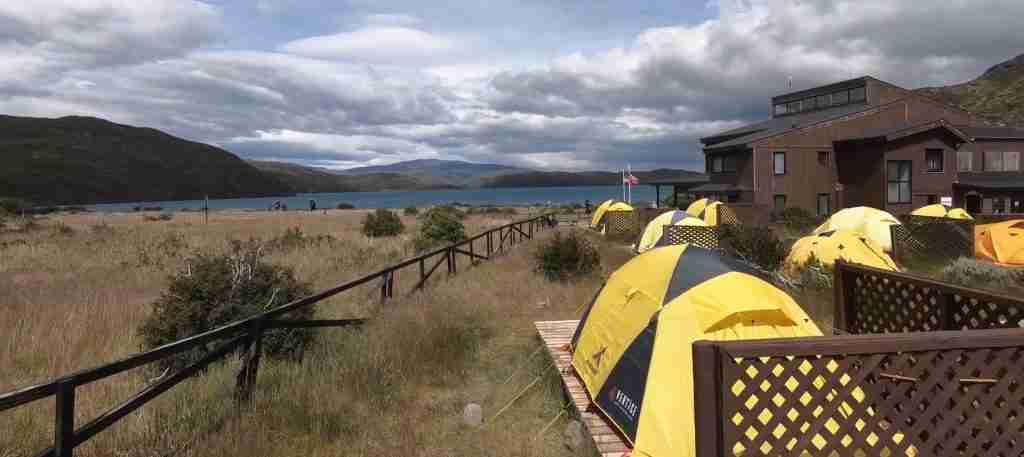
Campsites occupy locations adjacent to refugios and at designated backcountry positions along circuits. Commercial campgrounds cost $10-18 per person providing flat tent platforms, bathroom facilities, and sometimes sheltered cooking areas. Free camping exists at authorized backcountry sites for experienced trekkers carrying comprehensive equipment and waste disposal systems. Winter camping requires specialized cold-weather gear and experience given harsh conditions.
Luxury lodges including Explora Patagonia, Tierra Patagonia, Awasi, and Patagonia Camp operate inside or immediately adjacent to park boundaries at $800-1,500+ per person nightly all-inclusive. These properties provide private rooms, gourmet dining, spa services, guided excursions, and premium comfort. The all-inclusive format bundles accommodation, meals, alcohol, and guided activities into single rates, though domestic flights from Santiago often carry additional charges.
Puerto Natales accommodations serve day visitors and trekkers before/after park stays through 80+ options spanning budget hostels ($20-35 per bed in dorms) to mid-range hotels ($80-150 double rooms) to boutique properties ($150-300 nightly). Budget hostels like Erratic Rock provide gear rental, trek coordination, and social atmospheres, while mid-range hotels offer private bathrooms, heating, and breakfast. Most visitors allocate 1-2 nights Puerto Natales before park entry for preparation and 1 night after for recovery.
The W Trek 2026: Complete Planning Guide
W Trek Overview and Route Description
The W Trek earns its name from the route’s shape when mapped—three valleys extending north from Lake Pehoé creating a “W” pattern across 80 kilometers of trails. The trek connects refugios and campsites via well-marked paths requiring 4-5 days for completion by average-fitness hikers carrying backpacks with clothing, sleeping bags, and provisions. The route can be walked either direction though most trekkers start at Laguna Amarga (eastern end) proceeding westward to conclusion at Laguna Azul or Paine Grande.
Day 1 typically covers Laguna Amarga to Refugio Chileno (11 km, 4-5 hours) via relatively gentle terrain through Patagonian steppe and beech forests. The trail gains minimal elevation while approaching the Torres massif, with Refugio Chileno positioned as base for next morning’s ascent to Base Las Torres viewpoint. Most trekkers arrive early afternoon allowing rest before the demanding second day.
Day 2 involves the trek’s most challenging section: predawn departure for Base Las Torres hike (18 km round-trip from Chileno, 8-10 hours) with 800 meters elevation gain through boulder fields and steep switchbacks. The reward arrives at sunrise when first light illuminates the three granite towers above an alpine lake, creating the park’s most iconic image. After descending to Chileno, trekkers continue to Refugio Los Cuernos (11 km additional, 3-4 hours) along Lake Nordenskjöld’s turquoise shoreline.
Day 3 proceeds from Los Cuernos to Valle del Francés (French Valley) and exits at Refugio Paine Grande (11 km, 5-6 hours). The centerpiece involves hiking up Valle del Francés to Mirador Británico viewpoint where hanging glaciers and the Paine Massif surround trekkers in 360-degree alpine amphitheater. This valley represents the W’s central arm, showcasing the park’s dramatic mountain architecture.
Day 4 tackles the western arm with hike from Paine Grande to Grey Glacier viewpoint and Refugio Grey (11 km, 4-5 hours). The trail parallels Lake Grey where icebergs calved from the glacier float in turquoise waters, while the path undulates through forests with constant glacier views. Refugio Grey sits closest to the ice face, providing evening perspectives on the glacier’s 5-kilometer width.
Day 5 completes the circuit with return to Paine Grande (11 km retracing previous day) followed by catamaran ferry across Lake Pehoé to Pudeto (30-minute crossing, $25-35 per person). From Pudeto, buses to Puerto Natales depart afternoon coordinating with ferry arrivals. Alternative exits include hiking to Laguna Azul administration center (additional 18 km, 6-7 hours) for bus pickups, though most trekkers choose the ferry option avoiding extended final-day hiking.
W Trek Costs and Budget Planning 2026
W Trek comprehensive costs range $800-1,500 per person depending on accommodation choices (refugio bunks vs camping), meal plans (full board vs self-catering), and included services. Budget camping approaches minimize costs to $300-500, while refugio comfort with meals reaches upper ranges.
Refugio accommodation costs $60-90 per night with meals (breakfast and dinner) or $25-40 bed-only. Four nights refugio stays total $240-360 full board or $100-160 bed-only, representing the largest expense category. Camping reduces this dramatically at $10-18 per night ($40-72 total four nights), though requires carrying tents, sleeping bags, and cooking equipment adding pack weight and rental costs if needed.
Food expenses for self-catering trekkers run $40-60 total for 4-5 days purchasing ingredients in Puerto Natales supermarkets. Typical provisions include pasta, rice, dehydrated meals, energy bars, nuts, dried fruits, chocolate, instant coffee, and tea bags. The food weight ranges 2-3 kilograms per person depending on menu choices and portion sizes. Refugio meals eliminate carrying food but cost $35-50 per day for breakfast/dinner combinations.
Park entrance $35 (high season international visitors) applies once for entire trek duration. Trailhead transfers cost $25-40 per person one-way from Puerto Natales to Laguna Amarga, with return transfers from exit points at similar rates. The catamaran ferry from Grey to Pudeto costs $25-35 per person (mandatory for W Trek standard route), while alternative exits via Laguna Azul avoid ferry costs but add hiking distance.
Equipment rental in Puerto Natales fills gaps in personal gear collections. Sleeping bags rated for Patagonian conditions rent $10-15 per day, tents cost $15-25 daily, backpacks run $8-12 daily, and trekking poles rent $5-8 daily. Four-day rental packages combining multiple items reach $120-200 total, though many international trekkers bring personal gear avoiding these costs. Quality matters in harsh Patagonian conditions—rented gear from reputable shops generally proves reliable though verify condition before departing.
Comprehensive W Trek budget examples: Budget camping approach (camping $72, self-catering food $50, entrance $35, transfers $60, ferry $30, gear rental if needed $150) totals $397 excluding Puerto Natales accommodation. Mid-range refugio approach (refugio bed-only $140, meals $180, entrance $35, transfers $60, ferry $30, personal gear) totals $445. Full-service refugio (refugio with meals $300, entrance $35, transfers $60, ferry $30) totals $425 excluding pre/post Puerto Natales nights.
W Trek Physical Requirements and Training
The W Trek demands moderate to high fitness levels with ability to hike 11-18 kilometers daily carrying 8-15 kilogram backpacks across variable terrain and elevation changes. The Base Las Torres day represents peak physical demand with 18-kilometer round-trip and 800-meter elevation gain, while other days involve 11-kilometer distances with 200-400 meter cumulative elevation changes.
Training programs should begin 8-12 weeks before trek dates, emphasizing cardiovascular endurance and leg strength. Effective preparation includes progressive hiking building from 5-kilometer walks to 15-20 kilometer days carrying weighted packs. Elevation training benefits through stair climbing, hill repeats, or incline treadmill sessions developing climbing-specific strength.
Strength training targets legs (squats, lunges, step-ups), core (planks, rotations), and back/shoulders (rows, carries) supporting pack carrying and uphill hiking. Two strength sessions weekly combined with 2-3 cardio workouts builds adequate foundation for trek demands. The training prevents injury while ensuring enjoyable rather than merely survivable trekking experiences.
Previous hiking experience matters more than pure fitness. Trekkers comfortable with multi-hour trail days, pack carrying, and uneven terrain adapt better than gym-fit individuals lacking backcountry exposure. The W Trek doesn’t require technical climbing skills or extreme endurance, but demands sustained daily effort across 4-5 consecutive days without rest days—different from single-day hikes allowing next-day recovery.
Altitude doesn’t factor significantly given maximum elevations around 1,200 meters on the Base Las Torres ascent—well below altitudes triggering altitude sickness (typically 2,400+ meters). The physical challenges stem from distance, pack weight, weather exposure, and cumulative fatigue across multi-day effort rather than altitude effects.
The O Circuit 2026: Extended Wilderness Experience
O Circuit Overview and Considerations
The O Circuit extends the W Trek by adding 50 kilometers circumnavigating the Paine Massif’s backside, creating 130-kilometer complete circuit requiring 8-9 days for most trekkers. This extended route explores the park’s remote northern sectors where visitor numbers drop dramatically compared to the W Trek’s more accessible southern valleys. The O Circuit delivers wilderness solitude and backcountry immersion impossible on the crowded W Trek during summer season.
The additional sections include crossing Paso John Garner (1,241 meters)—the circuit’s highest and most exposed pass offering spectacular views across Grey Glacier to the Southern Patagonian Ice Field. The northern route traverses Patagonian steppe, crosses rivers via suspension bridges, and follows Lake Grey’s remote northern shore where wind exposure and trail isolation create more challenging conditions than southern sector paths.
O Circuit trekkers require higher fitness levels, more extensive backcountry experience, and greater weather resilience than W Trek participants. The extended duration means carrying additional food (5-7 days between supply points) and enduring consecutive challenging days without bailout options available on the W Trek. Weather windows become critical—severe storms close Paso John Garner periodically, forcing multi-day delays at refugios awaiting improved conditions.
Refugio spacing on the northern sections runs longer than southern W Trek segments, with 18-20 kilometer days common compared to W Trek’s 11-kilometer averages. The increased distances demand efficient pacing and early daily starts ensuring daylight arrival at next refugio. Free camping zones exist in northern sections for experienced trekkers preferring complete independence from refugio schedules, though this approach requires comprehensive camping equipment and navigation skills.
The O Circuit typically starts at Laguna Azul administration center (northern entrance), proceeding counterclockwise through northern sections before joining the W Trek at Refugio Grey and continuing through familiar southern valleys. This direction tackles the most challenging sections first while trekkers carry maximum food weight, then finishes on easier southern terrain with lighter packs after consuming provisions.
O Circuit Costs and Logistics 2026
O Circuit costs range $1,200-2,200 per person for 8-9 days including refugio accommodation, meals, transfers, entrance, and equipment. The extended duration compounds daily expenses compared to W Trek’s 4-5 day commitment, while reduced northern sector refugio availability sometimes forces camping even for bunk-preferring trekkers.
Refugio accommodation costs $60-90 nightly with meals across 7-8 nights totals $420-720, representing the primary expense. Northern refugios maintain similar pricing to southern locations though operate at reduced capacity and amenities. Camping options cost $10-18 nightly ($70-144 total eight nights), dramatically reducing accommodation expenses for gear-carrying trekkers comfortable with tent living.
Food costs for self-catering reach $80-120 for 8-9 day provisions including safety margin extras. The weight consideration becomes critical—carrying 5-7 days food means pack weight approaching 15-18 kilograms early in trek. Strategic planning includes purchasing lightweight dehydrated meals, nuts, energy bars, and calorie-dense foods minimizing weight while maintaining adequate nutrition.
Park entrance $35 covers entire circuit duration with no additional daily fees. Transfers to Laguna Azul start point cost $30-45 from Puerto Natales, while return transfers from exit points (Laguna Amarga or Pudeto via ferry) run similar rates. Some trekkers arrange circuit pickups at Laguna Azul eliminating need for southern exit and return to starting point.
Equipment requirements match W Trek needs with additions for extended duration: larger backpacks (60-70 liter capacity vs 45-55 liter W Trek), extra clothing layers for northern exposure, comprehensive first aid supplies given remote sections, and water filtration systems for stream sources between refugios. Rental costs for 8-9 days approach $200-300 for complete kit including backpack, sleeping bag, tent, and trekking poles.
Day Hiking and Short Excursions 2026
Best Day Hikes for Non-Trekkers
Torres del Paine offers exceptional day hiking options for visitors avoiding multi-day circuit commitments. These trails range from 30-minute walks to 8-hour excursions, providing wilderness engagement while returning to Puerto Natales or park lodges nightly. The variety accommodates all fitness levels from families with young children to serious hikers seeking challenging single-day adventures.
Salto Grande waterfall represents the most accessible short walk at 15-20 minutes one-way from roadside parking. The 1-kilometer path leads to viewing platforms where Lake Nordenskjöld’s turquoise waters thunder through narrow gorge creating powerful cascade. Multiple observation angles include upstream lake views and close waterfall perspectives. The easy terrain and spectacular results make this the park’s most popular short walk, visited by nearly all day-trippers.
Mirador Cuernos trail extends 4 kilometers one-way (8 km round-trip) from Pudeto area to viewpoint overlooking Lake Nordenskjöld and the Cuernos (horns)—distinctive striped peaks rising above the lake. The 2-3 hour round-trip hike gains minimal elevation while traversing Patagonian steppe and offering excellent guanaco viewing opportunities. The viewpoint delivers classic park compositions without demanding fitness or navigation skills.
Mirador Lago Grey trail reaches 3.5 kilometers one-way from Guardería Grey ranger station to suspension bridge overlooking Grey Glacier and Lake Grey. The 2-hour round-trip walk parallels the lake through southern beech forest, culminating at bridge spanning Grey River where views extend across iceberg-dotted waters to glacier face. This trail provides closest glacier proximity for day visitors without boat tours.
Base Las Torres day hike from Laguna Amarga represents the most challenging single-day option at 18-20 kilometers round-trip with 800 meters elevation gain. The 8-10 hour adventure ascends through beech forest and boulder fields to alpine lake beneath the three granite towers, delivering the park’s most iconic image. This demanding day requires early starts (departing Laguna Amarga by 7:00-8:00 AM), strong fitness, and comprehensive weather preparation. Private transfers from Puerto Natales specifically for Base Las Torres days cost $180-250 round-trip for groups, dropping hikers at trailhead and returning for evening pickup.
Wildlife Viewing Locations and Strategies 2026
Torres del Paine supports diverse wildlife across varied ecosystems from lake shores to mountain zones, with strategic positioning and timing dramatically improving encounter probability. Understanding species behaviors and habitat preferences transforms casual wildlife spotting into purposeful observation sessions.
Guanacos—wild relatives of llamas—appear on virtually every park visit, particularly across open pampas between Laguna Amarga and park administration center. Herds numbering 20-100 individuals graze grasslands apparently indifferent to vehicles, allowing close photography from road pullouts. Males establish territories during summer, creating opportunities to observe territorial displays, herd dynamics, and mating behaviors. The animals feed actively mornings and evenings, making dawn/dusk timing optimal for observation.
Darwin’s rheas frequent the same grasslands as guanacos, with groups of 5-15 birds moving across open areas. These large flightless birds stand 90-100 cm tall with grey-brown plumage providing excellent camouflage. Males perform elaborate displays during November-December courtship season, then incubate eggs and raise chicks solo—sometimes seen with 10-15 striped chicks following protective fathers. Sighting probability reaches 70-80% during typical day visits to eastern park sectors.
Andean condors soar above ridgelines and cliff faces riding thermal air currents, their 3-meter wingspans unmistakable silhouette against Patagonian skies. The massive raptors concentrate near areas with updrafts—warming cliff faces, valley thermal generators, windward mountain slopes. Patient sky-scanning from viewpoints like Mirador Cuernos or Grey Glacier lookout reveals condors at distance, though closer encounters require luck and timing. Sighting probability runs 40-50% during full-day park visits.
Pumas hunt guanacos across the park but avoid human activity areas, making sightings rare despite healthy populations. The elusive predators become most visible during winter months (June-August) when snow forces them to lower elevations and reduced tourist numbers create less human disturbance. Summer puma encounters occur on approximately 5-10% of visits, typically early morning or evening in remote sectors. Specialized puma tracking tours with expert guides improve odds but guarantee nothing given the cats’ elusive nature.
Patagonian foxes (culpeos) appear regularly near refugios, campsites, and roadside stops where human food sources attract them. These adaptable canids show minimal fear, creating photography opportunities while requiring careful food storage preventing habituation and conflict. The foxes hunt rodents and scavenge across varied habitats from forests to grasslands, with active periods throughout day and night.
Photography Guide 2026
Best Locations and Timing for Park Photography
Torres del Paine ranks among Earth’s most photographed landscapes, where iconic compositions combine dramatic peaks, turquoise lakes, and dynamic weather into endlessly variable scenes. Understanding optimal locations and lighting conditions separates good snapshots from exceptional images capturing the park’s essence.
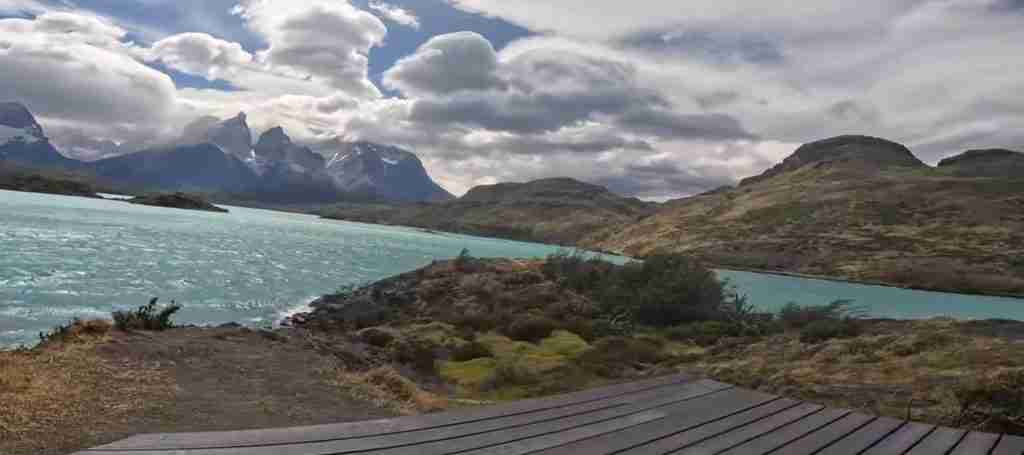
Lake Pehoé viewpoint delivers the park’s most recognized composition—impossibly blue lake stretching toward the Cuernos and Paine Massif. Morning light (9:00-11:00 AM) illuminates peaks from the side revealing texture and dimension, while afternoon sun (3:00-6:00 PM) bathes mountains in warm tones creating golden glow impossible during midday. The location’s western orientation means afternoon light bathes peaks most dramatically, though morning visits offer different atmospheric effects worth capturing.
Laguna Amarga provides Torres viewpoints where the three granite spires reflect in turquoise waters on calm mornings. Early arrival (sunrise-9:00 AM) positions photographers for side-lit towers before midday sun creates harsh shadows and flattens dimension. Wind typically increases through mornings, disturbing water surfaces and eliminating reflection opportunities by late morning. Multiple shoreline positions allow varied compositions incorporating foreground rocks, grasses, or small pools.
Salto Grande waterfall works well during midday hours (11:00 AM-2:00 PM) when overhead sun penetrates the gorge illuminating turquoise water colors at maximum intensity. Multiple viewing platforms provide varied perspectives from upstream lake views to close waterfall shots. Neutral density filters slow shutter speeds creating silky water effects, while polarizing filters remove surface glare revealing underwater details and enhancing color saturation.
Base Las Torres represents the ultimate sunrise photography destination where predawn hike delivers timing as first light strikes granite towers above alpine lake. The towers face east, receiving direct sunrise illumination while surrounding landscape remains in shadow, creating dramatic contrast and warm tower glow. Achieving this image requires 3-4 hour predawn ascent from Refugio Chileno or camping at Torres base, making it accessible primarily to W Trek participants or dedicated day-hikers willing to extreme early starts.
Grey Glacier viewpoints operate throughout days though afternoon light (2:00-5:00 PM) creates texture across ice faces and icebergs through low-angle illumination. Telephoto lenses compress distance between icebergs and glacier, while wide-angle compositions include foreground elements like weathered trees or shoreline rocks. The changing light conditions transform scenes minute by minute as clouds shift and sun angles evolve.
Technical Considerations and Equipment Recommendations
Torres del Paine photography demands versatile equipment withstanding harsh weather while delivering quality across varied subjects from landscapes to wildlife. Standard zoom lenses (24-70mm or 24-105mm full-frame equivalent) cover most viewpoint compositions, while telephoto reach (70-200mm or 100-400mm) compresses mountain perspectives and enables distant wildlife photography.
Wide-angle lenses (16-35mm) excel at dramatic foreground compositions incorporating rocks, plants, or water with distant peaks. These focal lengths require careful composition balancing sky, mountains, and foreground interest—avoiding empty foregrounds that weaken images despite spectacular backgrounds. Successful wide-angle work involves getting low, approaching shorelines, and incorporating leading lines directing viewer attention through frames.
Tripods enhance image quality through stability in constant Patagonian winds and ability to use slower shutter speeds for creative water movement. Carbon fiber models balance portability with stability, though adding weight to hiking loads. Photographers evaluate whether enhanced quality justifies carrying 1-2 kilograms extra equipment during multi-day treks where every gram matters.
Filters prove particularly valuable in Torres del Paine conditions. Polarizing filters maximize lake color saturation by removing surface glare while enhancing contrast between blue water and white clouds. Neutral density filters enable long exposures during bright conditions, creating 1-3 minute exposures transforming waterfalls and windswept lakes into ethereal compositions. Graduated neutral density filters balance exposure between bright skies and darker foregrounds in high-contrast situations.
Weather protection becomes essential—sudden rain or snow threatens equipment if unprotected. Rain covers, plastic bags, or specialized housing allow shooting during precipitation capturing dramatic weather conditions producing the most compelling images. Camera weathersealing helps though external protection provides additional insurance in severe Patagonian weather.
Battery performance degrades 30-50% in cold Patagonian conditions compared to temperate environments. Carrying 3-4 spare batteries inside jacket pockets maintains warmth and ensures continuous shooting throughout full-day excursions. Memory cards demand similar redundancy—multiple smaller cards rather than single large cards prevent total loss if corruption occurs.
Practical Tips for 2026 Torres del Paine Visits
Weather Preparation and Clothing Systems
Patagonian weather demands comprehensive four-season clothing regardless of summer travel dates, as conditions ranging from sunny warmth to horizontal rain occur within single days. The layering system approach provides maximum adaptability through removable/addable pieces responding to temperature and precipitation fluctuations.
Base layers using merino wool or synthetic materials wick moisture while providing warmth without bulk. Long-sleeve shirts and leggings create foundation pairing with mid-layers for temperature regulation. Cotton materials fail catastrophically when wet—losing insulation value and drying slowly, creating discomfort or hypothermia risk during weather deterioration.
Mid-layers include fleece or synthetic insulated jackets providing warmth without restricting movement. These pieces remain easily adjustable—adding/removing mid-layer responds to temperature changes during viewpoint stops or hiking. Versatility allows comfort during morning warmth and afternoon cooling as wind increases and clouds develop.
Waterproof windproof shells represent the most critical gear—high-quality rain jackets with sealed seams, adjustable hoods, and pit zips protect against fierce winds and frequent precipitation. Patagonian wind reaches 60-100 km/h regularly with gusts exceeding 120 km/h during storms. Shells must withstand sustained battering while preventing rain penetration and allowing internal moisture escape through breathable fabrics.
Pants follow waterproof principles—rain pants over hiking trousers provide wind and moisture protection during severe weather while allowing removal during improved conditions. Convertible zip-off pants offer versatility though full-length coverage suits most conditions better than shorts given typical wind exposure even during warm periods.
Head protection includes warm hats for cold and wind, sun hats for UV protection, and buffs creating adjustable coverage. Patagonian sun intensity at these latitudes demands protection even during cool or cloudy conditions—UV exposure remains high due to thin atmosphere and reflective surfaces. Sunglasses with high UV protection prevent eye damage from intense light and wind-driven particles.
Food and Hydration Strategy
Nutrition planning balances energy requirements with weight constraints and weather protection for provisions. High-calorie-density foods like nuts, dried fruits, energy bars, and chocolate provide sustained energy without excessive bulk or perishability concerns during multi-day excursions.
Day-trip packed lunches from Puerto Natales typically include sandwiches, fruits, cheese, snacks, and beverages for $8-12 total cost. These provisions save $15-25 compared to refugio dining while allowing flexible meal timing matching individual schedules rather than fixed group stops. Insulated bags maintain food temperature and protect from crushing in daypacks.
Multi-day trekkers carry 3-5 days provisions purchasing ingredients in Puerto Natales supermarkets (Pronto Copec, Unimarc). Lightweight options include pasta, rice, dehydrated meals, instant soup, oatmeal, energy bars, nuts, dried fruits, chocolate, instant coffee, and tea. The food weight ranges 2-3 kilograms per person for 4-5 days depending on menu choices and caloric needs.
Hydration demands increase in Patagonian conditions despite cool temperatures. Constant wind creates dehydration through respiratory moisture loss, while hiking activity compounds water requirements. Carrying 1.5-2 liters per person ensures adequate hydration during day trips, with refill opportunities at refugios or stream sources (requiring filtration/purification for wilderness sources).
Insulated bottles prevent water freezing during cold periods while maintaining cool temperature during warmer hours. Thermoses containing hot coffee or tea provide comfort during exposed viewpoint stops when wind chill creates harsh conditions. Many trekkers consider thermoses essential comfort items justifying weight despite already-loaded packs.
Safety Considerations and Emergency Preparedness
Torres del Paine wilderness creates self-reliance demands where emergency services response requires hours even under optimal conditions. Visitors maintain safety through appropriate preparation, conservative decision-making, and realistic assessment of capabilities and limitations.
Weather monitoring throughout visits allows anticipation of deteriorating conditions and appropriate shelter-seeking. Patagonian weather changes rapidly—clear mornings transform to storms within 30-60 minutes. Watching cloud formations, wind direction shifts, and pressure changes provides warning allowing return to vehicles, refugios, or emergency shelter before severe conditions arrive.
Trail maintenance standards vary across park sectors. W Trek paths receive regular maintenance maintaining clear routes, while backcountry sections show less frequent upkeep. Cairns (stone pile trail markers) guide route-finding in areas where paths become indistinct, though fog or snow can obscure these markers requiring navigation skills and map/GPS capabilities.
River crossings via suspension bridges require careful crossing during high winds when bridges swing dramatically. Hold handrails firmly and cross individually rather than multiple people simultaneously to minimize bridge movement. Some crossings involve wading during high water—assess depth and current before committing, use trekking poles for stability, and untie pack hip belts allowing quick escape if swept away.
Emergency supplies in packs include comprehensive first aid kits with blister treatment (compeed, moleskin), pain relievers, bandages, personal medications, and basic wound care supplies. Blisters represent the most common trekking ailment—address hot spots immediately with preventive taping before blisters develop. More serious medical issues require evacuation to Puerto Natales hospital where comprehensive care becomes available.
Communication devices include fully charged cell phones though coverage remains extremely limited within park. Major viewpoints along roads occasionally receive signal, but vast areas lack connectivity. Emergency situations require reaching park rangers or refugio staff maintaining radio communication with CONAF coordination center. Satellite communicators (Garmin inReach, SPOT) provide emergency contact capability anywhere but require rental or purchase ($8-15 daily rental) and understanding of device operation.
Booking Your 2026 Torres del Paine Experience
Refugio Booking Process and Timeline
Refugio reservations open 8-12 months before summer season dates, with operators Vertice Patagonia and Fantástico Sur maintaining separate booking systems for their respective properties. The fragmented system means trekkers must coordinate bookings across multiple operators depending on chosen refugio sequence along circuits.
Booking timeline for peak summer (December 15-January 31) demands earliest action—reservations made 6-8 months ahead secure preferred dates at popular refugios like Paine Grande, Grey, and Italiano. Early summer (November 1-December 14) and late summer (February 1-28) allow 3-4 month advance booking with better availability. Shoulder seasons (March, November) maintain availability within 1-2 months of travel dates.
The booking process requires creating accounts on operator websites, selecting specific dates and refugios, choosing accommodation types (bunks with meals vs bed-only), and payment via credit card. Confirmation emails provide booking references and arrival instructions. Changes or cancellations follow operator-specific policies with varying refund percentages depending on advance notice (typically 30-60 days before arrival for partial refunds, 60+ days for full refunds minus processing fees).
Independent camping bookings operate through CONAF rather than private operators, requiring online registration at www.parquetorresdelpaine.cl system. Campsite reservations cost $10-18 per person nightly paid during online booking process. The system shows real-time availability allowing immediate confirmation, though popular campsites like Torres base fill months ahead during peak season.
Transportation and Transfer Coordination
Bus services between Puerto Natales and park entrances operate on published schedules requiring coordination with accommodation bookings. Morning departures at 7:30 AM and 8:00 AM arrive refugios mid-morning allowing proper check-in timing, while afternoon returns from park (4:00 PM and 6:00 PM departures) coordinate with standard checkout times.
Multi-day trekkers coordinate specialized transfers matching trek start dates. These scheduled shuttle services depart Puerto Natales mornings bound for Laguna Amarga (W Trek eastern start) at 7:00-8:00 AM or Laguna Azul (O Circuit northern start) at similar times. Booking occurs through accommodation providers, tour operators, or directly with transfer companies 1-2 weeks ahead ensuring vehicle availability.
Return transfer coordination requires communicating expected completion dates during initial booking, with confirmation calls or emails to transfer companies 1-2 days before actual pickup ensuring drivers arrive at correct times and locations. The system relies on trekker responsibility notifying providers of any itinerary changes caused by weather delays or route modifications.
Final Preparation and Checklist
Two weeks before departure, final preparation includes gear verification, supply purchasing, and itinerary confirmation. Checking weather forecasts provides general guidance though Patagonian variability makes specific predictions unreliable beyond 3-4 days. General seasonal patterns offer better planning information than specific daily forecasts.
One week ahead, confirm all bookings via email with refugio operators, transfer services, and Puerto Natales accommodation. Pack gear methodically using checklists ensuring no critical items forgotten. Test equipment—stoves, water filters, tents—verifying proper function before departure when replacements remain accessible in Puerto Natales shops.
48 hours before trek start, final Puerto Natales provisioning includes purchasing food supplies, refilling gas canisters, and any last-minute gear needs. Many trekkers appreciate one buffer day in Puerto Natales allowing relaxed preparation without pressure from immediate departure deadlines.
Departure day involves early breakfast, final pack checks, and morning transfer to trailheads. Arriving at park entrances, register with rangers, pay entrance fees if not pre-arranged, and begin the adventure that defines Torres del Paine’s character—wilderness immersion in one of Earth’s most spectacular landscapes.
FAQ: Torres del Paine National Park 2026
Is Torres del Paine worth visiting in 2026?
Absolutely—Torres del Paine delivers world-class landscapes, wildlife, and wilderness experiences justifying the effort and investment required to reach Chilean Patagonia. The park combines dramatic granite peaks, turquoise lakes, massive glaciers, and diverse ecosystems within single protected area accessible through well-maintained trail systems and infrastructure. Visitors consistently rank Torres del Paine among Earth’s most spectacular natural destinations, with landscapes matching or exceeding photography that initially inspires visits. The question becomes not whether to visit but rather how much time to allocate and which experiences to prioritize given the park’s vast scale and varied opportunities.
Can you drive through Torres del Paine in 2026?
Yes, the park maintains approximately 110 kilometers of roads (mix of paved and gravel) connecting major viewpoints, refugios, and administration centers. The main circuit road allows driving from Laguna Amarga entrance through park interior to Laguna Azul exit, accessing Lake Pehoé, Salto Grande, Grey Glacier lookout, and other roadside attractions. However, signature experiences like Base Las Torres, Valle del Francés, and backcountry wilderness require hiking from road access points—driving alone provides abbreviated park sampling without engaging its wilderness character. Successful driving visits allocate 2-3 days covering the circuit with multiple stops and short walks rather than attempting comprehensive single-day drives rushing between viewpoints.
What is the difference between the W Trek and O Circuit?
The W Trek covers 80 kilometers over 4-5 days exploring three major valleys extending north from Lake Pehoé, including Base Las Torres, Valle del Francés, and Grey Glacier sectors. The O Circuit extends the W Trek by adding 50 kilometers circumnavigating the Paine Massif’s backside, totaling 130 kilometers over 8-9 days. The O Circuit includes crossing Paso John Garner (1,241 meters), the park’s most challenging pass offering spectacular views across Grey Glacier to the ice field. The extended circuit delivers greater wilderness solitude with dramatically reduced hiker numbers on remote northern sections, though demands higher fitness levels, more backcountry experience, and longer time commitment than the already-challenging W Trek.
Do you need a guide for Torres del Paine in 2026?
Guides aren’t required for the W Trek or O Circuit—trails are well-marked, refugios provide regular accommodation, and thousands of independent trekkers complete circuits annually without guide services. However, guides add value through natural history interpretation, photography assistance, route optimization, and safety support during weather challenges. Guide costs run $400-800 for private W Trek services or $800-1,500 for O Circuit guiding, adding substantially to trek budgets. Solo trekkers, couples, or small groups comfortable with backcountry navigation and self-reliance succeed independently, while those prioritizing expertise, safety margins, or educational content benefit from professional guides despite additional expense.
What wildlife is dangerous in Torres del Paine?
Torres del Paine contains no wildlife posing significant danger to humans following reasonable precautions. Pumas rarely interact with people despite hunting guanacos throughout park—attacks on humans don’t occur in documented park history. The cats actively avoid human contact, with encounters typically involving brief sightings before pumas retreat. Guanacos show no aggression toward visitors though territorial males during rut season (November-December) should be observed from respectful distance. The primary wildlife risks involve Patagonian foxes raiding improperly stored food or habituated birds stealing unattended items—nuisances rather than dangers. The park’s most significant hazards stem from weather, river crossings, and terrain challenges rather than animal encounters.
Can you camp anywhere in Torres del Paine?
No—camping restrictions confine overnight stays to authorized campsites managed by private operators or designated free camping zones. Unauthorized camping outside these areas violates park regulations with fines reaching $200-500 for violations. The restrictions protect fragile Patagonian ecosystems from overuse while concentrating impact at maintained facilities with proper waste disposal. Authorized campsites along W Trek and O Circuit provide tent platforms, bathrooms, and sometimes sheltered cooking areas at $10-18 per person nightly. Free camping zones exist at select backcountry locations for experienced trekkers but still require specific site usage rather than random location camping. The system ensures environmental protection while maintaining wilderness character through managed human impact.
How cold does Torres del Paine get in summer 2026?
Summer temperatures (December-February) range 8-18°C (46-64°F) during daytime hours with overnight lows dropping to 2-6°C (36-43°F). However, wind chill dramatically affects perceived temperature—constant 40-80 km/h winds create apparent temperatures 5-10°C cooler than actual readings. Microclimates within the park create significant local variations, with sheltered valleys feeling substantially warmer than exposed ridgelines or lakeshores where wind accelerates through topographic features. Trekkers experience temperature ranges from quite comfortable during sunny calm periods to harsh cold during storms with rain and high winds. The variability demands comprehensive clothing systems adapting to rapid weather changes rather than relying on average temperature statistics suggesting mild summer conditions.
What is the best month to visit Torres del Paine in 2026?
January offers the most reliable combination of weather, daylight hours (15-17 hours), and operational services with all refugios open and maximum transportation frequencies. The month sits at peak summer with temperatures of 10-18°C (50-64°F) and statistically lowest precipitation (though rain remains possible any day). However, January also brings maximum crowds with refugios fully booked and popular trails experiencing congestion at locations like Base Las Torres and Italiano campsite. December and February provide excellent alternatives with nearly identical conditions but slightly fewer visitors. For those prioritizing solitude over perfect weather, early November or March shoulder seasons offer compelling trade-offs with reduced crowds, competitive pricing (20-30% below summer), and distinctive seasonal characteristics (spring wildflowers or autumn colors) accepting increased weather variability.
Can you see the aurora australis from Torres del Paine?
Theoretically yes, though practically rare given Torres del Paine’s latitude (51°S). The Southern Lights occur most frequently at latitudes 65-75°S, making viewing from Torres del Paine possible only during exceptional geomagnetic storms when aurora activity extends further toward equator than normal. Winter months (May-August) offer best chances when darkness extends 14-16 hours nightly, though severe winter weather and limited park access during these months creates practical challenges. Visitors specifically pursuing aurora viewing should consider destinations further south including Ushuaia (55°S) or Antarctic Peninsula where occurrence probability increases substantially. Torres del Paine visitors occasionally witness aurora during winter visits, but planning trips specifically for Southern Lights viewing here risks disappointment given low probability compared to weather, wildlife, and landscape experiences guaranteed year-round.
How much cash should I bring to Torres del Paine in 2026?
Bring $150-300 cash in Chilean pesos for park entrance, refugio incidentals, and emergency purchases during multi-day treks. Park entrance fees ($35 international visitors high season) accept cash or credit cards though cash ensures payment capability if electronic systems malfunction. Refugios accept credit cards for accommodation and meal charges but maintain limited cash on hand for change, making exact amounts useful. Emergency food purchases at refugio shops, beer or snacks during evenings, and tips for refugio staff require small bills—many refugios stock limited supplies (energy bars, instant noodles, beverages) at premium prices ($3-8 items) for trekkers running short on provisions. Puerto Natales ATMs dispense Chilean pesos freely before park entry, though some charge $3-5 per withdrawal for foreign cards. US dollars work as backup currency with refugios accepting them at slightly reduced exchange rates (5-10% below official rates) if peso cash depletes.