
Tikal Wildlife Guide 2026: Howler Monkeys, Toucans & Jaguars
This comprehensive guide provides detailed information for planning your 2026 Tikal wildlife adventure, covering species identification, behavioral patterns, optimal viewing times, professional guide services, photography techniques, and conservation context. Whether you’re a serious birder seeking specific species, a mammal enthusiast hoping for jaguar encounters, or a general nature lover wanting diverse wildlife experiences, Tikal delivers extraordinary opportunities within accessible rainforest habitat surrounding ancient Maya monuments.
Key Takeaways:
- Tikal hosts over 300 bird species, 5 wild cat species including jaguars, and 3 primate species in 575 square kilometers of protected rainforest
- Howler monkey troops vocalize most actively 5:00-7:00 AM and 4:00-6:00 PM, with dawn providing optimal viewing conditions in 2026
- Wildlife guide services cost $45-75 for 3-4 hour tours in 2026, with specialist birding guides at $80-120 for extended expeditions (check tour operators for current rates)
- Jaguar sightings remain rare but possible on remote trails, with highest probability during dry season January-April 2026 when cats concentrate near water sources
- Early morning entrance 6:00-8:00 AM provides maximum wildlife activity, with significantly reduced crowds and optimal lighting for photography in 2026
- Over 2,000 mammal species, 100+ reptile species, and countless insects create one of Central America’s most biodiverse ecosystems accessible to visitors
Discovering Tikal’s Wildlife Kingdom in 2026
The ancient Maya city of Tikal rises from one of Central America’s most spectacular wildlife refuges, where temple pyramids serve as observation platforms over 575 square kilometers of protected tropical rainforest. This UNESCO World Heritage site preserves not only archaeological treasures but also extraordinary biodiversity rivaling any location in the Neotropics. Tikal National Park functions as Guatemala’s premier wildlife viewing destination, protecting jaguars, pumas, howler monkeys, spider monkeys, ocellated turkeys, king vultures, and over 300 documented bird species within pristine Petén jungle habitat.
The 2026 season brings exceptional opportunities for wildlife enthusiasts planning visits to this remarkable ecosystem. Park management maintains strict conservation protocols while providing improved access through expanded trail networks, enhanced guide training programs, and updated wildlife monitoring systems. Recent infrastructure improvements include new observation platforms at strategic locations, wildlife-friendly lighting systems for evening programs, and comprehensive field guide materials available at visitor centers.
Planning wildlife experiences at Tikal requires understanding seasonal patterns, animal behavior cycles, and optimal viewing strategies specific to tropical rainforest environments. The dry season from January through April 2026 concentrates wildlife activity near permanent water sources, creating predictable viewing opportunities along key trails. The wet season from May through November disperses animals throughout the forest but intensifies bird activity during breeding cycles and increases amphibian diversity dramatically. Each season offers distinct advantages for different wildlife interests and photographic goals.
People Also Ask About Tikal Wildlife 2026
What animals can you see at Tikal in 2026?
Tikal hosts over 300 bird species, 5 wild cat species, 3 primate species, 2,000+ mammal species, and 100+ reptile species within its protected boundaries. Daily visitors regularly encounter howler monkeys (vocalizing throughout the forest), spider monkeys (traveling through canopy near Temple IV), coatis (foraging along main plazas), ocellated turkeys (strutting near ancient structures), toucans (feeding in fruiting trees), parrots (flying overhead in noisy flocks), and countless hummingbird species visiting flowering plants. More elusive species include jaguars (rare sightings on remote trails), pumas (nocturnal and secretive), ocelots (active at dawn and dusk), tapirs (near water sources), peccaries (traveling in large herds), and king vultures (soaring above temple tops). Reptiles range from large iguanas basking on temple stones to colorful tree frogs calling from bromeliads, while the forest floor reveals leaf-cutter ant highways, tarantulas, and extraordinary insect diversity.
When is the best time for wildlife spotting at Tikal in 2026?
Early morning hours from 6:00-8:00 AM provide peak wildlife activity across all species groups in 2026, with animals most active before tropical heat intensifies. Howler monkeys vocalize loudly at dawn, birds feed actively during cool morning hours, and mammals move through territories before midday temperatures reach uncomfortable levels. Late afternoon from 4:00-6:00 PM brings secondary activity peaks as animals emerge for evening feeding and howler troops stage their sunset vocal performances. Seasonally, the dry season from January through April 2026 concentrates wildlife near water sources and provides clearer sightings through reduced vegetation, while May through November offers intense bird breeding activity, dramatic weather displays, and lush forest conditions attracting diverse species to abundant food sources throughout the ecosystem.
How much do wildlife tours cost at Tikal in 2026?
Standard wildlife guide services cost $45-75 for 3-4 hour tours covering main temple areas and nearby forest trails in 2026, specialist birding guides charge $80-120 for extended 5-7 hour expeditions targeting specific species, and private wildlife photography guides cost $100-150 for customized full-day experiences with flexible timing and specialized locations. Check tour operators for current rates as pricing may vary. Group tour costs range $25-40 per person for organized wildlife walks, dawn chorus tours add $15-25 to standard admission for 5:30 AM entry with specialized guides, and multi-day wildlife packages including accommodation and meals range $400-800 depending on lodge quality and expedition length.
Can you see jaguars at Tikal in 2026?
Jaguar sightings occur at Tikal but remain rare and unpredictable, with highest probability during early morning hours on remote trails during the dry season January-April 2026 when cats concentrate near permanent water sources. Park rangers and guides report 10-15 confirmed jaguar sightings annually, with most encounters lasting seconds as the cats quickly melt into dense vegetation. The Tikal population includes 10-15 resident individuals maintaining territories throughout the park, with tracks and scat providing regular evidence of their presence even when animals remain hidden. Visitors seeking jaguar encounters should book extended wildlife expeditions focusing on remote trail systems, arrive during peak dry season months, and maintain realistic expectations while appreciating the privilege of exploring jaguar habitat even without direct sightings. Trail cameras and ranger reports from 2024-2025 documented regular jaguar activity along the Tikal-Uaxactún road, near Aguada Tikal waterhole, and throughout the northern forest zones accessible through specialized guide services.
Extended multi-day tours – 5+ days
Featured Tikal Multi-Day Tour Packages

1 days
From Flores: Tikal Ruins Guided Tour
- ✓ Comprehensive Tikal tour
- ✓ Expert local guides included
- ✓ All accommodation arranged
- ✓ Transportation provided

4 days
Tikal Guatemala And Belize Short Break
- ✓ Comprehensive Tikal tour
- ✓ Expert local guides included
- ✓ All accommodation arranged
- ✓ Transportation provided
2 days
Two days in the best of the Mayan world
- ✓ Comprehensive Tikal tour
- ✓ Expert local guides included
- ✓ All accommodation arranged
- ✓ Transportation provided

7 days
Spectacular Guatemala in 7 Days
- ✓ Comprehensive Tikal tour
- ✓ Expert local guides included
- ✓ All accommodation arranged
- ✓ Transportation provided
Multi-day tour packages powered by TourRadar. Prices and availability subject to change.
Essential Wildlife Planning Information 2026
Successful wildlife experiences at Tikal require advance planning covering timing strategies, guide services, equipment preparation, and seasonal considerations specific to tropical rainforest environments. The 2026 season operates under established conservation protocols ensuring sustainable tourism while maximizing visitor opportunities for meaningful wildlife encounters.
Park Access and Wildlife Viewing Hours 2026
Tikal National Park opens daily 6:00 AM-6:00 PM throughout 2026, with special early morning access available 4:00-6:00 AM for dawn chorus participants paying supplemental fees. Standard park admission costs 250 GTQ ($32) for international visitors, 25 GTQ ($3) for Guatemalan nationals, and includes access to all temple areas and main trail systems. Early morning access adds 100 GTQ ($13) to standard admission, providing two additional hours during peak wildlife activity before general visitors arrive. Sunset tours extend hours until 7:00 PM for 100 GTQ ($13) supplement, capturing evening wildlife activity and spectacular views from Temple IV as the sun descends over endless forest canopy.
Wildlife viewing concentrates along established trail systems totaling 18 kilometers throughout the archaeological zone and surrounding forest. Main plaza areas provide reliable howler monkey sightings, coati encounters, and diverse bird activity throughout the day. The Temple IV trail offers excellent canopy access for spider monkeys and toucans. The Aguada Tikal trail leads to a permanent waterhole attracting mammals during dry season. Remote trails including Mundo Perdido circuit and northern forest routes require guides but provide enhanced wildlife opportunities away from tourist concentrations.
Choosing Wildlife Guide Services for 2026
Professional wildlife guides significantly enhance Tikal experiences through species identification expertise, behavioral knowledge, optimal route selection, and safety protocols in tropical environments. Local guide associations maintain certified professionals specializing in different wildlife interests and tour styles. Standard naturalist guides cost $45-75 for 3-4 hour tours covering main temple areas with wildlife focus, check tour operators for current rates as pricing may vary. These guides provide binoculars, field guides, and general wildlife information suitable for most visitors seeking diverse encounters.
Specialist birding guides charge $80-120 for extended 5-7 hour expeditions targeting specific species, utilizing playback techniques, and accessing remote locations beyond standard tourist routes. These guides carry high-quality spotting scopes, maintain detailed species checklists, and provide expert identification of difficult species including various hawk species, understory birds, and migrant warblers. Private wildlife photography guides cost $100-150 for customized full-day experiences with flexible timing, patience at productive locations, and understanding of photographic requirements including lighting, composition, and behavioral moments.
Group wildlife tours organized through hotels and agencies cost $25-40 per person for 3-4 hour morning walks, providing affordable options for budget travelers while maintaining quality guiding through experienced local naturalists. Dawn chorus specialists lead pre-sunrise expeditions 4:30-8:00 AM for $60-90 per group, focusing entirely on bird vocalizations, owl calling, and early morning mammal activity before day-warming reduces wildlife visibility.
Howler Monkeys: Tikal’s Vocal Masters
Howler monkeys dominate Tikal’s soundscape through their extraordinary vocalizations echoing across kilometers of rainforest. Alouatta pigra, the Yucatan black howler, maintains territorial boundaries and social cohesion through specialized hyoid bone structures creating deep, roaring calls audible up to 5 kilometers through dense jungle. Tikal hosts approximately 15-20 howler troops ranging 6-12 individuals each, maintaining territories throughout the archaeological zone and surrounding forest. These primates serve as ecosystem engineers, dispersing seeds through fruit consumption while providing critical links in forest regeneration processes.
Howler troops vocalize most intensely during dawn choruses 5:00-7:00 AM and sunset performances 4:00-6:00 PM, with males producing the loudest calls advertising territory ownership and troop strength. These vocalizations function as spacing mechanisms, allowing troops to maintain territories without direct physical confrontations. Morning sessions last 15-45 minutes with multiple troops answering each other across the forest, creating extraordinary natural symphonies reverberating through temple plazas. Visitors planning wildlife experiences should schedule early morning visits to witness these performances from observation points near howler territories.
Behavioral observations reveal feeding patterns focused on young leaves, fruits, and flowers from preferred tree species including ramon, fig, and cecropia. Howlers spend 60-70% of daylight hours resting in high canopy positions, moving slowly between feeding sites while conserving energy in tropical heat. Social grooming, infant care, and territorial vocalizations occupy remaining active periods. Females carry single infants 4-6 months, with young howlers developing distinctive golden fur before transitioning to black adult coloration around 18 months.
Prime viewing locations for howler monkeys include the main plaza areas where troops forage in massive fig trees, the Temple IV trail providing canopy-level views, and the areas surrounding Complex Q where resident troops regularly vocalize during territorial disputes. Morning hours offer best lighting conditions for photography, with backlighting creating dramatic silhouettes against sky backgrounds. Patient observers witness feeding behaviors, social interactions, and infant development within habituated troops tolerating human presence at respectful distances. Guides identify individual troop members, explain social structures, and interpret vocalizations providing context for these extraordinary primate encounters.
Toucans and Tropical Birds: Avian Diversity
Tikal protects over 300 documented bird species representing 21 orders and 56 families, creating one of Central America’s premier birding destinations. The protected ecosystem supports resident species year-round while serving as critical habitat for migrant birds traveling between North and South America. Canopy specialists, understory skulkers, wetland waders, and aerial hunters occupy every forest niche from ground level to highest emergent tree crowns.
Toucans represent Tikal’s most charismatic avian residents, with three species regularly observed: Keel-billed Toucan (Ramphastos sulfuratus), Collared Aracari (Pteroglossus torquatus), and Emerald Toucanet (Aulacorhynchus prasinus). Keel-billed Toucans travel in small groups 3-6 individuals, feeding on fruits in canopy trees and nesting in cavities excavated by woodpeckers. Their distinctive rainbow bills function in thermoregulation, mate selection, and fruit manipulation. Morning hours provide best viewing as toucans move between fruiting trees, announcing presence through croaking calls. Temple IV observation deck positions viewers at canopy level where toucans feed in nearby trees, offering exceptional photography opportunities.
Ocellated Turkeys (Meleagris ocellata) strut through temple plazas, displaying brilliant blue and gold plumage rivaling any peacock. These endemic Yucatan species maintain territories around archaeological areas where grass clearing creates preferred habitat. Males perform elaborate courtship displays during February-April breeding season, spreading tail feathers and vibrating wings while emitting distinctive gobbling calls. Females lead broods of 6-12 chicks through plaza areas from April through July, providing excellent wildlife photography subjects. Early morning visits find turkeys foraging actively before tourist crowds arrive, with best viewing around Temple I plaza and Mundo Perdido areas.
Raptor diversity includes King Vultures soaring above temple tops, Ornate Hawk-Eagles hunting from high perches, Roadside Hawks patrolling forest edges, and occasional Harpy Eagle sightings in remote northern zones. King Vultures display spectacular black, white, and orange plumage with distinctive colorful head markings, riding thermals above the forest canopy. These massive birds feed primarily on large carcasses, arriving at mortality events after smaller vulture species. Ornate Hawk-Eagles maintain hunting territories throughout Tikal, pursuing monkeys, sloths, and large birds through dense vegetation. Patient observers with spotting scopes identify these powerful predators perched in tall trees overlooking forest clearings.
Parrot diversity includes Orange-fronted Parakeets, White-crowned Parrots, White-fronted Parrots, Red-lored Parrots, and occasional Scarlet Macaw visitors from nearby populations. These vocal species travel in noisy flocks, announcing presence through constant calling while flying between roosting and feeding areas. Morning hours from 6:00-8:00 AM witness massive parrot movements as birds leave nighttime roosts, providing spectacular visual displays and deafening vocal performances. Temple tops serve as excellent observation points for identifying flying flocks and tracking movement patterns.
Specialty birds attracting serious birders include Ocellated Turkey (endemic), Crested Guan, Plain Chachalaca, Blue-crowned Motmot, Turquoise-browed Motmot, Collared Trogon, Slaty-tailed Trogon, Pale-billed Woodpecker, Lineated Woodpecker, Montezuma Oropendola, and over 30 migrant warbler species during winter months. Dawn chorus sessions reveal extraordinary vocal diversity with hundreds of species calling simultaneously. Specialist guides identify birds through songs, locate nesting sites, and access remote trails where rare species occur at higher frequencies than heavily visited temple areas.
Jaguar Territory and Big Cats
Tikal National Park protects viable populations of five wild cat species: jaguar (Panthera onca), puma (Puma concolor), ocelot (Leopardus pardalis), margay (Leopardus wiedii), and jaguarundi (Herpailurus yagouaroundi). This cat diversity reflects healthy ecosystem functioning with intact prey populations, adequate territory sizes, and minimal human conflict. Jaguars reign as apex predators, structuring prey populations and maintaining ecological balance throughout the protected area.
The Tikal jaguar population includes 10-15 resident adults maintaining territories averaging 25-40 square kilometers each. Male territories overlap multiple female ranges following typical jaguar social organization. Population estimates derive from camera trap surveys, track documentation, ranger observations, and genetic sampling of scat specimens. Recent surveys document stable populations with successful reproduction and juvenile recruitment. Protected corridor connections to larger forest blocks north toward Mexico and east toward Belize provide genetic exchange opportunities and dispersal routes for young adults establishing territories.
Jaguar sightings remain rare despite healthy populations, reflecting these cats’ secretive nature and primarily nocturnal activity patterns. Annual visitor reports include 10-15 confirmed sightings, mostly occurring during early morning hours along remote trails. The Tikal-Uaxactún road provides highest probability encounters, particularly during dry season when jaguars concentrate near permanent water sources. Aguada Tikal waterhole attracts cats during January-April when seasonal ponds dry completely. Northern forest trails accessed through specialized guide services penetrate territories with minimal human disturbance.
Evidence of jaguar presence includes tracks in muddy trail sections, distinctive scrapes marking territory boundaries, scat containing hair and bone fragments from prey species, and occasional vocalizations echoing through forest during mating season January-March. Experienced guides interpret these signs, explaining jaguar ecology and conservation challenges. Track casting provides size information indicating individual animals, with largest tracks measuring 10-12 centimeters across from dominant males. Scratch marks on trees reveal territorial marking behaviors with claw scores 2-3 meters above ground level demonstrating impressive vertical reach.
Pumas maintain separate territories often overlapping jaguar ranges, occupying slightly different ecological niches through prey preferences and habitat selection. Tikal pumas number 8-12 adults focusing predation on deer, peccaries, and smaller mammals. These tan-colored cats hunt day and night, occasionally appearing during morning and evening hours along forest trails. Puma tracks measure smaller than jaguar prints, with distinctive lack of claw marks typical of all felids except cheetahs. Sightings occur more frequently than jaguars but remain uncommon, with 5-10 annual reports from visitors and rangers.
Ocelots represent the most frequently observed wild cats at Tikal, with their beautiful spotted coats and relatively tolerant behavior around humans. These medium-sized cats weigh 8-15 kilograms and hunt primarily rodents, small birds, and reptiles. Ocelots demonstrate crepuscular activity patterns, emerging during dawn and dusk hours when prey species actively forage. Trail encounters most commonly occur along forest edges where habitat transitions create productive hunting grounds. Patient observers spot ocelots hunting methodically through understory vegetation, demonstrating extraordinary patience and precise pouncing techniques.
Margays and jaguarundis remain rarely observed despite suspected healthy populations. Margays specialize in arboreal hunting, pursuing prey through tree canopy with remarkable agility. Their long tails and flexible ankle joints enable descending tree trunks headfirst. Jaguarundis occupy different niches as diurnal hunters resembling elongated ferrets more than typical cats. These slender predators hunt along forest floors and trails, occasionally appearing during midday hours when most cats rest.
Conservation efforts focus on maintaining jaguar corridors, reducing human-wildlife conflict, and monitoring population trends through systematic camera trapping. Park rangers maintain networks of motion-activated cameras throughout Tikal, documenting movements, reproduction, and individual identification through unique spot patterns. Research collaborations with international universities provide genetic analysis, movement ecology studies, and long-term population monitoring essential for evidence-based conservation management.
Other Notable Wildlife Species
Tikal’s biodiversity extends far beyond charismatic megafauna, encompassing extraordinary diversity across all taxonomic groups from microscopic fungi to massive trees supporting entire ecosystems. Spider monkeys (Ateles geoffroyi) travel through high canopy in troops 10-20 individuals, using prehensile tails as fifth limbs while feeding on ripe fruits and young leaves. These acrobatic primates demonstrate remarkable intelligence, complex social structures, and important seed dispersal functions. Viewing opportunities concentrate along Temple IV trail and northern forest routes where habituated troops tolerate observer presence at respectful distances.
Coatis (Nasua narica) forage in large bands throughout temple plazas, investigating every crevice with flexible snouts while searching for insects, fruits, and small vertebrates. These social carnivores maintain strict hierarchies led by dominant females, with males remaining solitary except during breeding season. Morning hours find coati bands moving through archaeological areas, providing excellent wildlife photography subjects as they interact with temple structures and investigate visitor presence cautiously.
Baird’s Tapirs (Tapirus bairdii) represent Central America’s largest terrestrial mammals, weighing 250-400 kilograms and occupying rainforest habitats with permanent water access. Tikal hosts approximately 5-8 individuals ranging throughout remote forest zones, rarely observed due to nocturnal habits and secretive nature. Tracks measuring 15-20 centimeters across appear regularly along muddy trail sections and waterhole margins. These browsing herbivores shape forest understory composition through selective feeding and seed dispersal, functioning as “gardeners of the forest” maintaining ecosystem diversity.
Collared Peccaries (Pecari tajacu) and White-lipped Peccaries (Tayassu pecari) travel in herds ranging 6-50 individuals, rooting through forest floor litter seeking fallen fruits, roots, and invertebrates. These pig-like mammals emit strong musky odors from glands on their rumps, alerting observers to their presence before visual contact occurs. Morning trail walks frequently encounter peccary herds, which may stand ground or flee depending on surprise level and herd composition. Guides maintain safe distances respecting these potentially dangerous animals while explaining their ecological importance and social behaviors.
Reptile diversity includes Central American River Turtles basking on logs in Aguada Tikal, Green Iguanas sunning on temple stones, numerous snake species ranging from tiny burrowing snakes to 3-meter-long Boa Constrictors, and spectacular diversity of lizards, geckos, and amphisbaenids occupying every available niche. Morelet’s Crocodiles inhabit permanent water bodies including Aguadas Tikal and Dimick, growing to 3 meters length and representing top aquatic predators. Observation platforms provide safe viewing of crocodiles basking during morning hours, with sunset providing optimal photography lighting.
Amphibian diversity explodes during wet season, with rain-triggered breeding choruses creating deafening nighttime soundscapes. Red-eyed Tree Frogs perch on vegetation surrounding water bodies, displaying spectacular coloration including bright red eyes, blue-striped flanks, and orange feet. Strawberry Poison Dart Frogs occupy forest floor microhabitats, demonstrating variable color morphs from red to blue to green. Mexican Burrowing Toads emerge en masse during first rains, performing explosive breeding assemblages in temporary ponds. Night walks reveal extraordinary amphibian diversity invisible during daylight hours, with specialized guides identifying species through calls, visual surveys, and careful handling demonstrations.
Insect diversity exceeds comprehensive cataloging, with conservative estimates suggesting 50,000+ species inhabiting Tikal’s ecosystems. Morpho butterflies flash electric blue wings while flying along forest trails, Giant Swallowtails nectar at flowering plants in temple plazas, and hundreds of smaller species demonstrate every imaginable color combination and pattern. Leaf-cutter Ant colonies maintain underground fungus gardens supplying food for millions of individuals, creating visible highways transporting leaf fragments through forest floors. Army Ant swarms march in columns hundreds of meters long, flushing prey which attracts mixed-species bird flocks feeding on panicked insects. Tarantulas occupy burrows throughout the forest, emerging at night to hunt. Stick insects, walking leaves, and dozens of other mimicry specialists demonstrate evolutionary adaptations to tropical rainforest environments.
Best Times for Wildlife Viewing 2026
Wildlife activity at Tikal follows daily and seasonal patterns driven by temperature, rainfall, food availability, and reproductive cycles. Understanding these patterns enables visitors to optimize timing for desired species encounters and photographic opportunities during 2026 visits.
Daily Activity Patterns in 2026
Pre-dawn hours from 4:30-6:00 AM provide peak activity for nocturnal species returning to roosts and diurnal species beginning daily movements. Owl species including Mottled Owls, Vermiculated Screech-Owls, and occasional Spectacled Owls vocalize during these hours, with guides using playback to elicit responses and locate roosting sites. Mammals including cats, tapirs, and peccaries remain active during this transitional period before heat forces diurnal species into shade and sends nocturnal species to rest areas.
Dawn chorus from 5:30-7:30 AM witnesses maximum bird vocalization as hundreds of species announce territory ownership and attract mates. This extraordinary soundscape includes howler monkey roars, parrot screams, woodpecker drumming, antbird whistles, and countless other calls creating overwhelming auditory diversity. Temperature increases reduce vocal activity progressively through morning hours, with most calling ceasing by 9:00 AM. Photographers capture optimal lighting conditions during this period, with soft horizontal light illuminating subjects without harsh shadows of midday sun.
Midday hours from 10:00 AM-3:00 PM represent quietest wildlife periods as most animals seek shade to avoid intense tropical heat. Birds cease most activity, mammals rest in cool microhabitats, and even insects reduce movement during peak temperature hours. Reptiles remain visible basking on sun-exposed surfaces, maintaining body temperatures through behavioral thermoregulation. This period suits archaeological exploration, museum visits, and planning next wildlife viewing sessions.
Late afternoon from 4:00-6:00 PM brings renewed activity as temperatures moderate and animals resume feeding and social behaviors. Howler monkeys stage evening vocal performances, parrots fly between feeding and roosting areas, mammals emerge from daytime rest sites, and evening insect diversity increases dramatically. Photographers capture warm golden-hour lighting creating beautiful wildlife portraits and landscape scenes. Temple IV sunset tours position observers at canopy level during this productive viewing period.
Night hours from 7:00 PM-4:00 AM host entirely different wildlife communities specialized for darkness. Night walks organized through authorized guides reveal eyeshine from mammals, amphibian choruses from water bodies, roosting birds, hunting snakes, and extraordinary insect diversity invisible during daylight. Specialized night wildlife tours cost $60-90 per person for 2-3 hour expeditions, providing access to nocturnal species rarely observed by standard daytime visitors.
Seasonal Wildlife Patterns 2026
Dry season from January through April 2026 concentrates wildlife near permanent water sources as seasonal ponds dry completely. Aguada Tikal becomes essential wildlife viewing location as mammals visit daily for drinking. Cat sightings increase along trails leading to water bodies. Bird diversity remains high with resident species joined by winter migrants from North America. Clear weather provides consistent viewing conditions without rain interruptions. Vegetation density decreases as deciduous trees drop leaves, improving sightlines into forest understory. This season offers highest probability for mammal encounters, big cat sightings, and productive photography sessions.
Late dry season March-April 2026 brings intense heat and maximum wildlife concentration effects. Water sources shrink to smallest extent, forcing species into close proximity and increasing encounter opportunities. However, extreme heat reduces midday activity to absolute minimum levels. Morning and evening viewing sessions become critical, with midday hours unsuitable for wildlife observation. Fruit availability decreases significantly, altering primate movements and bird distributions. Some migratory bird species begin returning north, creating temporal overlap with late-season residents.
Early wet season May-June 2026 transforms forest as rains trigger explosive biological activity. Amphibian breeding choruses reach peak intensity with hundreds of species calling from newly-filled water bodies. Insect diversity erupts with countless species emerging for breeding. Birds initiate nesting cycles with intense territorial singing and courtship displays. Forest vegetation grows rapidly, creating lush green conditions while reducing sightlines. Wildlife disperses throughout habitat as water becomes universally available. This dynamic period offers spectacular biodiversity observations for visitors tolerating occasional rain showers and humid conditions.
Mid-wet season July-September 2026 maintains high rainfall with daily afternoon thunderstorms. Fruit production peaks as trees complete reproductive cycles, attracting primates, birds, and bats to feeding sites. Parrot flocks concentrate at fruiting trees, providing exceptional viewing opportunities. Young animals including howler monkey infants, turkey chicks, and bird fledglings appear throughout the forest. Mushroom diversity explodes on forest floor and tree trunks. Rivers and aguadas reach maximum water levels. Mosquito populations peak, requiring insect repellent and appropriate clothing.
Late wet season October-December 2026 transitions toward dry conditions with decreasing rainfall frequency. Migratory birds begin arriving from North America, adding species diversity and creating mixed-species feeding flocks. Resident birds complete nesting cycles, with fully-grown juveniles dispersing to establish territories. Mammal activity remains dispersed with water still available throughout habitat. Vegetation remains lush but visibility improves slightly as some trees begin leaf-drop in anticipation of dry season. Weather becomes more predictable with fewer storm days interfering with wildlife observations.
Wildlife Tours and Guides 2026
Professional wildlife guide services enhance Tikal experiences through species identification expertise, behavioral knowledge, optimal route selection, safety protocols, and interpretive context transforming simple sightings into educational encounters. The 2026 season offers diverse guiding options serving different interests, budgets, and time commitments.
Standard Wildlife Tours 2026
General naturalist tours cost $45-75 for 3-4 hour morning expeditions covering main temple areas and nearby forest trails, check tour operators for current rates as pricing may vary. These tours depart 6:00-6:30 AM from park entrance, visiting Temple I-II plaza areas for howler monkeys and coatis, walking Temple IV trail for spider monkeys and canopy birds, and exploring Mundo Perdido for ocellated turkeys and diverse understory species. Guides provide binoculars for participants without personal optics, carry field guides for species identification reference, and explain basic ecology and behavioral patterns observed during walks. Group sizes range 4-8 participants, maintaining manageability while distributing costs effectively for budget-conscious travelers.
Afternoon wildlife walks operate 3:30-6:30 PM for $40-65 per person, focusing on evening activity periods including howler sunset choruses, parrot movements, and crepuscular mammals. These tours position groups at Temple IV for sunset views over endless forest canopy while explaining ecosystem functions, conservation challenges, and wildlife adaptations to tropical environments. Late afternoon timing avoids hottest hours while capturing wildlife transitioning from day to night activities.
Specialist Birding Expeditions 2026
Expert birding guides charge $80-120 for extended 5-7 hour expeditions targeting comprehensive species lists and difficult identifications, check tour operators for current rates as pricing may vary. These specialists maintain detailed records of Tikal bird distribution, seasonal patterns, and optimal locations for priority species. Morning tours depart 5:30 AM for dawn chorus participation, systematically working through different habitat types from wetlands to canopy to understory while documenting all species encountered through visual and audio identification. Guides carry high-quality spotting scopes enabling detailed observation of distant birds, utilize playback techniques for eliciting responses from secretive species, and provide expert commentary on identification features, behaviors, and conservation status.
Serious birders planning comprehensive visits book multi-day packages $350-600 including 3-4 days of intensive birding with specialist guides, check tour operators for current rates. These expeditions target 150-200+ species through systematic coverage of all habitat types, remote trail access, and varied timing strategies. Night birding sessions add nocturnal species including owls, nightjars, and poorwills. Early morning departures, extended midday surveys in productive locations, and evening sessions maximize species detection across daily activity cycles.
Wildlife Photography Guides 2026
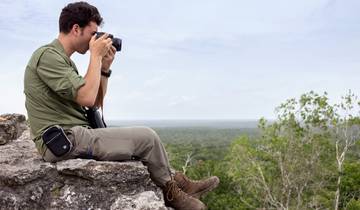
Professional wildlife photography guides cost $100-150 per day for customized expeditions serving 1-4 photographers with flexible timing and location selection, check tour operators for current rates as pricing may vary. These guides understand photographic requirements including optimal lighting conditions, behavioral moments worth capturing, ethical approach distances, and technical considerations for wildlife photography. Services include scouting locations before sessions, positioning clients for best angles, maintaining patience at productive sites while waiting for optimal moments, and providing natural history context enriching photographic experiences beyond simple image capture.
Dawn photography sessions 5:00-9:00 AM focus on morning light, active wildlife, and atmospheric conditions creating compelling images. Guides position photographers at strategic locations including Temple IV canopy level for eye-level monkey portraits, Aguada Tikal waterhole for mammal drinking behaviors, and forest trails for understory bird species. Technical advice covers exposure settings for jungle lighting, focus techniques for moving subjects, and composition strategies incorporating archaeological elements with wildlife subjects.
Specialized Wildlife Experiences 2026
Night wildlife walks cost $60-90 for 2-3 hour expeditions departing 7:30-8:00 PM, exploring nocturnal ecosystems invisible during daylight hours. Guides utilize red-filtered flashlights minimizing disturbance while revealing eyeshine from mammals, roosting birds, active frogs, hunting snakes, and extraordinary insect diversity. These tours require advance booking through authorized operators with night access permits. Participants observe completely different species assemblages including kinkajous, opossums, potoos, nightjars, and numerous bat species. Spotlight surveys locate animals while guides explain adaptations to nocturnal lifestyles and demonstrate safe wildlife observation techniques.
Primate-focused tours cost $65-95 for half-day expeditions concentrating specifically on howler monkeys, spider monkeys, and their behavioral ecology. Expert primate guides locate habituated troops, explain social structures, interpret vocalizations, and provide extended observation opportunities allowing deep understanding of these remarkable animals. Photography timing optimizes lighting conditions for primate portraits, behavioral sequences, and environmental context shots. These specialized tours suit serious naturalists and photographers seeking comprehensive primate experiences beyond casual sightings during general wildlife walks.
Multi-day wildlife immersion packages cost $400-800 depending on accommodation quality and expedition length, check tour operators for current rates. These comprehensive experiences include guided wildlife walks, night surveys, specialized birding, primate observations, and flexible scheduling accommodating participant interests. Packages incorporate on-site lodge accommodation, meals, transportation from Flores, park entrance fees, and all guiding services in single pricing. Extended time commitment enables multiple habitat types, varied daily timing, and repeated visits to productive locations maximizing wildlife encounter diversity.
Photography Tips for Tikal Wildlife 2026
Wildlife photography at Tikal presents unique challenges and extraordinary opportunities combining tropical rainforest conditions with accessible species habituated to human presence. Understanding lighting conditions, behavioral patterns, equipment selection, and ethical considerations enables capturing compelling wildlife images while maintaining conservation principles.
Equipment Recommendations for 2026
Telephoto lenses 300-600mm focal length provide necessary reach for distant birds, canopy primates, and cautious mammals while maintaining image quality and reasonable weight for hiking tropical trails. Image stabilization systems become essential for handholding long lenses during low-light dawn and dusk sessions when wildlife activity peaks. Zoom lenses 100-400mm offer flexibility for varying distances and rapid subject changes typical of diverse wildlife encounters.
Wide-angle lenses 16-35mm create environmental portraits incorporating temple structures with wildlife subjects, establishing context and scale while showcasing Tikal’s unique combination of archaeology and nature. These lenses excel for photographing large groups including monkey troops, turkey flocks, and landscape scenes from temple tops showing forest extending to horizon. Close-focusing capabilities enable dramatic perspectives on insects, frogs, and other small species.
Camera body selection prioritizes fast autofocus systems tracking moving subjects through vegetation, high ISO performance handling dim forest lighting, and weather sealing protecting against sudden tropical rainstorms. Continuous shooting modes capture behavioral sequences and unpredictable moments. Dual card slot systems provide backup security for irreplaceable wildlife images. Electronic viewfinder cameras enable exposure preview and settings adjustment before shooting, reducing errors in challenging lighting conditions.
Essential accessories include sturdy monopods providing stability while maintaining mobility through trails, rain covers protecting equipment during sudden showers, spare batteries (tropical heat reduces battery life), fast memory cards handling high-resolution files, and microfiber cloths managing lens condensation when transitioning between air-conditioned vehicles and hot humid forest. Dry bags protect equipment during canal crossings and rainy season conditions.
Lighting Strategies and Timing 2026
Dawn sessions 6:00-8:00 AM provide soft directional light, active wildlife, and atmospheric conditions creating compelling images. Horizontal morning sun illuminates subjects without harsh overhead shadows plaguing midday photography. Temperature inversions during dry season create mist layers at forest floor level, adding drama to temple scenes and wildlife portraits. Blue-hour light before sunrise enables silhouette compositions of temple structures with wildlife subjects positioned against colorful sky gradients.
Overcast conditions common during wet season May-November 2026 eliminate harsh shadows, enabling all-day photography sessions with consistent lighting. Diffused light reveals color saturation in bird plumage, details in monkey fur, and subtle tones in forest scenes. Rainy conditions add atmosphere through falling drops, wet surfaces reflecting light, and wildlife behaviors responding to precipitation. Fast lenses (f/2.8 or wider) maintain shutter speeds under dim canopy in cloudy conditions.
Golden hour sessions 4:30-6:30 PM create warm directional light enhancing browns and greens dominating tropical forest palettes. Low sun angles penetrate understory vegetation, spotlighting subjects against darker backgrounds. Evening activity peaks coincide with optimal photographic lighting, particularly for howler monkey portraits during sunset vocal performances. Temple IV sunset position places photographers at canopy level with backlit monkeys and birds silhouetted against colorful western skies.
Compositional Approaches for 2026
Environmental portraits incorporate architectural elements with wildlife subjects, creating unique images possible only at Tikal. Spider monkeys photographed against Temple IV profile establish location context while showcasing primate behavior. Ocellated turkeys strutting across ancient plazas combine natural history with cultural heritage. Toucans perched on carved stelae juxtapose living wildlife with Maya artistry. These contextual compositions tell complete stories beyond simple species documentation.
Behavioral sequences capture action unfolding through continuous shooting modes. Howler monkeys vocalizing with mouths wide demonstrate territorial behaviors. Spider monkeys leaping between branches show acrobatic abilities. Coatis investigating ruins reveal curious nature. Turkey courtship displays document reproductive behaviors. Patience at productive locations yields behavioral moments transcending static portraits, providing narrative elements and dynamic energy in finished images.
Macro perspectives reveal extraordinary diversity invisible to casual observers. Jewel-toned hummingbirds feeding at flowers, intricate insect patterns, colorful tree frogs, detailed butterfly wing scales, and architectural ant highways demonstrate rainforest complexity at small scales. Close-focusing telephoto lenses enable macro work from respectful distances without disturbing subjects. Flash techniques illuminate details while maintaining natural lighting appearance.
Ethical Photography Practices 2026
Wildlife welfare supersedes photographic goals in all situations. Maintain minimum approach distances: 10 meters for primates, 5 meters for birds, 20 meters for cats, and follow guide recommendations for specific situations. Never pursue fleeing animals, separate mothers from young, bait predators, or manipulate behaviors for photographic purposes. Observe time limits at sensitive locations, avoiding repeated disturbance to habituated animals. Report problematic behaviors from other photographers to guides and park authorities.
Flash photography requires careful judgment. Never use flash on nocturnal species including owls, nightjars, and bats during night walks, as sudden illumination disrupts hunting behaviors and causes disorientation. Daytime flash fill provides subtle lighting enhancement without behavioral impacts. Hot shoe flash units remain preferable to powerful speedlights causing more disturbance. Always prioritize animal welfare over image quality, accepting that some situations require observation without photography.
Wildlife Conservation Efforts
Tikal National Park functions as critical stronghold for species facing severe population declines throughout Central American ranges. Protected status since 1955, expanded through UNESCO World Heritage designation in 1979, and ongoing conservation programs maintain viable populations of jaguars, tapirs, and hundreds of other species threatened elsewhere by habitat loss and hunting pressure. The 575 square kilometer core protection zone connects with additional buffer areas and biological corridors totaling over 2,000 square kilometers of managed forest.
Jaguar conservation represents priority focus given their apex predator role structuring entire ecosystems through cascading effects on prey populations and mesopredator communities. Camera trap networks monitor 50-75 individual jaguars across the greater Tikal landscape, documenting movements, reproduction, and population trends. Genetic studies reveal connectivity to Mexican and Belizean populations through forest corridors, enabling gene flow critical for long-term viability. Human-jaguar conflict remains minimal within park boundaries but increases in surrounding communities where livestock predation occurs. Compensation programs, livestock management improvements, and community education reduce conflicts while maintaining local support for jaguar conservation.
Bird conservation initiatives address both resident and migratory species utilizing Tikal during different seasonal periods. Protected habitats support breeding populations of scarce species including Ocellated Turkey, Crested Guan, and Great Curassow facing hunting pressure throughout ranges. Tikal provides essential stopover habitat for Neotropical migrants including wood warblers, thrushes, and flycatchers traveling between North and South America. Phenology studies document arrival and departure timing, habitat preferences, and food resources critical during migration periods. Conservation messaging emphasizes Tikal’s international significance for birds shared across national boundaries.
Primate conservation maintains healthy populations of howler monkeys and spider monkeys providing critical seed dispersal services throughout forest ecosystems. Research programs investigate ranging patterns, diet composition, and population dynamics informing management decisions. Spider monkey populations demonstrate particular vulnerability to habitat fragmentation and hunting given slow reproductive rates and specialized fruit dietary requirements. Tikal’s large protected area enables long-distance movements and maintains fruiting tree diversity essential for primate survival.
Ecosystem management recognizes that protecting charismatic species requires maintaining intact habitat supporting entire biological communities. Forest restoration programs revegetate cleared areas within park boundaries, recreating connectivity and expanding available habitat. Invasive species monitoring prevents exotic plants and animals from establishing populations competing with native species. Fire management protocols protect forest from destructive conflagrations while allowing natural fire cycles maintaining certain ecosystem processes.
Research partnerships with Guatemalan and international universities provide scientific foundation for evidence-based conservation management. Studies examine climate change impacts on wildlife distributions, identify critical corridors for movement between protected areas, assess genetic diversity and population structures, document human-wildlife interactions, and develop monitoring protocols tracking conservation effectiveness. These collaborations train Guatemalan conservation professionals while generating peer-reviewed publications advancing scientific understanding of tropical rainforest ecosystems.
Community conservation initiatives recognize that local support determines long-term protection success. Employment opportunities through ecotourism provide economic alternatives to forest conversion and wildlife hunting. Guide training programs build professional skills while creating conservation ambassadors interpreting wildlife values for visitors. School programs educate young generations about biodiversity importance and conservation challenges. Revenue sharing from park entrance fees supports community development projects including education, healthcare, and infrastructure improvements linking conservation benefits directly to local welfare.
Visitor education programs communicate conservation messages through interpretive displays, guided tours, and museum exhibits. Park staff explain threats facing wildlife, describe conservation solutions, and demonstrate how tourism supports protection efforts. Guides discuss specific conservation success stories including jaguar population recovery, turkey reintroduction programs, and reforestation achievements. Educational messaging encourages visitors to support conservation through responsible tourism practices, wildlife-friendly purchasing decisions, and political advocacy for habitat protection.
Planning Your Wildlife Experience 2026
Successful wildlife experiences at Tikal require advance planning addressing timing, guide services, equipment, accommodation, and transportation logistics specific to tropical rainforest environments. The 2026 season operates under established frameworks enabling visitors to maximize wildlife encounters while supporting conservation through sustainable tourism practices.
Optimal Visit Duration for Wildlife 2026
Single-day visits provide introduction to Tikal wildlife through morning guided walks, temple exploration, and afternoon observation sessions. Budget 6-8 hours minimum within the park, arriving 6:00 AM for dawn chorus and departing after late afternoon activity peak. This compressed schedule captures highlights including howler monkeys, toucans, ocellated turkeys, and diverse bird species while touring major temple complexes. However, single-day visits necessarily miss many species requiring extended time and remote location access.
Two-day visits enable comprehensive wildlife experiences through varied timing and habitat coverage. Day one focuses on main archaeological zone including howler monkey territories, Temple IV canopy access, and plaza wildlife. Day two explores remote trails, visits Aguada Tikal waterhole, and accesses northern forest zones hosting different species assemblages. This duration accommodates both dawn and dusk sessions, night walks, and flexible scheduling responding to wildlife activity patterns and weather conditions.
Three-day visits serve serious birders targeting 150+ species and naturalists seeking diverse mammal encounters including potential cat sightings. Extended duration enables coverage of all habitat types, multiple visits to productive locations, and patience-intensive species including raptors, woodcreepers, and understory specialists. Night sessions, specialized photography expeditions, and full-day birding marathons fit comfortably within three-day frameworks. On-site accommodation eliminates daily travel from Flores, maximizing time for wildlife observation.
Accommodation Options for Wildlife Enthusiasts 2026
Jungle lodges within park boundaries including Tikal Inn ($80-120 per night) and Jaguar Inn ($60-90 per night) provide immediate access to dawn and dusk wildlife viewing, check booking platforms for current rates. On-site location eliminates 1.5 hour drives from Flores, enabling 5:30 AM trail starts and evening sessions until park closure. These properties offer basic but comfortable rooms, restaurants serving meals, and tour booking services connecting guests with professional guides. Proximity advantages justify premium pricing for serious wildlife enthusiasts maximizing observation time.
Flores accommodation ranges $25-150 per night depending on quality level, providing broader selection but requiring daily transportation to Tikal. Budget hostels $25-40 suit backpackers prioritizing affordability, mid-range hotels $60-90 offer comfort and amenities, while upscale properties $120-150 provide luxury and professional service. Most Flores hotels arrange transportation and tours to Tikal, though departure timing suits archaeological rather than wildlife priorities with typical 8:00-9:00 AM arrivals missing peak dawn activity.
Remote ecolodges including La Lancha ($200-350 per night) and Camino Real Tikal ($180-280 per night) combine upscale accommodation with wildlife-rich forest settings, check booking platforms for current rates. These properties offer guided nature walks on private trails, specialized wildlife programs, and luxurious amenities including pools, gourmet dining, and spa services. Locations within 30-45 minutes of Tikal enable reasonable access while providing forest wildlife experiences extending beyond park visits.
Transportation Planning for 2026 Wildlife Visits
Shuttle services from Flores to Tikal operate hourly 4:00 AM-5:00 PM, costing $8-12 round trip per person with 1.5 hour journey time. Early departures 4:00-5:00 AM enable arrival for dawn chorus, though services may require advance booking for early morning spots. Return shuttles provide flexibility for extending visits through afternoon wildlife sessions. Shared transportation distributes costs effectively for budget travelers while maintaining schedule reliability.
Private vehicle hire costs $60-90 round trip from Flores for groups 2-4 people, providing schedule flexibility and direct transportation door-to-park entrance. Early morning departure timing suits wildlife viewing priorities without schedule constraints of shared shuttles. Private vehicles enable mid-visit returns to Flores for rest during midday heat, returning for afternoon wildlife sessions. This option suits photographers requiring equipment transportation and families needing flexible scheduling around children’s needs.
Rental cars cost $40-60 per day, offering maximum flexibility for multi-day visits exploring surrounding areas including Uaxactún, Yaxha, and other Maya sites. Self-drive enables spontaneous timing adjustments, equipment security, and independence from tour operator schedules. Well-maintained roads connect Flores to Tikal with clear signage throughout route. Gasoline availability remains reliable with stations in Santa Elena and near Tikal entrance.
Essential Wildlife Viewing Gear 2026
Quality binoculars 8×42 or 10×42 configuration provide essential tool for bird identification and distant mammal observation. Waterproof models withstand tropical humidity and sudden rain showers. Neck straps enable quick deployment when birds appear suddenly. Many visitors underestimate binocular importance, discovering too late that detailed observations require optical assistance. Budget allocation $150-400 for quality binoculars transforms wildlife experiences through enhanced viewing capabilities.
Field guides including Birds of Northern Central America, Mammals of Central America, and Amphibians and Reptiles of Mexico and Central America enable species identification and provide natural history information enriching encounters. Waterproof pocket guides serve trail reference while comprehensive field guides support evening identification sessions reviewing day observations. Digital apps including eBird and Merlin Bird ID provide supplemental identification assistance and maintain personal species checklists.
Appropriate clothing balances sun protection, insect defense, and temperature comfort. Lightweight long-sleeved shirts and pants in neutral colors reduce insect bites and sun exposure while avoiding bright colors potentially disturbing wildlife. Moisture-wicking synthetic fabrics maintain comfort in humid conditions. Rain jacket or poncho addresses sudden tropical showers common during wet season. Hat with brim provides essential sun protection during exposed temple climbing. Closed-toe hiking boots with ankle support prevent injuries on uneven trails.
Insect repellent containing 30% DEET or alternative picaridin provides effective mosquito protection throughout park. Reapplication every 4-6 hours maintains effectiveness during extended visits. Mosquito populations peak during wet season but remain present year-round. Tick checks after trail walks prevent potential disease transmission. Sunscreen SPF 50+ protects exposed skin during temple climbing and open plaza crossings.
Hydration systems carrying 2-3 liters water prove essential in tropical heat with high humidity. Water bottles with filtration enable refilling from park facilities. Electrolyte supplements replace minerals lost through perspiration during extended hiking. Trail snacks including energy bars, dried fruit, and nuts maintain energy levels without requiring meal breaks. Avoiding plastic waste through reusable containers supports park conservation efforts.
Frequently Asked Questions About Tikal Wildlife 2026
Is it safe to encounter jaguars at Tikal?
Jaguar encounters present no safety concerns as these cats consistently avoid human contact and display no aggressive behavior toward people. Documented jaguar attacks on humans in Central America remain extraordinarily rare with no incidents ever recorded at Tikal despite millions of visitor-days. If encountering a jaguar, remain calm, maintain distance, avoid sudden movements, and allow the animal to move away at its own pace. Never approach, follow, or attempt photographing jaguars at close range. Guide expertise proves invaluable during rare encounters, providing appropriate behavioral guidance and wildlife safety protocols.
What vaccinations do I need for visiting Tikal?
Yellow fever vaccination receives strong recommendation for Tikal visits though Guatemala does not mandate this immunization for entry. Hepatitis A and typhoid vaccinations protect against food and waterborne diseases. Routine vaccinations including tetanus, measles, and polio should remain current. Malaria prophylaxis requires consultation with travel medicine specialists regarding risk assessment and medication options. Some travelers choose prophylaxis while others rely on insect protection through repellent and appropriate clothing. Rabies vaccination suits visitors planning extended stays or anticipating animal contact.
Can I see wildlife without hiring a guide?
Independent wildlife observation remains possible with many common species visible along main trails including howler monkeys, coatis, ocellated turkeys, toucans, and numerous bird species. However, professional guides dramatically enhance experiences through species identification expertise, behavioral interpretation, optimal route selection, and locating secretive species easily overlooked by untrained observers. Guides interpret calls identifying birds before visual contact, spot well-camouflaged species, explain ecological relationships, and share natural history context transforming simple sightings into educational encounters. Investment in guide services returns substantial value through improved wildlife diversity and understanding.
What time should I arrive at Tikal for best wildlife viewing?
Arrival by 6:00 AM enables participation in dawn chorus representing peak vocal activity and optimal wildlife observation conditions. Earlier arrival through special early morning access tickets departing 4:00 AM captures pre-dawn transition period and positions visitors at productive locations before day-warming reduces activity. Morning hours from 6:00-9:00 AM consistently provide best wildlife encounters across all species groups. Afternoon sessions beginning 4:00 PM capture secondary activity peak though with reduced intensity compared to morning hours.
Are there venomous snakes at Tikal?
Tikal hosts several venomous snake species including Fer-de-Lance, Coral Snakes, and Jumping Pit Vipers inhabiting forest floors and undergrowth. However, snake encounters remain uncommon as these reptiles actively avoid human contact and detect approaching footsteps through ground vibrations. In 60+ years of park operation, venomous snake bites affecting visitors number in single digits. Standard precautions including wearing closed-toe boots, watching trail surfaces, avoiding reaching into hollow logs or dense vegetation, and maintaining awareness of surroundings virtually eliminate risks. Guides carry first aid training and communication equipment accessing emergency services if needed.
What is the best camera for wildlife photography at Tikal?
Mirrorless cameras with fast autofocus, high ISO performance, and weather sealing optimize wildlife photography in tropical rainforest conditions. Full-frame sensors provide excellent low-light capability for dim forest environments while crop-sensor models offer effective focal length multiplication benefiting telephoto work. Specific models depend on budget constraints with entry-level options starting $1,000 and professional systems reaching $6,000+. Lens selection matters more than camera body, with 100-400mm zoom lenses providing practical focal range for diverse wildlife subjects. Image stabilization systems enable handholding acceptable in dawn and dusk lighting conditions.
Can I see wildlife during rainy season visits?
Wet season from May through November 2026 provides excellent wildlife viewing despite afternoon rain showers. Morning hours remain predominantly dry with peak wildlife activity before clouds develop. Bird diversity increases during wet season breeding cycles with intense vocal activity and courtship displays. Amphibian diversity explodes with hundreds of frog species breeding in temporary ponds. Forest vegetation reaches maximum lushness creating spectacular green backdrops. Rain showers add atmospheric elements to photography and drive wildlife into view seeking shelter. Waterproof gear enables comfortable observation regardless of weather conditions.
How physically demanding are wildlife walks at Tikal?
Standard wildlife tours cover 3-5 kilometers on established trails with moderate terrain including some steep sections accessing temple tops. Average fitness levels prove sufficient for these walks with frequent stops for wildlife observation providing rest opportunities. Extended birding expeditions may cover 8-12 kilometers requiring higher fitness levels. Tropical heat and humidity increase physical demands compared to temperate climate hiking. Adequate hydration, appropriate pacing, and sun protection enable most visitors to complete wildlife programs comfortably. Alternative transportation including tuk-tuks provides access to key locations for mobility-limited visitors.
What is the difference between howler monkeys and spider monkeys?
Howler monkeys (Alouatta pigra) display stocky builds, black coloration, and produce extraordinarily loud vocalizations echoing throughout the forest. These primates move slowly through canopy, feeding primarily on leaves and resting 60-70% of daylight hours. Spider monkeys (Ateles geoffroyi) demonstrate slender builds, lighter coloration, and utilize prehensile tails as fifth limbs during acrobatic canopy travel. Spider monkeys vocalize less frequently and move rapidly through trees while feeding on ripe fruits. Behavioral differences reflect different ecological strategies with howlers conserving energy through low-activity lifestyles while spider monkeys maintain high-energy fruit-based diets requiring extensive ranging.
Are night wildlife tours worth the additional cost?
Night wildlife tours reveal entirely different ecosystems invisible during daylight, justifying additional investment for visitors seeking comprehensive biodiversity experiences. Nocturnal species including owls, nightjars, kinkajous, olingos, porcupines, numerous bat species, and extraordinary insect diversity appear only after dark. Amphibian choruses reach peak intensity during evening hours. Eyeshine from mammals, roosting birds, and active reptiles creates unique observations impossible during day visits. Photography challenges increase significantly though specialized guides assist with appropriate techniques. The $60-90 cost for 2-3 hour night walks adds substantial value through access to species representing 40-50% of total biodiversity missed by daytime-only visitors.