Yaxhá Archaeological Site 2026: Tikal’s Lesser-Known Neighbor
Key Takeaways:
- Yaxhá entrance costs just $8 (50 GTQ) in 2026, significantly less than Tikal’s $23 admission
- The site sits 65 kilometers east of Flores with spectacular twin lake views unavailable at Tikal
- Yaxhá receives 90% fewer visitors than Tikal, offering peaceful exploration of 500+ structures
- Tours from Flores cost $25-35 including transportation and guide in 2026, providing excellent value
- Sunset viewing from Temple 216 ranks among Guatemala’s most spectacular archaeological experiences
- Combined Yaxhá-Tikal visits create comprehensive Maya understanding beyond single-site limitations
Discovering Yaxhá in 2026
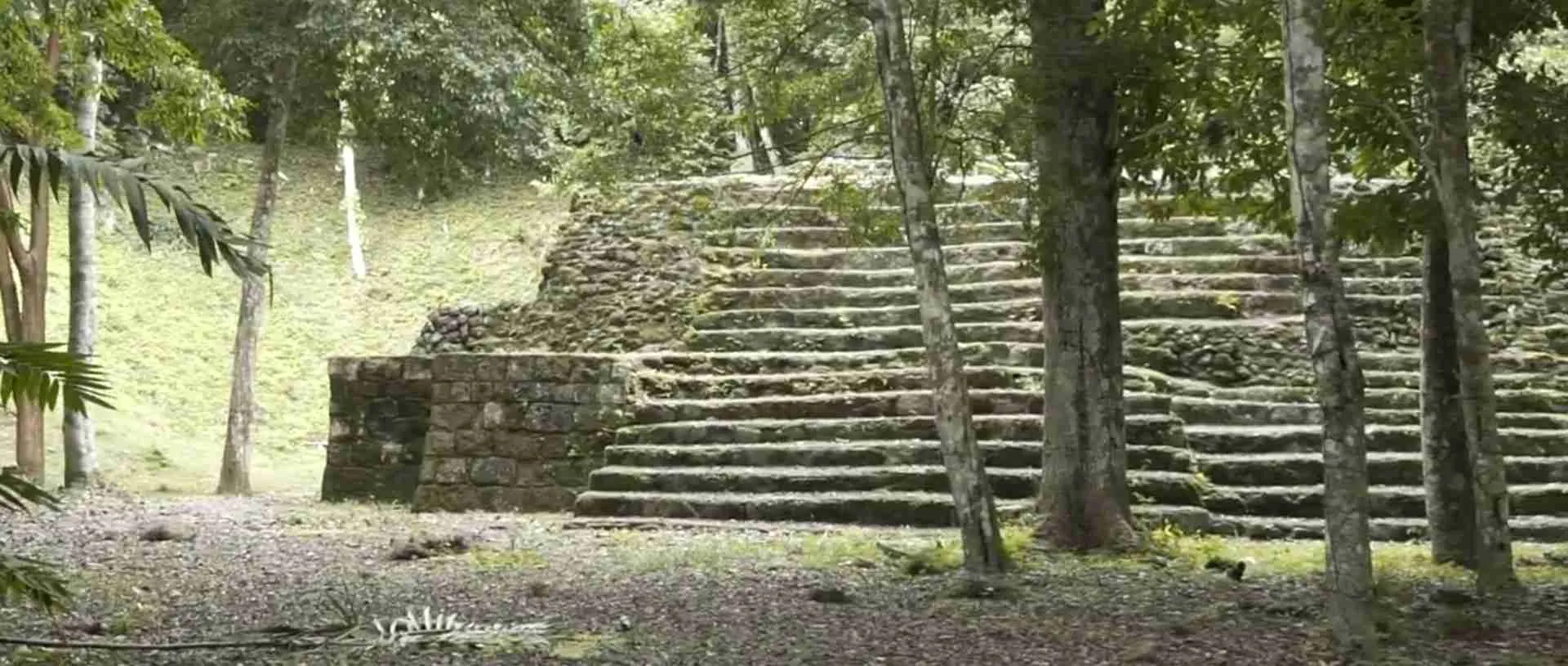
Yaxhá Archaeological Site represents one of Central America’s most underappreciated Maya treasures, overshadowed by nearby Tikal’s fame yet offering experiences Tikal cannot match. This lakeside city perched between Lake Yaxhá and Lake Sacnab presents over 500 structures across nine plazas, with restoration work revealing the sophistication of a Maya metropolis that flourished from 600 BC to 900 AD. The name “Yaxhá” translates to “green-blue water” in Maya language, perfectly capturing the stunning aquatic setting that distinguishes this site from Guatemala’s other archaeological destinations.
Located 65 kilometers east of Flores and 30 kilometers southeast of Tikal, Yaxhá occupies strategic position along ancient Maya trade routes connecting Caribbean coast settlements with Petén heartland cities. The site covers approximately 37 hectares of excavated zones within a larger 37,760-hectare protected area encompassing both archaeological ruins and pristine rainforest. Unlike Tikal’s intensive development and tourist infrastructure, Yaxhá maintains authentic wilderness character with minimal facilities beyond entrance station, basic services, and well-maintained trails through excavated areas.
The archaeological significance of Yaxhá emerged prominently during extensive excavations beginning in 1987, with Guatemala’s government and international archaeological teams uncovering pyramids, palaces, astronomical observatories, and residential complexes demonstrating Classical Maya urban planning. Temple 216, rising 30 meters above surrounding jungle, provides panoramic sunset views across twin lakes toward distant Tikal temples on clear days. Astronomical Complex groups structures aligned with solar and stellar events, while hieroglyphic inscriptions record political alliances, warfare, and dynastic successions spanning seven centuries of occupation.
Yaxhá gained international attention as filming location for “Survivor Guatemala” reality television show in 2005, introducing global audiences to these remarkable ruins. However, the site remains relatively undiscovered by mass tourism, receiving approximately 15,000-20,000 annual visitors compared to Tikal’s 200,000+. This lower visitation creates peaceful exploration opportunities without crowds, enhanced wildlife viewing as animals tolerate minimal human presence, and authentic archaeological atmosphere unavailable at heavily touristed sites.
People Also Ask About Yaxhá 2026
How do you get to Yaxhá from Flores in 2026?
Reaching Yaxhá from Flores requires either joining organized tours ($25-35 including transportation and guide) or arranging private transportation ($60-80 for private vehicle round-trip). The 65-kilometer journey takes 90-120 minutes each direction via paved highway CA-13 toward Belize, then rough unpaved road (25 kilometers) requiring high-clearance vehicles or 4WD during rainy season. No public chicken bus service reaches Yaxhá directly, making organized tours the most economical option for independent travelers. Tours depart Flores 7:00-8:00 AM, spend 4-5 hours at the site, and return late afternoon. Private transportation works well for groups of 4+ travelers splitting $70-100 total cost ($17.50-25 per person), offering flexibility for extended visits or photography timing unavailable on scheduled tours. The unpaved final section creates challenging conditions May-October during rainy season, with tour operators using appropriate vehicles navigating muddy stretches.
Is Yaxhá worth visiting if you’ve already seen Tikal in 2026?
Yaxhá absolutely merits visiting even after Tikal, offering distinct experiences complementing rather than duplicating Tikal’s highlights. The lakeside setting provides spectacular water views absent at landlocked Tikal, with Temple 216 sunset vistas across twin lakes creating Guatemala’s most photogenic archaeological moment. Yaxhá’s minimal crowds (10-20 daily visitors typical) enable peaceful contemplation impossible at busy Tikal, where hundreds of tourists simultaneously explore popular areas. The site’s authentic wilderness character, with minimal restoration creating time-capsule atmosphere, contrasts sharply with Tikal’s extensively excavated and maintained zones. Archaeological enthusiasts appreciate Yaxhá’s different architectural styles, hieroglyphic inscriptions, and urban planning revealing distinct Maya development patterns. Combined visits create comprehensive understanding of Petén Maya civilization spanning multiple cities and time periods rather than single-site perspective.
What’s the best time of day to visit Yaxhá in 2026?
Afternoon visits timing sunset viewing from Temple 216 offer Yaxhá’s most spectacular experience in 2026. The site permits visitors until 6:00 PM, with sunset occurring 5:30-6:00 PM depending on season. Tours from Flores arranged for afternoon arrival (2:00-3:00 PM) provide optimal lighting for photography, cooler temperatures for climbing, and culminate in sunset temple viewing. Morning visits offer advantages of cooler temperatures, active wildlife (howler monkeys, birds most vocal dawn-midday), and softer photography light, but miss the sunset spectacle making Yaxhá famous. Many serious photographers and archaeology enthusiasts arrange overnight stays at Campamento Ecológico El Sombrero (rustic lodge 2 kilometers from entrance) enabling both sunrise and sunset visits across two days. Full-day tours departing Flores 7:00-8:00 AM provide comprehensive coverage including both morning exploration and afternoon sunset, returning to Flores 6:00-7:00 PM after dark.
How much does it cost to visit Yaxhá in 2026?
Yaxhá entrance costs just $8 (50 GTQ) for adults in 2026, with children under 12 entering free. This modest fee includes all-day site access and basic facilities. Most visitors join organized tours from Flores priced $25-35 per person including round-trip transportation, guide service, and entrance fee (check tour operator websites for current rates as pricing may vary). Self-arranged private transportation adds $60-80 for vehicle hire plus entrance fees paid separately. Total day costs for budget travelers on organized tours run $30-45 including entrance, transportation, guide, and packed lunch from Flores. Mid-range budgets of $50-70 add restaurant lunch and drinks. Overnight stays near the site at Campamento Ecológico cost $40-60 for basic rooms, allowing extended exploration across multiple days. Yaxhá represents exceptional value compared to Tikal ($23 entrance alone), offering similarly impressive archaeology at fraction of cost with added bonus of dramatically lower crowds.
Extended multi-day tours – 5+ days
Featured Tikal Multi-Day Tour Packages
3 days
Tikal 3-Day Discovery Tour
- ✓ Comprehensive Tikal experience
- ✓ Expert local guides included
- ✓ All accommodation included
- ✓ Transportation provided
5 days
Tikal 5-Day Highlights Experience
- ✓ Comprehensive Tikal experience
- ✓ Expert local guides included
- ✓ All accommodation included
- ✓ Transportation provided

7 days
Tikal 7-Day Cultural Journey
- ✓ Comprehensive Tikal experience
- ✓ Expert local guides included
- ✓ All accommodation included
- ✓ Transportation provided
10 days
Tikal 10-Day Complete Adventure
- ✓ Comprehensive Tikal experience
- ✓ Expert local guides included
- ✓ All accommodation included
- ✓ Transportation provided
Multi-day tour packages powered by TourRadar. Prices and availability subject to change.
Essential Planning Information for 2026 Yaxhá Visits
Understanding Yaxhá’s Location and Access
Yaxhá Archaeological Site occupies peninsula between Lake Yaxhá (9 square kilometers) and Lake Sacnab (3 square kilometers) in northeastern Petén department, positioned strategically along ancient Maya trade corridor connecting Tikal region with Caribbean coast settlements. Modern access follows highway CA-13 eastbound from Flores toward Belize border, with turnoff at kilometer 61 leading 25 kilometers south on unpaved road to site entrance.
The geographic isolation protecting Yaxhá from mass tourism simultaneously creates access challenges requiring advance planning. No scheduled public transportation serves the site, eliminating spontaneous budget visits possible at well-connected Tikal. The unpaved final 25-kilometer approach road ranges from excellent condition in dry season (November-April) to challenging muddy stretches during rains (May-October), requiring high-clearance vehicles or 4WD capability for safe passage.
Three access options serve Yaxhá visitors in 2026: organized tours from Flores providing most economical independent traveler solution, private vehicle hire offering flexibility for customized schedules, and personal vehicle use by those renting cars for Guatemala exploration. Tour operators handle all logistics including appropriate vehicles for road conditions, while private hires require verifying driver familiarity with route and vehicle suitability for prevailing conditions.
Distance and road conditions create 90-120 minute travel time each direction between Flores and Yaxhá, consuming substantial portions of day trips. Tours spending 4-5 hours at the site allow comprehensive exploration of major excavated zones, principal temples, lakeside viewpoints, and sunset observation from Temple 216. Extended photography sessions, bird watching, or detailed architectural study justify overnight stays eliminating daily round-trip transportation time.
Seasonal Considerations for 2026 Planning
Yaxhá experiences Guatemala’s typical Petén climate with distinct dry season (November-April) and rainy season (May-October), each offering advantages for different visitor priorities. Seasonal timing affects access road conditions, wildlife visibility, photography opportunities, and overall comfort during exploration.
Dry season (November-April) provides optimal road conditions with reliable access requiring only standard vehicles rather than 4WD capability. Clear skies enable spectacular sunset photography from Temple 216 with distant visibility across lakes toward Tikal area. Reduced vegetation growth improves temple structure visibility and photograph compositions. However, dry season brings hottest temperatures (32-38°C/90-100°F midday), increased dust on trails, and lower lake levels reducing aquatic bird populations. Peak tourist months (December-March) see highest Yaxhá visitation, though “crowded” means 20-30 daily visitors versus normal 10-15.
Rainy season (May-October) creates challenging access road conditions with muddy sections requiring 4WD vehicles and skilled driving, particularly June-September during peak precipitation. Afternoon thunderstorms occur regularly, threatening to obscure sunset viewing and creating photography lighting unpredictability. However, rainy season advantages include lush green vegetation creating stunning photography backdrops, active wildlife drawn to water sources, fuller lakes with abundant aquatic birds, and virtual tourist absence (5-10 daily visitors typical) enabling completely private exploration of major complexes.
Shoulder months (May and November 2026) balance these competing factors, offering improving or declining weather without extreme conditions. May marks rainy season beginning with morning sunshine and afternoon storms developing mid-afternoon, perfect for tours timing visits to depart before typical 3:00-4:00 PM storm onset. November represents dry season beginning with occasional late-afternoon rains but generally reliable conditions, reduced costs versus peak season December-March, and increasing wildlife activity as water sources concentrate animals.
Tour Options and Booking Strategies 2026
Multiple Flores-based tour operators offer Yaxhá day trips with similar pricing ($25-35 per person) but varying quality, group sizes, and additional services. Understanding options enables selecting tours matching individual priorities for photography, archaeological interest, or budget constraints.
Standard tours priced $25-30 per person include round-trip transportation in minibus or van accommodating 8-12 passengers, bilingual guide providing site interpretation, and entrance fee (check tour websites for current official rates). These departures run 7:00-8:00 AM from Flores hotels with returns 6:00-7:00 PM after sunset viewing. Guides typically spend 2-3 hours conducting structured tours covering major plazas, temples, and complexes, then allow free time for independent exploration or extended photography before sunset temple climb.
Premium tours charging $35-45 per person limit groups to 4-6 passengers, use more comfortable vehicles, provide packed lunches rather than requiring self-catering, and employ specialized archaeological or birding guides offering deeper expertise. These smaller groups enable customized pacing, extended stops at structures of particular interest, and greater flexibility for photography timing. Some operators combine Yaxhá with nearby Topoxté Island ruins (15 minutes by boat) or Nakum archaeological site, creating full-day multi-site experiences.
Private tours arranged for 2-4 travelers cost $80-120 total ($20-60 per person depending on group size), offering complete schedule control, customized interpretation depth, and flexibility for extended stays or alternative timing. Private arrangements work particularly well for serious photographers seeking optimal lighting conditions, families with children requiring flexible pacing, or archaeology enthusiasts wanting detailed site examination beyond standard tour coverage.
Booking strategies in 2026 favor direct contact with operators rather than hotel arrangements or aggregator sites. Email or WhatsApp contact with operators like Martsam Travel, Flores Adventure, or San Juan Travel yields competitive pricing and clear communication about services included. Peak season (December-March) requires 1-2 week advance booking ensuring space, while low season permits same-day or next-day arrangements. Many operators offer modest discounts (10-15%) for groups of 4+ travelers or multi-day packages combining Yaxhá with other Petén destinations.
Exploring Yaxhá Archaeological Complex 2026
Major Structures and Excavation Areas
Yaxhá’s archaeological core comprises nine main plazas containing over 500 identified structures, with 40+ excavated and partially restored buildings accessible to visitors in 2026. The site divides into three main complexes: Central Acropolis containing residential and administrative buildings, North Acropolis housing elite residential structures, and East Acropolis featuring astronomical observatory and ceremonial platforms.
Temple 216 dominates the site physically and experientially, rising 30 meters (100 feet) above Plaza C with steep stairways climbing to summit platform. This monumental pyramid served dual astronomical observatory and ceremonial functions, with summit alignment to solstice sunrises and equinox sunset positions. Modern visitors climb restored staircases (exercise caution on steep sections) to summit platform commanding 360-degree views across lakes, surrounding jungle, and toward Tikal area 30 kilometers northwest. Sunset viewing from Temple 216 creates Yaxhá’s signature experience, with golden light illuminating temple stones while lakes reflect pink and orange sky colors.
Astronomical Complex groups Structures 216-220 in planned arrangement aligned to celestial observations. Structure 218 (adjacent to Temple 216) features carved hieroglyphic stairway recording dynastic histories and military victories. Structure 217 contains Twin Pyramid Complex similar to Tikal’s Group E, used for solar observation ceremonies. These structures demonstrate Maya astronomical sophistication and integration of celestial knowledge into urban planning and religious practice.
North Acropolis contains elite residential palaces built on raised platforms overlooking Lake Yaxhá. Complex 17 preserves multiple room divisions, internal courtyards, and elevated sleeping platforms characteristic of high-status Maya residences. Stucco decorations partially survive on some structures, showing original red pigmentation visible in protected areas. These residential zones provide insights into daily life of Maya nobility contrasting with ceremonial structures dominating Central Acropolis.
Plaza C, the site’s largest public space, measures approximately 100 by 80 meters flanked by temples on three sides and open northward toward lake views. This plaza hosted public ceremonies, markets, and political gatherings serving city’s population estimated at 20,000-25,000 during Classical Period peak. Ball court adjacent to Plaza C (Structure 94-95) preserves original playing alley and scoring rings demonstrating Maya ball game’s religious and political significance.
Wildlife and Natural Environment
Yaxhá’s protected status within 37,760-hectare Yaxhá-Nakum-Naranjo Natural Monument preserves exceptional wildlife populations thriving in minimal human presence. The site’s twin lake setting attracts diverse bird species, aquatic fauna, and terrestrial mammals creating wildlife viewing opportunities exceeding most Petén archaeological destinations including Tikal.
Avian diversity reaches extraordinary levels with over 400 bird species recorded in reserve including jabiru storks, great egrets, roseate spoonbills, snail kites, and boat-billed herons frequenting lake margins. Ocellated turkeys (Maya turkey unique to Yucatan Peninsula) strut through archaeological zones during early morning and late afternoon. Keel-billed toucans and collared aracaris forage in fruiting trees near temples, while orange-breasted falcons nest on temple faces. Serious birders spend full days at Yaxhá recording 50-80 species within site boundaries, taking advantage of minimal visitor disturbance enabling close approaches to feeding and nesting birds.
Mammal populations include all three Central American howler monkey species present in Petén: black howler monkeys (most common), mantled howler monkeys, and occasional Guatemalan howler monkeys. Spider monkeys swing through canopy surrounding excavated zones, while white-nosed coatis forage along trails and around visitor areas. Peccary herds occasionally cross trails between feeding areas, and white-tailed deer browse open areas during early morning hours. Jaguar, puma, and ocelot inhabit remote reserve sections, though visitor sightings remain extremely rare due to these cats’ nocturnal habits and human avoidance.
Reptile and amphibian diversity includes Morelet’s crocodiles inhabiting both lakes (visible from shoreline observation points), several iguana species basking on temple stones, and numerous snake species including boa constrictors and non-venomous racers. Seasonal rainfall patterns create breeding periods for poison dart frogs calling from leaf litter around temple bases. These wildlife populations benefit from strict hunting prohibitions, limited tourism pressure, and extensive protected forest buffer surrounding archaeological core.
Photography Opportunities 2026
Yaxhá offers Guatemala’s premier archaeological photography combining temple architecture, lake landscapes, spectacular sunsets, and abundant wildlife in compositions unavailable at landlocked Tikal. Strategic planning around lighting conditions and seasonal factors maximizes photographic results during limited visit time.
Sunset photography from Temple 216 summit creates Yaxhá’s iconic images with temple stones in foreground, twin lakes in middle distance, and jungle canopy extending to horizon under dramatic sky colors. Optimal timing positions photographers on summit 30-45 minutes before sunset (verified through apps like PhotoPills for precise sunset time), allowing compositional experimentation as light changes. Wide-angle lenses (16-35mm) capture full scene breadth including temple structures and expansive landscape, while telephoto zooms (70-200mm) compress distance showing Tikal area temples on clear days. Graduated neutral density filters balance bright sky with darker foreground, though modern cameras’ dynamic range increasingly handles high-contrast scenes.
Morning light (6:30-9:00 AM) illuminates east-facing temple facades creating rich stone textures and eliminating harsh midday contrast. Temple 216’s east face receives excellent morning side-lighting emphasizing architectural details and carved decorations. Plaza C photography benefits from morning sun angle lighting northern temple faces while creating interesting shadows defining architectural elements. Wildlife activity peaks during cool morning hours with birds feeding actively and mammals moving between rest areas and water sources.
Lakeside perspectives photograph temples reflected in still water during calm morning hours before breezes ruffle surface. Several trails descend to Lake Yaxhá shore providing water-level viewpoints showing temple silhouettes above jungle canopy mirrored in lake surface. These compositions require 70-200mm lenses compressing distance between photographer, lake, and distant temples. Sunrise timing (6:00-6:30 AM) occasionally produces mist layers over water creating ethereal atmosphere, though arrival before site opening (6:00 AM) requires special permission arranged through tour operators.
Wildlife photography opportunities abound with patient observation and appropriate equipment. Birds perching on temple facades create striking nature-architecture combinations requiring 300-400mm lenses for frame-filling compositions. Howler monkeys in trees near Plaza C allow close approaches (10-15 meters) achievable with 70-200mm zooms. Crocodiles basking at lake margins photograph well with 200-400mm lenses from safe observation distances. Minimizing group size and movement increases wildlife encounter probability, favoring private tours or arriving with first morning entry over large group tours.
Sample Yaxhá Itineraries 2026
Standard Day Tour from Flores
This typical day tour represents most common Yaxhá visit pattern, balancing comprehensive site coverage with sunset viewing experience. The itinerary suits travelers basing in Flores, combining Yaxhá with other Petén destinations across multi-day stays.
Departure from Flores hotels occurs 7:00-8:00 AM via minibus collecting passengers from various accommodations. The 90-minute drive eastward on CA-13 highway passes rural villages and agricultural zones before turning south onto unpaved access road at kilometer 61. Final 25-kilometer section traverses protected forest zone with occasional wildlife sightings (birds, coatis, white-tailed deer) visible from vehicle. Arrival at Yaxhá entrance occurs 9:00-9:30 AM with brief restroom stop and ticket purchase at visitor center.
Guided tour begins with overview of site layout, excavation history, and major structures. The guide leads group through Central Acropolis exploring Plazas A, B, and C, explaining astronomical alignments, hieroglyphic inscriptions, and architectural developments across construction periods. Temple 216 ascent occurs mid-tour providing panoramic views and orientation to overall site plan visible from summit. North Acropolis residential zones receive coverage explaining elite daily life and palace functions. Total guided component lasts 2-3 hours covering major complexes thoroughly.
Free time (11:30 AM-4:30 PM) permits independent exploration, extended photography, or relaxation before sunset viewing. Many visitors spend this period hiking peripheral trails encountering wildlife, photographing detailed architectural elements, or relaxing at lakeside viewpoints. Packed lunches (brought from Flores) consumed at shaded rest areas near Plaza C or lakeside points provide midday sustenance. Afternoon hours remain hot (32-35°C/90-95°F) making shaded rest periods prudent before final temple climb.
Sunset viewing begins with 4:30-5:00 PM reassembly at Temple 216 base, allowing 30-minute climb to summit before sunset colors develop. Groups spread across summit platform finding optimal photography positions. Sunset occurs 5:30-6:00 PM depending on season, with golden hour light persisting 20-30 minutes creating extended photography window. Descent in fading light requires caution on steep stairs using handheld flashlights or phone lights. Return departure occurs 6:00-6:30 PM with Flores arrival 8:00-8:30 PM after dark.
Tour cost $25-35 per person, entrance $8, packed lunch from Flores $5-8, water and snacks $3-5. Total day cost: $41-56 per person excluding Flores accommodation and pre/post-tour meals. This represents exceptional value delivering comprehensive archaeological experience, spectacular sunset viewing, and wildlife encounters at costs substantially below equivalent Tikal day tours.
Photography-Focused Extended Visit
Serious photographers justify overnight stays near Yaxhá maximizing both sunrise and sunset photography opportunities unavailable during standard day tours. This itinerary assumes private transportation or specialized photo tour arrangements enabling customized timing.
Day 1 begins with midday departure from Flores (11:00 AM-12:00 PM) after leisurely breakfast and final supply shopping. Arrival at Campamento Ecológico El Sombrero (rustic lodge 2 kilometers from Yaxhá entrance, $40-60 per night) occurs early afternoon with check-in and lunch at lodge restaurant ($8-12). Afternoon 2:00-3:00 PM entry to Yaxhá provides cooler temperatures for initial site reconnaissance, identifying optimal photography locations for next morning’s sunrise session.
Late afternoon photography (4:00-5:30 PM) focuses on west-facing temple facades receiving excellent side-lighting creating rich stone textures. Temple 216 sunset viewing (5:30-6:30 PM) captures day tour’s signature experience, though with advantage of familiarity from earlier site reconnaissance enabling optimal position selection. Evening return to lodge includes dinner ($10-15) and early sleep preparing for predawn departure.
Day 2 begins with 5:00 AM departure from lodge for 5:30 AM site entry arranged through advance communication with park administration. Sunrise photography (5:30-7:30 AM) targets east-facing temple facades, lakeside reflection compositions, and mist photography if atmospheric conditions cooperate. Wildlife activity peaks during cool morning hours with howler monkey choruses, active bird feeding, and mammal movement creating nature photography opportunities. Extended morning session (8:00-11:00 AM) explores peripheral structures, detailed architectural photography, and hieroglyphic inscriptions requiring concentrated examination.
Midday departure from Yaxhá (12:00 PM) avoids hottest hours while allowing morning light advantages. Return to Flores occurs mid-afternoon (2:00-3:00 PM) with remainder of day for photo review, backup creation, and evening meals. This extended approach yields diverse lighting conditions, wildlife encounters, and thorough site coverage impossible during standard day tours.
Private transportation $80-120 round-trip (split among passengers), two site entries $16, Campamento Ecológico accommodation $40-60, meals $30-40, photography park fee if applicable $0-15. Total two-day costs: $166-235 before Flores accommodation and personal expenses. Photographers prioritizing portfolio-quality images justify these premium costs through exceptional results unavailable during rushed day tour timing.
Combined Yaxhá-Tikal Multi-Day Exploration
Combining Yaxhá with Tikal visits creates comprehensive Petén Maya archaeology experience showcasing multiple city-states, architectural styles, and site contexts. This itinerary assumes 3-4 days based in Flores enabling both sites plus recovery time.
Day 1 focuses on Tikal with standard sunrise access (4:30 AM shuttle departure, $8-12) including entrance with sunrise fee ($31 total). Comprehensive 6-8 hour exploration covers Grand Plaza, Temple IV, Lost World, and peripheral complexes. Return to Flores occurs mid-afternoon allowing evening recovery and trip planning at leisure pace.
Day 2 provides rest day in Flores with optional light activities: lakefront walking, market exploration, Actun Kan caves ($5), or swimming and relaxation at hotel. This recovery day prevents archaeological fatigue while preparing for next day’s Yaxhá excursion.
Day 3 tackles Yaxhá through morning tour departure (7:00-8:00 AM, $25-35 including transportation and guide). Full day at site (9:30 AM-6:00 PM) enables thorough exploration contrasting Yaxhá’s lakeside context, fewer crowds, and different architectural style with previous day’s Tikal experience. Sunset viewing from Temple 216 provides fitting culmination to Petén archaeological exploration.
Day 4 allows final Flores morning before departure to next Guatemala destination or international border crossing (Belize $5-8, Mexico $15-25 transport to borders). Optional morning additions include other Petén sites (El Mirador trekking, Uaxactún, Topoxté Island) for travelers with extended time and budgets.
Combined costs: Tikal shuttle $8-12, Tikal entrance with sunrise $31, Yaxhá tour $25-35, Actun Kan $5, Flores accommodation (3-4 nights) $45-180 depending on budget level, meals $45-90 (3-4 days), incidentals $20-30. Total four-day cost: $179-383 per person delivering comprehensive Petén Maya archaeology experience across multiple sites and contexts impossible through single-site visits.
Comparing Yaxhá to Tikal: Which to Visit in 2026
Architectural and Archaeological Differences
Yaxhá and Tikal represent distinct expressions of Maya urban development despite geographic proximity (30 kilometers) and contemporary occupation periods. Understanding architectural differences enriches appreciation when visiting both sites, while helping single-site visitors choose destinations matching their interests.
Tikal’s monumental scale reflects its status as major Maya superpower, with Temple IV reaching 65 meters height (twice Temple 216’s 30 meters) and Grand Plaza covering area larger than several Yaxhá plazas combined. Tikal’s 3,000 identified structures across 16 square kilometers dwarf Yaxhá’s 500 structures over smaller area, though Yaxhá’s excavated zones provide more manageable exploration scale for single-day visits. Tikal demonstrates pure Petén architectural style with towering temple-pyramids, roof combs, and massive stone construction, while Yaxhá shows Petén-Belizean transitional styles incorporating regional variations.
Yaxhá’s lake setting creates urban planning challenges absent at landlocked Tikal, with structures oriented toward water views and ceremonial complexes positioned exploiting topographic variations between lake levels and hilltop positions. This lakeside context influences site layout with astronomical alignments incorporating both celestial phenomena and geographic features like lake horizons and distant mountain ranges. Tikal’s more traditional inland positioning follows standard Maya cardinal orientation without landscape features constraining development.
Restoration philosophy differs significantly between sites. Tikal underwent intensive reconstruction creating “Disneyfied” impression with heavily restored temples, reconstructed roof combs, and manicured plazas contrasting with original ruined appearance. Yaxhá maintains conservative restoration approach preserving archaeological authenticity with minimal reconstruction beyond structural stabilization and stairway safety improvements. This creates dramatically different visitor experiences: Tikal shows ancient city’s appearance during peak occupation, while Yaxhá reveals romantic jungle-reclaimed ruins closer to original discovery condition.
Visitor Experience Comparison 2026
Beyond architectural differences, Yaxhá and Tikal offer contrasting visitor experiences affecting site selection for travelers prioritizing specific aspects of archaeological tourism.
Crowd levels represent most dramatic difference. Tikal receives 200,000+ annual visitors creating constant human presence at major structures, difficulty finding solitary contemplation moments, and challenges photographing temples without tourist-filled foregrounds. Yaxhá’s 15,000-20,000 annual visitors translate to 10-20 daily visitors (versus Tikal’s 400-600 daily), enabling completely private temple experiences, unobstructed photography, and peaceful atmosphere for extended contemplation. Solo travelers or couples seeking romantic archaeological exploration find Yaxhá’s emptiness compelling advantage over Tikal’s crowds.
Infrastructure and facilities favor Tikal for convenience-oriented visitors. Tikal provides multiple restaurants, large visitor center, good facilities, maintained trails, and clear signage throughout site. Yaxhá offers minimal infrastructure with basic services, limited facilities, and trails requiring greater self-sufficiency and comfort with wilderness exploration. Budget travelers and backpackers typically tolerate Yaxhá’s limited facilities well, while families with young children or travelers preferring developed amenities favor Tikal’s comprehensive services.
Wildlife viewing advantages Yaxhá through lower visitor numbers reducing animal disturbance, lakeside habitat attracting diverse aquatic species, and minimal development leaving extensive natural areas between excavated zones. Howler monkeys, birds, and other wildlife tolerate closer human approach at quiet Yaxhá versus busy Tikal where animals maintain greater wariness. Birders and wildlife photographers consistently prefer Yaxhá for concentrated observation and photography opportunities unavailable at crowded Tikal.
Cost considerations favor Yaxhá substantially with $8 entrance versus Tikal’s $23, though transportation costs partially offset entrance savings. Tours to Yaxhá ($25-35 including transportation and entrance) total slightly less than independent Tikal visits ($23 entrance + $8-12 shuttle = $31-35 minimum). Budget-conscious travelers visiting both sites spend approximately $60-70 combined versus $23-35 for single Tikal visit, creating excellent value for those with multiple days in Petén region.
Recommendations by Traveler Type
Different traveler types derive varying value from Yaxhá and Tikal based on individual priorities, time availability, and travel style preferences.
First-time Petén visitors with limited time (1-2 days) should prioritize Tikal as Guatemala’s premier archaeological destination offering most extensive excavations, clearest site interpretation, and comprehensive facilities supporting efficient visits. Tikal’s fame, infrastructure, and monumental scale create quintessential Maya ruins experience justifying its higher costs and crowds for travelers making single Petén archaeological visit.
Extended Petén visitors (3+ days) should visit both sites appreciating complementary experiences impossible from single location. The combined exploration reveals Maya civilization breadth across urban contexts, architectural styles, and site conditions from heavily restored (Tikal) to authentically ruined (Yaxhá). Multi-site visitors gain deeper archaeological understanding and avoid “missing out” regrets from experiencing only one perspective on Maya culture.
Photography enthusiasts choose Yaxhá for uncrowded compositions, spectacular sunset views, lakeside reflections, and excellent wildlife opportunities. Tikal offers iconic temple silhouettes and massive structures but constant tourist presence complicates achieving clean compositions. Photographers with sufficient time visit both, shooting Tikal’s monuments and Yaxhá’s landscapes plus sunsets for diverse portfolio coverage.
Budget travelers favor Yaxhá’s lower costs ($8 entrance vs. $23) and excellent value tours ($25-35 all-inclusive) delivering full archaeological experience at substantially reduced pricing. Combined Tikal-Yaxhá visits total $60-70 versus $30-50 for Yaxhá alone, creating difficult justification for budget-constrained travelers unless Tikal holds specific must-see status.
Wildlife and nature enthusiasts prioritize Yaxhá for superior bird watching, mammal encounters, and pristine lake ecosystems absent at landlocked Tikal. The combination of archaeological interest and natural history makes Yaxhá particularly appealing to ecotourism-oriented visitors balancing cultural and environmental exploration.
Practical Tips for 2026 Yaxhá Visits
What to Bring
Yaxhá’s minimal facilities and remote location require more thorough preparation than well-serviced Tikal. Strategic packing ensures comfortable, successful visits without reliance on unavailable on-site purchases.
Water represents critical concern with 2-3 liters minimum per person necessary for 5-6 hour visits in tropical heat. The site’s single small shop (inconsistently stocked) charges premium prices ($4-5 per bottle) when available, making Flores purchases ($1-2 per liter) essential. Dehydration risks increase during temple climbing exertions in 30-35°C temperatures, necessitating conservative consumption estimates and emergency reserves.
Packed lunch and snacks prevent hunger during long site visits. The small on-site restaurant operates sporadically with limited menu options ($8-12 when available), making self-sufficiency prudent. Flores supermarkets and bakeries provide sandwich ingredients ($3-5), fresh fruit ($2-3), packaged snacks ($1-2), and lunch boxes enabling complete meal preparation at fraction of restaurant costs.
Sun protection requires attention given exposed temple areas lacking shade. High-SPF sunscreen (SPF 50+) applied before entry and reapplied after swimming or heavy sweating prevents burns during extended sun exposure. Wide-brimmed hats protect face and neck, while lightweight long-sleeve shirts cover arms reducing both sun exposure and insect bites. Sunglasses rated UV400 protect eyes from intense tropical sun reflection off limestone temple surfaces.
Insect repellent containing DEET (25-30% concentration) or picaridin effectively deters mosquitoes, no-see-ums, and ticks present in forest areas. Application before site entry and reapplication every 3-4 hours maintains protection throughout visit. Rainy season visits (May-October) face higher mosquito populations, while dry season (November-April) sees reduced but still present biting insects.
Appropriate footwear means closed-toe shoes or hiking boots with good traction for steep temple stairs and uneven trail surfaces. Running shoes or trail runners work well for most visitors, while serious hiking boots prove unnecessary given maintained trail system. Sandals or flip-flops risk twisted ankles on irregular stones and temple steps.
Photography Equipment and Settings
Yaxhá’s diverse photography opportunities spanning architecture, landscapes, sunsets, and wildlife benefit from thoughtful equipment selection and technical preparation.
Camera body selection favors full-frame sensors for superior dynamic range handling high-contrast sunset scenes and low-light forest wildlife photography. However, crop-sensor cameras perform excellently given proper technique and exposure management. Weather-sealed bodies provide peace of mind during rainy season visits, though careful equipment protection suffices for most travelers.
Lens selection depends on photography priorities. Wide-angle zooms (16-35mm or 24-70mm) capture temple-landscape combinations and architectural context including surrounding lakes and forest. Telephoto zooms (70-200mm or 100-400mm) compress distant elements for dramatic sunset compositions and wildlife frame-filling shots. Prime lenses (24mm, 35mm, 50mm) offer superior optical quality and low-light performance for available-light temple interior photography, though zoom versatility often outweighs prime advantages given limited visit time.
Sunset photography settings typically employ ISO 100-400 maintaining image quality, apertures f/8-f/11 maximizing depth of field for sharp rendering across scene depth, and shutter speeds 1/60-1/250 second depending on light levels. Graduated neutral density filters balance bright sky with darker foreground temple elements, though modern cameras’ shadow recovery often achieves similar results through post-processing RAW files. Tripods enable low-ISO settings maintaining maximum image quality but create carry burden across extensive site during daytime exploration.
Wildlife photography demands telephoto reach (300mm minimum, 400-600mm ideal) for frame-filling bird and monkey compositions maintaining safe, non-disturbing distances. Fast apertures (f/4-f/5.6 maximum) enable faster shutter speeds (1/500-1/2000 second) freezing animal movement in forest shade. Higher ISOs (800-3200) compensate for reduced light under forest canopy, with modern cameras’ noise reduction producing acceptable results at these settings.
Cultural Sensitivity and Site Etiquette
Respectful Yaxhá visitation requires awareness of site significance to contemporary Maya communities, archaeological preservation needs, and environmental conservation goals protecting both ruins and surrounding ecosystems.
Temple climbing restrictions apply to certain structures undergoing conservation work or deemed too fragile for visitor traffic. Rangers indicate closed structures with rope barriers or signage, though less obvious markings than at heavily managed Tikal require attention avoiding accidental violation. Temple 216 remains open for visitor climbing including summit access for sunset viewing, while some peripheral structures restrict access protecting unstabilized sections from accelerated deterioration.
Ancient stone surfaces require gentle treatment avoiding activities causing physical damage. Standing or sitting directly on carved hieroglyphs, touching decorated stucco surfaces, or removing any artifacts (even small stones) violates both Guatemalan antiquities law and archaeological ethics. Photography occurs without touching carved surfaces, and rest breaks utilize modern steps or designated areas rather than original archaeological elements.
Quiet behavior respects both site sanctity and other visitors’ experiences. Yaxhá’s peaceful atmosphere contrasts dramatically with busy Tikal, creating environment where loud conversations, music, or other noise pollution prove particularly intrusive. Many visitors seek spiritual connections with ancient Maya sites, making reverential quiet appropriate regardless of personal belief systems.
Archaeological photography avoids images potentially appearing disrespectful to Maya heritage or trivializing cultural significance. Climbing poses imitating ancient Maya rituals, yoga positions atop altars, or other performative photography trend on social media but disrespect sacred spaces. Photography celebrating architectural achievements, natural beauty, and cultural significance proves entirely appropriate when approached thoughtfully.
Waste management follows strict leave-no-trace principles given minimal site facilities. All food wrappers, water bottles, and personal items leave with visitors, with proper disposal occurring in Flores or at hotel accommodations. The pristine condition of Yaxhá’s plazas and trails reflects both limited visitor numbers and conscientious behavior from archaeological enthusiasts who comprise majority of site guests.
Beyond Yaxhá: Other Petén Archaeological Sites 2026
Topoxté Island
Topoxté Island archaeological site occupies small island in Lake Yaxhá accessible by 15-minute boat ride from Yaxhá entrance area. The site represents Postclassic Period Maya occupation (1200-1500 AD) continuing centuries after Classic cities like Tikal and Yaxhá declined, demonstrating Maya civilization’s persistence through political upheavals.
Some Yaxhá tour operators include Topoxté in extended packages adding $10-15 for boat transport and brief island visit. The compact site covers approximately 1 hectare with several small pyramids, residential structures, and ceremonial platforms arranged around central plaza. Topoxté’s modest scale (largest pyramid reaching 8 meters) contrasts dramatically with Classic Period monumentality, reflecting changed political circumstances and reduced population densities characterizing Postclassic era.
Archaeological interest focuses on site occupation timing demonstrating Maya adaptability and cultural continuity rather than architectural grandeur. Topoxté provided defensible position during unstable Postclassic period, with water surrounding small island creating natural fortification. Trade artifacts recovered during excavations suggest maintained commercial networks connecting Caribbean coast with interior highlands throughout Postclassic decline affecting larger urban centers.
Visitor experience combines brief archaeological exploration (30-45 minutes suffices for thorough site coverage) with boat journey offering lake-level perspectives on Yaxhá’s setting and good bird watching opportunities. The island’s isolation and minimal visitor traffic create peaceful atmosphere, though limited excavation leaves many structures as overgrown mounds requiring imagination visualizing original appearances.
Nakum
Nakum archaeological site sits 25 kilometers north of Yaxhá (17 kilometers south of Tikal) representing another major Classic Period city containing over 1,000 structures spanning urban core and suburban residential zones. The site’s positioning between Tikal and Yaxhá along ancient trade route suggests important commercial and political functions during Maya classical flowering.
Access to Nakum requires 4WD vehicles navigating rough jungle tracks from either Yaxhá or Tikal direction, with tours from Flores charging $50-70 per person for full-day combinations visiting both Yaxhá and Nakum. The added cost and time (10-12 hours total) limits Nakum visitation to serious archaeology enthusiasts or travelers with extended Petén stays, though those making effort discover exceptionally preserved site with minimal tourist traffic (5-10 daily visitors typical).
Nakum’s architectural highlights include Structure 1, massive pyramid-temple rising 32 meters rivaling Yaxhá’s Temple 216, and exceptionally preserved palace complex (Patio 1) containing elaborate stucco decorations and hieroglyphic inscriptions detailing dynastic histories. The palace’s multiple rooms, internal courtyards, and elevated sleeping platforms provide outstanding examples of elite Maya residential architecture rarely so well preserved and accessible.
Archaeological significance stems from hieroglyphic inscriptions recording detailed political histories including royal marriages, military campaigns, and diplomatic alliances connecting Nakum’s dynasty with neighboring Tikal and Caracol (in Belize). These inscriptions help reconstruct regional political networks and power relationships during Classic Period’s complex interstate diplomacy and periodic warfare.
El Mirador
El Mirador represents Petén’s most remote major archaeological site, containing pyramids rivaling or exceeding Tikal’s monuments but accessible only by 2-day jungle trek (60 kilometers from nearest road) or helicopter charter (when available). The site’s El Tigre pyramid complex reaches approximately 72 meters height (larger than any Tikal structure), while La Danta temple stands 79 meters including natural hillside base, creating one of ancient world’s largest pyramids by total volume.
Preclassic Period dating (600 BC – 150 AD) makes El Mirador one of Maya civilization’s earliest monumental cities, demonstrating sophisticated urban planning and massive construction capabilities centuries before Classic Period sites like Tikal and Yaxhá reached their peaks. This early development challenges traditional narratives positioning Maya civilization’s flowering in Classic Period (250-900 AD), showing instead that monumental architecture and complex social organization emerged much earlier.
Access logistics severely limit El Mirador visitation with organized treks costing $250-350 per person for 5-day round-trip expeditions including guides, mules for equipment transport, meals, and camping gear. These expeditions depart Carmelita village (accessible from Flores by 2-hour rough road drive), trek two days through unroaded rainforest to site, allow full day for exploration, then return two days to Carmelita. Helicopter charters (when operating) cost $600-800 per person for day trips but depend on helicopter availability and favorable weather.
Travelers with extended time, appropriate fitness levels, and adventure travel inclinations find El Mirador expeditions rewarding through wilderness immersion, spectacular unrestored ruins, and legitimate adventure inaccessible to most tourists. Budget and time-limited travelers properly prioritize more accessible Tikal, Yaxhá, and other road-accessible sites, leaving El Mirador for potential future specialized trips.
Frequently Asked Questions About Yaxhá 2026
Can you visit Yaxhá independently without a tour in 2026?
Independent Yaxhá visits without organized tours are technically possible but practically challenging in 2026. No public bus service reaches the site, and the unpaved 25-kilometer access road from CA-13 highway requires high-clearance vehicles (4WD during rainy season), eliminating hitchhiking as reliable option. Private taxi hire from Flores costs $60-80 round-trip, making tours ($25-35 including transportation, guide, and entrance) more economical for solo travelers. Rental car drivers familiar with Guatemala can self-drive, though road conditions, vehicle requirements, and navigation challenges make this approach suitable mainly for experienced adventurous travelers. Most visitors find organized tours offering best value combining economical transportation, knowledgeable guides, and logistical simplicity avoiding independent travel complications at remote wilderness site.
Is Yaxhá safe to visit in 2026?
Yaxhá maintains excellent safety record with no significant crime incidents affecting tourists in recent years. The remote location, limited access, and protected status create secure environment where violent crime remains virtually unknown. Primary safety concerns involve natural hazards: steep temple stairs requiring careful navigation especially during descent, tropical heat causing dehydration or heatstroke without adequate water and sun protection, and rare venomous snake encounters on peripheral trails (though serious incidents remain extremely uncommon). Rangers stationed at entrance provide security presence and emergency response capability if needed. Standard travel precautions suffice: stay with tour groups or companions, avoid solo exploration of remote peripheral areas, maintain awareness on steep stairways, and ensure adequate hydration and sun protection. The site’s isolation from urban areas eliminates typical tourist crime concerns like pickpocketing or bag snatching plaguing more accessible destinations.
What’s the best season to visit Yaxhá?
Optimal Yaxhá visiting season spans November through April (dry season) providing reliable sunny weather, excellent access road conditions, and guaranteed spectacular sunset viewing from Temple 216. December through March represent peak tourist season with highest temperatures (33-38°C/91-100°F) but minimal rainfall ensuring consistent conditions. Shoulder months November and April balance good weather with lower temperatures and fewer tourists (though “crowded” Yaxhá means 20-30 daily visitors vs. typical 10-15). Rainy season (May-October) creates challenges including muddy access roads, afternoon thunderstorms threatening sunset viewing, and humid conditions, but offers advantages of lush green vegetation, active wildlife, lowest tourist numbers, and reduced accommodation costs in Flores. Serious photographers often prefer May or November shoulder months providing mixture of favorable weather and optimal natural lighting conditions for landscape photography.
How long should you spend at Yaxhá?
Standard Yaxhá visits of 5-6 hours allow thorough exploration of major excavated areas, comprehensive photography, sunset viewing from Temple 216, and unhurried pacing appreciating site atmosphere. Tours departing Flores around 7:00-8:00 AM arrive site by 9:30 AM, provide 2-3 hours guided interpretation covering major plazas and temples, then allow 2-3 hours independent exploration before sunset viewing (5:30-6:00 PM) and 6:00-6:30 PM departure. This timing enables comprehensive site coverage without rushing. Extended photography visits justifying overnight stays allow both sunrise (5:30-7:30 AM) and sunset sessions impossible during day tours, plus additional time exploring peripheral structures and observing wildlife. Casual visitors or those prioritizing sunset viewing can complete satisfying visits in 4 hours (3:00-7:00 PM arrival timing) covering major highlights and signature sunset experience.
Can you swim in Lake Yaxhá?
Swimming in Lake Yaxhá is technically possible but not commonly practiced due to several practical considerations. The lake contains Morelet’s crocodiles making swimming inadvisable from safety perspective, though these reptiles generally avoid areas with human activity and rarely approach swimmers. Water quality remains good without significant pollution, though natural sediment creates murky visibility. Archaeological site regulations neither explicitly permit nor forbid swimming, creating unclear status. Most visitors focus visit time on archaeological exploration rather than lake recreation, though hot temperatures occasionally tempt cooling swims. Travelers seeking swimming opportunities find Lake Petén Itzá in Flores providing safer, more accessible swimming with developed access points, clear regulations, and absence of crocodile populations. Yaxhá visit priorities properly emphasize archaeological exploration, sunset viewing, and wildlife observation rather than water recreation.
Are there accommodations near Yaxhá or must you stay in Flores?
Very limited accommodation exists near Yaxhá with Campamento Ecológico El Sombrero providing primary option 2 kilometers from site entrance. This rustic eco-lodge offers basic rooms ($40-60 per night) with simple amenities including beds with mosquito nets, shared bathrooms with cold-water showers, and restaurant serving meals ($8-15). The lodge suits adventurous travelers prioritizing proximity to ruins over comfort, enabling both sunrise and sunset visits across extended photography sessions. Accommodations lack electricity (solar-powered lighting only), hot water, air conditioning, and modern conveniences expected at standard hotels. Most visitors properly base in Flores (65 kilometers west) accessing extensive accommodation options ranging from $15 hostel beds to $100+ hotels, along with diverse dining, evening entertainment, and travel services supporting multi-day Petén exploration. Flores’ superior amenities, lower costs for equivalent comfort levels, and access to other regional attractions make it logical base for majority of travelers, with day-trip transportation ($25-35 all-inclusive tours) providing efficient Yaxhá access.
What other activities combine well with Yaxhá visits?
Yaxhá visits combine naturally with Tikal, Topoxté Island, and Nakum archaeological sites creating comprehensive Petén Maya civilization exploration. Tikal (30 kilometers northwest) offers largest monuments and most extensive excavations contrasting with Yaxhá’s lakeside intimacy and minimal crowds. Combined Yaxhá-Tikal itineraries spanning 2-3 days provide balanced perspectives on Maya urban development, architectural styles, and site contexts. Topoxté Island in Lake Yaxhá adds Postclassic Period perspective showing Maya civilization’s continuation after Classic cities’ decline, with brief boat trips ($10-15 additional) fitting easily into extended Yaxhá afternoon visits. Nakum (25 kilometers north) offers exceptionally preserved palace complexes and significant hieroglyphic inscriptions for serious archaeology enthusiasts, though rough access limits inclusion to specialty tours. Beyond archaeology, birding tours around Lakes Yaxhá and Sacnab record 50-80 species daily taking advantage of exceptional avian diversity in protected monument area. These combinations create multi-day Petén itineraries balancing archaeological, natural history, and cultural exploration rather than limiting visits to single-site experiences.
Is Yaxhá better than Tikal for avoiding crowds?
Yaxhá dramatically outperforms Tikal for travelers prioritizing uncrowded peaceful exploration, receiving approximately 15,000-20,000 annual visitors versus Tikal’s 200,000+ creating 90% fewer daily tourists at any given time. Typical Yaxhá days see 10-20 visitors total (standard day tours of 8-12 passengers each), while Tikal receives 400-600 daily visitors often concentrated at major temples simultaneously. This difference enables completely private temple experiences at Yaxhá with entire plazas and structures to yourself for extended periods, versus constant human presence at busy Tikal requiring patience for unobstructed photographs or solitary contemplation moments. Sunset viewing from Temple 216 might include 10-15 other tourists sharing summit platform, while equivalent Tikal sunset experience at Temple IV involves 50-100 tourists competing for optimal positions. Travelers valuing peaceful atmospheric exploration, uncrowded photography, and spiritual connections with ancient sites find Yaxhá’s emptiness compelling advantage justifying visit even when time or budget limits prevent seeing both major Petén archaeological destinations.
Do you need a guide at Yaxhá or can you explore independently?
Independent exploration of Yaxhá is completely feasible with well-maintained trails, adequate signage, and site layout enabling self-directed navigation without guides. However, most visitors arrive via organized tours including guide services as part of standard package pricing ($25-35), making guide versus independent exploration largely moot question. Tours provide valuable historical context, architectural interpretation, and hieroglyphic inscription explanations enriching understanding of structures encountered during exploration. Guides also improve wildlife spotting success through trained eye identifying camouflaged animals visitors might miss independently. That said, Yaxhá’s smaller scale and clearer layout compared to sprawling Tikal means self-guided visitors navigate successfully using basic site maps (available at entrance) and can enjoy meaningful experiences without interpretive guidance. Visitors arriving via private transportation rather than organized tours choose whether to hire guides at entrance ($40-60 for 2-hour tours) or explore independently with only map and information boards. Most travelers find guide services worthwhile given included status in standard tour packages and added educational value, though technically unnecessary for safe satisfying site visits.
What wildlife can you see at Yaxhá?
Yaxhá’s protected wilderness setting and minimal tourist disturbance enable exceptional wildlife viewing spanning birds, mammals, reptiles, and occasional rare sightings of elusive species. Avian diversity exceeds 400 species recorded in reserve with ocellated turkeys, keel-billed toucans, great curassows, king vultures, orange-breasted falcons, and numerous parrot species commonly observed around temples and along trails. Lakeside areas host jabiru storks, roseate spoonbills, great egrets, anhingas, and diverse herons feeding in shallow margins. Mammal encounters include black howler monkeys (vocalizations heard throughout site, visual sightings common), spider monkeys swinging through canopy, white-nosed coatis foraging near visitor areas, and gray foxes occasionally crossing trails during early morning or late afternoon. White-tailed deer browse open areas at dawn and dusk. Morelet’s crocodiles inhabit both lakes visible from shoreline viewpoints basking on sunny banks. Various iguana species and non-venomous snakes sun themselves on temple stones. Serious wildlife enthusiasts record 30-50 species during single-day visits, with patient observation and early morning timing improving encounter probability substantially. The combination of archaeological interest and wildlife viewing makes Yaxhá particularly appealing to nature photographers and ecotourism enthusiasts seeking balanced cultural-natural experiences.