
Tierra del Fuego National Park 2026: Complete Visitor Guide
Key Takeaways
- Park entry costs ARS 8,400 for international visitors in 2026, with the End of the World Train providing combined access at USD 140-220 depending on class
- Summer months (December-February 2026) offer 17+ hours of daylight and optimal hiking conditions, though winter provides unique snow-covered landscapes and fewer crowds
- The park features 6 major hiking trails ranging from 1-hour easy walks to 8-hour challenging treks, all accessible without guides
- Transportation from Ushuaia costs ARS 2,500-3,500 for public buses or USD 60-100 for private shuttles, with rental cars offering maximum flexibility at USD 70-90 daily
- Budget visitors spend USD 50-70 per day excluding accommodation, while comprehensive experiences with train rides and guided activities reach USD 150-200 daily
- Advanced booking during high season (December-February 2026) secures better rates for train tickets and avoids sold-out situations at park accommodations
Understanding Tierra del Fuego National Park in 2026
Tierra del Fuego National Park represents Argentina’s southernmost protected wilderness, spanning 63,000 hectares along the Beagle Channel coast just 12 kilometers west of Ushuaia. Established in 1960, this UNESCO Biosphere Reserve protects pristine sub-Antarctic forests, glacial valleys, and coastal ecosystems where the Andes Mountains meet the southern ocean. The park serves as the southern terminus of the Pan-American Highway (Route 3) and the famous End of the World Train route, making it one of South America’s most accessible remote wilderness areas.
Planning a 2026 visit requires understanding the park’s unique sub-Antarctic climate, where weather changes dramatically within hours and temperatures rarely exceed 15°C even in peak summer. The park’s 6 main hiking trails showcase diverse landscapes from Lapataia Bay’s coastal scenery to Laguna Esmeralda’s glacial waters, with each trail offering distinct ecological zones and wildlife viewing opportunities. International visitors encounter Argentine pesos for park entry and local services, while major tour operators accept US dollars for advance bookings.
The 2026 season brings improved trail infrastructure following winter 2025 maintenance work, enhanced ranger services with multilingual guides available year-round, and expanded camping facilities at Lago Roca. Mobile coverage reaches most trail heads and visitor centers, though deep wilderness areas remain without connectivity. Park management maintains strict environmental protocols limiting daily visitor numbers during peak season, making advance planning essential for summer 2026 travel dates.
People Also Ask About Tierra del Fuego National Park 2026
How much does it cost to visit Tierra del Fuego National Park in 2026?
Park entry costs ARS 8,400 (approximately USD 10-12) for international visitors in 2026, payable in cash pesos at park gates or in advance through official partners. Check the official Parques Nacionales website for current rates as pricing may vary. Argentine residents and Mercosur citizens pay reduced rates of ARS 2,800, while children under 16 enter free with adult supervision. The Tren del Fin del Mundo offers combined train-and-park packages starting at USD 140 for economy class including park admission, with premium carriage options reaching USD 220.
What is the best time to visit Tierra del Fuego National Park in 2026?
December through February 2026 provides optimal visiting conditions with 17-19 hours of daylight, temperatures reaching 8-15°C, and all trails fully accessible. Summer brings wildflower blooms, active wildlife, and calm Beagle Channel waters ideal for coastal hiking. March-April 2026 offers autumn colors with fewer crowds and lower accommodation rates, though trails become muddy and some services reduce hours. Winter visits (June-August 2026) showcase snow-covered landscapes and winter sports opportunities, but many trails close and daylight reduces to 7 hours daily.
Do you need advance bookings for Tierra del Fuego National Park in 2026?
Park entry requires no advance booking for walk-in visitors, with gates open 8 AM to 8 PM during summer 2026 and 9 AM to 4 PM in winter. However, the End of the World Train sells out 2-4 weeks ahead during peak season (December-February 2026), requiring online reservation through the official website. Guided tours, camping permits for Lago Roca, and kayak rentals should be booked 1-2 weeks ahead for summer visits. Off-season (March-November 2026) allows same-day arrangements for most services.
Can you visit Tierra del Fuego National Park independently in 2026?
Independent visits work perfectly for all experience levels, with well-marked trails, English-language signage, and ranger stations providing maps and current conditions. Public buses from Ushuaia (ARS 2,500-3,500 round trip) run hourly during summer 2026, dropping visitors at the park entrance. Rental cars offer maximum flexibility at USD 70-90 daily, allowing access to remote trailheads and multiple hikes in one day. Solo hikers navigate safely using official trail maps available at visitor centers, though wildlife caution and weather preparedness remain essential.
Extended multi-day tours – 5+ days
Featured Park Tierra Del Fuego National Park Multi-Day Tour Packages
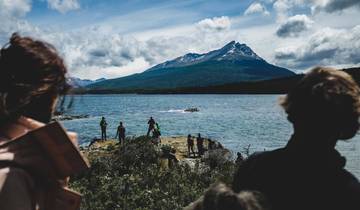
4 days
Ushuaia Explorer: 4-Day Adventure at the End of the World
- ✓ Comprehensive Park Tierra Del Fuego National Park tour
- ✓ Expert local guides included
- ✓ All accommodation arranged
- ✓ Transportation provided
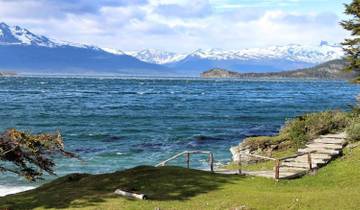
4 days
4-Day Ushuaia Tour
- ✓ Comprehensive Park Tierra Del Fuego National Park tour
- ✓ Expert local guides included
- ✓ All accommodation arranged
- ✓ Transportation provided

4 days
4-Days and 3 Nights Discovery Ushuaia with Airfare from Buenos Aires
- ✓ Comprehensive Park Tierra Del Fuego National Park tour
- ✓ Expert local guides included
- ✓ All accommodation arranged
- ✓ Transportation provided
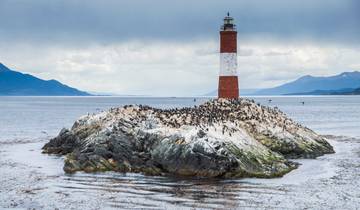
4 days
Patagonia's Final Frontier
- ✓ Comprehensive Park Tierra Del Fuego National Park tour
- ✓ Expert local guides included
- ✓ All accommodation arranged
- ✓ Transportation provided
Multi-day tour packages powered by TourRadar. Prices and availability subject to change.
Essential Planning Information 2026
Current Park Entry Costs and Fees 2026
International visitors pay ARS 8,400 for standard park entry, valid for single-day access to all trails and facilities. Check www.parquesnacionales.gob.ar for current official rates as pricing may vary. Multi-day passes do not exist, requiring new entry fees for each visit day. Payment accepts Argentine pesos cash at entrance gates, with no credit card facilities available. Exchange euros or US dollars in Ushuaia before departure, as the park provides no currency exchange services.
The End of the World Train offers comprehensive packages combining rail experience with park access: Economy Class costs USD 140 including park entry, First Class USD 175, and Premium Carriage USD 220. These packages provide priority park access and return train transport, eliminating separate entry fees. Children 4-12 receive 50% discounts on train packages, while under-4s travel free.
Additional activity fees include camping at Lago Roca (ARS 3,000 per person per night), kayak rentals (USD 80-120 for 2-hour guided tours), and fishing permits (ARS 4,500 for day licenses). Guided nature walks cost USD 40-60 per person for 2-3 hour interpretive hikes, while photography workshops run USD 150-200 for full-day sessions with professional naturalists.
Park Operating Hours and Seasonal Access 2026
Summer season (November-March 2026) operates 8 AM to 8 PM daily, with last trail entry at 6 PM allowing sufficient daylight for safe returns. Winter season (April-October 2026) reduces hours to 9 AM to 4 PM, with 3 PM last entry as daylight ends by 5 PM. The park closes December 25, 2026, and January 1, 2027, for mandatory staff rest days, though the End of the World Train operates on reduced holiday schedules.
Trail accessibility varies seasonally: Coastal Path (Senda Costera), Laguna Verde, and Pampa Alta remain open year-round with winter snowshoe access available. Cerro Guanaco and Hito XXIV close May through September 2026 due to snow depth and avalanche risk. Lago Roca camping operates December-March 2026 only, while other facilities maintain year-round service.
Required Documentation and Entry Requirements 2026
International visitors present valid passports at park entrance gates for registration purposes, though no visa requirements exist for park-specific entry beyond standard Argentine tourism visas. US, Canadian, European, and most Latin American citizens enter Argentina visa-free for tourism up to 90 days, applicable to park visits. Australian and New Zealand passport holders require no advance visas.
Camping permits require advance registration through the Parques Nacionales website 48 hours before arrival, providing emergency contact information and group size details. Fishing licenses demand separate applications through the provincial fishing authority, available online or at Ushuaia tackle shops. No special permits exist for hiking, photography, or day visits to any park area.
Best Time to Visit Tierra del Fuego National Park 2026
Summer Season Analysis December-February 2026
Summer delivers peak conditions with December-January 2026 offering 19 hours of daily sunlight, temperatures reaching 10-15°C, and calm weather systems. Trails remain dry and fully accessible, wildflowers bloom across Pampa Alta meadows, and Beagle Channel waters calm for coastal exploration. Wildlife activity peaks with Magellanic woodpeckers nesting, Andean condors soaring thermal currents, and guanacos grazing lowland valleys.
Peak season brings maximum visitor numbers with 800-1,200 daily visitors during January 2026, requiring early morning starts (8-9 AM arrivals) for parking and uncrowded trails. Accommodation prices reach annual highs with Ushuaia hotels at USD 200-400 nightly, and advance booking essential 2-3 months ahead. Weather remains unpredictable despite summer designation, with sudden rain showers, wind gusts to 60 km/h, and temperature drops to 5°C possible even on sunny mornings.
Summer advantages include all park services operating full schedules, ranger-led programs running daily, and extended daylight allowing ambitious hikers to combine multiple trails. The End of the World Train operates 4 departures daily, restaurants serve full menus, and rental car agencies maintain maximum fleet availability. Photography benefits from long golden hours and wildlife accessibility, though midday harsh light challenges landscape work.
Autumn Shoulder Season March-April 2026
Autumn transforms the park with lenga forest turning brilliant orange-red, creating spectacular photography opportunities and fewer crowds. March 2026 sees visitor numbers drop 60% from summer peaks, offering solitude on popular trails while weather remains relatively stable with temperatures 5-10°C. Early April brings increased rainfall with 12-15 wet days monthly, though precipitation usually arrives as brief showers rather than all-day storms.
Accommodation costs decrease 30-40% compared to summer rates, with Ushuaia hotels at USD 120-250 nightly and last-minute deals common. Tour operators reduce prices for Beagle Channel cruises and guided hikes, making autumn budget-friendly for comprehensive experiences. Public bus frequency decreases to hourly departures, and some restaurants shorten operating hours, though all major services continue.
Trail conditions deteriorate through April 2026 as autumn rains create muddy sections on Coastal Path and Pampa Alta routes. Waterproof hiking boots become essential, and rain gear sees daily use. Daylight reduces to 13 hours by late April, requiring earlier starts for long hikes. Wildlife remains active with birds migrating north and guanacos descending to lower elevations, though nesting activity ends.
Winter Adventure Season June-August 2026
Winter transforms Tierra del Fuego into snow-covered wilderness with unique activities unavailable in warmer months. June-August 2026 brings temperatures -2 to 5°C, snow depths reaching 40-80 cm at higher elevations, and only 7 hours of daylight. Cross-country skiing, snowshoeing, and winter photography attract specialized visitors seeking pristine winter landscapes and complete solitude.
Winter access limits to Coastal Path, Laguna Verde, and lower elevation trails, with ranger-led snowshoe programs operating weekends. The End of the World Train runs reduced schedules with 1-2 daily departures, focusing on winter photography tours. Visitor numbers drop to 50-100 daily, creating exclusive wilderness experiences and guaranteed wildlife sightings on open trails.
Winter rates reach annual lows with Ushuaia accommodation at USD 80-150 nightly and tour operators offering 40-50% discounts on summer prices. Budget visitors save significantly though experience limitations, as many trails close and daylight constraints prevent extensive exploration. Winter specialists prize this season for Aurora Australis viewing possibilities, though sightings remain rare at this latitude.
Spring Transition September-November 2026
Spring brings gradually improving conditions with September 2026 still experiencing winter weather (snow common, temperatures 0-8°C) transitioning to November’s near-summer conditions (10-12°C, 16-hour days). October represents the transition month with unpredictable weather mixing snow, rain, and occasional sunny days. Trail accessibility improves weekly as snow melts, though higher elevation routes remain closed until mid-November.
Spring wildflowers begin blooming in late October through November 2026, with notro (Embothrium coccineum) displaying bright red flowers and alpine meadows awakening. Bird activity increases dramatically as migrants return, with austral parakeets, black-chested buzzard-eagles, and various passerines establishing territories. Wildlife viewing peaks for photography as animals remain active and visible before summer vegetation growth.
Visitor numbers remain low through October 2026, increasing gradually in November as international tourists arrive for summer season. Accommodation rates transition from winter lows to summer highs throughout spring, with October offering best value. Services resume full operations progressively, with restaurants reopening and tour operators expanding schedules weekly through October-November.
Transportation Guide to Tierra del Fuego National Park 2026
Public Transportation from Ushuaia 2026
City buses operated by Líneas B and C provide direct service from Ushuaia downtown to park entrances, departing from Av. Maipú terminal hourly during summer 2026. Route B operates 8 AM to 7 PM with 9 daily departures, while Route C adds afternoon frequency with 6 additional runs. One-way fares cost ARS 2,500 (USD 3-4), with round-trip tickets at ARS 4,000 offering slight savings. Purchase tickets directly from drivers using Argentine pesos cash only.
Journey time runs 45-55 minutes from downtown Ushuaia to park entrance, with buses stopping at major hotels along Av. San Martín before heading west on Route 3. Buses drop passengers at the main park entrance and Ensenada Bay access points, with return pickups every 60-90 minutes throughout operating hours. Winter service (May-September 2026) reduces to 4-5 daily departures with last return at 5 PM.
Bus limitations include no stops at remote trailheads (Lago Roca, Hito XXIV northern access), fixed schedules preventing flexible exploration, and crowding during January-February 2026 peak season. Early morning departures (8-9 AM) fill quickly, requiring 15-20 minute pre-departure arrival for seat guarantee. Luggage space accommodates daypacks only, with large backpacks and camping gear requiring alternative transport.
Private Shuttle and Tour Transportation 2026
Private shuttles from Ushuaia hotels to park entrances cost USD 60-80 per vehicle (1-4 passengers) or USD 100-120 for larger groups (5-8 passengers). Companies like Ushuaia Shuttles and Tierra Austral Transport operate door-to-door service with flexible departure times and customized drop-off points. Book 1-2 days ahead through hotel concierges or online, with payment accepting credit cards and US dollars.
Shuttle advantages include direct hotel pickup eliminating downtown transit, multiple drop-off options at different trailheads, and flexible return timing coordinated via WhatsApp. Drivers provide park maps, current trail condition updates, and recommendations for route planning. Groups of 3-4 find shuttles cost-effective compared to rental cars when considering parking fees and fuel costs.
Tour packages combine transportation with guided experiences, starting at USD 95-140 per person for half-day trips including park entry, guide services, and hotel transfers. Full-day tours with hiking, End of the World Train, and Beagle Channel cruises reach USD 180-250 per person. These packages eliminate transportation logistics and provide expert interpretation, though reduce flexibility for independent exploration.
Rental Car Options and Self-Drive Access 2026
Rental cars provide maximum flexibility for Tierra del Fuego exploration, with compact vehicles costing USD 70-90 daily and SUVs USD 110-140 from Ushuaia agencies. Route 3 from Ushuaia to park entrance covers 12 kilometers of paved highway in excellent condition, requiring no 4WD capabilities. Fuel costs add USD 8-12 daily for typical park visits with 40-60 km total driving. Reserve 2-4 weeks ahead for summer 2026 availability, especially December-January peak demand.
Rental advantages include access to remote trailheads (Lago Roca, Hito XXIV), ability to visit multiple areas in single days, and freedom to adjust plans based on weather and interests. Park provides ample parking at all major trailheads, though main entrance lots fill 10 AM-2 PM during January 2026, requiring patience or earlier arrivals. Evening returns offer empty parking and optimal lighting for photography.
Requirements include international driver’s license or licenses from most countries (US, Canada, EU, Australia accepted), credit card for deposits, and minimum age 21-25 depending on vehicle category. Insurance costs USD 15-25 daily as mandatory coverage, with full CDW reducing deductibles from USD 1,000-2,000 to USD 200-500. Winter driving requires snow experience and appropriate tires (provided by rental companies May-October).
End of the World Train Transportation Integration 2026
The Tren del Fin del Mundo operates dedicated rail service from Ushuaia to Parque Nacional station 2 kilometers inside park boundaries, providing unique combined transportation and attraction. Trains depart Fin del Mundo Station (8 km west of Ushuaia) at 9:30 AM, 12 PM, 3 PM, and 5 PM during summer 2026, with reduced winter schedules of 10 AM and 3 PM departures only.
Train tickets include return journey, park entrance admission, and onboard interpretive guides narrating the route’s history. Economy Class (USD 140) offers standard seating, First Class (USD 175) provides larger seats and complimentary beverages, while Premium Carriage (USD 220) includes private compartments and champagne service. The 50-minute journey each way follows the historic prison railway route through Pipo River valley.
Train passengers arrive at Parque Nacional station with immediate access to Coastal Path and Lapataia Bay trails, though remote areas (Lago Roca, northern trailheads) require additional taxi service from the station. Return trains depart 1-2 hours after arrival, limiting park exploration to 2-3 hours unless purchasing single-way tickets (USD 95-110) and arranging alternative return transport. Combined train-and-hiking packages provide maximum flexibility with open return tickets valid any departure.
Accommodation Strategies Near Tierra del Fuego National Park 2026
Ushuaia Central Base Hotels 2026
Ushuaia downtown provides the widest accommodation range 12 kilometers from park entrance, with hotels, hostels, and apartments serving all budgets. Premium hotels like Arakur Ushuaia (USD 350-500 nightly) offer full-service amenities, spa facilities, and organized park excursions. Mid-range options including Las Hayas Resort (USD 200-280) and Hotel Lennox (USD 180-240) provide comfortable bases with breakfast and concierge services arranging transportation and tours.
Budget hotels and hostels line Av. San Martín and Av. Maipú, with clean doubles at USD 90-140 nightly including breakfast. Antarctica Hostel (USD 35-50 per dorm bed, USD 100-130 private rooms) and Cruz del Sur Hostel (USD 30-45 dorms, USD 90-120 privates) offer social atmospheres and tour booking assistance. All Ushuaia options provide easy public bus access to park, though early departures require taxi service before bus operations begin.
Downtown location advantages include diverse restaurant options, supermarkets for trail provisions, and equipment rental shops. Evening entertainment, laundry services, and medical facilities operate nearby. Winter heating, hot showers, and wifi come standard across all categories. Book 3-6 months ahead for December-February 2026, with last-minute deals common September-November and March-May shoulder seasons.
Budget Camping at Lago Roca 2026
Lago Roca campground inside park boundaries provides the only overnight park accommodation, operating December-March 2026 summer season only. Sites cost ARS 3,000 per person per night (USD 4-5), offering basic facilities including bathrooms, cold showers, covered cooking areas, and potable water. Reserve 1-2 weeks ahead through Parques Nacionales website, with walk-up availability possible weekdays except January peak season.
Camping advantages include sunrise/sunset access to trails, wildlife viewing outside visitor hours, and significant cost savings over Ushuaia accommodation. The 7-kilometer setting from main entrance provides relative solitude, with most day visitors concentrating in coastal areas. Lago Roca trails offer exclusive morning and evening access, when guanacos approach campground areas and bird activity peaks.
Camping requirements include full equipment (tent, sleeping bag rated to -5°C minimum, cooking gear), as no rentals exist at the site. Weather preparedness proves essential with sudden storms, strong winds, and temperature drops to 2-5°C possible on summer nights. No electricity, wifi, or mobile coverage exists at Lago Roca, requiring complete self-sufficiency. Food storage follows bear-safe protocols using designated areas, though puma presence requires vigilance.
Alternative Lodging Outside Ushuaia 2026
Estancias (ranches) near park boundaries offer rural experiences with working farm immersion. Estancia Harberton (40 km east of Ushuaia) and Estancia Moat provide lodging at USD 180-280 per night including meals, with authentic Patagonian hospitality and guided activities. These options require rental cars and add 45-60 minutes driving to park access, though deliver unique cultural experiences.
Vacation rentals through Airbnb and Booking.com provide apartment options in Ushuaia from USD 100-200 nightly for 1-2 bedroom units with kitchens. Self-catering reduces food costs significantly, with apartments along Av. Maipú offering easy public bus access to park. Winter rentals drop to USD 60-120 nightly for comparable units, with monthly discounts available for extended stays.
Nearby towns like Tolhuin (100 km north) offer cheaper accommodation at USD 60-100 nightly but require rental cars and 90-minute park commutes. This strategy suits travelers combining Tierra del Fuego with broader Patagonia exploration rather than park-focused visits. Most international visitors base in Ushuaia for convenience despite higher costs.
Hiking Trail Guide for 2026 Visitors
Coastal Path (Senda Costera) 2026
The 8-kilometer Coastal Path from Ensenada Bay to Lapataia Bay follows the Beagle Channel shoreline through pristine coastal forest, offering the park’s most accessible and rewarding day hike. Trailhead sits 3 kilometers inside park entrance, accessible via all transportation options. The gentle path gains only 60 meters elevation over its length, classified as easy-moderate difficulty suitable for families and all fitness levels. Allow 3-4 hours for the complete one-way journey, with most hikers arranging return transport rather than backtracking.
Trail highlights include panoramic Beagle Channel views toward Chilean islands, ancient lenga forests with trees 200-300 years old, and multiple pristine beaches perfect for extended breaks. Black-browed albatross, Magellanic cormorants, and kelp gulls frequent offshore rocks, while Magellanic woodpeckers and Austral parakeets inhabit forest sections. The path intersects Laguna Verde trail at kilometer 4, allowing loop variations for ambitious hikers.
Best visiting times run early morning (8-10 AM arrivals) for calm conditions and soft light, with afternoon wind gusts to 40-50 km/h common December-February 2026. Winter access requires snowshoes beyond Ensenada Bay with ranger consultation recommended. The trail sees 200-400 daily visitors during January 2026 peak, requiring patience at narrow sections and photo spots. Bring water (no refill points exist), snacks, and layers as coastal exposure creates 3-5°C cooler conditions than forest.
Pampa Alta Loop 2026
Pampa Alta delivers 5-kilometer loop hiking through open peat bog landscapes and panoramic mountain vistas, starting from the park’s main entrance area. The trail climbs 160 meters to reach the pampa plateau, where 360-degree views encompass Beagle Channel, Monte Olivia, and Argentine border peaks. Moderate difficulty reflects steady elevation gain and exposed terrain where wind speeds double forest conditions, requiring 2-3 hours completion time.
Summer wildflower displays (December-February 2026) transform pampa vegetation with orchids, primrose, and cushion plants blooming across the plateau. Guanaco herds frequently graze the open areas, allowing close approach photography opportunities. Andean condors soar thermal currents above the ridge, with patient observers spotting multiple individuals. The exposed location provides premium sunset photography, though return requires headlamps after 8 PM even in December.
Weather vulnerability makes Pampa Alta unsuitable during storms or high winds, with ranger recommendations based on daily forecasts. Winter snow covers the trail November through April, with snowshoe access possible but requiring experience. The loop intersects Cerro Guanaco trail, enabling extension to 8-hour adventures for experienced hikers. Bring wind protection, sun protection (no shade exists), and extra water as exertion increases on uphill sections.
Hito XXIV Border Trail 2026
The Hito XXIV trail provides 10-kilometer out-and-back hiking to the Argentine-Chile border marker, traversing diverse ecosystems from coastal forest to subalpine meadows. Trailhead begins at park’s northern boundary 9 kilometers from main entrance, requiring rental car or shuttle access. Challenging difficulty reflects 280-meter elevation gain, trail roughness, and 5-6 hour duration. This trail rewards adventurous hikers with solitude, as visitor numbers average only 20-40 daily even in peak season.
The route climbs through old-growth lenga forest where Magellanic woodpecker drilling echoes, emerging onto alpine meadows with summer wildflower diversity. Border marker Hito XXIV sits in a scenic saddle with views into Chilean Tierra del Fuego, though no legal crossing exists. The remote setting increases wildlife encounter probability, with red fox and guanaco sightings common, and rare culpeo fox possible.
Trail conditions require hiking boots for rocky sections and stream crossings (2 major, 4-5 minor), with autumn-spring high water complicating passage. Navigation skills help as signage remains minimal compared to coastal trails, though the route follows obvious valley and ridge features. Winter closure extends May through October 2026 due to avalanche danger. Carry emergency supplies including first aid, extra food, and emergency blanket, as help sits 2-3 hours away.
Laguna Esmeralda Via Cañadón del Toro 2026
Though technically outside park boundaries, Laguna Esmeralda connects via the 9-kilometer Cañadón del Toro trail from park’s northeastern access point. The moderate route requires 4-5 hours round trip, rewarding hikers with ethereal turquoise glacial lake beneath towering peaks. Trailhead access requires rental car driving 20 minutes from park entrance via Route 3, with clear signage marking the parking area.
Trail characteristics include 200-meter elevation gain through peat bog terrain requiring waterproof boots year-round. Boardwalks protect fragile bog ecosystems while providing dry passage, though winter snow buries these sections. The lagoon’s vivid color derives from glacial flour suspended in meltwater, creating photographer’s dream conditions during calm mornings. Arrive 8-9 AM for mirror-like reflections before afternoon winds disturb surface.
Winter transformation sees the lagoon freeze completely June-September 2026, creating otherworldly ice formations and brilliant blue hues. Cross-country skiing and snowshoeing replace summer hiking, with local guide companies offering winter tours. Summer crowds reach 100-150 daily visitors in January, requiring early starts for solitude. The glacial valley collects colder air, making this trail 3-5°C cooler than coastal areas, and sudden fog banks reduce visibility within minutes.
Cerro Guanaco Summit Trail 2026
Cerro Guanaco’s summit trail offers the park’s most challenging and rewarding full-day adventure, climbing 970 meters over 16 kilometers round trip to reach 1,150-meter peak elevation. The strenuous trail demands 8-10 hours completion time, excellent fitness, and technical hiking experience. Trailhead begins near Pampa Alta loop, accessible from main entrance area. Winter closure May-October 2026 protects hikers from avalanche danger and extreme weather.
Summit rewards include 360-degree panoramas spanning Beagle Channel, Darwin Range, Chilean Tierra del Fuego, and on exceptional clarity days, Staten Island 100 kilometers southeast. Alpine zone above 800 meters transitions to bare rock and snowfields even in summer, where guanaco herds sometimes graze and Andean condors nest on cliff faces. The dramatic perspective reveals entire park layout, with Lapataia Bay appearing as tiny pocket far below.
Technical requirements include scrambling over boulder fields, navigating steep scree slopes, and managing exposure on final summit approaches. Weather changes rapidly at elevation, with summit conditions often 10-15°C colder and winds 40-60 km/h stronger than base areas. Start 6-7 AM for adequate daylight return, carrying 3 liters water, substantial food, and emergency overnight gear. Only 5-15 hikers attempt this summit weekly even in peak season, guaranteeing wilderness solitude.
Laguna Verde Forest Loop 2026
Laguna Verde provides gentle 2-kilometer loop hiking through old-growth lenga forest surrounding emerald-green glacial lake, perfect for families and less mobile visitors. The easy trail departs from Lapataia Bay area 5 kilometers past main entrance, accessible via all park transportation. Flat terrain and excellent trail maintenance allow completion in 45-60 minutes including photography stops, making this ideal for afternoon half-day visits.
Forest immersion showcases southern beech ecosystems with 600-year-old lenga specimens, abundant mosses and ferns coating forest floor, and coihue trees creating dense canopy. Magellanic woodpeckers, Austral parakeets, and numerous passerine species inhabit these woods, with patient observation revealing constant avian activity. The lagoon’s unusual green color derives from specific mineral content and depth characteristics, photographing beautifully during overcast conditions that eliminate harsh reflections.
Accessibility advantages include minimal elevation change (15 meters total), wide trail suitable for adapted wheelchairs with assistance, and proximity to Lapataia Bay services. Winter access continues year-round with light snowshoe requirements during heavy snow periods. The short distance makes this popular afternoon destination after morning coastal hikes, with visitor numbers reaching 300-400 daily during January 2026. Evening visits (5-7 PM summer) offer solitude as day visitors depart.
Wildlife Viewing Opportunities 2026
Bird Species and Observation Strategies
Tierra del Fuego National Park protects over 90 bird species, with 30-40 commonly observed during typical visits. The star attraction, Magellanic woodpecker (Campephilus magellanicus), represents the world’s largest woodpecker species and inhabits old-growth lenga forests throughout the park. Males display striking red heads and crests, while females show black heads with forward-curving crests. Listen for distinctive loud knocking and look for large rectangular excavations in mature trees. Coastal Path and Laguna Verde offer reliable sightings, especially early morning when feeding activity peaks.
Austral parakeets (Enicognathus ferrugineus) flock in noisy groups of 10-30 individuals, their bright green plumage and chattering calls making them impossible to miss. These endemic parrots feed on lenga seeds and araucaria pine nuts, often allowing close approach as they focus on feeding. Pampa Alta meadows attract numerous raptors including Andean condors, whose 3-meter wingspans create unmistakable silhouettes circling thermal currents. Black-chested buzzard-eagles, chimango caracaras, and southern crested caracaras hunt pampa edges for small mammals.
Waterbirds concentrate along Beagle Channel coastline, with black-browed albatross, southern giant petrels, and kelp gulls visible from Coastal Path. Steamer ducks (Tachyeres species) swim near shore, their unique flightlessness evolved in predator-scarce southern regions. Magellanic oystercatchers probe beaches for invertebrates, while neotropic cormorants and rock shags roost on offshore rocks. Serious birders target September-November 2026 spring migration for maximum species diversity.
Mammal Encounters and Safety Protocols
Guanacos (Lama guanicoe) represent the park’s most prominent mammal species, with 200-300 individuals ranging throughout open areas and forest edges. These wild relatives of llamas stand 1.2 meters tall and display cinnamon-brown coats with white underparts. Pampa Alta and Hito XXIV trails offer guaranteed sightings, with family groups allowing approach to 20-30 meters before alert postures signal discomfort. Males establish territories November-March 2026 breeding season, occasionally displaying aggressive posturing though never attacking humans.
Red fox (Lycalopex culpaeus) and gray fox (Lycalopex griseus) inhabit park territories, with red fox more common in northern sections along Hito XXIV trail. These small canids (5-8 kg) hunt rodents and birds, showing little fear of humans and sometimes approaching camps for food scraps. Never feed foxes or leave food accessible, as habituation creates problematic behaviors. Rare culpeo fox sightings occur in remote valleys, though their larger size (10-14 kg) and shyness make encounters exceptional.
Beavers (Castor canadensis), invasively introduced in 1946, dramatically impact park ecosystems through dam building and forest flooding. Their engineering transforms valleys visible from multiple trails, with 40+ dams documented within park boundaries. Rangers implement active removal programs, though complete eradication appears unlikely. Viewing wild beavers requires dawn/dusk observation near Lago Roca and remote streams, as they remain nocturnal and wary of human presence.
Marine Wildlife from Coastal Trails
Beagle Channel waters support diverse marine mammals visible from Coastal Path vantage points. South American sea lions (Otaria flavescens) haul out on offshore rocks and islands, their barking audible from shore during calm conditions. Males reach 300 kg with distinctive maned necks, while smaller females gather in breeding groups December-February 2026. Binoculars enhance viewing, though mammals often swim within 50-100 meters of shore pursuing fish schools.
Southern elephant seals occasionally appear on park beaches, particularly at remote Lapataia Bay sections where human activity remains minimal. These massive pinnipeds (males to 3,000 kg) molt on beaches September-November 2026, creating impressive if somewhat unnerving encounters. Maintain 50-meter distances as bulls defend territory aggressively. Whale sightings from shore remain rare but possible, with humpback whales migrating through Beagle Channel November-March and occasional orcas pursuing seal prey.
Photography Guide 2026
Optimal Lighting Conditions by Season
Summer’s extended daylight (December-February 2026) creates challenging midday harsh light from 11 AM to 5 PM, though golden hours extend 6-8:30 PM and 5-7 AM providing ideal landscape conditions. The low-latitude sun angle (55° latitude south) produces soft directional light even at noon during shoulder seasons (March-April, September-November 2026), when photographers access beautiful light from 9 AM to 5 PM continuously. Winter’s short days (June-August 2026) compress golden hour into all daylight hours, with blue hour extending 90 minutes before sunrise and after sunset.
Beagle Channel coastline faces north, receiving optimal light during morning hours when sun illuminates water and Chilean mountains across the channel. Coastal Path photography succeeds best 7-11 AM during summer 2026, when calm conditions, soft light, and lower visitor numbers combine. Pampa Alta’s southern exposure favors afternoon light 3-7 PM, when warm tones enhance mountain backdrops and valley shadows create depth.
Weather’s rapid changes create dramatic cloudscapes and variable light conditions within single hours, requiring flexible approach to planned shots. Overcast conditions produce excellent forest photography by eliminating harsh shadows in lenga groves, while partial clouds add interest to otherwise flat blue skies. The park’s western exposure creates spectacular sunset opportunities from elevated viewpoints, though wind typically increases 5-8 PM, complicating long exposures.
Essential Gear and Technical Considerations
Wide-angle lenses (14-35mm full-frame equivalent) prove most versatile for landscape work, capturing expansive Beagle Channel vistas and forest environments. The 24-70mm range handles most situations, while telephoto zooms (70-200mm, 100-400mm) enable wildlife photography and compressed landscape perspectives of distant Chilean peaks. Prime lenses (24mm, 35mm, 50mm) work well for weight-conscious hikers prioritizing specific focal lengths.
Weather protection becomes critical equipment as sudden rain showers arrive without warning throughout all seasons. Pack lens rain covers, waterproof camera bags, and microfiber cloths for cleaning. Moisture from coastal spray and forest humidity condenses on cold glass, requiring frequent wiping during shooting. Spare batteries prove essential as cold temperatures (5-15°C typical) reduce capacity 30-40%, with 3-4 batteries supporting full-day shooting.
Tripods enable long exposures for streaming water effects, golden hour landscapes, and blue hour compositions, though weight considerations matter for strenuous trails. Compact travel tripods support mirrorless systems adequately, while sturdy models handle wind better during exposed pampa photography. Polarizing filters reduce Beagle Channel glare and enhance sky saturation, while neutral density filters allow creative water motion effects in bright conditions.
Composition Strategies for Signature Shots
Coastal Path’s most photogenic location sits 2 kilometers from Ensenada Bay, where ancient lenga trees frame Beagle Channel views toward Isla Redonda and Chilean mountains. Use trees as natural foreground elements with f/11-f/16 aperture creating front-to-back sharpness. Morning light (8-10 AM) sidelights textured bark while illuminating distant peaks. This spot sees heavy use, requiring early arrival or patience as other photographers work their compositions.
Lapataia Bay provides quintessential park panoramas with Route 3’s “End of the Road” sign as iconic foreground element. Wide-angle lenses (14-24mm) capture both sign and bay backdrop, though this composition’s popularity creates cliché risk. Walk 100 meters beyond the sign for unique perspectives incorporating weathered trees and layered mountain ridgelines. Afternoon light (3-6 PM) works best here as western exposure receives optimal illumination.
Pampa Alta summit delivers 360-degree panoramas requiring careful composition to avoid overwhelming complexity. Isolate specific elements (guanaco herds, distant peaks, valley patterns) using telephoto compression rather than attempting to capture everything. The plateau’s windflowers (December-January 2026) add natural foreground interest to otherwise stark landscapes. Sunset compositions from this elevation create spectacular results, though plan return hike timing carefully as darkness arrives quickly post-sunset.
Budget Planning for 2026 Tierra del Fuego Visits
Budget Traveler Daily Costs
Budget-conscious visitors spend USD 50-70 per day excluding accommodation. Park entry ARS 8,400, Ushuaia-park round trip bus ARS 4,000, packed lunch from Ushuaia supermarket USD 8-12, trail snacks USD 5-8, downtown dinner at casual restaurant USD 20-30. Daily water and supplies add USD 5-8. This budget excludes End of the World Train, guided tours, and equipment rentals, focusing on independent hiking and simple meals.
Weekly budget total: USD 350-490 for 7-day visit (excluding accommodation). This supports multiple day trips into park, varied hiking experiences, and basic Ushuaia exploration. Adding Lago Roca camping (ARS 3,000 nightly) reduces accommodation costs to USD 4-5 per night versus USD 90-140 for budget Ushuaia hotels, though requires full camping equipment and transportation rental.
Budget strategies include: grocery shopping at Ushuaia’s La Anónima supermarket for packed meals rather than park/restaurant dining (saves USD 20-30 daily), staying at hostel dormitories (USD 30-50 per night), using public buses exclusively (saves USD 60-100 daily versus taxis), visiting free trail systems rather than paid attractions, and cooking hostel meals (breakfast USD 3-5 homemade versus USD 15-20 at cafés).
Mid-Range Traveler Daily Costs
Mid-range visitors spend USD 120-180 per day excluding accommodation. Park entry ARS 8,400, private shuttle round trip USD 80 (shared among 3-4 people), café breakfast USD 15-20, packed lunch from quality deli USD 18-25, trail snacks USD 10-15, restaurant dinner USD 40-60. Adding End of the World Train Economy Class creates USD 260-300 day total for comprehensive experience.
Weekly budget total: USD 840-1,260 for 7 days (excluding accommodation). This supports comfortable exploration mixing independent hiking with one organized tour or train experience, quality dining, and flexible transportation. Mid-range hotels (USD 180-240 nightly) combined with this daily spending creates USD 2,100-2,940 total week expense.
Mid-range strategies include: mixing public buses (USD 4 round trip) with occasional shuttles (USD 80) for flexibility, alternating restaurant meals with grocery picnics, booking one premium experience (train ride, guided kayak tour) while keeping other days self-guided, and staying at 3-star hotels with breakfast included for meal cost savings.
Luxury Traveler Daily Costs
Luxury visitors spend USD 300-500+ per day excluding accommodation. Private guide and transportation USD 200-350, End of the World Train Premium Carriage USD 220, gourmet restaurant dinner USD 80-120, premium café meals USD 60-90 total, photography workshop or private naturalist guide USD 150-250. Helicopter flightseeing over park adds USD 400-600 for spectacular aerial perspectives.
Weekly budget total: USD 2,100-3,500+ for 7 days (excluding accommodation). This delivers comprehensive high-end experience with expert interpretation, exclusive access, and premium comfort throughout. Five-star hotels like Arakur Ushuaia (USD 350-500 nightly) create USD 4,550-7,000+ total week expense.
Luxury strategies include: booking private guides for personalized interpretation and access, using hotel concierges for seamless logistics, choosing First Class train tickets for enhanced experience, arranging helicopter or small aircraft tours, and dining at top Ushuaia restaurants like Kaupé or Chez Manu for world-class cuisine.
Sample 2026 Itineraries
One-Day Express Park Visit
Morning: Depart Ushuaia 8 AM on public bus, arrive park 9 AM. Begin Coastal Path hike from Ensenada Bay, enjoying channel views and lenga forest. Reach Laguna Verde intersection by 11 AM for quick loop addition. Continue Coastal Path to Lapataia Bay, arriving 12:30 PM. Visit Route 3 southern terminus and End of the Road sign for iconic photos.
Lunch: Packed sandwiches from Ushuaia supermarkets at Lapataia Bay picnic area, ARS 2,500-3,500 for quality provisions. Explore bay shoreline and visitor center exhibits.
Afternoon: Return via Pampa Alta loop trail for different perspectives and mountain views, 2-hour hike. Catch 5 PM public bus return to Ushuaia, arriving 6 PM.
Costs: Park entry ARS 8,400, bus round trip ARS 4,000, packed lunch ARS 3,000, snacks ARS 2,000. Total day cost: ARS 17,400 (USD 20-25) per person excluding accommodation.
Two-Day Comprehensive Park Experience
Day 1 Morning: End of the World Train 9:30 AM departure Economy Class USD 140, arriving Parque Nacional station 10:30 AM. Begin Coastal Path hike south toward Lapataia Bay. Pack lunch provided by hotel or purchased Ushuaia cafés USD 18-25.
Day 1 Afternoon: Complete Coastal Path, explore Lapataia Bay area. Return via 3 PM train departure, arriving Ushuaia 4 PM. Evening: restaurant dinner downtown USD 40-60.
Day 1 Costs: Train ticket USD 140 (includes park entry), packed lunch USD 20, dinner USD 50, evening supplies USD 8. Total: USD 218 per person.
Day 2 Morning: Rental car pickup 8 AM (USD 85 daily including insurance), drive to Hito XXIV trailhead. Full-day challenging hike to border marker, packed breakfast and lunch from Ushuaia supermarket USD 15-20.
Day 2 Afternoon: Complete Hito XXIV trail return by 4 PM. Drive to Lago Roca area for evening exploration. Dinner at Parrilla Don Pichon en route to Ushuaia USD 45-65.
Day 2 Costs: Rental car USD 85, fuel USD 12, packed meals USD 18, dinner USD 55. Total: USD 170 per person.
Two-day total: USD 388 per person (excluding accommodation). Accommodation for two nights: budget USD 60-100, mid-range USD 360-480, luxury USD 700-1,000.
Three-Day Ultimate Park Immersion
Day 1: End of the World Train First Class USD 175, Coastal Path hike, Lapataia exploration. Café lunch at Parque Nacional station USD 25-35, evening restaurant dinner USD 50-70. Day cost: USD 260 excluding accommodation.
Day 2: Rental car (USD 85), Cerro Guanaco summit attempt (full day), packed meals USD 20. Late afternoon drive to Lago Roca camping setup, bringing all supplies from Ushuaia. Camping fee ARS 3,000. Day cost: USD 110 plus camping USD 4.
Day 3: Morning Lago Roca trails and guanaco viewing. Break camp 11 AM, drive to Cañadón del Toro trailhead for Laguna Esmeralda afternoon hike. Return rental car 6 PM. Packed lunch and snacks USD 15-20. Farewell dinner at La Cabaña Casa de Té USD 60-80. Day cost: USD 85 excluding accommodation.
Three-day total: USD 459 per person (excluding first two nights accommodation, including camping night three). Accommodation for two nights: budget USD 60-100, mid-range USD 360-480, luxury USD 700-1,000. Total comprehensive trip: budget USD 519-559, mid-range USD 819-939, luxury USD 1,159-1,459.
Practical Tips for 2026 Visitors
Weather Preparedness and Layering Systems
Tierra del Fuego’s maritime sub-Antarctic climate creates unpredictable conditions requiring prepared layering systems. Base layers include synthetic or merino wool for moisture management, as cotton proves dangerous when wet and slow-drying. Mid-layers add fleece or synthetic insulation (200-weight fleece or equivalent), while shell layers provide waterproof-breathable protection against rain and wind. This three-layer system adapts to rapidly changing conditions encountered on single hikes.
Essential clothing includes: waterproof rain jacket (critical year-round), rain pants (protect legs during prolonged wet weather), insulating jacket (puffy or synthetic for stops and camps), warm hat and gloves (even summer nights reach 5°C), sun hat and sunglasses (UV intensity high at this latitude), and hiking boots (waterproof, ankle support, broken-in before arrival). Pack spare dry socks as foot comfort determines hiking enjoyment.
Weather forecasting remains approximate with sudden changes common, though general patterns provide guidance: morning often starts clear with afternoon clouds building, wind increases through afternoon reaching peak 4-6 PM, and evening sometimes clears again for sunset viewing. Check conditions at park entrance rangers for current forecasts and trail condition updates, as microclimate variations create significantly different weather between coastal and mountain areas.
Safety Protocols and Emergency Preparedness
Trail safety begins with informing others of hiking plans, departure times, and expected returns. Park entrance rangers maintain registration books for remote trails (Hito XXIV, Cerro Guanaco) though don’t require signatures for shorter routes. Carrying identification, park maps, and emergency contact information proves critical if assistance becomes necessary. Mobile coverage reaches coastal areas and main trailheads but disappears in valleys and remote zones.
Emergency essentials include first aid kit with blister treatment, pain relievers, bandages, and any personal medications, plus emergency shelter (space blanket or bivy), fire-starting materials, headlamp with spare batteries, whistle for signaling, and extra food and water beyond planned needs. Weather changes force unexpected delays or route modifications, requiring surplus supplies for safety margins.
Wildlife safety protocols emphasize distance maintenance: approach no closer than 50 meters to guanacos, 30 meters to foxes, and 100 meters to sea lions. Never feed wildlife or leave food accessible, as habituation creates dangerous situations for future visitors. Puma presence remains rare but possible, requiring awareness in remote valleys though attacks on humans remain unknown in park history. Make noise while hiking to avoid surprising animals, and back away slowly if encountering nervous or aggressive wildlife behavior.
Leave No Trace and Conservation Ethics
Tierra del Fuego’s fragile sub-Antarctic ecosystems recover slowly from disturbance, requiring careful visitor practices. Stay on designated trails always, as off-trail walking crushes fragile vegetation requiring decades to recover. The peat bog ecosystems throughout the park prove especially vulnerable to foot traffic damage, with boardwalks protecting these areas while allowing passage. Never shortcut switchbacks or create new paths, as erosion follows immediately.
Waste management follows pack-it-in-pack-it-out principles for all trash including organic waste like apple cores and orange peels, which decompose slowly in cold climates and attract habituated wildlife. Toilet facilities exist at major trailheads and visitor centers, while remote areas require digging catholes 15 cm deep, 70 meters from water sources, and packing out toilet paper. Biodegradable soap proves harmful to aquatic ecosystems, requiring no soap use for washing near streams or lakes.
Photography ethics respect wildlife stress limits, maintaining appropriate distances and avoiding behavior interruption. Nesting birds require particular caution, with disturbance potentially causing nest abandonment. Drone operation remains prohibited throughout the park without special permits, as aerial disturbance affects wildlife behavior significantly. Take only photographs, leave only footprints on designated trails, and inspire others through respectful behavior modeling.
Booking and Reservations for 2026 Season
Official Park Booking Channels
Tierra del Fuego National Park requires no advance entry reservations for general visitors, with walk-up access available daily during operating hours. Purchase park entry tickets at entrance gates using Argentine peso cash only, as credit cards and foreign currencies don’t work at these locations. Exchange money in Ushuaia before park visits, with sufficient pesos for entry fees plus contingency amounts for other expenses.
Lago Roca camping requires advance reservation through the Administración de Parques Nacionales website (www.parquesnacionales.gob.ar), operating 48 hours to 60 days ahead booking window. Create account, select dates, and complete payment via Argentine bank transfer or credit card (additional processing fees apply). Print confirmation and present at camping office upon arrival, as digital copies sometimes face scanning issues at remote locations.
Rangers provide trail condition updates, weather forecasts, and safety briefings at entrance stations and visitor centers. Hito XXIV and Cerro Guanaco hikers should consult rangers before departure for current information on stream crossings, snow conditions, and wildlife activity. These interactions remain free and highly valuable for trip planning.
End of the World Train Reservations
The Tren del Fin del Mundo requires advance booking through the official website (www.trendelfindelmundo.com.ar) 2-4 weeks ahead during December-February 2026 peak season. Economy Class tickets usually remain available 1-2 weeks before, but First Class and Premium Carriage options sell out 3-4 weeks ahead during January. Off-season (March-November 2026) allows last-minute bookings, often with discounts for online advance purchase.
Booking process requires selecting date, departure time (9:30 AM, 12 PM, 3 PM, or 5 PM summer; 10 AM and 3 PM winter), and carriage class. Payment accepts international credit cards, with tickets delivered via email PDF requiring printing or mobile display. Exchange or refund policies prove restrictive, with cancellations requiring 48-hour notice for 50% refund, and weather cancellations by train operator providing full refunds.
Combined train-and-tour packages through Ushuaia operators sometimes provide better value, bundling transportation, park entry, train tickets, and guided experiences at USD 180-250 per person versus USD 140-220 for train only. These packages eliminate logistics coordination though reduce flexibility, requiring group schedule adherence.
Tour Operator Recommendations
Ushuaia-based tour operators provide comprehensive park experiences combining transportation, guides, and activities. Reputable companies include Canal Fun & Nature (specialized kayaking and wildlife tours), Rumbo Sur (premium guided hiking experiences), and Tierra Turismo (general park tours). These operators maintain excellent safety records, experienced guides, and equipment quality standards exceeding budget alternatives.
Book tours 1-2 weeks ahead for December-February 2026 peak season, with last-minute availability common March-November. Most operators accept online booking through websites or email contact, with payment via credit card or PayPal. Prices include all park fees, transportation, guide services, and specified activities, with lunch sometimes included (verify before booking). Group sizes run 8-15 participants for standard tours, with private options available at premium pricing.
Tour advantages include expert interpretation enhancing understanding and enjoyment, logistics management eliminating planning stress, access to specialized activities like kayaking requiring equipment and training, and social atmosphere for solo travelers seeking companions. Independent visitors appreciate autonomy and flexibility, while tours deliver value through efficiency and expertise, especially for limited-time visitors maximizing single-day experiences.
2026 Updates & Current Information
Infrastructure Improvements Completed 2025-2026
Recent improvements include Coastal Path bridge replacements and reinforcement work completed October 2025, eliminating previous stream-crossing challenges and improving all-weather accessibility. New boardwalk sections protect sensitive peat bog areas while providing easier passage on Pampa Alta approaches. These upgrades enhance safety and reduce environmental impact from foot traffic.
Lapataia Bay visitor center underwent expansion during 2025 winter closure, adding improved bathroom facilities, expanded interpretive exhibits with English translations, and covered outdoor spaces for poor weather conditions. The enhanced facilities serve increasing visitor numbers while maintaining park’s conservation focus. New ranger station at Lago Roca provides improved emergency response capabilities for remote area visitors.
Mobile connectivity expanded along Route 3 park corridor, with reliable coverage now reaching Lapataia Bay and main trailheads. Deep wilderness areas remain without coverage by design, preserving remote wilderness character. The improved connectivity benefits emergency communications while allowing visitors to stay connected during park visits.
Environmental Conditions and Climate Patterns 2026
Climate data indicates continued warming trends affecting visitation patterns and ecosystem dynamics. 2026 projections suggest slightly warmer-than-average summer temperatures (1-2°C above historical means), potentially extending the optimal hiking season into early April. Rainfall patterns remain consistent with historical norms, though increased variability creates more dramatic storm events interspersed with clear periods.
Beaver impacts continue reshaping park valleys, with dam removal programs maintaining 15-20 removal actions annually. Visitors witness both beaver engineering achievements and habitat restoration efforts, providing interesting ecological education about invasive species management challenges. Reforestation projects following dam removals show promising recovery in several valleys.
Wildlife populations remain stable with guanaco numbers consistent at 200-300 individuals, bird populations showing healthy diversity, and marine mammal sightings maintaining expected frequency. The park’s protected status ensures these ecosystems continue providing exceptional wildlife viewing opportunities for generations ahead.
Frequently Asked Questions
Is Tierra del Fuego National Park worth visiting in 2026?
Absolutely. The park delivers exceptional value through accessible wilderness, diverse hiking options for all abilities, unique sub-Antarctic ecosystems, reliable wildlife viewing, and stunning Beagle Channel scenery. Visitors seeking pristine nature experiences within easy reach of comfortable Ushuaia lodging find this park offers unmatched combination of adventure and convenience. The relatively compact area allows comprehensive exploration in 1-3 days, fitting various travel schedules and budgets.
How many days should you spend in Tierra del Fuego National Park?
Two full days provide ideal balance for most visitors, allowing one day exploring Coastal Path and Lapataia Bay areas, plus a second day attempting Cerro Guanaco or Hito XXIV trails. Single-day visits work for those on tight schedules, covering 1-2 shorter trails effectively. Three or more days suit serious hikers wanting comprehensive trail coverage, camping experiences, and unhurried wildlife observation. Match duration to fitness level and hiking ambitions.
Can you visit Tierra del Fuego National Park with children?
Yes, families enjoy excellent experiences on shorter, easier trails. Laguna Verde loop provides gentle 45-minute walk suitable for young children, while Coastal Path accommodates older children comfortable with 3-4 hour hikes. The End of the World Train offers engaging transportation and activity for kids unable to hike extensively. Beaches at Lapataia Bay allow rest breaks and exploration. Plan conservative distances, bring extra snacks, and maintain flexible schedules accommodating children’s energy levels and attention spans.
What wildlife can you see at Tierra del Fuego National Park?
Guaranteed sightings include guanacos grazing Pampa Alta, Magellanic woodpeckers in forests, Austral parakeets everywhere, and various seabirds along coasts. Highly probable encounters feature Andean condors circling ridges, red foxes hunting meadows, and South American sea lions offshore. Occasional sightings include beavers at dawn/dusk, southern elephant seals on remote beaches, and multiple raptor species. The park’s wildlife viewing succeeds reliably due to healthy populations and accessible viewing locations.
Do you need a guide for Tierra del Fuego National Park?
Guides enhance experiences through expert interpretation and logistics support but aren’t required for safe, enjoyable visits. All main trails feature excellent signage, clear routes, and regular ranger patrols. Solo hikers and independent groups navigate successfully using park maps and basic outdoor skills. Consider guides for specialized activities (kayaking, photography workshops), enhanced wildlife identification, cultural and historical interpretation, or personal preference for supported experiences.
What should you pack for Tierra del Fuego National Park in 2026?
Essential packing includes waterproof rain jacket and pants, warm layers (fleece or synthetic insulation), hiking boots (waterproof, broken-in), sun protection (hat, sunglasses, sunscreen), first aid kit, plenty of water (1-2 liters minimum), trail snacks and lunch, headlamp or flashlight, navigation tools (maps, compass), and emergency supplies (space blanket, fire-starting materials). Optional items: trekking poles for knee support, camera gear, binoculars for wildlife viewing, and thermos for hot beverages during breaks.
How difficult is hiking in Tierra del Fuego National Park?
Difficulty ranges dramatically across trail options. Easy trails (Laguna Verde, portions of Coastal Path) suit all fitness levels with gentle terrain and short distances. Moderate trails (Pampa Alta, full Coastal Path) require average fitness for 2-4 hour hikes with modest elevation gain. Challenging trails (Hito XXIV, Cerro Guanaco) demand excellent fitness, experience, and 5-10 hour commitments with significant elevation gain. Choose trails matching fitness level and experience honestly, as overambitious attempts create safety risks and reduced enjoyment.
Can you see the Beagle Channel from Tierra del Fuego National Park?
Absolutely. The Coastal Path follows Beagle Channel shoreline for 8 kilometers, providing continuous spectacular views. Pampa Alta overlook shows panoramic channel perspectives, while Lapataia Bay offers intimate shoreline access. Clear days reveal Chilean islands and mountains across the channel, while even cloudy conditions showcase the dramatic seascape. Channel views represent primary park attractions, with multiple trails specifically designed for waterfront experiences.
Is Tierra del Fuego National Park crowded in 2026?
January sees peak crowding with 800-1,200 daily visitors, creating traffic on Coastal Path and parking challenges at popular trailheads. December and February experience moderate crowds (400-600 daily visitors) still requiring early arrivals for optimal experiences. March-November sees light traffic (100-300 daily visitors), providing solitude on all trails except immediate surroundings of End of the World Train station. Winter months (June-August) deliver near-complete solitude with 50-100 daily visitors park-wide. Timing visits for early morning or off-season dramatically improves crowd avoidance.
What’s the best hike in Tierra del Fuego National Park for 2026 first-time visitors?
Coastal Path from Ensenada Bay to Lapataia Bay delivers quintessential park experience combining moderate challenge, stunning scenery, diverse ecosystems, and reliable wildlife. The 8-kilometer route requires 3-4 hours, suits most fitness levels, and showcases Beagle Channel views, ancient forests, and pristine beaches. This trail provides the perfect introduction to park landscapes while accessing multiple photo opportunities and rest stops. First-timers consistently rate Coastal Path as highlight experience, making it the recommended priority for single-day visits.