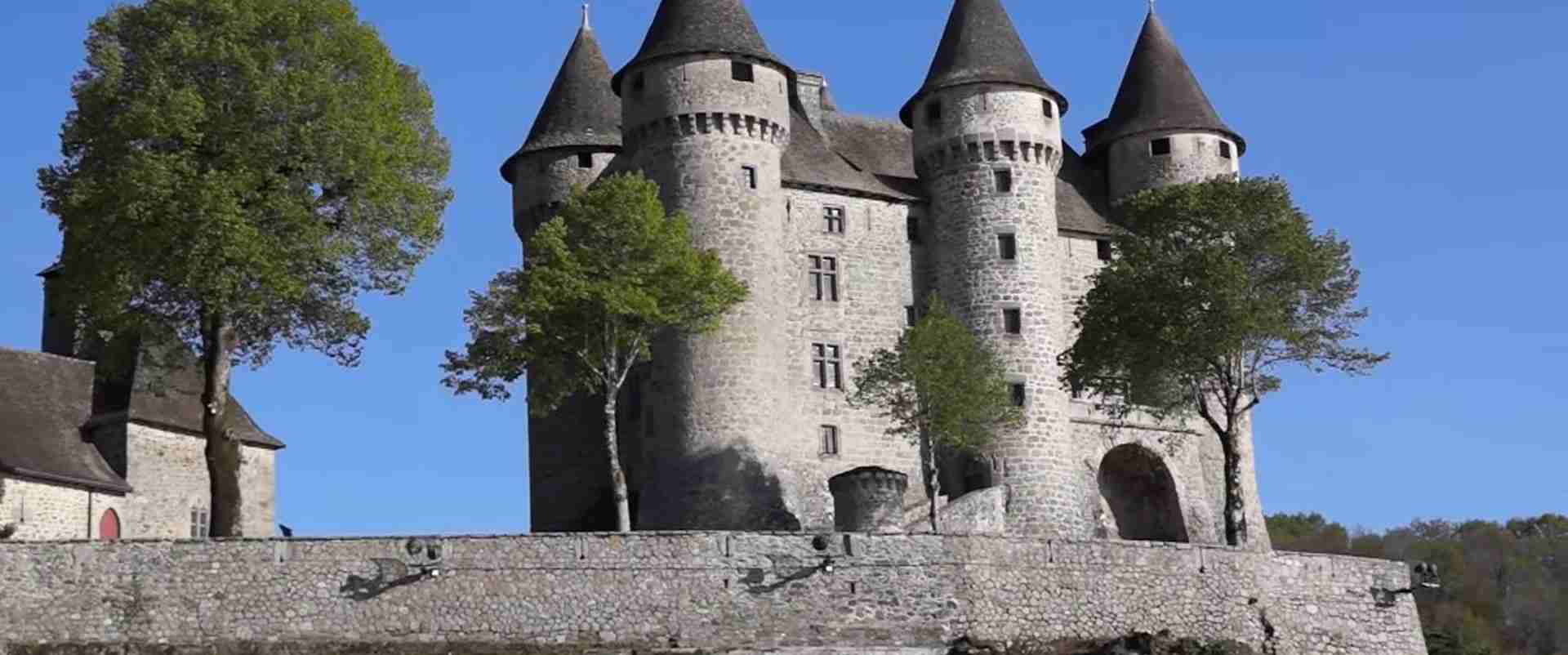
The Volcanic Peaks Off the Beaten Path 2026: A Curated Road Trip Through Auvergne’s Romanesque Heartland
Auvergne stands apart from France’s better-trafficked tourist corridors — a landscape where dormant volcanoes rise above medieval abbeys, where dark lava stone forms the walls of extraordinary Romanesque churches, and where the most spectacular drives in central France remain virtually unknown beyond the country’s borders. This road trip guide for 2026 traces a week-long circuit connecting the UNESCO-listed Chaîne des Puys, the sacred summit of Puy de Dôme, five major Romanesque masterpieces, and a succession of hidden peaks and lesser-visited churches that reveal the true depth of Auvergne’s volcanic and medieval inheritance.
Key Takeaways for the 2026 Auvergne Volcanic Road Trip
- The Chaîne des Puys is a UNESCO World Heritage Site inscribed on 2 July 2018 under natural criterion (viii), protecting 80 aligned volcanoes across 24,223 hectares west of Clermont-Ferrand. The Panoramique des Dômes rack railway reaches the summit of Puy de Dôme (1,465 m) at €17.20-18.60 adult round trip in 2026, with advance online booking essential in July and August.
- The Five Major Romanesque Churches of Auvergne — Notre-Dame du Port (Clermont-Ferrand), Notre-Dame d’Orcival, Notre-Dame de Saint-Nectaire, Notre-Dame de Saint-Saturnin, and Saint-Austremoine d’Issoire — are all free to enter and collectively form one of Europe’s greatest concentrations of Romanesque architecture, every one reachable within 40 kilometres of Clermont-Ferrand.
- Budget travellers need €65-100 per person per day in 2026 (two sharing budget accommodation), mid-range travellers budget €110-170, and luxury visitors plan for €210-320 per person per day — all figures include accommodation per person, shared car costs, meals, and attraction admissions.
- A seven-day road trip through the volcanic heartland costs approximately €455-700 per person for budget travel, €770-1,190 for mid-range comfort, and €1,470-2,240 for luxury, inclusive of all costs for two people sharing car and accommodation throughout.
- Critical 2026 planning note: the Téléphérique du Sancy closes for maintenance from 31 August 2026 through Christmas 2026. Anyone planning to ascend Puy de Sancy (1,885 m, highest point of the Massif Central) by cable car must schedule this visit before 31 August. The summit remains accessible on foot outside this window for fit walkers.
- The road trip circuit covers approximately 450 kilometres across seven days through the Puy-de-Dôme and Cantal departments, running almost exclusively on scenic D-roads through the Parc Naturel Régional des Volcans d’Auvergne — the largest regional nature park in France — with minimal toll costs and no urban congestion.
People Also Ask About the Auvergne Volcanic Road Trip 2026
How much does a road trip through Auvergne cost per person per day in 2026?
A road trip through Auvergne costs €65-100 per person per day for budget travellers sharing a budget hotel or gîte (two adults sharing), €110-170 per person per day for mid-range travellers in comfortable three-star hotels, and €210-320 per person per day for luxury experiences including château hotels and fine dining. All figures incorporate accommodation per person (two sharing), shared car hire and fuel, meals, and attraction admissions. A full seven-day circuit runs €455-700 per person at budget level, €770-1,190 at mid-range, and €1,470-2,240 at luxury. Auvergne is substantially less expensive than Paris, the Atlantic coast, or Provence, with provincial dining prices and affordable accommodation representing exceptional value for a region of this cultural and scenic calibre.
Which volcanic peaks are worth visiting off the beaten path in Auvergne in 2026?
Beyond the iconic Puy de Dôme, five volcanic landmarks reward independent travellers in 2026. Puy Pariou offers a free 45-minute hike to a perfectly preserved explosion crater with panoramic views across the entire Chaîne des Puys. Puy de la Vache and Puy de Lassolas form a dramatic Holocene lava field traceable for 15 kilometres, accessible via a free circular trail from the D941. Lac Pavin near Besse-et-Saint-Anastaise is Europe’s most recently formed volcanic lake — a near-perfect circular maare at 1,197 metres with a free lakeside circuit walk. Puy Mary (1,787 m) in the Cantal requires only a 30-minute ascent from the Pas de Peyrol car park (parking €5/day) for extraordinary views over Europe’s largest extinct stratovolcano. The Téléphérique du Sancy (€20 adult round trip) reaches 1,790 m on Puy de Sancy, but closes from 31 August 2026 for maintenance.
When is the best time for the 2026 Auvergne road trip?
May, June, and September are the optimum windows. Wildflower meadows blanket the volcanic slopes by late May and June; temperatures remain comfortable for both driving and hiking; all principal attractions operate at full capacity with lower visitor numbers than July and August. September offers exceptional lateral light for photographing the Romanesque chevets and autumn colour on the Sancy beech forests, though the Téléphérique du Sancy closes on 31 August 2026 for annual maintenance — making late August the last date for cable car access to Puy de Sancy before Christmas. July and August deliver the longest opening hours and evening events at Puy de Dôme (Thursday nocturnes until midnight), but require accommodation bookings six or more weeks in advance in the Cantal and Monts Dore.
Which Romanesque churches in Auvergne are most worth visiting in 2026?
The five canonical churches of the regional school — Notre-Dame du Port (Clermont-Ferrand), Notre-Dame d’Orcival, Notre-Dame de Saint-Nectaire, Notre-Dame de Saint-Saturnin, and Saint-Austremoine d’Issoire — are all free to enter and represent the apex of the Auvergne Romanesque style. Beyond these, the Basilique Saint-Julien in Brioude is the largest Romanesque church in Auvergne and justifies a detour south. Lavaudieu preserves the only surviving Romanesque cloister in Auvergne within one of France’s most beautiful villages. The abbey church of Mozac near Riom houses capitals that specialists rank among the finest in European Romanesque. The Sainte-Chapelle and Notre-Dame du Marthuret in Riom round out a northern cluster that is consistently overlooked by visitors focused solely on the canonical five.
Extended multi-day tours – 5+ days
Featured Rhone Multi-Day Tour Packages
8 days
Rhône Route Provence 2027 – A-Rosa Stella
- ✓ Comprehensive Rhone tour
- ✓ Expert local guides included
- ✓ All accommodation arranged
- ✓ Transportation provided
7 days
Rhone Discovery Tour
- ✓ Comprehensive Rhone tour
- ✓ Expert local guides included
- ✓ All accommodation arranged
- ✓ Transportation provided

6 days
Rhône Route Rendez-Vous 2026
- ✓ Comprehensive Rhone tour
- ✓ Expert local guides included
- ✓ All accommodation arranged
- ✓ Transportation provided

11 days
Sensations of Lyon and Provence & Nice 2026|2027 – 11 Days
- ✓ Comprehensive Rhone tour
- ✓ Expert local guides included
- ✓ All accommodation arranged
- ✓ Transportation provided
Multi-day tour packages powered by TourRadar. Prices and availability subject to change.
Introduction: Auvergne’s Twin Heritage — Fire Beneath and Stone Above
France has no region quite like Auvergne. Occupying the southern portion of the Massif Central, the historical provinces of the Auvergne sit atop one of Europe’s most geologically active landscapes of the Quaternary period — a terrain shaped and reshaped by volcanic eruptions spanning from 95,000 years ago to as recently as 4,040 BCE. The last eruption of the Chaîne des Puys left behind a chain of 80 young volcanoes that have not had time to erode into the shapeless mounds that mark older volcanic regions; they retain their cinder cones, lava domes, explosion craters, and maars with startling clarity, rising above a plateau of ancient granite in a procession that stretches 40 kilometres north to south west of Clermont-Ferrand.
The medieval church builders of Auvergne worked in the material this landscape provided. The dark andésite lava stone and lighter volcanic tuff drawn from the same geological formations gave the Romanesque churches of the region their characteristic colouring — alternating courses of grey-black and pale yellow stone that produce the polychrome banding unique to the Auvergne school. The churches built between the late eleventh and mid-twelfth centuries represent one of Europe’s most coherent and brilliant regional architectural traditions, with a distinctive chevet design — the layered apsidal composition viewed from the east — that is instantly recognisable and never more beautiful than when seen in the particular light of an Auvergne June afternoon.
What makes this road trip exceptional is the coincidence of these two heritages in a compact, accessible, and largely undiscovered territory. The Chaîne des Puys UNESCO site and the five major Romanesque churches are all within 40 kilometres of Clermont-Ferrand. The Monts Dore and their thermal valleys extend the circuit one hour south. The Cantal massif, the greatest extinct volcano on the European continent by surface area, pushes the route further south and west into sweeping upland meadows, lava plateaux, and medieval hill towns whose stone architecture looks directly onto volcanic peaks. This guide outlines a seven-day road trip that connects the region’s volcanic summits, Romanesque masterpieces, and hidden discoveries in a loop requiring nothing beyond a rented car, a readiness to navigate the D-roads, and an appetite for landscapes that reward the patient traveller in ways that no motorway corridor can replicate.
The logistical case for Auvergne in 2026 is compelling. The region receives a fraction of the international visitor traffic commanded by Provence, Brittany, or the Loire Valley, with the result that the hotels are cheaper, the sites are uncrowded, the food markets are unperformed, and the Romanesque churches are open without timed entry or advance booking. Clermont-Ferrand connects to Paris by TGV in under three hours and to Lyon in under two. The rental car network at Clermont-Ferrand airport is comprehensive. The circuit described here is executable in seven days with thoughtful driving, or leisurely in ten days with room for extended walks and unhurried lunches. No section of the route requires motorway driving; the D-roads of the Puy-de-Dôme and Cantal are in good condition, well-signposted, and among the most beautiful departmental roads in France.
The Chaîne des Puys UNESCO Tectonic Arena: Understanding the Volcanic Landscape
The Chaîne des Puys-Limagne fault tectonic arena achieved UNESCO World Heritage status on 2 July 2018, inscribed under natural criterion (viii) as an exceptional illustration of continental rifting — one of the five fundamental stages of plate tectonics. The property encompasses 24,223 hectares with a 16,307-hectare buffer zone and constitutes a natural scale model demonstrating how continental crust fractures, collapses, and allows deep magma to rise toward the surface. The site was the result of an inscription process launched in January 2007 by the Conseil Départemental du Puy-de-Dôme, with the University of Clermont-Ferrand providing the scientific case and the Parc Naturel Régional des Volcans d’Auvergne managing the site. The inscription was ratified at the 42nd World Heritage Committee session in Bahrain.
The designated property incorporates three distinct geological components that together narrate the story of continental rifting. The Limagne fault forms the long normal border fault of a collapsed rift valley (graben), visible as the escarpment separating the volcanic plateau from the agricultural plain below. The Chaîne des Puys itself occupies the shoulder of this graben — 80 volcanoes aligned on the Plateau des Dômes, formed between approximately 95,000 and 6,000 years ago. The third component, the Montagne de la Serre, demonstrates relief inversion: erosion has stripped away softer surrounding rock to expose a resistant Pliocene lava flow, now standing as a ridge where a depression once existed. The interplay between fault, volcanic alignment, and inverted relief is what makes the property unique as a teaching tool: nowhere else in the world is the relationship between these three tectonic phenomena so spatially compressed and visually legible.
The geological significance of the site extends beyond its scenic impact. The Chaîne des Puys belongs to the West European Rift, the same tectonic feature responsible for the Rhine Valley graben and related to the formation of the Alps some 35 million years ago. The volcanic alignment is so young that the 80 individual puys retain their morphological distinctiveness. Cinder cones (Puy de la Vache, Puy de Lassolas), lava domes (Puy de Dôme, Puy Chopine), tuff rings, and maars (Gour de Tazenat, Lake Pavin, Lake Aydat) each appear as clearly distinct volcanic landforms rather than merged erosional profiles. The most recent eruption, the Lac Pavin maar, occurred approximately 4,040 BCE, placing the Chaîne des Puys within the geologically negligible timeframe of post-Mesolithic human habitation — a point that makes the volcanic landscape feel less like a geological relic and more like a sleeping giant.
The practical implication for road trip visitors is a landscape of extraordinary variety within a compact area. From the summit of Puy de Dôme on a clear morning, the full extent of the chain — 80 puys arrayed in a textbook illustration of volcanic morphological diversity — is visible in a single panoramic sweep. The Limagne plain extends eastward toward the distant wall of the Forez massif. Northwest, the older Monts Dômes transition toward the Combrailles. Southward the chain descends toward the Monts Dore. No other site in Europe makes continental geology this legible from a single vantage point, and no other UNESCO Natural Heritage site in France delivers this immediate synthesis of science, landscape, and walking opportunity within fifteen minutes of a major city.
Puy de Dôme 2026: Conquering the Sacred Summit of the Chaîne des Puys
The Puy de Dôme (1,465 m) is the highest point of the Chaîne des Puys proper — a trachytic lava dome that rises 500 metres above the surrounding plateau in a near-perfect dome profile and has been a site of religious veneration since at least the Gallic period. The Panoramique des Dômes rack railway, inaugurated in 2012, carries up to 400 passengers per journey to the summit in 15 minutes. In 2026, adult round-trip tickets are priced at €17.20-18.60 depending on the time of year and whether the booking is made online or at the gate; the child rate for ages 4-14 runs €10.10-11.70 round trip; family passes (2 adults + 2 children) cost €49.90. Advance online booking at panoramiquedesdomes.fr is essential in July and August, when the 9 AM first departure sells out before mid-morning. The 2026 operational schedule runs: daily from 28 March to 30 June (9 AM-7 PM, every 40 minutes); daily from 1 July to 31 August (9 AM-8 PM, every 20 minutes, with Thursday nocturne services until midnight); daily from 1 September to 1 November (9 AM-7 PM, every 40 minutes). The annual maintenance closure falls on 23-27 March 2026 — verify the exact closure dates at the official site before planning a late-March visit.
The summit rewards extended time. At the highest point stands the partially reconstructed Temple of Mercury, a second-century Roman sanctuary excavated in the nineteenth century and subsequently partially reconstructed — the single most important Roman site in the Massif Central and a testament to the mountain’s sacred status across two millennia. The Gallo-Roman sanctuary replaced an earlier Celtic pilgrimage site; the continuity of veneration from pre-Roman times through the medieval period to the present day makes this summit one of France’s most layered sacred landscapes. The observatory of the Laboratoire de Météorologie Physique and the telecommunications antenna — intrusions of utilitarian modernity on a mythic summit — are partly concealed by the rolling dome and fade into the view as the panorama asserts itself.
For visitors who prefer the ascent on foot, the Chemin des Muletiers descends from the summit to the Maison de Site — a 45-minute walk that passes through zones of distinctive mountain vegetation and offers lateral views into the surrounding puys that the railway cannot match. A one-way ticket on the rack railway (€14.40-15.50 adult) combined with a descent on the mule track represents the most complete summit experience and avoids the return-train queues that form in high season from mid-afternoon. The footpath up the eastern flank (separate from the Chemin des Muletiers) is closed to the public; the railway corridor and summit plateau are the designated visitor zones.
Two free volcanic highlights within walking distance of the Puy de Dôme base station merit attention beyond the summit itself. Puy Pariou, 2.5 kilometres north along the ridge trail, is one of the best-preserved explosion craters in the chain — a near-perfect bowl 90 metres deep and 350 metres across whose interior hosts a closed microclimate supporting plant communities not found on the surrounding plateau. The circular trail from the Panoramique des Dômes car park takes approximately 90 minutes and is free throughout the year. Puy de la Vache and Puy de Lassolas, accessible via the GR 441 trail from near the D941 south of the Panoramique base, form a double-cone volcanic edifice whose 1,200-year-old lava flow can still be traced as a dark basaltic ribbon running 15 kilometres toward the southwest — the longest and most spectacular Holocene lava field in the Chaîne des Puys. The circular trail visiting both craters and the lava field entrance takes approximately two hours and requires no equipment beyond walking shoes.
Off the Volcanic Beaten Path 2026: Craters, Calderas and Hidden Summits
The volcanic inventory of Auvergne extends far beyond Puy de Dôme into a series of lesser-visited peaks, caldera lakes, and lava landscapes that most visitors drive past without pausing. These hidden geological landmarks define the off-the-beaten-path character of this 2026 road trip and distinguish the circuit from itineraries that limit volcanic engagement to the Puy de Dôme summit and Vulcania.
Puy de Côme, a twin-peaked volcano approximately 15 kilometres northwest of Clermont-Ferrand accessible from the D941, presents two distinct craters on a single volcanic edifice — one explosive (a maar-like depression) and one effusive (a lava dome). The 45-minute ascent on a free footpath delivers panoramas that rival Puy de Dôme, including direct views into the interior morphology of both crater types, with almost none of the Puy de Dôme crowds. The visual contrast between the two eruption styles on a single structure is more educational than any museum display and makes Puy de Côme the essential geological companion to the summit visit.
Lac Pavin, 6 kilometres west of Besse-et-Saint-Anastaise on the D149, occupies the explosion crater of Europe’s most recently active volcano, the eruption occurring approximately 4,040 BCE. The lake is circular to within a few percent, 750 metres in diameter and 93 metres deep — the deepest lake in the Massif Central. It is permanently stratified: the upper oxygenated layer supports trout and char; the anoxic deep layer is geochemically isolated from the surface by a permanent density barrier. The surrounding beech forest descends directly to the water’s edge, creating one of the most atmospheric lakeside environments in central France. The 45-minute circumnavigation trail is free. Parking at the nearby lay-by is free outside peak season and €4 per day in July and August.
Lac d’Aydat, 20 kilometres southwest of Clermont-Ferrand, formed when a Holocene lava flow from Puy de la Vache dammed a pre-existing valley — one of several dammed lakes produced by the Chaîne des Puys eruption sequence. The approach via Aydat village passes directly through the lava field itself, the dark basaltic rock clearly distinguishable from the surrounding granite plateau. In July and August the lake functions as a warm-water swimming and windsurfing venue; in May, June, and September it delivers solitary lakeside walking through the volcanic landscape. The Lac du Gour de Tazenat, north of Riom on the D987, is a second maare of exceptional circularity accessible from a free car park and road-level viewing point — less dramatic than Pavin but geologically complementary, its perfectly cylindrical walls descending 66 metres to a depth without thermal stratification.
Vulcania, the European volcanic theme park located 6 kilometres northwest of Clermont-Ferrand off the A89, occupies an artificially created crater landscape integrated into the Chaîne des Puys buffer zone. The park combines rigorous geological science with accessible attractions including the most advanced volcanic simulation ride in Europe, France’s largest planetarium, and a 2026 addition — Expédition Hawaï, an immersive multi-stage journey through a Kilauea lava lake environment opening in summer 2026. Adult admission in 2026 runs €27-33 depending on the date and booking method; online advance booking at the minimum five days ahead secures the lowest €27 rate for low-season dates. Children aged 6-16 pay €23-25.50; bambins aged 3-5 pay €7.50-9.50; under-3s enter free. The park operates from 26 March to 1 November 2026. A full day is required to cover the programme adequately, making Vulcania a natural partner for Puy de Dôme on a two-day northern cluster itinerary.
The Five Major Romanesque Churches of Auvergne: An Architectural Canon
Auvergne Romanesque represents one of the clearest regional expressions of European medieval architecture — a style so internally consistent in its principles and so distinct from the simultaneously evolving schools of Normandy, Burgundy, and Languedoc that architectural historians treat it as a separate tradition. The five churches unanimously ranked as the “grands romans d’Auvergne” — Notre-Dame du Port (Clermont-Ferrand), Notre-Dame d’Orcival, Notre-Dame de Saint-Nectaire, Notre-Dame de Saint-Saturnin, and Saint-Austremoine d’Issoire — exemplify the school’s principal innovations and stand among the finest intact Romanesque monuments in France. All five are free to enter.
The defining formal element of Auvergne Romanesque is the chevet — the east end of the church as seen from outside. The Auvergne chevet rises in a cascade of interlocking volumes: a low ambulatory forming the outer passage of the apse, then radiating chapels projecting from it, then the upper choir walls and windows, then the central roof volume and finally the lantern tower over the crossing. This graduated profile reads from the exterior as a sculptural composition of controlled ascent whose proportional relationships reward prolonged study. The use of alternating dark lava stone and light volcanic tuff in horizontal courses adds a polychrome dimension that is both uniquely Auvergnate and exceptionally beautiful in lateral light. The interior of each church is defined by the barrel vault of the nave carried on compound piers, the tribune gallery running above the side aisles, and the movement from the relatively austere nave into the richly articulated choir and apse — a spatial progression unique to the Auvergne school.
Notre-Dame du Port, Clermont-Ferrand (late eleventh to twelfth century) was inscribed as a UNESCO World Heritage component in 1998 as part of the Routes of Santiago de Compostela in France. Built in the lower town, its entrance façade and towers are tucked against the surrounding medieval fabric, but the chevet rises unobstructed above the rooflines of the surrounding lanes. The carved frieze of the south portal — depicting scenes from the Nativity, the Presentation at the Temple, and the life of the Virgin — is among the finest Romanesque sculpture in France. The crypt houses a rare Black Madonna. Entry is free; the church opens daily from approximately 8:30 AM.
Notre-Dame d’Orcival (built approximately 1146-1178) occupies a narrow valley 25 kilometres southwest of Clermont-Ferrand. Its situation — compressed into a hollow against a steep hillside, its chevet rising from a high stone podium above the valley floor — creates a visual effect of exceptional power. The building is among the most homogeneous of the five, having undergone fewer modifications than its peers; the interior preserves its full proportional scheme intact, the barrel vault of the nave rising above elegantly scaled bays without later disruption. The Virgin in Majesty at Orcival — a twelfth-century gilt seated Madonna of solemn authority — draws pilgrims throughout the year; the chains of liberated prisoners that hang from the exterior walls, offered in thanksgiving since the medieval period, give the building a devotional intensity matched nowhere else on the circuit.
Notre-Dame de Saint-Nectaire (twelfth century) perches on the Mont Cornadore above the spa town of Saint-Nectaire at 726 metres, visible for kilometres across the volcanic plateau. Its 103 sculpted capitals constitute the most complete iconographic programme in Auvergne Romanesque, illustrating scenes from the Gospels, the lives of saints, and Old Testament narratives in stone for a congregation that could not read. The church treasury houses the Buste-reliquaire de Saint-Baudime — a twelfth-century polychrome wooden figure of the patron saint in copper gilt, considered one of the outstanding pieces of Romanesque goldsmithing in France. The polychrome stonework of the chevet alternates trachyte and tuff in unusually fine horizontal courses. Entry is free; the treasury charges a small admission.
Notre-Dame de Saint-Saturnin (twelfth century) sits in the smallest and quietest of the five canonical villages, 30 kilometres south of Clermont-Ferrand. The church’s setting beside a ruined castle on a volcanic promontory, and the near-complete absence of commercial tourism infrastructure, make it the most intimate encounter with the regional Romanesque style on the circuit. The chevet is simpler than Orcival’s but the proportions of the nave and crossing tower are refined; the village, a protected historic monument ensemble of lava-stone houses and medieval lanes, presents an ambient condition around the church that the more visited sites cannot replicate. Entry is free.
Saint-Austremoine d’Issoire (twelfth century) is the largest and most architecturally ambitious of the five, positioned at the centre of the prosperous town of Issoire 35 kilometres south of Clermont-Ferrand. The church’s apse murals — nineteenth-century restorations painted over original medieval surfaces — depict the Majestas Domini, the Last Supper, and scenes from the Apocalypse with a commanding scale and intensity that makes the choir one of the most dramatically decorated ecclesiastical interiors in France. The external polychrome stonework of the apse achieves its most elaborate expression here, with multiple alternating bands of dark and light volcanic stone running continuously around the radiating chapels and ambulatory in patterns of increasing intricacy. Entry is free.
The Hidden Romanesque Heartland 2026: Beyond the Canonical Five
The canonical five Romanesque churches represent the primary tier of a region counting more than 250 medieval religious buildings, many of exceptional quality and virtually all free to visit. The following six secondary destinations justify the additional driving they require and ensure the 2026 road trip delivers discoveries beyond the scope of any standard guidebook treatment.
Lavaudieu, 12 kilometres north of Brioude in the Allier gorge, is one of France’s officially designated plus beaux villages and possesses the only surviving Romanesque cloister in Auvergne — a twelfth-century cloister of single columns with polychrome capitals arranged around a garden of exceptional tranquillity. The cloister adjoins the former Benedictine abbey church, itself a Romanesque structure with original thirteenth-century frescoes in the apse depicting the life of the Virgin. Lavaudieu receives only a fraction of the visitors who pass through Brioude and rewards the brief detour without reservation. The village consists essentially of one street of medieval stone houses above the Senouire gorge; the combination of cloister, frescoes, village setting, and gorge view constitutes a discovery that few travellers in France chance upon independently.
Basilique Saint-Julien de Brioude, 70 kilometres south of Clermont-Ferrand in the upper Allier valley, is the largest Romanesque church in Auvergne — a pilgrimage church on the route to Santiago de Compostela whose twelve-bay nave surpasses in scale everything else in the region. The polychrome floor paving in red, green, and white volcanic stone is unique in France; the carved capitals of the nave depicting scenes from the life of Saint Julian (Ferreol-Juventius) are among the most narrative in the entire Auvergne corpus. The western portal is a late addition but of great refinement; the late-Romanesque sculpture of the tympanum above the north door reaches a quality comparable to the portal carvings at Le Puy-en-Velay. Entry is free.
Abbaye de Mozac, 3 kilometres northwest of Riom, houses carved capitals that specialists rank among the finest in Romanesque Europe. The Mozac capitals depict the Resurrection of Christ and the Three Marys at the Tomb in a narrative clarity and emotional directness that is rarely achieved in Romanesque stone sculpture. The abbey also preserves the Cassette de Saint-Calmin — a twelfth-century champlevé enamel reliquary of exceptional quality, displayed in the church treasury alongside a collection of medieval liturgical objects. Entry to the church is free; a small charge applies for the treasury.
Riom, 12 kilometres north of Clermont-Ferrand, presents an overlooked urban heritage in a remarkably intact medieval and Renaissance townscape. The Sainte-Chapelle (late fourteenth century, now integrated into the Palais de Justice) preserves stained glass that specialist opinion places among the finest Gothic glazing programmes outside the Sainte-Chapelle in Paris. The Collégiale Notre-Dame du Marthuret houses the celebrated Vierge à l’Oiseau — a fourteenth-century Gothic carving of the Virgin with a Bird in ivory-like limestone of such refinement that it appears in every history of French medieval art. The Church of Saint-Amable and the Renaissance arcades of the Cours Marthuret complete a townscape that rewards two hours of quiet exploration. Riom receives almost no international tourists.
La Chaise-Dieu, 80 kilometres southeast of Clermont-Ferrand on the Livradois plateau at 1,080 metres, lies on a volcanic upland plateau above the main road circuits. The fourteenth-century abbey church of Saint-Robert is one of the great Gothic monuments of central France — a single-vessel church of extreme austerity and spatial power — but its principal fame rests on the Danse Macabre fresco (c. 1490), a 26-metre panoramic image of Death harvesting souls from every level of medieval society in a procession that constitutes the most significant surviving late-medieval monumental painting in Auvergne. The Festival de la Chaise-Dieu, one of the leading classical music festivals in France, takes place in late August each year in the abbey church and surrounding village. Entry to the nave is free; a charge applies for the guided treasury visit.
Billom, 25 kilometres east of Clermont-Ferrand, concentrates an exceptional density of Romanesque and medieval streetscapes in a small market town that sees virtually no tourist traffic. The twelfth-century Collegiate Church of Saint-Cerneuf presents a crypt of the same period and quality as the canonical five; the medieval haute-ville quarter preserves half-timbered houses, a ruined castle, and a network of lanes whose layout has remained substantially unchanged since the thirteenth century. Billom merits a half-day pause and comfortably absorbs the time between arrival in Clermont-Ferrand and the first southward stage of the circuit.
Puy de Sancy and the Monts Dore 2026: The Roof of the Massif Central
The Monts Dore constitute the highest and most dramatically eroded volcanic massif in the Massif Central — a deeply dissected stratovolcano of Tertiary age (2-3 million years old) whose Quaternary glaciation has carved a landscape of cirques, U-shaped valleys, waterfalls, and exposed lava columns utterly unlike the young cinder-cone simplicity of the Chaîne des Puys to the north. The Puy de Sancy at 1,885 metres is the highest point of the Massif Central and the highest summit in France outside the Alps and Pyrenees — a fact that consistently surprises visitors unfamiliar with the relief map of central France.
The Téléphérique du Sancy departs from the valley floor 4 kilometres from the thermal spa town of Mont-Dore, ascending 450 vertical metres in 5 minutes to a station at 1,790 metres. From the cable car arrival, 864 steps of wooden boardwalk (approximately 25 minutes) lead to the summit orientation table at 1,885 metres, from which the view encompasses the entire Massif Central on clear days — the Chaîne des Puys to the north, the Cantal massif to the south, and the distant silhouette of the Pyrenees 500 kilometres to the southwest in optimal visibility. Adult round-trip tickets cost €20; children aged 5-15 pay €12; family tickets (2 adults + 2 children) cost €55. The télépherique operates daily from 28 March to 31 August 2026, then closes for annual maintenance through Christmas 2026. Any visit by cable car to Puy de Sancy must be scheduled before 31 August; outside this window the summit is accessible on foot from the base car park in approximately 2.5-3 hours round trip. Parking at the télépherique base runs €7 per day from May to October. Advance online booking for July and August departures is available at lemontdore.fr.
Mont-Dore itself is a spa town of considerable Victorian character, its thermal establishment (Thermes du Mont-Dore) operating since Roman times and still functioning as an accredited treatment centre for respiratory conditions. The town’s nineteenth-century balneological architecture — ornate bath houses, Belle Époque hotels, decorative ironwork, and promenades — provides an unexpected architectural dimension on the volcanic landscape. The Funiculaire du Capucin, a hill funicular ascending from the town centre to a plateau at 1,250 metres, runs separately at €16 adult round trip; the combi ticket combining télépherique and funiculaire costs €28 adult. A restaurant at 1,780 metres — Le Sommet — serves truffade and regional specialities with panoramic terrace seating immediately at the cable car arrival station.
The Vallée de Chaudefour, 6 kilometres east of Mont-Dore via the D36, is a classified nature reserve of unusual biological richness — a glacial cirque enclosed by the Puy Ferrand (1,854 m) and surrounding summits where exposed lava columns, mountain streams, and sub-alpine meadows create an amphitheatre of extraordinary scenic quality. Free to enter, the valley trail (approximately 3-hour circular hike) passes through communities of rare mountain flora including protected orchid species and endemic plants not found elsewhere in France. The reserve forms part of the most biologically sensitive portion of the Parc Naturel Régional des Volcans d’Auvergne. Entry to the valley is free; the car park at the trail head charges a small seasonal fee.
Lac de Guéry at 1,244 metres altitude — the highest lake in the Puy-de-Dôme — sits alongside the D983 between Mont-Dore and Orcival and provides a natural lunch stop of exceptional scenery: a glacial lake reflecting the Monts Dore summits, surrounded by upland meadow and spruce forest, with a restaurant and trout fishing. The D983 between Orcival and Mont-Dore, crossing the Col de Guéry at 1,268 metres, is one of the most beautiful mountain roads in the Massif Central — a sequence of hairpin bends offering continuous volcanic panoramas that rival the Puy de Dôme summit views in their sense of spatial drama.
Puy Mary and the Cantal Massif 2026: Deep South of the Volcanic Heartland
The Cantal massif is, by surface area, the largest extinct stratovolcano on the European continent — 2,700 square kilometres of deeply eroded volcanic terrain centred on the former summit of a volcano estimated to have reached 3,500 metres above sea level before glacial and fluvial erosion reduced it to the present highest point of Plomb du Cantal at 1,855 metres. The multiple radial valleys carved by Quaternary glaciation give the Cantal its characteristic landscape of deep gorges, steep basalt buttresses, sweeping planèzes (lava plateaux), and summits of exceptional panoramic quality accessible on foot from road-level car parks. This is the deepest south of the road trip circuit and the terrain that most rewards the traveller willing to leave the Puy-de-Dôme comfort zone.
Puy Mary (1,787 m) is the Cantal’s most photogenic summit — a pyramidal peak whose characteristic silhouette is visible along the D680 from Salers — and the most accessible, reached from the Pas de Peyrol col (1,589 m) via a 30-minute ascent on a well-maintained path with 198 metres of elevation gain. The Pas de Peyrol road opens approximately 1 May each year and closes at the end of October; it is inaccessible in winter. Parking at the Pas de Peyrol costs €5 per day in 2026. The Maison de Site at the col provides geological interpretation, a restaurant serving regional specialities (truffade, truite du Cantal, fromage), and a boutique selling Salers and Cantal AOP cheeses at creamery prices. From the summit table d’orientation, the view encompasses ten departments on clear days — the Massif Central spread in every direction, the Puy de Sancy visible to the north and the Aubrac plateau to the southeast. The name Puy Mary derives from Marius, a disciple of Saint Austremoine (the patron of the Issoire abbey), connecting the Cantal summit directly to the Romanesque heritage of the circuit.
Salers, 15 kilometres west of Puy Mary on the D680, is one of France’s designated plus beaux villages — a medieval hill town of fifteenth and sixteenth-century turreted lava-stone mansions arranged around a fortified square that has scarcely changed since the Wars of Religion. The town’s prosperity derived from the notarial and judicial professions of the local gentry, whose wealth funded the seigneurial architecture. The Church of Saint-Mathieu houses a remarkable Flemish polyptych of the late fifteenth century — painted panels of exceptional quality brought to Salers by a local family with Flemish commercial connections. The Maison de la Ronade (museum of local history), the network of rampart walks above the Aspre gorge, and the town’s position as the capital of the Salers cattle breed and Salers AOP cheese production give it a density of interest entirely disproportionate to its size. An overnight stay in Salers — available in turreted medieval houses converted to chambres d’hôtes — is the most atmospheric sleeping experience on the entire circuit.
The Gorges de la Rhue, accessible from the D36 northwest of Riom-ès-Montagnes, carve through the northern edge of the Cantal plateau in a basalt canyon 80-100 metres deep with vertical walls of columnar lava. The hiking trail along the GR 400 descends into the gorge from the plateau lip for a free 2-hour return excursion from the Pont de la Mouche car park — a landscape utterly unlike the open volcanic summits elsewhere on the circuit, and one that the majority of Auvergne visitors never discover. The D36 road itself, following the plateau edge above the gorge, delivers continuous views west across the upper Dordogne headwater valleys with the Cantal summits behind.
The 2026 Road Trip Itinerary: Seven Days from Clermont-Ferrand to the Cantal
The following seven-day circuit departs and returns to Clermont-Ferrand, covering approximately 450 kilometres through the Puy-de-Dôme, Haute-Loire, and Cantal departments. The route clusters attractions geographically to minimise backtracking and ensures that the drive itself — largely on D-roads through the Parc des Volcans d’Auvergne — contributes to the experience. All driving times reflect normal conditions on departmental roads; add 20-30 minutes around the key summit sites in July and August.
Day 1 — Clermont-Ferrand: Arrival and Notre-Dame du Port
Collect the rental car at Clermont-Ferrand Auvergne Airport or the central station. Clermont-Ferrand is built on basalt: the Cathedral of Notre-Dame-de-l’Assomption presents a dark lava-stone Gothic exterior unique in France, visible from any high point in the city. Begin with the lower town and Notre-Dame du Port (free; 45 minutes), then ascend to the Vieux Clermont quarter and cathedral. The Marché Saint-Pierre (Tuesday-Saturday mornings) stocks the full range of Auvergne AOP products for road trip provisions. Dinner in the Place de la Victoire or Rue Saint-Dominique quarter introduces regional cooking. Overnight Clermont-Ferrand: mid-range hotels from €90-130 per room; budget options from €45-75.
Day 2 — Puy de Dôme and Vulcania
Drive west on the D941 to the Panoramique des Dômes base (20 minutes). Book the 9 AM train to exploit morning clarity and avoid afternoon queues; allow 2-3 hours for summit, Temple of Mercury, and descent on the Chemin des Muletiers. Return to the D941 and drive north to Vulcania (20 minutes) for an afternoon visit; allow 3-4 hours. The Puy Pariou crater trail (90-minute free walk from near the Panoramique car park) fits physically motivated travellers before Vulcania. Overnight near Orcival or at a suburban Clermont hotel: mid-range €85-120 per room.
Day 3 — Orcival, Riom, and Mozac
Drive southwest to Orcival (30 minutes via D941 and D27) for the basilica (1 hour). Return north to Riom (30 minutes via D2144) for Notre-Dame du Marthuret, the Sainte-Chapelle, and the medieval town (2 hours). Continue 3 kilometres to Mozac abbey (45 minutes). Picnic lunch in Riom’s central square. Optional afternoon extension to Billom (25 minutes east) for the medieval quarter. Overnight in the Issoire or Clermont direction: mid-range €80-110 per room.
Day 4 — Saint-Saturnin, Saint-Nectaire, Lac Pavin, and Issoire
Saint-Saturnin lies 30 kilometres south of Clermont on the D978 (35 minutes); allow 1 hour for church and village. Drive south to Saint-Nectaire (30 minutes via D996); allow 90 minutes for the church, treasury, and a Saint-Nectaire cheese tasting at a village fromagerie. Drive to Besse-et-Saint-Anastaise then Lac Pavin (45 minutes total) for the free lakeside circuit (45 minutes). Return east to Issoire (35 minutes) for Saint-Austremoine (90 minutes). Overnight Issoire: mid-range hotels €80-110 per room.
Day 5 — Mont-Dore and Puy de Sancy
Drive from Issoire westward via the D996 to Mont-Dore (1 hour). The télépherique departs from 9 AM; allow 2.5 hours for cable car ascent, summit boardwalk, and the Sommet restaurant lunch at 1,780 m altitude. Afternoon: drive the D983 Col de Guéry road toward Lac de Guéry (20 minutes from Mont-Dore) for a lakeside pause. The Vallée de Chaudefour (D36, 6 kilometres east of Mont-Dore) accommodates a 2-hour valley walk through the nature reserve for those with remaining energy. Overnight Mont-Dore or La Bourboule: thermal spa hotels €90-150 per room.
Day 6 — Salers and Puy Mary
Drive south through the volcanic landscapes of the D983 and D922 to Salers (1 hour 30 minutes). Allow 2 hours for the medieval town, Church of Saint-Mathieu, and the rampart walks. Continue south on the D680 to Puy Mary (20 minutes) and ascend from the Pas de Peyrol (30 minutes each way; parking €5). Return to Salers for the night or continue to Aurillac (30 minutes south). Salers chambres d’hôtes and village hotels: €70-120 per room; Aurillac mid-range hotels: €80-120.
Day 7 — Brioude, Lavaudieu, and Return to Clermont-Ferrand
Drive northeast from Salers/Aurillac via the A75 and D5 to Brioude (45-60 minutes). Allow 90 minutes for the Basilique Saint-Julien. Drive 12 kilometres north to Lavaudieu for the Romanesque cloister and abbey church (45 minutes). Continue north on the N102 and A75 to Clermont-Ferrand (1 hour). Optional extension via La Chaise-Dieu, 45 kilometres south of Clermont-Ferrand off the D906, adds 1 hour 30 minutes for the abbey church and Danse Macabre fresco. Return the rental car at the airport or central station on arrival in Clermont-Ferrand.
Accommodation Along the 2026 Route: Sleeping Amid the Volcanoes
Accommodation along the Auvergne road trip circuit spans the full range from bare-budget chambres d’hôtes and village gîtes to château hotels and thermal spa establishments, with the common factor that prices throughout the region run substantially below equivalent accommodation on the Atlantic coast or in the South of France. The accommodation ecosystem is weighted toward independent establishments — family-run hotels, ferme-auberges, and gîtes de France properties — rather than international chains, which are concentrated in Clermont-Ferrand.
In Clermont-Ferrand, the market ranges from budget chains (Ibis Budget, B&B Hôtel, HotelF1) at €32-60 per room to mid-range business hotels (Mercure, Novotel, Best Western Plus Gergovie) at €75-130, and boutique properties including the Hotel Jules Verne at €120-200. The Place de Jaude and Vieux Clermont quarters give the best access to the Romanesque old town and the restaurant concentration in the Rue Saint-Dominique area. Budget options below €50 typically involve minimal parking; mid-range from €80 provides private or guarded parking essential for road trip vehicles loaded with luggage and provisions.
In the Chaîne des Puys and Monts Dore corridor — Orcival, Saint-Nectaire, La Bourboule, Mont-Dore, Super-Besse — the accommodation divides between logis de France family hotels and thermal spa establishments. Logis properties in Orcival and Saint-Nectaire run €70-110 per room per night, often with optional table d’hôtes dinners based on regional menus. Thermal spa hotels in Mont-Dore and La Bourboule, combining accredited cure facilities with comfortable hotel services, range from €90-150 per room and represent exceptional value for visitors planning two or more nights in the Sancy massif. Pre-booking is essential for these in July and August.
In the Cantal, the most distinctive accommodation is in Salers, where a handful of village chambres d’hôtes occupy the turreted lava-stone medieval houses in the protected historic zone — available at €70-120 per room including breakfast, providing the single most atmospheric overnight experience on the entire circuit. Aurillac provides a reliable mid-range hotel selection for the southern portion of the circuit at €75-120 per room. Château hotels are available across the Cantal — Château de Couffour near Aurillac, and various château-hotels in the Truyère valley to the southwest — at €150-280 per room. These represent the luxury tier of the circuit and require advance booking of several weeks in peak season.
For budget travellers, the Gîtes de France and Clévacances self-catering network throughout the Parc des Volcans d’Auvergne offers weekly or multi-night gîtes at €40-75 per person per night including kitchen facilities, reducing food costs substantially through local market shopping. Camping in the park is available at designated sites at €12-25 per pitch per night; sites in the Sancy and Cantal areas book completely in advance for July and August and require reservation weeks ahead.
Budget Breakdown 2026: Daily Costs Across All Travel Tiers
The Auvergne road trip is among the most cost-efficient cultural circuits in France, combining free admissions to the major Romanesque churches, moderate costs for the volcanic summits, and a regional food culture of exceptional quality relative to price. All per-person daily costs below are calculated for two adults sharing accommodation and a single rental car throughout the seven-day circuit.
Budget tier — €65-100 per person per day (two sharing budget hotel or gîte): Accommodation at €50-75 per room divides to €25-38 per person. A shared economy car rental, fuel for 80-120 daily kilometres, and parking averages €42-58 per vehicle per day, dividing to €21-29 per person. Meals at budget level — bakery breakfast, market picnic lunch, and a simple restaurant dinner — total €15-25 per person daily. Attraction costs amortised across the seven-day circuit (Romanesque churches free, volcanic site parking €3-7 per day, Puy de Dôme tramway €18 on one of the seven days, Puy de Sancy télépherique €20 on one day) average €3-10 per person daily. A seven-day circuit at budget level costs approximately €455-700 per person in total, inclusive of all costs. Check panoramiquedesdomes.fr and lemontdore.fr for current rates before booking.
Mid-range tier — €110-170 per person per day (two sharing three-star hotel): Accommodation at €90-130 per room divides to €45-65 per person. Car share at €21-29 per person daily. Meals at mid-range — café breakfast, brasserie lunch with a glass of Côtes d’Auvergne, regional restaurant dinner with a Cantal cheese board — total €35-55 per person daily. Attractions at mid-range (Puy de Dôme, Puy de Sancy, Vulcania, and additional entry charges) average €10-20 per person per day over the full circuit. A seven-day circuit at mid-range costs approximately €770-1,190 per person in total.
Luxury tier — €210-320 per person per day (two sharing château hotel or spa establishment): Accommodation at €180-280 per room divides to €90-140 per person. A premium or SUV rental with fuel and parking adds €28-38 per person daily. Fine dining — Michelin-recognised restaurants in Clermont-Ferrand, private guided tours of Romanesque churches with specialist art historians, and premium tasting menus incorporating truffade, local foie gras, and Salers beef — generates meals and activity costs of €90-140 per person daily. A seven-day circuit at luxury level costs approximately €1,470-2,240 per person in total.
Individual admission prices confirmed for 2026: Panoramique des Dômes adult round trip €17.20-18.60; Vulcania adult €27-33 (online advance for low-season dates: €27); Téléphérique du Sancy adult round trip €20; Funiculaire du Capucin Mont-Dore adult round trip €16; combi ticket (Sancy télépherique + Capucin funiculaire) €28 adult; Puy Mary parking at Pas de Peyrol €5 per day; Romanesque churches of the canonical five, Brioude, Lavaudieu, and Mozac all offer free entry to the nave. The Carte de Voyage Objectif Auvergne, available from regional tourism offices, provides 10% discount on the Panoramique des Dômes and other participating attractions and represents useful savings on a multi-day circuit with multiple paid site visits.
Getting to and Around Auvergne 2026: Road Trip Logistics
Clermont-Ferrand Auvergne Airport (CFE), 7 kilometres from the city centre, operates domestic routes from Paris Orly (Air France; approximately 70 minutes), Lyon, and Bordeaux, plus seasonal European connections from London Stansted and Bristol (Ryanair) and Dublin. Car hire desks from all major agencies (Europcar, Hertz, Avis, Sixt, Budget) are in the arrivals hall. Economy car hire runs €25-36 per day; compact and intermediate models €36-62 per day. Book three to four weeks in advance for summer travel to secure economy rates; last-minute summer availability is limited and expensive. An economy hatchback handles all route segments, including mountain D-roads, without difficulty.
Arrival by train is equally practical. TGV intercité services connect Paris Gare de Lyon to Clermont-Ferrand in approximately three hours. Direct trains from Lyon take 1 hour 45 minutes; from Bordeaux approximately 3 hours 30 minutes. The central Gare de Clermont-Ferrand hosts car hire desks from all major agencies. The rental car is an absolute requirement for this circuit — public transport between the volcanic villages and Romanesque churches is minimal. In July and August, seasonal navette services operate from Clermont-Ferrand to the Puy de Dôme base, from Mont-Dore to the Sancy télépherique, and from Aurillac to Puy Mary — but these individual shuttles do not cover the inter-site distances the road trip requires.
The route uses exclusively Routes Nationales and Routes Départementales. The A75 autoroute connecting Clermont-Ferrand to Issoire, Brioude, and the south is toll-free and saves time on the southern approaches. All other route segments are free of tolls. Key driving distances from Clermont-Ferrand: Orcival 26 km (35 minutes); Puy de Dôme Maison de Site 16 km (25 minutes); Saint-Nectaire 44 km (55 minutes); Issoire 34 km (35 minutes on A75); Mont-Dore 55 km (60 minutes via D996); Salers 115 km (1 hour 40 minutes); Brioude 105 km (1 hour 15 minutes on A75). Total circuit distance is approximately 450 kilometres; no single day exceeds 150 kilometres of driving.
Fuel costs for the complete 450-kilometre circuit in a modern diesel economy car (5.5 L/100 km) at current pump prices of approximately €1.70-1.85 per litre run to €42-47 total for the circuit distance. Petrol (essence) cars add 25-30% to fuel costs. Pure electric vehicles are not recommended for the mountain sections of the circuit; charging infrastructure in the Cantal and Monts Dore villages is insufficient for day-long itineraries without careful pre-planning. Hybrid vehicles handle the circuit without issue and return better fuel economy on the downhill D-road sections.
Seasonal Planning 2026: When the Volcanic Roads Are at Their Best
May and June are the optimal months for the 2026 Auvergne road trip by a clear margin. Wildflower meadows blanket the volcanic slopes of the Cantal planèzes and the Sancy foothills from late May — the upland pastures above 1,000 metres achieve a floral density in June that rivals alpine meadows at half the altitude and at none of the altitude’s difficulty. The Chaîne des Puys in May offers near-guaranteed morning clarity and the lowest visitor numbers of any pleasant-weather month. All principal attractions are fully operational from late March (Panoramique des Dômes from 28 March, Vulcania from 26 March, Sancy télépherique from 28 March). June delivers the longest daylight — sunset after 9:30 PM — enabling long driving days without fatigue and the experience of the volcanic landscape under evening light.
September is the second-best window. Post-August crowds dissipate on 1 September; the light in September achieves a warm lateral quality that reads brilliantly on the polychrome stonework of the Romanesque chevets. The vintage season brings activity to the Limagne wine villages north of Clermont-Ferrand. The Téléphérique du Sancy, however, closes from 31 August for maintenance through Christmas 2026 — making September unsuitable for cable car access to Puy de Sancy. Walkers who ascend on foot from the télépherique base (approximately 2.5-3 hours round trip) can still reach the Sancy summit in September in good weather.
July and August deliver the widest programming: summer nocturnes at Puy de Dôme (Thursday evenings until midnight with sound and light), the Festival de la Chaise-Dieu (late August), and extended opening hours at all major sites. These months also deliver the highest accommodation prices and the greatest competition for places at Puy Mary, Puy de Sancy, and the Sancy area hotels. Book accommodation in the Cantal and Monts Dore a minimum of six weeks in advance for July and August dates. The Cantal villages have limited bed capacity; Salers fills completely in mid-July and mid-August within days of key booking windows opening.
October offers a final viable window of real quality. Beech forests above Saint-Nectaire and around Lac Pavin achieve exceptional autumn colour in mid-October; the Cantal pastures turn golden as the Salers cattle come down from the summer alpages. The Chaîne des Puys remains reliably clear in October mornings and the Panoramique des Dômes operates through 1 November (Wednesday-Sunday from 2 November). The Pas de Peyrol road to Puy Mary closes at the end of October. October nights in the Cantal require warm clothing; accommodation prices drop 20-30% from July peaks. The Romanesque churches operate at reduced hours (roughly 9 AM-5 PM) compared with summer but are fully accessible.
Winter visits (November-February) are specialist territory suited to ski visitors or travellers specifically interested in volcanic landscapes under snow. The Monts Dore and Cantal operate as ski resorts from mid-December to late March; the Panoramique des Dômes runs on a restricted winter schedule (weekends and school holidays). Many gîtes and chambres d’hôtes in the smaller volcanic villages close entirely between November and March, and Romanesque churches in the most rural locations limit opening hours to weekends and by appointment. For cultural travel focused on architecture and geology, winter is not the recommended season.
Hidden Discoveries 2026: The Road Trip’s Best-Kept Secrets
The Auvergne road trip between its canonical sites conceals a layer of discovery that rewards any traveller willing to add 15-30 minutes of driving or walking to each primary day. The following six locations function as genuine hidden rewards — known to residents, unknown to most visitors — that collectively elevate the circuit from a heritage tour into a personal discovery.
Château de Murols, between Saint-Nectaire and Mont-Dore on the D996, is a partially ruined medieval castle of the thirteenth to fifteenth centuries set on a lava pinnacle above the agricultural valley — a direct illustration of the volcanic geology actively shaping medieval defensive strategy. The site includes a reconstructed medieval village within the castle walls and a guided visit programme with period reenactment. Admission is approximately €10 per adult (verify at murols.fr for 2026 rates). The evening silhouette of the castle against a volcanic skyline constitutes one of Auvergne’s most cinematic vistas and rewards a dusk drive-by even without entering.
Gorges de la Sioul, northeast of Riom on the D15, carve through the pre-volcanic granite plateau in a river canyon 3-4 kilometres long with vertical gneiss and granite walls — a landscape presenting the geology beneath the volcanic layers and forming a dramatic contrast to the cinder cones and lava fields above. The footpath following the gorge rim is free; the approach through the Combrailles farmland is one of the least-visited stretches of the Puy-de-Dôme and provides a complete change of visual register from the volcanic main circuit.
Pont-du-Château and the Limagne wine villages, north of Clermont-Ferrand along the D4 and surrounding roads, constitute the most unexpected discovery on the entire circuit: a string of small villages producing Côtes d’Auvergne AOC wines on the volcanic plains below the escarpment. Standing in a village vineyard here with the Puy de Dôme on the western horizon provides the clearest spatial understanding of the UNESCO tectonic landscape of any vantage point on the circuit — the graben visible as the flat agricultural plain between the volcanic escarpment and the Forez hills, exactly as the UNESCO nomination described it.
The Bredons Priory Church, on the outskirts of Murat at the eastern base of the Cantal massif, is a twelfth-century Romanesque church with capital carving of quality comparable to the canonical five — a tympanum and nave capitals that scholars have discussed in the same breath as Issoire and Brioude — that receives almost no visitor traffic and appears in no general tourist literature. Its position on a rocky spur above the Truyère valley, accessible via the D3 south of Murat, gives it a dramatic isolation. Entry is free and the church is open during daylight hours.
Lac des Hermines and the Col de Légal above Super-Besse, accessible via a free 2-hour circular hike from the Super-Besse resort, provides a wilderness lake experience at 1,400 metres altitude in the cirque immediately southwest of Puy de Sancy — a landscape that manages the paradox of being both more remote-feeling and more accessible than the télépherique summit. The lake sits in a glacial bowl surrounded by the oldest lava formations of the Monts Dore; the hike passes through the Chastreix-Sancy nature reserve and requires only walking shoes and weather awareness.
The Maison du Fromage de Salers in the village of Salers provides a one-hour guided tour of Salers AOP cheese production — the only appellation in France requiring that milk be extracted from the cow in the presence of the calf, a traditional practice preserved since the medieval period to maintain the unique lactobacillus flora of Salers cheese. Admission is approximately €5 including tastings. The tour conveys more about the agricultural continuity of the Cantal plateau than any museum exhibit and transforms the roadside herds of red Salers cattle visible throughout the southern route into meaningful cultural signs.
Practical Tips 2026 for the Auvergne Volcanic Road Tripper
Booking the Panoramique des Dômes in advance is non-negotiable for summer visits. Online booking at panoramiquedesdomes.fr secures the departure time of choice and eliminates the queues that form at the ticketing window from mid-morning in July and August. The 9 AM first departure and the late-afternoon departures after 5 PM are the least congested time slots in high season. The railway closes for annual maintenance from 23 to 27 March 2026; confirm the exact closure at the official site before planning a late-March itinerary around the summit ascent.
The Téléphérique du Sancy closes for maintenance from 31 August 2026 through Christmas 2026. This is the single most consequential logistical constraint for 2026 route planning: any visit to Puy de Sancy by cable car must be scheduled between 28 March and 31 August. Outside these dates in 2026, the summit is accessible on foot from the base car park via a 2.5-3 hour round trip hike suitable for fit walkers with appropriate footwear. July and August departures can be pre-booked online at lemontdore.fr.
Weather at altitude changes rapidly throughout the year. The Puy de Dôme summit generates its own cloud cap on days when the valley is completely clear; the cloud burns off by mid-morning in summer but can persist all day in spring and autumn. Check the webcam at panoramiquedesdomes.fr before driving to the base station — tickets are refundable if the summit is in cloud, but the webcam check saves the wasted journey. Puy Mary and Puy de Sancy are exposed to rapid weather deterioration year-round regardless of valley conditions; carry a windproof layer whenever ascending above 1,500 metres.
Romanesque church visits are most rewarding in the morning and late afternoon when lateral light illuminates carved capitals and the polychrome stonework achieves its full colour contrast. Overhead midday light flattens the carved relief and eliminates the stone banding. All five canonical churches open at approximately 9 AM; closing times run from 5 PM in winter to 7 PM in July-August. Photography without flash is permitted inside most churches; a smartphone with good low-light performance or a mirrorless camera without a tripod handles the dim interior conditions without difficulty.
Regional food planning substantially enriches the circuit. The Marché Saint-Pierre in Clermont-Ferrand (Tuesday-Saturday mornings) stocks the full range of Auvergne AOP products — Salers, Cantal, Bleu d’Auvergne, Saint-Nectaire, Fourme d’Ambert cheeses, saucisse sèche d’Auvergne, jambon de montagne. The Fromagerie Saint-Nectaire in the village sells farmhouse-produced Saint-Nectaire at creamery prices alongside an explanation of the distinction between fermier (farmhouse, raw milk) and laitier (industrial, pasteurised) production. In Salers, the Tuesday market (June-September) is the best single source of Cantal and Salers AOC cheeses anywhere on the circuit. Restaurant meals in the volcanic villages run €15-25 for a plat du jour at lunch and €25-45 for a full dinner — Auvergne delivers genuine gastronomy at prices that make the South of France look expensive.
Mobile coverage in the volcanic corridors is adequate on Orange and SFR networks for the main D-roads but drops in certain deep valleys (Gorges de la Rhue, sections of the Chaudefour valley). Download the relevant IGN 1:25,000 topographic map sections as offline navigation before leaving Clermont-Ferrand. The IGN Géoportail app (free) covers all of France at 1:25,000 resolution and is the essential navigation companion for D-road driving in the Cantal and Monts Dore. Emergency services throughout the Parc des Volcans d’Auvergne are available on the European emergency number 112.
Mountain road driving in the Cantal and Monts Dore requires attention to two specific hazards not present on lowland French roads. Sudden fog formation around volcanic summits — particularly in spring and autumn mornings — can drop visibility to zero on the D-roads traversing the Cantal plateau. Reduce speed immediately when cloud touches the plateau surface. In the Cantal below 1,000 metres, Salers cattle routinely use the D-roads at dusk and dawn, moving between pastures. These animals are docile but large and do not move for stationary vehicles; sound the horn and advance slowly. Speed enforcement on the D-road approaches to Puy de Dôme has increased in 2025-2026 with fixed camera installation; the D941 west of Clermont is now monitored continuously.
Frequently Asked Questions About the Auvergne Road Trip 2026
Is a car absolutely necessary for the Auvergne road trip, or can it be done by public transport?
A car is essential for this circuit. Public transport between the volcanic villages and Romanesque churches is minimal or non-existent outside a handful of July-August seasonal services. The canonical five Romanesque churches, Puy de Sancy, Puy Mary, Lac Pavin, Orcival, Saint-Nectaire, Saint-Saturnin, Lavaudieu, and Mozac are all inaccessible by scheduled train services and are reached by bus only on very limited seasonal routes. The seasonal navette services (Clermont-Ferrand to Puy de Dôme base, Mont-Dore to the Sancy télépherique, Aurillac to Puy Mary) are useful additions but do not cover the inter-site distances the circuit requires. For travellers without a driving licence, a multi-day private guided tour with a specialised Auvergne operator is the only viable alternative to a self-driven circuit.
How many days are needed for a complete Auvergne volcanic road trip in 2026?
Seven days is the minimum for a circuit covering the Chaîne des Puys, all five major Romanesque churches, Puy de Sancy, and Puy Mary with reasonable time at each site. A five-day version is feasible but requires omitting either the Cantal entirely or the Monts Dore. Ten days is ideal if the programme extends to include Brioude, Lavaudieu, La Chaise-Dieu, and the hidden secondary sites described in this guide — giving more time for the walking experiences at Puy Pariou, Lac Pavin, and the Gorges de la Rhue that add the most distinctive quality to the circuit. The driving distances are not demanding; the limiting factor throughout is the time needed to give each site its proper attention rather than travel time between sites.
What are the road conditions in the Cantal and Monts Dore for a 2026 road trip?
Road conditions on the main D-roads throughout the circuit are good from April through October. The D-roads in the Cantal and Monts Dore are narrow by French national standards, with frequent single-vehicle-width sections requiring passing places, but they are well-maintained and signposted throughout the year. The Pas de Peyrol road to Puy Mary opens approximately 1 May and closes end of October. The D983 Col de Guéry road between Orcival and Mont-Dore occasionally closes temporarily after unseasonal snowfall in May and October but remains reliable within these months. An economy hatchback handles all route surfaces without difficulty. Winter tyres or chains are mandatory on mountain roads when snow is present from November to late April; most Clermont-Ferrand rental agencies offer chains or winter tyre options at modest additional cost.
Is Vulcania worth its 2026 admission price of €27-33 per adult?
Vulcania justifies its admission for families with children and for visitors who prioritise geological understanding over outdoor exploration. The park’s combination of immersive volcanic science, France’s largest planetarium, and the 2026 Expédition Hawaï attraction creates a full-day programme of genuine educational depth. For adult travellers with solid background knowledge of geology who are equally satisfied by the free outdoor volcanic landscape, the admission requires the full day’s programme to feel proportionate — the free experiences available in the Chaîne des Puys (Puy Pariou crater hike, Lac Pavin circuit, Puy de la Vache lava field trail) deliver comparable geological engagement at zero cost. At €27 for an online advance booking on low-season dates, Vulcania represents good value; at €33 at the peak-period gate, a full day of the programme is needed to justify the price.
Can children manage the volcanic summit ascents on the 2026 Auvergne road trip?
Children handle the Panoramique des Dômes rack railway and Puy de Dôme summit completely — the railway is accessible to all ages including prams, and the summit plateau requires no physical effort beyond walking on well-maintained paths. The Téléphérique du Sancy cable car is similarly accessible to all ages, and the 864-step boardwalk to the summit (approximately 25 minutes) is within the capability of children above approximately seven years old in good weather; the exposed ridge requires wind awareness and close supervision. Puy Mary from the Pas de Peyrol (198 m gain over 30 minutes) is suitable for children from about six years old with motivation and appropriate footwear. Puy Pariou (free crater hike, 45 minutes round trip) is the best volcanic walk for younger children — a natural bowl with clear volcanic morphology, modest gradient, and the drama of standing on a crater rim without significant exposure.
What is the best approach to Auvergne Romanesque architecture for a visitor without a specialist background?
Begin with Notre-Dame du Port in Clermont-Ferrand, which establishes the reference point for the entire regional school. Examine the chevet from the east before entering — understanding the external composition immediately makes the interior proportions legible. At every subsequent church, apply the same sequence: chevet from the exterior, then interior nave and tribune, then capitals. Each of the five canonical churches exhibits one exceptional quality: the portal carving at Notre-Dame du Port, the pilgrimage atmosphere and Madonna at Orcival, the 103 narrative capitals at Saint-Nectaire, the intimacy of the setting at Saint-Saturnin, and the polychrome apse murals at Issoire. The free leaflets available inside each church explain the iconographic programme with adequate depth for non-specialist visitors. Guided tours of the canonical five with specialist art historians can be arranged through the Clermont-Ferrand tourist office (office-tourisme-clermont.com) on advance booking.
How should the itinerary be adapted if the Téléphérique du Sancy is closed in late August or September 2026?
The Sancy télépherique closes from 31 August 2026 for maintenance through Christmas. Visitors arriving after this date have three options. First, ascend Puy de Sancy on foot from the télépherique base — a demanding but manageable 2.5-3 hour round trip (approximately 650 m total elevation gain from valley floor to summit) on a well-marked trail suitable for fit walkers in good weather with appropriate footwear. Second, access the southern Sancy summits from Super-Besse via the Télépherique de la Perdrix, which operates on a separate schedule and reaches 1,800 m on the southern flank of the massif. Third, substitute Puy Mary as the circuit’s high-altitude culmination — at 1,787 m with a 30-minute ascent from the Pas de Peyrol, it remains fully accessible through October and many visitors rate its panorama of the radial Cantal valleys as superior to Sancy in its sense of geological scale.
What are the best gastronomic experiences specifically tied to the volcanic landscape?
Auvergne’s food culture is inseparable from its volcanic geology. Saint-Nectaire cheese draws its character from the specific flora of the volcanic pastures above 700 metres — the same volcanic soils that produced the lava stone of the church in which a medieval pilgrim would have prayed. Salers AOP cheese is produced exclusively from cows grazed above 850 metres on the Cantal planèzes; the Salers breed has grazed these volcanic plateaux since before the Romanesque period. The Puy lentil (from Le Puy-en-Velay, an optional circuit extension) grows on volcanic soil created by the lava flows of the Velay volcanic province south of Issoire. The restaurant experience worth seeking above all others on the circuit is a truffade (potato gratin with melted Cantal Jeune) eaten in a mountain restaurant in the Sancy or Cantal at altitude — a dish that has fed mountain farmers and pilgrims on these volcanic slopes for centuries and that the finest contemporary Auvergne chefs have elevated into the regional gastronomic repertoire without losing its essential character.
What is the closest international airport to the circuit for non-European visitors in 2026?
Lyon-Saint Exupéry (LYS), 160 kilometres east of Clermont-Ferrand, offers the widest range of intercontinental connections and connects to Clermont-Ferrand by direct train in 1 hour 45 minutes. Visitors arriving from outside Europe are strongly recommended to fly via Lyon rather than seeking a connection through Paris Charles de Gaulle for Clermont-Ferrand, as the Paris-Clermont rail transfer adds 3-4 hours to the journey time. Car hire at Lyon airport is comprehensive and starting the circuit with a drive through the Forez highlands on the A89 provides a scenic introduction to the Massif Central before Clermont-Ferrand is reached. Paris Orly to Clermont-Ferrand by Air France is 70 minutes flight time and remains the fastest option for visitors already in Paris or arriving on a long-haul flight with a Paris connection.
Are there any specific 2026 events or programmes that make this particular year a distinctive time to visit Auvergne?
The 2026 season at Vulcania introduces Expédition Hawaï, a new multi-stage immersive attraction opening in summer 2026 that represents the park’s most ambitious addition since the Planétarium. The Festival de la Chaise-Dieu, one of France’s leading classical music festivals, celebrates a significant programming anniversary in 2026 with an expanded late-August season in the abbey church — booking well in advance for concert tickets is essential. Puy de Dôme’s summer nocturne programme (Thursday evenings, July-August) includes a new sound and light spectacle at the summit. The Romanesque churches of Saint-Nectaire and Orcival both have summer concert programmes (late July-August) that allow visitors to hear medieval sacred music in the acoustic conditions for which these churches were designed — a profoundly affecting experience that no daytime visit can replicate. Check with the Clermont-Ferrand tourist office (office-tourisme-clermont.com) and the Auvergne-Rhône-Alpes tourism portal for the complete 2026 events calendar, which is updated progressively through the year.