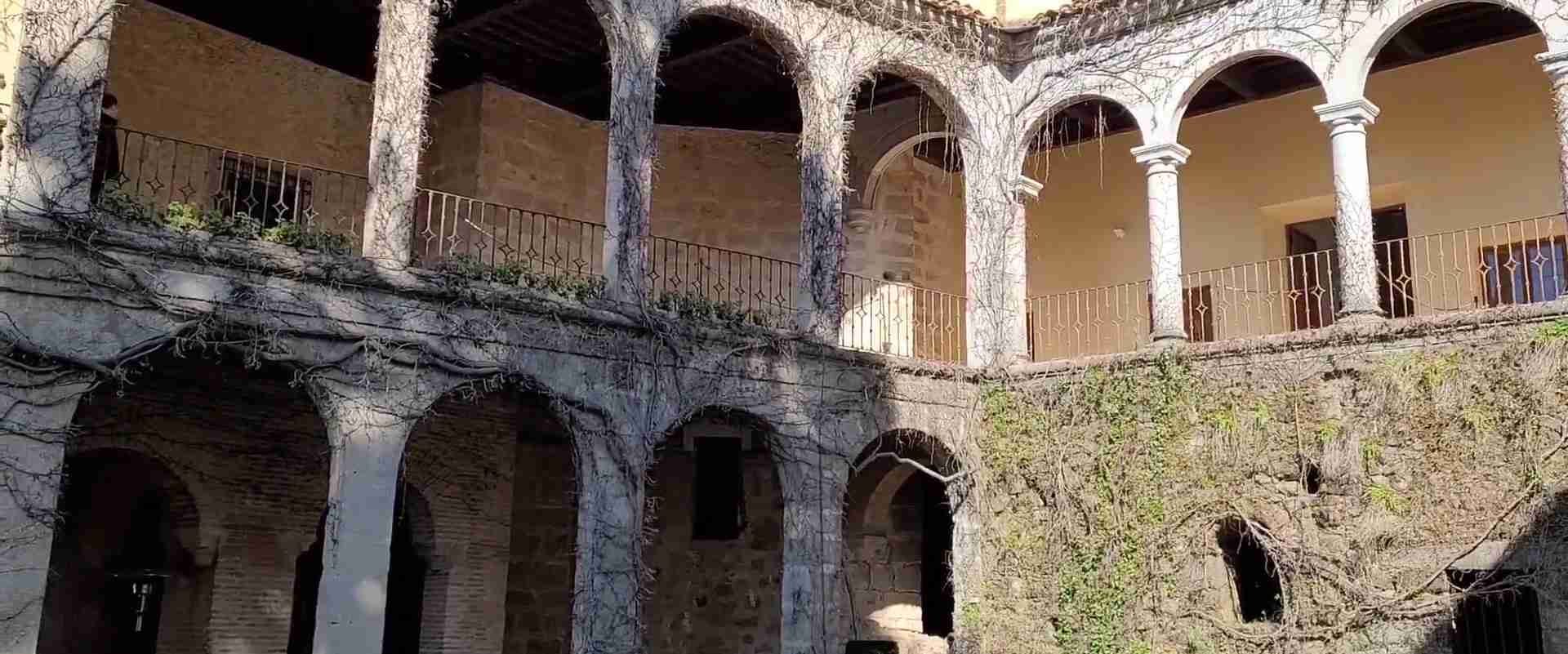
The Silent Stone: A Slow-Travel Journey Through the Hidden Hilltop Villages of La Vera Valley
Tucked into the southern skirts of the Sierra de Gredos in Extremadura, La Vera is one of Spain’s most quietly magnificent landscapes — a corridor of rushing streams, tobacco fields, paprika-red earth, and medieval stone villages that seem to have stepped away from history and forgotten to return. Few foreign travellers find their way here, and those who do almost universally describe the same experience: a profound deceleration, a sense that time moves differently when the streets are cobbled, the houses lean into one another like old friends, and the only sound at midday is water running somewhere beneath the stones.
Key Takeaways
- La Vera is one of Spain’s least-visited historical regions, despite containing some of the Iberian Peninsula’s finest examples of vernacular timber-framed and granite architecture in villages that have changed little in five centuries.
- The valley’s most celebrated village is Cuacos de Yuste, whose medieval streets lead directly to the Royal Monastery of Yuste — the final retreat of Holy Roman Emperor Charles V, who died here in 1558 and whose presence still shapes the cultural identity of the entire valley.
- Garganta la Olla and Valverde de la Vera are the architectural jewels of the region, their overhanging timber-frame houses (entramado) creating canopied lanes of extraordinary beauty — both villages hold the national designation of Conjunto Histórico Artístico.
- La Vera’s microclimate — warmer, wetter, and more sheltered than the surrounding Extremaduran meseta — produces the pimentón de La Vera, a smoked paprika with Protected Designation of Origin status and one of the great flavour signatures of Spanish cuisine.
- The valley’s rivers and gargantillas (small gorges with natural swimming pools) are a defining feature of summer life — nearly every village has its own bathing spot, shaded by ancient oaks and fed by snowmelt from the Gredos peaks above.
- Slow travel is not a philosophy here — it is the only sensible approach. The villages reward time: a second morning walk reveals a carved lintel missed the first day, a conversation with a tobacco farmer opens an entirely different understanding of the landscape, a wrong turn down an unmarked lane ends at a Romanesque hermitage that appears on no map.
People Also Ask About La Vera Valley
What makes La Vera Valley different from other rural destinations in Spain?
La Vera occupies a geographical and cultural position that sets it apart from almost anywhere else on the peninsula. It sits in the transition zone between the high granite world of the Sierra de Gredos and the wide, arid plains of Extremadura — giving it a microclimate so benign that subtropical fruits, tobacco, and cherry orchards all thrive within view of permanent snow. Its villages are not postcard-perfect in the manicured way of better-known Castilian pueblos; they are genuinely old, genuinely inhabited, and genuinely indifferent to the tourism economy in a way that makes them feel like places rather than attractions. The architecture — dark granite, whitewashed lime, overhanging upper floors supported on carved wooden posts — follows a grammar that has remained consistent for half a millennium. There are no hotels with rooftop pools, no fusion restaurants, no Instagram-optimised viewpoints. What La Vera offers is the real Spain of another century, still functioning.
Which village in La Vera Valley is most worth visiting?
No single village is definitively “most worth visiting” because each has a distinct character and appeal. Cuacos de Yuste draws visitors who want historical depth — its medieval street plan and proximity to the Monastery of Yuste make it the valley’s cultural anchor. Garganta la Olla is widely considered the architecturally finest, with an extraordinary density of timber-frame entramado houses, a well-preserved medieval layout, and an atmosphere of deep quietness. Valverde de la Vera offers a dramatic hilltop setting, a striking main square framed by arcaded granite buildings, and the most evocative roofscape in the valley. For travellers who want living village life rather than pure heritage tourism, Villanueva de la Vera or Losar de la Vera provide a more authentic picture of everyday La Vera — market days, tobacco cooperatives, local bars with no written menu. The ideal approach is to visit at least three villages across different days, allowing each to reveal its own character.
How do you reach La Vera Valley and do you need a car?
La Vera is served by buses from Plasencia, the nearest city of size, with services connecting to most valley villages — but frequency is limited (often one or two departures per day) and some smaller villages have no regular service at all. A car is strongly advisable and transforms the experience: the valley is best understood as a connected network of places, and the road between villages — threading through cherry orchards, past tobacco-drying sheds, and alongside the Río Tiétar and its tributaries — is itself a significant part of the journey. From Madrid, La Vera is approximately two and a half to three hours by road via the A-5 motorway and regional roads through the Comunidad de Extremadura. The closest train station with meaningful connections is in Navalmoral de la Mata, roughly 30 kilometres south of the valley, from which a car or taxi completes the approach.
When is the best time to visit La Vera Valley?
Spring and autumn are the optimum seasons for slow travel in La Vera. April through June brings the cherry blossom — the valley’s cherry orchards are among the largest in Spain, and the blossom period transforms the landscape for several weeks in March and April. Late September through November offers the harvest season: paprika peppers drying in brilliant red swags from every balcony and windowsill, the scent of oak wood and smoke from the pimentón kilns, and a quality of golden afternoon light that photographers travel considerable distances to capture. Summer (July and August) is warm to hot but the river pools and gargantillas make it entirely bearable, and the villages are substantially less crowded than comparable destinations elsewhere in Spain. Winter is quiet to the point of solitude — many village bars and small restaurants close or operate shortened hours, but the landscape is stark and beautiful, and the experience of having an entire medieval village to oneself has its own powerful reward.
Extended multi-day tours – 5+ days
Featured Caceres Multi-Day Tour Packages

7 days
Lisbon, Madrid and Barcelona
- ✓ Comprehensive Caceres tour
- ✓ Expert local guides included
- ✓ All accommodation arranged
- ✓ Transportation provided

5 days
Iberian Capitals
- ✓ Comprehensive Caceres tour
- ✓ Expert local guides included
- ✓ All accommodation arranged
- ✓ Transportation provided
6 days
6 Day Tour to Lisbon and Porto including Fatima from Madrid
- ✓ Comprehensive Caceres tour
- ✓ Expert local guides included
- ✓ All accommodation arranged
- ✓ Transportation provided
7 days
Madrid & World Heritage Cities, Self-drive
- ✓ Comprehensive Caceres tour
- ✓ Expert local guides included
- ✓ All accommodation arranged
- ✓ Transportation provided
Multi-day tour packages powered by TourRadar. Prices and availability subject to change.
Introduction: A Valley Outside Time
There is a phrase that recurs in conversations about La Vera: el tiempo libre — free time, or time at liberty. Locals use it not to describe a holiday but to describe the particular quality of the valley itself, a sense that the ordinary pressures of contemporary Spanish life — the urgency, the noise, the obligation to be somewhere else — somehow do not penetrate here with the same force. Whether this is a function of geography (the mountains enclosing the valley on three sides), economy (La Vera has never been wealthy enough to attract the kind of development that transforms places), or simply the accumulated weight of five hundred years of stone and silence, the result is the same: a landscape in which the traveller is repeatedly brought to a halt and invited to pay attention.
La Vera lies in the northeastern corner of Extremadura, Spain’s largest and least-densely populated region, bordered to the north by the Sierra de Gredos, which forms the natural frontier with Castile and León. The valley is oriented roughly east-west, following the course of the Río Tiétar, and is divided into numerous sub-valleys by a network of smaller rivers — the Garganta de Cuartos, the Garganta de Jarandilla, the Garganta Mayor — that rush down from the sierra and create, along their courses, a succession of natural bathing pools, waterfalls, and rocky gorges locally called gargantillas. It is these watercourses, as much as any architectural monument, that define the La Vera experience: in a landscape that gets less than 700 millimetres of rain annually, the sound of running water is a constant and deeply pleasurable background presence.
The valley’s human history extends back into prehistory — there are rock engravings and megalithic monuments in the surrounding sierra — but the villages as they appear today are essentially the product of the late medieval and early modern periods, roughly the fourteenth through seventeenth centuries. This was a time of significant colonisation and agricultural development in Extremadura, driven partly by the Reconquista and partly by the commercial opportunities offered by the cañadas reales, the great drove roads that crossed the peninsula and brought transhumant flocks through the valley each autumn and spring. The houses, churches, plazas, and defensive towers that form the architectural fabric of La Vera’s villages date primarily from this period — and their survival, in conditions of remarkable completeness, owes much to the very economic marginality that has sometimes been counted as the valley’s limitation.
This guide traces a slow-travel itinerary through seven of La Vera’s most significant villages, pauses at the monastery that gives the valley its greatest historical distinction, and explores the food, the landscape, the architecture, and the particular quality of experience that makes La Vera one of the most rewarding rural destinations on the Iberian Peninsula.
Cuacos de Yuste: The Village That Sheltered an Emperor
Cuacos de Yuste is the village most travellers reach first, and it earns its position as the valley’s most historically resonant settlement through a combination of architectural integrity and extraordinary historical accident. In 1556, Holy Roman Emperor Charles V — ruler of the Habsburg empire at its maximum extent, sovereign of Spain, the Netherlands, the Kingdom of Naples, and vast territories in the New World — abdicated his throne and retired to this remote valley in Extremadura to spend his final years in prayer and contemplation. The monastery he chose, the Hieronymite foundation of Yuste, sits less than two kilometres from the village, and the presence of the emperor — along with the considerable court that followed him even into retirement — left indelible marks on the physical and cultural fabric of Cuacos.
The village’s medieval street plan survives almost entirely intact. From the Plaza de Don Juan de Austria — named for Charles’s illegitimate son, who was born in the village to a local woman named Bárbara Blomberg — narrow lanes radiate outward, their stone surfaces worn smooth by centuries of foot traffic. The houses that line these lanes represent the full range of the valley’s vernacular building tradition: whitewashed lower floors of rough granite, overhanging upper floors of timber frame filled with lime plaster or unfired brick, projecting upper storeys that create covered walkways at street level and make the lanes feel more like interior spaces than open streets.
The Plaza de Don Juan de Austria is one of the finest village squares in Extremadura. Its proportions are modest but perfect — roughly rectangular, framed on three sides by arcaded houses whose ground-floor loggias provide shade in summer and shelter in winter. The fourth side opens toward the church of San Esteban, a sixteenth-century structure of granite ashlar whose tower is visible from most of the village and whose interior contains several pieces of notable religious art connected with the Hieronymite monastery nearby. The square functions exactly as medieval squares were intended to function: as a social centre, a market venue, a place for fiestas and public life. On a weekday morning in late April, with the cherry trees in the orchards above the village still carrying the last of their blossom and the bar on the corner preparing for the first customers of the day, it is difficult to imagine a more agreeable place to sit and think about nothing in particular.
The village’s connection to Charles V is not merely historical. The Casa de los Labradores, a handsome sixteenth-century mansion on the main street, served as the residence of one of the emperor’s attendants and has been associated with various imperial figures. The streets still carry names — Calle del Príncipe, Calle del Monasterio — that reflect the Hieronymite monastery’s centuries-long gravitational pull on local life. And the knowledge that this is where the most powerful man in sixteenth-century Europe chose to end his days — in this small valley, among these unremarkable hills — lends Cuacos a quality of contemplative significance that more famous destinations rarely manage to convey.
The Royal Monastery of Yuste: A Habsburg End
The Monastery of Yuste is the single most important historical monument in La Vera and one of the most significant in Extremadura. The Hieronymite community was established here in the early fifteenth century, taking advantage of the same qualities — shelter, abundant water, a temperate microclimate — that had attracted settlement to the valley since prehistory. The original Gothic church and cloister survive, augmented in the sixteenth century by a Renaissance palace wing constructed specifically for Charles V’s retirement.
The emperor arrived at Yuste in February 1557 and died there in September 1558, having lived for nearly two years in the palace rooms that connect directly to the church through a specially constructed window — a detail of poignant practicality, since Charles was by then severely ill with gout and could observe the Mass from his bed without leaving his apartments. The rooms are furnished modestly by imperial standards, their austerity reflecting the genuine renunciation Charles sought in retirement. The view from the palace terrace, across the valley toward the sierra, is the same view Charles would have contemplated in his final months: a landscape of oak woodland, tobacco fields, and distant snow that has changed extraordinarily little since the sixteenth century.
The monastery passed through periods of abandonment and damage — it was sacked by French troops during the Napoleonic Wars and subsequently fell into partial ruin — before being restored in the late nineteenth century and returned to a monastic community. The Hieronymite Order returned in 1958, on the four-hundredth anniversary of Charles’s death, and the community maintains the monastery today. The church, the two cloisters (Gothic and Renaissance), the imperial palace, and the gardens are open to visitors. The Gothic cloister is the oldest surviving element and the most architecturally distinguished, its carved tracery and proportions representing the high-water mark of Extremaduran Gothic. The Renaissance cloister is quieter and more intimate, its garden planted with rosemary, lavender, and fruit trees according to a tradition that recalls the monastery’s role as a centre of horticultural knowledge.
Allow at least ninety minutes for a thorough visit. The monastery’s combination of architectural quality, historical depth, and contemplative atmosphere — enhanced considerably by the fact that an active monastic community still lives and prays here — makes it one of those rare sites where history feels genuinely present rather than merely documented.
Garganta la Olla: The Valley’s Most Beautiful Village
The consensus among those who have travelled La Vera carefully is consistent: Garganta la Olla is the most beautiful village in the valley, and by extension one of the most beautiful in Spain. This is not an eccentric opinion. The village holds national designation as a Conjunto Histórico Artístico, a recognition that its historic centre constitutes an artistic monument in its own right — and the physical fabric of the place more than justifies the classification.
Garganta la Olla sits on a steep hillside above the garganta of the same name, its streets angling sharply along the contours of the terrain. The result is a village of levels, stairways, and sudden prospects — a place best understood on foot, slowly, with time to look upward as frequently as downward. The defining feature is the concentration of casas de entramado: timber-frame houses in which an infill of lime plaster, sometimes painted in brilliant white or ochre, fills the panels between structural timbers of chestnut or oak. The upper floors of these houses project beyond the ground floor, resting on carved wooden corbels or stone brackets that create colonnaded walkways at street level. In the narrowest lanes, the projecting upper storeys of houses on either side nearly touch, forming a continuous canopy that reduces the sky to a thin blue stripe above.
The village’s main square — the Plaza de la Iglesia — is framed by a fine ensemble of these timber-frame buildings, with the sixteenth-century Church of Santa Catalina occupying one end. The church’s granite tower is the vertical accent against which the horizontal rhythm of the domestic architecture plays: austere, strong, perfectly calibrated. The fountain at the centre of the square is fed by the same mountain water that runs through the village in stone channels, the regatos, that line the edges of the steeper streets and serve as both drainage and a kind of constant musical accompaniment to movement through the village.
The houses of Garganta la Olla are not museum pieces. They are lived in, their balconies planted with geraniums and tomatoes, their ground floors occupied by small bars and the occasional shop selling local pimentón and honey. The village population is small — a few hundred permanent residents — and the pace of life is genuinely unhurried in a way that larger, more visited places find increasingly difficult to sustain. Coming here in the early morning, before the day’s visitors (those who do come) have arrived, and walking the streets in the quality of light that filters through the timber-frame canopy, is one of the experiences that makes La Vera difficult to forget.
A significant additional attraction is the Casa de la Mancebía, a beautifully preserved sixteenth-century house that served as the village’s licensed brothel during the period of Charles V’s residence in the valley — an institution required by the authorities to be visibly distinct from other buildings, which is why it was painted blue (a colour associated with sin in sixteenth-century Castile). The house, restored and interpreted, offers an unexpectedly revealing window onto the social history of imperial-period Spain.
Valverde de la Vera: Hilltop Drama and Granite Grandeur
Where Garganta la Olla seduces with intimacy and timber, Valverde de la Vera impresses through drama and granite. The village occupies a spur above the valley floor, its roofline visible from considerable distances as a serrated profile against the sky, and its main approach — a rising street of substantial granite houses that widens toward the plaza — has the quality of a processional route. Valverde holds the same Conjunto Histórico Artístico designation as Garganta and deserves it equally, though for different reasons.
The Plaza Mayor of Valverde de la Vera is among the most striking village squares in the entire region. The square is dominated on its principal side by the sixteenth-century Casa Consistorial — the old town hall — whose arcaded ground floor opens onto the plaza through a series of granite arches resting on octagonal pillars of considerable refinement. The upper floor is pierced by a gallery of Gothic arches whose tracery demonstrates a level of craft unusual in a village of this size, suggesting that Valverde attracted stonemasons of significant skill during the building campaigns of the sixteenth century. The church of Santa María del Consuelo closes another side of the square with a tower of granite ashlar that anchors the ensemble without dominating it.
The streets running back from the plaza toward the oldest parts of the village become progressively narrower and more organic in their arrangement, following the logic of the hillside terrain rather than any planned geometry. Here the architecture shifts from the civic grandeur of the main square to the domestic vernacular: houses of rough granite, their walls sometimes three feet thick to manage the temperature swings between hot summers and cold winters, their wooden doors studded with hand-forged iron, their interiors dark and cool and fragrant with the smell of old stone.
Valverde’s festival of El Pero Palo, held annually in February, is one of the most ancient and enigmatic carnivals in Spain — a ritual of uncertain medieval or possibly pre-Christian origin that involves the symbolic trial and execution of a straw effigy and has attracted the attention of ethnographers and anthropologists for well over a century. The festival transforms the village for several days with processions, music, and a quality of collective energy that stands in striking contrast to the usual contemplative quiet. Visitors who time their stay to coincide with El Pero Palo receive a dimension of La Vera life that is entirely invisible at other times of year.
Villanueva de la Vera: Where Ordinary Life Continues
Villanueva de la Vera offers something that the more celebrated villages of the valley occasionally struggle to provide: the experience of a place living its own life rather than existing primarily for outside observation. The village is large enough to have its own economy — agricultural, commercial, with a weekly market and a tobacco cooperative that continues to operate — and this functional vitality gives it a social texture and energy that pure heritage villages can lack.
The historic centre of Villanueva is architecturally coherent and handsome, with a fine main square surrounded by timber-frame and granite buildings and a sixteenth-century church of considerable dignity. The characteristic rollos de justicia — the granite pillory column that was the symbol of a village’s right to administer its own justice — stands in the plaza, a reminder of the autonomy and legal status that medieval Extremaduran villages fought to establish and maintain.
The surrounding agricultural landscape is more visibly active around Villanueva than elsewhere in the valley. The tobacco fields — La Vera is one of the very few regions in Spain where tobacco is still commercially cultivated — extend in long green rows along the valley floor, their large leaves harvested in late summer and dried in the characteristic secaderos: long, low timber sheds with adjustable side panels that regulate the airflow during the curing process. These buildings, seemingly utilitarian, have a quiet architectural dignity of their own — their regular rhythm, warm timber colour, and close relationship to the land make them a distinctive and underappreciated part of the La Vera landscape. The pimentón cooperatives, where the dried peppers are smoked over oak wood and ground to produce the famous smoked paprika, can sometimes be visited during the autumn processing season.
A walk from Villanueva along the river path toward the neighbouring village of Talaveruela covers a stretch of valley floor that shows La Vera at its most complete: orchards, tobacco fields, the sound of running water, granite bridges crossing the garganta, and the sierra rising behind — a landscape that is simultaneously beautiful and entirely productive, shaped by human agriculture over centuries into something that functions both as environment and as picture.
Losar de la Vera and the Quieter Valley
Losar de la Vera is the largest town in the valley in terms of population and services — it has a small supermarket, a pharmacy, petrol stations, and a selection of bars and restaurants that operate reliably throughout the year — which makes it a practical base for exploring the valley while retaining genuine character of its own. The historic centre is compact but well-preserved, with a sixteenth-century church of Santa María, a cluster of handsome granite houses around the old plaza, and a fuente — a covered fountain of carved stone — that serves as the social heart of the older quarter.
The area around Losar is particularly rich in the valley’s natural swimming infrastructure. The Garganta Mayor, accessible by a short walk from the edge of town, has a sequence of natural pools of different sizes and depths, shaded by alder, ash, and oak trees, with the granite walls of the gorge rising on either side to create spaces of considerable natural drama. On summer afternoons these pools fill with local families — children, grandparents, dogs — in scenes of joyful disorder that are among the most humanly satisfying in La Vera.
The road between Losar and Aldeanueva de la Vera to the east passes through a section of valley that preserves much of the traditional agricultural landscape in its most complete form. Stone walls delineate field boundaries, cherry and fig trees grow between the tobacco plots, and the watercourses are managed by a system of traditional irrigation channels — acequias — that distributes water from the sierra streams across the valley floor in a system whose logic dates back centuries. Driving this road slowly, or better still walking it, offers an education in the agricultural geography of the valley that no museum or guidebook can quite replicate.
Aldeanueva de la Vera and Jaraíz de la Vera: Eastern Anchors
The eastern end of the valley has a somewhat different character from the concentrated medieval intimacy of Garganta and Valverde. Aldeanueva de la Vera is primarily an agricultural and market town, its historic centre modest but genuine, its weekly market one of the most authentic in the valley — a place where farmers bring produce, agricultural supplies are sold, and the social business of a rural community gets conducted in a mixture of Spanish and the local dialect. The Church of Santa María de la Consolación, with its robust sixteenth-century tower, gives the town a visual anchor and a centre of gravity around which the older streets organise themselves.
Jaraíz de la Vera, at the valley’s eastern entrance, functions as the gateway settlement and commercial hub — a town rather than a village, with a larger population, more services, and a contemporary overlay that makes it less immediately evocative than the villages further west. But Jaraíz has its own historical layer: the old quarter around the Church of San Miguel preserves a nucleus of timber-frame and granite buildings of genuine quality, and the town’s position at the confluence of several valley roads makes it a natural starting or finishing point for explorations that enter La Vera from the Plasencia direction.
The area around Jaraíz is also the principal centre of the pimentón de La Vera industry. The cooperative processing facilities, the fields of pimiento choricero and pimiento bola stretching along the valley floor, and the characteristic smoke-scent that hangs over the area during the October processing season are as much a part of La Vera’s identity as any medieval plaza or monastic ruin. The PDO designation — Protected Designation of Origin — that governs the production of pimentón de La Vera is a recognition not just of the product’s quality but of its deep entanglement with the landscape, climate, and agricultural traditions of a very specific place.
The Architecture of La Vera: Reading the Vernacular Language
The domestic architecture of La Vera’s villages is one of the most coherent and beautiful vernacular building traditions in Spain, and understanding its grammar transforms the experience of walking through these streets from pleasant to genuinely illuminating. The tradition is neither uniform nor static — it encompasses variations of period, wealth, local material, and individual craft — but it is consistent enough in its basic vocabulary that, once learned, it can be read across the entire valley.
The fundamental material is granite, drawn from the sierra above and available in every village in quantities ranging from rough fieldstone to carefully dressed ashlar. Granite is used for foundations, ground-floor walls, door and window surrounds, arches, stairs, and all structural elements requiring particular strength or durability. Its colour varies from pale silver-grey through warm honey to a deep greenish-black depending on mineral composition and weathering, and this variation gives different parts of the valley subtly different visual characters.
The upper floors of domestic buildings are typically constructed in a different tradition: the entramado or timber-frame system, in which a skeleton of chestnut or oak posts, beams, and diagonal braces is infilled with lime plaster, unfired brick, or stone rubble. The structural timbers are usually left exposed on the exterior, creating the characteristic striped pattern of dark wood against white or ochre plaster that defines the visual identity of villages like Garganta la Olla and Cuacos de Yuste. The proportions of these frames — the spacing of the posts, the depth of the beams, the angle of the diagonal braces — follow conventions established in the late medieval period and maintained with remarkable consistency across several centuries of building.
The projecting upper floor — the voladizo or saledizo — is the most functionally clever and visually distinctive feature of the tradition. By extending the floor joists of the upper storey beyond the ground-floor wall and resting them on carved wooden corbels or stone brackets, the builder increases the floor area of the upper floor (the sleeping and living space) while creating a sheltered walkway at ground level. In the narrower streets, where houses on opposite sides both project their upper floors, the result is effectively a covered street — cool in summer, dry in winter, and of extraordinary atmospheric power. The undersides of these projecting floors are sometimes painted in deep ochre or terracotta, intensifying the colour contrast with the whitewashed plaster of the infill panels.
Doorways in the better houses carry coats of arms carved in granite — escudos — that record the social aspirations of sixteenth- and seventeenth-century families who sought to present themselves as hidalgos (minor nobility) through the conspicuous display of heraldic devices. These carvings are frequently of high quality, with well-cut helms, shields, and heraldic creatures rendered in a style that combines Gothic rigidity with early Renaissance movement. Looking up and paying attention to these doorways — easily missed when the eye is drawn to the larger architectural compositions — is one of the most rewarding habits a visitor to La Vera can develop.
Churches across the valley share a common architectural character: built primarily in the sixteenth century, in a sober late Gothic or early Renaissance idiom, using granite ashlar for towers and principal elevations and rubble masonry for walls. The towers are the dominant vertical elements in every village, their profiles — usually square, with corner buttresses and minimal decoration — providing scale and orientation. Interiors tend toward the austere: plain granite walls, ribbed vaulting in the most ambitious examples, wooden altarpieces (retablos) of varying quality and condition, and occasional sculptural or painted works of real distinction donated by families with connections to the wider Spanish world of the sixteenth and seventeenth centuries.
The Flavour of La Vera: Pimentón, Cherries, and the Table of Extremadura
La Vera’s most famous culinary export is the pimentón — smoked paprika — that carries the valley’s name on its PDO designation and seasons Spanish cooking from chorizo to pulpo a la gallega. The product is made from dried and oak-smoked peppers of specific varieties (pimiento choricero, pimiento bola, and pimiento jaranda), ground between stone millstones to a powder that ranges from a bright vermilion to a deep brick red depending on the variety and the degree of roasting. The aroma is unmistakable and unlike any other smoked spice: deep, warm, slightly sweet, with an undertone of wood smoke that persists on the palate long after the initial flavour has passed.
Buying pimentón directly in La Vera — from a cooperative, from a family producer, or from one of the small shops in Cuacos or Garganta — is both significantly cheaper than purchasing it in specialist food shops elsewhere and a considerably more interesting experience. The cooperatives often offer tastings, and the range of products — sweet, bittersweet, and hot; finely and coarsely ground; different intensities of smoke — is substantially broader than what appears in most retail outlets. A kilogram of good pimentón de La Vera, wrapped in the traditional tin and packed in luggage, is one of the great edible souvenirs of any Extremaduran journey.
The valley’s other great flavour identity is the cherry. La Vera lies at the heart of one of Spain’s principal cherry-producing zones, and the orchards that cover the lower hillsides above the valley floor — their canopy white with blossom in March and April, heavy with dark fruit in May and June — produce a cherry of exceptional quality. During the cherry season, the fruit appears in every bar and market, consumed fresh, made into preserves, and distilled into the aguardiente de cerezas — cherry brandy — that is the valley’s traditional after-dinner drink. The cherry cooperatives around Cuacos and Jaraíz process and distribute fruit across Spain, and the landscape during harvest — ladders leaning against trees, red-stained hands, baskets of gleaming fruit — has a quality of pastoral abundance that feels timeless.
The broader cuisine of La Vera sits within the Extremaduran tradition: robust, meat-heavy, informed by the products of a pastoral and agricultural economy. Corderito extremeño — lamb from the region’s vast pastures, roasted in wood-fired ovens — appears on menus across the valley. Migas extremeñas: fried breadcrumbs with chorizo, bacon, and peppers, a shepherds’ dish of great simplicity and considerable satisfaction. Caldo de La Vera: a paprika-rich broth with pork and vegetables that is the valley’s own variation on the cocido tradition. And everywhere, the local pork products — chorizo, salchichón, morcilla — made with the valley’s own pimentón and pork from pigs that have spent their lives on Extremaduran pasture, achieving a depth of flavour that industrial charcuterie cannot replicate.
Restaurant choice in La Vera is limited in the sense that there are relatively few establishments compared to more tourist-developed regions — but the quality of those that exist is generally honest and sometimes excellent. Losar de la Vera and Jaraíz de la Vera have the largest selection of year-round dining options. In smaller villages, the single bar with a kitchen — serving a fixed-price lunch menu of three courses, bread, wine, and water for a price that has not changed meaningfully in a decade — represents a form of hospitality that is simultaneously the most economical and the most genuinely pleasurable way to eat in rural Spain. Ask what they have rather than consulting a menu, accept whatever is offered, and the results are almost always good.
The Gargantillas: Swimming in the Mountain’s Memory
No account of La Vera that omits the gargantillas — the natural river pools formed where the sierra streams cut through granite outcrops as they descend to the valley floor — captures the full experience of the place. These bathing spots are not tourist amenities constructed for visitor use; they are natural formations, shaped over millennia, that have been used by local communities for swimming, washing, and celebration for as long as anyone can remember. Every significant village in the valley has its own pool or pools, located within walking distance of the oldest quarter, and the life of these places in summer — children diving from granite ledges, adults arranged on flat rocks with the expression of absolute satisfaction that only cold water on a hot day produces, grandmothers sitting in the shallows with their skirts raised to the knee — is as much a part of La Vera’s cultural fabric as the timber-frame houses or the smoking paprika kilns.
The water is cold even in August, fed as it is by snowmelt from the Gredos peaks, and the temperature shock of entering is one of the most complete sensory resets available to the slow traveller: after several hours of walking cobbled streets and contemplating carved stone, the plunge into a mountain pool that smells of granite and wild herbs returns the body to an immediate relationship with the landscape that is impossible to achieve through observation alone.
The most impressive gargantillas are found in the upper valley, where the terrain is steeper and the watercourses more dramatic. The pools near Guijo de Santa Bárbara, a village at the highest navigable point of the valley, involve a walk through oak woodland along a path that was used for centuries by shepherds moving their flocks between the summer pastures of the sierra and the winter lowlands. The Garganta de Cuartos, accessible from Cuacos de Yuste, has a series of deep pools linked by short falls that can be navigated by confident swimmers as a natural water course. The pools near Garganta la Olla, closest to the village of that name, are the most accessible and therefore the most popular in high summer — arriving early in the morning, before the day’s heat drives people to the water, provides the best combination of temperature, crowd conditions, and light.
Slow Travel in Practice: How to Move Through La Vera
The slow travel philosophy is invoked frequently in travel writing as a vague aspiration toward mindfulness, and the term has acquired a quality of aspirational marketing that can obscure what it actually means in practice. In La Vera, the advice is concrete: do less, stay longer, resist the impulse to compile a complete list of villages visited.
The valley is small enough that it can be driven end-to-end in under an hour, and this physical compactness creates a temptation to treat it as a sequence of sights to be checked off — Cuacos in the morning, Garganta at noon, Valverde in the afternoon, Yuste squeezed in before closing. This approach is technically possible and entirely unrewarding. The villages of La Vera are not monuments with a fixed interpretive programme; they are places with their own rhythms, their own hours, their own qualities of light and atmosphere that change across the day in ways that reward the visitor who is present for more than an hour.
A more productive approach: choose two or three villages as bases and return to them at different times of day and different weather conditions. Sit in the same bar at different hours and notice who comes and goes. Walk the same street after rain and after sunshine and observe how the wet granite and the dry granite are almost different materials. Buy something from the local market and take it back to your accommodation rather than eating every meal in a restaurant. Accept the invitation to talk when it is extended — and in La Vera, unlike in more overwhelmed tourist destinations, it still is.
The valley is well configured for walking between villages. Several marked routes connect the main settlements via river paths, orchard tracks, and old drove roads, and the terrain is generally accessible to anyone of reasonable fitness. The Ruta de Carlos V — a long-distance walking route that traces the emperor’s progress from Laredo on the Cantabrian coast to the Monastery of Yuste, following historical roads and tracks — passes through the valley and offers, for those who walk even a section of it, a physical connection to the landscape through which a remarkable historical journey once moved.
Evening in La Vera’s villages has a specific quality that rewards those who stay late. As the day’s heat declines and the angle of the light becomes golden and then amber, the granite walls absorb and release warmth, the bars fill with the evening paseo crowd, and the villages take on a completely different character from their daytime identity. The tourists — such as they are — have mostly departed. The streets belong again to the people who live in them. The smell of wood smoke and cooking drifts from kitchen windows. The sound of the fountain in the plaza becomes the dominant note. This is the hour in which La Vera most fully reveals what it actually is: not a destination for visitors but a place where people live, have always lived, and intend to go on living in a relationship with the land and the stone and the water that is among the most enduring in Spain.
When to Visit and Seasonal Character
La Vera’s microclimate — significantly milder and wetter than the surrounding Extremaduran plateau, sheltered by the sierra to the north and warmed by Mediterranean air moving up from the south — means that the valley is habitable and attractive across all four seasons, each of which offers a distinct experience.
Spring (March to June) is the period of greatest natural spectacle. The cherry blossom appears in the valley orchards in late March or early April, depending on the year — a brief explosion of white and pale pink across the hillsides that draws Spanish visitors from considerable distances and represents the valley at its most dramatic. The cherry harvest follows in May and June. Wild flowers carpet the paths between villages: rockrose, rosemary, lavender, asphodel, and numerous orchid species in the wetter areas near the gargantillas. The air temperature is warm enough for comfortable walking without the heat of summer, and the rivers run full and fast from winter and spring rain.
Summer (July and August) brings the valley’s warmest temperatures — typically 35-38°C in July, occasionally higher — but the gargantillas and river pools make the heat not merely bearable but genuinely pleasurable, providing the daily rhythm of morning exploration, midday swimming, afternoon rest, and evening paseo that Mediterranean summer life at its best actually consists of. The hills above the valley provide cooler walking conditions, and the sierra itself — accessible by the roads that climb from the valley to the Gredos ridgeline — offers mountain walking in genuinely alpine terrain. The villages are busier in summer than at any other time, but the scale of tourism remains modest by national standards and the atmosphere in the evenings — when the streets fill with local families taking the air after the heat of the day — is one of the most pleasurable in rural Spain.
Autumn (September to November) is the season most beloved by those who know the valley well. The paprika harvest begins in September, and by October the drying peppers — brilliant red-orange swags hanging from every available railing, balcony, and window — transform the visual character of the villages with a colour intensity that borders on the hallucinatory. The oak-wood smoke from the pimentón kilns gives the air a scent that becomes, once experienced, permanently associated with La Vera. The cherry orchards turn gold and then red. The light has the long, amber quality of Mediterranean autumn. The tourist presence diminishes sharply after the August peak, and the valley enters a quieter, more contemplative register that suits its essential character better than the summer bustle.
Winter (December to February) is for the committed and the solitary. Many smaller establishments close or operate severely restricted hours. The sierra above carries snow from December through March. The valley itself is rarely cold enough to be inhospitable — frost occurs but is not sustained — and the landscape in winter has a stark clarity, the trees bare and the granite more visible, that is beautiful in a completely different register from the softness of spring. Walking the villages in winter, when the streets are genuinely empty and the only people encountered are those who live there, going about the ordinary business of their lives, is an experience of considerable intimacy and power.
Getting to La Vera and Moving Through the Valley
La Vera’s relative obscurity is in part a function of its transport infrastructure. It is not served by train — the nearest station with meaningful connections is Navalmoral de la Mata on the main Madrid-Badajoz line, approximately 35 kilometres south of the valley. Bus services connect Plasencia (the nearest city, about 60 kilometres west) with several valley villages, but frequency is limited and the services are designed for residents rather than tourists — departure times do not correspond to reasonable visitor schedules and Sunday services are minimal or absent.
A car is, in all honesty, necessary for anything more than a single-village day trip from Plasencia. The valley road — the EX-203 and its branches — runs the full length of La Vera from Jaraíz in the east to Guijo de Santa Bárbara in the west, connecting all major villages. Driving this road slowly, stopping at unmarked viewpoints, pulling over when a particularly fine tobacco-drying shed or a visible stretch of old drove road invites attention, is itself one of the valley’s pleasures. The road is narrow in sections, particularly on the branches that climb to the higher villages, and driving requires attention, but nothing that a competent driver with a modestly sized vehicle cannot manage comfortably.
From Madrid, the most direct approach is via the A-5 motorway to Navalmoral de la Mata, then north on the EX-118 through Jaraíz de la Vera to the valley. Journey time is approximately two and a half hours from central Madrid in normal traffic conditions. From Salamanca, the approach via the Peña de Francia mountain road descending through the La Hurdes region to Plasencia, and then east through the Jerte Valley before crossing into La Vera at the Tornavacas pass, adds approximately an hour but passes through scenery of such quality — the cherry orchards of the Valle del Jerte, the extraordinary landscape of Las Hurdes, the Roman road section near Cáparra — that the detour justifies itself completely.
Within the valley, a bicycle offers possibilities that the car does not. The valley floor road, between Losar and Cuacos, is relatively flat and passes through the most characteristic sections of the agricultural landscape. There are no dedicated cycling paths, but traffic is light enough that road cycling is comfortable for most of the year. Electric bicycle hire has become available at several points in the valley — enquire locally in Losar or Cuacos for current availability.
Where to Stay in La Vera Valley
Accommodation in La Vera is overwhelmingly in the category of small rural hotels, casas rurales (rural guest houses), and private apartments. There are no large hotel chains, no resort complexes, and no significant glamping or boutique hotel infrastructure of the kind that has transformed rural tourism in more fashionable regions of Spain. This is a feature rather than a limitation: the accommodation stock is almost entirely housed in historic buildings — timber-frame houses, converted mills, old manor houses — that have been restored with varying degrees of care and authenticity, but that collectively provide the experience of sleeping within the same architectural fabric that makes the villages worth visiting in the first place.
Cuacos de Yuste and Garganta la Olla have the most atmospheric options in converted historic buildings close to the village centres. Losar de la Vera, as the valley’s commercial hub, offers the largest selection and the most reliable year-round availability. Jaraíz de la Vera has more conventional hotel-style accommodation suited to business travellers or those who prioritise facilities over atmosphere. Several rural houses in the lower valley offer self-contained apartment accommodation that suits families or groups who prefer the freedom to cook and settle into village life at their own pace.
Booking well in advance is essential for the cherry blossom period (late March to mid-April), the paprika harvest season (October), and the long weekends of the Spanish public holiday calendar. At other times, availability is generally good, and last-minute planning is often feasible — though not advisable for the most atmospheric properties, which have few rooms and a loyal clientele of repeat visitors.
Practical Considerations for the Slow Traveller
Cash remains useful in La Vera’s smaller villages — some bars and market stalls do not accept card payments, and the village shop, if one exists, operates on a cash economy. Bringing euros in small denominations prevents the awkwardness of attempting to pay for a €2 coffee with a €50 note in an establishment whose till has not yet been opened for the day.
Spanish is the language of the valley and English is not widely spoken, particularly in the older population and in smaller villages. A few phrases of Spanish — ¿Cuánto cuesta? (how much?), ¿Tiene habitaciones libres? (do you have rooms available?), ¿A qué hora cierra? (what time do you close?) — go a considerable distance toward making interactions comfortable and are received with genuine warmth. La Vera is not a destination that has developed a service infrastructure oriented toward international visitors, and this requires a degree of flexibility and language effort that is itself part of the experience.
The siesta is observed strictly in La Vera. Shops, bars, and most restaurants close between approximately 2pm and 5pm, and attempting to visit a village during these hours is an exercise in encountering closed doors and empty streets. This is not an inconvenience but an instruction: use the midday hours for the river pool, for rest at the accommodation, for a long lunch that occupies the time in exactly the way that time is meant to be occupied in a slow-travel context. The villages come back to life in the late afternoon, and the evening hours — from 7pm until well past midnight in summer — are the richest of the day.
Photography in La Vera rewards the patient and the early-rising. The light in the narrow streets of Garganta la Olla and the timber-frame lanes of Cuacos reaches its most dramatic quality in the first two hours after sunrise, when the low-angled light rakes across the projecting upper floors and creates strong shadows in the carved stonework of the doorways. Midday light in summer is flat and harsh. The evening light, particularly in autumn, is extraordinary — the smoked-paprika red of drying pepper swags against whitewashed lime, illuminated by the declining sun, is a combination of colour and texture that rewards an extended session with a camera and an even more extended session without one, simply watching.
Frequently Asked Questions About La Vera Valley
Is La Vera Valley part of Extremadura?
La Vera is a comarca (regional territory) within the province of Cáceres, which is part of the Autonomous Community of Extremadura in western Spain. It sits in the northeastern corner of the province, bordered to the north by the Sierra de Gredos (which forms the natural frontier with Castile and León) and to the south by the Río Tiétar. Extremadura as a whole is one of Spain’s largest and least-densely populated regions, covering an area of approximately 41,000 square kilometres with a total population of just over a million people. La Vera’s cultural and natural character is distinctly Extremaduran in its agricultural traditions, cuisine, architectural vernacular, and pace of life, while its microclimate and mountain topography give it characteristics that differ markedly from the wider Extremaduran meseta.
How many days do you need to see La Vera Valley properly?
Three days is the absolute minimum for any meaningful experience of the valley — sufficient time to visit four or five villages, spend an afternoon at the Monastery of Yuste, and take one proper walk along a river path. Five days allows a considerably richer experience: time to return to favourite villages at different hours, to follow one of the longer walking routes, to visit the paprika cooperatives, to make a day trip up to the Gredos sierra, and to develop the kind of familiarity with specific bars, streets, and landscapes that transforms tourism into something more like travel. A full week, particularly in spring or autumn, provides enough time to explore the valley’s less-visited corners — the higher villages near Guijo de Santa Bárbara, the Roman ruins at nearby Cáparra, the adjacent Valle del Jerte — and to settle into the rhythm of the valley in a way that makes departure genuinely reluctant.
What is pimentón de La Vera and why is it special?
Pimentón de La Vera is a smoked paprika produced in the La Vera valley of Cáceres, holding Protected Designation of Origin status from the European Union — one of the few spice products in Spain to carry this designation. It is made from peppers of specific locally adapted varieties (pimiento choricero, pimiento bola, and pimiento jaranda), dried over smouldering oak wood rather than by sun-drying as in other paprika-producing regions, then ground to powder between stone millstones. The oak-smoking step gives La Vera pimentón its defining characteristic — a deep, complex smokiness that sets it apart from Hungarian paprika, standard Spanish paprika, or any other smoked spice. It is produced in three varieties: sweet (dulce), bittersweet (agridulce), and hot (picante). It is the essential seasoning in chorizo, sobrasada, and numerous other Spanish cured meats, and appears throughout Extremaduran and broader Spanish cooking. Purchasing it directly in La Vera, from a cooperative or family producer, provides both the best quality and a direct connection to the agricultural landscape and human labour that produces it.
Are the hilltop villages of La Vera crowded with tourists?
By Spanish standards, La Vera is very lightly visited. It attracts no significant international tourism and a moderate volume of domestic visitors — primarily from Madrid, Extremadura, and neighbouring Castile-León — concentrated in the cherry blossom season, the paprika harvest, summer weekends, and Spanish public holidays. On a typical weekday in May, October, or any winter month, it is entirely possible to walk the streets of Garganta la Olla or Valverde de la Vera for an entire morning without encountering another tourist. Even at peak times, the scale of visitor numbers remains manageable and the atmosphere of the villages — places where people actually live their lives — is not materially disrupted. This is one of La Vera’s great advantages over comparable destinations in Andalucía, Catalonia, or the better-known parts of Castile, and it is unlikely to change rapidly given the valley’s distance from major transport infrastructure and its complete absence from the international tourism circuit.
Can you visit La Vera as a day trip from Madrid?
A day trip from Madrid to La Vera is physically possible — the drive is approximately two and a half hours each way — but it is a strategy that defeats the valley’s essential character. The round trip leaves perhaps four hours on the ground, which is not enough time to understand any single village beyond the most superficial level, and the fatigue of five-plus hours of driving makes the experience of the valley itself considerably poorer. A minimum of two nights — allowing for a full day in the valley between two half-days of driving — is strongly preferable. Those who find themselves limited to a single day from Madrid are better served by focusing on one destination only (Cuacos de Yuste plus the Monastery of Yuste is the most coherent single-day narrative) and accepting that a first visit will leave enough unexplored to justify a return.
What walking routes are available in La Vera Valley?
The valley has a network of marked walking routes of varying length and difficulty. The most historically significant is the Ruta de Carlos V, a long-distance route tracing the emperor’s journey from the Cantabrian coast to Yuste — the section within La Vera covers roughly 20 kilometres of valley paths and historic roads. The river routes along the gargantillas — particularly the Garganta de Cuartos near Cuacos and the Garganta Mayor near Losar — offer shorter, highly scenic walks accessible to most fitness levels, typically between 4 and 10 kilometres return. The ascent from the valley floor to the sierra pastures above Guijo de Santa Bárbara is a more demanding route (approximately 15 kilometres, 800 metres of ascent) that enters genuinely alpine terrain and provides views across the valley and toward the Gredos peaks. Local tourist offices in Losar and Jaraíz provide trail maps; the Spanish hiking federation’s 1:25,000 maps of the area provide the most reliable detail for navigation off the main marked routes.
Is La Vera suitable for travelling with children?
La Vera is an excellent destination for families with children, provided the family approach is calibrated to the valley’s character rather than to a conventional tourist infrastructure. There are no theme parks, organised children’s attractions, or family resort facilities. What there is: river pools that children universally find captivating, orchard landscapes that provide endless scope for walking and exploration, village festivals (El Pero Palo in Valverde in February, the cherry festival in Cuacos in late May) with genuine communal energy, and the specific pleasure — underestimated by many parents, greatly appreciated by children in retrospect — of being somewhere genuinely different from anywhere they have been before. The pace of life, the food culture (Spanish children in Extremaduran restaurants are treated as entirely normal presences, welcome at any hour), and the physical landscape make La Vera a rewarding destination for families who are comfortable with unstructured exploration and happy to move at the rhythm of the place rather than a programme of activities.
What are the best things to buy in La Vera as souvenirs or food gifts?
Pimentón de La Vera is the obvious answer and the most rewarding one — purchased directly from a cooperative or producer, in the traditional rectangular tin, it is both an authentic product of the valley and one of the most useful and appreciated culinary gifts available anywhere in Spain. Local honey, produced from bees foraging in the chestnut and lavender of the sierra, is of excellent quality and available at markets and from roadside stalls. Cherry preserves and cherry brandy (aguardiente de cerezas) represent the valley’s other great flavour identity. Local charcuterie — chorizo and salchichón made with La Vera pimentón — travels well and demonstrates the circular relationship between the valley’s two great agricultural products, pork and paprika. Hand-forged iron goods — door knockers, decorative pieces, small tools — produced by the surviving traditional blacksmiths of the valley represent a craft tradition of genuine depth and provide objects of both beauty and use.
How does La Vera Valley compare to the nearby Valle del Jerte?
La Vera and the Valle del Jerte are adjacent valleys, separated by the Puerto de Honduras mountain pass, and they are often visited together as a natural pairing. The Jerte is more celebrated internationally for its cherry blossom — its concentrated orchards and the specific quality of the spectacle have given it greater marketing profile — and tends to be somewhat busier and more developed for tourism. La Vera is wider, more architecturally diverse (its villages are generally more substantial and historically layered than the Jerte’s smaller settlements), and less visited, giving it a quieter and more authentic character. The two valleys complement each other well: those who enter Extremadura from the north via the Tornavacas pass move naturally from the Jerte into La Vera, experiencing a sequence of connected landscapes that represents one of the richest rural itineraries in Spain. If forced to choose, travellers who prioritise architectural and historical depth generally prefer La Vera; those principally seeking the cherry blossom spectacle may find the Jerte more directly focused on that experience.
Is there a good time to see the pimentón drying in La Vera villages?
The paprika harvest and drying season runs from late September through October, peaking in the first two weeks of October in most years. This is when the visual spectacle is at its most intense: strands of brilliant red-orange peppers hung from balconies, window frames, and purpose-built drying frames on the exteriors of houses across every village in the valley. The cooperatives operate during the same period, and the smoke from the oak-wood kilns gives the air throughout the valley a specific scent — deep, sweet, slightly resinous — that becomes inseparable from the memory of La Vera in autumn. The paprika-drying coincides with the valley’s finest autumn light and substantially reduced tourist numbers after the summer peak, making October arguably the single best month of the year to visit for those who can choose their timing freely.