The Secret Renaissance: A Cultural Itinerary Through Tuscany’s Forgotten Towns
Beyond Florence’s crowded museums and Siena’s famous Palio lies a constellation of Tuscan hilltop towns where Renaissance masterpieces await in silent churches and empty piazzas. These forgotten jewels—Pienza, Cortona, Montepulciano, Anghiari—preserve artistic treasures and architectural innovations that shaped the era, yet remain largely unknown to travelers racing between the region’s headline attractions.
Key Takeaways: Tuscany’s Hidden Renaissance Legacy
- Pienza represents the only fully realized “ideal Renaissance city” conceived by Pope Pius II and architect Bernardo Rossellino between 1459-1462, transforming the medieval hamlet of Corsignano into a UNESCO World Heritage showcase of humanistic urban planning where every building, street, and piazza reflects mathematical harmony and classical proportions.
- Cortona’s Museo Diocesano houses Fra Angelico’s luminous Annunciation altarpiece created in 1433-1434, a masterwork that drew contemporaries including Donatello and Brunelleschi to travel specifically to this hilltop town, alongside ten signed panels by native son Luca Signorelli whose innovative compositions influenced generations of Renaissance painters.
- Montepulciano earned its designation as “Pearl of the Sixteenth Century” through the concentrated genius of architects Antonio da Sangallo the Elder, Michelozzo, and Vignola, whose Renaissance palaces line steep medieval streets culminating in Piazza Grande, while beneath these noble residences stretch monumental wine cellars carved into volcanic tufo stone.
- Anghiari preserves the memory of the 1440 battle immortalized in Leonardo da Vinci’s lost fresco commissioned for Florence’s Palazzo Vecchio, its perfectly intact medieval quarter and Palazzo Taglieschi museum containing Renaissance works by Jacopo della Quercia and Andrea della Robbia revealing the cultural vitality of this border fortress town.
- These towns form a coherent cultural circuit spanning southeastern Tuscany from the Valdichiana valley to the Val d’Orcia hills, connected by rural roads that traverse the same Renaissance landscape painted by Piero della Francesca and described in the humanist treatises of Leon Battista Alberti, offering travelers an immersive journey through the era’s artistic and intellectual achievements.
- The “forgotten” designation stems from preservation rather than obscurity—these towns deliberately limit tourism infrastructure to maintain architectural integrity and local cultural continuity, resulting in experiences where visitors encounter Renaissance art and urbanism as living heritage rather than museum exhibits, walking streets where the spatial relationships designed five centuries ago remain functionally intact.
People Also Ask About Tuscany’s Hidden Renaissance Towns
What makes Pienza different from other Renaissance towns?
Pienza stands as the only Renaissance town built from a complete, unified urban plan rather than evolving organically over centuries. Pope Pius II commissioned architect Bernardo Rossellino to entirely redesign his birthplace of Corsignano between 1459-1462, applying humanist ideals of geometric harmony, proportional relationships, and classical aesthetics to create a three-dimensional manifestation of Renaissance philosophy. Every element—from the trapezoidal Piazza Pio II designed to create forced perspective, to the cathedral’s fusion of Italian Renaissance facades with Northern European Gothic interiors reflecting the pope’s travels—emerged from deliberate intellectual and aesthetic choices. This distinguishes Pienza from towns like Montepulciano or Cortona, where Renaissance architects worked within existing medieval street patterns, adding individual buildings rather than orchestrating comprehensive urban transformation.
Why did great Renaissance artists work in small Tuscan towns?
Renaissance patronage networks extended far beyond major urban centers, driven by wealthy noble families, ambitious bishops, and religious orders commissioning art for local churches and family chapels. Cortona attracted Fra Angelico because the town’s Franciscan community and local nobility could afford significant commissions, while native son Luca Signorelli returned throughout his career to create works for his hometown despite earning fame in Rome and Orvieto. Montepulciano’s strategic position between Florence and Siena made it a prize both republics contested, with each showering the town with architectural patronage to demonstrate cultural superiority. Smaller towns also offered artists freedom from guild restrictions and competitive pressures present in Florence, allowing experimentation with techniques and subjects. The dispersion of Renaissance art across Tuscany’s hill towns reflects the era’s decentralized political structure, where dozens of independent communes, noble families, and ecclesiastical authorities competed for cultural prestige through artistic patronage.
Which Renaissance town offers the most authentic experience?
Anghiari provides the most unmediated Renaissance and medieval atmosphere, its labyrinthine stone streets and fortress walls largely unchanged since the fifteenth century, with tourism infrastructure deliberately minimal to preserve the town’s character as a living community. Unlike Pienza, which functions partly as an open-air museum of Renaissance urbanism, or Montepulciano, where wine tourism drives the local economy, Anghiari remains primarily a working town where artisan workshops, family-run restaurants, and neighborhood piazzas serve local residents first. The Palazzo Taglieschi museum contains significant Renaissance sculptures and paintings without modern interpretive installations, displayed in rooms that retain their original architectural character. Walking Anghiari’s steep vicoli and discovering Fra Angelico works in neighborhood churches still used for daily mass offers encounters with Renaissance heritage embedded in ongoing community life rather than preserved for tourist consumption.
How do these towns connect geographically for a cultural itinerary?
The five primary towns—Cortona, Montepulciano, Pienza, Anghiari, and Montalcino—form an arc across southeastern Tuscany spanning approximately 80 kilometers between the Valdichiana valley in the east and the Val d’Orcia hills in the west. Cortona anchors the eastern end near the Umbrian border, with Montepulciano 30 kilometers west overlooking the Valdichiana and connected by the scenic SR146. Pienza lies 15 kilometers west of Montepulciano along the SP146 that traverses the UNESCO-protected Val d’Orcia landscape, while Anghiari sits 45 kilometers northeast of Cortona near the Arno valley. This geography allows circular itineraries: a southern route linking Cortona-Montepulciano-Pienza through wine country and Renaissance urbanism, or a northern circuit connecting Anghiari-Sansepolcro-Cortona through Piero della Francesca’s homeland, with each route completable in 3-4 days while allowing time for unhurried exploration of museums, churches, and landscapes that inspired the Renaissance masters.
Extended multi-day tours – 5+ days
Featured Tuscany Multi-Day Tour Packages
3 days
Tuscany 3-Day Discovery Tour
- ✓ Comprehensive Tuscany experience
- ✓ Expert local guides included
- ✓ All accommodation included
- ✓ Transportation provided
5 days
Tuscany 5-Day Highlights Experience
- ✓ Comprehensive Tuscany experience
- ✓ Expert local guides included
- ✓ All accommodation included
- ✓ Transportation provided

7 days
Tuscany 7-Day Cultural Journey
- ✓ Comprehensive Tuscany experience
- ✓ Expert local guides included
- ✓ All accommodation included
- ✓ Transportation provided
10 days
Tuscany 10-Day Complete Adventure
- ✓ Comprehensive Tuscany experience
- ✓ Expert local guides included
- ✓ All accommodation included
- ✓ Transportation provided
Multi-day tour packages powered by TourRadar. Prices and availability subject to change.
Introduction: Beyond the Florentine Orbit
The Renaissance mythology centers on Florence—Brunelleschi’s dome puncturing the Tuscan sky, Michelangelo’s David commanding the Accademia, the Uffizi Gallery’s procession of masterworks. This Florentine-centric narrative, while historically grounded, obscures a broader truth about the Italian Renaissance: the movement’s artistic innovations, architectural experiments, and humanist philosophies radiated outward into dozens of smaller Tuscan towns where local patrons, resident artists, and ambitious civic leaders created their own Renaissance achievements. Today, while ten thousand daily visitors queue outside the Uffizi, the Museo Diocesano in Cortona welcomes perhaps fifty guests, offering solitary contemplation of Fra Angelico’s luminous Annunciation in a former church where natural light still illuminates the angel’s gilded wings exactly as the artist intended six centuries ago.
These “forgotten” towns—forgotten only in the sense that mass tourism has bypassed them—preserve Renaissance heritage with an authenticity impossible in heavily visited centers. Pienza’s Piazza Pio II functions as the town’s living room where residents gather for evening conversations, the Renaissance spatial design still organizing community life as Pope Pius II envisioned when he commissioned the square’s construction. Montepulciano’s Renaissance palaces house working wine cellars where generations of the same families have produced Vino Nobile in underground chambers carved during the Cinquecento. Anghiari’s medieval-Renaissance streetscape remains so intact that walking the steep vicoli replicates the physical experience of a fifteenth-century resident, the fortress walls and stone towers creating the same compressed urban spaces that shaped daily life during Leonardo da Vinci’s era.
The cultural itinerary through these towns offers something contemporary travel increasingly struggles to provide: encounters with artistic and architectural masterworks embedded in their original contexts, functioning within the communities and landscapes that produced them. This is not heritage preserved under glass but living cultural continuity where Renaissance churches still celebrate daily mass beneath Signorelli altarpieces, where the proportional relationships Rossellino designed for Pienza’s cathedral square still govern the flow of market day crowds, where the same volcanic tufo stone Renaissance architects quarried for palace foundations continues to define the region’s architectural vocabulary. Understanding the Renaissance through these smaller towns reveals the movement as a comprehensive reimagining of human environments—not just painting and sculpture but urbanism, landscape, social organization, and the relationship between built form and natural setting.
The geographical concentration of these towns across southeastern Tuscany creates natural itinerary possibilities. The Val d’Orcia hills between Montepulciano and Pienza preserve the Renaissance agricultural landscape virtually unchanged—the same rolling geometry of wheat fields, olive groves, and cypress windbreaks that appear in Pinturicchio and Sodoma paintings. The Valdichiana valley stretching below Cortona represents the land reclamation projects Renaissance engineers undertook, transforming malarial swamps into productive farmland through hydraulic innovations that anticipated modern water management. The Tiber valley around Anghiari traces the political frontier where Florence and the Papal States contested territorial control, the military architecture and fortress towns revealing the Renaissance as an era of constant warfare and shifting alliances alongside its artistic flowering.
This guide presents these towns not as isolated curiosities but as interconnected nodes in a broader Renaissance cultural landscape, each contributing distinct artistic traditions, architectural innovations, and intellectual currents to the movement’s development. The routing suggestions reflect both geographical logic and thematic coherence—grouping towns by artistic schools, architectural vocabularies, or historical relationships. The depth of content in each section addresses the reality that these towns reward extended exploration rather than brief stops, their Renaissance heritage revealing itself gradually through repeated encounters with individual buildings, artworks, and urban spaces whose significance deepens with informed observation and contextual understanding.
Pienza: The Ideal City Made Real
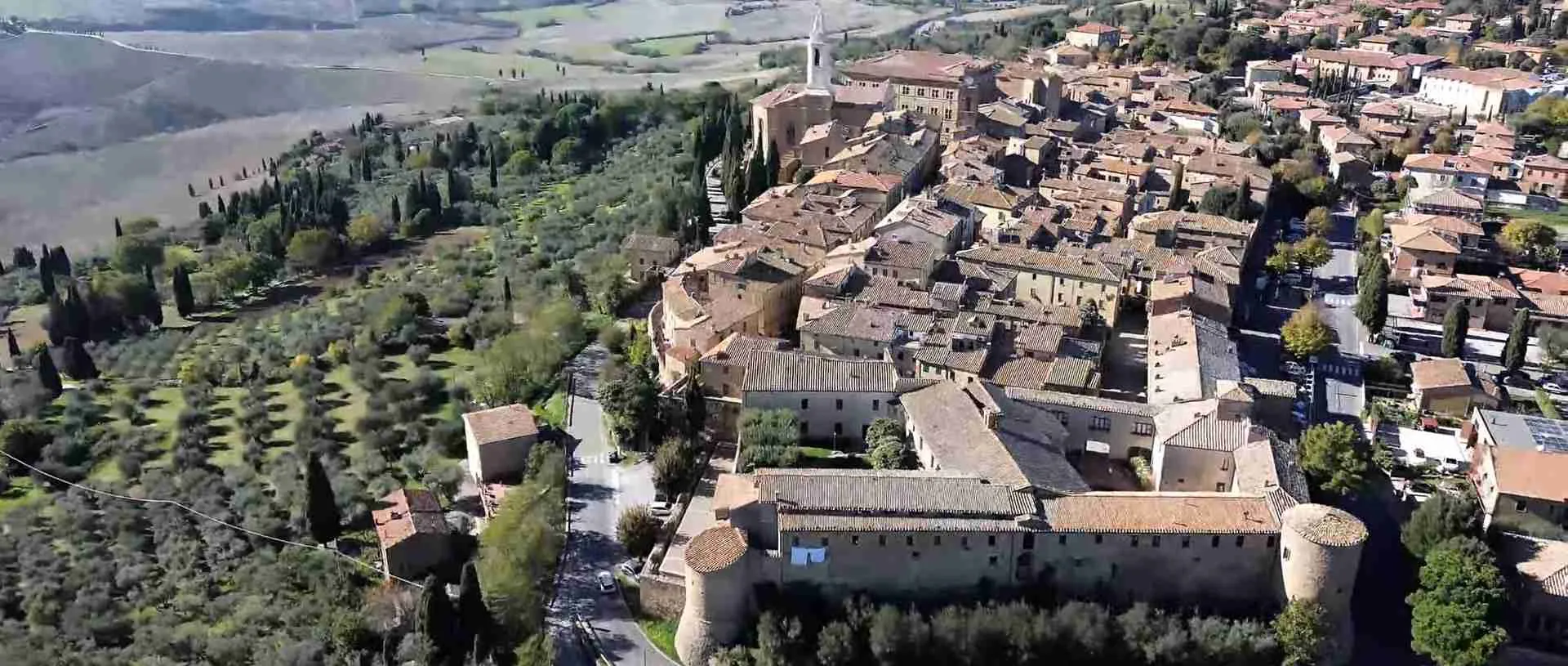
Pienza embodies Renaissance ambition at its most audacious—the complete transformation of a medieval village into a manifestation of humanist philosophy, accomplished in just three years under the patronage of one man. When Enea Silvio Piccolomini became Pope Pius II in 1458, he commanded the wealth and authority to realize a project Renaissance theorists had only imagined: building an entire town according to classical principles of harmony, proportion, and rational planning. The resulting transformation of his birthplace, the insignificant hamlet of Corsignano, into Pienza stands as the only fully executed Renaissance ideal city, earning UNESCO World Heritage recognition not as a collection of individual monuments but as an integrated urban organism where streets, squares, buildings, and sight lines function as components of a unified aesthetic and philosophical vision.
Architect Bernardo Rossellino, a follower of the great Leon Battista Alberti who codified Renaissance architectural theory in his treatise De re aedificatoria, received the commission to redesign Corsignano completely. Working at extraordinary speed between 1459 and 1462, Rossellino orchestrated the construction of the cathedral, papal palace, town hall, bishop’s palace, and supporting structures while redesigning the street system and creating the central piazza. The compressed timeline reflected Pius II’s awareness that papal patronage depended on his continued life—he died in 1464, just two years after Pienza’s completion, having witnessed his ideal city’s realization. The pope’s personal involvement extended beyond financing to detailed aesthetic and functional specifications, his humanist education informing decisions about proportional relationships, classical references, and the integration of architecture with landscape views.
Piazza Pio II represents Rossellino’s masterwork in urban design, a trapezoidal space whose irregular geometry creates sophisticated visual effects. The cathedral occupies the square’s eastern edge, its Renaissance facade of travertine limestone establishing the architectural vocabulary for surrounding buildings. The papal Palazzo Piccolomini stretches along the southern side, a three-story residence modeled on Florence’s Palazzo Rucellai with a revolutionary hanging garden and triple-arched loggia offering views across the Val d’Orcia hills. The northern flank features Palazzo Borgia (now housing the Diocesan Museum) and Palazzo Ammannati, while the Palazzo Comunale anchors the western edge. The trapezoidal plan, rather than representing design compromise, creates forced perspective that makes the cathedral appear larger when viewed from the Palazzo Comunale entrance, the optical illusion enhancing the building’s visual dominance.
The Cathedral of Santa Maria Assunta demonstrates Pius II’s cosmopolitan artistic vision, fusing Italian Renaissance principles with Northern European Gothic architecture he had admired during diplomatic missions to Germany and Austria. The facade follows classical Renaissance organization with three sections divided by pilasters, but the interior surprises with soaring Gothic ribbed vaults, pointed arches, and tall windows flooding the space with light—a design the pope specifically requested to replicate the luminous Hallenkirchen (hall churches) he encountered in Germanic territories. This architectural hybridity, controversial among contemporary Italian architects who favored classical purity, reflects Renaissance intellectual openness to diverse cultural influences when they served functional or aesthetic purposes. The cathedral’s orientation deliberately positions the high altar to catch sunrise light through eastern windows, creating dramatic illumination during morning mass.
Five altarpieces commissioned for the cathedral from leading Sienese painters—Giovanni di Paolo, Matteo di Giovanni, Sano di Pietro, and Vecchietta—demonstrate the era’s sophisticated understanding of how painting and architecture interact. Each gilded panel was designed for its specific altar location, with compositional elements and sight lines calibrated to the viewer’s approach angle through the nave. The altarpieces, still in their original positions, allow contemporary visitors to experience Renaissance painting as the artists intended—integrated with architectural space, natural light, and liturgical function rather than isolated on museum walls. The collaboration between papal vision, architectural design, and pictorial art created a Gesamtkunstwerk where individual elements enhance rather than compete with each other.
Palazzo Piccolomini extends Renaissance innovation to residential architecture, its hanging garden representing Europe’s first documented roof garden—a space designed for contemplative leisure and panoramic landscape viewing. The palace interior preserves original furnishings and decorative details from the fifteenth through seventeenth centuries, offering rare insight into aristocratic Renaissance domestic life. The triple-arched loggia, modeled on ancient Roman examples described by Vitruvius, frames views of Monte Amiata and the Val d’Orcia with architectural precision, transforming natural landscape into composed visual scenes. This designed relationship between architecture and landscape influenced subsequent Italian garden design and the development of the villa as a building type integrating indoor and outdoor spaces.
The street system radiating from Piazza Pio II follows geometric planning principles that create controlled sight lines and proportional spatial sequences. Corso Rossellino, the main street, maintains consistent building heights and street width ratios prescribed in Alberti’s architectural treatises, creating harmonious pedestrian experience. Secondary streets branch at calculated angles, each terminating in deliberate visual endpoints—a palazzo facade, church portal, or framed landscape view. This attention to the pedestrian experience of moving through urban space, rather than simply organizing buildings for functional efficiency, distinguishes Renaissance urbanism from both medieval organic growth and modern traffic-oriented planning.
Pienza’s cultural significance extends beyond architectural innovation to its role in Renaissance intellectual history. Pius II belonged to the humanist circle that rediscovered classical texts, corresponded with leading scholars, and applied ancient philosophy to contemporary problems. His transformation of Corsignano into Pienza represented applied humanism—translating theoretical ideals about rational social organization, aesthetic harmony, and human dignity into physical reality. The speed of Pienza’s construction and the comprehensive nature of the redesign made it a Renaissance demonstration project, proof that humanist ideals could reshape actual communities rather than remaining philosophical abstractions. Leon Battista Alberti, Filarete, and other architectural theorists visited Pienza to study Rossellino’s solutions to problems they had addressed only theoretically.
The town’s survival with minimal alteration owes partly to historical accident—Pienza’s remote location and small size meant it escaped the urban pressures that transformed larger Renaissance centers. The nineteenth and twentieth centuries brought minimal new construction, leaving the Renaissance core intact. When UNESCO designated Pienza a World Heritage Site in 1996, the citation emphasized its status as “the first application of the humanist concept of urban design,” recognizing both historical significance and preserved integrity. Contemporary Pienza faces the challenge of balancing heritage preservation with functioning as a living community, its small resident population supplemented by visitors drawn to its architectural significance and its renowned pecorino cheese production, a culinary tradition predating Pius II’s urban renewal.
Walking Pienza today replicates the spatial experiences Rossellino designed five centuries ago. The approach from any direction reveals the town crowning a limestone ridge, its travertine buildings glowing golden in Tuscan sunlight. Entering through the medieval gates, visitors immediately encounter the rational geometry of Renaissance planning—straight sight lines, proportional street widths, carefully composed building sequences. The transition from streets to Piazza Pio II delivers the intended dramatic effect, the sudden opening onto the trapezoidal space framing the cathedral facade as Rossellino calculated. Standing on the Palazzo Piccolomini loggia, viewing the Val d’Orcia hills through the triple arches, connects contemporary observers with exactly the landscape prospect Pius II enjoyed, the agricultural pattern of fields and cypress rows largely unchanged since the fifteenth century.
Cortona: Sanctuary of Angelic Visions
Cortona’s Renaissance legacy differs fundamentally from Pienza’s unified urban vision, presenting instead a layered accumulation of artistic treasures deposited over centuries in a town whose Etruscan foundations and medieval structure remained largely intact. The town’s strategic hilltop position overlooking the Valdichiana valley attracted successive waves of artistic patronage from the Middle Ages through the Baroque, creating a palimpsest where Renaissance masterworks occupy spaces carved from older architectural fabric. This layering gives Cortona particular cultural richness—Fra Angelico’s luminous Annunciation hangs in a former church whose medieval arches frame the Renaissance altarpiece, while Luca Signorelli’s dramatic compositions occupy chapels whose Gothic structural vocabulary contrasts with his High Renaissance pictorial language.
The Museo Diocesano, housed in the former Chiesa del Gesù adjacent to the cathedral, contains Cortona’s primary Renaissance treasures, chief among them Fra Angelico’s Annunciation altarpiece painted in 1433-1434. This work, created in the artist’s Fiesole workshop and transported to Cortona, demonstrates the painter’s mastery of emerging Renaissance techniques while maintaining the spiritual intensity of late medieval devotional art. The composition positions the Archangel Gabriel and the Virgin Mary within an architectural loggia defined by classical columns and rounded arches, the perspective construction indicating Fra Angelico’s study of Brunelleschi’s mathematical innovations. Yet the figures retain the elongated grace and golden radiance of International Gothic painting, the synthesis creating unique visual poetry that captivated contemporary viewers.
The altarpiece’s original context in Cortona’s Gesù church, where local Franciscans commissioned it as their main devotional image, shaped certain compositional choices. The lower register depicts Adam and Eve’s expulsion from Eden, connecting the Annunciation’s promise of salvation to humanity’s fall, a theological parallel Franciscan theology emphasized. The predella panels, painted with Fra Angelico’s characteristic attention to narrative detail and emotional expression, illustrate scenes from the Virgin’s life with the intimacy and psychological nuance that distinguished the artist’s work. Giorgio Vasari, writing his Lives of the Artists a century later, singled out the Cortona Annunciation for praise, noting that contemporary artists including Donatello and Brunelleschi made special pilgrimages to Cortona specifically to view this altarpiece, testimony to its immediate recognition as a masterwork.
The museum’s collection of Luca Signorelli paintings represents the other pole of Cortona’s Renaissance artistic achievement. Signorelli, born in Cortona around 1445, spent his formative years in the town before studying with Piero della Francesca and establishing an independent career that took him to Rome, Orvieto, and other major centers. Despite his success elsewhere, Signorelli maintained strong connections to his birthplace, accepting commissions for Cortona churches throughout his life and choosing to be buried in the cathedral. The Museo Diocesano houses ten signed panels and attributed works that trace his stylistic development from early Quattrocento influences to the muscular, dramatically lit compositions of his maturity.
Signorelli’s Communion of the Apostles, painted around 1512, demonstrates the artist’s innovative approach to religious iconography and his mastery of complex figural composition. The unusual scene depicts apostles gathered around a table at the Last Supper, some standing, others kneeling, in poses that showcase Signorelli’s intense study of human anatomy and movement. This iconographic departure from traditional Last Supper compositions reflected the artist’s exposure to Northern European art during his travels—specifically Justus van Gent’s Corpus Domini Altarpiece in Urbino, which presented similar compositional innovations. The painting’s dramatic lighting and sculptural figure modeling influenced younger artists, including Raphael, who studied Signorelli’s work during visits to Cortona.
The Lamentation of Christ, another Signorelli masterwork in the collection, earned praise from Giorgio Vasari as “a rare form of art,” particularly noting the innovative portrayal of Judas gazing directly at viewers, his expression conveying profound inner turmoil and moral complexity. This psychological penetration distinguished High Renaissance art from earlier devotional painting that presented figures as idealized types rather than complex individuals. Signorelli’s technical mastery—the precisely rendered anatomy, the sophisticated use of chiaroscuro to model forms, the carefully orchestrated spatial relationships among figures—established him as a crucial link between Quattrocento pioneers like Piero della Francesca and High Renaissance masters like Michelangelo, who acknowledged studying Signorelli’s figure drawing.
Beyond the Diocesan Museum, Cortona’s churches preserve additional Renaissance treasures in their original liturgical contexts. The Church of San Niccolò contains a Signorelli altarpiece depicting the Madonna enthroned with saints, its emotional intensity and technical brilliance revealed through careful observation in the dim church interior where centuries of candle smoke have darkened but not obliterated the artist’s luminous colors. The Church of San Domenico houses Fra Angelico’s triptych altarpiece showing the Madonna and Child flanked by saints, the gold ground and delicate figure modeling characteristic of the artist’s early work. These in situ works offer experiences impossible in modern museums—encountering Renaissance art functioning as devotional images within the architectural and liturgical contexts for which artists created them.
Cortona’s urban fabric, while primarily medieval in street pattern and building massing, incorporates Renaissance architectural elements that reveal the era’s influence without achieving Pienza’s comprehensive transformation. The Palazzo Comunale, facing the main Piazza della Repubblica, displays Renaissance modifications to its medieval structure—symmetrical window arrangements, classical door surrounds, and proportional relationships among facade elements. Several aristocratic palaces along Via Nazionale demonstrate how local noble families updated their residences with Renaissance architectural vocabulary, adding classical cornices, rusticated ground floors, and harmonious window rhythms to older structures. These incremental changes illustrate typical Renaissance urbanism in established towns, where new aesthetic ideals adapted to existing conditions rather than imposing comprehensive redesign.
The presence of both Fra Angelico and Signorelli masterworks in Cortona creates instructive contrasts illuminating the Renaissance’s stylistic evolution. Fra Angelico’s work, created during the Quattrocento’s first decades, demonstrates early Renaissance characteristics—mathematical perspective applied to architectural settings, naturalistic figure proportions, atmospheric space—while maintaining connections to late Gothic mysticism and decorative refinement. Signorelli’s paintings, produced at the Quattrocento’s end and into the Cinquecento, embrace High Renaissance monumentality, psychological complexity, and dramatic intensity. Viewing these artists’ works in proximity clarifies how Renaissance visual language developed over a century from contemplative grace toward heroic dynamism, from ethereal spirituality toward muscular physicality, each approach valid within the movement’s broad aesthetic range.
Cortona’s position near the Tuscan-Umbrian border exposed the town to artistic influences from both regions, enriching its cultural character. Proximity to Perugia, Assisi, and Orvieto facilitated exchange with Umbrian artistic traditions, visible in the gentle landscape backgrounds and tender emotional expressions favored by Cortona artists. Simultaneously, ties to Florence and Siena through political alliances and artistic workshops ensured awareness of Tuscan innovations in perspective, anatomy, and classical revival. This frontier position, rather than limiting Cortona to provincial status, created a cultural crossroads where diverse Renaissance currents met and mingled, producing distinctive local variations on broader themes.
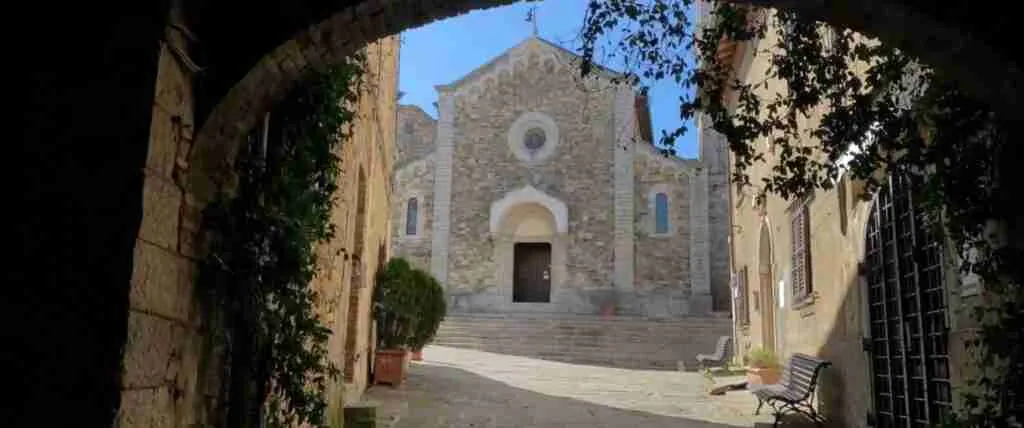
Contemporary Cortona preserves its Renaissance heritage within a functioning medieval hill town where steep stone streets, fortress walls, and compact urban fabric create atmosphere as authentic as any in Tuscany. The population of approximately 22,000 maintains traditional activities—agriculture in the surrounding valleys, artisan workshops in the historic center, weekly markets in Piazza Signorelli—alongside heritage tourism. This balance allows visitors to encounter Renaissance art embedded in living community rather than preserved as static museum displays. The annual Archidado crossbow competition, held every June, continues a tradition predating the Renaissance, connecting contemporary residents to centuries of local history through participatory ritual rather than passive heritage consumption.
Montepulciano: The Pearl of the Sixteenth Century
Montepulciano’s designation as “Pearl of the Cinquecento” reflects the town’s transformation during the sixteenth century when Florence’s finest architects descended on this strategic hilltop to create a showpiece of High Renaissance urbanism. Unlike Pienza’s rapid three-year construction or Cortona’s accumulated treasures, Montepulciano’s Renaissance identity emerged through sustained architectural patronage over several decades as rival noble families and civic institutions competed to erect increasingly magnificent palaces and churches. The result demonstrates Renaissance architecture’s capacity to reshape existing medieval urbanism through strategic interventions—inserting classically proportioned facades along ancient streets, reorienting civic focus through new piazzas, introducing architectural vocabulary that transformed visual character while respecting topographic and structural constraints.
Antonio da Sangallo the Elder dominates Montepulciano’s architectural narrative, his multiple commissions establishing the classical design principles subsequent architects followed. Sangallo, who worked extensively in Rome studying ancient buildings, brought sophisticated understanding of classical proportions, orders, and spatial organization to Tuscan provincial architecture. His Palazzo Tarugi and Palazzo Nobili-Tarugi on Piazza Grande demonstrate how Roman architectural language translated to Montepulciano’s hilltop setting—travertine facades organized by pilasters and cornices, arched loggias creating covered public spaces, proportional relationships among windows and doors establishing rhythmic harmony. These palaces didn’t simply adopt classical details but employed them within comprehensive architectural systems governing entire elevations.
The Church of San Biagio, located just outside Montepulciano’s walls in the valley below, represents Sangallo’s masterwork and one of the High Renaissance’s most perfect centralized churches. Built between 1518 and 1545, San Biagio applies Bramante’s theories about ideal church architecture—Greek cross plan, central dome, symmetrical four-armed composition—with exceptional material richness and spatial refinement. The entirely travertine exterior glows honey-gold in Tuscan light, the stone’s warm color and fine texture unified by classical orders applied with scholarly precision. The interior creates contemplative spaces through mathematical proportions and controlled natural light, fulfilling Renaissance ideals about architecture’s capacity to elevate spiritual experience through harmonic relationships and pure geometric forms.
Michelozzo di Bartolomeo, architect of Florence’s Palazzo Medici-Riccardi and other major commissions, contributed Montepulciano’s Palazzo Avignonesi and modifications to several churches. His work introduced Florentine architectural refinement—rusticated ground floors, symmetrical facade organizations, proportional window sequences—that influenced local building practices. The presence of both Sangallo and Michelozzo in Montepulciano created an informal laboratory where different approaches to classical revival competed and cross-fertilized, younger architects learning from both masters while developing personal variations on High Renaissance themes.
Jacopo Barozzi da Vignola, designer of the Gesù church in Rome that established Counter-Reformation architectural principles, worked in Montepulciano during his early career, contributing designs that show his developing command of spatial drama and architectural sequence. His influence appears in churches and palace facades that manipulate classical elements for heightened emotional effect—deeper entablatures casting stronger shadows, engaged columns creating more pronounced surface relief, portals and windows scaled for greater visual impact. This introduction of Mannerist tendencies alongside High Renaissance classicism enriched Montepulciano’s architectural vocabulary, the town’s buildings spanning the stylistic evolution from harmonious Renaissance equilibrium toward Baroque dynamism.
Piazza Grande, Montepulciano’s main square, encapsulates the town’s Renaissance transformation through the assemblage of buildings defining its perimeter. The medieval Palazzo Comunale, renovated with Renaissance features including a tower resembling Florence’s Palazzo Vecchio, establishes civic authority. Sangallo’s Palazzo Tarugi and Palazzo Nobili-Tarugi represent aristocratic patronage and architectural innovation. The Cathedral of Santa Maria Assunta, though retaining its fourteenth-century Gothic interior, received Renaissance facade modifications. The Palazzo Contucci, housing historic wine cellars, demonstrates continuity between Renaissance architecture and the Vino Nobile production that sustained Montepulciano’s economy. This architectural diversity within coordinated classical vocabulary creates urban space richer than Pienza’s idealized uniformity, showing how Renaissance principles adapted to complex existing contexts.
The monumental wine cellars carved into the volcanic tufo beneath Montepulciano’s Renaissance palaces represent functional architecture merging practical requirements with aesthetic aspirations. These underground spaces, excavated during the sixteenth century when Vino Nobile became commercially significant, employ barrel-vaulted ceilings, classical columnar supports, and proportional spatial organization that apply architectural sophistication to utilitarian purposes. The cellars’ current use for aging Vino Nobile continues traditions established during the Renaissance when the Contucci, Ricci, and other noble families began commercial wine production, their aristocratic palaces literally founded on wine economy. Visiting these cellars reveals Renaissance architecture’s comprehensive ambitions—applying classical design principles not only to temples and palaces but to every aspect of built environment.
Montepulciano’s Renaissance character extends beyond individual monuments to comprehensive urban experience shaped by the interaction of topography, architecture, and landscape. The town stretches along a narrow ridge, its primary street—the Corso—climbing steeply from lower gates to Piazza Grande at the summit. This linear organization creates dramatic architectural sequences where palaces, churches, and public spaces unfold along an ascending path that culminates in the civic and religious heart. Renaissance architects exploited this topography, positioning major buildings to punctuate the ascent and designing facades to create visual rhythms along the street’s length. The resulting urban experience—the controlled revelation of architectural set pieces, the framed views toward distant mountains, the calibrated spatial compression and release—demonstrates Renaissance urbanism’s sophisticated manipulation of movement, sight, and setting.
The architectural refinement visible in Montepulciano’s Renaissance palaces reflects the town’s economic vitality during the fifteenth and sixteenth centuries. Control of the Valdichiana valley’s agricultural wealth, strategic position on trade routes between Florence and Rome, and successful wine production generated capital for architectural patronage. Noble families competed through architecture, each palazzo representing family status and cultural sophistication. This competitive dynamic, characteristic of Renaissance Italy’s decentralized political structure, drove architectural innovation as patrons sought designs that would distinguish their buildings from rivals while contributing to collective civic beautification. The resulting urban landscape shows Renaissance architecture functioning as both private expression and public contribution.
Contemporary Montepulciano successfully balances Renaissance heritage preservation with ongoing economic vitality centered on Vino Nobile wine production. The town’s designation as “Pearl of the Sixteenth Century” attracts cultural tourists seeking Renaissance architecture, while wine enthusiasts visit cantinas beneath historic palaces. This dual identity creates sustainable tourism that respects architectural integrity—visitors move through Renaissance spaces still serving their original purposes rather than empty monuments converted to museums. The annual Bravio delle Botti festival, a barrel-rolling race through steep streets contested by the town’s eight contrade (districts), maintains community traditions and social structures with deep historical roots. Walking Montepulciano reveals a Renaissance town that evolved beyond the era rather than freezing at its peak, layers of subsequent architectural modifications and changing uses creating palimpsest richness while preserving essential Renaissance character.
Anghiari: Leonardo’s Lost Battlefield
Anghiari occupies unique position in Renaissance cultural memory as the site of the 1440 battle that Leonardo da Vinci immortalized in a fresco commissioned for Florence’s Palazzo Vecchio, a masterwork that survived only five years before being covered over and eventually lost. This connection to one of the Renaissance’s greatest unfulfilled artistic projects gives Anghiari’s perfectly preserved medieval-Renaissance streetscape particular poignancy—the actual battlefield that inspired Leonardo’s composition lies just beyond the fortress walls, the landscape relatively unchanged since Florentine forces defeated the Milanese army in a conflict that secured Florence’s territorial expansion. Today’s visitors encounter Anghiari as both a physical artifact of Renaissance military architecture and urbanism, and as a symbolic location in the mythology surrounding Leonardo’s lost works.
The Battle of Anghiari, fought June 29, 1440, represented a crucial moment in the complex political-military struggles among Italian states during the fifteenth century. Florence, having hired the condottiero (mercenary commander) Niccolò Piccinino and his forces, faced Milanese troops commanded by Francesco Piccinino in a battle fought in the valley below Anghiari’s fortress walls. The Florentine victory secured territorial control over the upper Tiber valley and established Florence’s military credibility against northern Italian powers. The battle’s strategic significance made it an appropriate subject when the Florentine republic, sixty years later, sought to decorate the Palazzo Vecchio’s Hall of Five Hundred with commemorative frescoes celebrating republican military victories.
Leonardo da Vinci received the commission in 1503 to paint the Battle of Anghiari on one wall of the Salone dei Cinquecento, competing directly with Michelangelo who simultaneously worked on a Battle of Cascina fresco for the opposite wall. This extraordinary artistic competition, pitting the era’s two greatest masters in direct confrontation, attracted enormous contemporary attention. Leonardo prepared extensively, making detailed drawings of warriors, horses, and battle equipment while experimenting with techniques for painting the large-scale fresco. His preparatory sketches, surviving in collections including the Uffizi and British Museum, show the artist’s revolutionary approach to depicting battle—not as orderly ceremonial engagement but as chaotic struggle where human and animal aggression, fear, and violence explode in tangled masses of bodies and weapons.
The central panel, known as the Battle for the Standard, concentrated action around Florentine and Milanese cavalry fighting for possession of a battle flag. Leonardo’s compositional innovations—the fierce expressions of warriors, the rearing horses with bared teeth, the swirling movement and psychological intensity—departed radically from conventional battle painting that emphasized heroic poses and clear narrative legibility. Descriptions by contemporary witnesses and copies by artists including Peter Paul Rubens preserve some sense of the fresco’s dramatic power, though Leonardo’s original remains lost. The artist abandoned the project in 1505, the experimental painting techniques he employed proving technically unstable. Giorgio Vasari later covered Leonardo’s unfinished work when renovating the Salone in the 1560s, leading to centuries of speculation about whether Leonardo’s fresco might survive beneath Vasari’s paintings.
Visiting Anghiari today allows imaginative reconstruction of the historical landscape that inspired Leonardo’s composition. The battlefield site, marked by a small chapel erected in 1441 to commemorate the Florentine victory, lies in the valley just beyond the fortress walls along the road to Sansepolcro. The terrain—relatively flat valley floor bordered by hills—corresponds to descriptions in contemporary battle accounts. Standing at the battlefield site and looking up toward Anghiari’s walls creates visceral connection to the historical event, the town’s fortress architecture and strategic hilltop position explaining why armies contested this particular landscape. The annual Palio della Vittoria, held every June 29th, reenacts messengers racing from the battlefield to announce the Florentine victory, maintaining community memory of the battle through participatory ritual.
Palazzo Taglieschi, a composite of medieval towers joined during the fifteenth century to create a Renaissance-style residence for the Taglieschi family, now functions as the Museo Statale di Palazzo Taglieschi displaying Renaissance art and artifacts. The collection includes works by Jacopo della Quercia, the Sienese sculptor whose refined Gothic naturalism influenced early Renaissance artists, and Andrea della Robbia, whose glazed terracotta sculptures represent one of the Quattrocento’s most distinctive artistic techniques. The museum’s medieval and Renaissance ceramics, textiles, and decorative arts illuminate daily life during Anghiari’s political and economic peak, when the town’s position on the Florence-Rome road brought commercial prosperity.
The Palazzo del Marzocco, also called the Palace of the Battle, houses a museum dedicated to the Battle of Anghiari’s history and to Leonardo’s lost fresco. Exhibits include a detailed diorama reconstructing the battlefield topography and troop movements, copies of Leonardo’s preparatory drawings, and reproductions of the various painted copies artists made of Leonardo’s fresco before its destruction. This specialized museum addresses visitors’ curiosity about the lost masterwork while situating it within the battle’s actual historical and geographical context. The top floor focuses specifically on Leonardo’s artistic process, examining the innovative drawing techniques and compositional strategies visible in surviving sketches.
Anghiari’s urban fabric preserves exceptional integrity, its steep stone streets, fortress walls, and medieval-Renaissance buildings creating immersive historical atmosphere. The town’s linear organization along a ridge, similar to Montepulciano’s topography but more compressed, produces dramatic urban spaces where stone buildings press close along narrow vicoli (alleys) punctuated by small piazzas offering momentary spatial release. The defensive architecture—towers, gates, wall sections—remains largely intact, allowing clear understanding of Renaissance military engineering. Walking through Anghiari replicates the physical experience of Renaissance urban life—the steep grades requiring physical exertion, the compressed spaces creating intimacy and social density, the stone surfaces generating acoustic environments where footsteps and voices echo.
The Church of Santa Maria delle Grazie, located just outside Anghiari’s walls, contains a portico with faded Renaissance frescoes depicting scenes from the town’s history including the Battle of Anghiari. These local artworks, created by artists whose names are largely forgotten, provide counterpoint to Leonardo’s lost masterwork—vernacular Renaissance painting serving community memory and devotional purposes rather than pursuing artistic innovation or individual fame. The church’s modest architectural character and worn frescoes create poignant contrast to the sophisticated achievements of recognized masters, reminding visitors that Renaissance culture encompassed vast range from experimental genius to traditional craftsmanship.
Contemporary Anghiari deliberately limits tourism development to preserve its character as a living medieval-Renaissance town rather than an open-air museum. The population of approximately 6,000 maintains traditional economic activities—agriculture, artisan workshops, small-scale manufacturing—alongside modest heritage tourism. This restraint in tourism infrastructure means visitors encounter fewer guided tours, interpretive signage, and commercial facilities than in more developed destinations, the trade-off being more authentic immersion in a town where Renaissance architecture houses actual community life. The relative scarcity of English-language information and accommodations filters visitors toward those genuinely interested in cultural heritage rather than casual tourists seeking easy consumption.
Anghiari’s position in the upper Tiber valley near the Tuscan-Umbrian border places it within the cultural territory associated with Piero della Francesca, whose birthplace of Sansepolcro lies just 8 kilometers away. The surrounding landscape—rolling agricultural hills punctuated by medieval towns, cypress windbreaks, and fortified farmhouses—appears in Piero’s paintings as background settings, his clear light and precise spatial rendering capturing the region’s distinctive visual character. Touring this landscape while moving between Anghiari and nearby Renaissance sites creates opportunities to see the actual terrain that shaped one of the Quattrocento’s most innovative painters, his mathematical approach to perspective and light developing through sustained observation of these specific views and atmospheres.
Supporting Cast: San Quirico, Montalcino, and the Val d’Orcia Network
The primary Renaissance towns—Pienza, Cortona, Montepulciano, Anghiari—exist within a broader network of smaller communities that contributed to the era’s cultural landscape while developing distinct artistic and architectural identities. San Quirico d’Orcia, Montalcino, Bagno Vignoni, and other hilltop settlements in the Val d’Orcia region each preserve Renaissance elements embedded within predominantly medieval urban fabric, creating layered cultural experiences where different historical periods coexist and interact. Understanding these supporting towns enriches appreciation of Renaissance Tuscany as a complex regional system rather than a collection of isolated monuments.
San Quirico d’Orcia occupies a strategic position along the Via Francigena, the medieval pilgrimage route from Canterbury to Rome that brought travelers through the Val d’Orcia. This traffic stimulated artistic patronage as religious institutions and wealthy residents commissioned artworks to beautify churches serving pilgrims. The Collegiate Church of San Quirico, largely Romanesque in structure, received Renaissance additions including carved choir stalls and decorative elements reflecting updated aesthetic tastes. The Horti Leonini, a Renaissance garden created in the 1580s, demonstrates how Italian garden design evolved during the late Cinquecento toward geometric formality and integration with urban settings. The garden’s box hedges, gravel paths, and central pavilion create contemplative space applying mathematical order to natural materials, the design philosophy connecting to broader Renaissance interests in harmonizing human intervention with natural processes.
Montalcino, perched on a higher hilltop west of Pienza, developed Renaissance architectural character through gradual modifications to its medieval core. The fortress, reconstructed in the fourteenth century, received Renaissance military engineering updates as artillery technology changed defensive requirements. Several churches and palaces along the town’s main street display Renaissance portals, windows, and facade organizations grafted onto older structures. The Diocesan Museum houses Renaissance paintings and liturgical objects demonstrating the religious patronage that sustained artistic production in smaller centers. Montalcino’s Renaissance contributions, while less spectacular than Pienza’s comprehensive urbanism or Montepulciano’s architectural concentration, illustrate how cultural movements penetrated regional hierarchies, even modest towns participating in aesthetic transformations sweeping larger centers.
Bagno Vignoni presents unusual Renaissance heritage centered on its thermal baths, a large rectangular pool occupying the town’s central piazza where natural hot springs emerge. The Renaissance rationalization of this natural phenomenon—enclosing the spring in a formal architectural basin, surrounding it with loggias and buildings organized along classical proportions—exemplifies the era’s approach to incorporating natural features within designed human environments. Renaissance bathers, including Catherine of Siena and Lorenzo de’ Medici who visited Bagno Vignoni for therapeutic purposes, encountered nature tamed and ordered through architectural intervention, the thermal waters made accessible and socially organized through building and infrastructure. The survival of the Renaissance bathing complex, though modified over centuries, preserves this integration of natural phenomena with cultural practices characteristic of the era’s comprehensive environmental vision.
The UNESCO World Heritage designation of the Val d’Orcia cultural landscape, encompassing these towns and the agricultural countryside connecting them, recognizes the Renaissance’s transformation of territory beyond urban limits. The carefully organized landscape visible between Pienza, San Quirico, and Montalcino—with its geometric field patterns, strategic tree plantings, and designed views—reflects deliberate human shaping guided by aesthetic and productive goals. Renaissance landowners applied principles of mathematical proportion and visual harmony not only to architecture but to agricultural systems, treating farmland as designed landscape rather than merely utilitarian space. The resulting countryside, with cypress rows marking property boundaries, geometric wheat fields creating color and texture patterns, and positioned farmhouses creating focal points in composed views, represents Renaissance landscape architecture on territorial scale.
This integrated landscape design connects to the era’s pictorial traditions—painters like Ambrogio Lorenzetti, Piero della Francesca, and Pinturicchio depicted Tuscan countryside with its ordered agricultural geometry as ideal settings for religious and allegorical subjects. The reciprocal relationship between painted landscapes and actual territorial organization suggests Renaissance culture’s comprehensive approach to visual environment, where pictorial representation, landscape design, and urban planning shared common aesthetic principles. Traveling through the Val d’Orcia today, particularly along secondary roads connecting hilltop towns, allows observation of this designed countryside that has survived relatively intact because agricultural patterns established during the Renaissance proved both productive and sustainable.
The smaller towns’ Renaissance heritage often appears in more intimate scale than major centers’ monumental achievements—a carved portal on a neighborhood church, a fresco fragment in a family chapel, a painted coat of arms on a palazzo facade. These modest elements reveal Renaissance aesthetics penetrating daily life and local contexts, the movement’s influence extending beyond commissioned masterworks to encompass vernacular architecture and decorative traditions. Observing these minor Renaissance traces, often overlooked by visitors focused on major monuments, provides texture and depth to understanding the era’s cultural transformations. Renaissance sensibilities reshaped not only cathedrals and palaces but also ordinary residential buildings, shop fronts, and public fountains, creating comprehensive visual environments where classical aesthetics became normative even for minor architectural elements.
The geographical clustering of these towns within a roughly 30-kilometer radius creates natural touring circuits allowing visitors to experience multiple Renaissance variations within limited travel distances. A single day might encompass Pienza’s ideal urbanism, San Quirico’s Renaissance garden, and Montalcino’s hilltop fortress, each location offering distinct Renaissance expressions while sharing common Val d’Orcia landscape context. This concentrated cultural geography, where successive hilltop towns appear along ridge lines separated by cultivated valleys, facilitates comparative observation—how different towns responded to Renaissance architectural possibilities, adapted classical vocabularies to local building traditions, and integrated new aesthetic principles with established urban forms.
The supporting towns’ Renaissance contributions also illuminate the era’s social dynamics and patronage networks. Unlike Pienza, created through papal authority and centralized planning, or Montepulciano, shaped by competing noble families’ architectural rivalry, smaller towns’ Renaissance developments often reflected ecclesiastical patronage—bishops, abbeys, and religious orders commissioning artworks and architectural improvements. This patronage pattern reveals the Church’s crucial role in disseminating Renaissance culture beyond major urban centers, prelates educated in humanist traditions bringing current aesthetic tastes to provincial sees. The relatively modest scale of resulting commissions, compared to papal or princely patronage in Rome or Florence, makes artistic achievement more accessible—visitors can comprehend entire pictorial programs or architectural ensembles without the overwhelming complexity of the Sistine Chapel or Palazzo Pitti.
Artistic Pilgrimage Routes: Following the Masters
Organizing travel through Tuscany’s lesser-known Renaissance towns according to artistic themes rather than purely geographical logic creates focused cultural experiences allowing deep engagement with specific painters, sculptors, or architectural traditions. Following Fra Angelico’s works from Cortona to Florence and Fiesole traces the development of one painter’s distinctive vision across multiple commissions and decades. Tracking Piero della Francesca’s presence in Sansepolcro, Arezzo, and Monterchi reveals an artist whose mathematical precision and metaphysical light transformed Renaissance painting. Pursuing Luca Signorelli from Cortona through Orvieto to other Umbrian and Tuscan sites illuminates the transition between Quattrocento and Cinquecento painting styles. These thematic itineraries require more selective travel but reward with coherent narratives about artistic evolution impossible to construct through geographically comprehensive touring.
The Fra Angelico route begins in his birthplace of Vicchio, a small town in the Mugello valley north of Florence where the Museo Beato Angelico preserves documentation about the artist’s early life and local works. Proceeding to Cortona to encounter the Annunciation altarpiece in its current Diocesan Museum location, then to Florence’s San Marco convent where Fra Angelico painted extensive fresco cycles between 1438-1445, creates opportunities to observe how the artist’s style evolved from panel painting to fresco, from relatively small altarpieces to comprehensive wall decoration programs. The San Marco frescoes, particularly the Annunciation at the top of the dormitory stairs and the individual cells’ devotional images, demonstrate Fra Angelico’s mastery of creating contemplative spiritual spaces through restrained compositions, luminous colors, and architectural settings that extend actual architecture. The route might conclude at the Uffizi Gallery housing several Fra Angelico panels, or at churches in Fiesole where the artist lived much of his life, the comprehensive survey revealing consistent spiritual intensity and innovative technical facility across diverse commissions and decades.
Piero della Francesca’s territory centers on the upper Tiber valley straddling the Tuscan-Umbrian border, his birthplace of Sansepolcro serving as the route’s anchor. The Museo Civico in Sansepolcro preserves two major Piero works—the Resurrection fresco showing the risen Christ stepping from his tomb with monumental solidity, and the polyptych of the Madonna della Misericordia commissioned by the local confraternity. These works, created for Piero’s hometown audiences, demonstrate the artist’s revolutionary approach to spatial construction, his figures occupying mathematically precise environments where perspective generates pictorial space with architectural clarity. Proceeding to Arezzo’s San Francesco church, where Piero painted the Legend of the True Cross fresco cycle in the choir between 1452-1466, reveals the artist’s mature achievements—narrative complexity spanning multiple historical moments, sophisticated light effects creating atmospheric unity, and dignified figures whose gestures and expressions convey psychological depth through understated means.
The Piero route might extend to Monterchi, a small hilltop village where the Madonna del Parto fresco depicts a pregnant Virgin in a composition of startling simplicity and power, or to Urbino where the Ducal Palace houses Piero’s enigmatic Flagellation and the double portrait of Federico da Montefeltro and his wife. Pursuing this route through actual landscapes Piero knew and painted—the agricultural hills around Sansepolcro, the fortified towns along the Tiber valley, the distinctive light and atmosphere of the region—connects his painted backgrounds to observed reality, revealing how the artist’s precise rendering of spatial relationships and atmospheric effects derived from sustained attention to this specific terrain. The landscapes appearing behind figures in Piero’s paintings become recognizable as stylized but fundamentally accurate representations of the upper Tiber valley’s characteristic forms.
Luca Signorelli’s artistic geography spans Cortona, his birthplace and the site of major works in the Diocesan Museum, to Orvieto where the Chapel of San Brizio frescoes in the cathedral represent his supreme achievement, with additional important works in Città di Castello, Matelica, and other towns. The Orvieto frescoes, depicting the Last Judgment and related apocalyptic scenes, showcase Signorelli’s mastery of complex multi-figure compositions, dramatic foreshortening, and powerful anatomical rendering. The chapel’s walls teem with hundreds of figures—the resurrected dead emerging from earth, the damned suffering torments, angels and demons battling—all rendered with ferocious energy and technical virtuosity. Michelangelo acknowledged studying these frescoes before painting the Sistine Chapel’s Last Judgment, Signorelli’s innovative figure poses and anatomical precision influencing the younger artist’s approach.
Following Signorelli’s career from Cortona’s relatively modest early works to Orvieto’s monumental achievement reveals an artist who absorbed Piero della Francesca’s geometric clarity and scientific perspective while developing more dynamic, emotionally charged compositional strategies suited to Counter-Reformation religious fervor. The evolution visible across Signorelli’s oeuvre illuminates broader shifts in Italian painting from Quattrocento intellectual restraint toward Cinquecento dramatic intensity, his career bridging these stylistic periods. The route might include lesser-known Signorelli works in provincial churches and museums, these minor commissions often revealing technical experiments and compositional variations the artist explored alongside major projects.
Architectural itineraries might follow specific architects’ works—tracing Antonio da Sangallo through Montepulciano and other towns where he designed palaces and churches, or pursuing Bernardo Rossellino from Pienza to Florence to observe how his architectural principles adapted to different scales and contexts. These focused routes sacrifice geographical comprehensiveness for thematic coherence, the concentration on single artists or architects creating narrative continuity and allowing deeper understanding of individual creative vision. The trade-off involves more selective travel, sometimes backtracking or skipping geographically proximate sites to maintain thematic focus, but the intellectual rewards justify logistical inefficiency for visitors prioritizing cultural depth over comprehensive coverage.
Practical Considerations: Navigating the Renaissance Circuit
Accessing Tuscany’s lesser-known Renaissance towns requires different logistical strategies than visiting Florence or Siena, where extensive tourism infrastructure supports millions of annual visitors. These smaller centers deliberately limit tourist facilities to preserve character and prevent overtourism, meaning accommodation options range from limited to scarce, restaurant reservations become essential during peak periods, and public transportation options can be minimal. Success navigating this circuit requires advance planning, flexibility, and willingness to embrace slower travel rhythms where spontaneity sometimes yields to logistical realities.
Transportation represents the primary practical challenge. While Cortona maintains a train station on the Florence-Rome main line, most towns in this circuit lack rail connections, requiring automobile or bus travel. Renting a car provides maximum flexibility for exploring the Renaissance towns and the connecting countryside, allowing spontaneous stops at viewpoints, minor sites, and countryside attractions impossible to access via public transportation. However, driving in Italian hill towns presents challenges—narrow medieval streets where cars barely fit, limited parking often restricted to residents, confusing one-way systems, and restricted traffic zones enforced by cameras that mail fines to rental companies months after violations. Success requires patience, careful parking research before entering historic centers, and acceptance that walking substantial distances from parking areas to actual destinations is standard practice.
Bus service connects some towns, particularly Montepulciano and Pienza which share regular connections through the Val d’Orcia. However, schedules often limit feasible same-day combinations, and reduced service on weekends and holidays can strand visitors or force inconvenient timing. Travelers relying on public transportation should research current schedules carefully, build buffer time for potential delays, and prepare for longer overall journey times than automobile travel would require. The slower pace, while frustrating for schedule-conscious visitors, encourages deeper engagement with individual locations rather than rushing through multiple sites daily—a travel philosophy arguably more appropriate for appreciating Renaissance art and architecture than maximizing location counts.
Accommodation planning requires balancing location, character, and availability. Each town offers limited sleeping options compared to major tourist centers, and popular periods—particularly May through October—can see full booking months in advance. Pienza and Montepulciano provide the most accommodation choices, from small hotels in converted historic buildings to countryside agriturismi (farm stays) offering rural tranquility and regional cuisine. Cortona’s larger size supports broader hotel selection at various price points. Anghiari’s deliberate tourism restraint means very limited in-town sleeping options, though nearby Sansepolcro provides additional possibilities. Choosing accommodation strategically—perhaps basing in Montepulciano for southern circuit access or Cortona for northern sites—allows day trips while maintaining consistent lodging.
Visiting smaller museums and churches requires respecting local operating hours that may differ substantially from major museum schedules. Many small-town museums close for extended lunch periods, shut down entirely on certain weekdays, or maintain seasonal hours with reduced winter access. Churches keep even more variable schedules, often closing during midday and opening only for morning and evening mass. Palazzo Piccolomini in Pienza, several Montepulciano palace museums, and various churches containing significant artworks may be accessible only during limited hours or by appointment. Successful navigation requires advance research about current hours, flexibility to adjust plans when unexpected closures occur, and patience with Italian cultural rhythms where afternoon rest periods remain sacrosanct regardless of tourist demand.
Dining in these towns offers both opportunities and constraints. The smaller size ensures most restaurants emphasize local cuisine and regional wines rather than generic tourist menus, providing authentic gastronomic experiences. However, limited restaurant capacity means reservations become essential, particularly for dinner during busy periods. Local specialties reflect agricultural traditions—pici pasta around Pienza and Montepulciano, bistecca alla fiorentina from Valdichiana cattle, pecorino cheese from Val d’Orcia sheep, Vino Nobile from Montepulciano, Brunello from Montalcino. These culinary traditions connect directly to Renaissance-era foodways and agricultural systems, the dishes visitors consume maintaining continuity with ingredients and preparations known to Piero della Francesca or Antonio da Sangallo.
Language considerations matter more in smaller towns than in heavily touristed destinations where English becomes a service lingua franca. While major hotels and some restaurants may have English-speaking staff, many smaller establishments, museums, and service providers operate primarily in Italian. Basic Italian phrases for greetings, requests, and gratitude smooth interactions and demonstrate respect for local culture. Many Renaissance artworks and buildings lack English signage or interpretation, requiring either advance background research or comfort with linguistic ambiguity. This language barrier, while potentially challenging, contributes to more authentic cultural immersion—forcing visitors to engage with Italian cultural contexts on local terms rather than expecting complete adaptation to English-speaking tourist needs.
Optimal visiting seasons balance weather, crowds, and landscape aesthetics. Late spring (April-May) and early autumn (September-October) provide temperate weather, manageable tourist numbers, and attractive countryside with blooming flowers in spring or harvest activities in autumn. Summer brings heat that can make unshaded hill town exploration exhausting, though longer daylight hours allow extended visiting and the Val d’Orcia landscape takes on its characteristic golden-wheat appearance. Winter months see reduced tourist numbers and lower accommodation prices but shorter daylight, potential cold/wet weather, and some attractions maintaining reduced hours or closing entirely. The Renaissance architectural and artistic heritage remains accessible year-round, the choice of season affecting primarily comfort and practical logistics rather than fundamental cultural accessibility.
Photography enthusiasts should note that many churches and museums restrict flash photography or prohibit images entirely, particularly of altarpieces and frescoes where light damage risks deteriorate fragile pigments. Respecting these restrictions demonstrates cultural sensitivity and helps preserve artworks for future generations. The towns’ architectural character photographs beautifully in natural light, particularly during golden hours after dawn and before sunset when angled sunlight sculpts building facades and illuminates landscape forms. The Val d’Orcia countryside between towns offers exceptional photographic opportunities with its composed agricultural geometry and strategic tree plantings creating classic Tuscan imagery, though truly distinctive photographs require moving beyond standard viewpoints to discover fresh perspectives.
Cultural Context: Understanding Renaissance Tuscany Beyond the Guidebook
Fully appreciating these Renaissance towns requires understanding the historical, political, and intellectual contexts that shaped their development beyond the architectural and artistic descriptions that dominate guidebook coverage. The Renaissance emerged from specific historical conditions—the political fragmentation of Italy into competing city-states and principalities, the revival of classical learning through recovered ancient texts, the economic prosperity generated by banking and trade, and the patronage systems that channeled wealth toward cultural production. These contextual factors manifested differently in Tuscany’s smaller towns than in Florence, creating distinct local expressions of broader Renaissance movements.
The political relationships among Tuscan towns fundamentally shaped their architectural and artistic development. Montepulciano’s Renaissance transformation reflected competition between Florence and Siena for control of this strategic hilltop—both republics sought to demonstrate cultural superiority and secure local loyalty through architectural patronage. The town’s gradual shift from Sienese to Florentine allegiance during the fifteenth century appears visually in architecture, Gothic Sienese influences yielding to Florentine Renaissance classicism. Pienza’s creation by Pope Pius II expressed papal authority and humanist vision simultaneously, the small town becoming a demonstration project for how intellectual ideals could reshape actual communities. Cortona’s position as a Florentine subject territory brought Florentine artistic influences, while its border location near Umbria and proximity to Perugia exposed it to alternative artistic currents.
Economic foundations supporting Renaissance cultural production varied among towns. Montepulciano’s wine production and agricultural wealth from Valdichiana valley control generated capital for architectural patronage by local noble families competing for social prestige. Pienza’s rapid transformation depended on papal financial resources Pope Pius II could command during his brief pontificate, the concentrated investment possible only through centralized ecclesiastical authority. Cortona’s prosperity derived from agricultural production and strategic location controlling valley trade routes, the wealth supporting local religious institutions and noble families who commissioned artworks for churches and palaces. Understanding these economic substrates reveals Renaissance culture’s material foundations—artistic flowering required not just aesthetic vision but disposable wealth and patronage systems directing it toward cultural rather than purely utilitarian purposes.
Intellectual currents flowing through Renaissance Tuscany appear most visibly in Pienza, where Pope Pius II’s humanist education directly shaped urban planning reflecting classical ideals about harmony, proportion, and rational social organization. The pope’s extensive writings about architecture, urbanism, and ideal city concepts influenced Rossellino’s design implementation. Other towns participated in humanist culture through educational networks, correspondence with major intellectual centers, and patronage by humanist-educated clergy and nobles. Local humanists like Montepulciano’s Angelo Poliziano contributed to broader Italian intellectual life while maintaining connections to hometown communities. This intellectual exchange network meant even relatively small towns encountered current philosophical and aesthetic ideas through educated elites who studied in Florence, Rome, or other major centers before returning home.
Religious contexts profoundly influenced Renaissance artistic production in these towns. The Counter-Reformation, developing during the later sixteenth century in response to Protestant challenges to Catholic authority, shaped commissions for church decoration and religious imagery. Luca Signorelli’s dramatic apocalyptic scenes in Orvieto’s cathedral reflected Counter-Reformation emphasis on judgment, salvation, and Church authority. The construction and decoration of new churches according to Counter-Reformation architectural principles transformed urban religious landscapes. Understanding these religious contexts explains why certain subjects, compositional strategies, and emotional tones characterize Renaissance art in provincial Tuscan towns—not just artistic fashion but theological positions, devotional practices, and institutional religious agendas shaped what patrons commissioned and artists created.
The social structures of Renaissance Tuscan towns differed from modern democratic societies, hierarchical organizations where noble families, wealthy merchants, ecclesiastical authorities, and guild members held political power while peasants and laborers existed in subordinate positions. This social hierarchy appears visually in urban architecture—noble palaces dominating main squares, churches commanding elevated positions, workers’ housing compressed in marginal locations. Renaissance artistic patronage reflected these power structures, commissioned artworks asserting patron status while contributing to civic beautification that enhanced collective prestige. Understanding patronage’s social dimensions reveals Renaissance art functioning not as pure aesthetic expression but as social communication, artworks simultaneously serving devotional purposes, demonstrating patron wealth and taste, honoring family lineages, and contributing to competitive civic reputation.
Military contexts shaped Renaissance urban development, these hilltop towns serving defensive purposes before becoming cultural showcases. Montepulciano’s fortress architecture, Cortona’s walls, and Anghiari’s strategic hilltop position all reflect origins as military strongholds. The transition from primarily military to increasingly cultural functions during the Renaissance tracked broader patterns of state consolidation reducing inter-city warfare. As Florence established territorial control and relative peace prevailed, resources formerly devoted to fortification could redirect toward architectural beautification and artistic patronage. However, military architecture never disappeared completely—Renaissance fortress walls, gates, and towers coexisted with classical palaces and churches, the layering revealing transitions from medieval military culture toward Renaissance aesthetic sophistication without complete replacement.
Synthesis: The Renaissance as Living Heritage
What distinguishes Tuscany’s lesser-known Renaissance towns from the region’s major tourist centers is the persistence of Renaissance spatial relationships, architectural contexts, and community functions largely intact despite five centuries of subsequent history. Walking Pienza’s streets replicates Renaissance pedestrian experiences because the urban geometry Rossellino designed remains functionally unchanged—building heights, street widths, piazza proportions, sight lines all preserve fifteenth-century configurations. Viewing Fra Angelico’s altarpieces in Cortona’s Museo Diocesano, while not seeing them in their original church locations, at least encounters them in a former religious building where architectural scale and natural light conditions approximate original contexts. Descending into Montepulciano’s Renaissance wine cellars accesses spaces still serving their designed purposes, the barrel-vaulted chambers housing Vino Nobile as they have for five hundred years.
This persistence of original contexts and functions makes these towns valuable not just as Renaissance art repositories but as laboratories for understanding how Renaissance spatial and architectural innovations shaped lived experience. Modern visitors moving through these environments encounter Renaissance urbanism, architecture, and landscape design as functional systems rather than historical abstractions. The experience of climbing Montepulciano’s steep Corso, discovering architectural monuments sequentially along the ascent, reveals Renaissance urban design’s sophisticated manipulation of topography and movement. Standing in Pienza’s Piazza Pio II, experiencing the trapezoidal space’s proportional relationships and framed landscape views, demonstrates Renaissance theories about ideal public space applied to actual urban contexts. Walking Anghiari’s compressed medieval streets illustrates pre-Renaissance urbanism, creating instructive contrast to Pienza’s rationalized geometry.
The intellectual challenge these towns present is maintaining historical awareness while avoiding romanticization—recognizing both Renaissance achievements and limitations, appreciating artistic innovations while acknowledging the hierarchical, often violent societies that produced them. Renaissance urban beauty emerged from deeply unequal social structures where elite minority patronage directed communal resources toward projects serving their interests and tastes. Renaissance artistic sophistication coexisted with political instability, endemic warfare, religious intolerance, and social stratification that would appall contemporary liberal sensibilities. Appreciating Renaissance cultural achievements requires neither endorsing the societies that produced them nor dismissing accomplishments because their contexts offend modern values, but rather understanding them as historical phenomena embedded in specific social conditions that differed fundamentally from contemporary norms.
The ongoing challenge facing these towns is balancing heritage preservation with economic vitality and community sustainability. Tourism provides economic benefits and justifies conservation investment, but excessive visitor numbers threaten the architectural integrity and community character that make these towns distinctive. Pienza navigates this tension through controlled tourism development emphasizing quality over quantity—encouraging longer stays and deeper engagement rather than brief stops by bus tour masses. Montepulciano’s wine economy provides alternative revenue reducing dependence on heritage tourism alone. Anghiari’s deliberate tourism restraint maintains community character while accepting reduced economic benefits from visitor spending. These different strategies reflect local circumstances and priorities, each approach seeking sustainable balance between preservation and adaptation.
Future challenges include climate change impacts on Renaissance architectural fabric—temperature fluctuations, moisture changes, and extreme weather events threatening stone buildings and fresco preservation. Population decline as younger residents migrate toward larger cities undermines community vitality and traditional knowledge transmission about historic building maintenance and local cultural practices. Economic pressures encouraging conversion of historic buildings from residential to tourist commercial uses gradually transforms towns from living communities into heritage theme parks. These challenges require ongoing attention and creative solutions balancing conservation priorities with community needs.
The Renaissance towns’ greatest value may be demonstrating possibilities for human-scaled urbanism emphasizing pedestrian experience, architectural quality, landscape integration, and community-centered public spaces—principles increasingly relevant as contemporary urbanism confronts automobile dominance, anonymous development, and placeless standardization. Walking these towns reveals how thoughtfully designed built environments enhance daily life quality, create social interaction opportunities, and establish meaningful relationships between human settlement and natural landscape. While specific Renaissance architectural vocabularies may hold limited contemporary relevance, the underlying principles about proportion, scale, pedestrian experience, and landscape integration offer transferable lessons for current urban design challenges.
Frequently Asked Questions: Renaissance Tuscany’s Hidden Towns
How long should I allow for exploring these Renaissance towns?
A comprehensive exploration of Pienza, Cortona, Montepulciano, and Anghiari requires minimum five to seven days allowing full day or longer in each location. Rushing through in two or three days sacrifices depth for breadth, missing the architectural details, artistic subtleties, and atmospheric qualities that distinguish these towns. Pienza merits at least half day to explore the cathedral, Palazzo Piccolomini, museums, and surrounding streets, though a full day allows time for countryside walks and unhurried observation. Cortona deserves full day minimum given the Museo Diocesano’s Fra Angelico and Signorelli collections, multiple significant churches, archaeological museum, and the town’s substantial geographic extent across its hillside. Montepulciano requires full day to properly explore Piazza Grande, multiple Renaissance palaces, San Biagio church, and wine cellars while allowing time for the steep climb through town. Anghiari can be seen in half day if treating it purely as architectural experience, but a full day allows proper museum visits and surrounding landscape exploration. Adding Val d’Orcia support towns like San Quirico and Montalcino extends the itinerary further. Travelers seeking deep engagement with individual sites—extended time sketching architecture, photographing landscapes at different light conditions, or revisiting particular artworks—might easily spend two weeks exploring this circuit without exhausting worthwhile experiences.
Can I visit these towns without speaking Italian?
Yes, though the experience differs substantially from visiting Florence or Venice where tourism infrastructure assumes English-speaking visitors. Major hotels and some restaurants in Cortona, Montepulciano, and Pienza employ English-speaking staff or provide English menus, but many smaller establishments, museums, and shops operate primarily in Italian. Successful navigation without Italian requires patience, basic phrase learning (greetings, numbers, common requests), willingness to use translation apps, and comfort with occasional misunderstandings. Museum signage varies—some major collections provide English labels while others offer only Italian text, making advance background reading about artworks and architecture valuable. Church visiting presents particular challenges since most lack any English information, the art and architecture requiring either guidebook research or acceptance of encountering works without detailed contextual knowledge. The language barrier, while sometimes frustrating, contributes to authentic cultural immersion and discourages surface-level tourism, self-selecting for visitors genuinely interested in Renaissance heritage rather than casual sightseers seeking convenient consumption. Learning basic Italian phrases demonstrates respect and often elicits helpful responses from locals who appreciate the effort even when communication remains imperfect.
What distinguishes these towns from Florence’s Renaissance heritage?
Scale, context, and accessibility create fundamental differences between experiencing Renaissance culture in Florence versus these smaller towns. Florence’s Renaissance heritage appears in overwhelming concentration—dozens of major monuments, museums containing thousands of artworks, crowds of millions requiring advance reservations and timed entries. Smaller towns offer more intimate scales where visitors can comprehend entire collections or architectural ensembles in single visits, return repeatedly to favorite works without crowds, and encounter art in contexts approaching original intentions. Cortona’s Museo Diocesano allows solitary contemplation of Fra Angelico’s Annunciation in a former church where natural light still illuminates the work, an experience impossible in Florence’s crowded Uffizi where the same artist’s paintings hang in galleries designed for mass viewing. Pienza presents Renaissance urban planning as complete system rather than isolated monuments scattered across modern city, the comprehensive vision legible walking between buildings whose spatial relationships Rossellino designed. Florence obviously surpasses smaller towns in quantity and fame of masterworks, but the lesser-known centers offer quality of engagement impossible in heavily touristed major destinations—sustained observation without crowds, artworks and architecture still functioning in original or analogous contexts, and Renaissance environments preserved at human scale rather than expanded to metropolitan proportions.
Which town best represents Renaissance ideals?
Pienza represents Renaissance ideals most purely through comprehensive application of humanist urban planning principles to create entirely new town reflecting theoretical concepts about harmony, proportion, and rational social organization. The transformation of Corsignano into Pienza between 1459-1462 realized Leon Battista Alberti’s architectural theories and Pope Pius II’s philosophical vision, producing the only fully executed Renaissance ideal city where every building, street, and piazza emerged from unified design conception. However, “best” depends on what Renaissance aspects interest particular visitors. Montepulciano’s layered architectural evolution from medieval through High Renaissance shows how the movement adapted to existing urban contexts and topographic constraints rather than starting fresh, demonstrating Renaissance’s practical applications alongside theoretical ideals. Cortona’s concentration of Fra Angelico and Signorelli masterworks represents Renaissance painting’s spiritual and technical achievements more effectively than its architecture. Anghiari preserves Renaissance-era urban fabric and spatial relationships with exceptional integrity despite lacking Pienza’s theoretical purity or Montepulciano’s architectural concentration. Each town excels at revealing different Renaissance facets—Pienza for urban planning, Montepulciano for High Renaissance architecture, Cortona for painting, Anghiari for authentic spatial preservation—making the choice of “best” depend on individual interests and priorities rather than any objective superiority.
How accessible are these towns for visitors with mobility limitations?
These hilltop towns present significant accessibility challenges for visitors with mobility limitations, their Renaissance and medieval origins predating any consideration of universal design principles. Steep streets with irregular stone paving, buildings lacking elevators, churches requiring stair climbing, and medieval urban fabric without level pedestrian routes create obstacles throughout. Pienza’s relatively compact historic center and flatter topography make it most accessible, though even here cobblestone paving and occasional steps present challenges. Cortona and Montepulciano’s positions on steep hillsides mean constant elevation changes, the primary streets climbing hundreds of vertical meters from lower gates to upper piazzas. Anghiari’s compressed medieval layout includes numerous staircases and steep vicoli impossible to navigate without climbing. Some major sites provide limited accessibility—Palazzo Piccolomini in Pienza has elevator access to certain floors, and some museums offer ground-floor galleries even when upper levels remain inaccessible. However, comprehensive exploration of these towns requires ability to walk extended distances on irregular surfaces and climb stairs without assistance. Visitors with mobility limitations should research specific sites in advance, contact attractions directly about accessibility provisions, consider hiring local guides who can optimize routes minimizing obstacles, and prepare for selective visiting focused on accessible highlights rather than comprehensive coverage. The harsh reality is that preserving architectural authenticity inherently conflicts with modern accessibility standards, these towns representing historical environments designed for able-bodied populations rather than universally accessible spaces.
Are these towns worth visiting for travelers focused primarily on art?
Absolutely, though with different emphases than Florence’s comprehensive painting and sculpture collections. Cortona’s Museo Diocesano preserves Fra Angelico and Luca Signorelli masterworks of unquestionable significance to Renaissance art history, works that in Florence’s Uffizi would attract crowds but in Cortona allow sustained private observation. The museum’s scale permits viewing the entire collection in single visit, creating opportunities to understand each artist’s oeuvre within Cortona context rather than encountering isolated works scattered among hundreds of other paintings. Pienza’s cathedral altarpieces by leading Sienese painters demonstrate Renaissance painting’s regional variations, the Sienese emphasis on decorative refinement and color contrasting with Florentine focus on sculptural form and perspective construction. Montepulciano contains less significant painting collections but rewards art-focused visitors through integration of art with original architectural contexts—altarpieces still occupying their designed positions in Renaissance churches, the relationship between pictorial space and actual architecture preserved. The smaller towns excel at presenting Renaissance art functioning within designed environments rather than isolated in museum galleries, revealing how paintings, sculptures, and architecture collaborated to create comprehensive aesthetic experiences. Visitors whose art interests extend beyond canonical masterworks to include understanding patronage networks, regional stylistic variations, and the relationship between art and architecture will find these towns exceptionally rewarding. Those seeking only greatest-hits encounters with universally recognized names should probably focus on Florence, but serious students of Renaissance art will discover essential works and valuable contextual understanding in the lesser-known centers.
How do these towns connect to broader Renaissance cultural geography?
These Tuscan towns occupied important positions within Renaissance Italy’s complex cultural networks despite their relatively small size and peripheral geography. Cortona’s location on the Tuscan-Umbrian border connected it to artistic circles in both Florence and Perugia, local artists and patrons participating in broader regional networks through travel, correspondence, and commission exchanges. Luca Signorelli’s career took him from Cortona to major commissions in Rome, Orvieto, and other centers while maintaining hometown connections, his mobility typical of Renaissance artists who circulated among multiple patronage centers. Montepulciano’s strategic importance to Florence brought leading Florentine architects to design major buildings, importing High Renaissance architectural sophistication to this provincial hilltop. Pienza represented papal patronage extending Renaissance urbanism beyond major ecclesiastical centers, Pope Pius II’s humanist education and Roman connections bringing cutting-edge architectural theory to rural Tuscany. The circulation of artists, architects, patrons, and ideas across Renaissance Italy meant even small towns could access current innovations through networked relationships, while local artistic traditions and patronage preferences created regional variations distinguishing Tuscan, Umbrian, Roman, and other Renaissance expressions. Understanding these towns requires recognizing them as nodes within broader cultural systems rather than isolated phenomena, their Renaissance achievements reflecting participation in pan-Italian artistic networks while developing distinctive local characters.
What role did the Counter-Reformation play in these towns’ development?
The Counter-Reformation, developing from the mid-sixteenth century as Catholic Church response to Protestant challenges, significantly influenced religious art and architecture in these Tuscan towns despite their peripheral position relative to Rome’s ecclesiastical authority. New church construction and redecoration of existing churches followed Counter-Reformation principles emphasizing clarity of religious messaging, emotional engagement through dramatic imagery, and architectural grandeur asserting Catholic majesty. Luca Signorelli’s apocalyptic frescoes in Orvieto, while predating the official Counter-Reformation, anticipated its emphasis on judgment, damnation, and salvation as motivation for orthodox belief and practice. Montepulciano’s churches received baroque decorative programs during the Counter-Reformation period, the ornate altars and ceiling frescoes creating emotionally compelling environments intended to inspire devotional fervor. Counter-Reformation influence appears less obviously in these towns than in major ecclesiastical centers like Rome where massive church building programs transformed urban landscapes, but careful observation reveals period-appropriate modifications to church interiors, new devotional imagery emphasizing Counter-Reformation theological positions, and architectural adjustments improving acoustics for preaching and visibility of liturgical action—practical changes supporting Counter-Reformation emphasis on clergy-led mass and sermon-based religious instruction. The layering of Counter-Reformation elements onto earlier Renaissance structures creates palimpsest richness where different reform movements’ visual languages coexist and sometimes conflict, the aesthetic tensions revealing theological and institutional evolution across turbulent sixteenth and seventeenth centuries.
How has tourism affected these towns’ character and authenticity?
Tourism’s impact varies substantially among these towns based on visitor volume, infrastructure development, and local policy choices. Pienza experiences relatively heavy visitation given its small size and UNESCO designation, resulting in tourist-oriented commercial development—multiple restaurants and shops targeting visitors, day-trip bus tours arriving regularly, seasonal crowding in the historic center. This tourism has preserved buildings and financed conservation while transforming economic base from agriculture toward service industry, the resident population now heavily involved in tourism-related businesses. Montepulciano balances wine tourism with heritage visiting, the dual identity creating economic resilience while wine production maintains traditional landscape use and agricultural continuity. Cortona’s larger size and permanent population preserve more local community character despite significant tourism, residential areas and everyday commerce coexisting with heritage attractions. Anghiari’s deliberate tourism restraint maintains authentic small-town atmosphere, though limited economic benefits from visitors mean reduced resources for building conservation and potential population decline as young people seek opportunities elsewhere. The fundamental tension involves tourism providing economic justification for heritage preservation and funds for building maintenance versus tourism pressures encouraging conversion of residential space to commercial use, adapting historic environments to visitor expectations rather than community needs, and creating dependency on visitor spending vulnerable to external shocks. Current relatively modest tourism levels allow these towns to maintain living community character while generating heritage preservation benefits, though increasing visitor numbers could shift balance toward museum-town status where authentic local life yields to tourist service industry.
What makes the Val d’Orcia landscape culturally significant?
The Val d’Orcia landscape surrounding Pienza, San Quirico, and other towns represents Renaissance landscape architecture at territorial scale, the agricultural patterns and visual composition reflecting deliberate human design guided by aesthetic and productive goals. During the Renaissance, landowners reorganized the valley’s agricultural systems according to rational principles, dividing properties with geometric precision, planting cypress windbreaks marking boundaries and creating visual focal points, and establishing field patterns whose color and texture variations created composed views. This designed landscape, rather than emerging from purely utilitarian farming decisions, reflected Renaissance beliefs about humanity’s proper relationship with nature—not passive acceptance of natural conditions but active shaping toward productive and aesthetic ideals. The result is countryside functioning as three-dimensional painting where agricultural elements—wheat fields, olive groves, vineyard rows, strategic tree plantings—compose visual scenes with intentional color harmonies, proportional relationships, and sight-line compositions. UNESCO’s recognition of the Val d’Orcia as cultural landscape acknowledges this integration of productive agriculture with deliberate aesthetic design, the valley representing rare survival of Renaissance landscape principles applied comprehensively across working countryside rather than limited to aristocratic villa gardens. Contemporary visitors viewing the Val d’Orcia from hilltop towns or traversing it on connecting roads encounter substantially the same landscape compositions visible in Renaissance paintings, the agricultural pattern’s persistence across five centuries demonstrating sustainability of well-designed land use systems balancing productivity, environmental stewardship, and aesthetic quality.