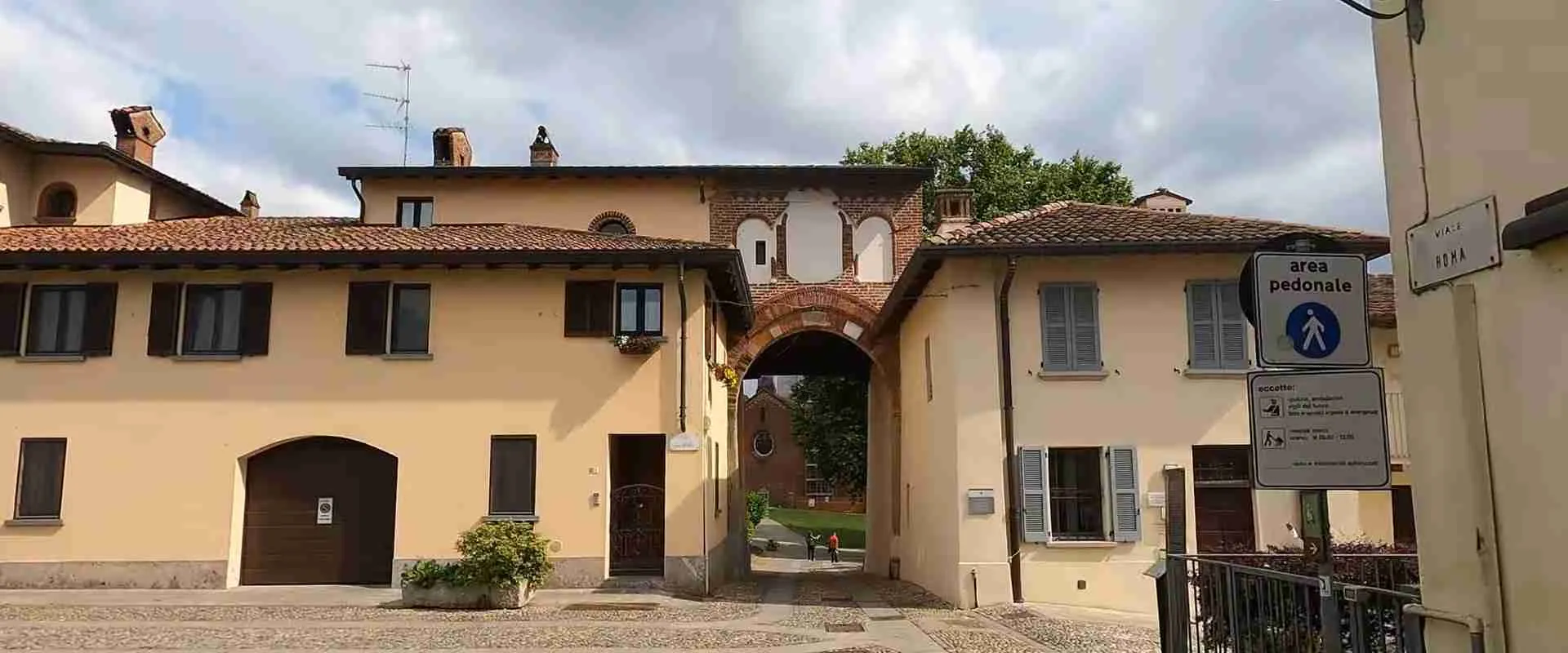
The Romanesque Monastic and Fluvial Border Circuit: An Alternative Self-Drive Road Trip Guide 2026
Six medieval monasteries mark the contested frontier zones between the Duchy of Milan, the Duchy of Savoy, the Marquisate of Monferrato, and the Duchy of Piacenza, each foundation hugging the course of a border river — the Ticino, the Trebbia, the Tanaro, the Sesia — across a self-drive arc of approximately 575 kilometres that deliberately bypasses every canonical tourist circuit in northern Italy. Running from the Milanese hinterland through the Oltrepò Pavese hills, the Val Trebbia, the Emilian Po plain, the Monferrato plateau, and the Vercellese rice lowlands, this 2026 guide covers the complete day-by-day stages, verified admission logistics, overnight stop guidance, and a full cost analysis for three budget tiers.
- Circuit length and duration: approximately 575 km best driven over five days , forming a complete loop with no backtracking; a four-day compressed version works for experienced road-trippers.
- Admission economics: four of the six primary abbeys charge no admission; Morimondo’s full guided monastery tour costs €6 per adult (cloister-only entry €3), and Lucedio costs €12 per person (verify current rates at official sites before visiting).
- Budget travelers: €85–€120 per person daily (two sharing a budget agriturismo or B&B, rooms €70–€100 per night).
- Mid-range travelers: €130–€195 per person daily (two sharing a quality agriturismo or small hotel, rooms €120–€170 per night).
- Upscale travelers: €200–€310 per person daily (two sharing a boutique hotel or premium agriturismo, rooms €180–€280 per night).
- Critical booking rule: Lucedio guided tours run on a published seasonal schedule — primarily Sundays and select public holidays — and require checking the Principato di Lucedio calendar in advance; Morimondo weekday visits need telephone pre-booking.
People Also Ask About the Romanesque Monastic Circuit 2026
How long does the Romanesque Monastic and Fluvial Border Circuit take to drive in 2026?
The full circuit covers approximately 575 km and divides naturally into five driving days. Day 1 runs from Milan to Morimondo and Vigevano (roughly 50 km); Day 2 covers Lomello, Pavia, and the descent into the Oltrepò Pavese to Sant’Alberto di Butrio (approximately 130 km); Day 3 links the Oltrepò to Bobbio and Chiaravalle della Colomba in the Po plain (approximately 100 km); Day 4 crosses into Piedmont for Casale Monferrato and Vezzolano (approximately 130 km); Day 5 returns north through the Vercellese to Lucedio before the motorway run back to Milan (approximately 160 km). Daily driving times run between 1.5 and 3 hours, leaving the majority of each day free for abbey visits, walks through borgo streets, and sit-down meals. A four-day version is possible by combining Days 3 and 4, though the Bobbio–Vezzolano leg then becomes rushed.
What are the total costs for the circuit road trip in 2026?
For two people sharing a vehicle and accommodation, total costs for the five-day trip run approximately €425–€600 per person at the budget tier, €650–€975 at mid-range, and €1,000–€1,550 at the upscale tier. These figures include accommodation, all meals, fuel, tolls, and attraction admissions, but exclude car rental for those without their own vehicle (budget five days of rental at approximately €60–€120 for a compact car). The transport component alone — fuel plus motorway tolls — amounts to €55–€60 per person for the full circuit, split across five days. Four of the six main monasteries charge no admission, which keeps attraction costs lower than many comparable cultural itineraries in Italy.
Which monasteries on the circuit require advance booking in 2026?
Lucedio, the final stage of the circuit, requires the most careful planning. The Principato di Lucedio operates guided tours on a published calendar rather than open daily hours; dates concentrate on Sunday afternoons and certain public holidays, with additional sessions in summer. Check the schedule at principatodilucedio.it and plan your circuit end accordingly — departing on a Wednesday or Thursday ensures Day 5 falls on a Sunday. Morimondo requires telephone booking for weekday visits; weekend afternoon visits (Saturday from 15:30, Sunday from 15:00) accept walk-ins. All other sites on the circuit — Vezzolano, Chiaravalle della Colomba, Sant’Alberto di Butrio, and the Bobbio basilica complex — welcome visitors during standard opening hours without prior reservation.
What is the best season to drive the Romanesque Monastic Circuit in 2026?
April through June and September through October offer the strongest combination of mild weather, manageable crowds, and agricultural landscape at its most picturesque. Late spring brings the annual Corpus Domini infiorata (flower-petal carpet) at Chiaravalle della Colomba, an extraordinary sight inside the nave. Autumn fills the Oltrepò hillsides with harvest activity and the Monferrato vine country with amber colour. July and August are manageable but require early starts — abbey interiors stay cool, but the Po plain radiates fierce afternoon heat. Winter reduces Vezzolano’s opening to Friday–Sunday, and Lucedio’s scheduled visits become less frequent; December and January are feasible only if the itinerary is structured around known open dates.
Extended multi-day tours – 5+ days
Featured Milan Multi-Day Tour Packages
3 days
Milan 3-Day Discovery Tour
- ✓ Comprehensive Milan experience
- ✓ Expert local guides included
- ✓ All accommodation included
- ✓ Transportation provided
5 days
Milan 5-Day Highlights Experience
- ✓ Comprehensive Milan experience
- ✓ Expert local guides included
- ✓ All accommodation included
- ✓ Transportation provided

7 days
Milan 7-Day Cultural Journey
- ✓ Comprehensive Milan experience
- ✓ Expert local guides included
- ✓ All accommodation included
- ✓ Transportation provided

10 days
Milan 10-Day Complete Adventure
- ✓ Comprehensive Milan experience
- ✓ Expert local guides included
- ✓ All accommodation included
- ✓ Transportation provided
Multi-day tour packages powered by TourRadar. Prices and availability subject to change.
Why Drive This Circuit in 2026: The Case for Northern Italy’s Forgotten Frontier
Northern Italy’s tourist infrastructure routes visitors efficiently between the obvious poles: Milan, the lakes, Verona, Venice, the Cinque Terre, and the wine estates of Langhe and Franciacorta. The territory between these destinations — the Lomellina plain, the Oltrepò Pavese hills, the Val Trebbia, the Monferrato plateau, the Vercellese rice country — receives a fraction of the attention its cultural density warrants. This circuit corrects that omission.
The route’s premise is historical rather than gastronomic or scenic, though neither element is absent. Between roughly 1120 and 1140, a generation of Cistercian abbots executed one of the most concentrated programmes of monastic foundation in Italian history. Morimondo rose on the Ticino’s Milanese bank in 1134; Lucedio on the Sesia flood plain in 1123; Chiaravalle della Colomba near Fiorenzuola d’Arda in 1136. Each site was chosen with deliberate calculation: uncultivated or marginal land, near a contested political border, positioned to benefit from noble patronage on both sides of the river. The monasteries were not placed accidentally near rivers — they were placed there because rivers were borders, and borders were where land was available, where lords needed spiritual legitimacy, and where the clearing of forest and drainage of marshland promised transformative economic return.
The circuit also incorporates three non-Cistercian foundations of comparable importance: the Benedictine eremo of Sant’Alberto di Butrio high on the Oltrepò ridge (founded 1030, antedating the Cistercian surge), the Augustinian canonica of Vezzolano in the Monferrato hills (documented from 1095), and the great abbatial complex at Bobbio, established by the Irish peregrinus Columba in 614 CE as the “Montecassino of Northern Italy.” Together these six sites trace eight centuries of Italian monastic history across a landscape that never assembled itself into a single, marketable package — and is therefore almost entirely free of tour groups.
The driving experience itself rewards patience. The circuit avoids motorways wherever possible, preferring the SS494 along the Naviglio Grande towards Morimondo, the provincial roads through Lomello and the Lomellina, the winding SP28 into the Oltrepò hills, the SS45 through the Val Trebbia gorge, and the ridge roads above the Monferrato. Only the Piacenza–Alessandria stretch on the A21 and the Vercelli–Milan return on the A4 require extended motorway kilometres, keeping toll costs modest.
The Circuit at a Glance: Six Abbeys, Five Historic Rivers
Understanding the geography of the circuit requires brief attention to the rivers. Northern Italy’s Po drainage basin organises itself around a series of westward-flowing tributaries that historically served as political boundaries between competing territorial powers. This circuit crosses or follows five of them.
The Ticino — flowing south from Lake Maggiore to join the Po just west of Pavia — divided the Duchy of Milan from the Duchy of Savoy (later Piedmont-Sardinia) for centuries. Morimondo was founded deliberately on the Milanese left bank, close enough to the river to command the crossing route and benefit from donations on both sides of a permeable frontier. The Ticino also gives the circuit its starting landscape: the Parco del Ticino, a protected river valley of poplars, herons, otters, and abandoned mill channels that runs almost unchanged from the Alpine foothills to the Po confluence.
The Po itself forms the great geographical backdrop of the circuit’s middle stages. The Lomellina plain between Vigevano and Pavia is Po country at its most characteristic — dead-flat, threaded with irrigation canals, planted in rice, wheat, and maize under enormous skies that shift from grey to bronze depending on the season. Historically this zone was the frontier where Lombard, Frankish, and later Milanese power met both river and Apennine.
The Trebbia descends from the Ligurian Apennines through a spectacular limestone gorge to reach Piacenza, where it joins the Po. For most of the medieval period the Trebbia valley separated Lombard-influenced territory to the north from the Ligurian hinterland to the south, and Bobbio — perched on a limestone cliff above the river — served as the principal religious authority for an enormous mountain parish zone straddling the boundary.
The Tanaro-Po corridor around Casale Monferrato marks the transition between the Piedmontese Monferrato and the Po plain proper. The Marquisate of Monferrato was one of medieval Italy’s most contested small states, repeatedly absorbed by Milan, Savoy, and Gonzaga Mantua before final Savoyard annexation in the eighteenth century. Vezzolano’s hilltop position in the Monferrato gives it panoramic views over this entire contested territory.
The Sesia — rising in the Valsesia near Monte Rosa and running south to join the Po near Casale Monferrato — divided the County of Vercelli from the County of Novara (and thus oscillating Savoyard from oscillating Milanese control) through much of the medieval and early modern period. Lucedio was positioned precisely on the Sesia’s lower reaches, in a triangle of territory between rivers where Cistercian drainage expertise was most urgently needed and most richly rewarded.
Stage One 2026 — Morimondo Abbey: Cistercian Stone on the Ticino
Morimondo Abbey stands approximately 30 kilometres southwest of central Milan, reached most directly via the SS494 through Abbiategrasso — a road that follows the Naviglio Grande canal for most of its length, offering the peculiar experience of approaching one of Lombardy’s finest medieval monuments through a cycling infrastructure designed for weekend trippers from the city. The contrast between the canal-path crowd and the abbey’s absolute silence the moment you cross the village threshold is part of Morimondo’s particular quality.
The abbey was founded in 1134 by a community of twelve monks from the Burgundian abbey of Morimond — one of the four “primary daughters” of Cîteaux, the founding monastery of the Cistercian order. The settlers chose land on the left bank of the Ticino: Milanese territory, recently cleared from the flood-prone river-bottom forest, close to fishing weirs and ferry crossings that would generate revenue. Construction of the church began in 1182 and continued until 1296, producing a building that straddles the transition from Romanesque to Gothic in a way uniquely characteristic of Lombard Cistercian practice: pointed arches and ribbed vaults in the nave, but proportions and severity of ornament that remain resolutely Bernardine.
The church is freely open during posted hours. The guided tour of the monastery complex (€6 per adult, €5 for groups of fifteen or more — verify current rates at abbaziamorimondo.it) covers four levels of conventual rooms: the chapter house, the monks’ work rooms, the founders’ hall, the loggia, the refectory, and the dormitory. Saturday afternoon walks-in start at 15:30; Sunday afternoon visits begin at 15:00. Weekday visits need telephone pre-booking at the Foundation secretariat (02-94961919). The tour takes approximately ninety minutes and is conducted in Italian with good printed English summaries available on request. Cloister-only admission without the full tour costs €3 and requires no booking on weekends.
Beyond the church and monastery, the village of Morimondo itself warrants an hour. The medieval borough plan, the parish square flanked by the municipality’s first floor displaying the Civico Museo Angelo Comolli (entry free on Sundays), and the network of former monastic agricultural buildings scattered around the perimeter demonstrate how thoroughly Cistercian estates reorganised the landscape around them. The granges — agricultural satellite farms radiating out from the mother house — formed the basic economic unit of Cistercian land management, and Morimondo’s grange system extended thirty kilometres in every direction before the Napoleonic suppression.
After Morimondo, the drive to Vigevano takes fifteen minutes on the SP206. Vigevano deserves at least a two-hour stop that extends naturally into the evening meal. The Piazza Ducale, commissioned by Ludovico Sforza and completed around 1492, is one of the finest examples of late fifteenth-century urban planning in Italy: a unified rectangular space, porticoed on three sides, with the cathedral closing the fourth in a baroque facade that was inserted to block what Bramante’s scheme left open. The covered ramp connecting the piazza to the castle above — the la Cavallerizza or Strada Coperta — is an entirely singular piece of late-medieval military-civic architecture. Vigevano sits on the Ticino’s economic border, prosperous enough from its shoe-manufacturing industry to restore its monuments lavishly while remaining almost entirely unknown to foreign visitors.
Day 1 overnight options concentrate in or near Vigevano (several three-star hotels in the €80–€130/room range) or at agriturismi on the Lomellina plain to the northwest, where room rates begin at €65–€85 per night.
Stage Two 2026 — Lomello, Pavia, and the Descent into Oltrepò
The drive from Vigevano into the Oltrepò Pavese involves a brief but remarkable detour to Lomello, fifteen kilometres to the northwest. Lomello is a village of fewer than two thousand inhabitants on the flat Lomellina plain that was briefly, in the Lombard period, an episcopal seat and royal residence of Lombard queens. Two monuments survive from that period in extraordinary condition: the church of Santa Maria Maggiore (Romanesque, eleventh century, free to visit) with its massive detached campanile and blind-arcaded exterior, and — separated from the church by a garden — the baptistery of San Giovanni ad Fontes.
The Lomello baptistery is one of the most important early medieval buildings in Lombardy. Its construction date is debated between the fifth and seventh centuries, but its octagonal form, its lower walls of cut stone, and its surviving polygonal exterior arcade place it firmly in the tradition of Constantinian and post-Constantinian baptismal architecture. Entrance is free; the building is generally accessible during standard church hours. The sight of this tiny structure standing isolated in a garden beside a Romanesque campanile on a flat agricultural plain, entirely unannounced and almost entirely unvisited, is one of the circuit’s most startling experiences.
From Lomello, the SS494 continues southeast to Pavia in approximately forty minutes. Pavia is not a stage-site on this circuit — the abbeys that warrant detailed attention lie further south — but the city rewards a ninety-minute walk through its medieval street grid to the Cathedral dome (a late-fifteenth-century octagonal mass almost as large as Florence’s), the Castello Visconteo, and the Ponte Coperto over the Ticino. For those who arrived on the circuit without already knowing the Certosa di Pavia, the charterhouse lies nine kilometres north of the city on the SP35 and justifies a full additional morning: its Gothic church facade is among the most elaborate stone surfaces in Italy, even if it postdates the Romanesque programme of this circuit by two centuries.
South of Pavia the landscape changes abruptly. The Oltrepò Pavese — “the Pavese beyond the Po” — begins as a narrow strip of flood plain and quickly rises into clay hills planted with Barbera, Bonarda, Pinot Nero, and Riesling Italico vines. The driving character shifts accordingly: roads narrow, hairpins multiply, road surfaces alternate between freshly-laid asphalt and potholed tarmac. The provincial roads SP10, SP193, and SP28 through Voghera toward Ponte Nizza take approximately fifty minutes from Voghera to the Sant’Alberto di Butrio access road. This is not motorway territory. Budget an extra thirty minutes for wrong turns and the occasional tractor blocking a single-lane bridge.
The Oltrepò offers the circuit’s most concentrated agriturismo accommodation. Budget agriturismi on the hills around Broni, Montalto Pavese, and Borgo Priolo run €70–€95 per room; quality wine-estate agriturismi with on-site restaurants in the Versa and Scuropasso valleys charge €110–€160 per room and represent good value, particularly in late September during the harvest period. The town of Voghera itself has conventional hotels in the €75–€110/room range for those wanting urban amenities.
Stage Three 2026 — Sant’Alberto di Butrio: The Hermitage Above the Staffora
Sant’Alberto di Butrio sits at 687 metres above sea level on a limestone spur in the Valle Staffora, approximately twenty kilometres southwest of Voghera and twenty kilometres northeast of Bobbio as the crow flies. The access road climbs steadily from Ponte Nizza through chestnut forest, breaking briefly onto a ridge before descending slightly to the hermitage complex. The last kilometre requires confidence on a single-track road with minimal passing places; caravans and motorhomes cannot proceed beyond the lower car park.
The hermitage was founded around 1030 by Alberto, a solitary monk identified in tradition with the Malaspina aristocratic network, on a rocky outcrop visible from the valley below but invisible from the ridgeline above — a position that combines maximum isolation with minimum exposure. The Malaspina marchesi, who controlled this border between the Lombard plain and the Ligurian Apennines, sponsored the initial construction: a church dedicated to the Madonna, a small cloister with a well, and a defensive tower that still dominates the skyline.
The complex has been managed since 1921 by the Piccola Opera della Divina Provvidenza, the religious congregation founded by Don Luigi Orione, whose members maintain the hermitage as an active community of prayer. Entry is free; visitors are received with notable warmth. The ensemble of three small Romanesque churches — Santa Maria Genitrice, Sant’Antonio, and Sant’Alberto — built in phases from the eleventh to the early fourteenth centuries, occupies a compact plateau of perhaps two hundred square metres and creates an atmosphere unlike any other site on the circuit: neither museum nor active parish church, but something between pilgrimage destination and private chapel complex that happens to be open to the world.
The interior of Sant’Antonio is painted in its entirety with late-fifteenth-century frescoes attributed to a local workshop, executed between June and September 1484. The iconographic programme covers the full available surface: saints, evangelists, scenes from the life of Sant’Alberto (including his celebrated conversion of water into wine at the table of Pope Alexander II), and an extraordinarily vivid San Giorgio slaying the dragon in the lower register, the princess restrained by a golden chain. The quality is provincial but technically assured, with particularly strong colour in the drapery sections. The adjacent church of Sant’Alberto contains the reliquary of the saint himself — a nineteenth-century wax statue housing original relics — and a second fresco cycle of comparable period.
From the hermitage’s terrace, clear days offer an unobstructed view across the entire Po valley: from the Alps north of Turin to the Ligurian Apennines southeast, with the Monferrato hills visible as a faint horizontal band between the two. The view alone justifies the descent from Voghera. Allow two hours at the site, including the walk between the three churches and the lower defensive perimeter.
The hermitage marks the circuit’s highest geographical point and the approximate watershed between the Po drainage and the Ligurian coastal drainage. The SS45 descent northwest toward Bobbio drops rapidly through a sequence of increasingly dramatic limestone gorges — this is among the finest scenic driving on the circuit and merits the extra forty-five minutes over the longer but faster alternative via the A21 autostrada.
Stage Four 2026 — Bobbio and the Columbanian Scriptorium on the Trebbia
Bobbio is the circuit’s most complex stop — not an abbey in isolation but a complete medieval town that grew up around and because of its abbey. The town of approximately three thousand inhabitants sits on a limestone bluff above a dramatic meander of the Trebbia, connected to the south bank by the Ponte Gobbo (Hunchback Bridge), an eleven-arch stone structure whose irregular heights are generally attributed to medieval construction in stages, though local legend prefers the explanation of diabolical intervention. The Ponte Gobbo is the most photographed image associated with Bobbio and appears on every piece of official tourism literature; in person it is better, particularly in morning light when the river colour shifts between grey-green and translucent blue.
The abbey of San Colombano was founded in 614 CE by Columba of Ireland — known in Italian as San Colombano — who had been expelled from the Frankish kingdom for his confrontational stance toward the Merovingian court and arrived in the Trebbia valley at the invitation of the Lombard king Agilulfo and his queen Teodolinda. Within two decades the monastery had become a scriptorium of European significance. Its catalogue of 982 CE lists over seven hundred codices, making it the largest library in Italy and arguably in Europe at that date. The manuscripts were dispersed after the Napoleonic suppression of 1801; some remain in Turin’s national archives, others are in the Vatican, and a few survive in Bobbio itself. Reproductions of the finest are displayed in the recently modernised Museo della Città, accessible from the cloister at Piazza Santa Fara 5 (admission €3, check local opening hours at comune.bobbio.pc.it).
The Museo dell’Abbazia, occupying the former scriptorium and library rooms, holds the principal collection: Roman-period finds from excavations beneath the nave, the remarkable ivory teca (III–IV century CE) depicting Orpheus among animals in high relief — one of the finest late-antique carved objects in northern Italy — devotional objects from the pilgrimage trade (sixth-century Palestinian ampullae, eulogiae), the silver-gilt reliquary bust of San Colombano (eighteenth century, Pavese workshop), and a Bernardino Luini polyptych of 1522 that formed the original altarpiece of the cathedral before its removal in the baroque period. The museum is open on weekends (spring–summer: Saturday 15:00–17:30, Sunday and holidays 10:30–12:30 and 15:00–17:30; July–August: Wednesday–Saturday 15:30–18:00, Sunday and holidays 10:30–12:30 and 15:30–18:00); admission €6 intero, €4 ridotto (verify at piacenzapace.it before visiting).
The Basilica itself is free and open daily. Its current fabric dates from a comprehensive reconstruction between 1456 and 1522 over the foundations of the original Columbanian church, of which the proto-Romanesque campanile and a section of ninth-century mosaic pavement remain visible in the nave. The crypt contains the sarcophagus of San Colombano (1480, Giovanni Patriarchi da Milano), the tombs of the second and third abbots (Sant’Attala and San Bertulfo), and a twelfth-century mosaic in the far apse that is among the most significant examples of Romanesque floor decoration in Emilia-Romagna: a divided scheme showing the cosmic battle between good and evil alongside a calendar of agricultural labours.
Bobbio’s medieval street plan, the Piazza Santa Fara, and the surrounding borgo justify a full morning before the museum visits. Lunch options are good: Bobbio maintains a functional traditional restaurant scene with an emphasis on piada, salumi, stracotto al Barbera, and the local truffle harvest in autumn. Budget a total of four to five hours in Bobbio before continuing northwest toward the Po plain.
Stage Five 2026 — Chiaravalle della Colomba: Bernard’s Abbey on the Po Plain
Chiaravalle della Colomba stands on the flat plain between Fiorenzuola d’Arda and the Po, approximately fifty kilometres northwest of Bobbio and accessible via the SS45bis along the Trebbia valley followed by the Via Emilia (SS9) west. The approach from the motorway is quicker: from the A1 Bologna-Milan autostrada, take the Fiorenzuola d’Arda exit and follow signs for approximately six kilometres. There is a piazzola di sosta (rest area) on the A1 from which a pedestrian path of approximately 600 metres leads directly to the abbey gate — an arrangement unique in Italian motorway history and a fair indication of how visually confident the abbey’s founders were about their creation.
The abbey was founded in 1136 by a group of twelve monks sent from Clairvaux at the request of Arduino, Bishop of Piacenza — making Chiaravalle della Colomba a direct filiation of Saint Bernard’s own house, younger sibling of the Milanese Chiaravalle (founded 1135) and elder sibling of Morimondo’s own affiliation through the Morimond lineage. The name refers to the legend of a dove (colomba) whose flight traced the perimeter of the site on which the monks were to build, a founding narrative common to Cistercian foundations and understood as divine sanction for the chosen location.
Entry is free. The basilica is open Monday through Friday 8:30–11:30 and 14:30–17:30 (last entry 17:00); weekends and holidays 8:30–12:00 and 14:00–18:00 (last entry 17:30). The monastery remains an active Cistercian community; visitors are asked to maintain silence in the cloister and church. The distillery shop — where the monks sell liqueurs, herbal teas, and infusions made from abbey-grown and locally sourced ingredients according to centuries-old formularies — is a standard stop, and the products are genuinely excellent rather than tourist-grade.
The architecture is the purest Bernardine programme on the circuit. The church facade is tripartite with a central rose window and corbel-table cornice; the interior maintains the austere three-nave scheme that Bernard himself mandated — no figurative sculpture, no coloured glass, no narrative painting in the nave — with the sole ornament provided by the precise geometry of the ribbed vaults and the quality of the brick. The cloister, largely intact from the thirteenth century, exhibits the arcaded walkway and square garden that define Cistercian conventual planning at its most classical. In the thirteenth-century portico on the southern side, two carved capitals survive from the original Romanesque programme — exceptional for a house of this severity.
Every year at Corpus Domini (late May or June), the monks lay a floral carpet — the infiorata — across the entire length of the nave, a practice documented to the medieval period: coloured petals and leaves are arranged in representational patterns in the hours before the procession. If the circuit dates align with Corpus Domini, the abbey should be the day’s first stop before the crowds arrive mid-morning.
Stage Six 2026 — Vezzolano and the Romanesque Hill Network of Monferrato
The drive from the Po plain into the Monferrato hills from Chiaravalle della Colomba runs approximately two hours via the A21 to Alessandria and north on the SS456 toward Casale Monferrato, with a diversion east on provincial roads into the Astigiano toward Albugnano. The hills materialise abruptly from the plain: vine-terraced slopes above a patchwork of poplar plantations and grain fields, the sky widening as the road rises, views opening suddenly across the entire Padano lowland from a hundred-metre elevation gain.
Casale Monferrato warrants a ninety-minute stop before continuing to Vezzolano. The town served as capital of the Marquisate of Monferrato through most of the medieval period and retains a synagogue complex (the former ghetto around Via Salomone Olper) that is among the most intact Jewish heritage ensembles in Piedmont. The cathedral of Sant’Evasio, with its narthex of exceptional carved stonework dating to the early twelfth century, directly prefaces the Romanesque programme of the afternoon’s main destination.
The Canonica di Santa Maria di Vezzolano sits at the end of a short footpath from a car park below the hill of Albugnano, in a bowl of woodland that silences traffic noise entirely within thirty metres of the gate. It is managed by the Direzione Regionale Musei Nazionali Piemonte and is free to enter. Summer opening hours (29 March–26 October 2026) run Thursday through Sunday 10:00–18:00, last entry 17:30; winter hours (27 October 2025–29 March 2026) run Friday through Sunday 10:00–17:00. The first Sunday of each month is #domenicalmuseo — state museums free nationally — though Vezzolano is already free year-round.
The canonica, commonly if imprecisely called an abbey, housed a community of Augustinian canons regular from the late eleventh century. The first document mentioning the site dates to 1095; the current building is a reconstruction of the late twelfth century, completed in the early thirteenth. It is compact — the church has only two bays in the nave — but architecturally dense. The west facade carries an elaborate carved portal with a lunette frieze depicting the Assumption of the Virgin between apostles, one of the finest examples of Piemontese Romanesque figure carving and entirely comparable in quality to the more-famous Parma baptistery reliefs. The interior houses a twelfth-century stone rood screen (the tramezzo), an extremely rare survival, carved with a Crucifixion scene in which the figures retain traces of original polychromy. The cloister, with double-column arcade and carved capitals ranging from pure geometric interlace to figurative scenes, completes a programme of carved stone unrivalled at this scale in Piedmont.
Vezzolano is the hub of the Rete Romanica di Collina, a network of Romanesque churches in the immediately surrounding hills that can be visited on foot, by bicycle, or by car in a half-day circuit. San Secondo di Cortazzone (approximately eighteen kilometres north) possesses the finest carved stone portal in the Monferrato: an arched entrance framing the Annunciation and Last Supper in relief panels executed around 1100 in a style that suggests direct contact with Burgundian sculptural workshops. San Giorgio di Andezeno (five kilometres from Vezzolano) retains its original eleventh-century single-nave structure with apsidal painting fragments. Santa Fede di Cavagnolo (ten kilometres northeast, above the Po gorge near Monteu da Po) stands on a promontory with panoramic views toward the river. All are free and generally accessible without prior arrangement.
The Monferrato overnight options cluster in the Albugnano–Moncalvo–Casale corridor. Wine-estate agriturismi in the Barbera d’Asti and Grignolino del Monferrato production zones run €110–€160 per room; the town of Chieri, twelve kilometres north of Albugnano toward Turin, offers conventional three-star hotels at €90–€130 per room. The smaller boroughs of Albugnano and Mombello di Asti have a handful of B&B options at €80–€110 per room for those preferring to remain immediately proximate to the hill network.
Stage Seven 2026 — Lucedio: Cistercian Grange on the Sesia-Po Frontier
The final stage begins with a forty-minute drive north from the Monferrato hills to Trino Vercellese, a town of approximately seven thousand inhabitants at the edge of the Vercellese rice country. The landscape transition is immediate and total: from vine-covered hills with tight horizons to a rice-production plain stretching uninterrupted to the Alps, the fields in summer flooded to knee-depth and reflecting the sky in a mosaic of silver rectangles. The rice paddies of the Vercellese and Novarese are among the most atmospherically singular agricultural landscapes in Europe — Japanese in their geometric regularity, industrial in scale, completely unfamiliar to visitors accustomed to Tuscan hill-farming imagery.
The Abbazia di Santa Maria di Lucedio — now managed as the Principato di Lucedio by the Cavalli d’Olivola family — was founded in 1123 by Cistercian monks from La Ferté (one of the four primary daughters of Cîteaux, in Burgundy), on land donated by Ranieri I del Monferrato of the Aleramici dynasty. La Ferté’s monks found themselves in a landscape of marsh, alluvial bog, and river-bottom forest — locez in the local nomenclature, which gave the abbey its name. Their drainage programme over the following century transformed the lower Sesia valley from uncultivated marginal land into productive agricultural territory, and their introduction of systematic rice cultivation from the fifteenth century onward made Lucedio the founding site of the Italian rice industry. The connection is explicit and commercially maintained: the Principato’s on-site shop sells Arborio, Carnaroli, Vialone Nano, and heritage varieties cultivated on the same fields that the first Cistercian settlers cleared nine centuries ago.
The complex is encircled by a walled perimeter that makes it look from outside like a particularly serious fortified farm. Beyond the gate arch reading “Principato di Lucedio,” the medieval remains include the twelfth-century chapter house (mid-thirteenth century, with stone columns and high-medieval capitals), the conversi hall (lay brothers’ room) with its elegant rib-vaulted ceiling springing from low columns, and the octagonal campanile — unusual in its upper storey, which changes from a square base to an octagonal drum in a configuration without exact parallel in Cistercian Italy. The original Romanesque church was demolished in the eighteenth century and replaced with a Baroque structure; the church interiors are not currently accessible to visitors but are visible from the courtyard.
The Principato operates guided tours on a published schedule, not as a freely open museum. Tours run on Sunday afternoons at 15:00 on the published seasonal calendar, with additional dates on public holidays and on Saturday afternoons from June through September. The 2026 schedule shows tours on 2 June at 15:00 and 16:30. Admission is €12 per person (children under five free) — verify the current calendar and book if needed at principatodilucedio.it. Tours last approximately ninety minutes and are conducted by knowledgeable guides; no English-language tour is offered as a standard, but written materials in English are available and the guide fields English questions when asked. Arrival fifteen minutes before the scheduled start is required.
After Lucedio, the circuit’s final driving segment returns to Milan via the A26 toward Alessandria junction and the A4 west — approximately eighty kilometres, fifty minutes of motorway driving in normal traffic, with toll costs in the €8–€12 range for a standard car. For those based in Milan, the return via the SS11 through Vercelli, Novara, and the Naviglio Grande canal route (three hours, no tolls) is a more atmospheric ending to a circuit that began on exactly this road.
Where to Stay Along the Circuit 2026
The circuit crosses four distinct territorial zones, each with its own accommodation character. Matching overnight stops to stage geography avoids unnecessary driving and maximises the quality of local food at dinner.
Day 1 overnight — Vigevano or Lomellina plain: Vigevano has several conventional hotels in its compact historic centre, most in the €85–€120/room range; the best-positioned are within walking distance of the Piazza Ducale. Agriturismo options on the Lomellina rice plain immediately north and west of the city run €65–€90 per room with farm-produced risotto as the standard dinner offering. The B&B market in Vigevano is active and well-priced.
Day 2 overnight — Oltrepò Pavese hills: This stage offers the circuit’s best agriturismo concentration. Properties in the Casteggio, Broni, Borgonovo Val Tidone, and Montalto Pavese areas combine working wine estates with accommodation at €90–€150 per room; the better estates include full dinner service with estate wines at €25–€40 per person — an excellent value proposition for an evening meal. The town of Voghera provides conventional hotel stock at €75–€110 per room for those prioritising comfort over atmosphere.
Day 3 overnight — Piacenza province or Casale Monferrato area: After Bobbio and Chiaravalle della Colomba, the decision to stop near Fiorenzuola d’Arda (Piacenza province) or to continue northwest toward Casale Monferrato determines Day 4’s travel logistics. Piacenza province B&Bs and agriturismi run €85–€130 per room; Piacenza itself adds conventional hotel stock. Casale Monferrato, if chosen as the Day 3 overnight, places the Vezzolano hill network within twenty-five minutes the following morning.
Day 4 overnight — Monferrato hills: The strongest accommodation experience on the circuit. Wine-estate agriturismi in the Barbera d’Asti DOC zone around Nizza Monferrato, Costigliole d’Asti, and Canelli offer rooms at €110–€175 per room with dinner of genuinely high quality — this is Piedmont’s secondary wine country, less visited than Langhe but comparable in food and wine quality at roughly sixty percent of Langhe prices. The town of Chieri (twelve kilometres from Albugnano) adds conventional options at €90–€130 per room.
Day 5 overnight: The Trino Vercellese area has limited accommodation; most visitors return to Milan after Lucedio. For those extending the circuit, Vercelli city (twenty kilometres north) offers business-class hotels at €80–€115 per room and an underrated civic centre with the church of Sant’Andrea (early Gothic, 1219–1227, one of the most significant transitional Romanesque-Gothic structures in Italy) that merits a two-hour stop before departure.
Driving the Circuit in 2026: Roads, Navigation, Tolls, and Fuel
The circuit uses a deliberate mix of road types. Provincial roads (SP) and state roads (SS) carry the majority of the itinerary, with motorway (autostrada) sections reserved for time-saving legs where the roads between offer no added value: the Piacenza–Alessandria segment on the A21 and the Vercelli–Milan return on the A4.
Total driving distance is approximately 575 km. Provincial and state roads constitute roughly four hundred of those kilometres; autostrade cover the remaining hundred and seventy. Driving time excluding stops, meals, and visits totals approximately eleven to thirteen hours over five days — a comfortable average of two to three hours daily. The most demanding driving day is Day 2, which involves the winding climb into the Oltrepò hills and the descent toward the Trebbia.
Fuel costs (June 2026): self-service petrol on provincial roads averaged €1.84 per litre, with autostrade stations at €1.94 per litre (verify current rates before travel — the government’s taglio delle accise excise reduction runs until 3 July 2026 and is subject to extension or expiry). For a standard petrol hatchback consuming approximately eight litres per hundred kilometres, the total 575-km circuit burns roughly forty-six litres, at a total cost of approximately €85 for the car. Per person sharing: approximately €43.
Toll costs: the motorway sections used on the circuit generate tolls of approximately €25–€35 for a Class A vehicle (standard car). Key toll legs include the A21 Piacenza–Alessandria junction area (approximately €6–€8) and the A4 Vercelli–Milan stretch (approximately €8–€12). The A7 Serravalle–Milan connection from Voghera to Milan (if used on Day 2 to reach Bobbio) adds a further €3–€5. Total per person sharing: €12–€18.
Navigation: Google Maps and offline apps (Maps.me, Organic Maps) all handle the route reliably. The access road to Sant’Alberto di Butrio is correctly mapped in most current navigation databases; set the destination to “Eremo Sant’Alberto di Butrio” or use coordinates 44°52’N, 9°08’E. GPS navigation in the Trebbia gorge section loses signal briefly in one or two tunnels but recovers immediately. Paper maps are unnecessary but reassuring: the Touring Club Italiano Lombardia and Piemonte sheets at 1:200,000 scale cover the full circuit on two sheets.
Parking: free parking is available at all six primary sites. Vigevano’s Piazza Ducale requires a short walk from the paid lots on the town perimeter (€1.50–€2.00 per hour at the nearest blue-zone spaces). Bobbio’s narrow streets make the riverside car park on Viale Lungo Trebbia the practical arrival point; it is free and ample. Casale Monferrato’s historic centre has free peripheral parking adequate for a brief stop.
Visitors flying into northern Italy and renting a vehicle in Milan should budget €60–€120 for a five-day compact car rental (economy class, major city rental office) or €90–€160 for a more comfortable mid-size vehicle. Pickup at Malpensa airport adds a convenience surcharge of approximately €15–€25 over city-centre rates. Car rental costs add approximately €30–€80 per person for two sharing and sit outside the daily budget tier figures stated in this guide.
What the Circuit Costs in 2026: Budget Breakdown for Three Tiers
All figures below are per person per day, assuming two people sharing a double room and splitting a single vehicle’s fuel and toll costs equally. Accommodation rates divide the full room cost by two before inclusion in the per-person daily total. Transport costs incorporate the daily proportion of total fuel and tolls across five days.
Budget tier: €85–€120 per person daily. Accommodation runs €70–€100 per night for a double room at a simple agriturismo or B&B, translating to €35–€50 per person. Meals at this tier mean bar coffee and pastry for breakfast (€3–€6), a trattoria lunch from the fixed menu (€12–€18), and an osteria dinner of three courses with house wine (€18–€25): total food €33–€49. Daily transport allocation €11–€12. Attraction admissions average €5–€10 (primarily Morimondo on Day 1, Bobbio museums on Day 3, Lucedio on Day 5). Five-day trip total: approximately €425–€600 per person.
Mid-range tier: €130–€195 per person daily. Double rooms at quality agriturismi with private bathrooms, WiFi, and breakfast: €120–€170 per night, translating to €60–€85 per person. Meals at this tier mean an included agriturismo breakfast (€0 extra), a proper ristorante lunch (€18–€30), and a dinner with local wine and affettati platter to start (€30–€45): total food €53–€85. Daily transport €11–€12. Admissions €8–€15. Five-day trip total: approximately €650–€975 per person. This tier covers the large majority of the circuit’s best agriturismi and represents the point at which on-site dinners with estate wines become available.
Upscale tier: €200–€310 per person daily. Boutique hotels or premium wine-estate agriturismi with pool, spa services, or featured restaurants: €180–€280 per room, translating to €90–€140 per person. Meals at upscale establishments: breakfast included, €25–€40 for lunch, €50–€80 for dinner with regional wine pairing: total food €90–€140. Daily transport €11–€12. Admissions plus premium experiences (private guide, wine tasting flights, cookery session) €10–€20. Five-day trip total: approximately €1,000–€1,550 per person.
Budget note on attraction admissions: the circuit’s admission profile is unusually affordable. Four of the six primary sites are entirely free: Vezzolano, Chiaravalle della Colomba, Sant’Alberto di Butrio, and the Bobbio basilica. Paid admissions concentrate on two sites and total €21 per person across the full circuit (Morimondo €6, Bobbio museum complex €9, Lucedio €12, offset by the free entry to the Bobbio basilica and Museo della Città combo being somewhat variable). The Rete Romanica di Collina hill churches around Vezzolano add zero admission cost but significant cultural density to the Monferrato day.
A brief word on eating costs along the circuit: this is some of northern Italy’s best-value agricultural territory for food. Pavia province produces excellent salami, cured guanciale, and Oltrepò wines at prices far below Milan. The Val Trebbia trattorie serve river trout, wild mushroom risotto, and horse-meat stew (the local speciality) at prices that average €25–€35 per person for a three-course meal with half-litre of house wine. The Monferrato adds Barbera and Grignolino wines, Castelmagno cheese, and tajarin pasta to the menu. The Vercellese rounds out the circuit with risotto in every conceivable configuration, including the extraordinary paniscia (risotto with borlotti beans, salame d’la duja, and Barolo wine) that is Vercelli’s civic dish. Eating at the mid-range tier on this circuit is arguably more rewarding than eating at the upscale tier on any Tuscan itinerary of equivalent duration.
The Right Time to Drive the Circuit in 2026: Seasonal Strategies
The circuit is drivable eleven months of the year. Only deep winter — January through mid-February — creates conditions that genuinely diminish the experience, primarily because Vezzolano reduces its opening to Fridays through Sundays and Lucedio’s schedule becomes sparse. The strongest three windows are as follows.
Late April through early June: cool mornings, wildflowers on the Oltrepò hillsides, the Corpus Domini infiorata at Chiaravalle della Colomba (date varies between late May and mid-June — check the abbey’s calendar for 2026 at chiaravalledellacolomba.it), and the rice paddies in early-season planting mode. The Trebbia runs at good levels after spring snowmelt, making the Val Trebbia gorge drive particularly dramatic. Accommodation prices are at their mid-range; crowd levels at every site are minimal.
September through mid-October: the circuit’s peak season for sensory pleasure. The Oltrepò Pavese is in full grape harvest, producing road-blocking tractor movements and the smell of crushed Pinot Nero drifting over the SP28. The Monferrato’s Barbera vineyards turn deep red; the Vercellese rice fields shift to gold before the autumn harvest. Restaurant menus gain mushrooms, truffle, and the first winter squashes. Bobbio’s autumn light on the Ponte Gobbo is photographic. Accommodation prices rise modestly in wine-country properties; advance booking at popular agriturismi is advisable.
March and early April: still cool, occasionally damp, but the landscape before bud-break has a particular quality — bare vines on bare slopes, flooded rice fields reflecting grey skies — that reads as atmospheric rather than bleak if the visitor comes prepared. Crowd levels at every site are effectively zero. Sant’Alberto di Butrio in early spring, the chestnut forest still leafless and the limestone outcrop sharp against the sky, is the most austere version of an already austere site.
July and August work but require adjustments. Start each stage before 9:00 to complete abbey visits before noon heat makes the Po plain drive uncomfortable. Lucedio’s summer schedule adds Saturday afternoon tours from June through September, opening the route’s most schedule-sensitive stage to a broader range of itinerary start dates. Bobbio in August is a local holiday destination, meaning the borgo fills with Italian families on weekend evenings — not a problem for the abbey visit but worth acknowledging for parking.
What to Book in Advance for 2026: Guided Tours and Accommodation
The circuit’s booking requirements are concentrated in two sites and become simpler once understood.
Lucedio — book first, build the itinerary around it. The Principato di Lucedio publishes its guided-tour calendar at principatodilucedio.it, updated for the current year. Tours for 2026 are listed on specific dates: the June 2 entry confirms two tours at 15:00 and 16:30. Standard Sunday tours for the summer season should be confirmed directly on the site. Once you know which Sunday (or public holiday) works for Lucedio, count back four days — that is your Day 1 departure from Milan. A Wednesday departure makes Lucedio fall on Sunday; a Thursday departure makes it Monday, which may or may not coincide with a scheduled visit date. Check before booking accommodation further down the route.
Morimondo — book weekday visits by phone. If the circuit runs Monday through Friday in any of its middle days and a Morimondo morning visit is desired, call the Foundation secretariat at 02-94961919 to reserve a place on the guided tour. Saturday afternoon walk-in visits (joining the 15:30 tour) and Sunday afternoon visits (from 15:00) require no prior booking. Church access during standard hours is always free and requires no reservation.
Accommodation — book four to six weeks ahead for September–October. In spring (April–June), walk-in availability exists at most agriturismi in the Oltrepò and Monferrato. In autumn harvest season, popular wine-estate agriturismi in the Barbera and Grignolino zones fill to two months ahead on weekends. The Monferrato hill circuit around Vezzolano has limited accommodation density; the best agriturismo options in the Albugnano–Mombello area book quickly. Book Day 4 overnight accommodation first if travelling in September or October.
Restaurant bookings: the Val Trebbia trattorie around Bobbio do not take bookings for groups under six. The Oltrepò agriturismo restaurants accept same-day reservations by phone. In the Monferrato, restaurants in the Casale area book ahead on weekends year-round; restaurants in smaller hill boroughs are generally available to walk-ins Monday through Thursday.
Circuit Extensions and Short Versions for 2026
The five-day circuit described above represents the full programme. Three variations are worth noting for different time constraints or interests.
The three-day weekend version: leaving Milan on Friday afternoon and returning Sunday evening is possible only if Lucedio falls on Sunday (check the calendar). The compressed route covers Morimondo (Friday evening), Vigevano and Lomello (Saturday morning), Vezzolano and the Monferrato network (Saturday afternoon–evening), and Lucedio (Sunday afternoon return). This omits the Oltrepò, Bobbio, and Chiaravalle stages entirely — significant losses — but gives those without five days a coherent three-site circuit anchored to the two Cistercian showpieces and the finest Romanesque collegiate church in Piedmont.
The Val Trebbia extension: two additional days between the Bobbio stage and the Chiaravalle stage allow exploration of the upper Trebbia valley as far as Bobbio’s medieval bridge, the Romanesque pieve of Santo Stefano d’Aveto, and the extraordinary landscape around Marsaglia where the Trebbia narrows to a gorge of Dolomitic limestone. The Val Trebbia road (SS45) as far as Ottone is one of the most scenic drives in Emilia-Romagna.
The Casale Monferrato focus day: those with particular interest in Romanesque sculpture should allocate a full day to Casale Monferrato and the immediately surrounding territory — the cathedral of Sant’Evasio, the Romanesque pieve of San Giorgio di Piazza Maggiore at Moncalvo (twenty kilometres southeast), and the extraordinary carved pulpit fragments in the Museo del Duomo — before proceeding to Vezzolano on the following day. Casale’s medieval architecture is considerably underrepresented in English-language travel writing and rewards the investment of time.
Frequently Asked Questions About the Romanesque Monastic Circuit 2026
Is the circuit accessible without a car?
No. The six primary sites sit in rural locations with limited or no public transport connections. Morimondo is reachable from Abbiategrasso by local bus but with infrequent services. Bobbio is served by SETA buses from Piacenza. Vezzolano and Sant’Alberto di Butrio require private transport. The circuit is fundamentally a self-drive itinerary; train travel between the overnight towns (Vigevano, Voghera, Piacenza, Casale Monferrato, Vercelli) is possible for those willing to hire a taxi or local car-sharing service for each abbey day-trip, but this approach adds significant cost and planning complexity.
What language is used at the sites, and is English available?
Italian is the working language at all six sites. Morimondo’s Foundation provides English-language printed notes; the guides speak primarily Italian. Vezzolano has basic English signage and printed sheets in the nave. Bobbio’s museum offers Italian-only labelling but the Museo della Città’s multimedia installation has an English option. Chiaravalle della Colomba is a functioning monastery; the monks who attend to visitors speak Italian. Lucedio’s guided tours are in Italian; the guide fields English questions when asked. Sant’Alberto di Butrio’s community is warm and will communicate effectively through gesture and goodwill if nothing else.
Can the circuit be done in reverse — starting with Lucedio and ending at Morimondo?
Yes, and the reverse direction has a practical logic: starting on the Sunday when Lucedio has a scheduled tour (driving north from Milan directly to Trino Vercellese), continuing to Vezzolano, descending to Chiaravalle della Colomba and Bobbio, ascending to the Oltrepò and Sant’Alberto di Butrio, then returning via Lomello and Vigevano to Morimondo on the Friday afternoon. The counterclockwise route encounters exactly the same driving conditions in reverse. The primary consideration is purely logistical: confirm the Lucedio Sunday tour date first, then build the itinerary backwards.
Are there wheelchair accessibility considerations at the abbeys?
Accessibility varies significantly. Morimondo’s Foundation has undertaken accessibility works documented on its website; the church itself is accessible at ground level but the monastery tour covers multiple levels. Vezzolano is partially accessible; the cloister and church nave are reachable without stairs. Chiaravalle della Colomba is flat and accessible at ground level throughout the church and cloister. Bobbio’s museum complex involves stairs; the basilica nave is accessible at ground level. Sant’Alberto di Butrio’s path from the car park involves uneven stone surfaces; the main church entrance is at grade. Lucedio’s principal rooms involve some steps. Visitors with mobility requirements should contact each site directly before the visit.
What is the single most architecturally important site on the circuit?
Morimondo and Vezzolano compete for that position by different criteria. Morimondo presents the most complete Cistercian conventual ensemble in Lombardy — church, cloister, and full range of monastic rooms preserved essentially intact — and its architectural sophistication is highest when understood within the Cistercian building tradition. Vezzolano concentrates more sculptural invention into a smaller surface: the rood screen alone, with its surviving polychromy and narrative relief programme, is without architectural parallel in Piedmont. Visitors primarily interested in spatial architecture should prioritise Morimondo; those primarily interested in Romanesque stone carving should prioritise Vezzolano.
Is Bobbio worth a full day rather than a half-day?
Easily. The Museo dell’Abbazia requires ninety minutes to do justice; the basilica and its crypt demand a further hour; the Ponte Gobbo, the medieval borough plan, and the Museo Collezione Mazzolini (twentieth-century painting collection housed in the former monastic refectory, free entry on certain days) fill a complete morning. A full-day allocation allows a pre-lunch walk along the Trebbia bank west of the Ponte Gobbo to the small pebble beach where the river forms a natural swimming pool — an experience that belongs to another Italy than the abbey circuit but coexists comfortably with it on the same afternoon.
What do the Cistercian monasteries on this circuit have in common historically?
Morimondo (1134), Lucedio (1123), and Chiaravalle della Colomba (1136) were all founded within a fifteen-year window that corresponds to the peak expansion phase of the Cistercian order under Saint Bernard of Clairvaux. All three sit on low-lying or flood-prone land that required drainage as a precondition of agricultural exploitation. All three received their original endowment from noble families with political interests on both sides of a river border. All three developed extensive grange networks that functioned as agricultural enterprises as much as spiritual communities. And all three were suppressed by Napoleonic decree around 1801 and subsequently passed into private or state secular ownership — a shared fate that preserved their architectural fabric while ending their spiritual function, until various degrees of restoration or re-occupation occurred during the twentieth century.
How does the food change across the five days of the circuit?
The culinary shift is one of the circuit’s unremarked pleasures. Day 1 in the Lomellina means risotto in every form — risotto alla pilota (butter and sausage), risotto con la rana (frog), risotto con le rane e le lumache in the most traditional houses — and Barbera dell’Oltrepò as the house wine. Day 2 in the Oltrepò adds Bonarda frizzante, salame di Varzi, and cold-cut platters at agriturismi that produce their own pig-based charcuterie. Day 3 in the Val Trebbia introduces river trout, cavagnino (goat cheese from the Trebbia valley), horse-meat stew, and Gutturnio Piacentino wine. Day 4 in the Monferrato brings tajarin pasta with butter and truffle, insalata di carne cruda all’albese, Barbera d’Asti, and a completely different wine culture from the Lombard Po valley. Day 5 in the Vercellese returns to rice but in the form of paniscia — a dish of genuine seriousness.
What is the best single overnight town on the circuit for quality of place?
Bobbio. The medieval borgo is compact and walkable, the Trebbia provides swimming and walking beside water, the Ponte Gobbo is extraordinary at dawn and dusk, the restaurants maintain an honest price-to-quality ratio, and the town’s combination of abbey, civic museum, and natural landscape is unmatched anywhere else on the route. For travellers who can extend a single night to two, Bobbio provides that opportunity most naturally. Second place: Vigevano, for the Piazza Ducale alone.
How does the circuit fit with other northern Italy itineraries?
The circuit shares no significant overlap with the standard Langhe wine itinerary (which begins at Alba and runs through Barolo country in the southern Cuneo hills), though it passes near enough that a detour is logistically feasible from the Monferrato stage. It partially overlaps the Via Francigena pilgrimage route — Chiaravalle della Colomba is an established Francigena waypoint — and travellers combining the two may find the circuit’s Day 3 and 5 stages align with existing infrastructure. The circuit makes an excellent complement to a first-time Milan visit: most of the territory lies within ninety minutes of the city, requires a rental car the Milanese rarely think to suggest, and delivers a density of major medieval architecture that rivals Tuscany while remaining almost entirely unknown to the international tour market.