
The Paper and the Quill: A Cultural Journey to Fabriano and Le Marche’s Artisan Towns
Nestled between the Apennine Mountains and the Adriatic Sea, Le Marche harbors centuries-old artisan traditions that transform raw materials into cultural treasures. From Fabriano’s handmade paper—the foundation of Renaissance manuscripts—to Urbania’s maiolica ceramics and Offida’s intricate bobbin lace, these hill towns preserve medieval crafts that remain vibrantly alive in contemporary workshops. This journey unveils how traditional techniques passed through generations continue shaping the region’s cultural identity.
Key Takeaways About Fabriano and Le Marche’s Artisan Heritage
- UNESCO Creative City Recognition: Fabriano earned UNESCO Creative City designation in 2013 for Crafts and Folk Art, honoring its 750-year paper-making tradition that revolutionized European document production through watermark invention and innovative sizing techniques.
- Living Medieval Crafts: Le Marche’s artisan traditions—spanning paper-making, maiolica ceramics, accordion construction, bobbin lace, and hat manufacturing—survive not as museum exhibits but as active professions practiced in family workshops using centuries-old methods.
- Renaissance Ceramic Legacy: Urbania, formerly Castel Durante, produced maiolica pottery that adorned ducal palaces across Italy during the 16th century, with contemporary artisans reviving historical grotesque motifs and istoriato narrative painting techniques.
- Watermark Innovation: Fabriano’s mastri cartai invented the watermark in the late 1200s by weaving identifying marks into paper molds, creating a security feature still essential for currency and official documents worldwide.
- Regional Craft Diversity: Beyond paper and ceramics, Le Marche’s artisan landscape encompasses Castelfidardo’s accordion workshops producing 15,000 instruments annually, Offida’s five-century lacemaking tradition, and Montappone’s hat manufacturing supplying 70 percent of Italy’s market.
- Architectural Integration: Artisan workshops occupy medieval convents, Renaissance palazzi, and historic mill complexes where Gothic frescoes and terracotta facades provide atmospheric settings for traditional craft demonstrations and contemporary production.
People Also Ask About Fabriano and Le Marche’s Artisan Traditions
Why is Fabriano famous for paper-making?
Fabriano revolutionized European paper production beginning in 1276 by introducing three critical innovations that transformed paper from a fragile Arabic import into a durable writing surface. The town’s mastri cartai developed animal glue sizing that strengthened paper fibers, invented the watermark security feature by weaving wire patterns into molds, and refined hydraulic hammering mills that produced consistent sheet thickness. These technical advances made Fabriano paper the preferred medium for Renaissance manuscripts, papal documents, and eventually European banknotes. For over two centuries, Fabriano maintained a near-monopoly on quality paper production across Europe, with more than 40 mills operating simultaneously during the medieval period. The tradition continues through both industrial facilities supplying major markets and boutique workshops where artisans craft custom watermarked sheets using 13th-century techniques preserved through guild apprenticeships.
What crafts can visitors see in Le Marche besides paper-making?
Le Marche’s artisan heritage spans multiple craft traditions practiced in specialized towns across the region. Urbania preserves Renaissance maiolica ceramic production featuring elaborate grotesque decorations and istoriato narrative paintings, with workshops allowing visitors to observe hand-painting techniques on tin-glazed earthenware. Castelfidardo’s accordion manufacturers welcome guests to watch instrument construction from bellows assembly to keyboard installation, demonstrating how this mountain village produces thousands of accordions annually. Offida’s lacemakers practice merletto a tombolo, creating intricate patterns using dozens of bobbins in techniques unchanged for five centuries. Montappone specializes in hat manufacturing combining traditional straw-weaving with contemporary fashion design across 45 companies. Tolentino continues centuries-old leather-working and shoemaking traditions, while Fratte Rosa maintains ancient pottery methods distinct from Urbania’s maiolica style. Each craft cluster developed through medieval guild systems that controlled quality standards and training protocols.
How did Fabriano’s watermark invention work?
Fabriano’s papermakers created watermarks by sewing thin wire designs directly into the chain-wire molds used for sheet formation, inspired by wool weavers’ practice of marking fabric. When pulp slurry flows across the mold during paper-making, fewer fibers accumulate where wire patterns interrupt the screen surface, creating translucent designs visible when sheets are held against light. The technique emerged in the late 1200s as merchants and banking houses demanded authentication methods for valuable documents. Early watermarks depicted simple crosses, circles, or letter combinations identifying specific paper mills, but craftsmen quickly developed elaborate heraldic designs, religious symbols, and merchant marks. The innovation proved so effective that watermarks became standard security features for currencies, official certificates, and legal documents worldwide. Modern Fabriano artisans still hand-wire custom watermarks for collectors and institutions, while the Paper and Watermark Museum preserves historical molds displaying seven centuries of evolving designs from geometric patterns to photographic-quality portraits.
What makes Le Marche’s artisan towns different from Tuscan craft centers?
Le Marche’s craft traditions developed independently from better-known Tuscan centers like Deruta and Montelupo Fiorentino through geographic isolation and distinct economic histories that preserved local techniques. While Tuscan pottery gained international recognition serving Florence’s art market and export trade, Le Marche’s ceramists worked primarily for regional ducal courts at Urbino and papal territories, developing styles emphasizing narrative complexity over decorative simplicity. The mountainous terrain separating Le Marche from Tuscany limited cross-regional influence, allowing specialized craft clusters to evolve unique characteristics—Fabriano’s paper-sizing methods, Urbania’s grotesque motifs, Castelfidardo’s accordion mechanics—without competition from neighboring regions. Contemporary Le Marche artisans maintain stronger connections to historical production methods because tourism pressure remains lighter than in Tuscany, enabling workshops to prioritize traditional apprenticeship systems over volume production for visitor markets. This preservation of guild-descended training creates continuity between medieval practices and modern craftsmanship absent in regions where tourism economics transformed artisan work into primarily demonstrative rather than productive enterprises.
Extended multi-day tours – 5+ days
Featured Lazio Marche Abruzzo Multi-Day Tour Packages

3 days
Lazio Marche Abruzzo 3-Day Discovery Tour
- ✓ Comprehensive Lazio Marche Abruzzo experience
- ✓ Expert local guides included
- ✓ All accommodation included
- ✓ Transportation provided
5 days
Lazio Marche Abruzzo 5-Day Highlights Experience
- ✓ Comprehensive Lazio Marche Abruzzo experience
- ✓ Expert local guides included
- ✓ All accommodation included
- ✓ Transportation provided

7 days
Lazio Marche Abruzzo 7-Day Cultural Journey
- ✓ Comprehensive Lazio Marche Abruzzo experience
- ✓ Expert local guides included
- ✓ All accommodation included
- ✓ Transportation provided

10 days
Lazio Marche Abruzzo 10-Day Complete Adventure
- ✓ Comprehensive Lazio Marche Abruzzo experience
- ✓ Expert local guides included
- ✓ All accommodation included
- ✓ Transportation provided
Multi-day tour packages powered by TourRadar. Prices and availability subject to change.
Introduction: Where Medieval Crafts Shape Modern Identity
Le Marche exists in deliberate contrast to Italy’s celebrity regions. While Tuscany and Umbria dominate travel literature with rolling cypress-lined hills and Renaissance masterworks, their eastern neighbor maintains a quieter cultural authority rooted not in painted frescoes but in the physical act of making—transforming raw linen into paper pulp, shaping wet clay into majolica vessels, weaving silk threads into delicate lace patterns. This is Italy’s artisan heartland, where craft traditions initiated during the medieval guild era continue not as historical reenactments but as living professions passed parent to child across generations.
The region’s craft geography developed through medieval economic specialization. Small hill towns, protected by defensive walls and governed by competing lordships, each cultivated particular industries suited to local resources and merchant connections. Fabriano commanded the paper trade through access to clear Apennine streams essential for pulp processing and proximity to Ancona’s Adriatic port for Arab-imported techniques. Urbania, positioned along the Metauro River valley connecting Urbino’s ducal court to coastal trade routes, became a ceramic production center supplying Renaissance palaces with decorative wares. Castelfidardo’s mountain isolation fostered instrument-making requiring minimal external materials, while Offida’s agricultural economy supported lacemaking as cottage industry complementing farming income. These geographic advantages, combined with guild systems controlling quality and training, created specialized craft clusters that persisted through industrialization.
Contemporary Le Marche preserves this artisan identity through deliberate cultural choices. Regional policies support traditional craft education in schools, municipalities provide subsidized workshop spaces for young artisans, and tourism marketing emphasizes authentic production experiences over passive museum visits. The result is rare among Italian regions: craft towns where visitors encounter working professionals engaged in productive labor rather than demonstrations staged for entertainment. Fabriano’s paper workshops accept custom commissions for watermarked stationery. Urbania’s ceramists fire functional dinnerware alongside decorative plates. Offida’s lacemakers produce commissioned vestments and bridal veils. This continued economic relevance sustains craft knowledge transmission impossible to maintain through heritage preservation efforts alone.
The artisan landscape shapes architectural rhythms across Le Marche’s towns. Medieval centers cluster stone buildings around central piazzas where guild halls once regulated production standards and merchant transactions. Workshop windows display craftspeople at work—paper-makers pulling screens through vats, potters shaping vessels on wheels, lacemakers manipulating dozens of bobbins simultaneously. Former monasteries and convents, secularized during 19th-century unification, now house craft museums and demonstration spaces where visitors explore production histories through working machinery rather than static displays. This integration of heritage sites with active craftsmanship creates immersive cultural environments absent in regions where tourism economies separated traditional skills from contemporary practice.
Understanding Le Marche’s artisan heritage requires recognizing how geography, guild traditions, and conscious preservation policies intersect. The following sections examine individual craft centers in detail—Fabriano’s revolutionary paper innovations, Urbania’s Renaissance ceramic techniques, Castelfidardo’s accordion workshops, Offida’s lacemaking tradition—while exploring how these specialized skills reflect broader patterns of medieval economic organization, Renaissance patronage systems, and modern cultural identity formation. Each craft tradition reveals different aspects of Le Marche’s character: technical innovation in paper-making, artistic sophistication in ceramics, mechanical ingenuity in instrument construction, patient precision in lacemaking. Together they compose a cultural portrait defined not by monumental architecture or famous paintings but by the accumulated knowledge residing in skilled hands.
Fabriano: The UNESCO Creative City of Paper
Fabriano earned UNESCO Creative City designation in 2013 through documentary evidence demonstrating continuous paper production spanning 750 years, technical innovations that transformed European communication, and sustained commitment to preserving traditional manufacturing methods alongside industrial production. The recognition acknowledged how paper-making transcended simple craft status to become the foundation of Fabriano’s economic development, architectural character, social organization, and cultural identity. No other Italian municipality can demonstrate equivalent depth of association between single artisan tradition and comprehensive urban evolution.
The town occupies a strategic valley position where the Giano River descends from Apennine foothills toward the Adriatic coastal plain. This geographic situation provided medieval paper-makers with essential production requirements: abundant clear water for pulp processing, hydraulic power from steady river flow for mechanical hammering mills, and trade route access connecting interior agricultural regions with Ancona’s maritime commerce. Arab techniques for transforming linen rags into paper pulp reached Fabriano through Mediterranean trading networks during the 13th century, but local craftsmen revolutionized imported methods through three critical innovations that established European paper-making standards.
First, Fabriano’s mastri cartai replaced vegetable sizing with animal glue derived from leather scraps, creating paper surfaces that resisted ink penetration and lasted centuries rather than decades. This technical advance made paper suitable for official documents, legal records, and manuscript illumination—applications previously restricted to expensive parchment. Second, they invented the watermark by weaving thin wire designs into paper-forming molds, providing authentication methods merchants and governments desperately needed as document-based commerce expanded. Third, they refined hydraulic stamping mills that produced consistent sheet thickness and strength impossible through manual beating methods. These innovations transformed paper from fragile Arabic novelty into the fundamental medium for Renaissance culture, Reformation theology, and scientific revolution documentation.
Medieval Fabriano organized paper production through strict guild regulations controlling quality standards, training protocols, and trade secrets. The Arte dei Cartai governed entrance requirements, established pricing structures, punished fraud, and maintained monopoly privileges granted by competing lordships seeking tax revenue from thriving paper exports. More than 40 mills operated simultaneously during peak medieval production, employing hundreds of workers in specialized roles: rag sorting, pulp preparation, sheet formation, pressing, sizing, finishing. This industrial-scale organization distinguished Fabriano from other Italian paper centers attempting smaller-scale production, creating economic dominance lasting two centuries.
The 18th century brought mechanization transforming artisan workshops into industrial facilities. The Miliani family consolidated multiple mills into integrated production complexes employing hundreds of workers and adopting cylinder-mold machines, steam power, and chemical processing. While industrialization disrupted traditional guild structures, it sustained Fabriano’s paper economy through modern markets demanding massive quantities for printing, packaging, and currency production. Contemporary Fabriano remains Italy’s primary paper manufacturing center, with industrial facilities producing specialty papers for banknotes, security documents, and archival materials alongside commodity grades for commercial printing.
This industrial heritage creates unique juxtaposition with artisan revival movements. Boutique workshops operate using 13th-century techniques preserved through unbroken apprenticeship lines, offering custom watermarked papers, handmade artist sheets, and restoration materials for manuscript conservation. These artisan producers serve niche markets valuing traditional characteristics impossible through machine manufacturing: irregular deckle edges, unique fiber textures, custom watermark designs, archival permanence. The coexistence of industrial-scale commodity production with artisan specialization demonstrates how craft traditions adapt to technological change while maintaining cultural significance beyond economic efficiency.
Fabriano’s urban architecture reflects paper industry influence across centuries. Medieval towers and fortified palaces constructed during initial prosperity dominate the historic center’s skyline. Renaissance expansion added elegant civic buildings and merchant residences funded by paper export wealth. Industrial-era mill complexes occupy riverside zones, their brick warehouses and chimney stacks creating distinctive 19th-century industrial landscapes. Contemporary development carefully preserves this layered architectural heritage, with former mill buildings converted into cultural facilities housing museums, archives, and demonstration workshops rather than demolished for modern construction.
The Paper and Watermark Museum anchors Fabriano’s cultural tourism, occupying a former Dominican convent adjacent to the historic center. Beyond static exhibits documenting paper history, the museum maintains working machinery demonstrating traditional production methods. Visitors observe artisans forming sheets using hand-dipped molds, examine watermark collections spanning seven centuries, and explore vat rooms where linen rags transform into paper pulp through mechanical beating. This emphasis on active demonstration rather than passive display reflects Fabriano’s identity as living craft center rather than preserved heritage site.
The UNESCO Creative City designation brought international recognition generating tourism growth, but also imposed preservation responsibilities. Municipal policies now balance economic development pressures against heritage protection mandates, subsidize traditional craft education in local schools, and maintain artisan workshop spaces threatened by real estate speculation. These interventions aim to sustain paper-making as economically viable profession rather than folkloric performance, ensuring skilled craftspeople continue productive work rather than merely demonstrating historical techniques for visitor entertainment.
The Invention and Evolution of the Watermark
The watermark emerged in late 13th-century Fabriano as elegant solution to authentication challenges confronting medieval commerce and governance. As paper replaced parchment for contracts, bills of exchange, and official correspondence, merchants and authorities required methods verifying document origins and preventing forgery. Parchment’s unique surface characteristics and visible production traces provided inherent authentication features, but paper’s uniform appearance offered no comparable verification mechanism. Fabriano’s papermakers solved this problem by adapting techniques from textile production, creating identification marks embedded within paper structure rather than applied to surfaces.
The technical process involved sewing thin brass or bronze wire designs directly onto chain-wire molds used for sheet formation. During paper-making, craftsmen dip rectangular molds—consisting of closely spaced laid wires running parallel to short dimension and heavier chain wires supporting them perpendicular—into vats of diluted pulp suspension. Pulp fibers catch on wire mesh as water drains through, forming thin sheets. Wire patterns sewn onto molds create slight depressions in paper surface where fewer fibers accumulate, resulting in translucent designs visible when dried sheets are held against light sources. This integration of identifying marks within paper structure made alteration or removal impossible without destroying documents entirely.
Early watermarks employed simple geometric forms: crosses, circles, crescents, triangles. These basic designs identified specific paper mills within Fabriano’s competitive manufacturing environment, allowing merchants to specify preferred producers when ordering supplies. As watermark technology spread beyond Fabriano to other Italian paper centers during the 14th century, designs grew increasingly elaborate, incorporating heraldic devices, religious symbols, merchant marks, and municipal emblems. Venetian paper-makers depicted lions of St. Mark. Florentine mills used the city’s fleur-de-lis. Banking houses commissioned custom designs combining family crests with commercial symbols.
The proliferation of watermarked paper created unexpected scholarly benefits. Because designs changed periodically as mills updated molds or producers switched suppliers, watermarks function as dating evidence for undated manuscripts, commercial records, and artistic prints. Bibliographers and art historians employ watermark analysis identifying paper sources and manufacturing periods, establishing chronologies for Renaissance drawings, determining authentic versus forged documents, and tracing commercial networks through paper distribution patterns. The Corpus Chartarum Fabriano, maintained by the Fedrigoni Fabriano Foundation, catalogs thousands of historical watermark designs enabling researchers to identify paper origins and manufacturing dates across European archival collections.
Renaissance watermark complexity reached extraordinary sophistication. Wire-workers created portrait designs, architectural scenes, and allegorical compositions rivaling engraved print quality. These elaborate watermarks required exceptional technical skill: wire had to be thin enough for detailed designs yet strong enough to survive repeated sheet formation without breaking. Master craftsmen specialized in watermark construction, commanding premium wages for their ability to translate drawn designs into wire sculptures integrated seamlessly with mold structures.
The security applications that originally motivated watermark invention intensified as paper replaced parchment for currency and government documents. By the 18th century, national treasuries commissioned increasingly complex designs incorporating fine-line details, shadow effects, and compositional sophistication intended to defeat counterfeiters lacking specialized equipment and skills. This security function sustained watermark significance even after machine paper-making rendered hand-crafted sheets economically obsolete for commodity applications. Modern currency papers universally incorporate watermarks as primary anti-counterfeiting features, maintaining technical traditions initiated in medieval Fabriano.
Contemporary artisan papermakers preserve watermark craft at two levels. Industrial manufacturers produce security papers for currencies, passports, and certificates using cylinder-mold machines incorporating complex watermark designs developed through digital imaging and precision wire-forming. Boutique workshops create hand-wired custom watermarks for collectors, institutions, and artists seeking papers with personal or organizational identification marks. These artisan watermarks follow 13th-century construction methods: craftsmen hand-form wire designs, sew them onto traditional laid-wire molds, and produce limited sheet runs maintaining individual character impossible through machine production.
The Fabriano Paper and Watermark Museum maintains extensive watermark collections demonstrating evolution from simple medieval identification marks through Renaissance artistic elaboration to modern security applications. Displayed molds reveal construction techniques across centuries, while transmitted-light viewing stations enable visitors to examine paper translucency variations creating watermark visibility. Demonstration sessions allow guests to observe watermark integration during traditional sheet formation, understanding how wire placement affects fiber distribution and visual effects. This educational programming emphasizes watermarks as both technical innovations solving practical authentication challenges and artistic expressions reflecting changing aesthetic sensibilities across seven centuries.
The Paper and Watermark Museum: Where History Meets Craft
The Paper and Watermark Museum occupies the former Convent of San Domenico, a Gothic complex constructed during Fabriano’s initial paper-making prosperity and expanded through Renaissance modifications funded by wealthy merchant-papermakers. The architectural setting reinforces thematic connections between religious manuscript culture and paper’s role enabling mass text reproduction. Medieval monasteries constituted primary markets for early paper production, requiring enormous quantities for liturgical books, administrative records, and theological manuscripts. Dominican friars, dedicated to preaching and education, particularly embraced paper as affordable alternative to scarce parchment, creating demand supporting Fabriano’s manufacturing expansion.
The museum’s permanent collection documents paper-making from medieval origins through industrial transformation to contemporary artisan revival. Rather than presenting static historical narrative, exhibitions emphasize paper as dynamic material whose characteristics evolved through technical innovations responding to changing cultural needs. Visitors encounter this evolution through working demonstrations rather than passive observation, experiencing paper-making as physical process requiring skilled judgment rather than merely following procedural steps.
The demonstration sequence begins with raw material preparation. Historical paper derived exclusively from linen and hemp textiles—worn clothing, household linens, rope fragments—collected through rag-merchant networks supplying paper mills. Museum demonstrations show how rag sorting by fiber type and quality determined final paper characteristics, with fine linen producing smooth writing surfaces while coarse hemp yielded strong wrapping papers. Contemporary artisan papermakers maintain these distinctions, sourcing textile scraps from clothing manufacturers and tailors for premium handmade sheets.
Mechanical preparation transforms sorted rags into pulp suitable for sheet formation. Traditional methods employed hydraulic stamping mills where water-powered hammers pounded rags in stone basins for hours, gradually separating fibers into suspension. The museum preserves restored stamping equipment demonstrating this mechanical process, with working hammers crushing textile fragments while water circulation prevents fiber clumping. The rhythmic hammering sound that once characterized Fabriano’s riverside mill districts provides visceral connection to the town’s industrial soundscape absent from textual historical accounts.
Sheet formation constitutes paper-making’s defining moment when suspended pulp transforms into coherent paper structure. Museum artisans demonstrate traditional technique: dipping rectangular molds into vats of diluted pulp suspension, lifting molds with controlled motion that distributes fibers evenly across wire mesh, tilting molds to drain excess water while maintaining uniform thickness. This hand-dipping process requires subtle skills developed through extensive practice—too-fast lifting tears forming sheets, excessive tilting creates thickness variations, improper timing produces weak papers. Watching skilled practitioners form perfect sheets through motions appearing effortlessly simple reveals craft mastery invisible in finished papers.
Watermark demonstration follows sheet formation, showing how wire patterns embedded in molds create translucent designs. Museum staff invite visitors to examine molds against light, observing how wire thickness variations and sewing techniques affect watermark visibility. Historical watermark collections displayed throughout the museum demonstrate evolving design complexity from simple medieval crosses to elaborate Renaissance portraits, illustrating how functional authentication marks transformed into artistic expressions. Visitors receive watermarked souvenir sheets created during demonstrations, providing tangible connections to centuries-old techniques.
The pressing sequence removes excess water from formed sheets stacked between woolen felts. Traditional methods employed screw presses or weighted lever presses squeezing water from sheet stacks without crushing delicate paper structure. Museum demonstrations emphasize how pressing pressure affects final paper characteristics—insufficient pressure leaves papers too absorbent, excessive pressure creates overly dense sheets resistant to ink penetration. This technical balance between competing requirements exemplifies craft knowledge impossible to codify in written instructions, sustained only through apprenticeship observation and hands-on practice.
Sizing constitutes Fabriano’s most significant technical innovation, transforming paper from absorbent blotter into suitable writing surface. Medieval papermakers developed animal glue sizing—immersing dried sheets in heated gelatin solutions derived from leather scraps and parchment waste. The museum’s sizing demonstration shows how gelatin penetration into paper structure creates microscopically sealed surfaces preventing ink feathering and penetration. Visitors examine sized versus unsized papers using ink tests, observing dramatic performance differences Fabriano’s craftsmen achieved through this innovation. Without effective sizing, paper remained unsuitable for manuscript production regardless of other quality improvements.
The finishing process involved surface burnishing using smooth stones or glass, creating the polished finish characteristic of historical manuscript papers. Museum demonstrations let visitors attempt burnishing techniques, discovering how pressure application and stroke direction affect surface characteristics. Skilled burnishers produced mirror-smooth finishes on premium papers while maintaining softer textures for documents requiring less refined surfaces, demonstrating how finishing customization responded to different market segments.
Beyond production demonstrations, the museum preserves historical documents illustrating paper’s cultural impact. Manuscript pages show medieval scribes’ calligraphic work on Fabriano papers. Renaissance prints demonstrate how paper availability enabled graphic art dissemination. Scientific notebooks reveal how affordable paper facilitated experimental record-keeping essential to early modern science. Legal documents, commercial contracts, and personal correspondence show paper’s penetration into all aspects of literate culture. These contextual displays emphasize paper-making’s significance transcending mere craft history to encompass fundamental transformations in communication, education, and cultural production.
The museum shop sells handmade papers produced in the demonstration workshop using traditional techniques. Available products range from watermarked writing sheets and artist papers to decorative prints and bookbinding materials. This commercial function sustains artisan paper-making as economically viable profession rather than heritage performance, ensuring skilled practitioners continue productive work maintaining knowledge transmission impossible through museum employment alone. Prices reflect labor-intensive production—individual sheets command premium rates compared to machine-made equivalents—but collectors, artists, and manuscript conservators worldwide seek Fabriano’s traditional papers for characteristics unattainable through industrial manufacturing.
Educational programming extends beyond visitor demonstrations to include workshops teaching traditional techniques. Multi-day courses cover complete paper-making processes from rag preparation through finished sheets, enabling participants to develop basic skills under master craftsmen’s guidance. These immersive programs attract international students, professional artists seeking to understand their primary material, and manuscript conservators requiring traditional papers for restoration projects. The workshop format sustains skill transmission by creating new generations of practitioners capable of perpetuating traditional methods rather than merely observing them passively.
Urbania and the Renaissance Maiolica Tradition
Urbania, positioned along the Metauro River valley connecting Urbino’s ducal court to the Adriatic coast, developed Renaissance maiolica production serving aristocratic patronage networks demanding sophisticated decorative ceramics. The town’s former identity as Castel Durante reflects its defensive origins protecting valley trade routes, but ceramic workshops rather than military fortifications ultimately defined the settlement’s historical significance. During the 16th century, when Urbino’s dukes commissioned palace decorations, theatrical productions, and diplomatic gifts showcasing cultural sophistication, Castel Durante’s workshops supplied elaborate pottery combining technical virtuosity with artistic ambition rivaling contemporary painting and sculpture.
Maiolica—tin-glazed earthenware named for Spanish imports through Majorca—reached Italian peninsula during the 14th century through Mediterranean trade networks. While multiple Italian centers adopted the technique, Urbania’s workshops achieved distinctive styles through access to Urbino’s artistic culture and court patronage enabling experimental elaboration impossible in commercial production centers serving broader markets. The town’s ceramists absorbed influences from Raphael’s workshop, studied classical antiquities collected by humanist scholars, and collaborated with court painters on design programs integrating ceramics into larger decorative schemes.
Renaissance Urbania maiolica divided into two primary decorative categories reflecting different patronage contexts and artistic ambitions. Grotesque decoration—elaborate ornamental schemes featuring hybrid creatures, fantastical vegetation, and architectural frameworks—derived from recently discovered ancient Roman wall paintings in Nero’s Domus Aurea. These designs covered ceramic surfaces with dense, symmetrical compositions combining naturalistic elements with imaginative inventions, creating visual complexity rivaling contemporary manuscript illumination. Urbania’s ceramists excelled at grotesque work, developing distinctive color palettes and compositional formulas copied throughout Italian maiolica centers.
Istoriato pottery represented maiolica’s highest artistic achievement—narrative scenes depicting mythological episodes, biblical stories, or historical events painted with pictorial sophistication approaching Renaissance panel painting standards. These elaborate compositions transformed functional vessels into artistic statements requiring exceptional technical skill: painters had to render complex multi-figure narratives on curved surfaces using ceramic pigments offering limited color ranges and no correction possibilities after firing. The best istoriato pieces functioned as display objects rather than functional tableware, commissioned by collectors valuing artistic quality over utilitarian performance.
Technical mastery separated elite Urbania workshops from simpler pottery production. Maiolica manufacture required sequential specialized processes: throwing forms on pottery wheels, initial bisque firing, tin-glaze application creating opaque white surfaces, pigment painting on powdery unfired glaze, and final high-temperature firing fusing decorations permanently into glassy glaze surface. Each stage demanded precise technical control—improper clay preparation caused cracking, uneven glaze application created surface defects, pigment chemistry errors produced wrong colors, firing temperature variations destroyed glazes. Only experienced workshops maintained consistent quality across hundreds of pieces.
The color palette available to Renaissance maiolica painters imposed significant creative constraints. Blue derived from imported cobalt ore provided the most stable pigment. Yellow came from antimony compounds, green from copper, purple from manganese. True red pigments remained impossible—orange-red alternatives using iron oxide approximated desired hues but required careful firing control. These limitations forced painters to develop distinctive chromatic strategies emphasizing blues and yellows while using outline techniques compensating for missing intermediate tones. Contemporary viewers familiar with full-spectrum painting must recalibrate expectations understanding how palette restrictions shaped Renaissance maiolica aesthetics.
Urbania’s ceramic prosperity declined during the 17th century as changing aristocratic tastes favored porcelain imports from China and later European porcelain manufactories. The town’s workshops continued producing utilitarian earthenware for regional markets, but elaborate istoriato and grotesque decoration disappeared as aristocratic patronage supporting experimental work shifted elsewhere. This economic decline paradoxically preserved traditional techniques—without resources for technological innovation, workshops maintained 16th-century methods through economic necessity rather than conscious preservation efforts.
Contemporary Urbania experiences ceramic revival led by artisan-entrepreneurs combining historical research with contemporary design sensibilities. These workshops study museum collections documenting Renaissance techniques, analyze historical shard remains revealing technical details, and experiment recreating period pigments and glazes. The goal is not mechanical reproduction of historical pieces but rather creative engagement with traditional methods generating contemporary work informed by Renaissance practices. This approach attracts collectors valuing craft authenticity over mass-produced ceramic reproductions while sustaining viable businesses employing skilled ceramists.
Prominent contemporary workshops include Bottega Ceramiche d’Arte Ettore Benedetti, where Ettore Benedetti creates elaborate grotesque decorations based on 16th-century fragments preserved in his studio collection. His work demonstrates how historical motifs adapt to contemporary forms—traditional Renaissance ornamental schemes appear on modern lamp bases, wall sconces, and decorative panels rather than period vessel shapes. This creative adaptation maintains technical tradition while acknowledging changed market contexts requiring functional contemporary objects rather than purely decorative reproductions.
Ceramica Castel Durante, operated by Gilberto Galavotti and Giuliano Smacchia, occupies a central piazza location where visitors observe production processes through workshop windows. The bottega emphasizes traditional wheel-throwing and hand-painting techniques rather than mold casting or mechanical decoration, maintaining direct connections to Renaissance craft methods. Available pieces range from functional dinnerware featuring simplified grotesque borders to elaborate display plates reproducing istoriato narrative compositions. This range accommodates different price points—simple pieces accessible to broader markets, elaborate works commanding premium prices from serious collectors.
The town’s annual Majolica Festival celebrates ceramic heritage through demonstrations, exhibitions, and workshops teaching basic techniques. The event attracts both serious collectors seeking rare pieces and casual visitors interested in craft tourism, generating economic activity supporting local ceramicists while raising awareness of Urbania’s historical significance. Festival programming includes lectures by art historians discussing Renaissance maiolica development, technical demonstrations showing tin-glaze application and pigment preparation, and kiln firings where attendees observe transformation of painted decorations into permanent ceramic surfaces.
Architectural context enhances Urbania’s ceramic tourism. Medieval stone buildings line narrow streets climbing from river valley to fortress-crowned hilltop. Renaissance palaces display architectural refinements reflecting the town’s prosperity during peak ceramic production. Workshop locations in ground-floor spaces beneath residential structures maintain traditional integration of craft production within domestic architecture, creating intimate encounters between visitors and working artisans impossible in purpose-built craft centers separating production from residential life.
Castelfidardo: The Music of Accordions
Castelfidardo’s transformation from agricultural hill town into global accordion manufacturing center originated with a legendary 1863 encounter when Austrian pilgrim traveling to Loreto’s sanctuary gifted peasant Paolo Soprani with a curious bellows-operated instrument. Soprani studied the device’s mechanics, experimented with improvements, and began producing refined versions combining Alpine button accordion technology with Italian musical sensibilities. This origin story, whether historically accurate or apocryphal, establishes Castelfidardo’s identity as place where individual innovation rather than inherited guild traditions created lasting craft industry.
The accordion—a free-reed aerophone generating sound through metal reeds vibrating under air pressure controlled by expandable bellows—emerged in early 19th-century Europe through multiple independent inventions. Various instrument-makers developed similar concepts simultaneously, creating competing designs serving different musical traditions. Soprani’s contribution involved adapting Germanic diatonic button accordions into Italian-preferred piano keyboard configuration while maintaining compact size and responsive action suited to folk music performance.
Castelfidardo’s accordion industry expanded rapidly during the late 19th and early 20th centuries through workshop multiplication following traditional artisan patterns. Skilled workers trained in Soprani’s original bottega established independent operations, creating competitive manufacturing network rather than consolidated factory production. By the mid-20th century, Castelfidardo and neighboring municipalities supported dozens of accordion workshops employing hundreds of craftsmen producing instruments for European and American markets where accordion music maintained popular cultural presence.
Contemporary Castelfidardo produces approximately 15,000 accordions annually across workshops ranging from small artisan operations crafting custom instruments to mid-sized manufacturers serving professional musicians worldwide. This production volume sustains specialized component suppliers providing reeds, bellows materials, keyboard mechanisms, and decorative fittings, creating integrated craft economy encompassing multiple supporting trades. The geographic concentration of expertise enables innovation impossible in isolated workshops—craftsmen exchange technical knowledge, collaborate on challenging custom projects, and maintain quality standards through professional reputation within tight-knit community.
Accordion construction involves extraordinary technical complexity. A professional piano accordion contains over 1,000 individual components including metal reed plates (each precisely tuned to specific pitch), complex keyboard mechanisms translating key depression into air valve operation, leather bellows requiring meticulous folding and reinforcement, and decorative casings protecting internal mechanisms while contributing to acoustic properties. Master builders coordinate these systems achieving responsive action, consistent tone across multi-octave range, and reliable performance under demanding stage conditions. This integration of mechanical precision, acoustic engineering, and ergonomic design elevates accordion-making beyond simple craft to engineering discipline.
Reed production and tuning constitute accordion-making’s most demanding specialization. Thin steel tongues mounted on brass plates vibrate at frequencies determined by tongue dimensions, plate slot shapes, and mounting tensions. Craftsmen hand-file reed tongues to precise dimensions achieving target pitches, adjusting filing angles affecting tonal character and dynamic response. Professional instruments incorporate multiple reed ranks tuned to identical pitches but slightly detuned creating wavering chorus effects characteristic of musette accordion sounds. This tuning work requires exceptional auditory discrimination and mechanical precision developed through years of apprenticeship.
Bellows construction demands specialized leather-working and woodworking skills. Traditional accordion bellows consist of alternating leather panels and cardboard stiffeners folded accordion-fashion allowing expansion and compression while maintaining airtight integrity. Craftsmen cut precise cardboard forms, attach leather covers using specific adhesive formulas preventing air leakage, and fold bellows through careful pressing maintaining consistent pleat geometry. Poorly constructed bellows leak air causing tonal inconsistencies and requiring excessive player effort. Master bellows-makers produce instruments maintaining airtight seals through decades of professional use.
Keyboard mechanisms translate finger pressure into valve operations controlling airflow to specific reeds. Piano accordion keyboards incorporate miniaturized piano actions requiring responsive touch while fitting within compact instrument dimensions. Button accordions employ different mechanism designs where single buttons trigger multiple reeds simultaneously, enabling complex chord structures from simple finger movements. Mechanism construction requires precise metalworking, careful adjustment achieving consistent key resistance across keyboard range, and durable construction surviving continuous performance stress.
External decoration ranges from simple utilitarian finishes to elaborate celluloid overlays, mother-of-pearl inlays, and hand-engraved metalwork. These cosmetic elements serve both aesthetic and economic functions—elaborately decorated instruments command premium prices reflecting additional labor investment while signaling owner status in performance contexts. Traditional Italian accordion decoration favored bold geometric patterns and bright colors creating visual presence matching instruments’ sonic impact, though contemporary makers increasingly offer refined aesthetic approaches appealing to classical musicians seeking understated elegance.
The International Accordion Museum documents Castelfidardo’s manufacturing history through comprehensive instrument collections, historical photographs showing workshop evolution, and multimedia presentations exploring accordion’s role in diverse musical traditions from Italian folk to French musette to American polka. Interactive exhibits allow visitors to examine instrument interiors understanding mechanical complexity invisible to audiences, while listening stations present accordion music spanning classical transcriptions to contemporary experimental compositions demonstrating the instrument’s versatility.
Annual festivals celebrating accordion culture attract international performers, collectors, and enthusiasts to Castelfidardo. The Premio Internazionale della Fisarmonica competition showcases emerging accordion virtuosi competing across classical, jazz, and folk categories, while the Accordion Festival features concerts, workshops, and exhibitions connecting instrument manufacturing to performance traditions. These events generate tourism supporting local economy while maintaining cultural visibility ensuring continued interest in accordion as serious musical instrument rather than novelty association with nostalgic ethnic music.
Contemporary challenges confronting Castelfidardo’s accordion industry parallel difficulties facing traditional crafts throughout Europe: aging craftsmen retiring without apprentice successors, competition from Asian mass production undercutting artisan pricing, declining cultural familiarity with instruments requiring specialized performance skills. Workshops respond through market repositioning emphasizing custom construction for professional musicians valuing superior craftsmanship over budget pricing, diversification into accordion-adjacent products like bandoneons and concertinas, and educational programming introducing young musicians to instruments. These adaptation strategies aim to preserve core manufacturing expertise while acknowledging changed economic realities requiring flexibility impossible for rigidly traditional craft approaches.
Offida: The Art of Bobbin Lace
Offida’s lacemaking tradition, documented continuously for five centuries, represents Europe’s finest surviving bobbin lace practice maintained as living profession rather than heritage preservation. The technique known as merletto a tombolo employs dozens of weighted bobbins manipulating silk or linen threads across cylindrical pillows (tomboli) following patterns marked by pins, creating intricate openwork textiles through systematic thread crossings. This demanding craft requires exceptional manual dexterity, precise pattern interpretation, and sustained concentration maintaining complex thread sequences across hours of continuous work producing small finished sections.
Lacemaking emerged in 16th-century Italy as luxury textile technique serving aristocratic markets demanding decorative trimmings for garments, household linens, and ecclesiastical vestments. Multiple Italian centers developed distinctive lace styles—Venetian punto in aria, Milanese punto Milano, Genoese bobbin lace—each characterized by particular design vocabularies and technical approaches. Offida’s tradition emphasizes geometric precision and dense thread concentrations creating substantial lace structures contrasting with airier Venetian styles, reflecting different aesthetic preferences and functional applications.
Historical Offida lacemaking functioned as cottage industry supplementing agricultural family income. Women learned basic techniques during childhood through maternal instruction, gradually developing skills enabling professional-quality production. Merchant-intermediaries distributed thread supplies and pattern diagrams to rural households, collected finished lace, and marketed products through regional trade networks. This decentralized production system created flexible labor force accommodating seasonal agricultural demands—lacemaking intensified during winter months when field work ceased, slowing during planting and harvest seasons requiring family labor mobilization.
The technical foundation involves manipulating multiple thread pairs through systematic crossing and twisting sequences. Craftswomen wind thread onto individual bobbins, secure bobbin ends to pillow surface with pins marking pattern positions, and execute crossing patterns following pricked parchment templates attached to pillows. Each thread movement requires coordinated bobbin handling—crossing pairs over/under adjacent threads, twisting pairs between crossings, repositioning bobbins maintaining appropriate thread tensions. Complex patterns employ 50-100 bobbins simultaneously, requiring exceptional organizational skills tracking individual thread paths through intricate geometric designs.
Pattern design constitutes specialized expertise separate from execution skills. Traditional patterns passed through family lines as treasured possessions, sometimes hidden from competitors to maintain design exclusivity. Pattern-makers pricked designs into parchment using compasses, rulers, and awls, creating precise templates guiding thread placements. Contemporary pattern designers employ computer-aided design translating historical motifs into modern compositions while developing innovative designs pushing bobbin lace technical boundaries. This design innovation sustains artistic relevance preventing lacemaking from ossifying into mere historical reproduction.
Offida’s contemporary lacemakers practice both traditional commission work and experimental contemporary pieces. Religious vestment commissions maintain connections to historical ecclesiastical markets requiring altar cloths, chasuble trimmings, and liturgical accessories. Bridal veil production serves secular luxury markets where handmade lace commands premium pricing reflecting labor investment. Some makers explore artistic lace pushing beyond functional applications to create sculptural forms, jewelry incorporating lace elements, and textile installations exhibited in gallery contexts. This creative expansion attracts younger practitioners viewing lacemaking as artistic medium rather than purely utilitarian craft.
The town’s Merletto Museum preserves historical lace collections demonstrating technical evolution and stylistic variations across centuries. Displayed pieces range from 16th-century geometric bands to elaborate 18th-century floral compositions to contemporary experimental work. Educational displays explain bobbin lace mechanics through enlarged models showing thread crossing sequences invisible at actual scale. Video documentation captures experienced lacemakers executing complex patterns, enabling visitors to observe hand movements and bobbin manipulations too rapid for comprehension during live demonstrations.
Annual lacemaking festivals bring together practitioners, collectors, and students maintaining community connections essential to craft preservation. Demonstrations show traditional techniques, while workshops teach basic skills to interested learners. Exhibition spaces display contemporary lacemakers’ work alongside historical pieces, emphasizing tradition’s continuing vitality rather than presenting lace as purely historical artifact. Merchant stalls offer finished pieces at prices reflecting labor-intensive production—even simple lace trimmings command substantial fees given hours required for execution.
Public spaces throughout Offida’s historic center showcase lacemaking’s cultural prominence. Elderly women practice their craft on doorstep stools during warm weather, bobbins clicking rhythmically as threads cross and twist. Street furniture and municipal decorations incorporate lace motifs acknowledging the town’s identity. Shops selling lace products cluster around central piazzas, windows displaying finished pieces tempting visitors with delicate craftsmanship. This integration of craft production within daily life creates authentic cultural encounters impossible in regions where traditional skills survive only through museum preservation or tourist-oriented demonstrations.
Economic sustainability remains challenging despite cultural prestige. Machine-made lace substitutes undercut handmade pricing for consumers prioritizing cost over authenticity. Younger generations find limited appeal in labor-intensive craft requiring years developing marketable skills with uncertain economic returns. Master lacemakers aging without apprentice successors threatens knowledge transmission impossible through written instructions alone—bobbin lace demands embodied skills acquired through observation and supervised practice rather than textual learning. These demographic realities create preservation urgency motivating documentation projects recording techniques while skilled practitioners remain active.
Offida addresses succession challenges through school-based lace education introducing children to basic techniques while identifying interested students for advanced training. Municipal subsidies support master lacemakers accepting apprentices, offsetting income losses during training periods when apprentice productivity remains minimal. Tourism promotion emphasizing authentic craft experiences generates visitor interest translating into workshop attendance and product purchases supporting practicing lacemakers. These interventions aim to maintain critical mass of skilled practitioners ensuring tradition’s continuation beyond current generation while acknowledging economic realities preventing purely market-driven sustainability.
Regional Craft Diversity: Montappone, Tolentino, and Beyond
Le Marche’s artisan landscape extends beyond internationally recognized centers like Fabriano and Urbania to encompass specialized craft towns maintaining traditions significant within regional economies while lacking tourist visibility. Montappone exemplifies this pattern through hat manufacturing dominance—45 companies in this small municipality and six neighboring towns supply 70 percent of Italy’s hat market and export worldwide. This extraordinary concentration originated in 17th-century cottage industry when rural households wove straw hats supplementing agricultural income, gradually mechanizing while retaining local production geography rather than consolidating in urban industrial centers.
Traditional straw hat production employed wheat straw cultivated specifically for weaving quality, bleached through sulfur processing, and hand-braided into continuous strips forming crown and brim structures. Contemporary Montappone manufacturers maintain some hand-weaving for premium products while mechanizing volume production serving fashion markets demanding rapid style changes and competitive pricing. The industry’s survival demonstrates how traditional crafts adapt technological innovation maintaining cultural identity and employment while competing in global markets otherwise dominated by low-wage production regions.
Tolentino preserves centuries-old leather-working and shoemaking traditions serving both functional footwear markets and luxury fashion sectors. Medieval tanning workshops along the Chienti River processed hides using vegetable tanning methods requiring months of sequential immersions in progressively stronger tannin solutions derived from tree barks. Contemporary tanneries maintain these slow traditional methods for premium leathers used in luxury goods requiring natural materials and artisan quality, while also operating modern chrome-tanning facilities serving volume markets demanding rapid production and standardized characteristics.
Shoemaking specialization developed through apprenticeship systems transmitting sophisticated pattern-making, lasting, and finishing techniques across generations. Master shoemakers produce bespoke footwear requiring multiple fittings, custom lasts carved to individual foot shapes, and hand-stitched welted construction ensuring durability impossible through cemented assembly. This artisan production coexists with semi-mechanized operations producing quality ready-to-wear shoes maintaining traditional construction methods while employing machinery accelerating production without sacrificing structural integrity or leather quality.
Fratte Rosa maintains ancient pottery traditions distinct from Urbania’s maiolica heritage. The town’s ceramics emphasize functional earthenware—cooking vessels, storage jars, dining pottery—employing local terra cotta clays and simple lead glazes rather than elaborate tin-glaze decoration. This utilitarian focus reflects different market orientations: while Urbania supplied aristocratic display needs, Fratte Rosa served regional household demands requiring durable everyday wares. Contemporary potters preserve throwing techniques, kiln technologies, and glaze formulas transmitting unbroken knowledge lines connecting current production to medieval origins.
Treia’s artisan community includes diverse specialty crafts maintaining micro-scale production impossible in regions where tourism economics standardized craft offerings around bestselling categories. Local craftsmen produce bracciale balls—decorative wooden spheres used in traditional Italian ball games—employing lathes and hand-carving techniques unchanged for centuries. Basket weavers create functional containers from local willow, maintaining knowledge of species selection, harvesting timing, and weaving patterns serving agricultural and domestic needs. Blacksmiths forge decorative ironwork using traditional forging techniques adapted to contemporary architectural applications.
These smaller craft centers share common characteristics distinguishing Le Marche’s artisan landscape from better-known Italian craft regions. Production remains economically viable rather than purely heritage-oriented—craftspeople earn livings through product sales rather than demonstration fees or workshop admissions. Workshops occupy traditional locations within historic centers rather than purpose-built craft villages separating production from residential life. Practitioners maintain strong identification with specific localities rather than mobile artisan identities moving between workshop residencies. These continuities create authentic craft encounters grounded in living traditions rather than staged performances for tourist consumption.
Seasonal rhythms still influence craft production schedules in some traditions. Agricultural tool manufacturing intensifies before planting and harvest seasons when farmers require implements. Basket production peaks in autumn when willow cutting becomes feasible and agricultural harvest creates container demands. Hat production follows fashion calendars dictating style changes and delivery schedules. These temporal patterns maintain craft integration within broader economic and cultural cycles rather than isolating artisan work as timeless activity disconnected from seasonal progression.
Regional cooperation initiatives support small craft producers lacking individual resources for marketing, quality certification, and export development. Craft consortia provide shared showroom spaces, coordinate participation in trade fairs and exhibitions, maintain collective websites marketing members’ products, and negotiate with regional authorities for infrastructure improvements and subsidy programs. These collaborative structures preserve individual workshop autonomy while creating efficiencies impossible for isolated micro-producers competing in global markets dominated by scale economies.
The Strada dei Mestieri (Crafts Road) tourism route connects multiple artisan centers through marked driving itineraries highlighting workshop locations, craft museums, and demonstration facilities. Route marketing emphasizes authentic production encounters rather than shopping opportunities, attracting culturally motivated visitors interested in craft processes and traditional knowledge rather than souvenir purchasing. This positioning differentiates Le Marche’s craft tourism from regions where craft heritage primarily serves retail functions, maintaining focus on cultural preservation and education rather than commercial exploitation.
Medieval and Renaissance Cultural Contexts
Le Marche’s artisan traditions developed within specific medieval and Renaissance economic and cultural conditions shaping both technical characteristics and social organizations. Understanding these historical contexts illuminates why particular crafts flourished in specific locations and how guild structures governing production influenced contemporary preservation efforts. Medieval craft geography reflected resource availability, trade route access, and political patronage creating specialized production centers rather than dispersed artisan activities.
Fabriano’s paper-making emergence required clean abundant water, hydraulic power, and raw material supply chains. The town’s position at Apennine foothills provided fast-flowing streams essential for mechanical stamping mills while valley connections enabled rag collection from coastal cities and agricultural interior. Proximity to Ancona’s Adriatic port facilitated export trade and enabled access to Arab techniques reaching Europe through Mediterranean commerce. These geographic advantages, combined with communal government granting monopoly privileges to paper guild, created conditions supporting technical innovation impossible in locations lacking similar resource combinations.
Urbania’s ceramic specialization reflected proximity to Urbino’s ducal court providing aristocratic patronage enabling artistic experimentation beyond functional pottery constraints. Renaissance courts competed culturally through commissioning elaborate decorative programs showcasing wealth, taste, and scholarly sophistication. Maiolica provided affordable decorative medium compared to marble, bronze, or precious metal while offering comparable design complexity and artistic ambition. Court workshops employed painters trained in leading studios who designed ceramic decorations, creating cross-fertilization between ceramic craft and contemporary painting impossible in commercial pottery centers serving utilitarian markets.
Guild systems governing medieval craft production imposed strict quality controls, training requirements, and trade protections creating closed professional communities transmitting specialized knowledge across generations. Paper-making guilds regulated entrance through apprenticeship periods lasting years, established production standards enforced through quality inspections, controlled pricing preventing underselling competition, and guarded technical secrets protecting competitive advantages. These organizational structures sustained high quality and technical innovation while creating exclusionary practices limiting craft access to connected families and restricting knowledge diffusion beyond guild boundaries.
Medieval workshop organization followed master-journeyman-apprentice hierarchies replicating family structures. Masters owned workshops, controlled production, maintained client relationships, and trained successors often selected from family members ensuring property transmission within kinship networks. Journeymen possessed full technical skills but lacked capital for independent operations, working for wages while accumulating resources for eventual workshop establishment. Apprentices entered workshops as teenagers, receiving room, board, and training in exchange for labor, gradually acquiring skills qualifying them as journeymen after five to seven years. This hierarchical structure created stable skill transmission but limited social mobility and innovation beyond incremental improvements.
Renaissance patronage systems transformed some crafts from purely utilitarian production into artistic mediums. Wealthy collectors commissioned elaborate maiolica services displaying narrative painting, innovative shapes, and technical virtuosity showcasing owners’ cultural sophistication. These special commissions enabled workshops to experiment beyond commercial product constraints, developing techniques later adapted into standard production. Court patronage similarly supported specialized craftsmen producing luxury goods—illuminated manuscripts requiring premium papers, decorative furniture incorporating elaborate inlay work, ceremonial objects combining multiple craft skills. This aristocratic demand sustained craft excellence while creating dependency on elite patronage vulnerable to political and economic disruptions.
Regional trade networks distributed Le Marche’s craft products throughout Italian peninsula and beyond. Fabriano paper reached northern Europe through Alpine trade routes, Venice’s printing industry, and papal administrative networks. Urbania maiolica supplied Renaissance courts across Italy through diplomatic gifting and commercial dealers. These distribution systems connected Le Marche’s small-scale producers to international markets while creating vulnerability to trade disruptions, changing fashion preferences, and competition from emerging production centers elsewhere.
Religious institutions constituted major craft consumers throughout medieval and Renaissance periods. Monasteries required enormous paper quantities for manuscript production, bureaucratic record-keeping, and correspondence networks connecting dispersed communities. Churches commissioned decorated ceramics for liturgical use, vestment lacemaking for ceremonial garments, and specialized furnishings incorporating metalwork, textile, and woodworking skills. This ecclesiastical demand sustained craft employment while enforcing conservative aesthetic preferences prioritizing traditional forms and symbolic content over experimental innovation.
Urban architecture reflected craft prosperity through merchant palaces, guild halls, and expanded fortifications funded by artisan wealth. Fabriano’s historic center preserves Renaissance buildings constructed during peak paper export periods. Urbania’s central piazza features elegant facades commissioned by successful ceramic merchants. These architectural legacies physically embody craft economic impact, demonstrating how specialized production generated wealth transforming small agricultural settlements into prosperous urban centers with sophisticated cultural institutions.
The transition from guild-controlled craft production to industrial manufacturing during 18th and 19th centuries disrupted traditional knowledge transmission while enabling production scale increases. Mechanization concentrated formerly dispersed workshop activities into factories employing hundreds of workers performing specialized tasks rather than mastering complete craft processes. This division of labor increased productivity but fragmented craft knowledge previously unified in individual practitioners. Some artisan skills—particularly those involving aesthetic judgments and material sensitivity—proved resistant to mechanization, sustaining small-scale artisan production serving niche markets valuing characteristics impossible through industrial processes.
Contemporary Craft Preservation and Cultural Tourism
Le Marche’s contemporary artisan landscape results from deliberate cultural preservation policies implemented during recent decades rather than simple survival through economic inertia. Regional and municipal governments recognized traditional crafts as cultural assets warranting public support beyond what market economics alone would sustain. These interventions include subsidized workshop spaces protecting artisans from real estate speculation, craft education programs in public schools maintaining knowledge transmission, tourism promotion emphasizing authentic production experiences, and quality certification systems distinguishing traditional methods from industrial production.
Craft tourism development balances economic opportunity against authenticity preservation. Visitors seeking genuine production encounters rather than staged performances require different infrastructure than mass tourism focused on convenient shopping and entertainment. Le Marche’s approach emphasizes small-group workshop visits where artisans explain techniques while continuing productive work rather than performing demonstrations disconnected from actual production. This model generates reasonable income for practitioners without transforming workshops into theatrical spaces or requiring craft simplification for visitor comprehension.
Quality certification programs address consumer confusion distinguishing handmade traditional products from industrial reproductions. The Marchio di Qualità Artigianale (Artisan Quality Mark) identifies workshops meeting standards for traditional technique usage, local material sourcing, and skilled labor employment. Certification requires documentation of training lineages, production methods inspection, and product quality assessment. While bureaucratically demanding for small producers, certification creates marketing advantages justifying premium pricing and protecting against counterfeit competition claiming false artisan status.
Educational programming targeting young people addresses succession crises threatening crafts lacking sufficient apprentice candidates. Regional vocational schools offer craft specializations combining traditional technique instruction with contemporary business training preparing students for workshop management rather than purely technical execution. These programs recognize that sustainable craft preservation requires economically viable operations rather than merely perpetuating historical methods regardless of market realities. Graduates equipped with both craft skills and entrepreneurial capabilities can establish workshops adapting traditional knowledge to contemporary contexts.
Museum development has transformed from static historical displays toward active learning centers maintaining working equipment and demonstration programs. This shift recognizes that craft knowledge resides in embodied practice rather than textual documentation—understanding paper-making requires experiencing physical sheet formation rather than reading procedural descriptions. Interactive museums enable visitors to attempt simplified versions of traditional techniques under instructor guidance, providing experiential learning impossible through passive observation. These hands-on encounters create deeper appreciation for craft complexity while demystifying seemingly simple processes actually requiring extensive skill development.
Digital technology applications support craft preservation through documentation projects, marketing platforms, and design tools expanding creative possibilities while maintaining traditional production methods. Video archives capture master craftspeople demonstrating techniques at risk of disappearing when practitioners retire. E-commerce platforms enable artisan producers to reach international collectors without intermediary dealers capturing profit margins. Computer-aided design allows innovation within traditional craft constraints—lacemakers experiment with novel patterns, potters develop contemporary forms, papermakers create custom watermarks—sustaining artistic relevance preventing ossification into purely historical reproduction.
Collaborative networks between artisan communities, universities, and cultural institutions generate research supporting preservation while enabling innovation. Material scientists analyze historical papers identifying fiber sources and sizing formulas informing conservation treatments. Art historians document ceramic stylistic evolution providing pattern resources for contemporary makers. Ethnographers record oral histories preserving workshop knowledge otherwise lost when practitioners pass. These interdisciplinary collaborations create knowledge resources supporting craft continuity while generating academic outputs justifying institutional involvement.
Regional cooperation initiatives recognize that individual municipalities lack resources for comprehensive craft support programs. The Marche Regional Craft Federation coordinates across municipalities, negotiating with national authorities for funding programs, organizing collective marketing efforts, and establishing shared standards for quality certification and apprenticeship training. This collaborative approach prevents wasteful duplication while ensuring smaller craft centers receive support proportional to larger operations with greater political influence.
Sustainable tourism models emerging in Le Marche prioritize cultural authenticity and economic equity over visitor volume maximization. Rather than promoting mass tourism generating congestion and environmental degradation, regional marketing targets culturally motivated travelers willing to pay premium prices for authentic experiences. This selective approach maintains workshop character while generating income justifying continued production. Policies limiting cruise ship arrivals and accommodation development in historic centers prevent transformation into tourist-dependent economies vulnerable to preference shifts and seasonal fluctuations.
Architecture and Historic Town Centers
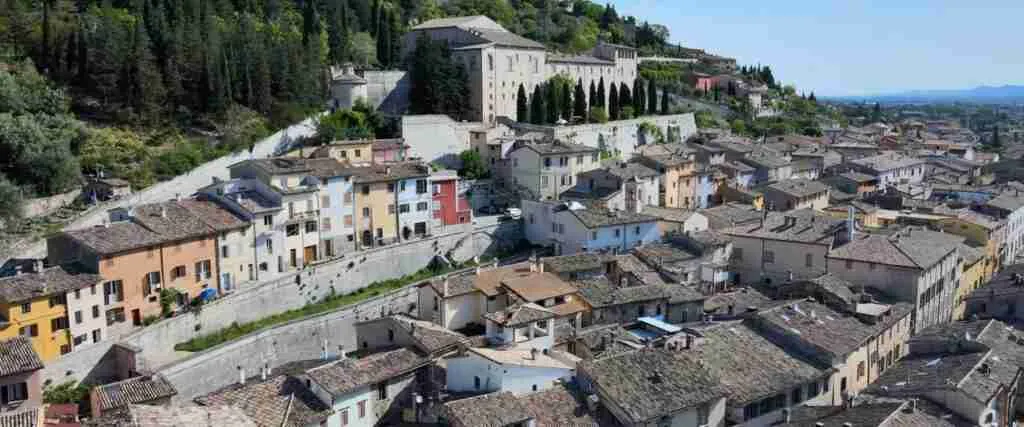
Le Marche’s artisan towns preserve medieval and Renaissance urban fabrics creating atmospheric contexts for contemporary craft production. Stone and brick buildings constructed during initial prosperity periods cluster along narrow streets winding uphill from valley floors to fortress-crowned summits. These compact urban forms reflect defensive requirements shaping medieval settlement patterns—surrounding agricultural populations concentrated within protective walls during conflict periods, creating dense residential quarters where workshop spaces occupied ground floors beneath domestic living areas.
Fabriano’s historic center exemplifies this architectural evolution. Medieval towers constructed by competing merchant families during factional conflicts punctuate the skyline, demonstrating how paper wealth translated into political power requiring defensive fortifications. Gothic civic buildings including the Palazzo del Podestà showcase 14th-century prosperity when paper exports generated municipal revenues funding elaborate public architecture. Renaissance expansion added merchant palaces featuring refined facades and interior courtyards reflecting changing aesthetic preferences as military threat diminished allowing more open architectural expressions.
Paper mill architecture along Fabriano’s riverside illustrates industrial evolution from artisan workshops to mechanized factories. Medieval mills consisted of simple stone buildings housing water wheels, stamping hammers, and drying lofts organized around courtyard workspaces. Eighteenth-century industrialization expanded these structures adding multi-story brick warehouses, imposing chimney stacks, and administrative offices housing merchant-managers coordinating production. Nineteenth-century modernization brought additional mechanization requiring further building expansion. Contemporary preservation efforts converted abandoned mill complexes into cultural facilities—the Paper Museum occupies restored industrial spaces where architectural features documenting technological evolution remain visible rather than hidden beneath museum construction.
Urbania’s urban fabric reflects its Renaissance transformation from defensive castrum to court satellite. Medieval fortifications persist in fragmentary wall sections and gate towers, but Renaissance construction overlaid military architecture with elegant residential buildings serving courtiers, administrators, and wealthy ceramists supplying ducal workshops. Central piazzas function as outdoor galleries where symmetrical palace facades create harmonious spatial compositions characteristic of Renaissance urban design principles. Ground-floor porticos house ceramic workshops maintaining centuries-old patterns where craft production occurs in architecturally significant contexts rather than utilitarian industrial zones.
Gothic and Renaissance churches throughout Le Marche’s artisan towns document religious patronage supporting craft production. Church interiors display commissioned artworks created using local craft skills—maiolica floor tiles in Urbania’s churches, elaborate altarpieces incorporating fine papers in Fabriano’s chapels, lace-trimmed vestments in Offida’s sacristies. These ecclesiastical commissions created steady demand sustaining craft employment while demonstrating religious devotion through material elaboration. Contemporary conservation projects maintaining these church interiors require traditional craft skills—matching historical maiolica tiles demands period technique knowledge, paper conservation requires understanding historical sizing methods, textile restoration necessitates lacemaking expertise.
Domestic architecture integrates craft production within residential structures rather than segregating industrial activities into separate zones. Traditional workshop-houses feature ground-floor craft spaces opening onto streets through large doors enabling material deliveries and product displays, with upper floors containing family living quarters. This vertical integration created efficient space utilization in compact medieval towns while maintaining craft visibility within daily urban life. Contemporary preservation regulations protecting these traditional building uses prevent conversion of ground-floor workshops into retail spaces or residential units, maintaining architectural authenticity while supporting continued craft production.
Public spaces—piazzas, fountains, market arcades—provide settings for informal craft demonstrations and social interactions sustaining craft community cohesion. Lacemakers gather in doorway alcoves during favorable weather, working while conversing and monitoring street activity. Ceramists display wares in outdoor market stalls, engaging potential customers through direct conversation rather than impersonal retail transactions. These public encounters between artisans and community members maintain craft visibility essential to cultural transmission—children observing neighbors’ craft work develop interest potentially leading to eventual apprenticeships, visitors witnessing authentic production contexts gain appreciation impossible through museum visits alone.
Fortification remnants surrounding many Le Marche towns create distinctive silhouettes recognizable across rolling Apennine landscapes. Walls constructed during medieval conflicts when competing lordships required defensive architecture now function as heritage attractions and elevated promenades providing panoramic views across countryside. The juxtaposition of military architecture with artisan craft centers illustrates cultural paradox—towns requiring fortified protection simultaneously cultivated refined artistic traditions and technical innovations. This combination of martial and cultural achievements characterizes Italian city-state history where political fragmentation generated both continuous conflict and competitive cultural patronage.
Renaissance palaces throughout the region display architectural details demonstrating craft skill applications beyond functional purposes. Decorative brickwork patterns, carved stone doorframes, wrought iron grilles, and majolica-tiled courtyards showcase how construction projects employed specialized artisan techniques creating permanent advertisements for local craft excellence. Wealthy patrons commissioning these architectural elaborations simultaneously displayed personal taste and supported craft economies generating municipal prosperity. Contemporary conservation maintains these architectural features requiring traditional restoration skills ensuring craft knowledge transmission even when original functional markets no longer exist.
Living Traditions: Meeting Contemporary Master Craftspeople
Contemporary master artisans maintain Le Marche’s craft traditions through daily productive work rather than heritage performance, creating authentic encounters between visitors and practitioners engaged in economically viable production. These craftspeople balance traditional technique preservation against market demands requiring adaptation to contemporary contexts, navigating tensions between historical authenticity and economic sustainability. Understanding their perspectives illuminates how living traditions evolve while maintaining core identities connecting present practice to historical origins.
Sandor Tiberi operates a boutique paper workshop in Fabriano producing custom handmade sheets using techniques unchanged for seven centuries. His small-scale operation focuses on specialized markets—artists seeking archival papers with unique textures, collectors desiring watermarked stationery, conservators requiring period-appropriate materials for manuscript restoration. Tiberi emphasizes how traditional paper’s physical characteristics distinguish it from machine-made equivalents: irregular deckle edges revealing hand formation, subtle fiber variations creating visual depth, watermarks integrated into sheet structure rather than surface-printed. These qualities attract clients valuing craft authenticity over standardized industrial consistency.
Beyond functional paper production, Tiberi creates artistic works embedding materials into paper surfaces during formation—flower petals, textile fragments, metallic threads—producing textured reliefs exhibited in galleries rather than used for writing. This artistic exploration demonstrates how traditional techniques adapt to contemporary art contexts while maintaining technical foundations. The experimentation also generates innovation potentially applicable to commercial production, illustrating how artistic freedom can drive technical development rather than representing purely indulgent digression from functional work.
Ettore Benedetti’s ceramic workshop in Urbania specializes in Renaissance maiolica reproduction requiring exceptional technical skill and historical knowledge. Benedetti studies museum collections and archaeological fragments analyzing historical glazes, pigments, and decorative techniques. His work involves recreating specific pieces documented in historical records, developing contemporary designs using traditional methods, and producing functional ceramics featuring simplified grotesque decorations accessible to broader markets. This range acknowledges different customer segments—serious collectors seeking museum-quality reproductions, contemporary design enthusiasts wanting historically informed modern pieces, general consumers purchasing affordable functional ceramics.
The workshop maintains sixteenth-century production methods including tin-glaze formulation from period recipes, pigment preparation using historical mineral sources, and hand-painting techniques copying Renaissance masters’ brushwork. Benedetti emphasizes how seemingly simple decorative elements require extensive technical knowledge—achieving proper blue tones demands precise cobalt oxide proportions, grotesque motif painting requires understanding compositional principles underlying apparent spontaneity, glaze application needs careful control preventing running or pinholes marring finished surfaces. Visitors observing workshop demonstrations gain appreciation for skill levels distinguishing master craftwork from amateur attempts.
Offida’s lacemakers, predominantly elderly women having practiced their craft for decades, represent tradition’s most vulnerable point. Many lack successors capable of maintaining their skill levels, threatening knowledge loss when they retire or pass. These practitioners emphasize lacemaking’s meditative qualities—the rhythmic bobbin clicking, concentration required for complex patterns, satisfaction completing intricate compositions after weeks of sustained effort. They also acknowledge economic realities—a simple lace collar requiring eight hours produces modest income compared to alternative employment, making lacemaking economically impractical for younger generations needing living wages.
Attempts to sustain Offida’s lacemaking involve compromises balancing economic necessity against traditional purity. Some makers accept commissioned work combining machine-made backgrounds with hand-executed highlights, reducing labor time while maintaining authentic elements justifying premium pricing. Others teach simplified techniques producible in shorter timeframes, creating entry-level products introducing customers to traditional lacemaking before exposing them to museum-quality pieces requiring substantial investment. These adaptations generate controversy within practitioner communities—purists view them as authenticity betrayals, pragmatists argue they represent necessary compromises ensuring any tradition survival rather than total disappearance.
Castelfidardo’s accordion makers span multiple generations often working within family-operated workshops. These multi-generational operations maintain knowledge transmission through direct apprenticeship—younger family members observe elders’ techniques, gradually assuming responsibility for specific production stages, eventually mastering complete instrument construction. This family-based training preserves embodied knowledge impossible to codify in technical manuals: how specific reed filing produces desired tonal characteristics, proper bellows leather selection affecting responsiveness, keyboard regulation achieving uniform action across keys. The knowledge resides in practitioners’ hands and ears rather than written specifications.
Contemporary accordion demand divides between professional musicians requiring high-quality instruments and amateur players seeking affordable options. Workshop strategies address both markets—producing premium handmade accordions for professionals while subcontracting simpler models to lower-cost manufacturers and focusing master craftsmen on specialized components like reed tuning requiring exceptional skills. This market segmentation sustains workshop viability while concentrating traditional expertise where it generates greatest value. The approach acknowledges that complete handcrafting of every component becomes economically unsustainable when competing against mass production, requiring strategic focus on elements where traditional skills create irreplaceable quality advantages.
Younger artisans entering Le Marche’s craft traditions often pursue hybrid approaches combining traditional techniques with contemporary aesthetic sensibilities and business models. They utilize social media marketing reaching international collectors, maintain e-commerce platforms enabling direct sales without dealer intermediation, and collaborate with contemporary designers applying traditional skills to modern product development. These innovations sometimes generate tension with tradition-focused elders viewing them as compromising authenticity, while younger practitioners argue they represent necessary evolution ensuring economic viability for next generations. This intergenerational negotiation about tradition boundaries and acceptable innovation mirrors broader cultural debates about heritage preservation versus creative adaptation.
Practical Information for Cultural Travelers
Experiencing Le Marche’s artisan heritage requires different travel approaches than visiting celebrated tourist destinations. The region’s craft towns lack mass tourism infrastructure—limited accommodation options, infrequent public transportation, minimal English signage—creating challenges for independent travelers while preserving authentic character. Advance planning enables rewarding experiences encountering living traditions within genuine community contexts rather than tourism-oriented performances.
Reaching Le Marche involves connections through major Italian cities. Ancona, the regional capital and Adriatic port, receives direct trains from Rome, Florence, and Bologna. From Ancona, regional trains and buses serve inland towns including Fabriano and Urbania, though schedules are limited and journey times substantial. Rental cars provide greater flexibility exploring multiple artisan centers across rolling countryside where public transportation connections remain sparse. The Strada dei Mestieri (Crafts Road) tourism route marks recommended driving itineraries connecting major craft towns.
Visiting craft workshops requires advance arrangements rather than spontaneous drop-ins. Many artisan operations consist of single practitioners or small family businesses lacking personnel for continuous visitor reception. Telephoning or emailing ahead ensures workshop availability, enables language arrangement if necessary, and demonstrates respect for craftspeople’s time and productive schedules. The Paper and Watermark Museum in Fabriano and ceramic workshops in Urbania accustomed to visitor traffic welcome walk-in guests, but smaller operations appreciate scheduled appointments.
Demonstrating genuine interest in craft processes rather than approaching workshops as shopping venues creates better encounters. Artisans respond positively to questions about techniques, material sources, and training backgrounds, but become defensive when visitors focus exclusively on pricing or purchasing without acknowledging craft skills. Spending time observing work processes, asking informed questions, and expressing appreciation for expertise establishes rapport potentially leading to more detailed explanations than provided to casual shoppers.
Understanding Italian facilitates deeper engagement with artisan communities where English proficiency remains limited. While younger craftspeople and museum staff often speak adequate English, elderly practitioners representing traditions’ oldest knowledge may communicate only in Italian or regional dialects. Learning basic craft vocabulary—terms for materials, tools, techniques—enables following demonstrations even with limited overall language proficiency. Demonstrating language effort, however imperfect, signals respect appreciated by craftspeople accustomed to tourists expecting English accommodation.
Accommodations in artisan towns range from simple family-run guesthouses to agriturismo farmsteads surrounding historic centers. These small-scale operations lack luxury amenities but provide authentic settings and personal service impossible in larger hotels. Advance booking proves essential during summer months and major festivals when limited room supplies fill quickly. Staying within historic centers enables evening strolls through medieval streets and morning observations of workshop activities as craftspeople begin daily routines.
Festival timing offers concentrated cultural immersion with multiple events, demonstrations, and exhibitions compressed into several days. Fabriano’s periodic events celebrating paper heritage, Urbania’s Majolica Festival, and Offida’s lacemaking celebrations provide opportunities observing multiple practitioners simultaneously while attending lectures, workshops, and exhibitions. Festival atmospheres create festive environments where visitors mingle with local communities rather than remaining segregated in tourist enclaves. However, festivals also bring crowds and higher prices, requiring advance accommodation arrangements and patience navigating congested historic centers.
Purchasing craft products directly from producers provides fair compensation while ensuring authenticity. Retail markups in urban galleries and tourist shops often triple artisan prices without corresponding quality improvements. Direct workshop purchases enable conversations with makers about specific pieces, customization possibilities, and care instructions maintaining products’ longevity. Craftspeople appreciate customers valuing their work sufficiently to purchase at proper prices sustaining continued production rather than bargain-hunting treating handmade goods as interchangeable commodities.
Photography in workshops requires permission respecting intellectual property and privacy concerns. Some artisans welcome documentation of techniques, viewing it as heritage preservation and workshop promotion, while others protect proprietary methods or simply dislike being photographed. Asking permission demonstrates respect while enabling conversation about photography motivations—personal memory, artistic interest, documentation purposes—potentially leading to better access than assumed photography rights would provide.
Combining artisan town visits with broader Le Marche exploration creates richer regional understanding. Urbino’s ducal palace and art collections provide context for Renaissance patronage supporting ceramic traditions. The Grotte di Frasassi cave system near Fabriano offers natural contrast to cultural heritage. Adriatic coastal towns like Fano supply seafood and beach experiences balancing inland hill town intensity. This varied itinerary approach prevents cultural tourism fatigue while demonstrating regional diversity beyond craft specializations.
Respecting workshop rhythms and production schedules enhances visit quality. Most artisans work morning hours when light and energy levels optimize concentration, breaking midday for extended lunches following Italian customs, and resuming work in afternoon. Planning visits during active work periods enables observing actual production rather than finding workshops closed or practitioners on break. Understanding these patterns demonstrates cultural awareness appreciated by host communities.
The Cultural Significance of Preserved Craftsmanship
Le Marche’s sustained artisan traditions carry significance transcending economic production or tourism appeal. These living crafts embody accumulated knowledge impossible to preserve through documentation alone—embodied skills residing in practitioners’ hands, aesthetic judgments developed through years of material engagement, problem-solving intuitions emerging from repeated experience addressing variable conditions. When traditions disappear, this knowledge vanishes regardless of textual records or museum collections, representing irreplaceable cultural losses.
Traditional crafts also maintain human-scale production alternatives within increasingly mechanized and digitized economies. Paper-making, ceramics, lacemaking, and accordion construction require patient attention, accumulated expertise, and acceptance of inherent variability distinguishing handmade production from standardized manufacturing. These characteristics create space for individual expression and continued skill development contrasting with automated processes reducing human roles to machine operation and quality inspection. Preserving craft production sustains models of meaningful work increasingly rare in contemporary economies.
The social relationships embedded within artisan communities represent cultural assets beyond individual practitioners’ skills. Master-apprentice bonds transmitting knowledge across generations, peer networks enabling technical collaboration and innovation, customer relationships valuing quality over convenience—these social patterns sustain communities built around shared expertise and mutual recognition rather than anonymous market transactions. Contemporary social fragmentation and digital mediation of relationships make these face-to-face communities increasingly precious as alternatives to isolation and commodification.
Regional identity construction draws heavily on craft heritage as distinctive characteristic differentiating Le Marche from neighboring regions and generic Italian tourism. While Tuscany promotes landscape and Renaissance art, Umbria emphasizes spiritual heritage and medieval architecture, Le Marche positions itself as authentic artisan region maintaining living traditions rather than commodified heritage performances. This identity shapes both residents’ self-understanding and external perceptions, creating cultural brand valuable for economic development beyond tourism while maintaining local pride and continuity.
Educational benefits from craft preservation extend to children and young adults learning traditional skills. The discipline required for craft mastery—patient practice, attention to detail, acceptance of failure as learning opportunity, commitment to continuous improvement—transfers to other domains creating generally valuable capacities. Craft education also provides tactile material engagement contrasting with digital virtuality, developing spatial reasoning and fine motor skills underutilized in screen-based activities. These developmental benefits justify craft education support even when economic returns remain uncertain.
Environmental sustainability arguments favor traditional craft production over industrial manufacturing in specific contexts. Handmade papers use textile waste rather than virgin fibers, reducing environmental impact. Traditional ceramics employ local clays minimizing transportation emissions. Small-scale production generates less waste than mass manufacturing optimizing for volume efficiency. While these environmental benefits shouldn’t be romanticized—traditional methods also involve resource consumption and pollutant generation—they offer partial alternatives to industrial production’s ecological costs.
Ethical consumption movements seeking alternatives to exploitative global supply chains find alignment with traditional craft support. Purchasing directly from artisan producers ensures fair compensation and transparent production conditions contrasting with opacity surrounding mass-manufactured goods. Consumers valuing these ethical dimensions willingly pay premium prices sustaining craft viability while expressing values through purchasing choices. This alignment between cultural preservation and ethical consumption creates mutually reinforcing support networks beneficial for both craftspeople and conscientious consumers.
The aesthetic education craft engagement provides develops visual discrimination and material sensitivity valuable beyond immediate craft contexts. Learning to evaluate hand-made papers trains attention to subtle textural variations. Studying maiolica decoration develops compositional analysis skills. Watching lacemakers work cultivates patience and appreciation for incremental progress toward complex results. These perceptual capacities enhance general aesthetic engagement with material culture, enabling deeper appreciation for designed objects, architectural details, and natural forms.
Preserving diverse craft traditions maintains cultural biodiversity paralleling biological diversity arguments. Just as ecosystem health depends on species variety, cultural vitality benefits from technique diversity enabling adaptation to changing conditions. Regional craft specializations developed through centuries of experimentation represent irreplaceable knowledge accumulations that, once lost, cannot be recovered. This diversity argument justifies preservation efforts even for economically marginal traditions lacking obvious contemporary relevance but potentially valuable for future innovation or adaptation.
Frequently Asked Questions About Fabriano and Le Marche’s Artisan Heritage
When did Fabriano begin producing paper?
Documentary evidence places Fabriano’s paper production beginning in 1276, though the craft likely started somewhat earlier as techniques diffused from Spanish sources during the mid-13th century. Fabriano became Europe’s first major paper manufacturing center, with over 40 mills operating simultaneously during medieval peak production. The town maintained European paper dominance for over two centuries before competing centers emerged in France, Germany, and elsewhere. Contemporary Fabriano preserves both industrial paper manufacturing at global scale and boutique artisan workshops using unchanged traditional methods spanning 750 years.
Can visitors take paper-making workshops in Fabriano?
The Paper and Watermark Museum offers introductory workshops teaching basic paper-making techniques during scheduled sessions throughout the year. These hands-on programs enable participants to form sheets using traditional molds, observe watermark integration, and understand sizing processes creating proper writing surfaces. Duration ranges from single-day introductions to multi-day intensive courses developing skills enabling independent practice. Private workshops accommodate smaller groups desiring customized instruction schedules. Advanced workshops focus on specific techniques like watermark wire-forming or historical pigment preparation. Booking ahead proves essential as workshop sizes remain small ensuring adequate individual instruction.
How long does it take to make a piece of bobbin lace?
Production time varies dramatically based on design complexity, thread fineness, and finished dimensions. Simple geometric trim measuring several centimeters wide and half-meter long might require 8-10 hours of continuous work from an experienced lacemaker. Elaborate pictorial compositions or dense floral patterns demand weeks of sustained effort producing pieces measuring only hand-sized. A full bridal veil incorporating traditional Offida designs could require several months of intermittent work totaling hundreds of hours. This extraordinary time investment explains handmade lace pricing—even simple pieces command substantial fees reflecting skilled labor hours. Machine-made lace reproductions, while superficially similar, lack the subtle irregularities and three-dimensional structure characterizing genuine bobbin lace.
What’s the difference between Urbania’s maiolica and other Italian pottery?
Urbania’s Renaissance maiolica tradition emphasized elaborate narrative painting (istoriato) and sophisticated grotesque decoration serving aristocratic patronage rather than functional pottery for general markets. This artistic orientation distinguished Castel Durante ceramics from utilitarian earthenware produced elsewhere. Technical characteristics include tin-glaze application creating opaque white surfaces suitable for detailed painting, limited but carefully controlled color palettes emphasizing blues and yellows, and pictorial compositions adapting Renaissance painting conventions to ceramic surfaces. Contemporary Urbania ceramists maintain these stylistic traditions through historical research and technical mastery, differentiating their work from generic Italian pottery emphasizing functional simplicity or decorative folk motifs.
Are Le Marche’s artisan products expensive?
Authentic handmade craft products command premium prices reflecting labor-intensive production and specialized skills. A single sheet of custom watermarked paper might cost €20-50 depending on size and complexity. Small maiolica decorative plates begin around €100-150, with elaborate pieces reaching thousands of euros. Simple lace trimmings start at €50-80 for several centimeters, while substantial pieces exceed €500-1000. Professional accordions range from €3000-8000 for standard models to €15,000+ for custom instruments. These prices reflect actual production costs and fair craftsperson compensation rather than tourist exploitation. Mass-produced reproductions cost significantly less but lack handmade characteristics justifying traditional prices. Budget-conscious visitors can purchase small items like bookmarks, simple ceramics, or paper samples enabling authentic craft support without major investment.
What’s the best season to visit Le Marche’s artisan towns?
Spring (April-May) and early autumn (September-October) offer optimal conditions combining pleasant weather, manageable crowds, and active workshop schedules. Summer heat can make hill town exploration uncomfortable while many artisans reduce work hours during afternoon peak temperatures. Winter provides authentic experiences with minimal tourists but cold weather and limited daylight hours constrain activity options. Festival timing influences visit planning—Fabriano’s paper heritage events, Urbania’s ceramic celebrations, and Offida’s lacemaking festivals occur on variable schedules requiring advance research. These concentrated cultural programs offer intensive immersion but also bring crowds and higher accommodation prices. Visiting during shoulder seasons enables relaxed workshop visits without festival congestion while maintaining comfortable exploration conditions.
Do artisans in Le Marche speak English?
English proficiency varies significantly across age groups and tourism exposure. Museum staff and workshops accustomed to international visitors generally communicate adequately in English, though fluency remains limited. Elderly master craftspeople representing traditions’ oldest knowledge typically speak only Italian or regional dialects, requiring translation assistance or basic Italian for meaningful interaction. Younger artisans increasingly learn English recognizing international market importance, but conversational depth remains constrained. Learning basic Italian phrases and craft-specific vocabulary enhances encounters significantly, demonstrating respect appreciated by practitioners and enabling following demonstrations even with limited overall language skills. Translation apps provide backup communication options though they cannot substitute for genuine language effort.
Can visitors purchase directly from craft workshops?
Direct workshop purchases benefit both buyers and artisans, providing authentic products at fair prices while supporting continued production. Most workshops welcome sales inquiries though they lack formal retail environments—products may be displayed informally or require retrieving from storage areas. Payment methods vary—some accept credit cards, others prefer cash, particularly smaller operations. Requesting invoices ensures proper documentation for customs when transporting purchases internationally. Workshop purchases often enable customization options unavailable through retail channels—requesting specific watermark designs, commissioning particular ceramic patterns, or ordering instruments with preferred configurations. Building relationships with individual makers creates opportunities for future commissions and sustains the personal connections central to traditional craft production.
How has industrialization affected Fabriano’s paper traditions?
Industrialization transformed Fabriano’s paper economy while paradoxically enabling traditional technique preservation. Large-scale manufacturing facilities established during the 18th-19th centuries supplying commodity markets created economic foundation supporting artisan workshops serving specialized niches impossible to sustain through craft production alone. Industrial producers employ thousands of workers and generate tax revenues funding heritage preservation programs, while boutique workshops maintain traditional methods serving collectors, artists, and conservators. This coexistence demonstrates how industrial and artisan production complement rather than necessarily compete—industrial efficiency handles volume markets, traditional crafts serve quality-focused segments. The juxtaposition also provides historical perspective showing how mechanization altered production while certain characteristics—paper texture, watermark integration, archival permanence—remain superior through traditional methods justifying their continuation.
What role do women play in Le Marche’s artisan traditions?
Women’s craft participation varies significantly across traditions reflecting historical gender divisions and changing contemporary patterns. Lacemaking remains predominantly female practice, historically functioning as acceptable income-generating activity for women within domestic settings. Paper-making and ceramics traditionally employed men in physically demanding roles like pulp preparation and clay processing while women performed finishing tasks like sorting and packaging. Contemporary patterns show increasing female participation across all crafts as gender restrictions diminish and workshop ownership diversifies. Some traditions like accordion construction maintain strong male dominance through apprenticeship networks favoring sons and male family members. Educational programs increasingly recruit across genders, recognizing that sustained craft viability requires expanding practitioner pools beyond traditional gender limitations. This evolution creates tensions between preserving historical practices and adapting to contemporary social equality expectations.