
The Cradle of the Renaissance: A Cultural Itinerary Beyond Urbino
While Florence claims the Renaissance crown and Rome boasts papal splendor, the Marche region’s hilltop towns preserve a quieter, more intimate Renaissance narrative where ducal courts fostered artistic innovation in fortified palaces overlooking the Adriatic. This cultural journey begins in Urbino—whose UNESCO-protected historic center epitomizes ideal Renaissance urbanism—and extends through lesser-known towns where Montefeltro and della Rovere patronage created architectural and artistic treasures that rival better-known destinations without the crowds.
Key Takeaways: Renaissance Heritage in the Marche Region
- Urbino’s Ducal Palace represents ideal Renaissance court culture: Federico da Montefeltro’s 15th-century palace synthesizes military fortification with humanist ideals, housing Piero della Francesca’s Flagellation and establishing architectural principles that influenced palaces across Europe.
- The Montefeltro-della Rovere legacy extends across multiple fortified towns: Gradara, Sassocorvaro, Fossombrone, and San Leo preserve interconnected fortress networks that protected Renaissance duchies while serving as centers of artistic patronage and political intrigue.
- Regional art collections contain works by masters who shaped Renaissance painting: Beyond Raphael’s birthplace in Urbino, the region preserves works by Piero della Francesca, Giovanni Santi, Federico Barocci, and Lorenzo Lotto in their original architectural contexts rather than museum galleries.
- Renaissance urban planning principles remain visible in preserved historic centers: Urbino’s UNESCO designation recognizes complete 15th-century urbanism, while Pesaro, Fano, and Gradara demonstrate how Renaissance ideals transformed medieval settlements into ordered, proportioned civic spaces.
- The Adriatic coastal Renaissance blends Italian and Dalmatian influences: Pesaro and Fano developed distinct Renaissance identities shaped by maritime trade, creating architectural styles that synthesize central Italian humanism with Adriatic practicality and Venetian decorative traditions.
- Hidden Renaissance gems preserve authentic period atmospheres without mass tourism: Corinaldo’s walls, Mondavio’s fortress-town, and Cagli’s ducal residences offer immersive Renaissance experiences where historic fabric remains integrated into daily community life rather than transformed into tourist stages.
People Also Ask About Renaissance Heritage in Urbino and Marche
What makes Urbino’s Renaissance heritage UNESCO-worthy?
Urbino’s Historic Centre earned UNESCO World Heritage inscription in 1998 as an exceptional example of Renaissance urbanism that influenced cultural and artistic developments across Europe. The designation recognizes how Duke Federico da Montefeltro transformed a medieval hilltown into an ideal Renaissance city during the 15th century, creating harmonious integration between the Ducal Palace and the urban fabric that exemplifies humanist principles of proportion, perspective, and civic order. The site preserves complete Renaissance character including the palace complex, cathedral, university buildings, aristocratic residences, and defensive walls in their original spatial relationships. UNESCO specifically noted that Urbino “experienced a great cultural flowering in the 15th century, attracting artists and scholars from all over Italy and beyond, and influencing cultural developments elsewhere in Europe,” with the city’s Renaissance form remaining substantially intact despite later centuries’ changes.
How does Marche Renaissance architecture differ from Tuscan or Roman styles?
Marche Renaissance architecture developed distinct characteristics shaped by military necessity, ducal patronage patterns, and geographic isolation from Florence and Rome. While Tuscan Renaissance emphasized harmony through mathematical proportions in urban palaces, Marche architecture fused defensive fortification with humanist elegance—creating palazzo-fortresses like Urbino’s Ducal Palace where military ramparts incorporate studiolo chambers decorated with intarsia masterpieces. The region’s hilltop topography necessitated creative adaptations of classical principles to dramatic elevations rather than flat urban grids, producing vertical compositions and terraced designs absent in Florence. Additionally, patronage by warrior-scholars like Federico da Montefeltro and Francesco Maria della Rovere favored practical innovation over theoretical purity, resulting in architecture that prioritizes functional flexibility alongside aesthetic ideals. Coastal towns like Pesaro absorbed Venetian and Dalmatian influences that introduced decorative elements and construction techniques rare in central Italy, creating hybrid styles that distinguish Adriatic Renaissance from inland traditions.
Which Renaissance artists were active in the Marche region?
The Marche region attracted and produced significant Renaissance artists whose work shaped Italian painting. Piero della Francesca created major works for Urbino’s Ducal Palace including the Flagellation of Christ and portraits of Federico da Montefeltro, establishing geometric precision and light effects that influenced generations. Raphael was born in Urbino in 1483, where his father Giovanni Santi served as court painter; the house-museum preserves early frescoes showing the master’s formation. Federico Barocci, Urbino’s greatest Mannerist painter, spent his career creating altarpieces and religious works for regional churches, developing coloristic intensity and emotional expression that anticipated Baroque developments. Lorenzo Lotto worked extensively in Marche towns during his mature period, creating altarpieces for Recanati, Jesi, and Ancona that demonstrate his distinctive psychological insight and unorthodox compositions. The Croatian artist Lovro Dobričević brought Dalmatian influences to coastal communities. Additionally, Luciano Laurana and Francesco di Giorgio Martini designed architectural masterpieces including Urbino’s palace and numerous fortifications, synthesizing military engineering with humanist aesthetics.
Can you visit multiple Renaissance sites in one itinerary?
A comprehensive Renaissance itinerary covering Urbino and surrounding Marche towns requires seven to ten days for thorough exploration, though shorter focused visits remain rewarding. Urbino itself merits two full days to properly experience the Ducal Palace, National Gallery, Raphael’s House, and historic center. Within easy day-trip range, Gradara’s fortress and San Leo’s citadel each warrant half-day visits. Coastal Renaissance sites in Pesaro and Fano combine well as a two-day Adriatic exploration. Inland fortress towns—Sassocorvaro, Fossombrone, Mondavio, Corinaldo—form a three-day circuit through the Metauro and Cesano valleys. The region’s compact geography and improved road networks make multiple sites accessible, with most towns lying within one hour’s drive of Urbino. Public transportation connects major centers like Pesaro and Fano, while smaller fortress towns require private vehicles. Strategic basing in Urbino with day trips, or a mobile itinerary moving between coastal and inland accommodations, both work well. Spring and autumn provide optimal conditions with comfortable temperatures, fewer visitors than summer peak season, and better photography light than winter’s shorter days.
Extended multi-day tours – 5+ days
Featured Lazio Marche Abruzzo Multi-Day Tour Packages
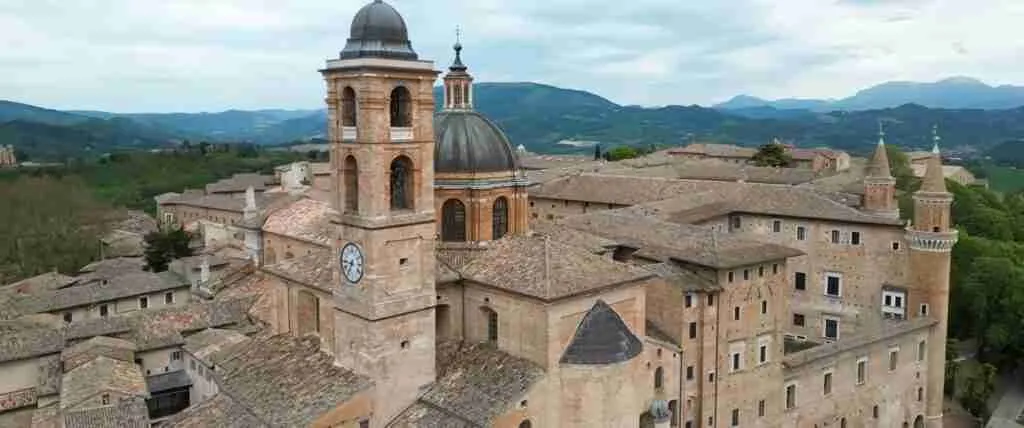
3 days
Lazio Marche Abruzzo 3-Day Discovery Tour
- ✓ Comprehensive Lazio Marche Abruzzo experience
- ✓ Expert local guides included
- ✓ All accommodation included
- ✓ Transportation provided
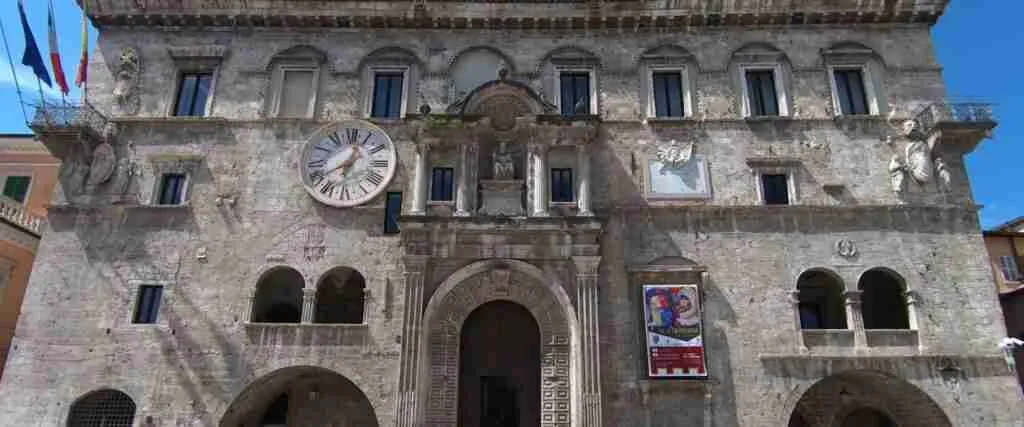
5 days
Lazio Marche Abruzzo 5-Day Highlights Experience
- ✓ Comprehensive Lazio Marche Abruzzo experience
- ✓ Expert local guides included
- ✓ All accommodation included
- ✓ Transportation provided
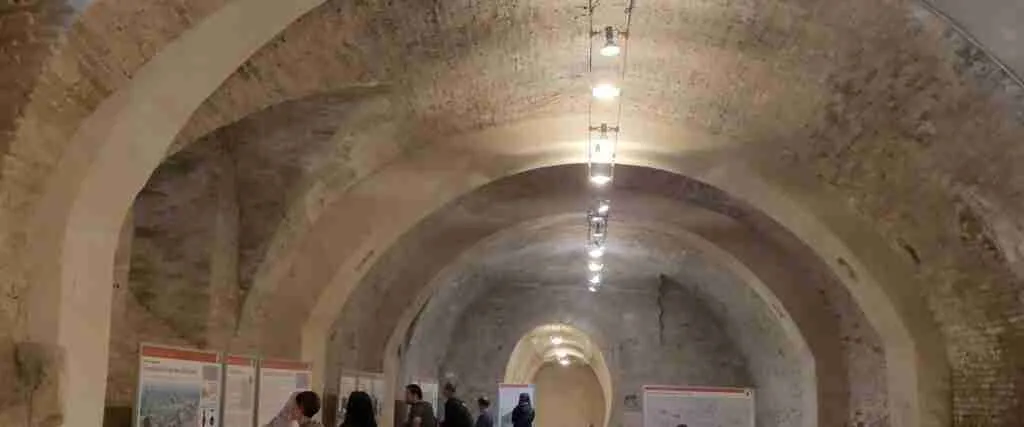
7 days
Lazio Marche Abruzzo 7-Day Cultural Journey
- ✓ Comprehensive Lazio Marche Abruzzo experience
- ✓ Expert local guides included
- ✓ All accommodation included
- ✓ Transportation provided

10 days
Lazio Marche Abruzzo 10-Day Complete Adventure
- ✓ Comprehensive Lazio Marche Abruzzo experience
- ✓ Expert local guides included
- ✓ All accommodation included
- ✓ Transportation provided
Multi-day tour packages powered by TourRadar. Prices and availability subject to change.
Introduction: Renaissance Flowering in the Marche Hills
The Italian Renaissance narrative typically traces a Florentine arc—Brunelleschi’s dome inaugurating architectural revolution, Medici patronage nurturing Donatello and Botticelli, Michelangelo’s genius crowning the movement before Rome’s papal ambitions shifted cultural gravity southward. Yet this familiar story overlooks a parallel Renaissance unfolding in the Marche region’s Apennine foothills and Adriatic coastline, where ducal courts cultivated artistic innovation and humanist scholarship in intimate hilltop settings far removed from Florence’s commercial bustle or Rome’s ecclesiastical politics. Here, in fortress-towns commanding strategic mountain passes and coastal plains, the Montefeltro and della Rovere dynasties created a distinct Renaissance culture that valued military prowess alongside classical learning, producing architectural and artistic achievements that influenced European court culture while preserving authentic period character absent in over-restored metropolitan centers.
Urbino stands as this alternative Renaissance’s supreme monument. Federico da Montefeltro, Duke of Urbino from 1444 to 1482, transformed a medieval hilltown into an ideal Renaissance city centered on his Ducal Palace—a structure that transcends mere architectural achievement to embody humanist philosophy in stone, timber, and fresco. The palace’s famous façade between twin towers symbolizes the balance between contemplation and action that defined Renaissance court ideals: here a warrior-duke who commanded armies across Italy maintained a studiolo decorated with trompe-l’oeil intarsia depicting both military implements and musical instruments, classical philosophers and Christian saints. This synthesis attracted artists, architects, scholars, and scientists who made Urbino a intellectual center rivaling any Italian city despite its modest size and relative geographic isolation.
Beyond Urbino’s UNESCO-protected historic center, a network of Renaissance towns preserves the Montefeltro and della Rovere territorial system that controlled the region from the 14th through 16th centuries. These fortress-towns—Gradara overlooking the Adriatic, San Leo perched on its limestone monolith, Sassocorvaro guarding inland valleys, Fossombrone commanding the Metauro River—functioned as integrated defensive network and cultural circuit, with ducal patronage extending from Urbino’s palace workshops to regional fortifications and ecclesiastical foundations. Each site contributed to Renaissance political and artistic culture: Gradara’s castle witnessed the tragic love story immortalized in Dante’s Inferno; San Leo’s citadel imprisoned the controversial Count Cagliostro; Sassocorvaro’s innovative fortress protected artworks during World War II; Fossombrone’s court hosted humanist debates and theatrical performances.
The region’s coastal cities developed their own Renaissance identity influenced by Adriatic maritime trade and Venetian connections. Pesaro, birthplace of composer Gioachino Rossini centuries later, flourished under della Rovere rule as a ducal seat combining courtly refinement with commercial pragmatism. The city’s Renaissance palaces, ceramic tradition (majolica production rivaling Faenza and Deruta), and artistic patronage—attracting painters like Giovanni Bellini and Titian—created cultural vitality distinct from hilltop feudalism. Neighboring Fano, ancient Fanum Fortunae, preserved Roman urban structure while adding Renaissance layers through della Rovere interventions including fortifications, palaces, and the remarkable Fortuna Fountain. These coastal centers linked Marche’s interior Renaissance culture to broader Mediterranean currents, facilitating artistic and intellectual exchange between Italian humanists and Dalmatian, Greek, and Spanish influences.
Smaller towns complete the Renaissance tapestry with specialized roles and preserved character. Corinaldo’s perfectly intact walls exemplify military architecture adapted to hilltop topography, their brick ramparts and cylindrical bastions demonstrating engineering sophistication that protected the town from repeated sieges. Mondavio’s fortress-palace represents Francesco di Giorgio Martini’s architectural synthesis of defensive necessity and residential elegance, its symmetrical plan and corner towers influencing fortress design across Italy. Cagli’s ducal palace fragments and Renaissance gates hint at a once-splendid court destroyed by earthquakes yet retaining noble proportions. Each site preserves authentic Renaissance fabric—not reconstructed stage-sets—where worn paving stones, weathered brick, and patinated frescoes testify to centuries of continuous inhabitation rather than museum preservation.
This cultural itinerary explores Renaissance heritage across multiple scales: from Urbino’s comprehensive humanist program to Gradara’s romantic fortress-castle, from major artistic collections in the Ducal Palace National Gallery to hidden church frescoes in village sanctuaries, from grand architectural set-pieces to intimate studiolo chambers where dukes contemplated classical wisdom. The journey reveals how Renaissance ideals adapted to the Marche region’s particular geography, history, and patronage patterns, creating distinctive cultural landscape that complements rather than duplicates better-known Tuscan and Roman achievements. These hilltop towns and coastal cities preserve Renaissance atmosphere with unusual completeness—medieval street patterns hosting Renaissance palaces, fortress ramparts framing countryside views unchanged since Piero della Francesca painted them, court chapels still serving neighborhood congregations as their ducal patrons intended.
Understanding this regional Renaissance requires recognizing the Montefeltro and della Rovere dynasties’ particular character. Unlike Medici merchant-princes or papal nephew-cardinals, the Montefeltro dukes earned power through military prowess—Federico commanded armies for popes, kings, and rival Italian states, accumulating wealth that funded artistic patronage while his reputation as warrior-scholar attracted humanists like Marsilio Ficino and mathematicians like Luca Pacioli. The della Rovere family, producing Popes Julius II and Sixtus IV, brought ecclesiastical resources and Roman connections to their Urbino duchy, commissioning works from Titian and Raphael while maintaining the martial traditions established by their Montefeltro predecessors. This combination of military effectiveness, humanist learning, and strategic papal alliances created conditions for cultural achievement in an unlikely location—a landlocked duchy controlling mountain passes and coastal plains far from Italy’s economic and political centers.
The itinerary ahead explores this Renaissance landscape through multiple lenses: architectural analysis revealing how fortresses became palaces, art historical examination of works in original contexts, historical narrative tracing dynastic patronage patterns, and practical guidance for contemporary cultural travelers seeking authentic period atmosphere beyond tourist-saturated destinations. Each town and site receives treatment proportional to its significance and survival of Renaissance character, with Urbino’s comprehensive preservation warranting detailed exploration while smaller centers merit focused attention on particular monuments or collections. The goal is not encyclopedic completeness but rather coherent cultural narrative connecting sites through historical relationships, artistic movements, and architectural traditions that defined Renaissance civilization in the Marche region.
Urbino: The Ideal Renaissance City and Ducal Palace
Urbino’s historic center rises from the Metauro valley like a Renaissance vision made tangible, its hillside geometry crowned by the Ducal Palace’s twin towers—torricini—that have symbolized the city since Luciano Laurana designed them in the 1460s. The UNESCO World Heritage designation recognizes this complete urban ensemble where palace, cathedral, university, residential quarters, and defensive walls form integrated composition expressing humanist ideals of proportion, harmony, and civic order. Walking Urbino’s steep brick-paved streets reveals how Duke Federico da Montefeltro’s architectural program extended beyond his palace to reshape the entire city according to Renaissance principles while respecting existing topography and medieval urban grain.
The Ducal Palace—Palazzo Ducale—dominates Urbino physically and culturally, its mass and refinement embodying the warrior-scholar duke who created it. Luciano Laurana’s façade facing the countryside ranks among Renaissance architecture’s supreme achievements: two slender towers frame a three-story loggia whose classical orders, precise proportions, and elegant stonework synthesize Florentine mathematical harmony with personal interpretation that influenced palace design across Europe. The loggia’s triple-arched openings create rhythmic pattern that balances monumentality with grace, while the towers’ octagonal plans and delicate detailing demonstrate how military forms could serve aesthetic purposes. This composition’s genius lies in its dialogue between strength and refinement—defensive towers framing courtly elegance, fortress mass containing studiolo intimacy.
Entering the palace through the courtyard designed by Laurana reveals Renaissance spatial principles governing interior organization. The porticoed quadrangle employs classical orders with archaeological precision rare in 15th-century architecture, its proportions creating harmonious outdoor room that mediates between public ceremonial functions and private ducal apartments. The courtyard’s Latin inscription proclaiming Federico’s virtues establishes the palace as monument to ideal rulership combining military prowess, patronage of arts and learning, and just governance—themes elaborated throughout the interior decoration. From this central space, interconnected rooms, corridors, and staircases flow with logic anticipating later Renaissance and Baroque palace planning, demonstrating how Laurana synthesized Florentine spatial organization with functional requirements of court life.
The palace’s National Gallery of the Marche—Galleria Nazionale delle Marche—preserves one of Italy’s most important Renaissance art collections in spaces where many works originally hung, providing rare opportunity to experience paintings in architectural contexts their creators intended. Piero della Francesca’s Flagellation of Christ, painted for Urbino around 1455-1460, occupies a dedicated gallery where viewers can study the painting’s enigmatic narrative, mathematical perspective construction, and luminous color harmonies that influenced Federico Barocci and later artists. The work’s precise one-point perspective and geometric organization of figures demonstrate how Piero applied mathematical principles to religious subjects, creating compositions where spiritual meaning emerges through formal relationships rather than emotional expression. Nearby hangs Piero’s double portrait of Federico and his duchess Battista Sforza, showing the duke’s famous profile—damaged in tournament—against Urbino’s landscape, establishing portraiture conventions that persisted for generations.
Other gallery highlights include Paolo Uccello’s Profanation of the Host, a predella panel demonstrating early Renaissance experiments with perspective and narrative organization; Raphael’s portrait of a gentlewoman known as La Muta, painted during his youth in Urbino before Roman fame; and extensive works by Federico Barocci, Urbino’s greatest Mannerist painter whose coloristic intensity and emotional expression anticipated Baroque developments. The collection also preserves significant examples of intarsia—inlaid wood panels creating illusionistic images—including the famous studiolo panels depicting architectural perspectives, musical instruments, and scholarly implements that decorated Federico’s private study. These intarsia masterpieces, created by artists including Baccio Pontelli, demonstrate how craftsmen translated Renaissance perspective principles into three-dimensional decorative programs serving both aesthetic and symbolic functions.
Federico’s studiolo itself, though its intarsia panels now appear in separate gallery spaces, represents the Renaissance ideal of contemplative retreat where rulers balanced active military and political life with scholarly pursuits. The small chamber’s decoration synthesized classical and Christian wisdom through portraits of famous men—philosophers, poets, doctors, theologians—positioned above the intarsia panels depicting the liberal arts’ implements. This program made visible the humanist belief that true nobility combined martial valor with learning, a synthesis Federico embodied in his own life as successful condottiere who maintained court attracting leading intellectuals. The studiolo’s intimate scale contrasts dramatically with the palace’s grand ceremonial spaces, revealing how Renaissance architecture accommodated both public display and private meditation within single complex.
Beyond the palace proper, Urbino’s historic center preserves Renaissance urban character with exceptional completeness. The cathedral, rebuilt in neoclassical style after earthquake damage, occupies the same prominent site where Federico’s Renaissance church stood, maintaining spatial relationship with the palace. The Teatro Sanzio, though 19th-century construction, preserves theatrical traditions dating to Renaissance court performances. The University of Urbino, founded in 1506, continues educational mission begun under ducal patronage, its historic buildings scattered through the city center maintaining academic presence that shaped Urbino’s identity. Residential quarters retain medieval street patterns overlaid with Renaissance architectural details—portals, windows, courtyard loggias—showing how humanist aesthetics transformed existing urban fabric rather than imposing entirely new plans.
The Oratorio di San Giovanni preserves remarkable 15th-century fresco cycle by Lorenzo and Jacopo Salimbeni depicting the Crucifixion and scenes from John the Baptist’s life. These Gothic International style works, predating the palace’s High Renaissance masterpieces, demonstrate artistic currents flowing through Urbino before Federico’s transformative patronage. The oratory’s intimate scale and devotional function contrast with the palace’s grandeur, representing civic religious life independent of ducal court yet benefiting from same cultural climate that attracted major artists. Other churches throughout the historic center—San Domenico, San Francesco, Santa Chiara—contain altarpieces, frescoes, and decorative programs spanning Gothic through Baroque periods, documenting Urbino’s continuous artistic patronage beyond the Renaissance apex.
Raphael’s House—Casa Natale di Raffaello—preserves the building where the artist was born in 1483 and spent his formative years before departing for Perugia and eventually Rome. The modest structure contains early frescoes attributed to Raphael’s father Giovanni Santi, court painter to Federico’s successor Guidobaldo da Montefeltro, showing the artistic environment where young Raphael developed. While the museum collection includes reproductions rather than original Raphael works—his paintings reside in major museums worldwide—the house’s historic fabric and Santi frescoes provide insights into the workshop culture that shaped arguably the Renaissance’s greatest painter. The connection between Raphael’s formation in Urbino and his mature Roman achievements demonstrates how the city’s humanist court culture influenced artists even after they departed for larger centers.
Urbino’s defensive walls and gates, though modified across centuries, preserve Renaissance fortification elements integrated with the city’s monumental character. The Valbona Gate and ramparts demonstrate how military necessity shaped urban form, with walls following hilltop topography while creating defined boundary between city and countryside. From various points along the walls, views extend across the Metauro valley to the Apennine foothills, revealing the landscape that inspired Piero della Francesca’s backgrounds and understanding why Federico chose this elevated site for his ideal city. The walls’ brick construction and earthwork bastions represent transitional fortification technology between medieval curtain walls and later artillery-resistant systems, documenting military architecture’s evolution during the Renaissance when gunpowder weapons transformed defensive design.
Exploring Urbino requires at least two full days to properly experience the Ducal Palace and National Gallery, with additional time for churches, oratories, and simply absorbing the historic center’s atmosphere. The palace alone warrants four to six hours for thorough examination of major works, architectural details, and reading interpretive materials that contextualize the collection. Morning light enhances the palace façade’s stonework and loggia shadows, while afternoon sun illuminates the studiolo galleries’ intarsia panels. The city’s compact scale permits walking everywhere within the historic center, though steep streets require reasonable fitness and comfortable footwear. Unlike Florence or Rome where Renaissance masterpieces compete with Baroque overlays and modern crowds, Urbino preserves more homogeneous Renaissance character with tourist numbers that permit contemplative engagement rather than rushed viewing.
Gradara: Fortress Romance and Medieval Layers
Gradara’s fortress-castle rises from low coastal hills ten kilometers from the Adriatic, its crenellated walls and massive keep visible for miles across the Romagna plain. While the castle’s medieval origins predate the Renaissance, successive Malatesta and Sforza modifications created the structure visitors encounter today, with Renaissance interventions overlaying 13th and 14th-century fortifications. The site’s fame rests partly on literary association: Dante’s Inferno identified Gradara as the location where Paolo Malatesta and Francesca da Rimini conducted the adulterous affair that led to their murder and eternal damnation among the lustful in the second circle of Hell. This tragic romance, whether historically accurate or poetic invention, has attracted generations of visitors seeking to walk the same chambers where forbidden love supposedly unfolded.
The castle’s military architecture demonstrates evolutionary defensive principles from medieval curtain walls through early Renaissance adaptations for artillery. The double circuit of walls creates concentric defensive layers, with the outer walls enclosing the borgo—fortified village—and inner ramparts protecting the castle proper. Massive round towers punctuate the walls at strategic intervals, their thick masonry designed to withstand both traditional siege weapons and early cannons. Walking the wall-walk provides panoramic views extending to the Adriatic coast and inland Apennine foothills, revealing the strategic importance of this site controlling routes between Romagna and the Marche. The fortifications’ state of preservation, enhanced by early 20th-century restoration rather than medieval survival, nonetheless demonstrates how Renaissance military architects adapted existing structures to gunpowder age threats.
Interior spaces blend medieval austerity with Renaissance refinement introduced during Sforza occupation in the 15th century. The Camera di Francesca, traditionally identified as the chamber where the infamous lovers met, contains period furnishings and decorative elements recreating aristocratic living quarters. Whether or not the room’s historical attribution holds archaeological validity, the space effectively evokes the intimacy of Renaissance court life within fortress constraints. Frescoes in various rooms, some original and others restored, demonstrate painting traditions from International Gothic through early Renaissance styles, documenting artistic transitions during the castle’s occupation by different ruling families.
The castle’s library and archives preserve documents relating to Malatesta and Sforza family history, offering researchers access to primary sources illuminating the complex political relationships between Italian states during the Renaissance. These materials include correspondence, financial records, and legal documents that reveal how fortress-towns like Gradara functioned within broader regional power structures. For general visitors, interpretive displays translate archival evidence into accessible narratives about daily life, military campaigns, and cultural patronage in fortress environments where warfare and court culture coexisted.
Beyond the castle proper, Gradara’s medieval borgo retains atmospheric character with narrow streets, stone buildings, and small squares that preserve the fortified village layout. Restaurants occupy ground floors of historic structures, while upper stories function as residences and accommodations, maintaining living community rather than museum village. The parish church contains notable altarpieces and religious art spanning medieval through Baroque periods. Walking the borgo’s lanes and climbing to various viewpoints along the walls provides understanding of how fortress-towns integrated military, residential, religious, and commercial functions within defended perimeters—a spatial organization defining Italian hill towns but particularly evident where fortifications survive substantially intact.
Gradara’s position near the Adriatic makes it accessible as half-day excursion from coastal towns like Pesaro, Rimini, or Cattolica, or as component of inland itinerary connecting to Urbino via Montefeltro fortress network. The castle’s dramatic silhouette and Dante connection make it among the region’s most visited sites, particularly during summer when tourists fill the borgo’s restaurants and shops. Spring and autumn visits encounter fewer crowds while maintaining pleasant weather for exploring the extensive wall-walks and ramparts. Evening visits during summer months sometimes feature special programs including theatrical performances and historical reenactments that animate the fortress with period costumes and choreographed events, though these presentations prioritize entertainment over scholarly accuracy.
San Leo: Dramatic Citadel and Piero della Francesca Territory
San Leo’s citadel occupies one of Italy’s most spectacular natural defensive sites—a sheer-sided limestone monolith rising 600 meters above the Marecchia valley, accessible only by a single road carved into living rock. This dramatic topography made San Leo a strategic prize throughout history, with Roman, Byzantine, medieval, and Renaissance powers fortifying the summit. The current fortress represents primarily Renaissance military architecture designed by Francesco di Giorgio Martini for Federico da Montefeltro in the late 15th century, though medieval structures survive within the complex. The fortress’s fame extends beyond military history: it served as papal prison during the 18th century, its most notorious inmate being Count Alessandro di Cagliostro, the enigmatic adventurer, alchemist, and Freemason who died in the citadel’s dungeons in 1795.
Francesco di Giorgio Martini’s fortress design responds brilliantly to the site’s topographic constraints while incorporating cutting-edge military architecture for the gunpowder age. Massive ramparts follow the plateau’s irregular perimeter, their sloped profiles deflecting cannonballs rather than presenting vertical targets vulnerable to artillery. Corner bastions project from the main walls, creating overlapping fields of fire that eliminated dead zones where attackers could shelter. The fortress entrance through rock-cut passages demonstrates how Renaissance engineers integrated natural and artificial defenses, with narrow approach roads commanded by multiple firing positions. Inside, barracks, magazines, and cisterns provided resources for extended siege defense, while the keep offered final refuge if outer defenses fell.
The fortress museum interprets San Leo’s military architecture and prison history through exhibits displaying weapons, architectural plans, and artifacts from various occupation periods. Cagliostro’s cell remains preserved, its isolation and harsh conditions conveying the fortress’s transformation from defensive stronghold to secure prison. Interpretive materials examine Cagliostro’s controversial career—his claims to alchemical powers, involvement in the Affair of the Diamond Necklace that discredited Marie Antoinette, and Masonic activities that provoked papal condemnation. Whether Cagliostro deserves historical rehabilitation as Enlightenment mystic or dismissal as charlatan continues debated, but his San Leo imprisonment until death adds Gothic romance to the citadel’s Renaissance martial origins.
The town of San Leo below the fortress preserves remarkable medieval and Renaissance monuments including the Romanesque Pieve parish church and duomo cathedral. The Pieve, possibly dating to the 9th century with major 11th-century rebuilding, demonstrates Lombard-Romanesque architecture with austere stone construction, massive piers, and raised presbytery above the crypt. The cathedral, built in the 12th century, shows more refined Romanesque style with carved capitals and harmonious proportions. These churches demonstrate how San Leo functioned as religious and political center long before Renaissance fortress construction, with early Christian traditions claiming San Leo and San Marino established hermitages on these mountains during the 3rd or 4th centuries.
San Leo’s most significant Renaissance artistic connection involves Piero della Francesca, who worked extensively in nearby Urbino and almost certainly knew the fortress and town. The landscape visible from San Leo’s ramparts—limestone escarpments, cultivated valleys, distant Apennine peaks—closely resembles backgrounds in several Piero paintings, suggesting the artist drew inspiration from this territory. While no Piero works remain in San Leo today, understanding the geography he knew enriches interpretation of his paintings’ mysterious landscapes. The clear light, dramatic topography, and particular quality of atmosphere in the Montefeltro district profoundly influenced Piero’s approach to spatial construction and natural description.
Visiting San Leo requires private vehicle as public transportation to this remote site remains limited. The approach road’s engineering impresses nearly as much as the fortress itself, with hairpin curves carved into cliff faces creating dramatic ascent. Once in San Leo, exploring the fortress requires two to three hours for thorough examination of fortifications, museums, and viewpoints. The town’s churches merit additional time, while restaurants offer regional cuisine and terraces with exceptional valley views. Combining San Leo with other Montefeltro fortress sites like Sassocorvaro creates full-day excursion from Urbino, though each site’s dramatic character and relative isolation reward overnight stays that permit experiencing these mountaintop locations without rushed schedules.
Pesaro: Adriatic Renaissance and Ducal Ceramics
Pesaro stretches along the Adriatic coast where the Foglia River meets the sea, its Renaissance character shaped by dual identities as ducal seat and commercial port. The della Rovere family—which produced Popes Julius II and Sixtus IV—ruled Pesaro as Dukes of Urbino from 1513 to 1631, bringing papal connections and artistic patronage that transformed the medieval commune into Renaissance city. Unlike hilltop Urbino with its unified court character, Pesaro developed diverse Renaissance culture combining courtly refinement in ducal palaces with merchant pragmatism in commercial quarters, creating architectural and social complexity absent in single-function fortress towns.
The Ducal Palace—Palazzo Ducale—dominates Pesaro’s historic center, though earthquake damage and later modifications obscured much original Renaissance fabric. The palace facade facing Piazza del Popolo shows Renaissance proportions and classical detailing despite 18th-century alterations, while interior courtyards preserve original architectural elements including loggias and sculptural decoration. The palace now houses civic offices and the Prefecture, limiting public access to exterior appreciation and occasional interior spaces open for exhibitions. However, the building’s mass and prominent urban position demonstrate how della Rovere dukes asserted authority through architecture, creating monuments that rivaled their Urbino palace while adapting to Pesaro’s different urban character and coastal location.
Pesaro’s Civic Museums—Musei Civici—occupy the Palazzo Mosca, a noble residence converted to museum use, and preserve important Renaissance art collections including works by artists connected to della Rovere patronage. The painting gallery includes Giovanni Bellini’s monumental Coronation of the Virgin altarpiece, commissioned for Pesaro’s San Francesco church in 1475. This masterpiece of Venetian Renaissance painting demonstrates how coastal Marche absorbed influences from Venice—whose maritime empire included nearby Dalmatian ports—creating artistic synthesis distinct from central Italian traditions. The altarpiece’s rich colors, spatial organization, and figures’ emotional expressiveness exemplify Bellini’s mature style while responding to specific religious and social contexts of Pesaro’s Franciscan community.
The ceramics museum within the Civic Museums preserves Pesaro’s renowned majolica production, which rivaled Faenza, Deruta, and Urbino as Italy’s foremost Renaissance pottery centers. Pesaro majolica developed distinctive styles during the 16th and 17th centuries, with workshops creating tableware, pharmacy jars, decorative plates, and architectural elements for clients throughout Europe. The collection demonstrates technical mastery of tin-glaze techniques creating white surfaces receptive to painted decoration, and artistic sophistication translating Renaissance painting styles into ceramic medium. Pieces display mythological scenes, grotesque decorations, historical narratives, and heraldic devices executed with skill rivaling contemporary painting on canvas or panel. This ceramic tradition continued into later centuries, with 18th-century production incorporating Rococo influences while maintaining technical excellence established during the Renaissance.
Renaissance palaces scattered through Pesaro’s historic center demonstrate how nobility and wealthy merchants built according to principles derived from Urbino and Rome while adapting to coastal urban fabric. Palazzo Baviera, Palazzo Toschi Mosca, and numerous other residences show refined facades, interior courtyards, and decorative programs—though most remain private residences limiting access to exterior appreciation. These palaces’ collective presence creates Renaissance streetscapes more varied than Urbino’s court-dominated character, revealing how Renaissance architectural ideals spread beyond ducal circles to merchant patricians whose commercial success funded building campaigns rivaling aristocratic patronage.
The Cathedral of Santa Maria Assunta preserves elements of earlier Romanesque structure despite 18th-century rebuilding after earthquake damage. The floor mosaics, surviving from the original 6th-century basilica and rediscovered during 20th-century restoration, rank among Italy’s finest Early Christian artworks. While predating the Renaissance by a millennium, these mosaics demonstrate Pesaro’s ancient importance and artistic patrimony extending far beyond the ducal period. The cathedral’s position facing the Ducal Palace creates civic heart combining religious and secular authority—a spatial arrangement typical of Italian cities but particularly evident where both structures survive in monumental form.
Pesaro’s connection to composer Gioachino Rossini, born here in 1792, postdates the Renaissance by centuries yet demonstrates cultural continuity extending from della Rovere patronage through modern times. The Rossini Opera Festival, held annually in August, attracts international audiences to performances in historic theaters including Teatro Rossini and outdoor venues. The composer’s birthplace museum preserves memorabilia, manuscripts, and period instruments documenting his career and Pesaro’s musical traditions. While not Renaissance heritage, the festival’s use of historic buildings and celebration of artistic legacy extending from ducal courts through 19th-century opera demonstrates how cultural foundations established during the Renaissance continue shaping Pesaro’s identity.
Pesaro’s beach stretches for kilometers along the Adriatic, with modern resort development occupying former dune landscapes but historic center remaining distinct from tourist zones. Summer brings crowds to beaches and hotels, while spring and autumn provide more tranquil conditions for exploring Renaissance monuments without high season congestion. The city serves well as base for exploring both coastal sites—Fano to the south, Gabicce Mare and Gradara to the north—and inland destinations including Urbino, accessible via improved roads cutting through the Metauro valley. Train service on the Adriatic railway line connects Pesaro to Rimini, Ancona, and ultimately Rome or Milan, making the city accessible without private vehicles though reaching hilltop fortress towns requires automobiles or organized tours.
Fano: Roman Foundations and Renaissance Overlays
Fano preserves ancient Roman urban structure more completely than almost any other Italian city, its orthogonal street grid deriving directly from the colony Fanum Fortunae established in the 1st century BCE. This Roman foundation influenced Renaissance interventions, as architects and planners adapted humanist ideals to preexisting urban geometry rather than imposing entirely new layouts. The result blends classical antiquity with Renaissance revival, creating layered urbanism where Roman gates and walls incorporate 15th-century fortifications, medieval churches receive Renaissance facades, and straight Roman streets frame views of Baroque monuments. Understanding Fano requires recognizing how successive periods built upon rather than erasing earlier fabric, producing cumulative historical landscape.
The Arch of Augustus—Arco d’Augusto—marks Fano’s northern entrance where the Via Flaminia coastal branch entered the ancient city. This 1st-century CE monument survives despite medieval and Renaissance modifications removing its upper story, preserving triple-arched passageway demonstrating Roman engineering and monumental architecture. Renaissance military engineers incorporated the arch into defensive walls, adding fortifications that protected the city while respecting the ancient monument’s symbolic importance. This juxtaposition of classical ruin and Renaissance military architecture exemplifies how Renaissance culture valued Roman legacy while pragmatically adapting ancient structures to contemporary defensive needs.
The Malatesta Fortress—Rocca Malatestiana—dominates Fano’s waterfront, its massive walls and corner bastions demonstrating 15th-century military architecture when Sigismondo Pandolfo Malatesta ruled the city. The fortress, partially destroyed during later conflicts and now fragmentary, nonetheless conveys the imposing character of Renaissance fortifications designed to project power and resist artillery. Within the surviving walls, archaeological excavations exposed Roman structures underlying the fortress, revealing how Renaissance builders reused ancient foundations while constructing entirely new defensive systems responding to gunpowder weapons. The fortress site now functions as public park with exposed archaeological features accessible for exploration.
Fano’s civic heart centers on Piazza XX Settembre where the Palazzo della Ragione and Palazzo Malatestiano face each other across the square. The Palazzo della Ragione, built during the 13th century as communal government seat, shows Renaissance modifications including the elegant loggia added during the 15th century. The Palazzo Malatestiano, constructed for Sigismondo Malatesta, demonstrates how Renaissance rulers built palaces asserting dynastic authority within existing urban fabric rather than creating isolated monuments. Though both structures suffered damage from various causes including bombardment during World War II, restoration preserved their essential Renaissance character while incorporating necessary structural interventions.
The Fortuna Fountain—Fontana della Fortuna—stands in Piazza XX Settembre as Fano’s most distinctive Renaissance monument. Created in 1593 by Venetian sculptor Donnino Ambrosi, the fountain features statue of Fortuna—the Roman goddess after whom ancient Fanum Fortunae was named—standing atop elaborate basin decorated with allegorical figures and ornamental details. The fountain’s design synthesizes late Renaissance classicism with Mannerist decorative exuberance, creating public monument celebrating both ancient heritage and contemporary artistic achievement. The work’s Venetian character reflects Fano’s Adriatic connections and artistic influences flowing from Venice’s maritime empire, distinguishing coastal Renaissance culture from inland traditions.
The Church of Santa Maria Nuova preserves major Renaissance altarpieces including works by Perugino and Giovanni Santi, demonstrating how Fano attracted significant artists despite lacking ducal court comparable to Urbino. Perugino’s Annunciation altarpiece, painted around 1489, shows the master’s characteristic spatial clarity, gentle figures, and serene landscape backgrounds that influenced his pupil Raphael. Giovanni Santi, Raphael’s father and court painter to Urbino’s Montefeltro dukes, created altarpiece for Santa Maria Nuova demonstrating his solid craftsmanship if not genius matching his son’s achievements. These works remain in their intended ecclesiastical setting rather than transferred to museums, allowing appreciation in original architectural and liturgical contexts.
Fano’s Cathedral of Santa Maria Assunta, though largely rebuilt during the Baroque period, incorporates elements from Romanesque predecessor and preserves notable artworks spanning multiple periods. The crypt contains fragments of earlier structures and archaeological remains documenting the site’s continuous religious use from Early Christian era through modern times. The cathedral’s position adjacent to the Roman forum area maintains spatial relationship between religious and civic centers established in antiquity and continued through medieval, Renaissance, and Baroque periods. This continuity of urban function across two millennia demonstrates remarkable stability unusual even in Italy, where most cities experienced more dramatic spatial reorganization across centuries.
The Civic Museum—Museo Civico—occupies the Palazzo Malatestiano and preserves collections documenting Fano’s history from Roman origins through modern times. Archaeological galleries display materials from ancient Fanum Fortunae including inscriptions, sculpture, mosaics, and domestic objects illuminating daily life in the Roman colony. Renaissance galleries contain paintings, decorative arts, and historical documents relating to Malatesta rule and subsequent periods. The numismatic collection includes coins minted in Fano during various periods including Renaissance issues bearing Malatesta and della Rovere heraldry. These collections provide comprehensive overview of Fano’s development, contextualizing Renaissance interventions within longer historical trajectory rather than treating the 15th and 16th centuries in isolation.
Fano’s summer Carnival—Carnevale di Fano—represents one of Italy’s oldest continuous festivals, with traditions extending to Renaissance period though current forms incorporate later developments. The celebration includes elaborate floats, masked parades, and throwing of candy and chocolates to crowds lining the streets—practices combining Renaissance spectacle traditions with modern entertainment. While the Carnival postdates Renaissance origins by incorporating 19th and 20th-century elements, its continuation demonstrates how festive traditions rooted in Renaissance and earlier periods persist as living culture rather than historical reenactment. The festival’s use of historic center streets and piazzas as theatrical stage recalls Renaissance court spectacles that transformed urban spaces into performance venues.
Fano functions well as base for exploring northern Marche coastal and inland sites, with convenient train connections to Pesaro, Ancona, and Rimini, and road access to Urbino, Gradara, and other fortress towns. The city maintains working port and commercial character alongside tourism, creating atmosphere distinct from purely tourist-oriented towns. Restaurants serve regional cuisine emphasizing seafood from the Adriatic, with brodetto—fish stew—representing Fano’s signature dish prepared according to local variations distinct from similar preparations in neighboring coastal towns. Spring and autumn provide optimal visiting conditions with comfortable temperatures, while summer brings beach crowds and festival activity. Winter remains mild by northern European standards though some attractions reduce hours during the off-season.
Sassocorvaro: Fortress Innovation and Art Rescue
Sassocorvaro’s fortress rises from a ridge above the Foglia River valley, its distinctive rounded forms and massive walls creating silhouette unlike traditional castles with towers and crenellations. This innovative design emerged from Francesco di Giorgio Martini’s architectural genius during the late 15th century, when the Sienese architect-engineer created fortifications for Federico da Montefeltro that synthesized defensive effectiveness with Renaissance aesthetic principles. The fortress’s unconventional appearance reflects revolutionary military architecture responding to artillery threats, with curved walls deflecting cannonballs more effectively than vertical surfaces, compact plan minimizing vulnerable perimeter, and integrated design unifying defensive and residential functions within single coherent structure.
Francesco di Giorgio Martini’s architectural treatises and built works established him as Renaissance military architecture’s foremost theorist and practitioner. At Sassocorvaro, he created fortress combining practical defensive requirements with sophisticated geometric planning based on mathematical principles. The structure’s plan approximates a turtle—earning its popular name Rocca Ubaldinesca or “turtle fortress”—with rounded bastions projecting from central mass like head and legs, creating overlapping fields of fire covering all approach angles. This organic form rejected medieval castle typology of rectangular keeps and cylindrical towers in favor of integrated defensive machine optimized for gunpowder age warfare. The innovation influenced fortress design across Italy and Europe, establishing principles later systematized in star fort geometry.
Beyond military architecture, Sassocorvaro gained cultural significance during World War II when the fortress served as secret repository protecting artworks from war damage. Between 1939 and 1944, curator Pasquale Rotondi organized “Operation Protection,” transferring masterpieces from Venice, Urbino, and other threatened cities to secure storage in Sassocorvaro and nearby fortresses including Urbino’s Ducal Palace and Carpegna’s fortress. The collection included works by Piero della Francesca, Titian, Bellini, and other masters who found temporary refuge within the same walls Francesco di Giorgio designed four centuries earlier. This remarkable preservation effort saved significant portions of Italy’s artistic heritage from potential destruction during combat, demonstrating how Renaissance fortifications continued serving defensive purposes though protecting cultural rather than military targets.
The fortress museum interprets both its architectural significance and wartime art rescue through permanent exhibitions. Displays explain Francesco di Giorgio’s defensive innovations using architectural models and technical drawings that clarify the fortress’s geometric planning and functional systems. Separate galleries document Operation Protection with photographs, documents, and narratives describing how artworks traveled from threatened locations to secure storage, how conditions were maintained to preserve delicate paintings, and how works returned to original locations after conflict ended. This dual narrative connects Renaissance architectural innovation to 20th-century cultural preservation, demonstrating the fortress’s continuing relevance across five centuries.
Interior spaces preserve Renaissance residential character despite later modifications and museum adaptation. The fortress’s compact plan necessitated vertical organization with multiple levels connected by staircases and corridors, creating spatial complexity within relatively small footprint. Rooms retain period architectural details including fireplaces, window embrasures with seat niches, and decorative elements showing how military structures accommodated courtly living standards. The great hall, positioned centrally within the fortress, demonstrates how ceremonial spaces fit within defensive constraints, with cross-vaulted ceilings, proportioned dimensions, and strategic window placement balancing grandeur with security. From upper levels, windows and terraces provide panoramic views across the Foglia valley to surrounding Apennine foothills, revealing the landscape Francesco di Giorgio considered when siting and designing the fortress.
The fortress’s relationship to Federico da Montefeltro’s broader territorial strategy becomes evident when considering Sassocorvaro’s position within network of fortifications controlling the Marche region. The site guards routes between Urbino and the Adriatic coast, functioning as component in defensive system including Urbino itself, San Leo, Gradara, and other fortresses creating interlocking coverage that protected the duchy from external threats while projecting ducal authority across the landscape. This integrated military architecture demonstrates Renaissance statecraft’s sophisticated understanding of territory, strategic planning, and infrastructure—concepts Francesco di Giorgio theorized in his architectural treatises and realized through built works including Sassocorvaro.
The village surrounding the fortress preserves medieval and Renaissance character with narrow streets, stone buildings, and small piazzas integrated into the hilltop topography. Unlike more touristed locations, Sassocorvaro maintains authentic working community where residents inhabit historic buildings and traditional activities continue alongside cultural tourism. Restaurants serve regional specialties including local wines, cured meats, and pasta dishes characteristic of inland Marche cuisine. The parish church contains artworks and decorative elements spanning multiple periods, documenting the community’s continuous religious life from medieval through modern times. This integration of historic fabric with contemporary function creates atmosphere of genuine continuity rather than preserved museum village.
Visiting Sassocorvaro requires private vehicle as public transportation to this small hilltop town remains limited. The fortress visit requires approximately two hours for comprehensive tour including architectural interpretation and art rescue exhibitions. Combining Sassocorvaro with other Montefeltro fortress sites creates full-day itinerary exploring Francesco di Giorgio’s military architecture and the broader territorial system these fortifications protected. The relatively remote location and modest tourism development mean visitor numbers remain manageable even during summer peak season, allowing contemplative engagement with both the fortress architecture and surrounding landscape that shaped defensive strategies and artistic inspiration during the Renaissance.
Lesser-Known Renaissance Treasures: Corinaldo, Mondavio, Fossombrone
Beyond major centers like Urbino and well-known fortresses like Gradara, the Marche region preserves smaller Renaissance towns where defensive architecture, civic monuments, and everyday historic fabric survive with remarkable completeness. These lesser-visited destinations offer intimate encounters with Renaissance urbanism and architectural culture without crowds that characterize famous sites, rewarding travelers willing to explore beyond established tourist circuits. Each town developed distinctive character based on particular ruling families, geographic positions, and historical circumstances, creating diverse Renaissance landscape rather than uniform regional style.
Corinaldo’s circuit of defensive walls represents Renaissance military architecture’s most complete survival in the Marche region, with ramparts, gates, and towers preserving nearly intact 15th and 16th-century fortifications. The walls follow hilltop contours creating irregular perimeter that adapted defensive principles to topographic constraints, demonstrating how Renaissance engineers balanced ideal geometric planning with practical site realities. Massive cylindrical bastions project from the walls at strategic intervals, their sloped profiles and thick masonry designed to resist artillery. Walking the complete circuit on the wall-walk provides continuous views across surrounding countryside and into the historic center, revealing how fortifications integrated with urban fabric to create unified defensive ensemble.
Within Corinaldo’s walls, the medieval and Renaissance town preserves steep streets, stone buildings, and atmospheric character little changed since the 16th century. The Sanctuary of Santa Maria Goretti, though built in the 20th century, honors the young saint martyred near Corinaldo in 1902, creating pilgrimage destination that brings visitors who might otherwise overlook this small town. The Civic Museum preserves archaeological materials, historical documents, and artworks documenting Corinaldo’s history from Roman times through the Renaissance and beyond. The town’s October Polenta Festival celebrates traditional food culture with Renaissance costume, music, and spectacle that animates the historic center with period atmosphere, though this represents modern cultural production rather than authentic historical reenactment.
Mondavio’s fortress-palace exemplifies Francesco di Giorgio Martini’s architectural synthesis of military and residential functions within single integrated design. Built between 1482 and 1492 for the della Rovere family, the structure combines imposing defensive walls and corner towers with elegant Renaissance palace incorporating loggia, courtyard, and decorative details demonstrating courtly refinement. The fortress’s symmetrical plan, centered on internal courtyard with rooms arranged in rational spatial organization, demonstrates how Renaissance architectural principles could accommodate defensive requirements without sacrificing residential comfort or aesthetic harmony. This integration of seemingly contradictory functions—military fortification and gracious living—represents Francesco di Giorgio’s particular genius, realized here with clarity equaling his better-known Sassocorvaro fortress.
The fortress interior houses museums dedicated to military architecture and hunting traditions. The arms museum displays weapons, armor, and military equipment spanning medieval through early modern periods, contextualizing Francesco di Giorgio’s defensive innovations within broader evolution of military technology. Exhibits explain how gunpowder weapons transformed fortress design, necessitating thick walls, low profiles, and geometric planning that characterize Renaissance fortifications. The hunting museum explores traditions of aristocratic hunting culture that played important social and economic roles in Renaissance court life. While not all visitors find hunting history equally engaging, the museum’s presentation connects Renaissance aristocratic leisure pursuits to broader cultural patterns including art patronage, territorial control, and social hierarchy.
Mondavio’s historic center, protected by the fortress walls, preserves Renaissance urban character with Palazzo Comunale, churches, and residential buildings demonstrating architectural culture beyond the fortress itself. The town’s position commanding the Cesano valley made it strategic location within della Rovere territorial network, with the fortress serving both defensive and administrative functions for surrounding agricultural lands. Market traditions continue in the central piazza where farmers sell regional products including wine, olive oil, honey, and seasonal produce, maintaining economic relationships between town and countryside established during the Renaissance and persisting into the 21st century.
Fossombrone occupies strategic position where the Via Flaminia crosses the Metauro River, making it important waypoint on the route connecting Rome to the Adriatic coast. This ancient significance—Fossombrone derives from Roman Forum Sempronii—influenced Renaissance development when the della Rovere family made the town a secondary ducal seat. The Ducal Palace, though severely damaged by earthquakes and warfare, preserves fragments demonstrating the building’s original magnificence including courtyards, loggias, and decorative elements showing connection to Urbino architectural culture. The partially ruined state creates poignant reminder of historical forces—natural disasters, political changes, neglect—that transform architectural heritage, contrasting with better-preserved monuments in more fortunate locations.
The Civic Archaeological Museum occupies the Palazzo Comunale and preserves materials from Forum Sempronii including inscriptions, sculpture, and domestic objects illuminating daily life in the Roman town. Renaissance galleries contain paintings, ceramics, and decorative arts demonstrating Fossombrone’s cultural production during the ducal period. The collection includes works by local artists and craftsmen whose names remain obscure compared to masters working in Urbino or larger centers, yet whose productions document artistic traditions extending beyond court patronage to provincial workshops serving regional markets. These collections provide comprehensive overview of Fossombrone’s layered history from Roman foundations through Renaissance florescence to modern times.
The Cathedral of San Maurizio preserves architectural elements from various periods including Renaissance rebuilding that created current spatial organization. Artworks include altarpieces by provincial painters demonstrating competent execution of religious subjects in conventional styles rather than innovative masterpieces, yet documenting the ordinary artistic production that filled churches across Italy during the Renaissance. The crypt contains earlier structural remains and archaeological fragments demonstrating the site’s continuous religious use. From the cathedral, streets climb steeply to the Cittadella—the upper town—where medieval and Renaissance buildings cluster around small squares creating atmospheric urban fabric.
These three towns—Corinaldo, Mondavio, Fossombrone—represent broader pattern of small Renaissance centers preserving authentic character through relative obscurity rather than intensive tourism development. Each offers distinct attractions: Corinaldo’s complete walls, Mondavio’s Francesco di Giorgio fortress-palace, Fossombrone’s ruined ducal palace and Roman heritage. Together they demonstrate Renaissance culture’s geographic extent beyond major centers, revealing how architectural principles, artistic traditions, and social patterns developed in courts like Urbino influenced provincial towns creating regional Renaissance landscape rather than isolated monuments. Visiting requires private vehicles as public transportation serves these small communities minimally, but reduced tourist infrastructure means lower visitor numbers and more authentic encounters with historic environments still functioning as living towns rather than preserved museum villages.
Renaissance Art in Context: Collections and Churches
Understanding the Marche Renaissance requires encountering artworks in their original architectural and liturgical contexts rather than exclusively in museum galleries. While the Ducal Palace National Gallery in Urbino preserves the region’s premier collection, significant paintings, frescoes, and decorative programs remain in churches, oratories, and civic buildings throughout the region where artists created them for specific patrons and purposes. These in situ works provide insights into Renaissance patronage patterns, artistic functions, and spatial relationships between architecture and decoration that museum displays cannot fully convey. Seeking out these dispersed treasures rewards travelers with intimate encounters away from main tourist circuits.
The Church of San Bernardino in Urbino, built in the mid-15th century, demonstrates Renaissance religious architecture synthesizing Gothic structural systems with classical decorative vocabulary. The facade, designed by Francesco di Giorgio Martini, shows how Renaissance architects adapted church fronts to urban contexts, creating compositions that balance monumental presence with neighborhood scale. Inside, the Baroque Chapel of the Blessed Sacrament contrasts with the church’s Renaissance austerity, demonstrating architectural layering across centuries. The church served as mausoleum for the Montefeltro dukes including Federico, though their tombs were later moved to the cathedral crypt. This funerary function connects the building to ducal patronage while demonstrating how religious architecture served both sacred and dynastic purposes.
San Domenico in Urbino preserves a notable altarpiece by Luca Signorelli depicting the Madonna with Saints, painted around 1490. Signorelli, better known for his dramatic Last Judgment frescoes in Orvieto Cathedral, created for Urbino this quieter devotional work demonstrating his skill at figure construction and spatial organization. The painting remains in situ above the altar it was designed for, allowing appreciation in proper liturgical context where Renaissance worshippers would have encountered it during Mass. The church’s interior, though modified during Baroque renovation, retains Renaissance proportions and spatial organization demonstrating how sacred architecture evolved from Gothic verticality toward Renaissance horizontal expansion and classical detail.
The Oratory of San Giuseppe in Urbino contains remarkable stucco nativity scene created by Federico Brandani in the 16th century. This three-dimensional sculptural group populates an entire wall with life-size figures depicting the Holy Family, shepherds, angels, and animals in elaborately detailed composition demonstrating Mannerist theatrical sensibility. The work’s completeness and state of preservation make it exceptional example of Renaissance devotional sculpture in original setting. The oratory’s intimate scale creates appropriate environment for contemplating the nativity scene’s details—individual expressions, costume textures, spatial arrangements—that reward extended viewing impossible in larger church settings or museum installations.
In Pesaro, the Church of Sant’Agostino preserves choir stalls decorated with intarsia panels by regional craftsmen working in traditions established by the famous Urbino studiolo. These panels depict architectural perspectives, still life arrangements, and decorative motifs executed in inlaid wood with skill rivaling more famous examples. The choir stalls’ function as liturgical furniture rather than secular decoration demonstrates how intarsia techniques served religious as well as courtly purposes, with craftsmen applying sophisticated perspective construction and illusionistic effects to create sacred spaces enriching monastic choir prayer. Sitting in the stalls during visits when church schedules permit provides direct engagement with objects designed for active use rather than passive contemplation.
Fano’s Santa Maria Nuova, discussed earlier for its Perugino and Giovanni Santi altarpieces, exemplifies how churches accumulated artworks across Renaissance period through various patronage sources. Individual chapels contain altarpieces commissioned by noble families, confraternities, and wealthy merchants creating virtual gallery of regional painting styles from early to late Renaissance. This accumulation pattern, typical of Italian churches, means that single building can document artistic developments across decades or centuries, with earlier and later works coexisting in spatial relationships shaped by chapel dedications and altar placements rather than chronological or stylistic organization. Studying these ensembles reveals how Renaissance patrons selected artists, chose subjects, and positioned works to achieve specific devotional and social purposes.
Regional churches in smaller towns often preserve altarpieces and frescoes by local masters whose names appear obscure in art historical literature yet whose works demonstrate competent execution of Renaissance principles. These provincial paintings document artistic culture beyond major centers, revealing how styles developed in courts and cities spread through rural areas where parish churches, confraternity oratories, and monastery chapels required decorative programs. While lacking innovation or genius characterizing masterpieces, these works show Renaissance visual language’s geographic extent and social penetration, making high art’s principles accessible to communities lacking direct court connections or significant wealth.
Visiting churches to view art requires sensitivity to their continuing religious function. Opening hours often coincide with Mass times in morning and evening, with midday closures limiting afternoon access. Some churches charge admission fees for chapels or crypts containing significant artworks, while others accept donations for maintenance. Photography policies vary, with flash photography generally prohibited and professional equipment sometimes requiring permission. Appropriate dress codes apply—covered shoulders and knees, no shorts or revealing clothing—with some churches providing wraps for visitors whose attire doesn’t meet requirements. Attending Mass or other services provides opportunities to experience spaces in liturgical use, though photographing during services would be intrusive and inappropriate.
The dispersed nature of significant artworks across numerous churches and small museums means comprehensive coverage requires either extended stay allowing systematic exploration or selective focus on particular artists, periods, or monument types. Guidebooks and specialized art historical literature identify specific works and their locations, though some publications lag behind recent discoveries, attributions, or access changes. Local tourist offices can provide current information about opening hours, admission requirements, and special access procedures for sites requiring advance arrangements. Serious art historical research may require appointments with church authorities, museum curators, or preservation officials to view works in storage or restricted areas not included in standard public visits.
Renaissance Architecture and Engineering
The Marche region’s Renaissance architecture reflects sophisticated synthesis of defensive necessity, residential comfort, and aesthetic ambition shaped by particular historical circumstances and patron priorities. Unlike Tuscany where merchant-princes built urban palaces celebrating commercial success, or Rome where cardinals constructed villas displaying ecclesiastical wealth, the Marche’s architecture emerged from warrior-dukes balancing military competence with humanist cultivation. This dual imperative—projecting power while demonstrating learning—produced distinctive building types including palazzo-fortresses, fortified towns, and court structures integrating martial and scholarly functions within unified architectural programs.
Francesco di Giorgio Martini dominates Renaissance military architecture in the Marche through his innovative fortress designs for Federico da Montefeltro. Born in Siena around 1439, Francesco di Giorgio combined practical engineering experience with theoretical study of Vitruvius and classical architecture, producing treatises that systematized fortress design principles for the gunpowder age. His built works—Sassocorvaro, Mondavio, San Leo, and numerous others—demonstrate how mathematical planning, geometric precision, and understanding of ballistics could create defensive structures optimized for artillery warfare while maintaining aesthetic coherence. The fortresses’ curved walls, low profiles, compact plans, and integrated bastions established design language that influenced military architecture across Italy and beyond.
Francesco di Giorgio’s theoretical writings, particularly his Trattato di architettura civile e militare, synthesized practical building knowledge with humanist learning, creating comprehensive architectural philosophy addressing both civilian and military construction. The treatise discusses fortress planning, defensive systems, artillery placement, and siege warfare alongside church design, palace organization, urban planning, and classical architecture theory. This comprehensive approach reflects Renaissance belief that architecture constituted unified discipline encompassing all building types rather than separate specializations. Francesco di Giorgio’s influence extended beyond the Marche through his treatise’s circulation in manuscript and later printed editions, and through his training of younger architects who spread his principles across Italy.
Luciano Laurana, though less prolific than Francesco di Giorgio, created arguably the Marche Renaissance’s supreme architectural achievement through his design for Urbino’s Ducal Palace. Born in Dalmatia around 1420, Laurana brought Croatian/Venetian architectural traditions to central Italy, synthesizing them with Florentine innovations he absorbed through study of Brunelleschi and Alberti. His palace facade between the twin torricini demonstrates mathematical precision in proportional relationships, sophisticated understanding of classical orders, and elegant detailing that achieves monumentality without heaviness. The courtyard’s harmonious arcades and precisely calculated proportions create spatial poetry rivaling any contemporary architecture in Italy. Laurana’s relatively brief association with the Urbino project—approximately 1465 to 1472—produced concentrated burst of architectural brilliance that established enduring model for palace design.
The relationship between architecture and urban planning emerges clearly in Renaissance Marche where new construction respected existing medieval urban fabric while introducing organizing principles derived from classical theory. Urbino’s transformation under Federico da Montefeltro demonstrates this synthesis: the Ducal Palace’s innovative architecture sits within the irregular hilltop street pattern, creating dramatic urban compositions where palace facades meet narrow lanes at oblique angles, and monumental gates frame views toward countryside. This approach, accepting rather than replacing existing urbanism, differs from ideal Renaissance city planning theories proposing geometric layouts and regular street grids. The compromise between theoretical ideals and practical constraints produced richer urban character than either pure preservation or complete rebuilding would have achieved.
Renaissance engineering accomplishments extend beyond military fortifications to include hydraulic systems, road infrastructure, and building technologies that supported architectural ambitions. Water supply systems serving hilltop towns required sophisticated cistern design, aqueduct construction, and pressure management that drew on Roman engineering precedents while adapting them to Renaissance technical capabilities and aesthetic standards. The Ducal Palace in Urbino includes elaborate hydraulic systems serving fountains, baths, and drinking water, demonstrating how engineering and architecture integrated to create functional as well as beautiful spaces. These systems’ survival, though often modified or replaced, documents Renaissance technical sophistication that paralleled contemporary artistic and intellectual achievements.
Building technologies including vaulting systems, structural reinforcement, and foundation engineering enabled Renaissance architects to realize increasingly ambitious designs in challenging topographic situations. The Marche’s steep hillsides required creative foundation solutions distributing loads across irregular bedrock while accommodating significant elevation changes within single buildings. Vaulting techniques adapted from Gothic tradition permitted spanning large spaces without intermediate supports, creating grand halls suitable for ceremonial functions. Masonry construction using local limestone and brick developed regional characteristics in bonding patterns, surface treatments, and decorative details that distinguish Marche Renaissance building from Tuscan or Roman traditions while maintaining family resemblance based on shared classical principles.
The integration of defensive architecture with residential comfort presents particular Renaissance challenge that Marche examples address through innovative planning. Fortress living quarters required balancing security concerns—thick walls, limited openings, controlled access—with aristocratic lifestyle expectations including natural light, ventilation, privacy, and decorative richness. Solutions included deep window embrasures creating light wells through thick walls, internal courtyards providing protected outdoor space and circulation, and layered spatial organization separating public ceremonial areas from private family quarters. The Ducal Palace studiolo exemplifies this integration: a secure interior chamber without external windows, yet elaborately decorated with intarsia and serving as private retreat where Duke Federico could study and contemplate away from court demands.
Studying Renaissance architecture in the Marche rewards both casual appreciation of visual beauty and analytical understanding of technical, functional, and symbolic dimensions. Buildings can be experienced aesthetically for their proportions, materials, and details without specialized knowledge, yet deeper engagement requires understanding patronage contexts, construction technologies, and theoretical principles shaping design decisions. Guidebooks, museum interpretive materials, and architectural history publications provide frameworks for informed viewing, while simply spending time observing buildings from various distances and angles allows forms and spaces to reveal their qualities. Photography, sketching, and note-taking help record observations and develop visual literacy that enhances subsequent viewing of related architecture whether in the Marche or elsewhere.
Hidden Renaissance Perspectives: Photography and Art
The Marche region’s Renaissance heritage offers exceptional photographic opportunities combining architectural subjects, landscape contexts, and atmospheric qualities that reward both technical mastery and artistic vision. The region’s relative freedom from tourist crowds permits photography without fighting through groups for clear shots, while the preserved historic character provides authentic period atmosphere free from intrusive modern elements that compromise images in more heavily visited destinations. Understanding how Renaissance artists approached perspective, composition, and light—particularly Piero della Francesca whose works reflect this territory—enhances both photography practice and art historical appreciation.
Urbino’s Ducal Palace presents diverse photographic challenges from documenting grand architectural spaces to capturing intimate decorative details. The palace facade between the torricini requires wide-angle lens to encompass the full composition from nearby positions, or telephoto compression from distance to emphasize the towers’ relationship to the facade. The courtyard’s harmonious arcades create geometric patterns that reward careful framing emphasizing rhythmic repetition and perspective recession. Interior photography faces lighting challenges as most rooms prohibit flash and available light levels remain low, requiring high ISO settings, wide apertures, or tripod use where permitted. The National Gallery paintings benefit from careful positioning to avoid reflections on varnished surfaces, with side lighting revealing texture and brushwork detail.
Renaissance fortress architecture throughout the region—Gradara, San Leo, Sassocorvaro, Mondavio—provides dramatic subjects combining monumental scale, geometric forms, and hilltop settings. These structures photograph effectively from multiple distances: distant views emphasizing topographic drama and fortress dominance over landscape, middle distances showing architectural details and defensive features, close perspectives revealing masonry texture and construction techniques. Dawn and dusk light creates long shadows emphasizing fortress volumes and surface modeling, while midday sun can produce harsh contrasts requiring exposure management or HDR techniques. Interior fortress spaces often feature dramatic light through narrow windows creating stark contrasts between illuminated areas and deep shadows that challenge dynamic range.
Landscape photography connecting Renaissance sites to their geographic contexts reveals how topography influenced settlement patterns, defensive strategies, and artistic inspiration. The view from Urbino’s ramparts toward the Metauro valley and Apennine foothills resembles backgrounds in Piero della Francesca paintings, suggesting how artists drew from observed landscape rather than purely imagined compositions. Photographing these views in similar light conditions to those in Renaissance paintings—clear atmosphere, indirect sun creating subtle shadows—helps understand the artistic choices shaping landscape representation. Seasonal variations affect both practical photography conditions and visual character, with spring green, summer haze, autumn colors, and winter clarity each creating distinct landscape moods.
Detail photography throughout Renaissance sites documents decorative programs, architectural elements, and craft traditions that demonstrate period artistic culture. Intarsia panels reward macro photography revealing wood grain, joint precision, and perspective construction techniques. Fresco details show painting methods including giornata boundaries where artists completed sections in single working days. Sculptural decoration from portal carvings to fountain figures benefits from raking light emphasizing three-dimensional form. These detail images serve both documentary and aesthetic purposes, creating records of specific features while producing compositions independent of larger architectural contexts.
Black and white photography proves particularly effective for Renaissance architecture, eliminating color distraction to emphasize form, light, proportion, and texture—the fundamental qualities Renaissance architects valued. Converting digital color captures to black and white during processing allows experimenting with tonal relationships and contrast that reveal structural clarity sometimes obscured by local material colors. Historical photography of Renaissance sites often employed black and white film, creating precedents for contemporary monochrome approaches that connect modern work to earlier documentary traditions.
Timing photography visits to avoid crowds requires understanding seasonal and daily patterns. Summer brings maximum visitors concentrated midday to early afternoon, while early morning and evening hours see fewer people. Spring and autumn reduce overall visitor numbers with weather conditions often superior to summer heat for comfortable shooting. Winter offers smallest crowds but shortest days limiting available light hours and some reduced site access. Weekdays typically have fewer visitors than weekends except in peak summer when differences diminish. Religious sites experience increased visitors during Mass times, but churches may be closed to tourists during services making timing coordination essential.
Respecting photography restrictions maintains access for future visitors and honors sites’ cultural significance. Many museums and churches prohibit flash photography to prevent light damage to artworks, while some ban all photography to protect intellectual property or maintain contemplative atmosphere. Fortress interiors sometimes restrict photography in specific areas for security or conservation reasons. Commercial photography requiring professional equipment, models, or extensive setup typically requires advance permission and may incur fees. Drone photography faces increasing restrictions around historic sites and urban areas, requiring permit verification before flights. When restrictions seem unclear, asking permission demonstrates respect and often results in accommodations when approached courteously.
Studying Renaissance painting—particularly works by Piero della Francesca, Raphael, and Federico Barocci—provides lessons applicable to photography regarding composition, perspective, and light. Piero’s mathematical perspective construction demonstrates how organizing space through geometric principles creates compositional clarity and visual harmony. Raphael’s balanced arrangements of figures and architectural elements show how weight distribution and symmetry produce stable yet dynamic compositions. Barocci’s dramatic lighting and emotional expression illustrate how directed light and careful observation of human response communicate narrative and feeling. Applying these painterly principles to photography—whether consciously constructing compositions or absorbing them through visual study—elevates technical documentation toward artistic expression.
Post-processing digital captures allows refining images to emphasize qualities observed during shooting but not fully captured in raw files. Adjusting exposure, contrast, and color balance corrects for lighting challenges and sensor limitations. Perspective correction tools fix distortion from wide-angle lenses used in confined spaces or correct converging verticals when shooting upward at buildings. Selective adjustments through masks or layers permit different treatments for specific image areas—recovering highlight detail in windows while maintaining shadow depth in stone walls, for example. However, processing should enhance rather than falsify, maintaining fidelity to actual site appearance while optimizing visual communication of observed qualities.
Practical Renaissance Travel: Itineraries and Logistics
Exploring the Marche Renaissance heritage effectively requires strategic planning balancing comprehensive coverage against pace permitting meaningful engagement with individual sites. The region’s geographic concentration allows visiting multiple destinations within relatively short drives, yet each major site merits extended time that limits daily itinerary capacity. Understanding transportation options, accommodation locations, seasonal considerations, and site access requirements helps create realistic plans maximizing cultural experience while minimizing logistical frustration.
A comprehensive Marche Renaissance itinerary requires seven to ten days for thorough exploration of major sites with selective visits to secondary destinations. Shorter focused trips remain worthwhile—three days centered on Urbino with Gradara and coastal towns provides solid introduction, while five days permits adding fortress circuit or deeper Urbino exploration. Extended visits allow pursuing specialized interests including art historical study, architectural documentation, or regional food culture immersion. The region’s manageable scale means even brief visits capture essential character, though depth of experience increases significantly with additional time.
Base selection between static basing in one location with day trips versus mobile itinerary moving between accommodations involves trade-offs. Static basing in Urbino provides comfortable hotel return after day explorations, eliminates daily packing and hotel changes, and allows developing familiarity with restaurants and services. However, some sites involve lengthy drives from Urbino making day trips feel rushed. Mobile itinerary moving from inland to coastal bases or circulating among fortress towns reduces daily driving while experiencing diverse settings, though requiring frequent packing and adjustment to new accommodations. Hybrid approaches—perhaps Urbino for three nights, coastal Pesaro or Fano for two nights, fortress town overnight—balance convenience with variety.
Transportation options strongly favor private vehicles over public transit for comprehensive Renaissance exploration. While trains connect major towns including Pesaro, Fano, and Ancona along the Adriatic coast, reaching hilltop fortress towns like San Leo, Sassocorvaro, and Mondavio requires automobiles as bus service remains limited and schedules inconvenient for tourist purposes. Rental cars provide maximum flexibility for exploring dispersed sites, reaching viewpoints, and adjusting schedules based on weather or interest. However, driving Marche’s mountain roads requires attention to narrow lanes, steep grades, and sharp curves, while historic center access restrictions and parking limitations in many towns necessitate walking final approaches. Some visitors combine train travel between coastal towns with organized tours or taxi service to inland sites, though this limits spontaneity and increases per-site costs.
Accommodation ranges from luxury hotels in converted Renaissance palaces to budget B&Bs in family-operated houses. Urbino offers boutique hotels within the historic center providing atmospheric settings with period architecture and convenient walking access to the Ducal Palace and university. Pesaro and Fano feature beachfront resort hotels alongside historic center properties, with coastal locations emphasizing summer beach holidays more than cultural tourism. Smaller fortress towns have limited accommodation—often one or two B&Bs and perhaps an agriturismo—meaning advance booking proves essential especially during summer peak season or local festivals. Agriturismo farmstays in the countryside between hilltop towns provide rural atmosphere, regional cuisine from farm products, and lower costs than urban hotels, though requiring vehicles for access and visiting cultural sites.
Seasonal considerations significantly affect Renaissance travel experience. Spring brings moderate temperatures ideal for walking historic centers and climbing fortress ramparts, with wildflowers coloring countryside and orchards blossoming across the hills. Easter week sees increased domestic tourism but manageable compared to summer peaks. Summer provides longest days maximizing sightseeing hours, though July-August heat can be oppressive especially in unair-conditioned historic buildings, and beach resort areas fill with Italian summer vacationers. Autumn combines comfortable temperatures with harvest season foods including truffles, wine festivals, and reduced tourist crowds after Italian schools resume. Winter offers smallest crowds and lowest accommodation rates, though some museums and fortresses reduce hours, churches may be poorly heated, and short days limit photography time.
Daily itinerary construction should account for site opening hours, distances, and realistic viewing times. Major museums like the Ducal Palace National Gallery warrant three to four hours minimum for thorough exploration, while smaller fortress museums might require one to two hours. Churches often close midday roughly 12:30-15:30, necessitating morning or late afternoon visits. Restaurants typically serve lunch 12:30-14:30 and dinner 19:30-22:00, with kitchens closing outside these windows. Driving between hilltop towns involves more time than map distances suggest due to winding mountain roads and limited speeds. Building rest periods into schedules prevents exhaustion while allowing spontaneous diversions when discoveries merit extended attention or weather affects original plans.
Dining emphasizes regional Marche cuisine distinct from neighboring Tuscany, Emilia-Romagna, and Umbria yet sharing ingredients and techniques common across central Italy. Coastal towns feature Adriatic seafood including brodetto fish stew, grilled fish, and fried seafood platters. Inland areas emphasize truffle dishes, cured meats including lonza and ciauscolo, handmade pasta like passatelli and vincisgrassi lasagna, and olive oil from hillside groves. Local wines include Verdicchio whites from Castelli di Jesi and Matelica zones, and Rosso Conero reds from slopes near Ancona. Restaurants range from simple trattorie serving traditional dishes in informal settings to refined establishments offering contemporary interpretations of regional cuisine. Advance reservations prove advisable for better restaurants especially during peak season, while casual lunch options remain accessible for walk-in diners.
Cultural festivals throughout the region celebrate Renaissance heritage, local traditions, and seasonal cycles. Summer brings outdoor performances, Renaissance reenactments, and food festivals to various towns, with events ranging from serious historical interpretation to popular entertainment. Urbino’s Renaissance music festival presents period instrument concerts in historic venues. Pesaro’s Rossini Opera Festival, though celebrating later composer, uses Renaissance palaces and theaters as performance spaces. Smaller towns host sagre—festivals celebrating particular foods like truffles, chestnuts, or wine—that combine gastronomic focus with cultural programming. While these events provide festive atmosphere and special access to sites sometimes closed otherwise, they also increase crowds and accommodation demand requiring advance planning.
Health and safety considerations for Renaissance travel remain minimal with standard precautions. Historic centers feature uneven paving, steep stairs, and irregular surfaces requiring sturdy comfortable footwear and reasonable mobility. Fortress ramparts often lack modern safety barriers with significant fall risks if proper caution isn’t exercised, particularly supervising children. Summer heat necessitates sun protection, hydration, and avoiding excessive exertion during hottest hours. Ticks present risk in rural areas during warmer months, requiring protective clothing and tick checks after countryside walks. Standard travel health insurance provides adequate medical coverage as Italy’s healthcare system serves tourists effectively, with pharmacies offering professional advice for minor ailments.
Frequently Asked Questions About Renaissance Heritage in Urbino and the Marche
How many days should I spend exploring Renaissance sites in the Marche region?
Seven to ten days allows comprehensive exploration of major Renaissance sites including Urbino, Gradara, San Leo, Pesaro, Fano, and several fortress towns with sufficient time for thorough visits rather than rushed touring. This duration permits spending two full days in Urbino experiencing the Ducal Palace and National Gallery properly, with additional days distributed among coastal cities, hilltop fortresses, and smaller towns preserving authentic Renaissance character. Three to five days provides solid introduction focusing on Urbino, one or two coastal destinations, and selected fortress towns, though requiring prioritization among secondary sites. Extended stays beyond ten days reward specialized interests including systematic church art surveys, architectural photography projects, or culinary immersion exploring regional food traditions rooted in Renaissance agricultural patterns. The region’s compact geography means even brief visits capture essential character, with the Urbino Ducal Palace alone justifying dedicated trip for serious Renaissance enthusiasts, while longer stays reveal depth and diversity of Renaissance heritage extending far beyond the famous palace to encompass complete territorial culture spanning multiple towns and monument types.
What distinguishes Marche Renaissance culture from Florentine or Roman Renaissance?
Marche Renaissance culture developed distinct identity shaped by military patronage, geographic isolation, and unique synthesis of warrior prowess with humanist learning that differs fundamentally from Florentine merchant-republic culture or Roman ecclesiastical traditions. While Florence’s Renaissance emerged from commercial wealth, banking success, and republican civic ideals creating art celebrating merchant-princes and guild power, the Marche’s culture served warrior-dukes like Federico da Montefeltro who earned fortunes commanding armies while cultivating scholars and artists in intimate court settings. This combination produced architecture fusing fortress functionality with palace elegance—creating building types like Urbino’s Ducal Palace and Francesco di Giorgio’s innovative fortresses that have no direct Florentine equivalents—and patronage patterns favoring practical innovation over theoretical purity. Roman Renaissance, dominated by papal ambitions and cardinal wealth, pursued monumental scale and classical archaeological study creating buildings like St. Peter’s and Villa Farnesina, whereas Marche architecture adapted to hilltop topography and defensive requirements producing vertical compositions and fortified ensembles. Additionally, the Marche’s relative isolation from Italy’s economic centers and major trade routes created more homogeneous Renaissance culture preserving period character into modern times, while Florence and Rome experienced continual overlaying of later Baroque, Neoclassical, and modern developments that complicate Renaissance identification. The region’s coastal positions also absorbed Adriatic influences from Venice and Dalmatia creating architectural hybrids and ceramic traditions distinct from central Italian mainstreams.
Can I visit Renaissance sites without speaking Italian?
Visiting Marche Renaissance sites remains entirely feasible without Italian language skills, though basic phrase knowledge enhances experience and some secondary sites provide limited English materials. Major destinations including Urbino’s Ducal Palace, National Gallery, and Raphael’s House offer English interpretive panels, audio guides, and printed materials explaining collections and architectural significance, while staff at ticket offices and information desks typically speak functional English. Coastal towns like Pesaro and Fano, accustomed to international tourism, maintain multilingual services including English, German, and sometimes French. Smaller fortress museums in places like Sassocorvaro, Mondavio, and Gradara increasingly provide English translations of key exhibits, though coverage varies and some sites rely exclusively on Italian signage requiring either guidebook consultation or accepting incomplete understanding. Restaurants in tourist areas usually offer English menus or staff willing to explain dishes, though inland trattorie may require pointing at menu items or trusting staff recommendations when language barriers arise. Learning basic Italian courtesies—greetings, please, thank you, excuse me—demonstrates respect and typically generates more patient assistance from locals whose English remains limited. Carrying small Italian phrasebook or smartphone translation app permits basic communication for practical needs including directions, services, or emergency assistance. Organized tours with English-speaking guides eliminate language concerns while providing expert interpretation, though restricting independent exploration and spontaneous discoveries that reward flexible itineraries. Photography proves universal language requiring no translation, while simply observing Renaissance architecture, frescoes, and landscapes communicates across linguistic barriers when combined with preparatory reading establishing historical context and artistic significance.
Are Renaissance fortress towns accessible for visitors with limited mobility?
Accessibility varies significantly across Marche Renaissance sites, with modern facilities at major destinations but challenging conditions in hilltop fortress towns and historic centers built centuries before contemporary accessibility standards. Urbino’s Ducal Palace provides elevator access to main floor galleries including the National Gallery’s major works, though some upper levels and the studiolo require climbing stairs, and the historic center’s steep streets present obstacles for wheelchair users or those with walking difficulties. Coastal cities like Pesaro and Fano offer relatively flat historic centers with wider streets accommodating easier movement, though individual monuments may have steps or uneven surfaces limiting full access. Fortress sites including Gradara, San Leo, Sassocorvaro, and Mondavio involve significant stairs, wall-walks without elevators, and medieval passageways never designed for accessibility—meaning visitors with mobility limitations can appreciate exterior architecture and accessible ground-floor spaces but miss rampart views and upper-level exhibitions. Churches throughout the region typically have entrance steps and may lack modern accessibility accommodations, though major churches increasingly install ramps or alternative entrances when structural constraints permit. Hotels and restaurants in larger towns increasingly meet accessibility standards with adapted rooms and facilities, while smaller establishments in villages may occupy historic buildings whose protected status complicates modern modifications. Visitors with mobility concerns should research specific sites’ accessibility features before planning itineraries, contact destinations in advance regarding accommodation possibilities, and consider focusing on more accessible locations rather than attempting comprehensive fortress circuit requiring extensive walking and climbing. Despite limitations, significant Renaissance heritage remains accessible including the Ducal Palace’s major galleries, coastal city monuments, and numerous church interiors, permitting meaningful cultural engagement even when complete site access proves impossible.
What role did women play in Marche Renaissance culture?
Women participated in Marche Renaissance culture through limited but significant roles as ruling duchesses, patrons, intellectuals, and religious figures, though documentary evidence remains sparser than for male contemporaries and societal constraints restricted their public activities compared to men’s opportunities. Battista Sforza, wife of Federico da Montefeltro, administered Urbino during her husband’s frequent military campaigns, maintained correspondence with leading humanists, and earned recognition as learned woman whose education matched contemporary male scholars—Piero della Francesca’s famous portrait pairs depict her as Federico’s intellectual equal, unusual acknowledgment for the period. After Battista’s early death, Federico did not remarry, possibly reflecting genuine partnership rather than merely dynastic marriage. Elisabetta Gonzaga, Duchess of Urbino under Guidobaldo da Montefeltro, presided over court culture that Baldassare Castiglione immortalized in The Book of the Courtier, depicting Elisabetta as embodiment of Renaissance courtly virtues including wit, grace, and cultural sophistication—though modern scholars debate whether Castiglione’s idealized portrait accurately represents her actual influence or merely reflects male humanist fantasies of aristocratic femininity. Women from noble families sometimes received humanist education including Latin, philosophy, and classical literature, participating in intellectual discourse within domestic spheres if not public academic life. Convents throughout the region provided educated women alternatives to marriage, with some nuns achieving recognition as scholars, artists, or administrators within monastic contexts. However, systematic exclusion from universities, guilds, and political office meant women’s cultural contributions operated within severely restricted channels, and preservation bias in archives means male activities dominate surviving documentary evidence even when women’s roles may have been more extensive than records suggest. Contemporary scholarship increasingly recovers women’s Renaissance experiences through careful analysis of letters, account books, dowry records, and other sources revealing their economic activities, social networks, and cultural agency despite patriarchal constraints limiting their public recognition.
How did plague and warfare affect Renaissance development in the Marche?
Plague epidemics and endemic warfare profoundly shaped Marche Renaissance culture through population disruption, economic impacts, and the very military necessities that characterized regional politics and patronage. Plague outbreaks recurring throughout the 14th, 15th, and 16th centuries caused demographic catastrophes killing significant portions of urban and rural populations, disrupting artistic production and patronage while creating labor shortages that ironically increased wages for surviving craftsmen and sometimes accelerated social mobility when plague deaths opened positions previously controlled by hereditary succession. The 1348 Black Death devastated Italian populations before the Renaissance’s fullest flowering, establishing disease environment that shaped subsequent cultural development including religious art emphasizing mortality themes, charitable institutions, and periodic economic disruptions affecting building campaigns. Warfare proved even more constant with Italian states conducting near-continuous conflicts using mercenary armies commanded by condottieri like Federico da Montefeltro, whose military income funded Urbino’s cultural achievements while his strategic position controlling Apennine passes made the duchy valuable military ally that larger powers courted rather than conquered. This military economy created unusual situation where successful warfare directly financed artistic patronage—Federico’s palace and collections emerged from his earnings defending papal territories and serving various Italian states, demonstrating how violence and culture intertwined in Renaissance political economy. Fortress architecture dominating the region’s Renaissance monuments represents physical response to warfare threats, with innovative defensive systems designed by Francesco di Giorgio reflecting practical military necessities rather than merely aesthetic preferences. The relatively stable Montefeltro and della Rovere rule across the 15th and 16th centuries, maintained through military competence and strategic papal alliances, created conditions permitting cultural flourishing despite broader Italian political instability, though succession crises and territorial conflicts periodically disrupted patronage and destroyed monuments including Fossombrone’s palace damage during various conflicts.
What happened to the Marche Renaissance heritage after the ducal period ended?
The Marche Renaissance heritage experienced gradual decline, neglect, and selective preservation following the della Rovere dynasty’s extinction in 1631 when the Duchy of Urbino reverted to direct papal control, eliminating court patronage that sustained cultural production while beginning long process of reduced political importance and economic stagnation. Papal administration from Rome showed less interest in maintaining former ducal properties compared to active courts’ cultural investment, leading to palace maintenance deferrals, artistic collection dispersals, and gradual deterioration of fortifications no longer serving active military functions. The 17th and 18th centuries saw some Baroque additions to churches and palaces as architectural fashions changed, though limited resources meant fewer transformative building campaigns than in wealthier regions, paradoxically preserving more Renaissance character through inability to afford extensive rebuilding. Napoleonic occupation and subsequent political reorganizations during the late 18th and early 19th centuries brought further disruptions including religious property expropriations, fortress adaptations as prisons or barracks, and territorial administrative changes that reduced former ducal centers to provincial towns within larger political units. The Italian unification movement of the 19th century culminated in the Marche’s incorporation into the Kingdom of Italy in 1860, establishing national framework that eventually supported heritage preservation though initially focusing on nation-building rather than monument conservation. Early 20th-century restoration efforts, sometimes overly aggressive by modern conservation standards, stabilized deteriorating structures including Gradara’s fortress and portions of Urbino’s palace, while World War II brought new threats including Sassocorvaro’s emergency use storing relocated artworks and various sites’ damage from conflict. Post-war recovery and Italy’s economic development enabled systematic restoration programs funded by national and regional governments, with UNESCO World Heritage designation for Urbino’s historic center in 1998 recognizing international significance while supporting preservation through increased tourism revenue and international attention. Contemporary challenges include balancing tourist development against conservation needs, maintaining living communities in historic centers against pressures toward museum-town transformation, and funding ongoing maintenance as heritage structures require continual investment preventing deterioration despite appearing complete and protected.
How can I learn more about specific Renaissance artists active in the Marche?
Studying Renaissance artists active in the Marche requires consulting specialized art historical literature combining monographic studies of individual masters with regional surveys documenting artistic production across the territory. For Piero della Francesca, whose Urbino works rank among Renaissance painting’s supreme achievements, comprehensive monographs by scholars including Marilyn Aronberg Lavin and Ronald Lightbown examine his complete oeuvre while contextualizing the Urbino commissions within broader artistic development and mathematical perspective investigations. Raphael’s early formation in Urbino receives treatment in biographies by Konrad Oberhuber and others analyzing his father Giovanni Santi’s workshop training and Urbino court culture’s influence before the master’s departure for Florence and Rome transformed his style. Federico Barocci, Urbino’s greatest Mannerist painter who spent his career in the duchy, has monographic studies by Stuart Lingo and others examining his coloristic innovations and emotional religious expression. For Francesco di Giorgio Martini, architectural treatises by scholars including Gustina Scaglia analyze both built works and theoretical writings establishing his military architecture innovations. Regional studies like John Dennistoun’s 19th-century Memoirs of the Dukes of Urbino, though dated in scholarship, remain valuable for documenting the Montefeltro and della Rovere courts’ cultural patronage, while more recent works by Alessandro Angelini and others examine artistic production across the Marche territory. Museum and exhibition catalogs from the National Gallery of the Marche in Urbino provide detailed analysis of individual works in the collection, with scholarly apparatus including provenance research, technical examination, and art historical interpretation. Italian-language scholarship offers most comprehensive coverage with works by Ranieri Varese, Alessandro Marchi, and others that serious students should consult despite language barriers, while English translations remain limited to most significant publications. Visiting the sites themselves with quality guidebooks by publishers like Touring Club Italiano or specialized art guides provides essential visual engagement supplementing textual study, as Renaissance art demands direct encounter with original works in their architectural contexts rather than purely photographic reproduction. Academic journals including Burlington Magazine, Art Bulletin, and Mitteilungen des Kunsthistorischen Institutes in Florenz publish ongoing research including attribution debates, archival discoveries, and technical studies advancing knowledge beyond established monographic literature.
What is the best time of year to photograph Renaissance architecture in the Marche?
Spring and autumn provide optimal conditions for photographing Marche Renaissance architecture through combination of favorable light quality, comfortable working temperatures, manageable tourist crowds, and atmospheric weather phenomena enhancing visual drama. April through early June brings clear atmosphere after winter rains with moderate temperatures permitting extended outdoor shooting sessions, while wildflowers and fresh vegetation add color contrasts to stone architecture and countryside contexts appear vibrant rather than summer-parched or winter-dormant. The spring light possesses particular clarity without summer heat haze, creating sharp landscape definition that recalls light quality in Piero della Francesca paintings possibly reflecting similar seasonal observation. September through October continues these advantages with harvest season colors, afternoon light angles creating longer shadows that model architectural forms more dramatically than high summer sun, and reduced humidity improving distant view clarity toward Apennine ranges appearing in numerous Urbino-area photographs. These shoulder seasons’ smaller tourist crowds mean photographing fortress ramparts, palace courtyards, and town squares without excessive people in frames, while churches and museums permit working at individual pace rather than managing around tour groups that fill summer peak periods. Winter offers smallest crowds and dramatic winter light with low sun angles creating strong shadows and occasional snow transforming hilltop towns into atmospheric subjects, though short days restrict shooting hours, some sites reduce opening times, and weather unpredictability including rain and overcast conditions can eliminate photography opportunities despite advance planning. Summer provides longest days maximizing potential shooting time and warmest temperatures for comfortable dawn and dusk sessions, yet intense midday light creates harsh contrasts challenging dynamic range while heat haze reduces landscape clarity and peak tourist season fills popular locations complicating composition and requiring patience waiting for clear shots. The truly optimal strategy combines visit timing based on personal schedule constraints with flexible daily scheduling responding to actual weather conditions—starting early for dawn light, working interiors during harsh midday hours, and extending sessions into evening for sunset photography—while recognizing that Renaissance architecture photographs successfully year-round when photographers adapt techniques to seasonal light and atmospheric conditions rather than expecting ideal conditions to occur automatically.
Are there guided tours specifically focused on Renaissance heritage in the Marche?
Specialized Renaissance heritage tours of the Marche region exist through both international cultural tour operators and local Italian guide services, though availability and focus vary significantly requiring research to identify programs matching specific interests and travel preferences. International cultural tour companies including Martin Randall Travel, ACE Cultural Tours, and Smithsonian Journeys periodically offer Marche itineraries led by art historians or architectural specialists providing expert interpretation of Urbino’s Ducal Palace, Piero della Francesca paintings, and fortress architecture throughout the region—these programs typically span seven to ten days, include comfortable accommodations and most meals, provide comprehensive lecturing contextualizing sites within broader Renaissance culture, and charge premium prices reflecting guide expertise and logistical arrangements. Local Italian tour operators based in Urbino, Pesaro, or Ancona offer day tours or multi-day programs with English-speaking guides at lower costs than international operators, though scholarly depth varies depending on guide qualifications ranging from professional art historians to generalist tour guides with strong local knowledge but less specialized academic training. Private guide services can be arranged through tourist offices or online platforms allowing customized itineraries focusing on particular interests like Francesco di Giorgio’s military architecture, Renaissance painting in regional churches, or comprehensive fortress circuit—this flexibility permits deeper exploration of specialized topics than group tours following predetermined schedules, though costs increase significantly for solo travelers or small groups versus joining established tour departures. University-affiliated educational programs including Road Scholar sometimes include Marche Renaissance content within broader Italian art history tours, providing academically rigorous programming at moderate costs while requiring participating in structured group activities and accepting predetermined pacing. Self-guided touring with quality guidebooks and advance research represents economical alternative permitting maximum schedule flexibility, though lacking expert real-time interpretation and requiring individual effort researching sites, managing logistics, and contextualizing monuments within Renaissance cultural frameworks—this approach rewards independent travelers comfortable navigating foreign territories and conducting their own learning, while those preferring expert guidance and simplified logistics benefit from organized tours despite higher costs and reduced spontaneity. Evaluating tour options requires considering trade-offs between expertise level desired, budget constraints, preference for group versus independent travel, and specific sites or themes prioritized—with comprehensive comparison of available programs through online searches, cultural travel forums, and direct operator inquiries helping identify best matches for individual needs and interests.