
The Beiras Travel Guide 2026: From the Atlantic Coast to the Spanish Border
Central Portugal’s Beiras region stretches more than 250 kilometres from the striped beach houses of Aveiro on the Atlantic coast to the granite fortresses along the Spanish border — and almost nobody outside Portugal knows it exists. In between lie a UNESCO World Heritage university city, Europe’s largest open-air Palaeolithic rock art site, Portugal’s highest mountain range, twelve medieval villages that time forgot, and some of the country’s best cheese, wine, and bacalhau. This guide covers everything you need to plan a 2026 journey through one of Europe’s least-crowded yet most rewarding regions.
Key Takeaways
- Two UNESCO World Heritage Sites anchor the Beiras: the University of Coimbra – Alta and Sofia (inscribed 2013, criteria ii, iv, vi) and the Prehistoric Rock Art Sites in the Côa Valley and Siega Verde (inscribed 1998, extended 2010, criteria i, iii).
- Budget travelers in 2026 spend approximately €65–95 per person daily (two sharing a budget hotel), mid-range travelers €130–200, and luxury visitors €265–425 — all figures well below equivalent journeys in Lisbon, Porto, or the Algarve.
- A car is essential for the Serra da Estrela, the twelve Aldeias Históricas, and the Côa Valley; Coimbra and Aveiro are fully accessible by train from Lisbon or Porto.
- The Aldeias Históricas network comprises twelve medieval fortified villages — from Almeida and Castelo Rodrigo near the Spanish border to Piódão and Monsanto deep in the schist hills — all free to enter and extraordinarily photogenic.
- Serra da Estrela cheese (Queijo da Serra da Estrela, PDO) is one of Portugal’s great gastronomic treasures; tasting it within sight of the mountains where it is made is a trip-defining experience available at every café and market in the range.
- A week in the Beiras costs approximately €455–665 on a budget, €910–1,400 for mid-range comfort, or €1,855–2,975 for a luxury road trip — each figure per person, two sharing accommodation.
People Also Ask About the Beiras in 2026
How much does a trip to the Beiras region cost per day in 2026?
Budget travelers sharing a budget hotel spend approximately €65–95 per person daily, covering accommodation, three meals, local transport, and entry to paid attractions. Mid-range travelers — 3-star hotel, sit-down restaurants, shared car rental — spend €130–200 per person daily. Luxury visitors staying in boutique properties with fine dining and private tours invest €265–425 per person daily. All three figures assume two people sharing a room; solo travelers should add the full room supplement, around €30–60 extra per night depending on property tier. A week costs approximately €455–665 per person on a budget, €910–1,400 mid-range, or €1,855–2,975 luxury.
What are the best things to do in the Beiras in 2026?
The top experiences span the full width of the region: visiting the Joanine Library and Royal Palace at the University of Coimbra (the city’s UNESCO-listed heart), riding a traditional moliceiro boat through Aveiro’s Art Nouveau canal district, hiking the Zêzere glacial valley in Serra da Estrela, driving the GR22 trail linking the twelve Aldeias Históricas fortified villages, and joining a guided 4×4 tour to the Palaeolithic engravings in the Côa Valley Archaeological Park. The region also offers excellent Bairrada wine touring, surf beaches at Figueira da Foz, and the extraordinary schist village of Piódão — one of the most photogenic places in Portugal.
What UNESCO World Heritage Sites are in the Beiras region?
Two UNESCO World Heritage Sites fall within or directly adjacent to the Beiras: the University of Coimbra – Alta and Sofia, inscribed in 2013 under criteria (ii), (iv), and (vi) for its seven centuries of influence on higher education across the Portuguese-speaking world (reference no. 1387); and the Prehistoric Rock Art Sites in the Côa Valley and Siega Verde, first inscribed in 1998 and extended in 2010 to include the Siega Verde site in Spain, under criteria (i) and (iii) for the world’s largest known concentration of open-air Palaeolithic engravings (reference no. 866). Both require advance booking for the main paid attractions.
Do I need a car to explore the Beiras in 2026?
It depends on your itinerary. Coimbra and Aveiro are well served by Alfa Pendular and Intercidades trains from Lisbon (€22–26) and Porto (€10–15), and both cities are navigable on foot. A car becomes essential once you venture beyond the railway corridor: the twelve Aldeias Históricas villages have no reliable public transport between them, Serra da Estrela’s most rewarding trails and cheese farms are accessible only by road, and the Côa Valley Archaeological Park sits far from any train line. Renting a small car for the interior portion of the trip and returning to train travel for Coimbra and Aveiro is the most practical and cost-effective approach for 2026.
Extended multi-day tours – 5+ days
Featured Coimbra Multi-Day Tour Packages
6 days
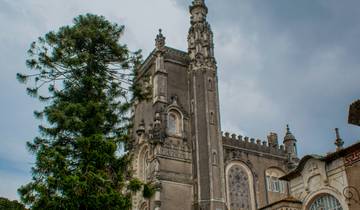
Wine and Gastronomy in the Heart of Portugal
- ✓ Booking needs min. 2 travelers
4 days
Northern Portugal
- ✓ Comprehensive Coimbra tour
- ✓ Expert local guides included
- ✓ All accommodation arranged
- ✓ Transportation provided
6 days
Northern Portugal with Lisbon
- ✓ Comprehensive Coimbra tour
- ✓ Expert local guides included
- ✓ All accommodation arranged
- ✓ Transportation provided

7 days
Porto to Coimbra self-guided bike tour
- ✓ Comprehensive Coimbra tour
- ✓ Expert local guides included
- ✓ All accommodation arranged
- ✓ Transportation provided
Multi-day tour packages powered by TourRadar. Prices and availability subject to change.
Introduction: Why the Beiras Belongs on Every Portugal Itinerary in 2026
Portugal’s tourism miracle has been concentrated along predictable coordinates: Lisbon’s fado-soaked neighbourhoods, Porto’s riverfront wine lodges, the Algarve’s limestone cliffs. The Beiras — roughly the belt of central Portugal between the Douro Valley to the north and the Tagus plain to the south — has watched this rush from a comfortable distance, its medieval villages and granite mountain roads largely undiscovered by the international traveller.
The region takes its name from the verb beirar, to border or edge, and bordering is precisely what it does: the Atlantic to the west, the mountains of Spain to the east, and the social geography of Portugal caught somewhere between them. Historically, the Beiras were Portugal’s defensive heartland, the place where the medieval kingdom held the line against Castile, which explains the extraordinary concentration of fortifications — hilltop castles, bastioned star forts, village walls that doubled as living quarters — along the Spanish frontier.
By the late medieval period, Coimbra had become Portugal’s foremost intellectual capital, home to a university founded in 1290 that shaped jurisprudence, literature, and architecture not just in the mother country but across Brazil, Mozambique, Angola, and Goa. The Joanine Library — a baroque reading room of gilded carved wood where a colony of bats still hunts nocturnal insects to protect the manuscripts — remains one of the most extraordinary rooms in Europe. Aveiro, meanwhile, grew wealthy on salt and cod, its canals filling with painted moliceiro boats harvesting seaweed from the lagoon. Today both cities function as relaxed bases for exploring one of Europe’s least-visited and most geographically varied regions.
For 2026 travellers, the Beiras offers something increasingly rare in southern Europe: space. The interior villages receive a fraction of the visitors who crowd Sintra or Óbidos; the mountain trails of Serra da Estrela rarely feel congested outside a narrow window in August; the rock art sites of the Côa Valley require booking in advance not because of tourist pressure but because the guided groups are deliberately kept small to protect the engravings. Prices reflect this reality — accommodation, food, and transport cost consistently less than in Lisbon or the Algarve, meaning more of your budget goes to experience rather than overhead.
The Beiras Region: What to Expect in 2026
The Beiras encompass four historical sub-regions that have been reorganised multiple times under Portuguese administrative reform but retain distinct identities on the ground. Beira Litoral — the coastal and riverine west — contains Coimbra and Aveiro, the region’s two most visited cities. Beira Alta — the high interior — climbs through Viseu and Guarda toward the Spanish border, taking in the Côa Valley and several of the fortified Aldeias Históricas. Beira Baixa — the low interior south — holds Castelo Branco and the remarkable concentration of rock villages in the Idanha plain. Serra da Estrela, the mountain spine running roughly north-south, straddles all three eastern sub-regions and provides the region’s visual and emotional centrepiece.
Geographically, the transition from coast to high interior is dramatic. Aveiro sits at almost sea level, its brackish lagoon and dune systems giving way within fifty kilometres to vine-covered hills and then to the granite massifs of the serra. The plateau around Guarda, at 1,056 metres, is Portugal’s highest city, subject to bitter winters and snow that occasionally closes mountain passes in January and February. The eastern frontier villages bake in continental heat through July and August, when temperatures in Monsanto or Idanha-a-Velha regularly exceed 40°C.
In 2026, the region benefits from improved access infrastructure. The A25 motorway connects Aveiro to Vilar Formoso on the Spanish border via Viseu, Celorico da Beira, and Guarda, making it possible to cross the entire Beiras in under three hours by car. The A23 links Castelo Branco northward toward Belmonte and Covilhã on the Serra da Estrela flank. Rail access remains limited to the main Lisbon–Porto corridor through Coimbra and Aveiro; the interior is car country.
Coimbra: UNESCO Capital of the Beiras in 2026
Coimbra climbs the south bank of the Mondego River in a series of terraces, the old university district perched at the top and the commercial Baixa spreading along the waterfront below. It served as Portugal’s capital from 1139 to 1255, and the weight of that history is visible in every cobblestone climb through the Alta: Romanesque cathedral arches, Manueline doorways, the buttressed flanks of the Royal Palace that has housed the university since 1537.
The University of Coimbra – Alta and Sofia was inscribed on UNESCO’s World Heritage List in 2013 under criteria (ii), (iv), and (vi) — the first for its seven-century influence on higher education across the Portuguese-speaking world, the second for its distinctive integration of city and university typology, the third for its association with traditions and ideas of universal significance (reference no. 1387). The inscription encompasses the Paço das Escolas (the academic core on the high hill), the colleges along Sofia Street in the lower city, and the surrounding urban fabric that grew organically around the institution over seven hundred years.
Visiting the University in 2026: Tickets and Tips
The main tourist circuit covers the Joanine Library, the Royal Palace, and the Chapel of St Michael. The standard ticket costs €13.50 per adult and includes timed entry to the Joanine Library — the most remarkable room in Coimbra, a three-storey baroque extravaganza of gilded carved wood, frescoed ceilings, and lacquered shelving where some 300,000 volumes have been housed since 1728. A combined ticket including the Scientific Circuit (which adds the Physics Cabinet, Cabinet of Curiosities, and Chemistry Laboratory) costs €17.50 per adult. Book via the official university ticketing portal (visit.uc.pt) well in advance; Joanine Library time slots sell out, particularly in May, June, and September. Check the official site for current rates before visiting, as pricing is reviewed annually.
Beyond the ticketed circuit, Coimbra rewards extended exploration. The Sé Velha (Old Cathedral), one of the finest Romanesque buildings on the Iberian Peninsula, charges a small entry fee of around €2.50. The Botanical Garden, part of the UNESCO property, is free. The Machado de Castro National Museum — whose collection spans medieval stone sculpture to Flemish painting and whose building incorporates a remarkable Roman cryptoporticus — charges approximately €6. The Portugal dos Pequenitos theme park, a 1940s miniature tour of Portuguese architecture, appeals strongly to families with young children at around €12 per adult.
Coimbra is also Portugal’s most important city of Fado Coimbra, a distinctive all-male tradition performed in academic capes. Evening performances take place in dedicated fado houses in the Baixa; expect to pay €15–25 per person for a seated concert with a drink, and book ahead for weekend shows.
Aveiro: The Portuguese Venice in 2026
Aveiro sits where the Ria de Aveiro — a shallow coastal lagoon nearly 45 kilometres long — meets the outermost dunes of the Atlantic coast. The city grew prosperous in the sixteenth century on salt extraction and cod fishing, declined when the lagoon’s entrance silted up, then reinvented itself in the late nineteenth and early twentieth centuries when returning emigrants from Brazil funded an extraordinary wave of Art Nouveau construction. The result is a city of painted canal façades, ornate tilework, and a town centre that manages to feel both deeply Portuguese and unlike anywhere else in the country.
The moliceiro boats — long, shallow-draught vessels originally built to harvest seaweed (moliço) from the lagoon bed — are Aveiro’s most iconic image and its most popular tourist activity. Standard moliceiro canal cruises last 45–60 minutes and cost €10–15 per person; the boats carry groups of 8–12 and depart continuously from the central canal near the Rossio Garden during daylight hours. Each boat is decorated with hand-painted panels depicting local scenes, religious motifs, or ribald humour, and the painters’ imagery changes over time, making no two boats identical.
The Art Nouveau buildings cluster around the central canals and along Rua Barbosa de Magalhães; the best include the former Capitania building (now a museum) and the extraordinary private residences commissioned by returned emigrants who wanted their prosperity visible from the street. Admission to the Art Nouveau Museum costs around €3. The fish market on the canal is best visited early morning when the day’s catch — sea bass, sole, cuttlefish — arrives fresh. Ovos moles, the city’s signature sweet of thin wafer filled with a sugary egg yolk paste, are sold at every bakery from approximately €1.50 per piece.
Costa Nova, 8 kilometres west of the city centre, deserves a half-day. The beach village is famous for its palheiros — wooden fishermen’s huts painted in bold vertical stripes of red and white, green and white, or yellow and white — that line the narrow strip of land between the lagoon and the Atlantic. The beach itself is long, Atlantic-exposed, and excellent for surfing. From Aveiro city centre, buses to Costa Nova run regularly and take approximately 20 minutes.
Aveiro is 60 kilometres north of Coimbra by motorway and 75 kilometres south of Porto. Alfa Pendular trains connect Aveiro to Coimbra in approximately 35 minutes and to Porto in approximately 40 minutes; tickets for both legs cost around €8–12 depending on timing and how far in advance they are purchased.
Serra da Estrela: Portugal’s Mountain Heart
Serra da Estrela is the highest mountain range in continental Portugal, culminating at Torre, a radar-station-topped summit at 1,993 metres — the only point in mainland Portugal where snow lies predictably each winter. The range stretches roughly 100 kilometres through the Beiras, its granite massif shaped by the last glaciation into a landscape of rounded summits, boulder-strewn plateaux, and deep U-shaped valleys carved by ice sheets. The most dramatic of these, the Zêzere glacial valley south of Manteigas, is the finest example of Pleistocene glacial morphology in the Iberian Peninsula.
The Serra da Estrela Natural Park protects 88,125 hectares of montane habitat: high-altitude peat bogs, Pyrenean oak woodlands on the lower slopes, rocky summit plateaux where only specialist flora survives the wind and cold. The park’s fauna includes roe deer, wild boar, golden eagle, and the Serra da Estrela sheepdog (cão da Serra da Estrela), one of the oldest recognised dog breeds in Portugal, still used by shepherds in the high pastures.
Key Destinations Within the Serra
Manteigas sits at the head of the Zêzere Valley at approximately 700 metres altitude and serves as the most atmospheric base for mountain exploration. The thermal spa, the old wool-working workshops, and the gorge walk downstream along the Zêzere are all accessible on foot. Seia, on the western flank, is the main gateway from the Coimbra direction and houses the Museu do Pão (Museum of Bread), a surprisingly engrossing institution charting rural baking traditions across the Beiras. Covilhã, on the southeastern slope, was the centre of Portugal’s wool and textile industry for centuries and is now a university town with good budget accommodation and direct rail access from Lisbon.
Linhares da Beira, in the foothills on the northern edge of the park, is one of Portugal’s twelve designated Aldeias Históricas. A medieval granite village set on a rocky ridge above the Mondego plain, its two castle towers are partly ruined but climbable, delivering panoramic views across the valley. The village has a handful of restaurants and a paragliding community who launch from the castle walls when the thermals are right.
Serra da Estrela Cheese
Queijo da Serra da Estrela — Portugal’s most celebrated cheese and a protected designation of origin (PDO) product — is made from the raw milk of Bordaleira sheep raised within a defined zone in the high interior. The cheese is curdled using extract of cardoon (wild thistle), not animal rennet, giving it a distinctive floral bitterness that sets it apart from any other Portuguese cheese. When young (soft), it is spooned from the round like a thick cream; when aged (velho), it develops a harder rind and more concentrated flavour. The best places to taste it are the small dairy cooperatives around Seia, Celorico da Beira, and Manteigas, where a 500g wheel sells for approximately €8–14 depending on age and producer. Markets in Celorico da Beira hold a dedicated cheese fair each winter.
Outdoor Activities in 2026
The Serra offers excellent year-round outdoor activity. Hiking trails range from the two-hour Poço do Inferno waterfall circuit near Manteigas (accessible by car to the car park, then 4km on foot) to multi-day traverses of the high plateau. The GR33 long-distance trail crosses the range north to south; sections of it can be walked as day stages with car support. Mountain biking and trail running communities have grown substantially around Seia and Covilhã. In winter — from January through February — the road to Torre is occasionally snow-covered and a limited ski area operates on the northern slopes, making it the only skiing in mainland Portugal. Ski passes when the area operates cost approximately €20–30 per day.
Aldeias Históricas: The 12 Historic Villages of the Beiras
The Aldeias Históricas de Portugal network brings together twelve medieval fortified villages in the Beiras interior, all free to enter and all positioned on strategic high ground above valleys that mark the historic frontier with Spain. The network was established in the 1990s as a rural tourism initiative; the villages were subsequently restored and connected by the GR22 long-distance walking route, a 600-kilometre trail that links all twelve in sequence.
The twelve villages are: Almeida, Belmonte, Castelo Mendo, Castelo Novo, Castelo Rodrigo, Idanha-a-Velha, Linhares da Beira, Marialva, Monsanto, Piódão, Sortelha, and Trancoso. Seven fall within Guarda district (Beira Alta), Piódão is in Coimbra district, and four — Castelo Novo, Idanha-a-Velha, Monsanto, and Sortelha — are in Castelo Branco district (Beira Baixa).
Essential Villages to Visit
Monsanto is the most extraordinary of the twelve. The village was voted “Most Portuguese Village in Portugal” in 1938 in a national competition, and the description — hyperbolic as it might seem — captures something real. Houses here were built between and beneath massive granite boulders; the rocks function as walls, floors, and ceilings. The ruined castle at the summit commands views across the Idanha plain for seventy kilometres in every direction. The village is small (a few hundred permanent residents), intensely photogenic, and best visited on a weekday to avoid the weekend coach groups that gather in summer.
Sortelha sits within a near-complete medieval wall circuit, its cobbled streets and dark granite houses little changed since the fifteenth century. The castle is intact; the old Jewish quarter (juderia) is still delineated by its original boundaries. A single excellent restaurant inside the walls — Dom Sancho I — serves grilled lamb and kid in a stone-vaulted room.
Almeida is unique in the network for its seventeenth-century star fortification, a twelve-pointed artillery bastion designed in the Vauban tradition that has survived intact. The village sits at the centre of the star, surrounded by a moat and six kilometres of rampart walks. The fortress was the last major Portuguese stronghold to fall to Napoleon in 1810.
Piódão, set apart from the main cluster in the western Beiras, is built entirely of dark schist — slate-like stone that gives the village a sombre, vertical character entirely different from the granite architecture of the other eleven. Its blue-painted church doors provide the only vivid colour in an otherwise monochrome streetscape. The approach road winds through deep forest gorges; visiting without a car is effectively impossible.
Belmonte has a special place in Portuguese history as the birthplace of Pedro Álvares Cabral, the navigator who claimed Brazil for Portugal in 1500. The Jewish community of Belmonte — descendants of conversos who maintained crypto-Jewish practices in secret for four centuries after the Inquisition — are an extraordinary living chapter of Iberian history; the Museu Judaico de Belmonte tells this story clearly and movingly, with admission at approximately €3.
Côa Valley: UNESCO Prehistoric Rock Art
In the early 1990s, engineers surveying the bed of the Côa River for a proposed hydroelectric dam found something unexpected: thousands of engravings of horses, aurochs, ibex, and deer carved into the schist cliffs of the river gorge. Palaeolithic rock art had previously been assumed to be confined to caves; the Côa Valley overturned that assumption with the largest concentration of open-air Upper Palaeolithic engravings known anywhere on earth. Public protest, scientific review, and government intervention halted the dam project, and in December 1998 the Parque Arqueológico do Vale do Côa was inscribed on UNESCO’s World Heritage List under criteria (i) and (iii) (reference no. 866). In 2010, the inscription was extended to include the Siega Verde site across the Spanish border in Salamanca province, making it a transnational property.
The park contains over 1,200 engraved rock panels, of which approximately 580 carry Pleistocene-period motifs — figures created between roughly 22,000 and 8,000 BCE by hunter-gatherer communities tracking the large herbivores of the Iberian steppe. The preferred animal subjects — horse, ibex, cattle (aurochs), deer — recur across multiple sites; human figures are rare. The engravers used percussion, incision, and abrasion techniques on natural schist outcrops along the last seventeen kilometres of the Côa River before it joins the Douro.
Visiting the Côa Valley in 2026
Three sites are open to the public: Cânada do Inferno (at the confluence of the Côa and Douro rivers), Penascosa (the most extensively engraved panel group), and Ribeira de Piscos (notable for a panel showing horses in paired perspective). All visits are guided tours by 4×4 vehicle descending into the steep-sided valley; the terrain is not accessible on foot from above. Tour prices are €8.50 per person per site, with the option of visiting all three sites over two days. Book via the park’s official website (arte-coa.pt) several weeks in advance in summer; the group sizes are deliberately limited to minimise disturbance to the rock surfaces.
The Museu do Côa in Vila Nova de Foz Côa provides essential context and is best visited before the rock art sites rather than after. The museum building itself — a striking rectilinear structure set into the hillside above the town — is architecturally distinguished; the permanent collection covers Palaeolithic tools, dating methodologies, and high-resolution photography and casts of the engravings. Admission costs approximately €4. Vila Nova de Foz Côa is approximately 200 kilometres northeast of Coimbra; the journey by car takes about two and a half hours via the A25.
Getting Around the Beiras in 2026
Transport strategy for the Beiras in 2026 breaks cleanly into two zones: the railway corridor (Aveiro–Coimbra–Figueira da Foz) where trains are fast, cheap, and frequent; and the interior, where a car is the only realistic option.
By Train
Alfa Pendular high-speed services from Lisbon Oriente to Coimbra-B take approximately 1 hour 36 minutes and cost €25.70 per adult in tourist class; Intercidades services take around two hours and cost €21.30. From Porto Campanhã to Coimbra, Alfa Pendular trains run in approximately 55 minutes for €15–18. Aveiro is served by both the Alfa Pendular (from Lisbon approximately 2h10m, ~€28) and frequent regional services from Porto (approximately 40 minutes, around €8–10). Covilhã on the eastern flank of Serra da Estrela has its own branch-line connection to Lisbon via Castelo Branco, though journey times are long (around 3h30m) and services infrequent.
By Car
Renting a car transforms what is possible in the Beiras. Economy cars rent for €20–30 per day during shoulder season (May–June and September–October) and €25–35 during the August peak; booking two or more weeks in advance reduces daily rates by 20–30%. Portugal’s motorway network is comprehensive but toll-heavy; rental cars are now legally required to carry a Via Verde electronic transponder for toll payment, and rental companies charge approximately €2 per day for this service. Budget approximately €8–20 per day in tolls for a typical interior circuit (the A25 from Aveiro to the Spanish border carries tolls throughout). Fuel costs approximately €1.75–1.90 per litre for petrol in 2026.
A practical week-long circuit starting in Coimbra follows this sequence: Coimbra (arrive by train, 2 nights, explore on foot) → pick up rental car → Serra da Estrela/Manteigas (2 nights) → Guarda/Aldeias Históricas northeast cluster (1 night) → Monsanto/Sortelha southern cluster (1 night) → return to Lisbon by motorway or Castelo Branco rail. Total driving distance: approximately 650 kilometres.
By Bus
Rede Expressos coaches connect Coimbra to most major towns in the interior, including Guarda (approximately €14, 2 hours), Castelo Branco (approximately €12, 2.5 hours), and Viseu (approximately €8, 1.5 hours). Buses run 2–4 times daily on most routes. Within the interior, local bus services between villages are infrequent and not viable for tourism; between-village movement requires either a car or taxi.
Where to Stay in the Beiras in 2026
Accommodation in the Beiras spans the full range from hostel dormitories to five-star palace hotels, with prices consistently lower than in Lisbon or the Algarve and quality often surprisingly high, particularly in the rural turismo de habitação (estate tourism) sector.
Coimbra
Budget hotels in Coimbra — clean rooms with private bathroom — run €60–80 per room per night, often in the old city near the university. Mid-range 3-star hotels, including well-reviewed options like Stay Hotel Coimbra Centro and Hotel Bragança, range €90–140 per room in shoulder season, rising to €150–200 in late May and June when academic ceremonies fill the city. The Hotel Quinta das Lagrimas — a romantic country house set in the gardens where the legend of Pedro and Inês de Castro played out in 1355 — is Coimbra’s luxury benchmark at approximately €220–350 per room. The city’s hostel scene is limited; for dormitory accommodation, options are few and should be booked at least 2–3 weeks ahead during university event periods.
Aveiro
Aveiro has developed a strong boutique hotel sector in its Art Nouveau buildings; several canal-side guesthouses offer rooms with direct views of the moliceiro boats from €80–120 per night for a double. Budget guesthouses in the residential streets behind the centre run €55–80 per room. The Montebelo Vista Alegre Ílhavo Hotel, near the famous porcelain factory outside the city, offers four-star luxury in an extraordinary mid-century modernist building at approximately €150–220 per room.
Serra da Estrela and the Interior
Rural tourism properties (casas de turismo de habitação) are the accommodation of choice in the interior, offering farmhouse rooms, wood-burning stoves, and generous breakfasts in stone-built farmhouses for €70–120 per room. Manteigas and Seia both have small hotels; Covilhã has a larger selection due to its university population. In the Aldeias Históricas villages, accommodation is a small guesthouse within the village walls — unique in character and popular with hikers on the GR22. Prices run €60–100 per room. Luxury turismo de habitação properties — manor houses and former monasteries converted to boutique hotels — charge €130–200 per room and offer an experience of Portugal’s rural aristocratic heritage unavailable anywhere in the country’s main tourist cities.
Booking Advice for 2026
Coimbra fills quickly during its academic calendar events: the Queima das Fitas (burning of the academic ribbons, May), the academic opening ceremonies (October), and the São João festival (June). Book 6–8 weeks ahead for any stay in these periods. The Aldeias Históricas villages have very limited accommodation; for circuits along the GR22, book all village stops before starting the route. Serra da Estrela accommodation near Torre fills on the handful of weekends when snowfall is forecast; if you are planning a winter snow visit, monitor the forecast and book immediately when conditions look promising.
Daily Budget Guide for the Beiras in 2026
The Beiras is significantly cheaper than Lisbon, Porto, or the Algarve for every category of expenditure, and dramatically cheaper than comparable destinations in France, Spain, or northern Europe. The figures below cover a full day including accommodation, meals, local transport, and typical attraction entry — per person, assuming two sharing accommodation.
Budget Travel in the Beiras 2026 (€65–95 per person daily)
Accommodation in a budget hotel or guesthouse (two sharing) contributes approximately €30–40 per person. Three meals — a café breakfast of coffee and pastel de nata (€3–5), a prato do dia set lunch at a local restaurant (€8–10), and a simple dinner at a tasca with the dish of the day and a glass of house wine (€12–16) — add €23–31. Daily food, drinks, and snacks come to €27–37 in total. Local transport by bus or on foot adds €5–10, and entry to paid attractions averages €5–10. Total: approximately €65–95 per person daily.
Budget travel in the Beiras is genuinely comfortable. The prato do dia culture — two courses, bread, wine, and coffee for €8–12 — is deeply embedded in every town and village. Free or very cheap attractions (castle walks, village streets, the Botanical Garden) balance the handful of priced experiences. A seven-day budget trip costs approximately €455–665 per person.
Mid-Range Travel in the Beiras 2026 (€130–200 per person daily)
A mid-range 3-star hotel (two sharing) contributes €45–70 per person. Meals at the mid-range level — a proper café breakfast at €6–10, a restaurant lunch at €15–22, and a sit-down dinner with wine at €25–35 — add up to €46–67, with drinks and snacks bringing daily food costs to €56–82. A shared car rental (€25–35/day for the car plus €12–18 in fuel, divided between two) adds €18–27 per person. Paid attractions — university circuit, moliceiro tour, Côa Valley tour — average €12–20 per person per day across the trip. Total: approximately €130–200 per person daily, assuming two sharing accommodation. A week’s mid-range Beiras trip costs approximately €910–1,400 per person.
Luxury Travel in the Beiras 2026 (€265–425 per person daily)
Boutique or 4-star hotel accommodation (two sharing) runs €75–125 per person. Fine dining across the region — upscale restaurants in Coimbra and Aveiro, the best Aldeias Históricas dining rooms, wine-pairing meals at Bairrada estates — adds €120–180 per person for meals and drinks. A private car (mid-size rental plus fuel and tolls) or private driver adds €30–50 per person. Private guided tours, premium wine tastings, and special access experiences add €40–70 per person. Total: approximately €265–425 per person daily. A week of luxury travel in the Beiras costs approximately €1,855–2,975 per person.
Fixed-Price Reference Points for 2026
- University of Coimbra standard circuit (Joanina Library + Royal Palace + Chapel): €13.50 per adult (check visit.uc.pt for current rates)
- University of Coimbra combined ticket with Scientific Circuit: €17.50 per adult
- Côa Valley guided rock art tour (per site): €8.50 per person
- Museu do Côa entry: approximately €4 per adult
- Aveiro moliceiro boat tour: €10–15 per person
- Coimbra Old Cathedral (Sé Velha): approximately €2.50
- Machado de Castro National Museum: approximately €6
- Museu Judaico de Belmonte: approximately €3
- Aldeias Históricas village entry: free (castle visits sometimes charge a small fee of €1–2)
Food and Wine of the Beiras in 2026
The Beiras table is built around the fundamental dualities of Portuguese cooking: salt cod versus fresh fish from the Atlantic, pork from the montado woodlands versus lamb from the mountain pastures, local wine against the universal Vinho Verde. But the region also has its own distinct identity, shaped by the cold winters of the interior, the Atlantic humidity of the coast, and the monastic cooking traditions of institutions like the Convento de Santa Clara in Coimbra.
Signature Dishes
Bacalhau à Brás (shredded salt cod with eggs and fried potato sticks) appears on every menu and is the standard benchmark for judging a Beiras restaurant’s kitchen. More distinctive is leitão da Bairrada — whole roast suckling pig from the wine-producing sub-region of Bairrada just west of Coimbra — which arrives at the table lacquer-crisp on the outside and meltingly tender within; a half-portion with roast potatoes at a Bairrada roadside restaurant costs €15–20 and feeds two people comfortably. Arroz de lampreia (lamprey rice) appears in Coimbra and river-valley restaurants from February to April, when the lamprey run up the Mondego; it is one of Portugal’s rarest seasonal dishes and worth seeking out if you visit in early spring.
Serra da Estrela cheese, in both its soft spoonable form and aged rind version, belongs on every table. It is best eaten simply — with crusty bread, honey, and a glass of Dão red — but also appears baked in the oven until molten, served with chestnut honey drizzled over the crust. Mountain honey (mel de Serra da Estrela) is another PDO product worth seeking out in local markets.
Wine Regions of the Beiras
The Beiras sits at the intersection of three important wine regions. Bairrada, west of Coimbra, produces some of Portugal’s most distinctive reds from the Baga grape — tannic in youth, aged to silky complexity — and very good sparkling wines (espumante); a visit to one of the Bairrada estates for a cellar tour and tasting costs approximately €10–20 per person. Dão, centred on Viseu in the north of the region, is arguably Portugal’s finest red wine region: the combination of granite soils, continental climate, and native grape varieties (Touriga Nacional, Alfrocheiro, Tinta Roriz) produces wines of remarkable elegance and longevity. Beiras and Beira Interior denominations cover the eastern high interior, with small producers making excellent reds from the Marufo, Rufete, and Touriga Nacional grapes grown in the shadow of the Serra da Estrela.
Restaurant wine prices in the Beiras reflect regional production: a glass of Dão at a good restaurant costs €3–6; a bottle of a well-regarded Bairrada reserve, around €18–35 in a restaurant. Buying directly from producers at the estate is substantially cheaper — many Dão estates sell their wines at cellar-door prices of €8–16 per bottle for premium releases. The Bairrada wine road (Rota da Bairrada) links the major estates between Anadia and Mealhada in a circuit driveable in half a day; several estates combine cellar visits with restaurants serving leitão — an obvious pairing since the pork and the wine evolved together in the same landscape. The Adega Cooperativa de Cantanhede and the Luís Pato winery are both strongly recommended for visitors new to Baga; the latter’s wines are exported internationally and serve as useful reference points for understanding what the grape becomes in skilled hands.
Markets and Gastronomic Shopping in 2026
The Mercado Municipal in Coimbra (behind the Santa Cruz Church in the Baixa) runs Tuesday through Saturday mornings and sells the full range of regional produce: Serra da Estrela cheese, Bairrada wines, local honey, dried figs, almonds, and the sweet conventual pastries (pastéis de tentúgal, fofas de Viseu) that came from the region’s convents. In Aveiro, the covered market near the canal sells salt (flor de sal de Aveiro, a high-quality sea salt harvested from the lagoon pans), fresh fish, and smoked eels from the lagoon. In Celorico da Beira, the monthly cheese fair draws Serra da Estrela producers from across the PDO zone.
Best Time to Visit the Beiras in 2026
The Beiras rewards visitation in almost every season, with the choice depending more on which part of the region you prioritise than on a single optimal window.
Spring 2026 (March–May): Best for Culture and Green Landscapes
Spring is the ideal time for Coimbra — the university city is at its most theatrical during the Queima das Fitas celebrations in the first or second week of May, when graduating students in academic capes burn their faculty ribbons and fill the streets with fado, processions, and ceremonial balls that have run since the nineteenth century. Hotel rooms in Coimbra book out entirely for Queima das Fitas weekend; reserve six to eight weeks ahead. Spring also brings the Mondego valley into vivid green, the Serra da Estrela wildflowers to peak, and the lamprey season (February–April) to the river restaurants. Temperatures range from 15°C on the coast to 10°C in the high interior; snow is still possible on the serra through March.
Summer 2026 (June–August): Best for the Coast and Night Life
June and September are the most reliable months for beach weather on the Atlantic coast without the intensity of high summer. July and August bring extreme heat to the interior — temperatures in the eastern Aldeias Históricas regularly exceed 38–40°C in the hottest years — and make daytime sightseeing in the villages uncomfortable between noon and 4pm. Aveiro and Coimbra are more comfortable due to Atlantic influence. Serra da Estrela is the exception: the summit plateau stays cool even in August and is much sought-after for mountain hiking when the lowlands bake. Accommodation prices peak in July–August, particularly for coastal properties; book 6–8 weeks in advance.
Autumn 2026 (September–November): Best for Wine and Hiking
September and October are arguably the finest months in the Beiras. The vintage in Bairrada and Dão runs through September and October, and several estates open for harvest experiences (vindima) at approximately €25–50 per person. Autumn light transforms the granite villages and mountain landscapes; the GR22 hiking trail is at its most pleasant when the summer heat has broken but the days are still long and clear. The universities return to session in October, re-energising Coimbra’s restaurant and nightlife scene after the summer lull.
Winter 2026 (December–February): Best for Authenticity and Snow
Winter in the Beiras is cold and, in the interior, sometimes brutally so — Guarda, the highest city in Portugal, regularly records temperatures below zero from December through February. But winter brings a quality of authenticity difficult to find in summer: the Aldeias Históricas villages are almost entirely free of visitors, the Serra da Estrela sees occasional snowfall that transforms the landscape, and the interior restaurants fire their wood-burning grills against the cold. The Celorico da Beira cheese fair runs in winter. Prices for accommodation and car rental drop significantly from November through February — often 30–40% below summer peaks.
Hidden Gems and Day Trips from Coimbra in 2026
Coimbra functions as the natural hub for several outstanding day excursions that most visitors to the city overlook entirely. The following are all within 90 minutes by car.
Conimbriga Roman Ruins
Sixteen kilometres south of Coimbra, Conimbriga is the best-preserved Roman town in Portugal, with complete mosaic floors, hypocaust heating systems, and urban layouts clearly legible beneath the site’s ongoing excavations. The site includes a well-curated museum holding statuary, glassware, and everyday objects recovered from the excavations. Entry costs approximately €5 per adult; combine with a visit to the village of Condeixa-a-Nova for lunch at one of the roadside restaurants. Conimbriga is accessible by bus from Coimbra (approximately 30 minutes, several daily services).
Figueira da Foz
Forty-five kilometres west of Coimbra on the Atlantic, Figueira da Foz offers one of the widest beaches in Portugal — a near-kilometre of Atlantic sand backed by a casino district that was fashionable in the nineteenth century. The Museu Municipal Dr. Santos Rocha houses an extraordinary collection of ancient Greek and Egyptian artefacts acquired by a local doctor-traveller in the 1880s. Figueira is connected to Coimbra by train (approximately 1 hour, regional service) and functions well as a half-day or full-day escape from the heat of the interior.
Buçaco Forest and Palace Hotel
Twenty-five kilometres north of Coimbra, the Mata Nacional do Buçaco (Buçaco National Forest) is an 800-hectare estate planted by Carmelite monks in the seventeenth century with species from across the Portuguese empire: Himalayan cypress, Mexican cedar, Himalayan pine, Japanese camphor. At the centre of the forest stands the Palace Hotel do Buçaco — a neo-Manueline hunting lodge built for the Portuguese royal family in 1888, now operating as a hotel and open for day visits, with a restaurant, wine cellar, and extraordinary tilework interior. Day-trippers are welcome for lunch (reservations recommended, budget €30–45 per person).
Tomar and the Convent of Christ
Approximately 80 kilometres south of Coimbra, Tomar hosts the Convento de Cristo — the headquarters of the Order of the Knights Templar in Portugal, inscribed on UNESCO’s World Heritage List in 1983. The twelve-sided Templar rotunda, the Gothic chapter house window (one of the supreme achievements of Manueline architecture, a writhing mass of maritime imagery carved in limestone), and the seven successive cloisters recording the history of the convent from the twelfth to the eighteenth century make Tomar one of the most important architectural sites in Portugal. Entry costs approximately €8 per adult; the town is also known for its Festa dos Tabuleiros, a quadrennial procession of women bearing towering trays of bread and flowers (next edition 2027).
Viseu
The capital of the Dão wine region, Viseu is one of Portugal’s most underrated cities — a prosperous regional capital with an exceptional Museu Grão Vasco housing the sixteenth-century Portuguese Renaissance paintings of Vasco Fernandes (Grão Vasco), Portugal’s greatest Renaissance painter. The cathedral square and surrounding old city are genuinely beautiful, the restaurant scene is excellent, and the city’s markets sell the full range of Dão and Beiras wines. Approximately 110 kilometres north of Coimbra via the A1/IP3, accessible in under 90 minutes by car.
The Museu Grão Vasco is housed in the former Episcopal Palace adjoining the Sé cathedral and holds eighteen major panel paintings by Vasco Fernandes alongside works by his contemporary Gaspar Vaz — together one of the most important collections of Renaissance painting in the country. Entry costs approximately €4 per adult. The cathedral itself, with its Romanesque base, Gothic nave, and Mannerist upper façade, is open for free and rewards a careful circuit of its interior. The Rossio — Viseu’s broad central square — fills with café tables in warmer months and gives a strong sense of a Portuguese provincial city operating on its own confident terms, entirely independent of the Lisbon tourism economy. Viseu also serves as the starting point for wine-route circuits into the Dão sub-regions of Mortágua, Tondela, and Nelas, where small estate producers welcome advance-booked visitors for tastings.
Frequently Asked Questions About the Beiras in 2026
What is the best base for exploring the Beiras in 2026?
Coimbra is the logical choice for a first visit: it has the widest range of accommodation across all budget levels, the best transport links by train, and enough cultural content — the UNESCO university, the Old Cathedral, the Machado de Castro Museum, fado performances — to fill two full days without leaving the city. From Coimbra, day trips to Conimbriga, Buçaco, and Figueira da Foz work well by car or public transport; the interior requires picking up a rental car for a 3–4 day loop. Travellers focussed specifically on the Aldeias Históricas circuit can base themselves in Guarda or Castelo Branco for the eastern villages.
How many days do I need for the Beiras?
A minimum of five days covers the highlights: two days in Coimbra and Aveiro by train, and three days by car through Serra da Estrela and two or three Aldeias Históricas villages. Seven to ten days allows a more comprehensive circuit including the Côa Valley, a full traverse of the Aldeias Históricas, and time for wine-region exploration in Bairrada or Dão. The Beiras rewards slow travel — the interior villages and mountain landscapes absorb time in a way that city sightseeing does not.
Is the Beiras suitable for families with children in 2026?
Yes. Aveiro’s moliceiro tours appeal to all ages, Conimbriga’s Roman ruins engage children well, and the medieval castle climbs in the Aldeias Históricas villages — Monsanto’s boulder houses, Almeida’s star-fort ramparts — are exactly the kind of hands-on medieval exploration that fires young imaginations. The Figueira da Foz beach offers safe Atlantic swimming in a family-oriented resort environment. The main challenge for families is the driving distances between interior sites; plan no more than 150 kilometres per day on interior roads to keep journeys manageable with children.
What language do people speak in the Beiras?
Portuguese. English is widely spoken in Coimbra (a university city with a strong international student population), in Aveiro, and at major tourist sites throughout the region. In the interior villages and at smaller rural restaurants, English fluency is less common; basic Portuguese phrases are appreciated and locals are uniformly patient with pronunciation. French is occasionally spoken among older residents, a legacy of the large Portuguese immigrant community in France in the mid-twentieth century. Bring a translation app or pocket phrasebook for the deeper interior.
What is the dress code for visiting the Joanine Library in Coimbra?
There is no formal dress code, but the Joanine Library is an active part of the working university as well as a UNESCO World Heritage property, and respectful dress is appropriate. Photography inside the library is prohibited during the daytime visiting slot; the library opens an earlier slot (approximately 9:00–9:30) specifically for photography, which must be booked separately. Visits are timed and strictly controlled — groups of up to three people enter together, with no more than twelve visitors permitted in the room simultaneously. Arrive at your booked time without fail; late arrivals forfeit entry.
Can I visit the Côa Valley rock art without a guide?
No. All visits to the engraved panels are guided tours by park staff using 4×4 vehicles; independent access to the valley floor is not permitted in order to protect the engravings from uncontrolled visitor impact. The guided format is genuinely excellent — park guides are knowledgeable, multilingual (English and Spanish tours run regularly), and skilled at pointing out engravings that an unaccompanied visitor would walk past without seeing. Book through arte-coa.pt. Night tours of the Penascosa site run during summer months and offer an extraordinarily atmospheric experience; prices are approximately €12–15 per person.
What are the best wine-tasting experiences in the Beiras for 2026?
Bairrada estates along the N1 road between Coimbra and Aveiro offer cellar-door tastings of Baga reds and espumante sparkling wines for approximately €10–20 per person; the Caves São João and Luís Pato wineries are among the most visitor-friendly. In the Dão region, the Quinta dos Carvalhais near Mangualde and Quinta dos Roques near Viseu both offer structured tasting visits. Book 24–48 hours ahead for most estate visits; summer weekends fill quickly. For a full day, combine a Bairrada estate visit with lunch at one of the roadside leitão restaurants on the same stretch of road.
Are credit cards widely accepted in the Beiras?
Cards are accepted in all hotels, most restaurants in Coimbra and Aveiro, and most tourist-facing businesses throughout the region. Carry cash (euros) for markets, small village cafés, roadside stalls, Aldeias Históricas castle admission fees, and any transaction under approximately €5. ATMs (Multibanco) are present in every town of any size and reliably dispense notes without transaction fees for most European bank cards; foreign-issued cards work at all Multibanco machines but are subject to the issuing bank’s standard foreign transaction fees.
How safe is the Beiras for solo travellers in 2026?
The region is safe for solo travellers of all genders. Portugal consistently ranks among Europe’s safest countries for tourism, and the Beiras interior — quiet, traditional, community-oriented — has a negligible rate of traveller-targeted crime. The main practical consideration for solo travellers is the high cost of single-occupancy accommodation: most properties charge either a full double-room rate or a single supplement of 20–30% above half the room price, which pushes solo daily costs significantly above the per-person figures that assume two sharing. Solo budget travel in the Beiras realistically costs €90–130 per person daily (single room, meals, transport, attractions); solo mid-range travel runs €170–260 per person daily.
What is Fado Coimbra and where can I hear it in 2026?
Fado Coimbra is a distinct tradition from the Lisbon fado better known internationally. Performed exclusively by men — traditionally university students and alumni in black academic capes — Fado Coimbra has a softer, more introspective register than its Lisbon counterpart, with Portuguese guitar lines of exceptional melodic refinement accompanying philosophical or amorous poetry in archaic literary language. It is never performed commercially in the way Lisbon fado can be; the authentic setting is an impromptu street performance in the university Alta at night or a formal concert in a cultural association. The best regular live performances for visitors take place at venues like A Capella (a nineteenth-century church converted into a fado restaurant) and Fado ao Centro in the Baixa; concerts run 60–80 minutes and cost approximately €20–25 per person including a drink.