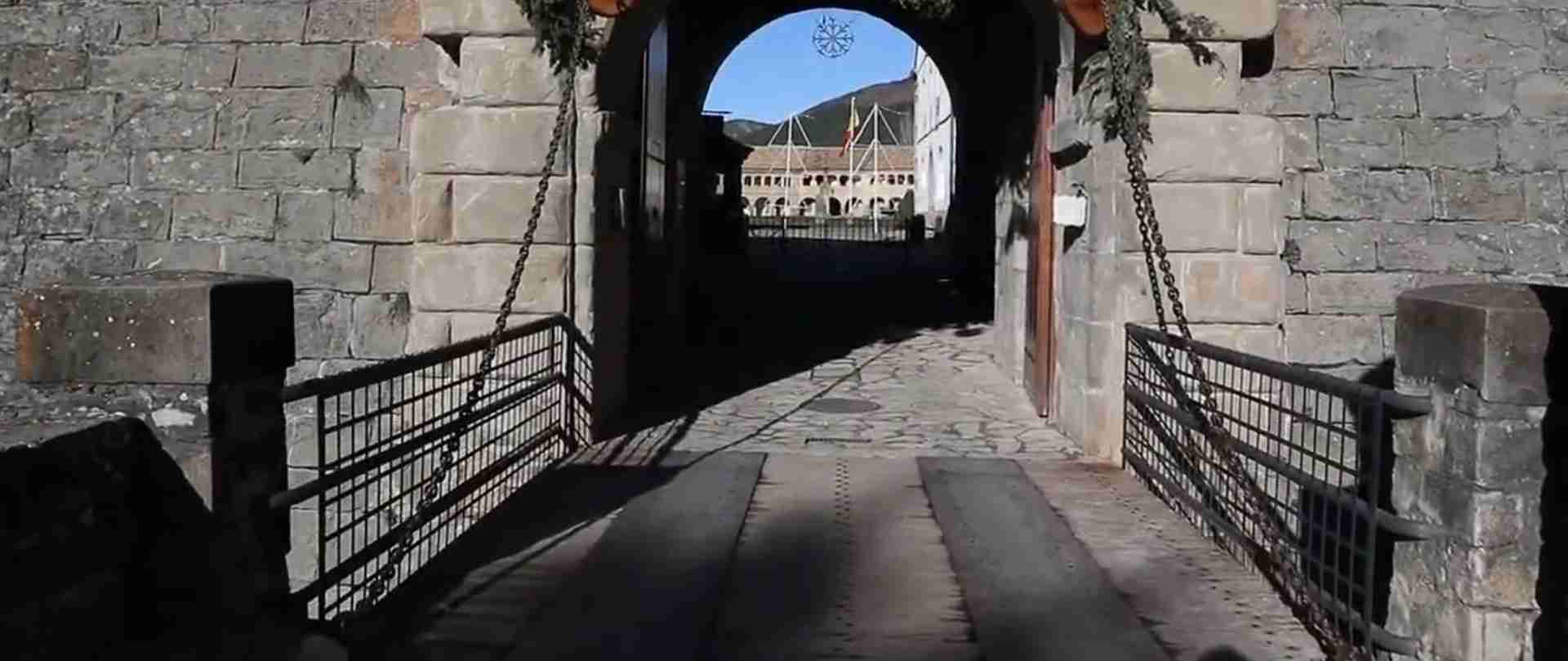
The Aragonese Highlands Without the Crowds: A 2026 Curated Road Trip Through Spain’s Silent Mountains
Aragón occupies the geographic heart of Spain yet attracts a fraction of the visitors drawn to Andalusia or Catalonia. Its highland arc stretches from the Atlantic-scented valleys of the western Pyrenees south through limestone canyon country and on to the fortress-crowned mesa towns of Teruel — a chain of landscapes so varied that every driving day feels like entering a different country. This guide charts a 2026 circular route of roughly 1,400 kilometres through Aragón’s most compelling highland terrain, placing its quietest roads and least-visited villages at the centre of the itinerary.
Key Takeaways
- Route Overview 2026: A circular loop from Zaragoza across seven stages, covering the western Pyrenees, the Sierra de Guara pre-Pyrenees, the Ribagorza highlands, the Ordesa massif, and the Sistema Ibérico mesa country of Teruel, with a final sweep through the Matarraña — roughly 1,400 kilometres over 7 to 10 days.
- 2026 Travel Costs: Budget travellers sharing a car and a basic rural room spend approximately €75–120 per person per day (two sharing). Mid-range couples in comfortable casas rurales spend €145–230 per person per day. The full 7-day circuit totals approximately €525–840 per person on a budget or €1,015–1,610 mid-range, including car rental, fuel, all accommodation, and meals.
- UNESCO Heritage: The route passes through two UNESCO World Heritage inscriptions — Pyrénées-Mont Perdu (encompassing Ordesa y Monte Perdido National Park, designated 1997) and the Mudéjar Architecture of Aragón (designated 1986, extended 2001), covering monuments in Teruel and Zaragoza.
- Best Season: May–June and September–October deliver mild mountain temperatures, clear roads, negligible crowds, and wildflowers or autumn foliage. July and August are viable but bring peak visitor numbers to Ordesa, Albarracín, and Aínsa.
- Vehicle: A standard compact car handles all main-route roads on this circuit throughout the spring, summer, and autumn seasons. Winter tyres are mandatory in Pyrenean and Sistema Ibérico highland zones when snow conditions require them, from November through April.
- Crowd Reality: The highland stages between Sos del Rey Católico, Roda de Isábena, and the Maestrazgo interior carry a fraction of the vehicle traffic recorded on equivalent routes in coastal Spain. On midweek mornings in May or October, some village squares on this route see no other foreign visitors at all.
People Also Ask About the Aragonese Highlands Road Trip 2026
How much does a road trip through the Aragonese Highlands cost in 2026?
Budget travellers sharing a compact rental car and a basic rural room spend €75–120 per person per day (two sharing). Mid-range couples in comfortable casas rurales or rural boutique hotels spend €145–230 per person per day. A 7-day circuit totals approximately €525–840 per person on a budget or €1,015–1,610 mid-range, covering car hire, fuel at roughly €1.55 per litre for SP95 petrol, accommodation, all meals, and attraction entries. Luxury travellers — staying in converted manor hotels and dining at regional tasting menus — spend €225–380 per person per day, for a 7-day total of €1,575–2,660 per person.
When is the best time for the Aragonese Highlands road trip in 2026?
May–June and September–October are the optimal windows. Mountain roads above 1,000 metres are clear of snow, the summer peak season has not yet arrived or has just ended, wildflowers carpet the Pyrenean valleys through June, and the beech forests of Hecho and Ansó blaze copper and gold through October. July and August are viable but Ordesa National Park operates strict visitor caps and access restrictions from 1 July to 15 September, Albarracín books out weeks in advance, and the road to Aínsa doubles in traffic at weekends.
How many days do I need for the full Aragonese Highlands road trip in 2026?
Seven to ten days is the recommended duration for the full 1,400-kilometre circuit. Seven days allows one or two nights per stage with sufficient time to walk village streets, hike a canyon, and arrive before dusk on mountain roads. Ten days turns the route into a genuinely unhurried exploration, adding full hiking days in Ordesa and Benasque and extra evenings in Albarracín and Valderrobres. A condensed 5-day version is achievable by omitting either the western Pyrenees stages or the Matarraña, but 7 days is the minimum to do the full arc justice.
Do I need a 4WD vehicle for the Aragonese Highlands in 2026?
No. Every road on the main 1,400-kilometre circuit is paved tarmac, and a standard compact car handles it comfortably outside of winter snowfall events. Some optional off-route detours to remote valleys or forest tracks benefit from higher ground clearance, but none of these are required elements of the core circuit. In winter months between November and April, winter tyres or snow chains become mandatory when roads through the Pyrenees and the Sierra de Albarracín carry snow, but this is a legal and safety issue rather than a requirement for a specialised vehicle.
Extended multi-day tours – 5+ days
Featured Aragon Multi-Day Tour Packages
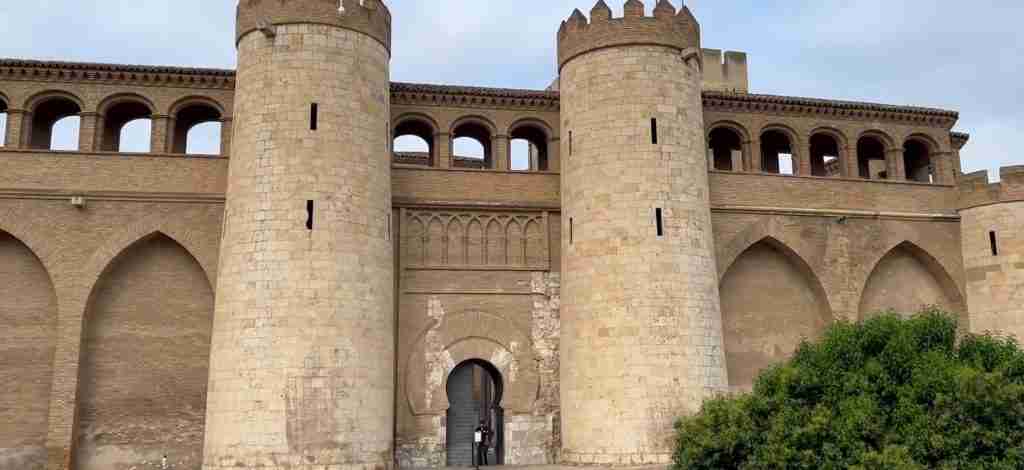
3 days
Aragon 3-Day Discovery Tour
- ✓ Comprehensive Aragon experience
- ✓ Expert local guides included
- ✓ All accommodation included
- ✓ Transportation provided
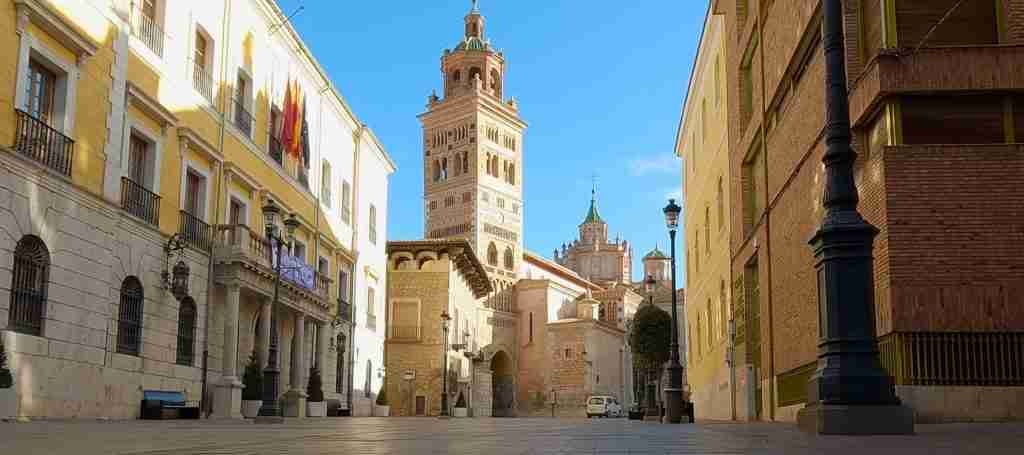
5 days
Aragon 5-Day Highlights Experience
- ✓ Comprehensive Aragon experience
- ✓ Expert local guides included
- ✓ All accommodation included
- ✓ Transportation provided
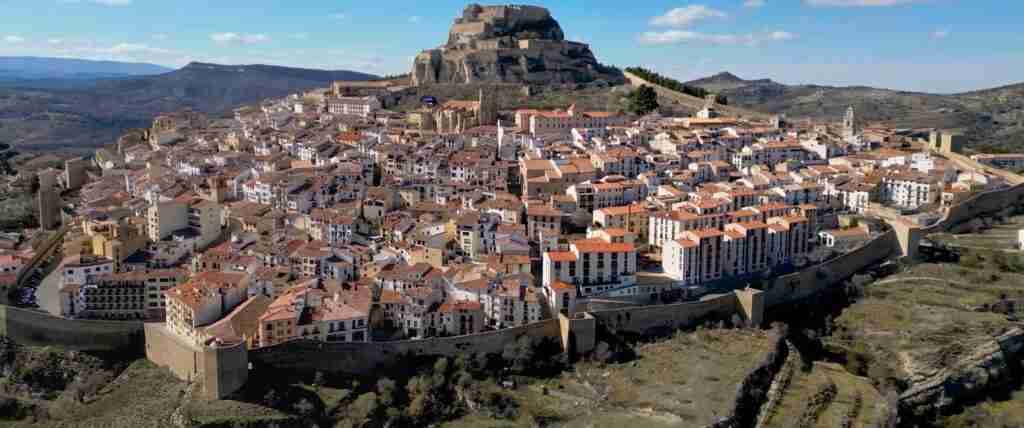
7 days
Aragon 7-Day Cultural Journey
- ✓ Comprehensive Aragon experience
- ✓ Expert local guides included
- ✓ All accommodation included
- ✓ Transportation provided
10 days
Aragon 10-Day Complete Adventure
- ✓ Comprehensive Aragon experience
- ✓ Expert local guides included
- ✓ All accommodation included
- ✓ Transportation provided
Multi-day tour packages powered by TourRadar. Prices and availability subject to change.
Introduction: Aragón’s Highlands — Spain’s Best-Kept Secret
The statistics are instructive. Aragón, Spain’s third-largest autonomous community by area — larger than Portugal, bigger than the Netherlands and Belgium combined — receives fewer international overnight stays per year than the Balearic Islands record in a single summer month. This is not a reflection of quality or interest. It is a consequence of geography, the gravitational pull of Spain’s sun-drenched coasts, and the absence of budget airline routes into Huesca and Teruel. These factors have preserved something increasingly rare in southern Europe: genuine quietude at genuine depth.
The “highlands” of Aragón encompass three distinct mountain systems, each with its own character. In the north, the Pyrenees rise abruptly from the Ebro basin, their highest summits — Aneto at 3,404 metres, the tallest peak in the entire Pyrenean chain, and Monte Perdido at 3,355 metres — draped in the last southerly glaciers in continental Europe. Immediately south of the Pyrenean crest, the pre-Pyrenean ranges host the deep limestone canyons of the Sierra de Guara, a global centre for canyoning whose turquoise gorges remain little known outside specialist outdoor circles. Further south still, the Sistema Ibérico — specifically the highlands of Teruel province — produces a landscape of red-rock escarpments, medieval stone villages perched on eroded buttes, and forests of Scots pine and black juniper that extend to every horizon without interruption.
The roads connecting these three zones are part of the journey’s intrinsic reward. Aragón’s highland roads are sinuous, well-maintained, and largely empty. The A-2 autopista brings Zaragoza within ninety minutes of Madrid, but the moment you leave the main arterials and climb into the comarcas — the small administrative districts that structure Aragón’s interior — you enter road-trip country of the first order: panoramic mountain passes, rivers that have carved limestone into theatrical columns and arches, and village after village of unrestored medieval architecture that would generate thousands of visitors a day if it stood in Tuscany or Provence.
This guide structures the highlands into seven driving stages, each completing a full day’s exploration with a designated overnight stop. The route is circular and begins and ends in Zaragoza, making it compatible with direct flights to Zaragoza Airport (ZAZ) or an overland approach from Madrid, Barcelona, or Valencia. The stages are described in clockwise order, beginning in the northwest near the Navarrese border and arcing through the Pyrenees before descending south into Teruel and east toward the Catalan border.
Planning Your 2026 Aragonese Highlands Road Trip: Route Overview and Essentials
The full circuit covers approximately 1,400 kilometres across seven stages. The majority of driving is on comarcal (county) roads and carreteras nacionales — two-lane roads through mountain terrain — with minimal motorway involvement outside the Zaragoza approaches and the transition between Pyrenean and Sistema Ibérico sections. Driving times in the highland sections consistently run longer than distances suggest: a 60-kilometre stage through the western Pyrenees or the Maestrazgo takes 90 minutes due to hairpin bends, single-track sections, and the inevitable pauses to photograph a medieval tower or a canyon viewpoint.
Car Rental for the 2026 Aragonese Highlands Circuit
Zaragoza Airport (ZAZ) and Zaragoza city centre are the most convenient rental pickup points for this circular route. A pre-booked compact car costs approximately €35–45 per day from international operators at Zaragoza Airport in 2026, with weekly rates of €185–220 offering substantially better value than daily pricing — book through aggregators such as Skyscanner Cars or Rentalcars.com rather than airport counters, which run 20–30% above online rates for equivalent vehicles. A small SUV (Seat Arona, Volkswagen T-Roc class, or equivalent) handles mountain roads more comfortably than a low-slung hatchback and adds only €5–10 per day to the daily rate — a worthwhile premium for the Benasque and Ordesa approaches, where the road climbs steeply from the valley floor. Avoid booking the largest available category; in the narrow village streets of the Maestrazgo and the western Pyrenees valleys, a compact car is a genuine practical advantage.
Fuel Costs and Road Tolls in 2026
SP95 petrol averaged approximately €1.55 per litre across Spain in mid-2026, placing Spain among the four most affordable eurozone countries for pump prices — 15% below the EU average of €1.85 per litre. Diesel runs slightly higher at €1.65–1.69 per litre. A compact car averaging 7 litres per 100 kilometres across the mountain roads of this route will consume approximately 98 litres for the full 1,400-kilometre circuit, at a total fuel cost of roughly €152 for the car or €76 per person for two sharing. On a daily basis, fuel costs per person (assuming the car is shared between two) run €8–16, depending on distance driven that day. Fill up in market towns rather than at motorway service stations or village pumps, where prices run €0.15–0.20 per litre above town averages. The highland routes on this circuit are entirely toll-free; the only potential toll exposure is the AP-2 Barcelona–Zaragoza motorway if you use the fastest approach to the northern stages, which can be avoided in full by taking the toll-free A-2 between Zaragoza and Huesca.
Route Staging and Overnight Strategy
The seven stages are designed for overnight stays in or immediately adjacent to each day’s key destination. Nights in villages like Hecho, Alquézar, Roda de Isábena, Aínsa, and Albarracín allow early-morning exploration before day-visitor coaches arrive and late-evening light on the old stones after they leave — the two best hours in any Aragonese highland village are the first and the last of daylight. For the Ordesa stage, staying in Torla-Ordesa or Broto puts you inside the shuttle bus catchment area without a long pre-dawn drive. For the Maestrazgo and Matarraña stages, Cantavieja and Valderrobres offer the most central accommodation for multi-village exploration without excessive retracing of roads.
Stage One 2026 — The Western Pyrenees: Sos del Rey Católico, Ansó and Hecho (Days 1–2)
The northwestern corner of Aragón is the quietest entry point into the Pyrenees and one of the least-visited stretches of highland Spain accessible by a standard road vehicle. Stage one drives approximately 180 kilometres from Zaragoza northwest to Sos del Rey Católico, then north through the gorge of Foz de Binies into the twin valleys of Ansó and Hecho, with an overnight in one of the valley villages. This stage introduces the landscape theme that defines the western Pyrenees: deep river gorges, Atlantic-influenced forests, and villages that have not changed in material character since the sixteenth century.
Sos del Rey Católico
Sos del Rey Católico sits on a long hilltop above the Bardena plain, its layered medieval streets entirely intact from the era when this was a frontier fortification between the kingdoms of Aragón and Navarre. Ferdinand II of Aragón — the Catholic Monarch who united Castile and Aragón and commissioned Columbus’s first voyage — was born here in 1452, and the castle, the church of San Esteban, and the arcaded Plaza Mayor all date to the medieval period of the town’s greatest political importance. The crypt of San Esteban contains exceptional Romanesque frescoes discovered behind later plasterwork during twentieth-century restoration work; entry costs €2 per person. Allow two hours for the full town circuit, including the walk along the remnant sections of the medieval walls and the viewpoint above the castle gate. The drive from Zaragoza takes approximately 90 minutes on the toll-free A-23 and the Z-132 comarcal road.
Foz de Binies
Leaving Sos del Rey Católico northwest on the A-1603, the road enters the Foz de Binies — a tight limestone gorge where the river Veral has cut through a ridge to create a slot barely wide enough for a road and a single lane of river channel. Griffon vultures nest in the vertical cliff faces above and are reliably visible from the car throughout the year. The gorge exits into a broader valley after four kilometres, and the road continues north into the Valles Occidentales Natural Park, the westernmost protected highland area in Aragón and one of the least-visited national parks in Spain, receiving a fraction of the visitor numbers recorded at Ordesa despite equivalent scenic quality in the upper valley sections.
Ansó and Hecho
Ansó is the westernmost of the classic Aragonese Pyrenean villages, its stone houses stacked against a hillside at 860 metres above the Veral river. The Atlantic influence on the local climate — more cloud and precipitation than the drier central valleys — produces forests of silver birch and beech that create a distinctly northern European character against the Mediterranean sky. The main street, Calle Mayor, preserves a continuous row of medieval facades without significant modern intrusion. A small ethnographic museum in the village covers the traditional dress of the valley, which retained distinctive costumes well into the twentieth century and now forms part of the region’s cultural identity tourism offering.
The Valle de Hecho lies one valley east of Ansó, reached via a forest road over the Puerto de Linza. Hecho village is slightly larger and serves as the base for one of the most rewarding drives in the western Pyrenees: the 18-kilometre valley road that climbs from the village to the Selva de Oza — a beech and silver-fir forest at 1,100 metres that has never been clear-felled on a commercial scale and retains the character of a primary mountain forest. The road ends at a campsite and picnic area at the forest boundary; a marked trail continues into the upper valley toward the Aguas Tuertas meadows, a high alpine bowl consistently ranked among the most photogenic alpine landscapes in Huesca province. The trail to Aguas Tuertas requires 90 minutes on foot each way from the road end and involves no significant technical difficulty.
Overnight accommodation in Hecho or Ansó: rural hotels and casas rurales charge €70–120 per room per night for double rooms, with several properties offering half-board for walkers and cyclists at slightly above standard B&B rates. A mid-range dinner in Hecho village — Pyrenean trout from local rivers, lamb chops from highland flocks, local wine from the Somontano appellation — costs €25–38 per person including a glass of wine, bread, and dessert.
Stage Two 2026 — Jaca, Loarre and the Origins of Aragón (Day 3)
Stage two descends from the western valleys to Jaca — the first capital of the medieval Kingdom of Aragón — and then makes a detour south onto the Hoya de Huesca plain to visit the Castillo de Loarre before continuing east toward the Sierra de Guara. The driving distance is approximately 130 kilometres, but the content density of this stage is high: three of the most historically significant sites in Aragón are within 45 kilometres of each other.
Jaca and Its Cathedral
Jaca was the first capital of the Kingdom of Aragón and its eleventh-century cathedral is among the oldest surviving Romanesque churches in Spain — a direct formal precedent for the pilgrimage road architecture that spread Romanesque forms westward to Santiago de Compostela. The cathedral interior preserves carved capitals of extraordinary quality and a diocesan museum that houses the finest collection of Pyrenean Romanesque art in existence, including painted apse decorations salvaged from a dozen highland churches that could no longer maintain them. Combined entry to the cathedral and museum costs €7 per adult. The cittadella of Jaca — a star-shaped Renaissance fortress from the sixteenth century, in impeccable condition — can be walked freely and provides views over the town toward the Pyrenean front range.
Monasterio de San Juan de la Peña
San Juan de la Peña Monastery, 24 kilometres southwest of Jaca, is one of the most dramatically sited religious buildings in Spain. A Romanesque monastery constructed directly beneath a massive sandstone overhang, the complex is sheltered from weather by the rock canopy above — a natural architecture so striking that the monastery was used as the set for sequences in Ridley Scott’s Kingdom of Heaven. The lower monastery dates to the eleventh century and serves as the royal pantheon of the early Kings of Aragón; the upper monastery was built in the seventeenth century after fire damaged the medieval complex. Entry for the combined ticket covering both buildings and the museum costs €10 per adult; shuttle transport from the lower parking area to the upper monastery is included. The site’s significance for understanding Aragonese identity is considerable: this is where the Kingdom of Aragón took definitive form in the eleventh century, and the tombs in the lower cloister represent the foundational dynasty of a state that would eventually control territories stretching from the Pyrenees to Sicily.
Castillo de Loarre
The Castillo de Loarre rises from a rocky promontory above the Hoya de Huesca plain, its Romanesque towers visible from twenty kilometres across the flatlands below. Built as a combined fortress and monastic complex in the eleventh century during the campaigns of the Reconquista, Loarre is considered the best-preserved Romanesque castle in Spain and among the finest in all of Europe. Entry costs €6 per adult. The site’s architectural achievement — a seamless integration of defensive towers, a barrel-vaulted chapel, a cloister, and a residential hall at an altitude of 1,070 metres — reflects both the wealth of the early kingdom and its perpetual military requirements. The view south from the castle parapet, over the Hoya de Huesca toward the Ebro depression, is the view the Reconquista garrison would have commanded: a lookout post over the contested lowland frontier.
Stage Three 2026 — Sierra de Guara and the Medieval Fortress Town of Alquézar (Day 4)
Stage three brings the outdoor highlight of the southern pre-Pyrenees: the Sierra y Cañones de Guara Natural Park — Aragón’s largest protected natural area — and the spectacularly situated village of Alquézar, which occupies a sandstone butte above the turquoise waters of the Vero river gorge. Driving distance from the Jaca area: approximately 110 kilometres east and south. This stage works as a full day with one half-day of hiking or one canyoning session; two full days here is not excessive for walkers and climbers.
Sierra de Guara Natural Park
The Sierra de Guara covers more than 80,000 hectares of the pre-Pyrenean ranges in Huesca province. Its defining geographic feature is a network of deep limestone canyons carved by rivers draining south from the Pyrenean massif — canyons filled with natural swimming pools, waterfalls, siphons, caves, and passage sections that gave birth to canyoning as an organised sport in Spain in the late 1970s, when French practitioners crossed the border to explore what they found to be some of the most technically interesting descents in Europe. The park is now a globally recognised canyoning destination, with routes graded from novice to expert and dozens of registered guide companies operating from Alquézar and the village of Rodellar.
A half-day canyoning session with a certified guide and full equipment (wetsuit, helmet, harness) costs €35–65 per person, depending on the canyon selected and group size. The Vero canyon near Alquézar and the Mascún canyon near Rodellar are the standard entry-level routes for first-timers; neither requires prior experience. Full-day descents of the Formiga or Gorgas Negras canyons — more technical, more remote, and significantly more rewarding — cost €65–90 per person. Book at least one week in advance in July and August; shoulder-season slots are available on shorter notice and sometimes on the day.
Alquézar
Alquézar occupies a natural amphitheatre formed where the Río Vero has cut a U-shaped meander around a sandstone butte 200 metres above the river. The town’s collegiate church and the remnants of the former Moorish alcázar sit at the highest point of the butte, surrounded by medieval streets descending in terraces to the canyon rim. The gorge walk from the village — a circular route of approximately 7 kilometres marked from the main car park — passes through limestone walls, prehistoric cave art sites dating to 6,000 BC, and natural pools with water the colour of malachite. The circuit requires three hours at a comfortable pace and sturdy footwear; access is free. Entry to the collegiate church costs €3 per adult. The carved capitals in the twelfth-century cloister are among the finest Romanesque sculptural work in Aragón and justify the entry fee independently of the building itself.
Overnight in Alquézar: rural hotels and casas rurales charge €75–140 per room per night — this is a popular destination and accommodation is booked out on summer weekends from June through August. Restaurants in the village serve Aragonese highland cuisine at mid-range prices; a full regional lunch with local produce costs €20–32 per person including wine.
Stage Four 2026 — Roda de Isábena and the Hidden Ribagorza (Day 5)
The Ribagorza comarca occupies the far northeast of the Huesca highlands, compressed between the Pyrenean main ridge and the provincial border with Catalonia. Its valleys are thinly populated, its roads are winding, and its villages are so obscure that most Spanish tourists from Zaragoza cannot name them. Stage four is the most genuinely off-the-beaten-path day of the full circuit and, for those interested in early medieval architecture, the most historically dense. The driving distance — approximately 160 kilometres including the Benasque valley detour — is manageable for a long day with an unhurried pace.
Roda de Isábena: The Cathedral Village
Roda de Isábena holds the distinction of being the smallest settlement in Spain to possess its own cathedral. Population: below 50 permanent residents. The Romanesque cathedral of San Vicente Mártir was built in the eleventh century when Roda served as the episcopal seat of the Diocese of Roda-Barbastro, a seat of considerable importance during the Reconquista campaigns that reshaped Christian control of the Pyrenean foothills in the early eleventh century. The cathedral interior preserves original fresco cycles, carved capitals of very high quality, and the tomb of San Ramón — patron saint of Aragón — in a crypt dating to the 1030s. Among the cathedral’s documentary holdings is the Chronicle of Alfonso III, one of the most important early medieval narrative sources for Iberian history. Entry: €3 per adult. The village itself occupies a spur above the Isábena river; walking the full perimeter of its walls takes twenty minutes and reveals views of uninterrupted limestone ridges in three directions.
Monasterio de Obarra
Twenty kilometres north of Roda, at the confluence of two mountain streams in the Barrabés valley, the Monasterio de Obarra stands in near-complete isolation. This pre-Romanesque and Romanesque complex — a three-aisled church with a freestanding bell tower and a fragmentary cloister — was founded in the ninth century and represents one of the oldest continuous monastic foundations in Aragón. Conservation work carried out in recent decades has stabilised the structures without over-restoring them; the stonework retains the weathered texture of its millennium of exposure. There is no permanent guardian and no entry charge; the site is freely accessible year-round via a forest track passable by standard car. Outside of July and August weekends, the probability of encountering other visitors at Obarra approaches zero — this is what highland Aragón looks like before the tourist economy found it.
The Benasque Valley
The Benasque valley runs due north from the Ribagorza lowlands to the base of the Aneto–Maladeta massif, reaching the French border at high-altitude passes that remain impassable outside the summer season. The valley is anchored by the Posets-Maladeta Natural Park, whose principal summit — Aneto at 3,404 metres — is the highest peak in the Pyrenean chain. The town of Benasque at 1,138 metres is the main service centre and mountain base: well-stocked outdoor equipment shops, accommodation from alpine hostels to 4-star hotels, and restaurants serving the traditional cuisine of the Ribagorza including lamb, river fish, and robust mountain cheeses. The access road from the valley floor to the Llanos del Hospital — a highland plateau containing the highest thermal baths in Spain — charges a vehicle access fee of €5 beyond the barrier. The drive up the valley is scenic regardless of any onward plans; the trailhead at the road end offers a two-hour return walk into the glacial cirque above.
Overnight accommodation in Benasque: hotels and apartments range €85–165 per room per night in high season, reflecting the valley’s established status as both a summer mountaineering and a winter ski destination. Midweek prices outside of the summer and ski high seasons drop to €70–110 per room.
Stage Five 2026 — Aínsa, Broto and the Ordesa Valley (Days 6–7)
Ordesa y Monte Perdido National Park is the most celebrated single destination in the Aragonese Pyrenees, and the landscape justifies its reputation completely. The UNESCO World Heritage designation awarded in 1997 — as part of the transnational Pyrénées-Mont Perdu site shared with France — recognises a landscape of exceptional natural and geological significance: vertical limestone walls rising 1,000 metres from the valley floor, a complete altitudinal sequence of Pyrenean habitats from oak forest to permanent snowfield, and Monte Perdido at 3,355 metres presiding over a complex of glacial cirques. Stage five allocates two full days to this zone: one based in the medieval village of Aínsa to the south, one inside the national park itself.
Aínsa: The Medieval Capital of the Sobrarbe
Aínsa’s upper medieval quarter — the original village built on a promontory above the confluence of the Cinca and Ara rivers — is one of the most completely preserved medieval townscapes in the Spanish Pyrenees. The arcaded Plaza Mayor, a rectangular square with a Romanesque church at one end and an eleventh-century castle at the other, serves as the civic centrepiece; the castle tower offers views across the full Sobrarbe valley and, on clear days, the snow-covered peaks above Ordesa. Aínsa is popular with Spanish domestic tourists in summer; arriving before 9 AM or after 7 PM to walk the medieval quarter reveals a very different and quieter version of the town than the one encountered at midday in August. Parking is free at the lower town lot; the walk up to the old quarter takes ten minutes on a signed path.
Ordesa y Monte Perdido National Park 2026: Access, Rules and Logistics
Entry to Ordesa y Monte Perdido National Park is free year-round. During the high season — from 1 July to 15 September and during Easter Week — private vehicles are prohibited from entering the Ordesa Valley road beyond the village of Torla-Ordesa. During these periods, visitors leave their cars at the Torla-Ordesa car park (free) and board a shuttle bus that runs to the Pradera de Ordesa trailhead meadow every 15–20 minutes throughout the day. The round-trip shuttle ticket costs €3.10 per person (one-way €2.10; under-5s travel free). The park operates a maximum simultaneous visitor capacity of 1,800 people in the Ordesa Valley; the shuttle service suspends when this limit is reached. Arriving before 8 AM guarantees access even at peak summer capacity.
Outside the restricted season, private vehicles drive directly to the Pradera de Ordesa; the car park fills from 8 AM on summer days even without the restriction in force. The adjacent Añisclo Canyon — accessible from the village of Escalona on a separate road — and the Pineta Valley to the east operate without vehicle restrictions throughout the year and offer comparable Pyrenean scenery with significantly lower visitor numbers. Both are worth incorporating into a two-day itinerary even if Ordesa remains the primary destination.
Key Hiking Routes in Ordesa in 2026
The Cola de Caballo circuit — 22 kilometres round trip, 1,000 metres elevation gain, 7–8 hours — is the signature day hike of the Ordesa Valley. The route follows the canyon floor beneath overhanging limestone walls to the Circo de Soaso, a glacial amphitheatre capped by the 70-metre Cola de Caballo waterfall, before ascending to the Faja de Pelay high path and returning along the clifftop traverse — one of the most dramatic mountain walking routes in the Iberian Peninsula. The Faja de las Flores (14 kilometres, 5–6 hours, rated demanding) stays at elevation throughout, with uninterrupted views of the vertical canyon walls and the Monte Perdido massif. For a shorter visit, the walk to the Cascada de la Cueva — a powerful waterfall 4 kilometres from the Pradera de Ordesa on essentially flat, paved path — takes 90 minutes return and is fully accessible to walkers of any fitness level.
Overnight accommodation: village hotels and mountain lodges in Torla-Ordesa and Broto charge €80–160 per room per night in peak summer and €65–120 per room in shoulder season. The Refugio de Góriz at 2,195 metres inside the national park — the primary high-altitude mountain hut for the Ordesa and Monte Perdido summits — offers dormitory accommodation at €25–32 per person per night including dinner and breakfast. Reservation through the park’s official booking system is essential from June through September; the refuge holds a limited number of places and is heavily oversubscribed on summer weekends.
Stage Six 2026 — Albarracín and the Mudéjar Heritage of Teruel
Stage six makes the substantial southward crossing from the Pyrenean zone through the Zaragoza corridor to the Sistema Ibérico highlands of Teruel province. This is the longest driving day of the circuit — approximately 280 kilometres from the Ordesa gateway area to Albarracín — but the road through the Bellos gorge, south on the N-260 and A-22 toward Huesca, and then southeast on the N-330 and A-23 onto the Teruel plateau provides constant variation: canyon country gives way to the broad Ebro depression, then climbs back into the red-rock highlands of the Sistema Ibérico. Plan for five to six hours of driving with brief stops.
Albarracín: The Pink City of the Sierra
Albarracín stands on a tight meander of the Guadalaviar river, its medieval walls and pale-rose-tinted houses rising directly from the weathered sandstone above a near-complete loop in the river canyon. Consistently named among the most beautiful villages in Spain by domestic travel publications, its claim rests on the remarkable integrity of its medieval urban fabric: no concrete construction, no inserted modern shopfronts, and no significant loss of medieval street pattern within the walled enclosure. The walls themselves — extending from the castle across the ridge above town — date originally to the tenth century and were expanded during the Christian conquest of the twelfth and thirteenth centuries. Walking the surviving wall circuit takes 45 minutes and provides the most commanding elevated views of the roofscape and the canyon below.
The cathedral of El Salvador, Gothic and Renaissance in construction, is dramatically positioned above a cliff at the highest point of the town. It houses a diocesan museum with a notable collection of Flemish tapestries and early modern religious painting. The Museo de Albarracín in the restored bishop’s palace covers the town’s history from its Iberian and Roman periods through the medieval era. Combined entry to the cathedral and museum costs approximately €5 per adult (confirm current pricing at fundacionsantamaria.es before arrival). Three kilometres south of the town, the Pinares del Rodeno — a protected landscape of red sandstone and Scots pine — contains painted rock art sites attributed to the Upper Palaeolithic and Mesolithic periods; access to the main panels is free via a signed path from the car park.
Teruel and the UNESCO Mudéjar Architecture
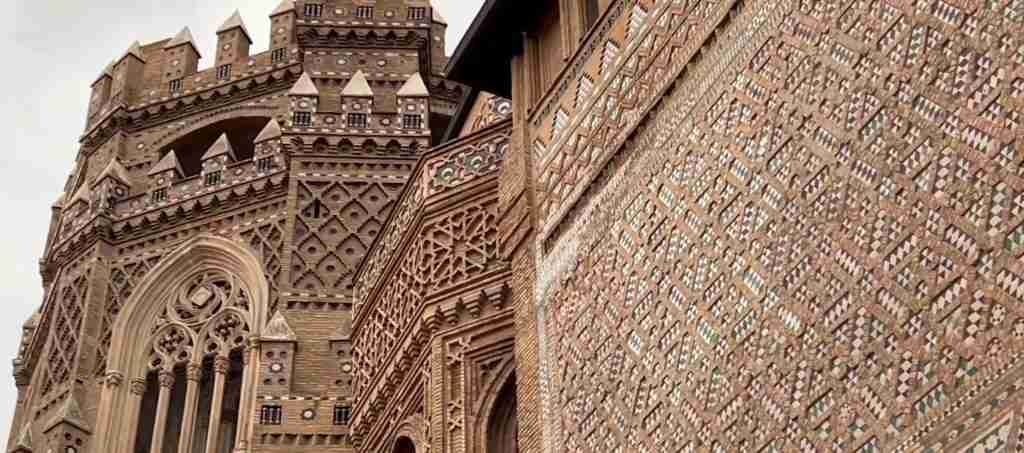
Teruel is the smallest provincial capital in Spain and one of the most architecturally original cities in the country. Its contribution to the UNESCO World Heritage Site of the Mudéjar Architecture of Aragón — inscribed in 1986 and extended in 2001 to encompass ten monuments across Aragón — centres on four extraordinary structures that blend the Gothic Christian construction methods of medieval Aragón with the decorative traditions of Islamic brickwork and ceramic tile: the Cathedral of Santa María de Mediavilla, the Tower of San Martín, the Tower of El Salvador, and the church of San Pedro. The Mudéjar style emerged from the coexistence of Christian patrons and Moorish craftsmen in post-Reconquista Aragón, producing an architectural vocabulary unique to the Iberian Peninsula and found in no other country in the world.
The Cathedral’s artesonado ceiling — a painted and gilded coffered structure spanning the nave — is one of the most remarkable medieval painted ceilings in existence, its panels depicting secular scenes of daily life in thirteenth-century Aragón alongside religious subjects, a combination unusual in medieval ecclesiastical architecture. Entry to the cathedral with access to the tower viewpoint costs €5 per adult; entry to the freestanding El Salvador tower costs €3 per adult, and the narrow spiral stair delivers an external walkway with views over Teruel’s remarkable skyline of glazed brick towers. City centre hotels in Teruel charge €70–120 per room per night.
Stage Seven 2026 — Maestrazgo: La Ruta del Silencio
The Maestrazgo is the high plateau that occupies the northeastern quadrant of Teruel province — a territory of pine-covered ridges, sheer-sided barrancos, and villages that have been slowly depopulating for a century yet retain their Aragonese Gothic civic architecture with remarkable dignity. The A-1702 road, which bisects the Maestrazgo in a series of mountain passes between the Geological Park of Aliaga and the Guadalope river valley, has been officially designated the Ruta del Silencio — the Silent Route. The name is not merely promotional: on a weekday morning in October, the 60 kilometres of the A-1702 carries perhaps a dozen vehicles.
Aliaga and the Geological Park
The Geologic Park of Aliaga presents what specialists describe as the most accessible Jurassic sequence in the world: the Guadalope river has carved a canyon 15 kilometres long and up to 200 metres deep through strata laid down 140 million years ago, exposing the full geological record in a series of roadside viewpoints and accessible walking routes. A guided geological walk from Aliaga village follows the canyon floor for 3 kilometres and costs €6 per person from the park visitor centre. No advance booking is needed outside of July–August weekends. The village of Aliaga itself sits at the canyon rim, its houses grouped around a medieval castle on a natural rock pillar above the river.
Mirambel and the Europa Nostra Prize Village
Mirambel, twenty kilometres east of Aliaga on the A-1702, is the Maestrazgo village most completely enclosed by intact medieval walls. The Europa Nostra Restoration Prize awarded in 1988 recognised the comprehensive rehabilitation of the entire walled enclosure; today the carved stone portal, the arcaded Calle Mayor, the Gothic town hall, and the complete circuit of stone walls with their corner towers are in exceptional condition. Permanent population: fewer than 30 people. Entry is free; a small church museum charges €1. The single restaurant in Mirambel serves home-cooked Maestrazgo cuisine at lunch on weekdays — thick migas, lamb braised with wine and thyme, local wildflower honey — at prices of €12–18 per person for a full meal.
Cantavieja and the Gothic Belvedere
Cantavieja sits on a flat-topped butte at 1,340 metres, its arcaded main street classified as a Monument of Cultural Interest. The sixteenth-century church of Santa María la Mayor and the Plaza Mayor represent the most complete Gothic civic ensemble in the Maestrazgo, the latter preserved with unusual integrity: the stone arcades, the municipal water cistern, and the carved doorways of the surrounding buildings have been maintained rather than restored. From the stone belvedere at the butte edge, the view across the canyons of the Río Cantavieja to the next ridge — fifty kilometres of pine forest and eroded limestone interrupted only by the winding line of the A-1702 — captures the essential character of the Silent Route. Overnight accommodation in Cantavieja: a small selection of rural hotels and village apartments charges €60–100 per room per night.
La Iglesuela del Cid and Mora de Rubielos
La Iglesuela del Cid, fifteen kilometres south of Cantavieja, contains a collection of Renaissance palaces and mansion houses belonging to the families who governed the Maestrazgo under the Templar-descended Order of Montesa in the fourteenth and fifteenth centuries. The village is compact enough to cover every principal facade in a forty-minute walk; the quality of the carved stone portal surrounds is the equal of any small Renaissance town in Italy. Mora de Rubielos, twenty kilometres further south toward the Sierra de Gúdar, is dominated by its fourteenth-century castle — one of the most complete and best-preserved Gothic castles in Aragón, its great hall and fortified towers intact over the town. Entry costs €3 per adult. The attached excolegiata church of Santa María, in Gothic style with a subsequent Baroque facade, is among the most architecturally layered buildings on the entire circuit.
The Matarraña 2026: Aragón’s Secret Tuscany
The final stage of the circuit descends from the Maestrazgo plateau into the Matarraña comarca — a river valley and surrounding hill country of ancient olive groves, almond terraces, and stone villages that stand with their backs to the Ports de Tortosa-Beseit mountains marking the border with the Valencian Community. The Matarraña has attracted the informal designation “Aragonese Tuscany” from Spanish travel writers, and the comparison holds in practical terms: the combination of Mediterranean landscape, quality of local produce, the cultural continuity of the villages, and the light that falls across the terraced hillsides in late afternoon would guarantee major tourist infrastructure if the comarca stood within two hours of Barcelona. It does not; the roads from the coast are long and indirect, and the Matarraña remains genuinely undiscovered by international tourism.
Valderrobres
Valderrobres is the principal town of the Matarraña and its most complete medieval composition. The castle of Valderrobres — adjacent to the Gothic church of Santa María la Mayor, both perched on a sculpted rock above the Matarraña river — is reached through a medieval stone arch off the main commercial street. The castle interior was declared a Lugar de Interés Cultural in 1968; entry costs €3 per adult. The medieval bridge spanning the Matarraña below the castle, the arcaded Calle Mayor, and the view from the castle terrace across the old tile rooftops to the olive-covered hills constitute one of the most unified townscape compositions in the region. A Sunday market in the lower town sells Matarraña olive oil, local almonds, honey, and seasonal produce at farmgate prices — substantially cheaper than equivalent products in any city delicatessen.
Beceite and the Ports de Beseit Gorges
Eight kilometres west of Valderrobres, the village of Beceite sits at the entrance to the Ports de Beseit natural reserve, where the Río Matarraña has carved a gorge through the limestone border ranges between Aragón and the Valencian Community. The gorge walk from Beceite — freely accessible, marked, and manageable in sports shoes for the first three kilometres — passes through tunnels of plane trees beneath overhanging limestone cliffs to a series of deep green pools and narrow slot sections. The full circular gorge route runs 14 kilometres and requires four to five hours; the section of the Sistema Ibérico around Beceite holds one of the largest populations of Iberian mountain goat (capra pyrenaica hispanica) in mainland Spain, routinely visible on the cliff ledges above the path in early morning.
Calaceite and the Lower Matarraña Villages
The hill villages of the lower Matarraña — Calaceite, Cretas, La Fresneda, Arens de Lledó — display the Provençal-influenced vernacular architecture of the eastern Aragonese border: ochre stone, Roman-tile rooflines, and ornate carved doorways that speak to centuries of connection through the Crown of Aragón’s Mediterranean commercial networks. Calaceite preserves an extraordinary arcaded main square and a municipal museum covering the Iberian archaeological site of San Antonio — a pre-Roman settlement 3 kilometres outside the village, freely accessible on a self-guided path, where excavations have revealed a complete planned urban layout of the third and second centuries BC. From Calaceite, the return circuit to Zaragoza follows the N-232 northwest through Alcañiz — passing within 15 kilometres of the town of Fuendetodos, birthplace of Francisco de Goya — before rejoining the toll-free A-2 motorway for the final approach to the city.
Accommodation Guide for the 2026 Aragonese Highlands Road Trip
The Aragonese Highlands road trip passes through territory where rural tourism infrastructure is both well-developed and distinctively local. Casas rurales — farmhouses, village houses, and rural properties restored and operated as small guesthouses or self-catering apartments — are the dominant accommodation category outside the larger towns. Quality is consistently high relative to price, and the experience of sleeping inside a medieval village house or an eighteenth-century mountain farmstead is itself part of the journey’s value.
Budget Accommodation on the 2026 Route
Budget accommodation on this circuit includes simple hostales (equivalent in standard to a modest British B&B), albergues on the Camino de Santiago approach routes near Jaca, and mountain campgrounds. Simple rural hostales charge €50–80 per room per night, frequently including a basic breakfast. Mountain campgrounds in the Pyrenean sections charge €12–22 per pitch per night for two people with a tent, rising to €25–35 for motorhome pitches with electric connection. The Camping Ciudad de Albarracín, one of the best-reviewed rural campgrounds in the region, offers stone-pitched sites with direct views over the pink walls at approximately €16–22 per pitch. For solo travellers on a budget, shared dormitory accommodation in mountain refuges — €22–32 per person per night including dinner and breakfast — provides the most economical highland option and the most direct contact with other mountaineers and walkers.
Mid-Range Accommodation on the 2026 Route
Mid-range accommodation means casas rurales with private en-suite rooms, small family-run rural hotels, and village inns. Prices run €90–140 per room per night in the Pyrenean sections (Hecho, Benasque, Torla-Ordesa) and €75–120 per room in the Sistema Ibérico sections (Albarracín, Valderrobres, Cantavieja). Properties of note include the historic posadas in Albarracín — several occupying buildings from the fifteenth century — and the small mountain hotels in Hecho that provide hearty Pyrenean breakfasts with local cured meats, cheeses, and honey from the valley. Book properties in the Pyrenean stages at least six weeks in advance for July and August stays; mid-range rural hotels in the Sistema Ibérico section are bookable on shorter notice except during the Semana Santa and August bank holidays.
Boutique and Luxury Accommodation 2026
A growing category of premium rural accommodation has developed in the Aragonese Highlands over the past decade — boutique hotels in restored medieval houses, converted mills, and eighteenth-century manor farms. Rates run €150–280 per room per night at the upper end. The Parador de Sos del Rey Católico (check parador.es for confirmed 2026 availability and pricing, as Parador properties periodically close for renovation) occupies a building of historic significance in the village and offers the full Parador experience — stone-vaulted dining room, regional cuisine, superior breakfast — at rates in the €130–200 per room range. Several boutique properties in Albarracín and Benasque operate at comparable price points with more individualised character; the Albarracín Hotel, which occupies a palace building inside the medieval walls, consistently receives strong reviews for its combination of historic fabric and contemporary comfort.
Complete Budget Breakdown for the 2026 Aragonese Highlands Road Trip
All costs below are per person, per day, assuming two adults sharing a rental car and one room throughout the full 7-day circuit. Car rental is divided equally between two occupants. Accommodation rates cited are per room and are divided by two to arrive at the per-person figure.
Budget Travellers 2026: €75–120 Per Person Daily
Budget travellers sharing a simple hostal room or camping pitch spend approximately €75–120 per person daily. Accommodation comes to €25–40 per person (hostal room €50–80, divided by two). Meals — a simple breakfast at a village café, a menu del día three-course lunch, and a self-catered or bar dinner — add €25–37 per person. Transport — half of one day’s car rental plus a proportional fuel share — adds €23–36 per person. Attraction entries, modest given the number of free sites on this circuit, add €2–8. Over the full 7-day circuit, budget travellers spend approximately €525–840 per person covering all accommodation, meals, car hire, fuel, and entries.
Mid-Range Travellers 2026: €145–230 Per Person Daily
Mid-range travellers in comfortable rural hotels spend approximately €145–230 per person daily. Accommodation share runs €45–70 per person (rural hotel €90–140, divided by two). Sit-down meals — breakfast at the hotel or a village café, a proper regional restaurant lunch, and an evening meal with a glass of local Somontano or Campo de Borja wine — add €54–80 per person. Transport costs €29–44 per person. Activities including a half-day canyoning session, guided walks, and museum and monument entries add €15–35 per person. Over the full 7-day circuit, mid-range travellers spend approximately €1,015–1,610 per person.
Luxury Travellers 2026: €225–380 Per Person Daily
Luxury travellers staying in boutique rural hotels and dining at the better regional restaurants spend approximately €225–380 per person daily. Accommodation share runs €80–140 per person (boutique hotel €160–280, divided by two). Upscale regional cuisine, premium local wine, and evening tastings add €80–130 per person. A premium rental car and equivalent fuel consumption add €40–60 per person. Private guiding, full-day canyoning packages, and exclusive heritage access add €25–50 per person. Over 7 days, luxury travellers spend approximately €1,575–2,660 per person.
Individual Cost Reference Points 2026
- Ordesa Valley shuttle bus (Torla to Pradera de Ordesa): €3.10 round trip per person
- San Juan de la Peña — combined ticket both monasteries: €10 per adult
- Castillo de Loarre: €6 per adult
- Jaca Cathedral with diocesan museum: €7 per adult
- Teruel Cathedral (UNESCO Mudéjar): €5 per adult
- Alquézar collegiate church: €3 per adult
- Mora de Rubielos castle: €3 per adult
- Aliaga Geological Park guided walk: €6 per adult
- Roda de Isábena cathedral: €3 per adult
- Alquézar canyoning half-day with guide and equipment: €35–65 per person
- SP95 petrol: approximately €1.55 per litre
- Menu del día lunch (3 courses, bread, drink): €10–15 per person
- Evening restaurant meal with local wine: €22–40 per person
- Benasque valley access road (upper section): €5 per vehicle
When to Drive the Aragonese Highlands in 2026: Seasonal Guide
The Aragonese Highlands encompass an altitudinal range from 350 metres at Zaragoza to over 3,400 metres at the Aneto summit, and two distinct climatic influences: the Atlantic zone of the western Pyrenees and the dry continental interior of the Sistema Ibérico. These factors create meaningful seasonal variation across the circuit.
Spring 2026: May–June
May and June are the optimal months for the full circuit. Mountain roads above 1,000 metres are clear of snow from late April in a normal year; the Benasque valley road and the Puerto de Somport remain accessible year-round. Wildflowers — Pyrenean irises, mountain cowslips, and the endemic Pyrenean lily — carpet the subalpine meadows of Hecho and the Benasque valley floor through June. Day visitors from Zaragoza and Barcelona begin arriving in volume from late June; outside of weekend afternoons in popular villages like Alquézar and Albarracín, the roads and trails run quiet through the week. Temperatures in highland villages average 18–24°C by day in June, with cool evenings requiring a mid-layer. The early light of late May — long, golden, and low-angle — is exceptional for photography of the ochre-stone villages of the Maestrazgo and Matarraña.
Summer 2026: July–August
July and August bring reliable warmth, long days, and the full range of outdoor activities — canyoning, rock climbing, mountain biking, via ferrata, high-altitude hiking — but also the heaviest crowds. Ordesa operates its vehicle access restrictions and 1,800-person capacity limits from 1 July; Albarracín hotels book out on weekends from mid-July; Aínsa’s medieval square fills with day-tripper coaches by mid-morning. For travellers who must visit in summer, the western Pyrenees (Hecho, Ansó) and the deep Maestrazgo (Mirambel, Cantavieja, La Iglesuela del Cid) remain substantially quieter than the headline destinations. Travel on weekdays, arrive at villages before 9 AM, and reserve accommodation at least six weeks in advance for July and August dates throughout the Pyrenean section.
Autumn 2026: September–October
September and October are arguably the best months on this circuit, rivalling May–June in overall quality. Crowds evaporate after the Spanish school year begins in mid-September; the Pyrenean and Sistema Ibérico forests move into their colour change through October, with the beech forests of Hecho and Ansó reaching peak autumn foliage in the final two weeks of October. Temperatures remain mild — 14–20°C at highland elevations in September, dropping to 8–15°C through October — and the low-angle autumn light is outstanding for photography and for appreciating the carved stone of the medieval towns. The Benasque valley receives the season’s first snowfall on the high peaks by late October, adding drama to the valley views without affecting road access at lower altitudes.
Winter 2026: November–March
Winter travel on this circuit demands preparation but rewards it. Pyrenean passes above 1,500 metres can close without warning during snowfall events; winter tyres are mandatory in designated snow zones from November through April. The Sistema Ibérico highlands of Albarracín and the Maestrazgo receive regular snowfall between December and March, transforming the villages into some of the most photographed winter landscapes in inland Spain. Albarracín under fresh snow — its pale-rose houses rising above a white canyon — is an image that circulates widely on Spanish photography platforms and justifies a winter visit independently of any other consideration. The trade-off: several smaller rural hotels and village restaurants in the Maestrazgo close entirely from November through February, reducing accommodation options outside the main towns.
Driving the Aragonese Highlands in 2026: Roads, Rules and Logistics
The Aragonese Highlands road trip is straightforward for any driver with experience on two-lane European mountain roads. A few practical points are worth addressing before departure.
Road Types and Conditions
The circuit uses three road categories. Motorways (A-23, A-2) handle the Zaragoza approach and the mid-route transition between north and south. National roads (N-260, N-330, N-234) connect the main highland towns. Comarcal roads (A-prefix in Aragón) handle the in-stage routing between villages. Comarcal roads are paved throughout but narrower than national roads, with mountain sections reducing to effective single-lane shared driving where two vehicles negotiate passing places. Drivers accustomed to UK A and B roads or Swiss alpine routes find nothing technically demanding on this circuit; the key adjustment is speed expectation — comarcal mountain roads average 40–60 km/h, and rushing them defeats the purpose of the journey entirely.
Parking at Highland Villages
The historic cores of Albarracín, Aínsa, Sos del Rey Católico, and Alquézar are pedestrianised or have restricted vehicle access at all times. Signposted car parks at the lower town entrances are the correct approach in all cases. Parking is free at the vast majority of highland village car parks throughout the year; during July–August peak weekends, some popular sites charge a modest fee of €2–4 for the day. Torla-Ordesa’s main car park for the Ordesa shuttle operates free of charge year-round.
Essential Spanish Driving Rules for 2026
National speed limits: 120 km/h on motorways, 90 km/h on conventional two-lane national roads, 50 km/h in built-up areas. Roundabouts give right of way to circulating traffic. Two warning triangles and a reflective safety vest are legally required to be carried in the vehicle at all times; most hire contracts include these. The blood alcohol limit is 0.5 mg/ml for experienced drivers (0.3 mg/ml for drivers with fewer than two years of licence). Winter tyre zones in the Pyrenees and Sistema Ibérico are marked with DGT (Dirección General de Tráfico) signage on approach roads; check dgt.es for live road condition reports on any stage of this circuit between November and April.
Money-Saving Strategies for the 2026 Aragonese Highlands Road Trip
Aragón’s highland interior is already one of the most affordable road-trip destinations in Mediterranean Europe relative to the quality and density of experiences available. The following strategies reduce costs further without compromising the essential character of the journey.
Timing and Booking Strategy 2026
Booking the rental car 3–4 weeks in advance through a comparison aggregator rather than at the airport counter saves 20–30% on quoted rates for equivalent vehicles. Travelling on weekdays rather than arriving Friday evening reduces accommodation prices at the popular Pyrenean properties by 15–25%. Travelling in September rather than July cuts accommodation costs across the board by 20–40% while delivering equivalent or better weather and significantly lower crowds in every destination on the circuit.
Free and Low-Cost Highlights
The circuit’s most compelling experiences carry minimal or zero cost: entry to the Ordesa Valley (free, shuttle €3.10), the Beceite gorge walk (free), the Selva de Oza forest drive (free), the Pinares del Rodeno rock art park near Albarracín (free), the medieval village circuits of Mirambel and Ansó (free to walk), the Monasterio de Obarra (free), and every mountain viewpoint along the Maestrazgo Ruta del Silencio (free). The canyoning sessions in Sierra de Guara are the primary paid outdoor activity; choosing a half-day session (€35–50 per person) rather than a full day (€65–90 per person) delivers the essential experience at substantially lower cost.
Eating on the Route
The menú del día — Spain’s lunchtime fixed-price menu of starter, main course, dessert, bread, and a drink — is the most cost-effective dining mechanism in the country and is served at virtually every village bar and rural restaurant on this circuit between 1 PM and 3:30 PM. In highland Aragón, menús run €10–14 per person and regularly represent the chef’s best work: lamb from local flocks, river trout, wild mushrooms in season, homemade desserts from local fruit. Spending €25–30 on a full weekday lunch for two in a village bar rather than €70–90 on an equivalent evening restaurant sitting funds a full extra night’s accommodation over a 7-day trip. The regional wines of Somontano DO — available by the glass throughout the Huesca highlands at €3–5 — offer exceptional quality-to-price ratios and are worth seeking out specifically.
Fuel Strategy
Fill the tank in larger towns — Jaca, Barbastro, Huesca, Teruel, Alcañiz — rather than in mountain villages or at motorway service stations. Town fuel stations run €0.15–0.20 per litre below motorway service prices. The route passes through or within 15 kilometres of each of these towns at least once during the circuit; planning fuel stops around town entries rather than convenience stops saves €15–25 over the full 1,400-kilometre route per car.
Frequently Asked Questions About the Aragonese Highlands Road Trip 2026
Is it possible to complete the Aragonese Highlands road trip in 5 days in 2026?
Yes, with modifications to the route. A compressed 5-day version covers Sierra de Guara and Alquézar, Ordesa National Park via Aínsa, Albarracín, Teruel, and Valderrobres — approximately 800–900 kilometres of driving across the most visually distinct sections of the full circuit. Either the western Pyrenees stages (Sos del Rey Católico, Ansó, Hecho) or the full Maestrazgo sequence (Aliaga, Mirambel, Cantavieja) can be held for a return visit. The full 7-stage circuit genuinely requires 7 days to experience without feeling rushed; the mountain road sections between each destination are not the kind to drive quickly.
Are the highland roads safe and suitable for nervous drivers in 2026?
The main roads on the circuit — N-260, A-1604, N-123, N-234, A-1702 — are two-lane tarmac in good condition throughout the year outside of winter snowfall events. None require any technical mountain driving skill beyond a basic comfort with two-lane roads and occasional passing-place negotiation. The approach roads to Roda de Isábena and the Monasterio de Obarra are the narrowest sections of the route; both are paved and used regularly by local delivery vehicles. Drivers comfortable with UK A-roads find nothing intimidating on this circuit. The key adjustment for UK drivers coming from the left: Spanish mountain road etiquette handles single-lane sections with good humour — the driver closest to a passing place reverses, and local drivers extend substantial patience to visitors navigating unfamiliar roads.
Which mobile data and navigation apps work in the Aragonese Highlands?
Coverage in the main towns — Jaca, Benasque, Aínsa, Albarracín, Teruel — is reliable 4G LTE on all major Spanish operators including Movistar, Orange, and Vodafone. In the deep valleys of the western Pyrenees (Hecho, Ansó) and the Maestrazgo interior, coverage drops to intermittent 2G or loses signal entirely on valley floors. Download offline maps for the complete circuit before departure — Google Maps offline packages, Maps.me, or OsmAnd all cover the region adequately. The Ordesa valley floor and the canyon bottom of the Añisclo Canyon are effectively without data coverage regardless of carrier. A paper road map covering Aragón at 1:250,000 or 1:300,000 scale remains a practical backup for the remote stages.
What is the Mudéjar Architecture of Aragón UNESCO site and what does it cover?
The Mudéjar Architecture of Aragón is a UNESCO Cultural World Heritage Site first inscribed in 1986 and extended in 2001 to encompass ten monuments across the Aragonese provinces of Teruel and Zaragoza. The Mudéjar style emerged in the post-Reconquista period from the collaboration of Christian patrons and Moorish craftsmen, producing a unique architectural language characterised by elaborate polychrome brick construction and ceramic tile decoration. Principal monuments included in the inscription are the Cathedral of Santa María de Mediavilla in Teruel, the towers of San Martín and El Salvador in Teruel, the Aljafería Palace in Zaragoza, and the church of Santa María in Tobed. No equivalent architectural tradition exists anywhere else in the world; the designation recognises both the aesthetic achievement and the cultural-historical significance of a style that arose specifically from the coexistence of religious and ethnic communities in medieval Aragón.
Can I do this road trip on a motorcycle in 2026?
The Aragonese Highlands circuit is considered one of the finest motorcycle routes in Spain within the national motorcycling community. The Foz de Binies, the Sierra de Guara passes above Rodellar, the A-1702 Ruta del Silencio, the Puerto de Somport approach road, and the descent from the Sierra de Albarracín are all outstanding motorcycle roads by any European standard. The practical note for 2026: weather-related road closures in the Pyrenean sections between November and April apply to motorcycles equally; check dgt.es for live conditions before setting out on any Pyrenean stage from October through May. Winter tyre regulations do not apply to motorcycles, but snow and ice on mountain passes constitute an independent reason for route modification.
What regional food and wine should I prioritise on this route?
Aragonese highland cuisine builds on a small number of exceptional local ingredients. Ternasco de Aragón — a light lamb with IGP protected status, raised in the highland pastures and slaughtered young — is the signature meat of the region and appears roasted, braised, or grilled at virtually every restaurant on the circuit. River trout from the Pyrenean streams appears most authentically in the villages of Hecho and Benasque; in Teruel, the cured ham (Jamón de Teruel, also IGP-designated) rivals Serrano ham in quality and depth of flavour. Wild mushrooms — rovellons (milk cap), boletus, chanterelles — appear from September through November at markets and in restaurant menus throughout the Sistema Ibérico highlands. For wine, Somontano DO from the Barbastro area produces red wines from Cabernet Sauvignon, Merlot, and the local Moristel grape at prices well below equivalent quality from better-known Spanish appellations; a bottle at cellar-door prices rarely exceeds €8–12.
Are there organised guided tours of the Aragonese Highlands for 2026?
Several Spanish touring operators offer small-group guided road trips through Aragonese highland territory, including specialist cultural travel companies based in Zaragoza and Huesca. These cost substantially more than self-drive — €800–1,400 per person for a 7-day guided itinerary — but include professional guiding in archaeology, architecture, and natural history, all accommodation bookings, and the considerable advantage of local contacts for off-route detours and private access. Self-drive remains the more flexible and economical option for most travellers; the tourism portal turismodearagon.com publishes free downloadable route guides in English covering most of the stages described in this article, with updated GPS tracks and accommodation suggestions.
What altitude and temperature ranges should I prepare for?
Elevation on the circuit ranges from approximately 350 metres at Zaragoza to 1,340 metres at Cantavieja, 1,165 metres at Albarracín, and 1,138 metres at the Benasque valley base. Hiking routes in Ordesa reach 2,000–2,200 metres; the Refugio de Góriz sits at 2,195 metres. In summer, temperatures at 1,000 metres run 8–12°C below Zaragoza’s valley heat; afternoon convective storms are possible any summer day in the Pyrenees and should be factored into any plan for high-altitude hiking. In autumn, the first frost occurs at altitude from mid-October. A mid-layer fleece, a waterproof jacket, and sturdy footwear with ankle support are required on any stage of this circuit regardless of season.
Is Aragón safe for solo travellers in 2026?
Aragón is among the safest regions for solo travel in Spain and in Europe more broadly. Violent crime is extremely rare; petty theft, while present in major Spanish cities, is negligible in the highland villages and rural areas that form the entirety of this circuit. The practical solo travel considerations here are logistical rather than safety-related: car rental costs the same for one or two occupants, so the daily transport cost for a solo traveller doubles to approximately €46–72 per person rather than the shared rate. Solo travellers using mountain refuges, campgrounds, and albergues — where the social infrastructure supports independent travel — naturally reduce accommodation costs to the per-person hostel rate rather than the per-room hotel rate, largely compensating for the higher transport expense.
Are there any restrictions I should know about for visiting Ordesa National Park in 2026?
Entry to Ordesa y Monte Perdido National Park is free year-round. The vehicle access restriction — prohibiting private cars from the Ordesa Valley road beyond Torla-Ordesa — operates from 1 July to 15 September and during Easter Week. During these dates, the shuttle bus from Torla (€3.10 round trip) is the only access route to the Pradera de Ordesa trailhead. The simultaneous visitor cap of 1,800 people in the Ordesa Valley means the shuttle suspends service when the limit is reached; arriving before 8 AM guarantees access. Wild camping in the Ordesa Valley below 1,600 metres is prohibited; bivouacking above that altitude for a single night is permitted under conditions set by the park authority and published on the Red de Parques Nacionales website. No campfires are permitted anywhere in the national park at any time of year.