Thailand Travel Guide 2026: Complete Planning Resource
Thailand remains Southeast Asia’s most captivating destination in 2026, combining ancient temples and pristine beaches with exceptional value across all budget categories. From Bangkok’s golden palaces to Chiang Mai’s mountain monasteries and the Andaman’s turquoise waters, Thailand delivers world-class experiences at prices dramatically lower than Western equivalents. This comprehensive planning guide provides verified 2026 costs, transportation strategies, accommodation options, and insider advice for creating your perfect Thai adventure.
Key Takeaways for Planning Thailand 2026
- Thailand costs ฿1,000-1,500 ($28-42) daily for budget travelers, ฿2,500-4,000 ($70-110) for mid-range comfort, and ฿9,000+ ($250+) for luxury experiences in 2026, maintaining its position as Southeast Asia’s best value destination
- The country protects 8 UNESCO World Heritage Sites including 5 cultural landmarks (Ayutthaya, Sukhothai, Ban Chiang, Si Thep, Phu Phrabat) and 3 natural sanctuaries (Thungyai-Huai Kha Khaeng, Khao Yai, Kaeng Krachan) spanning 4,000 years of history
- Bangkok’s BTS/MRT system costs ฿16-52 per trip with ฿140 unlimited day passes, while domestic flights range ฿900-3,000 and overnight trains provide budget-friendly intercity travel from ฿250-1,500 depending on class
- Peak season (November-February) increases accommodation rates 20-40% and attracts maximum crowds, while shoulder seasons (March-May, September-October) offer ideal weather-cost balance for 2026 travelers
- Accommodation spans ฿400-1,200 nightly for hostels and guesthouses, ฿1,200-2,800 for mid-range hotels, and ฿3,500-12,000+ for luxury resorts, with booking 2-3 months ahead saving 20-30% during peak periods
- Street food costs ฿40-80 per dish, mid-range restaurants ฿200-400 per meal, and luxury dining ฿800-2,000+ per person, allowing travelers to control food budgets precisely based on preferences
People Also Ask About Thailand Travel 2026
How much does a week in Thailand cost in 2026?
A one-week Thailand trip costs ฿7,000-10,500 ($200-300) for budget travelers, ฿17,500-28,000 ($490-780) for mid-range comfort, and ฿63,000+ ($1,750+) for luxury experiences in 2026, excluding international flights. Budget travelers stay in hostels at ฿400-1,200 nightly, eat street food at ฿40-80 per dish, use public transport and overnight buses, and visit free temples and beaches. Mid-range travelers choose comfortable hotels at ฿1,200-2,800 nightly, mix street food with restaurant dining at ฿200-400 per meal, take some domestic flights, and enjoy paid attractions and tours. Luxury travelers book 4-5 star resorts at ฿3,500-12,000+ nightly, dine at premium restaurants at ฿800-2,000+ per person, use private drivers and first-class transport, and access exclusive experiences. Peak season (November-February) increases these costs 20-40% compared to shoulder or low seasons.
What is the best time to visit Thailand in 2026?
November through February 2026 offers Thailand’s best weather with temperatures 20-30°C, minimal rainfall, and calm seas ideal for island hopping, though accommodation costs 20-40% more and major attractions experience maximum crowds. March through May brings hotter weather (30-38°C) with fewer tourists and moderate pricing, perfect for travelers prioritizing budget over perfect conditions. June through October marks monsoon season with brief afternoon showers, 20-30% accommodation discounts, and dramatically fewer crowds, creating excellent value for flexible travelers willing to work around weather. Shoulder seasons (March-May and September-October) deliver the optimal balance of pleasant weather, manageable crowds, and reasonable 2026 pricing across all budget categories.
Do I need a visa to visit Thailand in 2026?
Most Western passport holders receive 30-60 day visa exemptions upon arrival in Thailand in 2026, with specific durations varying by nationality. US, UK, EU, Canadian, and Australian citizens typically receive 30-day visa-free entry stamps at airports and land borders without advance applications or fees. Travelers requiring longer stays can apply for 60-day tourist visas at Thai embassies before departure, costing approximately $40-50 USD with processing times of 3-5 business days. Visa exemptions can be extended once for an additional 30 days at immigration offices inside Thailand for ฿1,900 ($53), requiring passport photos, TM7 application forms, and proof of onward travel. Always verify current visa requirements through official Thai embassy websites before 2026 travel dates, as policies can change based on bilateral agreements and immigration regulations.
Is Thailand safe for solo travelers in 2026?
Thailand ranks among Asia’s safest destinations for solo travelers in 2026, with violent crime against tourists remaining exceptionally rare and infrastructure well-developed for independent exploration. Major cities like Bangkok, Chiang Mai, and Phuket feature extensive hostel networks facilitating social connections, while women traveling alone report feeling comfortable using public transport, visiting temples, and exploring night markets with standard urban awareness. Common risks include petty theft in crowded areas, taxi scams near tourist attractions, and drink spiking in party zones, all easily mitigated through basic precautions like using metered Grab taxis, securing valuables, and watching beverages in nightlife areas. Solo travelers should inform accommodation staff of daily plans, avoid remote areas after dark, dress modestly at religious sites, and keep emergency contacts readily available for optimal 2026 safety.
Extended multi-day tours – 5+ days
Featured Thailand Multi-Day Tour Packages
9 days
Amazing Thailand In 9 Days
- ✓ Comprehensive Thailand tour
- ✓ Expert local guides included
- ✓ All accommodation arranged
- ✓ Transportation provided

9 days
Island Hopping in Thailand In 9 Days
- ✓ Comprehensive Thailand tour
- ✓ Expert local guides included
- ✓ All accommodation arranged
- ✓ Transportation provided

10 days
Thailand Nature Escape 10 Days-Truly Local Experience – Bangkok/Chiang Mai/Chiang Rai
- ✓ Comprehensive Thailand tour
- ✓ Expert local guides included
- ✓ All accommodation arranged
- ✓ Transportation provided
10 days
Thailand Highlights 10-Day Package
- ✓ Comprehensive Thailand tour
- ✓ Expert local guides included
- ✓ All accommodation arranged
- ✓ Transportation provided
Multi-day tour packages powered by TourRadar. Prices and availability subject to change.
Understanding Thailand as a Travel Destination in 2026
Thailand occupies 513,000 square kilometers across mainland Southeast Asia and numerous islands in the Andaman Sea and Gulf of Thailand, positioning itself as one of the world’s most accessible and rewarding travel destinations in 2026. The Kingdom supports 69 million residents across diverse geographic regions including the mountainous north centered on Chiang Mai, the sprawling central plains surrounding Bangkok, the plateau northeast region called Isan, and the tropical southern peninsula extending to the Malaysian border. Thai culture blends Buddhist spirituality practiced by 95% of the population with influences from Indian, Chinese, and indigenous traditions, creating unique art forms, architectural styles, and culinary traditions that attract 40+ million international visitors annually.
Thailand’s tourism infrastructure ranks among Asia’s most developed, with international airports in Bangkok (Suvarnabhumi and Don Mueang), Chiang Mai, Phuket, Krabi, and Koh Samui connecting to global networks, while domestic flights link regional centers every 30-60 minutes during peak periods. The country maintains extensive bus and train networks operated by both government and private companies, offering options from basic fan-cooled buses at ฿8 per ride to VIP overnight coaches with lie-flat seats at ฿1,200-1,800 for popular routes. Bangkok’s mass transit system includes BTS Skytrain, MRT metro, Airport Rail Link, and an expanding network of colored lines (Pink, Yellow, Purple) making urban navigation simple and affordable for 2026 visitors.
The Thai government maintains visa-friendly policies for most Western nations in 2026, reflecting the country’s economic dependence on tourism revenue which contributes approximately 12% of GDP. This visitor-oriented approach manifests in widespread English signage at major attractions, accommodation options spanning every budget category, and service industry workers trained to assist international guests. Thailand’s reputation for hospitality—embodied in the concept of “sanuk” (finding enjoyment in activities)—creates welcoming environments where travelers feel comfortable exploring independently or joining organized tours based on personal preferences.
Eight UNESCO World Heritage Sites scattered across Thailand preserve the nation’s rich historical and natural heritage, offering travelers opportunities to experience ancient capitals, prehistoric settlements, and protected ecosystems. These sites range from the 14th-century ruins at Ayutthaya Historical Park 80 kilometers north of Bangkok to the remote Thungyai-Huai Kha Khaeng Wildlife Sanctuaries protecting 600,000 hectares of forest along the Myanmar border. Each UNESCO property provides insights into different periods of Thai civilization or protects critical biodiversity, making them essential stops for culturally-oriented 2026 itineraries.
Thailand’s geographic diversity creates distinct regional experiences that benefit from strategic trip planning in 2026. Northern Thailand features mountainous terrain with cooler temperatures, hill tribe villages, ancient Lanna kingdom heritage sites, and outdoor activities like trekking and elephant sanctuaries. Central Thailand centers on Bangkok’s urban attractions, day-trip destinations including Ayutthaya and Kanchanaburi, and the developing eastern seaboard cities. Southern Thailand divides into the Andaman coast (Phuket, Krabi, Phi Phi Islands) known for limestone karsts and clear waters, and the Gulf coast (Koh Samui, Koh Phangan, Koh Tao) offering different island experiences and diving opportunities. Northeastern Isan region remains Thailand’s least-visited area despite containing fascinating Khmer ruins, unique cuisine, and authentic cultural experiences away from tourist crowds.
Thailand’s 8 UNESCO World Heritage Sites in 2026
Thailand protects 8 UNESCO World Heritage Sites as of 2026, comprising 5 cultural properties documenting 4,000 years of civilization and 3 natural sanctuaries preserving Southeast Asia’s most significant ecosystems. These sites span from prehistoric settlements established 5,000 years ago to medieval capitals that controlled regional trade networks, alongside forest complexes protecting rare species like Indochinese tigers, Asian elephants, and gibbons. Understanding Thailand’s UNESCO properties helps travelers appreciate the Kingdom’s historical depth and natural wealth beyond beach destinations.
Historic City of Ayutthaya (Inscribed 1991)
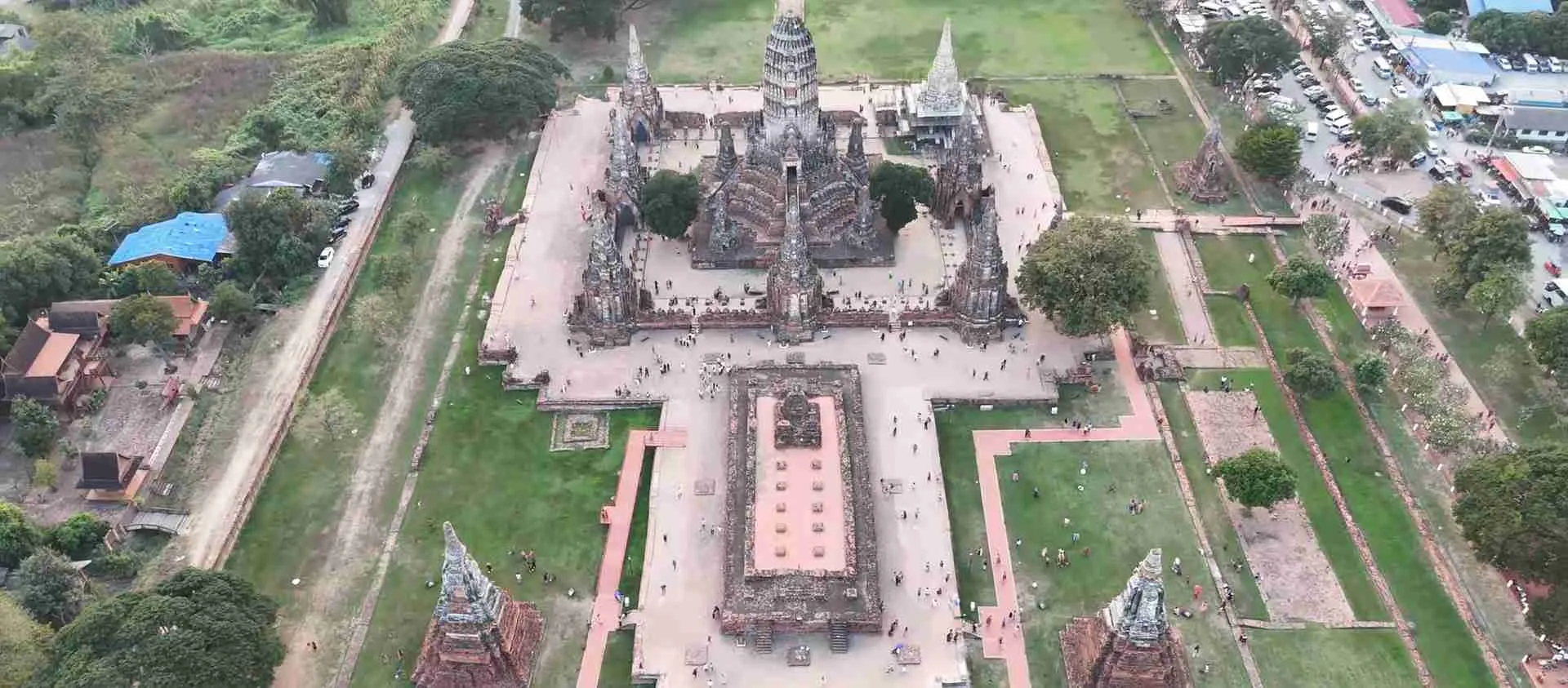
The Historic City of Ayutthaya preserves the ruins of Thailand’s second capital, which dominated Southeast Asian trade and diplomacy from 1350 to 1767 before Burmese invasion destroyed the city. Located 80 kilometers north of Bangkok at the confluence of three rivers, Ayutthaya Historical Park encompasses temples, palaces, monasteries, and fortifications across 289 hectares of protected land accessible as an easy day trip from the capital. The site demonstrates unique architectural synthesis blending Thai, Khmer, Persian, and European influences resulting from Ayutthaya’s role as a cosmopolitan trading hub connecting Asian and European merchants.
Visitors access Ayutthaya by train from Bangkok’s Hua Lamphong Station (฿20, 90 minutes, 3rd class) or by bus from Mo Chit Terminal (฿60-80, 75 minutes). The historical park charges no general admission fee, though individual temples request donations of ฿10-50, and Ayutthaya’s main temples (Wat Mahathat, Wat Phra Si Sanphet, Wat Chai Watthanaram) charge ฿50 each. Bicycle rental costs ฿50-80 daily and provides the most practical way to navigate between scattered ruins, while tuk-tuk day charters cost ฿400-600 for 3-4 hours covering major sites.
Historic Town of Sukhothai and Associated Historic Towns (Inscribed 1991)
The Historic Town of Sukhothai encompasses three separate historical parks—Sukhothai, Si Satchanalai, and Kamphaeng Phet—preserving the ruins of Thailand’s first independent kingdom from the 13th-14th centuries. Sukhothai Historical Park, the primary site located 450 kilometers north of Bangkok, contains 193 temple ruins across 70 square kilometers demonstrating the artistic and architectural achievements that established Thai cultural identity. The parks protect classic Sukhothai-style architecture characterized by lotus-bud chedis, walking Buddha images, and the first Thai script developed during this “Golden Age” of Thai civilization.
Sukhothai town serves as the base for visiting all three historical parks, with buses from Bangkok’s Mo Chit Terminal costing ฿400-550 (7 hours) or flights to Phitsanulok (฿900-1,500, then 60-kilometer bus connection). Sukhothai Historical Park entrance costs ฿100 for foreigners plus ฿10 for bicycle entry, with the park divided into five zones (Central, North, South, East, West) requiring separate tickets if visiting multiple areas. Bicycle rental at ฿30-50 daily provides ideal transportation, or visitors can rent motorbikes at ฿200-300 daily for covering greater distances including Si Satchanalai (70 kilometers north, ฿100 entrance) and Kamphaeng Phet (80 kilometers south, ฿100 entrance).
Ban Chiang Archaeological Site (Inscribed 1992)
Ban Chiang Archaeological Site in Udon Thani province preserves Southeast Asia’s most important prehistoric settlement, providing evidence of sophisticated bronze metallurgy, rice cultivation, and pottery production dating to 3600 BCE. The site demonstrates technological advancement that challenged previous assumptions about Southeast Asian development, with excavated artifacts including distinctive red-painted pottery, bronze tools and jewelry, and burial sites revealing complex social structures. Ban Chiang’s National Museum displays excavated materials including reconstructed graves showing burial practices and ceramic evolution across millennia.
Travelers reach Ban Chiang from Udon Thani city (50 kilometers) by songthaew (฿40-60, 1 hour) or private taxi (฿400-600 round trip). The archaeological site and museum charge ฿150 combined entrance covering both facilities, with displays explaining excavation history, dating methodologies, and cultural significance. Most visitors allocate 2-3 hours for Ban Chiang, making it suitable for combination with Udon Thani’s other attractions or as a stopover during northeast Thailand itineraries.
Dong Phayayen-Khao Yai Forest Complex (Inscribed 2005)
The Dong Phayayen-Khao Yai Forest Complex protects 615,500 hectares of connected forest across five protected areas (Khao Yai, Thap Lan, Pang Sida, Ta Phraya, and Dong Yai), representing one of mainland Southeast Asia’s largest intact monsoon forest systems. The complex supports populations of tigers, elephants, gibbons, hornbills, and other threatened species while preserving elevational gradients from 100 to 1,351 meters that create diverse habitats. Khao Yai National Park serves as the primary access point, offering developed visitor facilities, wildlife viewing opportunities, and hiking trails suitable for day visits from Bangkok.
Khao Yai National Park lies 200 kilometers northeast of Bangkok, accessible by bus from Mo Chit Terminal to Pak Chong town (฿120-150, 3 hours), then songthaew to park headquarters (฿50-80). Park entrance costs ฿300 for foreigners with vehicle entry at ฿50, and private cars or motorcycles can navigate the main roads connecting viewpoints and trailheads. Wildlife spotting happens most reliably during early morning (6-9 AM) or late afternoon (4-6 PM) walks along roads near park headquarters, with gibbons, hornbills, deer, and occasionally elephants visible from designated viewing areas.
Thungyai-Huai Kha Khaeng Wildlife Sanctuaries (Inscribed 1991)
The Thungyai-Huai Kha Khaeng Wildlife Sanctuaries encompass 622,200 hectares of pristine forest along Thailand’s western border with Myanmar, representing mainland Southeast Asia’s largest protected area and most significant tiger habitat. The sanctuaries preserve exceptional biodiversity across elevation ranges from 250 to 1,811 meters, supporting viable populations of large mammals including tigers, elephants, leopards, bears, and wild cattle. These remote sanctuaries remain Thailand’s least accessible UNESCO site, with entry restricted to research purposes and limited trekking permits issued by wildlife authorities.
General tourism infrastructure does not exist within Thungyai-Huai Kha Khaeng, and casual visitors cannot enter the protected areas. Conservation-oriented travelers can arrange multi-day treks through specialized operators in Kanchanaburi or Umphang, requiring permits obtained weeks in advance and costing ฿15,000-25,000 per person for 3-5 day expeditions including guides, porters, camping equipment, and meals. These challenging treks suit physically fit travelers seeking authentic wilderness experiences in one of Asia’s last large intact forests.
The Ancient Town of Si Thep and its Associated Dvaravati Monuments (Inscribed 2023)
The Ancient Town of Si Thep in Phetchabun province preserves the remains of an important Dvaravati period city (6th-11th centuries CE) that later came under Khmer influence, demonstrating cultural transitions in central Thailand. The site contains 88 monuments including Hindu and Buddhist temples, city walls, gates, and water management systems showing sophisticated urban planning. Si Thep’s archaeological significance lies in preserving both Mon-Dvaravati architecture (distinctive rounded stupas) and later Khmer-style temples reflecting Angkor’s expansion into the region.
Si Thep Historical Park lies 120 kilometers from Phitsanulok, accessible by bus to Lom Sak district (฿80-120, 2 hours) then songthaew to the site (฿40-60). The historical park charges ฿100 entrance with a small museum explaining site history and displaying excavated artifacts. Most ruins remain unrestored and atmospheric, requiring 3-4 hours to explore the main monuments scattered across forested terrain, making Si Thep ideal for travelers interested in archaeology and less-visited historical sites.
Kaeng Krachan Forest Complex (Inscribed 2021)
Kaeng Krachan Forest Complex protects 482,390 hectares of tropical forest across Kaeng Krachan National Park and three additional protected areas in western Thailand near the Myanmar border. The complex ranks as Thailand’s largest national park and one of Southeast Asia’s most important bird diversity hotspots, with more than 400 recorded species including rare endemics like Great Hornbills and Green Peafowl. The forest complex supports healthy populations of elephants, clouded leopards, tapirs, and other large mammals while preserving intact river systems and watershed functions.
Kaeng Krachan National Park headquarters lies 60 kilometers southwest of Hua Hin, accessible by rental car or private taxi (฿1,200-1,500 round trip including waiting time). Park entrance costs ฿300 for foreigners with ฿30 for private vehicles, and accommodation options include national park bungalows at ฿1,000-2,500 nightly (advance booking essential) or camping at ฿30 per person plus ฿225 tent rental. Wildlife viewing focuses on birdwatching along park roads and trails during early morning hours, while hiking to panoramic viewpoints like Phanoen Thung provides stunning landscape vistas over misty valleys.
Phu Phrabat Historical Park (Inscribed 2024)
Phu Phrabat Historical Park in Udon Thani province became Thailand’s eighth and most recent UNESCO World Heritage Site in 2024, recognized for preserving the world’s largest collection of in-situ Dvaravati-period boundary stones (bai sema) marking sacred Buddhist sites from the 7th-11th centuries. The park also contains dramatic sandstone formations created by ancient sea erosion, prehistoric rock paintings dating back 6,000 years, and natural caves that served as meditation sites for Buddhist monks. Phu Phrabat uniquely combines geological, archaeological, and religious significance in a compact 12-square-kilometer protected area.
Phu Phrabat Historical Park lies 65 kilometers west of Udon Thani city, accessible by rental motorbike (฿200-300 daily from Udon Thani) or private taxi (฿800-1,200 round trip). Park entrance costs ฿100 for foreigners, and well-marked trails connect major rock formations, boundary stones, and viewpoints across moderate terrain requiring 2-3 hours to explore thoroughly. The park offers peaceful hiking conditions, unique photo opportunities among balancing rocks, and cultural insights into early Buddhist practices in northeastern Thailand.
Thailand Accommodation Costs and Options 2026
Thailand accommodation in 2026 ranges from ฿400-1,200 ($11-33) nightly for hostels and budget guesthouses to ฿1,200-2,800 ($33-78) for mid-range hotels and ฿3,500-12,000+ ($97-333+) for luxury resorts, with prices varying significantly between destinations, seasons, and proximity to major attractions. Bangkok, Chiang Mai, and island destinations offer the widest selection across all price categories, while smaller cities and rural areas provide fewer luxury options but exceptional value in budget and mid-range segments. Booking accommodations 2-3 months ahead saves 20-30% during peak season (November-February), while last-minute bookings during low season (June-October) can yield discounts of 30-50% as properties reduce rates to maintain occupancy.
Budget Accommodation Options in Thailand 2026 (฿400-1,200 / $11-33 Per Night)
Budget accommodation in Thailand encompasses hostel dormitories, basic guesthouses, and fan-cooled rooms without air conditioning, providing clean, safe lodging for backpackers and long-term travelers prioritizing cost savings. Hostel dormitories in Bangkok, Chiang Mai, and island destinations cost ฿400-600 ($11-17) per bed in 6-12 bed rooms, typically including free WiFi, communal kitchens, and social common areas facilitating traveler connections. Private budget rooms with shared bathrooms range ฿600-1,000 ($17-28) nightly, offering basic furnishings, fans, and minimal amenities suitable for travelers spending limited time in their rooms.
Budget hotels and guesthouses with air conditioning charge ฿800-1,200 ($22-33) nightly, providing private bathrooms, simple furnishings, and sometimes breakfast in popular tourist areas. These properties suit travelers wanting private space and comfort without requiring resort amenities or prime locations. Family-run guesthouses in smaller towns often deliver exceptional value at ฿500-800 ($14-22) nightly, including personal service, local knowledge, and authentic cultural interactions unavailable in larger hostels.
Budget travelers should prioritize accommodation locations near public transport in cities like Bangkok to minimize taxi costs, while island accommodation location matters less due to compact geography. Reading recent reviews helps identify well-maintained budget properties, as conditions vary significantly within this price category, and some ฿600 guesthouses provide better experiences than ฿1,000 hotels with poor management. Hostels facilitate social connections essential for solo travelers, while private budget rooms offer better value for couples or friends traveling together.
Mid-Range Accommodation Options in Thailand 2026 (฿1,200-2,800 / $33-78 Per Night)
Mid-range accommodation delivers substantial comfort and amenities at prices remaining affordable by international standards, representing the category most travelers select for balancing cost and quality in 2026. Three-star hotels in Bangkok cost ฿1,200-1,800 ($33-50) nightly for standard rooms with air conditioning, WiFi, private bathrooms, TVs, and often swimming pools and breakfast buffets, while similar properties in Chiang Mai or island destinations range ฿1,500-2,200 ($42-61) nightly.
Boutique hotels and upscale guesthouses charging ฿1,800-2,800 ($50-78) nightly provide distinctive design, excellent service, prime locations, and resort-style amenities like pools, restaurants, and spa services. These properties suit travelers appreciating character and quality without requiring luxury hotel chains, and they often deliver better experiences than standard three-star hotels at similar prices. Beach destinations offer bungalows and small resorts at ฿2,000-2,500 ($56-69) nightly featuring direct beach access, restaurants, and water sports equipment.
Mid-range travelers maximize value by booking directly with hotels rather than using online travel agencies when possible, as properties often match or beat OTA prices while providing room upgrades or amenities. Chain hotels (Ibis, Novotel, Holiday Inn) offer consistent quality at ฿1,500-2,200 ($42-61) nightly with loyalty programs benefiting frequent visitors. Aparthotels and serviced apartments suit longer stays, providing kitchenettes, washing machines, and weekly rates that reduce costs for 7+ night bookings.
Luxury Accommodation Options in Thailand 2026 (฿3,500-12,000+ / $97-333+ Per Night)
Luxury accommodation in Thailand ranges from international four-star chains to exclusive five-star resorts and private villas, offering world-class service, facilities, and locations at prices substantially lower than equivalent Western properties. Bangkok four-star hotels cost ฿3,500-5,500 ($97-153) nightly providing spacious rooms, executive lounges, rooftop pools, multiple restaurants, and central locations near shopping and business districts. Five-star properties like Mandarin Oriental, Peninsula, and Shangri-La charge ฿6,000-12,000 ($167-333) nightly delivering exceptional service, historic heritage, riverside settings, and amenities including spas, fine dining, and butler service.
Island luxury resorts on Phuket, Koh Samui, and Krabi range ฿5,000-15,000+ ($139-417+) nightly, with beachfront villas featuring private pools, direct beach access, and all-inclusive options bundling meals and activities. Ultra-luxury properties like Six Senses, Four Seasons, and Anantara charge ฿15,000-30,000+ ($417-833+) nightly for pool villas, providing complete privacy, personalized service, gourmet dining, and exclusive experiences like private island dinners or spa treatments.
Luxury travelers benefit from booking directly through hotel websites to access member rates, guaranteed upgrades, and flexible cancellation policies. Package deals combining accommodation with airport transfers, spa credits, and dining vouchers often deliver better value than room-only bookings. Heritage properties like former royal palaces converted to hotels provide unique cultural experiences unavailable in modern luxury chains, while eco-luxury resorts emphasize sustainability and authentic Thai design integrated with natural surroundings.
Thailand Food and Dining Costs 2026
Thailand food costs range from ฿40-80 ($1.10-2.20) per street food dish to ฿200-400 ($5.50-11) for mid-range restaurant meals and ฿800-2,000+ ($22-55+) per person for luxury dining in 2026, allowing travelers to control food budgets precisely based on preferences and dietary requirements. Street food and local markets provide authentic Thai cuisine at minimal cost, mid-range restaurants offer air-conditioned comfort and diverse menus, while luxury establishments deliver fine dining experiences with international standards and premium ingredients. Understanding Thailand’s food landscape helps travelers allocate dining budgets effectively while enjoying one of the world’s great culinary destinations.
Street Food and Local Markets 2026 (฿40-80 / $1.10-2.20 Per Dish)
Thai street food vendors operate from pushcarts, market stalls, and simple shophouses serving freshly prepared dishes at ฿40-80 ($1.10-2.20) per portion, with rice-based meals costing ฿50-70 and noodle soups ฿40-60. Popular dishes include pad thai (stir-fried rice noodles) at ฿50-70, khao pad (fried rice) at ฿50-80, som tam (papaya salad) at ฿40-60, and various curries served over rice at ฿60-80. Street food maintains high quality despite low prices, as vendors specialize in specific dishes perfected through years of daily preparation, and locals patronize vendors with consistently good food and hygiene.
Night markets and food courts offer extensive street food selections in comfortable settings, with prices remaining comparable to individual street vendors. Bangkok’s Chinatown, Chiang Mai’s night bazaar, and Phuket’s old town host concentrated street food zones where travelers sample multiple dishes in single locations. Fresh fruit smoothies cost ฿40-60, fresh coconut water ฿30-40, and Thai iced tea or coffee ฿30-50, providing refreshing beverages throughout hot days.
Budget travelers eating exclusively street food spend ฿200-300 ($5.50-8.30) daily on three meals plus snacks and drinks, making Thailand one of the world’s most affordable food destinations. Hygiene-conscious travelers should select vendors with visible cooking processes, observe local customer volumes indicating popularity, and avoid pre-prepared foods sitting at room temperature for extended periods. Most street food poses minimal health risks for travelers with normal digestive systems, though those with sensitive stomachs might prefer cooked-to-order dishes over salads using raw vegetables.
Mid-Range Restaurants and Cafes 2026 (฿200-400 / $5.50-11 Per Meal)
Mid-range restaurants provide air-conditioned dining environments, English menus, moderate service, and diverse cuisine options at ฿200-400 ($5.50-11) per meal including drinks, representing good value for travelers seeking comfort beyond street food settings. Thai restaurants in tourist areas charge ฿150-250 for main dishes like green curry, pad thai, or tom yum soup, plus ฿60-80 for rice, ฿40-60 for spring rolls or satay, and ฿50-80 for soft drinks or iced beverages. Complete meals including appetizer, main course, rice, and drink total ฿300-400 ($8.30-11) per person.
International restaurants serving Western, Japanese, Korean, or other cuisines charge ฿250-400 for main courses, making them slightly more expensive than Thai restaurants but still affordable compared to home country prices. Cafe culture has expanded significantly in Bangkok and Chiang Mai, with specialty coffee shops charging ฿80-120 for espresso drinks, ฿150-250 for breakfast options, and ฿200-300 for lunch plates, attracting digital nomads and younger travelers seeking Western-style environments.
Shopping mall food courts combine air conditioning, hygiene standards, and variety at prices between street food and full restaurants, with meals costing ฿80-150. These venues suit travelers wanting comfort and choice without restaurant markups, and they provide excellent introductions to Thai cuisine for those uncertain about street food hygiene. Mid-range dining budgets of ฿600-900 ($17-25) daily allow travelers to enjoy restaurant lunches and dinners with occasional cafe breaks while maintaining reasonable costs.
Luxury Dining and Fine Restaurants 2026 (฿800-2,000+ / $22-55+ Per Person)
Luxury restaurants in Thailand deliver world-class dining experiences at prices substantially below equivalent Western establishments, with Michelin-starred venues, rooftop restaurants, and resort fine dining ranging ฿800-2,000+ ($22-55+) per person excluding alcohol. Bangkok hosts numerous Michelin-starred Thai restaurants charging ฿1,500-3,000 ($42-83) for tasting menus showcasing refined interpretations of classic dishes using premium ingredients and sophisticated techniques. International fine dining establishments serving French, Italian, or Japanese cuisine charge ฿1,200-2,500 ($33-69) for main courses, ฿400-800 for appetizers, and ฿300-600 for desserts.
Rooftop bars and restaurants with panoramic city or ocean views command premium pricing at ฿800-1,500 for main courses plus ฿400-600 for cocktails, though the atmospheric settings and sunset views justify costs for special occasions. Resort restaurants in luxury hotels and beach destinations charge ฿600-1,200 for dinner entrees with wine pairings adding ฿300-800 per person, while all-inclusive resort packages can provide better value by bundling multiple meals into daily rates.
Luxury travelers typically budget ฿1,500-3,500 ($42-97) daily for dining, allowing flexibility for special tasting menus, rooftop dinners, and resort meals while mixing in some casual lunches to moderate costs. Reservations become essential for popular fine dining venues, especially during peak season when top restaurants book weeks ahead. Thailand’s luxury dining scene delivers exceptional quality-to-price ratios, making it affordable for travelers to experience Michelin-level cuisine and premium settings that would cost 3-4 times more in Western cities.
Thailand Transportation Costs and Strategies 2026
Thailand transportation in 2026 encompasses highly developed options including domestic flights (฿900-3,000), overnight trains (฿250-1,500), intercity buses (฿400-800), and comprehensive urban transit systems, providing travelers with choices balancing speed, cost, and comfort for moving between and within destinations. Bangkok operates BTS Skytrain, MRT metro, and Airport Rail Link systems costing ฿16-52 per trip with ฿140 unlimited day passes, while other cities use songthaews (shared pickups) and local buses at ฿20-40 per ride. Understanding transportation options and costs helps travelers maximize time and minimize expenses while exploring Thailand’s diverse regions.
Domestic Flights in Thailand 2026 (฿900-3,000 / $25-83 Per Sector)
Domestic flights save substantial time compared to surface transport while remaining affordable, with budget airlines serving major routes multiple times daily. Bangkok to Chiang Mai costs ฿900-1,500 ($25-42) for 70-minute flights departing every 30-60 minutes, compared to 10-12 hours by bus or train. Bangkok to Phuket ranges ฿860-2,000 ($24-55) for 90-minute flights, Bangkok to Koh Samui ฿2,130-3,000 ($59-83) including airport transfers, and Chiang Mai to Phuket ฿2,200-3,000 ($61-83) when connecting through Bangkok.
Budget carriers AirAsia, Nok Air, Thai Lion Air, and Thai VietJet operate most domestic routes with base fares excluding baggage allowances, seat selection, and meals, while full-service airlines Bangkok Airways and Thai Airways charge 20-30% more but include 20 kilogram checked baggage and onboard services. Booking 4-6 weeks ahead typically yields best prices, while last-minute bookings (under 7 days) can cost double normal fares. Budget airlines impose strict baggage limits (7 kilograms cabin only without pre-purchased checked allowance) and charge ฿400-800 per 15-kilogram checked bag, making pre-purchasing baggage essential for avoiding airport counter fees.
Travelers should monitor airline promotions offering flights at ฿590-790 during periodic sales, book round-trip tickets to save 10-15%, and use flight comparison sites like Skyscanner or direct airline websites. Don Mueang Airport serves budget carriers while Suvarnabhumi handles full-service flights, requiring airport selection attention when booking Bangkok departures. Domestic flight booking strategies include flexible dates allowing midweek travel (Tuesday-Thursday typically cheaper), morning departures (usually lower demand), and connecting via Bangkok rather than direct flights between provincial cities when time allows.
Trains and Railways in Thailand 2026 (฿250-1,500 / $7-42 Per Journey)
Thailand’s State Railway operates extensive networks connecting Bangkok to northern, northeastern, and southern destinations, offering budget-friendly overnight options that save accommodation costs while providing authentic travel experiences. Third-class seats on Bangkok to Chiang Mai routes cost ฿250-350 ($7-10) for 12-14 hour daytime journeys, second-class air-conditioned seats ฿500-750 ($14-21), and first-class sleeper cabins ฿1,000-1,500 ($28-42) for comfortable overnight travel arriving refreshed at destinations.
Overnight sleeper trains represent excellent value by combining transport and accommodation, with second-class sleeper berths at ฿700-900 ($19-25) providing curtained bunks, air conditioning, and morning arrival times that maximize destination visiting hours. First-class sleepers offer private two-berth cabins with doors, washbasins, and premium comfort at ฿1,200-1,500 ($33-42), suitable for couples or travelers prioritizing privacy. Popular routes include Bangkok to Chiang Mai (13 hours), Bangkok to Surat Thani for Koh Samui connections (12 hours), and Bangkok to Nong Khai near the Laos border (11 hours).
Train tickets require advance booking 60-90 days before travel for sleeper berths during peak season, available through station counters, authorized agencies, or online booking systems. Short-distance routes like Bangkok to Ayutthaya cost minimal ฿20 ($0.56) for third-class 90-minute journeys, making trains ideal for budget day trips. Trains operate slower than buses (averaging 40-60 km/hour) but provide more space, smoother rides, scenic countryside views, and social atmospheres with fellow travelers and vendors selling snacks throughout journeys.
Intercity Buses in Thailand 2026 (฿400-800 / $11-22 Per Journey)
Intercity buses connect all Thai cities and towns through government and private operators, offering options from basic fan-cooled buses at ฿400-500 to VIP luxury coaches with lie-flat seats at ฿700-900 for popular routes. Bangkok to Chiang Mai VIP buses cost ฿650-800 ($18-22) for 9-10 hour overnight journeys with reclining seats, blankets, and rest stop meals included, departing from Mo Chit Northern Terminal. Bangkok to Phuket buses range ฿700-900 ($19-25) for 12-13 hour trips, while Bangkok to Koh Samui combinations (bus plus ferry) total ฿900-1,200 ($25-33).
Government buses from Bus Terminals cost less than private operators but offer older vehicles and longer journey times with more stops, while private companies like Nakhonchai Air and 999 VIP operate modern coaches with better service at 15-20% higher fares. Online booking platforms like 12go.asia compile schedules and pricing from multiple operators, accepting credit cards and providing e-tickets that avoid terminal lines. Peak season and holiday periods require advance booking 1-2 weeks before travel to secure preferred departure times.
Bus travel suits budget-conscious travelers accepting slower speeds, provides late-night departures that save accommodation costs, and serves destinations without rail or air connections. Drawbacks include cramped seating on long journeys, unpredictable delays from traffic, and overnight departure schedules unsuitable for travelers wanting to see countryside. Reading recent reviews helps identify reliable operators with well-maintained buses and professional drivers, as quality varies significantly between companies despite similar pricing.
Bangkok Public Transport 2026 (฿16-52 / $0.44-1.44 Per Trip)
Bangkok operates comprehensive mass transit including BTS Skytrain, MRT metro, Airport Rail Link, and bus networks providing efficient urban navigation at minimal cost. BTS fares range ฿17-65 ($0.47-1.80) per trip based on distance traveled, with typical tourist journeys costing ฿25-40 between major destinations. MRT metro charges ฿17-45 ($0.47-1.25) per trip, while Airport Rail Link costs ฿45 ($1.25) from Suvarnabhumi Airport to city center connections. Unlimited day passes cost ฿140 ($3.90) for BTS and ฿120 ($3.33) for MRT, delivering value for travelers making 4+ trips daily.
Rabbit Cards (BTS) and stored-value MRT cards provide tap-and-go convenience, purchased at station counters with ฿100 minimum deposit plus ฿50 refundable card fee. These cards save time compared to single-journey tickets, work across multiple lines, and qualify for small fare discounts. BTS and MRT operate 5:15 AM to midnight daily with 2-5 minute frequencies during peak hours (7-9 AM, 4-7 PM) and 5-10 minutes off-peak, providing reliable schedules unaffected by traffic congestion.
Local buses serve areas beyond rail networks at ฿8-25 per trip depending on bus type and route length, though complex route systems and Thai-language signage challenge foreign travelers. Grab ride-hailing provides convenient alternatives at ฿50-150 for typical cross-city trips, eliminating language barriers and providing upfront pricing. Walking remains practical for distances under 1 kilometer between BTS/MRT stations, though Bangkok’s heat and humidity make midday walking uncomfortable for many visitors.
Taxis, Tuk-Tuks, and Local Transport 2026 (฿50-300 / $1.40-8.30 Per Trip)
Metered taxis in Bangkok start at ฿35 ($0.97) for the first kilometer then charge ฿5-7 per additional kilometer, making typical 5-kilometer trips cost ฿80-120 ($2.20-3.33) excluding expressway tolls of ฿25-75. Honest drivers use meters willingly, while some tourist-area taxis refuse meters and quote inflated flat rates of ฿200-300 for trips actually costing ฿80-120 metered. Travelers should insist on metered fares, walk to alternate taxis if refused, or use Grab app for transparent upfront pricing and English-language driver communication.
Tuk-tuks (motorized three-wheelers) charge negotiated fares typically ฿100-200 ($2.80-5.50) for short tourist-area trips of 1-3 kilometers, providing iconic Thai transport experiences despite higher per-kilometer costs than metered taxis. Tuk-tuk drivers often attempt inflated pricing of ฿300-500 for trips worth ฿150, requiring firm but polite negotiation before boarding. Tuk-tuks suit short distances, photo opportunities, and evening transport when experiencing open-air travel outweighs cost efficiency concerns.
Motorbike taxis identified by orange vests operate from designated stands charging ฿20-40 ($0.56-1.11) for short distances under 2 kilometers, providing fast transport through congested traffic unsuitable for cars. Provincial cities use songthaews (shared pickup trucks) following set routes at ฿20-40 per person, requiring destination communication to ensure correct route. Grab bike service costs ฿30-80 for typical trips, offering helmet provision and insurance coverage lacking in informal motorbike taxis.
Thailand Daily Budget Breakdown 2026
Thailand daily costs in 2026 vary dramatically based on traveler preferences, chosen destinations, and comfort requirements, with budget backpackers managing ฿1,000-1,500 ($28-42) daily, mid-range travelers spending ฿2,500-4,000 ($70-111) daily, and luxury seekers allocating ฿9,000+ ($250+) daily for premium experiences. These comprehensive budgets encompass accommodation, meals, transport, activities, and incidental expenses, excluding international flights and major one-time purchases. Understanding realistic daily costs helps travelers plan appropriate trip durations and avoid budget overruns during Thailand adventures.
Budget Traveler Daily Costs 2026 (฿1,000-1,500 / $28-42 Per Day)
Budget travelers allocate ฿400-600 ($11-17) for hostel dormitory beds in major cities or basic fan rooms in smaller destinations, providing clean lodging with shared bathrooms and basic amenities. Food costs consume ฿200-300 ($5.50-8.30) daily eating exclusively street food and market meals, drinking tap water or purchasing large bottles at ฿15, and avoiding restaurants and cafes. Transport uses public options exclusively—Bangkok BTS/MRT at ฿80-120 daily, local buses at ฿20-40, and overnight buses between cities to save accommodation costs.
Activities focus on free attractions including temple visits requiring no entrance fees (most temples free, major sites ฿50-100), public beaches, night markets, and walking tours. Occasional paid activities like cooking classes (฿1,000-1,500) or island boat trips (฿800-1,200) require budget adjustments but can be absorbed by skipping expensive activities on other days. Budget travelers typically allocate ฿100-200 ($2.80-5.50) daily for incidentals including water, snacks, toiletries, and laundry services at ฿30-50 per kilogram.
This budget level requires discipline and acceptance of basic conditions, shared accommodation, public transport, and limited spontaneous spending. Budget travelers maximize travel duration by minimizing daily costs, often sustaining month-long trips on ฿30,000-45,000 ($830-1,250) total budgets. Strategies include cooking occasional meals with hostel kitchens, limiting alcohol consumption (beer ฿60-100, cocktails ฿150-250), sharing taxis and tuk-tuks when public transport unavailable, and choosing less-touristy destinations where prices remain lower.
Mid-Range Traveler Daily Costs 2026 (฿2,500-4,000 / $70-111 Per Day)
Mid-range travelers spend ฿1,200-2,200 ($33-61) nightly on comfortable three-star hotels or boutique guesthouses providing air conditioning, WiFi, private bathrooms, and often breakfast buffets or swimming pools. Food budgets increase to ฿600-900 ($17-25) daily mixing street food lunches at ฿150-200 with restaurant dinners at ฿300-400, occasional cafe breaks at ฿100-150, and fresh fruit smoothies or coffee drinks. This budget allows dietary flexibility, air-conditioned dining comfort, and international cuisine variety beyond exclusively Thai food.
Transport combines public options with convenience choices—BTS/MRT for Bangkok navigation, Grab taxis for luggage transport or evening returns, and domestic flights between distant cities to maximize destination time. Mid-range travelers might take overnight trains in second-class sleepers rather than budget buses, rent motorbikes at ฿200-300 daily for island exploration, and occasionally use private taxi transfers for early flights or heavy luggage movements.
Activities include all major paid attractions at ฿100-500 entrance fees, occasional tours at ฿1,000-2,000, and experiences like Thai massage at ฿300-500 or cooking classes. Daily budgets accommodate spontaneous activities without requiring strict advance planning, though expensive activities like scuba diving (฿3,000-4,500) or elephant sanctuaries (฿2,500-3,500) need allocation across multiple days. Mid-range budgets deliver comfortable travel without luxury pricing, allowing 2-week trips on ฿35,000-56,000 ($970-1,555) excluding flights.
Luxury Traveler Daily Costs 2026 (฿9,000+ / $250+ Per Day)
Luxury travelers allocate ฿5,000-12,000+ ($139-333+) nightly on four-star hotels, five-star resorts, or private pool villas featuring premium locations, exceptional service, comprehensive facilities, and exclusive amenities. Food budgets expand to ฿1,500-3,500+ ($42-97+) daily dining at hotel restaurants, Michelin-starred venues, rooftop bars, and international fine dining establishments, plus premium beverage selections including wine, cocktails, and specialty coffees.
Transport utilizes private drivers (฿2,500-3,500 daily), first-class domestic flights, VIP airport services, and luxury car rentals when self-driving. Luxury travelers avoid public transport, use resort transfers, and prioritize comfort and time efficiency over cost considerations. Activities access premium experiences including private yacht charters (฿15,000-40,000 daily), helicopter tours (฿20,000-60,000), luxury spa treatments (฿3,000-8,000), and exclusive cultural performances.
This budget level eliminates financial constraints, focusing on optimal experiences, maximum comfort, and personalized service throughout Thailand stays. Luxury travelers often combine high-end resorts with cultural activities, allocating ฿10,000-15,000 ($278-417) daily excluding accommodation to access Thailand’s best restaurants, exclusive tours, and premium activities. Two-week luxury trips typically cost ฿200,000-350,000+ ($5,555-9,722+) excluding international flights, delivering exceptional experiences at prices substantially lower than equivalent Western luxury travel.
Thailand Sample Daily Budget Breakdowns 2026
Sample budget breakdowns demonstrate realistic daily spending across different travel styles in popular Thai destinations, helping travelers understand how theoretical budgets translate to actual expenses when booking accommodation, eating meals, using transport, and visiting attractions in 2026.
Budget Bangkok Day Sample 2026
Accommodation at hostel dormitory bed ฿500, street food breakfast (rice soup or noodles) ฿50, street food lunch (pad thai or fried rice with drink) ฿80, street food dinner (curry over rice with vegetable side) ฿90, BTS/MRT transport to major temples and markets ฿100, Grand Palace entrance ฿500, Wat Pho entrance ฿200, water and snacks ฿80. Total day cost: ฿1,600 per person (excluding accommodation costs ฿500).
Mid-Range Chiang Mai Day Sample 2026
Accommodation at boutique hotel ฿1,800 nightly (mentioned separately, excluded from daily total). Breakfast included with hotel, lunch at cafe (sandwich and coffee) ฿200, dinner at restaurant (northern Thai specialties with drink) ฿350, songthaew transport to temples ฿100, Doi Suthep temple entrance and songthaew charter ฿150, cooking class half-day ฿1,200, Thai massage ฿400, evening night market snacks ฿100. Total day cost: ฿2,500 per person (excluding accommodation ฿1,800).
Luxury Phuket Beach Day Sample 2026
Accommodation at beachfront pool villa resort ฿8,500 nightly (mentioned separately, excluded from daily total). Breakfast buffet at resort included, lunch at beachfront restaurant (seafood with wine) ฿1,200, sunset cocktails at beach club ฿800, dinner at fine dining restaurant (multi-course tasting menu) ฿2,500, private longtail boat tour to islands ฿6,000, spa treatment at resort ฿4,000, transport by resort shuttle and private car ฿800. Total day cost: ฿15,300 per person (excluding accommodation ฿8,500).
Thailand Best Time to Visit 2026: Seasonal Considerations
Thailand experiences three distinct seasons affecting weather conditions, tourist crowds, and pricing across all categories in 2026. Cool season (November-February) delivers peak tourism with optimal weather but highest prices and maximum crowds, hot season (March-May) brings intense heat with moderate tourism and pricing, while rainy season (June-October) offers budget-friendly travel with brief afternoon showers. Understanding seasonal patterns helps travelers select ideal visit timing based on priorities balancing weather preferences, budget constraints, and crowd tolerance.
Cool Season Peak Tourism 2026 (November-February)
Cool season from November through February provides Thailand’s most comfortable weather with temperatures 20-30°C, minimal rainfall, low humidity, and calm seas ideal for island activities and beach relaxation. This period attracts maximum international visitors creating crowded conditions at major attractions, full accommodation requiring advance booking, and premium pricing 20-40% above shoulder season rates. Bangkok temples experience queues during midday hours, island beaches reach capacity during weekends, and popular restaurants require reservations.
Cool season suits travelers prioritizing weather reliability for beach holidays, outdoor activities, and comprehensive sightseeing without rain disruptions. December-January represents absolute peak with Christmas-New Year holidays driving prices to annual maximums, while November and February offer slightly better value with comparable weather. Northern Thailand (Chiang Mai, Chiang Rai) experiences coolest temperatures December-January with occasional morning fog and 15°C lows, requiring light jackets for evening activities.
Booking strategies for cool season include reserving accommodation 2-3 months ahead, accepting higher rates as peak season premium, and visiting major attractions during early morning or late afternoon to avoid midday crowds. Budget travelers find cool season most expensive, potentially requiring daily budget increases of ฿500-800 to maintain accommodation standards compared to low season pricing.
Hot Season Moderate Tourism 2026 (March-May)
Hot season from March through May brings Thailand’s highest temperatures reaching 35-38°C in Bangkok and northern regions, though coastal areas remain moderated by sea breezes at 30-33°C. Tourism decreases compared to cool season as some travelers avoid peak heat, creating moderate accommodation availability and pricing between peak and low season levels. April hosts Songkran water festival (April 13-15) attracting domestic and international visitors with water fights nationwide, temporarily increasing prices despite general hot season moderation.
Hot season suits budget-conscious travelers accepting high temperatures, those visiting primarily for beach activities where sea temperatures remain pleasant, and festival-oriented visitors targeting Songkran experiences. Rainfall remains minimal March-April with occasional pre-monsoon thunderstorms in May, and sightseeing requires heat management through early morning activities (6-10 AM), afternoon hotel pool breaks, and evening temple visits when temperatures moderate.
Accommodation pricing drops 10-20% compared to peak cool season while remaining 10-15% above low season rates, creating reasonable value especially late March and early May outside Songkran period. Northern mountains offer cooler temperatures than central plains and southern beaches, making Chiang Mai and hill tribe regions more comfortable hot season destinations than Bangkok or island areas.
Rainy Season Budget Travel 2026 (June-October)
Rainy season from June through October features afternoon thunderstorms lasting 1-3 hours, though heavy rain typically occurs 10-15 days per month rather than continuous precipitation, with September-October receiving maximum rainfall. Tourism drops to annual lows creating excellent value with accommodation discounts of 20-50%, uncrowded attractions, and negotiable prices for tours and transport. Most rain falls in afternoon-evening hours (2-6 PM) allowing morning sightseeing and beach activities before daily showers.
Rainy season suits budget travelers prioritizing cost savings over perfect weather, long-term visitors able to work around rain days, and nature enthusiasts appreciating lush green landscapes and full waterfalls. Some islands (particularly Andaman coast including Phuket and Krabi) experience rough seas during peak monsoon July-September making boat trips uncomfortable and some islands inaccessible, while Gulf coast islands (Koh Samui, Koh Phangan, Koh Tao) maintain better weather during western monsoon period.
Accommodation booking can happen last-minute with excellent availability and walk-in negotiation opportunities at guesthouses and mid-range hotels. Rainy season represents ideal timing for cultural exploration in Bangkok and northern cities where rain disruptions matter less than beach destinations, and luxury travelers benefit from resort discounts making high-end properties accessible at mid-range season pricing. Flexible itineraries work best, allowing travelers to adjust plans around weather forecasts and extend stays at destinations experiencing good weather streaks.
Thailand Visa Requirements and Entry Procedures 2026
Thailand maintains visa-friendly entry policies for most Western nations in 2026, with citizens from 64 countries receiving visa exemption stamps allowing 30-60 day stays without advance visa applications. Entry requirements vary by nationality, entry method (air versus land), and intended stay duration, requiring travelers to verify specific requirements through official Thai embassy websites before booking flights. Understanding visa regulations prevents entry complications and allows proper planning for longer stays requiring tourist visa applications.
Visa Exemption Entry 2026 (30-60 Days)
Citizens from the United States, United Kingdom, European Union nations, Canada, Australia, New Zealand, Japan, South Korea, and Singapore typically receive 30-day visa exemption stamps when entering Thailand by air or land borders without visa applications or fees. Some nationalities receive 60-day exemptions under bilateral agreements, while others maintain 30-day limits, requiring verification through Thai embassy resources before travel. Visa exemption entries include no government fees at entry points, though departure taxes appear embedded in flight tickets.
Requirements for visa exemption entry include valid passports with minimum 6 months remaining validity, proof of onward travel within exemption period (return flights or bus tickets to neighboring countries), and proof of sufficient funds (฿10,000 per person or ฿20,000 per family, rarely checked but officially required). Immigration officers occasionally request onward travel proof, particularly for repeat visitors or those appearing to live in Thailand rather than tour, making hotel bookings and exit flight confirmations prudent precautions.
Visa exemption stamps can be extended once for additional 30 days at immigration offices nationwide by paying ฿1,900 ($53) and providing passport photos, photocopies of passport data and entry stamp pages, and TM7 application forms available at immigration offices. Extension applications require arriving before current stamp expiration, typically processing same-day though some offices require morning submission for afternoon collection. Total maximum stay using exemption plus one extension equals 60-90 days depending on initial exemption duration.
Tourist Visa Application 2026 (60-90 Days)
Travelers requiring stays longer than visa exemption periods can apply for 60-day single-entry tourist visas at Thai embassies or consulates in home countries or neighboring countries before entering Thailand. Tourist visa applications require completed application forms, passport-size photos, passport copies, proof of onward travel, proof of accommodation, bank statements showing ฿20,000+ funds, and visa fees averaging $40-50 USD varying by country and processing method. Processing times range 3-5 business days for normal service or same-day for express fees.
Tourist visas allow 60-day stays from entry date, extendable once for additional 30 days at immigration offices for ฿1,900 following identical procedures as visa exemption extensions. Total possible stay with tourist visa plus extension reaches 90 days, suitable for extended travel covering multiple regions and destinations without rushing. Some Thai embassies offer multiple-entry tourist visas (METV) valid 6 months allowing multiple 60-day entries, though requirements include proof of substantial income, employment letters, and higher fees around $150-200.
Applying for tourist visas at neighboring country embassies (particularly Vientiane, Laos or Penang, Malaysia) provides options for travelers already in Southeast Asia who determine they want longer Thailand stays than originally planned. Border runs to neighboring countries for new visa exemption stamps remain possible but attract scrutiny from immigration officers who may deny entry to travelers appearing to live in Thailand rather than tour properly, making legitimate tourist visas safer options for extended stays.
Essential Thailand Travel Tips 2026
Successful Thailand travel in 2026 benefits from practical knowledge covering cultural etiquette, health precautions, communication strategies, and money management that enhance experiences while avoiding common tourist mistakes and unnecessary expenses.
Cultural Etiquette and Temple Visit Guidelines 2026
Thai culture emphasizes respect for Buddhism, monarchy, and social hierarchy, requiring travelers to observe etiquette especially at temples and royal sites. Temple dress codes mandate covered shoulders and knees with clothing extending past elbows and below knees, prohibiting sleeveless shirts, shorts, short skirts, and torn jeans. Most temples provide sarongs or cover-up clothing rentals at ฿20-50 deposit-refundable, though travelers should carry lightweight pants and shawls avoiding rental needs and entry delays.
Remove shoes before entering temple buildings, meditation halls, and some shops or homes when observing shoe racks near entrances. Feet represent the lowest, dirtiest body part in Thai culture, making pointing feet toward Buddha images or people considered offensive, while heads represent highest, most sacred areas never touched even by friends or family. Sitting in temples requires tucking feet beside or behind body rather than pointing toward altar, and stepping over people or religious objects should be avoided.
Photography within temple grounds typically allows exterior building and courtyard photos, though interior Buddha image photography often prohibited or restricted to non-flash methods. Observe posted signs and monk instructions, asking permission before photographing monks, and avoid posing disrespectfully near Buddha statues including pointing, climbing, or inappropriate gestures. Women cannot touch monks or hand items directly to them, instead placing offerings on cloths or tables for monk collection, while men can receive blessings and amulets directly from monks.
Health and Safety Precautions 2026
Thailand maintains good healthcare infrastructure in major cities with international-standard hospitals accepting travel insurance and credit cards, while rural areas offer more basic facilities requiring transfers for serious conditions. Travel insurance becomes essential covering medical evacuation, hospitalization, and repatriation costs potentially exceeding $50,000 for serious accidents or illnesses. Comprehensive policies cost $40-80 for 2-week trips or $150-250 for annual multi-trip coverage, providing invaluable protection against catastrophic costs.
Tap water across Thailand should not be drunk, though ice in restaurants and hotels typically uses purified water and poses minimal risks. Purchase bottled water at ฿10-15 for 1.5 liters from convenience stores, or bring reusable bottles and refill from hotel filtered water dispensers to reduce plastic waste. Food poisoning risks remain low when choosing busy street vendors serving freshly cooked items, though raw vegetables, pre-cut fruit, and items sitting at room temperature pose higher risks for sensitive stomachs.
Dengue fever transmitted by daytime-active mosquitoes represents Thailand’s primary disease risk, requiring insect repellent use especially during rainy season June-October. DEET-based repellents at 20-30% concentration provide effective protection reapplied every 4-6 hours, while accommodations with air conditioning (running with doors closed) reduce mosquito exposure better than fan rooms with open windows. Malaria risk exists only in rural border areas not typically visited by tourists, and antimalarial medications remain unnecessary for standard tourist itineraries covering Bangkok, Chiang Mai, islands, and major destinations.
Money and Currency Management 2026
Thai Baht (฿ or THB) remains Thailand’s currency trading at approximately ฿32-36 per US Dollar in 2026, with exchange rates varying daily and between exchange methods. ATM withdrawals provide best exchange rates typically 1-2% better than currency exchange counters, though Thai banks charge ฿220 ($6-7) per withdrawal regardless of amount, making large withdrawals of ฿10,000-20,000 per transaction more economical than frequent small amounts. International debit cards with no foreign transaction fees (Charles Schwab, Fidelity, various European banks) refund Thai ATM fees providing zero-cost withdrawals.
Credit cards work at hotels, major restaurants, shopping malls, and tour operators, though 3% foreign transaction fees apply unless using cards specifically waiving these charges. Visa and Mastercard enjoy wide acceptance while American Express sees limited merchant acceptance outside international hotels and large retailers. Small restaurants, street vendors, local transport, and temple donations require cash, making ฿1,000-2,000 daily cash needs typical for travelers using cards for major expenses.
Currency exchange counters in airports offer worst rates typically 5-8% below market rates, while independent exchange booths in tourist areas like Bangkok’s Silom or Chiang Mai’s old city provide competitive rates close to ATM equivalents. Carrying US Dollars, Euros, or British Pounds for exchange provides backup to ATM withdrawals, though modern cards work reliably making physical currency backup less essential than previous decades. Notify banks before traveling to prevent fraud blocks on Thailand transactions, and photograph credit card numbers enabling cancellation if theft occurs.
Thailand Multi-City Itinerary Planning 2026
Planning multi-city Thailand itineraries requires balancing geographic distances, transport connections, destination time allocations, and regional weather variations to create efficient routes maximizing experiences while minimizing backtracking and transport time. Well-designed itineraries cluster nearby destinations, use efficient overnight transport between distant cities, and allocate appropriate days based on attraction density and activity options.
Two-Week Classic Thailand Route 2026
Classic two-week Thailand itineraries typically combine 4 days Bangkok (temples, palaces, markets, day trips), 3-4 days Chiang Mai (temples, cooking classes, elephant sanctuaries, hill tribe villages), and 6-7 days southern islands (beach relaxation, diving, island hopping). Bangkok to Chiang Mai transport uses overnight trains departing 6 PM arriving 7 AM (฿700-900 second-class sleepers) or 70-minute flights (฿900-1,500), while Chiang Mai to islands requires flights to Phuket (฿2,200-3,000 via Bangkok connection) or Koh Samui (฿2,500-3,500 direct).
This route covers Thailand’s essential experiences including cultural heritage in Bangkok and Chiang Mai, northern nature and traditions, and tropical beach destinations, appealing to first-time visitors wanting comprehensive introductions. Alternative variations replace Chiang Mai with Ayutthaya and Kanchanaburi day trips from Bangkok for historically-focused travelers, or substitute different island combinations like Krabi instead of Phuket or Koh Tao instead of Koh Samui based on activity preferences.
Three-Week Comprehensive Thailand Journey 2026
Three-week itineraries expand coverage to include 5 days Bangkok area (city plus Ayutthaya, Kanchanaburi day trips), 4-5 days northern circuit (Chiang Mai, Chiang Rai, Pai), 2-3 days central regions (Sukhothai, Phitsanulok), and 10-12 days southern beach combinations visiting multiple islands or coasts. This duration allows unhurried exploration, multiple island experiences comparing Andaman and Gulf coasts, and inclusion of secondary destinations like Sukhothai UNESCO sites or Pai mountain town.
Transport optimization includes open-jaw flights (arriving Bangkok, departing Phuket) eliminating backtracking, overnight buses or trains covering long distances while saving accommodation costs, and strategic domestic flights connecting distant endpoints like Chiang Mai to islands. Three weeks provides buffer for weather flexibility, spontaneous destination extensions when discovering unexpected favorites, and rest days between travel-intensive periods avoiding burnout.
Frequently Asked Questions About Thailand Travel 2026
What vaccinations do I need for Thailand in 2026?
Thailand requires no mandatory vaccinations for entry in 2026, though health authorities recommend ensuring routine vaccinations remain current including measles-mumps-rubella (MMR), diphtheria-tetanus-pertussis, varicella (chickenpox), polio, and annual influenza vaccines. Hepatitis A vaccination provides protection against food and waterborne illness occurring occasionally despite good hygiene practices, while Hepatitis B benefits long-term travelers, those engaging in activities risking blood exposure, or travelers anticipating medical procedures. Typhoid vaccination offers additional protection though risk remains low for standard tourist activities in major destinations.
Japanese Encephalitis vaccination becomes relevant only for travelers spending extended periods (over 30 days) in rural agricultural areas during rainy season, particularly northern regions during June-October when mosquito populations peak. Rabies pre-exposure vaccination suits adventure travelers anticipating animal contact, particularly those visiting remote areas far from medical facilities where post-exposure treatment becomes difficult to access. Consult travel medicine clinics 6-8 weeks before departure allowing time for multi-dose vaccine schedules, and verify specific recommendations based on planned activities and destinations rather than one-size-fits-all approaches.
Can I drink alcohol in Thailand and what does it cost?
Alcohol remains legal and widely available throughout Thailand in 2026, with beer, wine, and spirits sold at convenience stores, supermarkets, bars, restaurants, and dedicated liquor shops. Beer costs ฿60-100 ($1.70-2.80) per large bottle at 7-Eleven convenience stores, ฿80-150 at casual restaurants and bars, and ฿150-300+ at rooftop bars and tourist-oriented venues. Local Thai beers (Singha, Chang, Leo) cost less than imported brands (Heineken, Corona, Japanese beers), while craft beer bars charge ฿180-280 for specialty brews.
Wine and spirits incur high import taxes making them expensive compared to home country prices, with decent wine bottles starting ฿800-1,200 at supermarkets and ฿1,200-2,500 at restaurants. Cocktails range ฿150-250 at casual bars to ฿300-600 at beach clubs and rooftop venues, while Thai whiskey (Sangsom, Mekhong) offers budget options at ฿500-700 per bottle. Legal restrictions prohibit alcohol sales 2-5 PM and midnight-11 AM at retailers though restaurants and bars serve throughout operating hours, and religious holidays occasionally implement complete alcohol sales bans requiring advance notice.
Is Thailand expensive compared to other Southeast Asian countries?
Thailand costs moderately more than Cambodia, Laos, Vietnam, and Indonesia for most travel expenses in 2026, though it remains substantially cheaper than Singapore, Malaysia’s tourist areas, and Philippines’ resort islands. Budget travelers spend approximately 20-30% more in Thailand than Vietnam or Cambodia for equivalent accommodation and food, while mid-range costs remain comparable across mainland Southeast Asia. Thailand’s developed infrastructure, extensive tourism industry, and higher quality standards justify modest price premiums while delivering better facilities, transportation networks, and service levels than cheaper neighboring countries.
Specific price comparisons show Thailand accommodation at ฿1,200-2,800 for mid-range hotels versus Vietnam’s $20-40 (similar pricing), while Thai street food at ฿50-80 per dish costs approximately double Cambodian street meals at $1-2 per plate. Transport prices remain competitive with Vietnamese and Indonesian domestic flights, though Thailand’s more extensive rail network provides options unavailable in countries relying primarily on buses. Overall Thailand delivers exceptional value compared to Western countries and developed Asian nations while costing moderately more than frontier Southeast Asian destinations, positioning itself as mid-range regional option balancing cost and quality.
What should I pack for Thailand in 2026?
Thailand packing requires lightweight, breathable clothing suitable for tropical heat averaging 28-35°C year-round, with additional layers for air-conditioned spaces and northern mountain regions experiencing cooler evening temperatures. Essential clothing includes 3-4 lightweight t-shirts or tank tops, 2 pairs shorts or skirts, 1-2 pairs lightweight long pants or maxi dresses (temple requirements), 1 light cardigan or shawl for air-conditioned transport and religious sites, comfortable walking sandals, and flip-flops for beach and hostel use.
Practical items include reef-safe sunscreen SPF 30-50+ (expensive in Thailand, cheaper to bring from home), insect repellent with 20-30% DEET, basic first aid supplies (pain relievers, anti-diarrheal medication, bandages), prescription medications in original containers with copies of prescriptions, travel adapter for Type A/B/C plugs (same as USA), portable battery pack for smartphones, small daypack for excursions, and waterproof phone case for island activities. Toiletries, basic over-the-counter medications, and clothing suitable for tropical climates sell readily throughout Thailand at reasonable prices, making extensive packing unnecessary.
Leave at home expensive jewelry attracting theft attention, dressy clothing unnecessary for casual Thai environments, excessive electronics and cameras (smartphones capture excellent photos), and heavy guidebooks (use digital versions). Consider packing light allowing room for purchases, as Thailand offers excellent shopping for clothing, accessories, and souvenirs at prices substantially below Western equivalents. Quick-dry fabrics enable washing and wearing same items throughout trips, reducing luggage weight and checked baggage fees on budget airlines.
How can I stay connected with mobile internet in Thailand 2026?
Thailand mobile networks provide excellent 4G/5G coverage across all major cities and tourist areas in 2026, with prepaid SIM cards offering simple, affordable internet access for travelers using unlocked smartphones. Airport SIM card shops sell tourist packages combining data and domestic calls at ฿299-599 for 7-15 days with 5-20 GB high-speed data before throttling, while similar packages cost ฿199-399 at 7-Eleven stores and mobile phone shops outside airports. Major providers AIS, TrueMove, and dtac offer comparable pricing and coverage, with AIS providing slight advantages in rural mountain areas.
eSIM options work for travelers with compatible iPhones and Android devices, purchased online before departure from providers like Airalo, Nomad, or Holafly at $5-15 for 1-2 weeks with 5-10 GB data. eSIM advantages include avoiding physical SIM swaps and airport queues, though prepaid physical SIM cards cost less and allow easier top-ups at any convenience store. WiFi availability throughout Thai hotels, cafes, restaurants, and shopping malls reduces mobile data consumption for travelers willing to wait for WiFi connections to upload photos or stream content.
Mobile data suffices for navigation using Google Maps, ride-hailing apps like Grab, restaurant reviews, and basic messaging, while video streaming and large photo backups drain data quickly requiring generous packages or WiFi reliance. Unlimited packages exist at ฿799-1,299 monthly but suit long-term visitors rather than 1-2 week tourists who achieve better value with capped tourist SIM packages. Remember to disable data roaming on home country SIM cards to avoid unexpected charges, and activate airplane mode with WiFi enabled when not using mobile data to extend battery life.
What are Thailand’s tipping customs in 2026?
Thailand maintains no strong tipping culture, with service charges included in many restaurants and hotels eliminating tipping requirements, though gratuities for exceptional service increasingly expected in tourist areas. Restaurants typically include 10% service charges on bills (check receipt “service charge” line), making additional tipping optional, while restaurants without service charges appreciate 20-50 baht tips for good service or 10% for larger bills. Street food vendors and casual eateries expect no tips, though rounding up bills (keeping ฿2-5 change from ฿50 payment) shows appreciation.
Hotel porters receive ฿20-50 per bag for assistance, housekeeping staff appreciate ฿20-50 daily left on pillows, and taxi drivers expect no tips though passengers often round fares up to nearest ฿10 increment. Tour guides and drivers benefit from ฿200-500 tips per person for full-day tours or ฿100-200 for half-day activities when providing excellent service and knowledge. Spa and massage therapists appreciate ฿50-100 tips for hourly treatments at standard establishments or ฿100-200 at luxury spas, though lower-end massage shops charging ฿200-300 per hour typically receive ฿20-50 tips.
Grab drivers expect no tips beyond fare amounts displayed in app, while Grab Food delivery receives optional ฿10-20 tips for timely service. Temple donations differ from tipping, with ฿20-50 placed in donation boxes supporting temple maintenance and monk communities. Avoid over-tipping as it creates inflated expectations for future travelers, though under-tipping after truly exceptional service insults providers who exceeded standard expectations. When uncertain, observe local customers or ask accommodation staff about appropriate amounts for specific services in your location and price category.
Can I use US Dollars or Euros in Thailand?
Thai Baht serves as Thailand’s only legal tender in 2026, with US Dollars, Euros, and other foreign currencies unacceptable for purchases at restaurants, shops, transport, or attractions except specialized exchange services. Major hotels sometimes quote room rates in US Dollars for international booking but accept payment in Baht at current exchange rates, while some tour operators catering to international groups accept dollars but provide unfavorable conversion rates substantially below official exchange rates.
Currency exchange services appear throughout tourist areas converting dollars, euros, pounds, and other major currencies to Baht at competitive rates, making carrying moderate foreign currency useful as ATM backup or for exchanging incrementally as needed rather than large single conversions. Exchange rates vary between providers, with independent booths in areas like Bangkok’s Silom or Chiang Mai’s old city typically offering rates 1-2% better than hotel exchange desks and 5-8% better than airport counters. Authorized exchange offices display current buy and sell rates on boards visible before transactions, while street money changers should be avoided due to scam risks including counterfeit bills and sleight-of-hand techniques during counting.
ATM withdrawals directly to Baht remain most travelers’ primary currency acquisition method, eliminating physical currency carrying and exchange hassles while providing rates typically within 1% of official interbank rates. Credit card payments at hotels and major merchants use favorable exchange rates though foreign transaction fees of 3% apply unless using cards specifically waiving these charges. Bring US Dollars or Euros as ATM backup rather than primary currency, storing separate from wallet in hotel safes or security pouches, and carry smaller denominations ($20, €20 notes) for easier exchange without receiving excessive Baht amounts.
What are common scams in Thailand to avoid in 2026?
Tuk-tuk and taxi drivers frequently attempt inflated pricing scams, particularly near major tourist attractions, by refusing meter use and quoting ฿300-500 for trips actually costing ฿80-150 metered. Legitimate metered taxis display working meters and start at ฿35 base fare, while drivers refusing meters should be declined in favor of Grab app rides providing transparent upfront pricing. Tuk-tuk drivers offering “special tours” to gems factories, suit shops, or tourist services receive sales commissions, leading tourists to high-pressure sales environments and inflated prices substantially above market rates.
Grand Palace area hosts persistent scammers approaching tourists claiming the palace is closed for special events, then offering tuk-tuk rides to alternative temples or shopping venues where drivers receive commissions. The Grand Palace operates daily 8:30 AM-3:30 PM except rare occasions announced well in advance on official websites, making closure claims false. Ignore friendly strangers offering unsolicited advice, politely decline proposals for alternative sightseeing, and proceed directly to ticketing areas confirming status rather than trusting street information.
Jet ski rental operators on some beaches (particularly Pattaya and Phuket) claim tourists damaged equipment and demand ฿20,000-40,000 compensation for pre-existing damage documented by scammer photos. Avoid jet ski rentals on beaches with damage scam reputations, photograph equipment thoroughly before and after use documenting existing scratches and damage, and refuse payment demands while contacting tourist police if operators threaten or intimidate. Bar and nightlife overcharging scams present bills charging ฿500-1,000 for drinks ordered at ฿100-150, requiring verification of prices before ordering and detailed bill checking before payment, refusing to pay inflated amounts and contacting tourist police if establishments become aggressive.
Is tap water safe to drink in Thailand 2026?
Tap water throughout Thailand should not be consumed directly in 2026, though it meets safety standards for washing, brushing teeth, and cooking where water reaches boiling temperatures killing potential pathogens. Municipal water treatment plants in cities like Bangkok produce water meeting international standards at treatment facilities, but aging pipes, building storage tanks, and distribution systems introduce contamination risks making direct consumption inadvisable for travelers. Most Thai locals and expatriates drink bottled or filtered water rather than tap water, avoiding gastrointestinal issues from unfamiliar bacteria populations even in safe municipal supplies.
Bottled water sells at every 7-Eleven convenience store, supermarket, and hotel for ฿10-15 per 1.5 liter bottle, providing safe hydration at minimal cost throughout Thailand stays. Hotels typically provide complimentary bottled water daily in rooms, while restaurants and cafes serve purified water in pitchers or by request. Ice in restaurants, hotels, and established businesses uses purified water and poses no health risks, though ice at small street stalls might come from untreated sources requiring caution for travelers with sensitive stomachs.
Reusable water bottles with built-in filters provide sustainable alternatives to single-use plastic, allowing refills from hotel filtered water dispensers or larger refillable water stations appearing in modern Bangkok buildings. LifeStraw bottles or similar filtered systems make tap water safe for consumption while reducing plastic waste, though filtration slows drinking pace compared to open bottle tops. Most accommodation provides filtered drinking water in common areas or rooms, eliminating bottled water purchases when travelers carry reusable containers for refilling throughout days.
What credit cards work best in Thailand 2026?
Visa and Mastercard credit and debit cards enjoy wide acceptance at Thai hotels, major restaurants, shopping malls, tour operators, and international businesses, while American Express sees limited merchant acceptance outside five-star hotels and large international retailers due to higher merchant fees. Hotels almost universally accept major credit cards often requiring card guarantees for room deposits even when paying cash at checkout, while smaller guesthouses and budget accommodation frequently operate cash-only policies.
Credit cards with no foreign transaction fees (Charles Schwab debit, Chase Sapphire, Capital One Venture) provide optimal value by eliminating 3% fees typically charged by banks on foreign currency purchases, saving $30-90 on $1,000-3,000 credit card spending. Cards offering travel insurance as included benefits provide valuable coverage for trip cancellations, lost luggage, and medical emergencies, though coverage limits and conditions require careful review before relying on card-provided insurance in lieu of dedicated travel insurance policies.
ATM withdrawals from international debit cards incur ฿220 ($6-7) fees charged by Thai banks regardless of withdrawal amount, making large single withdrawals of ฿10,000-20,000 more economical than frequent small amounts. Banks issuing cards that refund foreign ATM fees (Schwab, Fidelity, various European banks) provide zero-cost ATM access in Thailand, though most standard banks charge $3-5 foreign ATM fees plus Thai bank fees totaling $9-12 per withdrawal. Chip-and-PIN cards work universally while older magnetic stripe cards still function though require signature verification, and contactless payments increasingly accepted at modern terminals in Bangkok and major cities.