Historic City of Ayutthaya Travel Guide 2026: Complete Planning Resource
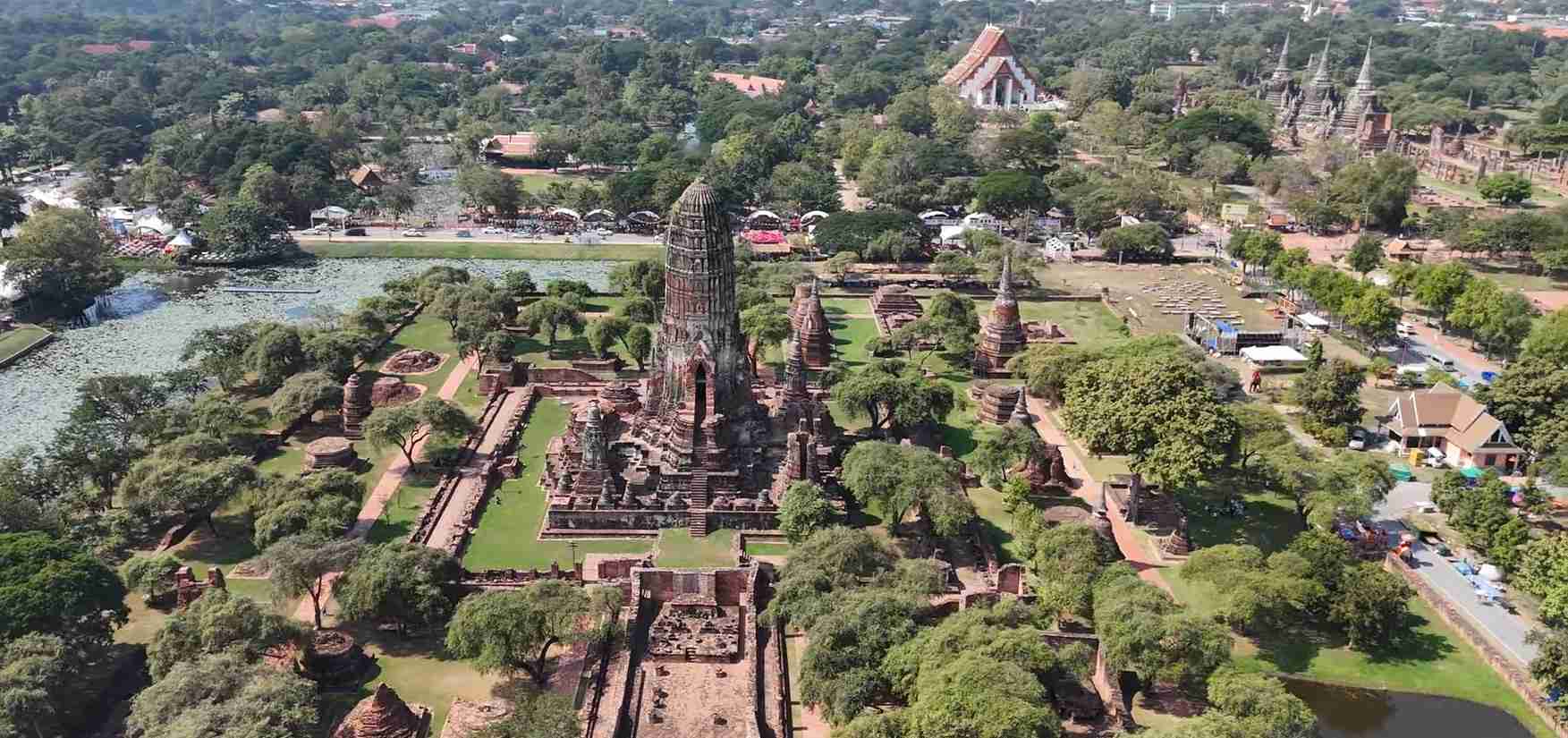
Ayutthaya Historical Park preserves the ruins of Thailand’s former capital, a magnificent island city that dominated Southeast Asian trade and culture for 417 years before Burmese forces destroyed it in 1767. Located just 80 kilometers north of Bangkok along the Chao Phraya River, this UNESCO World Heritage Site offers unparalleled access to spectacular temple ruins, headless Buddha statues, and towering prangs that reveal the Ayutthaya Kingdom’s extraordinary architectural and artistic achievements across four centuries of political supremacy.
Key Takeaways: Ayutthaya Planning 2026
- Exceptional Accessibility from Bangkok 2026: Frequent trains depart hourly from Bangkok’s Krung Thep Aphiwat Central Terminal (formerly Bang Sue Grand Station) reaching Ayutthaya in 1-1.5 hours for 15-125 THB depending on class, while minivans from Mo Chit Bus Terminal cost 60 THB and complete the journey in 1.5-2 hours, making same-day visits practical for Bangkok-based travelers
- Economical Entrance Fees 2026: Ayutthaya Historical Park charges no general admission fee—individual temples charge 20-50 THB each, or purchase a combined 6-temple pass for 220 THB (50 THB savings) covering Wat Mahathat, Wat Phra Si Sanphet, Wat Ratchaburana, Wat Phra Ram, Wat Chaiwatthanaram, and Wat Maheyong valid 30 days
- Compact Temple Geography: The island’s primary temple ruins cluster within 3-4 square kilometers enabling comprehensive coverage by bicycle (50 THB daily rental) in 4-6 hours, though heat management requires early morning starts (6:00-10:00 AM) before midday temperatures exceed 35°C April-October
- Iconic Photography Opportunities: Wat Mahathat’s Buddha head entwined in tree roots, Wat Phra Si Sanphet’s three massive chedis, and Wat Chaiwatthanaram’s Khmer-inspired prangs create instantly recognizable imagery defining Ayutthaya’s visual identity across social media and travel photography
- Burmese Destruction Legacy: The 1767 Burmese invasion’s systematic temple destruction—beheaded Buddha statues, burned structures, melted treasuries—creates poignant ruins evoking historical tragedy while UNESCO restoration programs maintain structural stability allowing safe visitor exploration
- Strategic Planning Approaches 2026: Day-trippers from Bangkok should depart on 7:00-8:00 AM trains allowing 9:00 AM-5:00 PM park exploration before evening return transport, while overnight stays enable sunset river cruises, illuminated temple photography, and relaxed multi-day temple coverage impossible during compressed single-day visits
People Also Ask About Ayutthaya Travel 2026
Is Ayutthaya Worth Visiting as a Day Trip from Bangkok in 2026?
Ayutthaya absolutely justifies day-trip investment for travelers interested in Thai history, temple architecture, and UNESCO heritage sites, with the 80-kilometer proximity to Bangkok enabling practical same-day explorations impossible at more distant archaeological parks like Sukhothai or Angkor Wat. The journey requires minimal time commitment—1-1.5 hour train rides each direction leave 6-8 hours for comprehensive temple coverage—while transportation costs remain negligible at 30-250 THB round-trip depending on chosen comfort levels and travel classes. The temples’ remarkable preservation despite 1767 destruction, combined with professional restoration programs maintaining structural integrity and visitor safety, creates photogenic ruins rivaling Angkor’s visual drama while offering Bangkok proximity no Cambodian alternative matches for convenience-prioritizing travelers with limited vacation days. However, rushed day-trippers often report regret at compressed schedules preventing full appreciation of Ayutthaya’s 400+ temples beyond the famous six-pack tourist circuit, with overnight stays enabling sunset river cruises, illuminated evening temple visits, night market experiences, and relaxed multi-day exploration rhythms impossible during compressed Bangkok round-trips forcing early-morning departures and evening return deadlines.
How Much Does Visiting Ayutthaya Cost in 2026?
Budget-conscious independent travelers complete comprehensive Ayutthaya day trips from Bangkok for 400-800 THB ($12-24) total including round-trip train fares (30-250 THB depending on class), bicycle rental (50 THB), temple entrance fees (220 THB six-temple pass or 200-300 THB individual admissions), meals (150-300 THB), and local transport (ferry 10 THB, tuk-tuks 100-200 THB). Mid-range travelers comfortable with modest upgrades spend 1,200-2,000 THB ($36-60) adding first-class air-conditioned train tickets, restaurant meals versus street food, motorcycle rental convenience over bicycle exertion, and guided tour services providing historical context absent from DIY exploration. Overnight visitors booking budget guesthouses (300-600 THB nightly) and allocating two days for thorough temple coverage total 1,500-3,000 THB ($45-90) including all transportation, accommodation, meals, entrance fees, and rental costs, while luxury travelers preferring riverside hotels (2,000-5,000 THB+ nightly), private car services, and premium tour packages easily spend 5,000-15,000 THB ($150-450) for enhanced comfort and convenience over budget alternatives. Organized day tours from Bangkok with hotel pickup, guide services, lunch, and return boat cruises cost 1,800-3,500 THB ($55-105) per person, eliminating independent logistics challenges while providing educational value through expert commentary but restricting schedule flexibility and temple selection compared to self-guided alternatives.
What’s the Best Way to Get from Bangkok to Ayutthaya in 2026?
Trains from Bangkok’s Krung Thep Aphiwat Central Terminal (formerly Bang Sue Grand Station) provide the optimal balance of cost, speed, comfort, and authentic Thai travel experience for most visitors, with hourly departures throughout the day covering the 80-kilometer journey in 1-1.5 hours at fares ranging 15 THB (third-class ordinary trains with fans) to 125 THB (first-class express services with air conditioning and reclining seats). The railway route follows scenic countryside paths avoiding highway congestion plaguing bus and minivan alternatives during Bangkok rush hour periods when 1.5-hour scheduled road journeys extend to 2.5-3 hours trapped in traffic, while trains’ predictable punctuality enables reliable scheduling for time-sensitive day-trippers coordinating temple visits around return departure deadlines. Minivans departing Mo Chit Bus Terminal every 30 minutes (60 THB, 1.5-2 hours) appeal to travelers staying in northern Bangkok neighborhoods where terminal proximity reduces preliminary Bangkok navigation compared to reaching central railway stations, though road traffic variability creates arrival time uncertainties complicating tight scheduling. Private taxis or pre-booked car services (1,200-3,000 THB, 1-1.5 hours) justify premium costs for groups of 3-4 splitting fares, families with young children requiring flexibility, or travelers with mobility limitations preventing comfortable train/bus travel, providing door-to-door convenience and complete schedule control eliminating public transportation coordination challenges.
Can You See All of Ayutthaya in One Day in 2026?
Energetic day-trippers successfully cover Ayutthaya’s six major temple complex (Wat Mahathat, Wat Phra Si Sanphet, Wat Ratchaburana, Wat Phra Ram, Wat Chaiwatthanaram, Wat Chai Watthanaram) plus 3-5 secondary sites within 6-8 hour park windows utilizing efficient bicycle routing and maintaining consistent pacing through morning-to-afternoon cycling sessions. This achieves geographic completion photographing all major monuments and UNESCO-designated heritage structures, though inevitably sacrifices depth for breadth—rushing between temples for selfie opportunities rather than contemplating architectural details, historical contexts, and spiritual atmospheres that distinguish meaningful cultural experiences from superficial tourism checklist completion. The island’s compact geography concentrates primary temples within 3-4 square kilometers of easily navigable cycling paths, enabling logistical feasibility for same-day comprehensive coverage that would prove impossible at sprawling Angkor Archaeological Park or dispersed Sukhothai temple clusters requiring vehicle transport between distant zones. However, Ayutthaya’s 400+ total temple sites extending beyond the famous six-pack tourist circuit, combined with worthy peripheral attractions (Bang Pa-In Summer Palace, museums, river cruises, night markets), ensure that dedicated temple enthusiasts and photography specialists easily justify 2-3 day visits allowing thorough documentation, multiple lighting condition captures, and exploration beyond mainstream tourist flows concentrating at Instagram-famous monuments while ignoring quieter architectural gems offering superior contemplative experiences.
Extended multi-day tours – 5+ days
Featured Ayutthaya Multi-Day Tour Packages
3 days
Ayutthaya 3-Day Discovery Tour
- ✓ Comprehensive Ayutthaya experience
- ✓ Expert local guides included
- ✓ All accommodation included
- ✓ Transportation provided
5 days
Ayutthaya 5-Day Highlights Experience
- ✓ Comprehensive Ayutthaya experience
- ✓ Expert local guides included
- ✓ All accommodation included
- ✓ Transportation provided
7 days
Ayutthaya 7-Day Cultural Journey
- ✓ Comprehensive Ayutthaya experience
- ✓ Expert local guides included
- ✓ All accommodation included
- ✓ Transportation provided
10 days
Ayutthaya 10-Day Complete Adventure
- ✓ Comprehensive Ayutthaya experience
- ✓ Expert local guides included
- ✓ All accommodation included
- ✓ Transportation provided
Multi-day tour packages powered by TourRadar. Prices and availability subject to change.
Understanding Ayutthaya’s History and UNESCO Significance
King Ramathibodi I founded Ayutthaya in 1350 as the second Siamese capital after Sukhothai’s declining power necessitated political relocation to strategically superior territory where three major rivers—the Chao Phraya, Pa Sak, and Lopburi—converged creating a natural island fortress with built-in defensive moats and trade route access facilitating both military security and commercial prosperity. This geographical advantage enabled Ayutthaya’s rapid ascension to regional supremacy, with successive kings expanding territorial control across modern Thailand, Cambodia, Laos, and Myanmar’s border regions creating a empire rivaling contemporary European powers in wealth, population, and cultural sophistication. The kingdom’s strategic positioning along maritime Silk Road networks connecting China, Japan, India, Persia, and European colonial powers (Portuguese, Dutch, French, English) attracted international merchant communities establishing permanent trading posts and diplomatic missions that transformed Ayutthaya into Southeast Asia’s cosmopolitan hub where Buddhist Thai culture intersected with global commercial networks and foreign influences.
Archaeological evidence and Portuguese chronicler accounts document Ayutthaya’s peak period population exceeding one million residents making it among the world’s largest cities during the 17th-18th centuries when most European capitals remained smaller provincial centers, while the city’s temple construction programs produced over 400 monasteries employing thousands of monks, artisans, and administrators creating architectural heritage rivaling Angkor’s monumental scale though executed in distinctively Thai aesthetic vocabularies emphasizing graceful proportions and gilded ornamentation versus Khmer stone monumentality. The kingdom maintained sophisticated administrative systems including specialized bureaucratic departments managing foreign trade, royal ceremonies, military logistics, and provincial governance across far-flung territorial possessions, while court culture supported artistic innovations in bronze casting, ceramics, mural painting, literature, and classical dance-drama that established Thai cultural identity persisting into modern national traditions.
The catastrophic Burmese invasion of 1767 terminated Ayutthaya’s 417-year supremacy through systematic destruction campaigns that burned temples, melted gold Buddha statues for treasury looting, beheaded religious sculptures to demoralize Thai populations, and forcibly relocated skilled artisans to Burma creating cultural devastation requiring decades of recovery and reconstruction. The Siamese relocated their capital to Thonburi then Bangkok rather than rebuilding devastated Ayutthaya, leaving temple ruins abandoned to jungle reclamation for nearly two centuries before 20th-century nationalism and tourism development motivated conservation efforts culminating in UNESCO World Heritage designation in 1991. This recognition acknowledged Ayutthaya’s universal significance demonstrating Thai civilization’s historical achievements, preserving exceptional architectural masterpieces representing Southeast Asian Buddhist art at developmental zenith, and maintaining authentic urban planning examples showing how medieval Asian capitals integrated religious, commercial, and residential districts within defensible geographic frameworks anticipating modern city planning principles.
Transportation to Ayutthaya 2026
Train Services from Bangkok 2026
State Railway of Thailand operates approximately 28 daily trains departing Bangkok’s Krung Thep Aphiwat Central Terminal (formerly Bang Sue Grand Station, which replaced Hua Lamphong as the primary railway hub) traveling the Northern and Northeastern lines with Ayutthaya stops occurring 1-1.5 hours into journeys ultimately terminating in Chiang Mai, Nong Khai, Ubon Ratchathani, and intermediate provincial cities. Third-class ordinary trains charging 15 THB offer bare-bones transportation with open-sided carriage windows, wooden bench seating, and fan cooling systems creating authentic local railway experiences appealing to budget travelers and cultural immersion seekers willing to trade comfort for rock-bottom costs and atmospheric Thai working-class travel participation. Second-class trains (65 THB) provide air-conditioned sealed carriages with padded reclining seats, overhead luggage racks, and onboard restrooms creating comfortable middle-ground options balancing affordability with basic comfort requirements for casual tourists seeking economical yet bearable transportation avoiding third-class’s Spartan conditions.
First-class tickets (125 THB) deliver premium railway experiences with wider reclining seats, enhanced air conditioning, reduced passenger density, and priority boarding creating superior comfort justifying modest premium costs for travelers prioritizing pleasant journey experiences over maximum budget minimization. Express and Special Express services complete Bangkok-Ayutthaya journeys in approximately one hour versus 1.5 hours for ordinary trains making frequent station stops, though express trains operate less frequently than ordinary services requiring schedule checking and potential advance booking during peak tourism periods November-February when seat availability tightens. The railway station sits adjacent to Ayutthaya’s old city island requiring short 5-minute ferry crossings (5 THB) across the Pa Sak River to reach temple zones, or alternatively 10-minute walks around bridge connections accessing the island’s northeastern entry points near Wat Phanan Choeng.
Train ticket purchasing occurs directly at Bangkok’s Krung Thep Aphiwat Central Terminal ticket counters accepting cash payment (no credit cards at standard windows though advance online booking through Baolau platform enables card payments with small service fees), with ordinary train tickets available as walk-up purchases without advance reservations though express services warrant booking 1-3 days ahead ensuring seat availability avoiding sold-out disappointments during weekend travel periods. The railway journey itself provides scenic countryside viewing impossible from highway-following buses and minivans, with rice paddies, village settlements, riverside vegetation, and provincial Thai life unfolding outside carriage windows creating valuable cultural exposure enhancing the overall Ayutthaya excursion beyond mere transportation functionality.
Minivan and Bus Services from Bangkok 2026
Shared minivans operated by Win 91 Ayutthaya, Chainattour, and multiple competing companies depart Mo Chit Bus Terminal (Northern Terminal, accessible via BTS Skytrain Mo Chit station or MRT Chatuchak Park) every 30 minutes throughout the day 6:00 AM-5:00 PM charging 60 THB for journeys averaging 1.5-2 hours depending on traffic conditions affecting Highway 1 and Highway 32 routes connecting Bangkok’s northern suburbs with Ayutthaya province. Modern air-conditioned minivans seat 12-15 passengers in relatively comfortable configurations with overhead luggage space and personal reading lights, though legroom remains limited compared to railway seating and bathroom stops depend on driver discretion creating potential discomfort during extended traffic delays when restroom access becomes urgent.
Alternative minivan pickup points include Khao San Road (popular backpacker district in Bangkokold town) and Makasan area with 9:00 AM-3:00 PM departures at slightly higher 80-120 THB fares reflecting added convenience of starting from tourist accommodation clusters versus requiring preliminary Bangkok navigation reaching Mo Chit Terminal. These tourist-oriented services typically include temple zone drop-offs directly adjacent to Ayutthaya Historical Park rather than terminal arrivals requiring onward local transport, creating seamless transitions from Bangkok accommodation to Ayutthaya temple exploration appealing to convenience-prioritizing travelers accepting premium pricing for integrated logistics. Return journey scheduling requires verification with drivers who provide card contact numbers and typically run final Ayutthaya-to-Bangkok departures between 4:00-6:00 PM necessitating careful temple visit timing avoiding missed transport stranding travelers overnight without accommodation bookings.
Private taxi and car services pre-booked through platforms including Grab, Thailand Limo, Bangkok Taxi 24, and Glassflower charge 1,200-3,000 THB for direct door-to-door Bangkok hotel to Ayutthaya Historical Park transfers accommodating 1-4 passengers with luggage in standard sedans or 5-8 travelers in minivans, completing journeys in 1-1.5 hours under normal traffic conditions though Bangkok rush hour (7:00-9:00 AM, 4:00-7:00 PM) extends travel times to 2-2.5 hours creating scheduling complications. These private services justify premium costs for families with young children, elderly travelers with mobility limitations, groups of 3-4 splitting total fares into reasonable per-person costs, or business travelers prioritizing time efficiency and comfort over budget minimization accepting that convenience commands significant cost premiums versus public transportation alternatives.
Getting Around Ayutthaya 2026
Bicycle rentals represent the optimal Ayutthaya transportation mode for independent travelers seeking flexible pacing, exercise benefits, and authentic local exploration experiences at economical 50 THB daily rates charged by shops clustered near ferry landing points, railway station exits, and temple zone entrances. The island’s flat topography eliminates cycling difficulty beyond basic pedaling endurance, with paved roads connecting all major temples in relatively good condition though secondary routes and temple approach paths sometimes deteriorate to potholed asphalt or hard-packed earth requiring careful navigation avoiding sudden obstacles. Rental bicycles vary dramatically in quality from well-maintained models with functioning brakes, properly inflated tires, and comfortable seats to deteriorating frames requiring pre-rental inspection verifying basic safety features before accepting bikes and departing shops potentially several kilometers from alternative rental locations if problems emerge mid-journey.
Tuk-tuks and motorcycle taxis provide motorized alternatives for travelers avoiding physical exertion, managing heat exhaustion concerns, or covering extended distances beyond bicycle comfort zones, with hourly charter rates negotiated at 200-400 THB depending on intended coverage area and driver bargaining dynamics. Temple-to-temple tuk-tuk hires cost 50-100 THB per transfer creating expensive daily totals if riding between all major sites, though strategic tuk-tuk usage for distant peripheral temples (Wat Yai Chai Mongkhon, Wat Phanan Choeng) combined with bicycle riding for central cluster temples creates reasonable hybrid approaches balancing economy with selective motorized convenience. Tour-oriented tuk-tuk drivers offer 3-4 hour comprehensive temple circuits at fixed 800-1,200 THB rates including 6-8 monument stops, appealing to travelers prioritizing efficient coverage over intimate cycling exploration though these rushed itineraries prevent meaningful temple engagement reducing visits to brief photograph sessions rather than contemplative cultural experiences.
Motorcycle rentals through guesthouses and dedicated rental shops cost 200-300 THB daily enabling rapid independent coverage at speeds exceeding bicycles while maintaining schedule flexibility impossible with shared tuk-tuks or organized tours, though operation requires international driving permits (IDP) or Thai motorcycle licenses avoiding police fines (500-1,000 THB penalties) plus basic motorcycle operation competence navigating sometimes chaotic Thai traffic mixing pedestrians, cyclists, cars, and other motorcycles in poorly regulated road-sharing scenarios. Some travelers prefer walking between central temple clusters (Wat Mahathat, Wat Phra Si Sanphet, Wat Ratchaburana) located within 500-meter walking radii, though Ayutthaya’s scale makes purely pedestrian exploration impractical for comprehensive coverage attempting 6+ major temples across 4-5 kilometer total island distances under tropical heat conditions risking dangerous exhaustion.
Temple Entrance Fees and Money-Saving Strategies 2026
Ayutthaya Historical Park charges no general admission fee for entering the overall archaeological zone, with individual temple sites operating separate ticketing systems charging 20-50 THB per monument depending on significance and maintenance requirements. The six major temples comprising most visitors’ core itinerary each charge 50 THB individual admission (Wat Mahathat, Wat Phra Si Sanphet, Wat Ratchaburana, Wat Phra Ram, Wat Chaiwatthanaram, Wat Maheyong), totaling 300 THB if purchased separately versus 220 THB for the combined six-temple pass creating 80 THB savings (27% discount) for comprehensive visitors planning full-day coverage. This pass validates for 30 days from first use allowing overnight visitors to split temple explorations across multiple days without deadline pressures forcing rushed single-day coverage attempting all six monuments during compressed time windows.
Pass purchases occur at the entrance ticket booths of any participating temple, with counter staff issuing physical punch cards tracking which sites visitors have already entered preventing duplicate admissions though enabling re-entry to previously visited temples within the 30-day validity period for photography retakes or deeper contemplative visits. The strategic temple selection for pass inclusion concentrates on widely distributed monuments across the island’s various zones (Wat Chaiwatthanaram lies 2 kilometers west of central temples, Wat Maheyong occupies southeastern positions) creating geographic incentives for comprehensive island coverage rather than clustering explorations in convenient central zones ignoring peripheral architectural gems offering superior crowd-free experiences despite slightly greater cycling distances.
Budget-conscious travelers limiting visits to 2-3 temples save money through individual admissions (100-150 THB total) versus pass purchases (220 THB), while comprehensive explorers targeting 6+ monuments benefit from pass economics covering core six monuments then adding supplemental individual admissions at secondary sites (Wat Yai Chai Mongkhon 20 THB, Wat Phanan Choeng 20 THB, Wat Lokayasutharam free) creating hybrid approaches balancing savings with complete coverage. Several significant temples charge no admission fees including Wat Lokayasutharam (giant reclining Buddha), certain peripheral monasteries, and ruins visible from public roads creating free supplemental opportunities padding temple counts without financial expenditures though these free sites typically exhibit less dramatic architectural preservation or restoration compared to admission-charging monuments receiving active Fine Arts Department maintenance funding.
Essential Temples and Must-See Monuments 2026
Wat Mahathat: The Buddha Head in Tree Roots
Wat Mahathat (“Temple of the Great Relic”) achieved global iconic status through the Buddha head mysteriously entwined within bodhi tree roots, creating Ayutthaya’s single most photographed image circulating across Instagram, travel blogs, and tourism promotion materials establishing instant visual recognition rivaling Angkor Wat’s towers or Sukhothai’s lotus-bud chedis as Southeast Asian temple imagery. The sandstone Buddha head separated from its body during the 1767 Burmese destruction when invaders systematically beheaded statues demoralizing Thai populations and facilitating gold-leaf looting from sculptures’ surfaces, with the abandoned head becoming gradually enclosed by growing tree roots over subsequent decades creating the haunting fusion of nature and religious art visitors encounter today. Park regulations require visitors photographing the Buddha head to crouch or kneel maintaining their heads lower than the Buddha’s position as religious respect protocol, with enforcement staff monitoring compliance and requesting violators adopt proper positioning before photography permissions granted.
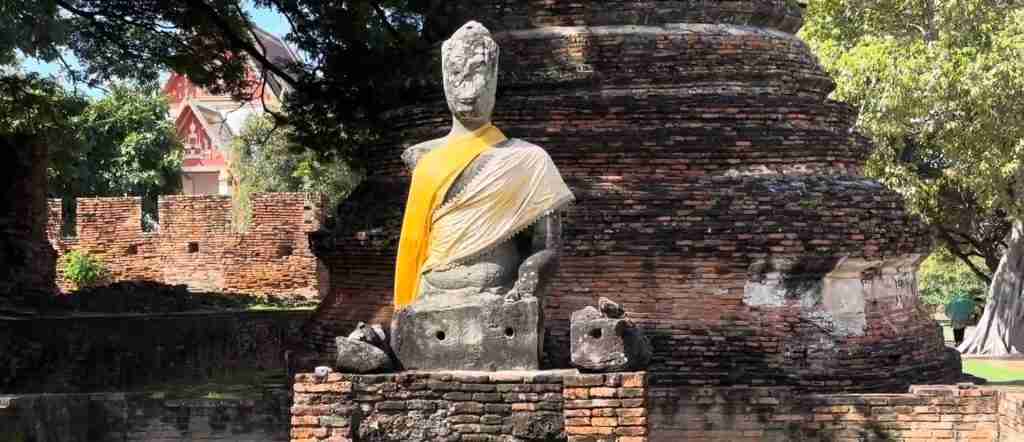
Beyond the famous tree-root Buddha, Wat Mahathat contains extensive prang clusters, chedi foundations, and hundreds of decapitated Buddha statues scattered across temple grounds in various deterioration states creating powerful visual testimony to Burmese invasion violence systematically targeting religious symbols. The temple’s central prang originally soared to impressive heights rivaling contemporary Khmer monuments before 1767 destruction and subsequent centuries of neglect caused structural collapses reducing the monument to fragmentary remains displaying construction techniques and decorative stucco details otherwise hidden within intact structures. Archaeological excavations uncovered valuable artifacts including Buddha images, votive tablets, and decorative architectural elements now displayed in Bangkok’s National Museum and Ayutthaya’s Chao Sam Phraya Museum, though many treasures disappeared through looting before professional archaeological oversight established protective protocols.
Wat Mahathat’s 14th-century construction during Ayutthaya’s early development phase preceded the kingdom’s architectural zenith seen in later monuments like Wat Phra Si Sanphet and Wat Chaiwatthanaram, though the temple maintained religious significance throughout the kingdom’s 417-year existence serving as a primary monastery housing important relics and hosting royal ceremonies. Modern restoration programs focus on structural stabilization preventing further deterioration rather than complete reconstruction to original configurations, creating atmospheric ruins balancing historical authenticity with visitor safety requirements through careful brick reinforcement, drainage improvements, and vegetation management preventing root systems from accelerating stone deterioration.
Wat Phra Si Sanphet: The Royal Temple’s Three Chedis
Wat Phra Si Sanphet functioned as Ayutthaya’s most important royal temple complex located within the Grand Palace grounds serving as the kingdom’s spiritual center where coronations, royal cremations, and state ceremonies occurred under successive Ayutthaya kings from the temple’s 15th-century construction through the 1767 Burmese destruction. The temple’s three massive bell-shaped chedis dominate Ayutthaya’s skyline as the site’s most architecturally impressive monuments, constructed in distinctive Sukhothai-influenced Lankan style featuring graceful curved profiles rising from square bases toward delicate pointed finials creating visual elegance distinguishing Thai Buddhist architecture from Khmer prang towers or Burmese stupas employing different geometric vocabularies.
The chedis originally contained ashes of three successive Ayutthaya kings—King Borommatrailokanat and his sons King Borommaracha III and King Ramathibodi II—creating royal mausoleums within the primary state temple emphasizing the intimate connection between religious and political authority in Thai Buddhist kingship traditions where monarchs served simultaneously as secular rulers and Buddhist dharma defenders. The structures’ external surfaces once featured thick gold-leaf covering and jeweled ornamentation that Burmese invaders stripped and melted during 1767 looting campaigns, though modern restoration programs applied limited gilding to finial sections suggesting the original splendor without attempting complete historical recreation impossible given lost craftsmanship techniques and prohibitive gold-leaf expenses for wholesale application.
Wat Phra Si Sanphet served as architectural inspiration for Bangkok’s Wat Phra Kaew (Temple of the Emerald Buddha) when King Rama I established the new capital requiring a primary royal temple continuing Ayutthaya traditions in 18th-century contexts, creating visual connections linking Bangkok’s Grand Palace complex with historical Ayutthaya antecedents legitimizing the new dynasty’s claim to Siamese royal succession. Photography enthusiasts find optimal shooting positions from the temple’s eastern approaches during afternoon golden hour (4:00-6:00 PM) when westward light illuminates the three chedis’ curved profiles against blue sky backgrounds, while early morning shoots from western positions capture different aesthetic qualities with sunrise backlighting creating silhouette effects emphasizing monumentality over decorative detail.
Wat Chaiwatthanaram: The Khmer-Inspired Riverside Temple
Wat Chaiwatthanaram represents Ayutthaya’s most spectacular Khmer-influenced architectural achievement, constructed in 1630 by King Prasat Thong as both a memorial to his mother and a demonstration of Ayutthaya’s territorial control over former Angkorian territories in Cambodia where architectural styles and religious iconography continued influencing Thai temple construction centuries after Khmer political dominance ended. The temple’s central prang tower surrounded by four smaller satellite prangs creates symbolic Mount Meru representations—the cosmic mountain center of Buddhist and Hindu universe cosmology—with geometric precision and monumental scale rivaling contemporaneous Cambodian temple construction though executed in distinctively Thai brick and stucco techniques versus Angkor’s sandstone masonry traditions.
The riverside location along Ayutthaya island’s western periphery provided strategic positioning for royal water-borne ceremonial processions arriving via decorated barges during important religious festivals and state occasions, while the elevated platform lifting temple structures above flood plain levels protected sacred spaces from seasonal inundations threatening low-lying monuments though creating access challenges requiring steep stairway climbs to reach prang summits and circumambulation galleries. The 1767 Burmese destruction proved particularly devastating at Wat Chaiwatthanaram with invaders beheading nearly all Buddha statues and stripping gold-leaf decorative elements, though 20th-21st century restoration programs successfully stabilized crumbling prangs preventing complete structural collapse and rebuilt damaged walkways enabling safe visitor access to elevated gallery levels offering panoramic views across Ayutthaya’s western temple zones and surrounding rice paddy landscapes.
Sunset photography at Wat Chaiwatthanaram creates Ayutthaya’s most atmospheric visual opportunities with westward river views framing temple silhouettes against orange-red sky gradients during the 6:00-6:30 PM golden hour, though temple closing times (6:00 PM) technically restrict late sunset access requiring strategic timing arriving by 5:30 PM for pre-closure positioning. River cruise companies operate evening services departing nearby piers creating alternative sunset viewing perspectives from water-based vantage points showing the temple’s riverside facade illuminated by directional sunlight impossible to appreciate from land-based positions, with 1-2 hour cruise packages (300-600 THB) combining Wat Chaiwatthanaram sunset views with broader Ayutthaya riverfront temple panoramas and onboard dining creating romantic evening alternatives to daytime cycling itineraries.
Wat Ratchaburana: The Towering Prang and Crypt Murals
Wat Ratchaburana’s massive central prang represents one of Ayutthaya’s tallest surviving towers, constructed in 1424 by King Borommaracha II as a memorial to his brothers who died in elephant-back combat succession disputes, creating royal funerary monument combining political commemoration with religious merit-making traditions. The prang’s imposing height and intact structural condition contrast dramatically with many collapsed or fragmentary towers throughout the historical park, demonstrating successful medieval engineering achieving long-term stability through deep foundations, proper brick bonding techniques, and regular maintenance programs during the temple’s active occupation centuries before 1767 abandonment.
The temple’s underground crypt contains precious mural paintings depicting Buddhist cosmology and Jataka tales (stories of Buddha’s previous lives) executed in red, black, and white pigments applied to plaster walls during the 15th century, representing rare surviving examples of Ayutthaya Period painting otherwise destroyed through temple burnings, weather exposure, and neglect affecting unprotected wall surfaces across the kingdom’s ruined monasteries. Archaeological excavations in the 1950s discovered valuable treasure deposits including gold jewelry, Buddha images, and royal regalia that thieves had partially looted before official recovery, with surviving artifacts now displayed in Bangkok National Museum and Chao Sam Phraya National Museum in Ayutthaya providing material evidence of the kingdom’s metalworking sophistication and wealth accumulation during political zenith periods.
Visitors can climb steep interior staircases ascending the prang’s multiple levels reaching elevated platforms offering bird’s-eye views across Ayutthaya’s central temple district, though the narrow passages, low ceilings, and minimal lighting create claustrophobic conditions unsuitable for people with height fears, mobility limitations, or significant physical restrictions. The crypt’s mural viewing requires descended exploration into underground chambers where humidity, poor ventilation, and bat populations create atmospheric challenges, with flashlight illumination essential for examining painted details in the dim subterranean environment where natural light penetration remains minimal even during midday surface conditions.
Wat Yai Chai Mongkhon: The Reclining Buddha and Victory Chedi
Wat Yai Chai Mongkhon occupies positions 2 kilometers southeast of Ayutthaya’s central temple cluster, requiring dedicated cycling expeditions or tuk-tuk transfers for visitors limiting explorations to convenient central monuments but rewarding those making extra efforts with one of Ayutthaya’s most impressive architectural ensembles featuring a massive chedi commemorating King Naresuan’s 1593 elephant-back combat victory over Burmese Prince of Prome. The monument’s bell-shaped profile rises to remarkable height accessible via steep exterior staircases climbing to elevated platforms offering panoramic views across Ayutthaya’s eastern suburbs and surrounding agricultural landscapes, with the physical exertion required for summit access creating natural visitor filtering reducing crowd densities at upper levels compared to ground-level photography positions accommodating mobility-limited tourists.
The temple’s giant reclining Buddha statue measuring 7 meters long presents serene facial expressions and graceful body proportions characteristic of classic Ayutthaya sculptural aesthetics, with the outdoor positioning creating dramatic photographic opportunities framing the golden-robed statue against sky backgrounds during optimal morning and afternoon lighting conditions. Unlike the historical park’s predominantly ruined monuments, Wat Yai Chai Mongkhon functions as an active monastery hosting resident monks and regular religious ceremonies, requiring visitors to observe strict dress codes (covered shoulders and knees mandatory), shoe removal before entering sacred buildings, and respectful behavior avoiding loud conversations or inappropriate photography angles showing feet pointing toward Buddha images violating Thai religious protocols.
The temple’s relative isolation from central tourist circuits creates quieter contemplative atmospheres compared to Wat Mahathat and Wat Phra Si Sanphet’s constant photography crowds, with morning visits (8:00-10:00 AM) particularly rewarding for serene exploration and monk chanting observations providing authentic religious contexts often absent at purely archaeological monuments lacking active spiritual functions. The 20 THB entrance fee (lower than 50 THB charges at major historical park temples) reflects the temple’s peripheral location and reduced tourist traffic, though the architectural quality, historical significance, and photographic opportunities fully justify inclusion on comprehensive Ayutthaya itineraries accepting minor convenience sacrifices traveling beyond convenient central zones.
One-Day Ayutthaya Itinerary 2026
Morning Train Departure and Temple Circuit
Optimal day-trip strategies begin with 7:00-8:00 AM train departures from Bangkok’s Krung Thep Aphiwat Central Terminal boarding ordinary or rapid services completing 1-1.5 hour journeys arriving Ayutthaya Railway Station 8:30-9:30 AM allowing immediate temple exploration before midday heat intensifies. Upon arrival, exit the station and walk 5 minutes to the riverside ferry crossing (5 THB) transporting passengers across the Pa Sak River to the historical island’s northeastern entrance points, or alternatively cross via nearby bridge adding 10-minute walking extensions. Bicycle rental shops adjacent to ferry landings charge 50 THB daily rates for basic single-speed cruisers adequate for flat-terrain island cycling, with rental quality inspection verifying functional brakes, proper tire inflation, and comfortable seat adjustments preventing mid-journey equipment failures disrupting carefully planned temple circuits.
The first temple target should be Wat Mahathat (50 THB admission or included in 220 THB six-temple pass) photographing the iconic Buddha head in tree roots during 9:00-10:00 AM timeframe when morning light creates optimal illumination and visitor crowds remain modest compared to 11:00 AM-2:00 PM peak congestion periods. Spend 45-60 minutes exploring Wat Mahathat’s extensive grounds examining headless Buddha statues, prang ruins, and chedi foundations before cycling 500 meters west to Wat Phra Si Sanphet (50 THB or pass included) where the three massive royal chedis create Ayutthaya’s most impressive architectural ensemble warranting 45-minute thorough documentation including stairway climbs to elevated viewing platforms and circumambulation walks appreciating the monuments from multiple angles. Continue to adjacent Wat Phra Ram (50 THB or pass included) located immediately south of Wat Phra Si Sanphet, allocating 30 minutes for the single massive prang and surrounding ruins before reaching 11:30 AM-12:00 PM lunch timing.
Midday meal breaks (12:00-1:00 PM) provide essential heat relief and energy replenishment, with restaurant options clustered along Naresuan Road and Uthong Road servicing the historical park’s eastern edges offering air-conditioned dining rooms and extensive Thai food menus (fried rice, noodle soups, curries) at tourist-oriented prices (80-150 THB per dish) including taxes and service. Budget-conscious travelers alternatively purchase street food from vendors near temple entrances or bring packed lunches from Bangkok 7-Eleven stores (40-80 THB complete meals) eating at shaded temple grounds or riverside parks avoiding restaurant markups. The lunch period also accommodates midday heat avoidance strategies where afternoon temple cycling under 35-40°C temperatures (April-October) creates dangerous exhaustion risks requiring either extended 2-3 hour lunch breaks waiting for temperature declines or accepting that comprehensive six-temple coverage demands heat tolerance and hydration discipline maintaining 2-3 liter water consumption throughout afternoon cycling sessions.
Afternoon Temple Coverage and Evening Return
Afternoon temple circuits (1:00-5:00 PM) should prioritize western and southeastern zones containing the day’s remaining major monuments starting with Wat Ratchaburana (50 THB or pass included) located 300 meters north of Wat Mahathat featuring the impressive towering prang and underground crypt murals (allow 45 minutes including prang climbing and crypt exploration). Continue 2 kilometers west to Wat Chaiwatthanaram (50 THB or pass included), Ayutthaya’s most spectacular Khmer-influenced temple requiring 60-90 minutes for comprehensive photography sessions capturing the central prang surrounded by satellite towers from multiple angles and elevated gallery positions accessed via steep staircases. This western excursion creates the day’s longest single cycling segment challenging endurance and time management, with strategic tuk-tuk usage (100-150 THB one-way transfer) providing motorized alternatives for exhausted or time-pressed cyclists trading economy for convenience and energy conservation.
The final essential monument, Wat Yai Chai Mongkhon (20 THB), occupies southeastern positions 2 kilometers from central temple clusters requiring 15-20 minute bicycle rides from Wat Mahathat or strategic tuk-tuk combinations with earlier Wat Chaiwatthanaram visits creating efficient motorized circuits covering both peripheral temples in single tuk-tuk charters (300-400 THB total). Allocate 45-60 minutes at Wat Yai Chai Mongkhon photographing the giant reclining Buddha, victory chedi, and active monastery atmospheres before commencing return journeys to the railway station requiring 20-30 minutes cycling through rush-hour traffic conditions or tuk-tuk rides (100-150 THB) directly to station platforms arriving 30-45 minutes before intended train departures allowing ticket purchases, platform identification, and buffer time accommodating minor delays or navigation confusion.
Evening return trains departing Ayutthaya 5:00-7:00 PM reach Bangkok 6:30-8:30 PM completing full-day excursions totaling 12-14 hours from Bangkok hotel departures through final arrivals, with comprehensive six-temple coverage, lunch breaks, cycling between monuments, photography sessions, and bilateral train journeys fitting reasonably within this timeline accepting moderately rushed pacing and heat tolerance during afternoon temple visits. Alternative late evening returns (8:00-9:00 PM Ayutthaya departures) enable relaxed sunset photography at riverside temples, dinner at Ayutthaya restaurants, and night market browsing before Bangkok-bound trains, though these extended schedules sacrifice Bangkok evening activities and rest time relevant for multi-day Thailand itineraries requiring energy conservation across successive intensive sightseeing days.
Overnight Stay Strategies and Multi-Day Itineraries 2026
Advantages of Overnight Ayutthaya Visits
Overnight Ayutthaya stays fundamentally transform travel experiences from rushed day-trip compressions into relaxed multi-day temple explorations allowing sunset river cruises, illuminated evening temple photography, early-morning sunrise shoots, comprehensive 10+ temple coverage, and integration with peripheral attractions (Bang Pa-In Summer Palace, museums, elephant sanctuaries) impossible during compressed single-day visits forcing prioritization and rushed scheduling. Accommodations ranging from budget guesthouses (300-600 THB nightly) to mid-range hotels (800-1,500 THB) and boutique riverside properties (2,000-5,000 THB+) cluster along waterfront areas and near historical park entrance zones providing walking-distance temple access eliminating daily transportation coordination between Bangkok and Ayutthaya while enabling flexible schedule adjustments responding to weather conditions, energy levels, and spontaneous opportunities.
Evening activities unavailable to day-trippers include sunset river cruises (300-600 THB per person, 1-2 hours) departing 5:00-5:30 PM showing Ayutthaya’s riverside temples illuminated by golden-hour light from water-based perspectives creating dramatically different photographic compositions versus land-based viewpoints, with some cruise packages including dinner buffets and cultural performances adding entertainment value beyond pure temple viewing. Night markets operating Friday-Saturday evenings near the historical park’s eastern gates provide authentic Thai street food experiences, handicraft shopping, and local cultural immersion contrasting with daytime temple tourism, while select illuminated temples (Wat Mahathat, Wat Chaiwatthanaram) host evening lighting programs during weekend and holiday periods creating atmospheric after-dark photography opportunities evoking romantic ruin aesthetics impossible during harsh midday sun conditions.
Multi-day itineraries enable strategic temple coverage splitting major monument visits across two days avoiding exhaustion from attempting 8-10 temple circuits in single compressed sessions, while incorporating rest periods, extended photography sessions capturing temples under varied lighting conditions (sunrise, midday, golden hour, twilight), and deeper historical research reading interpretive materials and museum exhibitions enriching architectural appreciation beyond superficial photo-opportunity tourism. Overnight visitors also access superior dining options including riverside restaurants, night markets, and local cafes offering authentic regional cuisines at local prices rather than tourist-trap establishments clustering near day-tripper arrival points exploiting limited meal-break timeframes with inflated pricing and mediocre quality targeting transient customers unlikely to return for repeat business.
Two-Day Comprehensive Itinerary
Day one begins with morning Bangkok-to-Ayutthaya train arrivals (8:30-9:30 AM) followed by hotel check-in depositing luggage, bicycle rental (50 THB), and immediate temple circuit covering the historical park’s eastern and central zones including Wat Mahathat, Wat Phra Si Sanphet, Wat Phra Ram, and Wat Ratchaburana (allocate 4-5 hours total including photography, rest breaks, and cycling between monuments). Lunch (12:00-1:00 PM) at local restaurants provides midday heat relief before afternoon continuation to Wat Phanan Choeng featuring a massive 19-meter seated Buddha statue predating Ayutthaya’s 1350 founding, followed by late afternoon return to accommodations for shower and rest before 5:30 PM sunset river cruise departures showing Wat Chaiwatthanaram and riverside temples from water perspectives. Evening options include night market dining (Friday-Saturday), riverside restaurant dinners, or quiet guesthouse relaxation before morning temple photography requiring pre-dawn wake-up calls.
Day two commences with 6:00-6:30 AM sunrise bicycle rides to Wat Phra Si Sanphet or Wat Mahathat capturing dawn light illuminating temple silhouettes and creating atmospheric morning conditions with minimal tourist crowds and pleasant 22-28°C temperatures preceding midday heat. Morning temple circuit (7:00-11:00 AM) covers western zones including Wat Chaiwatthanaram (dedicating 90 minutes for comprehensive land-based photography supplementing previous evening’s cruise viewing), Wat Lokayasutharam’s giant reclining Buddha (free admission), and southeastern Wat Yai Chai Mongkhon before midday checkout and lunch preceding afternoon departures. Alternative morning activities include Bang Pa-In Summer Palace visits (20 kilometers south requiring tuk-tuk charters at 400-600 THB or organized tours), Ayutthaya museums (Chao Sam Phraya National Museum 150 THB, Ayutthaya Historical Study Centre 100 THB), or elephant sanctuary ethical interactions avoiding riding programs that abuse animals.
Total two-day costs for budget-conscious independent travelers total 1,500-2,500 THB ($45-75) per person including round-trip train fares (30-250 THB), one-night budget accommodation (300-600 THB), bicycle rental two days (100 THB), temple passes and additional admissions (300-400 THB), meals and snacks (400-800 THB), sunset cruise (300-600 THB), and miscellaneous expenses (tuk-tuks, water, contingencies 200-400 THB). Mid-range travelers upgrading accommodations, restaurants, and transportation comfort levels spend 3,000-5,000 THB ($90-150), while luxury-oriented visitors preferring boutique hotels, private guides, and premium experiences easily exceed 8,000-15,000 THB ($240-450) total trip costs reflecting Thailand’s extreme price range accommodating backpackers through luxury tourists within single destinations.
Photography Guide: Capturing Ayutthaya 2026
Essential Shots and Composition Strategies
The Buddha head in tree roots at Wat Mahathat requires careful composition balancing the entwined head against tree trunk verticality and root system textures, with optimal shooting times occurring early morning (8:00-9:30 AM) before tour group arrivals and afternoon (3:30-5:00 PM) when lower sun angles create directional side-lighting emphasizing sculptural relief and root details versus harsh overhead midday sun flattening surfaces. Wide-angle lenses (16-35mm) capture environmental context showing the tree’s full scale engulfing the Buddha head, while standard zooms (24-70mm) frame tighter portraits isolating the head’s serene expression and symbolic spiritual-natural fusion metaphors appealing to contemplative aesthetic preferences. Photographers must crouch or kneel maintaining head positions lower than the Buddha following park regulations, creating low-angle perspectives naturally emphasizing the tree roots’ upward growth patterns while demonstrating cultural respect avoiding staff interventions or fellow tourist criticism.
Wat Phra Si Sanphet’s three chedis photograph best from eastern approaches during afternoon golden hour (4:00-6:00 PM) when westward sun illuminates the curved bell-shaped profiles creating warm color temperatures and long shadows defining architectural volume, or alternatively from western positions at sunrise (6:00-7:30 AM) creating dramatic silhouettes against colorful sky gradients during twilight transitions. Telephoto compression (70-200mm) stacks the three chedis into vertical compositions emphasizing their similar yet individually unique proportions, while wide-angle shots from close distances exaggerate foreground chedi monumentality diminishing background structures through optical perspective distortion creating dynamic spatial relationships impossible with human vision’s fixed focal length perception. Elevated shooting positions from temple platform levels provide bird’s-eye compositions showing geometric relationships between chedis, surrounding ruins, and landscape contexts revealing urban planning principles organizing Ayutthaya’s sacred architecture.
Wat Chaiwatthanaram’s riverside positioning enables spectacular sunset silhouettes (5:30-6:30 PM) framing the central prang and satellite towers against orange-red sky gradients during golden hour transitions, with river foregrounds adding reflective elements when water surfaces remain calm creating mirror effects doubling visual impact. Morning shoots from western riverbank positions (accessible via bridge crossings and walking paths) show the temple illuminated by eastern sunrise light (6:00-7:30 AM) creating completely different aesthetic qualities emphasizing stucco details and architectural textures invisible during backlit evening silhouette compositions. The temple’s Khmer-inspired prang clusters create layered depth opportunities where foreground towers frame middle-ground structures leading viewer attention toward background central monuments, utilizing shallow depth-of-field (f/2.8-f/4 apertures) isolating specific architectural elements against softly blurred contexts or deep focus (f/11-f/16) maintaining sharpness across entire frame depths.
Technical Considerations and Equipment Recommendations
Camera equipment priorities include versatile zoom lenses covering wide-angle through short telephoto ranges (24-105mm or 24-70mm plus 70-200mm combinations) handling varied composition requirements from environmental contexts to architectural details, with fast maximum apertures (f/2.8-f/4) enabling low-light shooting during dawn/dusk golden hours and shaded temple interiors where tripod usage faces restrictions. Lightweight travel tripods or monopods support long exposures smoothing water reflections and enabling bracketed HDR sequences capturing Ayutthaya’s extreme contrast ranges between bright sky highlights and deep shadow zones where temple ruins create complex lighting scenarios exceeding camera sensor dynamic ranges. Circular polarizing filters reduce atmospheric haze, deepen blue skies, and manage glare from gilded surfaces and water reflections, while neutral density graduated filters balance bright skies against darker foreground temples during sunrise/sunset shoots avoiding exposure compromises sacrificing either highlight or shadow detail.
Smartphone photographers utilizing iPhone 14/15 Pro, Samsung Galaxy S23/S24 Ultra, or comparable flagship devices access computational photography advantages including automatic HDR processing, night mode low-light enhancements, and portrait mode depth effects creating professional-quality results rivaling entry-level DSLR capabilities for social media posting and casual documentation purposes. However, dedicated camera systems maintain significant advantages for serious photography including superior optical zoom quality, manual exposure controls, raw file workflows enabling extensive post-processing flexibility, and larger sensors improving noise performance during challenging lighting conditions common throughout Ayutthaya’s variably lit temple environments mixing direct sun, deep shade, and reflected light creating complex exposure scenarios.
Seasonal timing significantly impacts photography potential with cool dry season (November-February) delivering clear skies, lower humidity, and excellent visibility creating ideal conditions for landscape temple shots requiring sharp atmospheric clarity to distant background elements. Hot season (March-May) creates challenging conditions with heat haze reducing sharpness, intense overhead sun flattening architectural relief, and exhausting temperatures limiting comfortable outdoor photography sessions, though occasional dramatic cloud formations add visual interest absent during dry season’s monotonous blue sky backgrounds. Rainy season (June-October) provides lush green vegetation, filled moats and ponds creating reflection opportunities, and dramatic storm clouds adding atmosphere though unpredictable downpours disrupt shooting schedules and threaten equipment requiring weather protection and flexible timing accepting sudden changes forcing indoor retreats or schedule adjustments.
Frequently Asked Questions About Ayutthaya Travel 2026
What’s the Best Time of Year to Visit Ayutthaya in 2026?
November through February cool dry season provides optimal visiting conditions with daytime temperatures averaging 22-30°C, minimal rainfall, lower humidity levels, and clear skies creating comfortable outdoor cycling conditions and excellent photography visibility for all-day temple exploration sessions. This seasonal advantage comes with increased tourist numbers as cool-season months coincide with global winter holidays driving peak international arrivals to Thailand, creating moderate crowding at Ayutthaya’s major monuments though nowhere approaching the severe congestion affecting Bangkok’s Grand Palace or Phuket’s beaches during identical periods. March-May hot season delivers extreme temperatures regularly exceeding 35-40°C creating dangerous heat exhaustion risks for extended outdoor cycling and walking requiring strategic morning-only temple coverage (6:00-11:00 AM) before midday sun becomes unbearable, though dramatically reduced visitor numbers and excellent photographic light quality partially compensate for physical discomfort challenges. Rainy season June-October brings afternoon downpours (typically 2:00-5:00 PM) disrupting temple itineraries and threatening camera equipment, though morning visits before rainfall onset remain feasible and lush vegetation creates beautiful green landscapes contrasting with dry season’s brown agricultural surroundings, while minimal crowds enable private temple experiences impossible during peak tourist seasons.
Is Ayutthaya Better Than Sukhothai for Temple Ruins?
Ayutthaya and Sukhothai offer complementary rather than competitive temple experiences representing different historical periods (Sukhothai 1238-1438, Ayutthaya 1350-1767), architectural styles (Sukhothai’s graceful lotus-bud chedis versus Ayutthaya’s Khmer-influenced prangs), and practical accessibility (Sukhothai requires overnight journeys from Bangkok while Ayutthaya enables easy day trips). Ayutthaya’s superior advantage stems from Bangkok proximity creating logistical convenience for time-limited travelers incorporating temple ruins into broader Thailand itineraries without dedicating multiple overnight days reaching distant northern destinations, while the dramatic Burmese destruction legacy creates emotionally powerful ruins evoking historical tragedy through systematically beheaded Buddha statues and burned monuments versus Sukhothai’s relatively intact preservation reflecting gradual abandonment rather than catastrophic violence. Sukhothai counters with superior scenic beauty featuring forested parkland settings, quieter contemplative atmospheres escaping Ayutthaya’s still-inhabited island mixing temples with residential neighborhoods and commercial zones, and UNESCO recognition as Thailand’s “first kingdom” establishing foundational cultural elements including Thai script and Theravada Buddhism state religion creating deeper historical significance than Ayutthaya’s later though more powerful territorial empire. Photography enthusiasts and architecture specialists appreciate both sites for different aesthetic qualities—Sukhothai’s elegant simplicity and peaceful rural environments versus Ayutthaya’s dramatic ruins and authentic urban-temple integration—justifying visits to both rather than forced either/or choices between equally valuable heritage experiences.
Can You Visit Ayutthaya and Bangkok’s Grand Palace in One Day?
Attempting both Ayutthaya temples and Bangkok’s Grand Palace within single days creates extremely rushed itineraries sacrificing meaningful engagement at either destination for superficial photo-stop tourism checking boxes without achieving deep cultural understanding or contemplative experiences warranting UNESCO World Heritage designation at both sites. The logistical reality requires minimum 6-7 hours for basic Ayutthaya coverage including round-trip train journeys (2-3 hours total), core temple circuit cycling (3-4 hours), and meals/rest breaks, while Grand Palace visits demand 2-3 hours minimum for proper exploration plus central Bangkok navigation time reaching the complex from accommodation bases. Combined timing totals 8-10 hours minimum excluding Bangkok-to-Ayutthaya-to-Bangkok transitions if attempting Grand Palace visits before or after Ayutthaya day trips, creating exhausting marathons testing physical stamina and attention spans rather than enjoyable cultural experiences allowing proper appreciation. Strategic travelers allocate separate days for each destination—Grand Palace integrated with Bangkok Rattanakosin Island historical district explorations (Wat Pho, Wat Arun, National Museum) creating comprehensive Bangkok heritage day, while Ayutthaya receives dedicated full-day attention enabling relaxed temple cycling and photography sessions without timeline pressures forcing rushed monument viewing. This approach respects each destination’s significance while maintaining reasonable daily schedules preventing dangerous exhaustion common among tourists attempting excessive activity compression sacrificing health and enjoyment for checklist completion anxieties.
What Should I Wear When Visiting Ayutthaya Temples in 2026?
Ayutthaya’s ruined temple status creates relaxed dress code enforcement compared to active Bangkok temples (Grand Palace, Wat Pho) where strict regulations require covered shoulders and knees with immediate entry denial for violators, though visitors planning to enter any functional monastery buildings or venerate Buddha images should observe traditional modest dress protocols as cultural respect practices regardless of regulation presence or absence. Practical clothing recommendations emphasize lightweight breathable fabrics (cotton, linen, moisture-wicking synthetics) covering arms and legs providing sun protection while maintaining cooling airflow essential for tropical heat management during extended outdoor cycling sessions where exposed skin faces dangerous UV exposure causing severe sunburns and accelerating heat exhaustion through direct solar radiation absorption. Light-colored clothing (white, beige, khaki, light blue) reflects solar radiation reducing heat absorption compared to dark colors (black, navy, dark brown) creating cooler body temperatures measurable through thermal imaging studies, while loose-fitting designs allowing air circulation between fabric and skin enhance evaporative cooling from perspiration versus tight compression garments trapping heat against body surfaces.
Closed-toe walking shoes or athletic sneakers with good tread prevent ankle injuries on uneven temple ruins and provide necessary arch support for 4-6 hours walking/cycling covering 10-15 kilometers total daily distances, though flip-flops and sandals prove acceptable for casual photographers limiting physical exertion and willing to accept foot fatigue consequences from minimal sole cushioning. Broad-brimmed sun hats shading face, neck, and ears prevent dangerous UV exposure on bald or thinning scalps while keeping direct sun off facial skin reducing sunburn risks and heat stress, with chin straps preventing hat loss during bicycle riding creating safer cycling conditions versus baseball caps blowing off in wind requiring dangerous mid-ride retrieval attempts. Sunglasses with UV400 protection shield eyes from glare off white stone monuments and water reflections while reducing squinting fatigue during photography sessions, though polarized lenses create issues photographing through temple windows or capturing water reflections where polarization eliminates desirable reflected light elements photographers intentionally seek.
Are There Good Restaurants and Food Options in Ayutthaya 2026?
Restaurant concentration along Naresuan Road and Uthong Road servicing the historical park’s eastern perimeter provides tourist-oriented Thai cuisine (fried rice, pad thai, curries, noodle soups) at moderate prices (80-150 THB per dish) including air-conditioned dining rooms, English menus with photographs, and Western-standard hygiene appealing to conservative eaters uncomfortable with street food adventures though accepting premium costs and mediocre authenticity versus local alternatives. Riverside restaurants operating along the island’s waterfront edges offer scenic dining experiences overlooking Chao Phraya River boat traffic and sunset views commanding 120-250 THB dish prices justified through location premiums and atmospheric advantages creating memorable meal settings beyond pure sustenance functions. Budget travelers seeking authentic local flavors and rock-bottom costs patronize street food vendors clustering near temple entrances and market areas serving Thai classics (30-60 THB per dish)—grilled satay skewers, som tam papaya salad, moo ping grilled pork, boat noodles—with proper hygiene observation selecting high-turnover stalls where constant cooking and rapid food movement reduces bacterial growth risks versus slow-selling vendors where prepared dishes sit unrefrigerated for extended periods.
Ayutthaya’s signature culinary specialty, boat noodles (kuay teow ruea), originated from floating vendors serving dockworkers and boat crews along the city’s waterway networks, featuring rich dark broth flavored with blood, aromatic herbs, and tender beef or pork served in small bowls encouraging multiple orders for full satisfaction—a cultural dining pattern reflecting working-class meal breaks requiring rapid consumption before returning to labor. Modern boat noodle restaurants throughout Ayutthaya continue this tradition serving 20-30 THB small bowls where diners typically order 4-6 servings totaling 80-180 THB complete meals, with vendors tracking consumption through bowl counting rather than explicit ordering creating casual pay-by-consumption systems unique to this culinary format. Other regional specialties include roti saimai (colorful cotton candy wrapped in thin pancakes), Ayutthaya-style grilled river prawns (goong pao), and pandan custard desserts sold at market stalls and roadside vendors providing snack opportunities between temple visits.
Can You Stay Overnight on Ayutthaya Island in 2026?
Numerous accommodation options exist directly on Ayutthaya’s historical island ranging from basic budget guesthouses (300-600 THB nightly) offering fan-cooled rooms with shared bathrooms suitable for backpackers prioritizing rock-bottom costs over comfort amenities, to mid-range hotels (800-1,500 THB) providing air-conditioned private rooms, hot showers, WiFi, and basic breakfast buffets meeting mainstream tourist expectations for clean functional lodging. Boutique riverside properties and heritage hotels (2,000-5,000 THB+) deliver premium experiences with colonial-era architecture, river-view balconies, swimming pools, and onsite restaurants justifying luxury prices through atmospheric settings and comprehensive facilities eliminating any need to leave hotel grounds except for actual temple sightseeing. Guesthouse and hotel clusters concentrate along Soi 2 (U Thong Road), riverside areas near Chao Phrom Market, and streets adjacent to Wat Mahathat enabling walking-distance temple access without requiring bicycle or tuk-tuk transport for accommodation-to-monument commutes, creating strategic positioning advantages for multi-day visits enabling flexible schedule adjustments and midday rest returns impossible for visitors staying Bangkok and commuting daily.
Advance booking recommendations apply primarily during peak season periods (November-February) when cool weather and holiday vacations drive increased domestic and international tourist arrivals filling quality accommodations requiring 1-2 week advance reservations through Booking.com, Agoda, or direct hotel contact preventing arrival-day disappointments discovering preferred properties fully booked. Low season periods (June-October) maintain surplus capacity enabling walk-up bookings and last-minute reservations often securing below-listed rates through direct negotiation with reception staff accepting discounted cash payments avoiding online platform commission fees, though quality selection narrows as some seasonal properties close during rainy season months when reduced occupancy rates make operations unprofitable. Many Ayutthaya accommodations remain family-run small businesses rather than international chain hotels, creating variable service standards and amenity levels where English-speaking staff, consistent WiFi performance, and Western breakfast options become hit-or-miss uncertainties rather than guaranteed features requiring flexible attitudes accepting occasional shortcomings as authentic Southeast Asian travel characteristics versus standardized Western hospitality expectations.
What’s the Best Way to Get Around Ayutthaya—Bicycle or Tuk-Tuk?
Bicycles deliver optimal exploration experiences for physically capable travelers managing Ayutthaya’s flat terrain and tropical heat through combination of exercise benefits, flexible pacing control, economical 50 THB daily costs, and authentic independent discovery impossible from tuk-tuk passenger seats where drivers dictate itineraries, schedule temple stops around commission-generating shopping stops, and prevent spontaneous detours investigating interesting ruins glimpsed while cycling between major monuments. The island’s compact 3-4 square kilometer central temple concentration creates manageable cycling distances (10-15 kilometers total daily coverage) within moderate fitness capabilities, though April-October heat requires strategic timing emphasizing early morning cycling (6:00-11:00 AM) before dangerous midday temperatures exceed 35-40°C creating heat exhaustion risks for sustained outdoor exertion. Bicycle limitations include physical exhaustion after 4-5 continuous cycling hours limiting comprehensive 8+ temple itineraries attempting every minor monument, lack of shade during transit between temples exposing riders to direct sun for extended periods, and security concerns leaving unattended bikes at temple compounds creating theft risks though actual incidents remain relatively rare given low resale values and close-knit community dynamics where suspicious activity attracts immediate attention.
Tuk-tuks provide motorized convenience for elderly travelers, families with young children, mobility-limited visitors, or anyone avoiding physical exertion preferring comfort over exercise, with charter rates (800-1,200 THB for 3-4 hour comprehensive circuits) split among 2-4 passengers creating reasonable per-person costs competitive with bicycle rental plus supplemental tuk-tuk transfers for distant peripheral temples. The major disadvantage stems from reduced temple engagement where brief photography stops replacing extended contemplative exploration, driver pressures hurrying passengers through monuments meeting tight schedules accommodating shopping commission stops, and complete loss of independent discovery replacing self-directed curiosity with structured commercial tours following predetermined routes optimizing driver income rather than passenger satisfaction. Hybrid approaches combining bicycle primary transportation with strategic tuk-tuk usage for distant temples (Wat Chaiwatthanaram, Wat Yai Chai Mongkhon) optimize both economy and energy conservation while maintaining exploration flexibility and authentic travel experiences balancing practical convenience with cultural immersion values.
Is Ayutthaya Safe for Solo Female Travelers in 2026?
Ayutthaya maintains Thailand’s general reputation as safe, welcoming destination for solo female travelers with violent crime rates significantly below Western countries and cultural norms emphasizing non-confrontational social interactions creating environments where women freely explore historical sites, restaurants, and accommodations without elevated harassment or assault risks compared to home countries. Standard urban safety protocols apply including avoiding isolated areas after dark, securing valuables against opportunistic theft, maintaining awareness of surroundings in crowded areas where pickpocketing occasionally occurs, and trusting instincts declining uncomfortable situations or unwanted attention from overly persistent vendors, tuk-tuk drivers, or fellow tourists whose behavior triggers concern. The combination of foreign tourist presence, active police monitoring, and local population accustomed to international visitors creates generally secure environments where solo women cycling temple circuits, dining independently at restaurants, and staying guesthouse accommodations encounter minimal issues beyond occasional unwanted romantic attention from local men or foreign male travelers easily dismissed through firm polite refusals.
Cultural considerations for female visitors include modest dress expectations (covered shoulders and knees) at active temples though enforcement remains relaxed at historical ruins, respectful photograph positioning avoiding feet pointing toward Buddha images or elevated positions placing photographer’s head higher than religious statues violating Thai spiritual protocols, and understanding that while Thai culture demonstrates extreme politeness and hospitality toward foreign guests, this friendliness doesn’t indicate romantic interest requiring careful interpretation of social signals preventing misunderstandings. Solo female travelers commonly connect with other independent tourists at guesthouses, cafes, or temple sites creating informal social networks for temple exploration, meal sharing, or safety-in-numbers evening activities, while female-specific concerns regarding menstruation, healthcare access, and personal hygiene find accommodation in Thailand’s well-developed tourism infrastructure providing pharmacies, clinics, and familiar-brand product availability throughout Ayutthaya town matching Bangkok-level convenience despite the provincial setting’s smaller scale and less cosmopolitan atmosphere.
What Currency and Payment Methods Work in Ayutthaya 2026?
Thai Baht (THB) serves as the exclusive functional currency throughout Ayutthaya with cash remaining the dominant payment method for temple entrance fees, bicycle rentals, tuk-tuk charters, street food purchases, and most small businesses lacking credit card processing infrastructure or unwilling to accept card payments avoiding 2-3% merchant fees reducing already slim profit margins. ATMs dispensing Thai Baht cluster along main roads near the historical park, railway station, and commercial districts accepting international cards (Visa, Mastercard, Cirrus, Plus networks) with typical 220 THB foreign transaction fees charged per withdrawal regardless of amount encouraging large single withdrawals (10,000-20,000 THB) minimizing fee frequency versus multiple small transactions accumulating expensive repetitive charges. Mid-range to upscale hotels, organized tour operators, and select restaurants accept credit cards though often imposing 3-5% surcharges passing merchant processing costs to customers making cash payments financially preferable when convenient.
Pre-trip currency exchange through Bangkok bank branches, authorized money changers, or airport facilities (accepting poorer exchange rates as convenience premiums) provides adequate Thai Baht cash reserves for Ayutthaya visits, with daily budget estimates ranging 800-2,000 THB per person depending on accommodation level, transportation choices (train versus private car), dining preferences (street food versus restaurants), and temple entrance strategies (six-temple pass 220 THB versus selective 2-3 individual admissions 100-150 THB). Mobile payment applications including Thai domestic platforms (PromptPay, True Money Wallet) or international services (Alipay, WeChat Pay) gain increasing merchant acceptance though remain limited to modern establishments versus traditional vendors and tuk-tuk drivers operating cash-only businesses, while contactless credit card payments through tap-enabled terminals appear at 7-Eleven convenience stores and select tourism-oriented businesses though penetration remains partial rather than universal across Ayutthaya’s economic sectors.
Can You Visit Bang Pa-In Summer Palace from Ayutthaya in 2026?
Bang Pa-In Royal Palace located 20 kilometers south of Ayutthaya along the Chao Phraya River provides worthwhile half-day excursions complementing temple ruins with 19th-20th century royal architecture showcasing Thai, Chinese, and European design synthesis reflecting the Chakri Dynasty’s cosmopolitan cultural influences and diplomatic engagement with Western powers. The palace complex charges 100 THB entrance fees allowing access to throne halls, royal residences, lakeside pavilions, and formal gardens maintained in pristine condition contrasting dramatically with Ayutthaya’s weathered ruins, while the active royal property status requires strict dress codes (long pants/skirts, covered shoulders mandatory) and respectful visitor behavior avoiding loud conversations, smoking, or inappropriate photography near royal images. Transportation options include organized tours (400-800 THB including palace admission, guide, and round-trip transfers), private tuk-tuk charters (400-600 THB round-trip), public songthaew shared trucks (40-60 THB each way though infrequent and time-consuming), or bicycle rides for adventurous cyclists comfortable with 20-kilometer one-way distances on roads mixing motor vehicles, rural scenery, and potential heat exhaustion managing 40-kilometer round-trip totals.
Strategic timing allocates morning hours (8:00 AM-12:00 PM) for Bang Pa-In visits before midday heat intensifies, returning Ayutthaya early afternoon (1:00-2:00 PM) for temple cycling during cooler late-afternoon periods (3:00-6:00 PM) creating hybrid itineraries combining both destinations within single days for comprehensive regional heritage coverage though sacrificing depth at either location compared to focused single-destination full-day immersion. Overnight visitors enjoy superior flexibility spreading Bang Pa-In and Ayutthaya temples across separate days avoiding rushed compression and heat stress attempting everything simultaneously, while Bangkok-based day-trippers face difficult choices between limited same-day combination attempts forcing early departures and late returns or strategic one-destination focus accepting that Thailand’s heritage richness exceeds any reasonable single-day coverage capacity necessitating prioritization and future return visits completing postponed secondary attractions.