
Tenerife Budget Guide 2027: Complete Travel Cost Breakdown
Tenerife rewards travelers across every price point — from sun-seeking couples on a tight budget to honeymooners splurging at clifftop five-star resorts — but understanding how costs actually stack up is essential to planning a trip that matches your expectations. This guide breaks down every major spending category for 2027, from flights and accommodation to daily meals and the island’s biggest paid attractions, with verified prices and realistic daily totals that you can use immediately in your planning.
Key Takeaways
- Budget travelers can manage comfortably on €65-100 per person daily (two sharing a budget hotel); mid-range travelers typically spend €130-210; luxury visitors invest €285-470 — all figures exclude international flights.
- A standard seven-night stay costs approximately €455-700 (budget), €910-1,470 (mid-range), or €2,000-3,300 (luxury) per person, excluding flights to the island.
- The TITSA 7-Day Travelcard (€50) covers unlimited buses and tram journeys islandwide and saves about 29% compared with buying daily passes throughout a week.
- Tenerife South resorts (Costa Adeje, Playa de las Américas, Los Cristianos) run roughly 20-30% more expensive than the North (Puerto de la Cruz, Santa Cruz) for accommodation and dining.
- The three major paid attractions are the Teide cable car (€43 adult), Loro Parque (€44 adult), and Siam Park (€48 adult); booking online in advance typically saves 10-15% and guarantees entry on busy days.
- January through early March and September through November offer the lowest hotel rates and smallest crowds — often 30-40% below peak summer prices.
People Also Ask About Tenerife Budget 2027
How much does a trip to Tenerife cost in 2027?
A seven-night trip to Tenerife in 2027 costs approximately €455-700 per person on a budget (two sharing a budget hotel), €910-1,470 at mid-range, or €2,000-3,300 at the luxury end — none of these figures include international flights, which vary widely depending on your origin and travel dates. Budget travelers staying in self-catering apartments, eating at local restaurants, and using public transport land at the lower end; couples choosing four-star all-inclusive resorts, renting a car, and visiting both Loro Parque and Siam Park in the same week land comfortably in the mid-range bracket. The island’s special tax status within Spain — IGIC at 7% on hospitality instead of mainland Spain’s 21% IVA — means overall prices feel noticeably gentler than comparable Spanish coastal destinations, a structural advantage that persists regardless of season.
What is the daily budget for Tenerife in 2027?
Daily costs per person (assuming two people sharing accommodation) break down across three clear tiers in 2027. Budget travelers spending on a hostel dorm or basic hotel room, eating a supermarket breakfast, ordering the set lunch menu, and cooking dinner can manage on €65-100 per person daily. Mid-range travelers in a comfortable three-star hotel or self-catering apartment, dining at local restaurants for lunch and dinner, and taking occasional taxis alongside public transport typically spend €130-210 per person daily. Luxury travelers in a five-star resort or boutique hotel, ordering à la carte at quality restaurants, hiring a car, and booking guided experiences spend €285-470 per person daily. Solo travelers should add the full hotel room cost rather than dividing it, raising each tier by roughly €30-85 per day depending on property.
When is the cheapest time to visit Tenerife in 2027?
The cheapest windows in 2027 are mid-January through February (after the Christmas and New Year peak) and September through early November (after the European summer exodus). Hotel rates in these periods can fall 30-40% below July-August peaks, flights from Northern Europe become significantly cheaper, and popular attractions are less crowded. March and April see a modest price rise around Easter, and December again jumps for Christmas and New Year. If you want warm weather but lower costs, late September and October are the sweet spot: average temperatures remain in the low-to-mid 20s Celsius, the Atlantic is at its warmest of the year, and prices sit comfortably in the lower band. Tenerife’s famously mild climate — averaging 18°C in winter and 28°C in summer — means there is genuinely no bad time to visit from a weather perspective, which is why the price calendar follows European holiday patterns rather than a rainfall season.
How much should I budget for food in Tenerife in 2027?
Food costs in 2027 depend almost entirely on where you eat and when. Budget eaters who start with a café pastry and coffee (€3-6), order the three-course set lunch menu (€10-14 including a drink) at a local restaurant from Monday to Friday, and cook dinner in their apartment or pick up a takeaway can keep daily food spending to €25-36 per person. Mid-range diners eating hotel breakfast, sitting down to a two-course lunch at a restaurant with wine, and choosing a proper evening meal in a tourist area spend €50-75 per person daily on food. Luxury diners choosing à la carte restaurants in Costa Adeje or upscale resort dining spend €90-150 per person daily. Supermarket shopping at Mercadona — widely available across the island — dramatically reduces food costs for self-caterers; a full day’s groceries for one person runs €8-14.
Extended multi-day tours – 5+ days
Featured Tenerife Multi-Day Tour Packages
7 days
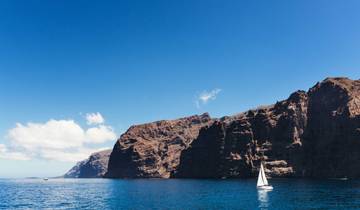
Sailing the Canary Islands
- ✓ Comprehensive Tenerife tour
- ✓ Expert local guides included
- ✓ All accommodation arranged
- ✓ Transportation provided
7 days
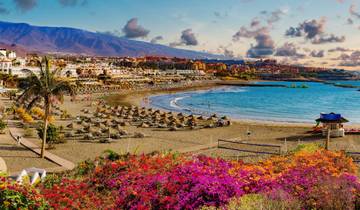
Hike The Canary Islands
- ✓ Comprehensive Tenerife tour
- ✓ Expert local guides included
- ✓ All accommodation arranged
- ✓ Transportation provided

6 days
Tasting the South of Tenerife
- ✓ Booking needs min. 2 travelers
7 days
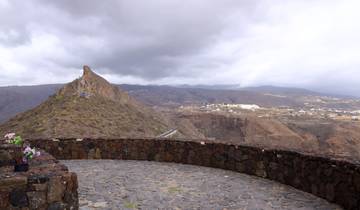
Tenerife Firsthand – 7 Days Among Volcanoes, Ocean and Adventure
- ✓ Booking needs min. 2 travelers
Multi-day tour packages powered by TourRadar. Prices and availability subject to change.
Understanding Tenerife Travel Costs in 2027
Tenerife is the largest of Spain’s Canary Islands and the most visited island in all of Spain, drawing over fourteen million tourists annually. Its cost structure is shaped by two factors that work in visitors’ favor: a special fiscal regime that keeps consumption taxes low, and intense competition among hotels, tour operators, and airlines that prevents any single tier from dominating the market.
The Canary Islands operate under the IGIC (Impuesto General Indirecto Canario), a local sales tax set at 7% for hospitality and food — compared with the 21% IVA applied on Spain’s mainland. In practical terms, restaurants, bars, and hotels in Tenerife are meaningfully cheaper than equivalent establishments in Madrid or Barcelona, even when the base price looks similar. This tax differential alone makes Tenerife one of the better-value sun destinations accessible from Northern Europe.
The island divides naturally into two cost zones. The South — covering Playa de las Américas, Los Cristianos, Costa Adeje, and the Golf del Sur strip — caters primarily to resort tourism and carries higher prices across every category: hotels, restaurants, excursion operators, and taxis all charge a premium for the infrastructure, beach access, and brand-name water parks concentrated in that corner of the island. The North — Santa Cruz de Tenerife, Puerto de la Cruz, San Cristóbal de La Laguna, and the Anaga Rural Park hinterland — retains a working Canarian city identity that delivers genuinely lower prices, better food-to-cost ratios at local restaurants, and a more authentic experience of the island’s culture and architecture.
A third dimension is the all-inclusive resort question. A significant proportion of visitors to Tenerife book all-inclusive packages, which bundle accommodation, meals, drinks, and sometimes activities into a single per-night rate. For travelers who prioritize simplicity and predictable spending, all-inclusive resorts in Tenerife — particularly in the South — can represent reasonable value, especially if booked far in advance as part of a package holiday. The trade-off is that all-inclusive guests tend to spend less time in local restaurants and more inside the resort compound, which limits engagement with Canarian food culture and misses some of the best-value dining on the island.
Getting to Tenerife in 2027: Flights and Arrival Costs
Tenerife is served by two airports. Tenerife South Airport (TFS) in the municipality of Granadilla de Abona handles the majority of charter and budget airline traffic from Northern Europe and is closest to the main resort strip; it sits roughly 15 kilometers northeast of Playa de las Américas. Tenerife North Airport (TFN), near La Laguna and Santa Cruz, serves more scheduled services to mainland Spain and domestic Canarian routes, as well as a smaller number of international flights. For most European visitors arriving on budget airlines, TFS is the landing point.
Flight costs from Northern Europe vary enormously by origin, lead time, and season. From the United Kingdom, budget carriers including Jet2, easyJet, Ryanair, and TUI operate year-round routes to TFS from Manchester, London Gatwick, London Stansted, Birmingham, Edinburgh, and Bristol. Off-peak one-way fares from the UK can fall as low as €40-70 per person on promotional sales; typical low-season fares run €80-130 one way; peak summer and Christmas one-way fares range from €130-280 per person. From mainland Europe — Germany, Scandinavia, Benelux, France — similar ranges apply, with the lowest prices in autumn and January-February. Round-trip fares from the UK including bags budget: €160-350 in low season, €250-500+ in peak season. Check current fares on official airline sites, as promotional rates regularly undercut these ranges.
From mainland Spain, Iberia, Vueling, and Binter Canarias operate frequent short-haul flights from Madrid, Barcelona, Seville, and other major cities, with fares starting around €50-90 one way if booked early. Binter Canarias also offers inter-island connections between Tenerife and Gran Canaria, Lanzarote, and Fuerteventura from approximately €50-100 one way.
Package holidays — bundling flights, hotel, and sometimes transfers into one booking — often undercut the sum of individual components, particularly during shoulder seasons. UK travel operators including TUI, Jet2Holidays, and easyJet Holidays regularly offer seven-night packages to four-star resorts in the South for prices that, when broken down, put the hotel cost at €80-120 per room per night even during high season. If accommodation quality matters more than flexibility, package bookings are worth comparing before booking independently.
Airport Transfer Costs in Tenerife 2027
From TFS to the main southern resorts, public TITSA bus line 111 connects the airport with Los Cristianos bus station, and line 382 continues toward Costa Adeje; single fares vary by zone but are significantly cheaper than taxis for solo travelers. A metered taxi from TFS to Los Cristianos or Playa de las Américas runs roughly €15-25 depending on exact destination; to Costa Adeje €18-30. Shared shuttle services — bookable in advance — offer a middle ground at €8-15 per person for the southern resorts. To reach Puerto de la Cruz or Santa Cruz from TFS by taxi costs €60-80+ due to the cross-island distance; public bus line 111 connects TFS to Santa Cruz for a fraction of that cost. From TFN to Santa Cruz and La Laguna, taxis run €15-25 and the inter-city tram is accessible nearby.
Accommodation Costs in Tenerife 2027
Tenerife’s accommodation market is one of the most diverse in Europe, ranging from basic guesthouses in the island’s mountain villages to ultra-luxury clifftop resorts with multiple pools, Michelin-starred restaurants, and private beach access. The following ranges apply to the 2027 season; high-season figures cover July-August and the Christmas-New Year week; low-season covers late January through March and September through November.
Budget Accommodation
Hostel dormitory beds in Santa Cruz or Puerto de la Cruz cost €18-30 per person per night and represent the floor of accommodation spending. Budget one- and two-star hotels and guest houses across the island charge €55-100 per room per night in the South (high season), €40-65 per room in the South (low season), and €50-85 per room in the North (high season), dropping to €35-55 in the North during the quieter months. Self-catering studios and apartments — the most popular budget option for independent travelers — typically run €50-85 per unit per night in the South at peak times, offering kitchen facilities that cut daily food spending significantly.
Mid-Range Accommodation
Three-star hotels, aparthotels, and well-regarded self-catering complexes form the core of the mid-range. In the South, expect €110-190 per room per night during high season and €75-120 during low season. The North and West of the island offer comparable three-star quality for €85-140 (high) and €65-100 (low). Many three-star options in Tenerife South operate on a half-board or all-inclusive basis; the all-inclusive supplement typically adds €30-60 per person per day to a standard room rate, which can represent good value for heavy eaters and drinkers but poor value for travelers who plan to explore local restaurants.
Upscale and Luxury Accommodation
Four-star hotels — the largest segment in the South — run €180-300 per room per night in high season, €110-190 in low season. Standout properties in Costa Adeje’s “golden mile” area and the clifftop GF Gran Costa Adeje command the upper end of this range. Five-star and boutique luxury properties — including the Ritz-Carlton Abama, the Royal Hideaway Corales hotels, and the Hard Rock Hotel Tenerife in Costa Adeje — start at €280-350 per room per night in low season and rise to €450-650+ at peak dates.
All-Inclusive Resorts: What Is Actually Included
All-inclusive properties in Tenerife typically include breakfast, lunch, and dinner at buffet restaurants, plus house-brand drinks (soft drinks, local beer, local spirits, table wine) during set hours. Premium spirits, brand-name wines, minibar items, motorized water sports, and off-resort excursions are almost always excluded. A representative four-star all-inclusive in the South charges €130-220 per room per night in shoulder season, rising to €200-360 in peak summer — meaning the all-inclusive premium over a standard room at the same property runs roughly €40-70 per person per day, but that amount covers what would otherwise be €50-75 per person in restaurant spending. For guests who stay at the resort for most meals, the value works out roughly neutral to slightly favorable. For travelers who plan to eat out frequently and explore the island, a standard room-only booking at a comparable property is often better value.
Food and Dining Budget in Tenerife 2027
Tenerife’s dining scene spans everything from traditional Canarian cooking — rooted in Atlantic fish, volcanic-salt wrinkled potatoes, and complex mojo sauces — to the international buffet-and-chips tourist restaurant model that dominates the resort strip. Understanding which establishments deliver genuine value requires navigating deliberately away from the pedestrian promenades of Playa de las Américas and into the residential streets of Los Cristianos, the old-town lanes of Puerto de la Cruz, and the covered markets of Santa Cruz.
Breakfast Costs 2027
A café breakfast — espresso and a local pastry or toast with olive oil and tomato (tostada) — runs €3-6 per person at a neighborhood bar, and this is how most Canarians eat in the morning. Hotel breakfast buffets at budget hotels typically cost an extra €8-12 per person when not included; mid-range hotels bundle breakfast and charge effectively €8-15 per person added to the room rate; four- and five-star resorts include elaborate breakfast spreads with a real cash value of €18-25 per person. Supermarket breakfast — yogurt, fruit, bread, and coffee made in an apartment — costs €3-5 per person.
Lunch Costs 2027: The Set Lunch Menu Advantage
The most important cost-saving tool for eating well in Tenerife is the set lunch menu (the daily three-course menu offered by most restaurants Monday through Friday). Local restaurants and workers’ canteens across the island offer a starter, main course, dessert, bread, and a drink — typically a glass of house wine or water — for €10-14 per person. In the South’s tourist zones the same format costs €13-18; in Puerto de la Cruz, Santa Cruz, and La Laguna, where the clientele is primarily local, three-course lunches with a drink commonly land at €10-12. This format is the single best way to eat Canarian cooking — fresh fish, grilled meats, stewed chickpeas, slow-cooked rabbit — at prices that undercut even supermarket meal deals in Northern Europe.
À la carte lunch main courses at a mid-range restaurant cost €14-25 per person, excluding drinks. Tapas and light bites at a bar run €3-7 per plate. Fish and seafood restaurants in the harbor areas of Los Gigantes, Puerto de la Cruz, and Santa Cruz offer fresh Atlantic catches for €14-22 for a main, representing excellent value given the quality and proximity to the landing dock.
Dinner Costs 2027
Dinner is where costs separate most sharply across traveler types. A budget dinner — pizza, pasta, or a simple grilled chicken plate at a no-frills tourist restaurant — costs €11-16 per person including a drink. A mid-range evening at a proper Canarian or Spanish restaurant, with starters to share, a fish or meat main, dessert, and a bottle of house wine between two, costs €22-38 per person. Upscale dining at a Costa Adeje hotel restaurant, a contemporary seafood restaurant in Santa Cruz, or a fine-dining establishment in the Adeje hills runs €45-80 per person, and some destination restaurants above that. Tourist-heavy areas along the promenade in Las Américas charge mid-range prices for below-average food; the same money spent three or four streets inland buys notably better cooking.
Drinks Prices in Tenerife 2027
Local Canarian beers (Dorada, Tropical) cost €2.50-4 for a glass in the South, €2-3 in the North and local bars. Imported beers run €3-5. House wine by the glass: €2-4. A bottle of local Tenerife wine (from the Tacoronte-Acentejo appellation, the island’s most productive wine region) costs €15-30 in a restaurant, €6-12 at a supermarket. Cocktails in resort bars: €7-14. Soft drinks: €1.50-3. Coffee (espresso or cortado): €1.50-2.50 at a local café, €3-4 at a tourist-facing terrace.
Supermarket Shopping in Tenerife 2027
Mercadona is the dominant supermarket chain on the island, with branches in every major town and resort area. Self-catering travelers can assemble a full day’s food from supermarket ingredients for €8-14 per person, covering breakfast ingredients, lunch supplies, and an evening meal cooked at the apartment. Fresh local produce — Canarian tomatoes, avocados grown in the Canary Islands, bananas (the island’s famous small, sweet variety), fresh fish from the wet counter — is competitively priced and of excellent quality. Local markets in Santa Cruz (MERCATENERIFE) and Puerto de la Cruz offer fresh fruit and vegetables at even lower prices than the supermarkets, with the added benefit of direct producer contact.
Getting Around Tenerife 2027: Transport Costs Compared
Getting around Tenerife is straightforward by any of three main methods — public bus network, car rental, or taxi — and the right choice depends almost entirely on your base and itinerary. The island is small enough that cross-island journeys rarely exceed 90 minutes by road, but the terrain is dramatic: the Teide massif in the centre creates elevation changes that make navigation more complex than a flat coastal map suggests.
TITSA Public Bus Network 2027
TITSA operates the island’s entire public bus network — locally called guaguas, the Canarian word for bus. Green TITSA buses connect every corner of the island, from the airport to remote mountain villages, and are integrated with the metropolitan tram line between Santa Cruz and La Laguna. The official Ten+ card (a reloadable smart card, fee €2 for the card itself) offers better rates than cash single tickets, which are zone-based and paid on boarding.
The most relevant pass options for tourists in 2027 are:
- Day Travelcard (€10): unlimited bus and tram travel across the entire island for 24 hours from first use. Available on the Ten+ card and the Ten+ mobile app. Ideal for full-day excursion days.
- 7-Day Travelcard (€50): unlimited bus and tram travel for seven consecutive days. This costs the same as five day passes, giving two effectively free days — a saving of approximately 29% against buying daily cards throughout a week. The €2 card fee applies if you don’t already hold a Ten+ card.
- Ten+ Wallet (top-up): the reloadable wallet within the Ten+ card gives a per-journey discount versus single cash tickets. The wallet accepts top-ups from €2 to €100 and the credit is valid for five years. This is the best option for visitors who need only a few bus journeys rather than full-day or full-week travel.
Key TITSA routes for visitors include: line 111 (TFS airport to Santa Cruz via the coastal motorway); lines 111/482 (TFS to the southern resort area); line 325 (Los Cristianos to Puerto de la Cruz, the main north-south route); lines 342/348 (southern resorts to Teide National Park); line 380 (Costa Adeje to Los Gigantes). Single fares on shorter journeys within a resort area or town run €1.40-2.50. Cross-island long-distance singles (e.g., Puerto de la Cruz to Playa de las Américas) cost approximately €13-14 as a cash single; with the Ten+ wallet the same journey costs roughly €9-10. The 7-Day Travelcard makes all of these journeys entirely free during its validity period, which is why it represents compelling value for a week-long stay with regular exploration.
Tram Service: Santa Cruz to La Laguna 2027
The Tranvía de Tenerife connects the harbor area of Santa Cruz de Tenerife to San Cristóbal de La Laguna — a UNESCO World Heritage Site — in approximately 30 minutes across 12.5 kilometers. Two lines serve 21 stops through a dense urban corridor. The tram is fully integrated with TITSA buses: the Ten+ card, Day Travelcard, and 7-Day Travelcard are valid on both without any additional fare or transfer charge. A standard single tram ticket costs €1.35. For visitors who plan to spend a day exploring La Laguna’s 16th-century street grid from a Santa Cruz base, the tram is the most convenient and cost-effective connection.
Car Rental in Tenerife 2027
Renting a car is the single most practical way to explore Tenerife’s interior, the Anaga Rural Park, the Masca gorge area, and the Teide National Park on your own schedule. Economy manual cars from local operators (Cicar and TopCar, both well-regarded and island-based) and international brands (Hertz, Goldcar, Europcar, Avis) start at approximately €30-50 per day for a small economy vehicle when booked in advance. Prices fluctuate significantly with demand; last-minute rentals can cost 50-100% more. Booking several weeks ahead via comparison sites reliably produces the lowest rates.
The standard rental rate covers basic third-party insurance. Full coverage insurance (including tyre, wheel, glass, and underbody damage, which standard policies typically exclude) adds €8-20 per day depending on provider. Given that Tenerife’s mountain roads and the narrow lanes around Masca carry real risk of tyre wall or wheel rim damage, full coverage is a sensible investment, particularly for drivers unfamiliar with the island’s topography. Fuel costs add approximately €8-15 per day for a small car covering 80-120 kilometers of typical island touring. For two people sharing the car, the per-person daily cost of renting, insuring, and fueling a small car runs approximately €22-35 per person per day, broadly comparable to or slightly more expensive than the 7-Day Travelcard when used over a full week.
Taxis in Tenerife 2027
Taxis in Tenerife operate on published metered tariffs set by each municipality. Fares begin with a flag drop (typically €1.30-2.00) and accumulate per kilometer; night, Sunday, and public holiday supplements apply. Short resort-to-resort journeys within the Las Américas/Los Cristianos/Costa Adeje cluster typically cost €10-20. Medium cross-island journeys (e.g., Playa de las Américas to Teide cable car base) run €45-65. For four people splitting a taxi to an attraction, the per-person cost can be competitive with the bus, particularly for Teide where the altitude and route make the bus less straightforward for time-sensitive visitors. Ride-hailing apps are available but less dominant than in larger mainland cities; asking at the hotel reception or using an official taxi rank is the standard approach.
Attractions and Activities Budget 2027
Tenerife’s attraction costs span a wide range: the island’s most compelling natural experiences — beaches, hiking, the Anaga Rural Park, La Laguna’s historic center — are entirely free, while the major theme and zoo parks carry significant per-person admission charges. Planning a balanced itinerary that mixes free and paid experiences keeps attraction spending manageable across a week.
Free Attractions in Tenerife 2027
Entry to Tenerife’s beaches is free; the island’s best include Playa de las Teresitas (Santa Cruz, black volcanic sand artificially covered with Saharan sand), Playa del Médano (wind and kite surfing, wild and undeveloped), Playa de los Gigantes (dramatic cliff backdrop, calm water), and dozens of coves accessible only on foot along the Anaga peninsula. Sun loungers at resort beaches cost approximately €5-12 per chair per day; most rural and semi-wild beaches have no infrastructure at all.
The Anaga Rural Park — a UNESCO Biosphere Reserve covering the dramatic northeastern corner of the island — is free to enter and contains some of the most spectacular coastal and laurisilva (ancient Macaronesian laurel forest) hiking in the Atlantic. Trails range from easy two-hour coastal walks to full-day ridge traverses. The historic center of San Cristóbal de La Laguna (a UNESCO World Heritage Site) is free to explore on foot: its 16th-century street grid, colonial architecture, and university atmosphere make it one of the most rewarding half-days on the island at zero cost beyond transport to reach it. Santa Cruz de Tenerife offers its waterfront promenade, the Auditorio de Tenerife (exterior), Plaza de España, and the city’s vibrant residential neighborhoods at no charge. Teide National Park is free to enter by car or bus; only the cable car itself and permits for summit hiking trails carry a fee.
Teide Cable Car 2027
The Teide cable car (Teleférico del Teide) ascends from the base station at 2,356 meters to La Rambleta at 3,555 meters, covering the gap in approximately eight minutes in enclosed gondola cabins. It is one of the most spectacular eight minutes in European travel. The current non-resident adult fare is €43 for a round-trip day ticket (check the official volcanoteide.com site for current rates before travel, as prices are updated seasonally). Child tickets (3-13 years) cost €21.50. To continue from La Rambleta to the actual summit crater requires a separate climbing permit; the climb is regulated and bookings sell out far in advance during summer. The cable car closes periodically for maintenance and is occasionally suspended due to high winds; booking via the official site gives flexibility on refund conditions. A half-day guided tour that includes transport from resorts and cable car access runs from €92 per adult through the official Volcano Teide operator.
Loro Parque 2027
Loro Parque in Puerto de la Cruz began in 1972 as a collection of parrots and has expanded over five decades into one of Europe’s most comprehensive zoological parks, holding international conservation certifications and multiple TripAdvisor Best Zoo awards. The 2027 adult admission is €44 (check loroparque.com for current rates); children aged 6-11 pay €32; children under 6 enter free. A free mini-train connects the Plaza de los Reyes Católicos in Puerto de la Cruz to the park entrance. Allow a full day; the park opens at 10:00 AM and most visitors spend five to seven hours. Canary Islands residents pay discounted rates with ID.
Siam Park 2027
Siam Park in Costa Adeje has built a global reputation as one of the world’s premier water parks, featuring a giant wave machine, a Tower of Power vertical drop, and a lazy river through Thai-temple scenery. The 2027 adult admission is €48 (check siampark.net for current rates); children aged 3-11 pay €36; under-3 free. The park closes briefly in January for maintenance and runs a special Siam Night event from late June through late August on Friday, Saturday, and Sunday evenings. Sun loungers and umbrellas are included in the standard admission; VIP cabana and private-house options are available at premium rates. A twin ticket combining Loro Parque and Siam Park is available through both parks’ official sites and typically saves €5-10 versus buying separately.
Other Paid Activities 2027
Whale and dolphin watching excursions depart from Los Cristianos and Los Gigantes harbors; the Tenerife South coast is one of Europe’s most reliable year-round locations for spotting resident pods of short-finned pilot whales and bottlenose dolphins. A two-to-three-hour boat excursion costs approximately €25-50 per adult depending on operator and vessel size; catamarans with snorkeling and lunch stops run €60-90. Surfing lessons on the exposed north coast near El Médano or Punta del Hidalgo cost approximately €35-55 for a two-hour beginner session including board and wetsuit. Paragliding tandem flights over the southern slopes cost around €85-130. The Jungle Park wildlife park near Los Cristianos charges approximately €30-35 per adult; confirm current prices at jungleparktenrife.es before booking. Guided hiking tours into the Anaga peninsula or Masca gorge run €30-60 per person for half-day formats.
Complete Daily Budget Breakdowns for 2027
The following breakdowns represent realistic spending for each budget tier during a typical mid-week day on the island in 2027. All figures are per person, assuming two people sharing accommodation.
Budget Day in Tenerife 2027
Hotel or apartment share: €28-40 (budget room or studio at €55-80 per unit). Breakfast: café coffee and pastry €4-6. Lunch: three-course set lunch menu at a local restaurant €11-14. Afternoon activity: hiking or beach (free). Dinner: simple local restaurant €12-16. Transport: TITSA 7-Day Travelcard spread over the stay, or day pass €7-10. Attractions: free sites or a small attraction equivalent to approximately €6-12 averaged across the week. Total: €65-100 per person daily.
Mid-Range Day in Tenerife 2027
Hotel share: €55-85 (three-star hotel or good self-catering complex at €110-170 per room). Breakfast: hotel buffet included or local café €8-12. Lunch: restaurant meal with wine €20-28. Afternoon: whale watching trip or cable car visit at a per-day average of €15-25 spread across the week. Dinner: mid-range Canarian restaurant with two courses and a bottle of wine between two €22-35. Transport: 7-Day Travelcard or occasional taxi €12-20. Total: €130-210 per person daily.
Luxury Day in Tenerife 2027
Hotel share: €140-225 (five-star resort or boutique hotel at €280-450 per room). Breakfast: resort buffet or à la carte hotel breakfast included in rate €15-25 notional value. Lunch: seafood restaurant with wine €35-55. Afternoon: guided private excursion or VIP Siam Park experience €30-50 daily average. Dinner: upscale à la carte restaurant with pre-dinner cocktails €40-70. Transport: private car rental and driver or premium car hire €25-45. Total: €285-470 per person daily.
Sample Tenerife Itineraries 2027: Day-by-Day Cost Plans
Seven-Day Budget Itinerary 2027
This itinerary assumes two people sharing a self-catering studio apartment in Puerto de la Cruz (lower cost base, closer to Loro Parque and the Anaga park), using the TITSA 7-Day Travelcard for all transport, and eating the set lunch menu most days. All costs are per person.
Day 1 — Arrival and Puerto de la Cruz: Airport transfer by TITSA bus (included in 7-day card). Supermarket shop for apartment essentials: approximately €20. Set lunch at a Puerto de la Cruz restaurant: €12. Walk the volcanic Lago Martiánez lido (free) in the evening. Dinner from supermarket: €8. Daily total approximately €40 (arrival day, unusually low).
Day 2 — La Laguna UNESCO World Heritage Site: Tram from Santa Cruz to La Laguna (free with 7-day card). Full day exploring La Laguna’s cathedral, university quarter, and covered market. Set lunch menu in La Laguna: €11. Ice cream on the main street: €2.50. Dinner at a Puerto de la Cruz restaurant: €14. Daily total approximately €28.
Day 3 — Loro Parque: Admission €44 adult. Mini-train from Puerto de la Cruz town center (free). Set lunch at park café: €16. Daily total approximately €60.
Day 4 — Teide National Park (bus excursion): TITSA bus to Teide (free with 7-day card; confirm current bus routes and times at titsa.com). Hiking in the caldera (free). Packed lunch from supermarket: €6. Cable car: €43. Dinner back in Puerto de la Cruz: €14. Daily total approximately €63.
Day 5 — Anaga Rural Park: TITSA bus to Anaga trailheads (free with card). Full-day hiking in the laurel forest and coastal paths (free). Picnic lunch from supermarket: €6. Dinner: set menu at a local restaurant: €12. Daily total approximately €18.
Day 6 — Santa Cruz and the beach: Bus to Santa Cruz (free with card). Playa de las Teresitas — free. Lunch at a harbor restaurant: €13. Auditorio de Tenerife exterior (free). Sunset drinks at a Santa Cruz bar: €7. Dinner: apartment-cooked meal with local market produce: €8. Daily total approximately €28.
Day 7 — Departure day (morning beach, afternoon airport): Morning coffee and beach: €4. Final supermarket snacks: €5. Airport bus (free with card). Daily total approximately €9.
Seven-day totals per person: accommodation €245-280 (studio share for 7 nights), 7-Day Travelcard €50, Loro Parque €44, Teide cable car €43, meals and incidentals approximately €100-130. Grand total approximately €480-550 per person — comfortably within the budget weekly range.
Seven-Day Mid-Range Itinerary 2027
This itinerary places two people in a three-star hotel in Costa Adeje for the full seven nights, using a rental car from day two, combining free natural sites with both major theme parks, and dining out fully for all meals.
Day 1 — Arrival, resort walk, first dinner: Taxi from TFS: €18. Hotel check-in; pool afternoon. Dinner at a Costa Adeje restaurant: €28 per person. Daily total approximately €46 plus hotel share (€55-85).
Days 2-7: Car rental for six days at €35/day, shared: €105 total per person over the six days, or €17.50 per day. Day 2: Siam Park (€48), pool café lunch (€18), dinner (€30). Day 3: Teide National Park self-drive (free to park), cable car (€43), mountain restaurant lunch (€18), dinner (€28). Day 4: Masca gorge hike (free), Los Gigantes harbor lunch (€20), dinner (€32). Day 5: Puerto de la Cruz and Loro Parque (€44), lunch at park (€18), dinner in Puerto de la Cruz (€26). Day 6: Anaga Rural Park drive (free to park), beach, local restaurant for lunch (€14), dinner in Santa Cruz (€32). Day 7: Beach morning, departure afternoon.
Seven-day totals per person: hotel share approximately €455-595 (7 nights mid-range), car share €105, Siam Park €48, Loro Parque €44, Teide cable car €43, meals approximately €320-400. Grand total approximately €1,015-1,235 per person — solidly within the mid-range weekly envelope.
Seasonal Price Variations in Tenerife 2027
Tenerife’s year-round appeal — the island’s climate averages roughly 18°C in January and 27°C in August, with little meaningful difference in sunshine hours between months — means that the price calendar follows European school holidays rather than a Mediterranean wet/dry rhythm. Understanding this cycle allows significant savings.
Peak Season (July-August, Christmas-New Year)
The European summer holidays drive demand to its annual ceiling. Hotels in the South sell at 40-60% premiums over their low-season rates; budget rooms that cost €55/night in October climb to €90-100; four-star properties that charge €130 in February rise to €200-280 in August. Flights from the UK and Northern Europe hit their annual high, often doubling or tripling October fare levels. Siam Park and Loro Parque operate at capacity; advance booking for all paid attractions is essential. The Christmas and New Year fortnight is similarly priced and carries the additional complication of last-minute availability issues.
High Season (Easter, May-June)
Easter week commands a strong premium — typically 25-35% above shoulder rates — as it concentrates Northern European family travel. May and June are popular with couples and over-55 travelers taking advantage of pre-summer prices and post-Easter quiet; accommodation falls back from Easter peaks but remains above the autumn floor, with three-star rooms in the South typically running €110-160/night.
Shoulder Season (March-April Excluding Easter, September-October)
March and the first half of April (excluding the Easter fortnight itself) and September through October represent the closest thing Tenerife has to a cost-quality sweet spot. Prices drop meaningfully from peak: hotels typically 20-30% lower, flights 20-40% cheaper. Temperatures remain warm and pleasant, the Atlantic is calmer than winter, and the main attractions are accessible without peak crowds. September is particularly attractive for sea swimming: ocean temperatures peak around 23-24°C following the summer warming.
Low Season (January-February, November)
Late January through February sees the island’s lowest prices of the year, with the notable exception of Carnival — one of Europe’s largest and most spectacular, typically held in February or early March in Santa Cruz. Outside Carnival dates, budget hotels in the South can fall to €40-65/room, three-star properties to €75-100, and flights from the UK to €60-100 one way. November similarly offers strong value: prices are close to their annual floor, the weather is reliably warm and sunny, and the island is quiet. For flexible retirees or remote workers, November is arguably the most comfortable month to spend on the island.
Money-Saving Strategies for Tenerife 2027
The following approaches consistently reduce the total cost of a Tenerife trip without requiring sacrifices in experience quality.
Buy the TITSA 7-Day Travelcard immediately on arrival. At €50 for unlimited buses and tram for seven days, it saves 29% against buying daily passes and removes the need to carry small change or work out route fares. The Ten+ mobile app lets you buy it before you land.
Eat your largest meal at lunch, not dinner. The set three-course lunch menu at local restaurants costs €10-14 and typically includes a drink; an equivalent dinner at the same restaurant à la carte costs €25-40. Ordering tapas at a bar for dinner is the budget traveler’s evening strategy.
Choose a self-catering apartment over a room-only hotel. Kitchen access cuts food spending by 30-40% for travelers willing to cook even one meal per day from supermarket ingredients.
Book attraction tickets online, at least 48 hours in advance. The Teide cable car, Loro Parque, and Siam Park all offer online pricing at official rates; some third-party comparison platforms undercut OTA rates marginally, but the most reliable pricing is always directly from each attraction’s own site. Avoid touts and hotel-desk excursion sellers for these three attractions; their commission markup is typically 15-25% above direct booking prices.
Stay in the North and day-trip to the South. Accommodation in Puerto de la Cruz runs 20-25% cheaper than in Costa Adeje for equivalent quality. TITSA buses connect north and south without a car; the longer journey time (60-90 minutes) is a reasonable trade for lower costs.
Travel in September-October or January-February. Off-peak pricing on both flights and hotels easily saves €200-400 per person per week against a July booking on comparable quality.
Choose a package holiday for four-star accommodation. British and German tour operators negotiate wholesale hotel rates that, bundled with flights and transfers, often produce a per-night room cost 20-30% lower than the same room booked independently. This applies particularly to four-star all-inclusive resorts in the South.
Hire a car for only the days you need it. One-day car rental (€30-50) for a Teide National Park or Anaga Rural Park excursion is vastly cheaper than renting for a full week if your base is in a resort with good bus connections.
Hidden Costs and Fees in Tenerife 2027
Several costs catch first-time Tenerife visitors by surprise. Knowing them in advance allows accurate trip budgeting.
Budget airline baggage fees. Ryanair, easyJet, and similar carriers operating to TFS charge separately for checked luggage (typically €15-40 per bag per direction, depending on how far in advance you pay) and larger cabin bags. A week’s worth of clothes and the cable car layers can be packed into a 10kg cabin bag on most budget airlines, avoiding hold bag fees entirely.
Car rental insurance upgrades. The standard rental rate includes only basic third-party cover. Upgrading to full coverage (including tyres, wheels, glass, and underbody) adds €8-20 per day — a cost worth factoring in up front rather than discovering at the rental counter.
Parking fees. Most towns and resorts have paid parking zones. Central Santa Cruz and Puerto de la Cruz car parks charge approximately €1-2 per hour or €10-18 per 24 hours. Siam Park charges €7 for a day’s parking. Mountain roads toward Teide have free roadside parking, but spaces fill early in summer.
Resort and hotel service fees. Some hotels charge mandatory daily resort or facilities fees (€5-15 per day) not included in the quoted room rate. Confirm all-in pricing including fees before finalizing any hotel booking.
Teide summit climbing permit. The hike from La Rambleta (the cable car top station) to the actual Teide summit at 3,718 meters requires a free but tightly limited daily permit, bookable months in advance through the Spanish national park authority. Without the permit, you cannot enter the final summit trail; the cable car experience itself remains valid, but the summit view requires the separate booking.
ATM fees. Spanish ATMs operated by Cajasiete, BBVA, and CaixaBank charge withdrawal fees for foreign cards that vary by home bank. Using a fee-free travel card (Revolut, Starling, Wise) eliminates these charges entirely and provides mid-market exchange rates on any non-euro purchases.
What is NOT an extra cost: tourist tax. Unlike the Balearic Islands — which charge a sustainable tourism tax of €1-4 per person per night — the Canary Islands do not currently levy a per-night tourist tax. Check for any policy changes before travel, as proposals to introduce such a tax in the Canaries have been discussed in regional government. As of available information for 2027, no island-wide tourist tax is in effect in Tenerife.
Budget Planning by Traveler Type in 2027
The per-person, two-sharing figures used throughout this guide represent the most common scenario. The following adjustments apply to other traveler configurations.
Solo travelers pay the full hotel room cost alone rather than splitting it, raising per-person daily costs by roughly €28-150 depending on accommodation tier. Budget solo travelers: €95-140 per person daily; mid-range solo travelers: €185-295 per person daily. Solo hostelers sharing a dormitory are the exception, as the per-person bed cost is already the only cost.
Families with children benefit from multiple angles: under-6s enter Loro Parque and Siam Park free; under-14s enter Teide cable car at half price; family rooms at Tenerife hotels often cost only 20-30% more than double rooms. The main additional cost is the third and fourth meal, which eases at restaurants that offer children’s menus at €8-12. A family of two adults and two children aged 6 and 10 visiting both theme parks in a week adds approximately €80 in admission (€32+€36 for the 10-year-old, free for the 6-year-old at Siam, free and one paid child ticket at Loro Parque), compared with €92 for two adults at each park (€44+€48).
Groups of four or more unlock meaningful savings on car rental (splitting a €35-50/day car four ways brings per-person cost to €9-12.50 per day), restaurant set menus (where sharing starters reduces per-person food cost), and multi-attraction twin tickets. A group of four can also consider larger self-catering villas, which in some weeks cost the same total as four separate hotel rooms while offering kitchen, pool, and more living space.
Senior travelers should check Canary Islands resident discounts (irrelevant for visitors) but note that Loro Parque does not currently publish a senior reduction for non-residents — the standard adult price applies. Several TITSA routes and the tram offer reduced fares for those 65+ with appropriate ID; check the current TITSA fare tables before travel. Some four-star hotel chains offer loyalty discounts for over-60 travelers booking through their direct channels.
Where to Stay in Tenerife 2027: Area Cost Guide
Choosing the right base area is the single most effective way to manage accommodation costs while maximizing the experience of the island. Each zone has a distinct character and price point.
Costa Adeje is the most expensive area and the most polished resort zone on the island. The stretch from Torviscas to Playa del Duque — sometimes called the “golden mile” — concentrates the island’s highest-rated hotels, best beach clubs, and most ambitious restaurants. A three-star hotel here in high season costs €120-180/room; four-star options €180-300. It is the right choice for travelers whose priority is resort quality and beach convenience.
Playa de las Américas and Los Cristianos immediately adjoin Costa Adeje and share access to the same beaches and transport links at roughly 10-20% lower hotel prices. The strip is busier and less polished than Costa Adeje proper, but budget accommodation is easier to find and the restaurant variety is wider.
Puerto de la Cruz on the north coast offers authentic Canarian town character, proximity to Loro Parque, tram access to La Laguna and Santa Cruz, and accommodation consistently 20-30% cheaper than equivalent quality in the South. Three-star hotels here run €85-140/room in high season, €65-100 in low season. The beach situation is different from the South: volcanic black sand at Playa Jardín and the Lago Martiánez sea water pools replace the fine sand of the southern coast, but many visitors prefer the atmosphere.
Santa Cruz de Tenerife functions as a working city and capital. Business-oriented hotels (including Marriott and NH properties) offer competitive weekend rates that often undercut resort pricing; expect €100-160/room at a four-star city hotel in high season, occasionally lower for weekend stays. Access to La Laguna via tram and the island’s bus network makes it a viable base for independent explorers with no car.
El Médano on the southeast coast caters primarily to wind and kite surfers and attracts a younger, more adventure-oriented visitor demographic. It is consistently among the least expensive resort areas for accommodation — budget rooms at €45-70/night in high season — and has a lively café culture and fish-focused restaurant scene around the central square.
Los Gigantes on the dramatic west coast offers genuinely spectacular scenery (600-metre vertical basalt cliffs above a small harbor) at mid-range prices. Hotel accommodation runs €90-160/room for three- and four-star properties in high season. It is best reached by car; the bus service exists but is less frequent than the main south-north corridor.
Frequently Asked Questions About Tenerife Budget 2027
Is Tenerife expensive to visit in 2027?
Tenerife falls in the mid-range tier among European sun destinations. It is meaningfully cheaper than Ibiza and Mykonos and broadly comparable to the Algarve and Mallorca, while being more expensive than Albania, Montenegro, or Eastern European coastal destinations. The island’s IGIC tax rate of 7% on hospitality (versus 21% on mainland Spain) keeps base prices structurally lower than many comparable Atlantic European resort markets. A couple staying in a self-catering apartment, eating the set lunch menu, using public transport, and visiting one major attraction per week can experience the island well for approximately €130-200 per day for two. At that spending level, Tenerife represents solid value for an Atlantic island with year-round sun, world-class natural attractions, and reliable infrastructure.
What is the average daily cost per person in Tenerife in 2027?
Using mid-range assumptions as the baseline: hotel share €55-85 per person (room €110-170 divided by two), meals €50-75, transport €12-20, and attractions €15-25 averaged across the week produces a daily figure of €130-210 per person when two people share accommodation. Budget travelers managing on €65-100 and luxury visitors spending €285-470 anchor the range on either side. The average across all visitor types — accounting for the large number of budget package tourists and the smaller number of luxury resort guests — is broadly estimated in the €110-150 per person daily range across all Tenerife visitor categories combined.
How much does the Teide cable car cost in 2027?
The standard non-resident adult round-trip cable car ticket to La Rambleta costs €43 for the independently booked day option (check volcanoteide.com for current rates, as prices are updated seasonally). Child tickets for ages 3-13 cost €21.50. The cable car ticket alone does not include the summit hiking permit, which requires a separate booking and is free but capacity-limited. Guided half-day tours that bundle transport from resort hotels with the cable car ticket cost from €92 per adult through the official Volcano Teide operator. Canary Islands residents pay a heavily discounted resident rate with ID.
Can I visit Tenerife on a budget of €70 per day in 2027?
Yes, though it requires deliberate choices rather than casual spending. At €70 per day for two people sharing a budget room (room at €55-60 split as €27-30 each), you have approximately €40-43 remaining per person for food, transport, and activities. Using the TITSA 7-Day Travelcard (€50 for the week, roughly €7 per day), eating a café breakfast (€4-5) and the set lunch menu (€10-12), and cooking dinner in an apartment (€6-8) leaves €13-18 for attractions — enough for two or three paid sites per week while leaving most days free. The budget is tighter than comfortable for the resort areas of the South, but works well in Puerto de la Cruz or for travelers who place the highest value on natural experiences (Anaga, Teide National Park hiking, beach days) over theme parks.
How much do restaurants cost in Tenerife in 2027?
The set three-course lunch menu at a local restaurant costs €10-14 per person, including bread and a drink, and represents the best value eating on the island. À la carte main courses at mid-range restaurants run €14-25. A full à la carte dinner with starter, main, dessert, and a shared bottle of house wine at a mid-range Canarian restaurant costs approximately €25-38 per person. Tourist-facing restaurants along the Las Américas promenade charge similar prices for noticeably less authentic food. Upscale restaurants in Costa Adeje hotel complexes and in Santa Cruz charge €45-75+ per person. Coffee runs €1.50-2.50 at a local café and €3-4 at terrace restaurants. Local beer (Dorada or Tropical) costs €2.50-4 in most bars.
Is car rental necessary in Tenerife in 2027?
No, but it makes a meaningful difference for certain itineraries. Travelers staying in the southern resort zone and planning primarily beach, pool, theme park, and walking excursions can manage entirely on TITSA buses and occasional taxis. The 7-Day Travelcard provides cross-island access for €50 and makes Teide National Park reachable by bus, though with less schedule flexibility than a car. Car rental becomes genuinely useful — and arguably necessary — for: exploring the Anaga Rural Park in depth (multiple trailheads require road access), visiting Masca village and driving the TF-436 western route, day-tripping across the island on your own timetable, and reaching rural restaurants and wine estates in the Orotava Valley or the Tacoronte-Acentejo wine region. A day rental at €30-50 for specific excursions is often more economical than renting for a full week if your base is well-served by public transport.
What are the most expensive months to visit Tenerife in 2027?
July and August command the highest prices across hotels, flights, and tourist services, reflecting the concentration of Northern European school summer holidays. The Christmas and New Year fortnight (roughly December 21 through January 2) is the second most expensive period, with some five-star properties and premium apartments selling out months in advance. Easter week (which in 2027 falls in late March/early April — confirm exact dates) carries a significant but shorter-duration premium of roughly 25-35% above the adjacent weeks. May and June are moderately busy without reaching summer peaks; October through early December and February through early March are consistently the most affordable windows.
How much does a week in Tenerife cost per person in 2027?
A seven-night stay costs approximately €455-700 per person on a budget (two sharing a budget room, eating cheaply, using public transport, visiting one or two paid attractions), €910-1,470 per person at mid-range (comfortable hotel, regular restaurant meals, rental car for part of the week, both major theme parks), and €2,000-3,300 per person at the luxury end (five-star resort, upscale dining daily, guided experiences, premium car hire). None of these figures include international flights; adding flights from the UK in low season costs €160-300 per person; in peak summer, €300-550 per person or more. Solo travelers should add the extra hotel room cost (€30-150 per day depending on tier) to the weekly figures above.
Are there any free attractions in Tenerife in 2027?
Tenerife offers an exceptional range of genuinely free experiences. The entire Teide National Park is free to enter by bus or car; only the cable car and the summit permit carry charges. The Anaga Rural Park — a Biosphere Reserve with dramatic laurel forest and coastal trails — is free at every trailhead. The UNESCO World Heritage historic center of La Laguna is free to walk and explore. All beaches on the island are free (sun lounger hire optional). The Auditorio de Tenerife in Santa Cruz and the Plaza de España waterfront are free to visit. Several museums offer free entry on specific days or permanently: the Museum of Nature and Archaeology in Santa Cruz (Museo de Naturaleza y Arqueología) is free on Sundays, for example. Tenerife Carnival in Santa Cruz — one of Europe’s biggest street festivals — is free to attend as a spectator, with only ticketed grandstand seating or official parade viewing platforms carrying a charge.
How much do Loro Parque and Siam Park cost in 2027?
Loro Parque charges €44 per adult and €32 per child (6-11 years; under-6 free) for a full-day admission ticket in 2027. Siam Park charges €48 per adult and €36 per child (3-11 years; under-3 free) for a full-day admission. Both parks sell a twin ticket combining admission to both, which typically saves €5-10 versus buying separately; check current twin ticket pricing on the official sites of both parks before purchasing. For a couple visiting both parks independently, the combined cost is €92 in admission; buying online in advance at official prices avoids hotel-desk commission markups of 15-25% that apply when booking through resort excursion desks. Both parks are open 365 days a year; Siam Park has a brief maintenance closure in January — confirm dates if traveling in that month.