
Tallinn Old Town: UNESCO World Heritage Walking Guide
Tallinn’s Old Town stands as one of Europe’s best-preserved medieval cities, where centuries-old cobblestone streets wind between Gothic spires and merchant houses that have witnessed over 800 years of Baltic history. Inscribed as a UNESCO World Heritage Site in 1997, this remarkably intact 13th-century urban landscape offers visitors an authentic journey through the architectural and cultural legacy of the Hanseatic League.
Key Takeaways
- UNESCO Recognition: Tallinn Old Town earned World Heritage status in 1997 for its exceptionally intact medieval urban plan and architecture spanning primarily from the 13th-16th centuries
- Hanseatic Heritage: As the northernmost member of the Hanseatic League from 1285, Tallinn became a crucial trading hub connecting Western Europe with Novgorod and Muscovy
- Architectural Integrity: The Old Town preserves 113 hectares of medieval structures including 26 watchtowers, defensive walls, Gothic churches, and merchant houses that survived fires and wars
- Walking Experience: The compact historic center can be explored on foot in 2-3 hours for highlights, or full day for comprehensive exploration of all quarters and viewpoints
- Two Distinct Areas: Upper Town (Toompea) represents ecclesiastical and feudal power, while Lower Town showcases Hanseatic merchant wealth and civic architecture
- Year-Round Destination: Medieval architecture creates atmospheric backdrops in all seasons, from summer festivals to the famous Christmas market in Town Hall Square
People Also Ask About Tallinn Old Town
Why is Tallinn Old Town a UNESCO World Heritage Site?
Tallinn Old Town achieved UNESCO World Heritage designation based on two specific criteria that recognize its exceptional historical and architectural significance. Criterion (ii) acknowledges Tallinn as one of the most remote and powerful outposts of Hanseatic League colonization in northeastern Europe during the 13th-16th centuries, where an international secular-ecclesiastical culture formed through the interchange of Cistercians, Dominicans, the Teutonic Order, and Hanseatic traditions, which was then exported throughout northern Europe.
Criterion (iv) recognizes the town plan and buildings as a remarkable reflection of the coexistence between the seat of feudal overlords and a Hanseatic trading center within a common system of walls and fortifications. The Old Town’s authenticity stems from its exceptionally intact 13th-century city plan and the survival of its medieval and Hanseatic structure, which has been wholly preserved despite the ravages of fire and war over intervening centuries. The 113-hectare inscribed property contains primarily 13th-16th century structures that demonstrate the wealth and importance of this Baltic trading center.
What makes Tallinn’s medieval architecture unique?
Tallinn’s medieval architecture stands out for its remarkable completeness and authenticity as a functioning medieval urban environment rather than isolated historic buildings. The Old Town preserves not just individual monuments but an entire integrated medieval cityscape with its original street pattern, defensive systems, and spatial relationships between ecclesiastical, civic, and domestic architecture intact.
The architectural uniqueness manifests in several distinctive features: the dual-level urban structure separating Upper Town (Toompea Hill) for ruling classes from Lower Town for merchants and craftsmen; the exceptionally well-preserved defensive walls with 26 of the original watchtowers still standing; and the concentration of Gothic ecclesiastical architecture including St. Olaf’s Church, which was once the tallest building in the world. The merchant houses lining the streets display characteristic Hanseatic architecture with their stepped gables, limestone facades, and inner courtyards, while the Town Hall represents one of northern Europe’s finest examples of Gothic civic architecture. This architectural integrity exists because Tallinn avoided the wholesale demolition and reconstruction that affected many European medieval cities during industrialization.
How long should I spend exploring Tallinn Old Town?
The time needed to explore Tallinn Old Town depends on your interests and walking pace, though the compact size makes it accessible for various visit durations. A quick highlights tour covering the main landmarks—Town Hall Square, Alexander Nevsky Cathedral, Toompea viewing platforms, and a walk along the city walls—takes approximately 2-3 hours at a moderate pace. This allows you to capture the essential character of the medieval city and visit the most photographed locations.
For a comprehensive experience that includes entering churches and museums, exploring both Upper and Lower Town thoroughly, walking substantial portions of the defensive walls, and pausing at viewpoints and cafes, plan for 5-7 hours or a full day. This timeframe allows for visits to St. Olaf’s Church tower (view platform), the Dominican Cloister Museum, Kiek in de Kök fortifications museum, and time to wander the atmospheric medieval streets discovering hidden courtyards and artisan workshops. Photography enthusiasts and architecture lovers often find that 1.5-2 days provides the ideal balance for detailed exploration at different times of day to capture varying light conditions on the medieval buildings and to fully appreciate the layered history of this UNESCO World Heritage Site.
Is Tallinn Old Town difficult to navigate on foot?
Tallinn Old Town presents moderate walking challenges due to its authentic medieval character, though most visitors navigate it successfully with awareness and preparation. The cobblestone streets throughout the historic center are original medieval paving, which creates uneven and sometimes slippery surfaces, particularly after rain or during winter. These cobblestones require sturdy footwear with good grip—high heels and smooth-soled shoes prove impractical and potentially hazardous on the stone surfaces.
The topography presents the main physical challenge: Toompea Hill (Upper Town) sits approximately 50 meters above the Lower Town, connected by steep medieval streets including the famous Long Leg (Pikk Jalg) and Short Leg (Lühike Jalg) streets. These inclines feature steps and significant gradients that require reasonable fitness levels. Several viewpoint platforms accessed by stairs offer panoramic views but demand climbing ability. The defensive wall walkways, where accessible, involve narrow passages and uneven stone steps. Despite these challenges, the Old Town’s compact size (113 hectares) means distances remain short. Most visitors manage the terrain by taking breaks, choosing routes strategically, and wearing appropriate footwear. Accessibility for wheelchairs and mobility devices faces limitations due to the medieval infrastructure, though the Lower Town’s main streets and Town Hall Square remain relatively level and navigable.
Extended multi-day tours – 5+ days
Featured Estonia Multi-Day Tour Packages

3 days
Estonia 3-Day Discovery Tour
- ✓ Comprehensive Estonia experience
- ✓ Expert local guides included
- ✓ All accommodation included
- ✓ Transportation provided

5 days
Estonia 5-Day Highlights Experience
- ✓ Comprehensive Estonia experience
- ✓ Expert local guides included
- ✓ All accommodation included
- ✓ Transportation provided
7 days
Estonia 7-Day Cultural Journey
- ✓ Comprehensive Estonia experience
- ✓ Expert local guides included
- ✓ All accommodation included
- ✓ Transportation provided

10 days
Estonia 10-Day Complete Adventure
- ✓ Comprehensive Estonia experience
- ✓ Expert local guides included
- ✓ All accommodation included
- ✓ Transportation provided
Multi-day tour packages powered by TourRadar. Prices and availability subject to change.
Introduction to Tallinn Old Town
The Historic Centre of Tallinn represents one of Europe’s most complete and authentic medieval urban environments, where the architectural and spatial character of a major Hanseatic trading city has survived remarkably intact through eight centuries. Unlike many European cities that experienced wholesale reconstruction during industrialization or wartime destruction, Tallinn preserved its medieval street pattern, defensive structures, and building stock to an exceptional degree, earning UNESCO World Heritage recognition in 1997 for criteria (ii) and (iv).
The Old Town’s 113-hectare inscribed area encompasses two distinct urban zones that reflect the medieval social hierarchy: Toompea Hill (Upper Town), the historic seat of ecclesiastical and secular power, and the Lower Town, which flourished as the merchant quarter and civic center. This vertical separation created a unique dual character where the ruling elite occupied the elevated defensive position while Hanseatic merchants built their wealth in the commercial district below. The defensive walls connecting these areas, with 26 watchtowers still standing from the original fortification system, physically manifest the boundary between the medieval city and the world beyond.
Walking through Tallinn Old Town today offers an experience fundamentally similar to what medieval travelers would have encountered—narrow cobblestone streets following the original 13th-century plan, Gothic church spires punctuating the skyline, limestone merchant houses with their characteristic stepped gables, and the sense of enclosure created by defensive walls and the compact urban fabric. The architectural heritage spans primarily from the 13th-16th centuries, the period of Tallinn’s greatest prosperity as a Hanseatic League member, though later additions from the 17th-19th centuries add historical depth without compromising the medieval character.
This walking guide explores both Upper and Lower Town systematically, highlighting the architectural masterpieces, historical significance, and spatial relationships that make Tallinn Old Town a UNESCO World Heritage Site. Understanding the layout, the historical context of its development, and the significance of individual buildings enhances the walking experience and reveals how this Baltic trading city functioned during its medieval heyday and evolved through subsequent centuries while maintaining its essential character.
Understanding the Historic Layout and UNESCO Designation
The Origins: From Danish Castle to Hanseatic City
Tallinn’s origins trace to the 13th century when crusading knights of the Teutonic Order built a castle on the strategic Toompea Hill overlooking the Gulf of Finland. The name “Tallinn” itself derives from the Estonian “Taani-linn,” meaning “Danish castle,” referencing the Danish conquest of 1219 when King Valdemar II established control over the Estonian territories. This initial fortification became the nucleus around which the medieval city developed, with the defensive advantages of the elevated position dictating the urban pattern that persists today.
The transformation from frontier fortress to major trading center accelerated in 1285 when Tallinn joined the Hanseatic League as its northernmost member. This membership connected Tallinn to a powerful network of trading cities stretching from London to Novgorod, establishing the city as a crucial intermediary between Western European markets and the resources of the Russian interior. The wealth generated by this trade—particularly in furs, wax, timber, and grain—financed the construction of the impressive Gothic churches, the elaborate merchant houses, and the extensive fortification systems that characterize the Old Town today.
The medieval urban plan that developed during this Hanseatic period exhibits remarkable sophistication despite its organic growth. The Lower Town’s street network radiates from the market square (now Town Hall Square), with major arteries connecting to city gates in the defensive walls. Secondary streets and narrow passages create a complex network that maximized building plots while maintaining defensive capabilities. This 13th-century street pattern remains fundamentally unchanged, making Tallinn Old Town one of the few places where modern visitors walk the same routes that medieval merchants traversed six centuries ago.
UNESCO World Heritage Criteria and Outstanding Universal Value
The World Heritage Committee inscribed Tallinn Old Town in 1997 based on its fulfillment of criteria (ii) and (iv), which recognize both its role in cultural interchange and its exceptional architectural and urban planning significance. Criterion (ii) acknowledges Tallinn’s position among the most remote and powerful outposts of Hanseatic League colonization in northeastern Europe. During the 13th-16th centuries, Tallinn provided a crucible where an international secular-ecclesiastical culture formed through the interchange of monastic orders (Cistercians, Dominicans), military orders (Teutonic Knights), and Hanseatic trading traditions. This cultural synthesis, forged in Tallinn, spread throughout northern Europe, influencing urban development, architectural styles, and commercial practices across the Baltic region.
Criterion (iv) recognizes the town plan and its buildings as a remarkable reflection of a specific medieval urban model: the coexistence of feudal overlords’ seat and Hanseatic trading center within a unified defensive system. The physical manifestation of this dual character—Upper Town’s ecclesiastical and governmental architecture contrasting with Lower Town’s merchant houses and civic buildings—represents an exceptionally clear and well-preserved example of medieval social and spatial organization. The defensive walls and fortifications that enclosed both areas demonstrate sophisticated military architecture adapted to the specific topography and strategic requirements of a Baltic port city.
The Outstanding Universal Value extends beyond individual monuments to encompass the entire urban environment. The authenticity of Tallinn Old Town derives from the survival of its medieval street pattern, the integrity of its defensive systems (26 watchtowers and significant portions of the walls remain), and the concentration of 13th-16th century buildings that maintain their original forms, materials, and spatial relationships. Unlike reconstructed or heavily restored medieval quarters in other cities, Tallinn preserves genuine medieval fabric that has survived fires, wars, and changing political regimes while continuing to function as a living urban center rather than a museum piece.
The Two Towns: Upper Town (Toompea) and Lower Town
Understanding Tallinn Old Town requires recognizing its fundamental division into two distinct urban zones, each with different historical functions, architectural characters, and social compositions. Toompea (Upper Town) occupies the elevated limestone hill approximately 50 meters above sea level, historically the domain of the ruling elite. This area housed the cathedral, the castle of the ruling powers (Danish, Swedish, Russian successively), and the residences of the nobility and higher clergy. The architecture reflects this concentration of power: fortress-like stone buildings, the imposing Alexander Nevsky Cathedral, and the more austere character of structures built for defense and governance rather than commercial display.
Lower Town developed as the merchant quarter and civic center, where the wealthy Hanseatic traders built their elaborate houses, guildhalls, and churches that celebrated commercial success and civic pride. The contrast is immediately visible: where Upper Town emphasizes defensive strength and ecclesiastical authority, Lower Town showcases ornate Gothic architecture, decorative facades, and the kind of architectural competition that arose when wealthy merchants sought to display their prosperity. The medieval social geography created a situation where the ruler and the ruled lived within the same walled city but in distinctly separate vertical zones, connected by only two streets: Long Leg (Pikk Jalg) and Short Leg (Lühike Jalg).
This division persisted for centuries and shapes the walking experience today. Visitors ascending to Toompea experience the transition from merchant bustle to ecclesiastical calm, from narrow commercial streets to more spacious defensive positions with panoramic views. The two areas complement each other: Upper Town provides the viewpoints that reveal the Old Town’s remarkable preservation from above, while Lower Town immerses visitors in the medieval street-level experience. Comprehensive exploration of both zones proves essential for understanding how this UNESCO World Heritage Site functioned as a complete medieval urban system.
Walking Route: Lower Town (Merchant Quarter)
Town Hall Square (Raekoja Plats): The Medieval Heart
Town Hall Square has served as Tallinn’s civic center since the 13th century, functioning continuously as the marketplace, gathering place, and symbolic heart of the merchant city. The square’s trapezoidal form follows the medieval plan, with the Town Hall anchoring the southern side and merchant houses defining the remaining perimeter. This spatial composition—an enclosed square dominated by the symbol of civic authority—represents the characteristic Hanseatic urban planning approach that prioritized communal identity and commercial function.
The Town Hall itself stands as one of northern Europe’s finest examples of Gothic civic architecture, built during 1402-1404 to replace an earlier structure. The building’s facade displays the characteristic features of Baltic Gothic: pointed arch windows, stepped gables, and a 64-meter tower topped by “Vana Toomas” (Old Thomas), the weathervane guardian who has watched over the city since 1530. The architecture communicates the wealth and self-governance of the Hanseatic merchant community—this was not a royal palace but a building financed and controlled by the city’s commercial elite.
The interior Gothic Hall on the first floor represents the finest medieval secular interior in Estonia, with its rib-vaulted ceiling supported by columns and decorated with carved wooden benches and historical paintings. The Citizens’ Hall features intricate woodcarvings and serves as a reminder that this building functioned as the administrative center where merchant councils made decisions affecting trade across northern Europe. The Council Chamber preserved its medieval character, including the original merchant benches arranged to facilitate the collective decision-making that characterized Hanseatic governance.
The square surrounding the Town Hall witnessed medieval markets, festivals, executions, and proclamations—all the public functions of urban life. Today’s cobblestone paving follows the medieval layout, though the surface has been renewed many times. The merchant houses bordering the square date primarily from the 15th-17th centuries, their ground floors originally housing shops and workshops while the upper levels served as residences. The square’s role as a gathering place continues: summer cafes occupy the space where medieval market stalls stood, and the annual Christmas market, repeatedly called one of Europe’s most beautiful, maintains the tradition of seasonal commerce that has characterized this space for 800 years.
Great Guild Hall and St. Olaf’s Church
Walking north from Town Hall Square along Pikk Street leads into the heart of the medieval merchant quarter, where the Great Guild Hall and St. Olaf’s Church represent the wealth and ambitions of Tallinn’s Hanseatic traders. Pikk Street (Long Street) served as the main commercial artery connecting the port to the market square, lined with the houses and guildhalls of the city’s most prominent merchants. The architectural quality along this street demonstrates how commercial success translated into architectural patronage during the medieval period.
The Great Guild Hall, built in 1410, housed the most powerful merchant organization in medieval Tallinn—a professional association that controlled much of the city’s overseas trade and wielded significant political influence. The building’s Hanseatic Gothic facade, with its pointed arch portal and large windows, signals the guild’s importance and wealth. Inside, the double-height hall with its rib-vaulted ceiling served as the meeting place where merchants negotiated trade agreements, settled disputes, and coordinated commercial strategies. The architectural grandeur matched the guild’s status: membership in the Great Guild represented the pinnacle of commercial success in medieval Tallinn, accessible only to the wealthiest German merchants engaged in long-distance trade.
St. Olaf’s Church, visible from throughout the Old Town with its distinctive spire reaching 123.7 meters, embodies the competitive spirit and commercial pride of medieval Tallinn’s merchants. Dedicated to King Olaf II of Norway, the church served the Scandinavian merchant community and became a symbol of the city’s prosperity. Historical records suggest that during the 16th century, St. Olaf’s spire reached approximately 159 meters, making it the tallest building in the world—a deliberate statement of Tallinn’s importance and wealth in the Hanseatic network.
The current structure dates primarily from the 14th century, rebuilt after fires that repeatedly damaged the wooden spire. The Gothic interior features impressive height, created by slender pillars supporting a vaulted ceiling that draws the eye upward toward the heavens. The church’s size far exceeds the needs of the Scandinavian community it nominally served—this was architecture as civic statement, financed by merchants who understood that impressive churches enhanced their city’s prestige and attracted more trade. The tower viewing platform, accessible by climbing 232 steps, provides the most comprehensive panoramic views of the Old Town’s red-tiled roofs, church spires, and defensive walls, revealing the exceptional preservation that earned UNESCO recognition.
Three Sisters Houses and Merchant Architecture
The stretch of Pikk Street between St. Olaf’s Church and the Great Coastal Gate preserves the finest concentration of medieval merchant houses in Tallinn, demonstrating the characteristic architecture developed by Hanseatic traders. The Three Sisters (Kolm Õde) houses at Pikk 71 represent the archetypal Hanseatic merchant residence: narrow, tall buildings with stepped gables facing the street, built shoulder-to-shoulder to maximize valuable street frontage. Dating from the 15th century, these limestone structures exemplify the medieval urban dwelling type that combined residential, commercial, and storage functions in vertically organized space.
The architectural form reflects practical commercial requirements: the ground floor housed shops or workshops open to the street; the first floor contained the merchant’s residence, often featuring a hall for receiving business associates; upper floors provided storage for goods; and the attic, accessible through the stepped gable, stored the most valuable commodities. This vertical organization maximized the utility of narrow plots along expensive commercial streets while maintaining the street wall that characterized medieval urban design. The limestone facades, simple rectangular windows, and restrained decoration represent the merchant aesthetic—solid, prosperous, but not ostentatious.
The Brotherhood of Blackheads House at Pikk 26 demonstrates a different aspect of merchant architecture: the guild house built for collective rather than individual use. The Brotherhood of Blackheads, an association of young, unmarried German merchants, constructed this Renaissance-style building in 1597, much later than the surrounding medieval structures. The ornate facade with its scroll gables, decorative details, and the figure of St. Maurice (the brotherhood’s patron) represents the late Renaissance influence reaching the Baltic region. The interior once housed meeting rooms, ceremonial halls, and facilities for the social gatherings that were essential to merchant network building in the Hanseatic system.
Walking along Pikk Street reveals the architectural evolution from late medieval Gothic through Renaissance to early Baroque, all contained within the essential medieval street pattern and building forms. The merchant houses maintain their original heights, their stepped gables, and their relationship to the street, creating the unified urban character that makes Tallinn Old Town a UNESCO World Heritage Site. Modern restorations have preserved the medieval fabric while adapting buildings to contemporary uses—the Three Sisters now houses a hotel, demonstrating how UNESCO heritage can remain a living, functioning urban quarter rather than a preserved museum.
St. Catherine’s Passage and Dominican Monastery
St. Catherine’s Passage (Katariina käik) provides access to a quieter, more atmospheric dimension of the medieval city, away from the main commercial streets. This narrow cobblestone lane connects Vene Street to Müürivahe Street, running alongside the ruins of St. Catherine’s Church and through an area that preserves the character of medieval Tallinn’s secondary passages. The passage’s architecture demonstrates the dense, organic development of the medieval city, where narrow walkways threaded between major streets, providing access to inner courtyards, workshops, and residential areas.
The surviving portions of St. Catherine’s Church date from the 14th century, though the structure suffered damage during the Reformation and was never fully rebuilt. The fragmentary walls, with their Gothic pointed arches and decorative stonework, now house artisan workshops where contemporary craftspeople practice traditional techniques: glassblowing, ceramics, quilting, and leatherwork. This living craft tradition maintains the medieval pattern of artisan quarters while providing visitors insight into the manual skills that characterized pre-industrial urban production. The workshops sell their products directly, continuing the medieval practice of production and retail occurring in the same space.
The Dominican Monastery, accessible from St. Catherine’s Passage, represents one of Tallinn’s most significant medieval complexes. Founded in 1246, this was among the earliest stone structures built in Tallinn, predating much of the defensive walls and merchant architecture. The monastery played a crucial role in medieval Tallinn’s religious and intellectual life, maintaining a library, producing manuscripts, and providing education. The cloister museum preserves remarkable stone carvings from the 13th-16th centuries, including tombstones, decorative architectural elements, and religious sculptures that demonstrate the sophisticated stone-working traditions of medieval Tallinn.
The monastery’s Gothic architecture—rib-vaulted halls, pointed arches, slender columns—represents the monastic building tradition imported by the Dominican order from continental Europe. The cloister walkway, surrounding an inner courtyard according to standard Dominican planning principles, provided a contemplative space removed from the commercial bustle of the merchant quarters. The monastery’s survival, despite the Reformation’s dissolution of monastic orders in Tallinn, provides rare physical evidence of the pre-Reformation religious culture that was largely erased from Protestant areas of northern Europe. Walking through these medieval halls and examining the stone carvings offers insight into the religious dimension of medieval Tallinn that complemented and sometimes competed with the merchant culture dominating the Lower Town.
Walking Route: Upper Town (Toompea)
Accessing Toompea: Long Leg and Short Leg Streets
The transition from Lower Town to Upper Town occurs via two medieval streets that have connected these distinct urban zones for eight centuries: Long Leg (Pikk Jalg) and Short Leg (Lühike Jalg). These ascending passages, built into the natural slope of Toompea Hill, represent the only traditional routes between the merchant quarter and the seat of power, a spatial arrangement that reinforced medieval social hierarchies. The very existence of only two connecting streets demonstrates how the ruling elite maintained separation from the merchant population—access to Toompea could be controlled by gates at both streets.
Long Leg street, the primary route, climbs more gradually and passes through the impressive Long Leg Gate Tower, part of the defensive system that enclosed Upper Town. The gate, dating from the 14th century, features the characteristic massive construction of medieval military architecture: thick limestone walls, a narrow passage that could be easily defended, and positions for guards to monitor all traffic. The street itself follows the medieval paving pattern, with cobblestones and a stepped incline that accommodated horse-drawn vehicles and pedestrian traffic. Walking this route today provides the same gradual revelation of Toompea that medieval visitors experienced—the street curves slightly, blocking views ahead, so the upper gate and Upper Town emerge gradually as you ascend.
Short Leg offers a steeper, more direct route with stairs and sharper inclines, historically used for pedestrian traffic when quick access proved necessary. This passage feels more intimate than Long Leg, with buildings pressing close on both sides and the climb more pronounced. Both streets maintain their medieval character: the enclosed feeling created by walls and buildings, the change in light as you move from the open Lower Town to the shadowed passages, and the sense of threshold as you pass through the gates separating the two worlds. The ascent itself becomes part of the UNESCO heritage experience—not just viewing historic architecture but moving through the same passages that medieval merchants, messengers, and officials traversed when business required them to ascend to Toompea.
Toompea Castle and the Danish King’s Garden
Toompea Castle occupies the western portion of the hilltop, built on the site of the original 13th-century fortress established by the Danish conquerors. The current structure represents centuries of rebuilding and adaptation by successive ruling powers—Danish, Teutonic, Swedish, Russian, and now Estonian. The castle complex demonstrates how medieval fortifications evolved into administrative centers while maintaining their defensive character. The most visually striking element, Tall Hermann Tower (Pikk Hermann), rises 45.6 meters and dates from the 14th century, representing one of the few surviving original medieval defensive structures within the castle complex.
Tall Hermann served defensive purposes with its commanding position and thick walls capable of withstanding siege weapons. The tower also functioned symbolically: whoever controlled Tall Hermann controlled Tallinn, and the flag flying from its top signaled the ruling power. Today, the Estonian national flag flies from Tall Hermann, continuing the medieval tradition of towers as symbols of sovereignty. The castle’s Baroque facade facing the domestic wing dates from the 18th century when Russian imperial authorities rebuilt portions in a style befitting their status, overlaying the medieval fortress with palatial elements.
The Danish King’s Garden (Taani Kuninga Aed) occupies a terrace on the northern slope of Toompea, providing one of the Old Town’s most dramatic viewpoints overlooking the Lower Town and the Gulf of Finland beyond. Legend connects this garden to the Danish conquest of 1219, though the current landscaping dates from much later periods. The viewing platform reveals the exceptional preservation that earned UNESCO recognition: the dense concentration of red-tiled roofs, the Gothic spires of St. Olaf’s and other churches, the medieval street pattern, and the defensive walls with their watchtowers. The elevated perspective demonstrates how Toompea’s position provided both military advantage and symbolic dominance—the rulers literally looked down upon the merchant town below.
The walking paths in the garden follow the contours of the medieval defensive ramparts, with remnants of walls and fortifications integrated into the landscaping. This area demonstrates how defensive structures adapted over time: what began as purely military fortifications became incorporated into gardens and public spaces as military technology evolved and the walls’ defensive function decreased. Walking these paths provides multiple viewpoints, each revealing different aspects of the Lower Town’s layout and offering photographers opportunities to capture the UNESCO World Heritage cityscape from varying angles and elevations.
Alexander Nevsky Cathedral and Toompea’s Russian Legacy
Alexander Nevsky Cathedral dominates Toompea’s skyline with its distinctive Russian Orthodox onion domes, creating a striking architectural contrast with the Gothic and Baroque structures surrounding it. Built during 1894-1900 at the height of Russian imperial power, the cathedral represents a different historical layer than the medieval Hanseatic heritage—this is architecture as political statement, proclaiming Russian Orthodox presence in a historically Lutheran Baltic city. The cathedral’s position directly facing the castle and its monumental scale underscore this symbolic intention: Russia’s Orthodox faith and imperial authority claimed the most prominent site in Tallinn’s seat of power.
The architectural style exemplifies Russian Revival, drawing on traditional Orthodox church design with its characteristic features: the cross-shaped floor plan, the central dome representing heaven, the richly decorated facade with mosaics and religious imagery, and the five cupolas symbolizing Christ and the four Evangelists. The interior continues the Orthodox tradition with its icon-filled iconostasis (screen separating the nave from the sanctuary), extensive religious paintings covering walls and ceiling, and the sensory richness created by icons, candles, and incense—a dramatic contrast to the austere Protestant interiors of Tallinn’s medieval churches.
The cathedral’s historical significance extends beyond its architectural merits. For Estonians, it symbolizes the period of Russification when imperial authorities sought to strengthen Orthodox presence in the Baltic provinces. The cathedral’s construction on the former site of a Lutheran church emphasized this shift in religious and political power. During Estonia’s first independence period (1918-1940), there were proposals to demolish the cathedral as a symbol of foreign occupation, though these were never executed. Today, it functions as an active Orthodox cathedral serving Tallinn’s Russian-speaking community while remaining one of the most photographed landmarks in the Old Town.
For UNESCO World Heritage purposes, Alexander Nevsky Cathedral represents the 19th-century layer of Tallinn’s historical development and demonstrates how the Old Town continued to evolve while maintaining its essential medieval character. The cathedral’s siting on Toompea, visible from throughout the Lower Town, adds a distinctive silhouette to the cityscape and provides architectural evidence of the different political regimes that have ruled this strategic Baltic port city. Understanding this structure’s contested symbolism enhances appreciation for how UNESCO heritage encompasses not just harmonious historical narratives but also the architectural evidence of conquest, occupation, and cultural conflict.
Toompea Viewing Platforms: Kohtuotsa and Patkuli
Toompea’s northern edge features two viewing platforms that provide the most photographed perspectives of Tallinn Old Town, offering panoramic vistas that reveal the exceptional preservation of the medieval cityscape. Kohtuotsa Viewing Platform occupies a position on the medieval ramparts where defensive walls once protected the Upper Town’s northern approaches. The platform’s elevated position, approximately 50 meters above the Lower Town, creates unobstructed sightlines across the red-tiled roofs, Gothic spires, and medieval street pattern that earned UNESCO World Heritage recognition.
The view from Kohtuotsa encompasses the most iconic elements of Tallinn’s skyline: St. Olaf’s Church spire rising above the Lower Town, the defensive walls with their distinctive red-roofed watchtowers, the dense cluster of medieval merchant houses, and beyond them the modern port and Gulf of Finland. The perspective demonstrates the compact nature of the medieval city—the entire UNESCO inscribed area visible in a single panorama. The viewing platform allows observation of architectural details difficult to appreciate at street level: the repetitive rhythm of stepped gables along merchant houses, the relationship between church towers and defensive towers in the urban composition, and the medieval street pattern preserved intact despite eight centuries of use.
Patkuli Viewing Platform, located slightly west of Kohtuotsa, provides a different perspective emphasizing the defensive walls and northern portions of the Lower Town. Named after Johann Reinhold Patkul, a Baltic nobleman executed in 1707 during the Great Northern War, this platform sits among the 17th-18th century bastions that supplemented the medieval fortifications. The view includes substantial sections of the defensive walls snaking across the landscape, the watchtowers standing at regular intervals, and the integration of fortifications with residential areas—defensive structures that evolved into garden walls and scenic viewpoints as their military function diminished.
The viewing platforms serve essential functions in the UNESCO heritage experience. They provide the elevated perspective necessary to comprehend the Old Town’s exceptional preservation—at street level, the medieval character is evident, but from Toompea the extent and integrity of the preserved urban fabric becomes clear. The platforms enable visitors to understand spatial relationships: how the Upper and Lower Towns relate, how defensive walls enclosed the medieval city, how church spires provided vertical landmarks in the urban composition, and how the organic medieval street pattern differs from later planned urban development visible in the modern city beyond the walls. For photographers, these platforms offer optimal conditions for capturing the UNESCO World Heritage cityscape, particularly during the golden hours when low-angle sunlight illuminates the red roofs and limestone facades.
The Defensive System: Walls, Gates, and Towers
Evolution of Tallinn’s Fortifications
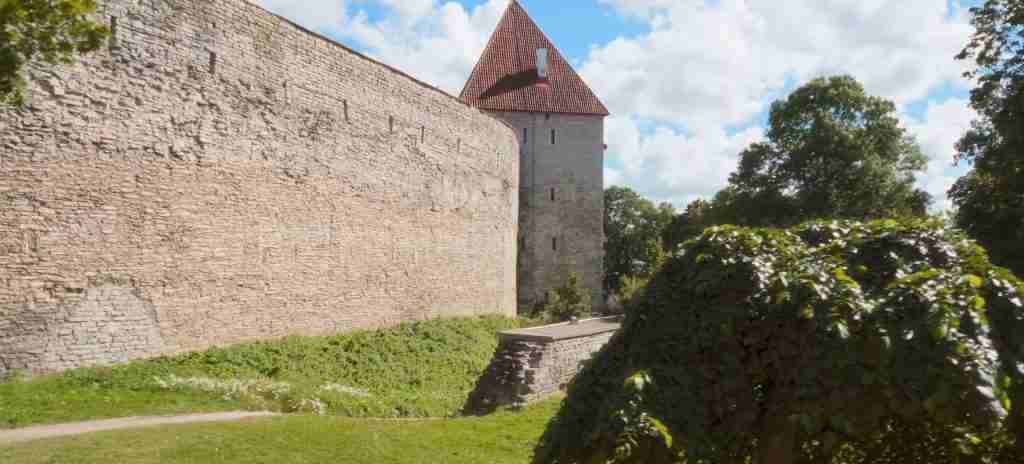
The defensive walls encircling Tallinn Old Town represent one of the most complete medieval fortification systems surviving in northern Europe, with approximately 1.9 kilometers of the original 2.4-kilometer circuit still standing. The fortification system’s development spanned three centuries, from the initial 13th-century wooden palisades to the sophisticated stone walls and towers constructed during the 14th-16th centuries. This evolution reflects both Tallinn’s growing wealth, which financed increasingly ambitious defensive works, and the advancing military technology that required stronger, more elaborate fortifications.
The earliest stone walls date from the late 13th century when Tallinn’s status as a Hanseatic League member necessitated protection of the valuable merchant goods stored within the city. These initial walls stood approximately 3 meters thick and 8 meters high, substantial enough to deter raiders and small military forces but vulnerable to sustained siege. During the 14th-15th centuries, as artillery became more prevalent, Tallinn invested heavily in strengthening its defenses: walls were thickened to 3-4 meters, raised to 13-16 meters in height, and reinforced with semicircular and D-shaped towers positioned at 20-30 meter intervals along the circuit.
The defensive towers served multiple functions beyond passive defense. They provided elevated positions for archers and later artillery, created strong points that could maintain defense even if wall sections were breached, and stored military supplies and gunpowder. The towers’ architectural diversity reflects different construction periods and military requirements: some are tall and slender, designed for observation and archery; others are massive and squat, built to support heavy cannon. Each tower received a name, often based on its position, purpose, or a historical incident, creating a nomenclature that has survived into modern times: Kiek in de Kök (Peek into the Kitchen), Sauna Tower, Plate Tower, and others.
By the 16th century, Tallinn’s defenses incorporated the latest developments in military architecture: lower, thicker walls capable of absorbing cannon fire; artillery bastions projecting from the walls to provide flanking fire; and sophisticated gate complexes with multiple defensive features. These improvements required enormous financial investment, demonstrating the perceived value of the city and the threats it faced. The fortifications successfully defended Tallinn through numerous conflicts, though their military utility gradually declined as artillery technology advanced. Today, the surviving walls and towers serve a different purpose: they provide the physical boundary that defines the UNESCO World Heritage inscribed area and create the enclosed medieval atmosphere that makes Tallinn Old Town unique.
Walking the Wall: Accessible Sections
Several sections of Tallinn’s defensive walls have been made accessible to visitors, allowing the experience of walking atop the medieval fortifications and viewing the city from the defensive perspective. The most accessible section runs along Müürivahe Street (Wall Street) between Nunne and Kuldjala Streets, where visitors can climb to the wall walk connecting several towers. This section preserves the medieval walkway where guards patrolled, watching for threats from outside while monitoring activity within the city—the walls defended against external enemies but also controlled the population by limiting access points and enabling surveillance.
Walking along the wall provides unique perspectives on the medieval defensive strategy. The wall’s considerable height (13-16 meters) becomes viscerally apparent when standing on the walkway, as does the thickness (3-4 meters) necessary to provide structural stability and resist bombardment. The crenellations (defensive parapets with alternating solid portions and openings) demonstrate how medieval soldiers could shelter while maintaining lines of fire. Arrow loops at various levels in the towers show how defenders could direct fire from protected positions at different heights and angles, creating overlapping fields of fire that made approaching the walls hazardous.
The accessible towers along this section include distinctive structures with individual characters. Plate Tower (Plaat torn), named for the metal plates made in nearby workshops, provides insight into how these defensive structures adapted to civilian use over time—the ground floor often served as storage or workshop space, with only the upper levels maintained for military purposes. Sauna Tower (Sauna torn) reportedly housed public baths before being incorporated into the defensive system, demonstrating how the expanding fortifications enclosed existing civilian structures and adapted them to military needs.
The wall walk experience reveals architectural details difficult to appreciate from ground level: the construction techniques using limestone blocks of varying sizes, the medieval masonry work with its irregular but effective bonding patterns, the drainage systems that prevented water accumulation from destroying the walls, and the interconnections between towers and wall sections that created a unified defensive system. The views from the wall encompass both the medieval city interior and the areas beyond the walls, providing perspective on how the fortifications separated the protected urban core from the surrounding landscape. This walking experience brings the defensive function of the UNESCO heritage site into tangible focus—these walls and towers were not decorative elements but serious military installations that enabled Tallinn to maintain independence and protect the wealth that financed the impressive architectural heritage within.
Kiek in de Kök Museum and Bastion Passages
Kiek in de Kök (Peek into the Kitchen) tower stands as the largest and most powerful artillery tower in Tallinn’s defensive system, built during 1475-1483 to accommodate heavy cannon. The tower’s unusual name, Low German for “peek into the kitchen,” references the guards’ ability to see down into the houses below from the tower’s 38-meter height—a reminder of how these defensive structures dominated the medieval cityscape. The tower’s massive walls, reaching 4 meters thick at the base, represent the maximum defensive capability medieval construction technology could achieve, designed to absorb cannon fire while providing a stable platform for the city’s own artillery.
Today, Kiek in de Kök functions as a fortifications museum, housing exhibits on Tallinn’s defensive history from medieval times through World War II. The museum’s collection includes weapons, armor, models of the fortification system at different historical periods, and archaeological finds from excavations around the defensive structures. The exhibits demonstrate how military technology evolved and how Tallinn’s defenses adapted: from walls designed to resist scaling and archery to massive cannon towers, from medieval towers to 17th-century bastions. Understanding this evolution enhances appreciation for why Tallinn invested so heavily in fortifications and how these structures functioned as an integrated defensive system.
The Bastion Passages (Bastionikäigud), accessible from the museum, provide access to the underground tunnel system constructed during the 17th-18th centuries beneath Tallinn’s northern defensive bastions. These passages served various military functions: they connected different parts of the defensive system, provided protected movement routes for troops and supplies, created counter-mining positions to detect enemy tunneling, and stored gunpowder and ammunition away from surface bombardment. The passages demonstrate how Tallinn’s defenses extended vertically—not just the visible walls and towers but a subterranean dimension that added depth and complexity to the defensive strategy.
Walking through these passages offers a dramatically different perspective on the fortifications. The tunnels remain cool and dark, with limestone walls showing the marks of the craftsmen who carved them. The acoustics created by the vaulted passages demonstrate how guards could detect digging or movement, while the narrow confines show how defenders could control access and maintain security. The passages occasionally open to courtyards and sally ports (concealed gates allowing defenders to launch counterattacks), revealing the sophisticated planning behind the defensive system. This subterranean network, combined with the surface walls, towers, and bastions, created a defense-in-depth that made Tallinn one of the most formidable fortified cities in northern Europe. The museum and passages provide essential context for understanding the defensive elements of the UNESCO World Heritage Site and how military necessity shaped the medieval urban development that characterizes Tallinn Old Town today.
Churches and Religious Architecture
St. Mary’s Cathedral: Estonia’s Oldest Church
St. Mary’s Cathedral (Toomkirik) on Toompea Hill claims the distinction of being the oldest church in mainland Estonia, with origins dating to the Danish conquest in 1219. The cathedral’s long history—over 800 years of continuous religious use—makes it a living connection to medieval Tallinn’s spiritual life and a repository of architectural and artistic developments spanning Gothic through Baroque periods. The cathedral served as the religious center for Tallinn’s ruling elite, contrasting with the merchant-patronized churches in the Lower Town, and this elite status influenced its architecture, decoration, and historical role.
The current structure reflects multiple building campaigns, with the oldest surviving elements dating from the mid-13th century. The cathedral’s Gothic architecture—pointed arches, rib-vaulted ceilings, slender columns—represents the international Gothic style adapted to Baltic conditions and available materials. The building’s relatively austere exterior, constructed from local limestone, gives way to a more decorated interior featuring numerous coats of arms of Baltic German nobility, elaborate tombstones, and epitaphs that document the aristocratic families who dominated Tallinn’s upper town for centuries. These heraldic decorations transform the interior into a genealogical archive of the Baltic German elite, with carved and painted family crests covering walls and pillars.
The cathedral’s architectural evolution mirrors Tallinn’s political history. Danish construction gave way to Teutonic Order rebuilding, then Swedish-period modifications, and finally Russian-era alterations. Each ruling power left architectural evidence: the Gothic nave from the medieval period, the Baroque tower added in the 18th century, the numerous side chapels built by noble families as private burial spaces. The cathedral’s conversion to Lutheran use during the Reformation (1561) resulted in the removal of Catholic altars and imagery, replaced by the Protestant emphasis on preaching—the prominent pulpit and simple altar reflect Lutheran theological priorities that differed markedly from Catholic visual richness.
St. Mary’s Cathedral contains exceptional funerary monuments, including elaborate carved tombstones of military commanders, administrators, and nobles who served Swedish and Russian regimes. The monuments demonstrate the sculptural quality achieved by Baltic craftsmen, with realistic portrait sculpture, allegorical figures, heraldic devices, and Latin inscriptions that detail the deceased’s accomplishments. These memorials serve dual functions: they honor individuals who shaped Tallinn’s history, and they document the artistic styles, iconographic conventions, and social values of the periods they represent. The cathedral functions as both active Lutheran church and historical museum, where religious services occur in a space densely layered with eight centuries of Baltic history.
Church of the Holy Spirit: Medieval Civic Religion
The Church of the Holy Spirit (Pühavaimu kirik) represents the religious architecture of Tallinn’s merchant community, contrasting with Toompea’s aristocratic cathedral. Built during the 14th century and substantially renovated in later periods, Holy Spirit Church served as the principal place of worship for the Lower Town’s German-speaking merchant and artisan population. The church’s location near Town Hall Square, in the heart of the commercial district, reflects its civic function—this was the church of the town council and guilds, where religious and commercial authority intersected.
The church’s Gothic architecture demonstrates the characteristic Baltic approach: a relatively simple exterior with a distinctive clock on the facade (dating from the 17th century and Tallinn’s oldest public clock) and an interior focused on preaching and community gathering rather than elaborate decoration. The building’s compact form fits the dense medieval urban fabric, with limited space around it and a tower that rises above the surrounding merchant houses without dominating the cityscape like the taller church spires elsewhere. This modest scale reflects the church’s function serving the local community rather than projecting power across the entire city.
The interior preserves important medieval and Renaissance elements despite renovations. The high altar, created by Bernt Notke in 1483, represents one of the finest examples of late medieval religious art in the Baltic region. This elaborate carved and painted altarpiece depicts biblical scenes with exceptional detail and artistic quality, demonstrating the level of craftsmanship patronized by Tallinn’s wealthy merchant community. The altarpiece functioned not just as religious instruction but as civic pride—the merchant community commissioning this artwork signaled their wealth, piety, and cultural sophistication.
The church’s Lutheran character, established after the Reformation, emphasizes the Word over visual imagery. The prominent pulpit, decorated with carved biblical scenes, occupies a central position reflecting Protestant theology that prioritized preaching. The church also housed Tallinn’s first printed book, a catechism in Low German published in 1535, marking an important moment in Baltic religious and cultural history. Holy Spirit Church represents the merchant city’s religious dimension, where civic identity, commercial success, and Christian faith intertwined in the Gothic architecture and religious art that characterized Hanseatic urban culture.
Church of St. Nicholas: Museum of Ecclesiastical Art
St. Nicholas’ Church (Niguliste kirik) originated in the 13th century as the church serving the Westphalian merchant community, but its current significance derives from its role as a museum of ecclesiastical art and concert hall. The church suffered severe damage during Soviet bombing in 1944, when a large portion of the structure burned, destroying the roof and damaging the interior. Post-war restoration transformed the church from an active religious building into a museum dedicated to medieval and early modern religious art, preserving works from churches across Estonia and creating one of the country’s most important collections of ecclesiastical heritage.
The architecture reflects the church’s Gothic origins with later additions and the extensive restoration necessitated by war damage. The structure features Gothic pointed arches, rib-vaulted ceilings, and the characteristic vertical emphasis of medieval church architecture. The building’s conversion to museum use allowed architectural interventions that would be impossible in an active church: modern lighting systems illuminate the artworks, climate control preserves delicate materials, and the spatial organization prioritizes displaying art rather than conducting religious services.
The museum’s collection includes exceptional examples of medieval religious art. The most significant work, Bernt Notke’s “Danse Macabre” (Dance of Death), originally created in the late 15th century, depicts the medieval memento mori theme where Death leads representatives of all social classes—pope, emperor, merchant, peasant—in a dance toward the grave. This large-scale painting, originally 30 meters long though only a 7.5-meter fragment survives, represents one of the most important medieval artworks in northern Europe. The work’s message—death as the great equalizer transcending social hierarchy—held particular resonance in a Hanseatic city where wealth and status preoccupied the merchant elite.
The museum also preserves numerous altarpieces, sculptures, and church furnishings from medieval Estonian churches, many of which lost their religious art during the Reformation or later secularization. These works demonstrate the high quality of religious art patronized by Baltic churches and provide evidence of the sophisticated artistic culture that existed in medieval Tallinn. The church’s additional function as a concert hall, with regular performances of sacred music, maintains a connection to its religious origins while serving contemporary cultural purposes. St. Nicholas’ transformation from parish church to museum demonstrates how UNESCO heritage buildings can adapt to new functions while preserving their historical and architectural significance.
Photography and Viewpoints
Best Times and Seasonal Considerations
Photographing Tallinn Old Town rewards careful attention to lighting conditions and seasonal characteristics that dramatically affect the visual character of the medieval architecture. The Baltic location at 59°N latitude creates distinctive light qualities throughout the year: long summer days with extended golden hours, dramatic winter light with low sun angles, and transitional spring and autumn periods offering variable conditions. Understanding these patterns helps photographers plan for optimal conditions to capture the UNESCO World Heritage cityscape.
Summer (June-August) provides the longest days, with sunrise around 4:00 AM and sunset near 10:00 PM in midsummer, creating extended periods of soft light ideal for photography. The high sun angle during midday produces harsh shadows that can be challenging, but the early morning and evening hours offer warm, directional light that enhances the texture of limestone facades and red-tiled roofs. Summer also brings tourist crowds, particularly in Town Hall Square and at major viewpoints, requiring early morning shoots to avoid congestion. The season’s green foliage in gardens and parks provides color contrast against the stone architecture.
Winter (December-February) creates dramatically different conditions: sunrise occurs around 9:00 AM and sunset near 3:30 PM, with low sun angles producing long shadows and warm light throughout the short day. Snow covering the Old Town’s roofs and cobblestones transforms the color palette and enhances the fairytale character of the medieval architecture. The Christmas market period (late November-early January) adds festive decorations and lighting that create atmospheric evening photography opportunities, though crowds peak during this popular tourist season. Winter’s clear, cold air often produces sharp, crisp light ideal for architectural photography, and the low tourist numbers outside market season allow unobstructed shots of landmark buildings.
Spring (March-May) and autumn (September-November) offer transitional conditions with moderate daylight hours and variable weather. Spring brings gradually increasing light and blooming flowers in the Danish King’s Garden and other green spaces, adding seasonal color. Autumn foliage provides warm tones that complement the red roofs and limestone walls. Both seasons experience fewer tourists than summer yet maintain reasonable weather conditions for extensive walking. The variable cloud cover during these seasons can produce dramatic skies that add interest to wide-angle cityscape photographs, particularly from Toompea’s viewing platforms where sky comprises a significant portion of the composition.
Essential Viewpoints and Perspectives
The Toompea viewing platforms—Kohtuotsa and Patkuli—provide the essential elevated perspectives for capturing Tallinn Old Town’s UNESCO heritage landscape. Kohtuotsa offers the classic postcard view: red-tiled roofs stretching toward the Gulf of Finland, Gothic spires punctuating the skyline, defensive walls with their distinctive towers. The platform’s west-facing orientation produces optimal light during afternoon and evening, when the sun illuminates the Lower Town while Toompea casts minimal shadow. Wide-angle lenses capture the full panorama, while telephoto lenses compress the perspective to emphasize the density of medieval architecture and the vertical elements (church towers, defensive towers) rising from the red roof canopy.
Patkuli platform, located approximately 200 meters west of Kohtuotsa, provides a different perspective emphasizing the defensive walls’ northern section and the integration of fortifications with the urban fabric. The platform’s position allows photography of the wall system snaking across the landscape, with watchtowers appearing at regular intervals. This viewpoint works particularly well for capturing the relationship between Upper and Lower Town, showing how the medieval city utilized topography for defense. Morning and midday light work best here, illuminating the walls and towers from the east. The platform’s less-crowded status (compared to Kohtuotsa) facilitates photography without interference from other visitors.
St. Olaf’s Church tower viewing platform, accessible by climbing 232 steps, provides the highest accessible viewpoint in the Old Town. The 360-degree views from approximately 60 meters elevation reveal the Old Town’s compact form, the perfect preservation of the medieval street pattern, and the relationship between historic core and modern city. This elevation enables photographs looking down onto the red roofs, capturing their texture and the rhythmic pattern they create. The viewing platform works throughout the day, though early morning and late afternoon provide the most dramatic light. The tower’s height and central position make it essential for comprehensive documentation of the UNESCO heritage site’s extent and preservation.
Ground-level photography opportunities concentrate in Town Hall Square, where the medieval architectural ensemble creates numerous compositions. The square’s openness allows various perspectives on the Town Hall: wide-angle shots capturing the entire facade and tower, telephoto compression of architectural details, and night photography of the illuminated building. St. Catherine’s Passage offers intimate medieval atmosphere with its cobblestones, archway, and glimpse of church ruins—a photographer’s favorite for capturing the Old Town’s romantic character. Pikk Street provides perspectives on merchant house facades, guild halls, and St. Olaf’s spire framed by medieval buildings.
Technical Considerations and Equipment
Photographing Tallinn Old Town’s UNESCO heritage effectively requires equipment choices and technical approaches suited to medieval architecture and variable Baltic light conditions. A versatile zoom lens covering wide-angle to moderate telephoto (24-70mm equivalent) handles most situations: wide-angle for capturing building facades in narrow streets, moderate wide-angle for Town Hall Square compositions, and short telephoto for compressing perspective at viewpoints and isolating architectural details. An ultra-wide lens (14-24mm) proves valuable in confined spaces and for dramatic perspective effects, though it risks distortion of the Gothic vertical lines that characterize the architecture.
The Old Town’s narrow streets and tall buildings create challenging light conditions: deep shadows in passages, high contrast between sunlit and shaded areas, and limited direct light in some locations. Modern digital cameras with good dynamic range handle these conditions better than older equipment, allowing recovery of shadow detail in post-processing. Shooting in RAW format provides maximum flexibility for exposure adjustment and white balance correction. Bracketing exposures (shooting the same composition at multiple exposures) enables creation of HDR images that capture both shadow and highlight detail in high-contrast scenes.
A stable tripod proves essential for night photography, long exposures during blue hour, and HDR shooting. Tallinn’s cobblestone streets require a tripod with robust legs and good stability—lightweight travel tripods can struggle with the uneven surfaces. Night photography opportunities include the illuminated Town Hall, Alexander Nevsky Cathedral’s lit facade, and the Christmas market’s festive lights. Blue hour (the period just after sunset when ambient sky light remains but artificial lights have been turned on) provides the optimal balance between natural and artificial light for architectural photography, typically occurring 20-40 minutes after sunset depending on season.
The Old Town’s cobblestones create practical challenges: wheeled camera bags prove difficult to maneuver on uneven surfaces, and tripod placement requires attention to stability. Sturdy camera bags that can be carried comfortably during extended walking work better than rolling cases. Weather protection matters in the Baltic climate—a rain cover for camera and bag, lens cloths for removing moisture, and protective filters for lenses prevent weather-related damage during the variable conditions that characterize maritime climate. Protective measures become particularly important during winter when snow and ice create slippery conditions, and equipment can fog when moving between cold exterior and warm interior environments.
Practical Walking Information
Navigating the Old Town: Routes and Orientation
Tallinn Old Town’s medieval street pattern, while contributing to its UNESCO heritage character, creates navigation challenges for first-time visitors. The organic layout developed over centuries lacks the geometric logic of planned cities, with streets curving, narrowing, and sometimes ending unexpectedly. However, the compact size (113 hectares) and the enclosed nature created by defensive walls make serious disorientation unlikely—walking in any direction for 10-15 minutes typically leads to a wall, major landmark, or familiar location.
Town Hall Square functions as the central reference point and natural starting location for Lower Town exploration. From this square, four main streets radiate to different city gates and major landmarks: Pikk Street runs north toward the Great Coastal Gate and St. Olaf’s Church; Viru Street heads east to Viru Gate; Müürivahe Street follows the defensive walls; and numerous smaller streets connect to other squares and sites. Learning these main arteries and their destinations provides sufficient orientation framework for exploring the secondary streets and passages without constant map consultation.
Accessing Toompea requires using Long Leg or Short Leg streets—these two passages represent the only traditional pedestrian routes between Upper and Lower Town. Both are well-marked and easily identified from Town Hall Square area. Once on Toompea, the area’s smaller size and the presence of major landmarks (Alexander Nevsky Cathedral, Toompea Castle, viewing platforms) simplify orientation. The viewing platforms provide excellent opportunities to study the Old Town’s layout from above, helping to mentally map the medieval street pattern.
Modern technology aids navigation: smartphone maps with GPS function work well in the Old Town’s open spaces, though GPS accuracy can degrade in narrow passages between tall buildings. However, excessive reliance on digital navigation can detract from the heritage experience—the pleasure of medieval urban exploration includes some degree of wandering and discovery. A hybrid approach works best: understand the main routes and landmarks, use maps for general orientation, but allow time for spontaneous exploration of appealing passages and courtyards that represent the medieval city’s organic character.
Accessibility and Physical Requirements
Walking Tallinn Old Town presents physical challenges that visitors should consider when planning their exploration. The authentic medieval cobblestone streets, while historically significant and visually charming, create uneven walking surfaces that require attention and proper footwear. The stones vary in size and placement, with gaps between them and occasional missing or damaged stones creating tripping hazards. Rainfall makes cobblestones slippery, and winter ice compounds the hazard. High heels, smooth-soled shoes, and open sandals prove impractical and potentially dangerous—sturdy walking shoes with good tread provide necessary traction and ankle support.
The topography presents significant elevation changes. Toompea Hill rises approximately 50 meters above the Lower Town, accessed via Long Leg and Short Leg streets that feature substantial inclines and, in Short Leg’s case, numerous steps. Walking from the Lower Town to Toompea and back involves considerable climbing equivalent to ascending a 15-story building. Visitors with limited mobility or cardiovascular issues should plan accordingly, perhaps limiting exploration to the relatively level Lower Town or using taxi services to access Toompea separately from Lower Town exploration.
Accessibility for wheelchairs and mobility aids faces severe limitations due to the medieval infrastructure. Many streets feature steps, steep inclines, or cobblestone surfaces impassable for wheelchairs. Some main streets in the Lower Town, particularly around Town Hall Square, provide relatively level stone paving that wheelchairs can negotiate, but many areas remain inaccessible. The defensive wall walkways, tower stairs, and Toompea viewing platforms generally lack wheelchair access. Some museums and churches have installed ramps or elevators, but comprehensive accessibility remains challenging in a UNESCO heritage site where preservation requirements limit infrastructure modifications.
The Old Town’s compact size offers some advantages: distances remain manageable even at slow walking speeds, and numerous cafes and restaurants provide rest opportunities. Public restrooms exist at key locations, though some require navigating stairs. Summer heat can be challenging when walking extensively on stone surfaces that absorb and radiate heat, while winter cold, ice, and limited daylight create different concerns. Planning route length and difficulty according to personal fitness level, breaking exploration into multiple shorter walks rather than attempting comprehensive coverage in a single day, and remaining flexible to adjust plans based on energy levels ensures enjoyable rather than exhausting heritage experiences.
Visitor Services and Amenities
Tallinn Old Town provides comprehensive visitor services despite its medieval layout, balancing tourist needs with UNESCO heritage preservation. The Tallinn Tourist Information Centre in Town Hall Square serves as the primary resource, offering maps, brochures, guidance on attractions, and assistance with practical questions. Staff speak multiple languages and can provide recommendations tailored to visitor interests, time constraints, and accessibility needs. The center sells Tallinn Card, which provides free public transport and admission to many museums and attractions—potentially cost-effective for visitors planning to enter multiple paid sites.
Numerous cafes, restaurants, and shops occupy historic buildings throughout the Old Town, providing refreshment, meals, and shopping opportunities. These establishments range from tourist-oriented venues in prime locations to more local-focused options in side streets. Medieval cellars and vaulted spaces house restaurants offering atmospheric dining environments, while outdoor seating in squares and along streets provides people-watching opportunities. Prices in the Old Town generally exceed those in areas outside the walls, reflecting the tourism economy, though quality and atmosphere often justify the premium.
Public restrooms exist at several locations: near Town Hall, at Viru Gate, and in some museums and cafes (though cafes typically expect patronage). Facilities meet modern standards despite the medieval surroundings. ATMs appear at regular intervals, though credit cards are widely accepted at most establishments. Free WiFi exists at many cafes and public spaces, though coverage varies. Phone service and data connections work reliably in open spaces but can weaken in thick-walled medieval buildings and narrow passages.
Luggage storage facilities operate near the Old Town boundaries, useful for visitors with limited time between transportation connections. Souvenir shops selling everything from tacky trinkets to high-quality handicrafts cluster around Town Hall Square and major routes, while more specialized shops in secondary streets offer amber jewelry, traditional textiles, and local art. Artisan workshops in St. Catherine’s Passage sell handmade items directly from makers, providing authentic alternatives to mass-produced souvenirs. The Christmas market period (late November-early January) transforms Town Hall Square into a festive marketplace selling traditional crafts, food, and drinks—an atmospheric shopping experience though crowded and tourist-oriented.
Conservation and UNESCO Heritage Management
Preservation Challenges and Solutions
Maintaining Tallinn Old Town’s UNESCO World Heritage status requires balancing preservation of historic fabric with the needs of a living, functioning urban center. The challenges extend beyond individual monument conservation to encompass urban planning, traffic management, economic pressures, and changing urban demographics. The Estonian authorities, working with UNESCO guidelines and international conservation standards, have developed comprehensive approaches to address these complex issues while maintaining the Outstanding Universal Value that justified the 1997 inscription.
Physical preservation of medieval structures presents ongoing technical challenges. The 13th-16th century buildings were constructed using materials and techniques that require specialized maintenance: limestone facades vulnerable to weathering, wooden structural elements subject to decay, medieval foundations that can settle, and roofing systems that need periodic replacement. Conservation work must use appropriate materials and techniques—replacing damaged stones with compatible limestone, repairing wooden beams using traditional joinery, maintaining roof tiles that match historical precedents. Modern interventions must remain reversible and distinguishable from original fabric according to international conservation principles.
The defensive walls face particular preservation challenges due to their age, massive scale, and exposure to weather. Portions of the walls show deterioration from centuries of freeze-thaw cycles, moisture infiltration, and vegetation growth in masonry joints. Conservation projects addressing these issues require substantial funding and specialized expertise. Recent work has focused on stabilizing damaged sections, improving drainage systems to prevent water damage, removing harmful vegetation while preserving the picturesque ivy that has colonized some walls, and maintaining the accessible sections open to visitors without compromising structural integrity.
Economic pressures create preservation challenges through development demands. Tallinn Old Town remains a desirable location for commercial activity, restaurants, hotels, and residential use, creating pressure for modifications that could compromise historic character. The Tallinn Old Town Heritage Protection Area statutes regulate construction, renovation, and use changes, requiring that any modifications respect the historic fabric and character. These regulations prevent inappropriate alterations while allowing necessary adaptations for contemporary use. Finding the balance between preservation and economic vitality remains an ongoing management challenge.
Threats and Protective Measures
Tourism, while economically beneficial and helping justify preservation investments, poses potential threats to the UNESCO heritage site. The Old Town attracts millions of visitors annually, creating physical wear on cobblestone streets and building exteriors, crowding that affects the quality of heritage experience, and commercial pressure that can lead to historical buildings being converted to tourist-oriented uses at the expense of residential and local commercial functions. Managing tourism impacts requires limiting vehicle access (the Old Town largely operates as a pedestrian zone), maintaining and periodically renewing street surfaces, regulating commercial uses to maintain diversity, and managing visitor flows during peak periods.
Climate change presents emerging threats to the historic fabric. Increased precipitation and more frequent freeze-thaw cycles accelerate weathering of limestone and masonry deterioration. Rising sea levels and storm surge risk, while not immediate threats given Tallinn’s elevation, require long-term planning. Temperature changes affect the stability of wooden structural elements and the performance of traditional building materials. Adapting conservation strategies to address climate change while maintaining heritage authenticity represents a significant challenge requiring ongoing monitoring and research.
Modern infrastructure needs create potential conflicts with heritage preservation. Providing contemporary utilities (electricity, water, sewage, communications) to medieval buildings requires sensitive integration that doesn’t damage historic fabric or compromise visual character. Installing fire safety systems, accessibility features, and climate control in heritage structures demands careful planning. The Tallinn Old Town Conservation Area regulations require that infrastructure improvements use reversible methods, minimal visual impact, and appropriate materials—expensive requirements but necessary for heritage protection.
The protective measures in place include the legal framework established by Estonian heritage legislation, the Tallinn Old Town Conservation Area statutes approved by the Estonian government, and the buffer zone surrounding the inscribed area that controls development visible from within the UNESCO site. These regulations prohibit demolition of historic buildings, require approval for renovations and alterations, control new construction, regulate commercial signage and outdoor advertising, and maintain height restrictions that preserve sight lines and the skyline dominated by medieval towers and spires. Enforcement mechanisms and regular monitoring ensure compliance and enable early intervention when threats emerge.
The Living Heritage Concept
Tallinn Old Town exemplifies the “living heritage” approach that has become central to contemporary UNESCO heritage management. Rather than creating a preserved museum where buildings survive but original urban functions disappear, Tallinn maintains the Old Town as a functioning urban center with residents, businesses, cultural institutions, and government offices. This approach recognizes that heritage preservation succeeds best when historic buildings remain economically viable and socially relevant, creating stakeholder investment in maintaining historic character.
Approximately 4,000 people reside in the Old Town, continuing the residential function that has characterized this urban space for eight centuries. Maintaining residential population prevents the Old Town from becoming purely a tourist attraction, preserving the neighborhood atmosphere and ensuring that businesses serving local needs rather than only tourists remain viable. However, housing costs in the desirable historic center have risen, creating concerns about gentrification and the displacement of long-term residents—a common challenge in successful UNESCO heritage sites worldwide.
Commercial activity spans traditional crafts, modern businesses, restaurants, cultural venues, and tourism services. This diversity maintains economic vitality while creating tensions when tourism-oriented businesses expand at the expense of businesses serving residents. The heritage regulations seek to maintain balance by controlling commercial uses, limiting formula retail chains, and encouraging traditional crafts and local businesses. The Christmas market, while heavily tourist-oriented, maintains traditional craft and food vendors, connecting contemporary commercial activity to historical market traditions that characterized medieval town squares.
Cultural institutions—museums, concert halls, galleries—activate heritage buildings for contemporary cultural purposes while maintaining their historical significance. St. Nicholas’ Church functioning as museum and concert hall, the Dominican Monastery’s cloister serving as exhibition space and artisan workshops, and the Town Hall hosting concerts and civic ceremonies demonstrate how heritage buildings can serve contemporary society while preserving their essential character. This functional continuity, where buildings remain active rather than preserved as empty shells, represents successful heritage management that UNESCO promotes globally as a model for other historic urban areas.
Frequently Asked Questions
How do I get to Tallinn Old Town from the airport or port?
From Tallinn Airport, located 4 kilometers from the Old Town, tram line 4 provides direct service to the city center, with the journey taking approximately 15 minutes. Taxis offer faster service (10 minutes) at higher cost. From the passenger port, where cruise ships and ferries arrive, the Old Town is within comfortable walking distance (1.5 kilometers, approximately 20 minutes), or tram lines 1 and 2 connect the port to the city center. Public transport in Tallinn is efficient and affordable, making it the practical choice for budget-conscious visitors.
Are there entrance fees for Tallinn Old Town?
Walking through the streets of Tallinn Old Town and viewing the exterior architecture is free—there are no entrance fees or tickets required to access the UNESCO World Heritage area. However, individual attractions charge admission: churches typically charge €2-5 for entry, museums range €4-10, and specialty experiences like the defensive wall walk or tower viewpoints have their own fees. The Tallinn Card provides free entry to many paid attractions and can be cost-effective for visitors planning to enter multiple sites.
Can I visit the defensive towers and walk on the walls?
Several sections of Tallinn’s defensive walls are accessible to visitors, particularly the stretch along Müürivahe Street where you can walk along the medieval wall connecting several towers. The accessible section includes towers like Plate Tower and Sauna Tower. Kiek in de Kök tower houses a fortifications museum and provides access to the underground Bastion Passages. These accessible sections have admission fees and opening hours that vary seasonally. Not all towers and wall sections are open to the public, as some remain structurally unsound or serve other functions.
Is Tallinn Old Town safe for tourists?
Tallinn Old Town maintains a very safe environment for tourists, with low violent crime rates and strong police presence, particularly in central areas like Town Hall Square. The main concerns involve petty theft—pickpocketing in crowded areas and theft from unattended belongings in restaurants or cafes. Standard urban precautions apply: secure valuables, watch bags and phones in crowded spaces, avoid displaying expensive items conspicuously. The cobblestone streets and steps pose the greatest physical risk—wear appropriate footwear and watch your step, particularly after rain or during winter when ice creates slipping hazards.
What are the best restaurants in the Old Town for traditional Estonian food?
Several Old Town restaurants specialize in traditional Estonian cuisine while maintaining authentic medieval or historical atmospheres. Olde Hansa recreates medieval dining with period recipes, candlelight, and costumed servers in a 15th-century merchant house. III Draakon in Town Hall offers simple traditional dishes in a medieval cellar atmosphere. Rataskaevu 16 serves modern interpretations of Estonian classics in a more contemporary setting. Kuldse Notsu Kõrts (Golden Piglet Inn) provides hearty traditional dishes in a casual environment. Prices in these Old Town restaurants generally exceed those in neighborhoods outside the walls, but the atmospheric settings and quality justify the premium for many visitors.
How long does it take to walk the entire defensive wall?
The complete defensive wall circuit measures approximately 1.9 kilometers of surviving walls (from an original 2.4 kilometers), but not all sections are accessible to visitors or suitable for walking. The accessible sections along Müürivahe Street, which can be walked along the top of the walls, cover approximately 200 meters and take 15-20 minutes to walk slowly while examining the towers and views. Walking the entire perimeter at ground level, following the exterior of the walls, takes approximately 45-60 minutes at a moderate pace and provides perspectives on the defensive system from outside the medieval city. Many visitors combine wall walking with visits to specific towers and the Kiek in de Kök museum for a comprehensive understanding of Tallinn’s fortifications.
Can I visit Tallinn Old Town in winter?
Tallinn Old Town offers excellent winter visiting conditions despite Baltic climate challenges. The medieval architecture appears particularly atmospheric under snow, creating postcard scenes enhanced by festive decorations during the Christmas market season (late November through early January). Winter daylight is limited (approximately 9 AM to 3:30 PM in December), requiring efficient use of daylight hours for photography and sightseeing. Temperatures range from -5°C to -15°C, necessitating appropriate winter clothing. The cobblestones become slippery with ice, requiring extra caution and proper footwear with good traction. Most attractions remain open during winter, though some have reduced hours. Winter tourism offers advantages: fewer crowds outside the Christmas market period, lower accommodation prices, and the unique beauty of a snow-covered medieval city.
What makes Tallinn different from other medieval cities in Europe?
Tallinn Old Town distinguishes itself through its exceptional completeness and authenticity as a functioning medieval urban environment. While many European cities preserve individual medieval buildings or reconstructed quarters, Tallinn maintains its entire 13th-century urban plan, substantial defensive walls with 26 towers, and concentrated architectural heritage from the 13th-16th centuries without significant later development disrupting the medieval character. The dual structure of Upper and Lower Town within unified walls creates unique spatial organization. The Old Town’s remote location in the Baltic preserved it from some of the development pressures affecting more central European medieval cities. The combination of Hanseatic merchant architecture, defensive structures, ecclesiastical buildings, and the authentic street pattern creates an integrated medieval cityscape that few European cities equal.
Do I need a guide to explore the Old Town?
Exploring Tallinn Old Town independently is entirely feasible and rewarding—the compact size, good signage, and availability of maps and guidebooks enable self-guided exploration. However, guided tours provide historical context, architectural explanation, and access to areas or perspectives that independent visitors might miss. Walking tours (typically 2-3 hours) cover major landmarks while explaining the medieval history and UNESCO significance. Specialized tours focus on specific themes: architecture, food, Soviet history, or ghost stories in the atmospheric medieval streets. Audio guides offer compromise between fully independent exploration and formal guided tours. The choice depends on personal preferences: those who enjoy researching and discovering at their own pace thrive with independent exploration, while those who prefer expert interpretation and structured experiences benefit from guided tours.
What should I know about photography restrictions in the Old Town?
Photography in public spaces throughout Tallinn Old Town is generally permitted without restrictions—visitors can photograph streets, building exteriors, views from public viewpoints, and the defensive walls freely. Some museums and churches prohibit interior photography or charge photography fees, with restrictions clearly posted at entrances. Commercial photography (photo shoots for commercial purposes, wedding photography, film production) requires permits from city authorities. Drone photography faces strict regulations in the Old Town due to safety concerns and the presence of government buildings; drone use requires official permission. Respectful photography practices apply: avoid photographing people without permission, respect private property boundaries, and maintain awareness that the Old Town is a living neighborhood where residents deserve privacy despite the heavy tourism.