
Taj Mahal vs Red Fort vs Qutub Minar: Delhi’s UNESCO Sites Compared
India’s capital region houses three extraordinary UNESCO World Heritage Sites that collectively span eight centuries of Islamic architecture and Mughal empire history. While the Taj Mahal in Agra represents the emotional pinnacle of Mughal building artistry, Delhi’s Red Fort and Qutub Minar showcase different aspects of Islamic rule in India, from military power to religious devotion
Key Takeaways
- Taj Mahal represents the pinnacle of Mughal love architecture, requiring day trip from Delhi (3-4 hours each way)
- Red Fort showcases Mughal imperial power and daily life, easily accessible in central Delhi
- Qutub Minar displays Delhi Sultanate heritage and Indo-Islamic architecture fusion from the 12th century
- Each site offers unique experiences: romance (Taj), grandeur (Red Fort), and historical depth (Qutub)
- Combined visit is ideal for understanding 800 years of Delhi’s Islamic architectural evolution
- Different time requirements: Taj Mahal (full day), Red Fort (half day), Qutub Minar (2-3 hours).
Comparing these monuments reveals the evolution of Indo-Islamic architecture from the Delhi Sultanate through the Mughal Empire’s golden age, offering visitors a comprehensive understanding of how different dynasties expressed their power, faith, and aesthetic vision through monumental construction. Each site provides unique insights into the cultural synthesis that shaped medieval and early modern India.
Historical Context and Significance
Taj Mahal (1631-1653): Love and Loss in Marble
The Taj Mahal represents the emotional and artistic pinnacle of Mughal architecture, built during Shah Jahan’s reign when the empire reached its territorial and cultural zenith. Unlike the other monuments, the Taj was conceived as a personal expression of grief and love rather than a symbol of imperial power or religious devotion.
Constructed as a tomb for Mumtaz Mahal, Shah Jahan’s beloved wife who died in childbirth, the monument transforms the traditional Islamic mausoleum concept into an ethereal vision of paradise on earth. The project consumed enormous resources over 22 years, involving over 20,000 craftsmen and representing one of history’s most ambitious architectural undertakings.
The Taj Mahal’s significance extends beyond its beauty to encompass the Mughal Empire’s cultural achievements, international trade connections that brought materials from across Asia, and the sophisticated artistic synthesis that characterized 17th-century Mughal court culture.
Red Fort (1638-1648): Imperial Power and Daily Life
The Red Fort, also built during Shah Jahan’s reign, served as the primary residence and administrative center of Mughal emperors for over 200 years. Unlike the contemplative Taj Mahal, the Red Fort was designed to showcase imperial power while providing luxurious living spaces for the royal family and court.
The fort’s construction coincided with Shah Jahan’s decision to move the Mughal capital from Agra to Delhi, reflecting the empire’s confidence and desire to establish a magnificent new center of power. The complex contained throne halls, private apartments, gardens, and administrative buildings that supported the complex machinery of Mughal governance.
Historical significance includes serving as the seat of power during the empire’s decline, witnessing the Indian Rebellion of 1857, and becoming the symbolic center of Indian independence when Jawaharlal Nehru delivered his famous “Tryst with Destiny” speech from its ramparts in 1947.
Qutub Minar (1199-1220): Early Islamic Conquest and Architecture
The Qutub Minar represents the earliest major Islamic monument in India, built by Qutub-ud-din Aibak after the conquest of Delhi in 1192. This victory tower symbolized the establishment of Muslim rule in northern India and the beginning of over 600 years of Islamic political dominance.
The monument complex includes not only the famous minaret but also India’s first mosque (Quwwat-ul-Islam), built partly from materials taken from destroyed Hindu and Jain temples. This construction represents the complex cultural dynamics of early Islamic rule and the beginning of Indo-Islamic architectural synthesis.
The Qutub Minar’s historical importance extends beyond its architectural significance to encompass the beginning of a new era in Indian history, marking the transition from Hindu Rajput kingdoms to Islamic sultanates that would reshape the subcontinent’s political, cultural, and architectural landscape.
Extended multi-day tours – 5+ days
Featured Taj Mahal Multi-Day Tour Packages

2 days
Taj Mahal Overnight Tour From New Delhi By Car
- ✓ Comprehensive Taj Mahal tour
- ✓ Expert local guides included
- ✓ All accommodation arranged
- ✓ Transportation provided
1 days
From Delhi: Taj Mahal & Agra Tour with 5-Star Marriott Lunch
- ✓ Comprehensive Taj Mahal tour
- ✓ Expert local guides included
- ✓ All accommodation arranged
- ✓ Transportation provided
1 days
Private Taj Mahal at Sunrise and Agra Day Tour From Delhi
- ✓ Comprehensive Taj Mahal tour
- ✓ Expert local guides included
- ✓ All accommodation arranged
- ✓ Transportation provided
1 days
Same day Trip to Taj Mahal
- ✓ Comprehensive Taj Mahal tour
- ✓ Expert local guides included
- ✓ All accommodation arranged
- ✓ Transportation provided
Multi-day tour packages powered by TourRadar. Prices and availability subject to change.
Architectural Comparison and Styles
Taj Mahal: Perfected Mughal Synthesis
The Taj Mahal represents the ultimate refinement of Mughal architectural style, combining Persian, Central Asian, and Indian elements into a harmonious whole that transcends its individual influences. The monument’s design achieves perfect symmetry through mathematical precision, with every element carefully calculated to create visual and spiritual harmony.
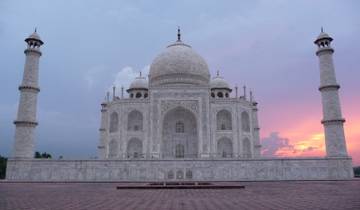
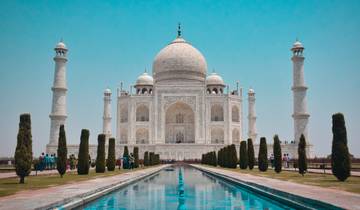
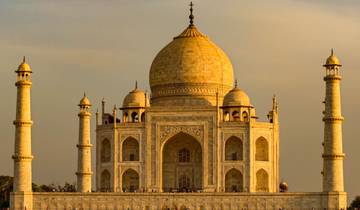
Key architectural features include the central onion dome rising 240 feet above the ground, four smaller domes creating rhythmic repetition, four minarets positioned at the platform corners, and extensive use of white marble with precious stone inlay work (pietra dura) creating intricate floral patterns throughout the structure.
The architectural program emphasizes ethereal beauty over defensive function, with delicate proportions, extensive use of light and reflection, and integration with paradise garden layouts that create a sense of heavenly perfection. The structure’s translucent marble changes color throughout the day, enhancing its otherworldly appearance.
Innovation in construction includes the double-shell dome design that reduces weight while creating optimal interior proportions, advanced foundation systems capable of supporting enormous loads, and sophisticated water management systems that feed fountains and irrigation throughout the complex.
Red Fort: Fortress Palace Architecture
The Red Fort demonstrates Mughal palace architecture at its most sophisticated, combining defensive requirements with luxurious residential functions. The complex spans 254 acres, enclosed by massive red sandstone walls that rise 60 feet above the surrounding area and extend for over 2 kilometers in circumference.
Architectural highlights include the Diwan-i-Aam (Hall of Public Audience) with its distinctive Mughal arches and marble throne platform, the Diwan-i-Khas (Hall of Private Audience) featuring the famous Peacock Throne chamber, and the Rang Mahal (Palace of Colors) with its intricate mirror work and marble water channels.
The fort’s design reflects the Mughal concept of paradise through its extensive garden layouts, water features including the Nahr-i-Behisht (Stream of Paradise), and pavilions that provided cooling and aesthetic pleasure. The architecture balances public ceremonial spaces with intimate private quarters.
Construction innovations include sophisticated drainage systems, integrated water supply from the Yamuna River, and modular building techniques that allowed for additions and modifications over the centuries as different emperors adapted the complex to their needs.
Qutub Minar: Early Indo-Islamic Innovation
The Qutub Minar showcases the earliest phase of Indo-Islamic architecture, when Muslim builders adapted Central Asian and Persian architectural traditions to Indian materials, climate, and available craftsmanship. The 73-meter minaret demonstrates bold vertical ambition unprecedented in Indian architecture.
The structure features five distinct stories with varying architectural treatments: red sandstone and marble alternating in bands, intricate calligraphic inscriptions in Arabic and Nagari scripts, and progressively decreasing diameters creating elegant tapering proportions that enhance the sense of height.
The surrounding complex includes architectural elements that show the fusion of Islamic and Indian traditions: the Quwwat-ul-Islam mosque incorporates columns and architectural elements from demolished Hindu temples, while the Iron Pillar of Delhi represents earlier Indian metallurgical achievements.
Architectural significance includes establishing precedents for later Indo-Islamic building including the use of local materials, adaptation of Islamic forms to Indian construction techniques, and integration of inscriptional programs that would influence centuries of subsequent monument construction.
Visitor Experience Comparison
Taj Mahal: Pilgrimage of Beauty
Visiting the Taj Mahal requires significant time investment, typically involving a full day trip from Delhi including 3-4 hours travel each way. The experience begins with the dramatic first glimpse through the great gateway, creating an emotional impact that justifies the journey’s effort and expense.
The visitor experience emphasizes contemplation and photography, with the monument’s changing appearance throughout the day rewarding extended visits. Optimal timing includes sunrise visits for magical lighting and fewer crowds, though this requires very early departure from Delhi or overnight accommodation in Agra.
Practical considerations include advance ticket booking during peak season, security restrictions that prohibit many items including tripods and large bags, and crowd management that can limit time in the interior mausoleum during busy periods.
The surrounding gardens and subsidiary buildings provide context for the main monument while offering different perspectives for photography and contemplation. The visitor experience culminates in understanding how the entire complex works together to create a unified vision of paradise.
Red Fort: Journey Through Imperial History
The Red Fort offers an immersive historical experience that can be completed in a half-day visit, making it easily accessible for Delhi tourists with limited time. The massive scale and preserved architecture provide tangible connections to Mughal imperial life and power.
Visitors can explore multiple palace buildings, each with distinct functions and architectural features that reveal different aspects of court life. The museum collections include artifacts, paintings, and historical displays that enhance understanding of Mughal culture and daily life in the fort.
The evening sound and light show provides dramatic interpretation of the fort’s history, using illumination and narration to bring the monuments to life. This popular program operates in multiple languages and offers a different perspective on the architectural complex.
Practical advantages include central Delhi location accessible by metro, reasonable entry fees, and operating hours that accommodate various schedule preferences. The fort’s size allows for extended exploration without the crowd pressure common at smaller monuments.
Qutub Minar: Archaeological Discovery
The Qutub complex provides an intimate archaeological experience focused on early Islamic history and architectural development. The site can be thoroughly explored in 2-3 hours, making it suitable for inclusion in broader Delhi sightseeing itineraries.
The visitor experience emphasizes historical understanding and architectural appreciation rather than overwhelming beauty. The complex rewards visitors interested in cultural history, religious architecture, and the evolution of building techniques over centuries.
The surrounding archaeological park includes ruins of several historical periods, providing context for understanding Delhi’s long history of conquest and reconstruction. Interpretive materials help visitors understand the complex cultural dynamics represented in the architecture.
Practical benefits include relatively small crowds compared to more famous monuments, affordable entry fees, and locations in south Delhi that can be easily combined with visits to other area attractions like Humayun’s Tomb and Lotus Temple.
Cultural and Religious Significance
Taj Mahal: Universal Symbol of Love
The Taj Mahal transcends its origins as an Islamic mausoleum to become a universal symbol of love and devotion that resonates across cultural and religious boundaries. While built according to Islamic architectural principles and burial traditions, its emotional message appeals to people of all backgrounds.
The monument’s cultural significance includes its representation of the Mughal Empire’s artistic achievements, its role in promoting India’s cultural heritage globally, and its function as a pilgrimage site for couples and romantics from around the world.
Religious elements include Quranic inscriptions that emphasize themes of paradise and resurrection, the orientation toward Mecca required for Islamic burial, and the garden layout that represents Islamic concepts of paradise, though these spiritual elements coexist with the monument’s secular romantic symbolism.
Red Fort: Symbol of Imperial Power and Independence
The Red Fort’s cultural significance extends beyond its Mughal origins to encompass its role as a symbol of Indian independence and national identity. The Prime Minister’s annual Independence Day speech from the fort’s ramparts maintains its political relevance centuries after the end of Mughal rule.
Religious significance includes the fort’s role as a center of Mughal court culture where Islamic traditions influenced art, music, poetry, and daily life. The architecture incorporates Islamic design principles while accommodating the syncretic religious practices that characterized later Mughal rule.
The fort represents the complexity of Indian cultural identity, serving simultaneously as a symbol of foreign conquest and indigenous cultural achievement, reflecting the nuanced relationship between Islamic rule and Indian civilization.
Qutub Minar: Monument to Religious Transformation
The Qutub complex represents one of the most significant religious and cultural transformations in Indian history, marking the establishment of Islamic rule and the beginning of centuries of cultural synthesis between Islamic and Indian traditions.
Religious significance includes its function as a victory tower celebrating Islamic conquest, the minaret’s role in calling the faithful to prayer, and the mosque’s position as India’s first major Islamic religious building. The use of materials from Hindu and Jain temples represents the complex dynamics of religious change.
Cultural importance extends to its role in establishing architectural precedents that would influence Indo-Islamic building for centuries, demonstrating how conquering cultures adapt to local conditions while maintaining their essential religious and cultural identity.
Tourism and Accessibility
Transportation and Logistics
The Taj Mahal requires the most complex logistics, involving travel from Delhi to Agra by train (2-4 hours depending on service), bus (4-5 hours), or private vehicle (3-4 hours via Yamuna Expressway). Most visitors choose day trips, though overnight stays in Agra allow for more relaxed exploration and optimal photography timing.
The Red Fort offers the greatest accessibility, located in central Delhi with direct metro connectivity (Red Line to Lal Qila station). The location allows easy combination with other Old Delhi attractions including Jama Masjid, Chandni Chowk market, and various historical sites within walking distance.
Qutub Minar provides moderate accessibility in south Delhi, reachable by metro (Yellow Line to Qutub Minar station) or taxi/auto-rickshaw from central Delhi areas. The location works well for south Delhi itineraries including Humayun’s Tomb, Lotus Temple, and upscale shopping areas.
Cost Comparison
Taj Mahal visiting costs include monument entry fees (₹1,100 for foreign tourists, ₹50 for Indians), transportation costs that vary widely based on chosen method (₹500-5,000+ for round-trip travel from Delhi), and potential accommodation costs for overnight stays (₹1,500-15,000+ depending on hotel category).
Red Fort costs remain modest with entry fees of ₹35 for foreign tourists and ₹5 for Indians, plus minimal transportation costs within Delhi. The sound and light show requires additional tickets (₹80 for adults), making the Red Fort the most budget-friendly option for comprehensive exploration.
Qutub Minar offers middle-ground costs with entry fees of ₹30 for foreign tourists and ₹5 for Indians, plus moderate transportation costs within Delhi. The site can be easily combined with other south Delhi attractions for efficient sightseeing.
Seasonal Considerations
All three monuments benefit from cooler months (October-March) for comfortable exploration, though each site presents different seasonal challenges and opportunities. Summer visits require early morning timing and heat protection strategies.
The Taj Mahal’s marble surfaces make it particularly challenging during hot months, while the gardens look best during cooler months when plantings thrive. Monsoon season can create dramatic atmospheric effects but may limit photography opportunities.
The Red Fort and Qutub Minar offer more flexibility during challenging weather due to covered areas and shorter required visit durations, though optimal photography conditions still favor clear, cooler days.
Photography and Artistic Opportunities
Taj Mahal: Iconic Photography Destination
The Taj Mahal offers unparalleled photography opportunities with its perfect symmetry, changing light conditions, and dramatic architectural details. The monument’s white marble creates different moods throughout the day, from pink sunrise hues to golden sunset glows.
Key photography locations include the classic frontal view from the main platform, reflection shots from the central water channel, detail photography of inlay work and calligraphy, and creative compositions using the garden layout and architectural elements as foreground.
Photography challenges include crowd management during peak hours, security restrictions on tripods and professional equipment, and the monument’s popularity creating difficulty in capturing uncrowded shots except during very early morning visits.
Red Fort: Architectural Detail and Historical Context
The Red Fort provides diverse photography opportunities focusing on architectural details, historical artifacts, and the contrast between ancient structures and modern Delhi visible from the ramparts. The complex’s size allows for varied compositions and perspectives.
Notable subjects include the intricate marble work in the Diwan-i-Khas, the geometric patterns in various pavilions, panoramic views from the walls, and museum artifacts that illustrate Mughal court life and artistic achievements.
The evening sound and light show creates unique photography opportunities with dramatic illumination, though photography during the show may be restricted or challenging due to lighting conditions and crowd management.
Qutub Minar: Archaeological and Artistic Documentation
The Qutub complex offers photography focused on architectural history, calligraphic art, and the evolution of Indo-Islamic design. The minaret’s height and surrounding ruins provide opportunities for dramatic compositions and historical documentation.
Photographic highlights include the detailed carving and calligraphy on the minaret, the architectural fusion visible in the mosque construction, the Iron Pillar’s mysterious metallurgy, and the various tombs and ruins that illustrate centuries of architectural development.
The site’s relatively uncrowded conditions allow for careful composition and documentation of architectural details without the pressure common at more popular monuments.
Educational Value and Historical Learning
Understanding Islamic Architecture Evolution
Visiting all three monuments provides comprehensive education about the evolution of Indo-Islamic architecture over six centuries, from the early experimentation at Qutub Minar through the mature classical style of the Red Fort to the refined perfection of the Taj Mahal.
Each site demonstrates different aspects of cultural synthesis: Qutub shows the initial adaptation of Islamic forms to Indian conditions, the Red Fort reveals the full flowering of Mughal court culture, and the Taj Mahal represents the artistic pinnacle of Indo-Islamic civilization.
Comparative study reveals how political power, religious devotion, and personal emotion influenced architectural expression, while technical analysis shows the evolution of construction techniques, materials usage, and engineering capabilities over time.
Cultural Synthesis and Historical Processes
The three monuments illustrate different phases of cultural interaction between Islamic and Indian civilizations, from conquest and adaptation through synthesis and ultimate artistic transcendence. This progression provides insight into broader patterns of cultural change and artistic development.
Educational themes include the role of patronage in artistic development, the relationship between political power and architectural expression, the influence of religious beliefs on design and decoration, and the processes by which foreign architectural traditions adapt to local conditions.
Modern conservation efforts at all three sites provide additional educational opportunities about heritage preservation, the challenges of maintaining historical monuments in contemporary urban environments, and the balance between tourism access and preservation needs.
Recommended Visiting Strategies
Single-Day Delhi Strategy
For visitors with limited time in Delhi, combining the Red Fort and Qutub Minar in a single day provides excellent exposure to Indo-Islamic architecture without the time investment required for Taj Mahal visits. This strategy works well for business travelers or those with packed itineraries.
Morning visits to Qutub Minar take advantage of cooler temperatures and better light for photography, followed by afternoon exploration of the Red Fort. The evening sound and light show at the Red Fort provides a dramatic conclusion to the historical tour.
Transportation between sites can be managed by taxi, metro, or organized tour, with time for lunch and rest between locations. This approach provides substantial historical education and architectural appreciation within Delhi’s boundaries.
Multi-Day Comprehensive Strategy
The ideal approach involves dedicating separate days to each monument, allowing for thorough exploration and optimal timing for photography and crowd avoidance. This strategy provides the deepest understanding of Indo-Islamic architectural evolution and historical context.
Day one focuses on Qutub Minar and other south Delhi historical sites, day two covers the Red Fort and Old Delhi exploration, and day three involves the full-day trip to Agra for the Taj Mahal. This progression follows chronological order while managing logistics efficiently.
Extended itineraries can include additional related sites like Humayun’s Tomb, Safdarjung’s Tomb, and various other Delhi monuments that illustrate the continuous development of Mughal architecture and the broader Indo-Islamic architectural tradition.
Photography-Focused Strategy
Photography enthusiasts should prioritize early morning visits to all three sites for optimal lighting and crowd conditions. The Taj Mahal requires sunrise visits for the most dramatic light, while the Red Fort and Qutub Minar benefit from morning sessions followed by evening returns for different lighting conditions.
Seasonal timing becomes crucial for photography-focused visits, with winter months providing clear skies and comfortable working conditions. Monsoon season can provide dramatic atmospheric effects but requires flexibility and weather monitoring.
Equipment considerations include lightweight tripods where permitted, multiple lenses for architectural detail and wide-angle compositions, and backup power and storage for extended shooting sessions at multiple locations.
Frequently Asked Questions
Which monument should I visit if I can only see one?
If limited to one site, the Taj Mahal offers the most iconic experience and represents the pinnacle of Mughal architecture. However, if time doesn’t permit the Agra trip, the Red Fort provides excellent Mughal architecture within Delhi with rich historical significance.
Can I visit all three monuments in one day?
Visiting all three in one day is not practical due to travel time to Agra (6-8 hours round trip). You can combine Red Fort and Qutub Minar in one Delhi day, then visit Taj Mahal on a separate day trip or overnight to Agra.
Which site offers the best photography opportunities?
The Taj Mahal provides the most iconic and dramatic photography with its perfect symmetry and changing light effects. However, each site offers unique opportunities: Red Fort for architectural details and historical context, Qutub Minar for archaeological documentation.
How much time should I allocate for each monument?
Taj Mahal requires a full day including travel (8-12 hours total), Red Fort needs half a day (3-4 hours), and Qutub Minar can be thoroughly explored in 2-3 hours. Allow extra time for photography and detailed exploration.
What’s the best order to visit these monuments?
Chronological order (Qutub Minar → Red Fort → Taj Mahal) helps understand architectural evolution, but practical considerations often favor visiting Taj Mahal first due to travel requirements, then exploring Delhi sites with remaining time.
Which monument is most suitable for families with children?
The Red Fort offers the most family-friendly experience with diverse attractions, manageable size, and facilities. Qutub Minar is good for older children interested in history, while Taj Mahal requires more patience due to crowds and travel time.
Are these sites accessible for visitors with mobility limitations?
All three sites have accessibility challenges due to their historical nature. The Red Fort offers the best accessibility with some wheelchair-accessible areas, while Taj Mahal and Qutub Minar involve significant walking and stairs.
What are the main architectural differences between these monuments?
Qutub Minar shows early Indo-Islamic fusion, Red Fort demonstrates mature Mughal palace architecture with defensive features, and Taj Mahal represents refined mausoleum architecture focused on aesthetic perfection rather than practical function.
Which site provides the best value for money?
Red Fort offers excellent value with low entry fees, rich historical content, and central Delhi location. Qutub Minar provides good value for history enthusiasts, while Taj Mahal, despite higher costs, offers a once-in-a-lifetime experience.
How do these sites compare to similar monuments worldwide?
The Taj Mahal ranks among the world’s greatest architectural achievements alongside monuments like the Parthenon and Angkor Wat. Red Fort and Qutub Minar represent significant Islamic architecture comparable to major monuments in Iran, Central Asia, and the Ottoman Empire.