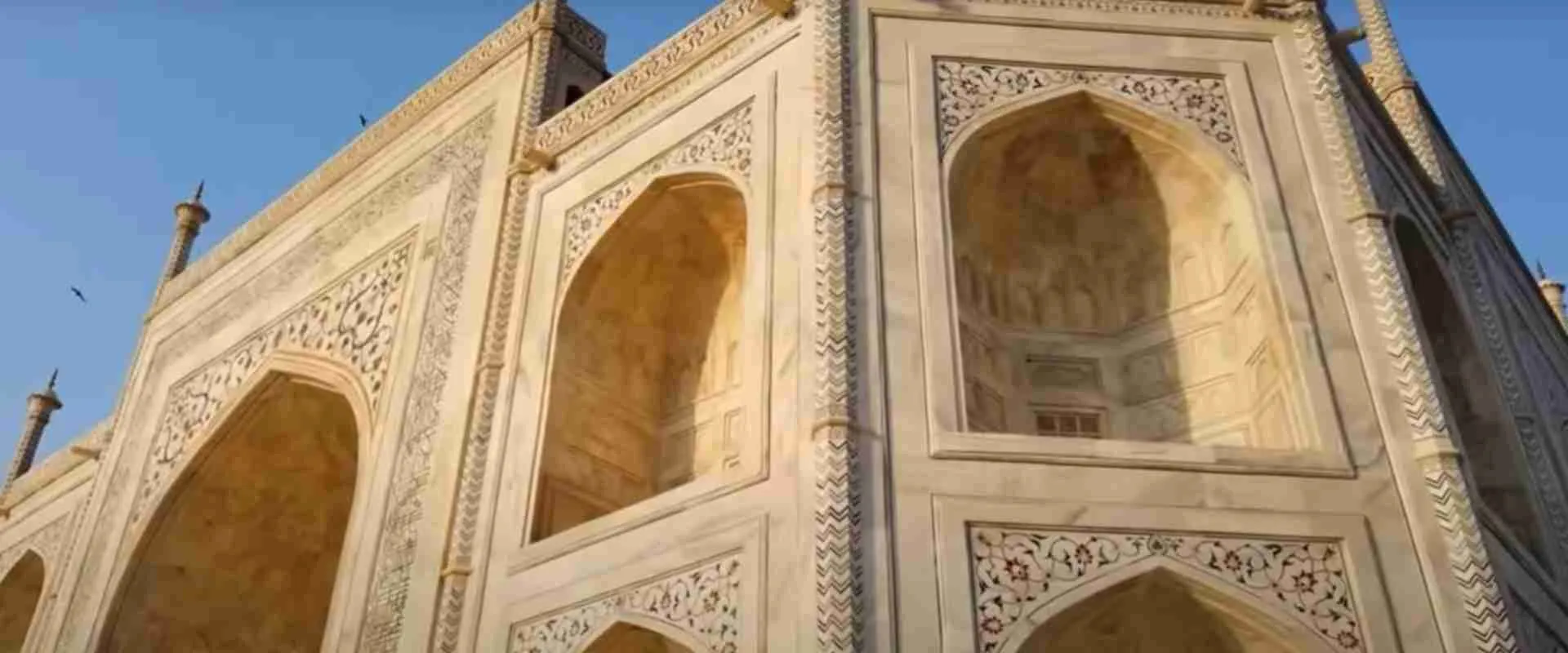
Taj Mahal Myths vs Facts: 10 Common Misconceptions Debunked
The Taj Mahal’s extraordinary beauty and mysterious origins have inspired countless legends, myths, and misconceptions that have persisted for centuries. While these stories add to the monument’s romantic appeal, separating fact from fiction helps us appreciate the true historical achievement and architectural brilliance of this UNESCO World Heritage Site.
Key Takeaways
- No hands were cut off – Workers continued careers on other Mughal projects after completion
- Shah Jahan never planned a black Taj Mahal – No historical evidence supports this popular legend
- The monument changes color naturally due to marble properties and lighting, not supernatural causes
- British didn’t plan to dismantle it – Lord Curzon actually led major restoration efforts
- It’s not built on a Hindu temple – Archaeological evidence shows the site was previously a mansion
- Construction cost was enormous but not bankrupting – Represented 2-3 years of empire revenue
Many myths emerged from the monument’s seemingly impossible perfection, leading people to invent supernatural explanations for human achievements that were actually the result of exceptional skill, resources, and dedication. Understanding the real history behind these legends enhances rather than diminishes the monument’s significance, revealing the remarkable human story of love, loss, and artistic achievement.
Myth #1: Shah Jahan Cut Off Workers’ Hands
The Legend
One of the most persistent and disturbing myths claims that Emperor Shah Jahan ordered the hands of all craftsmen cut off after completing the Taj Mahal to ensure that nothing of equal beauty could ever be built again. This gruesome tale has been repeated in countless books, documentaries, and tourist guides, becoming one of the most widely believed “facts” about the monument.
The story suggests that thousands of master craftsmen, artists, and architects were mutilated as a reward for creating the world’s most beautiful building, supposedly ensuring that their skills could never be used to create competing architectural wonders.
The Historical Facts
Historical evidence completely contradicts this myth, with extensive documentation showing that many Taj Mahal craftsmen went on to work on other major Mughal projects throughout the empire. Court records, architectural studies, and biographical accounts of master craftsmen provide clear evidence of their continued careers after 1653.
Master craftsmen including calligraphers, stone carvers, and architects who worked on the Taj Mahal are documented working on subsequent projects including the Red Fort in Delhi, various palaces in Kashmir, and other monuments throughout the Mughal Empire. These men were valuable assets to the empire, not disposable laborers.
The myth likely arose from the extraordinary quality of the craftsmanship, which seemed almost superhuman to later observers who couldn’t imagine how such perfection was achieved through normal human skill and dedication. Rather than appreciating the remarkable training and expertise of Mughal craftsmen, people invented supernatural explanations.
Practical considerations also argue against this myth: the Mughal Empire required skilled craftsmen for ongoing construction projects throughout its territories. Eliminating such valuable expertise would have been economically and strategically disastrous for an empire that depended on architectural achievement for political prestige.
Extended multi-day tours – 5+ days
Featured Taj Mahal Multi-Day Tour Packages
3 days
Taj Mahal 3-Day Discovery Tour
- ✓ Comprehensive Taj Mahal experience
- ✓ Expert local guides included
- ✓ All accommodation included
- ✓ Transportation provided

5 days
Taj Mahal 5-Day Highlights Experience
- ✓ Comprehensive Taj Mahal experience
- ✓ Expert local guides included
- ✓ All accommodation included
- ✓ Transportation provided

7 days
Taj Mahal 7-Day Cultural Journey
- ✓ Comprehensive Taj Mahal experience
- ✓ Expert local guides included
- ✓ All accommodation included
- ✓ Transportation provided

10 days
Taj Mahal 10-Day Complete Adventure
- ✓ Comprehensive Taj Mahal experience
- ✓ Expert local guides included
- ✓ All accommodation included
- ✓ Transportation provided
Multi-day tour packages powered by TourRadar. Prices and availability subject to change.
Myth #2: Shah Jahan Planned a Black Taj Mahal
The Legend
This romantic myth claims that Shah Jahan planned to build an identical black marble mausoleum for himself across the Yamuna River from the white Taj Mahal, with the two monuments connected by a bridge. According to legend, his son Aurangzeb’s rebellion prevented completion of this ambitious project, leaving only the white tomb.
The story suggests that Shah Jahan’s own tomb would have been constructed from black marble, creating a dramatic contrast with Mumtaz Mahal’s white monument while symbolizing the complementary nature of their eternal love.
The Historical Reality
No credible historical evidence supports the existence of plans for a black Taj Mahal. Court records, architectural documents, and contemporary accounts make no mention of such a project, despite extensive documentation of other Mughal building projects during Shah Jahan’s reign.
The myth appears to have originated from misinterpretation of ruins across the river from the Taj Mahal, which are actually remains of the Mehtab Bagh (Moonlight Garden), a Mughal garden complex that provided viewing points for the Taj Mahal. These ruins include some dark stone structures, but they were never intended as a tomb.
Archaeological investigations of the area have found no evidence of foundation work, material preparation, or other construction activities that would indicate serious planning for a major monument. The soil conditions and flooding patterns on the opposite bank would have made construction of a large structure technically challenging.
Financial records from Shah Jahan’s later reign show no allocations for a second major tomb project, despite detailed documentation of expenditures for other architectural works during this period.
Myth #3: The Taj Mahal Changes Color by Magic
The Popular Belief
Many visitors and tour guides promote the idea that the Taj Mahal magically changes color throughout the day due to supernatural forces or the spirits of Shah Jahan and Mumtaz Mahal. This myth suggests that the monument appears pink at dawn, white during the day, and golden at sunset through mysterious, otherworldly influences.
Some versions of this myth claim that the color changes represent the moods of Mumtaz Mahal’s spirit or Shah Jahan’s emotions as he grieved for his lost love, adding a supernatural romantic element to the monument’s appearance.
The Scientific Explanation
The Taj Mahal’s color changes are entirely natural phenomena resulting from the optical properties of white marble and the changing quality of sunlight throughout the day. Marble’s crystalline structure reflects different wavelengths of light depending on the angle and color temperature of illumination.
Morning light contains more red wavelengths due to atmospheric scattering, causing the white marble to appear pinkish or rosy. Midday sunlight contains the full spectrum of visible light, making the marble appear brilliant white. Evening light again shifts toward red wavelengths, creating golden or amber appearances.
Weather conditions also affect the monument’s appearance: cloudy skies create diffused lighting that enhances subtle color variations, while clear skies produce sharper contrasts. Humidity and atmospheric particles can enhance or mute these effects.
The monument’s architects deliberately chose white marble specifically for these optical properties, understanding that the changing light would create dynamic visual effects that would enhance the building’s beauty throughout the day and across seasons.
Myth #4: The British Planned to Dismantle the Taj Mahal
The Alleged Plot
This myth claims that British colonial authorities planned to dismantle the Taj Mahal piece by piece to sell the marble and precious stones, viewing the monument as merely valuable building material rather than recognizing its cultural and architectural significance.
Some versions suggest that only intervention by Queen Victoria or other high-ranking British officials prevented this cultural catastrophe, portraying the colonial administration as barbarians intent on destroying India’s greatest architectural achievement for profit.
The Historical Truth
Historical records show that British colonial authorities, particularly Lord Curzon (Viceroy 1899-1905), actually initiated major restoration and conservation efforts for the Taj Mahal. Far from planning its destruction, the British recognized the monument’s extraordinary value and worked to preserve it.
Lord Curzon’s restoration project included cleaning the marble surfaces, repairing damaged inlay work, restoring the gardens, and installing lighting systems. His efforts reversed decades of neglect and established conservation principles that influenced preservation work for decades.
While some British officials may have shown insufficient appreciation for Indian cultural heritage, there is no credible evidence of any serious plan to dismantle the Taj Mahal. The monument’s fame in Europe and its recognition as an architectural masterpiece protected it from such destruction.
The myth likely arose from legitimate concerns about British attitudes toward Indian cultural property and documented cases where colonial authorities did remove artifacts and architectural elements from other sites for British collections.
Myth #5: The Taj Mahal is Built on a Hindu Temple
The Controversial Claim
This politically charged myth claims that the Taj Mahal was built on the site of a Hindu temple, specifically a Shiva temple called “Tejo Mahalaya,” and that the current structure incorporates elements of the original temple. Proponents argue that the name “Taj Mahal” is actually a corruption of “Tejo Mahalaya.”
Some versions of this theory claim that Hindu architectural elements are visible in the current structure and that the building was merely modified rather than built from scratch, suggesting a deliberate attempt to obscure its Hindu origins.
Archaeological and Historical Evidence
Archaeological investigations of the site have found no evidence of a temple foundation or Hindu architectural elements beneath the current structure. Excavations conducted by the Archaeological Survey of India have revealed that the site previously contained a mansion that belonged to Raja Man Singh, a Hindu nobleman in Akbar’s court.
The mansion was purchased by Shah Jahan from Man Singh’s grandson specifically for the purpose of building the Taj Mahal, with full legal documentation of this transaction preserved in court records. There is no mention of a temple in any of these documents.
Architectural analysis shows that the Taj Mahal’s design is entirely consistent with Mughal architectural traditions and shows no incorporation of Hindu temple elements. The structure’s layout, proportions, and decorative program follow Islamic architectural principles and Mughal building practices.
Contemporary accounts by court historians, foreign visitors, and other observers make no mention of a temple on the site, despite extensive documentation of the construction process and the site’s previous use.
Myth #6: The Construction Bankrupted the Mughal Empire
The Exaggerated Impact
This myth suggests that the enormous cost of building the Taj Mahal bankrupted the Mughal Empire and contributed to its eventual decline, portraying Shah Jahan as a ruler who prioritized personal grief over responsible governance and economic stability.
The story implies that the 22-year construction project consumed such vast resources that it weakened the empire’s military capabilities, infrastructure development, and other essential government functions, making it vulnerable to later threats.
Economic Reality
While the Taj Mahal was indeed expensive, costing an estimated 32 million rupees, this represented approximately 2-3 years of the empire’s total revenue rather than a bankrupting expense. The Mughal Empire during Shah Jahan’s reign was at its economic peak, with vast resources available for major projects.
The construction costs were spread over 22 years, making the annual expense significant but manageable within the empire’s budget. The project also stimulated economic activity through employment, material procurement, and development of supporting industries.
The empire’s decline began decades after the Taj Mahal’s completion and resulted from multiple factors including succession wars, external invasions, administrative inefficiency, and changing global trade patterns rather than a single construction project.
Contemporary records show that the empire continued major infrastructure projects, military campaigns, and other expensive undertakings throughout and after the Taj Mahal’s construction, indicating that the project did not create fiscal crisis.
Myth #7: The Taj Mahal Was Originally a Hindu Palace
The Alternative History Claim
This myth claims that the entire Taj Mahal structure is actually a converted Hindu palace that was appropriated and modified by Shah Jahan, rather than an original Mughal construction. Proponents argue that the building’s proportions and layout are more consistent with Hindu palace architecture than Islamic tomb design.
Some versions suggest that specific architectural elements, room layouts, and decorative features provide evidence of the building’s original function as a Hindu royal residence that was adapted for use as a mausoleum.
Architectural Evidence Against the Theory
Detailed architectural analysis demonstrates that the Taj Mahal’s design is entirely consistent with Islamic tomb architecture and Mughal building traditions. The central dome, minarets, and overall layout follow established patterns for Islamic mausoleums with no deviation from standard practice.
The building’s proportions, spatial organization, and decorative program are specifically designed for its function as a tomb, with features that would be inappropriate or unnecessary for a palace including the central burial chamber, the lack of residential amenities, and the religious inscriptions throughout the structure.
Construction techniques, materials, and building methods used throughout the structure are consistent with 17th-century Mughal practice and show no evidence of modification from an earlier structure of different architectural tradition.
The extensive documentation of the construction process, including detailed records of material procurement, workforce organization, and design development, provides clear evidence that this was an original construction project rather than a conversion of existing buildings.
Myth #8: The Taj Mahal Contains Secret Chambers
The Hidden Treasure Legend
Various myths claim that the Taj Mahal contains secret chambers filled with treasure, hidden passages used by Shah Jahan for secret visits, or sealed rooms containing additional burials or religious artifacts. These stories fuel ongoing speculation about undiscovered spaces within the monument.
Some versions suggest that Shah Jahan hid vast wealth within the structure to prevent its seizure by his son Aurangzeb, while others claim that the building contains hidden rooms where Mumtaz Mahal’s personal belongings or other precious items are stored.
Architectural and Archaeological Reality
Modern archaeological surveys using ground-penetrating radar, structural analysis, and detailed architectural documentation have mapped the entire structure and found no evidence of secret chambers or hidden spaces beyond the known burial crypt beneath the main floor.
The building’s construction is well-documented, with architectural drawings and historical accounts describing the layout and internal structure. The thick walls contain only the spaces necessary for structural stability and the passages required for access to different levels.
The actual burial chamber in the crypt below the main floor was always known to exist and serves as the real burial place for Shah Jahan and Mumtaz Mahal, while the beautiful cenotaphs on the main floor are symbolic markers following Islamic burial traditions.
Any significant hidden chambers would have been detected by the extensive conservation work and structural monitoring that has been conducted throughout the monument over the past century.
Myth #9: The Monument Was Built in Seven Days
The Miraculous Construction Claim
Some local legends claim that the Taj Mahal was completed in just seven days through divine intervention or supernatural assistance, suggesting that its construction was so perfect that it could only have been achieved through miraculous means rather than human effort.
This myth reflects the monument’s seemingly impossible perfection and the difficulty that many people have in comprehending the scale and complexity of the actual construction process.
The 22-Year Reality
Historical records clearly document that the Taj Mahal took 22 years to complete (1631-1653), involving over 20,000 workers and representing one of the largest construction projects in human history. The main mausoleum alone required over a decade to complete.
The construction timeline included several distinct phases: foundation work and site preparation (3 years), main structure construction (8 years), decorative work and gardens (7 years), and final details and subsidiary buildings (4 years).
The extensive documentation of the construction process includes records of material procurement, workforce management, and progress reports that provide detailed evidence of the project’s actual timeline and the enormous human effort required for its completion.
The myth likely arose from the difficulty in comprehending how such perfection was achieved through normal human means, leading to supernatural explanations for what was actually the result of exceptional skill, organization, and resources.
Myth #10: The Taj Mahal Is Sinking into the River
The Structural Collapse Fear
This modern myth claims that the Taj Mahal is gradually sinking into the Yamuna River due to foundation problems, soil erosion, or the weight of the structure. Some versions suggest that the monument is tilting toward the river and may eventually collapse into the water.
The myth gained traction from concerns about environmental threats to the monument and occasional reports of structural monitoring, leading to exaggerated fears about the building’s stability.
Structural Engineering Assessment
Comprehensive structural monitoring using modern engineering techniques has confirmed that the Taj Mahal remains structurally sound with no evidence of significant settling, tilting, or foundation failure. The monument’s sophisticated foundation system has successfully supported its weight for nearly 400 years.
Regular surveying and measurement show only normal minor variations consistent with thermal expansion and contraction, with no progressive movement that would indicate structural problems. The foundation design anticipated and accommodated such minor movements.
While environmental challenges including air pollution and changing river conditions do threaten the monument, these primarily affect surface materials rather than structural stability. Current conservation efforts address these threats while maintaining the building’s structural integrity.
The myth likely arose from legitimate concerns about environmental threats and the natural desire to protect this irreplaceable monument, leading to exaggerated fears about structural collapse that are not supported by engineering assessment.
Frequently Asked Questions
Are any of the Taj Mahal legends based on historical facts?
While most dramatic legends are fictional, they often contain kernels of truth about the monument’s extraordinary beauty, the enormous resources required for construction, and the genuine love story between Shah Jahan and Mumtaz Mahal that inspired its creation.
Why do so many myths surround the Taj Mahal?
The monument’s seemingly impossible perfection, combined with its romantic origins and exotic setting, has inspired centuries of storytelling. Many myths arose from people’s inability to comprehend how such beauty was achieved through normal human means.
How can visitors distinguish between facts and myths?
Rely on information from reputable sources like the Archaeological Survey of India, UNESCO documentation, and peer-reviewed historical research. Be skeptical of stories that seem too dramatic or supernatural, and seek evidence-based explanations.
Did Shah Jahan really love Mumtaz Mahal as much as legends suggest?
Historical evidence supports a genuine love story, with court records documenting their close relationship, her influence on court affairs, and his grief at her death. However, some romantic details have been embellished over time.
What is the most persistent myth about the Taj Mahal?
The myth about workers’ hands being cut off is probably the most widely believed false story, despite being completely contradicted by historical evidence of craftsmen’s continued careers after the project’s completion.
Are there any unsolved mysteries about the Taj Mahal?
While most major facts are well-documented, some minor details about specific construction techniques, the identities of some craftsmen, and exact timeline details remain subjects of ongoing historical research.
How do these myths affect tourism?
While myths can enhance the monument’s romantic appeal, they also spread misinformation that can lead to misunderstanding of its true historical and cultural significance. Educational tourism that emphasizes facts over fiction provides more meaningful experiences.
What should visitors know before touring the Taj Mahal?
Understanding the real history enhances appreciation of the monument’s genuine achievements. The true story of skilled craftsmanship, innovative engineering, and genuine love is more impressive than any fictional legend.
Do tour guides perpetuate these myths?
Some guides repeat popular myths to entertain tourists, while others focus on historical accuracy. Visitors should ask guides about their sources and seek information from official museum displays and archaeological authorities.
How can accurate information about the Taj Mahal be preserved?
Supporting educational programs, scholarly research, and authoritative sources helps combat misinformation. Visitors can contribute by sharing accurate information and questioning unsubstantiated claims they encounter during their travels.