
Taj Mahal Spiritual Experience: Finding Peace at This Sacred Monument
Beyond its architectural magnificence and historical significance, the Taj Mahal offers visitors a profound spiritual experience that transcends cultural and religious boundaries. This monument to eternal love creates an atmosphere of peace and contemplation that has moved millions of visitors to experience moments of transcendence, inner reflection, and connection with something greater than themselves.
Key Takeaways
- Sacred geometry in the Taj’s design creates a meditative environment that promotes inner harmony
- Early morning visits (sunrise) offer the most peaceful spiritual atmosphere with minimal crowds
- Islamic symbolism throughout the monument represents paradise and spiritual transcendence
- Meditation practices can deepen your connection to the monument’s spiritual energy
- The love story serves as a universal metaphor for devotion that transcends religious boundaries
- Contemplative spaces within the complex invite reflection on love, loss, and eternity
The spiritual dimension of the Taj Mahal emerges from multiple sources: its function as a sacred mausoleum, the mathematical perfection of its design, the universal themes of love and loss it represents, and the meditative quality of its aesthetic harmony. Whether approached from Islamic, Hindu, Buddhist, or secular spiritual perspectives, the monument offers opportunities for meaningful contemplation and personal transformation.
Sacred Architecture and Spiritual Design
Islamic Sacred Geometry and Divine Proportion
The Taj Mahal’s design incorporates sacred geometric principles that Islamic tradition considers reflections of divine order and cosmic harmony. The monument’s perfect symmetry, mathematical proportions, and geometric patterns create an environment that naturally induces contemplative states and spiritual awareness.
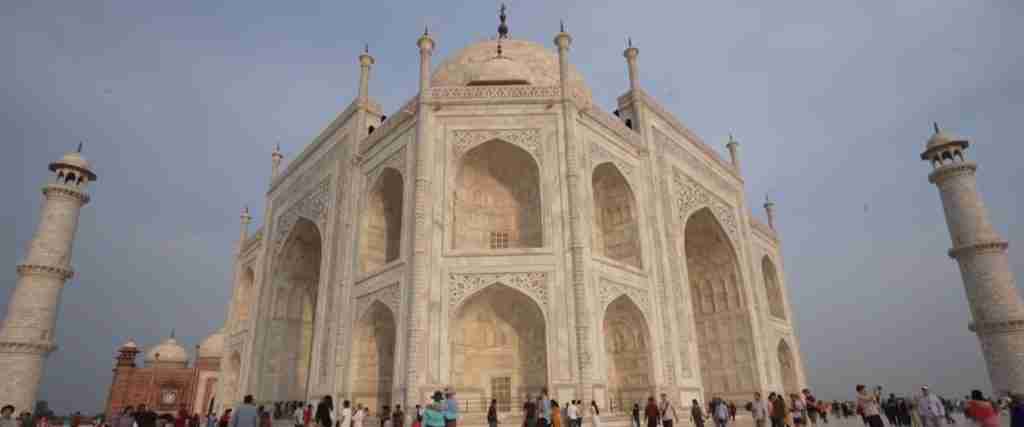
The central dome represents the vault of heaven in Islamic cosmology, while the four smaller domes create a mandala-like arrangement that symbolizes completeness and divine perfection. The square base with its four identical facades reflects the Islamic concept of the perfect city or paradise, with each direction representing different aspects of spiritual reality.
Golden ratio proportions appear throughout the structure, from the overall dimensions to the smallest decorative details. These mathematical relationships, considered sacred in many spiritual traditions, create visual harmony that resonates with deep psychological and spiritual patterns, promoting feelings of peace and transcendence.
The octagonal chamber within the central structure represents the transition between the earthly square and heavenly circle, a sacred geometric form that appears in many mystical traditions as a symbol of spiritual transformation and the journey from material to divine consciousness.
Paradise Garden Symbolism
The Taj Mahal’s garden layout follows the traditional Islamic charbagh (four-garden) design that represents paradise as described in the Quran. This sacred landscape design creates a physical manifestation of spiritual concepts, allowing visitors to literally walk through a representation of paradise on earth.
The four water channels represent the four rivers of paradise mentioned in Islamic scripture: rivers of water, milk, honey, and wine that flow through the eternal garden. Walking along these channels or sitting beside the fountains provides opportunities for reflection on themes of spiritual nourishment and divine abundance.
The cypress trees planted throughout the gardens symbolize eternity and the connection between earth and heaven, while flowering plants represent the beauty and abundance of spiritual life. The carefully maintained gardens create a sense of order and harmony that supports contemplative practices and spiritual reflection.
The central reflecting pool creates a mirror image of the monument, symbolizing the relationship between the material and spiritual worlds. This reflection serves as a meditation on the temporary nature of physical existence and the eternal nature of divine love and beauty.
Light and Transcendence
The Taj Mahal’s relationship with light creates one of its most spiritually powerful features, as the white marble transforms throughout the day in ways that seem to transcend material properties. This changing appearance has inspired countless visitors to experience moments of wonder and spiritual awakening.
Dawn visits offer particularly powerful spiritual experiences as the monument emerges from darkness into soft pink and golden light, symbolizing the daily renewal of creation and the emergence of consciousness from sleep. Many visitors report feeling deeply moved by watching this daily transformation.
The interior chamber’s natural lighting creates a sense of floating luminosity that disconnects visitors from ordinary awareness of physical weight and material substance. The filtered light through marble screens creates an ethereal atmosphere that promotes introspection and spiritual contemplation.
Full moon nights, when the monument is occasionally open for special viewings, provide mystical experiences as the marble appears to glow with inner light. These rare opportunities offer profound spiritual encounters that many visitors describe as life-changing.
Extended multi-day tours – 5+ days
Featured Taj Mahal Multi-Day Tour Packages
3 days
Taj Mahal 3-Day Discovery Tour
- ✓ Comprehensive Taj Mahal experience
- ✓ Expert local guides included
- ✓ All accommodation included
- ✓ Transportation provided

5 days
Taj Mahal 5-Day Highlights Experience
- ✓ Comprehensive Taj Mahal experience
- ✓ Expert local guides included
- ✓ All accommodation included
- ✓ Transportation provided

7 days
Taj Mahal 7-Day Cultural Journey
- ✓ Comprehensive Taj Mahal experience
- ✓ Expert local guides included
- ✓ All accommodation included
- ✓ Transportation provided

10 days
Taj Mahal 10-Day Complete Adventure
- ✓ Comprehensive Taj Mahal experience
- ✓ Expert local guides included
- ✓ All accommodation included
- ✓ Transportation provided
Multi-day tour packages powered by TourRadar. Prices and availability subject to change.
Meditation and Contemplative Practices
Mindful Walking and Movement
The approach to the Taj Mahal through the great gateway creates a natural progression for mindful walking practice, allowing visitors to transition gradually from the ordinary world into the sacred space of the monument. This architectural pilgrimage supports spiritual preparation and contemplative awareness.
Walking slowly through the gardens while maintaining awareness of breath, footsteps, and surrounding beauty creates opportunities for moving meditation. The symmetrical pathways and regular spacing of trees and fountains provide natural rhythms that support meditative walking practices.
Circumambulation around the main platform offers a form of sacred walking similar to practices found in many spiritual traditions. Moving slowly around the monument while maintaining contemplative awareness allows for multiple perspectives and deepening appreciation of its spiritual dimensions.
The remove-shoes requirement for entering the main mausoleum creates a natural transition into sacred space that heightens sensory awareness and promotes reverent states of consciousness. Walking barefoot on cool marble connects visitors directly with the sacred ground.
Breath Awareness and Contemplation
The acoustic properties of the Taj Mahal’s chambers create natural support for breath-based meditation practices. The dome’s resonance amplifies subtle sounds, making visitors more aware of their breathing and the sounds of their own heartbeat and circulation.
Sitting quietly in the gardens or on the main platform while focusing on breath awareness allows the monument’s peaceful atmosphere to support deeper states of relaxation and inner stillness. The visual beauty and harmonious proportions naturally calm the mind and slow breathing rhythms.
The Islamic practice of dhikr (remembrance of God) finds natural support in the monument’s environment, with the calligraphic inscriptions serving as focal points for contemplative recitation and meditation on divine qualities and attributes.
Loving-kindness meditation practices gain special power in this monument to love, allowing visitors to extend feelings of compassion and appreciation outward from their personal relationships to encompass all beings and creation itself.
Visual Contemplation and Sacred Seeing
The Taj Mahal’s perfect proportions and intricate details reward extended visual contemplation, with different architectural elements revealing new meanings and beauty upon careful observation. This practice of sacred seeing allows visitors to move beyond superficial appreciation to deeper aesthetic and spiritual understanding.
The calligraphic inscriptions throughout the monument provide focal points for contemplative reading and reflection on themes of paradise, resurrection, divine mercy, and eternal love. These sacred texts create opportunities for interfaith spiritual reflection and appreciation.
The pietra dura inlay work features natural motifs including flowers, vines, and geometric patterns that represent the interconnectedness of creation and the divine presence in natural beauty. Contemplating these details can evoke feelings of unity with nature and appreciation for divine creativity.
The monument’s reflection in water creates opportunities for meditation on themes of mirror consciousness, the relationship between reality and appearance, and the temporary nature of physical forms in contrast to eternal spiritual principles.
Universal Themes of Love and Transcendence
Love as Spiritual Path
The Taj Mahal’s origin as a monument to marital love provides a universal entry point for spiritual reflection that transcends religious and cultural boundaries. The monument transforms personal grief into artistic beauty, demonstrating how love can become a pathway to transcendence and spiritual transformation.
Shah Jahan’s devotion to Mumtaz Mahal represents the human capacity for selfless love that many spiritual traditions consider a reflection of divine love. Contemplating this love story can evoke reflection on one’s own capacity for devotion, sacrifice, and spiritual commitment.
The monument’s perfection serves as a metaphor for the spiritual aspirations that love can inspire, showing how emotional devotion can motivate the creation of something that approaches divine beauty. This demonstrates the transformative power of love in human consciousness and creativity.
Visitors often report that the monument helps them reflect on their own relationships and spiritual connections, providing inspiration for deeper appreciation of love in all its forms and recognition of love as a fundamental spiritual force in the universe.
Death and Eternity
As a mausoleum, the Taj Mahal necessarily evokes contemplation of mortality and the human quest for eternal meaning. Rather than creating morbid feelings, however, the monument’s beauty transforms death into a gateway for reflection on eternal values and spiritual transcendence.
The contrast between Mumtaz Mahal’s physical absence and the monument’s eternal presence offers profound meditation material on the relationship between temporary physical existence and enduring spiritual legacy. The tomb becomes a symbol of how love and beauty can transcend individual mortality.
Islamic inscriptions throughout the monument emphasize themes of resurrection, divine mercy, and eternal paradise, providing comfort and inspiration for visitors grappling with their own mortality or grieving the loss of loved ones.
The monument’s preservation across nearly four centuries demonstrates human commitment to maintaining beauty and meaning across generations, offering hope for the continuation of values and love beyond individual lifespans.
Beauty as Divine Manifestation
The overwhelming beauty of the Taj Mahal creates experiences that many visitors describe in spiritual terms, suggesting that aesthetic appreciation can become a form of worship or connection with divine creativity. The monument demonstrates how human artistry can approach divine perfection.
The integration of natural materials—marble, precious stones, water, and plants—into perfect artistic harmony reflects the spiritual principle that divine beauty manifests through creation when approached with sufficient skill, devotion, and spiritual awareness.
Many spiritual traditions teach that beauty serves as a pathway to divine consciousness, and the Taj Mahal provides one of the world’s most powerful examples of this principle in action. Visitors often report that the monument’s beauty evokes feelings of gratitude, wonder, and connection with something greater than themselves.
The monument’s international appeal across all cultural and religious backgrounds suggests that its beauty touches universal spiritual chords that transcend particular religious doctrines or cultural practices.
Personal Transformation and Healing
Grief and Healing
Many visitors come to the Taj Mahal while processing their own experiences of loss, finding in Shah Jahan’s expression of grief a model for transforming sorrow into something beautiful and meaningful. The monument demonstrates how grief can become a creative force rather than merely a destructive experience.
The peaceful atmosphere and beautiful surroundings provide supportive environments for processing difficult emotions and finding comfort in the presence of something eternal and unchanging. Many visitors report experiencing moments of healing and acceptance during their visits.
The monument’s message that love transcends death offers hope and comfort to those struggling with loss, providing a physical reminder that the bonds of love can create something permanent even when physical relationships end.
Support groups and therapy professionals sometimes recommend visits to the Taj Mahal for individuals working through grief, recognizing its power as a healing environment that honors sorrow while pointing toward transcendence and renewal.
Relationship Renewal and Commitment
Couples visiting the Taj Mahal often report that the monument inspires reflection on their own relationships and renewed commitment to love and devotion. The monument serves as a powerful reminder of love’s potential for creating beauty and meaning in life.
The perfect harmony of the architectural design provides a metaphor for balanced relationships based on mutual respect, shared values, and aesthetic appreciation. Many couples find inspiration for improving communication and deepening their connection.
Wedding proposals at the Taj Mahal have become common, with couples choosing this setting to symbolize their commitment to creating something beautiful and enduring together. The monument provides an inspiring backdrop for new beginnings and life commitments.
Anniversary visits allow couples to renew their appreciation for their relationships while reflecting on the spiritual dimensions of marital love and partnership in the presence of history’s greatest monument to romantic devotion.
Creative Inspiration and Artistic Awakening
Artists, writers, musicians, and other creative individuals often report profound inspiration during Taj Mahal visits, finding in its perfect beauty a standard for their own creative aspirations and a reminder of art’s spiritual potential.
The monument demonstrates how technical mastery, spiritual devotion, and aesthetic vision can combine to create works that transcend their original purposes to become sources of inspiration for future generations.
Many visitors find that contemplating the monument’s creation process—involving thousands of craftsmen working for decades with total commitment to perfection—inspires dedication to their own creative practices and spiritual development.
The integration of multiple art forms—architecture, calligraphy, garden design, and decorative arts—provides models for holistic creativity that serves spiritual as well as aesthetic purposes.
Interfaith and Universal Spirituality
Beyond Religious Boundaries
While rooted in Islamic tradition, the Taj Mahal’s spiritual impact extends far beyond any single religious framework, touching universal human experiences of love, beauty, mortality, and transcendence that resonate across all spiritual traditions.
Hindu visitors often find connections to their own traditions through the monument’s emphasis on divine love, cosmic harmony, and the manifestation of spiritual principles in physical beauty. The mathematical perfection resonates with Hindu concepts of divine order and sacred geometry.
Buddhist practitioners may appreciate the monument’s demonstration of impermanence (in its commemoration of death) alongside permanence (in its enduring beauty), reflecting core Buddhist teachings about the nature of existence and the potential for transcendence.
Christian visitors often connect with themes of sacrificial love, resurrection, and eternal life that appear in the Islamic inscriptions and architectural symbolism, finding common spiritual ground despite different religious vocabularies.
Secular Spiritual Experience
Visitors without specific religious beliefs often report profound spiritual experiences at the Taj Mahal, suggesting that the monument touches fundamental human spiritual capacities that exist independently of organized religion.
The monument’s perfection evokes natural human responses to beauty that many describe in spiritual terms: feelings of awe, gratitude, connection with something greater than oneself, and recognition of life’s deeper meaning and purpose.
Humanistic visitors often find in the monument a celebration of human potential for creating beauty, expressing love, and leaving positive legacies that benefit future generations—values that many consider inherently spiritual regardless of religious context.
Environmental spirituality finds expression in the monument’s integration with natural materials and seasonal changes, demonstrating harmony between human creativity and natural beauty that many find spiritually inspiring.
Practical Guidelines for Spiritual Visiting
Optimal Timing for Contemplative Visits
Early morning visits, particularly at sunrise, provide the most conducive conditions for spiritual experience due to fewer crowds, cooler temperatures, and the magical quality of changing light. Arriving at opening time allows for peaceful contemplation before tour groups arrive.
Weekday visits generally offer more opportunities for quiet reflection compared to weekends when domestic tourism peaks. Off-season visits (summer and monsoon) provide the most solitude despite challenging weather conditions.
Allowing sufficient time—ideally 4-6 hours—enables visitors to move beyond initial amazement to deeper contemplative appreciation. Rushing through the monument prevents the gradual deepening of awareness that supports spiritual experience.
Full moon viewing opportunities, when available, provide extraordinary spiritual experiences but require advance planning and booking due to limited availability and high demand.
Mindful Preparation and Approach
Preparing for a spiritual visit through reading about the monument’s history, symbolism, and spiritual significance enhances appreciation and provides frameworks for contemplative reflection during the visit.
Approaching the monument with intentions for spiritual experience—rather than merely touristic sightseeing—helps create the mental and emotional conditions that support deeper engagement with its spiritual dimensions.
Bringing minimal possessions and distractions allows for fuller presence and attention to the spiritual aspects of the experience. Consider leaving cameras aside periodically to engage more directly with the monument’s beauty.
Incorporating periods of silence and stillness into the visit creates opportunities for contemplative awareness that may be missed during constant movement and conversation.
Respectful Engagement with Sacred Space
Maintaining reverent behavior throughout the visit honors the monument’s function as a tomb and sacred space while supporting spiritual atmosphere for all visitors regardless of their particular beliefs or backgrounds.
Speaking quietly, moving slowly, and avoiding disruptive behavior helps preserve the contemplative atmosphere that supports spiritual experience for yourself and others.
Showing respect for the Islamic traditions that shaped the monument—even if you follow different religious practices—demonstrates spiritual maturity and openness to learning from other traditions.
Leaving no trace and following all conservation guidelines reflects spiritual values of stewardship and care for sacred places that future generations will also visit seeking spiritual inspiration.
Integration and Ongoing Spiritual Practice
Carrying the Experience Forward
Many visitors find that the spiritual impact of their Taj Mahal visit continues long after leaving the monument, providing ongoing inspiration for personal spiritual practice and deeper appreciation for beauty and love in daily life.
Keeping photographs or mementos as reminders of spiritual insights gained during the visit can help maintain connection with the transformative experiences and lessons learned in the monument’s presence.
Incorporating daily practices inspired by the visit—such as meditation, contemplation of beauty, or reflection on love and relationships—helps integrate the spiritual experience into ongoing personal growth and development.
Sharing the spiritual dimensions of the experience with others helps preserve and deepen the insights while potentially inspiring others to approach their own travels and experiences with greater spiritual awareness.
Universal Lessons and Applications
The Taj Mahal demonstrates that human love and creativity can produce results that approach divine perfection, inspiring visitors to bring greater devotion and spiritual awareness to their own relationships and creative endeavors.
The monument’s transformation of grief into beauty provides a model for finding meaning and growth through life’s difficult experiences, showing how spiritual practice can transform suffering into wisdom and compassion.
The collaborative effort required to create the monument—involving thousands of workers with different skills working toward a shared vision—offers inspiration for community building and collective spiritual endeavor.
The monument’s endurance across centuries demonstrates the possibility of creating lasting positive impact through dedicated spiritual practice and commitment to values that transcend individual life spans.
Frequently Asked Questions
Do I need to be religious to have a spiritual experience at the Taj Mahal?
No, many visitors without specific religious beliefs report profound spiritual experiences. The monument touches universal human themes of love, beauty, and transcendence that resonate across all spiritual perspectives, religious and secular.
What is the best time of day for a spiritual visit?
Sunrise visits offer the most peaceful and spiritually conducive atmosphere, with magical lighting and minimal crowds. Early morning hours generally provide the best conditions for contemplation and meditation.
Can I meditate inside the Taj Mahal?
While formal meditation sessions are not permitted due to crowd management and conservation concerns, brief moments of quiet contemplation and mindful awareness are welcomed. The gardens provide better opportunities for extended contemplative practice.
How can I prepare spiritually for my visit?
Reading about the monument’s spiritual symbolism, setting intentions for contemplative experience, and approaching with reverence and openness enhance spiritual receptivity. Consider this a pilgrimage rather than merely a tourist activity.
Are there guided spiritual tours available?
While not common, some specialized tour operators offer spiritually-focused visits that emphasize contemplative aspects. However, self-guided spiritual exploration often provides deeper personal experiences than group tours.
What should I do if I feel emotionally overwhelmed during my visit?
Strong emotional responses are common and normal. Find a quiet spot in the gardens, practice deep breathing, and allow yourself to fully experience whatever emotions arise. The monument’s peaceful atmosphere supports emotional processing and healing.
How does the Islamic context affect non-Muslim visitors’ spiritual experiences?
The Islamic spiritual framework enhances rather than limits universal spiritual experience. The monument’s emphasis on divine beauty, sacred geometry, and eternal love resonates across religious boundaries while offering opportunities to appreciate Islamic spiritual wisdom.
Can couples enhance their relationship through a spiritual visit?
Many couples report renewed appreciation for their relationships after contemplating this monument to eternal love. The experience often inspires deeper commitment, better communication, and greater spiritual awareness in partnerships.
What spiritual lessons can the Taj Mahal teach about dealing with loss?
The monument demonstrates how grief can be transformed into something beautiful and meaningful that honors the departed while providing comfort and inspiration for the living. It shows that love transcends death through creative expression and memory.
How can I maintain the spiritual benefits of my visit after returning home?
Incorporate daily practices inspired by your experience, such as meditation, contemplation of beauty, or reflection on love and relationships. Share your spiritual insights with others and consider how to bring greater devotion and awareness to your daily life.