Table Mountain Complete Guide 2026: Cable Car vs Hiking Routes
Key Takeaways
- Cable car tickets cost R395 for adults in 2026, offering 360-degree rotating views during the 5-minute ascent to the summit plateau
- Six major hiking routes range from 1.5 to 5 hours, with Platteklip Gorge being the most direct path and India Venster offering thrilling scrambling sections
- Summer months (November-March) provide optimal hiking conditions with extended cable car hours until 8 PM for sunset viewing
- Advanced cable car booking saves 10-15% and guarantees access during peak season when same-day tickets sell out by mid-morning
- Budget hikers can complete Table Mountain for R50-80 daily costs, while cable car visitors should plan R500-650 per person including transport and meals
- Weather changes rapidly on the mountain, with the tablecloth cloud forming within minutes and cable car operations suspended in winds above 60 km/h
Introduction: Planning Your Table Mountain Experience in 2026
Table Mountain rises 1,085 meters above Cape Town’s coastal plain, dominating the city skyline as one of the world’s most recognizable natural landmarks and a UNESCO World Heritage Site since 2004. The flat-topped mountain attracts over 900,000 visitors annually, offering two distinct approaches to experiencing its summit: the rotating cable car that climbs in five minutes, or six challenging hiking routes that test endurance while revealing the mountain’s botanical diversity. The choice between cable car convenience and hiking adventure shapes your entire Table Mountain experience, from budget requirements to physical demands and viewing opportunities.
Planning your 2026 Table Mountain visit requires understanding Cape Town’s weather patterns, particularly the southeastern winds that create the famous tablecloth cloud covering the summit and frequently suspend cable car operations. Summer months provide the most stable conditions for both hiking and cable car access, though the mountain experiences microclimates that shift throughout the day regardless of season. The cable car operates daily when weather permits, typically 8 AM to 6 PM in winter and extended to 8 PM during summer months for sunset viewing. Advance planning becomes essential during peak tourism months from November through March when same-day cable car tickets sell out by mid-morning.
This comprehensive guide covers all aspects of experiencing Table Mountain in 2026, from comparing cable car costs against hiking logistics to identifying optimal weather windows for summit access. You’ll learn specific route characteristics for each hiking trail, understand cable car booking strategies that save money and guarantee access, and discover the best viewing locations for Cape Town’s dramatic coastal panorama. Whether you’re a budget traveler seeking the thrill of summiting on foot or a visitor prioritizing convenience and accessibility, this guide provides the detailed information needed to maximize your Table Mountain experience.
People Also Ask About Table Mountain 2026
How much does the Table Mountain cable car cost in 2026?
The Table Mountain cable car costs R395 for adults in 2026, R200 for children ages 4-17, and free for children under 4 (check tablemountain.net for current official rates as pricing may vary). The ticket includes unlimited time on the summit plateau and the return cable car journey to the lower station. Online advance booking through the official website provides a 10% discount, reducing adult tickets to approximately R355, while also guaranteeing access during peak periods when walk-up tickets sell out. The cable car operates year-round when weather conditions permit, with no additional charge for early morning or sunset viewing times.
Students and South African residents receive discounted rates when presenting valid identification at the ticket office. The ticket price covers access to all summit plateau walking paths, viewing platforms, and the rotating cable car cabin that provides 360-degree views during the ascent. Groups of 15 or more can arrange advance bookings through the cable car company for reduced rates, particularly valuable for tour operators and organized excursions. The cable car does not operate during high winds, rain, or dense cloud cover, and tickets are not refundable if operations suspend after purchase, though they remain valid for future use within a limited timeframe.
Which hiking route up Table Mountain is best in 2026?
Platteklip Gorge remains the most popular hiking route in 2026 for its direct ascent and clear path marking, requiring 2-3 hours to reach the summit with consistent but manageable gradient throughout the 2.5-kilometer climb. The route begins at the Platteklip parking area off Tafelberg Road and ascends the mountain’s front face through a natural gorge, offering expanding views of Cape Town and Table Bay as elevation increases. The trail consists entirely of stone steps and maintained pathways, eliminating technical climbing or scrambling sections that might challenge less experienced hikers.
India Venster provides the most thrilling alternative for confident hikers seeking an adventurous approach, combining hiking with scrambling sections that require using hands for balance and progression. The 2.5-hour route begins from the same parking area as Platteklip but veers right after the initial ascent, traversing across the mountain’s face with exposed sections that demand comfort with heights and basic rock climbing movement. Skeleton Gorge offers the gentlest gradient through Kirstenbosch Gardens’ eastern slopes, taking 3-4 hours through indigenous forest and climbing ladder sections near the summit, ideal for hikers prioritizing botanical interest over summit views during ascent.
What is the best time to visit Table Mountain in 2026?
November through March provides optimal conditions for Table Mountain visits in 2026, combining stable weather, extended cable car operating hours until 8 PM for sunset viewing, and manageable crowds outside December-January peak season. Summer months deliver Cape Town’s most reliable weather patterns with reduced southeastern wind frequency and clearer summit conditions, though hikers should start early morning ascents to avoid midday heat that pushes temperatures above 30°C on exposed trails. The cable car operates consistently during summer with fewer weather-related closures, and the extended evening hours allow visitors to experience sunset from the summit plateau before descending after dark.
April-May and September-October shoulder seasons offer the best value for budget travelers, with accommodation rates dropping 30-40% compared to summer peaks while weather remains generally favorable for hiking and cable car access. Winter months from June through August bring Cape Town’s rainy season with frequent storms that close the cable car for multiple consecutive days, though clear winter days provide spectacular summit views with snow occasionally dusting the mountain’s higher reaches. Weekday visits throughout the year encounter lighter crowds than weekends, particularly during cable car operations when same-day tickets remain available past mid-morning outside peak holiday periods.
Do you need to book Table Mountain cable car tickets in advance for 2026?
Advance cable car booking becomes essential during peak season from November through March in 2026, when same-day walk-up tickets typically sell out by 10-11 AM on weekends and by midday on weekdays. Online booking through the official Table Mountain website guarantees your preferred time slot and provides a 10% discount on standard ticket prices, reducing adult fares from R395 to approximately R355. The booking system allows selection of specific ascent times in one-hour windows, particularly valuable for visitors planning sunset viewing or coordinating Table Mountain with other Cape Town activities.
Shoulder season and winter months from April through October generally maintain same-day ticket availability throughout operating hours, though popular weather windows following storms can still create temporary capacity constraints. The cable car operates on a first-come, first-served basis for walk-up visitors, with queues forming at the lower station when demand exceeds immediate capacity. Weather-related closures represent the primary risk for advance bookings, as tickets remain valid for future use if operations suspend but cannot be refunded, creating potential complications for visitors with limited Cape Town duration or inflexible travel schedules.
Extended multi-day tours – 5+ days
Featured Cape Town Multi-Day Tour Packages

3 days
Cape Town 3-Day Discovery Tour
- ✓ Comprehensive Cape Town experience
- ✓ Expert local guides included
- ✓ All accommodation included
- ✓ Transportation provided

5 days
Cape Town 5-Day Highlights Experience
- ✓ Comprehensive Cape Town experience
- ✓ Expert local guides included
- ✓ All accommodation included
- ✓ Transportation provided

7 days
Cape Town 7-Day Cultural Journey
- ✓ Comprehensive Cape Town experience
- ✓ Expert local guides included
- ✓ All accommodation included
- ✓ Transportation provided

10 days
Cape Town 10-Day Complete Adventure
- ✓ Comprehensive Cape Town experience
- ✓ Expert local guides included
- ✓ All accommodation included
- ✓ Transportation provided
Multi-day tour packages powered by TourRadar. Prices and availability subject to change.
Essential Planning Information for Table Mountain 2026
Table Mountain’s location on Cape Town’s southwestern edge positions it 12 kilometers from the city center, accessible via multiple transportation routes that connect to both the cable car lower station and hiking trailheads. The cable car lower station sits at 366 meters elevation on Tafelberg Road, reached by taxi in 15-20 minutes from central Cape Town for R150-200, or via the MyCiTi bus Route 110 that departs from Civic Centre Station every 20-30 minutes for R15 per ride. Hiking trailheads spread across the mountain’s base from Kirstenbosch Gardens on the eastern slopes to camps Bay on the western side, with most popular routes beginning from the Platteklip and Tafelberg parking areas served by the same transportation options as the cable car station.
The summit plateau extends across approximately 3 kilometers from end to end, featuring multiple walking paths that connect viewing platforms, a restaurant, Wi-Fi zones, and restroom facilities. The cable car deposits visitors at the upper station centrally located on the plateau, with walking paths radiating outward to different viewpoints that showcase Cape Town’s city bowl, Table Bay harbor, Atlantic coast, and the Twelve Apostles mountain range extending southward. Summit walking paths range from paved, wheelchair-accessible routes near the upper cable car station to more rugged trails reaching outlying viewpoints, with the complete plateau circuit requiring approximately 1.5-2 hours of walking time.
Weather monitoring becomes crucial for Table Mountain planning, as conditions change rapidly with the formation of the tablecloth cloud that envelops the summit when southeastern winds push moist ocean air over the mountain’s edge. The South African Weather Service provides real-time wind and visibility updates that influence cable car operations, which suspend when wind speeds exceed 60 km/h or visibility drops below safety minimums. Hikers face additional weather considerations including afternoon wind strengthening, rapid temperature drops when cloud descends, and severe sunburn risk on exposed trails during clear conditions. The table Mountain website maintains current operating status updated every 30 minutes during operational hours, essential checking before departing accommodations.
Current Costs and Pricing Breakdown for 2026
Cable car access requires R395 per adult for the return journey in 2026, R200 for children ages 4-17, and R355 for adults when booking online in advance (check tablemountain.net for current official rates as pricing may vary). The ticket price includes unlimited time on the summit plateau without additional charges for extended visits or accessing different viewpoints. Online booking provides the 10% discount while guaranteeing specific time slot access, particularly valuable during peak season when same-day capacity fills quickly. The cable car operates on a first-come basis for walk-up visitors when capacity permits.
Hiking routes require no entry fees or permits for standard trails including Platteklip Gorge, India Venster, and Skeleton Gorge, though Kirstenbosch Gardens charges R90 adult admission when accessing Skeleton Gorge through the garden’s boundaries. Transportation costs from central Cape Town run R15 per person for MyCiTi public buses serving the cable car station and hiking trailheads, or R150-200 for taxis accommodating groups who can split the fare. Summit dining at the Table Mountain Café costs R120-180 for main courses, R60-80 for sandwiches and lighter meals, and R45-60 for beverages including beer and wine.
Budget-conscious visitors completing Table Mountain through hiking minimize costs to R15 transport plus R50-80 for packed lunch and drinks, totaling approximately R65-95 per person for the complete experience. Cable car visitors face higher baseline costs of R395 admission plus R150-200 transport and R80-120 for summit meals, creating total day expenses of R625-715 per person. Combination visitors who hike up and ride the cable car down pay the single-way cable car fare of approximately R260, reducing total costs while eliminating the challenging descent that stresses knees and requires careful footing on steep sections.
Transportation Options and Schedules for 2026
The MyCiTi Bus Route 110 provides the most economical public transportation to Table Mountain, departing from Cape Town’s Civic Centre Station every 20-30 minutes from 6 AM until 7 PM on weekdays, with reduced service on weekends starting at 7 AM. The 25-minute journey costs R15 per ride using the reloadable MyConnect card available at major MyCiTi stations for R35 card deposit plus initial fare credit. The bus stops directly at the cable car lower station entrance and at Platteklip hiking trailhead parking, with return services running until 8 PM to accommodate sunset cable car passengers during summer extended operating hours.
Uber and Bolt taxis offer convenient door-to-door service from anywhere in Cape Town, costing R120-180 for trips from the city center to the cable car station during off-peak hours, increasing to R150-220 during morning and evening rush periods. Taxis accommodate up to four passengers, making them cost-effective for groups when splitting the R150-200 fare per vehicle. Return trip coordination requires either pre-booking a specific pickup time or requesting a ride via app when ready to depart, with typical waiting times of 5-10 minutes for pickup from the cable car station during normal hours, extending to 10-15 minutes during after-dark descents when demand increases.
Rental cars provide maximum flexibility for visitors combining Table Mountain with other Cape Town attractions, with daily rental rates ranging R350-500 for compact vehicles through major international agencies. The cable car station offers large parking areas charging R25 for the first hour and R15 for each additional hour, capped at R80 for full-day parking. Hiking trailhead parking fills by 8-9 AM on weekends during summer months, requiring early arrival or alternative transportation. The drive from central Cape Town takes 15-20 minutes via De Waal Drive and Kloof Nek Road during off-peak hours, extending to 25-35 minutes during morning rush periods.
Cable Car Experience and Operations 2026
The Table Mountain Aerial Cableway operates two cable cars simultaneously ascending and descending the mountain, each rotating 360 degrees during the 5-minute journey to provide all passengers with panoramic views regardless of initial position. The Swiss-engineered cable cars carry 65 passengers per trip with the rotating floor completing one full rotation during ascent and descent, eliminating the need for passengers to move or compete for viewing positions. The cable cars run continuously throughout operating hours when weather permits, departing approximately every 10-15 minutes depending on demand and achieving capacity throughput of 800-900 passengers per hour during peak periods.
Operating hours vary by season in 2026, with winter schedule running 8 AM to 6 PM daily from May through September when reduced daylight and increased weather disruption limits extended operations. Summer schedule from October through April extends operating hours to 8 PM for sunset viewing, with last ascent departing at 7:30 PM and final descent at 8:30 PM to ensure all visitors return before operations cease. The cable car suspends operations immediately when wind speeds exceed 60 km/h, visibility drops below minimums, or lightning activity approaches within safety radius, with status updates posted on the website every 30 minutes and at the lower station entrance.
Ticket purchase options include online advance booking providing 10% discount and guaranteed time slot access, or walk-up tickets at the lower station subject to capacity availability. Online bookings select specific one-hour windows for ascent with unlimited summit duration and flexible return on any descending cable car throughout the operating day. Walk-up tickets grant immediate boarding subject to queue length, typically resulting in 15-30 minute waits during moderate traffic and 45-90 minute queues during peak weekends in summer. The ticket office opens 30 minutes before cable car operations commence, with early arrivals securing first ascent spots for optimal morning light and emptier summit conditions.
Summit Plateau Facilities and Viewing Points 2026
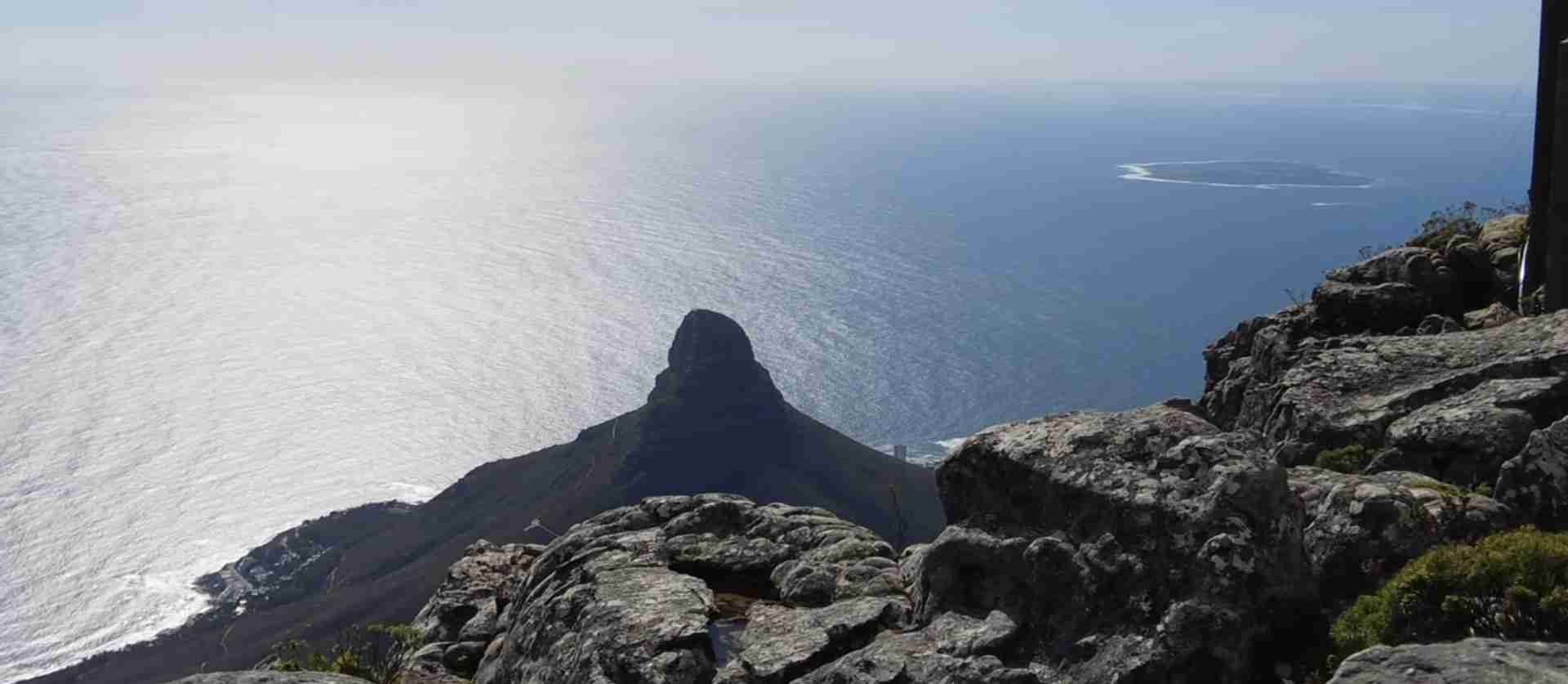
The summit plateau features extensive paved walking paths connecting the upper cable car station to multiple viewing platforms that showcase different perspectives of Cape Town’s geography. The main viewing area immediately adjacent to the upper station provides 180-degree views across Cape Town’s city bowl, Table Bay harbor, and Robben Island visible 12 kilometers offshore. Signal Hill and Lion’s Head rise to the northwest with the Atlantic coastline extending beyond, while the southern viewing platforms reveal the Twelve Apostles mountain range, Camps Bay beaches, and Hout Bay fjord cutting into the mountainside.
The Table Mountain Café operates at the summit plateau serving breakfast, lunch, and snacks throughout cable car operating hours, with indoor seating accommodating 200 guests and outdoor terrace dining during favorable weather. The menu features South African specialties including bobotie at R165, Cape Malay curry for R155, and traditional braai platters at R180-220, alongside international options like burgers for R120-140 and pasta dishes at R135-165. The café maintains full bar service with South African wines priced R60-90 per glass and local craft beers at R50-65 per bottle. Free Wi-Fi coverage extends throughout the restaurant area and immediate surroundings, with restroom facilities adjacent to the upper station.
Walking paths extend across the plateau to Maclear’s Beacon at 1,086 meters marking Table Mountain’s highest point, requiring 30-40 minutes from the upper cable car station via maintained trails with moderate climbing over rocky sections. The Dassies viewing platform accessed via 10-minute walk from the upper station provides close encounters with Cape Town’s rock hyraxes that inhabit the summit plateau in large colonies. Evening visitors during summer extended hours experience dramatic sunset views as the sun descends into the Atlantic Ocean, with optimal viewing positions on the western edge platforms reached via 20-minute walks from the upper station through increasingly golden light.
Weather Patterns and Cable Car Closure Considerations 2026
The tablecloth cloud formation represents Table Mountain’s most distinctive weather phenomenon, occurring when southeastern winds push moist ocean air up and over the mountain’s edge where rapid cooling condenses moisture into dense cloud that spills down the northern face. The cloud forms within 15-20 minutes when conditions align, reducing summit visibility to near-zero and triggering immediate cable car suspension until the cloud dissipates or winds moderate. Summer months experience the most frequent tablecloth cloud days when strong southeaster winds blow, particularly during afternoon hours after morning heating intensifies wind circulation patterns.
Winter months from June through August deliver Cape Town’s rainy season with frequent cold fronts that close the cable car for multiple consecutive days during storm passage. The cold fronts approach from the northwest bringing sustained rainfall, strong winds, and occasional snow that dusts the summit above 900 meters elevation during the coldest events. Cable car operations suspend 24-48 hours during major storm systems, resuming only after winds drop below 60 km/h sustained speed and visibility improves to operational minimums. Weather windows between fronts provide clear summit conditions ideal for hiking, though these periods last only 2-4 days before the next system arrives.
Real-time weather monitoring becomes essential for Table Mountain planning, with the Windy.com application providing detailed wind speed and direction forecasts specific to the mountain’s elevation. Wind speeds above 40 km/h create uncomfortable summit conditions even when cable car operations continue, with gusts exceeding 60 km/h suspending services immediately. Morning hours typically offer the calmest conditions before afternoon heating strengthens wind patterns, making early ascents between 8-11 AM optimal for both stable cable car access and comfortable summit exploration. The Table Mountain website maintains current operating status with updates every 30 minutes, essential checking before departing accommodations to avoid wasted transportation costs.
Hiking Routes Comprehensive Guide 2026
Table Mountain’s hiking routes divide into six primary trails offering different approaches to the summit, ranging from the direct Platteklip Gorge to the technically demanding India Venster with its scrambling sections. Each route presents distinct characteristics in terms of duration, difficulty, scenery, and technical requirements, with selection depending on fitness level, hiking experience, and desired summit approach. The trails ascend through different vegetation zones from coastal fynbos at lower elevations to mountain fynbos and rocky outcrops near the summit, showcasing the incredible botanical diversity that makes Table Mountain a biodiversity hotspot with over 2,200 plant species.
Hiking permits and entry fees do not apply to most Table Mountain trails, with Platteklip Gorge, India Venster, Kasteelspoort, and Nursery Ravine freely accessible from roadside trailheads. Skeleton Gorge requires R90 adult admission to Kirstenbosch National Botanical Garden when accessing through the garden boundaries, though hikers can alternatively access this route from contour path trailheads without entering the garden. All hiking routes require registration at trailhead logbooks for safety tracking, with hikers signing in at the start and signing out upon return to allow rangers to identify overdue parties potentially requiring assistance.
Weather considerations impact hiking safety more severely than cable car operations, as hikers commit to 2-5 hour ascents through changing conditions without the option to immediately abandon the climb if weather deteriorates. Afternoon wind strengthening poses the greatest challenge, with gusts exceeding 60 km/h on exposed ridges creating dangerous conditions for maintaining balance on narrow paths. The tablecloth cloud descending over the summit eliminates visibility and drops temperatures by 10-15°C within minutes, requiring hikers to carry warm layers and rain protection regardless of clear morning conditions. Summer heat drives temperatures above 32°C on exposed trails like Platteklip Gorge, requiring early morning starts before 7 AM to complete most of the ascent before peak heating.
Platteklip Gorge: The Classic Direct Route 2026
Platteklip Gorge provides the most straightforward hiking route to Table Mountain’s summit, ascending 2.5 kilometers via maintained stone steps and clearly marked paths that climb 700 meters from the trailhead at 385 meters elevation. The route begins at the Platteklip parking area off Tafelberg Road, sharing parking facilities with the cable car lower station and connected by 200-meter walking path. The trail follows the natural gorge cutting through the mountain’s front face in a direct line toward the summit plateau, maintaining consistent gradient averaging 26% throughout the climb without technical sections requiring hands for balance.
The ascent requires 2-3 hours for moderately fit hikers maintaining steady pace with brief rest stops, with athletic climbers completing the route in 1.5 hours during training ascents. The trail consists entirely of stone steps and improved pathways constructed by South African National Parks to minimize erosion and provide stable footing, though the steps become tiring during the continuous upward progression. Views expand continuously as elevation increases, with Cape Town’s city bowl spreading below and Table Bay extending to the northern horizon, providing natural motivation and rest stop viewpoints throughout the climb.
The trail crosses several distinct vegetation zones during the ascent, beginning in degraded fynbos at lower elevations where human activity and alien vegetation intrude, transitioning to pristine mountain fynbos above 600 meters where proteas, ericas, and restios dominate the landscape. Wildlife sightings occur frequently on Platteklip, with rock hyrax colonies inhabiting boulder fields beside the trail and porcupine quills marking feeding areas, though the animals themselves remain largely nocturnal. Birds including Cape sugarbirds and orange-breasted sunbirds feed on flowering proteas during spring months from September through November when the fynbos displays peak color.
Summer heat makes Platteklip particularly challenging during midday hours when the exposed gorge traps warm air and direct sunlight eliminates shade throughout the entire route. Early morning starts before 7 AM provide cooler temperatures and calmer winds, with most hikers completing the ascent before 10 AM when temperatures exceed 28°C. Water requirements increase dramatically in summer heat, with 2-3 liters per person minimum for the ascent and descent, though many hikers choose to descend via cable car for R260 single-trip fare to avoid the knee-stressing downward climb that requires careful foot placement on the stone steps.
India Venster: The Adventurer’s Scrambling Route 2026
India Venster delivers Table Mountain’s most thrilling hiking experience, combining trail walking with technical scrambling sections that require using hands for balance and progression across exposed rock faces. The route begins from the same Platteklip trailhead but branches right after 20-25 minutes of initial climbing, traversing horizontally across the mountain’s face via narrow paths clinging to cliff edges. The 2.5-hour route suits confident hikers comfortable with heights and basic rock scrambling, as several sections feature exposure above vertical drops requiring careful hand and foot placement on secure holds.
The scrambling sections appear intermittently throughout the route rather than concentrating in one sustained difficulty area, with the most exposed passages occurring at mid-elevation around 600-700 meters where the trail traverses across rock slabs angled 30-40 degrees above long runouts. The rock offers excellent friction for shoe rubber with natural holds and ledges providing secure hand grips, though wet conditions transform the scrambles into dangerous propositions requiring retreat or alternate route selection. Chains and cables installed at the most exposed points provide additional security, though hikers must still move confidently across sustained scrambling sections without continuous cable assistance.
The route showcases spectacular perspectives unavailable from other trails, traversing across the mountain’s eastern face with expansive views across the Cape Peninsula, False Bay, and the Hottentots Holland Mountains visible 50 kilometers inland. The path passes through pristine fynbos communities with numerous endemic species thriving on the rocky slopes, while the vertical cliff faces above the trail host specialized cliff-dwelling plants adapted to extreme moisture stress and exposure. Wildlife encounters occur less frequently than on Platteklip due to the route’s more remote traverse away from high-traffic areas.
India Venster demands respect for the mountain’s dangers, with several fatalities recorded over decades from falls on exposed sections during wet conditions or when hikers rushed through technical terrain without adequate focus. The route should never be attempted during or immediately after rain when rock surfaces become slippery, or when the tablecloth cloud descends eliminating visibility across exposed traverses. Strong winds make scrambling sections particularly treacherous, as gusts exceeding 40 km/h can unbalance climbers at critical moments during exposed moves across rock slabs.
Skeleton Gorge: The Forest Canyon Route 2026
Skeleton Gorge approaches Table Mountain from the eastern slopes through Kirstenbosch National Botanical Garden’s forest groves, ascending via the gentlest gradient among major routes despite requiring 3-4 hours to complete due to multiple rest stops at ladder sections. The trail begins at the Kirstenbosch garden entrance requiring R90 adult admission, climbing through indigenous forest dominated by yellowwood, stinkwood, and wild almond trees that create continuous shade throughout the lower elevation sections. The route appeals to hikers prioritizing botanical interest and forest atmosphere over dramatic summit views during ascent.
The gradient averages 15-18% throughout most of Skeleton Gorge’s length, making it the easiest route for cardiovascular stress despite the 4-5 kilometer distance from Kirstenbosch entrance to summit plateau. The trail follows the gorge’s natural waterway where seasonal streams cascade over rock steps during winter months, with three ladder sections totaling 15 meters vertical gain installed where waterfalls block the route during higher elevation progression. The ladders add adventure element without requiring technical climbing skills, as sturdy construction with handrails provides secure passage for all fitness levels.
The forest environment harbors Table Mountain’s richest wildlife diversity, with over 70 bird species recorded in Kirstenbosch’s upper slopes including the endangered Cape rockjumper found nowhere else on earth. Mammals encountered along Skeleton Gorge include grey mongoose active during daylight hours, caracal tracks marking territorial boundaries though the cats themselves remain primarily nocturnal, and rock hyrax colonies basking on sunny boulders beside the trail. The forest canopy supports arboreal species including tree dassies and bushbuck that browse on forest understory vegetation.
Skeleton Gorge delivers dramatically different atmosphere compared to exposed routes like Platteklip, with the forest sections providing psychological relief during hot summer days through continuous shade and cooler microclimate maintained by vegetation transpiration. The route emerges from treeline around 900 meters elevation where mountain fynbos dominates and views open across the Cape Peninsula’s southern extent. Return via Skeleton Gorge requires navigating the ladder sections in descent, which many hikers find more challenging than the ascent, leading numerous visitors to descend via cable car or choose alternate routes like Nursery Ravine for the return journey.
Additional Routes: Kasteelspoort and Nursery Ravine 2026
Kasteelspoort ascends Table Mountain’s western face from Camps Bay, offering 2.5-3 hour climb through dramatic gorge scenery with close views of the Twelve Apostles buttresses rising above the trail. The route begins from the Camps Bay roundabout parking area, climbing via steep gradient averaging 28% through sections that require scrambling over rock steps without technical rope requirements. The western location provides afternoon shade as the mountain blocks direct sunlight, making Kasteelspoort preferable during hot summer days when eastern and northern routes bake in full sun exposure.
The trail passes through spectacular boulder fields where house-sized rocks create cave passages and tunnel routes through the gorge’s upper reaches. The vegetation transitions from coastal fynbos with large protea stands at lower elevations to mountain fynbos dominated by smaller shrubs and restios adapted to harsh summit conditions. Views during ascent focus on the Atlantic coastline stretching southward toward Cape Point, with Camps Bay’s white sand beaches and luxury homes spread below the mountain’s base. The route emerges on the summit plateau near the cable car upper station, positioning hikers perfectly for restaurant facilities and viewing platforms.
Nursery Ravine provides gentle alternative descent route following the same general line as Kasteelspoort but via maintained path with easier gradient and reduced scrambling requirements. The ravine route takes 1.5-2 hours descending from summit to Tafelberg Road, making it ideal combination with ascending routes like India Venster or Platteklip that create circular hiking loops avoiding repeated sections. The path remains distinct from Kasteelspoort’s boulder fields while sharing similar vegetation zones and viewing aspects toward the Atlantic coast.
These western routes experience different weather patterns than the mountain’s eastern and northern faces, with afternoon winds flowing up from the ocean creating strong gusts through the gorge sections during typical summer wind cycles. The routes receive less traffic than Platteklip and Skeleton Gorge, providing quieter hiking experience with greater solitude during ascent and descent. Wildlife sightings occur frequently on Kasteelspoort and Nursery Ravine, with smaller antelope species including grysbok inhabiting the upper slopes and occasionally crossing the trail during early morning or evening hours when hiker traffic decreases.
Best Views and Photography Locations 2026
Table Mountain’s summit plateau delivers some of the world’s most dramatic urban-wilderness panoramas, with 360-degree views encompassing Cape Town’s city bowl, the Atlantic and Indian Ocean coastlines, and mountain ranges extending 100 kilometers inland. The primary viewing areas concentrate near the upper cable car station where paved paths lead to multiple platforms optimized for different perspectives and photographic compositions. The northern viewpoint immediately adjacent to the upper station provides the classic Table Bay vista with Robben Island visible 12 kilometers offshore, the V&A Waterfront’s harbor below, and Signal Hill’s lion’s head profile prominent in the middle distance.
The western viewing platforms reached via 15-20 minute walks from the upper station reveal the Atlantic coastline stretching toward Cape Point 40 kilometers south, with the Twelve Apostles mountain range dropping dramatically into Camps Bay’s beaches and the ocean beyond. These locations deliver the summit’s most spectacular sunset photography during summer extended cable car hours, as the sun descends into the Atlantic creating golden light that transforms the landscape during the 30-minute window before darkness. The southern edge platforms showcase the Cape Peninsula’s spine continuing toward Cape of Good Hope, with False Bay’s coastline visible along the eastern shore and the Hottentots Holland Mountains marking the horizon.
Maclear’s Beacon at 1,086 meters represents Table Mountain’s highest point, requiring 30-40 minute hike from the upper cable car station via rocky trails that climb the final 80 vertical meters to the summit. The beacon location provides unmatched elevation for photography with foreground elements including the summit plateau spread below, though the surrounding landscape appears similar to lower elevation viewpoints with slightly expanded distant horizons. The hike to Maclear’s Beacon suits photographers seeking unique perspectives and visitors pursuing the satisfaction of reaching Table Mountain’s true summit rather than remaining at the cable car upper station elevation.
Optimal Photography Timing and Conditions 2026
Morning light between 7-10 AM provides the cleanest atmospheric conditions for Table Mountain photography, with cool overnight temperatures settling haze and pollution particles that accumulate during afternoon heating. The early timing delivers soft directional light that models the landscape’s topography while maintaining shadow detail, particularly effective for photographing Cape Town’s urban sprawl with the mountain ranges beyond. Sunrise photography requires ascending via hiking routes as cable car operations begin at 8 AM, with Platteklip Gorge’s 2-hour ascent necessitating 4:30 AM departure to reach the summit before sunrise at 6:30-7 AM during summer months.
Golden hour before sunset creates the most dramatic landscape photography opportunities, with warm light transforming the Cape Peninsula’s geology and vegetation during the 45-minute window preceding darkness. The cable car’s summer extended hours until 8 PM allow visitors to experience sunset from the summit and descend during twilight, with the last ascent departing at 7:30 PM to accommodate sunset viewing. Photographers should position at western viewpoints by 7 PM to capture the full golden hour sequence as sunlight intensifies through orange and red wavelengths during the final 20 minutes before sunset.
Cloud formations create dramatic photographic opportunities when the tablecloth cloud forms and spills down Table Mountain’s northern face into the city bowl below. The cloud edge advances and retreats with wind fluctuations, creating dynamic compositions as mist tendrils flow around rocky outcrops and through gorges. Photographing the tablecloth cloud requires positioning below the mountain when the cloud descends, as summit conditions deteriorate into zero visibility dense fog. Signal Hill and Lion’s Head provide elevated viewpoints for photographing Table Mountain engulfed in cloud while remaining in clear conditions themselves.
Technical Photography Considerations and Equipment 2026
Wide-angle lenses in the 14-24mm range capture Table Mountain’s expansive panoramas from summit viewpoints, with the broad perspectives necessary to include Cape Town’s urban extent, harbor facilities, and mountain backdrop in single compositions. The 24-70mm range provides versatility for both landscape overviews and tighter compositional studies of specific geographical features like Robben Island, Lion’s Head, or Camps Bay beaches. Telephoto lenses above 100mm compress distant elements bringing the Hottentots Holland Mountains and Cape Point closer to foreground elements in layered compositions.
Polarizing filters enhance sky saturation and reduce atmospheric haze that washes out distant details, particularly effective during midday hours when scattered light reduces contrast and color intensity. The filters also manage reflections from the ocean surface when shooting toward water bodies, allowing greater control over whether wave patterns remain visible or disappear into uniform color fields. Graduated neutral density filters balance exposure between bright sky and darker landscape when photographing toward the sun during golden hour, preventing highlight clipping while maintaining shadow detail in the foreground.
Tripods provide stability for long exposure photography capturing cloud movement or water motion in ocean waves, though the plateau’s frequent winds require sturdy three-leg construction with center column extended minimally to reduce vibration. Cable releases or camera self-timers eliminate shutter-press vibration during exposure, particularly critical when photographing at longer focal lengths above 200mm where any movement creates visible blur. The upper cable car station prohibits tripod setup in high-traffic viewing areas immediately adjacent to the platform, requiring photographers to walk 5-10 minutes to less crowded locations for tripod work without obstructing other visitors.
Sample 2026 Itineraries and Day Planning
Budget Hiking Experience: R65-95 Per Person
Morning departure from Cape Town accommodation at 6:30 AM via MyCiTi Bus Route 110 to Platteklip trailhead, arriving 7 AM for cool morning ascent conditions and optimal light. Pack breakfast and lunch before departure to avoid summit café costs, carrying 2-3 liters water per person plus high-energy snacks like nuts, dried fruit, and energy bars totaling R30-40 per person from Cape Town supermarkets. Sign trail register at trailhead and begin ascent immediately to complete majority of climb before 10 AM when temperatures increase and winds strengthen.
Summit arrival between 9-9:30 AM provides 2-3 hours for plateau exploration, photography, and lunch at designated picnic areas with panoramic views while avoiding midday heat exposure during descent. Walk the plateau circuit visiting Maclear’s Beacon and western viewpoints, allowing 1.5-2 hours for comprehensive summit experience including rest breaks and photography opportunities. Descend via Platteklip Gorge during late morning hours 11 AM-12 PM when temperatures peak, requiring careful attention to footing on the stone steps during continuous downward progression.
Return to trailhead by 1-1:30 PM completing the round-trip experience in 6-7 hours including summit exploration time. MyCiTi bus R15, packed meals R30-40, water and snacks R10-15. Total day cost: R55-70 per person excluding accommodation.
Cable Car Convenience Experience: R625-715 Per Person
Online advance booking guarantees 9 AM cable car ascent slot with 10% discount reducing adult tickets from R395 to R355, essential during peak summer season when same-day tickets sell out early. Uber departure from Cape Town accommodation at 8:15 AM costs R150-180, arriving cable car lower station with 20-minute buffer for ticket collection at will-call window and security screening before boarding. The 5-minute cable car ascent delivers 360-degree rotating views during climb to summit plateau, departing passengers at upper station by 9:10 AM for early access before midday crowds arrive.
Morning summit exploration focuses on northern and eastern viewpoints photographing Cape Town city bowl during optimal light conditions before 11 AM. Walk to Maclear’s Beacon completing the 30-40 minute trek to Table Mountain’s highest point, returning to upper station by 11:30 AM for lunch at Table Mountain Café. Lunch selection includes Cape Malay curry R155, bobotie R165, or international options like burgers R120-140 with beverages R45-60, totaling R165-220 per person for complete meal with drinks.
Afternoon hours explore western and southern viewpoints without rush to descend, allowing flexibility for changing light conditions and cloud formations that create photography opportunities. Position at western platforms by 4:30 PM during winter months or 6:30 PM during summer for golden hour photography sequence, capturing sunset if visiting during extended hours from October through April. Return cable car descent accommodates flexible timing throughout operating hours, with Uber pickup from lower station coordinated 10-15 minutes before arrival requiring R150-180 for return transportation to accommodation.
Cable car tickets R355 online advance booking, Uber round-trip R300-360 split by passengers, lunch R165-220, summit snacks and drinks R50-80. Total day cost: R870-1,015 for two people, or R625-715 per person for solo travelers. Total excludes accommodation.
Combination Hike-Up, Cable-Down Experience: R435-525 Per Person
Hybrid approach combines hiking ascent providing sense of achievement and intimate mountain experience with cable car descent eliminating knee stress and dangerous footing on downward climbing. MyCiTi bus departure from accommodation at 6:30 AM arrives Platteklip trailhead by 7 AM for optimal morning ascent timing, carrying packed breakfast and lunch to avoid summit café costs. The 2-3 hour ascent reaches summit between 9-10 AM with sufficient time for rest, breakfast, and preliminary viewpoint exploration before cable car crowds arrive.
Mid-morning through afternoon hours explore the complete summit plateau circuit walking to Maclear’s Beacon, Dassies platform, and western viewpoints with flexibility for extended photography sessions without descent time pressure. Lunch at packed meal locations saves R165-220 compared to café dining while providing authentic summit picnic experience with panoramic views from quieter locations away from upper station crowds. The self-paced timing allows adaptation to weather conditions and personal energy levels without rigid schedule constraints.
Cable car descent ticket purchased at upper station costs approximately R260 for the single-way journey, boarding any descending car throughout operating hours based on personal preference for timing. The 5-minute descent provides final summit views during golden hour if visiting during extended summer operations, arriving lower station by scheduled Uber pickup arranged via app during cable car descent. Alternative return via MyCiTi bus R15 requires 15-20 minute walk from lower station to nearest bus stop on Tafelberg Road.
MyCiTi bus R15, packed meals R30-40, cable car descent R260, return Uber R150-180 or MyCiTi R15. Total day cost: R455-495 per person with Uber return, or R320-330 with bus return, excluding accommodation.
Safety Protocols and Emergency Procedures 2026
Table Mountain’s wilderness environment creates genuine hazards requiring serious safety consideration despite proximity to Cape Town’s urban infrastructure. The mountain records multiple rescue operations annually for injured or lost hikers, with most incidents involving inadequate preparation, poor weather assessment, or attempting routes beyond fitness capabilities. Weather changes occur rapidly with the tablecloth cloud descending within 15-20 minutes and dropping summit temperatures 10-15°C while eliminating visibility to less than 20 meters, creating serious navigation challenges for hikers caught without adequate clothing or route-finding abilities.
All hiking routes require signing trail registers at trailheads before beginning ascent, providing rangers with information about hiking parties and expected return times. Failure to sign out upon return triggers missing person protocols when rangers check registers at closing time, potentially initiating unnecessary search operations. Mobile phone coverage extends throughout most of Table Mountain from Cape Town’s cellular networks, maintaining service on popular routes like Platteklip Gorge and India Venster though signal strength decreases in sheltered gorges like Skeleton Gorge where terrain blocks transmission.
Emergency contact numbers include Table Mountain National Park emergency line at 086 110 6417 providing direct connection to ranger dispatch coordinating rescue operations, and South Africa’s national emergency number 10111 connecting to integrated emergency services. The Wilderness Search and Rescue (WSAR) organization operates helicopter and ground rescue capabilities specifically for Table Mountain incidents, responding to approximately 150-200 call-outs annually for injured hikers, people lost in cloud, or parties stranded after dark. Response times vary from 30 minutes for cable car upper station incidents to 2-3 hours for remote gorge locations requiring technical rope rescue capabilities.
Essential Hiking Safety Equipment 2026
Water requirements increase dramatically with Table Mountain’s elevation gain and lack of reliable water sources on most routes, requiring minimum 2 liters per person for 2-3 hour ascents during moderate conditions, increasing to 3 liters during summer heat. Hikers attempting 4-5 hour routes like Skeleton Gorge should carry 2.5-3 liters per person, with additional margins for delayed descent if weather deteriorates or injuries slow progress. No natural water sources exist on Platteklip Gorge or India Venster after leaving trailheads, while Skeleton Gorge’s streams become unreliable during summer dry season and require purification if consumed.
Clothing layers address Table Mountain’s rapid temperature changes, with base layers providing moisture management during exertion-heated ascent, insulating mid-layers for summit plateau exposure, and windproof shell layers protecting against gusts exceeding 60 km/h during deteriorating conditions. Rain protection becomes mandatory regardless of clear morning conditions, as afternoon thunderstorms develop rapidly during summer months and winter fronts sweep in with minimal warning. The tablecloth cloud creates effective precipitation through moisture condensation, soaking clothing within 30 minutes of exposure even without rainfall.
Navigation equipment includes printed maps or downloaded GPS applications showing trail routes and key landmarks, essential backup when cloud descends eliminating visual navigation. The South African National Parks website provides downloadable trail maps covering all major routes with elevation profiles and key decision points marked clearly. Mobile phone battery conservation becomes critical for emergency communication, with airplane mode reducing power consumption while maintaining GPS functionality for location tracking without cellular network connection draining batteries.
Weather Assessment and Abort Protocols 2026
Pre-departure weather assessment should include checking Table Mountain website for cable car operational status, reviewing wind speed forecasts on Windy.com, and evaluating cloud cover predictions through South African Weather Service applications. Wind speeds above 40 km/h create uncomfortable summit conditions even when cable car operates, while sustained winds above 50 km/h make hiking routes dangerous on exposed ridges and traverses. Rain forecasts require reassessing route selection, with technical scrambling routes like India Venster becoming dangerous during wet conditions when rock surfaces lose friction.
Abort criteria during ascent include tablecloth cloud descending to current elevation eliminating visibility beyond 50 meters, wind gusts strong enough to affect balance during walking, or unexpected afternoon thunderstorm development indicated by towering cumulus clouds building vertically. Retreat decisions become harder psychologically when significant elevation has been gained, though continuing upward into deteriorating conditions exponentially increases risk compared to disciplined retreat to safety. The summit plateau offers no shelter from wind or precipitation, making retreat to lower elevations more sensible than continuing to exposed summit when conditions decline.
Lightning safety requires immediate evacuation from summit plateau and upper mountain slopes when thunderstorms approach, as Table Mountain’s elevation makes it prime lightning strike territory during electrical activity. The mountain records lightning strikes regularly during summer thunderstorm season, with metal cable car infrastructure and summit facilities creating attractive targets for ground strikes. Hikers should descend at least 200 vertical meters below the plateau when lightning activity occurs within visible range, seeking shelter among boulders or in gorge sections away from ridge crests and isolated rock pinnacles.
Accommodation Strategies Near Table Mountain 2026
Cape Town’s accommodation clusters in distinct neighborhoods offering different proximity to Table Mountain and pricing tiers ranging from backpacker hostels to luxury hotels. The City Bowl area provides closest access to Table Mountain with accommodations 5-8 kilometers from the cable car station, accessible via 10-15 minute Uber rides costing R80-120 or 25-minute MyCiTi bus journeys. Mid-range hotels in City Bowl neighborhoods like Gardens and Tamboerskloof charge R1,800-2,800 per night for double occupancy during summer peak season, dropping to R1,200-1,800 during winter months from May through September.
Camps Bay and Clifton beaches on Table Mountain’s western slopes position visitors within 3-5 kilometers of Kasteelspoort trailhead access, though these areas focus on luxury accommodation charging R3,500-6,000 per night for ocean-view hotels during summer peaks. The Atlantic Seaboard location provides spectacular views of the Twelve Apostles and direct beach access but creates longer commutes to city center attractions and the main cable car station. Backpacker hostels in these neighborhoods remain limited, with most budget accommodation concentrated in City Bowl suburbs.
Kirstenbosch vicinity on Table Mountain’s eastern slopes suits visitors prioritizing Skeleton Gorge hiking access, with guesthouses and boutique hotels charging R1,500-2,500 per night for double occupancy. The area provides quieter alternative to City Bowl tourist concentrations while maintaining reasonable access to both Table Mountain and Cape Town attractions via 20-minute drives. Public transportation to Kirstenbosch operates via MyCiTi bus Route 114 from central stations, though service frequency remains limited compared to cable car routes requiring more careful schedule coordination.
Budget Accommodation Options for 2026
Backpacker hostels concentrate in City Bowl neighborhoods providing dormitory beds for R250-400 per person per night during summer season, with private rooms available for R600-900 for couples seeking more privacy than dormitories provide. Popular hostels like Atlantic Point Backpackers, The Backpack, and Ashanti Lodge offer organized group activities including Table Mountain hiking expeditions, Cape Point tours, and township visits that facilitate meeting other travelers while reducing transportation costs through shared arrangements. Hostel facilities typically include equipped kitchens allowing self-catering to minimize meal costs, communal lounges for socializing, and free Wi-Fi throughout properties.
Airbnb properties provide middle-ground option between hostel dormitories and hotels, with entire apartments ranging R800-1,500 per night for studios accommodating two people in City Bowl neighborhoods. The private apartments include full kitchens reducing meal costs by 50-70% compared to restaurant dining three meals daily, while providing more space and privacy than equivalent-priced hotel rooms. Long-term Airbnb bookings for 7+ nights often receive 15-20% discounts from weekly rates, making extended Cape Town stays more economical when combining Table Mountain with Cape Peninsula exploration and Garden Route excursions.
Guesthouses operated by Cape Town residents offer personalized accommodation alternatives with breakfast included for R900-1,400 per night for double occupancy. The smaller properties provide local knowledge from owners who share Table Mountain hiking advice, weather pattern insights, and neighborhood restaurant recommendations that enhance visitor experience beyond anonymous hotel stays. Guesthouse locations spread throughout City Bowl suburbs like Vredehoek, Oranjezicht, and Higgovale, positioning guests within walking distance of restaurants and cafés while maintaining residential neighborhood atmosphere.
Mid-Range and Luxury Options for 2026
Boutique hotels in City Bowl charge R2,200-3,500 per night for double occupancy including breakfast, with properties like Derwent House, Cape Heritage Hotel, and Kensington Place offering design-focused environments combining historic architecture with contemporary interiors. These mid-range options provide concierge services for booking Table Mountain cable car tickets, arranging transportation, and reserving restaurants while maintaining more intimate scale than large chain hotels. Rooms typically include quality bedding, rainfall showers, and complimentary Wi-Fi, with many properties featuring rooftop terraces or small pools for relaxation after Table Mountain expeditions.
Luxury hotels including One&Only Cape Town, Belmond Mount Nelson, and Taj Cape Town command R5,500-9,000 per night for standard rooms during peak season, delivering five-star service with premium dining, extensive spa facilities, and impeccable room appointments. These properties cater to travelers prioritizing comfort and convenience over budget constraints, with staff arranging private guide services for Table Mountain hiking, helicopter tours over the peninsula, and exclusive wine-tasting experiences in nearby Constantia Valley. The hotels’ central locations in V&A Waterfront and City Bowl neighborhoods position guests within 10-15 minute drives of Table Mountain cable car station.
Self-catering apartments ranging R1,800-3,200 per night accommodate families or groups seeking more space and kitchen facilities than hotels provide, with properties scattered throughout City Bowl and Atlantic Seaboard neighborhoods. Full apartment rentals for 4-6 people often prove more economical than booking multiple hotel rooms, while kitchen access dramatically reduces meal costs during extended stays. Management companies like Totalstay and Cape View Apartments maintain portfolio properties across Cape Town with consistent quality standards and 24-hour support services addressing maintenance issues or guest needs.
Money-Saving Strategies and Budget Tips 2026
Hiking Table Mountain instead of taking the cable car eliminates the largest single expense of the experience, saving R395 per person while providing more intimate mountain connection and sense of achievement. The physical exertion requires reasonable fitness levels and 4-6 hours committed to ascent and descent, but transforms Table Mountain from passive cable car viewing into active wilderness engagement. The hiking approach allows visiting during any season regardless of cable car operations, which suspend frequently during winter months when wind and rain close the cable cars for multiple consecutive days.
Combination hiking ascent with cable car descent balances budget considerations against knee stress and descent time, paying only R260 for the single-way cable car ticket compared to R395 for round-trip service. This hybrid approach provides the ascent achievement and botanical interest while eliminating the challenging descent that requires careful footing on steep stone steps where many hiking injuries occur. The cable car descent saves 1.5-2 hours compared to walking down, creating additional afternoon time for other Cape Town attractions or beach relaxation after the morning Table Mountain expedition.
Packing meals for summit consumption avoids the R165-220 cost of café dining, with supermarket purchases of sandwiches, snacks, and drinks totaling R30-50 per person while providing equivalent nutrition. Woolworths and Pick n Pay supermarkets throughout Cape Town stock premade sandwiches, salads, fruit, nuts, and energy bars suitable for hiking provisions at costs 70-80% lower than restaurant meal pricing. The packed meal approach also provides flexibility for summit picnicking at quieter viewpoints away from upper station crowds, enhancing the wilderness atmosphere compared to indoor café dining.
Transportation Cost Optimization for 2026
MyCiTi public buses provide the most economical Table Mountain access at R15 per ride, requiring R35 initial MyConnect card purchase plus fare credit that functions throughout Cape Town’s integrated bus network. The Route 110 bus departs every 20-30 minutes from Civic Centre Station directly to the cable car lower station and Platteklip trailhead, creating reliable schedule for budget travelers willing to coordinate timing rather than paying R150-200 for Uber convenience. The bus system extends throughout Cape Town serving V&A Waterfront, Sea Point, Camps Bay, and Hout Bay, providing comprehensive transportation network for visitors staying multiple days.
Uber and Bolt ride-sharing costs split among multiple passengers create economical alternative to bus transportation when coordinating group departures for Table Mountain. Four passengers sharing R150-200 Uber fare pay R38-50 per person, only R23-35 more than bus tickets while gaining door-to-door convenience and flexible departure timing. The slight premium proves worthwhile for groups prioritizing early morning hiking starts before 7 AM when MyCiTi bus frequency remains limited, or for carrying significant hiking gear that proves awkward on public transportation.
Rental cars make economic sense for visitors planning extensive Cape Peninsula exploration beyond Table Mountain, with daily rates of R350-500 for compact vehicles providing unlimited mobility compared to paying R15-30 per destination via public transportation. The break-even calculation favors rental cars when visiting 3-4 attractions daily spread across Cape Town’s geographic extent, as cumulative bus fares exceed rental costs while consuming significant time coordinating schedules and transfers. Parking at Table Mountain cable car station costs R80 maximum for full-day stays, adding modest expense compared to flexibility gained.
Seasonal Timing and Advance Booking Benefits 2026
Shoulder season visits during April-May and September-October reduce accommodation costs by 30-40% compared to December-February summer peaks, while maintaining generally favorable Table Mountain weather with reduced but still acceptable cable car operational reliability. The mild autumn and spring conditions suit hiking more comfortably than summer heat extremes, with temperatures ranging 18-25°C during daylight hours and reduced wind frequency compared to summer’s powerful southeasters. Tourist crowds thin considerably outside December-January peaks, creating easier cable car access with same-day tickets remaining available throughout most days.
Advance cable car booking through the official website provides 10% discount on standard R395 adult tickets, reducing costs to approximately R355 while guaranteeing access during preferred time slots. The advance booking particularly benefits peak season visitors when walk-up tickets sell out by mid-morning, eliminating uncertainty about whether cable car capacity will accommodate same-day arrivals. The online system allows bookings up to 90 days ahead with specific one-hour departure windows selected, essential for coordinating Table Mountain with other scheduled Cape Town activities.
Winter months from June through August offer the deepest accommodation discounts at 40-50% below summer rates, though the trade-off involves increased cable car closure frequency and reduced hiking weather windows between storm systems. Budget travelers willing to accept weather uncertainty can achieve significant savings during winter while maintaining rewarding Table Mountain experiences during clear days between fronts. The winter shoulder periods in late May and early September balance moderate pricing with improving weather reliability as seasons transition from summer stability to winter storms and back.
Booking Platforms and Reservation Strategies 2026
The official Table Mountain website (tablemountain.net) serves as the primary booking platform for cable car tickets, providing secure online transactions with instant confirmation and 10% discount compared to walk-up pricing. The website displays real-time cable car operational status updated every 30 minutes during operating hours, essential information for visitors assessing whether to proceed with planned Table Mountain visits or postpone due to weather closures. The booking system accepts international credit cards and provides e-tickets delivered via email suitable for mobile device display at the lower station entrance, eliminating physical ticket printing requirements.
Third-party tour operators including Viator, GetYourGuide, and local Cape Town operators bundle Table Mountain cable car access with city tours, township visits, and Cape Peninsula excursions creating comprehensive day packages. These bundled experiences typically charge premiums of 20-35% above direct cable car ticket pricing but include hotel pickup, transportation, guide services, and additional attractions that can prove valuable for visitors prioritizing convenience over budget optimization. The tour packages suit travelers with limited Cape Town duration seeking efficient use of time through coordinated itineraries managed by professional operators.
Accommodation booking platforms including Booking.com, Airbnb, and Hotels.com provide comprehensive Cape Town property selection with user reviews and cancellation policies that allow flexible planning around Table Mountain weather considerations. Booking.com’s free cancellation options up to 24 hours before check-in prove particularly valuable when coordinating multi-day Cape Town stays around Table Mountain visits that might postpone due to cable car closures. The platforms’ mobile applications facilitate on-the-go booking changes and communication with property hosts or hotel reception desks when weather forces itinerary adjustments.
Tour Operator Options and Package Deals 2026
Half-day Table Mountain tours typically combine cable car ascent with city orientation drives through Cape Town’s major neighborhoods, covering approximately 4-5 hours from hotel pickup to return. The tours charge R850-1,200 per person including cable car admission, transportation, and guide services, providing efficient Cape Town introduction for visitors with limited time. Guide commentary adds historical and cultural context to both Table Mountain natural heritage and Cape Town’s complex social history, enriching the experience beyond self-guided cable car visits while ensuring efficient time management.
Full-day Cape Peninsula tours incorporate Table Mountain with Cape Point, Boulders Beach penguin colony, Chapman’s Peak Drive, and coastal villages like Simon’s Town and Kalk Bay, creating comprehensive introduction to Cape Town’s geographic diversity. These 9-10 hour excursions charge R1,800-2,400 per person including all admissions, lunch, and transportation, representing good value for visitors seeking maximum coverage in single day. The tours accommodate limited mobility through van transportation between attractions, minimizing walking distances while maintaining access to major viewpoints and experiences.
Private guide services offer customized Table Mountain experiences tailored to specific interests, fitness levels, and photographic priorities, charging R2,500-4,000 for full-day services accommodating 2-4 participants. The private format allows flexible pacing, extended time at preferred locations, and specialized instruction for activities like photography, botanical identification, or historical interpretation. Private guides provide insider knowledge about weather patterns, crowd avoidance strategies, and alternative viewpoints unknown to typical visitors, maximizing Table Mountain experience quality beyond standard cable car visits.
Planning Your 2026 Visit: Final Considerations
Successful Table Mountain visits require balancing multiple factors including weather reliability, physical capabilities, budget constraints, and time availability against desire for specific experiences like hiking versus cable car convenience. The mountain demands respect for its wilderness characteristics despite urban proximity, with proper preparation preventing the injuries, delays, and disappointments that affect unprepared visitors annually. Weather assessment represents the most critical planning element, as conditions change rapidly and cable car closures occur frequently enough that flexible scheduling proves essential for guaranteed summit access.
Physical fitness assessment should honestly evaluate whether hiking capabilities match selected route difficulties, with Platteklip Gorge representing the minimum fitness requirement for any Table Mountain ascent on foot. The 700-meter elevation gain compares to climbing a 200-story building via stairs, requiring cardiovascular endurance and leg strength that casual walkers may lack without recent training. Cable car access eliminates physical barriers while providing equivalent summit views, making Table Mountain experiences accessible to all fitness levels when weather permits operations.
Budget planning should account for the R395-715 per-person range spanning hiking-only approaches through full cable car experiences with summit dining, allowing travelers to match Table Mountain expenses with overall Cape Town financial constraints. The mountain rewards visitors at all budget levels, from R65 hiking expeditions to R715+ cable car luxury experiences, with both approaches delivering the dramatic summit panoramas that make Table Mountain among the world’s most visited natural attractions. The investment in Table Mountain access—whether through physical exertion or cable car convenience—yields memories and perspectives that define Cape Town visits for travelers worldwide.
Frequently Asked Questions About Table Mountain 2026
Can you hike up Table Mountain and take the cable car down in 2026?
Yes, purchasing a single-way cable car ticket for approximately R260 allows you to hike up any of the six major routes and descend via cable car, avoiding the challenging downward climb while saving R135 compared to the R395 round-trip cable car fare. This hybrid approach provides the ascent achievement and botanical interest of hiking while eliminating knee stress during descent. The cable car accommodates hikers throughout operating hours with no advance reservation required for descent, though summit arrival timing should account for final cable car departure at 6 PM during winter or 8 PM during summer extended hours.
How long does it take to hike up Table Mountain in 2026?
Platteklip Gorge requires 2-3 hours for moderately fit hikers to reach the summit from the trailhead at 385 meters elevation, covering 2.5 kilometers with 700 meters vertical gain. Athletic individuals complete the route in 1.5 hours, while less experienced hikers may need 3-4 hours with rest breaks. India Venster takes similar time at 2.5 hours though technical scrambling sections slow progress, while Skeleton Gorge requires 3-4 hours due to gentler gradient but longer distance through forest zones. Return descent adds 1.5-2 hours for Platteklip or 2-3 hours for Skeleton Gorge, creating 4-7 hour round-trip experiences depending on route selection and fitness levels.
What should I wear hiking Table Mountain in 2026?
Layered clothing systems handle Table Mountain’s temperature variations, with moisture-wicking base layer managing perspiration during exertion-heated ascent, insulating mid-layer providing warmth on windy summit plateau, and waterproof shell layer protecting against rain and wind gusts exceeding 60 km/h. Sturdy hiking boots with ankle support prevent twisted ankles on rocky trails, while trail running shoes suffice for maintained routes like Platteklip Gorge. Bring sun protection including hat, sunglasses, and SPF 30+ sunscreen even during cloudy conditions, as UV radiation intensifies with elevation gain and reflected light from rocks doubles exposure on exposed trails.
Is Table Mountain safe to hike alone in 2026?
Solo hiking on major routes like Platteklip Gorge and Skeleton Gorge during daylight hours maintains acceptable safety when following basic precautions including signing trail registers, carrying adequate water, monitoring weather conditions, and starting early for completion before dark. These popular routes encounter multiple other hiking parties throughout typical days, providing company if problems occur. Technical routes like India Venster present greater solo risks due to scrambling sections where assistance proves valuable if injuries occur, making partner hiking preferable. Avoid hiking alone during deteriorating weather when the tablecloth cloud descends, and always inform someone of planned route and expected return time before departing.
What time should I arrive at Table Mountain cable car in 2026?
Arrive by 8:30-9 AM during summer peak season for optimal conditions combining manageable queues, morning light for photography, and cooler temperatures before midday heat. Online advance booking eliminates queue uncertainty while providing 10% discount, with selected time slots guaranteeing access during preferred windows. Weekday visits encounter lighter crowds than weekends, with same-day tickets remaining available later into morning outside December-January peak months. Sunset viewing during summer extended hours requires positioning at western viewpoints by 6:30-7 PM for golden hour photography, with last ascent cable car departing 7:30 PM allowing final summit access before operations cease at 8 PM.
Can you see Robben Island from Table Mountain in 2026?
Robben Island appears clearly from Table Mountain’s northern viewpoints 12 kilometers offshore in Table Bay, visible during clear weather as an elongated landmass north-northwest of Cape Town’s harbor. The island measures approximately 5 kilometers long and 2 kilometers wide, with the maximum-security prison where Nelson Mandela served 18 years of his 27-year sentence visible as white buildings on the island’s northern coast. Binoculars enhance island viewing details though naked eye perspective suffices for identifying Robben Island’s location and general features. Morning clarity before afternoon haze accumulates provides optimal viewing conditions, while sunset backlighting silhouettes the island against golden sky.
What happens if Table Mountain cable car closes while you’re on top in 2026?
Cable car suspensions due to high winds or deteriorating weather typically provide 30-60 minute warning during which all summit visitors must descend or commit to hiking down via maintained trails. The cable car company makes announcements throughout the summit plateau warning of impending closure, with staff directing visitors toward the upper station for final descents. Visitors who miss the closure warnings face hiking descent options including Platteklip Gorge (1.5-2 hours) or Kasteelspoort (1.5-2 hours) using clear trail markers even during reduced visibility. The summit plateau offers no overnight accommodation or shelter facilities, making descent essential before darkness during winter’s early sunset around 6 PM.
Do you need a permit to hike Table Mountain in 2026?
No permits or entry fees apply for hiking major routes including Platteklip Gorge, India Venster, and Kasteelspoort accessed from public roadside trailheads on Tafelberg Road. Skeleton Gorge requires R90 adult admission to Kirstenbosch National Botanical Garden when accessing through garden boundaries, though alternative access from contour path trailheads avoids this fee. All hikers must sign trail registers at trailheads before beginning ascent, providing rangers with party information and expected return times for safety tracking. South African National Parks manages Table Mountain within the greater Cape Peninsula protected area, maintaining trails and providing ranger services without charging hiking access fees beyond Kirstenbosch garden admission.
What is the best month to visit Table Mountain in 2026?
November provides optimal conditions combining stable summer weather, manageable crowds before December-January peak season, extended cable car hours until 8 PM for sunset viewing, and comfortable hiking temperatures averaging 22-26°C during daylight hours. The month delivers Cape Town’s most reliable weather patterns with reduced southeastern wind frequency compared to December-February peaks, while spring wildflower displays add botanical interest to hiking routes through colorful fynbos blooms. March offers similar advantages during autumn shoulder season with reduced tourist numbers and accommodation costs dropping 20-30% below summer rates. April-May and September-October balance favorable weather against increased cable car closure risk and accommodation savings of 30-40% for budget-conscious visitors accepting weather uncertainty.
Is it worth hiking Table Mountain or just taking the cable car in 2026?
The decision depends on personal fitness, time availability, and desired experience type, with both approaches delivering rewarding Table Mountain engagement. Hiking provides intimate mountain connection, botanical discovery, sense of achievement, and eliminates the R395 cable car expense while requiring 4-7 hours commitment and moderate-to-good fitness levels. The cable car delivers efficient 5-minute ascent with 360-degree rotating views, suits all fitness levels including limited mobility, and maximizes summit exploration time while costing R395 plus R150-200 transportation. Combination hiking ascent with cable car descent balances both approaches for R260 single-way ticket, providing physical challenge without descent knee stress while saving R135 compared to round-trip cable car fare.