
Sukhothai vs Ayutthaya: Which Ancient Capital Should You Visit?
Thailand’s two UNESCO World Heritage ancient capitals present travelers with a compelling choice: Sukhothai Historical Park, preserving the birthplace of Thai civilization in remote northern plains, or Ayutthaya Historical Park, showcasing the ruins of Southeast Asia’s most powerful kingdom on Bangkok’s doorstep. This comprehensive comparison analyzes distance, costs, temple architecture, atmosphere, and practical logistics to help you decide which ancient city—or whether both—deserve a place in your Thailand itinerary.
Key Differences Between Sukhothai and Ayutthaya
- Location and Accessibility: Ayutthaya sits 80 kilometers from Bangkok with 1-2 hour train journeys at 15-200 THB, while Sukhothai requires 7-10 hour bus trips covering 440 kilometers at 365-500 THB
- Time Investment: Ayutthaya works perfectly as a day trip from Bangkok, while Sukhothai demands minimum 2-night, 3-day commitment for worthwhile exploration
- Historical Periods: Sukhothai (1238-1378) represents Thailand’s first independent kingdom and cultural birth, while Ayutthaya (1350-1767) showcases the empire that dominated Southeast Asian trade for four centuries
- Architectural Styles: Sukhothai features elegant lotus-bud chedis and graceful walking Buddhas, while Ayutthaya displays monumental Khmer-influenced prangs and imposing seated Buddhas
- Exploration Style: Sukhothai’s 70-square-kilometer complex requires cycling across five zones, while Ayutthaya’s compact island layout allows walking or tuk-tuk temple hopping
- Tourist Atmosphere: Sukhothai offers peaceful, contemplative temple viewing with minimal crowds, while Ayutthaya experiences steady tourist flow from Bangkok day-trippers but remains manageable
People Also Ask About Sukhothai vs Ayutthaya
Which is better for a day trip from Bangkok, Sukhothai or Ayutthaya?
Ayutthaya unquestionably wins for day trips from Bangkok, positioned just 80 kilometers north with trains departing hourly from Krung Thep Aphiwat Central Terminal at 15-66 THB for the 1-2 hour journey. Visitors leaving Bangkok at 7:00-8:00 AM reach Ayutthaya by 9:00 AM, explore the island’s major temples by bicycle or tuk-tuk through afternoon, then return to Bangkok by 6:00-7:00 PM—a complete UNESCO World Heritage experience in one day. Sukhothai’s 440-kilometer distance requiring 7-10 hour bus journeys makes same-day visits from Bangkok impractical, though desperate travelers can attempt overnight buses arriving at dawn, exploring all day, then returning on evening overnight buses—an exhausting approach that sacrifices sleep and comfort.
Is Sukhothai worth the extra travel time compared to Ayutthaya?
Sukhothai justifies the additional 6-8 hours of travel time for travelers prioritizing Thailand’s cultural origins, seeking peaceful archaeological experiences away from day-trip crowds, or building comprehensive northern Thailand itineraries linking Bangkok-Sukhothai-Chiang Mai. The site’s elegant lotus-bud chedis represent uniquely Thai architectural innovation, King Ramkhamhaeng’s invention of Thai script provides cultural significance unmatched elsewhere, and the expansive 70-square-kilometer complex across five zones rewards extended exploration with discoveries impossible during rushed visits. Travelers with limited Thailand time, Bangkok-focused itineraries, or preference for dramatic over subtle ruins find Ayutthaya’s accessibility and monumental scale delivers superior value for invested time and money.
Can you visit both Sukhothai and Ayutthaya on one Thailand trip?
Visiting both ancient capitals proves entirely feasible and highly rewarding for travelers with 10+ days in Thailand. The classic routing follows Bangkok (3-4 days) → Ayutthaya day trip → Sukhothai (2-3 days) → Chiang Mai (3-4 days), creating logical geographic progression northward while experiencing Thailand’s historical evolution from ancient Sukhothai through imperial Ayutthaya to modern Bangkok. This itinerary requires 10-14 days minimum, costs 25,000-50,000 THB total for budget to mid-range travelers including all transport, accommodation, and activities, and provides comprehensive understanding of Thai civilization impossible from visiting either site alone. Travelers with only 7-8 days in Thailand should choose one ancient capital based on priorities rather than attempting rushed visits to both.
Which ancient capital has better-preserved temples, Sukhothai or Ayutthaya?
Sukhothai displays superior overall preservation with restored lotus-bud chedis maintaining structural integrity, standing Buddha images retaining recognizable features, and reconstructed columns indicating original temple layouts. Systematic restoration beginning in the 1960s stabilized monuments before severe deterioration occurred, while Sukhothai’s abandonment in 1583 preceded destructive urbanization pressures. Ayutthaya’s 1767 Burmese devastation left more dramatic ruins—headless Buddha statues, collapsed prangs, burned temple halls—creating powerfully evocative destruction that some travelers find more atmospheric than Sukhothai’s tidier restoration. The famous Buddha head entwined in banyan roots at Ayutthaya’s Wat Mahathat exemplifies photogenic decay impossible at better-preserved Sukhothai, making “better preservation” a matter of whether you prefer architectural study of intact monuments or romantic appreciation of picturesque ruins.
Extended multi-day tours – 5+ days
Featured Ayutthaya Multi-Day Tour Packages

3 days
Central Thailand Highlights in a Loop 3 Days, Private Tour
- ✓ Comprehensive Ayutthaya tour
- ✓ Expert local guides included
- ✓ All accommodation arranged
- ✓ Transportation provided
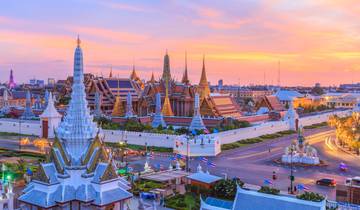
3 days
3 Days Bangkok Highlight, Grand Palace, Wat Pho & Ancient Ayutthaya Experience
- ✓ Comprehensive Ayutthaya tour
- ✓ Expert local guides included
- ✓ All accommodation arranged
- ✓ Transportation provided
3 days
Central Thailand Highlights in a Loop 3 Days, Small Group Tour (English Only)
- ✓ Comprehensive Ayutthaya tour
- ✓ Expert local guides included
- ✓ All accommodation arranged
- ✓ Transportation provided
6 days
Thailand private adventure: 6 days of fun
- ✓ Comprehensive Ayutthaya tour
- ✓ Expert local guides included
- ✓ All accommodation arranged
- ✓ Transportation provided
Multi-day tour packages powered by TourRadar. Prices and availability subject to change.
Understanding the Two Ancient Capitals
Sukhothai: Dawn of Thai Civilization
Sukhothai Historical Park preserves Thailand’s first independent kingdom, established in 1238 when Thai chieftains overthrew Khmer overlords to create Sukhodaya—the “Dawn of Happiness.” This UNESCO World Heritage Site encompasses 193 monuments across 70 square kilometers, demonstrating the artistic and cultural innovations that defined classical Thai civilization. King Ramkhamhaeng the Great’s invention of Thai script in 1283, introduction of Theravada Buddhism as state religion, and development of the distinctive lotus-bud chedi architectural style established foundations that shaped Thailand for the following seven centuries.
The kingdom’s golden age from 1279-1298 under King Ramkhamhaeng saw Sukhothai extend influence across central Thailand and into present-day Laos and Myanmar, functioning as a major trade center linking China, India, and Southeast Asia. The sophisticated water management system of reservoirs and canals supported intensive rice cultivation while serving spiritual purposes, with temples strategically positioned around these sacred ponds. Sukhothai’s gradual decline began in the 14th century as the Ayutthaya Kingdom to the south gained power, culminating in Ayutthaya’s dominance by 1378. The city continued as a provincial center until 1583, when Ayutthaya’s crown prince forcibly relocated Sukhothai’s population southward, leaving the capital abandoned to jungle overgrowth until 20th-century restoration efforts.
Ayutthaya: Southeast Asian Superpower
Ayutthaya Historical Park covers the ruins of Thailand’s second capital, founded in 1350 by King Ramathibodi I on an island at the confluence of three rivers—the Chao Phraya, Pa Sak, and Lopburi. This strategic location 80 kilometers north of present-day Bangkok provided natural defenses and facilitated international trade that transformed Ayutthaya into one of the world’s largest cities. At its 17th-century peak, Ayutthaya’s population exceeded one million, with the kingdom controlling most of present-day Thailand, parts of Myanmar, Cambodia, and Laos while maintaining diplomatic relations and trade agreements with China, Japan, India, Persia, and European powers.
Foreign visitors’ accounts describe Ayutthaya’s magnificence with golden temple spires visible for kilometers, elaborate royal palaces, and bustling international quarters where Chinese, Japanese, Portuguese, Dutch, French, and Persian merchants conducted business. The kingdom’s wealth derived from controlling regional rice trade, taxing international commerce, and monopolizing valuable export goods including deerskins, ivory, and aromatic woods. Ayutthaya’s power ended catastrophically in April 1767 when Burmese armies captured the city after a 14-month siege, systematically burning buildings, destroying temples, melting golden Buddha images, and forcing deportation of skilled craftsmen and nobles. The devastation proved so complete that the Siamese never rebuilt Ayutthaya, instead establishing a new capital downriver at Bangkok in 1782.
Comparing Entrance Fees and Costs
Sukhothai Entrance Fees and Daily Costs
Sukhothai Historical Park operates a zone-based pricing system where the Central, Northern, and Western Zones each charge 100 THB entrance fees, totaling 300 THB for complete access to all paid zones. Visitors bringing bicycles pay additional 10 THB per zone, making total cycling costs 330 THB across all three paid areas. The Ramkhamhaeng National Museum charges separate 150 THB admission, bringing first-day costs to 480 THB for park zones plus museum entrance. Southern and Eastern Zones remain free but contain fewer significant monuments.
Daily Sukhothai costs for budget travelers total 900-1,200 THB covering guesthouse accommodation (300-600 THB), three meals at local restaurants (350-500 THB), bicycle rental (30-50 THB), and incidental expenses. Mid-range travelers budget 2,000-2,500 THB daily for resort accommodation with pools (800-1,500 THB), mixed local and tourist restaurant dining (600-900 THB), and comfortable exploration. Transportation from Bangkok adds 365-500 THB each way for buses, or 2,500-4,500 THB for flights, significantly impacting total trip costs.
Ayutthaya Entrance Fees and Daily Costs
Ayutthaya Historical Park entrance remains free, but individual temples charge separate admission fees. Major temples including Wat Mahathat, Wat Phra Si Sanphet, and Wat Chaiwatthanaram cost 50 THB each, while smaller temples charge 20 THB or allow free entry. The efficient 220 THB six-temple combo pass provides access to the park’s most significant sites—Wat Phra Si Sanphet, Wat Phra Ram, Wat Ratchaburana, Wat Chaiwatthanaram, Wat Mahathat, and Wat Maheyong—saving money for visitors exploring comprehensively. Day-trippers from Bangkok typically spend 220 THB for the temple pass plus 100-200 THB for bicycle or tuk-tuk rental.
Complete day trip costs from Bangkok total 600-1,200 THB including round-trip train tickets (30-132 THB), temple pass (220 THB), bicycle rental (200-300 THB for full day), and meals (250-500 THB for lunch and snacks). Travelers staying overnight in Ayutthaya budget 1,200-2,000 THB daily for mid-range accommodation (800-1,500 THB), meals (400-700 THB), and local transport. The proximity to Bangkok eliminates expensive long-distance transportation costs, making Ayutthaya significantly more budget-friendly than Sukhothai for short visits.
Transportation and Accessibility Comparison
Getting to Sukhothai from Bangkok
Reaching Sukhothai from Bangkok requires commitment to 7-10 hour overland journeys or premium-priced flights. Direct buses from Mo Chit Terminal operate multiple times daily at 365-500 THB, with standard services taking 9-10 hours including roadside stops while VIP buses complete the 440-kilometer journey in 7-7.5 hours with superior comfort. Night buses departing 8:30-9:00 PM arrive Sukhothai around 6:00-7:00 AM, allowing travelers to maximize daylight temple hours while saving one night’s accommodation, though sleep quality on overnight buses remains limited.
Bangkok Airways operates the Bangkok-Sukhothai route with 1-hour 10-minute flights costing 2,500-4,500 THB one-way, landing at Sukhothai Airport 27 kilometers from the historical park. Adding 400-500 THB taxi transfers brings total door-to-door flight costs to 2,900-5,000 THB—approximately 6-10 times bus fares for journey time reduction of 6-9 hours. Most budget and mid-range travelers choose overnight buses balancing time and cost, while luxury travelers or those with limited vacation days justify flight premiums.
Getting to Ayutthaya from Bangkok
Ayutthaya’s accessibility from Bangkok proves remarkably straightforward with trains departing hourly from Krung Thep Aphiwat Central Terminal. Third-class seats cost just 15-20 THB for the 1-2 hour journey, second-class tickets run 35-66 THB, and first-class provides maximum comfort at 66 THB—all representing exceptional value for UNESCO World Heritage access. Trains operate from early morning through evening, allowing flexible scheduling for day trips or overnight stays.
Alternative minibus services from Mo Chit Terminal charge 60-200 THB for 1.5-2 hour journeys, offering door-to-door convenience but less scenic routes than riverside train travel. Private taxis cost 1,000-1,500 THB each way, working well for groups of 3-4 travelers splitting costs but offering minimal advantage over comfortable trains for solo travelers or couples. The variety of frequent, affordable transport options makes spontaneous Ayutthaya visits feasible, while Sukhothai demands advance planning and significant time commitment.
Comparing Temple Architecture and Highlights
Sukhothai’s Distinctive Architectural Style
Sukhothai developed uniquely Thai architectural innovations breaking from earlier Khmer influences, most notably the lotus-bud chedi (stupa) shape rising from square bases through rounded bell forms to pointed finials suggesting unopened lotus flowers. Wat Mahathat’s main 40-meter lotus-bud chedi exemplifies this style, surrounded by 200 smaller chedis creating the spiritual and administrative heart of the old kingdom. The graceful proportions and vertical emphasis of Sukhothai chedis contrast sharply with broader, more massive structures in Khmer or later Thai styles.
Sukhothai Buddha images showcase another artistic breakthrough with the walking Buddha pose—one foot raised mid-stride, arm extended in blessing gesture, body moving with fluid grace impossible in seated or standing positions. This innovation in Buddhist iconography captures enlightenment as dynamic journey rather than static achievement. The Buddha faces display distinctively Sukhothai features including arched eyebrows suggesting birds in flight, aquiline noses, gentle smiles, and flame-like hair ornaments representing spiritual radiance. These artistic conventions influenced Thai Buddhist art for centuries following Sukhothai’s political decline.
Major Sukhothai highlights include Wat Mahathat’s vast complex in the Central Zone, Wat Si Chum’s 15-meter seated Buddha emerging from enclosing walls in the Northern Zone, and Wat Saphan Hin’s hilltop standing Buddha commanding panoramic views from the Western Zone. The integration of temples with the ancient reservoir system (traphang) creates photogenic water reflections at sites like Wat Sa Si, while the park’s expansive layout preserves the spatial relationships between monuments that reveal 13th-century urban planning.
Ayutthaya’s Monumental Khmer-Influenced Design
Ayutthaya’s architecture reflects stronger Khmer influence than Sukhothai, evident in the tall prangs (towers) inspired by Angkor Wat’s corn-cob shaped structures. Wat Chaiwatthanaram’s five prangs arranged in quincunx pattern (four corner prangs surrounding one central tower) directly copies Angkor temple layouts, while Wat Si Sawai’s three prangs originally served Hindu worship before Buddhist conversion. These Khmer-style monuments demonstrate cultural continuity from the Angkor Empire’s earlier dominance over the region, though Ayutthaya adapted and synthesized rather than merely copying Cambodian models.
The kingdom’s 400-year lifespan allowed architectural evolution through multiple styles, from 14th-century Khmer-influenced prangs through distinctive Ayutthaya bell-shaped chedis to late-period structures incorporating European architectural elements. Wat Phra Si Sanphet’s three large chedis represent classic Ayutthaya style—bell-shaped structures on square terraced bases, originally covered in golden tiles that caught sunlight across the island. The temple served as the royal palace’s private chapel, Thailand’s most sacred site until the 1767 Burmese destruction.
Ayutthaya’s most famous monument remains the Buddha head entwined in banyan tree roots at Wat Mahathat—a photogenic symbol of nature reclaiming ruins that appears on countless Thailand travel posters. Other essential sites include Wat Phanan Choeng’s massive 19-meter golden Buddha predating the city’s founding, Wat Yai Chai Mongkhon’s large bell-shaped chedi surrounded by Buddha statues in saffron robes, and Wihan Phra Mongkhon Bophit’s giant bronze Buddha that survived the Burmese devastation. The concentration of major temples within the compact island layout allows comprehensive coverage in 6-8 hours.
Atmosphere and Tourist Experience
Sukhothai’s Peaceful Archaeological Setting
Sukhothai’s remote location 440 kilometers from Bangkok filters out casual day-trippers, creating peaceful temple environments where visitors often find themselves alone with ancient monuments. The park’s 70-square-kilometer expanse disperses even peak season crowds across five zones, allowing contemplative viewing without the selfie-stick congestion plaguing more accessible sites. Early morning arrivals at the 6:30 AM opening time provide virtually solitary exploration as sunrise light illuminates lotus-bud chedis, while late afternoon visits after tour groups depart restore tranquil atmosphere.
The bicycle-based exploration style adds adventure and physical activity to temple viewing, with cycling between widely-spaced monuments creating journey rhythm impossible at compact sites. Pedaling through open fields between temple zones, past grazing cattle and rice paddies, evokes rural Thailand atmosphere contrasting with Ayutthaya’s urban island setting. This extensive layout makes Sukhothai better suited for travelers who enjoy cycling, appreciate uncrowded archaeological sites, and value contemplative experiences over efficient sightseeing.
Old Sukhothai town’s small scale and limited tourist infrastructure maintain authentic local character, with family-run guesthouses, simple Thai restaurants, and quiet evening streets providing genuine provincial Thailand atmosphere. The lack of aggressive touts, tourist shopping streets, and party scenes favored by some travelers represents either peaceful authenticity or boring isolation depending on individual preferences. Visitors seeking Thailand’s ancient soul without modern distractions find Sukhothai ideal, while those wanting lively evening entertainment should stick with Bangkok-Ayutthaya combinations.
Ayutthaya’s Accessible Day-Trip Character
Ayutthaya experiences steady tourist flow from Bangkok day-trippers, creating livelier atmosphere than remote Sukhothai while remaining manageable compared to Thailand’s beach resort crowds. Tour groups concentrate at the most famous temples—Wat Mahathat for the tree-entwined Buddha head, Wat Phra Si Sanphet for the three iconic chedis—between 10:00 AM-3:00 PM, while early morning and late afternoon visits find substantially fewer visitors. The compact island layout makes escaping crowds simple by exploring lesser-known temples away from the main circuit.
The proximity to Bangkok attracts diverse visitor demographics including Thai families on weekend outings, international backpackers on budget tours, Chinese tour groups following packed itineraries, and Western retirees exploring at leisurely pace. This mixing creates energetic atmosphere lacking at quieter Sukhothai, though some travelers find the tourist presence detracts from historical contemplation. Street vendors selling cold drinks, fruit, and souvenirs cluster near major temples, providing convenient refreshments while adding commercialization absent from more pristine archaeological sites.
Ayutthaya town offers greater restaurant variety and evening activity than Old Sukhothai, with riverside dining, night markets, and tourist-oriented cafes catering to overnight visitors. The iuDia Hotel and similar properties provide comfortable bases with temple views and pools, while budget guesthouses near the train station serve backpackers seeking maximum economy. Travelers wanting comprehensive ancient capital experience plus modern comforts find Ayutthaya’s infrastructure balance superior to Sukhothai’s limited options.
How to Explore Each Site
Sukhothai Exploration Strategies
Bicycle rental represents the essential Sukhothai exploration method, with basic bikes available for 30-50 THB daily from shops outside the Central Zone entrance and throughout Old Sukhothai town. The park’s flat terrain makes cycling physically manageable even for casual riders, while distances between zones (2-5 kilometers) prove too far for comfortable walking but too short to justify motorbike rental. Guesthouses often provide free bicycle use, making this a key accommodation consideration.
The most efficient two-day itinerary dedicates day one to the Central Zone’s major temples, Ramkhamhaeng National Museum, and Northern Zone’s Wat Si Chum, while day two explores the Western Zone’s hilltop sites and lesser-visited Southern Zone monuments. Starting at 6:30 AM opening time captures best photography light and coolest temperatures, with midday museum visits providing air-conditioned respite during peak heat. Three-day visits allow relaxed pace, revisiting favorite temples in different lighting, and comprehensive photography without rushing.
Water and sun protection become critical during Sukhothai’s extended cycling between exposed monuments, with travelers easily underestimating hydration needs in Thailand’s heat. Bringing 2-3 liters of water prevents dehydration, while lightweight long-sleeve shirts and wide-brim hats provide superior sun protection compared to sunscreen alone. The park offers minimal shade between temples, making November-February cool season the most comfortable exploration period.
Ayutthaya Exploration Strategies
Ayutthaya’s compact island layout permits multiple exploration approaches including walking (for the energetic), bicycle rental (most popular), tuk-tuk hire (most comfortable), or combination strategies. Bicycle rentals cost 200-300 THB for full-day use, providing flexibility to explore at personal pace while covering 8-10 major temples in 6-7 hours. The relatively short distances between temples (typically 500-1,500 meters) make cycling less strenuous than Sukhothai’s extensive layout.
Tuk-tuk tours charge approximately 200 THB per hour or 1,200 THB for full-day charters, working well for travelers uncomfortable cycling in tropical heat or those wanting driver commentary. Negotiating fixed prices before starting prevents misunderstandings, while ensuring the tuk-tuk waits at each temple eliminates the hassle of finding new transport. Tour groups from Bangkok typically use chartered buses with local guides, paying premium prices (1,500-2,500 THB per person) for door-to-door convenience.
The efficient day trip itinerary departs Bangkok around 7:00-8:00 AM, arriving Ayutthaya by 9:00-9:30 AM to beat midday heat and tour groups. Purchasing the 220 THB six-temple combo pass at the first visited temple provides admission to Wat Mahathat, Wat Phra Si Sanphet, Wat Ratchaburana, Wat Chaiwatthanaram, Wat Phra Ram, and Wat Maheyong. Adding visits to free temples like Wat Lokaya Sutha (reclining Buddha) and Wat Phanan Choeng (giant golden Buddha) creates comprehensive coverage by 3:00-4:00 PM, allowing return to Bangkok by 6:00 PM for evening activities.
Which Ancient Capital for Different Traveler Types
Best Choice for First-Time Thailand Visitors
First-time Thailand visitors with typical 7-10 day itineraries should prioritize Ayutthaya for its unmatched accessibility from Bangkok, allowing UNESCO World Heritage temple experience without sacrificing multiple days to transportation. The ability to visit Ayutthaya as a day trip from Bangkok accommodates travelers focusing on the capital’s palaces, temples, and nightlife while still experiencing ancient Thai ruins. Ayutthaya’s dramatic architecture and photogenic Buddha head in tree roots deliver the iconic temple imagery many travelers seek without requiring Sukhothai’s extensive time investment.
Travelers with 14+ days in Thailand can comfortably incorporate both ancient capitals, following the classic Bangkok → Ayutthaya day trip → Sukhothai (2-3 days) → Chiang Mai routing that provides comprehensive historical context. This extended itinerary allows experiencing Thailand’s archaeological evolution from Sukhothai’s birth of Thai civilization through Ayutthaya’s imperial power to Bangkok’s modern transformation. The additional time investment reveals distinctions between architectural styles, artistic innovations, and historical periods impossible to appreciate from visiting either site alone.
Best Choice for History and Culture Enthusiasts
Serious history and culture enthusiasts should invest in Sukhothai despite accessibility challenges, as the site represents Thai civilization’s actual birthplace where cultural foundations took form. King Ramkhamhaeng’s invention of Thai script, introduction of Theravada Buddhism, and development of distinctively Thai artistic styles occurred at Sukhothai, making the site essential for understanding how Thailand became Thailand. The Ramkhamhaeng National Museum’s collection including the famous Ramkhamhaeng Inscription provides primary source material unavailable at Ayutthaya, where the 1767 Burmese destruction obliterated most records.
Ayutthaya offers greater architectural variety spanning 400 years of evolution, demonstrating how Thai kingdoms synthesized Khmer, Chinese, and European influences into distinctive forms. The scale of destruction visible in collapsed prangs, headless Buddhas, and burned temple halls communicates historical drama lacking at tidier Sukhothai, making Ayutthaya more emotionally impactful for travelers moved by romantic ruins. Combined visits to both sites provide complete understanding, with Sukhothai establishing cultural origins and Ayutthaya demonstrating subsequent imperial development.
Best Choice for Photography Enthusiasts
Photography enthusiasts find compelling subjects at both sites but for different reasons. Sukhothai’s elegant lotus-bud chedis, graceful walking Buddhas, and water reflections from the ancient reservoir system create refined compositions emphasizing proportion and symmetry. The less-crowded environment allows patient waiting for perfect light without tourists wandering into frames, while sunrise and sunset sessions produce exceptional results with warm tones illuminating ancient stones. The park’s extensive layout offers varied perspectives from multiple angles around most monuments.
Ayutthaya provides more dramatically photogenic ruins with the famous Buddha head in tree roots representing Thailand’s single most recognizable temple image. The collapse and destruction create compositional interest through broken stupas, weathered stone, and vegetation reclaiming monuments in ways tidier Sukhothai cannot match. The compact concentration of diverse architectural styles—Khmer prangs, Ayutthaya chedis, massive Buddha images—allows capturing varied subjects in single day sessions. Sunset photography at riverside Wat Chaiwatthanaram rivals Sukhothai’s best light, while the urban island setting creates different atmospheric qualities.
Best Choice for Budget Travelers
Budget-conscious travelers favor Ayutthaya for minimal transportation costs and efficient day trip structure that eliminates accommodation expenses. Round-trip train tickets (30-132 THB total), temple pass (220 THB), bicycle rental (200-300 THB), and meals (250-500 THB) create complete UNESCO World Heritage experiences for 700-1,200 THB total—less than single night’s accommodation at mid-range Sukhothai hotels. The ability to base in Bangkok’s abundant budget hostels (300-500 THB nightly) while day-tripping to Ayutthaya proves more economical than maintaining separate accommodation bases.
Sukhothai requires minimum 2,500-3,500 THB total investment including round-trip buses (730-1,000 THB), two nights accommodation (600-1,200 THB), park entrance fees (480 THB including museum), bicycle rental (60-100 THB for two days), and meals (700-1,000 THB). Budget travelers willing to invest these additional costs find Sukhothai rewards the expense with superior archaeological experience, though strict budget limitations make Ayutthaya the financially rational choice for comprehensive ancient capital exposure at minimal cost.
Combining Both Sites in One Itinerary
The Complete Ancient Capitals Circuit
The comprehensive ancient capitals itinerary follows logical geographic progression: Bangkok (3-4 days base) → Ayutthaya day trip → Sukhothai (2-3 days) → Chiang Mai (3-4 days), creating northward route that avoids backtracking while experiencing Thai civilization’s evolution. This 11-15 day routing costs 25,000-50,000 THB total for budget to mid-range travelers including all transportation, accommodation, activities, and meals, delivering complete understanding of Thai history from ancient kingdoms through modern capital.
Starting with Bangkok establishes baseline familiarity with Thailand before exploring remote Sukhothai, while the Ayutthaya day trip between Bangkok and Sukhothai provides geographic stepping stone breaking the journey north. After Sukhothai’s peaceful archaeological immersion, Chiang Mai’s northern Lanna culture and mountain landscapes create satisfying contrast. Direct buses link Sukhothai to Chiang Mai in 5-6 hours at 300-400 THB, completing the northern Thailand circuit.
Practical Logistics for Dual-Site Visits
Travelers visiting both ancient capitals should schedule Ayutthaya first when Bangkok-based, allowing spontaneous day trips without advance planning. Booking Sukhothai buses 1-2 weeks ahead during November-February peak season secures seats and allows planning around travel days, with most visitors allocating 2 nights/3 days (2 full temple days, plus arrival and departure half-days). This sequencing builds chronologically from Sukhothai (1238-1378) to Ayutthaya (1350-1767) to Bangkok (1782-present), creating historically logical progression.
Alternative routing from Chiang Mai southward follows Chiang Mai → Sukhothai → Ayutthaya → Bangkok, working equally well for travelers starting northern Thailand trips. The key principle maintains that Sukhothai requires dedicated multi-day commitment while Ayutthaya functions as efficient day trip, allowing itinerary flexibility around Ayutthaya but requiring firm Sukhothai scheduling. Travelers attempting to visit both sites while maintaining Bangkok bases waste significant time and money on redundant transportation.
Seasonal Considerations for Each Site
Sukhothai Seasonal Factors
Sukhothai’s inland location experiences more extreme seasonal temperature variation than coastal Thailand, with November-February cool season bringing ideal 25-30°C daytime temperatures for cycling exploration. This peak tourist season sees accommodation prices rise 30-40% and advance booking becoming essential for better properties, though the park itself never feels crowded due to its vast size. March-May hot season pushes afternoon temperatures to 35-40°C, creating challenging cycling conditions mitigated by early starts and midday breaks, while accommodation discounts of 20-30% compensate for heat challenges.
June-October rainy season transforms Sukhothai with lush green landscapes, water filling the ancient reservoirs, and minimal tourist numbers creating solitary temple viewing. Afternoon thunderstorms typically arrive 3:00-5:00 PM, making morning temple exploration practical while restricting afternoon activities. Accommodation rates drop to annual lows, sometimes 40-50% below December-January peaks, delivering exceptional value for travelers comfortable with rain and heat.
Ayutthaya Seasonal Factors
Ayutthaya’s proximity to Bangkok creates similar seasonal patterns to the capital, with November-February providing pleasant weather that attracts maximum visitor numbers. Day-trippers from Bangkok increase substantially during weekends and Thai holidays, making weekday visits preferable during peak season. The compact island layout and concentration of must-see temples means crowding impacts atmosphere more than at expansive Sukhothai, though arriving before 9:00 AM or after 3:00 PM avoids peak congestion.
Hot season March-May makes Ayutthaya day trips less appealing as midday temperatures exceed 35°C with no escape from sun exposure between temples. Travelers visiting during hot months should start extremely early (6:00-7:00 AM train departures from Bangkok), complete major temple viewing by 11:00 AM, take extended lunch breaks in air-conditioned restaurants, then resume exploration after 3:00 PM. Rainy season brings fewer crowds and dramatic cloud formations for photography, with the compact layout allowing quick temple-to-temple movements between rain showers.
Making Your Decision: Key Questions to Ask
How Much Time Do You Have in Thailand?
Travelers with 7-8 days total Thailand time should choose Ayutthaya exclusively, maximizing Bangkok exploration while adding UNESCO World Heritage experience through efficient day trip. Those with 10-12 days can incorporate Sukhothai by accepting it consumes 3-4 days total (1 day travel from Bangkok, 2 days temples, 1 day travel to Chiang Mai), leaving adequate time for Bangkok and one other destination. Extended trips of 14+ days comfortably accommodate both ancient capitals plus Bangkok, Chiang Mai, and beach time, creating comprehensive Thailand experience.
What’s Your Transportation Budget?
Budget-constrained travelers should favor Ayutthaya where round-trip transportation costs 30-132 THB compared to Sukhothai’s 730-1,000 THB minimum for Bangkok buses. The 8-10x transportation cost difference between sites significantly impacts overall trip budgets, potentially funding additional days elsewhere in Thailand. Travelers comfortable with 2,500-3,500 THB total Sukhothai investment find the site rewards the expense, but strict budget limitations make Ayutthaya financially superior.
Do You Prefer Crowds or Solitude?
Solitude-seekers favor remote Sukhothai where early morning temple visits provide genuinely private moments with ancient monuments impossible at more accessible sites. The expansive layout ensures personal space even during peak season, creating contemplative archaeological experience. Social travelers who enjoy lively tourist scenes, street food vendors, and interaction with fellow tourists find Ayutthaya’s accessible day-trip character more appealing, while extreme crowd-avoiders might find even Ayutthaya’s moderate tourist presence excessive.
What’s Your Physical Fitness Level?
Sukhothai demands cycling fitness for the extensive distances between zones, with daily temple exploration covering 15-25 kilometers across multiple hours. While the terrain remains flat, Thailand’s heat and humidity challenge even fit cyclists unaccustomed to tropical conditions. Ayutthaya’s compact layout reduces physical demands, with walking-only exploration feasible for the determined or tuk-tuk hire eliminating cycling entirely. Travelers with mobility limitations or heat sensitivity find Ayutthaya more manageable, while active travelers appreciate Sukhothai’s cycling adventure.
Frequently Asked Questions About Sukhothai vs Ayutthaya
Which ancient capital is more important historically?
Sukhothai holds greater cultural importance as Thailand’s first independent kingdom where Thai civilization’s defining characteristics emerged, including the Thai script, Theravada Buddhism, and distinctively Thai artistic styles. Ayutthaya achieved greater political and economic power, controlling larger territory and population while functioning as major international trade center for four centuries. Historians debate whether cultural origins or imperial achievements define “importance,” making this question answerable only through personal values—cultural anthropologists favor Sukhothai, while political historians emphasize Ayutthaya’s regional dominance.
Can I skip one if I visit the other?
Travelers visiting only one ancient capital receive comprehensive temple experience and solid introduction to Thai history, though missing distinctive elements unique to each site. Skipping Sukhothai means foregoing the elegant lotus-bud architecture, peaceful atmosphere, and direct connection to Thai cultural birth, while skipping Ayutthaya eliminates dramatically photogenic ruins, the famous tree-entwined Buddha head, and understanding of the kingdom that dominated Southeast Asia for centuries. Both sites offer complete experiences independently—visiting one does not require visiting the other to feel satisfied, though combined visits provide superior understanding.
Which site has better English information and signage?
Both Sukhothai and Ayutthaya provide limited English signage compared to Western archaeological sites, with basic historical information at major temples but minimal detailed explanations. Sukhothai’s Ramkhamhaeng National Museum offers superior English labeling and historical context compared to Ayutthaya’s museums, making the former slightly better for self-guided education. Hiring local guides (available at both sites through guesthouses for 1,000-1,500 THB per half-day) dramatically improves understanding, while smartphone apps and downloaded guides fill information gaps for independent travelers.
Are both sites wheelchair accessible?
Neither Sukhothai nor Ayutthaya offers comprehensive wheelchair accessibility, though Ayutthaya’s compact layout and paved paths between major temples make it more manageable than Sukhothai’s extensive cycling-based exploration. Ayutthaya’s flat island terrain eliminates elevation challenges, while many temples feature ground-level viewing without stairs. Sukhothai’s Western Zone hills and extensive distances between zones create significant accessibility barriers, though the flat Central and Northern Zones work for determined travelers with appropriate support. Both sites’ ancient monuments feature steps, uneven stones, and narrow passages limiting mobility-impaired access to interior spaces.
Which site is better for children and families?
Ayutthaya works better for families with young children due to shorter distances, variety of exploration options (walking, cycling, tuk-tuk), and ability to complete visits in 4-6 hours before boredom sets in. The dramatic architecture and famous tree Buddha provide visual interest children appreciate, while the compact layout allows quick returns to restaurants or rest areas. Sukhothai’s extensive cycling appeals to adventurous families with children aged 8+ who can handle multi-hour rides, but younger children struggle with the distances and heat. The overnight bus journeys to Sukhothai also challenge family logistics compared to Ayutthaya’s simple day trip from Bangkok.
Which ancient capital has better food options?
Ayutthaya offers superior food variety with famous local specialties including boat noodles, grilled river prawns, and roti sai mai (sweet cotton candy crepe), plus numerous restaurants along the riverfront and within the old city. The steady tourist flow supports diverse dining from street stalls to air-conditioned restaurants, while the proximity to Bangkok ensures fresh ingredients and competitive pricing. Old Sukhothai provides adequate Thai restaurant options focusing on Northern Thai and Sukhothai noodle specialties, but limited variety and smaller scale compared to Ayutthaya. New Sukhothai’s weekend night markets deliver authentic local food experiences rivaling Ayutthaya’s offerings for travelers visiting Friday-Saturday.
Do I need a guide at either site?
Neither site requires guides for basic temple viewing, as the visual impact communicates effectively without detailed explanation. Travelers seeking deeper understanding of architectural evolution, Buddhist iconography, historical context, and specific temple significance benefit substantially from hiring local guides available through guesthouses at both sites. Sukhothai’s Ramkhamhaeng National Museum provides essential context that reduces guide necessity, while Ayutthaya’s limited on-site interpretation makes guides more valuable for comprehensive understanding. Budget-conscious independent travelers save 1,000-1,500 THB per half-day in guide fees by exploring solo with downloaded information.
Which site is safer for solo travelers, especially women?
Both Sukhothai and Ayutthaya maintain excellent safety records for solo travelers including women, with violent crime against tourists extremely rare and petty theft uncommon. Sukhothai’s small-town atmosphere and limited nightlife create inherently safe environment, while the temple park’s cycling-based exploration keeps visitors mobile and visible rather than isolated. Ayutthaya’s proximity to Bangkok attracts more diverse visitors including some opportunistic thieves targeting distracted tourists, though basic precautions (securing valuables, avoiding isolated areas after dark) eliminate most risks. Solo women travelers report feeling comfortable at both sites, with Thai cultural respect for solo female travelers providing additional safety layer.
Can I visit Ayutthaya on the way to Sukhothai?
Visiting Ayutthaya en route to Sukhothai proves logistically challenging as direct buses from Bangkok to Sukhothai bypass Ayutthaya entirely, while trains between the two cities require backtracking to Bangkok first. Travelers determined to combine both sites in one northward journey must either take Bangkok-Ayutthaya day trip before boarding evening Bangkok-Sukhothai bus, or stop in Ayutthaya for overnight visit before continuing to Sukhothai via Bangkok transfer. The simpler routing follows Bangkok base → Ayutthaya day trip → return to Bangkok → separate trip to Sukhothai days later, accepting geographic inefficiency but gaining logistical simplicity.
Which ancient capital offers better accommodation options?
Ayutthaya provides wider accommodation range from basic guesthouses (400-600 THB) through mid-range hotels with pools (1,000-2,000 THB) to boutique properties offering temple views (2,500-4,000 THB). The steady tourist flow supports diverse options catering to varied budgets and preferences, with properties clustered near the train station and along the riverside. Sukhothai’s limited scale means fewer total properties, though Old Sukhothai’s small guesthouses and boutique resorts deliver excellent value in the 300-3,000 THB range. Both destinations offer comfortable accommodation, but Ayutthaya’s variety provides more options for specific requirements like family rooms, luxury amenities, or budget hostels.