Strasbourg Alsace Best Tours 2027: Cathedral, Petite France & Canal Cruises
Strasbourg folds a UNESCO-listed island, a 142-metre Gothic spire and a web of canals into one walkable city, and the best tours link all three. This guide plans the cathedral platform, astronomical clock, Petite France and Batorama canal cruises for 2027, with confirmed 2026 prices, seasonal hours, three sample itineraries and daily budget ranges.
Key Takeaways
- Entry to Strasbourg Cathedral is free, the platform climb costs €10 for adults (about 330 steps to 66 metres), and the astronomical clock show costs €4 at 12:30 daily except Sundays and feast days.
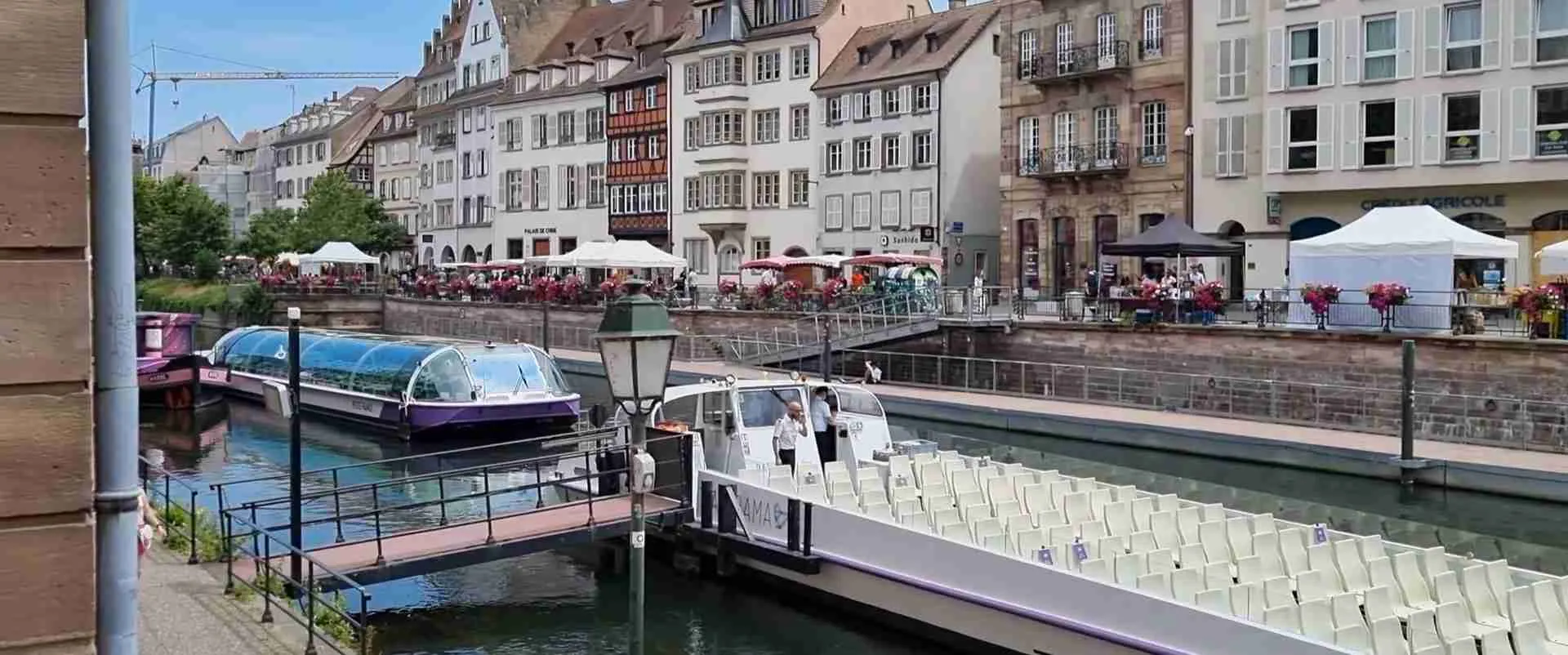
- The Batorama Red Tour is a 70-minute, 8-kilometre canal cruise costing €16 for adults, boarding at the Cathedral or Sand Quay pontoons with audio commentary in a dozen or more languages.
- Petite France is free to explore on foot: the Covered Bridges are open air and the Vauban Dam terrace opens 7:15 to 21:00 from May to August but only 8:30 to 16:00 from November to February.
- Daily budgets per person, two sharing a room: budget travelers need €90-145, mid-range travelers €165-245 and luxury travelers €345-555, with a classic cathedral, clock, museum and cruise day costing €39 in attractions.
- The Strasbourg City Card is listed at about €5 for seven days and halves the platform price, so a single climb recovers most of its cost.
- Strasbourg Christmas market dates for 2027 are not yet published, and the clock show does not run during the Christmas market, so plan clock visits outside that window.
People Also Ask About Strasbourg Tours 2027
How much do the best Strasbourg tours cost in 2027?
The core Strasbourg tours cost €39 per adult for a classic day in 2026 prices: platform climb €10, astronomical clock show €4, Batorama Red Tour cruise €16 and one municipal museum €9. Cathedral entry, the Covered Bridges and the Vauban Dam terrace are free. Walking tours add a further €24-55 for a guided small group, while free tip-based tours cost whatever you choose to give. Official 2027 price lists are not published yet, so treat these figures as the planning baseline and confirm before booking.
How long does a Strasbourg canal cruise take in 2027?
The standard Batorama canal cruise takes 70 minutes and covers 8 kilometres on the Red Tour, with shorter 45-minute circuits also available. Boats leave from the Cathedral pontoons or the Sand Quay pontoons, pass through Petite France and continue to the European institutions district. Plan about 90 minutes door to door once you allow for boarding, which opens a few minutes before departure. Closed boats operate in cold weather and open-topped boats run in warmer months, so the cruise works in almost any season.
What time is the Strasbourg astronomical clock show in 2027?
The full automaton show runs at 12:30 every day, preceded by a bell chime, except Sundays and feast days when a mass is held at 11:00 and throughout the Christmas market period. A film about the clock plays at 12:00 in French, German and English, and the entrance opens at 11:30 on the Place du Château side. Tickets cost €4 for adults and are sold only on the day of the visit, with no advance booking.
How many days do you need for Strasbourg tours in 2027?
Two days cover every major tour comfortably: one day for the cathedral, clock, Petite France and a canal cruise, and a second day for the Neustadt, the European Quarter and museums. One long day works for first-time visitors who start at 9:30 and accept a fast pace. A third day suits travelers who add museums, a tasting cruise or a half-day regional train trip. The sample itineraries below show one-day, two-day and three-day versions with daily costs.
Extended multi-day tours – 5+ days
Featured Alsace Lorraine Multi-Day Tour Packages
3 days
Alsace Lorraine 3-Day Discovery Tour
- ✓ Comprehensive Alsace Lorraine experience
- ✓ Expert local guides included
- ✓ All accommodation included
- ✓ Transportation provided

5 days
Alsace Lorraine 5-Day Highlights Experience
- ✓ Comprehensive Alsace Lorraine experience
- ✓ Expert local guides included
- ✓ All accommodation included
- ✓ Transportation provided

7 days
Alsace Lorraine 7-Day Cultural Journey
- ✓ Comprehensive Alsace Lorraine experience
- ✓ Expert local guides included
- ✓ All accommodation included
- ✓ Transportation provided
10 days
Alsace Lorraine 10-Day Complete Adventure
- ✓ Comprehensive Alsace Lorraine experience
- ✓ Expert local guides included
- ✓ All accommodation included
- ✓ Transportation provided
Multi-day tour packages powered by TourRadar. Prices and availability subject to change.
Introduction: How to Choose the Best Strasbourg Tours in 2027
Strasbourg rewards visitors who understand how its sights fit together. The historic centre sits on the Grande Île, an island formed by the river Ill, and almost every major monument stands within a 20-minute walk of the cathedral. That compact geography is why the city suits themed tours so well: you can climb a Gothic spire in the morning, watch a mechanical clock at noon, cross medieval defensive bridges in the afternoon and glide past the European Parliament by evening, all without a car.
This guide is built around three tour families that together cover what most visitors come for. The first is the cathedral cluster: the nave, the platform climb, the astronomical clock and the museum that holds many of the cathedral’s original sculptures. The second is Petite France, the former tanners’ and millers’ quarter of half-timbered houses, canals and covered bridges. The third is the canal cruise, which links the first two and extends to the European Quarter and the German-era Neustadt that UNESCO added to the World Heritage listing in 2017.
Prices, hours and schedules below come from official city, cathedral and operator pages checked in 2026, because 2027 tariffs are not yet published. Where a figure is likely to move, the text says so. Individual ticket prices are rounded to the nearest whole euro, and all daily totals are rounded to the nearest €5, so you may see a few cents of difference at the ticket desk. Because Strasbourg’s rhythm changes sharply between the Christmas market season, the summer peak and the quiet winter weeks, each section notes what changes by season.
If you only have time for three things, choose the cathedral platform for the geography lesson, the Batorama Red Tour for the context, and an unhurried walk through Petite France in late afternoon light. Everything else in this guide is a way to deepen those three experiences, to save money on them, or to avoid the queues and closures that catch first-time visitors.
Strasbourg Tours at a Glance 2027: What to Book and What to Skip
The best Strasbourg tours for a first visit are the cathedral platform climb, the 12:30 astronomical clock show, a self-guided Petite France walk and the Batorama Red Tour canal cruise. Together they cost €39 in attraction fees at 2026 prices when you add one museum, and they fill a full day. The quick guide below sorts the main options by value, with each one explained in its own section.
Book These First
- Cathedral platform climb: €10 adult, €6 reduced, free for children under 6. Best for orientation and the widest views of the Grande Île.
- Astronomical clock show: €4 adult, €2 for children aged 6 to 17. Tickets sold only on the day, so arrive early.
- Batorama Red Tour: €16 adult, 70 minutes, 8 kilometres. The most informative way to see three districts in one outing.
- Petite France walk: free. Allow two hours with stops at the Covered Bridges and the Vauban Dam terrace.
Book These If Your Interests Match
- Œuvre Notre-Dame Museum: €9 full price, €5 reduced. For architecture and medieval sculpture enthusiasts.
- Tourist Office guided walk: priced per adult in the low teens in recent seasons. For visitors who want context rather than a self-guided route.
- Tasting cruises: €25 for the beer cruise and €32 for the wine cruise at 2026 prices. For evening visitors, though several run in French only.
- Mini-train: reported at about €8 per adult. For families and visitors with limited mobility.
Skip or Reconsider
- Strasbourg-sur-Mer port cruise: a two-hour tour of the commercial port commentated in French only, so skip it unless you speak French.
- Premium private tours: worthwhile for small groups who want a specialist guide, but not necessary for a first visit given how strong the audio commentary on the cruise and cathedral audio guide is.
- Cathedral visits at midday on Sundays: the nave opens only from 14:00 on Sundays, and the clock show does not run, so move cathedral plans to another day.
Strasbourg Cathedral Tours 2027: Nave, Platform Climb and Astronomical Clock
Strasbourg Cathedral (Cathédrale Notre-Dame) is free to enter, and the two paid extras are the platform climb at €10 for adults and the astronomical clock show at €4. Most visitors do both in a single morning, because the platform opens at 9:30 in summer and the clock ticket office opens at 11:30 for the 12:30 performance. The sections below cover tickets, hours, queue tactics, the audio guide and the neighbouring museum, so you can fit the cathedral around the other tours in this guide without losing time.
Cathedral Platform Climb 2027: Tickets, Hours and 330 Steps
The platform climb costs €10 for adults, €6 for children and young people aged 6 to 18, students and some other categories, and nothing for children under 6 (check the official city page for current rates, since 2027 tariffs are not published yet). School groups pay €3 per person including accompanying adults, and groups of 20 or more pay €6 per person. The stairs rise about 330 steps to a platform at 66 metres, which is roughly half the height of the 142-metre spire above it. The entrance is on the Place du Château side of the cathedral, and tickets are bought there.
Opening hours follow two seasons. From April to September the platform opens daily 9:30 to 13:00 and 13:30 to 20:00. From October to March it opens daily 10:00 to 13:00 and 13:30 to 18:00. The last climb starts 45 minutes before closing, so the final ascent is at 19:15 in summer and 17:15 in winter. The platform is closed on 1 January, 1 May and 25 December, and access can be suspended temporarily because of overcrowding or bad weather. The midday break from 13:00 to 13:30 catches many visitors out, so arrive before 13:00 or after 13:30.
The best time to climb is the first slot of the day. Queues build through late morning and again after the clock show, and the 330-step staircase is narrow enough that crowding slows everyone down. The view takes in the roofs of the Grande Île, the canals of Petite France to the southwest, the Neustadt beyond the old centre and, on clear days, the Vosges hills and the Black Forest on the German side of the Rhine. The platform is open to the weather, so bring a layer in spring and autumn.
Holders of the Strasbourg City Card receive 50% off adult and child platform rates according to the city’s official page, which brings the adult price to €5. If you plan to climb the platform and visit even one municipal museum, the card is worth buying. The City Card section later in this guide sets out the full comparison.
Accessibility is limited. The platform is reached only by stairs, and the narrow spiral sections are not suitable for visitors with limited mobility, people with a fear of heights or anyone pushing a stroller. Visitors who cannot climb get a comparable panorama of the old town from the Vauban Dam terrace in Petite France, covered below, which is free and reached on level ground.
Astronomical Clock Show 2027: 12:30 Parade, Tickets and Queue Tactics
The astronomical clock show runs daily at 12:30, preceded by a bell chime, and tickets cost €4 per person. Groups of 12 or more and students up to age 25 pay €3, children aged 6 to 17 pay €2, and children under 6 enter free. There is no performance on Sundays or feast days when a mass is held at 11:00, and the show does not take place during the entire Christmas market, so check the dates before building a Christmas-season itinerary around it.
Tickets are sold only on the day of your visit, with no advance booking. From 10:00 to 11:00 the ticket office operates at the cathedral’s stalls (échoppes), and from 11:30 tickets are sold at the Place Saint-Michel entrance, reached through the Place du Château on the right side of the cathedral. Card payments are accepted. The entrance opens at 11:30 for visitors with or without tickets, and a short film about the clock plays at 12:00 on a screen beside the mechanism in French, German and English. The film is shown daily except Sundays.
The practical advice is simple. Buy your ticket between 10:00 and 11:00 if you are already in the area, or join the line at the Place Saint-Michel entrance by 11:30 at the latest. The best viewing positions fill first. Because the nave closes to ordinary visitors from 11:15 to 12:45, the clock slot works as a natural pause in a cathedral morning: climb the platform at 9:30, tour the nave until 11:15, take a coffee break, then return for the clock.
The clock itself is the third to stand on this site. Its predecessor stopped working in the late 18th century, and the present mechanism was built by Jean-Baptiste Schwilgué between 1838 and 1843, with the clock inaugurated on 31 December 1842. It combines a perpetual calendar, a planetary display and an automaton procession in which the apostles parade past a figure of Christ. The 12:30 show is brief, but the 12:00 film explains the mechanism well enough that the performance becomes more interesting once you know what to watch.
Cathedral Nave Visits and Audio Guide Options 2027
The nave is open Monday to Saturday from 8:30 to 11:15 and from 12:45 to 17:45, and on Sundays only from 14:00 to 17:15, with closures during services. The city’s published schedule shows full closures on public holidays: in 2026 these included Good Friday, Easter Monday, 1 May, Whit Monday and 14 July. If the 2026 pattern repeats, expect closures around Good Friday (26 March 2027), Easter Monday (29 March 2027), 1 May, Whit Monday (17 May 2027) and 14 July, and confirm on the city page before your trip.
The cathedral’s visual story is easy to follow once you know its outline. Construction ran from 1176 to 1439, replacing an earlier Romanesque cathedral. The portal of the southern transept, with its well-known sculptures personifying the Synagogue and the Church, was built around 1225, and the choir was added around 1240. The single tower, finished in 1439, was the tallest in the Christian world, and the cathedral at 142 metres is recorded as the tallest building in the world from 1647 until 1874, when St. Nikolai’s Church in Hamburg surpassed it. Sources describing the original plan note that two spires were intended, and that later architects completed only one.
For a self-guided visit with context, the Batorama POPGuide smartphone audio guide costs €5 and covers the cathedral in up to about two and a half hours across 42 points of interest in seven languages: French, German, English, Spanish, Italian, Dutch and Russian. It does not include access to the platform. Batorama also sells a discount pack that combines the guide with a boat cruise, advertised at a saving of more than 35%, which suits visitors who plan to do both. For groups, audiophone receivers can be rented for €6 per receiver for eight hours, with the guide’s transmitter free.
If you prefer a human guide, the Tourist Office on Place de la Cathédrale arranges guided tours, and local guides offer cathedral-focused walks. The walking tour section below compares the options and prices.
Œuvre Notre-Dame Museum 2027: Original Sculptures Next Door
The Œuvre Notre-Dame Museum (Musée de l’Œuvre Notre-Dame) stands beside the cathedral and houses many of its original medieval sculptures, many of which have been replaced on the building by copies. It costs €9 full price and €5 reduced, like the eight other paid municipal museums, and admission is free for visitors under 18 and several other categories. Tickets must be bought at the museum desk, because online purchase and reservation are not currently possible.
The museum’s current weekend schedule runs 10:00 to 18:00, with the last ticket issued at 17:30, though hours vary between museums and seasons, so check before you go. The reduced rate applies to students, visitors aged 60 and over, groups of 25 or more and Strasbourg City Card holders, among other categories. The museum is the best use of an afternoon hour for visitors who climbed the platform in the morning and want to see the sculpture they could only glimpse from a distance. Pair it with a walk to Petite France, which is roughly 15 minutes away on foot.
Petite France Walking Tours 2027: Canals, Tanners’ Houses and Covered Bridges
Petite France is free to explore on foot, and a self-guided walk from the cathedral through the quarter, over the Covered Bridges and up to the Vauban Dam terrace takes about two hours at an easy pace. The quarter lies on the western edge of the Grande Île, about 15 minutes from the cathedral, where the river Ill splits into canals and the old tanners’, millers’ and fishermen’s houses lean over the water. This section gives a route, the facts that make it more interesting and the guided options for visitors who prefer commentary.
Self-Guided Petite France Route 2027
Start at the cathedral and walk southwest toward the quarter, passing St. Thomas Church (Église Saint-Thomas), a Protestant church a few minutes before Petite France begins. Enter the quarter by the canal-side lanes and walk along the quays, where the half-timbered houses of the 16th and 17th centuries stand directly on the water. The Tanners’ House (Maison des Tanneurs) and Benjamin Zix Square (Place Benjamin-Zix) sit at the heart of the quarter, and Bain-aux-Plantes Street (Rue du Bain-aux-Plantes) is one of its best-known lanes for photographs of overhanging timbered storeys and flower-filled window boxes.
The name Petite France has a story that guides repeat often: it is said to come from a hospital established in the 16th century for soldiers suffering from what was then called the French disease. The origin goes back to the 16th century according to reference sources, but the details of the hospital story are passed on mostly through local tradition, so treat it as a popular explanation rather than a documented certainty. Reference sources add that the district as a distinct urban entity took shape much later, in the 20th century.
Plan the walk around light and crowds. Morning gives the quietest quays. Late afternoon brings the warmest light on the Covered Bridges and the best terrace views, but also the largest crowds on summer weekends. Evenings are atmospheric because the Vauban Dam terrace is illuminated at night, though the terrace itself closes earlier than the quays in most seasons. Wear flat shoes: cobbles, steps and bridge ramps make the quarter harder on heels than it looks.
Cafés and restaurants line the quays, and prices rise with the water views. A traditional Alsatian tavern (winstub) a street back from the canals offers a tarte flambée, the thin Alsatian flatbread with cream and bacon, from around €15, which is the best-value meal in the quarter. A sauerkraut platter with sausages and pork is the classic main course, and a three-course dinner for two at a mid-range restaurant runs around €65. These meal prices feed into the daily budgets later in this guide.
Covered Bridges 2027 (Ponts Couverts): History and Best Viewpoints
The Covered Bridges (Ponts Couverts) are three bridges spanning the four channels of the river Ill at the entrance to Petite France, overlooked by medieval towers that belonged to the city’s defences. They have been listed as a historic monument since 1928 and are free to walk across at any time. Accounts of the towers differ slightly: some count four, and the municipal page highlights three that look out onto the quarter, so do not worry if guides give different numbers.
The dating of the structure also varies by source. Construction of the defensive works is placed in the 13th century by some references, with the towers described as 14th-century by regional tourism sources, and a marker on site places the original wooden bridges around 1300. The timber roofs and galleries that gave the bridges their name were removed in the 18th century, commonly dated to 1784, and the stone bridges seen today are later. The name stayed even though the roofs did not, which is why the Covered Bridges are not covered.
The best viewpoints are the bridge deck itself, for the towers rising directly overhead, the quays downstream, for the towers reflected in the water, and the Vauban Dam terrace upstream, for the whole composition at once. Canal boats pass through this stretch, so the Batorama Red Tour offers a fourth perspective from the water, discussed in the cruise section.
Vauban Dam Terrace 2027: Hours by Season and What to Expect
The Vauban Dam (Barrage Vauban), also called the great fortified lock, is a free panoramic terrace on a former military structure, and the city lists its terrace hours by season. From May to August it opens 7:15 to 21:00. From September to October and from March to April it opens 8:00 to 19:00. From November to February it opens 8:30 to 16:00. The public passage at the bottom of the dam, the Vauban Passage, is open 6:00 to 21:00 every day of the year. No admission fee is listed on the city’s page, and the terrace is reached by tram B or C to the stop at the Modern Art Museum.
The structure was planned in the late 17th century, after France took control of Strasbourg in 1681, and the city’s page credits the design to the military engineer Vauban, with the plans carried out by his collaborator Jacques Tarade. That attribution is why the dam bears his name. Three arches were raised in 1784 to help seasonal floodwaters drain, and a vaulted sandstone-and-brick storey added in 1865 carried an earth cover intended to protect against artillery. The dam lost its military role and became a panoramic terrace after 1996. Local sources describe a flood-defence system built into the structure.
From the terrace you see the Covered Bridges at your feet, the canals and half-timbered roofs of Petite France beyond, and the cathedral spire above the Grande Île on the horizon. It is the single best free viewpoint in the city. Visitors who cannot manage the 330-step cathedral climb get most of the same effect here, and visitors who have climbed the cathedral can compare the two views: the platform looks across the whole city, while the dam shows the canal landscape in close detail. Regional listings also report exhibitions of cathedral statuary in the passage, but temporary displays change, so do not plan a trip around them.
Winter caution: the terrace closes at 16:00 from November to February, which is often before sunset, and in icy weather access may be restricted. If you want the terrace at dusk in winter, go at lunchtime instead and save the cruise for the late afternoon.
Guided Petite France Tours 2027: Tourist Office, Free Tours and Private Guides
Four types of guided Petite France tour operate in Strasbourg: the Tourist Office walk, the free tip-based walk, the paid small-group walk and the private tour. Each suits a different budget and each gives a different amount of historical depth.
- Tourist Office walk: a 90-minute guided visit titled “Petite France, a district full of charm” departed from the Tourist Office on Place de la Cathédrale at 10:30 daily in July and August 2026. The last published rates I could confirm, for 2023 to 2025, were €12 full price, €8 reduced, €20 for a duo of two tickets and free for children under 12, and the commentary on that listing was in French, so confirm English availability and the 2027 schedule before planning around it.
- Free tip-based walk: a two-hour tour of the historic centre and Petite France in English departs at 10:00 in front of the cathedral, with a guide carrying a red umbrella, and runs on a pay-what-you-think-it-was-worth basis from €0. A Spanish-language departure runs at 11:00. Reserve a place in advance and tip according to how much the tour was worth to you.
- Paid small-group walk: English-language walking tours of two to two and a half hours listed on major booking marketplaces in 2026 ran from €24 to €55 per adult, depending on the operator, group size and whether a tasting was included. Listings for these tours name the cathedral exterior, Petite France and the Vauban Dam terrace among the stops.
- Private tour: a licensed guide for a private group of two to six costs a few hundred euros for a two to three-hour tour, with premium versions adding wine and cheese tastings. This is the most flexible option for families, photographers and visitors with specific interests such as architecture or the Reformation.
The decision rule is simple. Take the free walk on your first morning if you want orientation and a sense of the city’s history, then spend the afternoon on self-guided exploration. Choose a paid small-group tour if you want a defined route with a tasting. Choose a private guide if the group size makes the per-person cost reasonable. For many visitors the Batorama cruise audio commentary supplies enough history at a lower cost than a guided walk, so a combination of the cathedral audio guide, the cruise commentary and a self-guided Petite France walk covers the subject for under €25 in guidance costs.
Strasbourg Canal Cruises 2027: Batorama Routes, Prices and Boarding
The Batorama Red Tour is the best-value canal cruise in Strasbourg: 70 minutes, 8 kilometres and €16 for adults at 2026 prices, with boarding at the Cathedral or Sand Quay (Quai au Sable) pontoons. Batorama describes itself as the city’s leading sightseeing boat company, welcoming more than 700,000 visitors a year, and it runs both open-topped boats and closed boats with air conditioning, so the cruise is a reliable choice in any weather. This section compares the circuits, explains boarding, and covers the tasting, themed and Christmas cruises.
Batorama Tours 2027: Red, Green, Blue and Orange Compared
Batorama operates four colour-coded circuits with different lengths, and the Red Tour is the one most visitors want. It runs throughout the year and takes you through three of Strasbourg’s symbolic districts, including the Grande Île. The long circuits pass the cathedral quarter, Petite France and the European Quarter, where the Parliament, the Council of Europe and the Human Rights Palace stand, and they continue along the German-era Neustadt, where the University Palace, St. Paul’s Church (Église Saint-Paul) and ARTE are among the landmarks the commentary names.
- Red Tour: 1 hour 10 minutes, 8 kilometres, boarding at the Cathedral or Sand Quay. Adults €16, ages 13 to 17 €15, ages 4 to 12 €9, under 4 pay a token fee.
- Green Tour: 1 hour 10 minutes, 6 kilometres. Priced on the long-circuit tariff.
- Orange Tour: 45 minutes, 6 kilometres. Priced on the short-circuit tariff, which was about €13 for adults on the 2025 brochure.
- Blue Tour: 45 minutes, 4 kilometres. The shortest circuit, on the same short-circuit tariff.
- Parliament to Cathedral return: a 17-minute one-way shuttle connecting the European Parliament with the Cathedral pontoons.
Tour prices above come from Batorama’s own listings for 2026. A Tourist Office listing shows a slightly higher figure of €17 for the main tour, and Batorama’s pages carry a small change between seasons, so expect modest differences between sources and plan for a possible 2027 increase of a euro or two. Batorama’s group rates start at 20 passengers, with school group discounts of 20 to 30% and standard group discounts of 10 to 20% depending on the time and month.
The audio commentary is the real product. Batorama provides individual headphones with commentary in a dozen or more languages, depending on which page you read: the main listings state 12 languages, and some newer pages state 14. Children’s commentary is available in French, German, English and Italian: on board, choose channel 11 for French, 12 for German, 13 for English or 14 for Italian. The commentary is professionally written and covers the architecture, the river’s role in the city’s history and the European institutions, which is why the cruise gives most visitors the best return per euro of any tour in this guide.
Which circuit should you choose? Choose the Red Tour if you want the European institutions and the Neustadt as well as the old town. Choose a short circuit only if time is tight or children are restless, because the extra 25 minutes on the long circuits is where the commentary covers the districts outside the Grande Île. Check the Batorama route list when booking, because the colour-to-route mapping is listed on the operator’s site and can change between seasons.
Boarding Points and Booking for Canal Cruises 2027
Boarding happens at two points. The Cathedral boarding point has pontoons B, C and D, close to the cathedral and the Place du Marché aux Poissons (Fish Market Square). The Sand Quay boarding point has pontoons 1 and 2. The Batorama shop warns visitors to check the boarding pontoon on their ticket carefully, and arrival 15 minutes before departure is the stated guidance for tasting cruises, which is a good rule for every sailing. Tickets are sold online through the Batorama shop, and if your preferred date or time is not available online, Batorama directs customers to its telephone line, +33 3 69 74 44 04.
Last departure times vary by season. In a recent winter schedule the last boat left mid-afternoon, while summer schedules run into the evening, so check the daily departure list rather than assuming a fixed end time. As a planning rule, board before 15:00 between November and February. Operational detail for 2027 will be published later, and the Batorama shop shows the next departures for each tour.
For visitors who want to combine the cruise with the cathedral, Batorama’s POPGuide discovery pack bundles a boat trip with the cathedral audio guide at a discount of more than 35%. Strasbourg City Card holders also receive a reduction on the standard cruise, though the amount is set by Batorama and should be confirmed when you book.
Themed, Tasting and Christmas Cruises 2027
Batorama’s lounge boat hosts a changing programme of evening cruises, and most are priced above the standard sightseeing fare. At 2026 prices, a beer tasting cruise costs €25 per adult for about an hour and runs on one evening a month from April to November, with a guided tasting of craft beers from a local brewer, a city cruise and an audio guide. A wine tasting cruise costs €32 for a standard sailing and €34 for the sparkling-wine edition, with a children’s rate of €28 that includes fruit juice and snacks. The wine cruise lasts one hour and pairs four wines with four appetizers.
Language is the catch. Several tasting cruises are offered in French only. The wine cruise page warns that the oenologist can speak a little English but not throughout the cruise, so English speakers should check the language before booking and may prefer the standard Red Tour. Batorama also runs comedy and storytelling evenings aboard the lounge boat, with the 2026 programme priced from €19 to €25 and commentary in French, which suits visitors who speak the language.
Romantic and seasonal sailings round out the programme. The BATOLOVE Valentine cruise is a 30-minute, 2-kilometre private sailing for two with food and drink included, priced at €90 and offered between 6 and 15 February in 2026. Dates for 2027 have not been announced. At Christmas, Batorama runs a decorated-city cruise from late November: the 2026 edition, called BATONOËL, runs from 27 November to 24 December from the cathedral landing stage and lasts 45 minutes. The previous season’s Christmas cruise lasted 1 hour 10 minutes, cost €16 for adults and included a children’s audio tale in four languages with a 15% family discount for one or two adults and at least three children.
The Strasbourg-sur-Mer cruise is a two-hour tour of the commercial port, between the Ill and the Rhine, departing from the Dauphine jetty at Place de l’Étoile. It costs €19 for adults and €12 for children aged 4 to 12, but the commentary is in French only and it ran on just six dates in 2026. Operator pages recommend the standard tour with its audio guide for non-French speakers, and that advice is sound.
Best Time of Day and Season for a Canal Cruise 2027
Choose the first or second departure of the morning for fewer people on board and quieter canals, or the late afternoon in summer for softer light on the half-timbered houses. Closed boats run in cold or wet weather, but open-topped boats give better photographs and are the choice on dry days. In winter, schedule the cruise in the early afternoon so that it finishes before the daylight fades, because the canals and the terrace views both lose their appeal after dark.
Christmas market weeks are the busiest period. The city’s markets open in late November, and boat departures sell out on weekends. Book Christmas-season sailings several days ahead if your dates are fixed, and do not expect to buy a same-day ticket at a weekend peak. In summer, mid-week mornings are the quietest.
Other Strasbourg Tours 2027: Mini-Train, Cycling and Neustadt Walks
The mini-train, guided cycling and a self-guided walk through the Neustadt give alternatives to the cathedral and cruise cluster, especially for families, visitors with limited mobility and repeat visitors. The mini-train runs two circuits, one through Petite France and one through the Neustadt, each lasting 40 to 45 minutes, with commentary in as many as 16 languages and boarding at the Place de la Cathédrale.
Mini-Train Tours 2027: Petite France and Neustadt Circuits
The Petite France circuit passes the narrow streets, the quays, the Covered Bridges and the Vauban Dam, while the Neustadt circuit covers the German-era district. The tourist office’s listing for the train gave a season running from mid-February to mid-November for Petite France and from late March to mid-November for the Neustadt, with 11:00 to 16:00 hours in February, March and November and 10:00 to 18:00 hours from April to October. Those dates come from a 2024 schedule, so confirm the 2027 timetable before you rely on it. Visitors report paying about €8 per adult. A Christmas version of the train ran from the Grande Île to the Neustadt in recent seasons, using a fully electric train with 60 seats and a departure about every 30 minutes.
The train is worth taking when walking is a problem or when children are tired. It is not necessary if you plan to take the canal cruise, because both give an overview of the same old-town districts.
Neustadt Walking Tour 2027: The German-Era Quarter UNESCO Added in 2017
The Neustadt, meaning new town, was built under German administration between 1871 and 1918, and UNESCO added it to the Grande Île listing in 2017. The World Heritage Centre describes a layout that draws partly on Haussmann’s Paris, combined with buildings in Germanic styles. A self-guided walk from the Grande Île takes you across the river into a district of wide avenues, large public buildings and stone-fronted apartment blocks that look more Berlin or Vienna than medieval Alsace. The contrast is the point: Strasbourg changed hands between France and Germany several times, and the Neustadt is the physical record of the German period.
The easiest way to see it is by tram from the city centre, followed by a walk between the landmarks that the cruise commentary also names, such as the University Palace. If you have already taken the Red Tour, the walk will feel familiar, and you can use it to look at facades more closely. The Tourist Office also arranges guided tours and guided bike tours for groups, so ask at the office on Place de la Cathédrale if you want a guide.
Strasbourg City Card 2027: Is It Worth It for Tours?
The Strasbourg City Card is worth buying if you plan to climb the cathedral platform and visit at least one municipal museum. It is listed at about €5 for seven consecutive days from first use, it halves the platform price from €10 to €5, and it gives the reduced museum rate of €5 instead of €9. The card does not include public transport, so you still need a tram ticket.
- Cathedral platform: 50% off adult and child rates, according to the city’s official page.
- Municipal museums: the museums’ price page lists City Card holders among the reduced-rate categories, which is €5 instead of €9 for each paid museum.
- Batorama cruises: a discount on the standard cruise, with the amount set by Batorama.
- Mini-train and guided tours: discounts listed by the card’s sellers.
- Where to buy: the Tourist Office at 17 Place de la Cathédrale, which sells the card at its shop, or through online marketplaces that issue a voucher to redeem there.
For a visitor who climbs the platform and enters two museums, the card saves €13 against the full prices, which is clearly better than the €5 the card costs. For a visitor who only wants the free sights and a cruise, it saves nothing. The price of the card varies slightly between sellers, so confirm the 2027 rate at the Tourist Office.
A regional alternative is the Pass Alsace, which comes in 24-hour, 48-hour, 3-day and 5-day versions and lets holders enter three municipal museums of their choice in Strasbourg, while also covering dozens of sites across Alsace. Mini versions of the pass can include the Batorama sightseeing cruise as an option. I did not find a current Strasbourg-only price for the 2027 versions, so compare the pass against the City Card only if you also plan to visit castles, museums or parks elsewhere in the region.
Getting Around on Strasbourg Tours 2027: Trams, Boarding Points and Walking Distances
Walking covers almost every tour in this guide, and the tram fills the gaps: a single ride costs €2 on a contactless ticket or the CTS app, a 24-hour solo ticket costs €5, and a 24-hour trio ticket for two or three people costs €10. The cathedral, the Œuvre Notre-Dame Museum, the Tourist Office and the Cathedral boat pontoons all sit within a few minutes of each other, and Petite France is about 15 minutes on foot from the cathedral.
- Single ride: €2 on a contactless ticket or the app (about €3 if bought on the bus). The first purchase of a contactless ticket carries a small extra charge.
- 24-hour solo ticket: €5, unlimited rides on buses and trams for one person for 24 hours after first use. It beats single tickets from the third ride.
- 24-hour trio ticket: €10, valid for two to three people travelling together.
- 72-hour solo ticket: €10, for one person over three days.
The tram stops that matter for tours are Langstross Grand’Rue on lines A and D, close to the cathedral, Broglie on lines B, C and F for the central shopping streets, and the Modern Art Museum stop on lines B and C, which is the access point for the Vauban Dam terrace. The Neustadt and the European Quarter are best reached by tram, or by the Red Tour cruise, which passes the Parliament and the Council of Europe. The Batorama shuttle from the Parliament back to the Cathedral pontoons takes 17 minutes and saves a tram ride after a morning in the European Quarter.
The transit operator describes its tickets as valid across the greater Strasbourg area and as far as Kehl on the German side of the Rhine, with the Strasbourg-Kehl regional train link excluded, so check the ticket terms if you want to cross the river for lunch.
Strasbourg Tours Budget 2027: Daily Costs per Person by Tier
Budget travelers need €90-145 per person daily, mid-range travelers €165-245 and luxury travelers €345-555, all assuming two people share a hotel room and the day includes a typical mix of tours. The tiers below show where each range comes from, with room rates divided between two people before the daily total is stated. All figures are built on 2026 prices because 2027 tariffs are not yet published, and totals are rounded to the nearest €5.
Budget Strasbourg Tours 2027: €90-145 per Person Daily
- Hotel share: €35-55 per person (two sharing a €70-110 room at a budget hotel)
- Meals: €30-45, built around tarte flambée, bakery lunches and a casual tavern dinner
- Local transport: €5-10, mostly walking with a 24-hour solo ticket on one or two days
- Tours and attractions: €20-35, such as the clock show and the Red Tour, or the platform and a museum
- Total: approximately €90-145 per person daily (two sharing budget hotel)
Mid-Range Strasbourg Tours 2027: €165-245 per Person Daily
- Hotel share: €60-90 per person (two sharing a €120-180 room in a central three or four-star hotel)
- Meals: €60-85, with a sit-down lunch and a three-course dinner
- Local transport: €5-10, a 24-hour ticket and occasional walking
- Tours and attractions: €40-60, the classic day of platform, clock, museum and cruise with some margin for a guided walk
- Total: approximately €165-245 per person daily (two sharing mid-range hotel)
Luxury Strasbourg Tours 2027: €345-555 per Person Daily
- Hotel share: €125-200 per person (two sharing a €250-400 room in a boutique or five-star hotel)
- Meals: €120-180, with fine dining and wine
- Local transport: €10-25, with taxis for evening returns
- Tours and attractions: €90-150, a share of a private guide, the cruise, a museum and a tasting cruise
- Total: approximately €345-555 per person daily (two sharing luxury hotel)
For multi-day trips, three days of budget touring cost approximately €270-435 per person, mid-range touring €495-735 and luxury touring €1,035-1,665. Solo travelers pay the full room rate: approximately €125-200 per person daily at budget level, €225-335 at mid-range level and €470-755 at luxury level, with no sharing discount.
Seasonal Price Changes for Strasbourg Tours 2027
Hotel prices follow the Christmas market. Booking-platform data shows November as the most expensive month for Strasbourg hotels, with February the cheapest, so the high end of each range above is the sensible assumption for late November and December. Attraction prices do not change with the season, but cruise availability and queue times do. A February visit saves most on the room rate and gives the shortest lines, at the cost of shorter daylight hours and the early closing of the Vauban Dam terrace.
Hidden Costs and Money-Saving Tips for Strasbourg Tours 2027
- Museum tickets are sold only at museum desks, so a rainy-day plan may involve queuing.
- Drinks at canal-side cafés carry a view premium, and a glass of beer at a tavern a street back costs less.
- The free sights cover a lot: the cathedral nave, the Covered Bridges, the Vauban Dam terrace and the quays.
- A City Card pays for itself if you climb the platform and visit two museums.
- A 24-hour solo tram ticket beats single tickets from the third ride, and a trio ticket suits a couple with one child.
- Under-18s enter the municipal museums free, and children under 6 climb the platform and watch the clock show free.
Sample Strasbourg Tour Itineraries 2027: One, Two and Three Days
The three itineraries below stack the tours in this guide into realistic days, with line-item costs at 2026 prices and each day’s attraction total stated after the items. Each starts at the cathedral because its opening hours constrain the rest of the day.
One-Day Strasbourg Tour Itinerary 2027: Cathedral, Petite France and Canal Cruise
This is the classic day for first-time visitors, scheduled for April to September when the platform opens at 9:30. Costs: platform €10, clock show €4, Œuvre Notre-Dame Museum €9 and Red Tour cruise €16. Attractions come to €39 for the day, or €35 with a €5 City Card, which saves €4 before any cruise discount.
- 9:30: platform climb at opening, about 45 minutes including the descent
- 10:30: cathedral nave until it closes at 11:15
- 11:15: coffee break, then queue at the Place Saint-Michel entrance for the clock
- 11:30 to 12:45: clock entrance, 12:00 film and 12:30 show
- 13:15: lunch in a traditional tavern with a tarte flambée
- 14:30: Œuvre Notre-Dame Museum, about an hour
- 15:45: walk to Petite France via Bain-aux-Plantes Street and the quays
- 16:45: Covered Bridges and Vauban Dam terrace
- 17:30: Red Tour from the Cathedral or Sand Quay pontoons, subject to the season’s last departure
In the winter months, reverse the afternoon: take the cruise at 14:00 and reach the Vauban Dam terrace before it closes at 16:00. The platform opens at 10:00 from October to March, so shift the morning by half an hour.
Two-Day Strasbourg Tour Itinerary 2027: Add the Neustadt and Museums
Day two covers the districts the first day skipped. Costs: Rohan Palace (Palais Rohan) museum €9, a second municipal museum €9 and, if you choose it, the Neustadt mini-train circuit at about €8. Attractions come to €18 for the day, or €26 with the mini-train.
- 9:30: tram to the Neustadt for a self-guided walk past the University Palace and the avenues the cruise commentary described
- 11:30: optional mini-train circuit around the Neustadt, or a coffee stop instead
- 13:00: lunch near the Grande Île
- 14:30: the museums of the Rohan Palace, which house several of the city’s municipal collections
- 16:30: second museum, chosen for your interests: the Modern Art Museum suits contemporary art lovers and sits close to the Vauban Dam
- 18:30: dinner in a winstub
Three-Day Strasbourg Tour Itinerary 2027: Tastings and a Regional Excursion
Day three adds a tasting cruise or a half-day excursion. Costs: a wine tasting cruise at €32 and one further museum at €9, which comes to €41 for the day. The wine cruise is French only, so English speakers may prefer the €25 beer cruise on its monthly evening, or a quiet day of museum visits and an unhurried lunch.
- Morning: a museum of your choice, such as the Alsatian Museum, which sits among the municipal museums at the same €9 price
- Midday: a market or tavern lunch, with an hour spare for shopping
- Afternoon: a half-day trip by regional train to Colmar, about half an hour each way according to published timetables, if you want a second Alsatian town
- Evening: the tasting cruise, boarding 15 minutes before departure
Best Time for Strasbourg Tours 2027: Seasons, Christmas Markets and Closures
The best months for Strasbourg tours are April to June and September to October, when platform and terrace hours are long, queues are manageable and rooms cost less than in the Christmas peak. Summer gives the longest days, with the Vauban Dam terrace open until 21:00 and the platform until 20:00, and winter gives the shortest, with the terrace closing at 16:00 and the platform at 18:00.
- Spring (March to May): terrace open 8:00 to 19:00 in March and April, 7:15 to 21:00 from May. Platform hours switch to the summer schedule on 1 April.
- Summer (June to August): longest opening hours and the Tourist Office’s daily Petite France walk. Expect the largest crowds at the clock show and on the platform stairs.
- Autumn (September to October): terrace open 8:00 to 19:00, platform on summer hours until 30 September, then winter hours from 1 October.
- Winter (November to February): shortest days, terrace open 8:30 to 16:00, and the busiest hotel month of the year in November.
Christmas Market Season and Strasbourg Tours 2027
The city’s Christmas markets are among the most famous in Europe, and the Christkindelsmärik on Place Broglie dates to 1570, according to the city. The 2026 markets open on 27 November, and in 2025 the chalets were open daily from 11:30 to 21:00 and until 18:00 on 24 December. The dates and hours for 2027 have not been published, and the city says dates are announced on its Christmas website once finalised, so check it before you book rooms.
The market affects tours in three ways. The astronomical clock show does not take place during the entire Christmas market. Boats, trains and cathedral queues are busier, and Batorama runs a decorated Christmas cruise with its own schedule and children’s audio tale. The cathedral platform closes on 25 December, and rooms are at their most expensive. Visitors who want the clock should travel outside the market weeks, and visitors who want the market should book hotels and cruises early.
Public Holiday Closures to Plan Around in 2027
The cathedral nave closed on Good Friday, Easter Monday, 1 May, Whit Monday and 14 July in 2026, and the platform closes on 1 January, 1 May and 25 December. If the pattern holds in 2027, expect closures on Good Friday (26 March), Easter Monday (29 March), 1 May, Whit Monday (17 May), 14 July and 1 January, and treat the dates as expected rather than confirmed. On Sundays and feast days with an 11:00 mass there is no clock show, so a Sunday visit should focus on the platform, Petite France and the cruise.
UNESCO Heritage and Strasbourg Tours 2027: What the Listing Covers
UNESCO inscribed the Grande Île of Strasbourg on the World Heritage List in 1988 and extended the property in 2017 to include the Neustadt, under the name Strasbourg, Grande-Île and Neustadt. The listing meets criteria (ii) and (iv). It joins the medieval historic centre, built around the Gothic cathedral, with the Neustadt, a new town built under German administration from 1871 to 1918, whose layout draws partly on Haussmann’s Paris while its buildings use Germanic architectural styles. UNESCO also notes that views from the cathedral open onto a landscape organised around rivers and canals.
For tour planning, the listing explains why the best tours cross the river. The Grande Île holds the cathedral, Petite France and the museums, and the Neustadt holds the German-era avenues and public buildings, which the Red Tour cruise and a tram ride both reach. The European institutions, which the cruise also passes, belong to the city’s modern identity as a seat of European bodies rather than to the medieval and German-era story the listing tells.
Practical Tips for Strasbourg Tours 2027: Booking, Accessibility and Mistakes to Avoid
The most common first-visit mistakes are timing mistakes, and all are avoidable with a short checklist. Check the platform’s midday break, the clock ticket cut-off and the terrace’s closing time before you set your day.
- Clock tickets are same-day only. There is no advance booking, so buy yours at the stalls between 10:00 and 11:00 or queue at the Place Saint-Michel entrance from 11:30.
- The platform closes from 13:00 to 13:30. Arrive before 13:00 or after 13:30, and remember the last climb leaves 45 minutes before closing.
- Sundays are different. The nave opens only from 14:00 and there is no clock show.
- Check the cruise language. The standard tour has audio in a dozen or more languages, but port and tasting cruises can be French only.
- Check your pontoon. Boarding points have lettered and numbered pontoons, and boarding the wrong one costs a missed departure.
- Buy museum tickets at the museum. Online purchase is not currently possible.
- Wear shoes with grip. Cobbles, wet stairs and bridge ramps are harder than they look.
Families will find the structure easy. Children under 6 are free on the platform and at the clock, children aged 6 to 17 pay reduced rates, Batorama has a children’s audio commentary and under-18s enter the municipal museums free. Visitors with mobility needs should plan around the platform’s stairs, use the Vauban Dam terrace and the canal cruise as level-access alternatives and ask the Tourist Office about step-free routes for specific sites. Visitors who want depth should combine the cathedral audio guide, the cruise commentary and one guided walk, which covers the subject for under €50 in total.
Frequently Asked Questions About Strasbourg Tours 2027
Is Strasbourg Cathedral free to visit in 2027?
Entry to the nave of Strasbourg Cathedral is free, and the paid extras are the platform climb at €10 for adults and the astronomical clock show at €4. The nave opens Monday to Saturday from 8:30 to 11:15 and from 12:45 to 17:45, and on Sundays from 14:00 to 17:15, with closures during services and on public holidays such as Good Friday, Easter Monday, 1 May and 14 July. The Batorama POPGuide audio guide costs €5 if you want commentary. Official 2027 hours and prices are not yet published, so use the 2026 figures as a planning baseline and confirm on the city page before you travel.
How much does it cost to climb Strasbourg Cathedral in 2027?
The platform climb costs €10 for adults and €6 for children and young people aged 6 to 18 and students, with free entry for children under 6, at 2026 prices. Strasbourg City Card holders pay half price, which brings the adult ticket to €5. The climb is about 330 steps to a platform at 66 metres. It opens 9:30 to 13:00 and 13:30 to 20:00 from April to September, and 10:00 to 13:00 and 13:30 to 18:00 from October to March, with the last climb 45 minutes before closing. It is closed on 1 January, 1 May and 25 December.
Is the Strasbourg astronomical clock show worth it in 2027?
The clock show is worth it for visitors who enjoy mechanical heritage, because the €4 ticket includes entry to the viewing area, a film at 12:00 in French, German or English and the 12:30 automaton parade of the apostles. The clock was built by Jean-Baptiste Schwilgué between 1838 and 1843 and is the third on the site. The show lasts only a few minutes, so visitors who have little interest in clocks can see the clock face for free during normal nave hours and skip the show. There is no show on Sundays and feast days or during the Christmas market.
How much does a Batorama canal cruise cost in 2027?
The Batorama Red Tour costs €16 for adults at 2026 prices, €15 for ages 13 to 17 and €9 for ages 4 to 12, with children under 4 paying a token fee. It lasts 70 minutes, covers 8 kilometres and offers audio commentary in a dozen or more languages. Shorter 45-minute circuits cost about €13 for adults on the 2025 brochure. Tasting cruises cost more, at €25 for the beer cruise and €32 for the wine cruise, and several are in French only. A Tourist Office listing shows €17 for the main tour, so expect a possible small increase in 2027.
Which Batorama tour is best in 2027?
The Red Tour is the best choice for most visitors, because it lasts 70 minutes, covers 8 kilometres and takes in the Grande Île, Petite France and the European Quarter along with the Neustadt landmarks named in the commentary. The shorter Blue and Orange tours last 45 minutes and suit visitors with limited time or restless children. The Green Tour also lasts 70 minutes but covers 6 kilometres. Boarding is at the Cathedral pontoons B, C or D, or at the Sand Quay pontoons 1 and 2, so check the pontoon printed on your ticket before you walk to the water.
Are there free Strasbourg tours in 2027?
Yes, a tip-based walking tour of the historic centre and Petite France runs in English at 10:00 in front of the cathedral, with a guide carrying a red umbrella, lasting about two hours, and a Spanish-language departure at 11:00. You can also walk Petite France, the Covered Bridges and the Vauban Dam terrace for free on your own. Paid alternatives include the Tourist Office walk, which cost €12 full price in its last published rates, and small-group tours at €24-55 per adult. Confirm 2027 departure times when booking, because schedules change by season.
Is the Strasbourg City Card worth buying in 2027?
The City Card is worth buying if you climb the platform and visit at least one museum. It is listed at about €5 for seven days, halves the platform price from €10 to €5 and gives the reduced museum rate of €5 instead of €9. A visitor who climbs the platform and enters two museums saves €13 against the full prices, which is more than the card costs. It does not include public transport. Buy it at the Tourist Office at 17 Place de la Cathédrale, and confirm the 2027 price there, because resellers list slightly different rates.
How much does a day of Strasbourg tours cost per person in 2027?
A day of Strasbourg tours costs €90-145 per person at budget level, €165-245 at mid-range level and €345-555 at luxury level, with two people sharing a hotel room and the figures rounded to the nearest €5. The classic day of platform, clock show, museum and Red Tour cruise costs €39 in attractions on its own at 2026 prices. Solo travelers pay more because they cover the full room rate, at roughly €125-200, €225-335 and €470-755 for the three levels. Hotel rates peak in November during the Christmas market, so use the top of each range then.
Can you do Petite France and the cathedral in one day in 2027?
Yes, the cathedral and Petite France fit comfortably into one day because they are about 15 minutes apart on foot. Start with the platform at 9:30 in summer or 10:00 in winter, see the clock show at 12:30, visit the Œuvre Notre-Dame Museum after lunch, then walk to Petite France, cross the Covered Bridges and finish with the Vauban Dam terrace and a canal cruise. In winter, take the cruise early and reach the terrace before it closes at 16:00. The sample itineraries above show the timings for one, two and three days.
When is the best time for Strasbourg tours in 2027?
April to June and September to October are the best months, because platform and terrace hours are long, queues are manageable and hotel rates sit below the Christmas peak. Summer gives the longest days, with the Vauban Dam terrace open 7:15 to 21:00 from May to August. Winter has the shortest days, with the terrace closing at 16:00, and November is the most expensive month for hotels. The Christmas markets are a draw in their own right, but the clock show does not run during them, and 2027 market dates are not yet published.