
Statue of Liberty Complete History Guide
Key Takeaways
- The Statue of Liberty was a gift from France to the United States, conceived in 1865 and dedicated in 1886 as a symbol of freedom and democracy
- French sculptor Frédéric Auguste Bartholdi designed the statue while Gustave Eiffel engineered the revolutionary internal iron framework
- The monument represents Libertas, the Roman goddess of freedom, holding a torch and tablet inscribed with the date of American independence
- Lady Liberty became the welcoming symbol for millions of immigrants arriving at Ellis Island between 1892 and 1954
- The statue underwent major restoration in the 1980s for its centennial and received UNESCO World Heritage designation in 1984
- Standing 305 feet from ground to torch, the copper statue has become one of the most recognized symbols of freedom worldwide
Introduction: An Icon Born from International Friendship
The Statue of Liberty stands as one of the most powerful symbols of freedom, democracy, and international friendship in human history. Rising majestically on Liberty Island in New York Harbor, this colossal neoclassical sculpture has welcomed millions of immigrants to American shores and inspired countless people worldwide. The monument’s journey from concept to completion spans two decades and two continents, involving some of the greatest artistic and engineering minds of the 19th century.
Understanding the Statue of Liberty’s history reveals not just the story of a monument, but the tale of two nations united by shared ideals of liberty and human rights. The statue embodies the enduring partnership between France and the United States, commemorating the American Declaration of Independence while celebrating universal principles of freedom that transcend national boundaries. This complete historical guide explores every phase of Lady Liberty’s remarkable story, from her conception in a French parlor to her status as a UNESCO World Heritage Site.
The historical significance of this monument extends far beyond its impressive physical presence. The Statue of Liberty represents the hopes and dreams of millions who sought new lives in America, serving as the first landmark immigrants saw when approaching New York Harbor. Her torch has illuminated not just the harbor entrance but the promise of opportunity, equality, and justice that defines the American experience. Through wars, social movements, and changing times, the statue has remained a constant symbol of the values that unite free societies.
People Also Ask About Statue of Liberty History
Why Did France Give the Statue of Liberty to America?
France gifted the Statue of Liberty to the United States to commemorate the centennial of American independence and celebrate the alliance between the two nations during the American Revolution. French political intellectual Édouard René de Laboulaye proposed the idea in 1865, envisioning the monument as a symbol of the friendship between the French and American people and their shared commitment to liberty and democracy. The gift also served as a statement of French republican ideals during a period when France itself was transitioning between different forms of government.
The project represented more than diplomatic courtesy—it embodied a philosophical partnership. French abolitionists and republicans saw America’s preservation of the Union and abolition of slavery as validation of democratic principles. Laboulaye and his colleagues believed that honoring American liberty would strengthen republican movements in France. The statue became a tangible expression of Enlightenment ideals that both nations cherished, celebrating not just American independence but universal human rights.
How Long Did It Take to Build the Statue of Liberty?
The Statue of Liberty took approximately 21 years from initial conception to final dedication. Édouard de Laboulaye first proposed the idea in 1865, but serious planning and fundraising didn’t begin until the early 1870s. French sculptor Frédéric Auguste Bartholdi started working on designs in 1870 and began construction in France in 1876. The statue was completed in France in 1884, disassembled and shipped to New York, then reassembled on Bedloe’s Island (now Liberty Island). The dedication ceremony finally took place on October 28, 1886, with President Grover Cleveland officiating.
The extended timeline resulted from various challenges including fundraising difficulties on both sides of the Atlantic, engineering complexities, and coordination between French and American teams. The French people funded the statue itself through public donations, theatrical performances, and a lottery, while Americans were responsible for funding and constructing the pedestal. Delays in American fundraising nearly derailed the project until newspaper publisher Joseph Pulitzer launched a successful campaign in 1885 that raised the necessary funds through small donations from ordinary citizens.
Who Designed the Statue of Liberty and What Does She Represent?
French sculptor Frédéric Auguste Bartholdi designed the Statue of Liberty with engineering assistance from Gustave Eiffel, who created the innovative internal iron framework. Bartholdi conceived Lady Liberty as a representation of Libertas, the Roman goddess of freedom, standing in a contrapposto pose wearing flowing robes and a crown with seven spikes representing the seven continents and seven seas. She holds a torch in her raised right hand symbolizing enlightenment and a tablet in her left hand inscribed with “JULY IV MDCCLXXVI” (July 4, 1776), the date of American independence.
The statue’s symbolism extends to every detail. At her feet lie broken chains representing freedom from oppression and tyranny, though these are difficult to see from ground level. The seven spikes in her crown represent both universal liberty spreading across the globe and the rays of the sun bringing light to the world. Bartholdi drew inspiration from classical sculpture, particularly the Colossus of Rhodes, and from his own earlier works. Some scholars suggest that the face may have been modeled after Bartholdi’s mother, Charlotte, though this remains debated among historians.
What Role Did the Statue of Liberty Play in American Immigration History?
The Statue of Liberty became the iconic symbol of American immigration, serving as the first sight millions of newcomers saw when entering New York Harbor between 1886 and 1954. When the Ellis Island immigration station opened in 1892, ships carrying immigrants passed directly by the statue before docking at Ellis Island for processing. Between 1892 and 1954, over 12 million immigrants processed through Ellis Island, all viewing Lady Liberty as their introduction to America. The statue transformed from a symbol of Franco-American friendship into a universal beacon of hope and opportunity for people fleeing poverty, persecution, and war.
Emma Lazarus’s 1883 sonnet “The New Colossus” cemented this connection, particularly its famous lines: “Give me your tired, your poor, Your huddled masses yearning to breathe free.” These words, inscribed on a bronze plaque inside the pedestal in 1903, redefined the statue’s meaning. While Bartholdi and Laboulaye envisioned Liberty enlightening the world, Lazarus reframed her as the “Mother of Exiles” welcoming the oppressed. This interpretation resonated deeply with the immigrant experience and permanently altered how Americans understood their most famous monument. The statue became inseparable from America’s identity as a nation of immigrants.
Extended multi-day tours – 5+ days
Featured New York Multi-Day Tour Packages
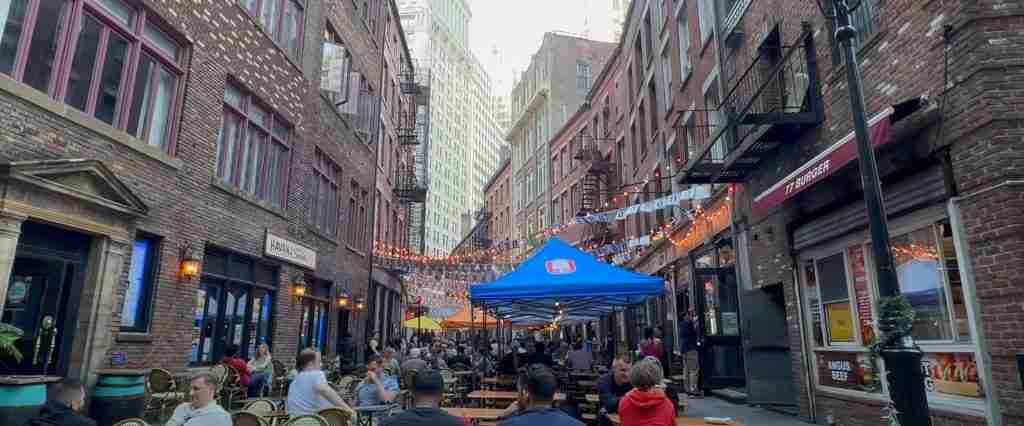
3 days
New York 3-Day Discovery Tour
- ✓ Comprehensive New York experience
- ✓ Expert local guides included
- ✓ All accommodation included
- ✓ Transportation provided

5 days
New York 5-Day Highlights Experience
- ✓ Comprehensive New York experience
- ✓ Expert local guides included
- ✓ All accommodation included
- ✓ Transportation provided
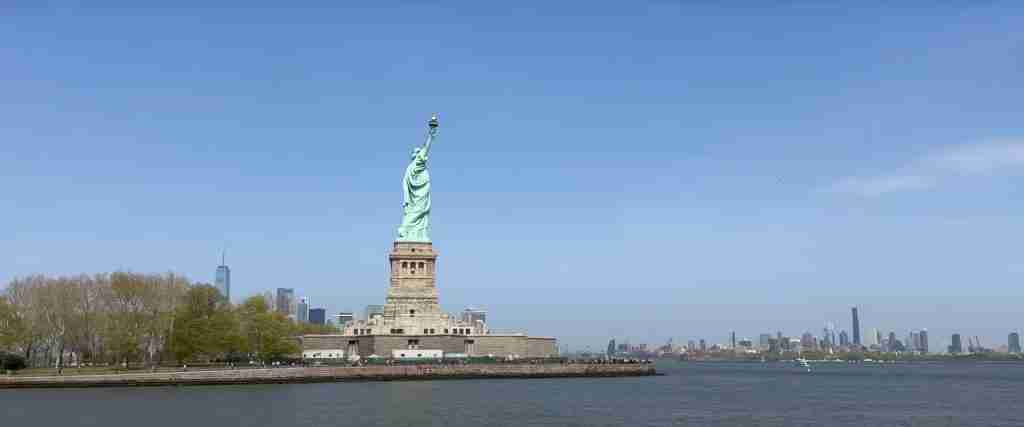
7 days
New York 7-Day Cultural Journey
- ✓ Comprehensive New York experience
- ✓ Expert local guides included
- ✓ All accommodation included
- ✓ Transportation provided

10 days
New York 10-Day Complete Adventure
- ✓ Comprehensive New York experience
- ✓ Expert local guides included
- ✓ All accommodation included
- ✓ Transportation provided
Multi-day tour packages powered by TourRadar. Prices and availability subject to change.
The Genesis: Conception and Early Planning (1865-1870)
The Statue of Liberty’s origin traces to a dinner party at the country estate of Édouard René de Laboulaye near Versailles in 1865. Laboulaye, a prominent French political thinker, abolitionist, and expert on American constitutional law, gathered republican intellectuals to discuss the state of democracy in both France and America. The American Civil War had recently ended with the preservation of the Union and the abolition of slavery, and Laboulaye proposed creating a monument that would honor American independence and celebrate the shared values between France and the United States.
Among the dinner guests was a young sculptor named Frédéric Auguste Bartholdi, who immediately embraced the concept. Bartholdi had already demonstrated interest in colossal sculpture and had proposed an enormous lighthouse in the form of an Egyptian peasant woman for the Suez Canal, though that project was never realized. The idea of a monumental statue honoring liberty captivated his imagination, and he began sketching preliminary concepts. However, the political climate in France under Napoleon III made it imprudent to proceed immediately with a project celebrating republican ideals.
Laboulaye’s vision extended beyond mere commemoration. He saw the monument as a statement of political philosophy, a celebration of Enlightenment values, and an endorsement of democratic governance. France in the 1860s oscillated between republican and imperial rule, and Laboulaye belonged to a faction advocating for permanent republican government modeled partly on American principles. The proposed statue would honor American liberty while implicitly promoting republican values in France. This dual purpose made the project both an international gift and a domestic political statement.
The timing of Laboulaye’s proposal held special significance. The centennial of American independence would arrive in 1876, providing a natural deadline and ceremonial framework for the gift. Laboulaye envisioned the statue as a centennial present from the French people to the American people, emphasizing the grassroots, popular nature of the tribute rather than government-to-government transaction. This approach aligned with his republican principles and would later shape the fundraising strategies employed in both countries. The project remained largely dormant for several years as France underwent political turbulence, but the seed had been planted.
Design and Development: Bartholdi’s Vision Takes Shape (1870-1875)
In 1870, Bartholdi traveled to the United States on a mission sponsored by Laboulaye to promote the statue project and identify an appropriate location. During this journey, Bartholdi visited New York Harbor and immediately recognized Bedloe’s Island as the ideal site. The small island offered clear visibility from Manhattan, Brooklyn, and New Jersey while providing a natural pedestal in the harbor that all ships entering New York would pass. Bartholdi envisioned his statue greeting ships arriving from the Atlantic, a welcoming figure standing at the gateway to America.
Bartholdi spent several months traveling across the United States, meeting with influential Americans including President Ulysses S. Grant, and building support for the project. He sketched constantly, refining his vision for the statue. His initial concepts showed a robed female figure holding a torch aloft, but the details evolved significantly. Bartholdi studied classical sculpture, particularly representations of Roman goddesses, and examined how different poses and gestures might convey the concept of liberty. He created numerous clay models, progressively enlarging them to test how the design would appear at colossal scale.
The sculptor drew inspiration from multiple sources. The Colossus of Rhodes, one of the Seven Wonders of the Ancient World, provided a precedent for harbor monuments of enormous size. Classical representations of Libertas, the Roman goddess of freedom, informed the figure’s general iconography. Bartholdi’s own mother, Charlotte, may have influenced the statue’s facial features, though historians debate this connection. The broken chains at the statue’s feet referenced the recent abolition of slavery in America, adding contemporary relevance to the classical symbolism.
Back in France, Bartholdi refined his design through a series of increasingly large models. He created a four-foot plaster model, then scaled it up to nine feet, and eventually to full size. Each iteration required careful consideration of proportions, as forms that worked at small scale might appear distorted when enlarged to 151 feet. Bartholdi developed a sophisticated system using plumb lines and measuring points to accurately scale up his design. He also had to consider how the statue would appear from various distances and angles, since viewers would see it from boats in the harbor and from different vantage points on land.
The design incorporated rich symbolism in every element. The seven rays of the crown represented the seven continents and seven seas, symbolizing universal liberty. The torch represented enlightenment, with Lady Liberty lighting the way to freedom. The tablet bore the date of American independence in Roman numerals: “JULY IV MDCCLXXVI.” Bartholdi designed the flowing robes in a classical style that would remain timeless rather than reflecting contemporary 19th-century fashion. Every detail served the statue’s purpose as an enduring symbol transcending its specific historical moment.
Engineering Marvel: Gustave Eiffel’s Revolutionary Framework (1875-1884)
As Bartholdi finalized the statue’s exterior design, he faced a monumental engineering challenge: how to support a 151-foot copper sculpture capable of withstanding harbor winds and its own tremendous weight. In 1879, Bartholdi enlisted the help of French engineer Gustave Eiffel, who would later design the Eiffel Tower. Eiffel brought innovative engineering approaches that made the Statue of Liberty’s construction possible and ensured its survival for generations.
Eiffel designed a revolutionary internal framework consisting of an iron pylon with a skeletal structure of steel supports. This framework functioned as the statue’s skeleton, supporting the copper skin while allowing it to move independently. Eiffel understood that the copper exterior would expand and contract with temperature changes and needed flexibility to avoid cracking. His design featured iron bars extending from the central pylon to the copper skin, attached with copper saddles that allowed the skin to move slightly while remaining securely fastened. This brilliant engineering solution enabled the statue to withstand extreme weather conditions and structural stress.
The construction process required unprecedented techniques and coordination. Workers built the statue in Bartholdi’s Paris workshop, constructing it piece by piece in full size. The copper sheets, each only 3/32 of an inch thick (about the thickness of two pennies), were shaped using a technique called repoussé, in which workers hammered the metal over wooden forms. Over 300 copper sheets were individually shaped and numbered, creating the statue’s exterior in sections. The entire copper skin weighs only 88 tons despite the statue’s enormous size, a testament to the efficient design and construction methods.
Eiffel’s iron framework included a central iron pylon standing 96 feet tall, essentially a tower within the statue. From this pylon, a network of iron bars radiated outward to support various parts of the copper exterior. The framework had to account for wind loads, the weight distribution of the raised arm holding the torch, and the structural challenges posed by the statue’s unusual shape. Eiffel’s calculations proved remarkably accurate—the statue has withstood hurricanes, nor’easters, and more than 135 years of exposure to harsh maritime conditions with its basic structure remaining sound.
The construction attracted considerable public attention in Paris. The statue rose piece by piece in Bartholdi’s workshop on the Rue de Chazelles, with the copper skin assembled around Eiffel’s iron framework. Parisians could watch the progress, and the massive project became a source of national pride. The head and shoulders were completed first and displayed at the 1878 Paris World’s Fair, where visitors could climb inside. The torch-bearing arm was displayed at the 1876 Centennial Exhibition in Philadelphia, giving Americans their first close look at the monument taking shape across the Atlantic. These exhibitions helped generate publicity and fundraising support for the project.
Fundraising Challenges: Building Support in Two Nations (1875-1885)
The financing of the Statue of Liberty required parallel fundraising campaigns in France and America, with each nation responsible for different components. France would fund the statue itself, while America would build the pedestal and foundation. Both campaigns faced significant challenges that nearly derailed the project. The fundraising efforts revealed much about popular attitudes toward the monument and tested the commitment of both nations to completing this symbol of Franco-American friendship.
In France, Laboulaye and Bartholdi launched their fundraising campaign in 1875, appealing directly to the French public rather than seeking government funding. They organized benefit dinners, theatrical performances, concerts, and even a lottery. Donors at various levels received tokens of appreciation—small terracotta models of the statue, prints, and other memorabilia. The campaign emphasized that the statue represented a gift from the people of France to the people of America, not a transaction between governments. This grassroots approach aligned with republican principles but made fundraising slower and more challenging.
French fundraising eventually raised approximately 2.25 million francs (about $250,000 at the time), enough to construct the statue. Donations came from all levels of French society, from wealthy patrons to schoolchildren contributing small coins. The campaign succeeded partly because it tapped into French pride and the widespread admiration many French citizens felt toward American democratic ideals. French communities throughout the country participated, viewing their contributions as statements of political philosophy as much as international goodwill. By 1884, the statue stood complete in Paris, ready for disassembly and shipment to America.
American fundraising proved far more problematic. The American Committee, led by lawyer and politician William M. Evarts, struggled to generate enthusiasm for funding the pedestal. Many Americans questioned why they should pay for a French gift, while others felt the monument would only benefit New York. Regional rivalries complicated fundraising, as citizens in other parts of the country resented allocating resources to a New York Harbor monument. By 1885, construction of the pedestal, designed by American architect Richard Morris Hunt, had stalled due to lack of funds. The statue sat in crates on Bedloe’s Island, awaiting a foundation that seemed unlikely to materialize.
The crisis resolved through the intervention of newspaper publisher Joseph Pulitzer, who launched a fundraising campaign through his newspaper, The World, in March 1885. Pulitzer shamed wealthy Americans for their lack of support while appealing to working-class pride. He published the names and amounts of all donors, no matter how small, making each contribution a matter of public record and civic pride. His editorials framed the pedestal campaign as a test of American values and democratic participation. The strategy worked brilliantly—within five months, Pulitzer raised over $100,000 from more than 120,000 donors, most giving less than one dollar. This remarkable achievement demonstrated that ordinary Americans, when properly motivated, would support the monument.
Construction and Assembly: From Paris to New York (1884-1886)
The completed statue stood in Paris throughout 1884, attracting visitors and generating excitement. On July 4, 1884, Ferdinand de Lesseps, the French entrepreneur who built the Suez Canal, officially presented the statue to the American ambassador, Levi P. Morton, in a ceremony in Paris. The event featured speeches celebrating Franco-American friendship and the ideals of liberty both nations shared. With the formal presentation complete, workers began the complex process of disassembling the statue for shipment across the Atlantic.
Disassembly required careful documentation and organization. Workers numbered each of the 350 copper pieces and cataloged every component of Eiffel’s iron framework. The disassembled statue, weighing 225 tons, was packed into 214 crates. These crates were transported to the French port of Rouen, then loaded onto the French Navy ship Isère for the transatlantic voyage. The Isère departed France on May 21, 1885, carrying not just the statue but also the hopes and goodwill of the French people. The voyage took over three weeks, with the ship arriving in New York Harbor on June 17, 1885, to tremendous fanfare.
New York welcomed the statue with celebrations, but the monument remained in its crates while Americans completed the pedestal. Richard Morris Hunt had designed a massive pedestal standing 89 feet high, constructed of concrete faced with granite blocks. The pedestal required its own substantial foundation—a concrete mass poured inside the star-shaped walls of Fort Wood, an early 19th-century fortification on Bedloe’s Island. Workers completed the foundation and pedestal by April 1886, finally providing the base for Lady Liberty’s reassembly.
Reassembling the statue presented enormous challenges. Workers had to lift heavy copper sheets and iron framework components to significant heights using the technology of the 1880s. Bartholdi supervised the reconstruction, which proceeded from the bottom up. The iron pylon and internal framework went up first, followed by the copper skin attached section by section. Workers used a combination of cranes, pulleys, and scaffolding to position each piece. The reassembly took four months of intensive work, with laborers working at dangerous heights in all weather conditions. By October 1886, the statue stood complete, dominating the New York Harbor skyline.
The dedication ceremony took place on October 28, 1886, despite cold, foggy weather. President Grover Cleveland presided over the event, which featured a naval parade, speeches, and celebrations throughout New York City. An estimated one million people participated in or watched the festivities. Bartholdi himself stood inside the statue’s crown, waiting for the signal to release the French flag covering Lady Liberty’s face. When the flag fell away, revealing the statue to the crowd below, the harbor erupted in cannon fire, ship whistles, and cheering. Cleveland declared, “We will not forget that Liberty has here made her home, nor shall her chosen altar be neglected.” The Statue of Liberty officially began her role as guardian of New York Harbor and symbol of American ideals.
Symbol of Immigration: Gateway to America (1892-1954)
While the Statue of Liberty was originally conceived as a symbol of Franco-American friendship and Enlightenment ideals, she quickly became synonymous with American immigration. This transformation began with the opening of the Ellis Island immigration station on January 1, 1892, just six years after the statue’s dedication. Located approximately 1,600 feet from Liberty Island, Ellis Island became the primary immigration inspection station for the Port of New York. Ships carrying immigrants from Europe passed directly by the Statue of Liberty before docking at Ellis Island, making Lady Liberty the first American landmark millions of newcomers saw.
Between 1892 and 1954, over 12 million immigrants entered the United States through Ellis Island, and each person witnessed the Statue of Liberty during their arrival. For passengers traveling in steerage class—the crowded, uncomfortable lower decks where most immigrants traveled—the first glimpse of the statue represented hope after difficult ocean voyages that could last weeks. Many immigrants later recalled the emotional impact of seeing Lady Liberty, describing feelings of relief, excitement, and anticipation. The statue embodied their dreams of freedom, opportunity, and a better life in America.
Emma Lazarus’s 1883 sonnet “The New Colossus” profoundly influenced how Americans understood the statue’s relationship to immigration. Lazarus, a fourth-generation American of Sephardic Jewish descent, wrote the poem to help raise funds for the pedestal. Her words reimagined the statue not as a symbol of enlightenment shining outward to the world, but as a welcoming mother figure calling to the oppressed: “Give me your tired, your poor, Your huddled masses yearning to breathe free, The wretched refuse of your teeming shore. Send these, the homeless, tempest-tost to me, I lift my lamp beside the golden door!”
Initially, Lazarus’s poem received little attention. It was read at the pedestal fundraising auction in 1883 but then largely forgotten. The poem’s rehabilitation began in 1903 when a plaque bearing the sonnet was installed inside the pedestal, partly through the efforts of Lazarus’s friend Georgina Schuyler. Even then, it took decades for “The New Colossus” to achieve its current iconic status. During the mid-20th century, as debates over immigration policy intensified, Lazarus’s words became central to discussions about American identity. The poem transformed the Statue of Liberty from Bartholdi’s “Liberty Enlightening the World” into the “Mother of Exiles” welcoming immigrants.
The statue’s association with immigration became deeply embedded in American culture through countless personal stories. Immigrants wrote letters and memoirs describing their first sight of the statue. Photographers documented newly arrived immigrants on Ellis Island with the statue visible in the background. Songs, poems, and stories celebrated Lady Liberty’s welcome. The statue appeared in citizenship ceremonies and naturalization materials. Each generation of immigrants adopted the monument as a symbol of their own journey to America, regardless of whether they actually arrived through New York Harbor. The Statue of Liberty transcended her physical location to become a universal symbol of the immigrant experience.
Evolution and Restoration: Preserving an Icon (1900-1986)
The Statue of Liberty’s first decades required ongoing maintenance and modifications. The original torch proved problematic from the beginning. Bartholdi had designed it with cutout windows that would allow interior illumination to shine through, but this never worked effectively. In 1916, during a series of modifications, engineers cut away much of the torch’s copper to install glass panels, hoping to improve illumination. Unfortunately, this created structural weaknesses and allowed water infiltration that caused corrosion. The modified torch would eventually need complete replacement during the 1980s restoration.
The statue’s copper exterior began developing its characteristic green patina within years of installation. This patina, formed as copper oxidizes when exposed to air and moisture, actually protects the underlying metal from further corrosion. Some New Yorkers proposed cleaning or painting the statue to restore its original copper color, but engineers and preservationists recognized that the patina served an important protective function. By the 1900s, the statue had fully developed its distinctive green color, which became an integral part of her identity. The patina continues protecting the copper today, more than 135 years after installation.
Several significant modifications occurred during the statue’s first century. In 1916, the torch received its problematic redesign. In 1924, the statue was designated a National Monument, placing it under the care of the National Park Service. In 1933, maintenance and administration transferred from the Lighthouse Board to the National Park Service, ensuring professional management and preservation. During World War II, the statue’s lights were dimmed for security reasons, though the torch remained lit as a symbol of freedom. After the war, floodlights were installed to illuminate the statue at night, enhancing her visibility and symbolic presence.
By the 1980s, the statue required major restoration for her upcoming centennial in 1986. Engineers and conservators conducted detailed studies revealing serious structural problems. The iron framework showed extensive corrosion, particularly where iron met copper—a combination that created galvanic corrosion. The torch was beyond repair due to the 1916 modifications. The internal stairway was inadequate for modern visitor loads. The statue needed comprehensive restoration, essentially a complete structural renewal while preserving Bartholdi’s original design.
The restoration project, launched in 1984, was one of the most ambitious historic preservation efforts in American history. Workers erected scaffolding around the statue, encasing her in a temporary shell. Engineers replaced the iron framework with stainless steel components that wouldn’t corrode when in contact with copper. They installed new stairways and elevators to improve visitor access. Most dramatically, they completely replaced the torch with a new copper torch gilded with gold leaf, following Bartholdi’s original design more closely than the 1916 version. The old torch was preserved and is now displayed in the statue’s museum.
The restoration required innovative techniques and materials. Workers used lasers to analyze the statue’s structural condition. They employed modern metals and fastening systems that would provide superior longevity while remaining invisible to visitors. The project cost approximately $87 million, raised through corporate sponsorships and private donations rather than government funding. The restored statue was unveiled on July 4, 1986, during a spectacular weekend celebration of her centennial. The restoration ensured that Lady Liberty would continue welcoming visitors and inspiring people for generations to come.
UNESCO Recognition and Global Significance (1984-Present)
In 1984, the Statue of Liberty received designation as a UNESCO World Heritage Site, recognizing her significance as “a masterpiece of the human spirit” and her embodiment of universal ideals of freedom and democracy. The UNESCO inscription acknowledges the statue’s artistic importance, engineering innovation, and symbolic power that transcends national boundaries. This designation places the Statue of Liberty among the world’s most significant cultural monuments, ensuring international cooperation in her preservation and recognizing her meaning for all humanity.
The UNESCO designation specifically cites the statue’s “exceptional universal value” based on several criteria. The monument represents a masterpiece of human creative genius, combining artistic vision with engineering innovation. It stands as an outstanding example of 19th-century colossal sculpture and demonstrates the collaborative possibilities of international cooperation. Most importantly, the statue is directly associated with ideals and events of universal significance—liberty, democracy, and the abolition of slavery. The inscription notes that the statue has become “a symbol of freedom and democracy recognized around the world.”
The statue’s global significance extends far beyond her physical location in New York Harbor. Liberty’s image appears in countless contexts worldwide—in political cartoons, protests, advertisements, and popular culture. When pro-democracy movements arise anywhere in the world, activists often invoke the Statue of Liberty as a symbol of their aspirations. The statue has been replicated in miniature and at full scale around the world, from Paris (where a smaller version stands on the Île aux Cygnes) to Tokyo, Las Vegas, and numerous other locations. These replicas demonstrate how the statue’s symbolism has become universal rather than specifically American.
After the September 11, 2001 terrorist attacks, the Statue of Liberty took on renewed significance for Americans. The statue was closed to visitors immediately after the attacks due to security concerns and damage to Liberty Island’s infrastructure. When the island reopened to visitors in December 2001, huge crowds came to see Lady Liberty, viewing her as a symbol of American resilience and enduring values. The statue’s crown remained closed until 2009, and access continues to be limited due to safety and security requirements. Each reopening milestone represented an important moment in America’s recovery from the attacks.
Today, the Statue of Liberty attracts approximately 4 million visitors annually, making her one of America’s most visited monuments. The National Park Service manages the site, providing ferry service from Battery Park in Manhattan and Liberty State Park in New Jersey. Visitors can explore Liberty Island, visit the museum inside the pedestal, and, with advance reservations, climb to the crown for spectacular views of New York Harbor. The Ellis Island Immigration Museum, also accessible by ferry, provides historical context about the immigration experience and the statue’s role in welcoming newcomers to America.
Contemporary Meaning and Enduring Legacy
The Statue of Liberty’s meaning continues evolving while remaining rooted in fundamental principles of freedom and human dignity. Contemporary debates about immigration policy, national identity, and American values often reference the statue and Emma Lazarus’s words. Different groups interpret Lady Liberty’s welcome in various ways, with some emphasizing unrestricted welcome to all seeking refuge and others advocating for controlled immigration consistent with rule of law. The statue’s image appears in protests and counter-protests, demonstrating how this powerful symbol can be claimed by different sides of political debates.
Environmental challenges pose ongoing threats to the monument. Rising sea levels due to climate change threaten Liberty Island’s infrastructure. More frequent and intense storms stress the island’s sea walls and buildings. Hurricane Sandy in 2012 caused extensive damage to Liberty Island, destroying power systems, buildings, and walkways, though the statue itself remained undamaged. The National Park Service implemented significant upgrades to protect against future storms, including new power systems, redesigned ferry docks, and reinforced sea walls. These adaptations demonstrate the ongoing challenge of preserving this 19th-century monument in the face of 21st-century environmental realities.
Technological innovations have enhanced visitor experiences while respecting the monument’s historic character. The museum inside the pedestal, opened in 2019, uses modern exhibits to tell the statue’s story. Visitors can see the original 1886 torch, view Bartholdi’s working models, and learn about the engineering and construction through interactive displays. Virtual reality experiences allow visitors to explore areas not physically accessible. The Statue of Liberty-Ellis Island Foundation maintains extensive genealogical databases helping people trace immigrant ancestors who passed through Ellis Island, connecting contemporary Americans to the statue’s historical role.
The statue has inspired countless artistic responses and cultural references. She appears in films, novels, comic books, and artworks worldwide. Artists have reimagined her in different styles and contexts, from Andy Warhol’s pop art silkscreens to political cartoons commenting on current events. The statue’s image is so widely recognized that even radical reinterpretations remain immediately identifiable. This cultural ubiquity demonstrates how completely the Statue of Liberty has penetrated global consciousness, transcending her origins as a specific historical monument to become a universal icon.
Educational programs operated by the National Park Service and partner organizations use the statue to teach about American history, immigration, artistic achievement, and engineering innovation. School groups constitute a significant portion of visitors, and many Americans’ first encounter with serious historical thinking occurs during a Statue of Liberty field trip. The monument provides tangible connection to abstract concepts like liberty, democracy, and international cooperation. For many visitors, especially immigrants and children of immigrants, seeing the statue in person represents a profound emotional experience, connecting personal and family history to larger national narratives.
Conservation and Future Challenges
Preserving the Statue of Liberty for future generations requires ongoing conservation work and long-term planning. The 1980s restoration addressed immediate structural problems, but new challenges continually emerge. The harsh marine environment continually attacks the statue’s materials. Salt air corrodes metal components, temperature fluctuations cause expansion and contraction stresses, and moisture infiltrates wherever protective barriers fail. The National Park Service maintains a comprehensive conservation program including regular inspections, cleaning, and preventive maintenance.
Modern monitoring technologies help conservators track the statue’s condition. Sensors measure structural movements, temperature variations, and moisture levels. Digital imaging creates detailed records of the statue’s surface, allowing conservators to detect changes over time. These technological approaches complement traditional conservation expertise, providing early warning of developing problems before they become serious. The data collected helps inform long-term preservation strategies and allows conservators to prioritize maintenance efforts effectively.
Climate change presents perhaps the most significant long-term threat to Liberty Island. Sea level rise will progressively expose the island to more frequent flooding, potentially undermining foundations and threatening infrastructure. More intense storms may overwhelm protective measures designed for historical weather patterns. The National Park Service has developed adaptation strategies including raised walkways, relocated critical equipment, and reinforced sea walls, but the long-term challenge remains daunting. Protecting the Statue of Liberty from climate change requires not just local measures but global efforts to limit greenhouse gas emissions.
Balancing preservation with public access creates ongoing challenges. Millions of people want to experience the statue up close, but heavy visitation causes wear and tear. Allowing crown access requires specialized safety measures and limits the number of daily visitors. Security requirements necessitate screening procedures that can frustrate visitors eager to see the monument. The National Park Service must continuously balance competing demands: providing meaningful visitor experiences, ensuring safety and security, protecting the monument from damage, and maintaining the site’s dignity and significance.
International cooperation supports the statue’s preservation and interprets her significance globally. French and American conservators maintain ongoing dialogue, sharing expertise and coordinating preservation approaches. The statue’s UNESCO World Heritage designation ensures international attention and support. Educational exchanges allow conservation professionals to learn from each other’s experiences. This international dimension honors the statue’s origins as a gift between nations while recognizing that preserving symbols of universal ideals requires collaborative global effort.
Frequently Asked Questions About Statue of Liberty History
When was the Statue of Liberty built and dedicated?
Construction of the Statue of Liberty began in France in 1876, and the statue was completed there in 1884. The statue was then disassembled, shipped to New York, and reassembled on Bedloe’s Island (now Liberty Island). President Grover Cleveland dedicated the statue on October 28, 1886, in a ceremony attended by thousands despite cold, foggy weather. The project took approximately 21 years from initial conception in 1865 to final dedication.
How did the Statue of Liberty get its green color?
The Statue of Liberty is made of copper, which originally had a reddish-brown color similar to a penny. Copper oxidizes when exposed to air and moisture, forming a greenish patina called verdigris. This chemical process began immediately after installation and continued for about 25 years until the entire statue developed its distinctive green color around 1900. The patina actually protects the copper from further corrosion, which is why preservationists have never cleaned it off. The green color has become so iconic that most people cannot imagine the statue any other color.
What do the symbols on the Statue of Liberty represent?
Every element of the Statue of Liberty carries symbolic meaning. The torch represents enlightenment, lighting the way to freedom. The tablet in her left hand bears the date of American independence (July 4, 1776) in Roman numerals. The seven spikes in her crown represent the seven continents and seven seas, symbolizing universal liberty. Broken chains lie at her feet, representing freedom from oppression and the abolition of slavery. Her classical Roman robes evoke ancient republican ideals, while her forward stride suggests progress and advancement. The entire figure represents Libertas, the Roman goddess of freedom.
Who paid for the Statue of Liberty?
The statue itself was funded by the French people through public donations, fundraising events, and lotteries, raising approximately 2.25 million francs. The pedestal was supposed to be funded by Americans, but fundraising struggled until 1885 when newspaper publisher Joseph Pulitzer launched a campaign through The World newspaper. Pulitzer raised over $100,000 in five months from more than 120,000 donors, most contributing less than one dollar. This grassroots funding on both sides of the Atlantic emphasized that the statue represented a gift between peoples rather than governments.
Why is the Statue of Liberty located on Liberty Island?
French sculptor Frédéric Auguste Bartholdi selected the location during his 1870 visit to New York. He recognized that Bedloe’s Island (renamed Liberty Island in 1956) offered perfect visibility from all directions while allowing the statue to greet ships entering New York Harbor from the Atlantic. The small island provided a natural pedestal, and the existing Fort Wood offered a foundation for the massive monument. The location’s symbolic power—standing at the gateway to America—proved perfect for a monument celebrating freedom and welcoming immigrants.
What happened to the Statue of Liberty’s original torch?
The original torch was significantly modified in 1916 when engineers cut away sections of copper to install glass panels, hoping to improve illumination. This modification weakened the structure and allowed water infiltration that caused extensive corrosion. During the 1980s restoration for the statue’s centennial, conservators determined the torch was beyond repair. They created an entirely new torch following Bartholdi’s original design more closely, gilded with gold leaf. The original 1886 torch is now preserved and displayed in the statue’s museum inside the pedestal, where visitors can see this important piece of history up close.
How many people worked on building the Statue of Liberty?
Dozens of craftspeople and laborers worked on the statue in Bartholdi’s Paris workshop over several years. The project employed coppersmiths who shaped the copper sheets using repoussé technique, metalworkers who constructed Gustave Eiffel’s iron framework, carpenters who built the wooden forms, and general laborers who handled materials and assisted with assembly. In New York, additional teams constructed the pedestal and reassembled the statue on Liberty Island. The exact number of workers is not precisely documented, but estimates suggest over 100 people contributed significantly to the statue’s creation in France, with additional workers involved in American construction phases.
Did the Statue of Liberty serve as a lighthouse?
The Statue of Liberty was indeed operated as a lighthouse by the United States Lighthouse Board from 1886 to 1902. The torch was equipped with electric lights (one of the early uses of electricity in a lighthouse), but the statue proved ineffective as a navigational aid. The light was not bright enough to serve as a useful beacon for ships, and the statue’s location was not optimal for lighthouse purposes. After sixteen years, the lighthouse function was discontinued, and responsibility for the statue transferred to the War Department, which managed it as a monument until it became a National Monument in 1924 under the National Park Service.
How has the Statue of Liberty changed since 1886?
The most visible change is the green patina that developed naturally over the first 25 years. The torch was significantly modified in 1916 and completely replaced during the 1980s restoration. Interior stairways have been upgraded multiple times to improve safety and accommodate visitors. The statue’s internal iron framework was replaced with stainless steel during the 1980s restoration to prevent corrosion. Modern additions include elevators, improved lighting, climate control systems, and security features. Museum facilities have been built inside the pedestal, and the surrounding island has been significantly developed with walkways, landscaping, and visitor amenities. Despite these changes, the statue’s external appearance remains remarkably true to Bartholdi’s original 1886 design.
What role did Gustave Eiffel play in creating the Statue of Liberty?
Gustave Eiffel, the engineer who would later design the Eiffel Tower, created the revolutionary internal framework that makes the Statue of Liberty possible. Beginning in 1879, Eiffel designed an iron pylon with a skeletal structure of steel supports that functions as the statue’s skeleton. His innovative design allows the copper skin to move independently from the internal structure, accommodating thermal expansion and contraction while withstanding enormous wind loads. Eiffel’s engineering expertise was crucial to the statue’s construction and has ensured its survival for over 135 years. Without his structural genius, Bartholdi’s artistic vision could never have been realized at such a massive scale.