St. Louis Best Tours & Walking Routes 2026: Complete Travel Guide
St. Louis combines authentic American history with surprising affordability in its diverse tour landscape. From 630-foot Gateway Arch ascents to underground brewery cellars where Prohibition-era bootleggers once hid, the city’s tour offerings span riverboat cruises, haunted neighborhood walks, and Italian immigrant food trails. Whether exploring the Soulard district’s crime history or Forest Park’s 1,300 acres on foot, visitors discover pricing that significantly undercuts coastal city equivalents while maintaining exceptional quality and local expertise.
Key Takeaways for St. Louis Tours & Walking Routes 2026:
- Gateway Arch Experience 2026: Tram rides to the top cost $15-19 for adults, with combination tickets including riverboat cruises ranging $39-43 per person. The free underground museum and visitor center provide context before ascending, while eight designated National Park fee-free days in 2026 offer $3 discounts.
- Walking Tour Economics 2026: Neighborhood walking tours range $20-30 per person for 2-3 hour guided experiences, with self-guided audio tours available from $8. Specialized themed tours including true crime, haunted history, and architectural deep-dives offer exceptional value compared to larger metropolitan areas.
- Anheuser-Busch Brewery Access 2026: Free general brewery tours run every 30 minutes, while premium experiences range $10-40 depending on depth. The Day Fresh Tour at $10 provides 75-minute comprehensive brewery access including Clydesdale stables, while $35 Beermaster Tours include fresh-from-tank tastings and packaging facility visits.
- Forest Park Self-Guided Routes 2026: The park’s 6-mile dual recreational pathway offers completely free walking and cycling loops past the zoo, art museum, and multiple lakes. With 30 miles of interconnecting trails, the park provides urban outdoor recreation rivaling Central Park’s scale at zero cost.
- Food Tour Investment 2026: Three-hour neighborhood food tours cost $80-120 per person covering six tastings with architectural and cultural commentary. The Hill, Soulard, and Central West End tours provide full meal replacement value while introducing locally-owned establishments visitors might otherwise miss.
- Trolley Tour Coverage 2026: Narrated 90-minute trolley tours covering 23 miles of city highlights cost $30-40 per person. These climate-controlled vintage-style vehicles visit Union Station, Cathedral Basilica, Forest Park, and downtown landmarks, providing comprehensive orientation ideal for first-day arrival activities.
People Also Ask About St. Louis Tours & Walking Routes 2026
What is the best tour in St. Louis for first-time visitors in 2026?
The narrated trolley tour offers the most comprehensive first-visit orientation in St. Louis for 2026. At $30-40 per person for 90 minutes, these tours cover 23 miles including Union Station, the Cathedral Basilica with its 41 million mosaic pieces, Forest Park, Busch Stadium, and downtown landmarks. Guides provide historical context and neighborhood overviews that help visitors decide which areas warrant deeper exploration during their stay. The climate-controlled vintage-style vehicles depart from the Horseshoe Casino entrance multiple times daily, allowing flexible scheduling. For visitors prioritizing iconic experiences, combining the trolley overview with a Gateway Arch tram ticket creates an effective introduction covering both city-wide context and the definitive St. Louis monument.
How much does it cost to visit the Gateway Arch in 2026?
Gateway Arch National Park entry and the underground museum remain free in 2026, while tram rides to the observation deck cost $15-19 for adults and $11-15 for children ages 3-15, with pricing varying by date. Check the official Gateway Arch website for current rates. Combination tickets provide better value for comprehensive visits: the Tram Ride Plus Movie package costs $19-23 for adults and includes the 35-minute Monument to the Dream documentary, while the Tram Plus Cruise combination runs $39-43 for adults when riverboats operate March through November. National Park Pass holders receive $3-4 discounts on all tram tickets, and eight designated fee-free days in 2026 waive the additional $3 from adult tram prices. The observation deck visit itself lasts under 10 minutes at the top, with the full tram experience taking 45-60 minutes including boarding, ascent, viewing time, and descent.
Are there free walking routes in St. Louis in 2026?
Forest Park provides 30 miles of completely free walking trails in 2026, with the signature 6-mile Dual Recreational Pathway circling the entire park past the St. Louis Zoo, Art Museum, Science Center, and multiple lakes. The separated “Wheels” paved path and “Heels” crushed gravel path accommodate different user preferences, with clear signage and water fountains positioned along the route. Downtown, the riverfront trails stretch 12 miles from downtown to the Chain of Rocks Bridge at zero cost, passing the Gateway Arch, historic levee areas, and industrial heritage sites. The Landmarks Association offers $20 guided historical walking tours on Saturdays April through October, but independent walkers can download the same routes from their website for self-guided exploration. The Soulard, Lafayette Square, and Central West End neighborhoods feature well-maintained sidewalks ideal for self-guided architectural walking without organized tour fees.
What are the best food tours in St. Louis for 2026?
EAT Saint Louis Food Tours operates the highest-rated neighborhood culinary walking experiences in 2026, with three-hour tours of The Hill, Soulard, and Maplewood priced around $80-120 per person including six substantial tastings. The Hill tour showcases Italian immigrant culinary heritage through family-owned bakeries, specialty grocers, and red-sauce establishments that have operated for generations, while the Soulard tour emphasizes Cajun influences and pre-Prohibition brewing history. Savor Saint Louis Food Tours provides similar experiences focusing on the Central West End and Downtown areas at comparable pricing. Both companies limit group sizes to 12-15 participants for personalized attention and include architectural commentary alongside food sampling. The tasting portions collectively replace a full meal, making the per-person cost competitive with restaurant dining while adding cultural education. Private group tours for 12 or more can arrange customized itineraries and timing through direct operator contact.
Extended multi-day tours – 5+ days
Featured Midwest Usa Multi-Day Tour Packages
7 days
Chicago – The Home of Skyscrapers
- ✓ Booking needs min. 2 travelers
8 days
Chicago and Niagara ROT (including Niagara Falls)
- ✓ Comprehensive Midwest Usa tour
- ✓ Expert local guides included
- ✓ All accommodation arranged
- ✓ Transportation provided

8 days
From Chicago's Skyline to Niagara's Mist – 8 days
- ✓ Comprehensive Midwest Usa tour
- ✓ Expert local guides included
- ✓ All accommodation arranged
- ✓ Transportation provided

4 days
City Break in Chicago Among Skyscrapers
- ✓ Booking needs min. 2 travelers
Multi-day tour packages powered by TourRadar. Prices and availability subject to change.
Introduction to St. Louis Tours & Walking Routes 2026
St. Louis presents a distinctive tour ecosystem where Midwestern affordability meets unexpected depth of experience. The city’s position as America’s 19th-century western gateway created layered historical narratives that organized tours and self-guided routes now unpack through brewery cellars, riverfront development zones, and immigrant neighborhood enclaves. Unlike coastal metropolitan areas where similar experiences command premium pricing, St. Louis tour operators maintain accessible rates while delivering comparable expertise and access.
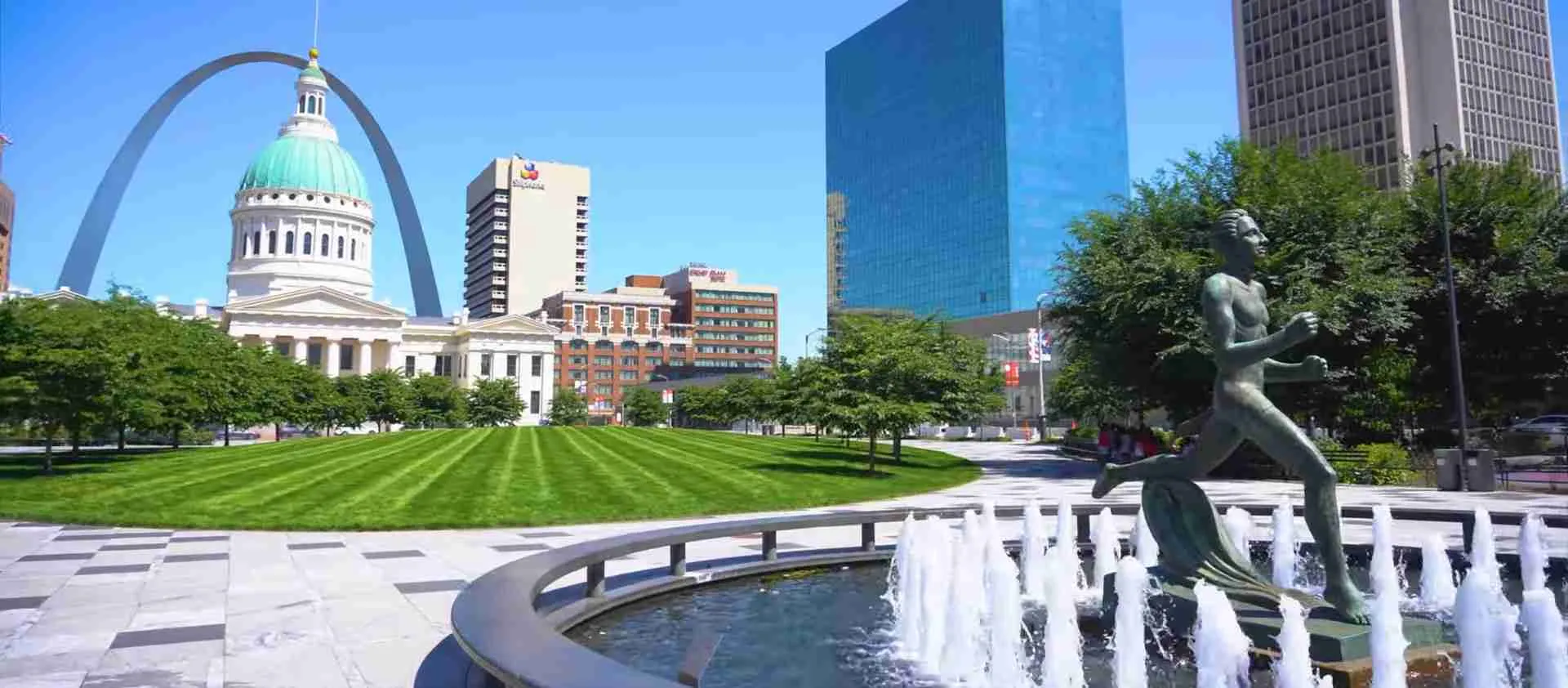
The Gateway Arch anchors visitor orientation as both literal and symbolic entry point, its 630-foot stainless steel curve visible from throughout downtown. The surrounding 91-acre national park provides free museum access and grounds exploration, with paid tram tickets opening observation deck access that reveals the city’s grid pattern spreading westward from the Mississippi River. This geographic clarity helps visitors understand neighborhood relationships before venturing into specialized tours covering specific districts or themes.
Walking tour culture in St. Louis emphasizes neighborhood-specific deep dives rather than surface-level city-wide surveys. The Landmarks Association runs architectural tours dissecting Union Station’s Beaux-Arts grandeur and Soldiers Memorial’s Art Deco severity, while specialized operators focus on true crime in Soulard, haunted histories in the Lemp Mansion district, or Italian culinary traditions on The Hill. This specialization allows guides to develop genuine expertise rather than superficial familiarity, creating experiences that satisfy both casual tourists and residents seeking deeper understanding of their own city.
Forest Park functions as St. Louis’s outdoor recreation anchor, its 1,300 acres providing extensive trail networks that require no fees or reservations. The dual recreational pathway system separates pedestrian and wheeled traffic while maintaining interconnectivity with dozens of interior trails accessing the zoo, art museum, science center, and wooded sections. For visitors accustomed to crowded urban parks, Forest Park’s scale and accessibility prove surprising, with weekday mornings often finding stretches of trail nearly empty despite the park’s central location.
The Anheuser-Busch brewery campus represents St. Louis’s most significant industrial tourism asset, its National Historic Landmark buildings and continuing operations offering perspectives on American brewing history and modern production scale. Free general tours democratize access while tiered premium experiences provide progressively deeper engagement with brewing processes, Clydesdale care, and brand heritage. This pricing structure allows budget-conscious visitors basic access while offering enthusiasts justification for deeper investment.
Food tour operators have emerged as neighborhood interpretation specialists, using restaurants and specialty grocers as both destinations and teaching tools. The Hill’s Italian immigrant heritage becomes tangible through third-generation bakery owners explaining recipe origins, while Soulard’s pre-Prohibition brewing legacy connects to current craft beer resurgence through guided tasting sessions. These experiences deliver cultural education alongside calories, distinguishing them from simple restaurant crawls.
Seasonal considerations affect St. Louis tour availability and experience quality throughout 2026. Summer humidity makes outdoor walking tours challenging during midday hours, while Mississippi River levels determine riverboat cruise schedules March through November. Winter reduces demand allowing smaller tour group sizes and increased guide attention, though some outdoor attractions close or limit hours. Spring and fall shoulder seasons provide optimal weather conditions with moderate tourist volumes, creating ideal circumstances for both organized tours and self-guided exploration.
Gateway Arch Tours & Experiences 2026
Gateway Arch National Park anchors St. Louis tourism as the city’s most recognizable landmark and most-visited attraction. The 630-foot stainless steel arch, completed in 1967, provides observation deck access via unique tram capsule systems while the expanded underground museum and visitor center opened in 2018 deliver comprehensive westward expansion interpretation. Understanding ticket options, optimal visiting strategies, and complementary riverfront experiences maximizes value from arch-centered activities.
Gateway Arch Tram Ticket Options 2026
Basic tram tickets to the observation deck cost $15-19 for adults ages 16 and older and $11-15 for children ages 3-15 in 2026, with specific pricing varying by date of visit. Check the Gateway Arch official ticketing website for current rates as pricing adjusts for peak demand periods. National Park Pass holders receive $3-4 discounts on tram tickets, while children under 3 ride free when accompanied by ticketed adults. The tram experience includes a 4-minute ride to the top in unique egg-shaped capsules that rotate to maintain level orientation within the arch’s curve, approximately 4-8 minutes at the observation deck, and 3-minute descent.
Combination ticket packages provide better value for visitors planning comprehensive arch experiences. The Tram Ride Plus Movie package costs $19-23 for adults and $14-18 for children, including both observation deck access and the 35-minute Monument to the Dream documentary film detailing the arch’s design and construction challenges. The Tram Plus Cruise combination, available only during riverboat season March through November, costs $39-43 for adults and $25-29 for children, pairing observation deck access with a 60-minute narrated Mississippi River cruise. Seniors ages 60 and older receive $2 discounts on riverboat tickets only, not tram tickets.
Eight designated National Park fee-free days in 2026 provide $3 discounts on adult tram tickets: February 16, May 25, June 14, July 3-5, August 25, September 17, October 27, and November 11. On these dates, the standard entrance fee component is waived though the tram ride fee itself remains. Advance online purchase is essential as same-day tram tickets sell out frequently, particularly during summer weekends and holiday periods. The ticketing system allows reservations up to 30 days in advance, with morning departure times generally remaining available longer than afternoon slots.
Underground Museum & Free Experiences 2026
The Museum at the Gateway Arch provides completely free access to six galleries exploring westward expansion, Lewis and Clark’s expedition, St. Louis riverfront history, and the arch’s engineering. Interactive exhibits include Thomas Jefferson’s original instructions to Meriwether Lewis, Native American perspectives on territorial expansion, and detailed architectural models explaining the arch’s construction methodology. The museum’s universal design accommodates wheelchair users and includes tactile elements for visually impaired visitors, with National Park Service rangers offering free interpretive programs throughout the day.
Gateway Arch National Park grounds encompass 91 acres of landscaped gardens, reflection ponds, and the Grand Staircase ascending from the riverfront to the arch plaza level. Five miles of paved walking paths connect to the Old Courthouse two blocks west, where additional free exhibits cover the Dred Scott case and 19th-century St. Louis judicial history. The riverfront promenade provides Mississippi River views and information panels explaining the river’s role in St. Louis economic development, while scattered benches and shaded areas offer rest stops during self-guided exploration.
Free ranger-led programs operate year-round with varying schedules posted at the visitor center information desk. Programs include 30-minute talks on westward expansion, 45-minute walks exploring the park grounds’ landscape architecture, and seasonal programs addressing specific historical themes. These ranger programs require no reservations or fees, providing professional interpretation equivalent to paid tour experiences elsewhere. The visitor center information desk distributes free trail maps, junior ranger activity booklets for children, and accessibility guides detailing elevator locations and alternative routes for mobility-limited visitors.
Mississippi Riverboat Cruises 2026
Riverboat cruises depart from the levee beneath the Gateway Arch’s south leg March through November, weather and river conditions permitting. The basic sightseeing cruise lasts 60 minutes with narration by boat captains or National Park Service rangers covering riverfront history, barge traffic operations, and bridge engineering. Adult tickets cost $25-30 while children ages 3-12 pay $12-15, with infants under 3 riding free if ticketed. Cruises depart multiple times daily during peak season with reduced frequency in spring and fall shoulder periods.
Specialty cruise options include dinner cruises featuring chef-prepared meals and live music priced at $64 for adults and $28 for children ages 3-12, and Sunday brunch cruises at $62 for adults and $25 for children. These two-hour specialty cruises require advance reservations and sell out weeks ahead during summer months. The Blues Music Cruise celebrates St. Louis musical heritage with regional blues performers, while the R&B Groove Cruise features old-school rhythm and blues. Both specialty music cruises include cash bars and limited food service distinct from full dinner cruises.
River level fluctuations occasionally suspend riverboat operations during extreme high or low water periods. The Mississippi River’s natural variation means cruises typically operate reliably May through October but face periodic cancellations in early spring and late fall. Cruise operators notify ticket holders of cancellations via email and phone, offering full refunds or date transfers. Visitors should check riverboat status when planning arch visits during March, April, or November to avoid disappointment from unexpected closures.
Gateway Arch Visiting Strategy 2026
Optimal arch visiting requires understanding security screening procedures and timing considerations. All visitors pass through TSA-style security screening before entering the tram boarding area, with prohibited items including large bags, strollers, and food containers. Budget 30 additional minutes beyond your scheduled tram time for security processing, particularly during summer peak hours when screening lines extend significantly. The tram boarding area prohibits restroom access once you enter, so use facilities before passing security checkpoints.
The observation deck at 630 feet elevation provides panoramic views through 16 narrow windows on each side of the arch, with views extending 30 miles on clear days. The deck accommodates approximately 150 people simultaneously but feels cramped during full capacity periods. Time at the top is limited to under 10 minutes to maintain tram schedule flow, though rangers do not strictly enforce timing unless crowds necessitate. The windows face east toward Illinois and west toward St. Louis downtown and Forest Park, with interpretive panels identifying visible landmarks.
Accessibility considerations affect arch visit planning for mobility-limited guests. The tram capsules require climbing four steep steps and sitting in cramped spaces unsuitable for wheelchairs, walkers, or many elderly visitors. The observation deck itself is wheelchair accessible via the same tram capsules, but the boarding process creates practical barriers for many users. Alternative experiences include the free museum with full accessibility, ranger programs, and grounds exploration. The Gateway Arch does not offer assisted access or alternative elevators to the observation deck regardless of disability status.
Winter visits to the Gateway Arch provide significant crowd reduction advantages. January through March see 70% fewer visitors than summer months, allowing easy same-day tram ticket availability and minimal security wait times. The observation deck provides clearer air for photography during winter months, though views may be obscured by occasional fog or precipitation. Indoor museum exploration and riverfront walks remain comfortable year-round with climate-controlled spaces and winter path maintenance.
Walking Tour Companies & Guided Experiences 2026
St. Louis walking tour operators specialize in neighborhood-specific expertise rather than generic city overviews, creating experiences that unpack architectural heritage, cultural traditions, and historical narratives through focused geographic exploration. Understanding tour company specializations, pricing structures, and seasonal availability helps visitors select experiences matching their interests while avoiding generic tourist trap alternatives.
Landmarks Association Downtown Walking Tours 2026
The Landmarks Association of St. Louis operates Saturday morning architectural walking tours April through October, departing at 9:30 AM for 2-2.5 hour explorations covering approximately two miles. Tickets cost $20 per person with children under 12 admitted free, making these tours exceptional value for families and architecture enthusiasts. Tours are limited to 15 participants ensuring personalized attention from experienced volunteer guides who combine architectural analysis with cultural and political history.
Two distinct routes alternate throughout the season: the East Tour explores the riverfront area from the Old Courthouse through Kiener Plaza to the Old Cathedral and Eads Bridge, examining French colonial foundations through early 20th-century skyscraper construction. The West Tour focuses on the Grand Center district including Union Station, Stifel Theatre, City Hall, Central Library, and Soldiers Memorial Military Museum, analyzing how late 19th and early 20th-century civic ambitions shaped monumental public buildings. Both tours require moderate fitness for sustained walking and include building interior access when schedules permit.
The East Tour meeting point is at the Old Courthouse steps, accessible via the Eighth and Pine MetroLink station. The West Tour departs from Union Station, served directly by the Union Station MetroLink stop. Street parking and commercial parking garages are available near both departure points, with two-hour metered parking on nearby streets. The Park Louie mobile app allows parking payment and time extensions from smartphones, avoiding tickets when tours run longer than expected.
Private group tours for five or more participants can arrange custom dates and routes outside the regular Saturday schedule with four weeks advance notice. Private tours accommodate specific interests like Art Deco architecture, urban planning evolution, or preservation case studies, with guides tailoring commentary to group expertise levels. Private tour pricing starts at $200 for three hours, making them cost-effective for corporate groups, architecture students, or family reunions requiring flexible scheduling.
St. Louis History & Architecture Neighborhood Tours 2026
St. Louis History & Architecture operates weekend walking tours exploring residential neighborhoods that showcase the city’s 19th-century wealth and 20th-century preservation efforts. Tours cost $20 online or $30 cash at the tour starting location, running 2-3 hours and covering neighborhoods including Lafayette Square, Benton Park, Hyde Park, St. Louis Place, and Compton Heights. Each tour examines different architectural styles, immigrant communities, and urban development patterns.
The Lafayette Square tour highlights the city’s oldest residential park, Victorian mansions along exclusive private streets like Benton Place, and the neighborhood’s near-demolition and eventual restoration. The tour covers the oldest house in St. Louis, Civil War general residences, and 19th-century political figures’ homes while explaining how the neighborhood avoided highway destruction that devastated other historic St. Louis areas. Tours meet at varying locations depending on the specific neighborhood, with meeting points announced when booking.
The Hill neighborhood tour organized by this operator focuses on the Italian immigrant community’s brewing industry connections, residential architecture, and religious institutions including St. Ambrose Catholic Church. This tour differs from food-focused Hill experiences by emphasizing built environment and social history rather than culinary heritage. The Compton Heights tour examines Julius Pitzman’s curvilinear street designs created for German industrial leaders, analyzing how landscape architecture shaped elite neighborhood development.
Tours operate year-round including winter months, though inclement weather may prompt rescheduling notifications sent via email. Tours proceed in light rain with participants responsible for weather-appropriate clothing, but severe weather triggers automatic cancellations with full refunds. The operator’s website maintains current schedules with booking links, while their email newsletter announces new routes and special themed tours addressing specific events or anniversaries.
Specialty Themed Walking Tours 2026
True crime walking tours explore St. Louis’s Soulard neighborhood through historical murders, Prohibition-era gangsters, and 19th-century dueling culture. These tours depart from Molly’s Bar in Soulard and run 90-120 minutes covering violent voting riots, armed bank robberies, and organized crime figures who operated from the neighborhood’s bars and social clubs. Tickets cost $30 per person with tours scheduled Friday and Saturday evenings. Content includes graphic historical descriptions unsuitable for children under 13, though no current crime scene visits occur.
Haunted walking tours operate in the Lemp Mansion neighborhood and downtown areas, combining paranormal investigation perspectives with documented historical tragedies. The Lemp Haunted Neighborhood Walking Tour costs $30 and explores the brewing family’s mansion, forgotten Marion Hospital, and brewery remnants while discussing the multiple Lemp family suicides and reported supernatural phenomena. Tours depart Wednesday through Saturday evenings with flashlight recommendations for dimly lit historical sites. Paranormal investigators lead these tours rather than traditional historians, creating different interpretive approaches.
Food and history combination tours blend culinary sampling with cultural narrative, operated by EAT Saint Louis Food Tours and Savor Saint Louis Food Tours. These three-hour experiences cost $80-120 per person depending on neighborhood and operator, including six substantial food tastings, architectural commentary, and local business owner interactions. The experiences function as both meal replacements and walking tours, covering 1-2 miles at leisurely pace with frequent stops allowing conversation and digestion between tastings.
Self-Guided Audio Tour Options 2026
Self-guided audio tours accessed via smartphone apps provide budget alternatives to guided group experiences. Downtown St. Louis and Gateway Arch audio tours cost $8-15 per device, allowing unlimited listeners and flexible timing. These GPS-triggered narrations activate automatically as users approach numbered waypoints, delivering 30-45 minute total content across 1-2 mile routes. Users control pacing, backtracking, and break timing without group schedule constraints.
Audio tour quality varies significantly across providers, with professional production including music, sound effects, and multiple voice actors distinguishing premium offerings from basic narration. The Gateway Arch National Park Self Guided Audio Tour provides National Park Service-quality interpretation at $15 per group, while budget options focus primarily on factual recitation without atmospheric production values. User reviews on app stores help identify which providers offer worthwhile experiences versus disappointing value.
Self-guided walking tour routes published free by preservation organizations and tourism boards allow completely cost-free exploration. The Landmarks Association website provides downloadable PDF walking tour maps covering their guided routes, enabling independent walking without paying tour fees. The Missouri History Museum publishes neighborhood heritage trails with historical markers, photographs, and narrative descriptions accessible through their website. These free resources sacrifice live guide expertise but eliminate tour scheduling constraints and group dynamics.
Trolley Tours & Motorized City Overviews 2026
Motorized sightseeing tours provide comprehensive city orientation without extended walking requirements, making them accessible for mobility-limited visitors, families with young children, and travelers prioritizing efficiency over intimate neighborhood engagement. St. Louis trolley tours use climate-controlled replica vintage vehicles with large windows and elevated seating providing visibility advantages over standard tour buses.
St. Louis Fun Trolley Tours 2026
St. Louis Fun Trolley Tours operates the primary narrated trolley service covering 23 miles of city highlights in 90 minutes. Tickets cost $30-40 per person with departures from the Horseshoe Casino entrance at the corner of Carr and 2nd Street multiple times daily. The vintage-style trolleys feature brass rails, cushioned bench seating, heating, and air conditioning, with large windows on both sides allowing unobstructed photography and viewing.
The route covers Union Station with its 200-foot observation wheel and aquarium, Cathedral Basilica containing 41.5 million mosaic pieces, Forest Park including exterior views of the Art Museum and Zoo, Busch Stadium, and downtown riverfront landmarks. Guides provide continuous narration covering St. Louis history, architectural highlights, neighborhood demographics, and practical visitor information about which attractions warrant extended visits. The tour functions as orientation allowing visitors to identify which areas merit deeper exploration during their stay.
Tour schedules vary seasonally with increased frequency during summer months and holiday periods. Online booking through Viator or the operator’s website is recommended though walk-up purchases are accepted subject to availability. Tours depart and return to the same Horseshoe Casino location, allowing convenient retrieval of vehicles parked nearby. The casino provides validation for tour participants parking in its garage, though specific validation procedures should be confirmed when booking.
Accessibility features include wheelchair lift capability on newer trolley vehicles, though older vehicles require stair climbing. Passengers should specify accessibility needs when booking to ensure appropriate vehicle assignment. Restrooms are not available on trolleys but the 90-minute duration typically accommodates most visitors’ needs between casino facility use before departure and after return.
Alternative Motorized Tour Options 2026
Half-day guided tours in climate-controlled vans or small buses provide more flexibility than trolley fixed routes while maintaining narrated guide expertise. These tours typically run 3-4 hours, cost $80-120 per person, and include Gateway Arch National Park with tram tickets, riverboat cruises during operating season, and driving tours through multiple neighborhoods. Small group sizes of 8-14 participants allow more interactive experiences than 40-passenger trolley tours.
Private custom tours arranged through companies like Discover St. Louis allow complete itinerary control with step-on guide service starting at $200 for three hours. These experiences accommodate groups bringing their own vehicles, with professional guides joining to provide narration and site context. Custom tours work well for corporate groups, family reunions, or visitors with specific interests like brewing heritage, jazz history, or architectural movements requiring deeper exploration than standard tourist routes provide.
The Loop Trolley operates free vintage streetcar service between the Delmar Loop entertainment district and Forest Park Thursday through Sunday, 11 AM to 7 PM, from May 1 through October 26, 2026. This 2.2-mile route provides free transportation rather than narrated tours, serving as functional transit connecting restaurants, shops, and park access points. The historic trolley cars operate on rails in street traffic, creating unique transportation experiences though without the structured tour commentary of paid trolley services.
Anheuser-Busch Brewery Tours 2026
The Anheuser-Busch brewery campus in the Soulard neighborhood represents St. Louis’s most significant industrial heritage attraction, its National Historic Landmark buildings and continuing operations providing perspectives on American brewing evolution. Understanding tour tier differences, optimal visiting strategies, and complementary biergarten experiences maximizes brewery visit value while avoiding common tourist disappointments.
Free General Brewery Tour 2026
Free general brewery tours depart every 30 minutes daily from 11 AM to 4 PM, lasting 45 minutes and covering basic brewing processes, packaging operations, and Clydesdale stable visits. These complimentary experiences require no advance reservations though arriving early is recommended during summer weekends when demand exceeds capacity. Tours begin at the Anheuser-Busch Tour Center with check-in at the welcome desk, followed by brewery floor walks examining fermentation tanks, aging cellars, and bottling lines.
The free tour visits the historic Clydesdale stables where visitors observe the iconic draft horses in their climate-controlled barn environment. Stable access includes dalmatian viewing, carriage displays, and explanations of Clydesdale breeding programs and training requirements. Photography is permitted throughout the free tour including stable areas, though flash photography near horses is prohibited. Tours conclude with complimentary beer samples in the hospitality room for guests 21 and older, with soft drinks provided for younger visitors.
Tour capacity limits mean turning away walk-up visitors during peak summer periods, particularly holiday weekends and Cardinals game days. Online advance reservations for the free tour cost $5 per person but guarantee entry and skip any standby lines. The $5 reservation fee functions as crowd management rather than actual tour pricing, with the experience itself remaining free regardless of booking method. Visitors choosing walk-up access should arrive at tour center opening at 11 AM for best availability.
Day Fresh Tour 2026
The Day Fresh Tour provides expanded 75-minute brewery access for $10 per person, adding historic schoolhouse museum visits, expanded brewing process explanations, and extended Clydesdale interaction time beyond the free general tour. This mid-tier option balances depth and efficiency for visitors interested in brewing details without committing to the two-plus hour Beermaster experience. Day Fresh Tours depart throughout the day with specific times varying seasonally, requiring online advance purchase through the Budweiser Tours website.
This tour includes access to the Old Lyon Schoolhouse Museum displaying 19th-century brewing equipment, advertising artifacts, and Anheuser-Busch corporate history materials. The museum building itself represents significant brewery heritage as the original workers’ school operated by the company for employee children. Guides explain how the brewery functioned as a company town with integrated social services preceding modern corporate benefits packages.
Day Fresh Tour beer sampling includes three different Anheuser-Busch products with educational context about recipe variations, brewing technique differences, and marketing positioning. Samples are served in the brewery’s tasting room with seating areas allowing conversation and questions beyond the structured tour content. The expanded sampling distinguishes Day Fresh from the single-beer offering on free general tours, though it remains modest compared to Beermaster Tour’s tank-fresh tastings.
Beermaster Tour Premium Experience 2026
The Beermaster Tour delivers the most comprehensive brewery access at $35 per person for 2-2.5 hours including packaging facility visits, fresh-from-tank beer sampling, and detailed brewing science explanations. Limited to smaller groups than general tours, this premium experience allows extensive guide interaction and technical question answering suited for beer enthusiasts and brewing hobbyists. Tours require advance online booking with weekend times selling out weeks ahead during summer months.
Unique Beermaster Tour access includes the packaging facility where industrial-scale bottling and canning operations process thousands of containers hourly. Viewing platforms provide safe observation of automated systems filling, capping, labeling, and packaging finished products at speeds impossible to fully comprehend without seeing operations in motion. The packaging facility’s scale and automation demonstrate modern industrial brewing’s efficiency requirements while connecting to historical hand-bottling processes shown in museum exhibits.
Fresh beer sampling directly from finishing tanks provides distinctive tasting experiences unavailable through retail channels. Unfiltered, unpasteurized beer straight from fermentation vessels tastes noticeably different from finished packaged products, with fuller flavors and slightly cloudy appearance. This sampling opportunity particularly appeals to craft beer enthusiasts curious about macro-brewing quality and process. Tours include gift items like branded glassware and brewery merchandise as part of the $35 price.
Horses & Heritage Clydesdale Tour 2026
The specialized Horses & Heritage Tour focuses exclusively on the famous Budweiser Clydesdales and dalmatians for $25 per person. This 60-minute experience provides extensive time with the horses, close-up viewing of grooming and feeding routines, and detailed explanations of Clydesdale breeding, training, and travel logistics. Animal lovers and families with children particularly appreciate this tour’s interactive approach compared to brief Clydesdale viewing on other tour options.
The tour explains how Anheuser-Busch maintains multiple Clydesdale teams across the country, with the St. Louis facility housing the primary breeding and training operation. Visitors learn about the specific genetic requirements defining a Budweiser Clydesdale, including height, weight, coloring, and feathering standards. The breeding program’s selectivity means fewer than 10% of horses born meet Budweiser’s criteria for hitching team membership.
Dalmatians historically rode on beer wagons as carriage dogs protecting horses and cargo from threats during transport. The tour covers this working relationship and how modern dalmatians continue serving as Clydesdale companions despite no longer performing protective functions. Children particularly enjoy seeing the spotted dogs interacting with massive draft horses, with photo opportunities encouraged throughout the stable areas.
Brewery Biergarten & Beer Gift Shop 2026
The on-site biergarten operates daily from 11 AM to 5:30 PM independent of tour participation, serving Anheuser-Busch flagship beers, seasonal brews, and pub-style food. Outdoor seating under shade structures provides pleasant warm-weather gathering space, while indoor areas accommodate winter visits and inclement weather. Biergarten access requires no tour ticket, allowing locals and brewery visitors alike to sample products in the production facility’s shadow.
The biergarten menu features St. Louis classics like toasted ravioli alongside burgers, sandwiches, and shareable appetizers priced $8-15 for entrees. Beer flights allow sampling multiple products in smaller pours, particularly useful for visitors unfamiliar with Anheuser-Busch’s craft and import brands beyond Budweiser. Soft drinks and non-alcoholic beverages accommodate designated drivers and families with children.
The Beer Gift Shop adjacent to the tour center sells Budweiser-branded merchandise including clothing, glassware, coolers, bottle openers, and specialty items unavailable through retail channels. Clydesdale-themed gifts appeal to horse enthusiasts, while vintage advertising reproductions interest collectors and history buffs. Gift shop access requires no tour participation, allowing quick merchandise stops without brewery tour commitment.
Food Tours & Culinary Walking Experiences 2026
St. Louis food tours function as neighborhood cultural interpretation vehicles using restaurants and specialty grocers as both destinations and teaching environments. Understanding operator specializations, included food quantities, and walking requirements helps visitors select appropriate experiences while managing expectations about value and time investment.
EAT Saint Louis Food Tours 2026
EAT Saint Louis Food Tours operates three-hour walking experiences through The Hill, Soulard, and Maplewood neighborhoods priced around $80-120 per person including six substantial tastings. The Hill tour showcases Italian immigrant culinary heritage through family-owned establishments operating for generations, while Soulard emphasizes Cajun influences and brewing history connections. Tours limit group sizes to 12-15 participants ensuring personalized guide attention and facilitating interaction with restaurant owners and specialty shop proprietors.
The Hill tour visits establishments including Vitale’s Bakery for cannoli and biscotti, Gioia’s Deli for hot salami sandwiches, Mama’s on The Hill for toasted ravioli, and Italian specialty grocers for cured meats and imported cheeses. Tastings collectively provide full meal replacement volume, with guides recommending light breakfast 2-3 hours before tours rather than arriving hungry expecting appetizer portions. The tour covers approximately 1.5 miles at leisurely pace with extended stops allowing sitting and conversation.
Guides emphasize architectural context alongside food, explaining how neighborhood development reflected immigration patterns and economic shifts. The Hill tour discusses how Italian immigrants from specific regions concentrated in particular blocks, creating micro-neighborhoods within the larger district. This cultural geography connects to food traditions with northern versus southern Italian recipes reflecting family origin stories. The educational component distinguishes these tours from simple restaurant crawls.
Soulard food tours cover pre-Prohibition brewing heritage and how the neighborhood’s German and French influences created distinctive St. Louis culinary combinations. Tastings might include gooey butter cake, St. Louis-style pizza with Provel cheese, and craft beers from modern breweries occupying historic industrial buildings. The tour explains how Soulard survived urban renewal that devastated neighboring areas, attributing preservation to strong community organization and architectural activism.
Savor Saint Louis Food Tours 2026
Savor Saint Louis Food Tours provides similar three-hour experiences focusing on Central West End, Downtown, and Delmar Loop neighborhoods at comparable $80-120 per person pricing including six tastings. The Central West End tour emphasizes the neighborhood’s evolution from streetcar suburb to contemporary dining destination, visiting both established institutions and recent arrivals reflecting changing demographics and culinary trends.
Downtown food tours combine Convention Plaza restaurants, historic hotel dining rooms, and newer establishments capitalizing on residential loft conversion. The tour addresses how downtown St. Louis’s population decline through the 1970s created urban wasteland, while recent decades brought residential redevelopment attracting restaurants serving newly arrived residents. This urban planning narrative contextualizes food within broader city development patterns.
Delmar Loop tours explore the eclectic entertainment district’s diverse restaurant offerings ranging from vintage diners to contemporary fusion concepts. The tour discusses how the Loop became St. Louis’s bohemian district attracting alternative culture, independent businesses, and Washington University student population. Food sampling reflects this diversity with stops potentially including vintage soda fountain, contemporary ramen bar, and classic St. Louis-style pizza.
Private group tours for 12 or more participants allow customized itineraries, alternative neighborhoods, or specific culinary focus areas. Private tour pricing typically matches per-person public tour rates but provides scheduling flexibility and potential route customization. Corporate team-building groups, family reunions, or friend groups visiting together benefit from private arrangements accommodating specific dietary restrictions, timing needs, or interest areas.
Self-Guided Food Tour Options 2026
The Taste of Soulard self-guided food crawl operates during Mardi Gras weekend in early February 2026, offering $37 voucher booklets redeemable at 20+ participating Soulard establishments. Booklets include one drink voucher and six food vouchers allowing participants to create customized routes through the neighborhood. Complimentary trolley service on Saturday helps participants move between distant locations without walking fatigue.
This self-guided format eliminates structured tour timing and group dynamics while maintaining curated restaurant selection and value pricing. Participants control pacing, backtracking to favorite locations, and social interaction levels unavailable on guided tours. The event coincides with Soulard Mardi Gras festivities creating vibrant street atmosphere though also bringing crowds and parking challenges requiring planning.
Independent food exploration without organized tours allows maximum flexibility at potentially lower cost, though requires research identifying worthwhile establishments and cultural context. Online resources like St. Louis food blogs, Yelp reviews, and tourism board recommendations help visitors construct self-guided routes through neighborhoods. This approach works well for extended stays allowing multiple neighborhood visits versus short trips where guided tours’ efficiency and expertise justify premium pricing.
Forest Park Walking Routes & Self-Guided Trails 2026
Forest Park’s 1,300 acres provide urban outdoor recreation infrastructure rivaling Central Park’s scale while maintaining completely free access to trail networks, museums, zoo, and cultural attractions. Understanding the dual recreational pathway system, interior trail connections, and seasonal considerations maximizes park exploration while avoiding common wayfinding frustrations.
Dual Recreational Pathway System 2026
The 6-mile Dual Recreational Pathway circles Forest Park’s perimeter with separated surfaces for different user types: the “Wheels” paved path accommodates bicycles and inline skates, while the “Heels” crushed gravel path serves walkers and joggers. These parallel paths occasionally merge at bridges and road crossings but maintain distinct surfaces throughout most of the route. Clear signage and regular water fountains positioned along both paths support extended exercise sessions.
The Wheels paved loop measures 5.56 miles with minimal elevation change, making it accessible for wheelchair users, stroller-pushing parents, and casual cyclists. The Heels gravel path runs 5.66 miles with slightly more elevation variation, its softer surface reducing impact stress for runners compared to pavement. Both paths pass the St. Louis Zoo, Art Museum, Science Center, Jewel Box greenhouse, and multiple lakes, providing cultural attraction access without vehicular navigation.
Completion time for the full loop varies dramatically by fitness level and stop frequency: serious runners finish in 45-60 minutes, while leisurely walkers taking museum breaks stretch the route across entire mornings or afternoons. The loop’s circuit design allows starting from any point with easy navigation as paths are clearly marked and obvious to follow. Popular entry points include the Dennis & Judith Jones Visitor & Education Center at 5595 Grand Drive, the Art Museum parking areas, and Union Station MetroLink access.
Interior Trail Networks 2026
Beyond the perimeter dual pathway, Forest Park contains 30 miles of interior trails accessing wooded sections, hidden lakes, and attraction-specific routes. Kennedy Forest in the park’s southwest corner provides nature immersion rare in urban settings, with boardwalk sections traversing wetland areas where bald cypress trees grow naturally. The forest’s position along the Mississippi flyway makes it prime birding territory with spring and fall migration periods bringing unusual species.
The Emerson Grand Basin Loop circles the ornamental pool and fountains below Art Hill, providing 0.8-mile paved access connecting the Art Museum to multiple park sections. This heavily trafficked route serves as central circulation spine linking museums, parking areas, and the Victorian footbridge to the Central West End neighborhood. The loop’s shorter distance suits visitors with limited time or mobility constraints unable to complete the full 6-mile perimeter.
The Nature Playscape Loop at Anne O’C. Albrecht Nature Playscape offers 17-acre family-oriented walking with nine activity areas including sand play zones, willow tunnels, stump steppers, and hand water pumps. This paved accessible trail beginning at Carr Lane Drive provides structured outdoor play experiences integrated with natural landscape rather than traditional playground equipment. The playscape functions as destination and trail network, with paths connecting to broader park access.
Seasonal Considerations & Optimal Timing 2026
Spring and fall provide ideal Forest Park walking conditions in 2026, with April-May and September-October offering moderate temperatures, lower humidity, and peak landscape color. Spring flowering trees including magnolias and dogwoods create spectacular displays along trails, while fall brings dramatic foliage transitions across the park’s diverse tree species. These shoulder seasons avoid summer heat stress and winter weather while maintaining comfortable outdoor activity conditions.
Summer Forest Park walking requires early morning or evening timing to avoid midday heat and humidity that makes outdoor exercise unpleasant. June through August temperatures regularly exceed 90°F with high humidity creating heat index values surpassing 100°F. The trail system offers minimal shade along many sections, increasing sun exposure and dehydration risk. Visitors should carry water, wear sun protection, and recognize signs of heat exhaustion when walking during summer months.
Winter walking provides solitude and clear air for photography though requires appropriate cold-weather clothing and awareness of ice hazards. The dual recreational pathway receives snow clearing priority keeping main routes accessible, while interior trails may remain snow-covered for days after winter storms. Fewer visitors during winter months create peaceful walking experiences contrasting sharply with crowded summer weekends when parking lots fill and trails become congested.
Forest Park Attraction Integration 2026
Walking routes naturally connect Forest Park’s major free attractions including the St. Louis Zoo, Art Museum, History Museum, and Science Center. Strategic route planning allows combining exercise with cultural experiences, breaking long walks with museum visits or zoo exploration. The Art Museum’s hilltop location creates steep approach from Grand Basin requiring stair climbing or ramp navigation for mobility-limited visitors.
The St. Louis Zoo’s location along the park’s western edge makes it natural inclusion on perimeter loops, with multiple entry points from both Wheels and Heels paths. The zoo itself contains extensive internal walking paths that could extend daily step counts significantly beyond park trail distances. Combining zoo visits with broader park exploration can easily accumulate 8-10 miles of walking, requiring realistic fitness assessment before attempting.
Restroom facilities are distributed throughout Forest Park at museums, visitor center, and standalone facilities near popular attractions. Water fountains appear regularly along the dual recreational pathway though some may be turned off during winter months. The Dennis & Judith Jones Visitor & Education Center provides trail maps, attraction information, and restroom facilities serving as natural starting point for first-time visitors.
Neighborhood Self-Guided Walking Routes 2026
St. Louis neighborhoods beyond Forest Park offer distinctive architectural and cultural walking experiences requiring no organized tours or fees. Understanding optimal routes, safety considerations, and historical context helps visitors maximize independent exploration while avoiding areas unsuited for pedestrian tourism.
Central West End Architecture Walk 2026
The Central West End neighborhood surrounding Euclid Avenue provides 2-3 miles of walkable streets featuring grand late 19th and early 20th-century residences built by St. Louis’s industrial and commercial elite. The neighborhood’s proximity to Forest Park’s eastern border and Washington University campus creates pedestrian infrastructure supporting easy exploration. Start at the intersection of Euclid and Maryland avenues, walk north to Delmar Boulevard, then return via parallel streets like Westminster Place examining varying architectural styles.
Portland Place, Westmoreland Place, and other private streets demonstrate exclusive residential development patterns with ornamental gatehouses, landscaped medians, and architectural cohesion mandated by restrictive covenants. These streets remain privately owned by resident associations though allow pedestrian passage during daylight hours. The homes display Beaux-Arts, Tudor Revival, Colonial Revival, and Italian Renaissance influences reflecting architectural fashion shifts from the 1890s through 1920s.
The Central West End includes extensive restaurant and retail districts along Euclid Avenue providing rest stops, refreshments, and restroom access during extended walks. This commercial infrastructure distinguishes the neighborhood from purely residential areas where sustaining multi-hour walks requires advance planning. Street parking along commercial sections accommodates visitors arriving by vehicle, though meters enforce time limits requiring periodic relocation or app-based extensions.
Lafayette Square Historic District 2026
Lafayette Square, one mile south of downtown, contains the oldest public park west of the Mississippi River and St. Louis’s most intact collection of Victorian residential architecture. The square park itself provides 30-acre green space with walking paths, ornamental fountains, and playground equipment, while surrounding streets display Second Empire, Italianate, and Victorian Gothic residences from the 1850s-1880s. Walk the park’s perimeter examining architectural details, then explore interior streets radiating from the square.
Lafayette Avenue east of the park leads to Benton Place, an early private street development demonstrating exclusive residential planning predating similar schemes in other neighborhoods. The street’s controlled access and architectural guidelines created cohesive Victorian streetscape maintaining remarkable integrity despite surrounding area changes. Visitors can walk Benton Place during daylight hours observing the uniform setbacks, complementary architectural styles, and preserved landscape features.
The neighborhood’s survival proves exceptional given its proximity to areas demolished for highway construction and urban renewal. Walking through Lafayette Square reveals both preserved Victorian grandeur and evidence of 20th-century decline followed by restoration efforts. Vacant lots, rehabilitated buildings, and new infill construction tell complex urban history narratives requiring no organized tour to understand.
Soulard Neighborhood Walking Route 2026
Soulard, immediately south of downtown, combines pre-Civil War residential buildings, working-class rowhouses, and the historic Soulard Farmers Market in the oldest neighborhood surviving substantially intact in St. Louis. Start at the Soulard Farmers Market at 730 Carroll Street, explore the market’s indoor and outdoor stalls, then walk north through residential streets examining 1850s-1880s brick rowhouses and single-family homes exhibiting French Creole and early American vernacular influences.
The neighborhood’s bar and restaurant concentration along 7th and 9th streets provides numerous stopping points during extended walks, though alcohol-focused establishments may not suit all visitor preferences. Soulard’s status as Mardi Gras celebration center means February visits encounter street closures, crowds, and heightened commercial activity potentially enhancing or detracting from walking experiences depending on preferences. The rest of the year brings neighborhood-scale pedestrian traffic supporting comfortable exploration.
Safety considerations in Soulard require awareness of surrounding area economic conditions and crime statistics. The core historic district maintains strong community organization and preservation activity, but adjacent areas experience property crime requiring typical urban caution. Walking during daylight hours, avoiding isolated streets, and maintaining awareness of surroundings allows safe exploration while acknowledging realistic urban environment conditions.
The Hill Italian Neighborhood 2026
The Hill neighborhood southwest of downtown represents St. Louis’s most cohesive ethnic enclave, its Italian immigrant heritage visible in religious architecture, specialty grocers, family restaurants, and residential building stock. Start at St. Ambrose Catholic Church at 5130 Wilson Avenue, walk north on Wilson examining bocce courts and modest worker housing, then explore commercial corridors along Marconi Avenue and Shaw Avenue visiting specialty grocers, bakeries, and restaurants.
Fire hydrants painted as Italian flags, yard shrines to Catholic saints, and three-generation family business operations create neighborhood atmosphere distinct from generic urban residential areas. The Hill’s relative isolation from major thoroughfares has preserved character while limiting pedestrian infrastructure compared to more tourist-oriented neighborhoods. Sidewalks accommodate walking but the area developed around automobile access rather than pedestrian design principles.
Food-focused walking combines well with Hill exploration, with numerous bakeries, delis, and restaurants allowing grazing approaches to neighborhood discovery. Standalone visits to Vitale’s Bakery, Gioia’s Deli, or Missouri Baking Company provide authentic experiences without organized tour structure, though lacking cultural context professional guides deliver. The neighborhood’s compact size allows covering major sections in 90 minutes while extended visits incorporating multiple food stops can fill entire mornings or afternoons.
River and Waterfront Walking Routes 2026
St. Louis’s Mississippi River location created the city’s economic foundation while the waterfront’s post-industrial evolution provides contemporary recreational infrastructure. Understanding riverfront access points, trail connections, and seasonal considerations helps visitors incorporate river-oriented walking into broader exploration strategies.
Mississippi Greenway Riverfront Trail 2026
The Mississippi Greenway extends 12 miles from downtown St. Louis to the Chain of Rocks Bridge, providing paved multi-use trail along the river’s western bank. The trail passes Gateway Arch National Park, historic industrial areas, Mural Mile art installations, and natural riverbank sections before reaching the pedestrian bridge crossing to Illinois. This extensive trail accommodates multi-hour walks or shorter sections depending on fitness and time availability.
The southern terminus near the Gateway Arch provides natural starting point for visitors already exploring the national park. From this point, the trail heads north passing underneath Eads Bridge’s historic iron span, through the former industrial riverfront now redeveloped as parks and event spaces, and into residential neighborhoods where the Mississippi’s presence shapes daily life. The trail’s flat terrain and paved surface accommodate all fitness levels though extended distances require realistic assessment of walking capacity.
The Chain of Rocks Bridge at the trail’s northern end provides unique pedestrian experience crossing the Mississippi River on a decommissioned automobile bridge. The 5,353-foot bridge features a 22-degree bend midway across, creating unusual sightlines and photographic opportunities. The bridge connects to Illinois trail systems allowing extended walks for ambitious hikers, though most St. Louis visitors treat the bridge itself as turnaround point for out-and-back trail use.
Gateway Arch National Park Riverfront Grounds 2026
Gateway Arch National Park’s 91-acre grounds include 5 miles of paved paths connecting the arch monument, Old Courthouse, riverfront promenade, and Luther Ely Smith Square. These paths serve both transportation and recreational functions, with morning joggers sharing space with tourists photographing the arch. The Grand Staircase ascending from riverfront level to arch plaza provides 60-step workout opportunity while connecting different park elevations.
The riverfront promenade along the park’s eastern edge provides Mississippi River views and information panels explaining the river’s role in St. Louis development. This elevated walkway overlooks the riverboat docks and levee parking areas while providing sight lines to the Eads Bridge and Illinois shoreline. Benches positioned along the promenade offer rest stops and contemplative spaces distinct from the busier arch plaza areas.
Luther Ely Smith Square and Kiener Plaza provide northern and western park boundaries with additional walking paths, public art installations, and connections to downtown streets. These spaces function as transition zones between the national park and surrounding city, their uses shifting from tourist-oriented programming to lunch-hour office worker traffic depending on time and day. The walking paths through these areas connect naturally to broader downtown exploration.
Laclede’s Landing Historic District 2026
Laclede’s Landing, nine blocks of restored 19th-century warehouse buildings immediately north of the Gateway Arch, provides compact historic district walking with riverfront access and architectural interest. The cobblestone streets, cast-iron building facades, and rehabilitated industrial structures create atmospheric environment distinct from modern downtown. Walking the Landing’s streets reveals varying preservation quality from meticulous restoration to adaptive reuse respecting original character.
The district’s bar and restaurant concentration creates active evening atmosphere though daytime visits find quieter conditions suited for architectural observation and photography. The Landing’s direct riverfront access provides Mississippi River views while demonstrating how industrial waterfront has transitioned to recreational and entertainment uses. Metal staircases ascending buildings’ exteriors, loading dock remains, and other industrial artifacts remind visitors of the district’s warehouse origins.
Safety considerations affect Laclede’s Landing walking particularly during evening hours when bar traffic concentrates in the area. The district maintains active security presence and generally safe conditions, though isolated streets away from main Morgan Street corridor receive less foot traffic and attention. Walking during business hours provides optimal safety and lighting while avoiding weekend evening crowds that may not appeal to all visitors.
Seasonal and Weather Considerations for St. Louis Tours 2026
St. Louis’s continental climate creates dramatic seasonal variation affecting outdoor tour comfort, attraction availability, and overall experience quality. Understanding these patterns helps visitors time activities appropriately while managing expectations about seasonal limitations and advantages.
Spring Tour Conditions 2026
Spring in St. Louis from March through May brings unpredictable weather requiring flexible touring approaches. Temperatures range from 40s to 80s Fahrenheit within single weeks, while precipitation fluctuates between dry stretches and multi-day rain events. The Mississippi River’s spring high water can suspend riverboat cruises during flood stage periods, particularly in late March and April when snowmelt and heavy rain combine.
Spring flowering throughout Forest Park and residential neighborhoods creates spectacular walking conditions from mid-April through May. Magnolias, dogwoods, redbuds, and ornamental fruit trees bloom in succession, providing continuous color displays along park paths and neighborhood streets. These displays peak during specific 10-14 day windows making timing somewhat unpredictable though generally reliable in the April 15-May 10 range.
Spring crowds remain moderate compared to summer peak volumes, allowing easier tour booking and smaller group sizes. Major attractions like the Gateway Arch see increasing visitation as weather improves but maintain manageable crowd levels through May. This balance of improving weather and moderate crowds makes spring attractive for visitors prioritizing comfort over guaranteed sunshine.
Summer Heat and Humidity Management 2026
Summer in St. Louis brings oppressive heat and humidity that significantly affects outdoor walking tour comfort. June through August temperatures regularly exceed 90°F with heat index values surpassing 100°F during extended heat waves. Outdoor walking tours scheduled during midday hours become genuinely unpleasant, requiring early morning or evening timing for tolerable conditions.
Air-conditioned trolley tours gain appeal during summer months, providing city overview experiences without extended outdoor exposure. Indoor attractions including the Gateway Arch museum, Anheuser-Busch brewery buildings, and various museum facilities offer climate-controlled alternatives to outdoor activities. Strategic tour planning alternates outdoor and indoor experiences rather than attempting consecutive hours of exterior walking.
Summer brings peak tourist season with maximum crowds at major attractions and highest tour prices. Gateway Arch tram tickets sell out days in advance, food tours reach capacity quickly, and popular brewery tour times fill completely. Advance booking becomes essential rather than optional, while spontaneous walk-up tour participation proves difficult during July and August peak weeks.
Fall Optimal Touring Window 2026
September through October provides ideal St. Louis touring conditions combining moderate temperatures, lower humidity, reduced crowds, and fall foliage color. Daytime temperatures in the 60s and 70s Fahrenheit create comfortable outdoor walking without heat stress, while clear autumn skies provide excellent photography lighting. This window represents the year’s best balance of weather quality and tourist infrastructure availability.
Forest Park’s fall foliage typically peaks mid-October through early November, with timing varying annually based on temperature and precipitation patterns. The park’s diverse tree collection creates extended color season as different species turn at varying rates. Neighborhood walks through tree-lined residential streets showcase similar displays while downtown areas see less dramatic change given reduced tree coverage.
Fall baseball season brings Cardinals fans to Busch Stadium potentially affecting downtown traffic, parking availability, and restaurant wait times during home game dates. Visitors should check Cardinals schedules when planning downtown activities, either coordinating to attend games or avoiding downtown during evening game hours. This consideration affects tour timing and transportation planning rather than prohibiting downtown visits.
Winter Tour Advantages and Limitations 2026
Winter in St. Louis from November through February brings cold temperatures and occasional snow that reduce tourist volumes while maintaining full attraction operation. Gateway Arch, museums, brewery tours, and indoor experiences continue normal schedules while outdoor walking tours suspend or reduce frequency. Visitors willing to accept weather uncertainty and dress appropriately discover significant advantages including minimal crowds and flexible same-day booking.
Anheuser-Busch brewery tours operate year-round with heated indoor facilities dominating tour routes. Winter visitors frequently report superior experiences due to smaller group sizes and increased guide attention compared to summer crowds. The brewery’s holiday light displays during November and December create additional seasonal attractions drawing both tourists and locals for evening visits.
Snow and ice affect Forest Park trail safety and maintenance, though the dual recreational pathway receives clearing priority keeping main routes accessible. Interior trails may remain snow-covered for days after winter storms, limiting off-road exploration but maintaining core walking infrastructure. Serious winter weather occurs episodically rather than continuously, with many winter weeks providing clear cold conditions suited for outdoor activity with appropriate clothing.
Planning Multi-Day Tour Itineraries 2026
Strategic tour sequencing maximizes St. Louis visit efficiency while balancing activity intensity, geographic proximity, and thematic coherence. Understanding how different tour experiences complement or conflict helps visitors construct satisfying multi-day itineraries avoiding common planning mistakes.
Three-Day First Visit Itinerary 2026
Day one should prioritize Gateway Arch orientation combining tram ride, museum exploration, and optional riverboat cruise when operating. Morning Gateway Arch visits provide clearer air for observation deck photography and shorter security wait times. Follow with afternoon downtown walking tour examining Old Courthouse, Kiener Plaza, and Laclede’s Landing, or take the narrated trolley tour for comprehensive city overview establishing context for subsequent days.
Day two focuses on neighborhood depth through either food tour or architectural walking experience. The Hill food tour provides morning activity with substantial food consumption, leaving afternoons for Forest Park exploration or museum visits. Alternatively, Landmarks Association downtown architecture walks offer Saturday morning options April through October, followed by afternoon Anheuser-Busch brewery tour visiting either Day Fresh or Beermaster experiences depending on interest level.
Day three expands geographic range visiting Forest Park for extended walking combining outdoor recreation with free zoo, art museum, or science center visits. Those prioritizing brewery heritage could substitute with morning Anheuser-Busch tour followed by afternoon Soulard neighborhood exploration and local brewery visits in the historic district. This flexible day allows adapting to weather, energy levels, and emerging interests from previous days’ discoveries.
Five-Day Comprehensive Exploration 2026
Extended five-day visits allow deeper neighborhood immersion and specialty tour experiences beyond first-visit essentials. Days one and two follow the three-day itinerary pattern establishing Gateway Arch orientation and initial neighborhood introduction. Day three dedicates to Forest Park intensive exploration combining the 6-mile recreational pathway walk with multiple museum visits and zoo exploration, potentially accumulating 8-10 total walking miles requiring strong fitness.
Day four explores additional neighborhoods through self-guided walking or specialized tours. Lafayette Square and Central West End architectural walks reveal residential development patterns distinct from downtown commercial districts or The Hill’s ethnic enclave character. True crime tours, haunted walking experiences, or specialty themed options provide alternative interpretive approaches for visitors exhausted by architectural and historical emphasis dominating other tour types.
Day five allows catch-up activities, revisiting favorite discoveries, or exploring areas bypassed during structured days. This flexible buffer accommodates weather postponements, unexpected discoveries warranting return visits, or simple rest after intensive touring. Shopping at unique retailers, longer museum visits, or local sports events fill this day without requiring advance planning or reservations.
Weekend Getaway Intensive 2026
Weekend visitors arriving Friday evening should prioritize Saturday morning trolley tour or Gateway Arch visit establishing city layout understanding. Saturday afternoon food tours provide substantial experiences combining neighborhood exploration with cultural education and meal replacement. Saturday evening allows Soulard bars, downtown dining, or attending Cardinals games when scheduled, creating full-day activity progression.
Sunday morning brewery tours or Forest Park walking before departure home creates satisfying weekend without attempting impossible activity compression. This pacing acknowledges weekend trip limitations while selecting high-impact experiences representing St. Louis’s distinctive characteristics. Attempting to force five-day itinerary content into weekend timeframes produces exhaustion rather than enjoyment.
Booking Strategies and Advance Planning 2026
Optimal booking timing varies significantly across St. Louis tour types, with some requiring weeks advance purchase while others accommodate walk-up participation. Understanding these differences prevents both over-planning that limits flexibility and under-planning that results in sold-out disappointment.
Advance Booking Requirements by Tour Type 2026
Gateway Arch tram tickets require advance online purchase for summer weekend visits, with Saturday and Sunday morning slots selling out 2-3 weeks ahead during June through August. Weekday visits and shoulder season weekends maintain better availability allowing 2-3 day advance booking. The online ticketing system opens 30 days before each date, with popular times filling within hours of availability. Combination tickets including riverboat cruises sell out even faster than tram-only options during peak season.
Premium brewery tours including Beermaster experiences sell out 1-2 weeks ahead for summer weekends, requiring advance planning for visitors with fixed travel dates. Day Fresh Tours maintain better availability while free general brewery tours accept walk-ups though advance $5 reservations guarantee entry during peak periods. Holiday weekends and Cardinals game days create surge demand requiring extended advance booking regardless of tour type.
Food tours from both major operators typically require 3-7 days advance booking during high season, with weekend tours filling faster than weekday options. Private group tours need 2-4 weeks notice allowing operators to arrange customized routes and coordinate restaurant participation. Last-minute food tour availability exists periodically when cancellations create openings, though relying on this availability risks disappointment.
Walk-Up Versus Advance Purchase Decision Matrix 2026
Landmarks Association weekend walking tours allow both advance online purchase and walk-up cash payment at tour departure points. The $10 difference incentivizes advance booking while maintaining last-minute accessibility for spontaneous visitors. Tour capacity limits mean walk-ups risk turnaway during popular dates, particularly nice-weather Saturdays in April, May, September, and October.
Trolley tours accept walk-up passengers subject to availability though online booking guarantees seating and allows schedule planning around other activities. Summer weekend trolley tours frequently reach capacity by mid-morning, making advance booking prudent for weekend visitors. Weekday trolleys maintain excess capacity allowing reliable walk-up access except during convention periods when downtown hotel occupancy peaks.
Self-guided experiences including Forest Park walking, neighborhood architectural exploration, and Mississippi Greenway trail use require no advance planning or reservations. These activities provide valuable flexibility buffers in otherwise structured itineraries, allowing weather postponements, spontaneous extensions of other activities, or simple unplanned free time without booking consequences.
Cancellation Policies and Weather Contingencies 2026
Gateway Arch tram tickets allow cancellation up to 24 hours before scheduled time for full refund, providing reasonable flexibility for weather concerns or schedule changes. Cancellations within 24 hours forfeit ticket value though medical emergencies may qualify for exceptions with documentation. This policy allows prudent advance booking without excessive financial risk from changed circumstances.
Walking tour operators maintain varying cancellation policies ranging from 24-hour to 72-hour advance notice requirements for refunds. Tour companies typically cancel for severe weather, providing automatic refunds or reschedule options when operator-initiated cancellations occur. Light rain rarely triggers cancellations, with participants responsible for weather-appropriate clothing and personal decisions about attending. Understanding specific operator policies before booking prevents misunderstandings when weather or other issues necessitate changes.
Food tours emphasize minimum participant requirements, with tours potentially canceling if insufficient bookings materialize. Operators notify participants of cancellations typically 24-48 hours in advance, offering refunds or alternative date transfers. This uncertainty affects weekend visitors with limited schedule flexibility, making weekday tours potentially more reliable when minimum participant numbers prove problematic.
Accessibility Considerations for St. Louis Tours 2026
St. Louis tour accessibility varies dramatically across experience types, with some providing comprehensive accommodation while others create practical barriers despite technical ADA compliance. Understanding these limitations helps mobility-limited visitors and their companions select appropriate experiences while avoiding disappointing accessibility failures.
Gateway Arch Accessibility Limitations 2026
The Gateway Arch tram system creates significant accessibility barriers for wheelchair users and visitors with mobility limitations despite the observation deck itself being technically wheelchair accessible. Tram capsules require climbing four steep steps and sitting in cramped spaces holding 5 passengers with minimal maneuvering room. Wheelchair users cannot board trams while maintaining wheelchair use, creating practical inaccessibility regardless of theoretical access.
The underground museum provides full wheelchair accessibility with elevators, wide corridors, and tactile elements for visually impaired visitors. National Park Service rangers offer verbal descriptions and handle museum artifacts during interpretive programs, creating alternative experiences for visitors unable to access the observation deck. The park grounds include accessible pathways, though some areas feature stairs or steep slopes limiting full independent navigation.
The Gateway Arch does not offer assisted observation deck access or alternative elevator systems regardless of disability documentation. This absence means mobility-limited visitors must accept missing the arch’s signature experience while focusing on accessible museum and grounds alternatives. Companions of mobility-limited visitors can complete tram rides while others explore accessible areas, though this separation may not suit all traveling groups.
Walking Tour Physical Requirements 2026
Downtown architectural walking tours cover approximately 2 miles over 2-2.5 hours at moderate pace with periodic standing stops. This distance and duration challenges visitors with mobility limitations, chronic pain conditions, or cardiovascular issues even when terrain itself remains flat. Tours include extended periods standing while guides explain building features, creating fatigue distinct from continuous walking. Participants should honestly assess their standing and walking endurance before booking.
Food tours involve similar distances but slower pacing with seated restaurant stops breaking walking segments. The frequent sitting provides rest opportunities that architectural tours’ standing presentations do not offer, potentially making food tours more manageable for mobility-limited visitors. However, some restaurant stops lack accessible restrooms or require stair navigation, creating accessibility gaps despite tour route accessibility.
Neighborhood self-guided walking allows complete pace control and unlimited break frequency, potentially accommodating visitors unable to maintain guided tour timing. Sidewalk quality varies significantly across neighborhoods, with historic districts sometimes featuring uneven brick or stone surfaces challenging for wheelchair users or individuals using walking aids. Forest Park’s paved recreational paths provide consistently maintained accessible surfaces contrasting with variable neighborhood sidewalk conditions.
Accessible Tour Alternatives 2026
Trolley tours provide wheelchair lift access on newer vehicles, creating fully accessible city overview experiences. Visitors should specify wheelchair needs when booking to ensure appropriate vehicle assignment, as older trolleys lack lift equipment. The climate-controlled seated environment eliminates standing and walking requirements while maintaining comparable educational content to walking tours.
Anheuser-Busch brewery tours accommodate wheelchair users with elevator access to multi-story brewery buildings and smooth flooring throughout tour routes. The seated tasting room portions provide rest opportunities between walking segments, while tour guides adjust pacing for groups including mobility-limited participants. Free general tours and premium Day Fresh options both provide wheelchair accessibility, though Beermaster Tours’ extended duration may challenge endurance despite physical accessibility.
Private vehicle tours with step-on guides eliminate walking requirements beyond entering and exiting vehicles at specific stops. These arrangements cost more than standard walking tours but provide complete accessibility control with vehicle selection matching participant needs. Step-on guide services start around $200 for three hours, representing cost-effective solution for groups including multiple mobility-limited members unable to participate in standard tour formats.
Family-Friendly Tour Selection 2026
St. Louis tours vary dramatically in child appropriateness, with some explicitly designed for family participation while others create boredom, fatigue, or content concerns. Understanding age-appropriate tour selection helps families avoid disappointing experiences while identifying opportunities particularly suited for children.
Gateway Arch with Children 2026
The Gateway Arch tram ride fascinates children with the unique capsule design and ascending motion, though the brief observation deck time may disappoint those expecting extended viewing. Children ages 5-12 generally find tram riding sufficiently novel to justify the experience, while younger children may not appreciate the engineering achievement sufficiently to warrant the cost. The claustrophobic tram capsules challenge very young children and those with motion sensitivity.
The underground museum includes interactive exhibits designed for family engagement including replica covered wagon climbing, Lewis and Clark video game stations, and junior ranger activity books. These hands-on elements maintain child interest more effectively than text-heavy historical displays, creating educational experiences disguised as play. National Park Service rangers offer family-oriented programs during summer months specifically designed for elementary-age children.
Riverboat cruises appeal to children fascinated by boats and river navigation, though the hour-long duration exceeds some young children’s attention spans. The outdoor deck areas provide movement opportunities preventing cabin fever from confined seating, while river traffic including barges and other vessels creates continual visual interest. Parents should assess their specific children’s boat experience and patience levels before purchasing cruise tickets.
Forest Park Family Walking 2026
Forest Park’s extensive free attractions including the zoo, playground areas, and Nature Playscape create ideal family destinations combining outdoor activity with structured entertainment. The dual recreational pathway accommodates family bicycle rides for children competent on two wheels, while shorter interior loops suit younger walkers unable to complete 6-mile distances. Frequent bathroom facilities and water fountains address practical family needs better than many urban parks.
The St. Louis Zoo ranks among America’s finest free zoos, its 90-acre campus providing hours of family engagement without admission charges. Combining zoo visits with Forest Park walking creates full-day family itineraries at zero cost beyond parking fees and food expenses. The zoo’s location along the park’s recreational pathway makes integration natural rather than requiring separate transportation or planning.
The Nature Playscape provides 17-acre structured play environment integrating natural materials and landscape features replacing typical playground equipment. The nine activity areas including sand play, willow tunnels, and hand water pumps create diverse engagement opportunities for children ages 2-12. Parents can combine playscape time with walking along connecting trails, creating hybrid active recreation and child-focused play.
Age-Inappropriate Tour Types 2026
True crime walking tours covering historical murders and violence content prove inappropriate for children under 13, with graphic descriptions of shootings, duels, and organized crime creating disturbing narratives. Parents occasionally bring children despite content warnings, creating discomfort for guides and other tour participants. These tours explicitly target adult audiences interested in dark historical themes unsuitable for family contexts.
Multi-hour food tours exhaust children’s patience despite food appeal, with extended standing, walking, and adult-focused cultural commentary creating boredom. The tasting portions sized for adults overwhelm some children while portions children might prefer get bypassed for authentic ethnic specialties. Food tours work best for teenagers capable of sustained walking and interested in culinary exploration, not elementary-age children requiring constant entertainment.
Architectural walking tours bore most children regardless of parental enthusiasm for historic buildings and urban planning. The extended periods standing while guides explain architectural features create fidgeting and complaints that distract from tour content. Families passionate about architecture should consider private tours allowing pace adjustment and child-focused explanations rather than joining public tours with non-family participants expecting adult content delivery.
Photography and Documentation Opportunities 2026
St. Louis tours provide exceptional photography opportunities ranging from iconic Gateway Arch compositions to intimate neighborhood architectural details. Understanding optimal shooting locations, lighting conditions, and access restrictions helps photography-focused visitors maximize visual documentation while respecting tour group dynamics and property boundaries.
Gateway Arch Photography Strategies 2026
The Gateway Arch presents unique photographic challenges given its scale and reflective stainless steel surface. Ground-level compositions from the arch’s base create dramatic perspective distortion using wide-angle lenses, while mid-distance shots from the Old Courthouse steps or Kiener Plaza capture the full arch against sky backgrounds. The arch’s north and south legs provide framing opportunities for photographing companions with the structure looming overhead.
Observation deck photography through the narrow windows requires specific techniques accommodating limited viewing angles and reflective glass. Polarizing filters reduce window glare while fast shutter speeds freeze any hand shake from the 630-foot elevation. The windows’ size limits wide-angle lens effectiveness, with 35-50mm focal lengths providing optimal field of view matching window dimensions. Sunset timing creates dramatic western-facing light though requires careful tram ticket scheduling to coincide with golden hour.
Riverfront perspectives from the Illinois shore provide unobstructed arch views without foreground interference from trees or buildings. This vantage point requires crossing the Mississippi River via bridge or using the Chain of Rocks Bridge pedestrian access, adding significant time to photography missions. The additional effort delivers classic arch compositions used in marketing materials and postcards, justifying the investment for serious photographers.
Neighborhood Photography Ethics and Access 2026
Photographing private residences during walking tours requires balancing visual documentation with privacy respect. Exterior architectural photography from public sidewalks remains legally permissible though ethical considerations suggest discretion photographing occupied homes. Visitors should avoid photographing residents, peering into windows, or creating disturbances that transform tourism into intrusion.
Private streets including Portland Place and Benton Place allow pedestrian passage during daylight hours but maintain private property status. Photography remains acceptable though residents occasionally object to commercial photography or tripod setups creating obstruction. Tour participants should exercise courtesy, respond to resident requests, and remember that access privileges depend on continued good behavior from previous visitor generations.
Food tour photography should request permission before photographing restaurant interiors, food preparation areas, or staff members. Most establishments welcome social media documentation benefiting their businesses though some prefer limiting photography during service periods. Quick smartphone snapshots generally proceed without issue while extensive DSLR shooting with external flashes warrants asking permission respecting business operations.
Optimal Photography Timing by Location 2026
Forest Park photography benefits from early morning light creating long shadows across open lawns and still reflections on Grand Basin waters. Weekday mornings provide minimal foot traffic allowing unobstructed compositions impossible during crowded weekend afternoons. Fall foliage photography requires monitoring autumn color progression to capture peak displays lasting only 7-10 days before leaf drop.
Downtown architectural photography favors overcast conditions providing even lighting across building facades while eliminating harsh shadows obscuring architectural details. The “blue hour” after sunset creates dramatic twilight building illumination against deepening blue skies, though requires tripods for slower shutter speeds. Historic districts like Laclede’s Landing benefit from late afternoon golden hour light warming red brick and cast iron facades.
Brewery photography restrictions vary by tour type and location, with some areas prohibiting photography for proprietary reasons while others encourage documentation. The Clydesdale stables welcome photography though flash photography near horses is prohibited preventing animal stress. Tour guides announce photography restrictions at the beginning of tours, with participants responsible for following announced guidelines.
Frequently Asked Questions About St. Louis Tours & Walking Routes 2026
Do I need a car to access St. Louis tours and walking routes in 2026?
Downtown St. Louis tours including the Gateway Arch, riverboat cruises, trolley tours, and Landmarks Association walks remain accessible via MetroLink light rail without requiring vehicle ownership. The Eighth and Pine station serves Gateway Arch National Park, while Union Station provides access to West Downtown walking tours and trolley departure points. Forest Park connects directly to the Forest Park-DeBaliviere MetroLink station, enabling car-free park access. However, the Anheuser-Busch brewery, The Hill food tours, and residential neighborhood walking routes lack convenient public transit access, making rideshare services or rental vehicles practical necessities for visitors without cars. Most organized tours departing from downtown hotels or MetroLink stations accommodate car-free travelers, while self-guided neighborhood exploration generally requires vehicle access.
What is the most budget-friendly way to experience St. Louis tours in 2026?
The most economical St. Louis tour approach combines free attractions with strategic paid experience selection. Forest Park provides completely free walking trails, zoo access, art museum entry, and science center admission totaling zero cost for full-day engagement. The Gateway Arch museum and national park grounds offer free exploration with paid tram tickets optional rather than mandatory. Self-guided neighborhood walks through Lafayette Square, Central West End, and Soulard cost nothing while delivering architectural and cultural exposure comparable to paid tours. The Anheuser-Busch free general brewery tour provides 45-minute guided experience including Clydesdale viewing and beer samples without fees. Budget-conscious visitors can experience substantial St. Louis tourism for under $50 daily combining these free options with single strategic paid experience like a $30 trolley tour providing comprehensive city overview. Food costs represent the primary budget variable, with picnicking in Forest Park reducing expenses versus restaurant dining.
Which St. Louis tours operate year-round versus seasonally in 2026?
Gateway Arch tram rides, museum access, and national park grounds operate year-round including winter months, closing only on Thanksgiving, Christmas, and New Year’s Day. Anheuser-Busch brewery tours continue throughout the year with consistent schedules though holiday periods may affect specific tour times. Downtown architectural walking tours from the Landmarks Association run Saturdays April through October only, suspending during winter months. Mississippi riverboat cruises operate March through November weather permitting, with river level fluctuations occasionally forcing temporary suspensions during spring high water or fall low water extremes. Food tours from major operators maintain year-round schedules though winter tours may experience cancellations if minimum participant numbers aren’t met. Trolley tours operate throughout the year with reduced frequency during winter months when demand declines. Forest Park trails remain accessible year-round though winter snow may temporarily close interior trails while the main recreational pathway receives clearing priority.
How physically demanding are St. Louis walking tours in 2026?
Physical demands vary dramatically across tour types, with downtown architectural walks covering approximately 2 miles over 2-2.5 hours requiring moderate fitness for sustained walking and standing. Food tours involve similar distances but slower pacing with seated restaurant stops providing rest opportunities between walking segments. Forest Park’s 6-mile recreational pathway loop challenges sedentary visitors attempting full completion though shorter interior loops accommodate limited endurance. True crime and haunted tours run 90-120 minutes covering 1-1.5 miles at leisurely pace suitable for most fitness levels. Trolley tours eliminate walking requirements beyond boarding and exiting vehicles, making them ideal for mobility-limited visitors unable to sustain extended pedestrian activity. Tour operators rarely provide specific fitness warnings though 2-mile walking capacity with periodic standing represents reasonable baseline for most guided neighborhood experiences. Visitors with mobility concerns should contact tour operators directly discussing specific limitations before booking to avoid mid-tour difficulties.
Can I bring children on St. Louis food tours in 2026?
Food tour operators accept children though explicitly caution that content focuses on adult interests with tasting portions sized for adult appetites. The 3-hour duration, extended walking, and cultural commentary bore many children under 12, creating distraction affecting other participants’ experiences. Teenagers interested in food and capable of sustained walking typically enjoy food tours, while elementary-age children frequently complain of fatigue and boredom. Tasting portions emphasize authentic ethnic specialties that some children reject, wasting food and creating awkwardness with restaurant partners. Parents insisting on bringing young children should honestly assess their specific child’s patience, walking endurance, and food adventurousness before booking. Private food tours for families allow customizing pace, content, and restaurant selection accommodating children’s needs without affecting other participants. Most operators recommend families with children under 10 select alternative tour types better suited for family engagement including Forest Park exploration, zoo visits, or Gateway Arch experiences designed for broad age appeal.
Do St. Louis tours require advance booking or accept walk-ups in 2026?
Booking requirements depend heavily on tour type and travel timing. Gateway Arch tram tickets require advance online purchase during summer weekends, with Saturday and Sunday slots selling out 2-3 weeks ahead June through August. Weekday arch visits and shoulder season maintain better walk-up availability though advance booking remains recommended. Food tours typically need 3-7 days advance booking during high season with weekend tours filling faster than weekday options. Premium brewery tours including Beermaster experiences sell out 1-2 weeks ahead for summer weekends while free general brewery tours accept walk-ups with $5 advance reservations guaranteeing entry during peak periods. Landmarks Association walking tours allow both advance online purchase and walk-up cash payment though capacity limits risk turnaway during nice-weather Saturdays. Trolley tours accept walk-ups subject to availability though online booking guarantees seating. Self-guided experiences including Forest Park walking and neighborhood architectural exploration require no booking. Summer weekend visitors should book major paid attractions 1-2 weeks advance while weekday travelers maintain more walk-up flexibility.
What safety considerations affect St. Louis neighborhood walking in 2026?
St. Louis neighborhood safety varies significantly across districts, requiring visitors to exercise appropriate urban awareness while avoiding excessive fear undermining exploration. The Central West End, Lafayette Square, and The Hill neighborhoods maintain active resident populations and preservation organization presence creating generally safe pedestrian environments during daylight hours. Soulard’s core historic district experiences regular foot traffic and commercial activity though surrounding areas show economic distress requiring typical urban caution. Avoiding isolated streets, maintaining awareness of surroundings, and walking during daylight hours allows safe exploration while acknowledging realistic urban conditions. Downtown areas near Gateway Arch National Park and commercial districts see heavy tourist traffic creating safe environments though blocks distant from main attractions show less activity. Forest Park’s popularity creates informal safety through numbers, with hundreds of daily users providing natural observation though visitors should still secure valuables and avoid isolated trail sections after dark. Property crime including vehicle break-ins occurs throughout St. Louis requiring leaving no visible valuables in parked cars regardless of neighborhood.
How do St. Louis food tours accommodate dietary restrictions in 2026?
Food tour operators request dietary restriction information during booking, attempting to accommodate common limitations including vegetarian, gluten-free, and dairy-free needs. However, the neighborhood-specific nature of tours limits substitution flexibility, with Italian Hill tours heavily featuring meat, cheese, and wheat-based pastas while Soulard tours emphasize Cajun preparations using shellfish and pork. Severe allergies or multiple simultaneous restrictions may prove impossible to accommodate while maintaining tour integrity and restaurant partner relationships. Operators typically cannot guarantee cross-contamination prevention for serious allergies given restaurant kitchen realities. Vegetarian modifications prove most feasible though may result in different dishes than standard tour offerings. Visitors with significant dietary restrictions should contact tour operators directly discussing specific limitations before booking to determine feasibility rather than assuming accommodation. Private group tours for dietary restriction-focused groups allow complete menu customization though require minimum participant numbers and advance planning. Some restrictions including religious dietary laws may prove incompatible with specific neighborhood tours’ culinary traditions.
What is the best time of day to visit the Gateway Arch in 2026?
Early morning Gateway Arch visits provide clearest air for observation deck photography and shortest security screening wait times, with 9-10 AM tram rides experiencing minimal crowds compared to midday peaks. Morning light from the east creates optimal conditions photographing westward views toward downtown St. Louis and Forest Park. Summer afternoon visits face longer security lines and potentially hazy atmospheric conditions reducing visibility distance from 30-mile maximum to 10-15 miles. However, afternoon and early evening timing allows combining arch visits with riverboat dinner cruises or downtown restaurant reservations creating full-evening itineraries. Winter visits maintain good conditions throughout the day given reduced overall visitation, while spring and fall shoulder seasons see moderate crowds making any daytime slot reasonable. Sunset timing requires precise tram ticket scheduling to coincide with golden hour and blue hour periods ideal for photography, though these popular times book weeks in advance during summer months. Visitors prioritizing photography over convenience should select morning departure times regardless of season, while those emphasizing experience over image quality can choose times integrating best with broader daily itineraries.
Are St. Louis brewery tours appropriate for non-beer drinkers in 2026?
Anheuser-Busch brewery tours provide substantial industrial history and architectural interest beyond beer tasting, making them worthwhile for non-drinkers interested in American manufacturing heritage and business development. The National Historic Landmark buildings, Clydesdale breeding and training programs, and massive production scale create engaging experiences independent of alcohol consumption. Non-drinking tour participants receive soft drinks during tasting portions, avoiding awkward social dynamics from abstaining while others sample. The brewing process explanations covering fermentation science, ingredient sourcing, and quality control systems interest anyone curious about industrial food production regardless of personal consumption preferences. However, visitors fundamentally opposed to alcohol promotion or uncomfortable in drinking-focused social environments should recognize brewery tours’ inherent connection to alcohol marketing and consumption. Families with children find brewery tours engaging given Clydesdale appeal and industrial spectacle, with the beer focus secondary to overall experience. The free general tour allows sampling brewery environment without major financial commitment for uncertain interest levels.