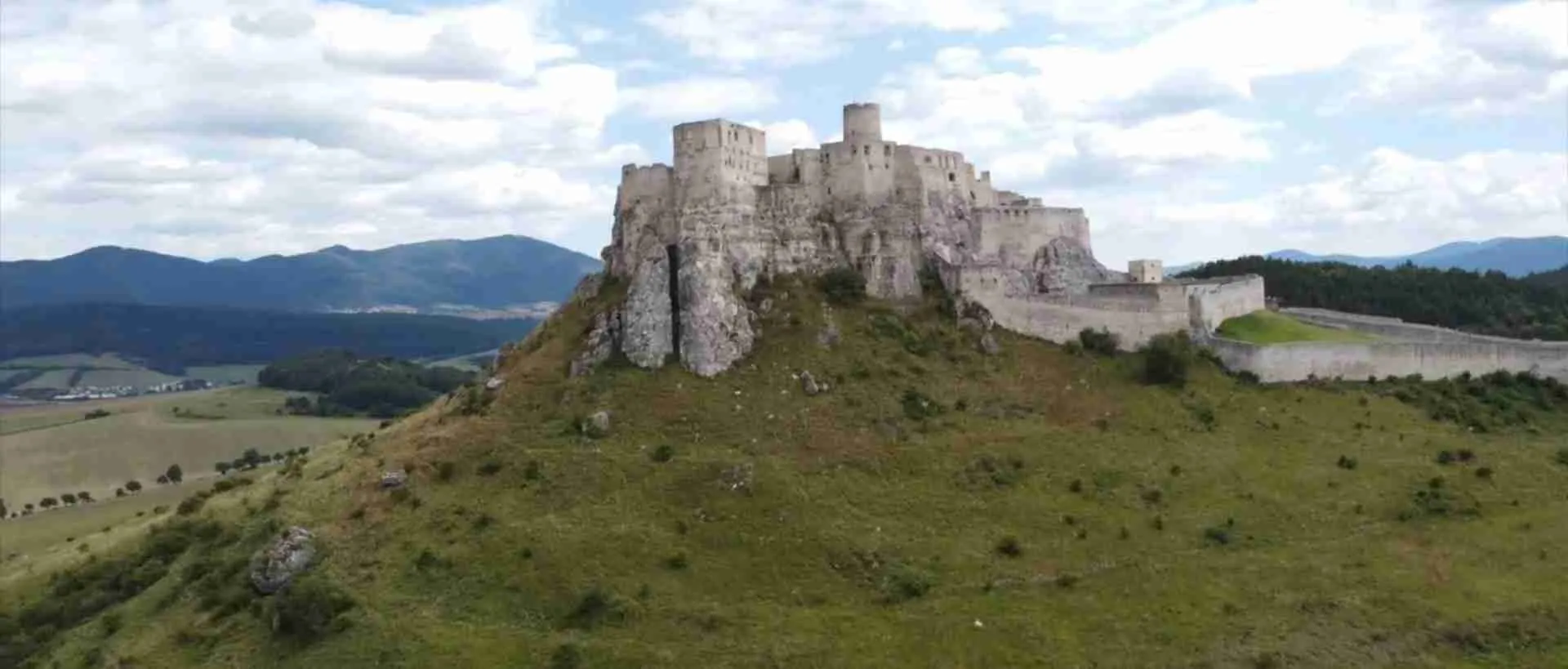
Spiš Castle Slovakia: Complete Travel Guide
Spiš Castle rises dramatically from a travertine hilltop in eastern Slovakia, commanding views across the Spiš region as one of the largest medieval castle complexes in Central Europe. Built in the 12th century and expanded through seven centuries of continuous occupation, this UNESCO World Heritage Site preserves an exceptional ensemble of military, political, and religious architecture that survived Tatar invasions, noble power struggles, and a devastating 1780 fire to stand today as Slovakia’s most iconic fortress. This comprehensive guide explores the castle’s complete history, architectural evolution, and cultural significance, revealing why this remarkable site attracts visitors from around the world.
Key Takeaways
- Massive Scale: Spiš Castle covers over 4 hectares (39,000 square meters), ranking among the six largest castle sites in Slovakia and one of the most extensive castle complexes in Central Europe
- Seven Centuries of History: Construction began around 1120, with continuous architectural development through Romanesque, Gothic, and Renaissance periods until the catastrophic 1780 fire ended habitation
- UNESCO Recognition: Inscribed in 1993 together with Spišská Kapitula, Žehra, and later extended to include Levoča, forming one of the most comprehensive medieval heritage ensembles in Eastern Europe
- Noble Dynasties: Hungarian kings controlled the castle until 1464, followed by the powerful Zápolya, Thurzó, and Csáky families who transformed it from fortress to aristocratic residence
- Film Location Fame: The castle’s dramatic ruins have appeared in major Hollywood productions including Dragonheart, The Last Legion, and The Lion in Winter
- Active Museum: Reconstructed sections house the Spiš Museum with exhibits showcasing medieval weapons, torture devices, archaeological finds, and the castle’s evolution across centuries
People Also Ask About Spiš Castle
Why is Spiš Castle historically significant?
Spiš Castle served as the political, administrative, economic, and cultural center of Szepes County (Spiš region) for over 650 years, controlling strategic territory at the northern frontier of the Kingdom of Hungary. The castle survived the 1241 Tatar invasion that devastated Central Europe, demonstrating the effectiveness of stone fortification technology. Its Romanesque and Gothic architecture remains remarkably intact despite the 1780 fire, providing exceptional evidence of medieval military engineering, residential development, and the evolution of defensive architecture. The castle’s continuous occupation by Hungarian kings and powerful noble families created a complete architectural record documenting changing defensive needs, residential preferences, and artistic styles from the 12th through 18th centuries.
What happened to Spiš Castle in 1780?
A devastating fire in 1780 gutted Spiš Castle’s interior structures, leaving only stone walls and towers standing and ending its inhabited history. The cause remains disputed among three main theories: the Csáky family intentionally burning the castle to reduce tax obligations (additional taxes applied to roofed buildings), lightning striking the fortress, or soldiers accidentally starting the fire while distilling moonshine. Regardless of origin, the Csáky family never rebuilt, instead relocating to newly constructed palaces in nearby Hodkovce and Spišský Hrhov. The castle remained exposed to weather for nearly two centuries, accelerating deterioration until partial reconstruction and conservation efforts began in the mid-20th century following UNESCO designation.
Can visitors explore inside Spiš Castle?
Visitors can explore Spiš Castle’s expansive grounds including the upper castle courtyard, palace ruins, defensive towers, residential quarters, and the late Gothic chapel. Reconstructed sections house the Spiš Museum with permanent exhibitions displaying medieval weaponry, feudal jurisdiction artifacts, archaeological discoveries from Stone Age through medieval periods, and restored areas including the castle kitchen. The museum provides context for understanding castle life, defensive capabilities, and architectural evolution. Walking paths connect different sections of the complex, allowing visitors to appreciate the castle’s massive scale and strategic position while enjoying panoramic views across the Spiš basin and surrounding countryside.
How do you get to Spiš Castle from nearby towns?
Spiš Castle sits approximately 1 kilometer east of the town of Spišské Podhradie. Visitors arriving by car can park in the free parking area at the castle’s base, followed by a steep 10-minute uphill walk to the entrance. Those using public transportation can take buses to Spišské Podhradie from regional centers like Levoča or Prešov, then either walk approximately one hour uphill to the castle or arrange local taxi service. The walking route from Spišské Podhradie follows a marked trail offering progressively impressive views as visitors ascend. The castle’s elevated position, while creating access challenges, provides the dramatic setting and defensive advantages that made this location strategically valuable for eight centuries.
Extended multi-day tours – 5+ days
Featured Slovakia Multi-Day Tour Packages

3 days
Slovakia 3-Day Discovery Tour
- ✓ Comprehensive Slovakia experience
- ✓ Expert local guides included
- ✓ All accommodation included
- ✓ Transportation provided

5 days
Slovakia 5-Day Highlights Experience
- ✓ Comprehensive Slovakia experience
- ✓ Expert local guides included
- ✓ All accommodation included
- ✓ Transportation provided

7 days
Slovakia 7-Day Cultural Journey
- ✓ Comprehensive Slovakia experience
- ✓ Expert local guides included
- ✓ All accommodation included
- ✓ Transportation provided

10 days
Slovakia 10-Day Complete Adventure
- ✓ Comprehensive Slovakia experience
- ✓ Expert local guides included
- ✓ All accommodation included
- ✓ Transportation provided
Multi-day tour packages powered by TourRadar. Prices and availability subject to change.
Introduction: Slovakia’s Most Iconic Medieval Fortress
Spiš Castle occupies a commanding position on a 200-meter travertine outcrop above the town of Spišské Podhradie in eastern Slovakia’s Spiš region. The site’s strategic value was recognized in prehistoric times, with archaeological evidence documenting Celtic fortifications on the same hill between the 1st and 2nd centuries. Roman coins discovered in caves beneath the castle suggest the location’s importance extended across multiple civilizations drawn to its defensive potential and control over surrounding valleys.
The medieval castle that dominates the site today began construction in the early 12th century, with the first written reference appearing in documents from 1120. This initial fortress served as a boundary fort positioned at the northern frontier of the Kingdom of Hungary, protecting against incursions from the north and establishing royal authority over the strategically important Spiš region. The stone construction represented advanced military technology for the period, when most Central European fortifications still employed wood as the primary building material.
Over the following seven centuries, Spiš Castle evolved from a simple boundary fortress into one of the largest and most sophisticated castle complexes in Central Europe. Each period of ownership brought architectural additions reflecting changing defensive technologies, residential expectations, and artistic styles. The Romanesque foundations expanded through Gothic renovations, Renaissance transformations, and Baroque modifications, creating a palimpsest of architectural history visible in the surviving walls, towers, and interior structures.
The castle’s recognition as a UNESCO World Heritage Site in 1993 acknowledged its outstanding universal value as one of the most extensive and well-preserved ensembles of 13th and 14th century military, political, and religious buildings in Eastern Europe. The UNESCO designation encompasses not just the castle itself but also the adjacent ecclesiastical settlement of Spišská Kapitula, the Church of the Holy Spirit in Žehra with its medieval wall paintings, and (following a 2009 extension) the historic town of Levoča with Master Paul’s altar. Together, these components form a complete picture of medieval settlement organization, religious administration, and artistic achievement in the Spiš region.
Historical Development and Ownership
12th-13th Century: Foundation and Early Fortification
The construction of Spiš Castle in the early 12th century coincided with the Hungarian Kingdom’s consolidation of control over northern territories. The fortress initially consisted of a central keep, defensive walls, and basic residential quarters sufficient to house a garrison and administrative officials. The Romanesque architecture of this early period emphasized functionality and defensive strength, with thick walls, narrow windows, and strategic positioning to maximize visibility and control over approaching routes.
The castle’s effectiveness as a defensive structure faced its greatest test during the Tatar invasion of 1241. While Mongol forces devastated much of Central Europe, Spiš Castle’s stone fortifications proved impervious to assault. The fortress survived intact, though seriously damaged by siege efforts, confirming the superiority of stone construction over traditional wooden fortifications. This survival enhanced the castle’s strategic importance and triggered the first major expansion phase.
During the second half of the 13th century, the castle underwent significant enlargement. Builders constructed a two-story Romanesque palace, a three-nave Romanesque-Gothic basilica, and expanded the defensive perimeter to create what architectural historians classify as the upper castle. These additions transformed Spiš Castle from a frontier garrison into a sophisticated administrative center capable of housing noble retinues, ecclesiastical officials, and the bureaucratic apparatus required to govern the Spiš County.
14th-15th Century: Gothic Expansion and Aristocratic Development
The 14th century brought another major expansion that doubled the castle’s area. Builders constructed a second extramural settlement beyond the original walls, creating additional defensive zones and accommodating the growing administrative and military personnel required to manage the expanding Spiš region. This concentric defensive system featured multiple gates, murder holes, and strategic choke points designed to slow attackers and maximize defensive advantages.
The 15th century marked the castle’s transformation from primarily military fortress to aristocratic residence. The complete rebuilding during this period heightened defensive walls, constructed a third extramural settlement, and added a late Gothic chapel around 1470. The Zápolya family, who received the castle as a gift from King Matthias Corvinus, commissioned extensive late Gothic renovations that created comfortable residential quarters, audience halls, and private chambers suitable for a powerful noble dynasty.
Štefan Zápoľský’s renovations in the second half of the 15th century particularly emphasized the castle’s residential character. He commissioned construction of a palace, a knight’s hall for ceremonial occasions, and the Chapel of St. Elisabeth for private devotions. These additions reflected Renaissance architectural principles that balanced defensive requirements with aesthetic considerations and residential comfort, creating spaces appropriate for courtly life, political negotiations, and the social display expected of major aristocratic households.
16th-17th Century: Renaissance Residence and Habsburg Control
The 16th and 17th centuries saw Spiš Castle function primarily as an aristocratic residence with diminishing military significance as warfare evolved beyond medieval siege tactics. The Thurzó family, who acquired the castle from 1531 to 1635 after the Habsburgs confiscated it from the Zápolya family, continued the trend of converting fortified spaces into comfortable living quarters. Renaissance architectural elements including decorative facades, formal gardens, and refined interior spaces transformed the fortress into a palace appropriate for one of Hungary’s most powerful noble families.
The Csáky family acquired Spiš Castle in 1638 and maintained ownership until 1945, representing the longest continuous occupation by a single dynasty. During their early tenure, the Csákys commissioned Baroque modifications including decorative elements, updated interior furnishings, and improvements to residential comfort. However, by the 18th century, the castle’s remote location and aging infrastructure made it increasingly unsuitable for aristocratic life as nobles preferred more accessible lowland palaces with modern amenities.
1780 Fire and Abandonment
The devastating fire of 1780 marked the definitive end of Spiš Castle’s occupied history. The exact cause remains uncertain, with three main theories competing for acceptance. The tax avoidance theory suggests the Csáky family deliberately burned the castle because Hungarian law imposed additional taxes on buildings with roofs, making the costly maintenance of the massive structure economically irrational. The lightning theory proposes a natural disaster ignited the fire during a storm. The moonshine theory holds that soldiers garrisoned in the castle accidentally started the blaze while illegally distilling alcohol.
Regardless of cause, the fire’s effects were catastrophic. The blaze consumed wooden roof structures, interior floors, furnishings, and decorative elements throughout the complex. Stone walls and towers survived but were left exposed to weather. The Csáky family made no attempt at reconstruction, instead relocating their principal residences to newly built palaces at Hodkovce near Žehra and Spišský Hrhov. Only a small garrison remained at the ruins briefly before the site was completely abandoned and began its gradual deterioration into the romantic ruins visible today.
Architectural Features and Layout
Upper Castle and Central Complex
The upper castle forms the oldest and most heavily fortified section of the complex, occupying the hilltop’s highest point. The central keep, dating to the 12th century, provided the last refuge during sieges and housed the castle’s most valuable possessions. Thick Romanesque walls built from local stone create a massive, intimidating presence designed to project power and discourage assault. Small windows placed high above ground level limited vulnerability while providing defensive positions for archers.
The Romanesque palace built in the 13th century represents one of Spiš Castle’s most architecturally significant structures. Originally three stories tall, the palace featured ceremonial halls, private chambers, and administrative offices. Gothic renovations in the 15th and 16th centuries added decorative elements, enlarged windows, and modernized interior spaces. Despite the 1780 fire’s damage, substantial sections of the palace walls survive, preserving enough architectural detail to understand the building’s original magnificence and functional organization.
Chapel of St. Elisabeth
The late Gothic chapel added around 1470 showcases the refined artistic sensibilities of 15th-century castle life. The chapel’s intimate scale suited private devotions for the noble family and their immediate household, contrasting with the larger basilica that served the broader castle community. Architectural details including ribbed vaulting, pointed arches, and decorative stonework demonstrate Gothic architectural principles applied to sacred space. Though damaged by fire, the chapel’s structural elements remain sufficiently intact to appreciate its original artistic achievement.
Defensive Fortifications and Gates
Spiš Castle’s defensive system evolved through multiple construction phases, creating concentric rings of fortification that forced attackers to breach successive barriers. The outermost walls enclosed the largest area, incorporating later residential and storage structures. Middle defensive zones featured murder holes, arrow slits, and strategic turns designed to slow advancing forces and maximize defenders’ advantages. The inner fortifications protecting the upper castle employed the thickest walls and most sophisticated defensive features.
Multiple gates controlled access between different sections of the castle complex. Each gate featured defensive elements including drawbridges, portcullises, and flanking towers allowing crossfire against attackers. The main entrance gate, positioned on the castle’s most accessible side, concentrated defensive architecture to create a formidable barrier. Secondary gates provided emergency exits and controlled movement of supplies, creating a circulation system that maintained security while accommodating the castle’s administrative and residential functions.
Residential Quarters and Support Buildings
The castle’s residential areas expanded significantly during the 15th and 16th centuries as the Zápolya and Thurzó families transformed the fortress into an aristocratic residence. Noble quarters featured larger windows for natural light, decorative architectural elements, and spatial arrangements appropriate for courtly life. Servants’ quarters, though more modest, occupied substantial portions of the complex, housing the extensive staff required to maintain aristocratic households.
Support buildings including kitchens, storage facilities, stables, armories, and workshops filled the lower courtyards. The reconstructed kitchen on display in the museum shows the scale of food preparation facilities needed to feed castle inhabitants, with massive fireplaces, storage areas, and work surfaces designed for producing meals for hundreds of people. These functional spaces, though less architecturally impressive than residential and ceremonial areas, reveal the practical organization required to sustain castle life.
Architectural Styles and Periods
Spiš Castle’s architectural evolution creates a physical timeline documenting changing building technologies and aesthetic preferences across seven centuries. The earliest Romanesque elements feature thick walls, round arches, barrel vaulting, and minimal decoration emphasizing structural strength and defensive capability. Gothic additions introduced pointed arches, ribbed vaults, larger windows, and decorative stonework that balanced military requirements with artistic expression.
Renaissance modifications visible in residential areas demonstrate the period’s emphasis on symmetry, proportion, and classical architectural vocabulary. Decorative details including carved stonework, refined doorways, and window treatments reflect humanist values that elevated aesthetic beauty alongside functional considerations. Baroque elements added during the Csáky ownership introduced dramatic decorative flourishes, though these were largely destroyed in the 1780 fire. The surviving architectural fragments create a complex palimpsest where multiple building periods remain visible, allowing visitors to trace the castle’s evolution through physical evidence embedded in walls and structures.
UNESCO World Heritage Designation
Inscription and Outstanding Universal Value
Spiš Castle received UNESCO World Heritage designation in 1993 as part of “Levoča, Spišský Hrad and the Associated Cultural Monuments,” with the site extended in 2009 to incorporate the historic town center of Levoča and the works of Master Paul. The inscription recognized the castle’s outstanding universal value as one of the largest and most complete ensembles of 13th and 14th century military, political, and religious buildings in Eastern Europe. The Romanesque and Gothic architecture has remained remarkably intact, providing exceptional documentation of medieval fortification design and aristocratic residential development.
The UNESCO evaluation emphasized Spiš Castle as an outstanding example of a medieval settlement type that was relatively common in Central Europe but of which almost none have survived in such complete condition with equivalent integrity. The combination of the castle, the ecclesiastical settlement at Spišská Kapitula, the Church of the Holy Spirit in Žehra with medieval wall paintings, and Levoča’s Renaissance town center creates a comprehensive picture of medieval political, religious, military, mercantile, and cultural functions operating within an integrated regional system.
Conservation Challenges and Management
The conservation of Spiš Castle presents significant technical challenges due to the structure’s massive scale, advanced deterioration, and exposure to harsh weather conditions. Partial reconstruction began in the second half of the 20th century, focusing on stabilizing walls at risk of collapse, reconstructing sections of roofing to protect interior spaces, and creating safe access for visitors. Conservation work balances preservation of authentic fabric with the need to prevent further deterioration and ensure visitor safety.
The Spiš Museum, a division of the Slovak National Museum, administers the castle and implements conservation programs guided by UNESCO standards and national heritage regulations. Management priorities include ongoing structural stabilization, archaeological research to document the castle’s development, interpretation programs to educate visitors, and monitoring systems to detect emerging conservation problems. The castle’s designation as a National Cultural Monument provides legal protection and funding mechanisms supporting long-term preservation.
Archaeological Research Programs
Extensive archaeological research conducted at Spiš Castle since the mid-20th century has revealed substantial information about the site’s prehistoric occupation, medieval development, and daily life across different periods. Excavations uncovered Celtic artifacts from the 1st-2nd century fortification that preceded the medieval castle, Roman coins suggesting trade connections or military presence, and medieval objects documenting castle life from the 12th through 18th centuries.
Archaeological work continues to address specific research questions about construction chronology, building techniques, material sources, and functional organization of different castle zones. Stratigraphic excavation of floor layers, refuse deposits, and buried foundations provides evidence for dating construction phases and understanding how the castle evolved. Artifact analysis reveals patterns of trade, craft production, dietary practices, and material culture that bring historical records to life with physical evidence of how castle inhabitants lived, worked, and organized their society.
The Spiš Museum and Visitor Experience
Permanent Exhibitions
The Spiš Museum occupies reconstructed sections of the castle, presenting permanent exhibitions that interpret the site’s history, architecture, and cultural significance. The medieval arms collection displays weapons, armor, and military equipment documenting defensive technology evolution from simple swords and chain mail to sophisticated crossbows and early firearms. These exhibits explain how changing military technology influenced castle design and the balance between offensive and defensive capabilities.
The feudal jurisdiction exhibit explores the castle’s role as an administrative center, displaying documents, seals, and legal instruments that governed the Spiš region. Interpretive materials explain the hierarchical social organization of medieval society, the powers exercised by castle governors and nobles, and the legal systems that regulated everything from criminal justice to property rights. Torture devices on display, while disturbing, provide honest documentation of judicial practices and social control methods employed in medieval justice systems.
Archaeological exhibits showcase discoveries from various excavation campaigns, including Stone Age tools, Celtic artifacts, Roman coins, and medieval domestic objects. These displays demonstrate the site’s continuous human occupation across millennia and place the medieval castle within a longer chronological context. Pottery, coins, jewelry, and everyday objects reveal details about trade networks, craft production, and domestic life that complement documentary sources.
Reconstructed Castle Kitchen
The reconstructed castle kitchen stands as one of the museum’s most popular exhibits, offering tangible evidence of how castle inhabitants prepared and consumed food. Massive fireplaces capable of roasting whole animals, work surfaces for food preparation, storage areas for provisions, and cooking implements demonstrate the scale of operations required to feed castle populations that sometimes numbered in the hundreds. Interpretive displays explain medieval cooking techniques, seasonal food preservation methods, and the social hierarchies expressed through different qualities of food and dining arrangements.
Access Routes and Visitor Facilities
Visitors approach Spiš Castle via two main routes, each offering different perspectives on the fortress. The western approach from Spišské Podhradie village follows a marked walking trail that climbs steadily for approximately one hour, providing increasingly dramatic views of the castle’s defensive position and the Spiš basin below. This traditional approach allows visitors to appreciate how the castle dominated the surrounding landscape and understand the defensive advantages of the elevated location.
The eastern approach via automobile road leads to a parking area significantly closer to the castle entrance, reducing the uphill walk to approximately 10 minutes. While more convenient, this route sacrifices some of the dramatic reveal achieved through the longer walking approach. Both routes converge at the main entrance where visitors purchase tickets and access the castle grounds.
Visitor facilities at the castle include ticket offices, restrooms, and a small gift shop selling books, postcards, and souvenirs related to the site’s history. Interpretive signage throughout the complex provides information in multiple languages about architectural features, historical events, and building functions. The site’s steep terrain and uneven surfaces require reasonable physical fitness and appropriate footwear, though the most important areas remain accessible to most visitors willing to navigate stairs and inclined paths.
Associated Cultural Monuments
Spišská Kapitula: The Vatican of Slovakia
Spišská Kapitula, often called the “Vatican of Slovakia,” sits immediately adjacent to Spiš Castle as a self-contained ecclesiastical settlement enclosed by defensive walls built between 1662 and 1665. The settlement consists of the Cathedral of St. Martin, a former monastery, seminary buildings, and approximately 30 medieval houses arranged along a single main street. This preserved ecclesiastical community demonstrates the spatial organization of religious institutions and the architectural requirements of church administration during the medieval period.
The Cathedral of St. Martin combines Romanesque foundations with Gothic architectural elaborations, creating a spiritual center for the Spiš diocese. The cathedral’s architecture reflects both religious functions and the political power exercised by church officials who administered extensive territories from this fortified settlement. The preservation of residential houses for canons and church officials provides complete documentation of how ecclesiastical communities organized their physical and social space, maintaining separation from secular settlements while exercising significant influence over regional affairs.
Church of the Holy Spirit in Žehra
The Church of the Holy Spirit in Žehra, located in one of the earliest Slovak settlements in the region, preserves exceptional medieval wall paintings that demonstrate the sophistication of religious art in rural Central European communities. These frescoes, executed by skilled artists, depict biblical scenes, saints, and theological concepts using techniques and iconographic programs that connected provincial churches to broader European artistic movements. The paintings’ preservation within the original church structure provides rare documentation of medieval religious art in situ, allowing visitors to experience the artworks in their intended architectural and liturgical context.
Levoča: Renaissance Town and Master Paul’s Altar
The 2009 extension of the UNESCO site incorporated the historic town center of Levoča, founded in the 13th and 14th centuries as a merchant settlement on trade routes connecting Hungary and Poland. The town’s fortification walls, gates, and towers create a preserved medieval urban landscape where Renaissance burgher houses surround the main square. The spatial organization of streets, market areas, and public buildings demonstrates medieval urban planning principles and the economic structures that supported mercantile communities.
The Basilica of St. James houses the site’s most celebrated artistic treasure: Master Paul of Levoča’s wooden altar, completed between 1506 and 1517. This late Gothic masterpiece reaches 18.62 meters in height, officially recognized as the tallest wooden altar in the world. The altar’s intricate polychrome carvings depict biblical narratives with exceptional artistic skill, representing the pinnacle of late Gothic wood carving in Central Europe. The altar’s preservation in its original location within the basilica allows visitors to appreciate the work as Master Paul intended, integrated with the church’s architectural and liturgical program.
Cultural Significance and Popular Culture
Film Location Heritage
Spiš Castle’s dramatic ruins and commanding hilltop position have attracted international film productions seeking authentic medieval settings. The 1996 fantasy film Dragonheart featured the castle prominently, introducing the site to global audiences and establishing its cinematic reputation. Subsequent productions including The Last Legion, The Lion in Winter, Kull the Conqueror, and Phoenix capitalized on the castle’s photogenic qualities and the logistical advantages of filming at a protected historic site with minimal modern intrusions.
The castle’s film appearances have created a secondary layer of cultural significance, transforming it from a regional heritage site into a location recognized by international audiences. This pop culture connection attracts visitors who might not otherwise engage with medieval history, while generating economic benefits for the local community and raising awareness of Slovakia’s cultural heritage. The film industry’s investment in the site has supported conservation efforts and infrastructure improvements that benefit both productions and regular visitors.
Regional Identity and Tourism
Spiš Castle functions as the most recognizable symbol of the Spiš region, appearing on tourism materials, regional branding, and cultural promotional campaigns. The castle’s iconic silhouette has become synonymous with eastern Slovak identity, representing historical continuity and cultural heritage that connects contemporary communities to medieval predecessors. Local festivals, historical reenactments, and cultural events at the castle strengthen these connections and maintain living engagement with heritage beyond passive preservation.
Tourism to Spiš Castle generates significant economic benefits for surrounding communities, supporting hotels, restaurants, guides, transportation services, and craft producers. The castle attracts over 100,000 visitors annually, with peak numbers exceeding 170,000 during some years. This visitor economy provides employment, justifies infrastructure investments, and creates stakeholder support for ongoing conservation efforts. The sustainable management of heritage tourism balances economic benefits with preservation requirements, ensuring the castle remains viable for future generations while supporting present-day communities.
Visiting Spiš Castle
Practical Information
Spiš Castle operates seasonally with extended hours during the May-September tourist season. Standard opening hours run from 9:00 AM to 7:00 PM daily during peak months, with reduced schedules during shoulder seasons and winter closures during the harshest weather months. Visitors should verify current operating hours through the official Slovakia Travel website or the Spiš Museum, as schedules may change based on weather conditions, conservation work, or special events.
Admission fees support ongoing conservation efforts and museum operations, with separate pricing for adults, children, students, and seniors. The ticket price includes access to all open areas of the castle complex and the permanent museum exhibitions. Guided tours in multiple languages are available for additional fees, providing expert interpretation of the castle’s history, architecture, and cultural significance. Audio guides offer self-paced alternatives for visitors preferring independent exploration with professional narration.
Transportation Options
Reaching Spiš Castle requires navigating to the town of Spišské Podhradie, which serves as the access point for all approaches to the fortress. Visitors traveling by automobile can reach Spišské Podhradie via the D1 highway connecting major Slovak cities, with clear signage directing traffic to the castle parking area. The free parking lot sits at the castle’s base, eliminating parking fees while requiring the 10-minute uphill walk to the entrance.
Public transportation users can take buses from regional centers including Levoča, Kežmarok, and Prešov to Spišské Podhradie. From the town center, the walking route to the castle takes approximately one hour along a marked trail. Local taxi services offer transportation to the parking area for visitors unwilling or unable to make the extended uphill walk. The lack of public transportation directly to the castle parking area reflects the site’s rural location and limited local transit infrastructure.
Best Times to Visit
Late spring (May-June) and early autumn (September-October) provide optimal conditions for visiting Spiš Castle. These periods offer pleasant temperatures for walking and exploring, fewer crowds than peak summer months, and clear weather that showcases the castle against blue skies and the surrounding landscape. Summer months (July-August) bring maximum visitor numbers and warmest temperatures, creating crowded conditions but ensuring full operating hours and all facilities open.
Weather conditions significantly impact the visitor experience at Spiš Castle due to the exposed hilltop location. Strong winds common at elevated positions can create uncomfortable conditions even during otherwise pleasant weather. Rain makes stone surfaces slippery and limits outdoor exploration. Visitors should check weather forecasts before visiting and prepare for conditions that may differ substantially from lowland areas. The castle’s dramatic appearance during stormy weather or under snow cover offers photographic opportunities but may limit comfortable exploration.
Photography and Scenic Views
Spiš Castle provides exceptional photography opportunities from multiple vantage points both within the castle complex and from surrounding viewpoints. The hilltop position offers 360-degree panoramic views across the Spiš basin, with the High Tatras mountains visible on clear days to the north. Sunrise and sunset create particularly dramatic lighting conditions that enhance the romantic quality of the ruins and produce striking photographs.
External viewpoints in Spišské Podhradie and along approaching roads allow photographers to capture the castle’s commanding position and architectural scale. The village of Žehra to the east provides classic angles featuring the Church of the Holy Spirit in the foreground with the castle rising behind. The instructive footpath Sivá Brada – Dreveník, featuring eight information boards, guides visitors through the travertine hills surrounding the castle while offering varied perspectives on the fortress and natural landscape features.
Frequently Asked Questions
How long does it take to visit Spiš Castle thoroughly?
A thorough visit to Spiš Castle including the museum exhibitions, exploration of accessible ruins, and appreciation of panoramic views requires 2-3 hours. Visitors interested primarily in the main highlights can complete a basic tour in 1.5 hours, while those with deeper interest in medieval architecture, archaeological exhibits, or photography may spend 4 hours or more. The combination of Spiš Castle, Spišská Kapitula, and the Church of the Holy Spirit in Žehra creates a full-day itinerary when including travel between sites and meal breaks.
Is Spiš Castle safe to explore with children?
Spiš Castle welcomes families with children and offers engaging experiences for young visitors, though parents must supervise children carefully due to uneven surfaces, steep stairs, and areas where medieval fortifications lack modern safety barriers. The castle’s dramatic setting, opportunity to explore genuine ruins, and museum exhibits featuring medieval weapons capture children’s imaginations effectively. The uphill approach requires reasonable physical fitness for children, but most school-age children can manage the walk with breaks. Strollers are impractical for both the approach and the castle grounds due to stairs and rough terrain.
What other attractions are near Spiš Castle?
Spiš Castle sits at the center of a region rich in UNESCO World Heritage Sites and cultural attractions. The historic town of Levoča lies 15 kilometers to the west, featuring Master Paul’s wooden altar and preserved Renaissance architecture. The medieval town of Bardejov, another UNESCO site, sits approximately 60 kilometers to the north. The Spiš region contains numerous smaller castles, manor houses, and wooden churches that extend the medieval heritage experience. The High Tatras mountains to the north offer hiking, skiing, and alpine scenery within easy day-trip range.
Can visitors stay overnight near Spiš Castle?
The town of Spišské Podhradie offers limited accommodation options including small hotels, pensions, and private rooms in local residences. The larger town of Levoča, 15 kilometers away, provides a broader selection of hotels and restaurants within a UNESCO World Heritage town center. Many visitors base themselves in Levoča and make day trips to Spiš Castle and other regional attractions. Košice, Slovakia’s second-largest city located 70 kilometers to the south, offers the widest accommodation selection and serves as a regional hub for exploring eastern Slovakia’s heritage sites.
What makes Spiš Castle different from other European castles?
Spiš Castle distinguishes itself through exceptional scale, remarkable architectural preservation despite the 1780 fire, and comprehensive documentation of seven centuries of continuous development. Unlike many European castles heavily restored to pristine condition, Spiš Castle maintains its romantic ruined state that allows visitors to appreciate authentic medieval fabric and understand deterioration processes. The castle’s integration within a UNESCO site encompassing ecclesiastical settlements, medieval towns, and religious art creates a complete medieval landscape rather than an isolated monument. The combination of size, architectural quality, and comprehensive regional context makes Spiš Castle uniquely significant among Central European medieval fortresses.
Are there any special events held at Spiš Castle?
Spiš Castle hosts cultural events including historical reenactments, medieval festivals, classical music concerts, and theatrical performances that utilize the dramatic setting and historical atmosphere. These events typically occur during summer months when weather permits outdoor activities and visitor numbers justify special programming. Concert performances take advantage of the castle’s acoustic properties and atmospheric setting, creating memorable experiences that blend cultural programming with heritage appreciation. Event schedules vary annually, with information available through the Spiš Museum and regional tourism offices. Some events require separate tickets beyond standard admission fees.
How did Spiš Castle survive the Tatar invasion?
Spiš Castle survived the 1241 Tatar invasion through its stone construction, strategic hilltop position, and defensive design that made assault extremely costly and time-consuming. Stone fortifications proved vastly superior to the wooden palisades protecting most Central European settlements, allowing the castle to withstand siege attempts that would have quickly overcome timber defenses. The elevated position prevented attackers from using siege towers and battering rams effectively, forcing them to assault uphill against defenders with superior positions. Adequate water sources and food storage within the castle enabled prolonged resistance. The Tatar forces, operating on a timeline requiring rapid conquest to maintain momentum, bypassed the castle after determining it would resist assault, demonstrating the effectiveness of sophisticated defensive architecture against even formidable military forces.
What happened to the Csáky family after they left Spiš Castle?
The Csáky family relocated to newly constructed palaces in nearby villages following the 1780 fire, maintaining their aristocratic status and landholdings in the region. The family built residences at Hodkovce near Žehra and Spišský Hrhov, more comfortable and accessible than the aging hilltop fortress. These new palaces incorporated modern architectural features and amenities that reflected 18th-century preferences for symmetrical facades, formal gardens, and convenient lowland locations over defensive medieval fortresses. The Csáky family retained ownership of Spiš Castle’s ruins until 1945, when properties of former aristocratic families were nationalized by the Czechoslovak state. The castle subsequently became state property, eventually passing to the management of the Slovak National Museum.
Can visitors see all areas of Spiš Castle?
Visitors can access major sections of Spiš Castle including the upper castle courtyard, palace ruins, several towers, the chapel, and museum exhibition spaces, though some areas remain closed for safety reasons or ongoing conservation work. The most dangerous ruined sections where collapse risks exist are blocked from public access through barriers and warning signs. Archaeological excavation areas may be temporarily restricted during active research campaigns. The extent of accessible areas may expand as conservation work stabilizes additional structures, or contract if deterioration creates new safety concerns. Guided tours sometimes access restricted areas not available to independent visitors, providing opportunities to see portions of the castle closed to general admission.
What research is currently being conducted at Spiš Castle?
Ongoing research at Spiš Castle encompasses archaeological excavation, architectural documentation, conservation science, and historical studies utilizing the castle as a case study for medieval fortification evolution. Archaeological teams continue investigating unexcavated areas to understand construction chronology, identify building functions, and recover artifacts documenting daily life. Architectural historians study building techniques, trace stylistic influences, and document restoration work for future conservation planning. Conservation scientists analyze materials, assess deterioration mechanisms, and develop treatments appropriate for preserving historic fabric while ensuring structural stability. This multidisciplinary research generates new knowledge about medieval society while supporting evidence-based conservation decisions.