Slovakia UNESCO Sites: Complete Travel Guide
Slovakia preserves eight UNESCO World Heritage Sites that showcase the nation’s remarkable cultural heritage and natural beauty, from the largest medieval castle complex in Central Europe to pristine ancient beech forests. These sites represent centuries of architectural innovation, traditional village life, and geological wonders that together tell the story of Central European civilization. This comprehensive guide explores each UNESCO site in detail, revealing the history, significance, and unique characteristics that earned them international recognition.
Key Takeaways
- Eight UNESCO Sites: Slovakia protects six cultural and two natural World Heritage Sites, with three transnational properties shared with neighboring countries
- Medieval Heritage Dominance: The majority of cultural sites preserve exceptional examples of medieval towns, castles, and wooden architecture from the 13th-18th centuries
- Spiš Castle Complex: One of the largest castle compounds in Central Europe spans over 4 hectares and combines with Levoča to form the most visited UNESCO site in Slovakia
- Unique Wooden Architecture: Eight wooden churches in the Carpathian Mountain Area represent rare surviving examples of traditional religious architecture built without nails
- Natural Treasures: Ancient beech forests and karst cave systems demonstrate exceptional biodiversity and geological significance recognized across multiple countries
- Living Heritage: Vlkolínec village maintains traditional folk architecture and mountain settlement patterns unchanged for centuries
People Also Ask About Slovakia UNESCO Sites
How many UNESCO World Heritage Sites are in Slovakia?
Slovakia contains eight UNESCO World Heritage Sites inscribed between 1993 and 2021. The collection includes six cultural sites (Vlkolínec, Banská Štiavnica, Spiš Castle with Levoča, Bardejov, Wooden Churches, and Danube Limes) and two natural sites (Caves of Aggtelek Karst and Slovak Karst, Ancient Beech Forests). Three of these sites are transnational properties shared with Hungary, Austria, Germany, and 17 other European countries, demonstrating the interconnected heritage of Central Europe.
Which is the oldest UNESCO site in Slovakia?
Three Slovak UNESCO sites received designation simultaneously in 1993, making them the country’s oldest World Heritage properties: Vlkolínec village, the Historic Town of Banská Štiavnica with Technical Monuments, and Levoča with Spiš Castle and Associated Cultural Monuments. This triple inscription immediately following Slovakia’s ratification of the UNESCO Convention established the foundation of the nation’s World Heritage portfolio and recognized the exceptional preservation of medieval heritage across different settlement types.
What makes Spiš Castle significant among European castles?
Spiš Castle ranks among the largest castle complexes in Central Europe, covering over 4 hectares (39,000 square meters) on a travertine hilltop. The castle preserves one of the most extensive ensembles of 13th and 14th century military, political, and religious buildings in Eastern Europe, with Romanesque and Gothic architecture remaining remarkably intact despite a devastating 1780 fire. The UNESCO site extends to include the ecclesiastical settlement of Spišská Kapitula, the Church of the Holy Spirit in Žehra with medieval wall paintings, and the historic town of Levoča with Master Paul’s 18.6-meter wooden altar—the tallest Gothic wooden altar in the world.
Are Slovakia’s UNESCO sites easily accessible for visitors?
Most Slovak UNESCO sites offer excellent accessibility from major cities and transportation hubs. Banská Štiavnica, Bardejov, and Levoča function as complete historic towns with accommodations and visitor facilities. Spiš Castle sits 10 minutes uphill from parking areas or an hour’s walk from Spišské Podhradie village. Vlkolínec connects to Ružomberok by road. The wooden churches scatter across northern and eastern Slovakia, requiring dedicated transportation but rewarding visitors with authentic rural settings. The Caves of Aggtelek Karst offer guided tours with visitor centers at multiple cave entrances.
Extended multi-day tours – 5+ days
Featured Slovakia Multi-Day Tour Packages

3 days
Slovakia 3-Day Discovery Tour
- ✓ Comprehensive Slovakia experience
- ✓ Expert local guides included
- ✓ All accommodation included
- ✓ Transportation provided

5 days
Slovakia 5-Day Highlights Experience
- ✓ Comprehensive Slovakia experience
- ✓ Expert local guides included
- ✓ All accommodation included
- ✓ Transportation provided

7 days
Slovakia 7-Day Cultural Journey
- ✓ Comprehensive Slovakia experience
- ✓ Expert local guides included
- ✓ All accommodation included
- ✓ Transportation provided

10 days
Slovakia 10-Day Complete Adventure
- ✓ Comprehensive Slovakia experience
- ✓ Expert local guides included
- ✓ All accommodation included
- ✓ Transportation provided
Multi-day tour packages powered by TourRadar. Prices and availability subject to change.
Introduction: Slovakia’s UNESCO World Heritage Portfolio
Slovakia ratified the UNESCO World Heritage Convention on March 31, 1993, inheriting its status from the former Czechoslovakia. Within months of ratification, three exceptional sites received immediate recognition, establishing Slovakia’s commitment to preserving its cultural and natural heritage. The subsequent three decades added five more sites to the UNESCO list, creating a portfolio that spans medieval fortifications, traditional mountain villages, innovative mining technologies, religious architecture, and pristine natural environments.
The eight UNESCO World Heritage Sites in Slovakia demonstrate the nation’s position at the crossroads of Central European civilization. Cultural sites preserve the legacy of Hungarian Kingdom administration, German merchant settlement, mining innovation during the Renaissance, and traditional Slovak folk culture. Natural sites protect geological formations and forest ecosystems that extend across national borders, emphasizing the shared environmental heritage of the Carpathian region.
Three transnational sites—the Caves of Aggtelek Karst and Slovak Karst (shared with Hungary), the Ancient and Primeval Beech Forests of the Carpathians (shared with 17 countries), and the Frontiers of the Roman Empire – The Danube Limes (shared with Austria and Germany)—demonstrate international cooperation in heritage preservation. These properties recognize that cultural and natural heritage transcends modern political boundaries, protecting resources that belong to all of humanity.
The most recent addition to Slovakia’s UNESCO portfolio came in 2021 with the inscription of the Danube Limes, adding Roman frontier heritage to the predominantly medieval cultural landscape. This diversification of heritage types strengthens Slovakia’s representation within the World Heritage system while maintaining the nation’s core identity as a guardian of Central European medieval civilization and Carpathian natural treasures.
Levoča, Spišský Hrad and the Associated Cultural Monuments
The Castle Complex
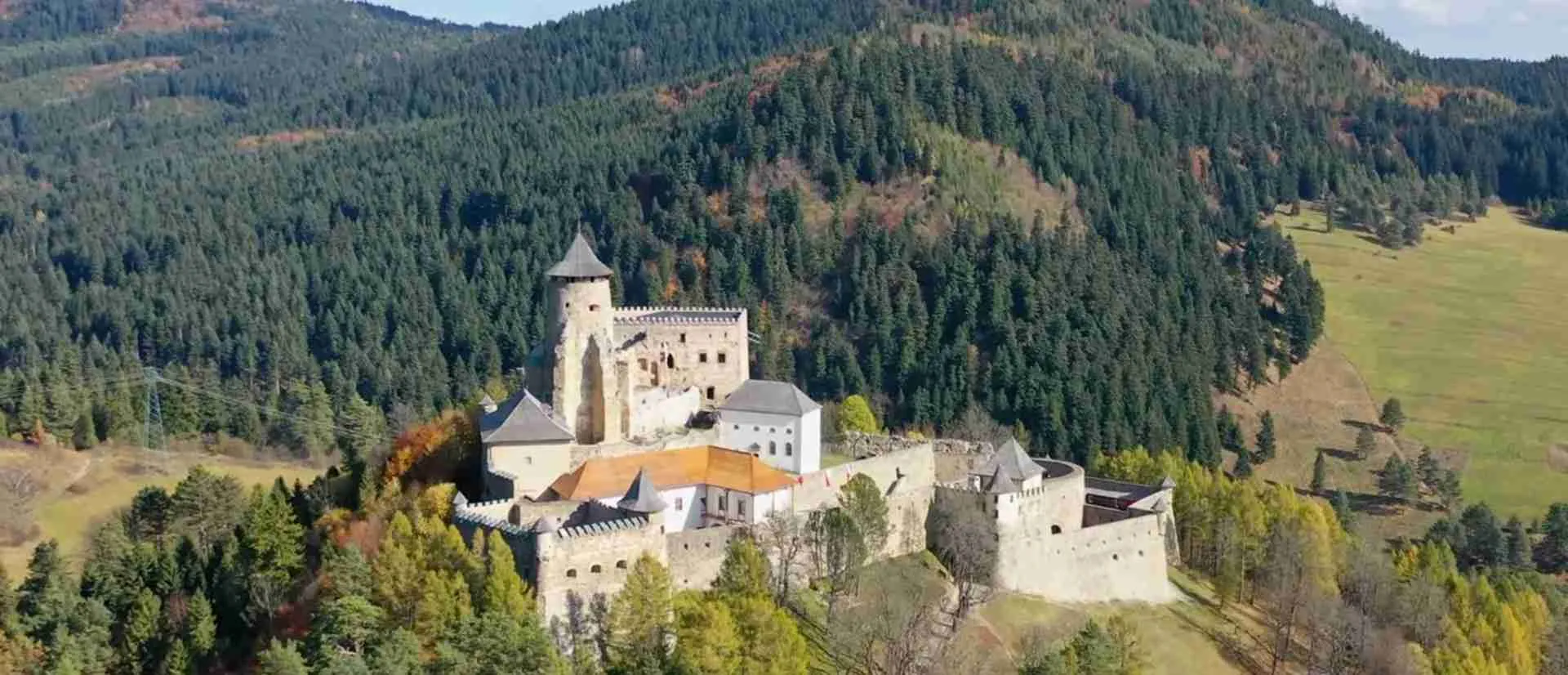
Spiš Castle (Spišský hrad) stands as one of the largest castle sites in Central Europe, occupying over 4 hectares on a travertine hill above the town of Spišské Podhradie. Construction began in the early 12th century, with the first written reference dating to 1120. The castle served initially as a boundary fortress on the northern frontier of the Kingdom of Hungary, protecting against incursions from the north and establishing royal authority over the strategically important Spiš region.
The castle’s architectural evolution reflects changing defensive needs and residential preferences across seven centuries. The original Romanesque fortifications expanded during the 13th century with the addition of a two-story palace and a three-nave basilica. A second extramural settlement doubled the castle’s area in the 14th century, creating multiple defensive zones. The most significant transformation occurred during the 15th century under Štefan Zápoľský, who commissioned late Gothic renovations including a chapel and converted the upper castle into a comfortable aristocratic residence.
Ownership of Spiš Castle transferred among the most powerful families in Hungarian history. Before 1464, Hungarian kings controlled the fortress directly. The Zápolya family held the castle from 1464 to 1528, followed by the Thurzó family (1531-1635) and the Csáky family (1638-1945). Each dynasty left architectural marks, adding Renaissance palaces, defensive improvements, and residential quarters that transformed the military fortress into a sophisticated noble residence.
The devastating fire of 1780 ended the castle’s inhabited history and created the romantic ruins visible today. The cause of the blaze remains disputed—theories range from the Csáky family intentionally burning the castle to reduce tax obligations on roofed buildings, to lightning strikes, to soldiers accidentally starting the fire while distilling moonshine. Regardless of origin, the fire gutted the interior structures, leaving only stone walls and towers standing. The Csáky family never rebuilt, instead relocating to newly constructed palaces in nearby Hodkovce and Spišský Hrhov.
Spišská Kapitula: The Vatican of Slovakia
Immediately adjacent to Spiš Castle sits Spišská Kapitula, an exceptionally well-preserved ecclesiastical settlement often called the “Vatican of Slovakia.” This walled community consists of the Cathedral of St. Martin, a former monastery, a seminary, and approximately 30 medieval houses arranged along a single street. Defensive walls built between 1662 and 1665 enclose the entire complex, preserving the medieval urban fabric intact.
The Cathedral of St. Martin dominates the settlement, combining Romanesque foundations with Gothic architectural elements. The cathedral served as the seat of the Spiš diocese and housed the ecclesiastical administration of the region. Canons and church officials occupied the surrounding houses, creating a self-contained religious community separated from secular settlement patterns. The preservation of this ecclesiastical town within its original walls provides exceptional insight into medieval church organization and the spatial separation of religious and civilian authority.
Žehra and Medieval Wall Paintings
The Church of the Holy Spirit in Žehra, one of the earliest Slovak settlements, completes the UNESCO site’s religious heritage. The church preserves high-quality medieval wall paintings that demonstrate the sophistication of religious art in rural Central European communities. These frescoes, protected within the original church structure, showcase artistic techniques and religious iconography that connected remote villages to broader European artistic movements.
Levoča: Renaissance Town and Master Paul’s Altar
The 2009 extension of the UNESCO site incorporated the historic town center of Levoča, founded in the 13th and 14th centuries within fortifications that still surround the old town. The main square preserves a remarkable collection of Renaissance burgher houses, demonstrating the prosperity of this medieval merchant town positioned on important trade routes between Hungary and Poland. Three gates—Košice Gate, Menhard Gate, and Polish Gate—punctuate the 2.5-kilometer town walls, controlling access to the urban center.
The Basilica of St. James, Slovakia’s second-largest church, houses the site’s most celebrated treasure: Master Paul of Levoča’s wooden altar. Completed between 1506 and 1517, this late Gothic masterpiece reaches 18.62 meters in height, officially recognized as the tallest wooden altar in the world. The altar’s intricate polychrome carvings depict biblical scenes with exceptional artistry, representing the pinnacle of late Gothic wood carving in Central Europe. Master Paul’s work demonstrates the technical and artistic sophistication achieved in provincial Slovak towns during the Renaissance.
Levoča’s main square also features the wrought-iron “Cage of Shame,” a 17th-century public punishment device that served as a deterrent for miscreants. A plaque on one of the square’s houses commemorates the printing and publication of Jan Comenius’s Orbis Pictus, one of the most important educational works of the early modern period, connecting this provincial town to broader intellectual currents of European Enlightenment.
Historic Town of Banská Štiavnica and the Technical Monuments
Mining Heritage and Urban Development
Banská Štiavnica represents one of the oldest mining towns in Slovakia, established in the 13th century when silver and gold deposits attracted settlers to the Štiavnické Vrchy mountains. The town’s development mirrors the evolution of European mining technology and the scientific innovation that transformed mineral extraction from medieval manual labor to early modern industrial processes. The prosperity generated by mining created a unique urban landscape where Renaissance palaces, 16th-century churches, elegant town squares, and castles intermingle with technical monuments documenting mining and metallurgical activities.
The town center preserves its historic character with minimal modern intrusions, demonstrating how mining wealth shaped urban architecture and social organization. The Old Castle and New Castle occupy adjacent hills overlooking the town, providing strategic positions for controlling mining operations and protecting mineral wealth. These fortifications evolved from defensive structures into symbolic representations of municipal power, featuring architectural elements that balanced military functionality with aesthetic grandeur.
Technical Innovations and Mining Infrastructure
The technical monuments surrounding Banská Štiavnica demonstrate groundbreaking innovations in mining engineering and water management. The region pioneered the use of gunpowder in mining operations during the 17th century, revolutionizing ore extraction across Europe. Complex water management systems developed to drain mine shafts and power machinery, creating artificial lakes and sophisticated canal networks that still function today.
The Open-Air Mining Museum allows visitors to enter original mine shafts and tunnels, experiencing firsthand the working conditions and technical challenges miners faced. These underground spaces preserve mining equipment, show the evolution of extraction techniques, and demonstrate the dangerous conditions that made mining one of medieval Europe’s most hazardous occupations. The museum’s guided tours explain how Banská Štiavnica became a center for mining education, attracting scientists and engineers who advanced metallurgical knowledge throughout the Renaissance and Enlightenment periods.
The combination of urban heritage and technical monuments creates a complete picture of how mining shaped not just economic development but also scientific advancement, education, and social organization. Banská Štiavnica functioned as a laboratory for mining innovation, and the techniques developed here spread throughout Europe, influencing industrial development across the continent.
Bardejov Town Conservation Reserve
Medieval Urban Planning and Gothic Architecture
Bardejov preserves the most complete Gothic townscape in Slovakia, with defensive walls, burgher houses, religious buildings, and public spaces maintaining their medieval arrangement largely intact. Founded in the 13th century and granted town privileges in the 14th century, Bardejov developed as a trading center positioned along the route connecting the Carpathian Mountains between Hungary and Poland. This strategic location brought prosperity that funded the construction of impressive architectural monuments.
The rectangular main square demonstrates 13th-century European urban planning principles, with standardized lot divisions creating a regular street pattern around the central marketplace. Classical Renaissance houses surround the square, their facades displaying the wealth and artistic aspirations of Bardejov’s merchant class. The harmonious proportions and consistent architectural language create a unified urban space that transports visitors to the medieval commercial world.
Basilica of St. Egidius and Religious Art
The Gothic Basilica Minor of St. Egidius dominates the town square, its construction spanning the 14th century. The basilica houses eleven Gothic altars, creating one of the most significant collections of medieval religious art in Slovakia. These altars demonstrate the evolution of Gothic artistic styles and the theological priorities of different periods, with carved figures, painted panels, and gilded details showcasing the craftsmanship available in prosperous medieval towns.
The Town Hall, positioned prominently on the square, served as the center of municipal administration and commercial regulation. The building’s architecture reflects the civic pride and administrative sophistication of medieval Slovak towns, with rooms designed for council meetings, judicial proceedings, and record keeping. The preservation of original documents and artifacts provides detailed insights into medieval urban governance and economic organization.
Jewish Heritage Quarter
Bardejov preserves an exceptional Jewish heritage quarter, including an 18th-century complex of spa buildings and a synagogue. This architectural ensemble demonstrates the multicultural character of medieval and early modern Slovak towns, where Christian and Jewish communities coexisted with distinct institutions and cultural practices. The Jewish quarter’s preservation reveals the economic and social contributions of Jewish communities to Slovak urban development, providing a complete picture of the region’s demographic and cultural diversity.
Vlkolínec
Traditional Mountain Village Architecture
Vlkolínec represents the most complete preservation of traditional folk architecture in Slovakia, maintaining the appearance and organization of a Carpathian mountain village virtually unchanged since its founding. Located in northern Slovakia, the settlement consists of approximately 45 wooden log houses built on rocky foundations with shingled roofs, painted with natural and geometrical ornaments that reflect traditional Slovak decorative arts. The village demonstrates how mountain communities adapted architectural solutions to harsh climatic conditions, steep terrain, and available building materials.
The log construction technique employed in Vlkolínec uses horizontal timber layers locked together at corners without metal fasteners, creating structures that flex with seasonal temperature changes and resist earthquake damage. Clay filling between logs provided insulation, while steeply pitched roofs shed heavy snow loads common in mountain winters. Painted decorations on house facades identify family ownership and demonstrate folk artistic traditions passed through generations.
Settlement Patterns and Social Organization
The village layout reflects traditional mountain settlement patterns, with houses positioned to maximize sunlight exposure and minimize wind damage. Agricultural outbuildings, barns, and storage structures cluster near residential houses, creating compact farmsteads that facilitated winter operations when deep snow isolated individual properties. Common grazing lands and forests surrounded the village core, supporting the pastoral economy that sustained the community for centuries.
Vlkolínec’s name derives from Slovak words for wolves (“vlk”), referencing either the region’s historical wolf population or holes dug in the ground for hunting wild animals and defending against raiders. The village maintained traditional agricultural practices, handicrafts, and folklore well into the 20th century, preserving cultural practices that disappeared in more accessible lowland areas.
Living Heritage and Cultural Events
Unlike many preserved villages that function primarily as museums, Vlkolínec maintains a small permanent population that continues traditional practices. Cultural events throughout the year showcase Slovak folklore, traditional crafts, and agricultural techniques. Visitors can experience seasonal festivals, observe artisans working with traditional materials, and understand how mountain communities organized social and economic life in pre-industrial Central Europe.
Wooden Churches of the Slovak Part of Carpathian Mountain Area
Construction Techniques and Architectural Significance
Eight wooden churches scattered across northern and central Slovakia represent the most historically and artistically significant examples of traditional sacral architecture in the Carpathian region. Built between the 15th and 18th centuries, these churches belong to various Christian denominations—Roman Catholic, Greek Orthodox, and Protestant—demonstrating how different religious communities adapted similar construction techniques to their liturgical requirements.
The churches’ most remarkable feature is their construction entirely from wood without metal fasteners. Master carpenters joined timber using traditional techniques including dovetail joints, wooden pegs, and precisely cut interlocking elements. This construction method required exceptional skill and understanding of wood’s structural properties, as buildings needed to support their own weight, resist wind loads, and accommodate seasonal expansion and contraction of timber components.
Interior Decoration and Religious Art
The church interiors preserve beautifully carved geometrical and natural flower ornaments, painted icons, frescoes, wooden altars, and organs. These decorative elements demonstrate how rural communities created sophisticated religious art using locally available materials and traditional artistic techniques. The polychrome paintings employ natural pigments derived from minerals and plants, while carved details showcase the precision and creativity of Carpathian woodworkers.
Each church reflects the specific theological emphasis and liturgical practices of its denomination. Orthodox churches feature icon screens separating the nave from the sanctuary, while Protestant churches emphasize the pulpit and organ. Catholic churches incorporate carved altars and statuary. These variations within a common architectural tradition reveal how religious communities adapted vernacular building forms to express different worship styles.
Individual Church Highlights
The Church of St. Francis of Assisi in Hervartov, dating to the 15th century, holds the distinction of being the oldest wooden church in the UNESCO designation. Churches in Tvrdošín, Leštiny, Hronsek, Kežmarok, and Ladomirová each contribute unique architectural and artistic elements. The churches’ locations in remote mountain villages required builders and artists to work with limited resources, yet the resulting structures demonstrate remarkable artistic achievement and technical sophistication.
Caves of Aggtelek Karst and Slovak Karst
Geological Formation and Cave Systems
The Caves of Aggtelek Karst and Slovak Karst form a transnational UNESCO site shared between Hungary and Slovakia, protecting a remarkable karst landscape at the border between the two countries. The region contains over 712 caves formed through millions of years of limestone dissolution by slightly acidic water. These cave systems demonstrate exceptional examples of temperate-zone karst processes, with underground rivers, stalactites, stalagmites, flowstones, and other speleothems creating dramatic subterranean landscapes.
The caves preserve complete geological records spanning millions of years, with layers of deposits revealing environmental changes, climate fluctuations, and the evolution of local ecosystems. Paleontological remains discovered in the caves provide evidence of Ice Age fauna and prehistoric human habitation, making the sites valuable for multiple scientific disciplines including geology, paleontology, biology, and archaeology.
Biodiversity and Cave Ecology
The cave systems support unique biological communities adapted to permanent darkness, constant temperatures, and minimal nutrient availability. Endemic species of bats, insects, crustaceans, and microorganisms inhabit different cave zones, demonstrating evolutionary adaptations to extreme environments. The caves serve as important hibernation sites for several bat species, with some caverns hosting colonies of thousands of individuals during winter months.
Protection of the karst landscape extends beyond cave interiors to include surface features such as sinkholes, disappearing streams, and karst springs. The entire system functions as an integrated hydrological unit where surface water rapidly infiltrates underground, travels through cave networks, and emerges at springs sometimes kilometers from entry points. This connectivity makes the caves vulnerable to surface pollution, requiring coordinated management across the international boundary.
Visitor Access and Cave Tourism
Several caves in the UNESCO site offer guided tours with developed walking paths, lighting systems, and interpretive programs. The Domica Cave on the Slovak side connects underground with the Baradla Cave in Hungary, creating one of the longest cave systems in Central Europe accessible to visitors. Tour routes showcase spectacular formations including massive stalactite columns, underground lakes, and chambers large enough to host concerts utilizing the caves’ exceptional natural acoustics.
Cave tourism in the region dates back centuries, with early explorers documenting formations and mapping passages long before modern conservation principles developed. The UNESCO designation balances tourism access with preservation requirements, limiting visitor numbers, restricting access to sensitive areas, and implementing monitoring programs to detect any degradation of cave environments.
Ancient and Primeval Beech Forests of the Carpathians and Other Regions of Europe
Post-Glacial Forest Evolution
The Ancient and Primeval Beech Forests represent one of the most extensive transnational UNESCO sites, spanning 18 countries across Europe with Slovak components in the Carpathian Mountains. These forests preserve European beech trees (Fagus sylvatica) that survived the last Ice Age in southern European refugia and subsequently expanded northward across the continent. The protected areas demonstrate complete ecological and biological processes of beech forest development in various environmental conditions, from lowlands to mountain zones.
Slovak forest components include Stužica, Havešová, and Rožok, located in the eastern Carpathians. These forests contain beech trees several centuries old, with some specimens predating European settlement of the region. The forests demonstrate natural succession patterns, nutrient cycling, and ecosystem dynamics that function without human intervention, providing baseline data for understanding how temperate forests evolved before agricultural development transformed European landscapes.
Biodiversity and Ecological Significance
The primeval beech forests support exceptional biodiversity, hosting communities of fungi, insects, birds, and mammals dependent on old-growth forest conditions. Dead and decaying wood provides habitat for specialized species that cannot survive in managed forests where fallen trees are removed. The forests serve as refuges for large carnivores including brown bears, wolves, and lynx, maintaining predator-prey relationships that regulate ungulate populations.
Vertical stratification in the ancient forests creates multiple habitat zones from the forest floor through the canopy, each supporting distinct biological communities. The closed canopy limits ground-level vegetation, while gaps created by fallen trees allow temporary floristic diversity until regenerating beeches reclaim the space. This mosaic of forest ages and structures maximizes overall biodiversity and demonstrates natural forest dynamics.
Conservation and Research Value
Protection of the primeval beech forests provides living laboratories for studying forest ecology, climate change impacts, and natural resource management. Research programs monitor tree growth rates, assess carbon sequestration, document species populations, and model ecosystem responses to environmental changes. The data collected in these protected forests informs forestry practices across Europe, demonstrating sustainable management principles based on natural processes.
The transnational nature of the UNESCO site emphasizes that forest ecosystems transcend political boundaries, requiring international cooperation to maintain ecological connectivity and genetic diversity. Coordinated management plans address threats including air pollution, climate change, invasive species, and illegal logging, while promoting research collaboration and public education about forest conservation.
Frontiers of the Roman Empire – The Danube Limes (Western Segment)
Roman Frontier Defense System
The Danube Limes represents the most recent addition to Slovakia’s UNESCO portfolio, inscribed in 2021 as part of a transnational property shared with Austria and Germany. The site protects archaeological remains of the Roman Empire’s northern frontier along the Danube River, where military installations, fortresses, watchtowers, and civilian settlements formed a defensive line controlling movement across the river boundary between the Roman Empire and Germanic territories.
The Slovak segment of the Danube Limes includes the military camp at Iža (ancient Kelamantia) and several auxiliary installations that guarded strategic river crossings. These fortifications demonstrate Roman military engineering, logistical organization, and strategic planning at the empire’s furthest northern extent. Archaeological excavations have revealed building foundations, defensive ditches, pottery, weapons, coins, and other artifacts documenting daily life in frontier military communities.
Cultural Interaction and Frontier Society
The Danube frontier functioned not just as a military boundary but also as a zone of cultural interaction between Roman and Germanic populations. Trade, diplomacy, military recruitment, and population movement created hybrid societies where Roman administrative systems, architectural styles, and material culture mixed with local traditions. Civilian settlements (canabae) developed around military camps, housing merchants, craftspeople, families, and retired soldiers who created multicultural communities distinct from both Roman heartlands and Germanic territories.
The archaeological record documents technology transfer, religious syncretism, and economic exchange across the frontier. Roman glassware, pottery, and metalwork appear in Germanic settlements, while Germanic artistic motifs influence Roman provincial art. These material traces reveal the complexity of frontier relationships, which shifted between military conflict and peaceful coexistence depending on imperial policy and local conditions.
Archaeological Research and Heritage Management
The Danube Limes sites require specialized archaeological techniques to investigate buried remains while minimizing disturbance. Geophysical surveys using ground-penetrating radar and magnetic sensors reveal building layouts without excavation. Careful excavation of selected areas provides artifact assemblages and structural details that reconstruct fortress organization and daily life. Conservation challenges include protecting exposed foundations from weathering, preventing looting, and managing modern development pressures in historically strategic locations.
The transnational inscription emphasizes the Danube Limes as a single integrated frontier system spanning multiple modern countries. Coordinated research programs share data, standardize excavation methodologies, and develop comprehensive understandings of how the frontier functioned as an interconnected network rather than isolated installations. Public interpretation programs explain the Roman period’s significance for European development and cultural formation.
UNESCO Tentative List Sites
Slovakia maintains 12 properties on its UNESCO Tentative List, representing potential future World Heritage nominations. These sites include the Tokaj Wine Region Historic Cultural Landscape (shared with Hungary), medieval castles such as Beckov and Strečno, the Great Moravia fortified settlement at Mikulčice, and various natural sites including the Karst Valleys of Slovakia and the Geyser in Herľany. The tentative list demonstrates Slovakia’s ongoing commitment to identifying and protecting heritage sites of potential outstanding universal value.
The nomination process for World Heritage status requires extensive documentation of a site’s significance, demonstration of outstanding universal value, and development of comprehensive management and conservation plans. Sites on the tentative list undergo research, assessment, and preparation that may span decades before nomination submission. The list allows Slovakia to strategically plan nominations, prioritizing sites with the strongest cases for inscription and developing the institutional capacity needed for effective heritage management.
Visiting Slovakia’s UNESCO World Heritage Sites
Planning Your Heritage Journey
Slovakia’s compact geography allows visitors to experience multiple UNESCO sites within a single trip. The eastern cluster including Spiš Castle, Levoča, and Bardejov combines easily with visits to wooden churches in the Carpathian foothills. Western sites such as Banská Štiavnica and Vlkolínec connect naturally to routes exploring central Slovak mountain regions. The karst caves near the Hungarian border pair well with cross-border itineraries exploring both countries’ UNESCO properties.
Most cultural sites function as complete towns with accommodations, restaurants, and visitor services. Banská Štiavnica, Levoča, and Bardejov offer historic hotels within walking distance of monuments. Smaller sites such as Vlkolínec and individual wooden churches require day trip planning from regional centers like Ružomberok or Bardejov. The natural sites operate visitor centers with guided tours, educational programs, and regulated access to protect sensitive environments.
Transportation and Logistics
Public transportation connects major UNESCO sites to Slovak cities and international rail networks. Trains serve Banská Štiavnica, while buses reach most historic towns. Rental cars provide flexibility for visiting dispersed sites such as wooden churches and reaching trailheads for forest hikes. Organized tours from Bratislava and Košice offer convenient access to multiple sites with expert guides providing historical and cultural context.
Each UNESCO site maintains specific visiting hours, admission fees, and access requirements. Spiš Castle operates seasonally with extended summer hours, while cave tours require advance reservations during peak seasons. Some wooden churches maintain irregular schedules with keys held by local parish administrators, necessitating advance contact to ensure access. Planning resources including the official Slovakia Travel website provide current information for all UNESCO properties.
Cultural Sensitivity and Heritage Preservation
Visiting UNESCO World Heritage Sites carries responsibility for respectful engagement with living cultural heritage and fragile historical environments. Many Slovak sites function as active communities where residents maintain traditional practices alongside tourism activities. Visitors should respect private property, follow designated paths, and support local economies through purchases of crafts and services.
Photography policies vary by site, with some churches restricting interior photography to protect artwork and maintain contemplative atmospheres. Cave environments prohibit flash photography to prevent disturbing bat colonies. Following site-specific guidelines ensures personal enjoyment while supporting long-term preservation efforts. The exceptional state of preservation in Slovakia’s UNESCO sites results from generations of careful stewardship, and contemporary visitors participate in this tradition through responsible tourism practices.
Frequently Asked Questions
What is the best time to visit Slovakia’s UNESCO sites?
Late spring (May-June) and early autumn (September-October) offer the most favorable conditions for visiting Slovak UNESCO sites. These periods provide pleasant temperatures for walking and hiking, fewer crowds than peak summer months, and full access to all sites without winter closures. Summer (July-August) brings warm weather ideal for cave tours and mountain exploration but also attracts maximum visitor numbers. Winter visits to towns like Banská Štiavnica and Levoča offer atmospheric experiences with Christmas markets and fewer tourists, though some sites operate reduced hours or close entirely.
How many days are needed to visit all Slovakia’s UNESCO sites?
A comprehensive tour visiting all eight Slovak UNESCO sites requires 7-10 days depending on pace and depth of exploration. The eastern cluster (Spiš Castle, Levoča, Bardejov, wooden churches, karst caves) occupies 4-5 days with thorough visits to each location. Central and western sites (Banská Štiavnica, Vlkolínec, beech forests) require an additional 3-4 days. Focused itineraries concentrating on either cultural or natural sites can reduce the timeframe to 5-6 days while still providing meaningful experiences at selected properties.
Which UNESCO site in Slovakia is most suitable for families with children?
Spiš Castle offers the most engaging experience for families, combining dramatic ruins children can safely explore, panoramic views, museum exhibits with medieval weapons and artifacts, and enough open space for active exploration. The castle’s film connection to Dragonheart adds entertainment value for older children familiar with fantasy movies. The Caves of Aggtelek Karst provide another excellent family option with guided tours through spectacular underground formations, comfortable walking paths, and interpretive programs designed for various age groups. Banská Štiavnica’s mining museum allows families to descend into historic mine shafts, offering hands-on history that captures children’s imaginations.
Can visitors stay overnight in UNESCO World Heritage towns?
Banská Štiavnica, Levoča, and Bardejov all offer accommodations within the historic town centers, allowing visitors to experience UNESCO sites beyond standard tourist hours. Hotels in these towns range from converted historic buildings preserving period features to modern facilities within walking distance of monuments. Staying overnight provides opportunities to experience sites without day-tripper crowds, enjoy evening atmospheric lighting, and support local economies through extended visits. Advance booking is recommended during summer months and festival periods when accommodation availability becomes limited.
Are Slovakia’s UNESCO sites accessible for visitors with mobility limitations?
Accessibility varies significantly among Slovakia’s UNESCO sites. Historic towns like Levoča and Bardejov feature cobblestone streets and medieval buildings with stairs, presenting challenges for wheelchair users and visitors with limited mobility. However, the main squares and several key buildings offer ground-level access. Spiš Castle requires uphill approaches unsuitable for wheelchairs, though parking areas provide elevated views of the complex. The karst caves operate tours on paved paths with handrails, though some sections include stairs and uneven surfaces. Visitors with specific accessibility needs should contact site management in advance to discuss available accommodations and alternative viewing options.
What makes Slovakia’s wooden churches architecturally significant?
Slovakia’s wooden churches represent exceptional examples of traditional construction techniques that join timber without metal fasteners, relying entirely on carved joints, wooden pegs, and precise carpentry to create structurally sound buildings. This construction method required master craftsmen with deep understanding of wood properties, joint design, and structural mechanics. The churches demonstrate how different Christian denominations adapted vernacular building forms to their specific liturgical requirements, creating architecturally distinct spaces for Catholic, Orthodox, and Protestant worship within a common technological tradition. The preservation of original interior decorations including carved altars, painted icons, and wooden organs provides complete examples of integrated religious art rarely surviving in such authentic condition.
How does Slovakia protect its UNESCO World Heritage Sites?
Slovakia employs multiple protection mechanisms for UNESCO sites including national monument designation, buffer zone regulations, conservation planning, and monitoring programs. The Ministry of Culture, Ministry of Environment, and regional Monuments Boards share responsibility for site management depending on property type. Each UNESCO site operates under a management plan defining conservation priorities, visitor management strategies, and development restrictions. Regular monitoring assesses site conditions, identifies emerging threats, and ensures compliance with UNESCO preservation standards. International cooperation agreements govern transnational sites, coordinating protection efforts across national boundaries.
What role did mining play in Slovakia’s UNESCO heritage?
Mining fundamentally shaped Slovakia’s cultural heritage, with Banská Štiavnica representing one of the most complete surviving examples of a medieval mining town. The wealth generated by silver and gold extraction funded architectural monuments, attracted skilled craftsmen and engineers, and made Banská Štiavnica a center for mining education and technological innovation. The town pioneered the use of gunpowder in mining, developed sophisticated water management systems, and trained generations of mining engineers who spread Slovak techniques throughout Europe. The technical monuments surrounding the historic town demonstrate the integration of industrial infrastructure with urban development, creating a unique cultural landscape that balances aesthetic and functional considerations.
Are guided tours available at Slovakia’s UNESCO sites?
Most Slovak UNESCO sites offer guided tours in multiple languages during the tourist season. Spiš Castle, Banská Štiavnica’s mining museum, and the karst caves operate regular guided tours included with admission or available for additional fees. Historic towns like Levoča and Bardejov provide walking tours highlighting architectural monuments and local history. Wooden churches often require advance arrangements with parish administrators who can unlock buildings and explain their historical and religious significance. Private tour operators based in major cities offer multi-day itineraries visiting several UNESCO sites with expert guides providing comprehensive historical, cultural, and architectural context.
What is the significance of transnational UNESCO sites in Slovakia?
Three of Slovakia’s eight UNESCO sites are transnational properties shared with neighboring countries, emphasizing that cultural and natural heritage transcends modern political boundaries. The Caves of Aggtelek Karst extend across the Slovak-Hungarian border, forming a single karst system that requires coordinated protection. The Ancient Beech Forests span 18 countries, protecting forest ecosystems that function as interconnected biological communities. The Danube Limes represents the Roman Empire’s frontier defense system, which operated as a unified strategic network despite including territories now divided among multiple nations. These transnational designations promote international cooperation in heritage management, facilitate research collaboration, and recognize that many heritage values belong to all humanity rather than individual countries.