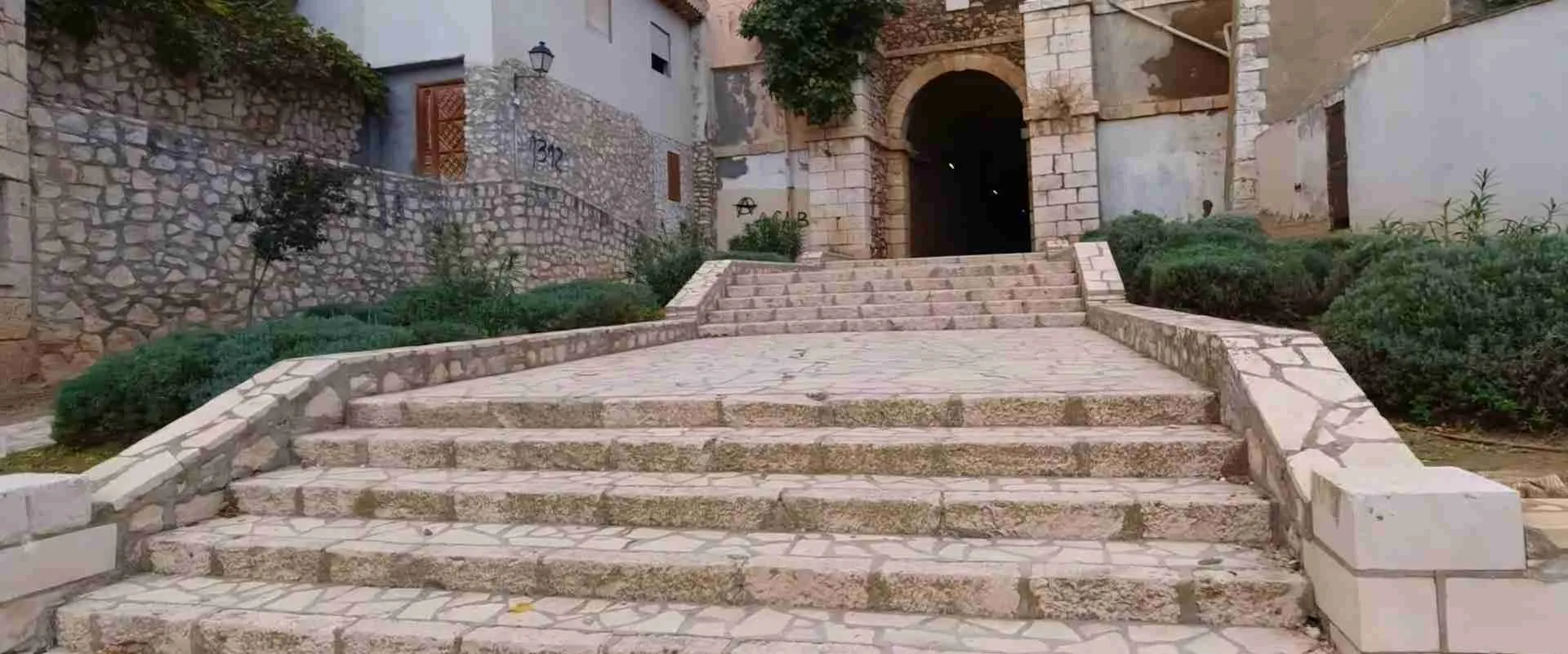
Southern Madrid Wine & Stone Road Trip 2026: Chinchón and Colmenar de Oreja Uncrowded Loop
Just 40 minutes southeast of Madrid on the toll-free A-3, the Las Vegas Valley holds two towns that most visitors skip entirely: Chinchón, whose elliptical plaza and 234 wooden-railed balconies rank among the finest public squares in Spain, and Colmenar de Oreja, a designated Wine City whose medieval cave cellars run beneath the limestone streets. This guide maps the full driving loop — route, parking, cave visit timing, vineyard logistics, and budget — for 2026 travelers who want something genuinely uncrowded.
Key Takeaways
- The driving loop uses the toll-free A-3 motorway from Madrid to the M-311 junction, then the M-311 south to Chinchón (50 km, 45–50 minutes) and the M-404 onward to Colmenar de Oreja (9 km further); the return via the A-4 makes a full circuit of roughly 130 km — entirely toll-free in 2026.
- Chinchón’s elliptical Plaza Mayor — 234 wooden-railed balconied galleries built across the 15th and 16th centuries — is a pedestrian heritage zone; free parking sits on the ring road below the village and fills fast on Saturday mornings, so arriving before 10:00 is strongly advisable on weekends.
- Colmenar de Oreja’s municipally guided cave cellar tour runs Tuesday to Sunday at 13:30 (30 minutes, €2 per adult), booked in advance at the Tourism Office; private winery tours at the nine active wine estates cost €15–25 per person and include tastings of Tempranillo and indigenous Malvar wines.
- The Church of the Assumption in Chinchón houses a canvas by Francisco Goya — The Assumption of the Virgin (1783) — typically free to view during opening hours and one of the least-crowded early Goya works accessible to visitors in the Madrid region.
- Budget day trip from Madrid (two sharing a car, no overnight): €35–60 per person, covering fuel share, the cave tour, a set lunch, and coffee; mid-range travelers spending on a guided winery tour, restaurant lunch, and wine purchases pay €75–110 per person.
- Adding one overnight stay: a rural hostal (two sharing a €50–80/room) adds €25–40 per person, placing the per-person daily total at €50–80 (budget) or €80–135 (mid-range); the Parador de Chinchón charges approximately €90–190 per room, or €45–95 per person when shared, for a total per-person daily outlay of €105–195 including activities.
People Also Ask About the Chinchón and Colmenar de Oreja Road Trip 2026
How far is Chinchón from Madrid by car in 2026?
Chinchón is approximately 50 km from central Madrid via the toll-free A-3 motorway and the M-311 regional road, a drive of 45–50 minutes in normal traffic. From Chinchón, Colmenar de Oreja lies a further 9 km south along the M-404, adding around 15 minutes. The return to Madrid via the A-4 motorway from the San Martín de la Vega area takes 45–55 minutes depending on traffic. The full loop — Madrid to Chinchón to Colmenar de Oreja and back via the A-4 — covers roughly 130 km and suits a single day trip without feeling rushed, provided you leave Madrid by 9:00.
How much do cave cellar tours cost in Colmenar de Oreja in 2026?
The municipally guided cave cellar tour in Colmenar de Oreja costs €2 per adult and €1 for children aged 6–12. Tours run Tuesday to Sunday at 13:30, last approximately 30 minutes, and must be booked in advance at the Tourism Office (Calle Costanilla de Silleros, 1) or the Ulpiano Checa Museum — both open 10:00 to 13:00. For a more immersive experience, private tours at individual wineries such as Bodegas Peral, Bodegas Jesús Díaz e Hijos, Bodegas Figueroa, and Bodegas y Viñedos Pedro García range from €15 to €25 per person including two to four wine tastings. These can be booked directly with each winery or through platforms such as Viator for organised 2026 departures from Madrid.
What is the best driving route from Madrid to Chinchón and Colmenar de Oreja in 2026?
The most direct route from central Madrid heads southeast on the A-3 (Autovía del Este, fully toll-free in 2026), exiting onto the M-311 toward Chinchón at roughly the 22-km mark. The M-311 runs south for approximately 20 km into Chinchón; total journey time is 45–50 minutes from the city centre. From Chinchón, the M-404 connects south to Colmenar de Oreja in 15 minutes. The return to Madrid is most efficient via the A-4 (also toll-free), heading north from the San Martín de la Vega junction. For the optional southeastern extension through Titulcia and San Martín de la Vega, the M-305 west from Chinchón connects to the M-302 north before joining the A-4 home.
How long does the Chinchón and Colmenar de Oreja day trip take from Madrid in 2026?
A well-paced day trip covering both towns takes 9–10 hours door to door. The recommended timing: depart Madrid by 9:00, arrive Colmenar de Oreja by 10:30 to purchase the cave tour ticket at the Tourism Office (open 10:00–13:00), use the morning for a winery visit and a walk through the historic centre, take the 13:30 municipal cave tour, have lunch from 14:00, then drive to Chinchón (15 minutes) for the afternoon. Chinchón’s Plaza Mayor, Church of the Assumption, anís distillery, and Parador de Chinchón garden fill roughly 2.5 hours. A 17:30 departure from Chinchón returns travelers to central Madrid by 18:30. The southeastern extension through Titulcia and San Martín de la Vega adds 1.5–2 hours.
Extended multi-day tours – 5+ days
Featured Madrid Multi-Day Tour Packages
7 days
7 Days in Madrid: Echoes of Empire: Madrid, Ávila & Segovia
- ✓ Comprehensive Madrid tour
- ✓ Expert local guides included
- ✓ All accommodation arranged
- ✓ Transportation provided

4 days
Madrid: Cultural Experience with Toledo Half-day tour, City Break
- ✓ Comprehensive Madrid tour
- ✓ Expert local guides included
- ✓ All accommodation arranged
- ✓ Transportation provided
5 days
5-Day Madrid Including Toledo, Avila and Segovia
- ✓ Comprehensive Madrid tour
- ✓ Expert local guides included
- ✓ All accommodation arranged
- ✓ Transportation provided
2 days
Segovia, Avila and Toledo in 2 days from Madrid
- ✓ Comprehensive Madrid tour
- ✓ Expert local guides included
- ✓ All accommodation arranged
- ✓ Transportation provided
Multi-day tour packages powered by TourRadar. Prices and availability subject to change.
Planning the Las Vegas Valley Loop from Madrid in 2026
The Comarca de Las Vegas — the Las Vegas Valley — takes its name from the fertile river meadows watered by the Tajuña and Tajo rivers in the southeast quadrant of the Madrid region. The valley sits roughly equidistant between the capital and the Castilian plateau beyond, occupying a limestone plateau where medieval stone agriculture and wine production have coexisted for centuries. For 2026 visitors, the appeal is triangular: intact medieval architecture in both Chinchón and Colmenar de Oreja, a functioning wine economy based on the Tempranillo and indigenous Malvar grapes, and a driving infrastructure — toll-free motorways, free parking in both towns, inter-town distances under 10 km — that makes the loop unexpectedly easy to navigate.
What keeps the Las Vegas Valley less crowded than Toledo, Aranjuez, or Segovia is partly structural and partly reputational. Toledo and Segovia are UNESCO World Heritage Cities with international name recognition; Aranjuez has a royal palace and a train service from Madrid. Chinchón and Colmenar de Oreja require a car, have no cathedral or palace on the grand tourist circuit, and have not received the same coverage in English-language travel media as the more visited towns. The result for 2026 visitors who make the effort is a tangible sense of discovery: a Plaza Mayor in Chinchón so architecturally intact that it still functions as a bullring in August, and wine caves in Colmenar de Oreja carved from the same limestone that built the Royal Palace and the Cibeles Fountain in Madrid.
The loop works best as a single day trip from Madrid — 9–10 hours is enough to see both towns properly — but it also rewards an overnight stay, particularly at the Parador de Chinchón, whose 17th-century Baroque convent setting gives the experience a depth that a day trip only approximates. The following sections cover every logistical dimension for 2026 travelers: route selection, parking nodes, cave visit coordination, individual town highlights, vineyard logistics, a tiered budget breakdown, accommodation options, and the optional southeastern extension through Titulcia and San Martín de la Vega.
Best seasons. Spring (April to June) and autumn (September to November) offer the most comfortable driving and visiting conditions. Summer (July and August) makes the Las Vegas Valley extremely hot midday — temperatures regularly exceed 35°C on the plateau — but the cave cellars in Colmenar de Oreja maintain a steady 14°C year-round, making them a genuine physical respite during peak heat. August also brings Chinchón’s annual bullfighting festival, filling the Plaza Mayor’s balconies and generating the closest thing to crowds this town experiences across the year. Winter visits are perfectly possible and crowd-free, though shorter days limit afternoon touring between towns.
Harvest season (late September to mid-October) is the most atmospheric time for wine tourism. Vineyards across the Arganda sub-zone of the DO Vinos de Madrid designation are in active picking, winery visits incorporate harvest-season programming, and the landscape drive on the M-311 and M-404 gains color and activity. The Colmenar de Oreja Wine Fair (Feria del Vino) takes place each year in late May; check the town council website (aytocdo.com) for confirmed 2026 dates and programming.
What kind of trip this suits. The loop is ideal for couples wanting a relaxed Spanish wine day, families with older children who can manage two hours of walking and a 30-minute underground tour, solo drivers comfortable navigating regional roads with GPS, and wine enthusiasts who want direct contact with small Designation of Origin estates rather than a commercial tasting-room experience. It is not the right choice for visitors seeking a single unmistakable architectural landmark in the manner of the Alhambra or the Sagrada Família — the appeal here is cumulative and unhurried: the stone, the wine, the long lunch, and the absence of a tour bus in the rear-view mirror.
Driving Logistics: Connecting Madrid to the Las Vegas Valley in 40 Minutes
The A-3 is Madrid’s southeastern corridor, running from the M-30 ring road toward Valencia. It is an autovía — a government-maintained, free-of-charge motorway — and in 2026 carries no tolls on the sections relevant to this route. From central Madrid, the drive to the M-311 junction at the Arganda del Rey area takes approximately 25–30 minutes; the subsequent 20 km south on the M-311 to Chinchón adds another 20 minutes. Total: 45–50 minutes from central Madrid. From Barajas airport, which lies north of the A-3 corridor, allow 55–65 minutes depending on the approach route to the A-3.
The M-311 is a single-carriageway regional road in good repair. It climbs gently onto the limestone plateau south of Arganda del Rey and gives the first view of the rolling vine landscape that characterises the Las Vegas Valley. The road arrives in Chinchón from the north, curving through the town’s outskirts before the historic centre becomes visible on the hill ahead. This approach — a gradual elevation gain, the tower of the Church of the Assumption appearing above the rooflines — provides a visual introduction to the town that arriving by bus from the opposite direction does not. From Chinchón to Colmenar de Oreja, the M-404 runs south for 9 km across a plateau of vineyards and olive groves, arriving at Colmenar from the north with a wide view of its limestone buildings above the Tajuña river valley.
The return to Madrid from Colmenar de Oreja offers two options. The first retraces the outward route: M-404 north to Chinchón, then M-311 north to the A-3, and west on the A-3 to Madrid — approximately 60 km, 55 minutes. The second is the southeastern extension’s return via the M-302 and A-4: longer in distance but avoiding any backtracking if you add Titulcia and San Martín de la Vega to the loop. Both the A-3 and the A-4 are toll-free autovías. The former radial toll roads out of Madrid in this direction (R-3 toward Arganda del Rey and R-4 toward Ocaña) were nationalised following operator bankruptcies and are also toll-free in 2026. No Via-T transponder or toll payment is required at any point on this loop.
Navigation. GPS apps — Google Maps, Waze, and Apple Maps all handle this route reliably. For the outward journey, entering “Chinchón” as the destination routes automatically onto the A-3 from central Madrid. On arrival in Chinchón, follow signs for the ring road (ronda) before GPS attempts to route you into the historic core’s narrow medieval streets. For Colmenar de Oreja, entering “Oficina de Turismo Colmenar de Oreja” or “Plaza de España Colmenar de Oreja” navigates to the practical centre. On the return, entering “A-4 Madrid” from Colmenar routes efficiently via San Martín de la Vega.
Parking Protocol near Historical Pedestrian Plazas in 2026
Both Chinchón and Colmenar de Oreja have compact historic cores that are either formally pedestrianised or practically inaccessible by through-traffic due to narrow medieval streets. Understanding each town’s parking geography before arrival prevents the circling and frustration that catches first-time weekend visitors off guard.
Chinchón — free ring road parking. The Plaza Mayor and its immediately surrounding streets are not accessible to through-traffic. The primary parking area for day visitors is on the ring road (ronda) below the village — free, unpaid, without time limits, and formed by wide shoulders and lay-bys along the M-311 as it curves around the village perimeter. The walk from these spots to the Plaza Mayor is approximately 5 minutes uphill on a paved path. The ring road spaces fill rapidly from around 10:30 on Saturday mornings in peak season (April to October): arriving before 10:00 on weekends guarantees a spot; arriving at 11:30 in July means circling. Weekday visits present no parking problem. A small tourist train operating on weekends in season departs from near the ring road parking area up to the Plaza Mayor — check local signage for 2026 availability and current fare.
A secondary option: a small car park near the Parador de Chinchón on Calle de los Huertos has a limited number of spaces and is used by Parador guests but not formally reserved for them. Narrow streets approaching this area are navigable in a standard car but tight in a larger vehicle or campervan. GPS apps occasionally route arrivals toward these streets rather than the ring road — override the guidance and use the ring road instead.
On the ring road, the widest parking area lies at the junction where the M-311 joins the village perimeter. These spots are on level ground and involve the least complex walking approach to the historic centre. Do not attempt to drive through the arched gateway at the entrance of the old town — the passage is designed for pedestrians and local delivery vehicles, not visitor cars.
Colmenar de Oreja — town centre street parking. Colmenar’s historic centre is somewhat more permissive of vehicle access than Chinchón. The main pedestrian plaza (Plaza de España, the town’s 16th-century arcaded main square) sits at the centre, and several streets approaching it allow short-stay parking. The most practical strategy is to park on Calle Mayor or adjacent streets within 200–300 metres of the Tourism Office. These are public streets without charge or time limits in normal circumstances; in high season, occasional market days or local events may temporarily restrict access — look for temporary signage on approach. Because the Tourism Office on Calle Costanilla de Silleros is the mandatory cave tour booking point, parking close to it on arrival makes logistical sense: buy the ticket, then explore the town until 13:30.
Both towns have adequate disabled-access parking along their ring roads and main approach streets. Avoid following GPS routing into the steep, narrow lanes of the upper historic core of either town — these are designed for residents and deliveries, not day visitors with loaded cars.
Coordinating Underground Cave Visits with Architectural Walking Routes
The single most important scheduling constraint on the Las Vegas Valley loop is the municipal cave tour in Colmenar de Oreja. It runs at a fixed time — 13:30, Tuesday to Sunday — and requires a pre-purchased ticket from the Tourism Office, which is open only from 10:00 to 13:00. The tour cannot be joined spontaneously in the afternoon, and it cannot be attended without a morning window in Colmenar to buy the ticket. The sequence you choose for the day determines whether you can include it.
Sequence A (Recommended): Colmenar first, Chinchón second. Depart Madrid by 9:00 and drive directly to Colmenar de Oreja — approximately 55–60 minutes via the A-3 and A-4 or via A-3 and M-404 through Chinchón. Arrive by 10:15–10:30 and go immediately to the Tourism Office to purchase the cave tour ticket. Use the morning (10:30–13:00) for a walk through Colmenar’s historic centre, a pre-booked winery tour at one of the named estates, and exploration of the cave-cellar district visible in the building facades along the hilltop streets. Take the 13:30 municipal tour (30 minutes, done by 14:00); move to a Colmenar restaurant for lunch from 14:00 (Spanish lunch service runs until 16:00). Drive to Chinchón at 15:30 (15 minutes). Explore the Plaza Mayor, Church of the Assumption, anís distillery, and Parador garden from 15:45 until 18:30. Depart for Madrid by 18:30, arriving by 19:30.
Sequence B (Chinchón first, afternoon Colmenar, no municipal cave tour): Depart Madrid by 9:00, arrive Chinchón by 9:50. Explore the plaza, church, and Parador garden in the cool morning light (9:50–12:30) — morning illumination on the east-facing balconies is genuinely superior — then have lunch in Chinchón (13:00–14:30). Drive to Colmenar at 14:30. The 13:30 municipal tour has already departed, but private winery tours at Bodegas Peral and Bodegas Jesús Díaz e Hijos can sometimes accommodate afternoon visitors, particularly midweek and outside peak season. Contact the wineries directly to arrange afternoon access. This sequence prioritises Chinchón’s atmosphere and photography timing over the municipal cave tour.
Combining the cave tour with walking routes. In Colmenar de Oreja, the practical walking route begins at the Tourism Office, proceeds along Calle Mayor to the Plaza de España (the arcaded main square flanked by the Church of Santa María la Mayor), then turns into the side streets where bodega entrances are visible in building facades — announced by a wooden door and often a small hand-lettered sign. The hilltop streets above the Plaza de España give views south over the Tajuña valley and the vine plateau beyond. The full walking circuit of Colmenar takes approximately 1.5 hours at a relaxed pace and adds no admission charges.
In Chinchón, the circuit from ring road parking runs up the main path to the Plaza Mayor (5 minutes), around the plaza’s arcaded perimeter (30 minutes to appreciate the three tiers of balconies and the irregular elliptical ground plan), north to the Parador de Chinchón for the Baroque cloister and garden (non-guests may enter the lobby and garden), southwest to the Clock Tower, and south through historic alleyways to a viewpoint above the village for the panorama over the plain. The full Chinchón walking circuit takes approximately 2 hours at a relaxed pace, adds no entrance fees (the Church of the Assumption is typically free during opening hours, as is the Parador garden), and reveals the ensemble’s collective coherence better than any individual element does in isolation.
The cave cellars in Colmenar are not geological caverns — they are working wine-production and storage facilities carved over generations into the limestone on which the town sits. The municipal tour, conducted in Spanish as standard in 2026 (check with the Tourism Office for any English-language options for your specific date), passes through a section of historic cave showing the original limestone excavation, the large clay storage jars of the type that were used for centuries before modern stainless tanks arrived, and the current wine-aging environment. Their maintained temperature of approximately 14°C is the practical consequence of the limestone’s low thermal conductivity, and it makes them genuinely welcome on a July afternoon when the plaza above bakes at 38°C. The narrow passages and rock-carved walls are the primary visual experience; what the tour conveys above all is the cumulative effort, invested over generations, of building a wine infrastructure beneath a town rather than around it.
Chinchón Heritage Zone: What to See, Do, and Taste in 2026
Chinchón was declared a Historical-Artistic Site of national interest in 1974, a designation covering the Plaza Mayor, the Clock Tower, the Parador building, the Convent of the Poor Clares, the Castle of the Counts of Chinchón, and the Church of the Assumption as a collective protected ensemble. The declaration has kept the historic core in a form that looks strikingly intact by any comparative standard: no modern infill buildings, no out-of-scale hotel additions visible from the plaza, no commercial advertising boards on the heritage facades. For a town 50 km from a capital of three million people, this is not accidental — it reflects five decades of sustained preservation policy reinforced by the site’s designation status.
Plaza Mayor. The Plaza Mayor of Chinchón is genuinely unusual among Castilian plazas in being elliptical rather than rectangular. The irregular ground plan reflects organic accumulation: the square grew across the 15th and 16th centuries as successive generations of noble and merchant families, each owning a section of the surrounding buildings, built their portions independently. The slight variations in column spacing, railing detail, and storey height across the 234 wooden-railed balconies — each balcony belonging to the owner of the corresponding building — produce an organic coherence rather than the imposed uniformity of a centrally planned square. Three continuous tiers of galleries wrap the oval space; the effect in person, particularly in early morning light before the restaurant tables are set out, is one of the most reproduced and most consistently photogenic images of rural Castile.
The plaza has served as a bullring since at least the 17th century. Two corridas are held here each August during the town’s main local festival, with spectators filling the wooden galleries and tiered seating in the manner that gives the space its functional as well as aesthetic identity. Outside the festival context, the plaza operates as a public square and terrace, with restaurant tables from the surrounding establishments occupying the central cobblestone space from late morning. In off-peak months, the absence of tables in the early hours reveals the full oval ground plan — the best time to photograph the space unobstructed by chairs, umbrellas, and tables is before 10:00 on any day.
Church of the Assumption. The Church of the Assumption (Iglesia de la Asunción) stands at the eastern edge of the Plaza Mayor; its apse wall forms part of the plaza’s perimeter. The original structure dated from 1534, but the building was badly damaged when Napoleon’s forces sacked and burned it in 1808, and the restored church was completed by 1828. Its architectural character is a layered mixture of Gothic, Plateresque, Renaissance, and Baroque elements — a visual record of different construction campaigns. Entry is typically free during opening hours (hours are set by the local diocese and vary by season; verify at the entrance).
The church houses a painting by Francisco Goya — The Assumption of the Virgin, dated to 1783. The canvas is an early work within Goya’s career and belongs to the group of religious commissions he carried out for aristocratic and ecclesiastical patrons during the 1770s and 1780s. It is notable both as an example of the painter’s technique before the later darkness of the Black Paintings period and as an unexpectedly canonical work in a small village church rather than a major museum. The painting is not prominently labelled in the manner of a gallery exhibit; visitors unfamiliar with it commonly walk past it. Ask about its location on entering the church — the detour repays approximately 10 minutes.
Parador de Chinchón. The Parador de Chinchón occupies a 17th-century Baroque convent — built in the Madrid Baroque style using masonry and brick — whose history includes subsequent use as a school for Latin studies, a courthouse, and a regional prison before its conversion to a parador. The original Augustinian convent on this site was founded by the early lords of Chinchón in the 15th century; the current building dates substantially from the 17th century, when the community rebuilt in the more elaborate Baroque manner of the period. The building’s centrepiece is a coffered Baroque cloister that opens onto a garden terrace; the Paradores state network has installed a collection of Baroque religious art through the cloister and corridors. Non-guests may enter the main reception and lobby garden without charge. Morning guided tours of the building — covering the chapter house, old washrooms, stables, and doctoral hall — are available to hotel guests and provide the most systematic way to read the building’s layered history.
Castle of the Counts of Chinchón. Above and west of the historic centre stand the ruins of the Castle of the Counts of Chinchón — a 15th-century fortified residence, partially rebuilt in Renaissance style in the mid-16th century, and now in private ownership. The castle interior is not accessible to visitors, but the elevated approach path is open, and the views south and west over the plains and the town rooflines from this area are the best available in Chinchón. The walk from the Plaza Mayor takes approximately 15 minutes up a steep but paved path. The panorama from the castle viewpoint — flat, sun-bleached Castilian landscape extending to the horizon in all directions — conveys more powerfully than any map the degree to which this small town is genuinely surrounded by uninhabited agricultural terrain despite its proximity to Madrid.
DOP Anís de Chinchón. The DOP Anís de Chinchón (the Designation of Origin for anise liqueur specific to Chinchón) protects a product made by the Sociedad Alcoholera de Chinchón, a distillery whose origins trace to the 18th century. The liqueur comes in two primary versions: dulce (sweet, 35% ABV, slightly syrupy, clear) and seco (dry, 45% ABV, more pungent). A less common extra seco is also available at the distillery shop. The standard in Chinchón restaurants is to finish a meal with a small glass of dulce; the seco is more often used in the local cocktail resolí — anís mixed with cold coffee, orange peel, and sometimes cinnamon. The distillery shop on the village’s outskirts sells bottles at €8–15 for 70 cl, consistently the cheapest source on site; the village restaurants and souvenir shops charge more. The anís scent itself is one of the olfactory signatures of the village — the distillery sits close enough to the historic core that the anise fragrance drifts through the streets on still days, which is its own form of place-making.
Walking circuit summary. A complete Chinchón circuit covers: ring road parking (start) → Plaza Mayor (5 min walk up) → plaza perimeter walk (30 min) → Church of the Assumption (10–15 min) → Parador entrance and garden (15 min) → Clock Tower (10 min walk southwest) → historic alleyway walk to castle viewpoint (15 min) → return to parking (10 min). Total: approximately 1 hour 45 minutes walking time, excluding time spent at the anís distillery shop (add 20–30 minutes if buying). No entrance fees on the walking circuit except at venues operating timed programs.
Colmenar de Oreja: Underground Caves and Wine Estates in 2026
Colmenar de Oreja carries the informal title of Wine City of Madrid — a designation awarded by the Community of Madrid and the Spanish network of wine cities (Acevin) in recognition of the town’s centuries-long wine-production identity and the density of historic cave cellars within its protected historic centre. The town’s declaration as a Protected Historical-Artistic Site (Bien de Interés Cultural del Conjunto Histórico Artístico) covers both the above-ground architecture and the subterranean cave infrastructure, treating the two as inseparable dimensions of a single heritage asset.
The cave cellars are the defining feature of Colmenar de Oreja’s visitor identity. Local historical records indicate that the number of cave bodegas in the town once approached 150 — each attached to a working farm as standard provision for wine storage and production. The caves were excavated manually from the local limestone, a fine-grained calcarenite whose properties include low thermal conductivity, stable humidity, and consistent subterranean temperatures — conditions that make it an effective natural wine-aging environment. The same limestone quarried in and around Colmenar de Oreja was used in the construction of the Cibeles Fountain in Madrid, the Aranjuez Royal Palace, and the Royal Palace in Madrid, placing the town’s stone at the centre of the Spanish capital’s monumental heritage. Encountering this fact in a small wine town rather than a major city gives it the quality of a genuine discovery.
Today, nine formally operating wineries carry the Colmenar de Oreja name within the DO Vinos de Madrid Arganda sub-zone. The most accessible for visitor purposes include:
- Bodegas Peral: one of the larger estates, with structured visit programs and tasting menus. The cave section includes a preserved set of the large clay storage jars (tinajas de barro) that, according to local historical accounts, once constituted the principal aging vessel in Colmenar before the adoption of barrel maturation. Bodegas Peral accepts online bookings; check the winery’s own website or Viator listings for 2026 tour availability and updated pricing.
- Bodegas Jesús Díaz e Hijos: a family-run estate emphasising traditional methods. The tour covers both the historic cave and the modern fermentation facility, demonstrating the contrast between limestone-and-tinaja wine-making and contemporary stainless-steel tank production. Tastings typically cover the estate’s Tempranillo red and Malvar white, with occasional rosé. Spanish wine press has noted this estate’s interest in minimal-intervention fermentation styles using the clay jars.
- Bodegas Figueroa: smaller, with a more informal character; better suited to visitors who want a conversation with the winemaker rather than a structured tour. Contact the estate by email or phone 1–2 weeks ahead to arrange a 2026 visit; they do not maintain a fixed public tour schedule.
- Bodegas y Viñedos Pedro García: the estate that combines a winery visit with an optional cycling component — a guided 17-km route through the surrounding vineyards, optionally paired with a cave visit and tasting at the end. Available for booking through the Colmenar de Oreja tourism portal and a worthwhile option for travelers who want to experience the wine landscape from the saddle rather than through the windscreen.
The clay storage jar tradition. Colmenar de Oreja was historically one of the principal suppliers of large clay storage jars used throughout Spain’s wine regions. These large vessels — some standing over a metre in height and capable of holding several hundred litres — were manufactured in the town and distributed to cellars across Castile, La Mancha, and beyond. The tradition of their local production has largely lapsed, but examples remain in multiple Colmenar cave cellars, functioning as heritage display pieces or, in some cases at forward-thinking estates, as active fermentation vessels. Seeing a row of these jars in a limestone cave is among the most visually specific experiences the Las Vegas Valley offers — it appears in very little Spanish travel photography outside the town itself, which makes it a genuinely distinctive encounter.
Church of Santa María la Mayor. Colmenar de Oreja’s main parish church, the Church of Santa María la Mayor, is a 16th-century construction occupying the highest point of the historic centre. Its exterior presents the same pale local limestone as the surrounding buildings; the bell tower and apse are visible from the M-404 approach road. Entry is typically free outside of service times; check opening hours with the Tourism Office for your 2026 visit date. The church interior includes construction elements from different 16th- and 17th-century campaigns; the building is considered one of the better-preserved early-modern parish churches in the southern Madrid region, though scholarly consensus on the specific attribution of individual construction phases remains incomplete based on available archival documentation.
Local gastronomy. Colmenar de Oreja’s kitchen is rooted in agricultural Castilian cooking: patatas chulas (potatoes with a tomato and pepper sauce), pisto vaquero (a slow-cooked vegetable and meat stew), local sheep’s cheese, and chicharrones (fried pork rinds). Town restaurants serve this food in generous portions calibrated for appetite rather than presentation — a quality recommendation as much as a quantity note. The Wine Fair (Feria del Vino), held annually in late May, concentrates dozens of producers in the Plaza de España and adjacent streets; entry typically covers a glass and a tasting voucher for multiple pours. Check aytocdo.com for confirmed 2026 dates.
The Alternative Southeastern Loop: Integrating Titulcia and San Martín de la Vega
The M-305 west from Chinchón and the M-302 north to San Martín de la Vega extend the Las Vegas Valley loop through two further settlements, adding 30–40 km and approximately 1.5–2 hours to the day. Neither Titulcia nor San Martín de la Vega is a primary heritage destination in the manner of Chinchón or Colmenar de Oreja, but the extension has clear merits for specific traveler profiles: those who want a longer driving experience through the agricultural southeast, those interested in the Jarama river valley landscape and wetland birdlife, families with children for whom Parque Warner Madrid near San Martín de la Vega is a draw, and photographers seeking the Tajuña-Jarama confluence without a hiking excursion. The roads on this segment — the M-305 and M-302 — are quiet single-carriageway routes through agricultural land with virtually no tourist traffic, giving the extension the feel of a genuinely rural drive rather than a heritage itinerary.
Off-Peak Timing for Photography and Balcony Access
The photographic opportunities on the Las Vegas Valley loop reward timing discipline in ways that more famous Madrid day-trip destinations do not. The architectural subjects here — wooden balconied plazas, limestone cave entrances, vine-covered hillsides — respond strongly to the quality and angle of light, and both Chinchón and Colmenar de Oreja have specific time windows when crowds are minimal and illumination is optimal.
Chinchón Plaza Mayor: early morning light. The Plaza Mayor faces roughly east; the taller tiers of balconies on the western side of the oval catch morning sun from approximately 09:00 until 11:30 on clear days. This illumination warms the weathered wood of the balcony railings and picks out the colour variation in the limestone columns — the combination that produces the plaza’s characteristic amber-and-grey palette in photographs. By 13:00 on summer Saturdays, the space fills with restaurant tables and day-trip visitors, and the same balconies are in full shadow or harsh overhead light. Arriving before 10:00 on any day of the week provides an access window to the plaza when it is essentially empty: the restaurants are not yet open, no tables are set out, and the full cobblestone oval is visible. On weekdays, this window extends to 11:00 with minimal crowding throughout.
For long-lens photography of the upper balcony tiers, a position at the plaza’s narrow axis — the arched entry passages on the north and south sides — gives the most compressed, layered view of the three tiers stacked against one another. A wide-angle lens from the centre of the oval captures the full elliptical extent; both compositions are distinct and neither substitutes for the other. The morning visit time recommended above for the PAA answers (Sequence A, Chinchón in the afternoon) is less optimal for plaza photography than arriving in the morning. Travelers who prioritise photography of the plaza should choose Sequence B — Chinchón first, arriving before 10:00 — and accept that the municipal cave tour in Colmenar will need to be replaced by a private afternoon winery visit.
Balcony access. The wooden balconies surrounding the Plaza Mayor are private property attached to the residential apartments and hotel rooms of the surrounding buildings. They are not accessible to visitors except as restaurant terrace seating when the establishments are open. During August’s bullfighting festivals, ticket holders watch the corrida from the balconies — the only structured balcony access available to day visitors outside of dining. A table at one of the second-tier plaza restaurants is the most accessible balcony-level view available on a normal visit day. These tables are in high demand on summer weekends and should be reserved at least a week in advance for Saturday lunch; on weekday mornings they are often available without reservation before 11:00.
Titulcia: river confluence and early morning landscape. The village of Titulcia sits at the point where the Jarama and Tajuña rivers meet, within the eastern section of the Southeast Regional Park (Parque Regional del Sureste). The landscape is the riparian plain of central Castile: poplars along the riverbanks, flat fields, and shallow wetland habitat that supports a variety of wading and migratory birds. The confluence of two rivers in a protected nature area 40 km from the capital generates almost no tourist photography because it requires a car to reach and lacks a single obvious architectural subject. For landscape and wildlife photographers, the early morning in Titulcia — before 09:00, before heat haze builds and before any other visitors arrive — provides a genuinely uncontested photographic window. No entrance fee applies; the river access paths are public.
San Martín de la Vega. San Martín de la Vega is a working agricultural town rather than a heritage destination in the conventional sense. Its practical value on this extended loop is as a return waypoint onto the A-4 motorway north to Madrid. The town’s historic centre — a modest Plaza Mayor and adjacent streets — is intact if architecturally unremarkable compared with Chinchón or Colmenar de Oreja. Parque Warner Madrid, a large theme park in the San Martín de la Vega municipality, is signposted from the approach roads and represents an entirely different category of visitor experience; families traveling with children who want to add a theme park dimension to the weekend will find the proximity convenient, but the park merits a separate day rather than an add-on to an already full loop.
EV Infrastructure along the A-3 and M-311 Routes
The Las Vegas Valley loop is comfortably within the range of any modern electric vehicle on a single charge from Madrid. The full circuit — A-3 southeast to the M-311 junction, M-311 to Chinchón, M-404 to Colmenar de Oreja, and return via M-311/A-3 or M-302/A-4 — covers approximately 130 km on the basic loop, or 150–160 km on the southeastern extension through Titulcia and San Martín de la Vega. An electric vehicle with 250 km or more of WLTP range and a 70% charge at departure from Madrid can complete the full circuit without any en-route charging in normal conditions.
For drivers with smaller-battery vehicles or those departing with less than a full charge, the Arganda del Rey node on the A-3 corridor is the key top-up point. According to aggregated Electromaps data current through late 2025, Arganda del Rey has approximately 100 publicly accessible charging points across its commercial and industrial area. These include fast-charge stations of 50–150 kW at A-3 service areas and commercial parks, operated primarily by the Iberdrola and Repsol networks. A 20–30 minute stop at the Arganda del Rey service area on the outbound journey — before turning off onto the M-311 toward Chinchón — adds range sufficient for the remainder of the loop in most conditions and eliminates range anxiety entirely.
Within the loop itself, charging availability is limited:
- Arganda del Rey (A-3 junction, before M-311 turnoff): multiple fast chargers at service areas and commercial outlets; Iberdrola and Repsol networks both present. The Electromaps app gives real-time availability and charger status. This is the only point on the main route with reliable high-power charging and the recommended stop for borderline-range situations.
- Chinchón: limited public EV charging. As of the most recent Electromaps data, one or two slow charge points (Level 2 AC, 7–22 kW) are accessible in the village. These are suitable for a 2–3 hour top-up during a full visit but not for fast charging. Verify current locations via the Electromaps app before relying on them, as small-town infrastructure changes without announcement.
- Colmenar de Oreja: similarly limited public charging — at most a slow AC point near the town centre. Not viable as a primary charge stop for time-constrained visitors.
- San Martín de la Vega (southeastern extension only): the Parque Warner Madrid area has EV charging in its car park that may be accessible to non-park visitors. Verify current availability through Electromaps or PlugShare before relying on this point for the return journey.
The practical recommendation for 2026 EV drivers: plan Arganda del Rey as the single charge stop if your range is borderline, and complete it on the outward journey before the M-311 turnoff. Charging early rather than relying on a return stop means the second half of the loop is covered without range management pressure. If your vehicle handles 250 km or more on a full charge, skip the stop entirely. The round trip is not demanding by the standards of longer Spanish excursions.
The main charging-location apps for Spain — Electromaps, IBIL, and PlugShare — all cover the A-3 and A-4 corridors accurately. Tesla owners should verify current Supercharger locations in the Tesla app for 2026, as the Arganda del Rey area has historically had Supercharger coverage; confirm before departure rather than assuming continuity. Both the A-3 and A-4 are free autovías as confirmed earlier — no toll costs apply regardless of vehicle type.
Complete Budget Breakdown for the 2026 Chinchón and Colmenar de Oreja Road Trip
The cost structure of this road trip reflects its nature as a self-driven day excursion to two small towns with free parking, minimal admission fees, and a wine-and-food economy offering both very cheap and genuinely upscale options. All per-person figures below assume two travelers sharing a car; where overnight accommodation is included, the room rate is divided by two before addition to per-person totals, per the shared-accommodation standard.
Day trip only (no overnight), per person, two sharing car.
Budget tier: fuel share approximately €7–9 per person (120 km round trip, standard petrol or diesel car, two people sharing); parking €0 (free ring road in Chinchón, free street parking in Colmenar); municipal cave tour €2; Plaza Mayor and Church of the Assumption entry €0; set lunch menu at a local restaurant €13–16; coffees and an end-of-meal anís glass €5–8; one bottle of Colmenar cooperative wine €7–10. Total: €35–60 per person. This range covers everything from a genuinely stripped-down visit (minimum lunch, free cave tour, one cheap wine) to a budget visit that adds a private winery entry-level tour or a second wine bottle. It does not include hotel, car hire, or premium winery visits.
Mid-range tier: fuel share €7–9; parking €0–3; private guided winery tour at one of the named bodegas including tasting €15–25; restaurant lunch à la carte with local wine €25–32 per person; wine purchase (two bottles from a named estate) €18–28; coffees and tastings €10–15. Total: €75–110 per person. This tier covers a full winery visit, a proper sit-down lunch, and wine to take home; it does not require an overnight stay and is achievable on a day trip for two.
With overnight stay (per person per day, hotel divided by two before summing).
Budget overnight: rural hostal room €50–80 total, divided by 2 = €25–40 per person per night for accommodation. Add day activity costs of €26–40 per person (fuel share, cave tour, basic food, coffees). Total: €50–80 per person per day. Rural accommodation near Chinchón is limited; search Booking.com early — the best options at this price point fill 2–3 months ahead on spring and autumn weekends.
Mid-range overnight: hotel room €80–130 total, divided by 2 = €40–65 per person per night. Add mid-range day activity costs of €40–70 per person (guided winery, restaurant, tastings, modest wine purchase). Total: €80–135 per person per day. This tier includes one properly guided winery experience, a good-quality lunch, and a comfortable hotel without requiring the Parador price point.
Parador de Chinchón: room approximately €90–190 total depending on season and room type (verify current rates at paradores.es), divided by 2 = €45–95 per person per night. Add high-end day activity costs of €60–100 per person (premium winery visit, Parador restaurant dinner at €45–65 per person including wine, multi-bottle wine purchase). Total: €105–195 per person per day. The Parador’s two restaurants — El Convento and El Bodegón — are open to non-guests for dinner; booking in advance is advisable for summer weekends. The morning building tour available to guests is the most structured way to see the convent’s documented architectural history and adds no additional fee.
What these estimates exclude: car hire if not using your own vehicle (allow €40–80 per day for a standard rental from a Madrid location); Parque Warner Madrid admission if adding the San Martín de la Vega extension with children (approximately €45–60 per adult in 2026); the Bodegas y Viñedos Pedro García cycling and tasting package; and organised Viator-style group tours from Madrid (typically €75–120 per person for a full-day guided tour including transport, competitive with mid-range self-drive costs but removing all logistics).
Payment practicalities. The Tourism Office in Colmenar de Oreja accepts cash for the €2 cave tour ticket — €2 exact change is ideal. Most restaurants in both towns accept card payment; small wineries and the anís distillery shop may prefer cash. Carrying €20–30 in small notes covers cash-only situations without difficulty.
Vineyard Logistics and Wine Tour Planning for 2026
The DO Vinos de Madrid designation covers four sub-zones within the Community of Madrid, of which the Arganda sub-zone — encompassing Chinchón, Colmenar de Oreja, and surrounding municipalities — is the largest and the most historically significant for viticulture. The sub-zone is planted primarily with Tempranillo (locally called Tinto Fino) for red wines and Malvar for whites. Malvar is an indigenous white variety little known outside the region; it produces aromatic, medium-bodied dry whites with a mineral character that local winemakers associate with the limestone and clay soils of the plateau. Garnacha also appears in the sub-zone, largely in older plots. The wine styles produced in Colmenar de Oreja are broadly traditional: Tempranillo aged in barrique and in historic limestone caves, Tempranillo and Garnacha rosés, and white Malvar often released without extended barrel contact to preserve freshness. A smaller current among younger winemakers toward skin-contact whites and minimal-intervention clay-jar fermentation is present; Bodegas Jesús Díaz e Hijos has been noted in Spanish wine press as exploring this direction.
How to book in 2026. The nine Colmenar de Oreja wineries have varying booking policies. Bodegas Peral and Bodegas Jesús Díaz e Hijos — the two with the most organised visitor programs — maintain websites with booking forms and accept reservations at least two weeks in advance for weekend visits. Less formal estates prefer a phone call or email 1–2 weeks ahead. The Tourism Office in Colmenar de Oreja (aytocdo.com) maintains a current contact list of participating bodegas updated for 2026. Travelers booking through platforms: Viator lists combined Chinchón-and-Colmenar wine experience tours from Madrid with transport included, typically at €75–120 per person for a full day. GetYourGuide similarly offers winery tour packages. These organised options are competitive for solo travelers and for anyone who wants to avoid driving while tasting.
RENFE Wine Train. For travelers without a car, the Community of Madrid and RENFE Cercanías operated a Wine Train (Tren del Vino) service on the second Thursday of each month throughout 2025, with 2026 programming expected to continue under a similar format — verify the schedule and booking at renfe.com. The service departs Atocha station, travels to Aranjuez by train, then connects to Colmenar de Oreja by coach for visits to three bodegas. The price in 2025 was €35 per person, not including meals; check renfe.com for 2026 pricing and dates. This is the most practical public-transport option for a Colmenar-focused wine visit and eliminates the designated-driver constraint entirely.
Buying wine to take home. The Colmenar de Oreja wineries and the Chinchón anís distillery shop are consistently the cheapest sources for their respective products. Standard Arganda sub-zone Tempranillo from a named estate costs €8–18 per bottle at source; premium and reserve labels reach €18–35. Malvar white wines cost €7–14 per bottle at winery. Chinchón anís dulce is €8–15 per bottle at the distillery. The advantage of buying at source includes both the price differential over Madrid retail and the provenance: bottles purchased at a winery carry the producer’s own labelling with vintage and production notes that standard retail versions may omit. Most wineries will wrap bottles for transport; carrying up to six bottles in the car boot presents no logistical difficulty.
Wine and driving. Spain’s drink-drive limit is 0.5 mg/mL blood alcohol for experienced licence holders and 0.3 mg/mL for drivers who have held their licence for fewer than two years. A standard 125 ml tasting pour delivers approximately 0.15–0.20 units of alcohol; a three-pour tasting session at one winery, followed by a glass at lunch and a post-meal anís glass, would bring most adults above the 0.5 mg/mL threshold. The designated-driver approach — one person abstains or keeps to very small tasting sips — is the straightforward solution for a day trip. The alternative, both travelers drinking fully and staying overnight before returning the following morning, adds the accommodation cost but substantially improves the tasting experience. The Parador de Chinchón and rural accommodation options outlined below make this a genuinely attractive option for a Saturday-night stay.
Where to Eat and Stay Along the Route in 2026
The food and accommodation landscape of the Las Vegas Valley is centred on Chinchón, which has a disproportionately substantial restaurant scene for a village of its size — decades of Madrid day-tripper demand have created a concentrated cluster of Castilian kitchens within 200 metres of the Plaza Mayor. Colmenar de Oreja has a smaller number of restaurants with genuine local character, and no hotel accommodation within the village. Overnight visitors who want to base in Colmenar typically stay in Chinchón or in the Arganda del Rey area and drive to Colmenar on the day.
Restaurants in Chinchón.
- Restaurante Cuevas del Vino (Calle Benito Hortelano 13): the most cited restaurant in Chinchón, installed in a historic cave beneath the village. The wine list focuses on La Mancha and Ribera del Duero; the kitchen produces Castilian roast lamb (lechazo asado), suckling pig, Castilian garlic soup, and market-garden vegetables. Mains €20–35. Advance booking is strongly recommended for weekend lunch; the cave atmosphere is the primary appeal and the dining room fills quickly.
- Mesón de la Virreina (Plaza Mayor 28): directly overlooking the plaza, reliable mid-range Castilian cooking — lamb cutlets (chuletillas), tortilla española, local cheese. Mains €14–22. The plaza-facing terrace requires advance booking on summer weekends; the interior dining room usually has same-day availability on weekdays.
- Restaurante El Arco (Plaza Mayor 35): another plaza-level option, well suited to a light lunch or the set lunch menu at €14–16 per person. This is the best-value entry point into the plaza dining experience for budget travelers.
- Parador restaurants El Convento and El Bodegón: open to non-guests, formal setting, mains €22–38. A full dinner in the convent dining rooms is the most atmospheric eating experience in Chinchón; it warrants advance booking on weekends and represents the upper end of the mid-range budget tier.
Restaurants in Colmenar de Oreja. The town’s restaurants are fewer and more rooted in daily local life. Establishments around the Plaza de España and Calle Mayor typically serve the Castilian-agricultural local menu — pisto vaquero, lamb stew, house wine from the local cooperative — in portions calibrated for appetite. Prices are generally below Chinchón’s tourist-oriented cluster; set lunch menus at €10–13 per person are standard. Ask the Tourism Office for the current list of open restaurants, as seasonal closures affect Colmenar more than Chinchón. The town’s eating places are primarily lunch venues; dinner options are limited outside of weekend evenings.
Accommodation near Chinchón.
- Parador de Chinchón (Los Huertos 1): the landmark option, in the 17th-century Baroque Augustinian convent. Approximately 38 rooms; rates €90–190 per room depending on season, with midweek winter stays at the lower end and summer-weekend and public-holiday stays at the upper end. The property includes the coffered cloister, kitchen garden, outdoor pool (seasonal), and library. Book via paradores.es at least one month in advance for spring and autumn weekends. Verify current rates before budgeting — Parador pricing responds to demand and dates.
- Condesa de Chinchón: near the Plaza Mayor; rated at 8.8 on Booking.com based on 2025 guest data, and approximately 35% cheaper than the Parador for comparable dates, making it the natural mid-range reference in Chinchón. Contact directly or via Booking.com for 2026 rates.
- Rural accommodation and hostales: several small rural options in and around Chinchón at €50–80 per room per night. These are self-contained apartments or family-run establishments with fewer amenities than the Parador but with easy access to the historic centre. Search Booking.com with “Chinchón” for current options; availability is limited and booking 2–3 months ahead for harvest-season weekends (late September to mid-October) is advisable.
Money-Saving Strategies for the 2026 Las Vegas Valley Loop
The Las Vegas Valley loop is already among the most cost-efficient day trips available from Madrid — toll-free motorways, free parking in both towns, extensive free sightseeing (plazas, churches, castle views), and a €2 municipal cave tour. The following strategies reduce costs further without compromising the essential experiences.
Drive, don’t tour-operate. Organised guided day trips from Madrid (via Viator or similar) to Chinchón and Colmenar typically cost €75–120 per person including transport. The self-drive option for two people costs approximately €15 in shared fuel — significantly less than two organised tour places. For two or more travelers, self-drive is consistently cheaper than any booking platform option; for solo travelers, the cost differential narrows because the fuel saving disappears without a sharing partner.
Visit on a weekday. Weekend visitors to Chinchón face premium competition for terrace tables, tighter parking, and a general elevation in the social energy of the plaza that some find exhilarating and others find overcrowded. Weekday visitors find the village essentially empty, restaurants with same-day table availability, and the set lunch menu (menú del día, available Monday to Friday at most Chinchón restaurants) as the best-value eating option: €13–16 per person covers a starter, main, dessert, bread, and a glass of house wine. No equivalent deal operates at the same price on weekends.
Buy anís and wine at source. The anís distillery shop in Chinchón undercuts village restaurants and souvenir shops by €3–8 per bottle. The same anís dulce available in Madrid wine merchants at €18–20 per bottle costs €8–12 at the distillery. Colmenar de Oreja winery prices are similarly below Madrid retail: carrying two or three bottles home delivers a genuine saving against buying the same producer’s wine in the capital, where it may not be available at all.
Coordinate the cave tour timing on arrival. The €2 municipal cave tour is the best-value heritage experience on the loop by a considerable margin, but it requires a ticket purchased at the Tourism Office (open 10:00–13:00) before the 13:30 tour. Travelers who arrive in Colmenar at 14:00 without a ticket simply miss it. Sequencing Colmenar as the first destination — arriving before 11:00, buying the ticket, touring the town, and taking the 13:30 tour — captures the experience on a single visit without any duplication.
Consider the RENFE Wine Train for solo travelers or non-drivers. At €35 per person for the monthly service (second Thursday of each month), the RENFE Wine Train from Atocha covers transport and three winery visits to Colmenar de Oreja bodegas. For a solo traveler, this is cheaper than renting a car and significantly more convenient than bus connections. Meals are not included; budget €15–25 for lunch in the village.
Avoid peak August for accommodation costs. August in Chinchón coincides with the town’s bullfighting festival and peak summer pricing. A September or October visit achieves harvest-season viticulture at cooler temperatures, with the same cave tour availability but at accommodation rates that average meaningfully below peak summer. Kayak pricing data through mid-2026 shows September as the cheapest month to stay in Chinchón, with rates averaging approximately 7% below July. Weekday visits in any season apply the set menu saving and eliminate weekend parking pressure simultaneously.
Frequently Asked Questions About the Chinchón Road Trip 2026
Is the Chinchón and Colmenar de Oreja road trip suitable for first-time drivers in Spain in 2026?
Yes — the route is well suited to first-time drivers in Spain. The A-3 motorway to the M-311 junction is a standard divided highway with clear signage; the M-311 and M-404 are quiet regional roads with minimal traffic outside Madrid rush hours. Speed limits are posted consistently (120 km/h on the A-3, 90 km/h on regional roads, 50 km/h in towns). The only driving challenge is Chinchón’s approach: GPS occasionally routes toward narrow medieval streets. Follow signs for “ronda” or watch for wide verges on the approach road below the village and park before reaching the old-town entrance. This one moment of attentiveness aside, the route is entirely straightforward.
Can I visit Chinchón and Colmenar de Oreja by public transport in 2026?
Chinchón is accessible by bus: Line 337 (Avanzabus) from Conde de Casal metro station (Line 6) runs approximately every 30–45 minutes on weekdays, taking 50–60 minutes for roughly €4–5 each way. Colmenar de Oreja has no direct, frequent public transport connection suitable for a day trip. For a public-transport visit to Colmenar, the RENFE Wine Train (€35 per person, monthly on Thursdays) is the most practical option. Combining both towns by public transport in one day is logistically difficult; visitors without a car typically visit Chinchón by bus on one occasion and Colmenar by the wine train on another. A taxi between Chinchón and Colmenar (9 km) costs approximately €20–30 per trip and is an option for those visiting both towns in a single trip by bus and taxi.
Are the cave cellar tours in Colmenar de Oreja conducted in English in 2026?
The municipal guided cave tour is conducted in Spanish as standard in 2026. English-language options may be possible on request if the Tourism Office has the staff capacity on your date; contact them directly (details at aytocdo.com) to enquire for your specific visit. Individual private winery tours at Bodegas Peral and Bodegas Jesús Díaz e Hijos often accommodate English-speaking visitors when booked in advance, particularly for groups of four or more. Organised day tours booked through Viator or GetYourGuide from Madrid include English-speaking guides and incorporate the Colmenar cave visit into a guided itinerary — the most reliable English-language option for visitors without Spanish.
What are the best months to visit Colmenar de Oreja for wine tourism in 2026?
September and October are the prime months for wine tourism in Colmenar de Oreja: harvest is active across the Arganda sub-zone vineyards, winery visits include picking-season programs, and the vine colour in late October adds visual impact to the landscape drive on the M-404. Spring (April to June) is the second-best period — comfortable temperatures, vine flowering in June, and the Wine Fair (Feria del Vino) scheduled for late May. July and August are the hottest months; the cave cellars’ 14°C provides genuine relief, but Chinchón’s accommodation is most expensive and most crowded in August during the bullfighting festival. Winter visits are quiet and cold; all facilities remain open unless indicated on the respective websites.
Is the Parador de Chinchón worth the price premium over budget accommodation in 2026?
The Parador offers something specific — access to a 17th-century Baroque convent as a living space, including the coffered cloister, Baroque art collection, kitchen garden, and morning building tour — that budget accommodation near Chinchón cannot provide. At €90–190 per room (two sharing: €45–95 per person), the Parador sits at the lower-middle range of Madrid Paradores pricing. Whether the premium is justified depends on whether the heritage setting is the priority: for travelers primarily interested in day-trip logistics and cost efficiency, the Condesa de Chinchón or a rural hostal represents better value; for those for whom sleeping in a historic Augustinian convent is itself a significant part of the travel experience, the Parador is appropriately priced for what it delivers.
Do I need to book winery tours in advance for 2026, and how far ahead?
For Bodegas Peral and Bodegas Jesús Díaz e Hijos — the two estates with the most structured visitor programs — booking 2–3 weeks in advance is advisable for Saturday visits and 1 week for midweek visits. For the municipal cave tour, advance booking means buying the ticket at the Tourism Office before 13:00 on the day of the visit; there is no online advance booking system for the municipal tour as of 2026. For less formal estates (Bodegas Figueroa, smaller producers), email or phone contact 1–2 weeks ahead suffices, and walk-in visits are sometimes possible on quiet weekdays. Check aytocdo.com for any updates to the municipal tour booking system before your visit.
How much Spanish do I need for the Chinchón and Colmenar loop in 2026?
None strictly, but basic phrases — numbers, greetings, and menu vocabulary — improve the experience. The Chinchón plaza restaurants have English menus at tourist-facing tables, and the Parador staff speak English. The Colmenar de Oreja Tourism Office staff and the municipal cave tour guide work primarily in Spanish; the tour’s content — following a guide through a limestone cave — is largely comprehensible without language comprehension. English-speaking staff are more common at Bodegas Peral and Bodegas Jesús Díaz e Hijos than at smaller producers. The anís distillery shop and most winery transactions can be handled by pointing and numbers. Google Translate’s camera function handles menus and signage reliably throughout both towns.
What hidden costs should I factor into the 2026 road trip budget?
Several additions catch travelers unprepared. First, wine purchases: visiting three to four bodegas with tastings creates an implicit social expectation to buy at least one bottle per estate; set a bottle limit before entering the first cellar. Second, the anís impulse purchase: the distillery shop range is appealing and the prices are genuinely good, and visitors commonly leave with more bottles than planned. Third, terrace pricing on the Chinchón Plaza Mayor is calibrated for Madrid visitors rather than local residents — a coffee costs €3.50 and drinks rounds accumulate at a group terrace table. Fourth, Parador parking for overnight guests is charged separately at approximately €14 per night and is not included in the room rate. Fifth, for families doing the southeastern extension, the proximity of Parque Warner Madrid makes a spontaneous theme park request from younger travelers almost inevitable; adult entry is approximately €45–60 in 2026.
Are there any restrictions on visiting the Chinchón Plaza Mayor in 2026?
The Plaza Mayor is a free, publicly accessible space with no admission charge or booking requirement. Restrictions apply only during August bullfighting festivals, when seating sections require a ticket and the ground-floor space is reserved for the event. Outside festival periods, the plaza is accessible continuously; restaurants set out terrace tables from late morning, which restricts pedestrian access to the geometric centre of the space during busy lunch hours but does not prevent entry. Personal photography is unrestricted; commercial photography and video production require municipal authorisation. The surrounding streets and arcades are public at all times.
How does the Las Vegas Valley loop compare to the Aranjuez day trip from Madrid in 2026?
The two trips serve different interests. Aranjuez offers a royal palace, UNESCO-protected gardens, and a boat trip on the Tajo; it is accessible by train from Atocha in 50 minutes and requires no car. The Las Vegas Valley loop requires a car, visits two lesser-known towns, and centres on wine, medieval architecture, and an actual underground cave visit rather than formal palace-and-garden heritage. Aranjuez suits first-time Madrid visitors who want the most accessible and scenically theatrical day trip by train; the Las Vegas Valley loop suits repeat visitors or travelers who want to avoid crowds, have a car, and find wine tourism and intact medieval villages more compelling than royal gardens. The two are easily combined by car: Aranjuez and Chinchón are 11 km apart on the M-305, making a morning in Aranjuez followed by a Chinchón afternoon a natural full-day option without excessive driving. For that combined day, the Colmenar cave tour timing would need to be planned as a second, separate visit.