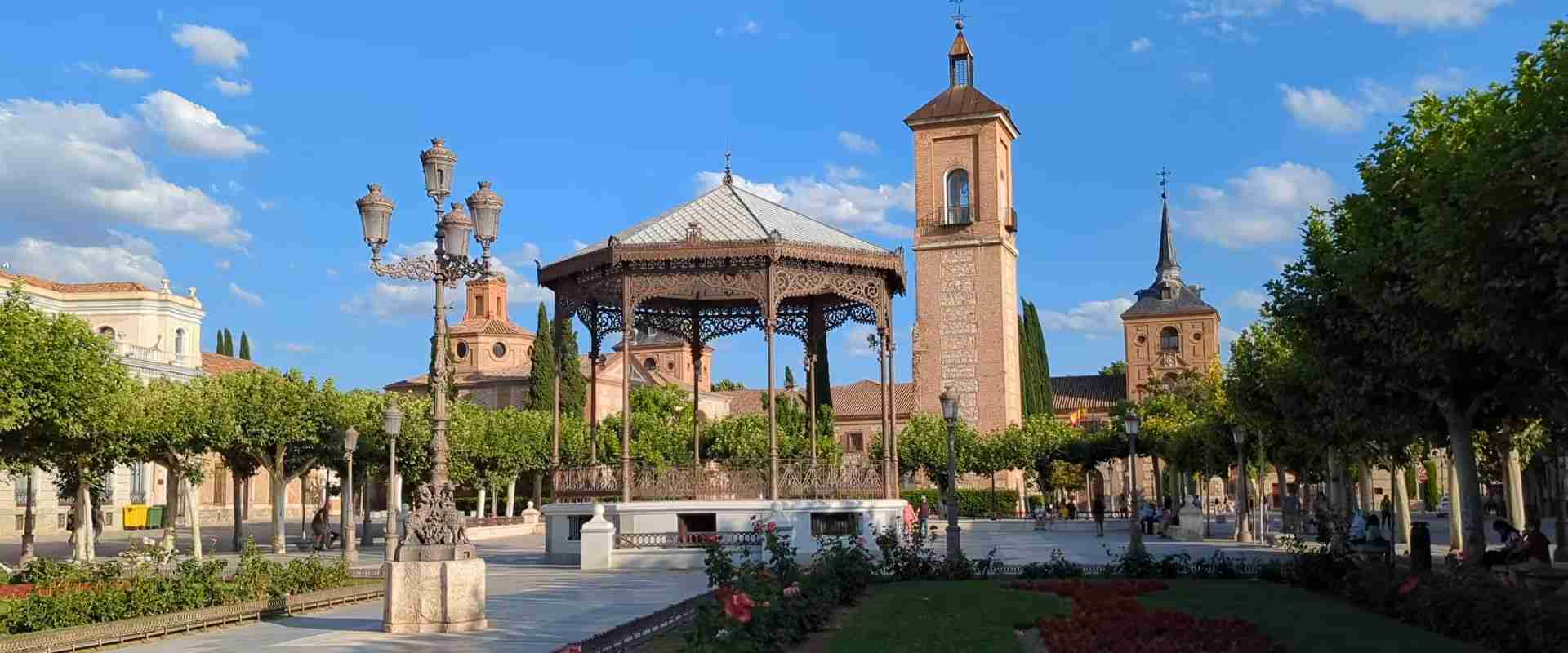
Henares Valley Heritage Trail 2026: Fast Rail and Scenic Driving Beyond Central Madrid
Forty kilometers east of Madrid, the Henares Valley condenses two thousand years of Spanish civilization into a manageable day-trip corridor. Alcalá de Henares — birthplace of Cervantes and home to Spain’s oldest Renaissance university — anchors a route that reaches medieval hilltop villages and a largely unvisited Roman city, both of which reward far more than the standard half-day. This 2026 guide maps the Cercanías C-2 timetable against A-2 highway parking nodes and the low-emission zone rules now governing the historic center, so you arrive fully prepared for either transport mode.
Key Takeaways
- Cercanías C-2 from Madrid Atocha or Chamartín reaches Alcalá de Henares in approximately 55–65 minutes; budget day-trippers typically spend €30–45 per person, mid-range visitors €55–80.
- The A-2 highway offers a toll-free option alongside the AP-2 autopista; driving takes 35–50 minutes but requires navigating Alcalá’s ZBE (low-emission zone) — vehicles rated Label B or lower by Spain’s DGT environmental system face restrictions inside the historic center.
- The Complutum Visitor Center and the House of Hippolytus mosaic occupy the northwestern edge of the modern city, approximately 1.5 km from the university quarter, and require deliberate scheduling to fit both assets into a single efficient day.
- The extension to Pastrana adds approximately €25–40 per person over the Alcalá base cost (extra fuel, Pastrana Collegiate Church entry, and a sit-down lunch stop included); Hita requires a comparable additional driving leg and is best treated as a separate half-day extension.
- Peak academic-year weekdays (October–May, 9 AM–2 PM) concentrate student and school groups in the university quarter; arriving before 10 AM or after 3 PM delivers noticeably quieter access to the inner courtyards and the Cervantes birthplace museum.
- Viator and comparable operators run guided excursions from Madrid to Alcalá starting around €35–55 per person for half-day tours; full-day tours incorporating the Complutum site typically list at €65–100 per person — confirm current listings before booking.
People Also Ask About the Henares Valley Heritage Trail 2026
How long is the train journey from Madrid to Alcalá de Henares in 2026?
Cercanías C-2 trains from Madrid Atocha Cercanías reach Alcalá de Henares in approximately 60–65 minutes; from Madrid Chamartín the journey takes around 50–55 minutes. The line runs roughly every 15 minutes during peak morning and evening hours and every 20–30 minutes off-peak, operating from approximately 5:30 AM to 11:30 PM. Single-journey fares for the B2 zone covering Alcalá run approximately €4–7 per person in 2026; verify current rates on the Renfe Cercanías Madrid website before travel, as a government rail subsidy program introduced in 2022 has been extended annually and its precise 2026 terms may not be confirmed at the time of planning. Multi-trip cards loaded onto the Tarjeta Multi transport card reduce the per-journey cost for visitors making several Cercanías outings during a Madrid stay.
What does a day trip to Alcalá de Henares cost in 2026?
Budget travelers arriving by train and eating at local cafés typically spend €30–45 per person for the full day, covering rail fares, entry to the Complutum Visitor Center, the Cervantes birthplace museum, a contribution at the Magistral Cathedral, and a café lunch. Mid-range visitors adding a sit-down restaurant lunch, audio guide hire, and the Colegio Mayor de San Ildefonso guided tour spend approximately €55–80 per person. Driving visitors in a two-person group face slightly different totals once fuel, optional AP-2 tolls, and parking are included — roughly €35–55 per person at budget level, €65–90 at mid-range. Full-day guided tours from Madrid via Viator Madrid Excursions and comparable operators currently list at €65–100 per person; confirm pricing before booking as rates shift seasonally.
Do I need a ZBE sticker to drive into Alcalá de Henares in 2026?
Alcalá de Henares operates a ZBE (zona de bajas emisiones, or low-emission zone) under Spain’s 2021 Climate Change Law, which requires all municipalities above 50,000 inhabitants to establish such zones. Access restrictions to the historic center apply based on the DGT environmental label assigned to your vehicle: Label C and above (broadly covering Euro 6 petrol and diesel cars and newer) are admitted without restriction; Label B vehicles (older Euro 5 petrol and Euro 4–5 diesel models) face restrictions that may include weekday bans under stricter ZBE configurations; unlabeled vehicles are banned year-round. Most modern rental cars carry Label C or better — confirm with the rental company before travel. For current zone boundaries and restriction hours, consult the Alcalá de Henares municipal website before departure.
Can I combine Alcalá de Henares with Pastrana or Hita in one day in 2026?
Combining Alcalá with Pastrana in a single day is achievable by car with careful timing: the drive from Alcalá takes approximately 55–70 minutes via the A-2 and A-204 roads. A practical itinerary spends the morning in Alcalá (3–4 hours covering either Complutum or the university quarter, not both in depth), drives to Pastrana for a late lunch and a visit to the Collegiate Church tapestry collection (1.5–2 hours), and returns to Madrid along the A-2 by early evening. Hita lies roughly 80 km from Madrid and about 35 km north of Guadalajara city; fitting it into the same day as a full Alcalá visit is ambitious and risks rushing all three destinations. Treating Hita as a separate half-day extension from Alcalá or Guadalajara produces a more satisfying result.
Extended multi-day tours – 5+ days
Featured Madrid Multi-Day Tour Packages

3 days
Madrid 3-Day Discovery Tour
- ✓ Comprehensive Madrid experience
- ✓ Expert local guides included
- ✓ All accommodation included
- ✓ Transportation provided
5 days
Madrid 5-Day Highlights Experience
- ✓ Comprehensive Madrid experience
- ✓ Expert local guides included
- ✓ All accommodation included
- ✓ Transportation provided
7 days
Madrid 7-Day Cultural Journey
- ✓ Comprehensive Madrid experience
- ✓ Expert local guides included
- ✓ All accommodation included
- ✓ Transportation provided
10 days
Madrid 10-Day Complete Adventure
- ✓ Comprehensive Madrid experience
- ✓ Expert local guides included
- ✓ All accommodation included
- ✓ Transportation provided
Multi-day tour packages powered by TourRadar. Prices and availability subject to change.
The Henares Valley in 2026: Heritage Corridor and Journey Context
The Henares River runs eastward from the foot of the Sierra de Guadalajara through a shallow limestone valley before eventually joining the Tagus south of Aranjuez. The valley floor has served as a road corridor since at least the Bronze Age, and the Romans formalized it as one of the principal routes connecting the interior of Hispania Citerior with the wider provincial network. The modern A-2 highway and the Cercanías C-2 commuter rail line follow the same general alignment through the valley, a continuity that gives the heritage corridor an unusual navigational clarity: the oldest and newest transport layers of the landscape run in parallel.
The Roman city of Complutum, established on the valley floor during the early imperial period, developed over the first four centuries CE into a substantial regional center with a forum, thermal baths, temples, and an extensive residential quarter organized on the standard Roman urban grid. After the gradual contraction of Roman authority in late antiquity and the complex transitions of the early medieval period, the center of settlement shifted from the valley floor to the elevated, more defensible position of modern Alcalá de Henares. The Roman site was not abruptly abandoned but diminished over several centuries as strategic and demographic calculus shifted toward higher ground.
The city that grew on the hill became, in 1499, the site of one of the most deliberate acts of intellectual urban planning in European history. Cardinal Francisco Jiménez de Cisneros — confessor to Queen Isabella I of Castile, Archbishop of Toledo, and one of the most powerful figures in late-medieval Spain — founded the University of Alcalá with an explicit program: to train reformed clergy through humanist learning on the model pioneered in Italian universities. Cisneros endowed the institution with purpose-built colleges, a library, a printing press, and student accommodation, creating a planned intellectual campus rather than an institution that had grown up around an existing settlement. The flagship scholarly project of the new university, the Complutensian Polyglot Bible, presented the Old Testament in parallel columns of Hebrew, Greek, Aramaic Targum, and Latin Vulgate, and the New Testament in Greek and Latin — six printed volumes whose printing was completed in Alcalá between approximately 1514 and 1517. The project was among the most ambitious philological undertakings of the early print era.
The UNESCO World Heritage designation awarded in 1998 recognized the historic precinct of Alcalá de Henares and its university under criteria that acknowledge the city’s role in creating a new model of the planned Renaissance university city and its demonstrable influence on the planning of later universities in Latin America, including, as the inscription documentation notes, institutions in Mexico and Peru. The inscription encompasses the university buildings, the Magistral Cathedral, the Cervantes birthplace neighborhood, and the medieval street grid. The Roman Complutum site lies outside the UNESCO perimeter but is managed as a complementary heritage asset by the city’s archaeological and cultural services.
For a 2026 visitor, the practical question is how to navigate a corridor that sits at an awkward middle distance from Madrid — too far for a Metro hop, close enough to make a hire car feel like unnecessary complexity — while managing the evolving low-emission zone rules and the logistical gap between the Roman site and the medieval center. This guide treats train and private car as equally valid modes and maps each to specific itinerary patterns, so the choice is made on the basis of your actual itinerary rather than habit.
Multimodal Transit Integration: Connecting Madrid Chamartín/Atocha to Alcalá
The Cercanías C-2 line is the backbone of public transport between central Madrid and Alcalá de Henares. The line operates as a through service, with trains running through both Madrid Chamartín (the main intercity rail station in the north of the city) and Madrid Atocha Cercanías (the suburban platforms below the main AVE high-speed hall). This dual-terminal structure matters for visitors: travelers staying north of the city center — in neighborhoods such as Chamberí, Salamanca, or the university area — will find Chamartín the more efficient starting point; those based near Sol, Lavapíes, or Embajadores will find Atocha more accessible. Both stations connect to the Madrid Metro network, making either a practicable interchange from any point in the city.
Trains stop at several suburban and outer-suburban stations before reaching Alcalá. Principal intermediate stops relevant to day visitors include Torrejón de Ardoz — a large commuter town with no heritage interest for most visitors — and Meco, smaller still. The journey from Atocha is approximately 60–65 minutes; from Chamartín, approximately 50–55 minutes. The C-2 continues beyond Alcalá to the city of Guadalajara, adding roughly 25 further minutes — an extension worth noting for visitors who plan the longer corridor route or who want to reposition for the Hita detour from Guadalajara rather than from Alcalá.
Purchasing tickets is straightforward at machines in every station; the Tarjeta Multi card (previously the T-10 multi-trip card in revised form) loads zone-compatible journeys at a lower per-trip cost than individual single-journey tickets. The B2-zone fare covering Alcalá de Henares runs approximately €4–7 per single journey as of 2025–2026; a government subsidy program has kept Cercanías fares well below their unsubsidized levels since September 2022 and has been extended annually. Check the Renfe Cercanías Madrid website or the Community of Madrid transport authority portal for the confirmed 2026 fare structure before travel. Trains run from roughly 5:30 AM to 11:30 PM; confirm the last return service on the schedule app before planning a late-afternoon itinerary.
Alcalá de Henares railway station is on the modern southern development of the city, approximately 1.2 km from the edge of the UNESCO historic center. The walk along Paseo de la Estación and into the pedestrianized old city takes roughly 15–18 minutes on flat ground. Taxis queue outside the station; the fare to the historic center typically runs €5–8. Local buses serve the route but operate on a schedule and require the correct transport card or exact change; they are most useful for visitors with luggage or mobility considerations. The Complutum Visitor Center lies in the opposite direction from the station — approximately 1.5 km northwest along the riverside path — meaning visitors who want both sites need to plan their sequence deliberately rather than assuming a simple linear walk covers the day.
ZBE Regulations and Electric Vehicle Charging Stations in Alcalá 2026
Spain’s Law on Climate Change and Energy Transition, enacted in 2021, established a legal obligation for all Spanish municipalities with populations above 50,000 residents to create and enforce ZBEs (zonas de bajas emisiones, low-emission zones) by January 2023. Alcalá de Henares, with a population well above that threshold, implemented its ZBE covering the historic center and high-traffic arterial roads within and adjacent to the UNESCO heritage perimeter. The zone operates on the basis of the DGT (Dirección General de Tráfico) environmental vehicle labeling system, which assigns one of four ratings to vehicles based on fuel type and emission standard.
The four DGT labels and their practical implications for 2026 visitors are as follows. Label 0, assigned to fully electric and hydrogen fuel-cell vehicles, permits entry and parking without restriction; reserved spaces specifically for Label 0 vehicles are marked in some parts of the city. Label ECO, covering plug-in hybrids and compressed natural gas vehicles meeting specific standards, is similarly unrestricted in standard ZBE configurations. Label C, the most common category for modern petrol and diesel cars, covers petrol vehicles meeting Euro 6 standards and diesel vehicles meeting Euro 6 standards; Label C vehicles can enter the ZBE without restriction under current rules. Label B, covering older Euro 5 petrol vehicles and Euro 4–5 diesel models, faces graduated restrictions that in stricter ZBE configurations may include all-day weekday bans; the precise application in Alcalá should be verified against the current municipal ZBE ordinance before travel. Vehicles with no DGT label — generally pre-Euro 4 models and some Euro 4 diesel variants — are banned from the ZBE year-round under current Spanish regulations.
For visitors renting a car in Spain, the practical risk is low: most vehicles in mainstream rental fleets manufactured after approximately 2016 carry at least Label C, and a growing share of newer rental stock is hybrid or electric. The critical step is confirming the DGT label with the rental company before collecting the vehicle, particularly if renting a budget-category car where older diesel models may still appear in the fleet. Drivers of vehicles registered outside Spain should check cross-border label recognition on the Alcalá de Henares municipal website or the Spanish DGT portal, as the administrative process for assigning labels to foreign-registered vehicles was still being clarified in the years leading up to 2026.
For electric vehicle drivers, Alcalá’s charging infrastructure has expanded steadily since the ZBE came into force. Public fast chargers at 22 kW to 50 kW are available at several locations around the city, including near the railway station area and in municipal car parks. The major Spanish charging networks — including Iberdrola, Endesa X Way, and Repsol Waylet — have established coverage in Alcalá; mapping apps such as Electromaps or PlugShare show current charger locations and real-time availability. Allow 30–45 minutes for a meaningful charge top-up at a 50 kW charger during a heritage visit; high-power DC fast charging above 100 kW was less common in Alcalá than in larger Spanish cities as of 2025, though this may have changed by the time of your visit.
Parking inside the ZBE for compliant vehicles uses regulated blue-zone on-street spaces (zona azul) at rates typically in the €1.00–1.80 per hour range, with time limits of 1–2 hours. For full-day visits, peripheral municipal car parks — positioned on the edges of the historic center at 200–400 meters walking distance from the main sites — offer all-day rates typically between €8 and €15. Two travelers sharing a car divide these car park costs to approximately €4–8 per person for the full day.
Combining Roman Complutum and Medieval Center in a Single Efficient Day
The practical difficulty of an Alcalá day trip is geographical: the Complutum Visitor Center and the UNESCO medieval and Renaissance core occupy opposite ends of a north–south axis stretching approximately three kilometers. Both sites deserve a minimum of 90 minutes of attention; a visitor arriving at the railway station at 10 AM and targeting the 6 PM last practical train has a workable eight-hour window, but only with deliberate sequencing.
The recommended approach for train visitors is to walk northwest from the station to Complutum first, reaching the Visitor Center by 10:15–10:30 AM after an early departure from Madrid. The Complutum circuit — interpretive displays, excavation viewing platforms, and the House of Hippolytus mosaic — takes 90–120 minutes for a thorough self-guided visit or up to 150 minutes on a guided tour. Emerging from the site by noon or 12:30 PM, a visitor can walk southeast to the historic center in roughly 20 minutes, arriving for a 1 PM lunch. The afternoon — 2:30 to 5:30 or 6 PM — is devoted to the Colegio Mayor de San Ildefonso, the Magistral Cathedral, the Cervantes birthplace museum, and the pedestrian streets of the old quarter. This sequence has a practical advantage: the Roman site is less crowded in the morning, and the student group traffic in the university quarter typically disperses after midday.
For driving visitors, the same sequencing logic applies but with a critical time-saving option: the car can be repositioned between the Complutum area and the historic center in 5–8 minutes rather than the 20-minute walk. Drivers can park on peripheral streets near the Complutum site for the morning visit — free unregulated street parking is generally available in the residential zone immediately around the site — and then move to a central car park for the afternoon. This repositioning condenses the cross-city transition to a few minutes and allows the itinerary to include a more comfortable lunch break.
Visitors with a limited window of four hours or fewer who must choose between the two main assets face a genuine trade-off. The Complutum site is unique: the in-situ mosaic floors of the House of Hippolytus have no equivalent in the greater Madrid region and offer an experience the university quarter cannot replicate. The university quarter, conversely, is why most visitors come to Alcalá at all, and the Plateresque facade of the Colegio Mayor and the Paraninfo (ceremonial hall) are genuinely among the great spaces of Spanish Renaissance architecture. A practical compromise for time-limited visitors is the Archaeological Museum of the Region of Madrid (Museo Arqueológico Regional), housed in the historic university building complex and free to enter on weekdays. This museum holds the principal Complutum collection — reconstructed mosaic interiors, Roman ceramics, sculpture, and inscriptions — and visiting it before walking the excavation site produces significantly richer comprehension of what the outdoor ruins represent. For visitors who cannot reach both the outdoor site and the historic center, the free museum plus the university quarter covers the most ground in the least time.
Planning Your 2026 Henares Valley Day Trip: Budget Tiers and Daily Costs
Alcalá de Henares day trips from Madrid involve no accommodation cost for most visitors, making the budget calculation more straightforward than a multi-day itinerary. The figures below are per person per day and cover transport to and from Madrid, site entries, meal and drinks costs, and incidentals. All figures are rounded to the nearest €5 and expressed as ranges reflecting realistic low-to-high variation within each tier.
Budget tier — train option. This tier covers the Cercanías C-2 return fare (approximately €5–7), entry to the Complutum Visitor Center (approximately €4–5), the Cervantes birthplace museum (approximately €4–5), a contribution at the Magistral Cathedral (approximately €2–3), a light lunch at a café serving the local workforce on the fixed-price daily lunch menu — typically two courses with bread and a drink for €12–16 — and coffee and a snack (€4–6). Entry to the Archaeological Museum is free on weekdays. Summing low-end components (€5+€4+€4+€2+€12+€4) yields €31; high-end components (€7+€5+€5+€3+€16+€6) yield €42. Rounded: €30–45 per person.
Mid-range tier — train option. This tier adds the Colegio Mayor de San Ildefonso guided tour (approximately €5–8), an audio guide for the university circuit (approximately €4–6), a sit-down restaurant lunch with wine or beer (€22–32), and a pastry or dessert at one of the historic-center café-pastelerías (€3–5). Transport remains the same. Low-end total (€5+€8+€5+€5+€3+€22+€6+€3) yields €57; high-end (€7+€10+€8+€6+€4+€32+€6+€5) yields €78. Rounded: €55–80 per person.
Budget tier — driving option, two people sharing. Fuel for a standard petrol car on the Madrid–Alcalá–Madrid round trip covers roughly 70–80 km; at Spanish pump prices in the 2025–2026 range (approximately €1.65–1.85 per litre for unleaded petrol, subject to market conditions), a car averaging 7 litres per 100 km costs €8–10 in fuel for the round trip, or €4–5 per person sharing. The optional AP-2 autopista toll for the relevant section runs approximately €2–4 total per car one way, or €1–2 per person; the free A-2 alternative adds 5–10 minutes but costs nothing. Full-day peripheral car parking runs €8–15 total, or €4–8 per person. The same entries and a light café lunch apply. Low-end total: €33 → €35–55 per person across the full realistic range including parking and optional toll.
Mid-range tier — driving option, two people sharing. Same fuel, toll, and parking costs, combined with the upgraded lunch, audio guide, Colegio Mayor tour, and Complutum guided tour from the mid-range tier. Low-end total approximately €64; high-end approximately €89. Rounded: €65–90 per person.
Guided tour from Madrid (Viator Madrid Excursions and comparable platforms). Half-day group tours to Alcalá’s historic center depart from central Madrid by bus or train and include a guide; current listings on Viator Madrid Excursions have ranged from approximately €35–55 per person for a half-day circuit of the university quarter. Full-day tours incorporating the Complutum site and a lunch stop typically list at €65–100 per person. GetYourGuide and Civitatis carry parallel listings. Check current offerings before booking: availability, inclusions, language options, and prices shift with season and operator capacity. Read recent reviews to assess guide quality specifically, since the depth and accuracy of the Complutum visit — the most technically demanding element — varies considerably by operator.
Adding the Pastrana extension costs approximately €25–40 per person over the Alcalá driving day-trip base, covering extra fuel (approximately €5–6 per person for the ~100 km additional driving), Pastrana Collegiate Church entry (approximately €3–6), and a sit-down lunch stop in Pastrana (€15–25 per person). Fuel and entry alone, without a restaurant lunch, add approximately €8–12 per person to the day’s cost.
Alcalá de Henares UNESCO Heritage Core 2026: University, Cathedral, and Cervantes
The UNESCO inscription of 1998 recognized two interlocking dimensions of Alcalá’s significance: the physical survival of a Renaissance planned university city and its demonstrable role as an institutional model. The inscription documentation acknowledges the influence of the Alcalá foundation on universities established in the Americas in the sixteenth century, treating the city as an original template whose architecture, collegiate organization, and curriculum shaped later institutions across a hemisphere. Understanding this founding ambition shapes how the buildings read as a group: the colleges, streets, and public spaces were conceived as a unified intellectual campus, not accumulated over centuries of unrelated construction.
The Colegio Mayor de San Ildefonso (the university’s main college building) is the monumental centerpiece of the inscribed zone. Its Plateresque facade, facing the Plaza de San Diego, is executed in the dense ornamental stone-carving style characteristic of early sixteenth-century Castilian Renaissance architecture — a layering of candelabra ornaments, grotesques, heraldic shields, and figural panels that transforms the building’s surface into a kind of three-dimensional illuminated manuscript. Specific authorship of the facade has been debated in the scholarly literature, and the documentary record does not provide a settled attribution; the facade is cited as a primary example of Plateresque ornamental work in numerous histories of Spanish architecture without being definitively signed. Guided visits to the Colegio Mayor include access to the Patio Trilingüe (the inner courtyard where the three scriptural languages — Hebrew, Greek, and Latin — were taught in parallel) and the Paraninfo (ceremonial hall), where Spain’s Ministry of Culture awards the Cervantes Prize each April 23.
The Magistral Cathedral (Catedral Magistral de los Santos Justo y Pastor) holds a distinctive institutional designation: it is traditionally counted among the very few churches formally classified as “magistral” — an institution whose clergy’s primary canonical duty is preaching and teaching rather than the administration of sacraments. The claim that only two such churches exist worldwide (Alcalá and Leuven, Belgium) circulates widely in guides and tourism material; the precise canonical status involves ecclesiastical distinctions that vary in how they are expressed in different sources, so it is presented here as the traditionally received description rather than a settled canonical fact. The building itself presents a substantial late Gothic nave with Renaissance chapels added over the fifteenth and sixteenth centuries and contains several notable altarpieces. Entry is by a modest contribution; guided tours in Spanish operate on a fixed timetable.
The Cervantes birthplace museum (Casa-Museo Natal de Cervantes) on Calle Mayor occupies a reconstruction of the sixteenth-century house associated with the family of Miguel de Cervantes Saavedra, born in Alcalá in 1547. The historical identification of the Calle Mayor neighborhood as the Cervantes family’s residential district is supported by documentary evidence; the specific building is a reconstruction from the early twentieth century rather than a surviving original structure, and the museum’s presentation reflects the interpretive work involved in extrapolating a period domestic environment from the historical record. The reconstruction is carefully executed and is genuinely informative about sixteenth-century Castilian domestic life. Audio guides in multiple languages including English are available at the reception desk. Entry runs approximately €4–5 for adults; allow 45–60 minutes for the full circuit.
Beyond the principal monuments, the historic center repays extended exploration on foot. The open-air theater courtyard (Corral de Comedias) on Calle Teatro preserves the form of an early modern Spanish theatrical performance space; its precise dating and the extent of original surviving fabric are discussed in heritage conservation literature, and guided visits provide the most reliable interpretation. The Archbishop’s Palace complex, the sequence of former collegiate churches and convents that once served the university’s international student community, and the arcaded ground-floor streetscape of the Calle Mayor reflect the coherent urban design that the UNESCO inscription acknowledged. The municipal tourist office on Calle Libreros maintains current opening status for secondary monuments, many of which operate on restricted schedules.
The Cervantes Prize ceremony on April 23 transforms the Paraninfo and the surrounding university streets into a nationally significant cultural event; the city is animated but hotel rates rise and restaurant tables book out. Visiting in the days immediately before or after April 23 provides full access to the Cervantes context without the logistical pressure of the ceremony day itself.
Roman Complutum: History and Visitor Experience 2026
The Roman city of Complutum was established on the alluvial plain of the Henares Valley during the early imperial period, growing over the first four centuries CE into a significant regional center. Archaeological evidence documents a forum, a public bath complex (thermae), multiple religious buildings, and an extensive residential quarter organized on the standard Roman urban grid. The city served administrative and civic functions for the surrounding territory of Hispania Tarraconensis; inscriptions recovered from the site refer to local magistracies, religious associations, and commercial activity. Settlement in the area predates the Roman foundation: archaeological investigation has identified prehistoric and pre-Roman occupation layers beneath the Roman urban levels, confirming the valley floor’s long-standing attraction as habitable and economically productive terrain.
Systematic archaeological excavation began in earnest in the late twentieth century, organized by the Universidad de Alcalá and the Alcalá de Henares municipal archaeological service. The work has progressively revealed the urban layout and produced a substantial collection of finds. Excavation is ongoing, which has two practical implications for 2026 visitors: the visible area of the site has continued to expand, and access zones are occasionally reorganized around active fieldwork. Sections of the broader excavation field that are currently open may differ from descriptions in older travel guides; checking the official municipal heritage website before travel ensures an up-to-date picture of what is accessible.
The highlight of the public visit is the House of Hippolytus (Casa de Hipólito), a fourth-century building whose function has been discussed in the archaeological literature; it is interpreted on site as a collegium — a social or religious association space — rather than a private domestic house. The building preserves a series of mosaic floor panels, the most elaborate of which feature figured and geometric compositions. The mosaics are displayed in situ under a purpose-built protective shelter integrated into the visitor circulation route, allowing viewing of the original floor surface from elevated walkways while shielding the material from the elements. The iconographic reading of the figured panels is a matter of ongoing scholarly discussion; the on-site interpretation presents the current understanding without overstating certainty on contested iconographic points.
The Complutum Visitor Center — at the main entrance to the excavation zone — provides archaeological context through exhibition panels, reconstructed models, and object displays including ceramics, small finds, and architectural fragments. Guided tour slots, typically offering a 80–100 minute circuit of the interpretive displays and the excavation zone with a site archaeologist or trained guide, operate at set times on weekdays and with expanded weekend slots in spring and summer. Booking in advance through the Alcalá de Henares municipal heritage website is advisable during the spring (March–May) and autumn (September–November) peak seasons, when school groups and organized tour parties fill available slots. Walk-in access outside peak periods is generally possible but not guaranteed.
Entry to the Visitor Center and the mosaic zone runs approximately €4–6 for adults; guided tour slots are priced separately at approximately €6–9 per person. Opening hours have typically followed a Tuesday–Sunday schedule with Monday closures standard for Spanish municipal heritage sites; hours contract in winter (roughly November–February) and extend in summer. Verify current hours and ticket prices on the official Alcalá de Henares municipal culture website before planning your itinerary, as both have been subject to adjustment in recent years.
The Visitor Center is ideally paired with the Archaeological Museum of the Region of Madrid (Museo Arqueológico Regional) in the historic university building complex. This museum holds the most comprehensive Complutum collection — reconstructed room interiors with original or facsimile mosaic floors, Roman ceramics, bronze objects, sculpture, and inscriptions — and entry is free on weekdays and on most Sundays. Visiting the museum before the outdoor site is the optimal sequencing: the indoor collection provides the interpretive reference that makes the open-air excavation zones legible and rewarding rather than simply a field of foundations.
Crowd-Free Corridor Routes: Extending the Trip to Pastrana and Hita
The Henares Valley corridor beyond Alcalá opens into countryside that receives a fraction of the visitor traffic flowing to the UNESCO city, yet offers architectural and cultural material of comparable depth. Guadalajara, 25 km further along the A-2, preserves the Palacio del Infantado — a late fifteenth-century palace whose facade is among the more elaborate secular architectural works of the Castilian late Gothic — and a compact historic center that warrants a short detour for visitors already driving the corridor. South of the A-2 axis, Pastrana sits on a ridge above a tributary valley; north, Hita occupies a hilltop position above the Henares plain.
Pastrana’s principal draw is the tapestry collection held in the Pastrana Collegiate Church (Colegiata de Nuestra Señora de la Asunción). The four large-format Flemish tapestries depicting the 1471 military campaigns of King Afonso V of Portugal in Morocco — specifically the taking of the coastal cities of Arzila and Tangier — are works of exceptional scale and narrative detail. They were commissioned by Afonso V in the aftermath of those campaigns and later entered the possession of the Duchy of Pastrana; they are now preserved in a dedicated gallery within the collegiate church and constitute one of the most significant surviving examples of Flemish tapestry narrative art on the Iberian Peninsula. Access to the gallery is managed in small groups due to the fragility of the textile material; entry runs approximately €3–6.
Hita’s interest is primarily literary: Juan Ruiz, the Archpriest of Hita, composed the Libro de Buen Amor in the mid-fourteenth century — a sprawling satirical verse narrative widely considered a foundational text of medieval Castilian literature. The village is small and partly ruinous; medieval walls, the site of the castle keep, and the church of San Pedro survive alongside interpretive signage that contextualizes Juan Ruiz’s work within its physical landscape. An annual medieval festival, typically staged on the last weekend of June, draws regional crowds and recreates aspects of the medieval period with market stalls, costumed participants, and performances. Neither Pastrana nor Hita is served by practical public transport connections from Alcalá; private car is the only realistic transport mode for visiting either.
Logistics of Self-Guided Architectural Tours via Audio-Guided Systems
Alcalá de Henares has developed visitor infrastructure that supports effective independent touring without requiring a human guide at every step. The municipal tourist office on Calle Libreros — a short walk from the Colegio Mayor — distributes printed heritage circuit maps in multiple languages including English; staff are typically English-speaking and can advise on current opening times, recent changes to access, and any temporary closures of secondary monuments. The office also offers a starting point for the official guided walking tour of the historic center, available on a timetabled basis in Spanish and occasionally in other languages during peak summer season.
For audio-guided self-touring, the city has made GPS-triggered commentary available through digital channels. A Turismo de Alcalá application has been available for iOS and Android, providing route guidance and site commentary in English across the main heritage circuit. Before travel, verify the current official version in the relevant app store and confirm it is published by the official Alcalá de Henares tourism service; app availability and versions update with platform requirements and may have changed since this article was written. An alternative is to use the audio guide rental service available at the Complutum Visitor Center — which covers the archaeological site specifically — combined with the printed route materials from the tourist office for the historic center. The two systems together cover the full day’s circuit without redundancy.
In Pastrana, the Collegiate Church’s tapestry collection is accessible through guided visits managed by church staff, typically conducted in Spanish with printed information sheets in other languages available on request. Opening hours in Pastrana follow the pattern typical for rural Spanish heritage: Tuesday through Sunday with longer summer hours (approximately 11 AM–2 PM and 4 PM–7 PM in season) and contracted winter hours; Monday closures are standard. Hours and entry fees should be confirmed via the Pastrana town website or the Guadalajara provincial tourism portal before arrival, as rural heritage sites operate with less administrative redundancy than urban ones and occasional unscheduled closures do occur.
Hita’s self-guided circuit takes 45–60 minutes on foot through the village: the medieval walls, the castle keep site, the church of San Pedro, and the plaza connected to episodes in the Libro de Buen Amor. Interpretive signage is in Spanish; English-speaking visitors benefit from reading background material on Juan Ruiz before arrival — the Cervantes Institute and several university Spanish literature departments maintain accessible online introductions to the text. There is no dedicated audio guide system for Hita at the time of writing. For logistical information about current site access, the village town hall (ayuntamiento) or the Guadalajara provincial tourism service is the most reliable source.
For visitors who prefer a structured experience across the full corridor, some Madrid-based private guide services offer custom full-day itineraries combining Alcalá, Complutum, and Pastrana. These are not currently available as standard group departures on major booking platforms and require direct contact with guide services; when inquiring, ask specifically about coverage of the Roman site and Pastrana, as many standard Alcalá offerings focus exclusively on the university historic center.
Seasonal Timing: Avoiding Peak Academic and Tourist Hours
The University of Alcalá enrolls approximately 30,000 students across its faculties. During the academic year — mid-September through late June, with examination periods in January and May–June — the city has a resident intellectual population that fills the historic streets, café bars, and university buildings with genuine activity. This is characterful and reflects the city’s living role, but it produces predictable crowd pressure at specific times that heritage visitors can easily manage.
The heaviest congestion for tourists occurs Tuesday through Thursday between 10 AM and 1 PM, when organized school groups arriving by coach from Madrid combine with university tour bookings at the Colegio Mayor and the Cervantes birthplace museum. Arriving before 10 AM — when the university’s guided-tour circuit opens — gives access to the Patio Trilingüe and the Paraninfo in the calm window before the day’s first tour group forms. Alternatively, arriving after 3 PM takes advantage of the dispersal following the midday meal break; guided visits to the university buildings continue until approximately 5:30–6 PM depending on season.
For the Complutum Visitor Center, the summer months of July and August bring organized archaeological open-day events and family visiting groups; the site is least crowded on weekday mornings outside the summer peak and on winter weekdays between November and February. March, April (outside Semana Santa), October, and November offer the most favorable conditions for comfortable, crowd-free visiting at both the Roman site and the historic center simultaneously.
Pastrana sees its highest visitor numbers in late July and August during local fiesta week and on summer weekends generally; the tapestry gallery receives its most concentrated traffic on Saturday and Sunday mornings in July and August. A Tuesday–Thursday visit in May, early June, or October is ideal for a calm viewing of the tapestries, which require close attention to follow the narrative and appreciate the weaving detail. Hita’s medieval festival on the last weekend of June creates a highly animated but very crowded environment in a village of limited capacity; plan explicitly for or against it. For quiet architectural visits to both Pastrana and Hita, a mid-week visit in May or October is the optimal choice.
Two dates to note for Alcalá specifically: April 23 (Cervantes Prize ceremony day) is the single busiest day in the city’s cultural calendar and is best avoided or specifically sought depending on your interest in watching the ceremony. The third Sunday of October hosts a large heritage open-day event that opens buildings not normally accessible to the public — worth planning around if you want maximum access to the secondary collegiate buildings.
Driving the A-2 Highway: Parking Nodes and Route Variants 2026
The A-2 is the free, two-lane nacional (national road) that connects Madrid with Alcalá de Henares and continues to Guadalajara and eventually to Zaragoza. It runs parallel for most of its length to the AP-2 autopista, a motorway-standard carriageway with a toll collected at a barrier near Alcalá; the toll for the relevant section runs approximately €2–4 per car depending on vehicle category and tariff period. Both roads leave Madrid’s M-40 outer ring road heading east-northeast. The AP-2 offers uninterrupted motorway-grade flow; the A-2 passes through roundabouts and traffic lights in the outer suburban zone, adding 5–15 minutes. For a two-person trip where time is not the primary constraint, the free A-2 represents a meaningful saving across multiple journeys. For visitors uncomfortable with unfamiliar road environments, the AP-2’s straightforward motorway profile is worth the toll.
The three principal highway exits serving Alcalá de Henares heritage visitors are: Alcalá Este for the Complutum Visitor Center and eastern peripheral parking; the central exit (variously signed as Alcalá Centro or equivalent) for the university quarter car parks; and Alcalá Oeste for the newer commercial periphery, which is not recommended for heritage visitors. GPS navigation reliably distinguishes these exits; setting your destination to the Complutum Visitor Center or the Colegio Mayor de San Ildefonso specifically ensures routing to the relevant parking zone rather than to a generic city-center point that may deposit you on a congested arterial road.
Parking options for heritage visitors in 2026:
- Peripheral streets around the Complutum site: Residential streets immediately adjacent to the Complutum excavation zone offer free on-street parking in unregulated areas. Spaces fill on summer weekend mornings and during organized open-day events; arriving before 10 AM on busy days secures a space without difficulty. Verify zone markings on arrival before leaving the vehicle.
- Paseo de la Estación area (near the railway station): Covered and open-air parking structures near the station, useful for visitors using the station as a reference landmark. Rates approximately €1.20–1.60 per hour; full-day capped rates typically €8–12 where available.
- Historic center car parks (university quarter): Several underground and surface car parks within 200–400 meters of the Colegio Mayor. Weekday arrivals before 10 AM find spaces without difficulty outside major university events (graduation ceremonies, April 23 Cervantes Prize day, and university open days). Hourly rates approximately €1.50–2.00; all-day caps approximately €10–18. The car park on or near Calle Empecinado and equivalently signed options in the university neighborhood are the most practical choices.
- Free on-street parking, southern and outer residential zones: Streets south of the railway station and in newer residential areas offer free on-street parking; these require a 15–25 minute walk to reach either the Complutum site or the historic center and are viable for visitors prioritizing cost over access time.
For the corridor extension, continue northeast on the A-2 from Alcalá toward Guadalajara (approximately 25 minutes). From the Guadalajara ring road, the CM-200 or equivalent signed provincial road heads south into the valley toward Pastrana; the drive from the ring road to Pastrana takes approximately 40–50 minutes. For Hita, the GU-925 or equivalent signed road heads north; allow 30–40 minutes from the Guadalajara area. Fuel stations are plentiful along the A-2 corridor; they become less frequent on the Pastrana approach south of Guadalajara, so topping up fuel in Guadalajara before the southern detour is prudent for vehicles with less than a half tank.
Money-Saving Strategies for the Henares Valley 2026
The following approaches reduce day-trip expenditure without reducing access to the core heritage content:
- Archaeological Museum of the Region of Madrid — free on weekdays and most Sundays. This museum in the historic university building holds the principal Complutum collection — reconstructed mosaic interiors, Roman ceramics, bronze objects, and inscriptions. Free entry on weekdays means a visitor on a budget can absorb the interpretive depth of the Roman city without paying for the outdoor site; combining the free museum visit with the paid Complutum Visitor Center entry maximizes value on a fuller itinerary. Verify current free-entry days on the museum website before travel, as access policies occasionally change.
- Fixed-price daily lunch menu (menú del día). Restaurants and cafés catering to the local workforce offer a two-course lunch with bread and a drink for €12–16 on weekdays; the same format at establishments on the tourist-facing Calle Mayor axis can run €18–24. Quality at the off-circuit establishments is generally comparable or better. Moving one or two streets back from the main pedestrian thoroughfare reliably produces a meaningful cost difference.
- Free A-2 vs. AP-2 toll. For two people sharing a car, choosing the free A-2 over the AP-2 saves €4–8 total per round trip (approximately €2–4 per person). Over multiple heritage excursions during a Madrid stay the saving accumulates; the time cost of the free route is 5–15 minutes per leg.
- Multi-trip Tarjeta Multi rail card. If your Madrid stay includes several Cercanías journeys, loading zone-compatible trips on the multi-trip card reduces the per-journey cost relative to individual single-journey tickets. The saving per Alcalá round trip is approximately €2–4, depending on the current tariff structure.
- Free exterior circuit of the university quarter. The Plateresque facade of the Colegio Mayor faces a public plaza and is freely viewable at any time; the surrounding university streets, the Archbishop’s Palace exterior, and the historic center streetscape can be explored on foot without any paid entry. A budget visit combining the free exterior circuit, the free Archaeological Museum, a contribution at the cathedral, and the paid Complutum Visitor Center keeps total entry spend under €10 per person.
- Weekday Pastrana visit. The Collegiate Church’s tapestry gallery charges a modest entry fee; the main cost driver for the Pastrana extension is fuel and time rather than tickets. A Tuesday–Thursday visit in May or October avoids weekend competition for the limited parking in Pastrana’s small historic square and delivers calmer, less rushed access to the tapestries.
- Avoid the April 23 premium. Hotel rates and restaurant prices in Alcalá rise on and around the Cervantes Prize date. If overnight accommodation is part of the plan, shifting the visit by a few days in either direction reduces accommodation costs and eliminates the booking pressure of the ceremony week.
Accommodation Options for an Extended Henares Valley Visit 2026
Most visitors complete the Alcalá circuit as a day trip from Madrid, and the 55–65 minute train connection removes the logistical friction that would otherwise push visitors toward overnight stays. An overnight visit becomes worthwhile when the itinerary includes both the Complutum site and the extended corridor to Pastrana or Hita, when a traveler wants the experience of the city at night after the day-trip crowd has left, or when Alcalá is a planned stop on a Madrid-to-Zaragoza driving itinerary along the A-2.
The most prominent accommodation option is the Parador de Alcalá de Henares, part of the national Paradores de España network. The property occupies buildings associated with the old Colegio de Málaga and Colegio de los Irlandeses in the historic center. Room rates on the Paradores website typically range from approximately €120–200 per room per night depending on season, room category, and promotional availability; for two travelers sharing a double, the per-person accommodation cost at this tier runs approximately €60–100 per night. Check the Paradores de España website directly for confirmed 2026 rates and early-booking discounts.
Mid-range hotels in or adjacent to the historic center are available across the main booking platforms in the €70–130 per room per night range; the per-person cost for two sharing runs approximately €35–65. Budget-tier hostales (family-run guest houses) start around €40–65 per double room, or €20–35 per person sharing. Breakfast inclusion varies; confirm room-only versus bed-and-breakfast pricing before booking. For an overnight itinerary incorporating the full heritage circuit plus Pastrana, a mid-range two-day trip — one night in Alcalá, two days of activities and meals, train or driving costs — runs approximately €180–290 per person as a rough planning figure, using the mid-range daily cost calculations and a mid-range hotel for the single intervening night.
Frequently Asked Questions About the Henares Valley Heritage Trail 2026
How often do Cercanías C-2 trains run between Madrid and Alcalá de Henares in 2026?
During peak commute hours — roughly 7–9 AM and 6–8 PM on weekdays — the C-2 runs approximately every 15 minutes. Off-peak midday frequency drops to approximately every 20–30 minutes. The line operates from roughly 5:30 AM to 11:30 PM daily. On Spanish public holidays and summer Sundays, a reduced timetable typically applies throughout the day. Always confirm the schedule on the Renfe Cercanías Madrid website or app for your specific travel dates, as timetables are adjusted seasonally and during engineering works.
Is the Complutum Visitor Center worth including in a one-day Alcalá itinerary in 2026?
Yes, if the itinerary window is six hours or more. The Complutum Visitor Center and the House of Hippolytus in-situ mosaic floors are among the least-visited but most genuinely surprising heritage assets in the greater Madrid region; the quality of the Roman material has no equivalent elsewhere in the corridor. The logistical cost is the 1.5 km walk from the railway station in the opposite direction from the historic center. The most efficient integration: visit Complutum first (arriving by 10 AM), reach the historic center by 1 PM for lunch, and cover the university circuit in the afternoon. Visitors with under four hours are better served by the free Archaeological Museum in the university building, which holds the primary Complutum collection indoors and eliminates the cross-city walk.
What are the practical transport alternatives if I want to reach Pastrana or Hita in 2026?
There are no practical public transport alternatives to a private car for either destination. Both towns have infrequent provincial bus services from Guadalajara city, but journey times, departure frequencies, and limited return schedules make them impractical for a day visitor from Madrid. The realistic car-free options are: hire a car from Madrid or Alcalá for the day; book a private guided tour specifically designed to cover the extended corridor (available from Madrid-based guide services, though not currently offered as standard group departures on major booking platforms); or accept that Pastrana and Hita require a dedicated car-hire day during the same Madrid stay and visit Alcalá separately by train. At the time of writing, no standard Viator Madrid Excursions group departure combines Alcalá, Pastrana, and Hita in a single itinerary.
What traditional food should I try in Alcalá de Henares in 2026?
The rosquilla — a ring-shaped anise-flavored pastry — is Alcalá’s most distinctive local confection and has been associated with the city for centuries; pastry shops along the Calle Mayor and side streets sell them in plain, glazed, and flavored versions and they make a good pocket-sized companion for the heritage walk. The broader cuisine reflects Castilian and Madrileño cooking: roast lamb (cordero asado), the chickpea and meat stew known as cocido madrileño, and migas (fried breadcrumbs with pork fat, served with grapes or chorizo) appear on menus at traditional restaurants in the historic center. The student population supports a wide range of inexpensive midday eating: a full breakfast at a café bar in the university area typically costs under €4, and the fixed-price daily lunch menu is the single best-value eating format for a day visitor.
Are there accessible routes for visitors with mobility limitations at the Complutum site and historic center in 2026?
The main access path through the Complutum Visitor Center and the House of Hippolytus viewing circuit has been surfaced to support wheelchair use on the primary route; some sections of the broader excavation field and outer platforms involve uneven or unpaved ground and may not be navigable. The historic center of Alcalá is predominantly flat and largely pedestrianized; the main streets are level and paved. The Colegio Mayor de San Ildefonso has step access at principal entrances — contact the university visitor service in advance for current accessibility arrangements, as the situation may have been improved since this article was written. The Archaeological Museum in the university building has lift access to its main exhibition floors. Contact individual sites directly before travel for current accessibility status.
Can I use a standard Madrid Zone A transport card for the Cercanías journey to Alcalá in 2026?
A standard Zone A monthly Abono transport pass does not cover the B2 zone that includes Alcalá de Henares; visitors need a multi-zone pass extending to Zone B2, or they purchase individual journey tickets at the machine. Day visitors without a multi-zone annual pass pay for individual single-journey tickets or load an equivalent amount onto the Tarjeta Multi reloadable card. Contactless bank card payment has been available at a growing number of Cercanías ticket machines across the network; confirm whether it is operational at your departure station, as the rollout has been progressive and not uniform across all stations. The Renfe app allows advance ticket purchase and mobile display, avoiding machine queues at busy departure times.
What is the Cervantes Prize and why is it awarded in Alcalá de Henares in 2026?
The Premio Cervantes, established in 1975, is the highest literary distinction in the Spanish-language world, awarded annually by Spain’s Ministry of Culture to a writer in recognition of a lifetime body of work in Spanish. The award ceremony takes place each April 23 — recognized as the anniversary of the death of Miguel de Cervantes — in the Paraninfo (ceremonial hall) of the Colegio Mayor de San Ildefonso. The location connects the prize directly to Cervantes’s birthplace city and to the university institution that bears the Latinized form of that city’s name. The ceremony is a nationally significant cultural event; the city fills with literary figures and media on the day, and the Paraninfo is at its most formally splendid. Access to the ceremony itself is by official invitation; the city around it is publicly animated.
What guided tours to Alcalá de Henares and the Henares Valley does Viator list in 2026?
Viator Madrid Excursions typically lists several Alcalá options: standard half-day walking tours of the UNESCO historic center (departing from central Madrid by bus or train, approximately €35–55 per person), full-day tours adding the Complutum Visitor Center and a lunch stop (approximately €65–100 per person), and occasional small-group tours combining Alcalá with a second Castilian town. GetYourGuide and Civitatis carry parallel listings; some Guadalajara-based operators also offer corridor tours. Confirm current active listings, departure points, included sites, and language options on each platform before booking, as seasonal availability and operator continuity vary. Read recent reviews specifically for guide knowledge of the Roman site if Complutum coverage is important to your visit — quality varies significantly by operator on this element.
How does the A-2 highway compare to the Cercanías train as the better option for 2026?
The train wins on cost, simplicity, and environmental footprint for visitors focused entirely on Alcalá: it is cheaper per person for groups of one or two, eliminates parking logistics and ZBE navigation, and delivers you within walking distance of the historic center. Driving wins on flexibility for the multi-site itinerary: only a car enables fast repositioning between Complutum and the historic center, and only a car reaches Pastrana and Hita. For a group of three or four, the per-person driving cost drops to the point where the flexibility advantage is essentially cost-neutral against the train. A practical rule: if your entire itinerary is Alcalá de Henares only, take the train. If your itinerary includes any of the corridor extensions, or if you want to cover both Complutum and the historic center efficiently within a single six-hour window, the car is the better tool.
Is Alcalá de Henares a practical base for exploring multiple Castilian heritage sites in 2026?
Alcalá functions reasonably as a regional base for the Henares corridor and the eastern Guadalajara province specifically. From Alcalá, Guadalajara city is 25 minutes along the A-2, Pastrana is 55–70 minutes south, and Hita is 55–65 minutes north. For access to the broader Castilian heritage landscape — Toledo (approximately 90 km south), Segovia (approximately 130 km northwest), Cuenca (approximately 180 km southeast) — Madrid remains the more efficient logistical hub, with better rail and road connectivity to all directions. An overnight stay in Alcalá makes strong sense for a two-day corridor itinerary; as a full-week base for a wider Castilian circuit, Madrid’s transport connections give it a clear advantage.