Sound of Music Locations Day Trip from Munich 2026: Complete Travel Guide
This guide provides everything you need to plan your perfect Sound of Music adventure from Munich in 2026, from choosing between organized tours and independent travel to understanding seasonal timing, budgeting accurately, and maximizing your experience at each filming location. The comprehensive planning information helps both first-time visitors and returning fans make the most of this magical day trip.
Key Takeaways
- Tour Duration and Distance: Full-day excursions run 9-10 hours covering 150km between Munich and Salzburg, visiting 6-8 iconic Sound of Music filming locations including Mirabell Gardens, Nonnberg Abbey, and Mondsee Church
- Pricing and Value: Organized tours cost €65-95 per person in 2026 including transportation, guided commentary, and entrance to key locations, while independent train travel costs €30-45 round-trip plus individual site admissions
- Optimal Timing: Spring and autumn offer the best balance of pleasant weather, smaller crowds, and availability, while summer peak season (June-August) requires booking 4-6 weeks ahead
- Booking Strategy: Reserve tours 3-4 weeks in advance for spring/autumn and 6-8 weeks for summer to secure preferred departure times and guarantee availability for this popular excursion
- Cultural Experience: Tours combine movie nostalgia with authentic Austrian culture, visiting filming locations while exploring Salzburg’s baroque architecture, alpine landscapes, and the real Von Trapp family history
Your Sound of Music Journey from Munich in 2026
The hills come alive on this enchanting day trip from Munich to Salzburg’s Sound of Music filming locations, where Julie Andrews’ iconic performance transformed Austria’s Lake District into one of Europe’s most beloved cinematic landscapes. This comprehensive journey transports you across the German-Austrian border into the baroque splendor of Salzburg and the crystalline beauty of the Salzkammergut region, where nearly every scene from the 1965 classic was filmed.
Munich serves as the perfect departure point for Sound of Music enthusiasts, positioned just 150 kilometers from Salzburg with excellent transportation connections. The day trip experience goes far beyond movie tourism, immersing visitors in authentic Austrian culture, stunning alpine scenery, and the fascinating real-life story of the Von Trapp family whose escape from Nazi-occupied Austria inspired the beloved musical.
Whether you join an organized tour with expert guides who share behind-the-scenes filming stories or travel independently by train to explore at your own pace, the Sound of Music locations day trip delivers one of Central Europe’s most delightful cultural experiences. The combination of spectacular natural beauty, charming baroque architecture, and cinematic nostalgia creates an unforgettable journey through the heart of the Austrian Alps.
People Also Ask About Sound of Music Day Trips from Munich 2026
How much does a Sound of Music tour from Munich cost in 2026?
Organized Sound of Music tours from Munich cost €65-95 per person in 2026, depending on group size, tour operator, and included features. Check tour operators for current rates as pricing may vary. Standard tours at €65-75 include round-trip coach transportation, English-speaking guide, stops at 6-8 filming locations, and entrance to Mirabell Gardens and Salzburg city center. Premium tours at €85-95 add small group sizes (maximum 16 passengers), extended time at Lake Mondsee, lunch recommendations, and more personalized attention. Independent travelers pay €30-45 for round-trip train tickets from Munich to Salzburg, plus €15-25 for local transportation and optional site entrances, totaling €45-70 for a self-guided experience.
What Sound of Music locations can you visit from Munich in 2026?
Day trips from Munich visit 6-8 key Sound of Music filming locations across Salzburg and the surrounding Lake District. Essential stops include Mirabell Gardens where the “Do-Re-Mi” sequence was filmed, Nonnberg Abbey where Maria was a novice, Leopoldskron Palace which served as the Von Trapp villa exterior, Mondsee Church where the wedding scene was shot, and panoramic viewpoints overlooking the alpine meadows featured in the opening scenes. Most tours also pass Hellbrunn Palace with its famous gazebo (closed to visitors after accidents) and drive through the Lake District showing Wolfgangsee and St. Gilgen landscapes. Organized tours visit more locations efficiently than independent travelers, who typically focus on Salzburg city sites plus Mondsee as a half-day extension.
Do you need advance booking for Sound of Music tours in 2026?
Advance booking is essential for Sound of Music tours from Munich, especially during peak season from June through September when tours sell out 4-6 weeks ahead. Book 3-4 weeks in advance for spring and autumn departures (March-May, September-November) to secure your preferred date and departure time. Summer peak season (June-August) requires booking 6-8 weeks early as this period coincides with school holidays and maximum tourism activity. Last-minute bookings within 1-2 weeks sometimes available during low season (November-February excluding Christmas), but choice of tour operators and departure times becomes limited. Online booking through official tour operator websites guarantees your reservation and often provides small early-booking discounts of 5-10% for reservations made 8+ weeks in advance.
How long does the Sound of Music day trip take from Munich in 2026?
Complete Sound of Music day trips from Munich run 9-10 hours including round-trip transportation and site visits. Tours depart Munich between 8:30-9:30 AM and return between 6:00-7:00 PM. The journey includes 1.5 hours travel each way to Salzburg (150km), 3-4 hours exploring Salzburg filming locations, 1.5-2 hours visiting Lake Mondsee and surrounding areas, plus lunch break time. Independent travelers using trains can customize timing but should allocate the full day for a comprehensive experience visiting both Salzburg city sites and Lake District locations. Half-day abbreviated versions focusing only on Salzburg proper run 6-7 hours but miss key locations like Mondsee Church and the alpine scenery.
Extended multi-day tours – 5+ days
Featured Munich Multi-Day Tour Packages
4 days
Germany´S Beer Experience
- ✓ Booking needs min. 2 travelers
7 days
7 Days by Train in Munich & Zurich: Alpine Dreams & Bavarian Charms
- ✓ Comprehensive Munich tour
- ✓ Expert local guides included
- ✓ All accommodation arranged
- ✓ Transportation provided
4 days
Oktoberfest Munich (3-Star Hotel Senator)
- ✓ Booking needs min. 2 travelers
7 days
GERMAN CHRISTMAS MARKETS 2026
- ✓ Comprehensive Munich tour
- ✓ Expert local guides included
- ✓ All accommodation arranged
- ✓ Transportation provided
Multi-day tour packages powered by TourRadar. Prices and availability subject to change.
Essential Planning Information 2026
Tour Costs and Booking in 2026
Sound of Music tours from Munich operate in three primary categories, each offering distinct value propositions for different traveler preferences. Standard coach tours accommodate 35-50 passengers and cost €65-75 per person in 2026. Check major tour operators like Gray Line Munich, Radius Tours, or Mike’s Bike Tours for current official rates as pricing may vary. These tours provide excellent value through comprehensive itineraries, professional English-speaking guides with extensive filming knowledge, comfortable air-conditioned coaches, and stops at all major filming locations.
Small group tours limit capacity to 12-16 passengers and cost €85-95 per person, delivering more personalized experiences with easier questions and interaction with guides, more flexible timing at each location, and enhanced photo opportunities without large group management delays. The premium price includes the same comprehensive itinerary but with improved quality through smaller group dynamics and more intimate atmosphere.
Private tours for families or small groups of 4-8 people cost €400-600 total (€50-150 per person depending on group size), offering completely customized itineraries, flexible departure times, personalized pace at each location, and ability to add special requests like specific filming scenes or extended time at favorite locations. Private tours work best for Sound of Music superfans, families with children who need flexible schedules, or groups celebrating special occasions.
Independent travel by train costs significantly less at €30-45 round-trip for Munich-Salzburg train tickets, plus €8-15 for local buses in Salzburg and optional €12-18 for train extension to Mondsee. Total independent costs reach €50-80 including admissions and local transport, compared to €65-95 for organized tours. However, independent travel requires more research, planning, and coordination while missing the expert commentary that brings filming locations to life.
All tour prices include round-trip transportation from central Munich meeting points, guided commentary throughout the journey, stops at filming locations, and entrance to public spaces like Mirabell Gardens. Tours exclude lunch (budget €15-25 for casual dining in Salzburg), optional photo purchases from tour operators, tips for guides (€5-10 per person customary for excellent service), and souvenirs from location gift shops.
Tour Schedule and Duration in 2026
Morning departures occur between 8:30-9:30 AM from central Munich locations, typically at Hauptbahnhof central station or major hotels in the city center. Tours provide exact meeting point details upon booking confirmation, with check-in required 15 minutes before departure. The outbound journey to Salzburg takes 1.5 hours via the A8 Autobahn, with guides beginning commentary during the drive to provide Sound of Music context and overview of the day’s itinerary.
Salzburg exploration runs 3-4 hours covering the compact baroque old town and nearby filming sites. First stop brings visitors to Mirabell Gardens (30-45 minutes) for the “Do-Re-Mi” fountain sequence location, formal gardens, and panoramic terrace views. The tour continues to Nonnberg Abbey (20-30 minutes, exterior viewing only as the working convent restricts interior access), passing through the historic cemetery and viewing the convent where Maria served as a novice.
Leopoldskron Palace visit (30 minutes) shows the lakeside baroque palace that served as the Von Trapp villa exterior in establishing shots, though the palace itself remains private property with viewing from public lakeside paths. Downtown Salzburg stops (60-90 minutes) include the horse fountain where the children perform “Do-Re-Mi,” Mozart Square, and Residenzplatz, with free time for lunch and shopping in the charming old town.
Lake District excursion occupies 1.5-2 hours in the afternoon, driving through the spectacular Salzkammergut region to reach Mondsee Church (30-45 minutes) where Maria and Captain Von Trapp’s wedding was filmed. The baroque church interior remains remarkably unchanged since 1964 filming, creating powerful recognition moments for fans. Return drive through Lake Wolfgang scenery and mountain viewpoints adds another 45-60 minutes.
Evening return to Munich departs Salzburg between 4:30-5:30 PM, arriving back in central Munich between 6:00-7:00 PM. Total duration runs 9-10 hours making this a full-day commitment requiring comfortable shoes, layered clothing, and realistic expectations about the physical activity involved in walking between locations.
Sound of Music Locations Visited on the Tour
Salzburg Old Town and Movie Sites
Salzburg’s baroque old town provided the urban backdrop for numerous Sound of Music scenes, with the compact historic center allowing efficient walking tours between filming locations. The horse fountain at Residenzplatz appears prominently in the “Do-Re-Mi” sequence where the children splash and play under Maria’s delighted supervision. The fountain operates continuously during daylight hours (approximately 8:00 AM to 8:00 PM in summer, earlier shutdown in winter), creating the same magical water displays captured in the 1964 filming.
The sequence of baroque architecture, narrow medieval lanes, and elegant squares creates the quintessential Austrian atmosphere that captivated audiences worldwide. Mozart Square, Universitätsplatz market area, and the Getreidegasse shopping street all feature in montage sequences showing the family’s exploration of Salzburg. The distinctive yellow and pink pastel buildings, ornate wrought-iron shop signs, and alpine backdrop remain exactly as filmed, providing exceptional photo opportunities that recreate iconic movie moments.
Tours include 60-90 minutes of free time allowing independent exploration of old town highlights, lunch at traditional Austrian restaurants (Wiener schnitzel €16-24, kasespätzle €12-16, sachertorte €6-8), and shopping at Sound of Music-themed stores selling edelweiss products, traditional dirndls, and movie memorabilia. The compact old town design means all major sites lie within comfortable 10-15 minute walking distances, making efficient use of limited tour time.
Mirabell Gardens – “Do-Re-Mi” Location
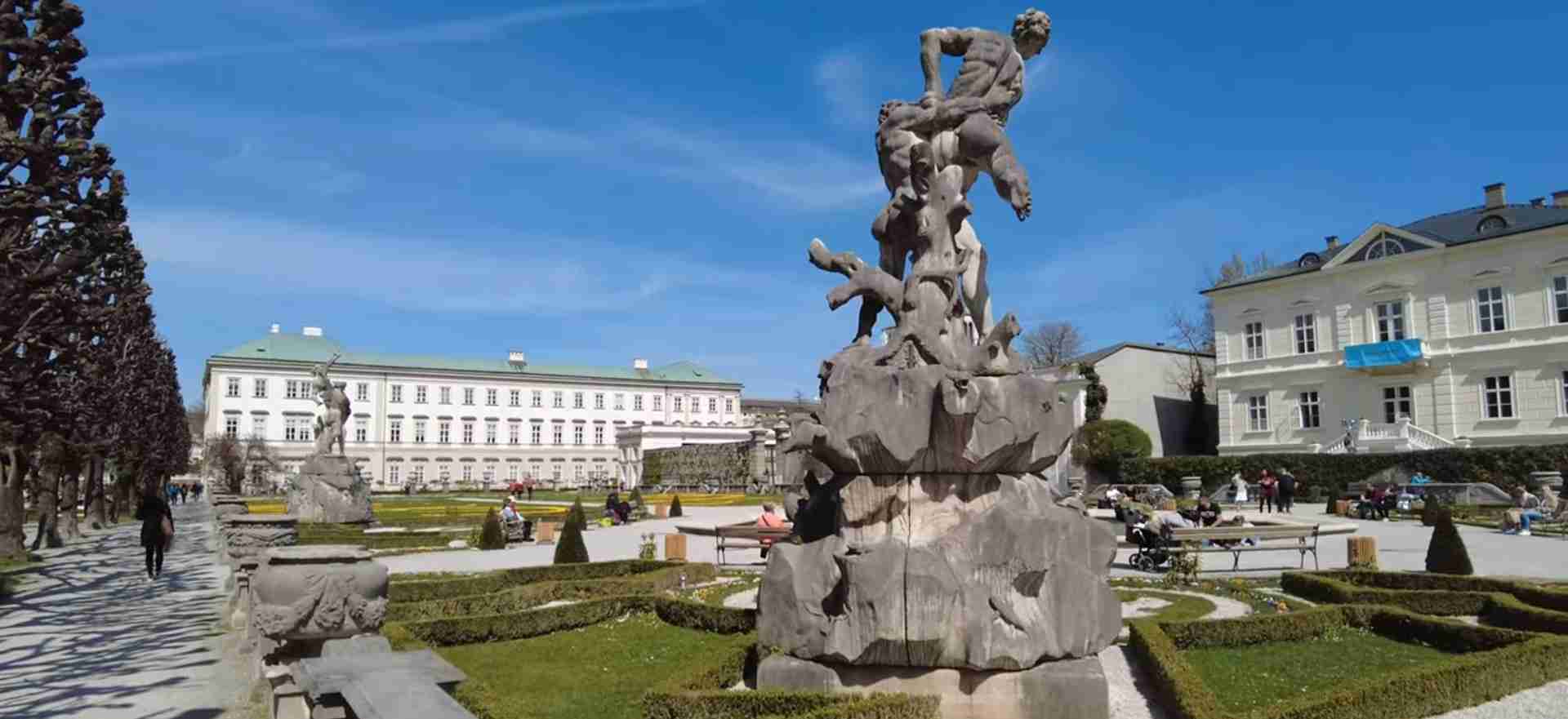
Mirabell Gardens host the most famous Sound of Music filming location where Julie Andrews and the seven Von Trapp children performed the exuberant “Do-Re-Mi” song sequence. The formal baroque gardens, created in 1690 by Prince-Archbishop Wolf Dietrich for his beloved Salome Alt, provided the perfect setting for the musical number that showcased each child’s developing relationship with their governess Maria.
The Pegasus Fountain where the children dance and leap remains the centerpiece of the garden’s parterre, surrounded by meticulously maintained geometric flower beds that bloom spectacularly from April through October. Tours allocate 30-45 minutes at Mirabell Gardens allowing time to recreate the famous fountain dance scenes, walk the tree-lined pathway where the children hop along the garden walls, and climb to the rose garden terrace for panoramic Salzburg views with Hohensalzburg Fortress backdrop.
The gardens open year-round with free admission, operating from sunrise to sunset (approximately 6:00 AM to 9:00 PM in summer, 8:00 AM to 5:00 PM in winter). Peak visiting hours between 10:00 AM and 4:00 PM bring substantial crowds during summer season, with dozens of Sound of Music tour groups creating bottlenecks at the Pegasus Fountain. Early morning or late afternoon visits offer better photo opportunities without background photobombers, though organized tours typically visit mid-morning when lighting conditions optimize photography.
Mirabell Palace adjacent to the gardens houses Salzburg’s city administrative offices but opens the magnificent Marble Hall to visitors (entrance €5, open Monday-Friday 8:00 AM to 4:00 PM) where Maria and the children practice “Do-Re-Mi” on the baroque staircase. The hall also serves as one of Europe’s most beautiful wedding venues, sometimes limiting tourist access during ceremony hours.
Nonnberg Abbey – Maria’s Convent
Nonnberg Abbey perches on Salzburg’s Nonnberg hill overlooking the old town, serving as the real-life Benedictine convent where Maria Augusta Kutschera lived as a novice before becoming governess to the Von Trapp children. The abbey, founded in 714 AD and thus among Europe’s oldest continuously operating convents, provided both exterior and courtyard filming locations for scenes depicting Maria’s religious life before joining the Von Trapp household.
The abbey’s distinctive gothic spire and yellow baroque facade appear in establishing shots throughout the film, particularly during scenes showing Maria’s conflicted feelings about leaving religious life. The courtyard gate where Maria departs the convent and the cemetery pathway where the family hides from Nazi soldiers both remain accessible to visitors, though the convent interior stays closed to tourists as Nonnberg continues functioning as an active religious community with approximately 30 resident nuns.
Tours stop at Nonnberg for 20-30 minutes for exterior viewing and photography from the public access areas including the cemetery approach and convent gate. The steep uphill walk from Salzburg old town takes 15-20 minutes, making organized tour coach access particularly valuable for visitors with limited mobility. The elevated position provides spectacular views across Salzburg’s baroque skyline toward the fortress and surrounding Alps, offering photo opportunities that extend beyond Sound of Music locations to capture Salzburg’s overall beauty.
The abbey church opens for religious services and limited visitor access (Monday-Saturday 7:00 AM to 7:00 PM, Sunday service times vary), allowing glimpses of the gothic interior where Maria worshipped. However, film scenes depicting the interior were shot on Hollywood soundstages rather than the actual abbey, as the nuns declined to permit extensive interior filming that would disrupt their contemplative routine. Signs at the abbey entrance request respectful quiet behavior and modest dress appropriate for an active religious site.
Leopoldskron Palace – Von Trapp Villa Exterior
Leopoldskron Palace provided the exterior shots of the Von Trapp family villa, with its distinctive yellow baroque facade and lakeside setting creating the perfect backdrop for the family’s aristocratic lifestyle. The 18th-century rococo palace, built in 1736 by Prince-Archbishop Leopold Anton von Firmian, sits amid manicured gardens along the shore of Leopoldskron pond with the Untersberg mountain massif rising dramatically behind—exactly the romantic alpine setting the film required.
The palace served as the villa exterior in establishing shots and scenes showing the children’s lake activities and garden play. However, interior filming occurred at separate locations including Frohnburg Palace (private, not accessible) for the ballroom scenes and Hollywood studios for most indoor sequences. This division means visitors see the iconic yellow facade and lakeside setting but cannot tour the interior spaces where actual Von Trapp family drama unfolded in the film’s narrative.
Tours stop at Leopoldskron for 20-30 minutes for exterior viewing and photography from the public lakeside pathway that provides the classic angle showing palace, pond, and mountain backdrop together. The palace itself operates as a luxury hotel and conference center (Schloss Leopoldskron Hotel) requiring guest status for closer access to the buildings and formal gardens. Public viewing from the lakeside path captures the same perspectives used in filming, including the rowing scenes and the sequence where Captain Von Trapp tears down the Nazi flag.
The Venetian Room inside the palace (visible through ground floor windows) features ornate rococo decoration including the mirrored hall used for ballroom dancing scenes. The hotel occasionally opens for guided tours (€15 per person, advance booking required, limited dates) allowing Sound of Music fans to see interior spaces, though filming occurred elsewhere. The lakeside setting remains the primary attraction, with swans gliding across the pond and the mountain backdrop creating postcard-perfect photo opportunities regardless of interior access.
Mondsee Church – Wedding Scene Location
Mondsee Church (Basilica of St. Michael) in the lakeside village of Mondsee provided the spectacular setting for Maria and Captain Von Trapp’s wedding ceremony, one of the film’s most visually stunning and emotionally powerful scenes. The high baroque church interior, completed in 1487 with 18th-century rococo embellishments, features golden altars, dramatic ceiling frescoes, and soaring columns that created the perfect sacred space for the culminating wedding sequence.
The church’s distinctive yellow facade with twin bell towers overlooks Mondsee village market square, located 30 kilometers east of Salzburg in the heart of the Lake District. Tours allocate 30-45 minutes at Mondsee including time to enter the church (free admission, open daily 8:00 AM to 6:00 PM except during religious services), walk down the center aisle where Julie Andrews processed in her wedding gown, and absorb the magnificent baroque interior that appears remarkably unchanged since 1964 filming.
Church volunteers often share filming anecdotes with visitors, explaining how the production team removed pews to create camera movement space, how local residents served as extras in congregation scenes, and how the bells still ring the same patterns heard in the movie’s audio track. The golden high altar where the wedding ceremony occurred remains the focal point, with ornate wood carvings, marble columns, and religious paintings creating a visual spectacle that justified the production’s decision to film 30 kilometers from central Salzburg.
Mondsee village offers additional appeal beyond the church through its charming lakeside setting on the Mondsee lake shore. The 30-minute stop allows brief exploration of the market square, photo opportunities at the lakefront promenade with alpine backdrop, and refreshment at cafes serving traditional Austrian pastries (apfelstrudel €5-7, coffee €3-5). The village’s authentic Austrian character and spectacular natural setting create a highlight that transcends pure Sound of Music tourism to deliver genuine cultural experience.
Lake District and Mountain Scenery
The Salzkammergut Lake District surrounding Salzburg provided the sweeping alpine landscapes featured in the film’s opening sequence and numerous pastoral scenes. The region encompasses 76 pristine alpine lakes set among dramatic limestone peaks, traditional villages, and rolling meadows—the quintessential Austrian landscape that captured global imagination through the Sound of Music’s cinematography.
Tours drive through the Lake District en route to Mondsee, passing Lake Wolfgang (Wolfgangsee) with views of the charming waterfront village of St. Gilgen where Mozart’s mother was born. The scenic route follows winding mountain roads revealing panoramic vistas of turquoise lakes, flower-dotted meadows, and the Untersberg, Schafberg, and Dachstein mountain ranges that form the dramatic backdrop to opening scenes where Julie Andrews spins with arms outstretched singing the title song.
The exact hilltop meadow location from the opening sequence lies in private farmland near Werfen, approximately 50 kilometers south of Salzburg and not accessible on standard day tours due to distance and access restrictions. However, the drive through the Lake District provides comparable alpine scenery showing similar meadows, mountain peaks, and pastoral landscapes that evoke the film’s visual style and romantic natural beauty.
Mountain viewpoints accessed during the return drive to Munich offer photo stops showcasing the quintessential Austrian Alps landscape with traditional wooden chalets, church steeples rising from village centers, and snow-capped peaks creating the postcard scenery that defines Austria’s appeal. These natural elements explain why the Sound of Music’s visual presentation of Austria sparked tourism growth that continues six decades after the film’s release, with the alpine landscape becoming as much a star as the actors themselves.
Best Time for Sound of Music Tours in 2026
Spring Season Tours (March-May 2026)
Spring brings Sound of Music tours back to full operation after winter reduced schedules, with March through May offering excellent conditions for day trips from Munich to Salzburg. Weather improves steadily through the season, with March temperatures ranging 8-15°C (46-59°F), April 12-18°C (54-64°F), and May 15-22°C (59-72°F). Occasional rain showers occur 10-12 days per month, making light rain jackets essential accessories, but sunshine hours increase from 4-5 hours daily in March to 6-7 hours in May.
Mirabell Gardens explode with spring blooms from mid-April through May, with tulips, daffodils, and early roses creating spectacular color displays that enhance “Do-Re-Mi” photo recreations. The formal parterre gardens reach peak beauty in May when all flower beds burst into coordinated color schemes. This timing makes late April and May particularly appealing for photography-focused visitors who want vibrant garden backgrounds rather than winter’s bare branches or summer’s faded late-season flowers.
Crowd levels remain moderate through spring season, with school groups beginning field trips in April-May but overall tourist numbers staying below summer peak volumes. Tour availability improves after Easter week when European school holidays create temporary demand surge. Booking 3-4 weeks in advance secures preferred dates and departure times without the 6-8 week advance planning required for summer.
Spring pricing offers best value with tour costs at €65-75 for standard tours and €85-90 for small group experiences, representing €10-15 savings compared to peak summer rates. Many tour operators offer early season promotions in March-April with 10% discounts for online advance bookings. The combination of pleasant weather, blooming gardens, moderate crowds, and lower prices makes late April and May optimal timing for budget-conscious visitors who want excellent conditions.
Summer Peak Season (June-August 2026)
Summer peak season brings maximum tourism activity to Sound of Music locations, with June through August offering the warmest weather but largest crowds and highest prices. Temperatures range 20-28°C (68-82°F) creating ideal conditions for outdoor filming location visits, though occasional afternoon thunderstorms occur 8-10 days per month, particularly in July-August when alpine weather patterns bring dramatic but brief storms.
Mirabell Gardens maintain their beauty through summer though flowers past peak May brilliance show some heat stress by late July-August. The extended daylight hours (sunrise around 5:30 AM, sunset around 9:00 PM) allow longer touring days and better late afternoon photography at mountain viewpoints. Tours operate at maximum frequency with departures every 30-60 minutes from major operators, providing scheduling flexibility that other seasons lack.
Crowd management becomes essential during peak season, with Mirabell Gardens hosting 3,000-5,000 visitors daily in July-August compared to 1,000-1,500 in April-May. Multiple tour groups converge simultaneously at popular spots like the Pegasus Fountain and Mondsee Church, creating photo opportunity challenges and requiring patience for clear shots without background crowds. Early morning departures (8:30 AM) arrive at locations before peak congestion builds.
Summer pricing reaches annual highs at €75-85 for standard tours and €90-95 for small group experiences, representing €10-15 premiums over spring/autumn rates. Advanced booking becomes critical with tours selling out 6-8 weeks ahead for July-August dates, particularly for weekends and European school holiday periods. The trade-off brings guaranteed warm weather, maximum operational schedules, and vibrant summer atmosphere despite higher costs and crowds.
Autumn Tours (September-November 2026)
Autumn delivers Sound of Music tours’ sweet spot combining pleasant weather, manageable crowds, lower prices, and spectacular natural scenery. September through mid-October offers ideal conditions with temperatures 15-20°C (59-68°F), clear sunny days, and minimal rain. Late October into November brings cooler weather 8-15°C (46-59°F) and increased precipitation, but tours continue operating with appropriate layered clothing.
Lake District scenery reaches peak beauty in autumn when deciduous trees transform alpine valleys into vibrant displays of gold, orange, and red foliage. The mountain backdrop gains dramatic new character with early snowfall dusting high peaks from late September onward, creating the classic alpine postcard aesthetic. Photography enthusiasts particularly appreciate autumn’s golden light quality and enhanced landscape colors that add visual drama beyond what summer’s green or winter’s white provides.
Crowd levels drop significantly after German and Austrian schools resume in early September, with September-October visitor volumes 40-50% below summer peak while weather remains excellent. Mirabell Gardens host 1,500-2,000 daily visitors in September versus 4,000+ in July, allowing easier photo opportunities and more relaxed touring pace. Tour groups decrease from 35-50 to 25-35 passengers as operators reduce capacity, improving the experience quality through smaller groups.
Autumn pricing returns to spring levels at €65-75 for standard tours and €85-90 for small groups, representing significant value during September-October when conditions rival summer quality. Tour frequency decreases from peak summer schedules but remains 2-3 daily departures from major operators. Booking 2-3 weeks ahead secures reservations without the extended planning required for summer. November sees further reductions as winter low season approaches, with some operators offering 15-20% discounts to maintain ridership.
Winter and Christmas Season (December-February 2026)
Winter transforms Sound of Music locations into a magical alpine wonderland, though reduced tour schedules and weather challenges require flexible planning. December through February brings temperatures 0-8°C (32-46°F) with frequent snowfall creating postcard-perfect scenes at filming locations. The Christmas season (late November through early January) offers particularly special atmosphere with Salzburg’s renowned Christmas markets, festive decorations, and winter alpine ambiance.
Tour operations continue through winter but at reduced frequency with 1-2 daily departures versus summer’s 4-6, and some small operators suspend service entirely November-March. Major companies like Gray Line and Radius maintain year-round schedules but require minimum passenger numbers (12-15) for tours to operate, occasionally resulting in cancellations during low-demand periods in January-February when rebooking or refunds apply.
Weather creates both benefits and challenges for winter Sound of Music tours. Snow-covered Alps provide spectacular scenery and magical atmosphere that enhances the romantic film locations, with Mirabell Gardens and Leopoldskron Palace looking particularly beautiful under snow. However, mountain roads occasionally close during heavy snowfall, forcing route modifications that may skip Mondsee or Lake District locations. Tours include weather contingency plans ensuring worthwhile experiences even when some locations become inaccessible.
Winter pricing drops to annual lows at €55-65 for standard tours and €75-85 for small groups, representing €15-20 savings versus summer peak rates. Christmas market season (December 1-24) brings temporary price increases to €70-80 as demand surges from holiday visitors, while January-February offers the year’s best values. Advance booking remains recommended 2-3 weeks ahead for Christmas season, while January-February departures sometimes accept walk-up bookings. The combination of snow-covered scenery, Christmas atmosphere, minimal crowds, and low prices appeals to winter travel enthusiasts despite weather uncertainties.
Transportation from Munich to Salzburg 2026
Organized Tour Options in 2026
Organized Sound of Music tours provide the most convenient and comprehensive way to experience filming locations from Munich, eliminating transportation logistics, navigation challenges, and language barriers. Tours operate from central Munich meeting points at Hauptbahnhof central station or major hotels including the Marriott, Hilton, and Sofitel. Departure times range 8:30-9:30 AM with exact pickup locations confirmed upon booking.
Standard coach tours accommodate 35-50 passengers in modern air-conditioned buses equipped with reclining seats, onboard restrooms, and audio systems for guide commentary. Major operators including Gray Line Munich, Radius Tours, Mike’s Bike Tours, and Viator partners maintain fleets of Mercedes, MAN, or Setra coaches meeting European safety and comfort standards. The 1.5-hour journey each way includes running commentary about Bavaria and Austria, Sound of Music background, and the day’s itinerary overview.
Small group tours limit capacity to 12-16 passengers in Mercedes Sprinter vans or minibuses, providing more personalized experiences with easier communication with guides and flexible timing. The smaller vehicles maneuver more easily through Salzburg’s historic center and offer convenient boarding/unloading at each filming location. Tour costs at €85-95 per person reflect the premium service level and enhanced experience quality.
Professional English-speaking guides bring Sound of Music expertise including filming anecdotes, historical context, and cultural insights that transform location visits from simple sightseeing to educational cultural experiences. Guides handle all logistics including border crossing documentation (though the Schengen Area eliminates customs formalities for most visitors), parking and site access, lunch recommendations, and free time coordination. The comprehensive service delivery justifies tour costs for visitors who value convenience and expert interpretation over independent exploration.
Independent Train Travel Alternative
Independent travelers reach Salzburg efficiently using Deutsche Bahn trains connecting Munich Hauptbahnhof to Salzburg Hauptbahnhof every 30-60 minutes throughout the day. The 1.5-2 hour journey costs €30-45 round-trip depending on ticket type and booking timing, with significant savings available through advance purchase Bayern Ticket day passes (€33 for 1-5 travelers, valid after 9:00 AM weekdays, all day weekends) or Sparpreis discount fares (€19-29 one-way when booked 3-4 weeks ahead).
Regional trains (RE/RB services) take 2 hours stopping at intermediate stations including Rosenheim and Freilassing, while express EuroCity trains complete the journey in 1.5 hours with minimal stops. Both options provide comfortable travel in modern rolling stock with restrooms, luggage storage, and large windows for scenic viewing through the Bavarian and Austrian countryside. Seat reservations cost €4.90 optional extra, recommended for weekend and holiday travel when trains fill with tourists.
From Salzburg Hauptbahnhof, local buses provide access to filming locations within Salzburg city (Mirabell Gardens, Nonnberg Abbey, Leopoldskron Palace) for €2.70 per ride or €6.20 day pass. Walking proves practical for the compact old town area with major sites within 15-20 minute distances. Extending to Mondsee requires additional train or bus service (€12 round-trip, 30-minute journey), making the full filming location circuit logistically complex for independent travelers compared to organized tours’ seamless transportation.
Independent travel works best for visitors who want flexibility to spend extra time at favorite locations, explore Salzburg beyond filming sites, or travel on budgets below organized tour costs. However, the absence of expert commentary, coordination challenges between multiple sites, and time required for transportation connections make independent travel more demanding than organized tours’ turnkey convenience. Budget-conscious travelers save €15-30 per person through independent train travel, while those prioritizing convenience and comprehensive filming location coverage prefer organized tour value.
Private Transfer Services
Private transfer services offer premium alternatives to both organized tours and train travel, providing customized Sound of Music experiences with dedicated drivers and flexible itineraries. Private transfers accommodate 1-7 passengers in luxury vehicles including Mercedes E-Class sedans, BMW 5-Series, or Mercedes V-Class vans depending on group size. Costs range €400-600 for full-day service (8-10 hours) including Munich-Salzburg round-trip, waiting time at filming locations, and driver expertise.
Drivers typically speak English and provide Sound of Music commentary, though they lack the specialized guide training that organized tour leaders deliver. The service excels for families with children requiring flexible schedules, groups celebrating special occasions wanting private experiences, or travelers with mobility limitations needing customized accessibility. Private transfers allow modifications to standard itineraries including extended time at favorite locations, alternative sites not visited on group tours, or lunch stops at specific restaurants.
Booking private transfers requires advance arrangements through specialized transport companies, luxury tour operators, or hotel concierge services. Major providers including Blacklane, Viator Private Tours, and local Salzburg companies offer Sound of Music private day trips with varied pricing based on vehicle type, service level, and included features. Some packages combine private transfer with private guide service (€150-200 additional) delivering personalized expert commentary exceeding standard group tour quality.
Private transfers cost €50-150 per person for groups of 4-8 travelers, competing with premium small group tours (€85-95) while offering complete customization. Solo travelers or couples find private service expensive at €200-300 per person, better suited to special occasions than everyday touring. The service makes most sense for families, small groups wanting privacy, or travelers requiring specific accommodations that organized tours cannot provide.
Sample Sound of Music Day Trip Itinerary 2026
Morning Departure from Munich
The Sound of Music adventure begins with 8:30 AM departure from Munich Hauptbahnhof central station, where tour participants gather at the designated meeting point near the main entrance or specified tour operator pickup location. Check-in occurs 15 minutes before departure allowing time for attendance verification, tour introduction, and coach boarding. The modern air-conditioned coach departs promptly at 8:30 AM, heading southeast toward the Austrian border on the A8 Autobahn.
The 1.5-hour journey to Salzburg passes through scenic Bavarian countryside with views of alpine foothills, traditional villages, and the gradual transition from German to Austrian landscape character. Guides use travel time for comprehensive Sound of Music introduction including the film’s 1965 production history, the real Von Trapp family story, an overview of locations to be visited, and practical information about free time, lunch options, and photo opportunities ahead.
The coach crosses the German-Austrian border near Bad Reichenhall without customs formalities thanks to Schengen Area agreements, with subtle landscape changes marking the transition into Austria’s Salzburg region. The guide points out the Untersberg mountain massif rising to 1,973 meters on the southern horizon—the distinctive peak appearing in numerous Sound of Music establishing shots and opening sequence scenes.
Arrival in Salzburg occurs around 10:00 AM, with the coach entering the city’s southern approaches and providing first views of baroque church spires, Hohensalzburg Fortress dominating the skyline, and the Salzach River flowing through the historic center. The morning timing allows filming location visits during optimal mid-morning light before lunch break.
Salzburg City Center and Mirabell Gardens
The tour’s first stop brings participants to Mirabell Gardens for the iconic “Do-Re-Mi” filming location experience. The 30-45 minute visit allows exploration of the formal baroque gardens, recreation of the Pegasus Fountain dance sequences, walking the tree-lined pathway featured in the musical number, and climbing to the rose garden terrace for panoramic Salzburg views with fortress backdrop. Morning light around 10:00-10:30 AM provides excellent photography conditions with sun illuminating the fortress and old town buildings across the river.
From Mirabell Gardens, the tour continues to Nonnberg Abbey perched on the hillside above old town. The coach navigates narrow medieval streets providing glimpses of baroque architecture before stopping at the abbey for 20-30 minute exterior viewing and photography. Participants see the gothic spire, yellow baroque facade, convent gate where Maria departs for the Von Trapp household, and cemetery pathway used in the family’s escape sequence. The elevated position provides spectacular old town views and first appreciation for Salzburg’s compact historic center layout.
The coach descends to Leopoldskron Palace on Salzburg’s southern edge for Von Trapp villa exterior viewing from the public lakeside pathway. The 20-minute stop allows photography of the distinctive yellow baroque palace with lakeside setting and Untersberg mountain backdrop—the classic establishing shot appearing throughout the film. Swans glide across the pond recreating the romantic atmosphere that makes Leopoldskron one of Salzburg’s most photographed locations.
A brief driving tour through downtown Salzburg old town brings participants past the horse fountain at Residenzplatz, Mozart Square, and Getreidegasse shopping street—all locations appearing in “Do-Re-Mi” montage sequences. The guide provides commentary identifying specific filming locations while the coach navigates the compact historic center’s narrow streets and elegant baroque squares.
Lunch Break in Salzburg
Free time for lunch runs 60-90 minutes allowing independent dining at traditional Austrian restaurants throughout Salzburg’s old town. Guides provide specific recommendations based on budget and cuisine preferences, with popular options including Augustiner Bräu beer hall (€12-18 for traditional meals in authentic monastery brewery setting), Café Tomaselli (€8-15 for light lunch and pastries in Salzburg’s oldest cafe), or Stiftskeller St. Peter (€18-28 for upscale dining in beautiful baroque setting).
Typical lunch costs include wiener schnitzel €16-24, kasespätzle (Austrian mac and cheese) €12-16, goulash €14-18, traditional sausages with sauerkraut €10-14, and lighter options like soups and salads €8-12. Desserts feature sachertorte €6-8, apple strudel €5-7, and Mozartkugel chocolate spheres €4-6. Coffee costs €3-5, beer €4-6 for 0.5L, soft drinks €3-4.
Free time also allows shopping at Getreidegasse boutiques, Mozart birthplace museum visit (€12 entrance, 30-minute tour), or simply strolling the charming baroque streets enjoying Salzburg’s architectural beauty. Participants should return to designated meeting point 5 minutes before scheduled departure to ensure prompt continuation to afternoon Lake District locations.
Lake District and Mondsee
The afternoon Lake District excursion begins with 30-45 minute scenic drive through the Salzkammergut region passing Lake Wolfgang (Wolfgangsee) with views of St. Gilgen village, mountain viewpoints overlooking turquoise alpine lakes, and traditional Austrian villages with church steeples and wooden chalets. The guide continues Sound of Music commentary while pointing out landscape features appearing in the film’s opening sequence and pastoral scenes.
Arrival at Mondsee village occurs around 2:30-3:00 PM for the tour’s highlight at Mondsee Church (Basilica of St. Michael) where Maria and Captain Von Trapp’s wedding ceremony was filmed. The 30-45 minute stop allows entry to the magnificent baroque church (free admission), walking down the center aisle where Julie Andrews processed in her wedding gown, and absorbing the golden altar and dramatic ceiling frescoes that made this location one of the film’s most visually stunning scenes.
Church volunteers often share filming stories with visitors, explaining production details and local residents’ involvement as wedding congregation extras. The baroque interior remains remarkably unchanged since 1964, creating powerful recognition moments for fans who’ve watched the wedding sequence countless times. Photography inside the church requires respectful discretion during any ongoing religious services, though most afternoon hours allow open tourist access.
Brief free time in Mondsee village allows lakefront promenade walks, photo opportunities with alpine backdrop, and refreshments at cafes serving traditional Austrian pastries and coffee (budget €8-12 for dessert and drinks). The authentic Austrian village atmosphere and spectacular natural setting make Mondsee a highlight that transcends pure Sound of Music tourism to deliver genuine cultural experience.
Return to Munich Evening
Evening departure from Mondsee occurs around 3:30-4:00 PM, beginning the return journey to Munich through the Lake District’s scenic mountain roads. The route follows a different path than morning’s approach, maximizing landscape variety and photo opportunities at additional viewpoints overlooking Lake Wolfgang, the Dachstein mountain range, and pastoral meadows reminiscent of the film’s opening sequence.
A final photo stop at a mountain viewpoint (10-15 minutes) allows participants to capture the quintessential Austrian Alps landscape with traditional wooden chalets, church steeples, and snow-capped peaks creating postcard-perfect scenes. This stop provides one last opportunity to absorb the alpine beauty that made the Sound of Music such a powerful visual experience and transformed Austria’s Lake District into one of Europe’s most recognizable destinations.
The coach re-enters Germany near Bad Reichenhall and continues northwest on the A8 Autobahn toward Munich. Travel time allows recap of the day’s experiences, final Q&A with the guide, and quiet time to review photos and process the full-day adventure. Many participants doze during the return journey after the active day of walking between filming locations and absorbing extensive historical and cultural information.
Arrival back in Munich occurs between 6:00-7:00 PM at the original departure point (Hauptbahnhof or hotel locations), with drop-off in reverse order of morning pickup. The 9-10 hour complete experience delivers comprehensive Sound of Music filming location coverage, expert cultural interpretation, stunning alpine scenery, and unforgettable memories of one of cinema’s most beloved musicals brought to life in its authentic Austrian settings.
Budget Planning for Your 2026 Sound of Music Day Trip
Organized Tour Costs
Organized Sound of Music tours from Munich provide comprehensive experiences with costs varying by tour type and season. Standard coach tours cost €65-75 per person in 2026 including round-trip transportation, English-speaking guide, stops at 6-8 filming locations, and entrance to public spaces. Check major tour operators for current official rates as pricing may vary. Small group tours (12-16 passengers) cost €85-95 per person delivering more personalized experiences with easier guide interaction and flexible timing. Private tours for groups of 4-8 people run €400-600 total (€50-150 per person depending on group size).
Tour prices include round-trip Munich-Salzburg transportation in air-conditioned coaches or vans, professional guide services throughout the full day, stops at all major filming locations (Mirabell Gardens, Nonnberg Abbey, Leopoldskron Palace, Mondsee Church, Lake District viewpoints), entrance fees to public spaces, and comprehensive commentary bringing locations to life. Tours exclude lunch (budget €15-25 for casual Austrian dining), optional photo purchases from tour operators, gratuities for guides (€5-10 per person customary), and any souvenirs from gift shops.
Seasonal pricing variations affect total costs, with spring (March-May) and autumn (September-November) offering best value at €65-75 standard tour rates. Summer peak season (June-August) brings €10-15 premiums raising costs to €75-85 for standard tours. Winter (December-February) drops to annual lows at €55-65 except Christmas market season (December 1-24) when rates increase to €70-80. Early booking discounts of 5-10% apply for reservations made 8+ weeks in advance through official tour operator websites.
Family pricing sometimes offers discounts for children ages 6-15 (typically 10-15% reduction), while children under 6 travel free when not occupying separate seats. Group discounts apply for parties of 10+ booking together, usually 5-10% off standard rates. Combination packages bundling Sound of Music tours with other Munich area excursions (Neuschwanstein Castle, Dachau Memorial) deliver modest savings of 15-20% versus booking separately.
Independent Travel Budget
Independent travelers using trains and local transportation complete Sound of Music location visits for €50-80 per person total, compared to €65-95 for organized tours. The cost breakdown includes Munich-Salzburg round-trip train tickets €30-45 (lower costs available through Bayern Ticket day passes at €33 for 1-5 travelers or advance purchase Sparpreis fares), Salzburg local buses €6.20 for day pass covering city filming locations, Salzburg-Mondsee round-trip extension €12, refreshments and snacks €10-15, and optional site entrances €5-10.
Independent lunch costs in Salzburg range €12-25 depending on restaurant choice, from casual cafes serving soups and sandwiches to traditional restaurants offering full Austrian meals. Budget options include Augustiner Bräu beer hall (€12-18), Nordsee fish restaurant chain (€10-14), or bakery/deli quick meals (€6-10). Mid-range traditional restaurants cost €18-28 for schnitzel, kasespätzle, or goulash with sides. Adding dessert and drinks brings total lunch costs to €15-35.
Independent travel requires more time allocation than organized tours, with typical full-day schedules including 2 hours train travel (1 hour each way), 4-5 hours exploring Salzburg filming locations, 2-3 hours Mondsee extension if included, and 1.5-2 hours lunch and transit waits. The extended time commitment and logistics coordination represent trade-offs for the €15-30 per person savings versus organized tour convenience.
Cost savings strategies for independent travelers include Bayern Ticket day passes (€33 total for groups up to 5 people, reducing individual costs significantly), advance booking Sparpreis train discounts (€19-29 one-way when reserved 3-4 weeks ahead), picnic lunches from supermarkets (€5-8 versus €15-25 restaurant meals), and focusing on free Salzburg locations (Mirabell Gardens, Nonnberg Abbey exterior, Leopoldskron Palace lakeside viewing) rather than paid attractions. Determined budget travelers complete the experience for €40-50 total through optimal planning.
Additional Expenses to Consider
Beyond core tour or transportation costs, several additional expenses affect total Sound of Music day trip budgets. Lunch represents the largest additional cost at €15-25 for casual dining or €25-40 for upscale traditional restaurants in Salzburg’s old town. Travelers bringing packed lunches eliminate this expense entirely, though many prefer experiencing authentic Austrian cuisine as integral to the cultural experience.
Photography services offered by tour operators include professional group photos at key locations, individual family photos with scenic backdrops, and digital photo packages. Costs range €15-25 for single printed photos, €40-60 for complete digital packages with 8-12 images, or €80-120 for premium packages including video clips and extensive photo collections. These represent entirely optional expenses as participants capture unlimited personal photos using their own devices.
Souvenirs and memorabilia available at Mirabell Gardens gift shop, Mondsee Church, and Salzburg old town shops include Sound of Music DVDs and soundtracks (€12-18), edelweiss-themed items (€5-15), traditional Austrian crafts (€8-30), dirndl and lederhosen miniatures (€10-20), and Mozartkugel chocolate boxes (€6-15). Most visitors budget €20-40 for souvenirs, though this remains completely discretionary spending.
Travel insurance for day trips costs €5-10 per person through specialized trip insurance providers, covering tour cancellation, medical emergencies, and lost belongings. While optional for healthy travelers on short excursions, insurance provides peace of mind for those with advance non-refundable bookings or medical conditions requiring coverage. Credit card travel benefits sometimes include automatic trip insurance when tours are purchased with specific cards.
Gratuities for tour guides represent customary appreciation for excellent service, with €5-10 per person typical for full-day tours. Tour guides’ extensive knowledge, entertaining commentary, and logistical coordination justify tips that acknowledge superior performance. Independent travelers encounter fewer tipping situations, though restaurant service gratuities of 5-10% apply for sit-down meals.
Booking Strategies for 2026 Sound of Music Tours
Advance Booking Recommendations
Advance booking timelines for Sound of Music tours vary dramatically by season, with summer peak requiring earliest planning and winter offering more flexibility. Book 6-8 weeks ahead for June-August departures when tours sell out during European school holidays and maximum tourism season. July-August represents absolute peak demand with weekends and mid-week dates filling earliest, requiring 8-10 week advance reservations for weekend departures.
Spring and autumn shoulder seasons (March-May, September-November) require 3-4 week advance bookings to secure preferred dates and departure times, though last-minute availability occasionally exists 1-2 weeks before departure. September immediately after German school resumption shows fastest availability, while late April-May and early October prove most popular requiring earlier planning. Late autumn (November) and winter (January-February) sometimes accept walk-up bookings day-of or 1-2 days ahead, though advance reservation remains recommended to guarantee tour operation meeting minimum passenger requirements.
Christmas market season (late November through December 24) creates temporary demand surge requiring 4-6 week advance booking despite winter low season. The combination of festive atmosphere, snow-covered locations, and holiday travel makes this period more popular than typical winter months. Easter week also brings elevated demand requiring 6-8 week advance planning comparable to summer peak season.
Early booking benefits extend beyond availability guarantees to include financial advantages. Many tour operators offer 5-10% discounts for online bookings made 8+ weeks in advance, representing €3-9 savings per person on €65-95 standard tours. Some operators provide free cancellation up to 48-72 hours before departure when booking early, allowing flexible planning without financial risk. Group bookings of 10+ people booking together receive additional discounts of 5-10% regardless of advance timing.
Tour Operator Selection
Major tour operators providing Sound of Music day trips from Munich include established companies with proven track records and comprehensive customer service. Gray Line Munich operates large coach tours (35-50 passengers) with daily departures year-round, offering reliable service, professional guides, and competitive €65-75 pricing. The company’s size provides operational consistency and financial stability but sometimes less personalized experiences in larger groups.
Radius Tours specializes in small group experiences (12-16 passengers) at €85-95 pricing, emphasizing quality over volume with experienced guides, comfortable Mercedes vans, and flexible timing. The company receives consistently high reviews for guide expertise and passenger satisfaction, justifying premium pricing through enhanced experience quality. Mike’s Bike Tours offers similar small group format with young, energetic guides appealing to budget-conscious travelers seeking social atmosphere.
Viator platform aggregates multiple local operators providing comparison shopping across 15-20 different tour options. Prices range €55-95 depending on group size, departure time, and included features. Reading verified customer reviews on Viator helps identify best operators for individual priorities whether budget, group size, guide quality, or specific itinerary preferences. Booking through Viator provides platform guarantees including best price matching and 24-hour customer service.
Local Salzburg operators including Panorama Tours and Bob’s Special Tours offer Sound of Music tours departing from Salzburg rather than Munich, requiring independent train travel from Munich but sometimes providing more extensive Lake District coverage. These tours cost €50-65 when booked directly, potentially saving €15-30 versus Munich departures after factoring in €30-45 Munich-Salzburg train costs. The option suits travelers spending multiple days in Munich who want extended Salzburg exploration combined with Sound of Music locations.
Cancellation Policies and Flexibility
Cancellation policies vary significantly between tour operators, making careful policy review essential during booking process. Standard policies allow full refunds for cancellations made 7+ days before departure, 50% refunds for 3-6 days notice, and no refunds for cancellations within 48-72 hours of departure. Some operators impose 10-15% administrative fees even for early cancellations, reducing refund amounts by €6-14 on standard €65-95 tours.
Premium tour operators including Radius Tours and some Viator partners offer free cancellation up to 24-48 hours before departure when booking directly through official websites. The flexible policies provide valuable protection for uncertain travel plans, allowing tour reservations without financial commitment until final confirmation. This benefit particularly valuable during shoulder seasons when weather uncertainties or travel plan changes create higher cancellation likelihood.
Weather-related cancellations initiated by tour operators result in full refunds or alternative date rebooking without penalties. Winter season tours occasionally cancel due to heavy snowfall making Lake District roads impassable, with operators providing 48-hour advance notice when possible. Summer thunderstorms rarely cause cancellations as tours proceed with modified itineraries substituting indoor locations for outdoor viewpoints when necessary.
Date change policies allow reservation modifications for €10-20 per person administrative fees when changed 7+ days before original departure. Within 7 days, date changes follow same policies as cancellations with 50% charges for 3-6 day changes or full charges within 48-72 hours. Some operators waive change fees for documented medical emergencies or transportation disruptions like cancelled flights.
Travel insurance purchased separately from specialized providers costs €8-15 per person for day trip coverage, protecting against cancellation for any reason including personal emergencies, illness, transportation delays, or simply changing your mind. Insurance makes sense for non-refundable advance bookings or travelers with uncertain schedules, though many credit cards provide automatic trip cancellation insurance when tours purchased with the card (review card benefits for coverage details).
Sound of Music History and Cultural Context
The Real Von Trapp Family Story
The real Von Trapp family story differs substantially from the Hollywood musical adaptation, beginning with Maria Augusta Kutschera’s arrival at the Von Trapp villa in 1926. Maria, born in 1905 in Vienna, served as a novice at Nonnberg Abbey before being sent to care for one of Captain Georg Von Trapp’s seven children who was recovering from scarlet fever. The assignment was temporary tutoring for Maria Franziska, not governess to all seven children as the film depicts, though Maria’s role expanded to tutor multiple children.
Georg Von Trapp, born 1880, served as decorated U-boat commander during World War I, commanding Austria-Hungary’s most successful submarine and earning the Military Order of Maria Theresa, Austria’s highest honor. His first wife Agathe Whitehead died in 1922, leaving Georg to raise seven children ranging in age from 2 to 14. The widower hired Maria initially as tutor, with their relationship developing gradually rather than through the dramatic romance the film portrays.
Maria and Georg married in 1927 at Nonnberg Abbey chapel (not Mondsee Church as the film shows), with Maria becoming stepmother to the seven children: Rupert (b. 1911), Agathe (1913), Maria (1914), Werner (1915), Hedwig (1917), Johanna (1919), and Martina (1921). The couple had three additional children together: Rosmarie (1929), Eleonore (1931), and Johannes (1939), bringing the total to ten children rather than the film’s seven.
The family’s musical activities predated Maria’s arrival, as Captain Von Trapp encouraged singing and instrumental performance among his children from their early years. Maria formalized the musical training, and the family began performing publicly in 1936 to supplement their declining fortune after the 1930s economic crisis devastated the Von Trapp wealth. The family won first prize at the Salzburg Music Festival in 1936, launching their performing career.
The dramatic escape over the mountains depicted in the film never occurred. The family left Austria legally in 1938 after the Anschluss (German annexation), initially for a singing tour in the United States. Captain Von Trapp refused Nazi pressure to accept German Navy commission and to display the Nazi flag at his home, making Austria increasingly uncomfortable. The family obtained American visas and departed by train from Salzburg to Italy, then to London, and finally to the United States—no mountain hiking or border crossings under Nazi pursuit.
The Von Trapp Family Singers toured extensively throughout the United States from 1938-1956, performing classical and folk music and building substantial following. The family purchased property in Stowe, Vermont in 1942, establishing the Trapp Family Lodge which continues operating today. Captain Georg Von Trapp died in 1947, while Maria lived until 1987, witnessing the Sound of Music’s transformation of their story into one of cinema’s most beloved musicals.
Film Production in Salzburg
The Sound of Music film production in Salzburg and surrounding areas occurred from March through September 1964, with 20th Century Fox investing $8.2 million in the Robert Wise-directed musical adaptation of the Rodgers and Hammerstein Broadway show. The production marked Hollywood’s largest on-location shooting in Austria up to that time, bringing 60+ crew members, extensive equipment, and Julie Andrews fresh from her Mary Poppins success to create what would become the third highest-grossing film of all time (adjusted for inflation).
Director Robert Wise and cinematographer Ted McCord scouted Salzburg locations in late 1963, selecting sites that combined visual beauty with practical filming access. Mirabell Gardens provided the perfect baroque garden setting for the “Do-Re-Mi” sequence, with formal geometric layouts, the Pegasus Fountain centerpiece, and spectacular fortress views creating ideal cinematic backdrop. The production required special permission from Salzburg city administration to film during peak tourist season, with shooting occurring early mornings before gardens opened to public.
Nonnberg Abbey’s resident Benedictine nuns initially hesitated to permit filming at their active religious community, ultimately agreeing to exterior and courtyard filming while restricting interior access. The production built abbey interior sets on Hollywood soundstages to recreate the convent spaces where Maria lived before joining the Von Trapp household. The nuns’ cooperation provided authentic exterior establishing shots while protecting their contemplative religious practices from Hollywood disruption.
Leopoldskron Palace served as the Von Trapp villa exterior in establishing shots and lakeside sequences, though interior filming occurred at Frohnburg Palace (3 miles away) for the ballroom scenes and Hollywood studios for most indoor sequences. The production team gained permission to film at Leopoldskron’s lakeside through negotiations with the American Studies association that owned the property, with filming restricted to exterior shots from public pathways to minimize disruption.
Mondsee Church’s spectacular baroque interior required extensive negotiation with local Catholic clergy who worried about Hollywood’s portrayal of religious settings. The production eventually received permission for the wedding sequence filming, with local residents serving as extras in congregation scenes. The church interior remained largely untouched except for minimal decoration additions, as the existing baroque splendor provided perfect visual drama for the culminating wedding ceremony.
The iconic opening sequence showing Julie Andrews spinning with arms outstretched singing the title song was filmed in the Bavarian Alps near Mehlweg above Werfen, approximately 50 kilometers south of Salzburg. The production used a helicopter for aerial shots, with the helicopter’s downdraft repeatedly knocking Julie Andrews over during filming—visible in the final edited sequence as she struggles to maintain balance in swirling air.
Local Salzburg reaction to the filming proved mixed, with tourism officials anticipating economic benefits while cultural purists worried about Hollywood’s commercialization of Austrian heritage. The concerns proved prescient as the film’s success sparked tourism explosion that fundamentally transformed Salzburg’s economy and identity. Sound of Music tours began within months of the 1965 premiere and have continued unabated for nearly 60 years, making the film an integral part of Salzburg’s international reputation despite many Austrians’ initial ambivalence toward the Hollywood adaptation.
Cultural Impact and Tourism Legacy
The Sound of Music’s cultural impact on Salzburg and Austrian tourism ranks among cinema’s most dramatic real-world effects, transforming a baroque UNESCO World Heritage city known for Mozart into a international destination where 300,000+ annual visitors specifically seek Sound of Music filming locations. The film’s 1965 premiere sparked immediate tourism interest, with early visitors asking Salzburg tourist offices for “Von Trapp villa” locations and filming sites despite no organized infrastructure for such tourism.
The first organized Sound of Music tour launched in Salzburg in 1966, just one year after the film’s release, operated by local guide Wolfgang Weber who recognized the business opportunity from American tourists’ frequent inquiries. The concept proved immediately successful, spawning numerous competing tour companies throughout the late 1960s and 1970s. Today, 10+ companies operate Sound of Music tours in Salzburg alone, with additional Munich-based operators bringing thousands more visitors annually.
The tourism phenomenon proves particularly remarkable given that the film achieved only modest success in Austria and German-speaking countries where it was released under the title “Meine Lieder, Meine Träume” (My Songs, My Dreams). Austrian and German audiences found the portrayal of Austrian culture somewhat saccharine and historically simplified, preferring more nuanced treatments of the Nazi period. The film’s massive success came primarily from English-speaking markets including the United States, United Kingdom, Australia, and Canada where it became the highest-grossing film of 1965 and maintained popularity through repeated television broadcasts and theatrical re-releases.
The generational tourism pattern shows remarkable persistence, with original 1965 viewers now bringing their children and grandchildren to experience locations they’ve cherished for decades. The film’s annual television broadcast tradition in many English-speaking countries, particularly the United States where it airs during holidays, constantly introduces new generations to the story and creates perpetual tourism demand. This multi-generational appeal ensures steady visitor numbers even as individual tourists’ motivations evolve from personal nostalgia to sharing family traditions.
Economic impact on Salzburg tourism reaches €50-60 million annually from Sound of Music-related visits, including tour revenues, accommodation, dining, and shopping by visitors whose primary motivation involves filming locations. The film effectively markets Salzburg to international audiences who might otherwise overlook the baroque city in favor of Vienna, creating destination awareness that benefits the entire regional tourism economy beyond just Sound of Music tours.
Local Salzburg attitudes toward Sound of Music tourism have evolved from initial skepticism to pragmatic acceptance and eventual appreciation. While cultural purists continue viewing the Hollywood musical as oversimplified Austrian history, the broader community recognizes the economic benefits and international goodwill the film generates. Many Salzburg residents now work in Sound of Music-related tourism, creating local employment and entrepreneurial opportunities that didn’t exist before the film’s release.
The film’s legacy extends beyond tourism to influence global perceptions of Austria itself, with the sweeping alpine scenery, baroque architecture, and romantic landscapes creating enduring imagery that shapes how millions worldwide envision Austrian culture. For many international visitors, the Sound of Music provides their first exposure to Austrian history, music, and landscape beauty, even if that introduction comes through Hollywood’s romanticized lens rather than documentary accuracy. The film’s 60-year influence on Austrian tourism and cultural diplomacy proves unmatched by any other single cultural work in modern Austrian history.
Practical Tips for Your 2026 Day Trip
What to Bring and Wear
Comfortable walking shoes represent the single most important packing consideration for Sound of Music day trips, with participants walking 3-5 kilometers total across uneven surfaces including cobblestone streets in Salzburg’s old town, garden pathways at Mirabell Gardens, and church interiors. Sneakers or cushioned walking shoes work best, while dress shoes, heels, or unsupportive sandals cause discomfort during the full-day touring. Break in new shoes before the trip to avoid blisters during extended walking.
Layered clothing accommodates temperature variations between air-conditioned coach interiors, outdoor filming locations, and church interiors. Spring and autumn require base layer (t-shirt or light blouse), mid-layer (sweater or light fleece), and waterproof outer layer (rain jacket) to handle 8-20°C (46-68°F) ranges and occasional rain showers. Summer simplifies to light breathable clothing with sun protection, while winter demands warm insulated jacket, hat, gloves, and potentially thermal layers for 0-8°C (32-46°F) conditions.
Rain protection proves essential year-round given alpine weather’s unpredictability, with Salzburg receiving precipitation 10-15 days monthly across all seasons. Pack compact umbrella or waterproof jacket with hood to maintain comfort during brief showers that occasionally interrupt outdoor site visits. Tour coaches provide shelter during heavy rain, but walks between bus and filming locations require weather protection.
Sun protection for summer touring includes wide-brim hat or cap, sunglasses, and SPF 30+ sunscreen as alpine sun intensity at Salzburg’s elevation (424 meters) exceeds sea-level locations. The combination of reflective lake surfaces at Mondsee and extended outdoor exposure during 9-10 hour touring days creates substantial UV exposure requiring proper protection. Reapply sunscreen during lunch break for afternoon Lake District locations.
Day bag or backpack carries essentials including water bottle (refill at Salzburg public fountains or during lunch stop), camera equipment and extra batteries, snacks for energy between meals, purchased souvenirs, and personal medications. Bags should remain small enough to carry comfortably during walks between locations while storing temporarily on coach during transit. Avoid bringing valuable items or excessive cash beyond day’s requirements.
Photography Opportunities
Mirabell Gardens provide Sound of Music tours’ best photography opportunities with the iconic Pegasus Fountain offering multiple angles recreating the “Do-Re-Mi” dance sequences. Position yourself at fountain’s north side with Salzburg fortress rising on the hillside behind for the classic shot combining filming location with broader cityscape context. Morning light (10:00-11:00 AM when most tours visit) illuminates the fortress and old town buildings across the river, creating ideal photography conditions.
The rose garden terrace above Mirabell Gardens’ parterre delivers panoramic Salzburg views encompassing the fortress, cathedral dome, and baroque old town compressed into single frame. Wide-angle lenses (24-35mm) capture the full cityscape, while telephoto zoom (70-200mm) allows isolated details of fortress architecture or church spires. Visit the terrace during brief free time rather than with the main group to avoid crowds blocking optimal viewpoints.
Mondsee Church interior photography requires respectful discretion with no flash allowed and minimal disruption during any ongoing religious services. The baroque golden altar photographs beautifully from the center aisle halfway back, capturing the vertical drama of columns, ceiling frescoes, and altar architecture in single composition. The church’s relatively dim interior requires higher ISO settings (800-1600) or wide apertures (f/2.8 or wider) for handheld photography without tripods.
Leopoldskron Palace lakeside pathway offers the classic Von Trapp villa establishing shot with yellow baroque facade reflected in the pond and Untersberg mountain rising behind. Photograph from the southwest corner of the lakeside path where palace, pond, and mountain align in classic composition. Midday light (11:00 AM-1:00 PM) provides even illumination across all elements, while late afternoon creates more dramatic side-lighting emphasizing architectural details.
Lake District viewpoints accessed during return drive to Munich provide opportunities for sweeping alpine landscape photography showing turquoise lakes, mountain peaks, and traditional villages. The tour makes 10-15 minute photo stop at designated viewpoint where wide-angle landscape shots (16-35mm) capture the quintessential Austrian Alps scenery. Polarizing filters enhance sky saturation and reduce water surface glare for more vibrant landscape colors.
Language and Communication
English serves as the primary language for Sound of Music tours departing Munich, with all guides providing commentary entirely in English for international participants. Tours attract predominantly English-speaking tourists from the United States, United Kingdom, Canada, Australia, and other anglophone countries, creating international but linguistically unified groups. Guides speak fluent English with varying accents (British, American, Austrian English) but all maintain clear articulation allowing easy comprehension.
German language knowledge proves helpful but entirely unnecessary for tour participation, as guides handle all interactions with Salzburg locations, transportation coordination, and practical arrangements. Mirabell Gardens, Nonnberg Abbey, Leopoldskron Palace, and Mondsee Church all accommodate English-speaking visitors with multilingual signage and English-capable staff when interaction proves necessary. Most Austrian tourism professionals in Salzburg speak functional English given the city’s international visitor base.
Restaurant interactions during Salzburg lunch break require minimal German, as most old town restaurants catering to tourists provide English menus and English-speaking servers. Key phrases include “Speisekarte, bitte” (menu please), “Die Rechnung, bitte” (check please), and “Danke schön” (thank you), though simple gestures and English communication work effectively for basic dining needs. Credit cards are accepted at most tourist-oriented restaurants, eliminating currency confusion.
Shopping interactions similarly accommodate English speakers, with Sound of Music-themed shops, souvenir stores, and old town boutiques staffed by multilingual employees. Product pricing displays in euros on tags eliminates verbal negotiation, while credit card payment reduces cash handling complications. Salzburg’s tourism infrastructure anticipates English-speaking visitors, making language barriers minimal to non-existent for typical tour participant needs.
Group Size and Tour Atmosphere
Group sizes vary dramatically between tour types, significantly affecting experience quality and atmosphere. Standard coach tours accommodate 35-50 passengers in full-size motorcoaches, creating energetic social environment with diverse international participants but limited individual interaction with guides. Large groups require careful coordination during site visits to keep everyone together, sometimes creating brief waits while stragglers catch up or photo sessions complete.
Small group tours limit capacity to 12-16 passengers, delivering more intimate experiences where all participants know each other by name within first hour. The reduced size allows flexible timing, easier questions and discussion with guides, and spontaneous photo opportunities without managing large group logistics. Small groups move more efficiently between locations, potentially adding 15-20 minutes total touring time through reduced coordination requirements.
Age demographics skew toward 40-70 years old reflecting the original 1965 film audience now in their 60s-80s, though millennial and Gen-Z fans increasingly join as the film maintains cultural relevance through streaming services and social media. Family groups with children ages 8-16 participate regularly, particularly during summer school holidays, with kids often familiar with the film through parents’ introduction. The multi-generational mix creates pleasant social dynamic uniting participants through shared film enthusiasm regardless of age differences.
International composition typically includes 60-70% Americans, 15-20% British, and 10-15% from Australia, Canada, and other English-speaking countries. The predominantly anglophone participation reflects the film’s strongest cultural impact in English-speaking markets, though occasional participants from Germany, Japan, or other countries join out of general Austria tourism interest rather than specific Sound of Music fandom. The shared cultural reference creates instant bonding among participants who’ve watched the film dozens of times.
Tour atmosphere remains enthusiastic and positive, with guides encouraging singing along to soundtrack excerpts, sharing favorite film quotes, and facilitating group photos at key locations. Some participants arrive in costume (dirndls, lederhosen, or recreating specific character outfits), adding playful festive atmosphere particularly appreciated during group photos at Mirabell Gardens fountain. The combination of shared passion, beautiful locations, and expertly guided experience creates overwhelmingly positive tour atmosphere reflected in consistent 4.5-5 star online reviews.
Alternative Sound of Music Experiences in 2026
Beyond standard day trips from Munich, several alternative Sound of Music experiences offer different perspectives on filming locations and cultural context. Multi-day Salzburg stays allow comprehensive self-guided exploration of filming locations at leisurely pace, visiting early morning or late afternoon when tour groups dissipate. Independent visitors allocate 2-3 full days covering all major sites plus extensions to more distant locations like the original hilltop meadow near Werfen.
Sound of Music bicycle tours operate from Salzburg during April-October, combining filming locations with cycling through the Salzburg landscape. The 3-4 hour guided tours cover Mirabell Gardens, Leopoldskron Palace, and Nonnberg Abbey plus lesser-known sites accessible by bicycle paths. Costs run €40-50 including bicycle rental and English-speaking guide, delivering active alternative to bus touring with approximately 12-15 kilometers easy cycling through flat urban and park terrain.
Private Sound of Music tours customize itineraries for small groups, families, or couples wanting personalized experiences beyond standard group tours. Private tours add locations like Hellbrunn Palace and Gazebo (closed to public entry but viewable), extended time at favorite sites, photography instruction at filming locations, or combinations with other Salzburg experiences like Mozart birthplace or salt mine tours. Costs range €400-800 for half-day private tours or €600-1200 for full-day comprehensive experiences.
Evening Sound of Music dinner shows at historic Salzburg venues combine Austrian cuisine with live musical performances recreating the film’s beloved songs. The Sternbrau restaurant and theater hosts nightly shows (€55-75 including three-course dinner and 2-hour performance) featuring professional singers performing “Do-Re-Mi,” “Edelweiss,” “My Favorite Things,” and other classics in intimate baroque setting. The dinner show provides cultural entertainment alternative to location touring, ideal for visitors who’ve seen filming sites on previous trips.
Bavarian Alps Sound of Music hiking tours extend beyond standard Salzburg filming locations to explore the mountain landscapes featured in opening sequence and pastoral scenes. Full-day guided hikes (€85-120) include transportation to alpine trailheads, 4-6 hour moderate hiking through meadows and forest paths, and picnic lunch with mountain views. The active alternative appeals to outdoor enthusiasts who want to experience the landscape that makes the Sound of Music visually spectacular rather than just viewing from tour bus windows.
Winter Christmas market combination tours pair Sound of Music locations with Salzburg’s famous Christmas markets during late November through December. The seasonal tours add festive market visits to standard filming location itinerary, including time for shopping traditional crafts, sampling mulled wine and holiday treats, and experiencing baroque old town adorned with Christmas decorations. The winter atmosphere and snow-covered locations create magical seasonal variation on standard tours, particularly appealing for repeat visitors seeking new Sound of Music experience.
Frequently Asked Questions
Can you visit the actual Von Trapp family house?
The actual Von Trapp family house in Salzburg where Maria served as governess and the family lived before leaving Austria no longer exists as it was demolished in the 1950s. The film used Leopoldskron Palace for exterior establishing shots of the Von Trapp villa, but this baroque palace was never the actual family residence. The real Von Trapp house, called Villa Trapp, stood in the Aigen district of Salzburg on Traunstrasse until its demolition. Today, a different building occupies the site with no connection to the Von Trapp history. Tours show filming locations rather than actual historical sites, as the film took extensive creative liberties with locations to create more visually dramatic settings than the real family’s residence provided.
Is the Sound of Music popular in Austria?
The Sound of Music achieved modest success in Austria and German-speaking countries compared to its massive popularity in English-speaking markets. The film was released in Austria as “Meine Lieder, Meine Träume” (My Songs, My Dreams) and received mixed reviews from Austrian audiences who found the portrayal of Austrian culture somewhat simplified and overly sentimental. Many Austrians prefer more nuanced treatments of the Nazi period rather than the film’s musical comedy approach. However, the tourism industry fully embraced the film’s economic benefits, and younger Austrians have become more accepting of the Sound of Music legacy as integral to Salzburg’s international identity. Most Salzburg residents now recognize the film’s positive impact on tourism even if they don’t share English-speaking countries’ emotional attachment to the musical.
How accurate is the Sound of Music to the real Von Trapp story?
The Sound of Music takes substantial creative liberties with the real Von Trapp family history. Major differences include: Maria arrived as tutor for one child (not governess to all seven), the family had ten children total (not seven), Captain Von Trapp was a decorated WWI hero (not the stern disciplinarian depicted), the family left Austria legally by train (not hiking over mountains pursued by Nazis), and they married at Nonnberg Abbey chapel (not Mondsee Church). The children were significantly older when Maria arrived (the oldest was 14, not young children), and the family’s musical career began before Maria’s arrival rather than at her inspiration. The basic outline—Maria the novice becoming governess, falling in love with Captain Von Trapp, and the family leaving Austria after the Anschluss—remains accurate, but nearly every detail was dramatized for theatrical effect.
Can you go inside Nonnberg Abbey?
Nonnberg Abbey remains an active Benedictine convent with approximately 30 resident nuns maintaining contemplative religious life. Public access is limited to the abbey church (open Monday-Saturday 7:00 AM to 7:00 PM for prayer and viewing) and the external courtyard and gate area. The convent interior where nuns live remains closed to tourists to protect the community’s religious routine and privacy. Film scenes supposedly depicting abbey interiors were shot on Hollywood soundstages rather than the actual abbey. Tours stop at Nonnberg for 20-30 minutes for exterior viewing, photography from public areas, and church entry if visiting during open hours and no religious services in progress.
Is one day enough to see all Sound of Music locations?
One day provides sufficient time to visit all major Sound of Music filming locations accessible from Munich or Salzburg, though the pace remains brisk with limited free time at each site. Standard day trips allocate 30-45 minutes at Mirabell Gardens, 20-30 minutes at Nonnberg Abbey, 20 minutes at Leopoldskron Palace, 30-45 minutes at Mondsee Church, plus 60-90 minutes Salzburg free time for lunch and exploration. This schedule covers the essential filming locations that most fans prioritize: the “Do-Re-Mi” gardens, Maria’s convent, the Von Trapp villa exterior, and the wedding church. Visitors wanting extended time at locations, additional sites like the distant hilltop meadow, or comprehensive Salzburg exploration beyond filming locations benefit from 2-3 days in the region for more relaxed pacing.
What’s the best season for Sound of Music tours?
Late April through May and September through mid-October offer optimal conditions combining pleasant weather, manageable crowds, blooming gardens or autumn foliage, and reasonable pricing. Spring brings Mirabell Gardens to peak bloom with spectacular tulip and rose displays enhancing “Do-Re-Mi” photo opportunities. Autumn delivers golden foliage in the Lake District, clear weather, and post-summer crowd reductions while maintaining excellent touring conditions. Summer provides warmest weather and maximum operational frequency but brings peak crowds and €10-15 higher costs. Winter offers snow-covered romantic atmosphere and lowest prices but reduced tour frequency and occasional location access challenges during heavy snowfall. For first-time visitors prioritizing experience quality over budget, late April-May or September-October deliver best overall value.
Do tour guides sing on Sound of Music tours?
Most Sound of Music tour guides encourage group singing of favorite songs from the film’s soundtrack, particularly during coach transportation between locations. Guides typically lead “Do-Re-Mi” while approaching Mirabell Gardens, “Edelweiss” during Lake District scenery, and sometimes “Climb Every Mountain” or “My Favorite Things” at appropriate moments. The participatory singing creates festive atmosphere and bonds the group through shared film enthusiasm. However, professional performance-quality singing by guides varies—some possess excellent voices while others focus on encouraging group participation regardless of vocal ability. Small group tours sometimes feature guides with musical theater backgrounds who deliver more polished performances, while larger coach tours emphasize fun participation over professional quality. Visitors uncomfortable with public singing can enjoy listening without obligation to join.
Are Sound of Music tours suitable for children?
Sound of Music tours work well for children ages 8-16 who’ve watched and enjoyed the film, as the 9-10 hour day trip length and historical/cultural content suit older children’s attention spans and interests. Younger children ages 5-7 struggle with the extended touring duration, limited active play opportunities, and adult-focused commentary requiring substantial sitting and listening. Teenagers often enjoy the tours when they’ve developed emotional connection to the film through family viewing traditions or school performances. Tour operators sometimes offer family-friendly versions with shorter durations (6-7 hours focusing only on Salzburg sites) and more interactive elements, though these remain less common than standard full-day tours. Parents should honestly assess their children’s familiarity with the film, tolerance for long sitting periods, and interest in filming locations before booking, as the experience disappoints both children and parents when kids lack adequate preparation or film enthusiasm.
Can you take photos inside Mondsee Church?
Photography inside Mondsee Church is permitted with restrictions respecting its active religious function. No flash photography allowed to protect baroque artwork and avoid disrupting any ongoing religious services. Tripods are prohibited to prevent obstruction of other visitors and damage to historic floors. Photography should remain discreet and respectful, with visitors asked to avoid photography during active masses or religious ceremonies. The church welcomes tourists and Sound of Music fans but maintains its primary identity as sacred worship space requiring appropriate reverent behavior. Most visitors capture photos of the golden altar, ceiling frescoes, and center aisle wedding procession view using natural light and handheld cameras. The relatively dim baroque interior requires higher ISO settings (800-1600) or wide apertures for quality photography without flash assistance.
Do you need to book Sound of Music tours in advance?
Advance booking proves essential for summer peak season (June-August) when tours sell out 4-6 weeks ahead, while shoulder seasons (March-May, September-November) require 3-4 week advance planning to secure preferred dates and times. Winter season (January-February excluding Christmas) sometimes accepts walk-up bookings, though advance reservation remains recommended to guarantee tour operation meeting minimum passenger requirements. Online booking through official tour operator websites provides confirmation, often includes early-booking discounts of 5-10%, and protects against sold-out disappointment. Last-minute availability occasionally exists 1-2 days before departure during low-demand periods, but relying on walk-up booking risks missing out entirely. Tour operators recommend booking as early as possible once Munich travel dates are confirmed, particularly for summer weekends, holiday periods, and popular September-October dates.