Sofia Day Trips 2026: Rila Monastery, Plovdiv, Boyana & Beyond
Bulgaria’s capital serves as an exceptional base for exploring some of the Balkans’ most remarkable cultural and natural treasures, all within a three-hour radius. Sofia’s day trip landscape spans two UNESCO World Heritage Sites, ancient Roman cities, dramatic mountain scenery, and historic Revival-era towns, offering travelers diverse experiences from spiritual retreats to hiking adventures. Whether you’re drawn to medieval monasteries, archaeological wonders, or alpine lakes, the destinations surrounding Sofia deliver exceptional value and accessibility for 2026 visitors.
Key Takeaways: Sofia Day Trips 2026
- Two UNESCO Sites Within Easy Reach: Rila Monastery (inscribed 1983) and Boyana Church (inscribed 1979) rank among Bulgaria’s most significant cultural properties, both accessible via affordable public transport or organized tours starting from 25-35 EUR ($27-38) per person.
- Budget-Friendly Independent Travel: Public buses connect Sofia to Plovdiv for 10-13 BGN ($6-8), trains cost 10-16 BGN ($5-9), and individual attraction entries range 5-12 BGN ($3-7), making self-guided day trips highly economical for travelers comfortable navigating Bulgarian transport.
- Mid-Range Organized Tours Provide Comprehensive Value: Small group day tours covering Rila Monastery and Plovdiv cost 45-65 EUR ($48-70) including transport, guide, and entrance fees, eliminating navigation challenges while maximizing sightseeing time across multiple destinations.
- Private Tours Offer Flexibility and Comfort: Customized private day tours range 80-165 EUR ($86-178) per person for groups of 2-4, providing tailored itineraries, hotel pickup, air-conditioned transport, and dedicated guide attention throughout the day.
- Optimal Day Trip Season Runs April Through October: Summer months (June-September) offer extended attraction hours, functioning cable cars at Vitosha, accessible Seven Rila Lakes hiking trails, and reliable tour schedules, though monastery visits require modest dress year-round regardless of temperature.
- Strategic Destination Pairing Maximizes Value: Combining Rila Monastery with Boyana Church, or Plovdiv with Bachkovo Monastery, creates full-day experiences that showcase complementary aspects of Bulgarian heritage without excessive transit time, with organized tours handling logistics efficiently.
People Also Ask About Sofia Day Trips 2026
How Much Does a Day Trip from Sofia Cost in 2026?
Independent day trips from Sofia cost $28-42 per person for budget travelers using public transport, paying individual entrance fees, and dining at local eateries. Budget travelers spend 10-13 BGN ($6-8) on buses to Plovdiv, 5-12 BGN ($3-7) on attraction entries like Rila Monastery and Boyana Church, and 15-25 BGN ($9-15) on meals. Mid-range travelers booking small group tours invest $48-92 per person for comprehensive packages to destinations like Rila Monastery combined with Plovdiv or Boyana Church, including transport, guide services, and entrance fees. Luxury travelers selecting private tours with dedicated guides and customized itineraries budget $110-205 per person depending on destination combination and group size.
Which Sofia Day Trip Destinations Are UNESCO World Heritage Sites in 2026?
Two UNESCO World Heritage Sites are accessible as day trips from Sofia in 2026. Rila Monastery, inscribed in 1983 under criterion (vi), stands as Bulgaria’s most important Orthodox monastery and national spiritual symbol, founded in the 10th century by Saint John of Rila and rebuilt in the 19th century following a fire. Boyana Church, inscribed in 1979 under criteria (ii) and (iii), preserves exceptional medieval frescoes from 1259 that represent masterpieces of Eastern European medieval painting. Both sites appear on organized tour itineraries and are accessible via independent public transport from Sofia.
Can I Visit Rila Monastery and Plovdiv in One Day from Sofia in 2026?
Combined Rila Monastery and Plovdiv day trips are feasible but demanding, covering approximately 340 kilometers with 5-6 hours of total driving time. Organized tour operators offer this combination starting at 45-65 EUR ($48-70) per person, typically departing Sofia at 8:00-9:00 AM and returning around 7:00-8:00 PM. These tours allocate 2 hours at Rila Monastery for exploring the complex, museums, and courtyard, then 2.5-3 hours in Plovdiv’s Old Town for walking tours covering the Roman Theatre, Ancient Stadium, and historic neighborhoods. Independent travelers attempting this combination face challenging public transport coordination and compressed sightseeing time at each destination.
What Are the Best Day Trip Destinations from Sofia Besides Rila Monastery in 2026?
Plovdiv ranks as Sofia’s most accessible full-day alternative, located 145 kilometers southeast with 2-2.5 hour travel time by bus or train. The ancient city features a well-preserved Roman Theatre (8 BGN/$4.50 entrance), free-access Roman Stadium, Ottoman-era mosques, and Revival-period architecture in the Old Town. Seven Rila Lakes offers spectacular alpine scenery for active travelers, requiring cable car access ($18-24 round-trip) and moderate hiking fitness. Koprivshtitsa preserves Bulgaria’s most complete collection of 19th-century Revival architecture in a compact town 110 kilometers east of Sofia. Veliko Tarnovo, the medieval Bulgarian capital 220 kilometers northeast, showcases Tsarevets Fortress and dramatic hillside architecture but requires 3.5-4 hours travel time each direction.
Extended multi-day tours – 5+ days
Featured Sofia Multi-Day Tour Packages
5 days
Bulgarian Triangle
- ✓ Comprehensive Sofia tour
- ✓ Expert local guides included
- ✓ All accommodation arranged
- ✓ Transportation provided
3 days
Escape to Sofia 3 Days, Private Tour
- ✓ Comprehensive Sofia tour
- ✓ Expert local guides included
- ✓ All accommodation arranged
- ✓ Transportation provided

4 days
Sofia Among Eras: From Antiquity to Socialism
- ✓ Booking needs min. 2 travelers
7 days
Budapest & Transylvania Bucharest and Sofia – 3 Capital Cities tour – Small Group Tour
- ✓ Comprehensive Sofia tour
- ✓ Expert local guides included
- ✓ All accommodation arranged
- ✓ Transportation provided
Multi-day tour packages powered by TourRadar. Prices and availability subject to change.
Introduction: Sofia’s Day Trip Landscape in 2026
Sofia’s geographic position in western Bulgaria creates an exceptional hub for day-trip exploration, placing two UNESCO World Heritage Sites, Bulgaria’s second-largest city, spectacular mountain ranges, and historically significant towns within 150 kilometers of the capital. The city’s well-developed road network, affordable public transport system, and competitive tour operator market make day excursions accessible to independent travelers and guided tour participants alike. Bulgaria’s day-trip infrastructure in 2026 continues expanding with improved highway connections, modernized train services, and increased tour frequency during peak season, while maintaining the remarkable affordability that distinguishes Bulgarian travel from Western European destinations.
The diversity of available day trips accommodates virtually every traveler interest. Culture enthusiasts discover medieval monasteries, ancient Roman ruins, and Revival-era architecture. Nature lovers explore alpine lakes, dramatic rock formations, and mountain peaks. Photography enthusiasts capture UNESCO-designated frescoes, panoramic fortress views, and mountain landscapes. History buffs trace Bulgaria’s trajectory from Thracian settlements through Roman colonization, Byzantine influence, Ottoman occupation, and National Revival periods. This breadth of options allows visitors spending 3-7 days in Sofia to create varied itineraries without repetitive experiences.
Seasonal considerations significantly impact day trip planning in 2026. Summer months (June-September) deliver optimal conditions with extended attraction hours, fully operational cable car services, accessible hiking trails, and predictable weather patterns. Spring (April-May) and autumn (October-November) offer fewer crowds at major sites and comfortable temperatures for walking tours, though mountain destinations may experience unpredictable weather. Winter day trips (December-March) remain viable for cultural destinations like Rila Monastery, Boyana Church, and Plovdiv, but mountain activities become limited and some tour operators reduce frequency.
Understanding the distinction between organized tours and independent travel helps travelers select appropriate approaches for different destinations. Rila Monastery and Boyana Church are readily accessible via public buses but require attention to schedules and multiple transfers. Plovdiv offers straightforward bus and train connections with frequent departures throughout the day. Seven Rila Lakes and Belogradchik Rocks present more complex logistics that often justify organized tour participation. Koprivshtitsa and Veliko Tarnovo fall in the middle ground where independent travelers comfortable with Bulgarian transport systems save substantially versus guided tours, while first-time visitors may prefer organized transportation.
Rila Monastery Day Trips 2026: Bulgaria’s Spiritual Crown Jewel
Rila Monastery stands as Bulgaria’s most visited cultural landmark and most significant Orthodox monastery, drawing half a million annual visitors to its mountain valley location 119 kilometers south of Sofia. Founded in 927 by the hermit Saint John of Rila and rebuilt between 1834-1862 following devastating fires, the monastery complex gained UNESCO World Heritage inscription in 1983 under criterion (vi) for its exceptional cultural and spiritual significance to the Eastern Orthodox world. The monastery served as a sanctuary for Bulgarian language, culture, and religious identity during five centuries of Ottoman rule, earning its designation as a national spiritual symbol and making it essential viewing for travelers seeking to understand Bulgarian identity.
The monastery complex occupies 8,800 square meters in a rectangular layout centered on an inner courtyard, where vivid frescoes depicting religious scenes, biblical narratives, and Bulgarian history cover every available surface in brilliant blues, reds, golds, and earth tones. The main church, constructed 1834-1837 by architect Pavel Ioanov, features five domes, three altars, two side chapels, and a gold-plated iconostasis requiring five years of carving by master craftsmen. Hrelyo’s Tower, the sole surviving structure from the 14th century, rises five stories above the courtyard providing defensive capability and dramatic architectural contrast to the 19th-century residential wings.
Entrance to the monastery courtyard and main church remains free in 2026, allowing budget-conscious visitors to experience the site’s primary attractions without cost. The monastery museums charge 20 BGN ($12) for a combined ticket covering the History Museum, ethnographic collections, and monastery treasury displaying religious artifacts, illuminated manuscripts, and the Rafail Cross—an intricate wooden cross carved with 104 biblical scenes and 650 miniature figures over 12 years of painstaking work. On-site English language guided tours cost 25 BGN ($15) per group for 50-minute comprehensive tours, reservable by calling +359 896 872 016 or arranging upon arrival subject to guide availability.
Organized day tours from Sofia to Rila Monastery operate daily year-round with multiple departure options. Basic shuttle bus services without guided commentary cost 25-30 EUR ($27-32) per person round-trip, departing central Sofia meeting points around 9:00 AM and returning approximately 5:00-6:00 PM with 2.5-3 hours allocated for monastery exploration. Guided small group tours including English-speaking guide commentary, monastery entrance, and transport range 35-45 EUR ($38-48) per person, typically carrying 8-15 participants in air-conditioned minivans. Private tours with dedicated guides and customized timing cost 80-120 EUR ($86-130) per person for groups of 2-4, offering flexible departure times, extended monastery visits, and optional stops at additional locations.
Independent travelers reaching Rila Monastery via public transport face more complex logistics but realize significant cost savings. Direct public buses from Sofia to Rila Monastery suspended service during the COVID-19 pandemic and had not resumed consistent daily schedules as of late 2025. Travelers should call Ovcha Kupel Bus Station (+359 29 555 362) for current service status before planning independent visits. The most reliable independent approach in 2026 involves taking a bus from Sofia to Rila village (departures from Ovcha Kupel station, approximately 15 BGN/$9, 2 hours), then arranging taxi transfer for the final 10 kilometers to the monastery (negotiated rates around 20-30 BGN/$12-18 round-trip with waiting time). This routing requires careful schedule coordination but reduces total transport cost to approximately 35-45 BGN ($21-27) versus 45-80 BGN ($27-48) for organized tours.
Strict dress code enforcement requires all visitors to cover shoulders and knees regardless of temperature or season. The monastery provides wraps and covering garments at the entrance for visitors arriving in inappropriate attire, but planning ahead with modest clothing avoids delays and ensures respectful site access. Photography restrictions prohibit camera use inside the main church to protect the frescoes from light damage, though courtyard and exterior photography is permitted freely. Visitors should allocate minimum 2 hours for meaningful monastery exploration, with 3-4 hours optimal for touring museums, climbing Hrelyo’s Tower, sampling monastery-baked bread at the on-site bakery, and walking the surrounding nature trails.
Combining Rila Monastery with Boyana Church creates an efficient two-UNESCO-site day tour covering Bulgaria’s most significant cultural properties. Several operators offer this combination at 35-45 EUR ($38-48) per person, visiting Boyana Church in Sofia’s outskirts first (approximately 45 minutes including entrance and guided viewing of the frescoes), then proceeding to Rila Monastery for extended exploration time. This pairing works particularly well for travelers prioritizing UNESCO sites and Bulgarian Orthodox heritage. Alternative combinations pair Rila Monastery with the Seven Rila Lakes for nature enthusiasts willing to tackle moderate hiking, or with Melnik wine region for travelers interested in cultural sites plus culinary experiences, though these extended combinations typically require private tour arrangements or full-day commitments exceeding 10-12 hours.
Plovdiv Day Trips 2026: Ancient City of Seven Hills
Plovdiv claims the distinction as one of Europe’s oldest continuously inhabited cities with 8,000 years of documented settlement, ranking behind only Athens and Rome in archaeological significance. The city served as Philippopolis under Philip II of Macedon, flourished as Trimontium during Roman rule, survived Byzantine and Ottoman periods maintaining regional importance, and emerged as Bulgaria’s cultural capital designated European Capital of Culture 2019. Plovdiv’s Old Town preserves exceptional Revival-period architecture with cobblestone streets winding between colorful 19th-century mansions, while Roman ruins including a remarkably preserved ancient theater integrate seamlessly into the modern cityscape.
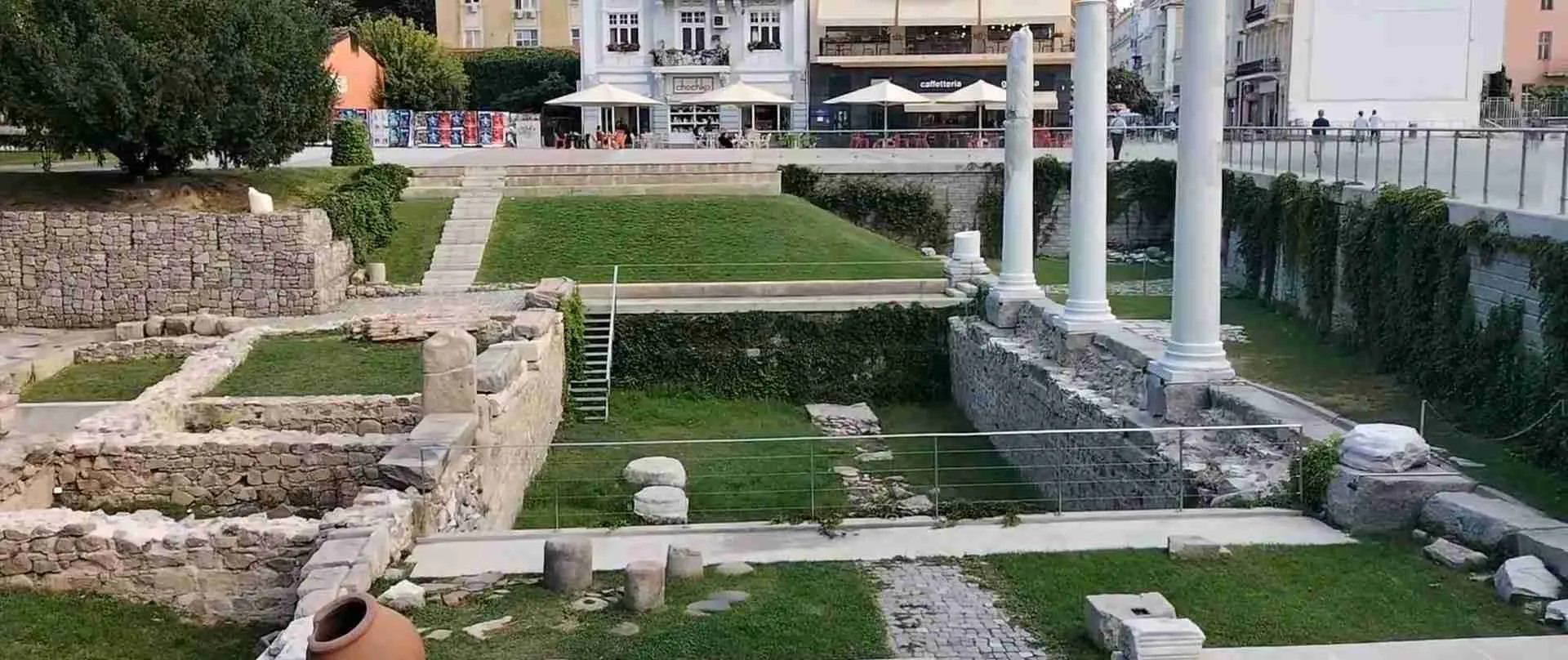
The Ancient Roman Theatre of Philippopolis represents Plovdiv’s most spectacular monument and one of the world’s best-preserved Roman theaters. Constructed in the late 1st century AD during Emperor Domitian’s reign, the marble structure features twenty-eight concentric rows accommodating 7,000 spectators with extraordinary acoustics and panoramic views of modern Plovdiv backed by the Rhodope Mountains. The theater charges 8 BGN ($4.50) entrance in 2026, provides English-language information placards explaining the site’s history and archaeological significance, and continues functioning as a performance venue hosting operas, concerts, and theatrical productions throughout summer months.
The Ancient Roman Stadium, constructed in the 2nd century AD under Emperor Hadrian, once held 30,000 spectators for athletic competitions modeled on Olympic Games traditions. Most of the stadium lies buried beneath Plovdiv’s main pedestrian street, with excavated sections visible from Dzhumaya Square offering free public access 24/7. The Roman Forum ruins adjacent to the stadium provide additional archaeological context at no charge. These complimentary sites allow budget travelers to experience significant Roman heritage without entrance fees, supplementing the paid theater visit for comprehensive ancient history exploration.
Plovdiv’s Old Town architectural reserve centers on steep cobblestone streets lined with distinctive Revival-period houses featuring overhanging second floors, intricate woodwork, and vibrant facade colors in blues, yellows, and oranges. The neighborhood’s preserved mansions house museums, art galleries, boutique hotels, and restaurants, with several significant buildings open for interior visits. The Ethnographic Museum (10 BGN/$6 entrance) occupies an 1847 mansion displaying Bulgarian folk costumes, traditional crafts, and domestic artifacts. The Ancient Stadium Regional History Museum and various house-museums charge similar modest fees. Simply wandering the Old Town streets costs nothing and delivers exceptional photography opportunities and architectural appreciation.
The Kapana Creative District, located in Plovdiv’s former craft quarter, has transformed into the city’s arts and culture hub with dozens of galleries, studios, cafes, bars, and artisan shops occupying compact streets. The neighborhood’s street art installations, outdoor sculptures, and building murals create an open-air gallery experience accessible without entrance fees. Kapana serves as Plovdiv’s dining and nightlife center with options spanning traditional Bulgarian taverns to international fusion restaurants and craft cocktail bars, providing meal and beverage choices across all budget tiers.
Reaching Plovdiv from Sofia via public transport ranks as the most straightforward of all Bulgarian day trips. Buses depart Sofia’s Central Bus Station every 30-60 minutes throughout the day operated by multiple companies including Union Ivkoni, Karat-S, and Group Plus, with journey times of 2-2.5 hours and fares ranging 10-13 BGN ($6-8) for standard service. Tickets can be purchased at the bus station or booked online through operators’ websites, though advance booking is unnecessary except during major holidays. Trains operated by Bulgarian Railways (BDZh) depart Sofia station four times daily, taking approximately 2 hours 44 minutes and costing 10-16 BGN ($5-9), providing a more comfortable but less frequent alternative to buses.
Independent travelers visiting Plovdiv on public transport should plan for minimum 4-5 hours in the city to meaningfully explore the Old Town, visit the Roman Theatre, and experience the Kapana district without rushing. Morning departures from Sofia (8:00-9:00 AM buses) enable arrival in Plovdiv around 10:30-11:30 AM, allowing full-day exploration with return buses departing Plovdiv as late as 7:00-8:00 PM. The compact nature of Plovdiv’s historic center makes it highly walkable, with all major attractions reachable on foot within 20-30 minutes from the bus and train stations.
Organized day tours to Plovdiv from Sofia cost 40-55 EUR ($43-59) per person for small group guided tours including round-trip transport, 2-3 hour guided walking tour of the Old Town, Roman Theatre entrance, and typically lunch at a traditional Bulgarian restaurant. These tours provide historical context and cultural insights that enhance site appreciation but constrain free time for independent exploration. Several operators combine Plovdiv with Bachkovo Monastery (Bulgaria’s second-largest monastery located 30 kilometers south) for comprehensive cultural day trips at 55-70 EUR ($59-75) per person, though this combination reduces time allocated to Plovdiv itself.
Boyana Church 2026: Medieval Masterpiece on Sofia’s Doorstep
Boyana Church stands 8 kilometers from Sofia’s city center in the village of Boyana at the foot of Vitosha Mountain, offering the capital’s most accessible UNESCO World Heritage Site for visitors with limited time or mobility constraints. Inscribed on the UNESCO list in 1979 under criteria (ii) and (iii), the church gains international significance from its exceptional medieval frescoes painted in 1259 that represent one of the most important collections of medieval paintings in Eastern Europe. These frescoes demonstrate remarkable artistic innovation in their realistic portraiture, psychological depth, and humanistic approach that anticipated Renaissance artistic developments by nearly two centuries.
The church complex consists of three buildings from different eras. The eastern section dates to the 10th-11th century as a small cross-domed church. The central section, added in the 13th century by Sebastocrator Kaloyan, contains the renowned frescoes that earned UNESCO designation. The western section, built in the early 19th century, completes the architectural ensemble. The 1259 frescoes depict 89 scenes featuring 240 human figures including religious subjects, Bulgarian royalty (Tsar Constantine Tikh Asen and Tsaritsa Irene), and the donor patrons (Sebastocrator Kaloyan and his wife Desislava) rendered with exceptional realism and individual characterization rare in medieval religious art.
Strict conservation requirements limit visitor access to protect the fragile frescoes from environmental damage. Groups of maximum 8-10 visitors enter for precisely 10-minute viewing sessions, creating queues during peak visiting hours particularly in summer months. Photography is absolutely prohibited inside the church to prevent light damage to the frescoes. The brief viewing window and photography restrictions can frustrate visitors expecting extended contemplative viewing, but these measures ensure the frescoes’ preservation for future generations while still allowing meaningful appreciation of the medieval masterworks.
Entrance fees in 2026 are 10-12 BGN ($5.50-6.50) for adults, 1 BGN ($0.60) for students with valid student ID, and free admission for disabled persons and uniformed military personnel. A combination ticket with the nearby National History Museum costs 12 BGN ($7) and represents good value for visitors planning to tour both locations. The church operates 9:30 AM-6:00 PM April through October (ticket office closes 5:30 PM), and 9:00 AM-5:30 PM November through March (ticket office closes 5:00 PM). Free admission days include the last Monday of each month after 3:00 PM, May 18 (International Museum Day), September 17 (Day of Sofia), and November 1 (National Enlighteners’ Day).
Public transport access to Boyana Church from Sofia city center uses bus routes 64 or 107, with both lines terminating at the church. Buses depart from multiple central Sofia locations including near the National Palace of Culture, operate every 15-20 minutes during daytime hours, and require 30-40 minutes travel time depending on traffic. Standard Sofia public transport fares apply—single ride tickets cost 1.60 BGN ($0.90) purchased from drivers, or 1 BGN ($0.60) when using rechargeable contactless cards available at metro stations and kiosks. The straightforward bus access and proximity to Sofia make Boyana Church the easiest UNESCO site to visit independently.
Combining Boyana Church with Rila Monastery creates the popular “Two UNESCO Sites” day tour offered by multiple operators at 35-45 EUR ($38-48) per person. These tours typically visit Boyana Church first with guided explanations of the frescoes’ historical and artistic significance (approximately 45 minutes total including entrance, viewing, and courtyard exploration), then continue to Rila Monastery for 2-3 hours of extended exploration. This pairing works efficiently because Boyana Church lies en route to Rila Monastery, minimizing backtracking and maximizing time at the larger monastery complex. The brief but significant Boyana Church visit complements the more extensive Rila Monastery experience while covering Bulgaria’s two most accessible UNESCO cultural properties.
Visitors planning independent Boyana Church visits should arrive early morning or late afternoon to avoid the longest queues during midday peak hours when tour groups converge. The 10-minute viewing restriction means even substantial queues move relatively quickly, but arriving during off-peak windows enhances the experience. The church’s garden and surrounding grounds provide pleasant spaces for quiet contemplation after the fresco viewing, and several cafes near the entrance offer refreshments and lunch options. The adjacent National History Museum, Bulgaria’s largest museum housing over a million artifacts spanning prehistoric periods through modern times, merits 2-3 hours for thorough exploration and complements the church visit with broader Bulgarian historical context.
Seven Rila Lakes Day Trips 2026: Alpine Hiking Adventure
The Seven Rila Lakes represent Bulgaria’s most spectacular alpine scenery, comprising a chain of glacial lakes at 2,100-2,500 meter elevation in the Rila Mountains 120 kilometers south of Sofia. The lakes bear evocative names based on their characteristics—The Tear (highest and clearest), The Eye (nearly perfect circle), The Kidney (steepest shores), The Twin (largest), The Trifoliate (irregular shape), The Fish Lake (shallowest), and The Lower Lake (lowest elevation with outlet stream). This natural wonder attracts hikers, photographers, and nature enthusiasts seeking dramatic mountain landscapes, pristine high-altitude environments, and physical challenge beyond cultural sightseeing.
Accessing the lakes requires cable car transport from Panichishte resort to Rilski Lakes hut at 2,100 meters, eliminating approximately 600 meters of elevation gain and making the lakes accessible to hikers with moderate fitness levels rather than only advanced mountaineers. The cable car operates daily June through October with full schedule, and weekends only during shoulder season months. Round-trip cable car tickets cost 35-40 BGN ($20-24) in 2026, purchased at the base station near Panichishte. The 15-minute cable car ascent provides spectacular views across the Rila range and delivers passengers to the starting point for lake-to-lake hiking.
From Rilski Lakes hut, a well-marked circular trail connects all seven lakes requiring 3-4 hours for complete circuit at moderate hiking pace with photography stops. The trail presents minimal technical difficulty with good footing and clear marking, though steep sections between elevation levels require reasonable fitness and sturdy footwear. Hikers should carry water, snacks, sun protection, and warm layers as mountain weather changes rapidly even during summer months. The highest lake (The Tear) sits at 2,535 meters where temperatures remain cool and wind exposure increases substantially compared to lower lakes.
Independent travelers reaching the Seven Rila Lakes face complex logistics involving bus transport to Panichishte resort followed by cable car access. Buses from Sofia’s Ovcha Kupel station to Panichishte operate infrequently with limited schedule options, typically requiring 2.5-3 hours travel time. This logistical complexity strongly favors organized tour participation for most travelers. Day tours combining Rila Monastery with the Seven Rila Lakes cost 55-75 EUR ($59-81) per person, though this pairing creates extremely full-day schedules often exceeding 12 hours with compressed time at both locations. Dedicated Seven Rila Lakes tours without monastery visits cost 45-60 EUR ($48-65) per person, providing more relaxed pacing and extended hiking time.
The lakes deliver their most spectacular scenery during July-August when snow fully melts, wildflowers bloom across alpine meadows, and weather stability improves. September offers beautiful autumn colors with fewer crowds but increased weather variability. June can present snow patches near higher lakes and unpredictable conditions. The winter season (November-May) sees the cable car operating only sporadically on weekends with limited capacity, while snow and ice make lake access dangerous for all but equipped winter mountaineers.
Travelers should understand that Seven Rila Lakes day trips prioritize physical activity and natural scenery over cultural or historical content. The destination appeals specifically to hikers, nature photographers, and travelers seeking mountain environments. Visitors with mobility limitations, young children, or preferences for less strenuous activities should consider alternative day trips. The lakes’ high elevation exposure, lack of services beyond the base cable car station, and weather variability require appropriate preparation including proper footwear, warm clothing layers, water carrying capacity, and realistic assessment of hiking fitness levels.
Koprivshtitsa Day Trips 2026: Living Museum of Bulgarian Revival
Koprivshtitsa preserves Bulgaria’s most complete collection of 19th-century National Revival architecture in a compact mountain town 110 kilometers east of Sofia. The entire town functions as an open-air museum where approximately 380 architectural monuments occupy authentic settings along cobblestone streets, stone bridges spanning mountain streams, and hillside neighborhoods maintaining their original 19th-century character. Koprivshtitsa played a pivotal role in Bulgaria’s 1876 April Uprising against Ottoman rule, serving as the rebellion’s launching point and cementing its significance in Bulgarian national consciousness.
Six house-museums showcase the Revival period’s distinctive architectural and decorative arts. The Oslekov House (1856) represents merchant-class prosperity with elaborate painted ceilings, carved woodwork, and wealthy domestic furnishings. The Lyutov House and Kableshkov House preserve the homes of key uprising organizers. The Benkovski House, Debelyanov House, and Karavelov House complete the museum circuit. Each house charges 5-6 BGN ($3-3.50) individual entrance, while combination tickets covering all six houses cost 20 BGN ($12) providing substantial savings for comprehensive exploration. Students receive 50% discounts with valid ID.
Beyond the formal house-museums, simply wandering Koprivshtitsa’s streets delivers architectural appreciation without entrance fees. The compact town center concentrates notable buildings within easy walking distance including the Assumption Church with its distinctive free-standing bell tower, several small galleries displaying local crafts and paintings, and the April Uprising Memorial with eternal flame. The town’s bridges, particularly the ornate 19th-century stone bridge near the town center, provide excellent photography opportunities.
Koprivshtitsa hosts its famous National Folklore Festival every five years, with the next edition scheduled for August 2026. This major cultural event attracts thousands of visitors and showcases traditional Bulgarian music, dance, costumes, and crafts across multiple stages and venues throughout the town. Hotel accommodation in Koprivshtitsa becomes extremely scarce during festival dates, but the event can be experienced as a day trip from Sofia with early departure and late return to manage crowd levels.
Public transport to Koprivshtitsa from Sofia uses trains departing Sofia Central Station, with the journey requiring approximately 2 hours and costing 10-15 BGN ($6-9) depending on train type. Trains depart 3-4 times daily with morning and early afternoon options suitable for day trips. The train station sits approximately 12 kilometers below the town itself, connected by sporadic local buses or taxi transfer (negotiated rates around 15-20 BGN/$9-12). This final transfer adds complication to independent visits but remains manageable for experienced travelers.
Organized day tours to Koprivshtitsa from Sofia cost 45-60 EUR ($48-65) per person including round-trip transport, guided town walking tour covering the main house-museums, and typically lunch at a traditional mehana (Bulgarian tavern). Tours eliminate the train-to-town transfer complication and provide historical context enriching site appreciation. Several operators combine Koprivshtitsa with visits to nearby Starosel Thracian tomb complex or local wineries for cultural diversity, with combination tours ranging 65-85 EUR ($70-92) per person.
Koprivshtitsa merits 3-4 hours for meaningful exploration including visits to 2-3 house-museums, walking tour of the architectural monuments, and lunch at local restaurants serving traditional Bulgarian cuisine. The town’s compact scale and concentrated architecture allow thorough coverage within a half-day timeframe, making it efficiently combinable with other destinations or suitable for travelers preferring shorter day trips. The mountainous setting at 1,060 meters elevation provides cooler temperatures than Sofia during summer months and stunning autumn foliage in October.
Veliko Tarnovo Day Trips 2026: Medieval Bulgarian Capital
Veliko Tarnovo served as Bulgaria’s capital during the Second Bulgarian Empire (1185-1396), representing the nation’s medieval golden age of political power, cultural flourishing, and artistic achievement. The city’s dramatic topography sees medieval fortifications crowning steep hills above the meandering Yantra River, with residential neighborhoods cascading down hillsides in terraced arrangements creating one of Bulgaria’s most photographed cityscapes. Tsarevets Fortress, the former royal and patriarchal complex, dominates the skyline and delivers Veliko Tarnovo’s primary attraction.
Tsarevets Fortress occupies a hill peninsula surrounded on three sides by the Yantra River, accessed via a narrow fortified bridge entrance. The restored fortress walls enclose the ruins of over 400 medieval buildings including the royal palace, patriarchal cathedral, numerous churches, and defensive towers. The Baldwin Tower marks the supposed imprisonment site of Latin Emperor Baldwin I after his 1205 capture during the Fourth Crusade. Summer evening sound-and-light shows project historical narratives onto fortress walls accompanied by dramatic music and lighting effects, creating spectacular multimedia presentations though requiring overnight stays or special tour arrangements for Sofia-based visitors.
Tsarevets Fortress charges 6 BGN ($3.50) entrance for adults, 2 BGN ($1.20) for students, providing excellent value for the scope of accessible ruins and panoramic views across Veliko Tarnovo and surrounding valleys. The fortress requires 2-3 hours for thorough exploration including the climb to the patriarchal cathedral and Baldwin Tower. Steep stairs and uneven surfaces require reasonable mobility and proper footwear. The fortress operates 8:00 AM-7:00 PM April through October, with reduced 9:00 AM-5:00 PM hours November through March.
Veliko Tarnovo’s Old Town Samovodska Charshiya preserves a craft quarter with artisan workshops, small museums, traditional restaurants, and souvenir shops occupying 19th-century buildings along cobblestone streets. The quarter focuses on metalwork, pottery, icon painting, and leather crafts with several workshops allowing visitors to observe craftspeople working. The Multimedia Visitor Center provides historical context through interactive displays explaining Veliko Tarnovo’s medieval significance and fortress construction. The Old Town requires 1-2 hours for walking exploration and craft browsing.
Arbanassi village, located 4 kilometers northeast of Veliko Tarnovo, preserves remarkable fortified houses and medieval churches in a compact hilltop setting. The village served as a prosperous merchant center during Ottoman rule, with wealthy traders constructing defensive house-compounds combining residential quarters, storage facilities, and security features. Several house-museums open for visits (5-7 BGN/$3-4 entrance each), while the Nativity Church contains exceptional 17th-century frescoes rivaling Boyana Church in artistic quality. Many Veliko Tarnovo day tours include brief Arbanassi stops though time constraints often allow only selective viewing.
The 220-kilometer distance from Sofia to Veliko Tarnovo creates the longest transit time among commonly visited day trip destinations, requiring 3.5-4 hours each direction by road. This extended travel commitment results in abbreviated exploration time at the destination, with typical day tours allocating only 3-4 hours in Veliko Tarnovo itself compressed within 11-13 hour total tour duration. The transit-to-sightseeing ratio makes Veliko Tarnovo more suitable for travelers planning to overnight in the medieval capital rather than day-tripping from Sofia, though organized day tours remain available for visitors unwilling to change accommodation.
Organized day tours to Veliko Tarnovo from Sofia cost 60-80 EUR ($65-86) per person reflecting the extended driving distance. Tours typically depart Sofia around 8:00 AM and return approximately 8:00-9:00 PM, including guided tours of Tsarevets Fortress, walking tour of the Old Town, lunch at a traditional restaurant, and brief Arbanassi village visit. Private tours cost 110-165 EUR ($119-178) per person for small groups, offering flexible pacing and customized itinerary adjustments.
Independent travelers can reach Veliko Tarnovo via bus from Sofia’s Central Bus Station, with journey time of approximately 3.5 hours and fares around 18-22 BGN ($11-13). Multiple daily departures operate year-round though morning options (7:00-9:00 AM) better suit day trip timing. The bus station sits within walking distance of the Old Town and fortress areas. However, the long bus journey combined with desired on-ground exploration time creates challenging logistics for same-day return to Sofia, with most independent travelers preferring to overnight in Veliko Tarnovo before returning to Sofia.
Belogradchik Rocks Day Trips 2026: Geological Wonder
The Belogradchik Rocks comprise dramatic sandstone and limestone formations rising up to 200 meters above the landscape in northwestern Bulgaria near the Serbian border, covering approximately 30 square kilometers of the western Balkan Range. These naturally sculpted formations, created over 230 million years through erosion and weathering, create an otherworldly landscape of towering pillars, balanced rocks, and anthropomorphic shapes that have earned comparison to similar geological wonders worldwide. Bulgarian folklore attributes names and legends to distinctive formations including The Monks, The Horseman, The Mushrooms, and Adam and Eve.
Belogradchik Fortress integrates naturally with the rock formations, incorporating massive stone pillars into defensive walls that follow the terrain’s contours. The fortress served strategic military purposes across multiple eras beginning with Roman fortifications, expanding under Byzantine and Bulgarian medieval rule, and receiving final modifications during Ottoman occupation. The fortress charges 6 BGN ($3.50) entrance providing access to fortification walls, towers, and panoramic viewpoints showcasing the surrounding rock landscape. Climbing to higher fortress levels requires navigating steep stairs and rocky paths but delivers spectacular perspectives across the formations.
The Belogradchik Rocks Nature Park maintains hiking trails connecting major formations and viewpoints, with the most popular circuit requiring 2-3 hours and moderate fitness. Trail marking remains adequate though less developed than major national parks, and signage appears primarily in Bulgarian. The geological formations themselves require no entrance fees for external viewing and photography, though the fortress ticket provides the best elevated vantage points. Sunset and sunrise light creates particularly dramatic effects on the red-tinted rocks, though day-trip timing from Sofia rarely permits optimal lighting conditions.
Magura Cave, located 18 kilometers south of Belogradchik, extends 2.5 kilometers through limestone galleries containing exceptional stalactite and stalagmite formations plus prehistoric cave paintings dating to approximately 8000-4000 BCE. The cave charges 8 BGN ($4.50) entrance for 50-minute guided tours departing on the hour. The cave maintains constant 12°C (54°F) temperature requiring warm clothing regardless of outside conditions. Magura Cave is typically included in organized Belogradchik day tours but rarely accessible to independent day-trippers from Sofia due to limited public transport connections.
The 200-kilometer distance from Sofia to Belogradchik and lack of direct public transport connections make this destination almost exclusively accessed via organized tours. Day tours cost 65-85 EUR ($70-92) per person including round-trip transport (approximately 3.5 hours each direction), guided fortress visit, hiking among the rock formations, Magura Cave tour, and lunch. The extended transit time creates 11-13 hour total tour duration similar to Veliko Tarnovo, with 4-5 hours allocated for on-ground exploration.
Private tours to Belogradchik cost 140-180 EUR ($151-194) per person for groups of 2-4, providing flexible pacing and optional route modifications including potential stops at Rabisha Lake or extended hiking time among the formations. The remote location and dramatic landscapes appeal specifically to nature enthusiasts, geological enthusiasts, and photographers seeking unique environments distinct from Bulgaria’s more commonly visited cultural destinations.
Vitosha Mountain Day Trips 2026: Sofia’s Green Escape
Vitosha Mountain rises immediately south of Sofia with its highest peak Cherni Vrah reaching 2,290 meters, creating the capital’s dramatic mountain backdrop visible from virtually every city neighborhood. The mountain functions as Sofia’s outdoor recreation playground accessible within 30-45 minutes from the city center, offering hiking trails, skiing facilities, mountain biking routes, and nature escapes requiring minimal travel time or complex logistics. Vitosha Nature Park protects 27,000 hectares encompassing the mountain’s forests, alpine meadows, and distinctive rock formations including the Stone River—a boulder field flowing down the mountainside like a frozen river.
The Simeonovo cable car provides the primary mechanical access route from Sofia’s outskirts to Aleko hut at 1,800 meters elevation, operating year-round with winter focus on ski area access and summer service for hikers. Round-trip cable car tickets cost 22-28 BGN ($13-17) in 2026, purchased at the base station accessible via Sofia city bus routes or taxi. The cable car ascent takes approximately 12 minutes and delivers passengers near multiple hiking trailheads, mountain restaurants, and the chairlift to Cherni Vrah peak.
Hiking from Aleko hut to Cherni Vrah summit requires 1.5-2 hours along well-marked trails, presenting moderate difficulty with steady uphill grades and rocky footing near the summit. The peak delivers 360-degree panoramic views across Sofia, the surrounding valleys, and mountain ranges extending into Macedonia and Serbia. A television tower and weather station occupy the summit, with a small memorial marking the peak. Total round-trip hiking time Aleko-to-summit-and-return is approximately 3-4 hours for moderately fit hikers.
Alternative hiking routes approach Vitosha from different directions including the popular Dragalevtsi Monastery to Aleko trail (approximately 2.5 hours uphill) and the Boyana Waterfall route (1.5 hours to the falls). These approaches start from lower elevation neighborhoods connected to Sofia by city buses, eliminating cable car costs but requiring significant uphill hiking. The Dragalevtsi route passes the medieval Dragalevtsi Monastery, combining cultural and natural elements, while the Boyana Waterfall delivers Sofia’s most impressive waterfall particularly during spring snowmelt.
Vitosha requires no entrance fees for hiking access or nature park exploration, making it Sofia’s most budget-friendly outdoor activity. Costs are limited to transportation (city bus fares 1.60 BGN/$0.90 or cable car tickets), optional mountain restaurant meals, and chairlift rides for those seeking mechanical summit access. This affordability combined with proximity makes Vitosha ideal for travelers seeking nature experiences without day-long commitments or substantial financial investment.
Organized Vitosha hiking tours from Sofia cost 40-55 EUR ($43-59) per person, primarily offering value through guided route selection, transportation handling, and cultural context about the mountain’s significance to Sofia residents. However, Vitosha’s straightforward public access and well-marked trails reduce the necessity of guided tours compared to more remote destinations. Independent travelers comfortable with basic hiking and navigation find Vitosha readily accessible without professional guidance.
Winter transforms Vitosha into Sofia’s primary ski area with multiple runs served by chairlifts and surface lifts. The ski season typically runs December through March with conditions dependent on snowfall and temperature. Ski equipment rental facilities operate near the cable car base station and at Aleko area. While Vitosha’s ski terrain cannot compete with major Alpine or even Bulgarian Pamporovo and Bansko resorts, it provides accessible skiing for Sofia residents and visitors seeking half-day mountain activities without traveling to distant resorts.
Transportation Strategies for Sofia Day Trips 2026
Sofia’s day-trip transportation landscape divides between public transport options offering maximum affordability and organized tours providing convenience and comprehensive services. Understanding the strengths and limitations of each approach helps travelers select optimal strategies for specific destinations and personal preferences. Public transport works best for straightforward destinations with frequent service (Plovdiv, Vitosha, Boyana Church), while organized tours add significant value for complex logistics (Rila Monastery, Seven Rila Lakes, Belogradchik Rocks).
Public Bus and Train Networks
Sofia’s Central Bus Station at Knyaz Boris III Boulevard serves as the primary departure point for intercity buses, located approximately 2 kilometers north of city center and accessible via metro line 2 to Central Railway Station plus 10-minute walk. Multiple bus companies operate competing services to major destinations with online booking available through company websites though walk-up ticket purchase at station counters typically involves no difficulty except during major holidays. Buses to Plovdiv (10-13 BGN/$6-8, every 30-60 minutes, 2-2.5 hours) provide the most frequent service, while Rila, Koprivshtitsa, and Veliko Tarnovo receive 2-4 daily departures.
Sofia Central Railway Station, located adjacent to the bus station, operates train services to Plovdiv (10-16 BGN/$5-9, four daily departures, 2h 44m) and other destinations. Trains offer more comfortable seating and smoother ride quality than buses but less frequent departures and often slower journey times. Online ticket booking functions through Bulgarian Railways (bdz.bg) though the website interface can frustrate international users with limited English language options and payment processing quirks.
Sofia’s urban bus network connects to day-trip starting points including Boyana Church (bus 64 or 107, 1.60 BGN/$0.90 single ride), Vitosha cable car base station (various routes), and suburban neighborhoods where hiking trails begin. Contactless payment cards purchased at metro stations (1 BGN/$0.60 per ride when using card versus 1.60 BGN/$0.90 cash) provide cost savings for multiple trips. The Sofia Urban Mobility app displays real-time bus tracking and route planning, enhancing navigation efficiency.
Organized Tour Options and Booking
Multiple tour companies operate Sofia day-trip programs with significant pricing overlap and service similarity. Traventuria, City Tour Sofia, Balkan Heritage Tours, and Rila Monastery Bus represent established operators with strong online presence and traveler reviews. Booking through company websites typically offers best pricing, with third-party platforms like Viator and GetYourGuide adding 10-20% markup for their reservation systems and customer service infrastructure.
Small group tours (8-15 participants) in minivans or small buses dominate the organized tour market, providing comfortable transport, English-speaking guides, entrance fee handling, and fixed itineraries at reasonable per-person pricing. These tours suit travelers prioritizing efficiency and cultural context over complete scheduling flexibility. Hotel pickup service costs additional 10-15 EUR ($11-16) per reservation (not per person) and saves navigation to central meeting points but delays departure by 30-45 minutes collecting multiple passengers.
Private tours appeal to groups of 2-6 travelers seeking customized itineraries, flexible timing, and dedicated guide attention. Pricing operates per vehicle (sedan/minivan) rather than per person, with 2-4 person groups achieving per-person costs approaching small group tours while gaining substantial flexibility. Private tours allow late departures for travelers preferring sleep-in mornings, extended time at preferred sites, spontaneous itinerary modifications, and photography stop accommodations exceeding standard tour schedules.
Tour cancellation policies vary by operator but typically allow full refunds for cancellations 24-48 hours before departure. Weather-dependent tours (Seven Rila Lakes) may cancel for dangerous conditions with refund or rescheduling options. Reading specific cancellation terms before booking protects against non-refundable prepayments if travel plans change.
Self-Drive Rental Car Considerations
Renting cars for Sofia day trips provides maximum flexibility but introduces costs (50-70 EUR/$54-75 daily rental for compact car including insurance), navigation challenges, parking fees at popular destinations, and driving stress on unfamiliar roads. Bulgaria’s highway network has improved substantially in recent years with completed motorway sections to Plovdiv and improving routes toward other destinations, though secondary mountain roads to Rila Monastery and Seven Rila Lakes remain winding and require confident driving.
Rental cars make most sense for travelers planning multiple consecutive day trips, groups of 4+ sharing costs, or visitors desiring complete schedule control. Single-destination day trips rarely justify rental expenses and complications versus public transport or organized tours. GPS navigation systems or smartphone mapping apps (Google Maps, Maps.me) provide adequate route guidance though cellular coverage becomes spotty in remote mountain areas.
Parking at major destinations ranges from free (Rila Monastery has large parking lots, Vitosha trailheads offer roadside parking) to modest fees (Plovdiv city center parking 2-4 BGN/$1.20-2.40 per hour, though Old Town is pedestrian-only requiring peripheral parking). Urban driving in Sofia itself presents congestion, aggressive driving culture, and complex intersection navigation that many foreign drivers find stressful, favoring departure-day pickups at airport rental counters over downtown Sofia locations.
Day Trip Budget Planning 2026: Cost Breakdowns by Traveler Type
Day trip costs from Sofia in 2026 vary substantially based on destination selection, transportation approach, meal choices, and activity participation. This section provides detailed budget breakdowns for three traveler tiers—budget backpackers using public transport, mid-range tourists booking organized tours, and luxury travelers selecting private guides—across representative destinations.
Budget Traveler Independent Day Trips
Budget travelers prioritizing cost minimization over convenience achieve remarkable affordability on Sofia day trips through public transport use, picnic lunches or budget restaurant meals, and selective attraction entrance spending. A budget Plovdiv day trip totals 28-42 BGN ($17-25) comprising round-trip bus fare 20-26 BGN ($12-16), Roman Theatre entrance 8 BGN ($4.50), and budget lunch 15-25 BGN ($9-15) at a simple restaurant or street food vendors. Omitting the theater entrance and assembling supermarket picnic lunch reduces costs to approximately 35-40 BGN ($21-24).
Budget Rila Monastery visits present greater challenges due to limited direct public transport, with the bus-to-Rila-village plus taxi-to-monastery routing totaling approximately 50-70 BGN ($30-42) for round-trip transport, monastery museum admission 20 BGN ($12), and basic meal 15-25 BGN ($9-15). Total budget Rila day trip: 85-115 BGN ($51-69). Independent travelers willing to hitchhike the final Rila village-to-monastery segment reduce taxi costs though uncertainty and potential delays make this approach challenging.
Budget Boyana Church and Vitosha combination creates Sofia’s most affordable cultural-plus-nature day trip at 35-50 BGN ($21-30) total, comprising city bus fares 6-8 BGN ($3.50-4.80) for multiple trips, Boyana Church entrance 10-12 BGN ($6-7), Vitosha hiking (free), and brought-from-Sofia lunch eliminating restaurant costs. This combination delivers UNESCO heritage, mountain hiking, and waterfall viewing within modest budgets.
Mid-Range Organized Tour Costs
Mid-range travelers booking organized small group tours invest 80-150 BGN ($48-90) per person per day trip depending on destination and tour scope. The popular Rila Monastery plus Boyana Church tour averages 60-75 BGN ($36-45), including round-trip transport, guide services, both entrance fees, and typically mid-range restaurant lunch. This represents excellent value considering transport convenience, cultural context from guides, and hassle-free logistics.
Comprehensive day tours combining major destinations such as Rila Monastery with Plovdiv cost 80-110 BGN ($48-66), reflecting extended driving distances and fuller itineraries. These longer tours typically include two-course restaurant lunches, all entrance fees, and 10-12 hour total duration with 5-6 hours allocated to sightseeing across both locations. Additional beverage costs at restaurants and optional museum entries or souvenir purchases add 20-40 BGN ($12-24) to base tour pricing.
Seven Rila Lakes tours including cable car access cost 80-130 BGN ($48-78) depending on whether Rila Monastery combines in the itinerary. Tours including both lakes and monastery create extremely full days approaching 13-14 hours with very early departures (7:00-8:00 AM) and late returns (8:00-9:00 PM). Travelers prioritizing quality over quantity may prefer dedicated single-destination tours allowing more relaxed pacing.
Luxury Private Tour Investments
Luxury travelers selecting private guides and vehicles invest 140-300 BGN ($84-180) per person for groups of 2-4, with per-person costs decreasing as group size increases. Private Rila Monastery tours cost 260-420 BGN ($156-252) total for 2 people (130-210 BGN/$78-126 per person), including luxury vehicle transport, dedicated English-speaking guide, flexible departure timing, customized pacing, and premium restaurant lunch reservations.
Multi-destination private tours combining Rila, Plovdiv, and additional stops require 350-550 BGN ($210-330) total for couples, reflecting extended itinerary complexity and full-day guide engagement. These comprehensive private tours allow departure-time selection, extended photography stops, spontaneous itinerary modifications, and exclusive guide attention unavailable in group settings. The luxury tier primarily purchases flexibility, comfort, and personalization rather than access to different destinations.
Private tours become most cost-effective for groups of 3-4 travelers, where per-person pricing approaches or matches small group tours while maintaining private tour benefits. Couples and solo travelers pay significant premiums for private arrangements, making this tier most suitable for travelers valuing comfort and customization over cost efficiency.
Seasonal Considerations for Sofia Day Trips 2026
Sofia day trip experiences vary substantially across seasons, affecting attraction accessibility, weather conditions, crowd levels, and tour availability. Understanding seasonal patterns helps travelers select optimal timing for specific destinations and set appropriate expectations for conditions encountered.
Summer Season (June-September): Peak Conditions
Summer delivers optimal day trip conditions with extended attraction hours (Rila Monastery museums open until 7:30 PM Fridays-Sundays June-September versus 4:30 PM closure other months), fully operational cable cars at Vitosha and Seven Rila Lakes, accessible high-mountain hiking trails, and predictable weather minimizing cancellations. Tour operators run full schedules with daily departures to all major destinations and maximum group tour frequency. Summer represents 2026’s highest-demand period requiring advance tour bookings (3-7 days ahead) to secure preferred dates, especially weekends and Bulgarian holidays.
Summer’s peak period creates substantial crowds at Rila Monastery, where midday arrival finds parking lots full, tour buses clustered, and long queues for monastery museum entry. Photography enthusiasts seeking quieter atmospheric shots should target very early morning or late afternoon visits, though organized tour schedules rarely accommodate these timing preferences. Plovdiv’s Roman Theatre and Old Town similarly experience highest visitor density during summer months, though the city’s larger scale dilutes crowd impact compared to compact monastery grounds.
Summer heat affects comfort levels particularly for destinations involving extended walking or hiking. Plovdiv temperatures regularly exceed 30°C (86°F) during July-August, making morning hours more pleasant for Old Town exploration before afternoon heat intensifies. Seven Rila Lakes hiking benefits from cooler high-altitude temperatures (typically 15-22°C/59-72°F) but requires sun protection as alpine exposure provides minimal shade.
Shoulder Seasons (April-May, October-November): Balanced Conditions
Spring and autumn shoulder seasons deliver favorable conditions with moderate temperatures (15-25°C/59-77°F), reduced crowds at major attractions, easier tour booking without advance reservations, and often clearer mountain visibility than summer’s occasional afternoon thunderstorms. Attraction hours begin shortening in October with museum closures moving earlier, while cable car operations may switch to weekend-only schedules requiring careful schedule verification.
April and early May present wildflower blooms in mountain areas, spectacular at Seven Rila Lakes and Vitosha meadows, while October colors transform hillside forests surrounding Rila Monastery and Koprivshtitsa into golden-orange displays rivaling New England autumn foliage. These shoulder season natural spectacles attract photography enthusiasts seeking optimal landscape conditions.
Weather variability increases during shoulder months compared to summer’s predictability. Spring conditions can include cold mountain temperatures, rain showers, and even snow at high elevations well into May. Autumn brings similar uncertainty with early cold snaps and precipitation. Travelers should pack layered clothing, rain protection, and flexible itinerary attitudes accepting weather-driven modifications. Tour cancellations remain relatively rare but increase compared to summer’s exceptional reliability.
Winter Season (December-March): Limited but Viable Options
Winter transforms Sofia day trip options with cultural destinations like Rila Monastery, Boyana Church, Plovdiv, and Koprivshtitsa remaining fully accessible while mountain hiking destinations close or become suitable only for equipped winter mountaineers. Rila Monastery under snow cover creates ethereal beauty with far fewer visitors than summer peaks, though museum hours contract (8:30 AM-4:30 PM) and weather conditions require winter driving capability or tour participation.
Vitosha’s winter transformation into Sofia’s ski area creates the season’s primary nature-based day trip, with lift systems operating full schedules and weekend crowds resembling summer’s Rila Monastery visitor density. Ski equipment rental, lift tickets, and mountain restaurant meals create higher daily costs (approximately 80-120 BGN/$48-72 total) than summer hiking alternatives but deliver genuine winter sports experiences within 45 minutes of Sofia city center.
Winter day trip considerations include shorter daylight hours limiting sightseeing windows (sunset around 5:00-5:30 PM December-January), increased road ice and snow requiring careful driving or reliance on tour operators with winter-equipped vehicles, and reduced tour frequency with some operators running 2-3 weekly departures versus daily summer schedules. Hotel and restaurant pricing drops 20-30% below summer peaks in tourist destinations, benefiting travelers willing to accept winter conditions and logistics.
Combining Day Trips: Multi-Day Itinerary Planning 2026
Travelers spending 4-7 days in Sofia can create balanced itineraries combining multiple day trips with Sofia city sightseeing and rest days. Strategic day trip selection prevents fatigue, maximizes diverse experiences, and maintains sustainable pacing avoiding the exhaustion of consecutive long excursions.
Four-Day Sofia and Day Trips Sample Itinerary
Day 1 serves Sofia city exploration covering Alexander Nevsky Cathedral, National Gallery, Soviet Army Monument, Vitosha Boulevard shopping and dining, and evening at Ivan Vazov National Theatre or folk performance. This establishes Sofia baseline understanding before venturing to surrounding areas. Day 2 executes the Rila Monastery and Boyana Church two-UNESCO-sites tour, experiencing Bulgaria’s most significant cultural properties in single full day. Day 3 combines morning Plovdiv visit via public transport (early bus departure, 4-5 hours in city, afternoon return) with evening back in Sofia. Day 4 dedicates to Vitosha Mountain hiking or rest day in Sofia depending on energy levels and weather.
This four-day structure balances major destinations, manages energy expenditure, incorporates one very full day (UNESCO sites), one moderately demanding day (Plovdiv independent), and one flexible nature/rest day. Total day trip costs for mid-range traveler: approximately 180-240 BGN ($108-144) covering two organized tours plus Plovdiv public transport and meals.
Seven-Day Bulgaria Highlights Extended Itinerary
Travelers with seven days can deepen exploration or incorporate more ambitious distant destinations. Day 1: Sofia city. Day 2: Rila Monastery and Boyana Church organized tour. Day 3: Plovdiv independent trip. Day 4: Sofia walking neighborhoods, markets, museums. Day 5: Seven Rila Lakes organized tour or Koprivshtitsa cultural immersion. Day 6: Vitosha hiking or alternative Sofia day exploring Boyana waterfall, National History Museum, and mountain neighborhoods. Day 7: Veliko Tarnovo long day trip for travelers wanting medieval capital experience, or rest day before Sofia departure.
Seven days allow incorporating one distant destination (Veliko Tarnovo, Belogradchik) without feeling rushed, though most travelers find the closer destinations (Rila, Plovdiv, Vitosha, Boyana) provide sufficient Bulgarian diversity within more relaxed pacing. Multiple rest/light days interspersed with demanding excursions prevent the accumulated fatigue of consecutive 10-12 hour tour days.
Strategic Day Trip Selection by Interest
Culture-focused travelers prioritize Rila Monastery, Boyana Church, Plovdiv, and Koprivshtitsa for comprehensive Bulgarian cultural immersion spanning medieval Orthodoxy, Revival architecture, and Roman heritage. This quartet can be accomplished in four full days (two organized tours, two independent trips) providing deep cultural understanding.
Nature enthusiasts emphasize Seven Rila Lakes, Vitosha Mountain multi-trail hiking, and potentially Belogradchik Rocks for geological variety. These destinations combine well with one cultural site (Rila Monastery conveniently pairs with Seven Lakes) for balanced itineraries. Photography specialists gravitate toward sunrise/sunset Rila Monastery visits requiring private tour timing flexibility, Belogradchik’s dramatic rock formations, and Seven Rila Lakes’ alpine scenery.
Families with children benefit from shorter day trips (Vitosha, Boyana Church) avoiding excessive bus travel and restless child management during long transits. Plovdiv’s compact walkable Old Town, Roman Theatre climbing, and Kapana district cafes provide child-friendly engagement. Rila Monastery’s courtyard exploration, colorful frescoes, and mountain setting typically engage children more successfully than Koprivshtitsa’s house museums requiring extended indoor time.
Practical Tips for Sofia Day Trip Success 2026
Booking and Reservation Strategies
Organized tour bookings function most efficiently through direct operator websites rather than third-party platforms, eliminating markup fees and simplifying communication if itinerary questions arise. Compare multiple operators’ offerings as pricing and inclusions vary—some tours bundle entrance fees while others charge separately, lunch may be included or optional, and pickup services carry different fee structures. Read recent traveler reviews on TripAdvisor and Google focusing on guide quality, punctuality, and actual time allocated at destinations versus promotional descriptions.
Peak season advance booking (3-7 days ahead for summer weekends and Bulgarian holidays) secures preferred dates and avoids sold-out disappointment, while shoulder season tours typically accommodate same-day or next-day bookings. Private tour arrangements require longer lead time (5-10 days) for optimal guide assignment and customization discussion. Public transport tickets rarely require advance purchase except during major holiday periods when Plovdiv buses may fill completely.
What to Bring and Pack
Modest clothing covering shoulders and knees is mandatory for monastery and church visits regardless of temperature—Rila Monastery and Boyana Church strictly enforce dress codes denying entrance to inappropriately dressed visitors. Carrying a lightweight scarf or shawl provides quick shoulder coverage, while longer pants or skirt covers knee requirements. Comfortable walking shoes with good tread are essential for cobblestone streets in Plovdiv and Koprivshtitsa, uneven terrain at fortress ruins, and mountain hiking trails.
Weather layers accommodate Bulgaria’s temperature variability particularly in mountain destinations where morning chill, midday warmth, and afternoon cooling occur within hours. Bring water bottles (1-1.5 liters) for active hiking days as mountain sources aren’t always potable and shops are sparse. Sun protection (hat, sunglasses, sunscreen) matters year-round at high altitudes and for extended outdoor exposure in summer. Small daypack carries layers, water, snacks, and cameras more comfortably than shoulder bags during active exploration.
Money and Payment
Bulgarian Leva (BGN) remains the national currency though some tourist-oriented businesses accept euros at unfavorable exchange rates. ATMs are widely available in Sofia providing best exchange rates, while exchange offices charge varying commissions—compare rates before changing money. Most organized tour companies accept credit card payment during online booking, but public transport, small restaurants, and attraction entrances often require cash. Carrying 100-150 BGN ($60-90) cash for day trips covers meals, small purchases, and backup payment options.
Tipping remains relatively modest in Bulgaria with 5-10% considered appropriate for restaurant service and optional but appreciated for tour guides providing exceptional experiences. Rounding up taxi fares to nearest 5-10 BGN satisfies convention without over-tipping. Many attractions post “no tipping” policies for official staff, though informal guides at monasteries may solicit donations.
Photography Etiquette and Restrictions
Photography prohibitions inside Boyana Church and Rila Monastery’s main church protect fragile frescoes from light damage—these restrictions are strictly enforced and violation attempts generate immediate staff intervention. Courtyard and exterior photography at both locations is completely permitted and produces excellent images without interior restrictions. Plovdiv’s Roman Theatre, fortress ruins, and town streets allow unrestricted photography, as do outdoor nature sites.
Monastery photography requires sensitivity to worship spaces and religious observance. Avoid photographing monks, clergy, or worshippers during services. Ask permission before photographing people in close-up portraits particularly at cultural sites. Commercial photography with professional equipment may require special permissions at some locations—verify requirements if planning professional shoots.
Communication and Language
English proficiency in tourist areas has improved substantially though remains limited outside Sofia, major sites, and organized tour contexts. Tour guides speak functional to excellent English while restaurant staff in Plovdiv’s Old Town and Koprivshtitsa tourist areas manage basic English. Remote destinations like Belogradchik and transportation staff at bus stations typically speak minimal English, making translation apps (Google Translate with downloaded Bulgarian) useful tools.
Bulgarian Cyrillic alphabet presents initial reading challenges for English speakers, though major signs increasingly include Latin-alphabet transliterations. Learning basic Cyrillic letter sounds enables reading destination names, street signs, and menu items. Essential Bulgarian phrases—”Zdraveite” (hello), “Blagodarya” (thank you), “Kolko struva?” (how much?)—generate positive responses from locals appreciating foreign effort even when English conversation follows.
Frequently Asked Questions: Sofia Day Trips 2026
Is One Day Enough to Visit Rila Monastery from Sofia?
One day provides sufficient time for meaningful Rila Monastery exploration including the monastery complex, museums, and surrounding grounds without feeling rushed. Organized tours allocate 2.5-3 hours at the monastery after 2-hour morning transit and before 2-hour afternoon return, allowing comprehensive viewing of the main church, walking the courtyard to appreciate frescoes, touring the History Museum, climbing Hrelyo’s Tower, and enjoying lunch at nearby restaurants or the monastery bakery. Visitors seeking extremely thorough exploration including extensive museum time, nature trail hiking, and quiet contemplation may prefer overnight stays in Rila village or nearby hotels, but typical tourists find day trip duration adequate for satisfying monastery experiences.
Can I Visit Multiple Day Trip Destinations in One Day Without Organized Tours?
Combining multiple day trip destinations independently via public transport presents significant logistical challenges that usually make organized tours the practical choice for multi-destination days. Rila Monastery plus Plovdiv by public transport requires navigating three different bus connections, extremely tight timing, and likely results in inadequate time at both locations. Rila plus Boyana Church works marginally better since Boyana lies en route from Sofia to Rila, but public bus schedules to Rila village don’t align optimally with Boyana Church hours. The most successful independent multi-destination combination pairs Boyana Church (morning visit via city bus) with Vitosha hiking (continuing from Boyana area trailheads), both accessible via Sofia public transport without intercity connections. For other multi-destination combinations, organized tours deliver substantially better experiences by handling complex logistics and timing coordination.
What Are the Best Day Trips for Solo Travelers from Sofia in 2026?
Solo travelers find excellent day trip options across all budget tiers and interests. Budget solo travelers achieve maximum value on independent Plovdiv trips via public transport, with the city’s walkable scale, solo-friendly restaurants, and hostel day rooms for luggage storage creating welcoming environments. Organized small group tours to Rila Monastery, Boyana Church, and other destinations facilitate solo traveler participation without single supplements, with tour groups often including other solo participants enabling spontaneous travel companionship. Vitosha Mountain hiking suits confident solo travelers comfortable with trail navigation, though informing accommodation staff of hiking plans provides safety backup. Seven Rila Lakes attracts many solo hikers during summer season creating informal trail community. Solo travelers should verify tour minimum participant requirements as some operators require 2-4 person minimums for confirming departures, though larger companies typically guarantee daily departures regardless of individual booking numbers.
How Much Should I Budget Per Day for Food and Drinks on Sofia Day Trips in 2026?
Budget travelers allocating 25-40 BGN ($15-24) per day for meals and beverages on day trips dine at simple restaurants, street food vendors, and cafes serving traditional Bulgarian fare like banitsa (cheese pastry), shopska salad, grilled meats, and local dishes. This budget covers breakfast pastry and coffee 5-8 BGN ($3-5), substantial lunch 12-18 BGN ($7-11), afternoon coffee/snack 3-5 BGN ($2-3), and brings-from-Sofia water bottles avoiding marked-up beverage purchases at tourist sites. Mid-range travelers spending 50-75 BGN ($30-45) daily enjoy sit-down restaurant meals at mid-level establishments in Plovdiv’s Old Town, Koprivshtitsa mehanas, and better Rila Monastery area restaurants, including appetizers, main courses, desserts, and several beverages across breakfast, lunch, and dinner. Luxury travelers investing 80-120 BGN ($48-72) per day access upscale restaurant options in Plovdiv, premium wine selections, and multiple-course meals though truly high-end dining options remain limited in day trip destinations compared to Sofia itself. These ranges assume meals at destination; organized tours including lunch reduce separate meal costs substantially.
Are Sofia Day Trips Safe for Families with Young Children in 2026?
Sofia day trips are generally very safe for families with appropriate destination selection matching children’s ages and abilities. Shorter distance trips like Vitosha, Boyana Church, and Plovdiv accommodate young children better than marathon Veliko Tarnovo or Belogradchik excursions involving 7-8 hours of bus travel potentially causing child restlessness and parental stress. Rila Monastery’s courtyard exploration, colorful frescoes, and mountain setting typically engage children ages 5-12, though the long monastery museum queues during peak hours test young patience. Plovdiv’s Roman Theatre provides climbing and exploration opportunities children enjoy, while the Old Town’s gelato shops, playgrounds, and pedestrian-only streets create family-friendly environments.
Family safety considerations include supervising children near fortress walls, steep monastery stairs, and mountain trail edges where protective barriers are minimal by Western standards. Organized family tours accommodate children’s needs with bathroom stops, snack breaks, and guide experience managing young passengers. Private tours offer maximum family flexibility for stop timing, route modifications if children tire, and not feeling pressured to match group pacing. Bulgarian driving culture’s aggressiveness and traffic congestion suggest organized tours or trains over rental cars for families where parental driving stress affects everyone’s experience.
What Day Trip from Sofia Offers the Best Photography Opportunities in 2026?
Photography enthusiasts face difficult choices among several exceptional day trip destinations, each offering distinct shooting opportunities. Rila Monastery delivers spectacular architectural photography with vivid fresco colors, dramatic mountain backdrop, and geometric courtyard compositions, though interior church photography prohibitions limit some creative options. Seven Rila Lakes provides pristine alpine scenery, dramatic mountain landscapes, crystalline lake reflections, and wildflower meadows particularly spectacular during July-August peak bloom. Belogradchik Rocks create surreal geological formations with optimal lighting at sunrise and sunset—times rarely compatible with Sofia day trip logistics but achievable through private tour timing flexibility.
Plovdiv’s Roman Theatre at sunrise (accessible with overnight Plovdiv stay rather than Sofia day trip) produces dramatic lighting with ancient marble glowing warm against soft dawn light, though standard day trip timing delivers midday harsh light less flattering for architectural photography. Boyana Church’s photography restrictions inside church combined with plain exterior architecture make it photography’s weakest option despite UNESCO significance. Vitosha Mountain rewards landscape photographers with panoramic Sofia cityscape views, alpine meadow scenes, and the distinctive Stone River boulder field.
Photography specialists should consider overnight stays at destinations enabling optimal lighting times—sunrise Rila Monastery monastery before tour bus arrival, sunset Belogradchik Rocks bathed in golden hour light, and blue hour Roman Theatre in Plovdiv without midday tourist crowds all produce substantially superior images than day trip timing constraints allow.
Can I Use Credit Cards at Day Trip Destinations or Should I Bring Cash?
Cash remains essential for most day trip expenses in 2026 despite credit card acceptance increasing in Bulgaria. Organized tour companies accept credit cards for online bookings and usually offer card payment at tour meeting points, but attraction entrance fees at Rila Monastery museums, Plovdiv Roman Theatre, Koprivshtitsa house museums, and other sites typically require cash BGN. Small restaurants in Koprivshtitsa, Rila village, and similar locations often accept cash only, while larger Plovdiv restaurants in the Old Town and Kapana district increasingly accept cards.
Public transport operates almost entirely on cash basis—bus tickets from Sofia to Plovdiv, Veliko Tarnovo, and other destinations are purchased with cash at bus stations or from drivers. Sofia city buses accept contactless payment cards (not the same as international credit cards—these are local transit cards) or cash. Taxi drivers strongly prefer cash though larger Sofia taxi companies accept card payment through their apps.
Travelers should withdraw 150-200 BGN ($90-120) before departing Sofia for day trips, providing coverage for meals, attraction entrances, incidental purchases, and backup funds if card payment options prove unavailable. Sofia ATMs are widely available providing best exchange rates, while day trip destinations have fewer ATMs particularly in small towns like Koprivshtitsa where relying on cash brought from Sofia proves most practical.
What Are the Most Underrated Day Trips from Sofia That Tourists Miss?
Koprivshtitsa receives substantially fewer visitors than Rila Monastery or Plovdiv despite offering Bulgaria’s most concentrated collection of Revival architecture in extraordinarily preserved setting. The town’s compact walkable scale, exceptional photography opportunities with colorful historic houses against mountain backdrop, and authentic village atmosphere create memorable experiences for travelers seeking cultural immersion beyond marquee UNESCO sites. Similarly, Vitosha Mountain remains underutilized by foreign tourists despite exceptional hiking, accessible alpine scenery, and the unique juxtaposition of wilderness within 30 minutes of capital city—most foreign visitors associate Bulgaria exclusively with cultural sites and miss outstanding mountain recreation practically on Sofia’s doorstep.
Bachkovo Monastery, Bulgaria’s second-largest monastery located 30 kilometers south of Plovdiv, combines exceptional frescoes with dramatically scenic Rhodope Mountain setting yet appears on relatively few tourist itineraries compared to Rila’s overwhelming dominance. The monastery charges minimal entrance fees, faces far fewer crowds than Rila, and features equally impressive though artistically distinct religious artwork. Arbanassi village near Veliko Tarnovo preserves remarkable fortified houses and exceptional church frescoes but typically receives only brief tour-group stops rather than dedicated attention deserving its artistic significance.
These underrated destinations reward travelers seeking authentic Bulgarian experiences, superior photography opportunities without tourist crowd interference, and cultural discoveries beyond most visitors’ standard itineraries. The relative absence of international tourists (though Bulgarian domestic visitors know these sites well) creates more immersive atmospheres and closer interactions with locals compared to Rila Monastery’s international tour bus crowds.
How Early Do I Need to Book Day Trip Tours from Sofia in 2026?
Booking timelines vary by season, destination, and tour type. Summer peak season (July-August) and long weekends benefit from 5-7 days advance booking securing preferred dates and avoiding sold-out tours, particularly for popular Rila Monastery and Plovdiv combinations. Small group tours often cap at 12-16 participants and fill completely during peak demand. Shoulder seasons (April-May, September-October) typically accommodate 2-3 days advance booking with frequent availability for next-day departures. Winter season (December-March) sees reduced tour frequency but ample capacity—same-day and next-day bookings work reliably except around Christmas and New Year holidays.
Private tours require longer lead time of 7-10 days for optimal guide matching, vehicle availability, and customization discussion, though emergency private tour arrangements (1-2 days notice) sometimes prove possible with premium pricing or compromised guide selection. Seven Rila Lakes tours operating June-September face higher demand than winter-accessible cultural destinations, warranting earlier booking. Travelers with rigid schedules or specific must-do destinations should book immediately upon finalizing Sofia accommodation to guarantee availability, while flexible travelers can wait for weather forecasts and make last-minute decisions.
What Happens If Weather Forces Day Trip Cancellations in 2026?
Weather-dependent destinations—primarily Seven Rila Lakes requiring cable car operation and safe mountain conditions—face occasional cancellations during severe weather. Tour operators typically contact booked participants 12-24 hours before departure when forecasts indicate dangerous conditions, offering full refund or alternative date rescheduling at customer preference. Summer season sees extremely rare weather cancellations while spring and autumn shoulder seasons experience more frequent weather-driven modifications.
Cultural destinations like Rila Monastery, Plovdiv, Boyana Church, and Koprivshtitsa operate year-round regardless of weather short of extreme conditions closing highways. Rain doesn’t typically cancel tours to these destinations though may diminish outdoor enjoyment and photography quality. Winter snow and ice occasionally cause road closures to Rila Monastery requiring tour date changes or alternative destinations, though this remains relatively uncommon and limited to severe winter storms.
Travelers booking tours during changeable weather periods (April-May, October-November) should maintain schedule flexibility allowing alternative activity days if weather forces modifications. Private tours provide maximum flexibility for last-minute weather-based rescheduling, while small group tours must accommodate multiple participants’ schedules making weather modifications more complex. Reading specific tour operator weather policies during booking clarifies refund terms and helps set appropriate expectations.
Conclusion: Maximizing Your Sofia Day Trip Experience 2026
Sofia’s exceptional day trip portfolio delivers remarkable cultural depth, natural beauty, and historical significance within compact geographic radius, enabling travelers to experience Bulgarian heritage spanning centuries without extended travel commitments. The combination of UNESCO World Heritage Sites, ancient cities, dramatic mountains, and preserved historic towns creates diverse options accommodating virtually every interest and travel style. Bulgaria’s continued affordability in 2026—where comprehensive day trip experiences cost 30-60% less than comparable Western European destinations—enhances value for budget-conscious and mid-range travelers while luxury options remain readily available for those seeking premium services.
Strategic day trip selection matching personal interests, realistic energy assessment, and appropriate transportation choice transforms Sofia from simple capital city visit into gateway for broader Bulgarian discovery. First-time visitors typically prioritize the Rila Monastery and Plovdiv foundation, covering Bulgaria’s most significant cultural site and most accessible ancient city, while repeat visitors or longer-stay travelers explore deeper into Koprivshtitsa’s architectural heritage, Seven Rila Lakes’ alpine landscapes, or distant destinations like Veliko Tarnovo and Belogradchik. Understanding the distinctions between independent public transport approaches and organized tour convenience helps travelers align logistics with personal preferences and capabilities.
The 2026 season promises continued infrastructure improvements, expanding tour operator options, and growing international recognition of Bulgaria’s cultural treasures beyond basic Balkan awareness. Travelers incorporating Sofia day trips into broader European itineraries discover remarkable value, authentic cultural experiences largely untouched by mass tourism’s homogenizing effects, and genuine interactions with Bulgarian heritage and hospitality that larger, more established destinations increasingly struggle to maintain.