Sistine Chapel Guide: Michelangelo’s Masterpiece
The Sistine Chapel stands as the supreme achievement of Renaissance art, where Michelangelo Buonarroti transformed a papal chapel’s ceiling and altar wall into theological narratives of unparalleled power and beauty. Painted across two distinct periods separated by a quarter century, the ceiling frescoes depicting Genesis stories and the altar wall’s Last Judgment represent the pinnacle of Western artistic achievement, combining profound religious meaning with revolutionary artistic techniques that redefined painting’s possibilities.
Key Takeaways
- Michelangelo painted the Sistine Chapel ceiling between 1508 and 1512, creating nine central panels depicting Genesis stories from Creation through Noah’s flood, surrounded by prophets, sibyls, and over 300 total figures
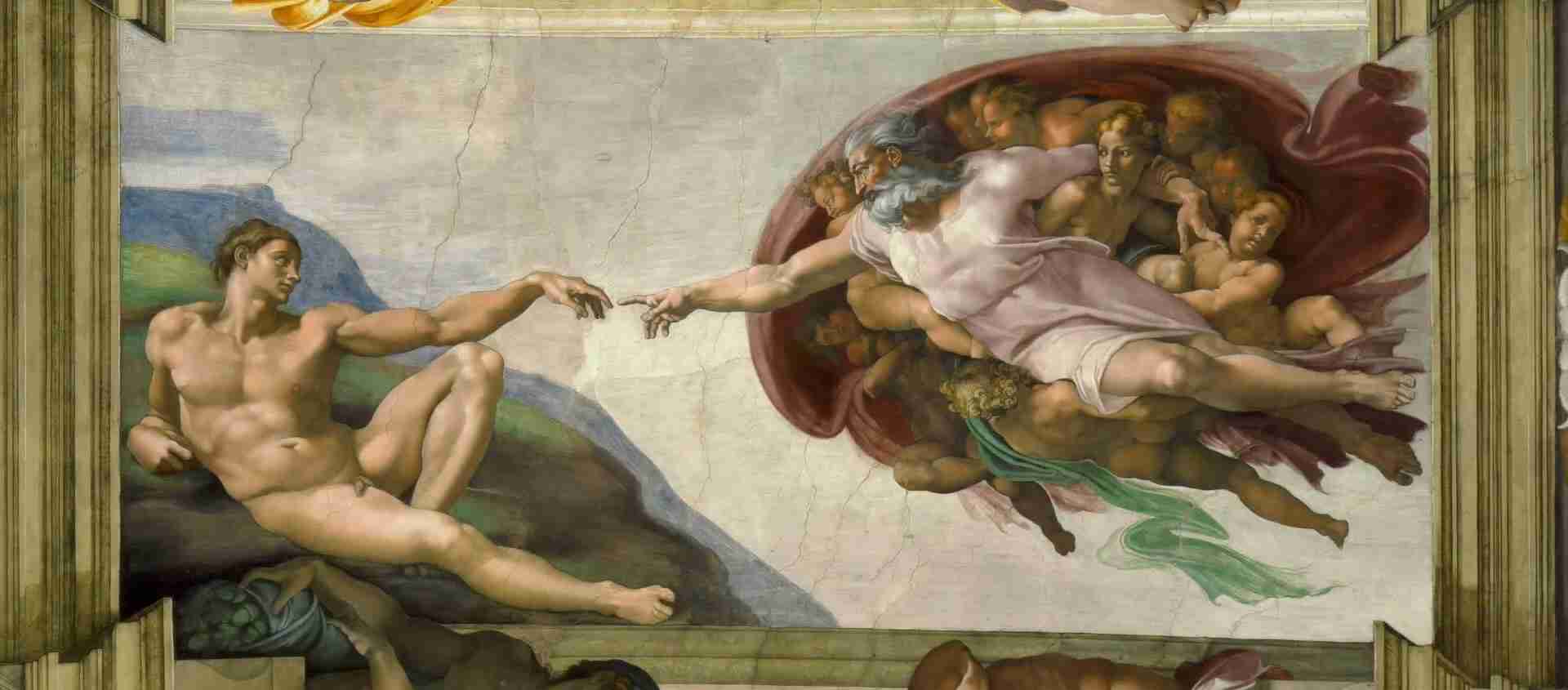
- The Creation of Adam panel featuring the near-touching fingers of God and Adam represents the most reproduced and recognizable image from the ceiling, embodying Renaissance humanist ideals through divine-human connection
- The Last Judgment fresco covering the entire altar wall took four years to complete between 1536 and 1541, depicting over 300 figures in Christ’s Second Coming and the final separation of souls to heaven or hell
- Michelangelo worked largely alone using the demanding buon fresco technique, applying pigments to wet plaster on a custom-designed scaffold system suspended from walls rather than supported from the floor
- The 1980-1994 restoration removed centuries of accumulated grime and candle soot, revealing Michelangelo’s original vibrant color palette that shocked scholars accustomed to the darkened appearance
- The chapel functions as the setting for papal conclaves where cardinals elect new popes, making it both supreme artistic achievement and active ceremonial space within Vatican religious life
People Also Ask About the Sistine Chapel
How long did Michelangelo take to paint the Sistine Chapel ceiling?
Michelangelo painted the Sistine Chapel ceiling over approximately four years between 1508 and 1512, working largely alone on a custom-designed scaffold system he created to suspend from the chapel walls. The project began at the entrance end with the Noah scenes and progressed toward the altar with the Creation panels, allowing Michelangelo to develop increasingly bold compositional techniques as the work advanced. Initial sections show more crowded compositions with smaller figures, while later panels feature dramatically larger, more powerful figures painted with growing confidence as the artist mastered fresco application on the curved barrel vault surface. Pope Julius II commissioned the work to replace the previous blue sky and stars decoration, initially proposing twelve apostles at the sides with architectural motifs filling the interior, but Michelangelo expanded the conception to the comprehensive Genesis narrative covering nearly 800 square meters that defines the ceiling today.
What are the nine scenes on the Sistine Chapel ceiling?
The nine central ceiling panels depict Genesis narratives organized into three thematic groups of three scenes each. The Creation sequence shows the Separation of Light from Darkness, Creation of Sun Moon and Earth, and Separation of Land from Water. The Adam and Eve cycle includes the Creation of Adam, Creation of Eve, and the Temptation and Expulsion from Paradise. The Noah trilogy depicts the Sacrifice of Noah, the Great Flood, and the Drunkenness of Noah. These panels alternate between four large rectangular compositions and five smaller ones, divided by painted architectural ribs creating the ceiling’s structural framework. Michelangelo arranged the narrative in reverse chronological order when viewed from the chapel entrance toward the altar, creating an intentional rewind effect where visitors walking toward the altar experience the story backward from Noah’s drunkenness to the moment of Creation, symbolically returning to origins.
Why did Michelangelo paint the Last Judgment on the altar wall?
Pope Clement VII commissioned the Last Judgment in 1534, twenty-five years after Michelangelo completed the ceiling, seeking a dramatic depiction of Christ’s Second Coming for the chapel’s most theologically significant wall behind the altar where papal masses occur. The commission required destroying Perugino’s existing altarpiece frescoes that had decorated the wall since the 1480s, demonstrating the papacy’s willingness to sacrifice earlier Renaissance works for Michelangelo’s vision. Clement died before the project commenced, and his successor Pope Paul III oversaw completion between 1536 and 1541 when Michelangelo was in his sixties. The placement on the altar wall ensured every celebrant facing the altar during mass would confront the dramatic theological message of divine judgment, eternal salvation, and damnation, making the fresco’s religious function inseparable from its artistic achievement. The work reflects Counter-Reformation concerns with sin, redemption, and the church’s authority to guide souls toward salvation.
What technique did Michelangelo use to paint the Sistine Chapel?
Michelangelo employed the demanding buon fresco technique, applying water-based pigments directly to fresh wet plaster so colors became chemically bonded to the wall surface as the plaster dried and cured. This unforgiving method required meticulous planning since corrections proved nearly impossible once plaster dried, and each section needed completion within a single working day before the plaster surface hardened. The artist applied new plaster sections called giornate daily, scraping away previous sections’ edges to create seamless joins between work sessions. Michelangelo designed a unique scaffold system suspended from holes in the chapel walls above the windows rather than building from the floor, allowing normal chapel functions to continue below while preserving clear sightlines from the floor to monitor compositional effects from the viewer’s perspective. The technique’s permanence ensured the frescoes’ survival for over five centuries, though environmental damage from candle smoke, humidity, and prior restoration attempts darkened the surface until modern conservation revealed Michelangelo’s original vibrant palette.
Extended multi-day tours – 5+ days
Featured Vatican City Multi-Day Tour Packages
3 days
Vatican City 3-Day Discovery Tour
- ✓ Comprehensive Vatican City experience
- ✓ Expert local guides included
- ✓ All accommodation included
- ✓ Transportation provided

5 days
Vatican City 5-Day Highlights Experience
- ✓ Comprehensive Vatican City experience
- ✓ Expert local guides included
- ✓ All accommodation included
- ✓ Transportation provided
7 days
Vatican City 7-Day Cultural Journey
- ✓ Comprehensive Vatican City experience
- ✓ Expert local guides included
- ✓ All accommodation included
- ✓ Transportation provided
10 days
Vatican City 10-Day Complete Adventure
- ✓ Comprehensive Vatican City experience
- ✓ Expert local guides included
- ✓ All accommodation included
- ✓ Transportation provided
Multi-day tour packages powered by TourRadar. Prices and availability subject to change.
Introduction
The Sistine Chapel represents the convergence of Renaissance artistic genius with Catholic theological ambition, where Michelangelo Buonarroti created visual theology of unprecedented scope and power. Built in the 1470s under Pope Sixtus IV as the papal chapel within the Vatican palace complex, the structure already contained significant artistic works including wall frescoes by Perugino, Botticelli, and Ghirlandaio depicting the lives of Moses and Christ. When Pope Julius II commissioned Michelangelo to paint the ceiling in 1508, the artist reluctantly abandoned his preferred sculpture to undertake what became the defining achievement of his career and arguably the greatest single artistic accomplishment of the Renaissance era.
Michelangelo’s ceiling frescoes transformed the chapel’s barrel vault into a comprehensive visual narrative of Genesis, the Bible’s opening book describing Creation, humanity’s fall, and God’s covenant with Noah. The nine central panels depicting these pivotal biblical moments anchor an elaborate theological program including prophets and sibyls who foretold Christ’s coming, ancestors of Jesus in the lunettes and spandrels, and four corner scenes showing Israel’s miraculous salvation. This complex iconography reflects the sophisticated theological planning that guided the project, likely developed in consultation with Vatican scholars though Michelangelo claimed complete artistic freedom in execution.
Twenty-five years after completing the ceiling, Michelangelo returned to paint the Last Judgment on the altar wall, creating a theological bookend to the Genesis narrative. Where the ceiling depicted creation and humanity’s origins, the altar wall showed final judgment and humanity’s ultimate destination. This second commission came when Michelangelo was in his sixties, bringing mature artistic vision and profound personal spirituality to the depiction of Christ’s Second Coming. The Last Judgment’s emotional intensity and dramatic composition reflected both the artist’s evolved style and the changed religious climate of the Counter-Reformation, when the Catholic Church sought to reassert theological authority through powerful visual statements.
The chapel functions as more than artistic monument, serving as the setting for papal conclaves where the College of Cardinals elects new popes in secret deliberations beneath Michelangelo’s frescoes. This dual identity as supreme artwork and active ceremonial space creates unique preservation challenges while ensuring the chapel remains central to Catholic religious life rather than existing solely as museum artifact. Visitors experience the frescoes in the context of their original sacred purpose, surrounded by the architectural and liturgical elements that informed Michelangelo’s vision.
Understanding the Sistine Chapel requires engaging both artistic and theological dimensions. The frescoes demonstrate Michelangelo’s revolutionary approach to the human figure, his mastery of complex composition, and his ability to convey profound spiritual meaning through physical forms. Simultaneously, the iconographic program reflects sophisticated theological interpretation of scripture, Catholic doctrine concerning salvation and damnation, and Renaissance humanist ideals integrating classical learning with Christian faith. This guide examines these intersecting dimensions, revealing how Michelangelo’s artistic genius created visual theology that continues inspiring viewers five centuries after its creation.
Michelangelo’s Ceiling: The Genesis Cycle
The Sistine Chapel ceiling measures approximately 40 meters long and 13-14 meters wide, creating a shallow barrel vault that curves gently overhead with lunettes cut by the chapel’s windows. Michelangelo transformed this architectural challenge into opportunity, designing a comprehensive decorative scheme that appears to open the ceiling to celestial visions while respecting the vault’s structural reality. The central spine running the ceiling’s length contains nine Genesis narrative panels alternating between four large rectangular compositions and five smaller ones, divided by painted architectural ribs creating illusionistic framework that organizes the complex visual program.
The ceiling contains over 300 individual figures distributed across multiple zones serving distinct iconographic functions. The nine central Genesis panels form the narrative core, surrounded by twenty athletic male nudes called ignudi positioned at the corners of smaller panels, holding oak leaf garlands and bronze-colored medallions. These ignudi demonstrate Michelangelo’s obsession with the human figure in dynamic poses, representing either perfected humanity before the Fall or angelic beings attending divine creation. Twelve monumental seated figures occupy thrones along the ceiling’s sides: seven Old Testament prophets and five classical sibyls, all having prophesied Christ’s coming according to Christian interpretation integrating Hebrew scripture with Greco-Roman tradition.
The lunettes and spandrels above the windows contain figures representing Christ’s ancestors as listed in Matthew’s Gospel, connecting Old Testament history to New Testament fulfillment and bridging the wall frescoes’ Moses and Christ narratives with the ceiling’s creation story. Four large corner pendentives show dramatic biblical scenes of Israel’s miraculous salvation: David slaying Goliath, Judith beheading Holofernes, the Brazen Serpent healing plague victims, and the Death of Haman. These corner compositions demonstrate Michelangelo’s skill with complex multi-figure scenes while reinforcing theological themes of divine intervention and salvation prefiguring Christian redemption.
Michelangelo began painting at the entrance end with the Noah panels and worked toward the altar, creating the Creation scenes last despite their narrative precedence. This reverse working sequence allowed the artist to develop his fresco technique and compositional approach on less theologically critical panels before attempting the supreme moments of divine creation. The progression shows dramatic evolution in Michelangelo’s confidence and artistic vision: early Noah scenes contain crowded compositions with smaller figures difficult to perceive from the floor, while later Creation panels feature dramatically enlarged figures painted with bold simplification and powerful gestures visible across the chapel’s considerable height.
The ceiling’s chromatic scheme balances soft gray and whitish tones simulating marble architecture and blue sky backgrounds with vivid color accents in prophets’ and sibyls’ garments, corner spandrel scenes, and flesh tones of the nude figures. Michelangelo unified the lighting throughout, directing illumination from the altar direction rather than the actual windows, creating consistent dramatic effect that guides visual attention toward the altar wall. This sophisticated lighting scheme enhances the theological program’s directionality, as all forms and forces flow toward the chapel’s liturgical focus where priests celebrate mass and cardinals elect popes.
The Nine Central Panels: Creation to Noah
The Creation sequence begins with the Separation of Light from Darkness, where God appears as a powerful figure of pure energy splitting primal chaos into ordered creation. Michelangelo painted this panel last despite its narrative primacy, rendering God with minimal precise detail to emphasize divine power transcending human comprehension. The writhing energetic form demonstrates the artist’s mature style reduced to essential dramatic gesture, creating theological meaning through physical movement rather than descriptive realism. This panel represents Michelangelo’s most abstract approach to depicting divinity, appropriate for describing the moment preceding all material existence.
The Creation of Sun Moon and Earth shows God in two positions within a single composition, his outstretched arms simultaneously creating the glowing orange sun and white moon orb while a second image shows him turned away creating plants with an arm gesture. This double representation captures divine omnipresence and the instantaneous nature of creation acts described in Genesis, while the rear view of God—biblically described but rarely painted—demonstrates Michelangelo’s willingness to depict scripture literally despite potential irreverence concerns. The dynamic composition and bold foreshortening create powerful visual impact appropriate to cosmic creation’s magnitude.
The Separation of Land from Water depicts God hovering above primal waters, dividing seas from dry land through commanding gesture. This panel continues the Creation sequence’s emphasis on God as active physical presence imposing order on chaos through divine will manifested in bodily movement. The composition’s relative simplicity compared to later multi-figure scenes reflects both the narrative moment’s solitary nature and Michelangelo’s strategic use of simplified forms in panels viewed from greatest distance, ensuring visual clarity despite the ceiling’s height.
The Creation of Adam represents the ceiling’s most iconic image and perhaps the most reproduced artwork in history. God reaches toward the languid Adam reclining on barren earth, their fingers nearly touching in the crucial moment before divine spark animates human flesh. The composition’s power derives from the charged space between extended fingers, suggesting imminent contact rather than depicting the touch itself. Adam’s passive receptivity contrasts dramatically with God’s vigorous energy, emphasizing the gulf between divine creator and created humanity while the near-touch implies intimate connection. The panel demonstrates Michelangelo’s genius for condensing complex theological meaning into single powerful gesture.
The Creation of Eve shows God summoning the first woman from sleeping Adam’s side, directly borrowing compositional elements from Jacopo della Quercia’s relief panels at Bologna’s San Petronio basilica that Michelangelo studied during his youth. Eve emerges in prayerful posture toward her creator, establishing the devotional relationship between humanity and divinity. This panel occupies the ceiling’s central position, potentially placing Eve rather than Adam at the composition’s heart, though this may simply reflect chronological narrative sequence or represent Eve as Virgin Mary’s archetype in a chapel dedicated to the Virgin’s Assumption.
The Temptation and Expulsion combines two narrative moments in a single composition divided by the Tree of Knowledge. On the left, the serpent—depicted with female torso—offers forbidden fruit to Eve while Adam reaches toward the tree. On the right, an angel drives the ashamed couple from Paradise, their bodies transformed from idealized beauty to anguished expressions of loss and shame. This dual composition captures humanity’s fall and its immediate consequences, demonstrating Michelangelo’s skill in depicting contrasting emotional and physical states while maintaining compositional unity. The serpent’s androgynous form and the figures’ emotional range showcase the artist’s sophisticated approach to theological narrative through human psychology.
The Sacrifice of Noah depicts the patriarch offering burnt offerings after the flood, showing multiple figures engaged in ritual preparation and animal sacrifice. This panel begins the Noah trilogy that Michelangelo painted first chronologically in his working sequence, displaying characteristics of his early ceiling work: relatively crowded compositions with smaller figures and less confident spatial organization compared to later panels. The scene establishes Noah’s covenant with God following humanity’s near-destruction, introducing themes of sacrifice and divine mercy that resonate throughout Christian theology.
The Great Flood presents Michelangelo’s most complex multi-figure composition, showing desperate humanity seeking refuge from rising waters on a rocky outcrop and makeshift ark while others drown in the deluge. The panel contains four distinct narrative vignettes depicting various human responses to catastrophe: panic, resignation, attempted salvation, and inevitable death. This compositional complexity proves difficult to perceive from the chapel floor, leading Michelangelo to simplify subsequent panels for greater visual impact. The Flood demonstrates both the artist’s narrative ambition and his learning curve regarding fresco visibility at significant viewing distance.
The Drunkenness of Noah shows the patriarch’s moral lapse after cultivating vineyards and consuming too much wine, discovered naked in his tent by his three sons. This final Genesis panel depicts humanity’s continued imperfection even after divine covenant, suggesting the ongoing need for redemption that Christian theology finds fulfilled in Christ. The scene’s moral complexity—showing righteous Noah’s weakness—demonstrates Michelangelo’s willingness to depict biblical figures with psychological realism rather than idealized perfection, humanizing sacred narrative through authentic emotional and physical portrayal.
The Prophets and Sibyls: Heralds of the Messiah
Twelve monumental seated figures occupy elaborate marble thrones along the ceiling’s sides between the Genesis panels and the chapel walls, alternating seven Hebrew prophets with five classical sibyls in a sophisticated theological program integrating Jewish scripture with Greco-Roman tradition. This fusion exemplifies Renaissance humanist ideals reconciling Christian revelation with classical wisdom, suggesting divine truth’s universal accessibility through both biblical prophecy and pagan oracular vision. The prophets and sibyls all foretold Christ’s coming according to Christian interpretation, making them appropriate mediators between the Genesis creation narrative and the chapel’s liturgical function celebrating Christ’s redemptive sacrifice.
The seven prophets represent major and minor figures from Hebrew scripture: Zechariah, Joel, Isaiah, Ezekiel, Daniel, Jeremiah, and Jonah. Michelangelo portrayed each with distinct personality and psychological depth, moving beyond conventional iconography to create individuals lost in contemplation, revelation, or textual study. Jeremiah slumps in melancholic posture appropriate to the weeping prophet’s lamentations over Jerusalem’s destruction, while Jonah twists dramatically backward in reaction to divine call, his pose referencing the recently discovered Laocoön sculpture’s tortured movement. Each prophet engages with scripture or divine vision through gesture and expression revealing inner spiritual experience rather than static symbolic representation.
The five sibyls—Delphica, Eritrea, Cumaea, Persica, and Libica—represent prophetesses from classical antiquity whom Christian tradition claimed had prophesied Christ’s birth and redemption. Their inclusion demonstrates the Renaissance church’s confident assertion that all human wisdom ultimately pointed toward Christian truth, absorbing rather than rejecting pagan learning. Michelangelo painted these female figures with the same monumental scale and physical power as the male prophets, challenging conventional distinctions between masculine and feminine representation. The Libyan Sibyl’s muscular back and dynamic twisting pose shows the artist applying knowledge of male anatomy to female form, creating figures of equal dignity and prophetic authority.
The prophets and sibyls vary dramatically in scale, with later figures painted progressively larger as Michelangelo adapted his technique for optimal visibility from the chapel floor sixty feet below. Early figures like Zechariah appear relatively modest in scale, while Jonah above the altar achieves monumental size with extreme foreshortening that makes his backward-leaning pose appear natural despite the curved vault surface. This progressive enlargement demonstrates Michelangelo’s evolving understanding of optical requirements, using sophisticated perspective adjustments to compensate for viewing angle and distance.
Each prophet and sibyl occupies an elaborate architectural throne flanked by putti and ignudi, creating complex three-dimensional illusion on the flat vault surface. Michelangelo painted these architectural elements in grisaille simulating carved marble, demonstrating his sculptural training’s influence on his approach to painted form. The thrones vary in design and ornamentation, adding visual variety while establishing spatial zones separating different ceiling elements. This architectural framework organizes the ceiling’s numerous components into coherent whole, guiding viewer attention through the complex theological program while maintaining individual scenes’ clarity and impact.
The Last Judgment: Michelangelo’s Final Sistine Vision
The Last Judgment covering the entire altar wall measures approximately 13.7 by 12 meters, making it the largest single fresco surface Michelangelo ever painted and one of Renaissance art’s most ambitious single compositions. Pope Clement VII commissioned the work in 1534, the final year of his papacy, though his successor Pope Paul III oversaw the project’s completion between 1536 and 1541. Michelangelo began work at age 61, bringing mature artistic vision and profound personal spirituality to depicting Christ’s Second Coming and humanity’s final judgment, creating theological drama that shifts dramatically from the ceiling’s creation optimism to altar wall confrontation with sin, death, and eternal consequences.
Over 300 figures populate the composition organized in a vast rotational movement centered on Christ’s commanding gesture of judgment. Christ appears as powerful, idealized nude figure ringed by Virgin Mary and prominent saints, his raised right hand simultaneously blessing the saved ascending to his right and condemning the damned falling to his left. Michelangelo departed from traditional Last Judgment iconography showing Christ enthroned in majesty, instead depicting him standing in active judgment pose that energizes the entire composition. The beardless, athletic Christ resembles classical Apollo more than medieval representations, demonstrating Renaissance confidence in human physical beauty as appropriate vehicle for divine perfection.
The composition divides horizontally into distinct zones: the upper lunettes show angels bearing instruments of Christ’s Passion including the cross, the central band depicts Christ, Mary, and surrounding saints, the middle zone shows the saved rising on the left and damned falling on the right, and the lower section depicts the resurrection of the dead and their transport to heaven or hell. This vertical organization creates clear narrative structure while the swirling rotational movement centered on Christ unifies disparate elements into dynamic whole. Michelangelo eliminated traditional compartmentalized organization of earlier Last Judgment depictions, creating instead a vast celestial theater where all humanity experiences simultaneous judgment.
Saints surrounding Christ hold instruments of their martyrdom rather than suffering torture scenes, creating visual catalog of Christian sacrifice while maintaining compositional clarity. Saint Bartholomew holds the flayed skin bearing Michelangelo’s self-portrait, suggesting the artist’s anxiety about personal salvation despite his role depicting divine judgment. Saint Catherine displays her breaking wheel, Saint Sebastian his arrows, and Saint Lawrence his gridiron, each figure serving as exemplar of faith’s ultimate expression through martyrdom. The inclusion of these martyrdom symbols reinforces Catholic doctrine emphasizing works and sacrifice alongside faith in the salvation equation.
The lower section’s left side shows the dead rising from graves and ascending toward heaven, bodies progressively regaining vitality and beauty as they approach salvation. The right side depicts the damned dragged down by demons toward Charon’s boat ferrying souls across the River Styx to hell, where judge Minos with donkey ears and serpent coils determines each soul’s infernal destination. These mythological references to Dante’s Divine Comedy and Virgil’s Aeneid demonstrate Michelangelo’s fusion of classical and Christian sources, asserting their compatible witness to divine judgment and eternal consequences.
The fresco’s pervasive nudity created immediate controversy, with papal master of ceremonies Biagio da Cesena denouncing the work as inappropriate for sacred space and more suitable for public baths and taverns. Michelangelo responded by painting Cesena’s likeness as Judge Minos in hell, and when Cesena complained to the pope, Paul III reportedly responded that papal jurisdiction did not extend to hell so the portrait must remain. Following the Council of Trent’s condemnation of lascivious religious art, Michelangelo’s student Daniele da Volterra painted draperies over the most controversial nudity, earning the nickname “Il Braghettone” (the breeches-maker), though recent restoration removed some later additions while preserving da Volterra’s original modifications.
Fresco Technique and Artistic Innovation
Michelangelo employed buon fresco technique requiring pigments mixed with water be applied directly to fresh wet plaster before the surface dried, creating chemical bond as lime in the plaster carbonated with atmospheric carbon dioxide. This unforgiving method allowed no corrections once plaster dried, demanding absolute confidence in composition and execution. The artist prepared full-scale cartoons for major figures, transferring designs to wet plaster through pouncing (dusting charcoal through perforated outlines) or incision (scoring outlines into the plaster surface), though later panels show reduced preliminary preparation as Michelangelo gained confidence working directly in paint.
Each working day’s fresh plaster section called a giornata defined how much surface the artist could paint before the plaster hardened, typically covering one or two figures or a composition section. Michelangelo carefully planned giornata boundaries to fall along natural divisions like garment edges or architectural elements, minimizing visible joins in the finished work. Previous sections’ edges were scraped back before applying new plaster, creating mechanical bond between old and new work that prevented separation while leaving subtle lines marking daily progress visible on close examination. These giornata divisions reveal Michelangelo’s working sequence and provide insight into his production rate across the ceiling’s four-year campaign.
The artist designed a unique scaffold system suspended from holes drilled in the chapel walls above the window level rather than building from the floor, allowing normal chapel activities to continue below while preserving Michelangelo’s ability to descend and view work in progress from the floor. This custom scaffolding system disproved the legend that Michelangelo painted lying on his back; instead, he worked standing or crouching on the platform with head tilted back to reach the overhead surface, creating neck and back strain documented in his contemporary sonnets complaining of physical suffering. The scaffold’s design allowed sectional relocation as work progressed, eliminating the need to dismantle and rebuild the entire structure.
Michelangelo adapted his painting technique as the ceiling progressed, initially using detailed preparatory drawings and careful underdrawing but progressively simplifying preparation to work more directly and rapidly. This evolution reflects growing mastery of fresco demands and confidence in his ability to conceive and execute complex compositions without extensive preliminary studies. The later panels’ increased figure size and simplified compositions demonstrate strategic adaptation to viewing conditions, as Michelangelo learned that bold, clear forms read more effectively from the chapel floor than intricate detail lost in distance. This practical adjustment never compromised artistic quality but rather enhanced visual impact through sophisticated understanding of optical requirements.
Color application employed a relatively limited palette appropriate to fresco’s chemical constraints, as not all pigments survive the alkaline plaster environment. Michelangelo achieved subtle tonal variations and flesh modeling through careful manipulation of earth tones, blues derived from expensive ultramarine, and whites highlighting forms to create sculptural three-dimensionality. The ceiling’s relatively muted color scheme compared to contemporary Venetian painting reflects both fresco’s technical limitations and Michelangelo’s fundamental identity as sculptor approaching painted form through volume and mass rather than color’s decorative potential. His flesh tones vary from pale to deeply tanned, suggesting ethnic diversity among humanity while demonstrating technical mastery of skin tone gradations.
The Great Restoration: Revealing Michelangelo’s Colors
The comprehensive restoration conducted between 1980 and 1994 removed centuries of accumulated dirt, candle soot, animal glue from previous restorations, and environmental deposits that had darkened the frescoes and obscured Michelangelo’s original color palette. The cleaning revealed vibrant hues that shocked scholars accustomed to the muted, somber tones visible before restoration, sparking debate about whether restorers had removed Michelangelo’s intentional final varnish layer along with accumulated grime. Scientific analysis demonstrated that the brilliant colors matched pigments used in Michelangelo’s era and that no evidence supported intentional darkening varnish application, confirming the restoration revealed authentic original appearance.
The restored ceiling displays unexpectedly bright, clear colors including vivid oranges, pinks, greens, and purples in prophets’ and sibyls’ garments, luminous flesh tones ranging from pale ivory to warm bronze, and crystalline blues in sky backgrounds. These saturated hues align more closely with Raphael’s contemporary Vatican frescoes than with the darkened Michelangelo appearance that had defined scholarly understanding for centuries. The revelation transformed art historical interpretation of Michelangelo’s color sense, demonstrating he employed vibrant chromatic effects rivaling any Renaissance colorist rather than the somber limited palette suggested by the pre-restoration appearance.
Restoration techniques employed water-based solvents and gentle mechanical cleaning to remove accumulations without damaging the original paint layer, a painstaking process requiring years of careful work across the ceiling’s vast surface. Conservators worked in small sections, testing cleaning methods and documenting progress through extensive photography before proceeding. The project included structural stabilization addressing cracks and plaster separation, climate control improvements to prevent future deterioration, and installation of enhanced lighting systems revealing details previously obscured in the chapel’s dim interior. These comprehensive interventions ensured both aesthetic revelation and long-term preservation.
The cleaned frescoes revealed technical details previously invisible, including the giornata boundaries marking daily work sections, underdrawing and incised outlines used for compositional layout, and even fingerprints where Michelangelo touched wet plaster. These discoveries provided unprecedented insight into the artist’s working methods, confirming his evolution toward increasingly rapid, confident execution as the ceiling progressed. The restoration also revealed selective use of gold leaf and metallic pigments in specific details, techniques typically associated with panel painting rather than fresco work.
Controversy accompanied the restoration’s dramatic results, with some scholars and artists arguing the cleaning was too aggressive and removed intentional surface treatments Michelangelo applied after the fresco dried to modulate color intensity and unify tonal values. Supporters countered that scientific analysis found no evidence of such treatments and that dirt accumulation was purely accidental rather than preserving authentic artistic intent. The debate continues among specialists, though the restoration’s careful documentation and reversible techniques mean future scholarship can reassess decisions if new evidence emerges regarding Michelangelo’s final surface treatment intentions.
Theological Meaning and Iconographic Program
The Sistine Chapel’s comprehensive iconographic program integrates multiple theological themes into coherent visual narrative spanning creation through final judgment. The Genesis ceiling panels establish humanity’s origins, inherent dignity as divine creation, and tragic fall through disobedience, creating theological foundation for understanding redemption’s necessity. The prophets and sibyls surrounding these central scenes testify to prophecies foretelling Christ’s coming, bridging Old Testament creation and New Testament redemption. The wall frescoes depicting Moses and Christ’s parallel lives reinforce typological interpretation seeing Old Testament events as prefiguring Christian revelation.
The Last Judgment completes the theological narrative begun with creation, depicting ultimate consequences of human choices and divine justice’s final expression. This eschatological vision emphasizes individual accountability before divine judgment, Counter-Reformation doctrine concerning salvation requiring both faith and works, and the church’s role as mediator guiding souls toward heaven rather than hell. The composition’s emotional intensity reflects the religious crisis of the Reformation era, when Protestant challenges to Catholic authority prompted vigorous reassertion of traditional doctrine through powerful visual statements like Michelangelo’s altar wall masterpiece.
The chapel’s dedication to the Virgin Mary’s Assumption connects ceiling and altar wall through Mary’s unique role in Christian theology as mother of Christ and intercessor for humanity. The Creation of Eve possibly occupying the ceiling’s central position could reference Mary as second Eve whose obedience reversed the first Eve’s disobedience, a common medieval and Renaissance theological interpretation. In the Last Judgment, Mary appears beside Christ but turns away from the damned, suggesting her intercessory power has limits and individual responsibility ultimately determines salvation, aligning with Catholic doctrine balanced between divine mercy and human moral agency.
The integration of classical elements including sibyls, mythological references in the Last Judgment, and idealized nude forms reflects Renaissance confidence that human reason and beauty could express divine truth rather than contradict Christian revelation. This humanist approach saw classical wisdom as preparatory revelation leading toward full Christian understanding, making pagan prophecy and biblical prophecy compatible witnesses to universal truth. Michelangelo’s nude figures celebrate human physical perfection as appropriate vehicle for divine meaning, asserting creation’s inherent goodness despite the Fall’s corruption—a theological position that later Counter-Reformation prudishness would challenge but that represents authentic Renaissance Christian humanism.
The chapel’s function as setting for papal conclaves adds additional theological dimension, as cardinals elect new popes literally surrounded by visual reminders of divine sovereignty, human accountability, and the awesome responsibility of spiritual leadership. The frescoes create appropriate environment for this sacred deliberation, reminding electors they act under divine judgment in selecting Christ’s earthly representative. This functional dimension ensures the artworks remain living theology rather than mere aesthetic objects, continuing to serve the religious purposes that motivated their creation centuries after Michelangelo’s death.
Michelangelo’s Artistic Revolution
Michelangelo’s Sistine Chapel frescoes revolutionized Renaissance painting by demonstrating how knowledge of sculpture and human anatomy could create unprecedented power in two-dimensional art. His figures display volumetric mass and three-dimensional presence rivaling actual sculpture, achieved through sophisticated understanding of muscular anatomy, light and shadow modeling, and foreshortening that compensates for viewing angles. This approach influenced generations of artists who adopted Michelangelo’s emphasis on the human figure as painting’s supreme subject and primary vehicle for expressing meaning, shifting European art away from decorative toward monumental dramatic expression.
The ceiling introduced compositional innovations including the vast scale of individual figures, bold simplification of forms for visual clarity at distance, and integration of architectural illusion with narrative painting creating unified spatial environment. Earlier Renaissance ceilings typically featured repetitive decorative patterns or modest figurative elements, but Michelangelo conceived the entire surface as unified field for theological narrative rivaling architecture’s scale while maintaining painting’s narrative specificity. This ambitious integration of painting and architecture influenced Baroque ceiling decoration where illusionistic painted architecture frames dramatic scenes, though few later artists matched Michelangelo’s restraint in maintaining clear distinction between actual and depicted structure.
The emotional and psychological depth Michelangelo brought to biblical figures humanized sacred narrative in unprecedented ways. Rather than iconic symbols, his prophets, sibyls, and Genesis characters display authentic human psychology including doubt, fear, contemplation, and physical strain appropriate to their situations. This psychological realism made religious narratives more accessible to viewers who could recognize genuine human experience in sacred figures’ emotions and gestures, while the figures’ physical beauty and power elevated humanity to heroic status worthy of divine attention. This balance between accessibility and idealization became fundamental to later religious art seeking to inspire devotion through emotionally engaging yet spiritually elevated imagery.
The ceiling’s influence extended beyond Catholic art to impact Protestant and secular traditions, as the Creation of Adam’s iconic image transcended sectarian boundaries to represent universal themes of human origins, divine-human relationship, and creation’s wonder. Michelangelo’s synthesis of classical and Christian elements demonstrated art’s capacity to address fundamental human questions about existence, meaning, and relationship to the divine, establishing painting’s intellectual legitimacy alongside philosophy and theology. This elevated cultural status helped transform artists from craftsmen executing commissions to creative geniuses expressing profound truths, a shift Michelangelo himself exemplified through his difficult personality, insistence on artistic freedom, and conviction that great art required divine inspiration.
Visiting the Sistine Chapel
The Sistine Chapel forms part of the Vatican Museums complex, accessible only through the museums’ ticketed entry system requiring advance online booking to avoid extensive queues. The museum route leads through numerous galleries displaying classical sculpture, tapestries, maps, and Raphael’s rooms before reaching the chapel, creating a processional approach that builds anticipation while providing artistic context for understanding Michelangelo’s achievement. Visitors should allocate 3-4 hours for comprehensive Vatican Museums exploration including the chapel, though rushed visits focusing primarily on the Sistine Chapel take approximately 90 minutes from entrance to exit.
Chapel protocol prohibits photography despite most visitors ignoring this rule, flash photography that could damage the frescoes, and loud conversation that would disrupt the space’s sacred character. Guards strictly enforce silence and modesty rules requiring covered shoulders and knees, turning away inappropriately dressed visitors regardless of ticket purchase. The chapel accommodates hundreds of visitors simultaneously, creating crowded conditions where securing favorable viewing positions requires patience and strategic positioning, particularly for viewing the ceiling’s most famous panels and the Last Judgment altar wall.
Optimal viewing strategy involves entering the chapel and moving immediately to the right wall, positioning under the ceiling’s entrance end to view the Genesis panels in narrative sequence from Noah through Creation proceeding toward the altar. This orientation allows following the story chronologically while appreciating Michelangelo’s evolving artistic confidence from early crowded Noah scenes to later monumental Creation panels. After viewing the ceiling, position facing the altar wall to comprehend the Last Judgment’s vast scale and compositional organization, ideally from the chapel’s center where the rotational movement around Christ appears most dynamic.
Binoculars enhance ceiling viewing by revealing details impossible to perceive with naked eye at sixty feet distance, including facial expressions, smaller figures, and the ignudi’s varied poses. Many visitors bring small binoculars specifically for ceiling examination, though focusing while looking nearly straight up proves challenging. Alternatively, detailed ceiling photographs in guidebooks or pre-visit online study prepare viewers to recognize specific panels and elements, making the actual viewing experience more meaningful by knowing what to observe rather than experiencing visual overload from the composition’s complexity.
The chapel’s active religious function means occasional closures for Vatican ceremonies and papal events, information available on the Vatican Museums website. Sunday access requires special Vatican Museums Sunday operation booking, with different hours than weekday visits. The chapel closes early in the afternoon compared to the Vatican Museums’ general closing time, as the last visitor groups are admitted approximately one hour before the museums close to ensure adequate viewing time before closure. Planning visits during weekday mornings generally provides better viewing conditions than weekend afternoons when tourist volume peaks.
Conservation Challenges and Future Preservation
The Sistine Chapel faces ongoing conservation challenges from its dual function as supreme artwork and active ceremonial space hosting numerous papal events, tourist visits, and religious functions annually. The presence of thousands of daily visitors generates humidity from respiration, heat from body temperature, and microparticles from clothing that accumulate on fresco surfaces despite climate control systems. This human presence creates conditions fundamentally different from museum environments where artworks exist in carefully controlled isolation, requiring unique preservation strategies balancing access with conservation.
Climate control systems installed during the 1980s-1994 restoration maintain temperature and humidity within parameters preventing fresco deterioration, while air filtration removes particulates that would otherwise settle on painted surfaces. These systems represent engineering marvels accommodating the chapel’s historic architecture that lacks modern climate control infrastructure built into contemporary museum design. The systems must function invisibly without disrupting the chapel’s artistic integrity or sacred atmosphere, creating technical challenges solved through concealed ventilation and sophisticated monitoring systems tracking environmental conditions in real-time.
Visitor management policies limit daily numbers and restrict chapel time to prevent overcrowding damage, though these measures balance conservation necessity against the Vatican’s mission providing access to Catholic artistic heritage. The tension between preservation and access generates ongoing debate about appropriate visitor numbers, with conservators generally advocating stricter limits than tourism officials permit. Regular monitoring of fresco surfaces tracks deterioration rates informing policy adjustments, creating feedback loop where conservation science shapes access policies to ensure the frescoes survive for future generations.
Future conservation will likely involve periodic cleaning to remove accumulations before they reach pre-1980 restoration levels, using gentler methods than the comprehensive restoration required. Advances in non-invasive examination techniques including multispectral imaging and digital documentation create permanent records of current fresco condition, allowing future conservators to track changes and identify emerging problems before they become critical. These digital technologies also enable virtual access reducing physical visitor pressure while providing educational resources for worldwide audiences unable to visit Rome.
The greatest long-term threat may be fundamental changes in Vatican operations or political instability affecting Italy, though the chapel’s religious and cultural significance makes catastrophic loss unlikely. More realistic concerns involve gradual deterioration from unavoidable environmental exposure, natural aging of materials, and potential structural problems in the underlying architecture. The chapel survived five centuries of candle smoke, wars, and changing tastes, suggesting resilience likely to ensure continued survival given modern conservation science and worldwide recognition of its irreplaceable cultural value.
Frequently Asked Questions
Did Michelangelo paint the Sistine Chapel ceiling lying on his back?
No, Michelangelo did not paint lying on his back. He designed a custom scaffold system suspended from holes in the chapel walls above the window level, creating a platform where he worked standing or crouching with his head tilted back to reach the overhead vault surface. This working position caused severe neck and back strain that Michelangelo documented in contemporary sonnets complaining of physical suffering, but it allowed him to view his work while painting and make compositional adjustments rather than painting blind while horizontal. The myth of Michelangelo painting lying down likely arose from misunderstanding his sonnets describing looking upward and experiencing paint dripping on his face, combined with the natural assumption that ceiling painting requires horizontal positioning when in fact standing on scaffolding provides better access and visibility.
How many figures are painted on the Sistine Chapel ceiling?
The Sistine Chapel ceiling contains over 300 individual figures including the nine central Genesis panels’ characters, twelve prophets and sibyls in monumental seated poses, twenty athletic male nudes called ignudi positioned at the corners of smaller panels, Christ’s ancestors in the lunettes and spandrels, numerous attendant figures surrounding the prophets and sibyls, and the figures in the four corner pendentive scenes showing biblical salvation narratives. The exact count varies depending on whether partially visible background figures are included and how grouped figures are enumerated, but all scholarly assessments confirm over 300 distinct figures populating the ceiling’s complex iconographic program. This vast figure population demonstrates Michelangelo’s extraordinary compositional ambition and his obsession with the human form as vehicle for theological meaning.
Why are there nude figures in a church ceiling?
Michelangelo included extensive nudity in the Sistine Chapel frescoes reflecting Renaissance humanist conviction that the human body’s beauty appropriately expressed divine perfection and creation’s inherent goodness. Classical tradition celebrating the nude as art’s highest subject combined with Christian theology emphasizing humanity’s creation in God’s image to justify nude figures in religious contexts. The ignudi surrounding the Genesis panels may represent perfected humanity before the Fall or angelic beings, while the Last Judgment’s pervasive nudity emphasizes souls’ vulnerability before divine judgment stripped of earthly status and possessions. Renaissance audiences generally accepted such nudity as theologically appropriate, though later Counter-Reformation prudishness led to painting draperies over the most controversial portions of the Last Judgment, modifications that some remain visible while others were removed during modern restoration.
What is the most famous scene on the Sistine Chapel ceiling?
The Creation of Adam ranks as the ceiling’s most famous scene and arguably the most reproduced image in art history, depicting God reaching toward Adam with their fingers nearly touching in the moment before divine spark animates human flesh. The composition’s power derives from the charged space between extended fingers suggesting imminent contact rather than depicting the touch itself, condensing creation’s theological meaning into single dramatic gesture. The panel demonstrates Michelangelo’s genius for visual communication through simplified form and expressive body language, creating an image that transcends its original religious context to represent universal themes of human origins, creative inspiration, and the relationship between divine and mortal realms. The image appears in countless reproductions, parodies, and cultural references, making it synonymous with Renaissance art and Michelangelo’s achievement.
Can you take photos in the Sistine Chapel?
Photography is officially prohibited in the Sistine Chapel to preserve contemplative atmosphere appropriate to sacred space and protect the frescoes from flash damage, though enforcement varies and many visitors surreptitiously photograph despite the prohibition. Guards regularly announce the photography ban in multiple languages and confiscate cameras or phones from obvious violators, but the chapel’s crowded conditions and limited guard presence mean many visitors successfully capture images. The prohibition’s original purpose included protecting copyright owned by Japanese television company that funded the 1980s-1994 restoration in exchange for exclusive photography rights, though this arrangement has expired. Visitors should respect the prohibition as matter of preserving sacred atmosphere rather than simply avoiding detection, allowing contemplative viewing without the distraction of constant photography that characterizes many tourist sites.
How long does it take to properly view the Sistine Chapel?
Comprehensive appreciation of the Sistine Chapel frescoes requires minimum 30-45 minutes examining the ceiling’s nine Genesis panels, prophets and sibyls, and architectural framework, followed by extended viewing of the Last Judgment altar wall to comprehend its compositional complexity and individual figures’ details. Many visitors spend 60-90 minutes in the chapel when conditions permit, though guards sometimes urge movement when crowding becomes excessive. Optimal viewing involves multiple viewing positions: under the ceiling’s entrance end for Genesis narrative appreciation, along the side walls for prophet and sibyl examination, and centered facing the altar for Last Judgment comprehension. Visitor management policies sometimes impose time limits during peak crowding, making morning weekday visits preferable for extended contemplation without pressure to exit.
What happened to Michelangelo after painting the Sistine Chapel?
After completing the ceiling in 1512, Michelangelo returned to his preferred sculpture including the Moses statue for Pope Julius II’s tomb and various architectural projects. He served as chief architect of St. Peter’s Basilica from 1546 until his death in 1564, designing the building’s iconic dome that dominates Rome’s skyline. Between the ceiling and this architectural work, he returned to the Sistine Chapel to paint the Last Judgment between 1536 and 1541, then created two frescoes in the Cappella Paolina nearby showing the Conversion of Saul and Crucifixion of Peter as his final painting projects. Throughout his later decades, Michelangelo focused increasingly on architecture and sculpture while maintaining his difficult personality and insistence on artistic independence that had characterized his earlier career, dying at age 88 as the most celebrated artist of his era.
How did Michelangelo get the commission to paint the Sistine Chapel?
Pope Julius II commissioned Michelangelo to paint the Sistine Chapel ceiling in 1508, despite the artist’s reluctance and preference for sculpture over painting. Julius had previously commissioned Michelangelo to design an elaborate tomb monument, but that project was suspended when the pope redirected resources toward rebuilding St. Peter’s Basilica. The ceiling commission may have been influenced by Michelangelo’s rival Bramante suggesting the project to occupy the artist with unfamiliar painting while Bramante maintained architectural supremacy, though Julius’s genuine admiration for Michelangelo’s abilities likely motivated the commission regardless of court politics. Michelangelo initially protested his unsuitability for fresco work and recommended other painters, but Julius insisted and the artist reluctantly accepted what became his defining achievement despite initial resistance.
What is the theological message of the Sistine Chapel ceiling?
The ceiling presents comprehensive theological narrative beginning with Creation, depicting humanity’s divine origins and inherent dignity as beings created in God’s image. The progression through Genesis shows humanity’s tragic Fall through disobedience yet God’s continued covenant relationship demonstrated through Noah, establishing the need for redemption that Christian theology finds fulfilled in Christ. The prophets and sibyls surrounding these scenes testify to messianic prophecy bridging Old Testament preparation and New Testament fulfillment, while the lunettes showing Christ’s ancestors connect creation through Abraham to Jesus. The entire program emphasizes divine sovereignty in history, human responsibility and accountability, and salvation history’s progression toward Christian revelation. The ceiling functions as visual theology teaching illiterate viewers through images what scripture communicates through text, making the chapel simultaneously place of worship and comprehensive biblical education.
Has the Sistine Chapel ever been damaged or restored before the recent restoration?
The frescoes survived relatively intact for centuries despite environmental damage from candle smoke, humidity, and structural settling causing minor cracking and plaster separation. Several restoration campaigns before the 1980-1994 comprehensive restoration attempted cleaning and stabilization, though these interventions often caused more harm than good by applying animal glue and oil that darkened surfaces while attempting to revive colors dulled by accumulated grime. The chapel escaped serious war damage during World War II unlike many Italian cultural sites, though fear of bombing led to protective measures including covering the frescoes. The greatest historical threat came from structural problems in the underlying architecture causing water infiltration and plaster instability, issues addressed through various structural interventions predating modern conservation science. The frescoes’ remarkable survival testifies to buon fresco technique’s durability and the relative stability of Vatican custodianship providing continuous maintenance and protection throughout five centuries.