
Serbia Travel Guide 2026: Ultimate Planning Resource
Serbia sits at the crossroads of Central and Southeastern Europe, delivering a remarkable combination of vivid Orthodox heritage, medieval fortress cities, pulsating nightlife, and mountain wilderness — at prices that make Western European destinations look extravagant by comparison. This comprehensive planning resource covers everything from arriving at Belgrade Nikola Tesla Airport to reaching remote monasteries in the Raška highlands, with verified 2026 costs, transport options, and practical strategies for every budget tier.
Key Takeaways: Serbia Travel 2026
- Exceptional Value Across All Tiers: Budget travelers spend $40–70 per person daily (two sharing hostel or budget accommodation); mid-range travelers spend $85–160 per person daily (two sharing mid-range hotel); luxury visitors invest $180–400 per person daily. These figures include accommodation, three meals, local transport, and attraction entry.
- Week-Long Trip Costs: A seven-day trip runs $280–490 per person on a budget, $595–1,120 at mid-range comfort, and $1,260–2,800 for luxury experiences — positioning Serbia among the most cost-effective European travel destinations in 2026.
- Visa-Free Entry: Citizens of the EU, USA, UK, Canada, Australia, New Zealand, Japan, and over 100 other countries enter Serbia without a visa for stays up to 90 days within any 180-day period.
- Best Travel Windows: May–June and September–October deliver ideal conditions — warm temperatures, green landscapes, manageable crowds, and prices 15–25% below peak summer rates. July–August brings the EXIT Festival in Novi Sad and the Guča Trumpet Festival for event-focused travelers.
- Belgrade as Your Hub: The capital functions as Serbia’s primary gateway and transport hub, with world-class nightlife, exceptional museums, and direct rail and bus connections to Novi Sad (36 minutes by high-speed train), Niš, Zlatibor, and onward to Sarajevo and Skopje.
- Cash and Local Currency: The Serbian Dinar (RSD) is the only legal tender. Cards are accepted at hotels and larger restaurants, but carry cash for markets, rural areas, monastery regions, and smaller establishments throughout the country.
People Also Ask About Serbia Travel 2026
How much does Serbia cost per day in 2026?
Serbia costs $40–70 per person daily for budget travelers staying in hostels and eating local food, $85–160 per person daily for mid-range travelers (two sharing a mid-range hotel), and $180–400 per person daily for luxury visitors. All figures include accommodation share, three meals, local transport, and attraction entry — no hidden components. A week at mid-range comfort runs $595–1,120 per person for two traveling together. Serbia consistently ranks among Europe’s most affordable destinations, with kafana dinner mains at 600–1,500 RSD ($5–14) and draft beer at 200–350 RSD ($2–3) — a fraction of comparable costs in Vienna, Prague, or Lisbon.
Is Serbia worth visiting in 2026?
Serbia is emphatically worth visiting in 2026, particularly for travelers seeking authentic European culture without mass-tourism crowds or Western European price levels. Belgrade ranks among the continent’s leading nightlife destinations; Novi Sad hosted the European Capital of Culture designation in 2022 and retains that cultural energy. The countryside delivers UNESCO-inscribed medieval monasteries, spectacular canyons, and mountain resorts with almost no queues. Serbia is not yet an EU member, which keeps prices low while infrastructure investment continues — 2026 represents an excellent window before further visitor price inflation takes hold.
Do I need a visa to visit Serbia in 2026?
Citizens of EU member states, the USA, UK, Canada, Australia, New Zealand, Japan, South Korea, Brazil, Argentina, and most Gulf Cooperation Council countries do not need a visa for stays up to 90 days within any 180-day period — over 100 nationalities qualify for visa-free entry. All travelers must register their accommodation with local police within 24 hours of arrival; hotels and registered hostels handle this automatically. Independent travelers staying in private accommodation must personally register at the nearest Policijska Uprava (police station). Verify your specific nationality’s status at the Serbian Ministry of Foreign Affairs official website (mfa.gov.rs) before departure, as bilateral agreements are subject to change.
What is the best time to visit Serbia in 2026?
May–June and September–October are the optimal windows for visiting Serbia in 2026. Spring delivers temperatures of 17–24°C (63–75°F), green landscapes along the Danube and in Šumadija, and accommodation prices 15–25% below peak summer rates. The September–October window brings warm days of 16–22°C (61–72°F), wine harvest season in the Fruška Gora and Negotin regions, and noticeably thinner crowds compared to peak season. Summer (July–August) is the season for EXIT Festival in Novi Sad and the Guča Trumpet Festival in August — excellent for event travelers but busier and more expensive. December through March brings ski season to Kopaonik and Zlatibor for winter resort travelers.
Extended multi-day tours – 5+ days
Featured Serbia Multi-Day Tour Packages
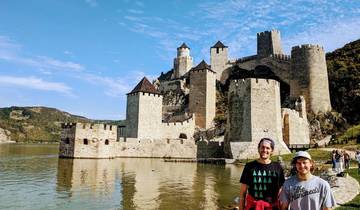
5 days
Highlights of Serbia – 5 Days
- ✓ Comprehensive Serbia tour
- ✓ Expert local guides included
- ✓ All accommodation arranged
- ✓ Transportation provided
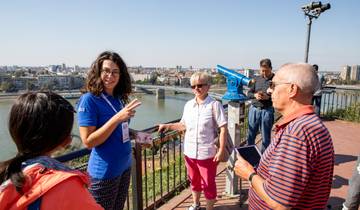
7 days
Best of Serbia – 7 Days
- ✓ Comprehensive Serbia tour
- ✓ Expert local guides included
- ✓ All accommodation arranged
- ✓ Transportation provided
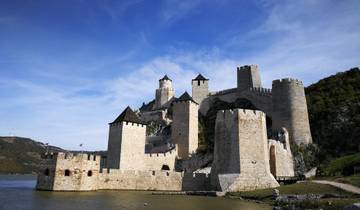
7 days
Serbia Top attractions in 7 days
- ✓ Comprehensive Serbia tour
- ✓ Expert local guides included
- ✓ All accommodation arranged
- ✓ Transportation provided

3 days
Serbian Wine Experience
- ✓ Comprehensive Serbia tour
- ✓ Expert local guides included
- ✓ All accommodation arranged
- ✓ Transportation provided
Multi-day tour packages powered by TourRadar. Prices and availability subject to change.
Introduction: Serbia in 2026
Serbia occupies a 77,474-square-kilometer heartland in the Balkans, bordered by Hungary to the north, Romania and Bulgaria to the east, North Macedonia and Kosovo to the south, and Croatia, Bosnia-Herzegovina, and Montenegro to the west. That geographic position has made the country a cultural crossroads for millennia — Byzantine, Ottoman, Habsburg, and Slavic traditions layer the architecture, cuisine, music, and social customs in ways no single European tradition alone can claim.
The capital Belgrade, home to approximately 1.7 million people, is experiencing a cultural renaissance that has drawn growing international attention. Built at the confluence of the Sava and Danube rivers, the city has been destroyed and rebuilt more than 40 times across recorded history — a fact that generates an energy of perpetual reinvention rather than melancholy. The riverfront districts of Savamala and Dorćol buzz with galleries, craft breweries, and music venues. The ancient fortress of Kalemegdan commands a dramatic hill above the river junction, looking out over a city that takes its nightlife more seriously than almost anywhere else in Europe.
Beyond the capital, the country delivers extraordinary variety within short driving distances. Novi Sad, Serbia’s second city 80 kilometers north of Belgrade, anchors the Pannonian plains with Petrovaradin Fortress overlooking the Danube — the stage for EXIT Festival each July. UNESCO World Heritage Sites including Studenica Monastery (inscribed 1986) and Stari Ras with Sopoćani (inscribed 1979) preserve medieval Nemanjić dynasty architecture and Byzantine-tradition frescoes of international artistic significance, visited in near-total quiet. The Tara National Park and Zlatibor plateau in western Serbia offer highland hiking, dense pine forests, and fresh mountain air at Alpine-quality but Balkan prices. The Uvac Canyon’s extraordinary meanders and griffon vulture colony, the Đavolja Varoš rock formations, and the Iron Gates gorge on the Danube represent natural wonders with almost no international tourist infrastructure pressure.
Serbia navigates 2026 with renewed confidence following years of meaningful infrastructure investment. The Belgrade–Novi Sad high-speed railway now covers 80 kilometers in approximately 36 minutes — one of the most significant transport achievements in the Western Balkans. Budget airlines have expanded route networks into Belgrade Nikola Tesla Airport. Road improvements to mountain and monastery regions have shortened drive times significantly. For travelers seeking a European destination that combines genuine cultural depth, natural beauty, excellent food, and prices that feel almost anachronistic by the standards of Central and Western Europe, Serbia in 2026 makes a compelling case.
Why Serbia Belongs on Your 2026 Travel List
Few European countries pack the combination of affordability, cultural density, and accessibility that Serbia delivers in 2026. Understanding what makes the country genuinely distinctive shapes better travel decisions.
A Nightlife Capital With Genuine Credentials
Belgrade’s nightlife reputation is not hyperbole. The splavovi — floating riverside clubs built on barges along the Sava and Danube rivers — operate from April through October and attract international DJs alongside emerging Balkan electronic artists. Underground clubs like Drugstore (a converted abattoir in the Savamala district), Tunnel, and Ben Akiba operate through the early hours under conditions — operating hours, noise allowances, outdoor structures — that would be legally impossible in much of Western Europe. Entry to most Belgrade clubs costs 500–1,500 RSD ($5–14) on weekend nights, and drinks run 300–600 RSD ($3–5) — a fraction of equivalent Ibiza, Amsterdam, or London pricing. The city’s café culture runs in parallel: kafanas (traditional Serbian taverns) serve rakija, carafe wine, and grilled meats in environments of warm convivial noise from late morning through midnight.
Medieval Heritage in Near-Complete Solitude
UNESCO has recognized Serbia’s medieval legacy through several inscriptions of extraordinary quality. Studenica Monastery (1986), founded by Stefan Nemanja in the late 12th century, contains two marble churches — the King’s Church and the Virgin’s Church — with frescoes spanning two centuries of Byzantine-Romanesque synthesis. Stari Ras and Sopoćani (1979) preserve the medieval capital of the Nemanjić dynasty alongside Sopoćani Monastery’s 13th-century Dormition of the Virgin fresco, considered a masterwork of European medieval painting. The Palace of Galerius at Gamzigrad-Romuliana (2007) presents a late Roman imperial complex of extraordinary completeness near Zaječar in eastern Serbia. Visiting these sites in 2026 means sharing them with handfuls of other visitors rather than thousands — an increasingly rare privilege in European heritage tourism.
Mountain and River Landscapes at Balkan Prices
Zlatibor plateau rises to 1,000–1,500 meters in western Serbia and functions as a four-season resort region with hiking and cycling in summer, skiing in winter, and mountain cuisine throughout. The Uvac Canyon — carved by the Uvac river into sinuous meanders surrounded by white limestone cliffs — hosts one of Europe’s last significant breeding colonies of Eurasian griffon vultures, accessible by boat tour for 2,200–3,300 RSD ($20–30) per person. Tara National Park covers dense beech and spruce forests along the Drina River canyon. The Iron Gates gorge on the Danube — shared with Romania — delivers one of Europe’s most dramatic river landscapes. All of these destinations lie within a three-to-five hour drive from Belgrade, making multi-region itineraries practical within a one-week trip.
When to Visit Serbia 2026: Seasonal Planning Guide
Serbia experiences a continental climate with hot summers, cold winters, and variable springs and autumns. Each season offers a distinct experience, and the best visit window depends on traveler priorities.
Spring: May–June 2026
May and June deliver the strongest all-round conditions for visiting Serbia. Temperatures reach 18–26°C (64–79°F) in Belgrade and Novi Sad, wildflowers cover the Fruška Gora slopes, and the Tara and Zlatibor regions turn deep green after snowmelt. Accommodation prices sit 15–25% below peak summer rates in every category. Café terraces in Belgrade’s Skadarlija district fill from late April, the Danube fishing season opens in May, and cultural venues launch their spring programming across both major cities. The period runs without major festival crowd pressure — ideal for travelers prioritizing free movement and comfortable sightseeing conditions.
Summer: July–August 2026
Summer brings peak crowds, peak prices, and peak temperatures. Belgrade averages 27–32°C (81–90°F) in July and August, with occasional heat waves pushing above 38°C (100°F). Peak season adds 20–35% to hotel prices compared to spring and autumn rates. The compensation is the festival calendar: EXIT Festival at Petrovaradin Fortress in Novi Sad (typically early-to-mid July) draws over 200,000 attendees over four days. The Guča Trumpet Festival in August — celebrating Balkan brass music in a small Šumadija village — is one of Europe’s most joyously chaotic cultural events. Danube beaches south of Novi Sad and around Sremska Mitrovica fill with Serbian families throughout August, offering an authentic local summer atmosphere.
Autumn: September–October 2026
September and October provide conditions comparable to spring, with the added dimension of wine harvest season. The Fruška Gora wine region north of Novi Sad, the Negotin wine region in eastern Serbia, and the Župa wine area near Kruševac all hold harvest events and open their cellars to visitors from mid-September through October. September temperatures average 20–24°C (68–75°F), dropping to 11–17°C (52–63°F) by late October. Autumn color in Tara National Park peaks in mid-October and rivals the best Alpine and Carpathian displays. Accommodation pricing returns to shoulder-season levels, 15–25% below summer peaks.
Winter: December–March 2026
Belgrade in winter drops to -5–5°C (23–41°F) with occasional snow. The city maintains its café culture and nightlife intensity year-round — underground clubs feel if anything more appropriate in January than August. Kopaonik mountain resort, Serbia’s largest ski area with 55 kilometers of slopes, operates December through March. Zlatibor offers both downhill and cross-country skiing. Belgrade hotel prices drop 25–40% below summer peaks from December through February, making winter an excellent choice for city-focused travelers. Serbian Orthodox Christmas falls on January 7th, celebrated with outdoor bonfires (badnjak) and church ceremonies genuinely open to visitors.
Season Price Summary for Serbia 2026
- Peak Season (July–August): Add 20–35% to base accommodation rates; EXIT Festival accommodation books months in advance in Novi Sad
- Shoulder Season (May–June, September–October): Base rates as quoted throughout this guide; 2–3 weeks advance booking generally sufficient
- Low Season (November–April): Rates drop 25–40% in cities; last-minute deals available in Belgrade; mountain resorts active December–March at premium ski-season pricing
Getting to Serbia 2026: Flights, Trains, and Buses
Belgrade Nikola Tesla Airport (BEG) serves as Serbia’s main international gateway, located 18 kilometers west of the city center. Air Serbia operates as the national carrier with hub connections, while budget carriers have expanded operations significantly in recent years. A secondary airport at Lađevci near Kraljevo handles limited domestic and charter traffic for central Serbia.
Flights to Belgrade in 2026
Direct flights connect Belgrade to major European hubs year-round. From London (Heathrow and Gatwick), return fares on Air Serbia, Wizz Air, and Ryanair run 5,500–18,000 RSD ($50–164) booked six to eight weeks in advance, rising to 25,000–40,000 RSD ($227–364) for last-minute bookings. Frankfurt, Paris, Vienna, Amsterdam, and Istanbul connect directly to Belgrade with budget-carrier fares of 4,400–13,200 RSD ($40–120) when booked early. From North America, no direct service exists to Belgrade in 2026 — connections route through Vienna, Istanbul, Frankfurt, or Amsterdam, with total journey times of 11–16 hours. New York–Belgrade return fares average 88,000–165,000 RSD ($800–1,500) depending on season and booking window. Check the Air Serbia and Serbian Airports Authority (beg.aero) official websites for current route and scheduling information, as new seasonal routes are added regularly.
Belgrade Airport Transfers in 2026
From Belgrade Nikola Tesla Airport to the city center, three options cover different budgets:
- A1 Airport Express Bus: 400 RSD ($4) one way, operating to Slavija Square every 30 minutes daily. Journey time 35–50 minutes. The most economical option for solo and budget travelers.
- Bolt or CarGo Ride-Share: 1,400–2,200 RSD ($13–20) depending on destination and demand. Book through the app after clearing customs and walk to the designated pickup zone outside arrivals. Typically 15–30% cheaper than metered taxis.
- Official Metered Taxi: 2,000–2,800 RSD ($18–25) to central Belgrade. Use only officially authorized taxis from the designated taxi stand inside the terminal building — avoid tout drivers approaching in the arrivals hall.
Arriving by Train in 2026
International rail connections to Serbia arrive at Belgrade Centre station. Daily services operate from Vienna (10–12 hours, 8,800–22,000 RSD/$80–200 depending on class and booking timing via the RailJet service), Budapest (7–8 hours), and Thessaloniki (6–7 hours). Overnight sleeper trains from Munich route through Vienna. Direct services from Sarajevo (7 hours) cover the Balkans corridor at 2,200–4,400 RSD ($20–40) per person. Check Serbian Railways (srbvoz.rs) and Rail Europe for current schedules; international train pricing adjusts seasonally.
Arriving by Bus in 2026
FlixBus and regional operators run extensive services to Belgrade from across Europe. Vienna–Belgrade buses depart multiple times daily, taking 8–9 hours with fares from 2,200–5,500 RSD ($20–50). Sofia–Belgrade services depart 5–6 times daily for a 5–6 hour journey at 1,100–2,750 RSD ($10–25). Sarajevo–Belgrade buses operate multiple daily departures with 6–7 hour journey times at 2,200–3,300 RSD ($20–30). All international buses arrive at the Belgrade BAS bus station (Beogradska Autobuska Stanica) near Savski Trg, 2 kilometers from the city center with direct tram connections.
Getting Around Serbia 2026: Transportation Options
Serbia’s transport network radiates from Belgrade with efficient connections to Novi Sad, Niš, Subotica, and the mountain regions. The combination of the high-speed rail line, a comprehensive intercity bus network, and affordable ride-share apps makes car-free travel practical for city-focused itineraries. Reaching monasteries, wine regions, and most natural attractions requires a rental car or organized tour.
High-Speed Train Belgrade to Novi Sad in 2026
The Belgrade–Novi Sad high-speed line covers 80 kilometers in approximately 36 minutes — one of the most significant transport achievements in the Western Balkans. Trains depart from Belgrade Centre station frequently throughout the day, with standard class tickets at 1,100–1,800 RSD ($10–16). Book a few days ahead for peak summer travel to secure preferred departure times. This service makes a Novi Sad day trip from Belgrade entirely practical and is the recommended connection between the two cities for almost all travelers.
Intercity Bus Network in Serbia 2026
The Serbian intercity bus network is comprehensive, frequent, and inexpensive. Buses serve all major cities and many smaller destinations the rail network does not reach:
- Belgrade–Niš: 2–3 hours, 1,100–1,650 RSD ($10–15), departures every 30–60 minutes
- Belgrade–Zlatibor: 3.5–4 hours, 1,320–1,980 RSD ($12–18), several daily departures
- Belgrade–Subotica: 2.5–3 hours, 880–1,320 RSD ($8–12)
- Novi Sad–Subotica: 1.5–2 hours, 660–1,100 RSD ($6–10)
- Belgrade–Sarajevo (Bosnia): 6–7 hours, 2,200–3,300 RSD ($20–30)
- Belgrade–Skopje (North Macedonia): 5–6 hours, 1,980–3,300 RSD ($18–30)
Most intercity bus operators charge 100–200 RSD ($0.91–1.82) per bag placed in the luggage hold — a standard fee collected at the bus. Have small change ready.
Belgrade City Transport in 2026
Belgrade operates an extensive network of buses, trolleybuses, and trams covering the metropolitan area. Single rides cost 100 RSD ($0.91) with a BusPlus rechargeable card (available at kiosks throughout the city for 280 RSD/$2.55 plus the loaded credit amount) or 150 RSD ($1.36) when paying the driver in cash — a 33% saving per journey for BusPlus card users. Visitors spending three or more days in Belgrade benefit from loading 1,000–2,000 RSD ($9–18) onto a BusPlus card at the start of their stay. Night buses on key routes operate from midnight to 4 AM, making Belgrade’s nightlife districts accessible without taxis.
Taxis and Ride-Share in Serbia 2026
Official metered taxis in Belgrade start at 170–220 RSD ($1.55–2) base fare with 100–140 RSD ($0.91–1.27) per kilometer thereafter. A cross-city trip within central Belgrade costs 500–1,000 RSD ($4.55–9.10). Bolt and CarGo are the dominant ride-share apps and run 15–30% cheaper than traditional taxis with full English-language interfaces. Both apps work seamlessly in Belgrade and Novi Sad. In smaller cities and rural areas, local taxis operate without apps — rates are generally low, and agreeing on a price before departure is standard practice for longer rural journeys.
Car Rental in Serbia 2026
Renting a car unlocks Serbia’s most rewarding experiences — monasteries, wine regions, Đavolja Varoš, and Uvac Canyon that are difficult or impossible to reach by public transport. All major international rental companies plus competitive local operators have representatives at Belgrade airport. Economy cars start at 3,300–5,500 RSD ($30–50) per day with local operators and 5,500–8,800 RSD ($50–80) per day with international brands for multi-day bookings. Fuel costs approximately 200–220 RSD ($1.82–2) per liter. Serbian highway tolls on the A1, A2, and A3 motorways cost 220–1,100 RSD ($2–10) depending on distance; have RSD cash ready as some toll booths prefer cash. Third-party insurance is mandatory and included in rental rates — check whether your home credit card provides rental car coverage internationally before purchasing additional insurance.
Where to Stay in Serbia 2026: Accommodation by Tier and Location
Serbia offers one of Europe’s strongest accommodation value propositions across all price tiers. Belgrade leads the range from budget hostels to five-star design hotels. Novi Sad provides strong mid-range options. Mountain resorts at Zlatibor and Kopaonik operate their own accommodation ecosystems built around domestic tourism — accessible to international visitors at prices well below Western European ski and mountain resort equivalents.
Budget Accommodation in Serbia 2026 (1,500–4,000 RSD / $14–36 Per Night)
Belgrade’s hostel scene is well-developed and covers a wide range of styles and locations. Hostel dorm beds in central Belgrade neighborhoods — Savamala, Dorćol, Stari Grad — cost 1,500–2,500 RSD ($14–23) per night per bed. Private rooms in budget hostels and guesthouses run 2,500–4,000 RSD ($23–36) for single occupancy. Quality at this tier in Belgrade significantly exceeds what equivalent prices deliver in Lisbon, Vienna, or Amsterdam. The strongest concentration of budget options clusters near Skadarlija (Belgrade’s bohemian quarter), within Savamala (the arts and nightlife district), and within walking distance of Kalemegdan Fortress. Most Belgrade hostels provide free Wi-Fi, personal lockers, communal kitchens, and organize walking tours and social events. In Novi Sad, comparable dorm beds cost 1,200–2,200 RSD ($11–20) in hostels near the central pedestrian zone. In Niš and Kragujevac, budget accommodation undercuts Belgrade equivalents by 20–30%.
Mid-Range Accommodation in Serbia 2026 (7,000–13,000 RSD / $64–118 Per Room Per Night)
Mid-range hotels in Belgrade deliver comfortable rooms with breakfast, central locations, and service standards that would cost double in comparable Central European cities. Rates run 7,000–13,000 RSD ($64–118) per room per night. The strongest mid-range zones are Stari Grad (the Old Town, walkable to most sights), Vračar (walkable to the Temple of Saint Sava and the Kalenić green market), and New Belgrade’s hotel corridor across the Sava river for those prioritizing parking and highway access. Boutique hotels in Dorćol and Savamala offer design-forward rooms in converted 19th-century townhouses at comparable rates with considerably more character. Book direct with the hotel when possible — many Serbian properties offer 10–15% discounts for direct bookings over third-party platforms. In Novi Sad, mid-range hotels near Zmaj Jovina pedestrian street cost 5,500–9,900 RSD ($50–90) per room. At Zlatibor mountain resort, comfortable hotels with mountain views and half-board (breakfast and dinner) run 6,600–11,000 RSD ($60–100) per room — exceptional value for a full-service mountain stay.
Luxury Accommodation in Serbia 2026 (18,000–40,000 RSD / $164–364 Per Room Per Night)
Belgrade’s luxury hotel market has matured substantially over the past decade with international brands and independent design hotels competing at the top end. Five-star properties include options along the Sava riverfront and in the Stari Grad and Terazije districts with room rates of 18,000–40,000 RSD ($164–364) per room per night. The Hyatt Regency Belgrade, Square Nine, and Metropol Palace are among the established five-star names; newer boutique luxury properties have emerged in Savamala and Dorćol with strong contemporary design credentials and rooftop terraces. Most five-star properties include spa facilities, rooftop bars with Danube or Kalemegdan views, concierge services, and valet parking. Rates peak in July–August during EXIT Festival season and drop 30–40% in December–February.
Neighborhood Guide to Belgrade Accommodation in 2026
- Stari Grad (Old Town): Best for first-timers wanting walking access to Kalemegdan and Knez Mihailova. Prices run 10–20% higher than equivalent properties in surrounding neighborhoods due to tourist concentration.
- Savamala: Best for nightlife-focused travelers. Boutique hostels and hotels amid the gallery and club district. Some noise from weekend events — request upper floors or interior rooms.
- Dorćol: Best balance of price, character, and central location. Historic residential architecture, lower prices than Stari Grad, and an excellent local café scene.
- Vračar: Best for local atmosphere. Quieter residential neighborhood around the Temple of Saint Sava, strong restaurant and market scene, slightly removed from main tourist traffic.
- New Belgrade: Best for business travelers and drivers. Modern hotel corridor near Arena Belgrade and the Sava Center. Less walkable to sights but very well connected by taxi and bus.
Serbia Daily Budget Breakdown 2026
Serbia ranks among Europe’s most compelling value destinations in 2026. The following figures represent all-in daily costs per person including accommodation share, three meals, local transport, and attraction entry — no component excluded that would require additional mental calculation.
Budget Daily Costs in Serbia 2026
Budget travelers staying in hostel dorms, eating at local kafanas and pekara bakeries, using the city bus network and intercity buses, and focusing on Serbia’s extensive free and low-cost attractions spend $40–70 per person daily. Component breakdown: hostel dorm accommodation 1,500–2,500 RSD ($14–23) per person; daily meals 2,000–3,500 RSD ($18–32); local transport 200–600 RSD ($2–5); attractions 500–1,000 RSD ($5–9). Total: approximately $40–70 per person daily. This positions Serbia alongside Albania, North Macedonia, and Bosnia-Herzegovina as one of the cheapest countries for independent travel in Europe — a fraction of Western European equivalents and noticeably more affordable than Czech Republic, Hungary, or Poland at equivalent budget levels.
Mid-Range Daily Costs in Serbia 2026
Mid-range travelers staying in comfortable three-star hotels or boutique guesthouses, dining at a mix of traditional kafanas and contemporary Belgrade restaurants, using a combination of taxis, ride-share, and buses, and paying for museum admissions and occasional tours spend $85–160 per person daily (two sharing mid-range hotel). Component breakdown: hotel 7,000–13,000 RSD ($64–118) per room divided to 3,500–6,500 RSD ($32–59) per person; meals 3,500–7,000 RSD ($32–64); transport 600–1,500 RSD ($5–14); attractions 1,500–2,500 RSD ($14–23). Total: approximately $85–160 per person daily. A week at mid-range comfort runs $595–1,120 per person for two traveling together — a full European cultural experience at well below Western European costs.
Luxury Daily Costs in Serbia 2026
Luxury travelers staying in five-star hotels, dining at top-tier Belgrade restaurants, using private transfers and guided tours, and accessing premium experiences invest $180–400 per person daily (two sharing luxury hotel). Component breakdown: luxury hotel 18,000–40,000 RSD ($164–364) per room, divided to 9,000–20,000 RSD ($82–182) per person; upscale dining 7,000–15,000 RSD ($64–136); private transport 1,500–3,500 RSD ($14–32); premium activities and tours 2,500–5,500 RSD ($23–50). Total: approximately $180–400 per person daily. Even at this tier, Serbia delivers remarkable value — equivalent luxury expenditure in Paris, Vienna, or Rome runs two to three times these figures.
Solo Traveler Daily Costs in Serbia 2026
Budget solo travelers in hostel dorms pay the same per-bed rate as group travelers — dorm pricing is per bed, not per room. Solo travelers booking private rooms face the full room charge without sharing: budget private rooms in Belgrade hostels 2,500–4,000 RSD ($23–36); mid-range hotel single rooms 5,500–9,900 RSD ($50–90); luxury single rooms 13,200–28,000 RSD ($120–255). Solo mid-range travelers budget approximately $115–190 per person daily — above the two-sharing equivalent due to the full room rate cost. The difference narrows at the budget tier (dorms) and widens at luxury level where the room cost premium is most pronounced.
Sample Three-Day Mid-Range Budget Breakdown (Per Person, Two Sharing)
- Day 1 — Belgrade Arrival and First Exploration: A1 airport bus 400 RSD ($4); Kalemegdan Fortress park (free); Belgrade City Museum inside fortress 600 RSD ($5); lunch at Dorćol kafana 1,100 RSD ($10); Temple of Saint Sava visit (free, donation 300 RSD/$3); dinner in Skadarlija 1,800 RSD ($16); drinks at Savamala bar 1,200 RSD ($11); transport 550 RSD ($5). Approximate daily non-hotel spend: 5,950 RSD ($54).
- Day 2 — Belgrade Cultural Day: Nikola Tesla Museum 1,100 RSD ($10); lunch at Vračar neighborhood restaurant 1,400 RSD ($13); National Museum of Serbia 800 RSD ($7); afternoon walk through Dorćol and the Danube waterfront (free); dinner with house wine in Stari Grad 2,500 RSD ($23); evening at floating splav club 1,500 RSD ($14); transport 660 RSD ($6). Approximate daily non-hotel spend: 7,960 RSD ($72).
- Day 3 — Novi Sad Day Trip: High-speed train return ticket 2,200 RSD ($20); Petrovaradin Fortress underground tunnel tour 1,000 RSD ($9); lunch on Danube terrace restaurant 1,320 RSD ($12); Matica Srpska Gallery 350 RSD ($3); afternoon stroll through city center (free); early dinner before return train 1,540 RSD ($14). Approximate daily non-hotel spend: 6,410 RSD ($58).
Three-day non-hotel total per person: approximately 20,320 RSD ($185). Hotel for three nights (mid-range, two sharing): 21,000–39,000 RSD ($191–355) per room total, divided to 10,500–19,500 RSD ($95–177) per person. Three-day total per person: approximately $280–360, equating to $93–120 per day — within the mid-range $85–160 daily range.
Food and Dining Costs in Serbia 2026
Serbian cuisine is hearty, meat-forward, and extraordinarily good value. The culinary identity merges Balkan grilling traditions, Ottoman-influenced pastry and slow-cooked dishes, Austro-Hungarian deli culture, and fresh Danubian produce into a distinctive regional cuisine that deserves significantly more international recognition than it currently receives.
Budget Dining in Serbia 2026
Eating cheaply in Serbia is effortless and genuinely delicious rather than a compromise. A burek — phyllo pastry filled with meat or cheese, pulled from a bakery oven — costs 80–150 RSD ($0.73–1.36) and serves as a satisfying breakfast or fast lunch. A plate of ćevapi (grilled minced meat rolls) with lepinja flatbread, raw onion, and ajvar (roasted red pepper relish) at a local ćevabdžinica costs 500–900 RSD ($4.55–8.20). A full sit-down lunch with soup, a meat main, salad, and a glass of house wine at a neighborhood kafana runs 700–1,400 RSD ($6.40–12.70). Additional budget street food options: pljeskavica (Serbian-style stuffed or plain grilled patty) 300–600 RSD ($2.73–5.45), gibanica (layered cheese and egg phyllo) 100–200 RSD ($0.91–1.82), roasted corn from seasonal street vendors 80–150 RSD ($0.73–1.36).
Mid-Range Dining in Serbia 2026
Belgrade and Novi Sad both sustain thriving mid-range restaurant scenes with a wide range of price points and styles. A two-course dinner with a glass of local wine at a well-regarded Belgrade restaurant costs 2,000–3,500 RSD ($18–32) per person. Serbian wines from the Fruška Gora, Župa, and Negotin regions offer excellent quality at 1,000–2,500 RSD ($9–23) per bottle in restaurants — dramatically below international wine pricing at equivalent quality levels. A full kafana dinner with grilled meats, salads, bread, and a carafe of house wine in Skadarlija costs 1,800–3,500 RSD ($16–32) per person including drinks. Notable Belgrade dining zones: Skadarlija (traditional kafanas with live gusle music and traditional Serbian recipes); Savamala (contemporary restaurants, cocktail bars, and international cuisine); Vračar (neighborhood restaurants with local character and strong value).
Upscale Dining in Serbia 2026
Belgrade’s fine dining scene has developed rapidly, with several restaurants achieving genuine regional and international recognition. Tasting menus at top Belgrade restaurants run 6,000–12,000 RSD ($55–109) per person excluding wine pairings, which add 3,000–6,000 RSD ($27–55). À la carte upscale dining with wine: 4,000–8,000 RSD ($36–73) per person. The emerging Belgrade restaurant scene works interestingly with Serbian traditional ingredients — kajmak (clotted cream), slatko (preserved whole fruits), aged sir (local cheese), and foraged Šumadija mushrooms — in modern European cooking frameworks that reward adventurous palates.
Drinks and Coffee Culture in Serbia 2026
Serbia has a serious espresso tradition inherited through decades of Italian cultural influence and reinforced by a thriving café culture. Espresso at a Belgrade café costs 120–200 RSD ($1.09–1.82). A domestic beer — Jelen, Lav, or Nikšićko — at a bar or café terrace costs 200–350 RSD ($1.82–3.18). Craft beer from Belgrade’s growing craft brewery scene runs 350–600 RSD ($3.18–5.45) per glass. Rakija (Serbian fruit brandy — plum šljivovica, quince dunja, apple jabukova, grape lozovača) costs 150–400 RSD ($1.36–3.64) per shot and is frequently offered complimentary at kafanas as a welcome or post-meal gesture. Local wine by the glass at a mid-range restaurant: 250–500 RSD ($2.27–4.55).
Self-Catering and Green Markets in Serbia 2026
Belgrade’s zelene pijace (green markets) offer seasonal produce, local cheeses, cured meats, honey, and fresh bread at prices 40–60% below supermarket equivalents. Kalenić Market in Vračar and Zemun Market across the Sava are the best-known. A kilogram of fresh white sir (Serbian brine cheese): 400–800 RSD ($3.64–7.27). Seasonal tomatoes, peppers, and cucumbers: 80–200 RSD ($0.73–1.82) per kilogram in peak summer. Bread from a neighborhood pekara: 80–150 RSD ($0.73–1.36) per loaf. Supermarket chains Univerexport, Idea, and Maxi cover full self-catering needs in cities. In rural areas and monastery regions, small local shops stock essentials but close early (typically by 5–6 PM) — stock up before leaving town.
Top Attractions and Activity Costs in Serbia 2026
Many of Serbia’s most powerful attractions are free or charge nominal fees — Kalemegdan Fortress park, the Temple of Saint Sava, Petrovaradin Fortress outer ramparts, medieval monastery exteriors, city parks, and pedestrian zones all require no ticket. Paid attractions are uniformly inexpensive by European standards, with most major museums charging under 1,000 RSD ($9).
Belgrade Attraction Entry Fees 2026
- Kalemegdan Fortress Park: Free entry to the park and ramparts at all times. Military Museum inside the fortress: 800 RSD ($7); check the museum’s official site for current hours as seasonal schedules apply. Belgrade City Museum in the fortress: 600 RSD ($5).
- Temple of Saint Sava (Hram Svetog Save): Free entry; donations welcomed. One of the largest Orthodox churches in the world, with interior mosaic decoration ongoing — a genuine architectural wonder regardless of religious affiliation.
- National Museum of Serbia (Narodni Muzej): 800 RSD ($7) for the permanent collection spanning Serbian and European art from antiquity to the 20th century. Temporary exhibitions: additional 400–600 RSD ($3.64–5.45). Verify current hours at narodnimuzej.rs before visiting.
- Nikola Tesla Museum: 1,200 RSD ($11) for adults, including a live Tesla coil electricity demonstration. One of Belgrade’s most popular and genuinely thrilling museum experiences. Timed entry slots fill quickly on summer weekends — book at ntmuseum.rs in advance.
- Museum of Yugoslav History (Muzej Jugoslavije): 700 RSD ($6) entry, including Josip Broz Tito’s mausoleum (the House of Flowers) and extensive exhibits on socialist Yugoslavia.
- Belgrade Zoo: 1,200 RSD ($11) adults, 700 RSD ($6) children, located within the Kalemegdan park above the Danube.
- Skadarlija: Free to walk. Belgrade’s historic bohemian quarter with 19th-century buildings, antique dealers, and traditional kafanas — the most atmospheric street in the city.
Novi Sad Attraction Costs in 2026
- Petrovaradin Fortress: Free entry to the outer fortifications and riverside promenade at all hours. Clock Tower museum: 450 RSD ($4). Underground tunnel tours of the 16-kilometer tunnel network: 700–1,000 RSD ($6–9) per person through the fortress administration office.
- Museum of Vojvodina: 350 RSD ($3) covering the multicultural history of the Pannonian region across three interconnected 18th-century buildings.
- Matica Srpska Gallery: 400 RSD ($3.60), housing the finest collection of Serbian art from the 18th century to the present in a magnificent 19th-century building.
- Fruška Gora Monastery Circuit: Monasteries charge no admission (donations welcomed). A day tour from Novi Sad by car visits 3–5 monasteries; organized day tours cost 3,300–6,600 RSD ($30–60) per person through Novi Sad tour operators.
Natural Attractions and Outdoor Costs in Serbia 2026
- Đavolja Varoš (Devil’s Town): 660 RSD ($6) site entry near Kuršumlija, approximately 3.5 hours from Belgrade by car. The volcanic rock formation — over 200 earth pyramids up to 15 meters tall with stone “caps” — ranks among the most spectacular natural features in the Balkans.
- Uvac Canyon Boat Tours: 2,200–3,300 RSD ($20–30) per person for the canyon meander boat tour, departing from the small dock at the Uvac Reservoir. Tours include viewing points for the resident griffon vulture breeding colony. Book through accommodation in Nova Varoš or Zlatibor.
- Zlatibor Gondola (Gondola Zlatibor): 1,500 RSD ($14) return, connecting Zlatibor town to the Tornik peak with panoramic views across western Serbia. Open year-round with ski lifts operational December–March.
- Tara National Park Hiking: No park entry fee. Guided hiking tours: 2,200–4,400 RSD ($20–40) per person per day with a local mountain guide. Self-guided hiking on marked trails requires good maps (available from the park administration center near Bajina Bašta).
- Iron Gates Danube Cruise: Day tours from Belgrade or from Kladovo on the Romanian border: 4,400–8,800 RSD ($40–80) per person including transport, boat, and guide. Passes the Lepenski Vir Mesolithic archaeological site and the Trajan’s Tablet Roman inscription carved into the cliff face.
EXIT Festival 2026
EXIT Festival at Petrovaradin Fortress in Novi Sad takes place in early-to-mid July 2026. Day passes typically cost 8,800–11,000 RSD ($80–100) in advance; four-day festival passes run 25,000–35,000 RSD ($227–318) for early bird pricing, rising toward 38,000–50,000 RSD ($345–455) at full price closer to the event. Check the official EXIT Festival website (exitfest.org) for 2026 dates and pricing; lineup and tickets are announced in stages from late 2025 through spring 2026. Accommodation near Novi Sad during EXIT books out months in advance at 50–100% premiums over standard rates — book as soon as festival dates are confirmed, or base yourself in Belgrade and use the high-speed train.
Belgrade 2026: Serbia’s Capital City Guide
Belgrade demands more time than most first-time visitors allocate. Two to three full days allows a meaningful introduction; five days begins to feel like genuine familiarity with the city’s rhythms, neighborhoods, and social culture. Plan time for evening exploration — Belgrade’s best qualities reveal themselves after 9 PM.
Belgrade’s Key Neighborhoods in 2026
Stari Grad (Old Town) contains Kalemegdan Fortress, Knez Mihailova pedestrian street, and the Cathedral Church of Saint Michael. This is Belgrade at its most touristically concentrated — restaurant and café prices run 20–30% above surrounding neighborhoods, though still modest by European standards. Best for a first evening orientation walk and morning coffee before dispersing into the city.
Skadarlija — immediately east of Stari Grad — was Belgrade’s artists’ quarter in the 19th century and retains a gloriously theatrical version of that identity. Cobblestone streets, antique shops, and traditional kafanas serving set menus of grilled meats with live gusle music and house wine. A Saturday dinner here costs 2,200–3,800 RSD ($20–35) per person including drinks. Touristy but genuinely enjoyable.
Savamala is Belgrade’s most dynamic contemporary cultural district — a former riverside warehouse precinct transformed since 2010 into a gallery, design studio, and nightlife zone. The Mikser House, KC Grad, and numerous independent venues host events most evenings. This is where Belgrade’s contemporary creative scene is most legible to international visitors. Club and bar entry 500–1,500 RSD ($5–14) on weekends; most establishments fill after midnight.
Dorćol north of Stari Grad blends historic residential architecture — Jewish and Greek merchant townhouses from the 18th and 19th centuries — with a café and restaurant scene increasingly popular among young Belgraders and in-the-know international visitors. Prices run 15–25% below Stari Grad equivalents with comparable quality. The best neighborhood in Belgrade for day-to-day café life.
Vračar, surrounding the Temple of Saint Sava, is a primarily residential quarter with an excellent local restaurant scene, Kalenić green market, and a genuine neighborhood atmosphere away from tourist Belgrade. The best base for travelers preferring local character over central positioning.
Zemun — technically a separate town merged with Belgrade — sits across the Sava with Habsburg-era waterfront architecture, a distinct Gardoš hilltop neighborhood with views across the Danube and Pannonian plains, and a quay lined with fish restaurants specializing in freshwater Danubian catch. Carp, catfish, and pike preparations represent a genuinely different culinary experience from central Belgrade: expect 1,500–3,500 RSD ($14–32) per person for a full fish lunch with wine at the Zemun keј.
Belgrade Nightlife in 2026
Belgrade’s nightlife operates on a different schedule than Northern European or Central European cities. Dinner begins at 9–10 PM; clubs start filling around midnight and peak from 2–5 AM, with many operating until dawn or beyond. The splavovi — floating clubs on barges moored along the Sava — operate April through October as the most distinctly Belgrade nightlife experience: outdoor dancefloors suspended above the river, with no precise equivalent anywhere else in Europe. Entry to floating clubs: 500–1,200 RSD ($5–11) on weekends. Drinks: 350–700 RSD ($3–6). Underground clubs including Drugstore, Tunnel, and Fabrika charge 700–1,500 RSD ($6–14) entry on major DJ nights. The Brodarska Street precinct, Savamala, and the riverfront embankment contain the highest density of options within walking distance of each other.
Beyond Belgrade: Key Destinations in Serbia 2026
Serbia’s most rewarding experiences frequently lie outside the capital. The country’s transport network makes day trips and overnight excursions entirely practical, and the destinations are varied enough to occupy any number of additional days.
Novi Sad in 2026
Serbia’s second city (population approximately 280,000) sits 80 kilometers north of Belgrade on the Danube and serves as the cultural capital of Vojvodina, the autonomous northern province. Petrovaradin Fortress — an 18th-century baroque fortification on a limestone cliff above the Danube — defines the city’s skyline and stages EXIT Festival each July. The pedestrian zone around Zmaj Jovina Street and Dunavski Park is entirely walkable and architecturally rewarding. The city is easily visited as a full day trip from Belgrade on the high-speed train (36 minutes, 1,100–1,800 RSD/$10–16 return) or as a one-night base to allow evening dining and early morning visits to the fortress before the day crowds arrive. The Vojvodina Museum, Matica Srpska Gallery, and the fortress Clock Tower museum offer 3–4 hours of substantive cultural content. The Fruška Gora mountains immediately south of the city harbor 16 Orthodox monasteries across forested slopes — accessible in half a day by rental car or organized tour.
Niš in 2026
Serbia’s third city (population approximately 250,000) lies 230 kilometers southeast of Belgrade and offers a rawer, less-touristed version of Serbian urban life alongside genuinely significant historical attractions. Niš Fortress sits intact in the city center — free to enter, with Ottoman towers and walls enclosing a 17th-century mosque and a Serbian military museum. The Skull Tower (Ćele Kula), one of the most arresting and historically significant monuments in the Balkans, is a tower built by Ottoman authorities in 1809 using the skulls of Serbian rebels following the First Serbian Uprising. Entry: 300 RSD ($2.73). Mediana — the Roman imperial complex outside Niš where Emperor Constantine the Great was born — is under active excavation. Niš is also the undisputed capital of Serbian grilled meat culture: the pljeskavica prepared in the Leskovac style (with additional spices and texture) is widely considered the finest in the country, available at local rostilj restaurants around the Tvrđava and Kazandžijsko Sokače areas for 400–800 RSD ($3.64–7.27). Budget accommodation in Niš undercuts Belgrade equivalents by 20–30%.
Zlatibor and Western Serbia in 2026
The Zlatibor plateau at 1,000–1,500 meters elevation in western Serbia functions as a domestic resort destination almost entirely overlooked by international travelers. Mountain hotels with full board (breakfast and dinner included) run 6,600–11,000 RSD ($60–100) per room — outstanding value for a complete resort experience. The Gondola Zlatibor connects the main village to Tornik peak for 1,500 RSD ($14) return. The Sirogojno open-air museum preserves 19th-century Zlatibor mountain village architecture for 500 RSD ($4.55). The Šargan Eight narrow-gauge vintage railway from Mokra Gora winds through spectacular mountain gorges for 1,100 RSD ($10) per person. From Zlatibor, the wooden town of Drvengrad — built by filmmaker Emir Kusturica — is 45 minutes by car with 700 RSD ($6.36) entry. The full western Serbia circuit (Zlatibor, Drvengrad, Šargan Eight, and Uvac Canyon) is best accomplished with a rental car over two to three days, representing some of the highest scenic-to-tourist-density ratios in Europe.
Medieval Monastery Route in 2026
The central Serbia monastery route — Žiča near Kraljevo, Studenica near Raška, and Sopoćani near Novi Pazar — requires a car but rewards the effort with some of the finest medieval art in Europe in conditions of near-complete solitude. Studenica Monastery (UNESCO, 1986), founded by Stefan Nemanja in the late 12th century, contains the King’s Church and Virgin’s Church with marble facades and Byzantine frescoes spanning the 12th–14th centuries — no admission fee, donations support conservation. Sopoćani Monastery’s 13th-century frescoes, particularly the Dormition of the Virgin, are considered a masterwork of European medieval painting equivalent to the finest Byzantine art produced anywhere. No admission fee. The two monasteries are 60 kilometers apart on mountain roads; combined with an overnight stay in Novi Pazar or Raška, this makes a two-day cultural itinerary entirely off the standard tourist circuit that consistently ranks among the most profound experiences Serbia offers.
Visa and Entry Requirements for Serbia 2026
Serbia maintains one of Europe’s most permissive visa-free entry regimes, granting entry without prior visa application to citizens of over 100 countries for stays up to 90 days within any 180-day period.
Countries Eligible for Visa-Free Entry to Serbia in 2026
Citizens of all EU member states, the USA, UK, Canada, Australia, New Zealand, Japan, South Korea, Brazil, Argentina, Chile, Colombia, Mexico, the UAE, Qatar, Saudi Arabia, Kuwait, Bahrain, and Oman enter Serbia without a visa for stays up to 90 days. The 90-day allowance operates within each 180-day rolling period — not per calendar year. Time spent in Schengen zone countries does not count toward Serbia’s 90-day limit, as Serbia manages its own immigration regime independently of Schengen. Always verify your specific nationality at the Serbian Ministry of Foreign Affairs website (mfa.gov.rs) before travel, as bilateral agreements are subject to change.
Accommodation Registration Requirement in 2026
All foreign visitors to Serbia must register their accommodation with local police within 24 hours of arrival. Hotels, registered hostels, and licensed tourist apartments handle this automatically on guests’ behalf. Travelers staying in private accommodation with friends or in unregistered rentals must personally register at the nearest Policijska Uprava (police station). The registration process takes 15–20 minutes and produces a registration receipt that travelers retain throughout their stay. Failure to register can complicate departure procedures, particularly at land border crossings. This requirement applies for all stays, even those of one or two nights.
Serbia and Kosovo Border Crossing Considerations in 2026
Serbia does not recognize Kosovo’s independence and does not recognize entry stamps issued by Kosovo border crossing points as valid entry into Serbia. Travelers who enter Kosovo from Albania or North Macedonia and then attempt to cross from Kosovo into Serbia face refusal at the Serbian border. The practical solution for travelers wishing to visit both countries: enter Serbia first, then cross from Serbia into Kosovo through the administrative crossings at Merdare, Jarinje, or Mučibaba. Exit Kosovo through its border with North Macedonia or Albania rather than returning through Serbia. This situation is unique to the Serbia-Kosovo context and does not affect any other regional border crossing in the Western Balkans.
Money, Currency, and Payments in Serbia 2026
The Serbian Dinar (RSD) is the only legal currency for transactions in Serbia. Euro is widely understood and sometimes quoted for hotel rooms and car rentals, but all transactions must be completed in RSD — vendors quoting EUR convert and charge in RSD at the transaction point, typically at a rate less favorable than the official market rate.
Currency Exchange in Serbia 2026
Currency exchange offices (menjačnice) throughout Serbian cities offer competitive rates and operate long hours — many open 8 AM to 8 PM or later in Belgrade city center. Menjačnice consistently outperform banks and hotel exchange desks by 3–8% on the effective rate. Airport exchange offices at Belgrade Nikola Tesla charge the widest spreads — change only the minimum necessary there (enough for the airport bus and initial transport) and exchange the remainder at a city menjačnica. The largest concentrations of competitive exchange offices in Belgrade are around Terazije Square, Knez Mihailova, and the Zeleni Venac market area.
ATMs and Cards in Serbia 2026
ATMs are abundant in Belgrade, Novi Sad, and Niš. In smaller towns, rural areas, and monastery regions, ATMs are scarce — carry sufficient RSD cash for any travel outside major urban centers. ATMs dispense RSD only. Foreign card withdrawal fees run 200–400 RSD ($1.82–3.64) per transaction at most Serbian machines — using a card with no foreign transaction fees (Revolut, Wise, N26, or travel-focused bank accounts) eliminates both conversion fees and ATM charges at most machines. Notify your home bank of travel to Serbia before departure to prevent automatic card freezes on unfamiliar international transactions. Card payment is universally accepted at Belgrade and Novi Sad hotels, larger restaurants, and chain supermarkets. Smaller kafanas, markets, bus ticket windows, and rural establishments require cash. Keep 3,000–5,000 RSD ($27–45) in cash at all times as a working float.
Hidden Costs and Fees in Serbia 2026
Serbia has fewer hidden costs than most European destinations, but several fees consistently catch first-time visitors off guard. Accounting for them in advance prevents budget surprises.
- Tourist Sojourn Tax: Belgrade and Novi Sad charge 120–180 RSD ($1.09–1.64) per person per night on all registered accommodation. Most hotels include this in quoted rates; some add it separately at checkout. Budget 840–1,260 RSD ($7.64–11.45) per person for a seven-night stay.
- Restaurant Tipping: Tipping is customary but not mandatory. Ten percent is standard at sit-down restaurants; rounding up to the nearest 100–200 RSD at cafés and bars is common. Some upscale Belgrade restaurants add a 5–10% service charge — check the bill before tipping additionally.
- Budget Airline Luggage Fees: Wizz Air and Ryanair flights to Belgrade include only a small personal bag in base fares. Checked luggage: 2,200–4,400 RSD ($20–40) each way depending on weight and booking timing. Add luggage costs when comparing “cheap” budget carrier fares against full-service Air Serbia fares that include baggage allowance.
- Intercity Bus Luggage: Serbian bus operators charge 100–200 RSD ($0.91–1.82) per bag placed in the hold compartment. Have small change ready — this fee is usually collected by the driver’s assistant at the bus door.
- Highway Tolls: Drivers on Serbian A-roads pay tolls at barriers throughout the route. Belgrade–Niš: approximately 1,200–1,600 RSD ($10.91–14.55) each way. Cash is preferred at many toll booths — have RSD available.
- Mobile Data and SIM Cards: EU roaming agreements do not apply in Serbia. European travelers pay international rates on their home SIM for data used in Serbia. A local prepaid tourist SIM from Telekom Srbija, A1 Serbia, or Yettel at the airport or a city center mobile shop costs 500–1,000 RSD ($4.55–9.09) with 3–5 GB of data included and a local calling number. Top-up data packages add 200–500 RSD ($1.82–4.55) per additional gigabyte.
- Museum Cloakroom Fees: Several Belgrade museums require bag deposit at cloakrooms. The Nikola Tesla Museum and National Museum charge 100–200 RSD ($0.91–1.82) for bag storage — a minor but persistent additional cost on museum-heavy days.
Money-Saving Strategies for Serbia 2026
Serbia already delivers exceptional value by European standards. Several specific strategies reduce costs further without compromising the quality of experience.
- Walk One Street Off the Tourist Axis: The gap between a tourist-facing restaurant on Knez Mihailova or in Skadarlija and a neighborhood kafana two blocks away can reach 50–80% for equivalent food. The kafana with plastic chairs and a handwritten daily menu nearly always delivers better food at lower prices than the restaurant with an English-language laminated menu and ambient music.
- Take Overnight Buses for Long-Distance Routes: Overnight buses on routes like Belgrade–Bar (Montenegro, 8 hours), Belgrade–Sarajevo (7 hours), or Belgrade–Sofia (5 hours) save a night’s accommodation cost while covering significant distance. Fares of 2,200–3,850 RSD ($20–35) cover both transport and an evening’s lodging in a single expenditure.
- Buy a BusPlus Card on Day One: The rechargeable Belgrade transit card costs 100 RSD per ride versus 150 RSD when paying cash to the driver — a 33% saving on every city journey. The card pays for itself within a few days of moderate use.
- Shop the Green Markets: Kalenić Market in Vračar and Zemun Market provide fresh produce, local cheese, cured meats, and bread at 40–60% below supermarket prices. Assembling market breakfasts and picnic lunches reduces daily food costs substantially while accessing higher-quality Serbian produce than supermarket equivalents.
- Travel Shoulder Season: May–June and September–October deliver 15–25% lower accommodation prices than peak July–August with equivalent or superior weather and far fewer crowd pressures at every major site.
- Book Direct With Hotels: Email or call properties after finding them on booking platforms. Many Serbian hotels and guesthouses offer 10–15% discounts for direct bookings, saving 700–2,000 RSD ($6.36–18.18) per night versus platform rates.
- Maximize Free Attractions: Belgrade’s highest-impact sights — Kalemegdan Fortress park, Temple of Saint Sava, Skadarlija, the Danube and Sava waterfronts — are all free. Studenica Monastery, Sopoćani Monastery, and Petrovaradin Fortress outer walls charge nothing. Two full days of exceptional sightseeing in Belgrade and Novi Sad costs under 2,000 RSD ($18) in total admission fees.
- Drink Local: Imported spirits at Belgrade bars cost 500–1,200 RSD ($4.55–10.91) per measure. Domestic rakija runs 150–400 RSD ($1.36–3.64) per shot and is frequently offered without charge at traditional kafanas. Serbian wine by the carafe at a neighborhood kafana: 600–1,200 RSD ($5.45–10.91) for a half-liter — dramatically better value than wine by the glass at contemporary restaurants.
- Use Ride-Share Apps Over Taxis: Bolt and CarGo run 15–30% cheaper than traditional metered taxis for the same routes. Switching to ride-share for all taxi needs saves 150–500 RSD ($1.36–4.55) per journey, adding up significantly over a week-long stay.
Safety and Practical Tips for Serbia 2026
Serbia is a safe country for international travelers by any objective standard. Violent crime against tourists is rare. Primary concerns are standard urban precautions — pickpocketing in crowded areas and around transport terminals — rather than anything Serbia-specific.
Personal Safety in Serbia 2026
Pickpocketing occurs around Kalemegdan, in Skadarlija, and on public transport in Belgrade — standard urban precautions (money belt, aware bag handling in crowds, avoiding conspicuous camera display at bus and train stations) manage the risk effectively. Solo female travelers consistently report Serbia as comfortable and non-threatening by Balkan and broader European standards. The LGBT+ scene in Belgrade is active and visible within designated venues; Belgrade Pride has operated with increasing official support since 2010. Normal awareness in nightlife settings applies for all travelers as in any European city. Emergency numbers: Police 192; Ambulance 194; Fire 193.
Health Considerations for Serbia 2026
Serbia has functional public healthcare accessible to non-nationals in emergencies. Private clinics in Belgrade and Novi Sad offer English-language consultations at 3,300–5,500 RSD ($30–50) — significantly below Western European private healthcare costs. Travel insurance is strongly recommended and covers medical evacuation if required. Tap water in Belgrade and Novi Sad is safe to drink. In rural mountain areas, confirm water safety with local accommodation staff or carry bottled water. No vaccinations are specifically required for Serbia; standard travel health updates (tetanus, hepatitis A, routine immunizations) are advisable.
Language and Communication in Serbia 2026
Serbian is the official language, written in both Cyrillic and Latin scripts. Latin script is more common on urban signage, in tourist zones, and online. English proficiency in Belgrade and Novi Sad is high among people under 40, particularly in hospitality, tourism, and professional sectors. In rural areas and among older generations, English proficiency drops significantly. Basic Serbian phrases — dobar dan (good day), molim (please), hvala (thank you), izvините (excuse me) — generate genuine goodwill. Google Translate with offline Serbian Cyrillic and Latin language packs downloaded to your device handles menu reading, signage, and basic communication effectively throughout the country.
Internet Connectivity in Serbia 2026
Serbia has robust mobile infrastructure with 4G/LTE coverage across all urban areas and major highways. Free Wi-Fi is standard at hotels, hostels, cafés, restaurants, and transport terminals. A local prepaid SIM from Telekom Srbija, A1 Serbia, or Yettel costs 500–1,000 RSD ($4.55–9.09) for a tourist starter package with 3–5 GB of data valid for 30 days, available at the Belgrade airport arrivals hall, city center mobile shops, and many supermarkets. EU roaming agreements do not apply in Serbia — all European travelers requiring consistent data access should purchase a Serbian SIM for cost-effective connectivity beyond hotel Wi-Fi.
Frequently Asked Questions About Serbia 2026
How much does a week in Serbia cost per person in 2026?
A week in Serbia costs $280–490 per person for budget travelers staying in hostels and eating local food. Mid-range travelers (two sharing a comfortable hotel) spend $595–1,120 per person for a week. Luxury visitors invest $1,260–2,800 per person for seven days with five-star accommodation, fine dining, and private transport. All figures include accommodation, three daily meals, local transport, and attraction entry. Serbia consistently delivers some of Europe’s best value across all tiers — equivalent itineraries in Italy, France, or Germany cost two to three times as much at every level.
What is the currency in Serbia and how much is it worth in 2026?
The Serbian Dinar (RSD) is the only legal currency. The exchange rate runs approximately 110 RSD per US dollar and 117 RSD per euro — check a live rate calculator (XE.com or Google) immediately before and during your trip as rates fluctuate. Exchange foreign currency at city menjačnice (exchange offices) for the best rates; airport exchange offices charge the widest spreads. ATMs dispense RSD only and are abundant in cities, scarce in rural areas. Cards are accepted at larger establishments but cash remains necessary for markets, local restaurants, bus tickets, and rural regions.
How do I get from Belgrade to Novi Sad in 2026?
The high-speed train is the fastest and most comfortable option — Belgrade Centre station to Novi Sad in approximately 36 minutes, at 1,100–1,800 RSD ($10–16) in standard class with frequent daily departures. Intercity buses cover the journey in 70–90 minutes for 800–1,200 RSD ($7–11), departing from Belgrade BAS bus station. Driving on the A1 motorway takes 60–75 minutes. The high-speed train is recommended for most travelers combining speed, punctuality, and city-center-to-city-center convenience.
Is Belgrade safe at night in 2026?
Belgrade is safe at night by European standards and significantly more active at night than most European capitals — the city’s nightlife culture means streets in Savamala, Dorćol, and the riverfront remain populated well into the early hours. The primary nighttime risk is pickpocketing in crowded club areas; standard precautions apply. Solo travelers of all types move comfortably through Belgrade’s nightlife districts. Using Bolt or CarGo ride-share apps for journeys back to accommodation after 2 AM is more convenient and marginally safer than walking unfamiliar routes late at night. Police presence increases around major nightlife concentrations on weekend evenings.
Do Serbian restaurants accept credit cards in 2026?
Mid-range and upscale restaurants in Belgrade and Novi Sad accept Visa and Mastercard reliably. Traditional kafanas, local neighborhood restaurants, market food vendors, and the vast majority of establishments outside the two major cities require cash. A practical approach: carry 3,000–5,000 RSD ($27–45) in cash at all times, topping up from ATMs in cities before heading to rural areas or monastery regions. American Express has limited acceptance outside five-star hotels and selected retailers.
What is the best neighborhood to stay in Belgrade in 2026?
Dorćol offers the best overall combination of central location, local character, competitive pricing, and café scene — rates run 15–25% below Stari Grad equivalents at comparable quality. Savamala is the strongest choice for nightlife-focused travelers with boutique hostels and hotels directly in the arts and club district. Stari Grad suits first-time visitors prioritizing walking access to Kalemegdan and Knez Mihailova, accepting slightly higher prices for the convenience. Vračar provides the most genuine residential neighborhood experience, well-suited to longer stays and travelers who prefer local atmosphere over tourist density.
Can I visit Serbia’s monasteries without a car in 2026?
Reaching the major monastery sites — Studenica, Sopoćani, and the Fruška Gora circuit — without a car requires either organized tours or considerable patience with infrequent rural bus services. Day tours from Belgrade to the central Serbia monastery route cost 5,500–11,000 RSD ($50–100) per person through Belgrade tour operators; day tours from Novi Sad to the Fruška Gora monasteries run 3,300–6,600 RSD ($30–60) per person. Renting a car for one or two days specifically for the monastery route costs 3,300–5,500 RSD ($30–50) per day from local Belgrade operators plus fuel — the most flexible and cost-effective option for groups of two or more travelers.
Is Serbia part of the EU or Schengen area in 2026?
Serbia is a European Union candidate country but is not an EU or Schengen member as of 2026. Practical implications: EU citizens do not have automatic freedom of movement and use the visa-free 90/180-day allowance. European mobile roaming benefits do not apply — EU travelers pay international rates for home SIM data used in Serbia and benefit from purchasing a local SIM. Serbia uses the Serbian Dinar rather than the euro. Serbian border and immigration policies operate entirely independently from EU frameworks, including separate tracking of the 90-day allowance from Schengen day counts.
What traditional Serbian food should I not miss in 2026?
Start with ćevapi — small grilled minced meat rolls served with raw onion and ajvar on lepinja flatbread, eaten at a ćevabdžinica for 500–900 RSD ($4.55–8.20). Try pljeskavica in the Leskovac style (spiced and structured) — considered the finest grilled meat preparation in Serbia. Order sarma (cabbage rolls with meat and rice slow-cooked with smoked ribs) at a traditional kafana in winter. Have gibanica — layered cheese-and-egg phyllo — from a pekara as a morning snack. Drink the house rakija offered at every kafana; refusing is mildly impolite, and the quality at traditional establishments typically exceeds commercial brands. Try local Prokupac red wine or a Fruška Gora white with dinner — Serbian wines offer exceptional quality at 600–1,200 RSD ($5.45–10.91) per carafe in kafanas.
How many days should I spend in Serbia in 2026?
Five to seven days allows a well-rounded first visit. Allocate two to three days to Belgrade for fortress, museums, neighborhoods, and one proper evening of nightlife. Add one day for a Novi Sad excursion on the high-speed train. Reserve one to two additional days for either western Serbia (Zlatibor, Uvac Canyon) or the central monastery route (Studenica, Sopoćani). A seventh day returns to Belgrade for missed experiences or airport logistics. Travelers with ten or more days can add Niš with the Skull Tower and Roman Mediana (two nights), Đavolja Varoš formations, and the full Raška monastery circuit. Serbia rewards depth over breadth — the country is dense with quality experience rather than a checklist of obligatory sights requiring rapid movement between cities.