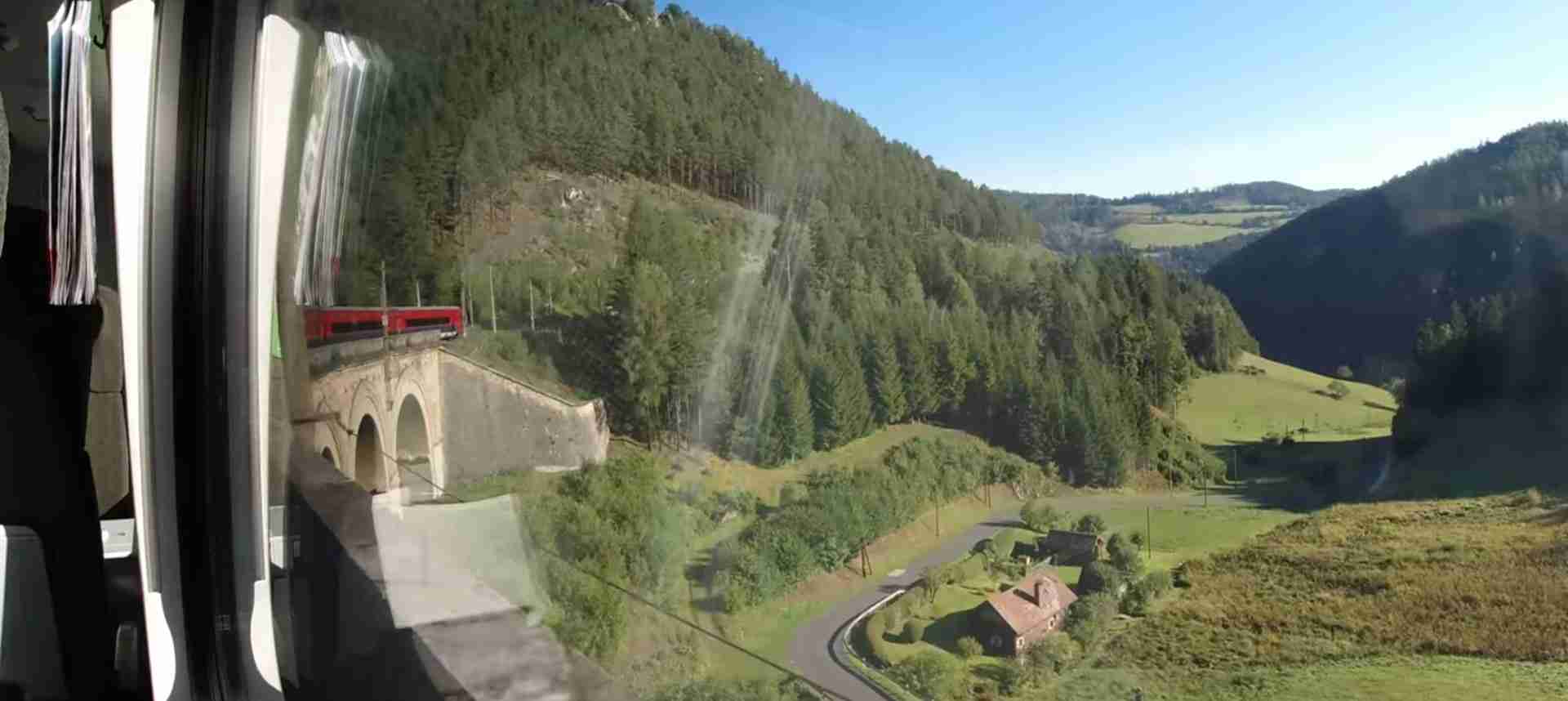
Semmering Railway to Graz UNESCO World Heritage Guide
Key Takeaways
- The Semmering Railway represents the world’s first mountain railway built using standard gauge tracks, completed in 1854 as an engineering masterpiece that revolutionized alpine transportation
- UNESCO designated this 41-kilometer railway line as a World Heritage Site in 1998, recognizing its Outstanding Universal Value as an innovative solution to extreme topographical challenges
- The railway features 16 viaducts, 15 tunnels, and over 100 curved stone bridges, all constructed without modern machinery, demonstrating mid-19th century engineering excellence
- This transportation corridor connects Vienna to Trieste through the Austrian Alps, creating a harmonious integration of railway architecture within dramatic alpine landscapes
- The Semmering Railway influenced railway construction worldwide, establishing technical standards and architectural aesthetics that shaped mountain railway development across continents
- The route from Semmering to Graz extends the UNESCO-protected segment into Styria, showcasing the complete engineering vision of connecting Austria’s industrial and commercial centers
Introduction to the Semmering Railway UNESCO Heritage
The Semmering Railway stands as humanity’s first triumph over alpine geography using railway technology, representing a watershed moment when 19th-century engineers proved that standard gauge railways could conquer mountain passes previously considered insurmountable. Stretching from Gloggnitz to Mürzzuschlag through the Semmering Pass, this 41-kilometer engineering marvel demonstrates how human ingenuity transformed a formidable natural barrier into a functional transportation corridor that remains operational after 170 years.
Constructed between 1848 and 1854 under the direction of engineer Carl Ritter von Ghega, the railway overcame an elevation difference of 460 meters across terrain that challenged every aspect of mid-19th century civil engineering. The project required drilling through solid rock, spanning deep ravines, and maintaining stable grades along mountainsides where landslides and avalanches posed constant threats. The successful completion of this railway without steam-powered construction equipment or computer-aided design represents an extraordinary achievement in engineering history.
The extension from Semmering to Graz completes the vision of connecting Vienna’s imperial capital to the Adriatic port of Trieste through the Southern Railway network. This corridor enabled Austria-Hungary to establish rapid communication and trade routes between northern industrial centers and southern maritime commerce, fundamentally transforming the economic geography of the Habsburg Empire. Graz, positioned as Styria’s capital and a major commercial hub, became directly connected to Vienna’s markets and Mediterranean trade networks through this revolutionary transportation system.
UNESCO’s recognition in 1998 acknowledged the Semmering Railway as an exceptional example of infrastructure development that solved unprecedented technical challenges while creating architectural structures of remarkable aesthetic quality. The railway’s 16 viaducts and 15 tunnels were designed not merely for functionality but as architectural compositions that enhance rather than diminish the alpine landscape. This integration of engineering necessity with aesthetic consideration established principles that influenced infrastructure design across the globe.
The railway continues serving both passenger and freight traffic, maintaining its original purpose while attracting heritage tourism and railway enthusiasts from worldwide destinations. The line operates with modern rolling stock while preserving the essential character and structural integrity of Ghega’s original construction. This dual function as working railway and protected heritage site demonstrates how historical infrastructure can remain economically viable while maintaining its cultural significance.
People Also Ask About Semmering Railway UNESCO Heritage
Why was the Semmering Railway designated a UNESCO World Heritage Site?
UNESCO designated the Semmering Railway as a World Heritage Site based on its Outstanding Universal Value as the first mountain railway built with standard gauge tracks, representing a technological breakthrough that solved extreme topographical challenges through innovative engineering solutions. The designation recognizes the railway’s exceptional influence on subsequent mountain railway construction worldwide, its harmonious integration of infrastructure within natural landscapes, and its complete preservation of mid-19th century railway architecture and engineering. The site satisfies UNESCO criteria for representing a masterpiece of human creative genius and constituting an outstanding example of technological ensemble illustrating significant stages in human history.
What makes the Semmering Railway architecturally significant?
The Semmering Railway demonstrates architectural significance through its 16 viaducts and 15 tunnels, each designed as carefully composed structures that respond to their alpine setting with appropriate scale, proportion, and material selection. The double-track curved viaducts like Kalte Rinne and Krausel showcase sophisticated stone masonry that creates elegant arches spanning deep valleys, while tunnel portals feature classical architectural detailing that frames mountain views. The railway stations along the route exhibit unified architectural character using local stone and alpine building traditions, creating a coherent architectural narrative across the entire line. This integration of functional engineering structures with conscious architectural design established aesthetic standards for infrastructure projects globally.
Who designed and built the Semmering Railway?
Engineer Carl Ritter von Ghega designed and supervised construction of the Semmering Railway between 1848 and 1854, applying innovative solutions to overcome the extreme challenges posed by alpine topography. Ghega studied mountain railways in the United States before developing his plans for the Semmering route, adapting American engineering principles to Austrian alpine conditions. The actual construction employed up to 20,000 workers at peak periods, many of whom were Italian and Slovenian laborers who executed the dangerous work of drilling tunnels and building viaducts using hand tools and black powder explosives. Ghega’s engineering calculations proved remarkably accurate, with the railway operating successfully using his original grades and alignments without significant modification for over 170 years.
How does the railway connect to Graz and why is this important?
The Semmering Railway connects to Graz through the broader Southern Railway network, creating a continuous rail corridor from Vienna through the Semmering Pass to Styria’s capital city and onward to Trieste on the Adriatic coast. This connection transformed Graz from a regional capital into a major commercial and industrial center directly linked to imperial markets and international trade routes. The railway enabled rapid transport of Styrian iron and steel products to Vienna and Mediterranean ports while bringing manufactured goods and raw materials to Graz’s growing industries. This transportation infrastructure catalyzed industrial development throughout Styria, establishing Graz as a significant railway junction that remains central to Austrian and European rail networks.
Extended multi-day tours – 5+ days
Featured Graz Multi-Day Tour Packages
7 days
Christmas in Eastern Europe: Zagreb to Budapest
- ✓ Comprehensive Graz tour
- ✓ Expert local guides included
- ✓ All accommodation arranged
- ✓ Transportation provided
Multi-day tour packages powered by TourRadar. Prices and availability subject to change.
UNESCO Designation History and Recognition
The Semmering Railway achieved UNESCO World Heritage status in 1998 during the 22nd session of the World Heritage Committee, becoming Austria’s first railway heritage site to receive this international recognition. The nomination process emphasized the railway’s role as a pioneering achievement in mountain railway engineering that influenced infrastructure development worldwide, demonstrating humanity’s capacity to overcome formidable natural obstacles through technological innovation and engineering excellence.
The UNESCO evaluation highlighted three primary aspects of Outstanding Universal Value: the railway’s technical innovations in solving extreme topographical challenges, its complete preservation of mid-19th century railway infrastructure, and its aesthetic integration within alpine landscapes. The World Heritage Committee recognized that the Semmering Railway represents a turning point in transportation history when railways ceased being limited to relatively flat terrain and became capable of conquering mountain barriers that had restricted human movement for millennia.
Austria’s nomination documentation presented comprehensive evidence of the railway’s influence on subsequent mountain railway projects across Asia, South America, and North America. Engineers from multiple countries studied the Semmering Railway’s solutions to gradient management, tunnel construction, and viaduct design, adapting Ghega’s principles to their own challenging terrain. The Darjeeling Himalayan Railway in India, the Rhaetian Railway in Switzerland, and numerous other mountain railways applied technical lessons learned from the Semmering experience.
The protected zone encompasses the complete railway line from Gloggnitz to Mürzzuschlag, including all viaducts, tunnels, bridges, stations, and associated railway infrastructure. The buffer zone extends beyond the immediate railway corridor to protect the visual integrity of alpine landscapes that form essential context for appreciating the engineering achievement. Austrian heritage authorities maintain strict controls over any modifications to railway structures, ensuring that modernization and safety improvements respect the historical character of the original construction.
The designation created responsibilities for comprehensive documentation, ongoing conservation, and public access that balances heritage protection with the railway’s continued operation as active transportation infrastructure. Austrian Federal Railways collaborates with heritage authorities to maintain the line’s structural integrity while meeting contemporary safety and operational standards, a partnership that demonstrates successful integration of heritage conservation with functional transportation needs.
Outstanding Universal Value and Significance
The Semmering Railway’s Outstanding Universal Value rests primarily on its status as the world’s first standard gauge mountain railway, representing a revolutionary breakthrough in transportation technology that expanded the geographic scope of railway networks beyond the lowland routes that characterized early railway development. Before the Semmering Railway’s completion, conventional engineering wisdom held that standard gauge railways could not navigate terrain with gradients exceeding 1.8 percent or curves sharper than 190 meters radius, limitations that would have excluded railways from alpine regions entirely.
Ghega’s engineering solutions demolished these limitations through innovative applications of existing technology combined with entirely new approaches to railway alignment and construction. The railway achieves maximum gradients of 2.5 percent using continuous grades rather than rack-and-pinion systems, maintaining standard gauge tracks throughout the route. Curve radii decrease to 190 meters at the sharpest points, requiring careful calculation of superelevation and rail placement to ensure safe passage of trains traveling at speeds up to 70 kilometers per hour on grades and curves simultaneously.
The viaduct designs represent engineering masterpieces that solved structural challenges without precedent in railway construction. The Kalte Rinne Viaduct spans 186 meters with double-track arches rising 46 meters above the valley floor, constructed entirely from locally quarried limestone using traditional masonry techniques. The structure carries continuous railway traffic while withstanding alpine weather extremes including heavy snow loads, freeze-thaw cycles, and occasional earthquakes, demonstrating the remarkable durability of 19th-century engineering when executed with precision and appropriate materials.
The fifteen tunnels total 1,477 meters in length, each drilled through solid rock using black powder explosives and hand labor. The longest tunnel stretches 157 meters through the Weinzettel Mountain, requiring precise alignment calculations to ensure the tunnel bore emerged accurately on opposite sides of the mountain. Workers advanced from both ends simultaneously, meeting in the middle with alignment errors measuring less than one meter, an extraordinary achievement given the surveying technology available in 1850.
The railway’s aesthetic integration within alpine landscapes demonstrates conscious attention to visual composition and architectural character that transcended purely utilitarian engineering. Viaduct designs incorporate classical proportions and architectural detailing that create harmonious relationships between human-built structures and natural landforms. The sequence of tunnels, viaducts, and open track creates varied visual experiences for passengers while maintaining the functional requirements of railway operation, establishing a model for infrastructure design that respects and enhances natural beauty.
Engineering Innovation and Construction Techniques
The construction of the Semmering Railway required developing entirely new engineering methodologies for mountain railway building, as existing techniques proved inadequate for the extreme challenges presented by alpine topography. Ghega began by conducting comprehensive surveys of the terrain using theodolites and leveling instruments to map elevation changes, identify optimal routes, and calculate required grades and curves. These surveys produced detailed topographic maps that enabled precise planning of tunnel locations, viaduct positions, and track alignments before construction began.
Tunnel excavation employed the classical method of advancing from both portal ends simultaneously, with workers drilling blast holes using hand-held steel drills and wooden mallets. Black powder charges shattered the rock face in controlled explosions, followed by manual removal of debris using wheelbarrows and carts. Ventilation shafts drilled from the surface provided air circulation for workers and allowed smoke from blasting to escape, improving working conditions in the confined tunnel spaces. The excavation rate averaged approximately one meter per day from each end, requiring years of continuous labor to complete each tunnel.
Viaduct construction began with establishing stable foundations in steep valley floors, requiring excavation to bedrock and construction of massive stone piers that would support the superstructure. Stonemasons shaped locally quarried limestone blocks into precise dimensions, laying courses with minimal mortar to create monolithic structures capable of bearing railway loads. Wooden centering frameworks supported stone arches during construction, remaining in place until the mortar cured and the arch became self-supporting. The double-track design required wider viaducts than previous railway bridges, presenting structural challenges that demanded innovative arch geometry and pier placement.
The railway’s continuous operation for 170 years without major structural failures validates Ghega’s engineering calculations and the quality of 19th-century construction. The stone masonry has weathered alpine climate extremes including temperature variations from -20°C to +35°C, annual snowfall exceeding three meters, and severe thunderstorms with intense rainfall. Periodic maintenance focuses on preserving rather than replacing original structures, using traditional materials and techniques to maintain historical integrity while ensuring contemporary safety standards.
The construction project employed innovative labor management and logistical systems to coordinate 20,000 workers across a 41-kilometer construction zone in difficult terrain. Temporary housing settlements housed workers near construction sites, with supply lines bringing food, tools, and materials from valley towns. Medical facilities treated injuries from rock falls, explosions, and construction accidents, though worker casualties remained tragically high by modern standards. The successful completion of such a massive project without modern communication technology or mechanized equipment demonstrates extraordinary organizational capabilities and project management skills.
Architectural Character and Design Elements
The Semmering Railway exhibits unified architectural character across its stations, viaducts, tunnels, and associated structures, creating visual coherence that enhances the passenger experience and establishes strong regional identity. Station buildings combine functional railway requirements with alpine architectural traditions, using local stone for foundations and walls with wood-framed upper stories featuring characteristic Styrian and Lower Austrian decorative elements. These structures serve operational needs while creating welcoming facilities that respect local building customs and materials.
Viaduct architecture demonstrates careful attention to proportion, rhythm, and detailing that transforms functional engineering structures into architectural compositions worthy of aesthetic appreciation. The arches follow classical proportions with spring points, keystones, and crown details that create visual elegance while distributing structural loads efficiently. The double-track design creates wide viaduct decks that emphasize horizontal lines complementing the vertical thrust of the supporting piers, establishing dynamic visual tension that animates the structures.
Tunnel portal designs frame transitions between open landscape and enclosed passage with architectural elements that mark these thresholds as significant moments in the railway journey. Classical pilasters, cornices, and pediments create formal compositions that dignify the tunnel entrances while providing visual markers for train crews and passengers. Some portals incorporate inscriptions commemorating construction dates and dedication to Emperor Franz Joseph I, adding historical narrative to architectural function.
The railway’s integration within alpine landscapes demonstrates sophisticated understanding of visual composition and spatial relationships between human-built infrastructure and natural topography. Viaducts span valleys at carefully selected locations that minimize visual impact while showcasing engineering achievement, creating dramatic viewpoints that reveal both the landscape’s grandeur and humanity’s capacity to traverse it. The sequence of open track sections, tunnel passages, and viaduct crossings creates varied visual experiences that maintain passenger interest throughout the journey while respecting the landscape’s inherent beauty.
The architectural unity extends to smaller structures including lineside buildings, bridge tender houses, and maintenance facilities, all designed with consistent materials, colors, and detailing that reinforce the railway’s visual identity. This comprehensive approach to infrastructure design established standards for railway architecture that influenced subsequent projects worldwide, demonstrating how attention to aesthetic quality enhances rather than compromises functional efficiency.
The Route from Semmering to Graz: Completing the Vision
The railway’s extension from the UNESCO-protected Semmering segment to Graz completes the original vision of the Southern Railway, creating a continuous transportation corridor linking Vienna’s imperial capital to Styria’s commercial center and ultimately to the Adriatic port of Trieste. This complete route transformed economic relationships across the Habsburg Empire, enabling rapid movement of goods, passengers, and information between previously isolated regions separated by alpine barriers.
The descent from Mürzzuschlag toward Graz traverses the Mürz Valley through less dramatic but still challenging terrain, requiring careful engineering to maintain appropriate grades and curves while following the valley floor. The route passes through industrial towns including Bruck an der Mur, where the Mürz River joins the Mur River, creating a major railway junction that connects the Southern Railway to routes serving Slovenia and western Austria. This junction established Bruck as a significant railway center whose economic development directly resulted from its strategic position on the Semmering route.
Approaching Graz, the railway enters the broader Mur Valley where Styria’s capital occupies a strategic position at the confluence of mountain valleys providing access to surrounding regions. The railway’s arrival in Graz during 1844 (the Graz-Mürzzuschlag section predated the Semmering completion) catalyzed industrial development that transformed the city from a regional administrative center into a major manufacturing hub. Iron and steel works, machine factories, and brewing operations expanded rapidly once reliable transportation linked them to distant markets and raw material sources.
Graz’s railway station developed into one of Austria’s most important transportation hubs, with the Southern Railway meeting lines serving western Austria, Slovenia, and Hungary. The station building exhibits grand 19th-century railway architecture with high ceilings, extensive platform coverage, and ornate waiting halls that reflected Graz’s status as a prosperous commercial city. The station continues serving as a major junction on international routes connecting Vienna to Ljubljana, Zagreb, and other southeastern European destinations.
The complete Semmering-to-Graz corridor demonstrates how transportation infrastructure creates economic integration across regions previously separated by geographic barriers. The railway enabled Styrian iron ore from the Erzberg to reach Vienna’s industries efficiently, while Graz’s manufacturers gained access to imperial markets and international trade networks. This economic transformation validated the enormous investment required to construct the Semmering Railway, proving that infrastructure development generates returns far exceeding initial costs when it fundamentally improves regional connectivity.
Cultural Impact and Historical Significance
The Semmering Railway’s completion represented a defining moment in Austrian national identity, demonstrating the empire’s technological sophistication and engineering capabilities to European powers and global observers. The successful conquest of an alpine pass using railway technology challenged perceptions of geographic determinism, showing that human ingenuity could overcome natural obstacles that had constrained economic development and political integration for centuries. This achievement generated national pride and international recognition that enhanced Austria’s prestige among industrializing nations.
The railway transformed the Semmering region from isolated alpine villages into fashionable resort destinations attracting Vienna’s aristocracy and wealthy bourgeoisie seeking alpine recreation and scenic beauty. Grand hotels including the Südbahnhotel and Panhans opened near railway stations, offering luxury accommodations with spectacular mountain views accessible within two hours from Vienna. This tourism development created employment and economic opportunity for local populations while establishing the Semmering as Austria’s premier mountain resort region, a status it maintains today.
Artists, writers, and composers celebrated the Semmering Railway as a symbol of progress and human achievement, incorporating it into paintings, literature, and musical compositions that shaped cultural understanding of technology’s relationship with nature. The dramatic viaducts and alpine scenery inspired romantic representations emphasizing harmony between engineering and landscape, while the railway’s speed and efficiency suggested modernity’s transformative power. These cultural productions contributed to public acceptance of railway technology and infrastructure development as positive forces in society.
The railway influenced social relationships by enabling unprecedented mobility for middle-class travelers who could now access alpine regions previously reserved for wealthy aristocrats with time and resources for extended carriage journeys. Day trips from Vienna to the mountains became possible, democratizing alpine recreation and expanding urban residents’ geographic horizons. This increased mobility contributed to social mixing and cultural exchange that challenged traditional class boundaries and provincial isolation.
The construction project’s labor force included workers from across the Habsburg Empire, creating temporary multicultural communities in alpine valleys where Italian, Slovenian, Czech, and German workers collaborated on shared objectives. These interactions fostered cultural exchange and mutual understanding that contributed to the empire’s polyglot character, though working conditions remained harsh and labor relations sometimes antagonistic. The railway’s completion owed much to the physical labor and sacrifices of these workers, whose contributions deserve recognition alongside the engineering achievements they made possible.
Conservation and Management Challenges
Preserving the Semmering Railway while maintaining its function as active transportation infrastructure requires balancing competing demands of heritage protection and operational efficiency. Austrian Federal Railways faces constant challenges updating safety systems, track structure, and signaling equipment without compromising the historical character of 19th-century engineering works. Conservation authorities review all proposed modifications to ensure compatibility with heritage values, creating collaborative processes that seek solutions meeting both operational and preservation requirements.
Stone masonry structures require ongoing maintenance to address weathering, vegetation growth, and occasional structural movement. Specialized stonemasons using traditional techniques repair damaged sections, matching original materials and construction methods to maintain visual and structural continuity. The limestone used in viaduct construction remains available from original quarries, enabling authentic repairs that preserve material consistency. These conservation projects employ craftspeople trained in historical building techniques, maintaining traditional skills that would otherwise disappear from modern construction practice.
Tunnel maintenance presents particular challenges as the original tunnel linings deteriorate from water infiltration, freeze-thaw cycles, and vibration from modern trains traveling faster than 19th-century rolling stock. Reinforcement projects install modern support systems while preserving original tunnel profiles and portal architecture, using materials and techniques that allow future removal if superior conservation methods emerge. The tunnel drainage systems require regular cleaning and repair to prevent water accumulation that could undermine structural stability.
Climate change introduces new conservation challenges as extreme weather events increase in frequency and intensity. Heavy rainfall triggers landslides that threaten track stability, while intense freezing events damage stone structures through ice expansion in joints and cracks. The railway’s operators develop adaptive strategies including improved drainage systems, vegetation management to stabilize slopes, and enhanced monitoring of structural conditions to detect problems before they compromise safety or heritage values.
Tourism management balances public access with heritage protection, as increasing visitor numbers create wear on historic structures and stations. Special heritage trains operate on weekends during summer months, using historic rolling stock to provide authentic railway experiences while limiting impact on regular service. Interpretive programs educate visitors about the railway’s significance and conservation challenges, building public support for preservation efforts and appropriate visitor behavior.
Visiting the Semmering Railway Heritage Site
The Semmering Railway remains fully operational as a working railway line, offering visitors the unique experience of traveling through a UNESCO World Heritage Site aboard modern passenger trains that follow the same tracks and grades designed by Ghega in 1854. Regular service connects Vienna’s Südbahnhof to Graz and beyond, with trains stopping at stations throughout the Semmering section including Payerbach-Reichenau, Semmering, and Mürzzuschlag. The journey from Gloggnitz to Mürzzuschlag takes approximately one hour, providing extended viewing opportunities of viaducts, tunnels, and alpine scenery.
The railway’s most spectacular section between Payerbach and Mürzzuschlag showcases the engineering achievements that earned UNESCO recognition. Passengers experience the dramatic Krausel Klause viaduct curving above a deep ravine, followed by tunnel passages through mountain ridges and emergence onto open track with panoramic alpine views. The double-track configuration allows passengers on both sides of the train to view significant structures and landscapes, though seating on the valley side provides superior vantage points for viaduct photography.
Semmering station serves as the ideal base for exploring the railway’s heritage, offering direct access to hiking trails that provide close views of viaducts and tunnels from valley floors and mountainside vantage points. The Bahnwanderweg (Railway Trail) follows the railway route with information panels explaining engineering features and historical significance at key locations. This trail enables visitors to appreciate the structures’ scale and construction quality through close observation impossible from moving trains.
The South Railway Museum in Mürzzuschlag presents comprehensive exhibitions on the railway’s construction, operation, and ongoing conservation. Historic photographs, engineering drawings, and construction tools illustrate the building process, while restored rolling stock demonstrates the evolution of railway technology from steam locomotives to modern electric traction. The museum organizes special heritage train services using historic coaches pulled by preserved steam locomotives, offering authentic period travel experiences on select weekends throughout the summer season.
Hiking and photography opportunities abound throughout the Semmering region, with well-maintained trails accessing viewpoints overlooking major viaducts and providing dramatic compositions combining railway structures with alpine landscapes. The Polleres Viaduct and Kalte Rinne Viaduct offer particularly photogenic subjects, best captured during morning hours when sunlight illuminates the stone arches from optimal angles. Winter photography presents challenging but rewarding opportunities when snow-covered viaducts create striking monochrome compositions against forested mountainsides.
The UNESCO designation ensures public access to the railway and surrounding landscapes while protecting the site from inappropriate development. Visitors walk freely along designated trails and access viewpoints without fees or restrictions, though railway property itself remains restricted for safety and operational reasons. Information boards at major stations and viewpoints provide historical context and explain the railway’s UNESCO significance, enhancing visitor understanding and appreciation.
The Graz Connection and Regional Integration
Graz’s position as the terminus of the Semmering Railway route established the city as a major transportation hub within the Austrian railway network, connecting Styria to Vienna and international routes serving southern and southeastern Europe. The railway’s arrival accelerated Graz’s transformation from a provincial capital into an industrial and commercial center whose economic development rivaled Vienna’s growth during the late 19th and early 20th centuries.
Styrian iron and steel industries expanded rapidly once railway connections enabled efficient transport of raw materials from mining regions and finished products to distant markets. The Erzberg iron ore deposits in northern Styria connected to Graz via branch lines, creating an integrated industrial system that made Styria one of Austria-Hungary’s primary manufacturing regions. Heavy engineering firms, machine tool manufacturers, and armaments factories established operations in Graz, employing thousands of workers and generating wealth that funded the city’s architectural and cultural development.
The railway connection facilitated cultural exchange between Graz and Vienna, enabling artists, musicians, and intellectuals to travel easily between the imperial capital and Styria’s cultural center. The University of Graz attracted students from across the empire, many of whom traveled via the Semmering Railway, contributing to the city’s cosmopolitan atmosphere and intellectual vitality. This enhanced connectivity helped Graz develop its distinctive cultural identity combining Austrian traditions with influences from neighboring Slovenian and Hungarian regions.
Modern Graz continues benefiting from its position on international railway routes connecting Austria to Slovenia, Croatia, and beyond. The city serves as an important junction for both passenger and freight services, with the historic railway infrastructure maintained and upgraded to accommodate contemporary traffic demands. The combination of historical significance and modern functionality demonstrates how 19th-century transportation infrastructure can remain economically vital while maintaining heritage values that enrich regional identity and cultural tourism.
The complete railway corridor from Vienna through the Semmering Pass to Graz represents one of Austria’s most significant cultural landscapes, combining natural beauty with human engineering achievement to create an integrated heritage site that tells compelling stories about technological innovation, economic development, and social transformation. The UNESCO designation recognizes this complete narrative while ensuring its preservation for future generations to experience and study.
Frequently Asked Questions
How long does it take to travel the Semmering Railway route?
The journey from Gloggnitz through the UNESCO-protected Semmering section to Mürzzuschlag takes approximately one hour on regular passenger trains, while the complete trip from Vienna to Graz requires about 2.5 to 3 hours depending on service type and stops. Heritage trains operating on summer weekends travel more slowly to allow better viewing of viaducts and scenery, extending the journey time but providing enhanced appreciation of the railway’s engineering features.
What are the most impressive engineering features to see on the Semmering Railway?
The Kalte Rinne Viaduct represents the most visually striking structure, spanning a deep ravine with double-track stone arches 46 meters high and 186 meters long. The Krausel Klause double viaduct creates dramatic curved alignments above another valley. The Weinzettel Tunnel’s 157-meter length and precise alignment demonstrate remarkable surveying accuracy. The sequence of fourteen viaducts visible from the train between Payerbach and Semmering showcases the concentration of engineering solutions required to overcome the terrain.
Can you visit the viaducts and tunnels up close?
The designated Railway Trail (Bahnwanderweg) provides excellent access to close viewpoints of major viaducts and tunnel portals, allowing detailed observation of construction techniques and architectural features. Hiking trails throughout the Semmering region lead to overlooks providing dramatic perspectives on the railway’s integration within alpine landscapes. However, the active railway line itself remains restricted for safety reasons, and visitors should observe warning signs and maintain safe distances from tracks and structures.
What makes the Semmering Railway different from other mountain railways?
The Semmering Railway was the world’s first mountain railway built using standard gauge tracks without rack-and-pinion systems, proving that conventional adhesion railways could navigate alpine terrain through careful route selection and engineering design. Unlike rack railways that use toothed rails and special locomotives for steep grades, the Semmering Railway operates with standard rolling stock on conventional tracks, demonstrating Ghega’s innovative approach to gradient management and curve design that influenced subsequent mountain railway projects worldwide.
How has the railway been preserved while remaining operational?
Austrian Federal Railways maintains the Semmering Railway through careful conservation that preserves original structures while meeting modern safety standards. Stone viaducts receive periodic maintenance using traditional materials and techniques, tunnel linings are reinforced where necessary without altering original profiles, and track upgrades use appropriate materials that respect historical character. Heritage authorities review all proposed modifications to ensure compatibility with UNESCO World Heritage values, creating collaborative preservation approaches that balance operational requirements with conservation obligations.
What role did the Semmering Railway play in Austrian economic development?
The Semmering Railway created the first rapid transportation link between Vienna and Trieste, enabling Austria-Hungary to develop integrated trade networks connecting industrial centers in Bohemia and Lower Austria to Mediterranean ports. The railway facilitated Styrian industrial development by providing efficient transport for iron and steel products, catalyzed tourism development in alpine regions, and demonstrated Austrian engineering capabilities that enhanced the empire’s international prestige. The economic returns from improved transportation connectivity justified the enormous construction investment and established railways as essential infrastructure for national development.
Are there museums or visitor centers explaining the railway’s history?
The South Railway Museum in Mürzzuschlag provides comprehensive exhibitions on the Semmering Railway’s construction, operation, and historical significance, displaying original construction equipment, engineering drawings, historic photographs, and restored rolling stock. The museum organizes guided tours and special events including heritage train services using historic locomotives. Information centers at major stations along the route offer brochures and displays explaining the railway’s UNESCO significance and engineering features.
What is the best way to experience the Semmering Railway as a visitor?
The optimal experience combines a railway journey through the heritage section with hiking along the Railway Trail to view structures from ground level. Begin with the train journey from Gloggnitz to Mürzzuschlag, observing viaducts and tunnels from passenger perspectives. Then hike portions of the trail to access close viewpoints of major structures and appreciate their scale and construction quality. Visit the South Railway Museum to understand construction history and technical achievements. Consider timing your visit for summer weekends when heritage trains operate, providing authentic period travel experiences using historic rolling stock.
How did construction workers build such massive structures in mountainous terrain?
Workers constructed viaducts and tunnels using hand tools, black powder explosives, and traditional masonry techniques without mechanized equipment. Quarries near construction sites provided limestone blocks shaped by stonemasons into precise dimensions, then transported to viaduct locations using temporary wooden ramps and manual labor. Tunnel excavation advanced from both portals simultaneously, with workers drilling blast holes by hand and removing debris using wheelbarrows. Wooden centering frameworks supported stone arches during construction until mortar cured and structures became self-supporting. The entire project employed up to 20,000 workers at peak periods, housed in temporary settlements near construction sites.
What influence did the Semmering Railway have on railway development worldwide?
The Semmering Railway’s successful demonstration that standard gauge railways could overcome alpine terrain influenced mountain railway projects across multiple continents. Engineers from India, Switzerland, South America, and North America studied Ghega’s solutions to gradient management, viaduct design, and tunnel construction, adapting these principles to their own challenging topography. The railway established technical standards for maximum grades, minimum curve radii, and viaduct proportions that shaped mountain railway development globally. The project proved that massive infrastructure investments in difficult terrain could generate sufficient economic returns to justify their costs, encouraging governments and private companies to undertake ambitious railway projects previously considered impractical.