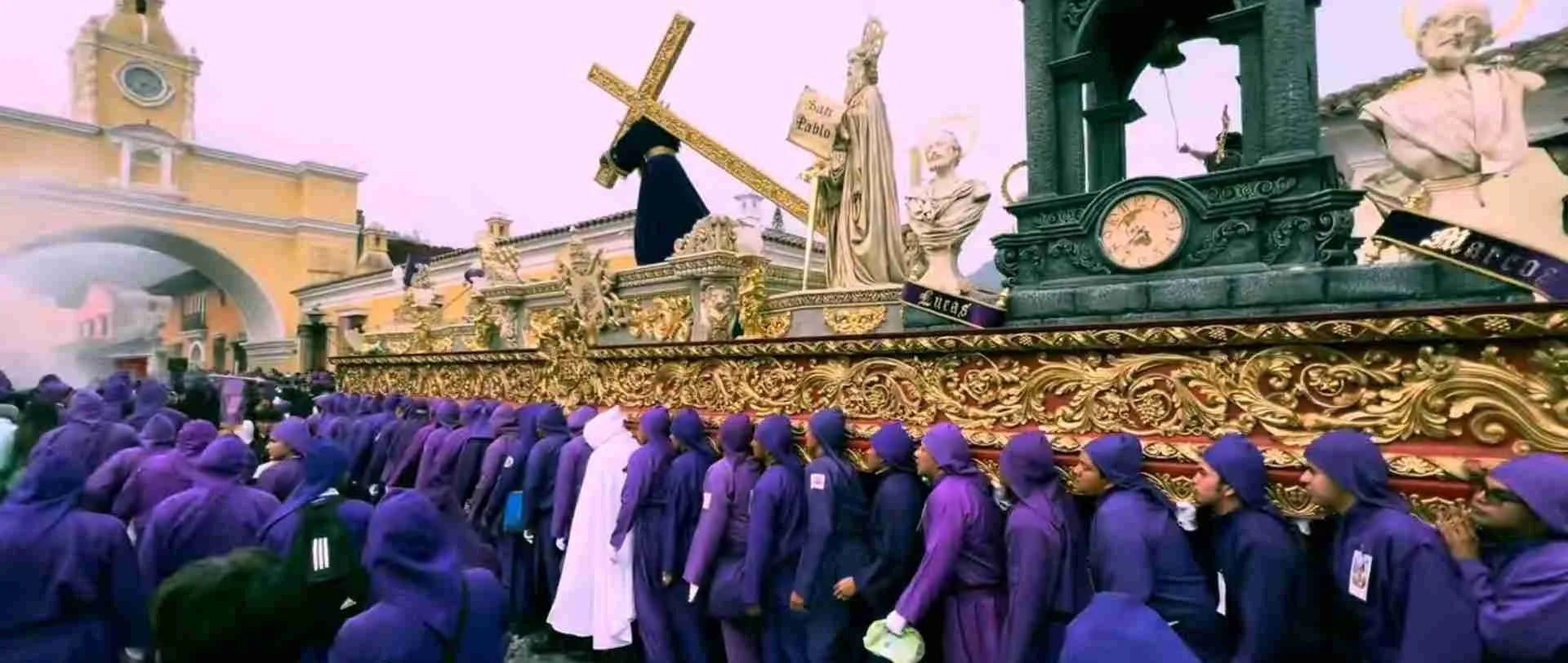
Semana Santa in Antigua 2026: Holy Week Celebrations
Key Takeaways:
- Semana Santa 2026 occurs March 29-April 5 with peak celebrations Wednesday through Good Friday featuring Guatemala’s most elaborate religious processions and cultural traditions
- Accommodation requires booking 4-6 months ahead with hotel rates increasing 200-400% during Holy Week reaching $180-350 per night for mid-range properties normally costing $45-80
- Processions follow predetermined routes published in advance with major events departing 3-9 AM for morning sessions and 1-5 PM for afternoon ceremonies lasting 8-18 hours total duration
- Alfombras (sawdust carpets) appear along procession routes 12-36 hours before passage with most elaborate creations completed early morning hours before dawn procession departures
- Daily costs during Semana Santa reach $120-180 per person for meals, activities, and viewing experiences excluding accommodation which dominates total trip expenses
- Crowd sizes peak Wednesday-Friday with 200,000+ visitors and residents filling streets requiring advance position planning 1-3 hours before major procession passages
Planning Your Semana Santa Experience in 2026
Semana Santa represents Guatemala’s most significant religious and cultural celebration, transforming Antigua into living theater combining Catholic traditions, Maya influences, and community participation on scale unmatched elsewhere in Latin America. The week-long celebrations March 29-April 5, 2026 culminate Good Friday when massive processions, elaborate sawdust carpets, and overwhelming crowd participation create unforgettable cultural immersion.
Planning successful Semana Santa visits requires understanding accommodation booking timelines, procession schedules, crowd management strategies, and cultural participation etiquette. The celebrations attract 150,000-250,000 visitors and religious pilgrims to Antigua’s normal population of 45,000, creating intense demand for lodging, restaurants, and viewing positions along procession routes.
First-time visitors benefit from attending 2-4 days spanning Wednesday through Saturday to experience peak celebrations including major processions, alfombra viewing, and cultural atmosphere while avoiding overwhelming intensity of attending entire week. Multi-day visits allow observation of procession variety, alfombra creation processes, and daily celebration evolution from preparation through culmination.
The celebrations combine religious solemnity with cultural festivity as families, religious brotherhoods (hermandades), and communities invest months preparing elaborate processions, coordinating alfombra designs, and organizing participation in ceremonies preserving 400+ years of colonial tradition merged with indigenous practices.
People Also Ask About Semana Santa Antigua 2026
When is Semana Santa in Antigua Guatemala in 2026?
Semana Santa 2026 spans Sunday, March 29 through Sunday, April 5, with Palm Sunday marking celebration beginning and Easter Sunday concluding the week. Major processions and peak crowd activity concentrate Wednesday, April 1 through Good Friday, April 3 when largest and most elaborate ceremonies occur. Holy Saturday April 4 features reduced procession schedule while Easter Sunday April 5 celebrates resurrection with morning ceremonies.
How much does accommodation cost during Semana Santa 2026 in Antigua?
Hotel rates increase 200-400% during Semana Santa 2026 with mid-range properties charging $180-350 per night compared to normal $45-80 rates, and budget hostels reaching $80-120 versus typical $15-30 pricing. Check accommodation websites for current official rates as pricing varies by property and booking timing. Luxury hotels reach $400-650 per night while apartment rentals range $200-400 nightly for multi-bedroom units. Book 4-6 months ahead securing best availability and avoiding sold-out conditions.
What are alfombras and when can you see them in 2026?
Alfombras represent elaborate carpets created from colored sawdust, flowers, fruits, vegetables, and natural materials laid across procession routes hours before passage, then destroyed as processions walk over artistic creations. Families and neighborhood groups begin alfombra construction late evening or early morning hours 12-36 hours before scheduled procession passages. Major alfombras appear along Wednesday-Friday procession routes with most elaborate creations visible early morning 4-6 AM before dawn procession departures.
Do you need tickets or advance booking for Semana Santa processions in 2026?
Processions occur in public streets with no tickets or entry fees required for viewing. Optimal viewing positions along procession routes operate first-come basis with spectators arriving 1-3 hours before major procession passages securing front-row positions. Some buildings and hotels offer balcony viewing for guests while restaurants along routes allow reserved seating for customers during procession passages.
Extended multi-day tours – 5+ days
Featured Antigua Multi-Day Tour Packages

4 days
4 days basic Guatemala
- ✓ Comprehensive Antigua tour
- ✓ Expert local guides included
- ✓ All accommodation arranged
- ✓ Transportation provided
6 days
Customized 6 Days Guatemala Trip with Lake Atitlan, Daily Depart (Private)
- ✓ Comprehensive Antigua tour
- ✓ Expert local guides included
- ✓ All accommodation arranged
- ✓ Transportation provided
3 days
Lake Atitlan & Chichicastenango Market 3D/2N
- ✓ Comprehensive Antigua tour
- ✓ Expert local guides included
- ✓ All accommodation arranged
- ✓ Transportation provided

5 days
5 days Mini Guatemala: living culture and colonial charm
- ✓ Comprehensive Antigua tour
- ✓ Expert local guides included
- ✓ All accommodation arranged
- ✓ Transportation provided
Multi-day tour packages powered by TourRadar. Prices and availability subject to change.
Essential Planning Information 2026
Current Costs and Budget Planning for 2026
Accommodation represents the largest Semana Santa expense with mid-range hotels charging $180-350 per night in 2026 compared to normal $45-80 rates. Check accommodation websites for current official rates as pricing varies. Budget hostels reach $80-120 versus typical $15-30, while luxury properties command $400-650 per night. Minimum stays of 3-7 nights apply at most properties during Holy Week with some requiring full-week bookings Wednesday-Sunday.
Daily meal costs increase 30-50% during Semana Santa as restaurants raise prices and operate extended hours serving massive crowds. Budget $45-60 per day for three meals compared to normal $25-35 in regular season. Street food vendors increase presence charging $3-5 per item versus typical $2-3 pricing. Restaurant reservations work when possible though most operate walk-in service with 30-60 minute wait times during peak lunch and dinner hours.
Transportation costs remain stable with local tuk-tuks charging standard $2-4 for short trips though wait times increase during procession passages blocking streets. Shuttle services from Guatemala City airport cost $12-15 per person matching normal rates. Internal Antigua transportation works best on foot as processions and crowds restrict vehicle movement throughout central area Wednesday-Friday.
Photography supplies and alfombra viewing involve minimal direct costs beyond normal tourism expenses. Consider budgeting $20-40 for procession program guides, religious souvenirs, and small purchases from street vendors. Some viewers give small donations or tips to alfombra creators acknowledging artistic efforts though no obligation or expectation exists.
Accommodation Booking Timeline and Strategies for 2026
Book Semana Santa accommodation 4-6 months ahead (October-December 2025) for optimal availability and pricing at preferred properties. Many hotels open Holy Week bookings 8-12 months in advance with early reservations securing better room categories and locations. Delay beyond January 2026 results in extremely limited availability with remaining options concentrated in expensive luxury properties or distant locations outside walking distance from procession routes.
Central location within 3-5 blocks of Parque Central provides optimal access to major procession routes, alfombra viewing, and cultural activities. Properties along 5th Avenida Norte, streets surrounding Parque Central, and areas within colonial zone offer superior viewing and participation convenience compared to peripheral neighborhoods requiring transportation or extended walking to reach procession areas.
Minimum stay requirements of 3-7 nights apply at most properties during Holy Week with Wednesday-Sunday representing common booking block. Some hotels require full-week stays including weekend before and after peak days. Confirm cancellation policies as many properties enforce strict non-refundable reservations or charge 50-100% penalties for cancellations within 30-60 days of arrival.
Transportation and Arrival Planning for 2026
Guatemala City international airport (GUA) serves as arrival point with shuttle services operating $12-15 per person for 45-minute transfer to Antigua. Book airport shuttles 2-4 weeks ahead during Semana Santa as demand increases significantly. Some accommodation properties arrange direct pickup for $30-50 for 2-4 passengers, providing convenient door-to-door service.
Arrive Antigua Tuesday evening or early Wednesday morning March 31-April 1 to experience peak celebration days without enduring full week of crowds and elevated costs. Departures work best Saturday afternoon or Sunday after Easter celebrations conclude. Alternative arrival Sunday-Tuesday captures alfombra preparation and early processions with reduced crowds before Wednesday peak begins.
Walking provides primary transportation within Antigua during Semana Santa as processions and crowds restrict vehicle movement. Street closures affect 50-70% of colonial center Wednesday-Friday with procession routes blocked 2-4 hours before and during passages. Plan routes around procession schedules allowing extra time for navigation and crowds when moving between locations.
Understanding Semana Santa Traditions and History
Religious and Cultural Significance
Semana Santa commemorates the passion, death, and resurrection of Jesus Christ through elaborate processions reenacting biblical events from Palm Sunday entry into Jerusalem through Good Friday crucifixion and Easter resurrection. The Guatemalan celebrations blend Spanish Catholic traditions introduced during colonial era with indigenous Maya practices creating unique cultural synthesis reflecting 500 years of religious and cultural evolution.
Religious brotherhoods (hermandades) organize processions with members carrying massive carved wooden floats (andas) weighing 3-4 tons and requiring 80-100 carriers working in rotating shifts. The hermandades maintain year-round organization coordinating member participation, float maintenance, costume preparation, and procession logistics preserving centuries-old traditions through generational involvement.
Community participation extends beyond brotherhood members as families create alfombras, neighborhoods coordinate decorations, and residents observe solemn atmosphere respecting religious significance. The celebrations represent major cultural identity expression combining religious devotion with artistic creation, social cohesion, and cultural preservation maintaining Guatemala’s distinctive Holy Week traditions.
Alfombra Creation and Artistic Traditions
Alfombras represent ephemeral art created specifically for procession passage and immediate destruction as religious offering symbolizing life’s temporary nature and devotion’s permanence. Families and neighborhood groups begin planning alfombra designs weeks ahead, gathering colored sawdust, flower petals, pine needles, fruits, vegetables, and natural materials for elaborate street carpet construction.
Design themes incorporate religious imagery, geometric patterns, floral motifs, and symbolic representations of biblical scenes or saints. Large-scale alfombras measure 20-50 meters length and 4-6 meters width requiring coordinated team efforts over 4-8 hours construction time. Artists use stencils, careful hand placement, and layering techniques creating intricate details and vibrant color combinations.
Alfombra creation timing concentrates late evening through early morning hours before dawn procession departures. Major Wednesday-Friday alfombras appear along routes 12-36 hours before procession passages with most elaborate works completed 4-6 AM for viewing before 8-9 AM procession arrivals. Photography opportunities peak during completion phases when lighting improves and artists finalize intricate details.
Procession Structure and Participation
Processions follow hierarchical organization beginning with incense bearers clearing spiritual path, followed by cross carriers, religious banners, float processions depicting biblical scenes, bands providing musical accompaniment, and concluding participants. Major processions include 3-5 large floats each requiring 80-100 carriers rotating every 50-100 meters throughout route.
Float carriers (cucuruchos) wear distinctive purple or black velvet robes during Lent and white robes for Easter, with pointed hoods (capirotes) creating dramatic visual appearance rooted in Spanish penitential traditions. Women participants (devotas) wear black mourning attire with lace veils expressing grief for Christ’s passion while maintaining separate women’s processions or sections within larger ceremonies.
Procession routes cover 5-15 kilometers requiring 8-18 hours complete passage depending on route length and crowd conditions. Major Friday processions departing La Merced church travel throughout colonial center passing major churches, Parque Central, and significant religious sites before returning to origin points late evening or early morning next day. Route maps publish in advance allowing spectators to plan optimal viewing positions.
Daily Procession Schedule 2026
Palm Sunday March 29 – Opening Celebrations
Palm Sunday marks Semana Santa beginning with morning processions commemorating Jesus’s entry into Jerusalem. La Merced church hosts 9 AM palm procession featuring Jesus mounted on donkey float, palm distributions, and moderate crowd sizes providing gentle introduction to week’s celebrations. San Francisco church operates afternoon procession 2 PM with similar themes and religious significance.
Palm Sunday afternoon features alfombra creation for upcoming week’s processions as families begin elaborate carpet preparations. Early visitors observe design marking, material preparation, and team organization for major alfombra projects completing later in week. Crowds remain manageable compared to Wednesday-Friday peak days allowing relaxed observation and photography.
Monday March 30 and Tuesday March 31 – Building Momentum
Monday features smaller processions from various churches including Escuela de Cristo and San Bartolomé with afternoon and evening departures 1-5 PM. The reduced scale allows close observation of brotherhood organization, float mechanics, and carrier coordination without overwhelming crowds. Alfombra creation accelerates along Tuesday and Wednesday procession routes.
Tuesday processions increase in size and elaboration with La Merced hosting major afternoon departure 3 PM. This procession previews Wednesday-Friday intensity while maintaining somewhat manageable crowd conditions. Late Tuesday night and early Wednesday morning witness intense alfombra creation activity as neighborhood groups complete carpets for Wednesday’s major processions.
Wednesday April 1 – Major Celebrations Begin
Wednesday represents first peak celebration day with multiple major processions and elaborate alfombras attracting massive crowds. San Bartolomé church hosts dawn procession departing 3 AM traveling overnight routes returning Thursday morning. La Merced operates afternoon procession 3 PM representing one of week’s largest ceremonies with extensive route and spectacular float presentations.
Wednesday morning 4-8 AM provides optimal alfombra viewing as elaborate carpets reach completion before procession passages. Photography opportunities peak during this period with improving natural light revealing intricate designs and vibrant colors. Spectators position along procession routes by 12-2 PM for optimal afternoon viewing positions before crowds achieve maximum density.
Thursday April 2 – Continued Intensity
Thursday maintains Wednesday’s intensity with major processions from multiple churches. San Francisco hosts morning procession 9 AM while additional ceremonies operate throughout afternoon and evening hours. Alfombra creation continues along Thursday and Friday procession routes with night shifts completing major carpets before dawn.
Thursday evening into Friday morning represents peak alfombra creation period as neighborhood groups work through night completing Good Friday carpets. Observers walking routes 10 PM-4 AM witness artistic process including design execution, color application, and detail work. The overnight atmosphere combines festive social interaction with focused creative concentration.
Good Friday April 3 – Climactic Celebrations
Good Friday represents Semana Santa climax with largest processions, most elaborate alfombras, and maximum crowd participation. La Merced church hosts the week’s most significant procession departing 3-4 AM for 18-24 hour journey throughout Antigua passing every major church and significant religious site before returning Saturday morning.
Good Friday alfombras achieve peak elaboration and scale with neighborhood competitions producing spectacular artistic displays along entire procession route. Early morning viewing 4-7 AM captures completed alfombras in optimal lighting before procession destruction. Crowd sizes peak throughout Friday with 200,000+ people filling colonial streets creating intense but orderly atmosphere.
Multiple smaller processions operate throughout Good Friday afternoon and evening from various churches providing diverse viewing opportunities. The cumulative effect creates continuous religious ceremony atmosphere with processions, music, incense, and crowds maintaining intensity from dawn through midnight.
Holy Saturday April 4 and Easter Sunday April 5
Holy Saturday features reduced procession schedule with smaller ceremonies marking transition from mourning to celebration. Crowds decrease significantly providing relaxed observation opportunities and easier street navigation. Some alfombra creation continues for Sunday processions though scale and elaboration reduce compared to Wednesday-Friday productions.
Easter Sunday celebrates resurrection with morning processions featuring white-robed participants, festive music, and joyful atmosphere contrasting week’s solemn tone. Major churches host sunrise services followed by processions throughout morning and early afternoon hours. Crowds consist primarily of religious participants and local residents as tourists depart following Good Friday climax.
Alfombra Viewing and Photography 2026
Optimal Viewing Times and Locations
Peak alfombra viewing occurs early morning 4-7 AM Wednesday-Friday when major carpets near completion and improving natural light reveals intricate details and vibrant colors. Arrive viewing locations 5-5:30 AM for Wednesday and Thursday major alfombras, and 4-4:30 AM for Good Friday’s most elaborate creations when overnight work produces spectacular pre-dawn completions.
Primary alfombra concentrations align with major procession routes including 5th Avenida Norte near Santa Catalina Arch, streets surrounding La Merced church, 6th Avenida routes, and areas near Parque Central. Good Friday routes feature continuous alfombra coverage over multiple kilometers with elaborate neighborhood productions appearing every 20-50 meters along entire passage.
Late-night viewing 10 PM-2 AM captures alfombra creation process as teams execute designs, apply colored sawdust, and add decorative elements. This timing provides unique observation of artistic techniques and community collaboration though photography challenges increase under artificial street lighting. Respectful distance maintains while observing allows creators to work efficiently without spectator interference.
Photography Strategies and Etiquette
Photograph alfombras from street-level positions avoiding walking on carpets or disturbing creation processes. Wide-angle lenses capture complete alfombra designs while standard focal lengths isolate interesting details and color patterns. Early morning natural light 6-7 AM provides optimal illumination for color accuracy and detail rendering compared to artificial evening lighting.
Request permission before photographing alfombra creators though most welcome documentation of artistic efforts. Offer to share images via email or social media providing creators with professional documentation of ephemeral artworks. Small tips or expressions of appreciation acknowledge time and effort though no expectation or obligation exists.
Avoid flash photography during procession passages as continuous flashing disrupts solemn atmosphere and bothers participants. Use high ISO settings or fast lenses enabling available light photography of processions and evening alfombras. Tripods work best for predawn alfombra photography though crowd conditions Wednesday-Friday limit setup opportunities requiring handheld shooting capabilities.
Alfombra Creation Observation and Participation
Neighborhood groups welcome respectful observation of alfombra creation processes though active participation typically involves family members and local residents rather than tourists. Some community organizations accept volunteer assistance for large-scale projects with advance arrangement through local contacts or accommodation hosts facilitating introductions.
Observation etiquette requires maintaining distance allowing efficient work progression while showing genuine interest and appreciation for artistic efforts. Spanish language skills enhance interaction capabilities though friendly demeanor and obvious admiration transcend language barriers. Families often explain design symbolism and creation techniques to interested observers who approach respectfully.
Material costs for elaborate alfombras reach $200-500 depending on size and design complexity with families funding artistic expressions as religious devotion rather than tourist attraction. Understanding significant personal investment in temporary art deepens appreciation for tradition’s cultural and spiritual significance beyond visual aesthetics.
Accommodation and Booking Strategies 2026
Hotel Categories and Pricing Ranges
Budget hostels charge $80-120 per night during Semana Santa 2026 in dormitory or basic private rooms compared to normal $15-30 rates. Mid-range hotels reach $180-350 for standard doubles versus typical $45-80 pricing, while boutique colonial properties command $300-450 compared to regular $90-150 rates. Luxury accommodations peak at $400-650 per night versus normal $180-280 pricing.
Minimum stay requirements of 3-5 nights apply at budget and mid-range properties while upscale hotels often require 7-night full-week bookings. Some properties offer slightly reduced rates for early booking 6+ months ahead though premium pricing remains standard across accommodation categories during Holy Week.
Alternative accommodation through vacation rental platforms ranges $200-400 per night for 2-3 bedroom apartments or houses providing group lodging economies. Multi-family bookings reduce per-person costs significantly compared to individual hotel rooms though minimum stays of 5-7 nights apply at most rental properties.
Location Priorities and Neighborhood Selection
Central locations within 3-5 blocks of Parque Central provide optimal access to procession routes, alfombra viewing, and cultural activities. Properties along 5th Avenida Norte, streets surrounding La Merced church, and colonial zone areas offer superior convenience for multiple daily procession viewings and easy street navigation despite crowds.
Balcony or rooftop access enhances viewing opportunities allowing elevated procession photography and crowd observation without street-level density. Some hotels promote balcony viewing as premium feature commanding higher rates though advantages include comfortable seating, private facilities, and protected positions during lengthy procession passages.
Peripheral neighborhoods 6-10 blocks from center offer somewhat reduced rates though require 15-25 minute walks to procession areas. The savings diminish when considering inconvenience of multiple daily trips and limited late-night or early-morning access to alfombra viewing. Central location premium justifies cost through convenience and enhanced experience quality.
Booking Process and Cancellation Policies
Direct hotel booking through property websites provides best availability and rate information for Semana Santa reservations. Many hotels open Holy Week bookings 8-12 months ahead with email notification lists alerting previous guests when reservations open. Contact properties directly via email or phone when website booking systems show unavailability as some reserve inventory for direct inquiries.
Payment requirements vary with some properties requiring full prepayment at booking while others accept deposits of 50% with balance due 30-60 days before arrival. Credit card holds or bank transfers comprise typical payment methods with international transfer fees adding 3-5% to total costs when paying from foreign accounts.
Cancellation policies become strict during Semana Santa with many properties enforcing non-refundable bookings or charging 50-100% penalties for cancellations within 30-60 days of arrival. Trip cancellation insurance covering non-refundable accommodation costs provides protection against unexpected travel disruptions though policies require purchase shortly after initial booking to cover pre-existing conditions.
Crowd Management and Viewing Positions 2026
Strategic Position Planning
Secure optimal viewing positions 1-3 hours before major procession passages arriving early Wednesday-Friday for afternoon departures scheduled 2-4 PM. Good Friday positions require arrival 2-4 hours ahead as crowd density peaks and popular viewing locations fill early. Carry folding chairs, cushions, or mats for comfortable extended waiting as processions take 1-3 hours passing specific viewing points.
Corner positions along procession routes provide extended viewing duration as floats negotiate turns requiring carrier coordination and creating dramatic visual moments. Straight street sections allow shorter viewing windows though less crowded conditions and easier position access compared to popular corner locations and major intersections.
Church plaza areas including La Merced and San Francisco concentrate intense activity during procession departures and arrivals providing ceremonial significance and architectural context though crowd density reaches maximum levels. Quieter route sections away from churches offer relaxed viewing with reduced crowds though less dramatic ceremonial atmosphere.
Crowd Navigation and Safety Considerations
Navigate crowds during peak periods by following procession routes in same direction as float movement rather than pushing against crowds moving opposite directions. Side streets parallel to routes provide less-crowded alternatives for reaching specific viewing positions or returning to accommodations though some experience street closures limiting access.
Maintain awareness of personal belongings in dense crowds keeping bags secured and valuables in front pockets or interior jacket positions. Pickpocketing concerns increase during maximum crowd density periods Wednesday-Friday afternoons though security presence and community vigilance reduce serious crime risks. Travel with minimal cash and unnecessary valuables avoiding attractive targets for opportunistic theft.
Crowd density creates challenging conditions for children and elderly visitors requiring patience and advance planning for bathroom access, rest areas, and escape routes if crowds become overwhelming. Some families position near cafés or restaurants allowing retreat into establishments for breaks during lengthy procession passages.
Alternative Viewing Strategies
Early morning viewing of overnight processions 4-7 AM provides intimate observation with reduced crowds and unique atmospheric conditions. La Merced’s Good Friday procession passing through streets during dawn hours creates ethereal atmosphere combining street lighting, emerging daylight, and reduced spectator density compared to afternoon viewing.
Procession returns to origin churches late evening or early morning next day when crowd interest decreases significantly. Viewing procession arrivals provides ceremonial significance and carrier exhaustion drama with reduced competition for positions compared to departure crowds. Some elaborate floats require 15-20 hours return to origin churches creating early morning or late night arrival viewing opportunities.
Residential street sections away from tourist zones experience authentic community participation with neighborhood alfombras, local families viewing, and reduced international tourist presence. These locations provide cultural immersion opportunities and photography subjects unavailable in heavily touristed central areas.
Photography Tips for Semana Santa 2026
Equipment Selection and Technical Settings
Standard zoom lenses covering 24-70mm handle most Semana Santa photography including alfombra details, procession compositions, and crowd documentation. Wide-angle lenses 16-35mm capture complete alfombra designs and crowded street atmosphere while telephoto lenses 70-200mm isolate float details and cucurucho portraits from distance.
High ISO capability enables available light photography during evening processions and predawn alfombra work without flash disruption. Modern cameras produce excellent results at ISO 3200-6400 allowing handheld shooting with fast shutter speeds freezing procession movement and avoiding motion blur. Fast lenses with f/2.8 or larger apertures further improve low-light performance.
Bring multiple memory cards totaling 128-256GB capacity for multi-day photography generating 500-1000+ images daily during active shooting. Extra batteries prove essential as cold morning air drains battery life quickly and recharging opportunities become limited during all-day street photography sessions. Portable chargers or spare batteries ensure continuous shooting capability throughout extended viewing days.
Composition and Storytelling Approaches
Document complete Semana Santa story through varied compositions including wide establishing shots showing procession scale and crowd size, medium shots capturing cucurucho details and float craftsmanship, and close-up details emphasizing artistic elements and human expressions. The varied perspectives create comprehensive visual narrative conveying celebration complexity and cultural significance.
Capture alfombra creation processes from initial design marking through completed artworks and procession destruction. Sequential documentation tells complete story of ephemeral art’s temporary existence and religious symbolism. Before/during/after comparisons emphasize transformation as vibrant carpets become destroyed pathways after procession passages.
Include environmental context showing architectural settings, crowd participation, and cultural atmosphere beyond isolated procession or alfombra subjects. Wide compositions integrating colonial buildings, surrounding volcanoes, and urban landscape establish sense of place distinguishing Antigua’s unique celebration character from other Holy Week observances worldwide.
Respectful Photography Practices
Avoid flash photography during processions maintaining solemn atmosphere and preventing participant distraction. High ISO settings or fast lenses enable available light photography respecting religious ceremony character while achieving desired image results. Evening processions under street lighting create dramatic illumination though require technical capability for challenging exposure conditions.
Request permission before photographing alfombra creators though most welcome documentation of artistic efforts. Maintain respectful distance during creation processes avoiding interference with work progression. Offer image sharing opportunities providing creators with professional documentation of temporary artworks destroyed by procession passages.
Photography positions should not obstruct other spectators’ views or interfere with procession movements. Avoid monopolizing prime viewing positions beyond reasonable duration allowing others equivalent access to optimal vantage points. Arrive early for desired positions rather than pushing through established crowds disrupting others’ viewing experiences.
Sample Semana Santa Itineraries 2026
Three-Day Peak Experience (Wednesday-Friday)
Wednesday April 1 arrival afternoon via Guatemala City shuttle $15. Check into pre-booked accommodation $220-280 per night. Late afternoon walking tour observing alfombra creation along Thursday procession routes. Dinner at central restaurant $20-30 with extended wait times. Evening observation of continued alfombra work 8-10 PM. Early bedtime preparing for 4 AM Thursday wake-up.
Thursday April 2 depart accommodation 4:30 AM for alfombra viewing along major routes 5-7 AM capturing completed carpets in improving natural light. Breakfast at café $10-12 returning to accommodation for rest 8-10 AM. Lunch $15-20 before positioning for afternoon procession viewing. Secure viewing position by 1 PM for 3 PM procession departure. Observe procession passage 3-5 PM. Dinner $20-25 followed by evening alfombra viewing for Good Friday preparations 8-11 PM.
Friday April 3 depart 3:30 AM for Good Friday alfombra viewing at peak elaboration 4-6:30 AM. Breakfast $10-12 before early procession viewing capturing La Merced departure atmosphere 6-8 AM. Return to accommodation for rest and lunch $15-20. Afternoon positioning for procession passage viewing securing location by 12 PM for optimal corner position. Observe procession 2-5 PM. Dinner $20-30 followed by evening walking through decorated streets.
Saturday April 4 relaxed morning with late breakfast and packing. Depart Antigua afternoon shuttle to Guatemala City airport $15. Three-day total: Accommodation $660-840 (3 nights), meals $140-175, transportation $30, incidentals $30. Total: $860-1075 per person covering peak Semana Santa experience.
Five-Day Comprehensive Experience (Tuesday-Saturday)
Tuesday March 31 afternoon arrival establishing position before Wednesday peak begins. Evening alfombra observation along Wednesday routes. Accommodation $220-280 per night. Daily costs: breakfast $10-12, lunch $15-20, dinner $20-30, total daily meals $45-62.
Wednesday through Friday follow previous three-day itinerary capturing peak celebrations, major processions, and extensive alfombra viewing across multiple days. The extended schedule allows observation of celebration evolution and reduced daily intensity compared to compressed three-day visit.
Saturday morning Easter procession viewing followed by afternoon departure or optional Sunday extension experiencing Easter celebrations before Monday departure. Five-day total: Accommodation $1100-1400 (5 nights), meals $225-310, transportation $30, incidentals $50. Total: $1405-1790 per person covering comprehensive Semana Santa immersion.
Budget-Conscious Two-Day Experience (Thursday-Friday)
Thursday April 2 morning arrival via early shuttle from Guatemala City $15. Budget hostel accommodation $100-140 per night. Drop bags and immediately join alfombra viewing capturing late-morning completed carpets. Budget lunch $8-12 at comedor. Afternoon procession viewing from less-crowded route sections. Street food dinner $8-12 followed by evening alfombra observation for Friday preparations.
Friday early alfombra viewing 4-6:30 AM followed by budget breakfast $8-10. La Merced departure observation 6-8 AM. Midday rest and lunch at comedor $8-12. Afternoon procession viewing from strategic position secured 12-1 PM. Street food dinner $8-12. Evening departure Saturday morning or budget Saturday night extension $100-140.
Two-day budget total: Accommodation $200-280 (2 nights), meals $70-90, transportation $30, incidentals $20. Total: $320-420 per person covering essential Good Friday experience with budget-conscious approach.
Cultural Etiquette and Respectful Participation 2026
Religious Ceremony Respect
Maintain solemn demeanor during procession passages honoring religious significance and participant devotion. Avoid loud conversations, frivolous behavior, or disrespectful commentary during ceremonies. Remove hats when processions pass and refrain from eating, drinking, or smoking immediately adjacent to sacred floats and religious participants.
Photography proceeds respectfully without flash during processions and with minimal disruption to ceremony flow. Avoid positioning directly in procession paths or creating obstacles for carriers and participants. Some extremely devout observers prefer no photography during most sacred procession moments requiring sensitivity to varying participant and spectator perspectives.
Church attendance during Holy Week services welcomes visitors though proper attire and respectful behavior apply. Dress modestly covering shoulders and avoiding shorts or beach attire. Silence mobile phones and avoid photography during active services unless explicitly permitted by church administrators.
Community Interaction and Cultural Sensitivity
Respect alfombra creators’ artistic efforts and religious devotion avoiding walking on carpets, disturbing creation processes, or requesting changes to designs for photography purposes. Express genuine appreciation for artistic work and acknowledge significant time and financial investment families make in temporary art creations.
Spanish language efforts enhance cultural interactions though friendly demeanor and obvious respect transcend language barriers. Basic phrases including “Muy hermoso” (very beautiful), “Gracias por compartir” (thanks for sharing), and “Con permiso” (excuse me/with permission) demonstrate cultural awareness and respectful approach.
Purchase small items from street vendors supporting local economy and acknowledging vendor presence during celebrations. Fair pricing and polite negotiations maintain positive interactions while supporting families working extended hours during intense visitor periods.
Environmental and Community Responsibility
Dispose of trash properly using designated receptacles or carrying waste until appropriate disposal locations become available. Crowd conditions challenge waste management systems requiring personal responsibility preventing litter accumulation in colonial streets and plaza areas.
Support local businesses through accommodation bookings, restaurant meals, and souvenir purchases benefiting community economy hosting massive visitor influx. Direct bookings with local properties and restaurants maximize community benefit compared to international chain establishments or third-party booking platforms retaining larger commission percentages.
Contribute positively to Antigua’s reputation as welcoming Semana Santa destination through respectful behavior, cultural appreciation, and genuine engagement with religious traditions and artistic expressions. Visitor conduct influences community attitudes toward tourism and willingness to maintain traditions accessible to international audiences.
Frequently Asked Questions About Semana Santa Antigua 2026
Is Semana Santa suitable for children and families?
Semana Santa accommodates family attendance though intense crowds, lengthy procession viewing, and early morning/late night optimal timing challenge young children’s patience and stamina. Families succeed by selecting specific processions rather than attempting full-day viewing, positioning near cafés allowing breaks, and focusing on alfombra viewing requiring less extended waiting compared to procession passages.
Can you walk on alfombras or are they protected?
Alfombras remain unprotected before procession passages with spectators carefully avoiding stepping on artistic creations. Walk along street edges away from carpet areas and follow local resident examples for appropriate navigation around elaborate designs. Processions intentionally walk over and destroy alfombras as religious symbolism representing life’s temporary nature.
How crowded does Antigua get during Semana Santa?
Crowd sizes peak Wednesday-Friday with 200,000-250,000 visitors and pilgrims joining Antigua’s 45,000 residents creating extremely dense conditions in colonial center. Major procession routes become shoulder-to-shoulder crowded 1-2 hours before passage though peripheral streets and early morning periods maintain manageable density allowing comfortable navigation and viewing.
Do restaurants and shops stay open during Semana Santa?
Most restaurants and shops maintain extended hours throughout Semana Santa serving massive visitor numbers. Many establishments operate 7 AM-10 PM compared to typical 8 AM-8 PM schedules. Some businesses close Good Friday afternoon honoring religious observance though most tourist-focused establishments remain open throughout Holy Week.
What should you wear to Semana Santa processions?
Dress modestly respecting religious ceremony character while preparing for variable weather and extended standing periods. Comfortable walking shoes prove essential for cobblestone streets and lengthy viewing sessions. Layers accommodate cool morning alfombra viewing and warmer afternoon temperatures. Sunscreen and hats protect against highland sun exposure during day viewing.
Can you attend Semana Santa as a non-religious tourist?
Semana Santa welcomes all respectful observers regardless of religious affiliation. Many visitors attend for cultural and artistic appreciation rather than religious devotion. Maintain appropriate ceremony respect and solemn behavior during processions while enjoying unique cultural experience and artistic expressions. Photography and cultural documentation proceed appropriately within respectful boundaries.
How do you get around Antigua during procession street closures?
Plan routes around published procession schedules allowing extra time for navigation when streets close 1-3 hours before passage. Walk parallel streets accessing destinations from alternate directions. Procession schedules create predictable closure patterns enabling strategic timing for movement between locations during gaps when routes reopen between passages.
Are there quieter alternatives to major processions for viewing?
Smaller church processions Monday-Tuesday and Saturday provide intimate viewing with reduced crowds while maintaining authentic ceremony character. Residential neighborhood sections of major procession routes feature community participation and local alfombras with fewer international tourists. Early morning or late night procession viewing reduces crowd density compared to peak afternoon departure times.
Do you need to speak Spanish to enjoy Semana Santa?
Spanish language skills enhance interaction capabilities and cultural understanding though visual ceremony elements and artistic alfombras provide meaningful experience without language proficiency. Basic Spanish phrases increase engagement opportunities while friendly demeanor and obvious cultural respect transcend language barriers in most interactions.
What happens to alfombras after processions pass over them?
Alfombras become destroyed as processions walk over artistic creations with sawdust, flowers, and materials scattering across streets. The destruction carries religious symbolism representing temporary nature of earthly beauty and permanence of spiritual devotion. Cleanup crews sweep remaining materials within hours after procession passages returning streets to normal conditions.