Seljalandsfoss & Gljúfrabúi Waterfalls: Complete Visitor Guide
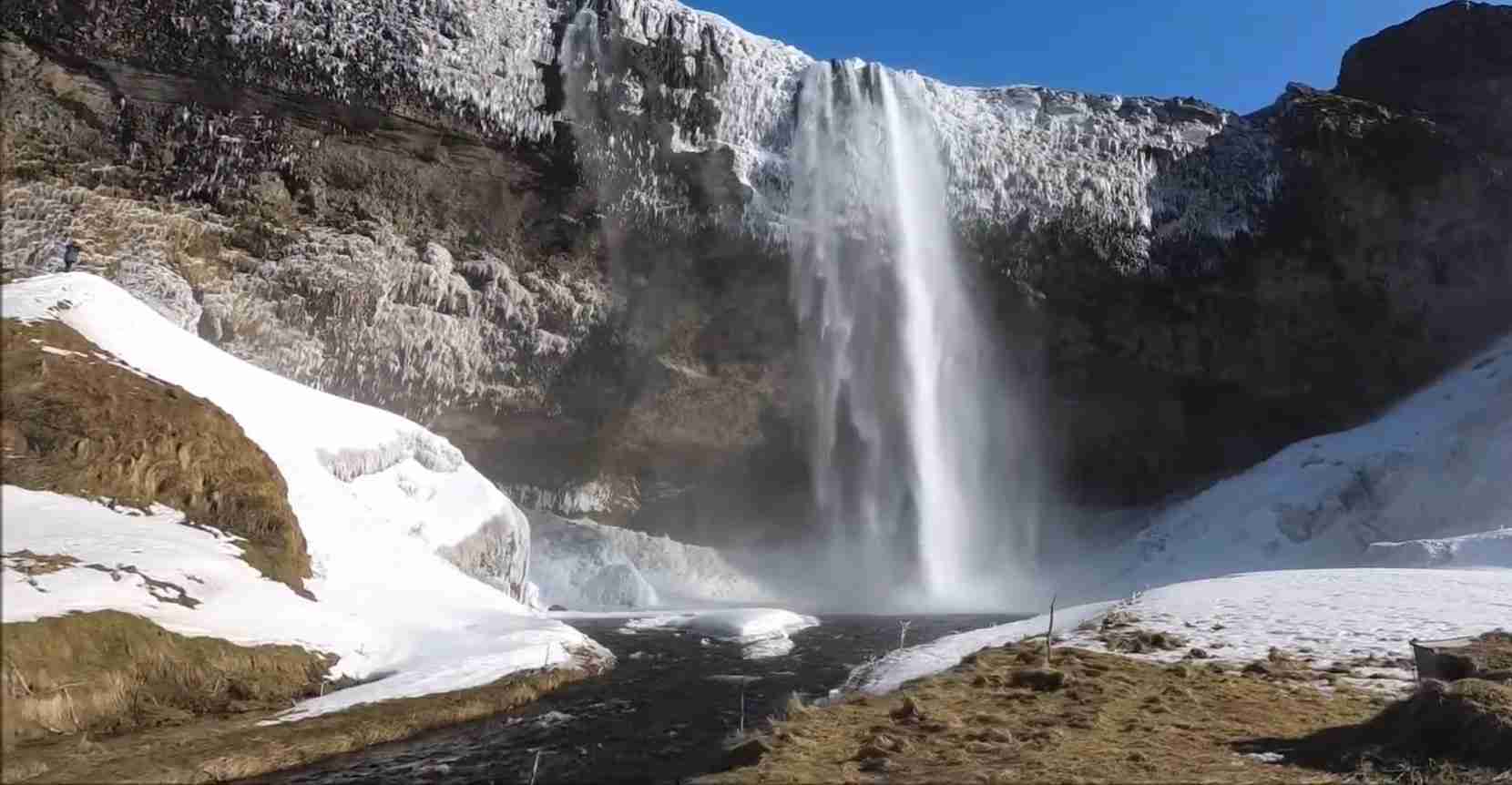
Iceland’s South Coast harbors two dramatic waterfalls separated by mere minutes of walking yet offering entirely different experiences. Seljalandsfoss cascades 60 meters from ancient coastal cliffs with a pathway circling behind the falling water, while Gljúfrabúi conceals its 40-meter plunge within a moss-covered canyon requiring stream wading to discover its hidden chamber.
Key Takeaways for Visiting Seljalandsfoss & Gljúfrabúi
- Dual Waterfall Experience: Seljalandsfoss and Gljúfrabúi sit 150-200 meters apart sharing the same parking area, making combined visits efficient and rewarding. Seljalandsfoss offers the rare walk-behind cascade experience with a maintained pathway circling completely around the 60-meter waterfall, while Gljúfrabúi delivers adventure through its concealed entrance requiring careful navigation through shallow streams into a narrow gorge revealing a 40-meter cascade within moss-draped canyon walls.
- Practical Access Information: Both waterfalls are located off Route 249 near the Ring Road (Route 1), approximately 120-130 kilometers east of Reykjavik requiring 1.5-2 hours driving time. Parking costs 1,000 ISK ($7-8) as a flat daily rate regardless of duration, payable at automated kiosks accepting credit cards only. The waterfalls themselves impose no entrance fees and maintain 24/7 accessibility year-round, though pathway conditions vary dramatically between seasons.
- Essential Waterproofing Requirements: Both locations generate substantial water spray making waterproof outerwear non-optional equipment. Seljalandsfoss’s behind-the-falls pathway exposes visitors to continuous mist requiring waterproof jackets, pants, and footwear with grip for slippery rocks. Gljúfrabúi demands waterproof boots or shoes capable of stream wading through ankle-deep cold water plus waterproof cases for cameras and phones protecting equipment from spray within the enclosed canyon chamber.
- Seasonal Pathway Variations: Summer months (May-September) provide full pathway access behind Seljalandsfoss and easier Gljúfrabúi canyon navigation with longer daylight hours (up to 20+ hours in June-July) and milder temperatures (8-14°C / 46-57°F). Winter transforms both locations into frozen spectacles with massive icicles forming on Seljalandsfoss’s cliff face and ice coating the behind-the-falls pathway making it frequently closed for safety, while Gljúfrabúi’s stream freezes creating treacherous footing requiring crampons or ice cleats.
- Photography Opportunities and Timing: Seljalandsfoss benefits from backlighting during afternoon and evening hours creating dramatic curtain-of-water effects, while nighttime floodlights illuminate the waterfall after dark enabling twilight photography and northern lights combinations during winter darkness. Gljúfrabúi’s canyon orientation produces filtered light beams penetrating the gorge entrance during midday creating ethereal atmosphere, with fewer crowds enabling longer photography sessions without visitor interruption common at Seljalandsfoss.
- Strategic Visit Planning: Early morning (before 9 AM) or late evening (after 7 PM) visits to Seljalandsfoss avoid peak tour bus crowds that concentrate 10 AM-6 PM during summer, though midnight sun conditions maintain perpetual photography-quality light. Gljúfrabúi receives 60-70% fewer visitors than Seljalandsfoss despite proximity due to most tourists skipping the additional 5-10 minute walk and stream-wading requirement, making any time relatively uncrowded compared to its famous neighbor.
People Also Ask About Seljalandsfoss & Gljúfrabúi Waterfalls
Can you walk behind Seljalandsfoss waterfall?
Seljalandsfoss features a maintained pathway allowing visitors to walk completely around and behind the 60-meter waterfall curtain, creating one of Iceland’s most distinctive waterfall experiences. The pathway begins at ground level behind the falls, following the cliff base through a cave-like space between the waterfall and rock wall before emerging on the opposite side. The entire circuit requires 10-15 minutes including photo stops, though pathway conditions determine accessibility. Summer provides reliable access with the pathway fully open, requiring only waterproof outerwear and footwear with grip for wet rocks. Winter ice formation frequently closes the behind-pathway section for safety as massive icicles form on the cliff face and ice coats the walking surface making navigation extremely dangerous. Spring melt (April-May) produces maximum water flow intensifying spray, while autumn (September-October) offers moderate conditions before winter closures begin.
How do you access Gljúfrabúi waterfall?
Accessing Gljúfrabúi requires walking 150-200 meters north from Seljalandsfoss parking area following a marked trail paralleling the cliff base for 5-10 minutes until reaching a narrow canyon entrance partially concealed by a large boulder called Franskanef. The waterfall hides entirely behind this rock formation with only the top visible from outside. Entering the canyon demands wading through the Gljúfurá stream flowing from the gorge—water typically runs ankle to calf-deep depending on season and recent precipitation. Visitors step carefully over and through stream-smoothed rocks into the narrow canyon opening just 1-2 meters wide, squeezing between moss-covered walls opening into a circular chamber approximately 10-15 meters across where the 40-meter waterfall plunges from an overhead opening in the rock ceiling. Waterproof boots or shoes are essential as avoiding stream contact proves impossible, while the canyon interior remains perpetually wet from spray coating all surfaces.
What is the best time to visit these waterfalls?
Late May through September provides optimal visiting conditions combining accessible pathways, manageable weather, extended daylight hours, and full waterfall flow from spring glacier melt. June and July offer midnight sun conditions with 20+ hours of daylight enabling visits at any hour including dramatic late-evening lighting when tour crowds dissipate, though these months also see peak tourist numbers. Early autumn (September-early October) delivers excellent value with substantially reduced crowds as tour season winds down, autumn colors enhancing landscapes, northern lights beginning to appear as darkness returns, and pathways remaining ice-free. Winter visits (November-March) create spectacular frozen scenes with icicles transforming both waterfalls into ice palaces and northern lights dancing overhead, though behind-Seljalandsfoss pathway typically closes and Gljúfrabúi’s stream freezes requiring specialized footwear. April and May represent shoulder season with unpredictable conditions—some days provide summer-like accessibility while others retain winter ice and limited services.
Are both waterfalls free to visit?
Both Seljalandsfoss and Gljúfrabúi impose no entrance fees—viewing and accessing the waterfalls costs nothing beyond parking. The 1,000 ISK ($7-8) parking fee applies regardless of which waterfall you visit or whether you visit both, as they share the same parking area with the fee valid for the entire day without time restrictions. This all-day validation allows visitors to depart and return within the same calendar day, enabling combinations like visiting Seljalandsfoss early morning, exploring other South Coast attractions during midday tour-bus hours, then returning for Gljúfrabúi photography during golden hour without additional payment. Parking payment occurs via automated kiosks at the lot accepting credit and debit cards exclusively—no cash accepted. The fee funds pathway maintenance, restroom facilities, signage, and environmental preservation efforts necessitated by the hundreds of thousands of annual visitors. Free parking existed historically 500 meters away at the old Big Puffin location off Route 1, though this requires 15-20 minutes additional walking each direction.
Extended multi-day tours – 5+ days
Featured Iceland Multi-Day Tour Packages
7 days
7 Day – Iceland Ring Road & Snæfellsnes Peninsula Small-Group Tour
- ✓ Comprehensive Iceland tour
- ✓ Expert local guides included
- ✓ All accommodation arranged
- ✓ Transportation provided
7 days
7-Day Small Group Journey Around Iceland with Premium Hotels
- ✓ Comprehensive Iceland tour
- ✓ Expert local guides included
- ✓ All accommodation arranged
- ✓ Transportation provided
5 days
5-Day Small Group Northern Lights Hunt & Glacier Lagoon Tour
- ✓ Comprehensive Iceland tour
- ✓ Expert local guides included
- ✓ All accommodation arranged
- ✓ Transportation provided
5 days
5 Days Land of Northern Lights
- ✓ Comprehensive Iceland tour
- ✓ Expert local guides included
- ✓ All accommodation arranged
- ✓ Transportation provided
Multi-day tour packages powered by TourRadar. Prices and availability subject to change.
Introduction: Understanding Seljalandsfoss & Gljúfrabúi’s Unique Geography
Seljalandsfoss and Gljúfrabúi occupy a geological transition zone where ancient coastal cliffs meet contemporary flatlands, revealing Iceland’s dramatic landscape evolution over millennia. These cliffs once marked Iceland’s southern shoreline before the island expanded seaward through volcanic activity and coastal deposition, leaving the waterfalls to plunge over what functioned as sea cliffs 10,000 years ago. The resulting topography creates nearly vertical 60-meter drops as glacial rivers tumble from highland plateaus onto lowland plains stretching to the present-day coast several kilometers south.
Both waterfalls originate from separate rivers fed by the Eyjafjallajökull glacier-volcano complex looming to the north. Seljalandsfoss receives water from the Seljalandsá River while Gljúfrabúi emerges from the smaller Gljúfurá River—both carrying glacier meltwater year-round maintaining consistent flow regardless of season. Eyjafjallajökull achieved global notoriety during its 2010 eruption that disrupted European air traffic for weeks, though the volcano’s primary contribution involves feeding these rivers with perpetual meltwater from its ice cap rather than periodic ash clouds.
The geographical proximity between waterfalls—mere 150-200 meters—creates visiting efficiency unmatched elsewhere in Iceland where major waterfalls typically separate by tens of kilometers. This concentration emerged from parallel river courses descending the same ancient cliff line through separate channels carved over thousands of years. Seljalandsfoss occupies an exposed position fully visible from Route 1 several kilometers away, while Gljúfrabúi hides behind a palagonite rock formation creating its canyon enclosure. This concealment explains why Seljalandsfoss achieved fame first while Gljúfrabúi remained a “secret waterfall” known primarily to locals until recent decades.
The Hamragarðar area surrounding both waterfalls encompasses agricultural land, camping facilities, and protected natural zones managed by Rangárþing eystra municipality. Historical farmsteads once operated throughout this region with Hamragarðar farm existing until abandonment in the mid-20th century. The Rangá Forestry Society acquired the land in 1962, later transferring ownership to the municipality for conservation and sustainable tourism management. This ownership structure enables coordinated facility development—parking lots, pathways, restrooms, signage—while protecting the natural environment from uncontrolled degradation under heavy visitation pressure.
Visitor numbers have increased exponentially over three decades as Iceland transformed from niche destination to mainstream tourism hotspot. Seljalandsfoss particularly experiences overcrowding during peak summer hours when multiple tour buses discharge passengers simultaneously creating bottlenecks on the behind-pathway circuit. Gljúfrabúi’s more challenging access naturally limits crowds to more adventurous travelers willing to wade streams and navigate unmarked canyon approaches. This visitor disparity creates contrasting experiences—Seljalandsfoss offers convenient accessibility at the cost of solitude, while Gljúfrabúi demands minor adventure rewarded with peaceful contemplation.
Understanding these geographical and practical contexts helps visitors plan strategically, managing expectations about crowds, allocating appropriate time for each waterfall, and preparing equipment suitable for the specific conditions encountered at each location. The following sections provide comprehensive guidance on accessing, experiencing, and photographing both waterfalls across all seasons while respecting environmental preservation efforts essential for maintaining these natural treasures.
Getting to Seljalandsfoss & Gljúfrabúi
Seljalandsfoss and Gljúfrabúi are located 120-130 kilometers east of Reykjavik along Iceland’s South Coast, accessible via the Ring Road (Route 1) with a short detour onto Route 249. Driving time from Reykjavik requires 1.5-2 hours under normal conditions, though winter weather, road work, or traffic congestion can extend this to 2.5-3 hours. The waterfalls sit between the towns of Hvolsvöllur (20 kilometers west) and Skógar (30 kilometers east), making them natural stops on South Coast itineraries combining multiple attractions along the coastal corridor.
From Reykjavik, follow Route 1 eastward passing through or bypassing the towns of Hveragerði, Selfoss, and Hella before reaching Hvolsvöllur where the Lava Centre volcano museum marks the halfway point. Continue east on Route 1 for approximately 15 additional minutes watching for Seljalandsfoss’s distinctive cascade visible from the highway several kilometers before the turnoff. The Route 249 junction appears clearly marked with brown tourism signs directing traffic toward the waterfall parking area. Turn left (north) onto Route 249 and drive 1 kilometer to reach the parking lot situated directly at the waterfall base.
The waterfalls are visible from Route 1 itself—Seljalandsfoss appears dramatically to the left (north) side of the highway while traveling eastbound, creating photo opportunities even without stopping though photography while driving remains dangerous and illegal. Gljúfrabúi remains invisible from the Ring Road, concealed entirely behind its rock formation despite sitting only 200 meters from Seljalandsfoss. First-time visitors often miss the Route 249 turnoff despite clear signage, requiring backtracking after passing—the junction sits immediately after crossing a bridge over the Markarfljót River when approaching from the west.
Public transportation serves the waterfalls through seasonal bus services connecting Reykjavik with South Coast attractions. Strætó operates Route 51 during summer months (typically June-September) with stops at Seljalandsfoss parking area, charging approximately 8,400 ISK ($65) one-way from Reykjavik with 2-3 hour travel time depending on intermediate stops. Private tour operators including Reykjavik Excursions and Gray Line run daily South Coast tours year-round incorporating Seljalandsfoss into multi-stop itineraries visiting Skógafoss, Reynisfjara black sand beach, and other attractions—these tours cost 15,000-22,000 ISK ($115-170) per person including hotel pickup, transportation, and guided commentary but limit waterfall visit time to 30-45 minutes.
Rental car travel provides maximum flexibility for waterfall visits, enabling early morning or late evening arrivals avoiding peak crowds and allowing unlimited time at each location. Standard two-wheel-drive vehicles access Route 249 and the parking area year-round as the road receives regular winter maintenance, though F-road designation is absent making summer-only 4×4 requirements unnecessary. Winter driving demands winter tires (mandatory by law November-April), cautious speed on potentially icy roads, and weather monitoring via road.is checking real-time conditions before departure.
The parking area accommodates approximately 100 vehicles including designated spaces for buses, campervans, and accessible parking near restroom facilities. Summer capacity regularly reaches maximum 10 AM-4 PM requiring overflow parking in adjacent fields managed by landowners. Arriving before 9 AM or after 6 PM typically ensures immediate parking availability. Automated payment kiosks stand at the parking lot entrance accepting credit and debit cards exclusively charging the flat 1,000 ISK ($7-8) daily rate—payment receipt must display on vehicle dashboards with periodic enforcement checks issuing fines for non-payment. The kiosk interface offers English language options alongside Icelandic, providing clear payment instructions and receipt printing.
Alternative free parking exists approximately 500 meters away at the former Big Puffin café location directly off Route 1 at the Route 249 junction. This dirt area offers unpaved parking without facilities, requiring 15-20 minute walks each direction to reach Seljalandsfoss. Budget-conscious travelers or those visiting during peak parking lot congestion utilize this option, though the modest parking fee and convenience of proximity generally justify the 1,000 ISK cost for most visitors. The paid lot also provides restroom access, café services, and gift shop facilities absent from the free alternative.
Exploring Seljalandsfoss Waterfall
Seljalandsfoss’s defining characteristic involves the unique ability to walk completely around and behind the 60-meter waterfall curtain, enabled by the recessed cliff creating a cave-like space between falling water and rock wall. This walk-behind pathway measures approximately 100 meters forming a semicircular route from the waterfall’s right side (when facing from front) around the back emerging on the left side. The pathway consists of maintained gravel and rock surfaces with occasional steps navigating uneven terrain, though ice, water, and moss create perpetually slippery conditions demanding careful footing and appropriate footwear.
Approaching the waterfall from the parking area requires just 2-3 minutes walking across flat grassland on a well-trodden path wide enough for wheelchair access to the waterfall base (though the behind-pathway itself contains steps and uneven surfaces making it inaccessible for wheelchairs or strollers). Informational signage near the base provides historical and geological context in English and Icelandic while warning signs indicate when winter ice closes the behind-pathway section—respect these closures as ice and icicles create serious injury and death risks from falls and falling ice.
Walking behind Seljalandsfoss delivers multisensory immersion—the thundering roar of 60 meters of water plunging mere meters away, the perpetual mist coating all exposed surfaces, the rainbow formations when sunlight penetrates the spray, and the unique perspective looking outward through the water curtain toward the coastal plain and distant ocean. Photography requires waterproof camera protection as spray saturates the air continuously. Most visitors spend 10-20 minutes completing the circuit with photo stops, though photography enthusiasts may linger 30-45 minutes capturing various angles and light conditions.
The best viewpoints for photography include the standard frontal perspective from the approach path showing the complete waterfall with surrounding landscape, the behind-perspective looking outward through the falling water with backlighting creating silhouette effects, and elevated positions from the small hill to the waterfall’s left offering wider landscape compositions incorporating the waterfall as foreground element with Eyjafjallajökull glacier visible on clear days. Sunrise and sunset provide golden-hour lighting though Iceland’s midnight sun (May-August) maintains photography-quality light nearly 24 hours enabling flexible timing.
Nighttime illumination transforms Seljalandsfoss after dark with powerful floodlights mounted on the cliff face illuminating the waterfall from sunset until sunrise. These lights enable year-round evening photography including northern lights combinations during aurora season (September-April) when Seljalandsfoss serves as a dramatic foreground element for aurora compositions. The waterfall’s visibility from Route 1 means travelers passing after dark see the illuminated cascade from kilometers away creating a beacon effect drawing visitors even during late hours.
Summer flow increases notably during warm periods when daytime glacier melt peaks, with maximum volume typically occurring June-August producing the most powerful curtain effect. Winter reduces flow somewhat as cold temperatures slow glacier melting, though Seljalandsfoss maintains year-round discharge preventing the waterfall from freezing completely. Instead, ice accumulates on the cliff face and surrounding surfaces creating massive icicles hanging from the cliff top and coating vegetation with thick ice layers transforming the scene into a frozen wonderland dramatically different from summer greenery.
The immediate area surrounding Seljalandsfoss includes picnic tables, stone seating areas, and pathways connecting to Gljúfrabúi and the Hamragarðar camping area. Facilities near the parking lot provide public restrooms (free with parking payment), a small café selling sandwiches, pastries, coffee, and snacks at typical Icelandic prices (1,200-2,400 ISK / $9-18 per item), and a gift shop offering Iceland-themed souvenirs, postcards, and photography books. These facilities operate year-round though with reduced hours November-April when visitor numbers decrease.
Discovering Gljúfrabúi Hidden Waterfall
Gljúfrabúi’s name translates directly to “canyon dweller” or “one who lives in the gorge,” perfectly describing this waterfall’s concealed existence within a narrow canyon invisible until entering the gorge itself. Finding Gljúfrabúi requires walking 150-200 meters north from Seljalandsfoss following a marked footpath along the cliff base for 5-10 minutes until spotting the stream flowing from a narrow canyon opening partially blocked by the large boulder Franskanef. Most casual visitors miss Gljúfrabúi entirely, walking only to Seljalandsfoss before returning to vehicles, making the hidden waterfall substantially less crowded despite identical parking area access.
The approach trail to Gljúfrabúi follows relatively flat terrain through grassland and occasional birch scrub, clearly visible as a worn path created by thousands of previous visitors though lacking the maintained gravel surface of Seljalandsfoss’s primary pathway. Small cairns and footpath wear provide directional guidance, while the sound of falling water audible from 50 meters away confirms correct navigation. The final approach reaches the Gljúfurá stream flowing from the canyon entrance—this stream must be waded as no bridge or stepping stones provide dry crossing.
Wading into Gljúfrabúi canyon requires waterproof footwear or acceptance of wet feet as the stream runs continuously ankle to calf-deep depending on recent precipitation and seasonal melt rates. Summer typically produces calf-deep water while spring melt may reach knee-deep levels. The streambed consists of smooth rounded stones providing treacherous footing—take time with each step, use trekking poles if available for balance, and move deliberately rather than rushing. The water originates from glacier melt making it exceptionally cold (typically 2-6°C / 36-43°F year-round) causing rapid numbness in feet without waterproof insulation.
The canyon entrance appears as a narrow cleft barely 1-2 meters wide, requiring single-file passage and slight crouching for taller individuals. This tight entrance creates psychological hesitation for some visitors who turn back rather than squeezing through, contributing to Gljúfrabúi’s relative seclusion. Once through the entrance constriction, the passage opens into a circular chamber approximately 10-15 meters in diameter surrounded by sheer moss-covered cliff walls rising 40+ meters vertically. The waterfall plunges from an opening in the rock ceiling creating a roof-like overhang, with spray filling the enclosed space creating perpetual mist that coats all surfaces.
Photography within Gljúfrabúi’s canyon presents unique challenges and opportunities. The enclosed space traps spray creating extremely high humidity that fogs camera lenses continuously—bring lens cloths for constant wiping and use waterproof camera housings or cases. Wide-angle lenses (16-35mm) work best capturing both waterfall and surrounding canyon walls in the confined space, while the moss-covered rocks and filtered light beams penetrating the canyon entrance create ethereal atmospheres particularly dramatic during midday when direct sunlight occasionally reaches the chamber floor.
The canyon floor provides limited standing space as the waterfall plunge pool occupies much of the chamber bottom, requiring visitors to position carefully on the rocky perimeter avoiding the deepest water while maintaining safe distance from potential rockfall from the canyon walls. Spend 10-20 minutes inside the canyon allowing time for eyes to adjust to reduced light levels, lenses to defog repeatedly, and experimentation with various photographic compositions. Most visitors find the intimate scale and mystical atmosphere warrant 15-30 minutes total at Gljúfrabúi including approach, canyon exploration, and photography.
Alternative viewing of Gljúfrabúi exists from outside the canyon entrance where the waterfall’s top remains visible between rock walls, though this external perspective misses the immersive experience that defines Gljúfrabúi’s appeal. Visitors uncomfortable with stream wading, uncertain footing, or confined spaces should view from outside rather than forcing uncomfortable canyon entry—the choice remains entirely personal with no judgment attached to either decision. Families with young children often have adults take turns entering the canyon while others supervise children outside, rotating until all interested adults experience the interior.
Legends and folklore surround Gljúfrabúi with local traditions claiming the cliff walls and particularly the boulder Franskanef served as residences for huldufólk (hidden people or elves) in Icelandic mythology. An old bath basin exists below Franskanef with a small cave called Ömpuhellir (hermit’s cave) at the basin’s inner end, named for a woman who supposedly lived there as a hermit in centuries past. These stories add cultural depth to the geological formations, connecting the landscape with Iceland’s rich folklore traditions that persist in contemporary culture.
Seasonal Visiting Conditions and Considerations
Summer (June-August) provides optimal accessibility with both waterfalls fully accessible, pathways ice-free, extended daylight hours enabling visits during any hour including midnight sun photography, and milder temperatures (8-14°C / 46-57°F) reducing hypothermia risks from wet clothing. Maximum tourist crowds concentrate during these months particularly July when tour buses arrive continuously 10 AM-6 PM creating bottlenecks on Seljalandsfoss’s behind-pathway circuit. Gljúfrabúi’s stream runs higher during summer melt potentially reaching knee-deep levels demanding careful wading, while vegetation reaches maximum lushness creating vibrant green mosses coating canyon walls.
Early summer (May-early June) represents transition from spring with increasing daylight, warming temperatures, and tourist season ramping up gradually. Late spring glacier melt produces maximum waterfall volume with both Seljalandsfoss and Gljúfrabúi flowing most powerfully, creating dramatic spray and thunderous roar but also more intense wetness requiring thorough waterproofing. Seljalandsfoss’s behind-pathway typically reopens May after winter ice clears, though late season snowstorms can temporarily reclose access. Gljúfrabúi’s stream may run particularly high and cold combining glacier melt with snowpack drainage making wading more challenging than midsummer conditions.
Autumn (September-October) delivers excellent value with substantially reduced crowds as peak tour season ends, autumn colors adding golden and red tones to surrounding vegetation, and northern lights beginning to appear as darkness returns after summer’s midnight sun. September maintains relatively mild temperatures and accessible pathways, while October introduces increasing cold, reduced daylight hours, and potential for early season snow. Waterfall flow moderates from summer peaks but remains substantial, while weather becomes increasingly unpredictable with storms rolling off the Atlantic bringing wind, rain, and dramatic cloud formations creating atmospheric photography conditions.
Winter (November-March) transforms both waterfalls into frozen spectacles with massive icicles forming on Seljalandsfoss’s cliff face creating a curtain of ice alongside the water curtain, and ice coating all surfaces around both waterfalls. Seljalandsfoss’s behind-pathway typically closes for safety during winter months as ice accumulation on the path creates lethal slipping hazards and large icicles hanging from the cliff pose falling-ice dangers capable of causing serious injury or death. When the pathway closes (indicated by clear signage), visitors view Seljalandsfoss only from the frontal approach—attempting to access the closed pathway risks personal injury and legal consequences from violating safety closures.
Gljúfrabúi becomes significantly more challenging during winter as the stream freezes creating ice-covered rocks in the streambed and canyon floor requiring crampons or ice cleats for safe navigation. Some winter days feature completely frozen stream surfaces appearing safe but concealing running water beneath thin ice that breaks under foot, potentially causing falls into frigid water. Winter visits to Gljúfrabúi demand experienced winter hiking skills, appropriate equipment including ice traction devices, and careful judgment about whether conditions permit safe entry. Many winter visitors photograph Gljúfrabúi from outside the canyon entrance rather than attempting the frozen stream crossing.
Northern lights (aurora borealis) appear regularly September-April when darkness returns to Icelandic skies, with Seljalandsfoss providing a dramatic foreground element for aurora photography. The waterfall’s nighttime illumination creates a lit foreground while northern lights dance overhead, requiring long exposure photography techniques and tripods for stable camera mounting. Successful aurora photography demands clear skies (checking weather forecasts via vedur.is), adequate aurora activity (checking aurora forecasts showing KP index), and darkness (impossible during May-August midnight sun months). Patience remains essential as northern lights appear unpredictably requiring potential hours of waiting in cold conditions for aurora displays.
Weather variability affects visits year-round with Iceland’s notorious weather changes occurring within hours regardless of season. Clear morning conditions transform into rain, wind, or even snow by afternoon, while forecast predictions hold limited accuracy beyond 24-48 hours. Check weather immediately before departing Reykjavik via vedur.is or the Vedur app providing regularly updated forecasts including wind speed predictions critical for South Coast travel where coastal winds frequently exceed 20 meters per second (45 mph) creating dangerous driving conditions and making outdoor activity unpleasant. Wind particularly affects Seljalandsfoss where strong gusts blow spray horizontally soaking visitors from unexpected directions.
Photography Guide for Both Waterfalls
Photographing Seljalandsfoss successfully requires understanding lighting conditions throughout the day and protecting equipment from perpetual spray. The waterfall faces southeast meaning afternoon and evening hours provide backlighting creating dramatic effects when shooting through the water curtain from behind the falls. Morning frontlighting illuminates the waterfall face directly producing less atmospheric results than afternoon backlighting. Midday overhead sun creates harsh shadows generally less flattering than morning or evening golden-hour lighting, though Iceland’s high latitude means the sun never reaches directly overhead even in summer creating perpetually angled light beneficial for photography.
Wide-angle lenses (16-35mm) prove most useful capturing the complete waterfall and surrounding landscape context, while the behind-pathway perspective benefits from ultra-wide angles (14-16mm) encompassing both the waterfall curtain and the landscape view through the water. Telephoto lenses (70-200mm) compress perspective isolating waterfall details and creating abstract compositions focusing on water patterns and surrounding ice or vegetation. Tripods enable long exposures smoothing water into silky flows (typically 1-2 second exposures) though the spray and wind make tripod stability challenging requiring weighted tripod bags or careful positioning in sheltered spots.
Waterproof camera protection reaches critical importance at both waterfalls as spray saturates the air continuously. Options include waterproof camera housings (expensive but fully protective), rain sleeves covering camera and lens (affordable and effective), or simply shooting quickly then retreating to wipe equipment repeatedly (least protective but workable for brief sessions). Microfiber cloths in waterproof bags enable continuous lens wiping as spray accumulates constantly. Silica gel packets in camera bags absorb moisture preventing internal condensation when bringing cold equipment into warm vehicles or accommodations.
Gljúfrabúi presents distinct photography challenges from its canyon confinement and extreme moisture. Wide-angle lenses become essential in the 10-15 meter chamber where backing up sufficiently to fit the complete scene with normal focal lengths proves impossible. The filtered light entering through the canyon opening creates dramatic beams when positioned correctly, particularly during midday hours when sunlight occasionally penetrates to the chamber floor creating spotlight effects on the moss-covered walls and falling water. Long exposures (2-4 seconds) smooth the waterfall into flowing silk while shorter exposures (1/250 second or faster) freeze individual water droplets creating very different aesthetic results from the same scene.
The moss-covered rocks within Gljúfrabúi’s canyon photograph most effectively when including the vibrant green coloration as foreground elements leading the eye toward the waterfall behind. Experiment with various angles and positions within the limited chamber space, moving rocks carefully for footing while respecting the fragile moss coverage that took decades or centuries to develop. The intimate scale allows including human figures for scale reference showing the waterfall’s height and canyon dimensions—coordinate with travel companions to position in frame during exposures.
Sunset photography at Seljalandsfoss creates silhouette opportunities when shooting toward the setting sun through the waterfall from behind the falls, creating dramatic outlines of the water curtain and any people positioned strategically. Summer sunsets occur extremely late (near midnight in June-July) requiring patience and potentially overnight accommodation nearby, while winter sunsets happen mid-afternoon (4 PM in December) enabling sunset photography without extended evening commitments. The waterfall’s nighttime illumination maintains photography potential after dark year-round, though northern lights combinations require September-April aurora season darkness.
Drone photography (if legally permitted—check current regulations as rules change frequently) provides unique aerial perspectives showing both waterfalls’ relationship to surrounding landscapes, the ancient cliff line extending for kilometers, and the contrast between highland and lowland topography. However, high winds common along the South Coast create dangerous drone flying conditions with gusts capable of overwhelming smaller consumer drones. Additionally, the waterfalls’ popularity means many people concentrate in the area creating safety concerns about drones flying overhead above crowds—responsible drone operation demands careful safety assessment before launching.
Essential Equipment and Preparation
Waterproof outerwear constitutes non-optional equipment for visiting either waterfall successfully. Waterproof rain jacket and pants protect from spray that permeates ordinary water-resistant clothing within seconds of exposure. The behind-Seljalandsfoss pathway exposes visitors to continuous mist for 10-15 minutes creating conditions similar to standing in moderate rainfall, while Gljúfrabúi’s canyon interior saturates clothing from all directions as spray bounces off walls in the enclosed space. Avoid cotton fabrics that retain water and chill when wet—choose synthetic or merino wool materials that maintain warmth and dry faster.
Footwear demands waterproof hiking boots with aggressive tread providing grip on slippery rocks, or waterproof walking shoes as minimum acceptable standard. Gljúfrabúi specifically requires boots or shoes capable of stream wading without water penetration—rubber boots (wellies) work excellently if available, though most travelers lack these in typical luggage. Breaking in hiking boots before Iceland arrival prevents blisters from developing during waterfall walks when stiff new boots rub against feet over kilometers of walking. Winter visits require boots compatible with ice cleats or crampons that attach to boot soles providing traction on ice-covered surfaces.
Camera protection ranges from professional waterproof housings costing hundreds of dollars to simple plastic rain sleeves costing under 20 dollars—both protect equipment adequately with the primary difference being durability and ease of use. Bring multiple microfiber cloths stored in waterproof bags (ziplock bags work perfectly) enabling constant lens wiping as spray accumulates. Phones require waterproof cases rather than relying on water-resistant ratings that fail under prolonged spray exposure—many visitors ruin phones by shooting video behind Seljalandsfoss without adequate protection.
Layered clothing enables temperature regulation as conditions change throughout the day and between locations. Base layers (synthetic or merino wool) wick moisture away from skin, mid-layers (fleece or lightweight down) provide insulation, and waterproof outer shells block wind and rain. Bring more layers than initially seem necessary as Iceland’s weather changes rapidly and the temperature difference between Reykjavik and South Coast locations can exceed 10°C (18°F) with coastal winds creating significant wind chill. Waterproof gloves protect hands while allowing camera operation, while warm hats prevent heat loss from heads particularly during extended photography sessions.
Backpacks or daypacks (20-30 liters) carry extra layers, water, snacks, camera equipment, and personal items during waterfall exploration. Waterproof backpack covers or dry bags protect contents from spray particularly when spending extended time behind Seljalandsfoss or within Gljúfrabúi’s canyon. Water bottles remain useful despite the cold as walking and exploration create thirst—Iceland’s exceptional tap water means filling bottles at accommodations before departure rather than purchasing bottled water. Energy bars, nuts, or similar portable snacks provide convenient energy during multi-hour waterfall visits without requiring return trips to vehicles.
First aid supplies including blister treatment, pain relievers, and basic wound care prove valuable given the wet, slippery conditions creating injury risks from falls on rocks. Trekking poles assist balance particularly for Gljúfrabúi’s stream wading and anyone with knee problems or balance concerns navigating uneven wet terrain. Headlamps or flashlights enable evening or early morning visits though Seljalandsfoss’s nighttime illumination typically provides adequate light for safe pathway navigation even after full darkness.
Nearby Attractions and Extended Itinerary Planning
Skógafoss waterfall sits 30 kilometers east of Seljalandsfoss requiring 20-30 minutes driving via Route 1, making combined visits efficient for travelers exploring South Coast attractions. Skógafoss drops 60 meters identical to Seljalandsfoss but features a much wider curtain measuring 25 meters across creating a powerful wall of water rather than Seljalandsfoss’s narrower stream. Unlike Seljalandsfoss, Skógafoss cannot be walked behind, but a staircase with 527 steps climbs to the waterfall top providing elevated views across the coastal plain. Skógafoss introduced parking fees in May 2025 charging 1,000 ISK ($7-8) similar to Seljalandsfoss, with separate payment required at each location.
Reynisfjara black sand beach lies 60 kilometers east requiring 45-60 minutes driving, famous for basalt column cliffs, powerful waves, and the Reynisdrangar sea stacks offshore. This beach demands extreme caution as sneaker waves—unexpectedly large waves arriving without warning—have killed multiple tourists in recent years by sweeping them into the frigid ocean with no survival possibility. Never turn your back on the ocean, stay far from the waterline, and heed all warning signs about wave dangers. Dyrhólaey promontory nearby provides elevated views of Reynisfjara with puffin colonies nesting on cliffs May-August enabling puffin viewing from safe distances.
The Eyjafjallajökull Visitor Centre operates in Hvolsvöllur 20 kilometers west documenting the 2010 volcanic eruption that disrupted European air traffic and covering the glacier-volcano’s geological significance. Admission costs 2,200 ISK ($17) with exhibits including video presentations, photographs, and artifacts from the eruption period. The center provides context for understanding how Eyjafjallajökull feeds both Seljalandsfoss and Gljúfrabúi through glacier meltwater, connecting the waterfalls to the broader volcanic and glacial systems defining Icelandic geology.
Þórsmörk valley lies 50 kilometers north into the highlands accessible only via 4×4 vehicles capable of fording rivers, offering hiking trails between glaciers with dramatic mountain scenery. Day tours from Reykjavik cost 18,000-25,000 ISK ($140-195) per person including super-jeep transportation and guided hiking, though self-driving requires rental 4×4 vehicles specifically equipped and insured for F-road travel with river crossings. Þórsmörk combines well with Seljalandsfoss visits for travelers with full days available and interest in highland exploration beyond coastal waterfall viewing.
The Lava Centre museum in Hvolsvöllur provides interactive exhibits on Icelandic volcanology, earthquakes, and geothermal systems through high-tech displays explaining the geological processes creating Iceland’s dynamic landscape. Admission costs 3,900 ISK ($30) for adults with family rates available. The museum operates year-round with extended summer hours, making it an excellent educational supplement to waterfall visits particularly during poor weather when outdoor activities become unpleasant. Allow 1-2 hours for thorough museum exploration including the earthquake simulator and volcano cinema.
Accommodation options near the waterfalls range from the Hamragarðar campground situated directly between Seljalandsfoss and Gljúfrabúi, to hotels and guesthouses in nearby towns. Hamragarðar camping charges 2,000-2,500 ISK ($15-19) per person providing basic facilities including hot showers, cooking areas, and laundry, open May-September with advance booking recommended July-August. Hvolsvöllur hotels like Hotel Hvolsvöllur and Guesthouse Árhús offer comfortable mid-range accommodation 13,000-19,500 ISK ($100-150) per night, while budget options include hostels and farm stays throughout the region.
Multi-day South Coast itineraries commonly combine Seljalandsfoss, Skógafoss, Reynisfjara, Vík, and Jökulsárlón glacier lagoon (300 kilometers east requiring 3-4 hours driving from Seljalandsfoss) spreading visits over 2-3 days with overnight stays in Vík, Kirkjubæjarklaustur, or near Jökulsárlón. This extended itinerary showcases South Coast diversity from waterfalls to glaciers, black sand beaches to ice lagoons, creating comprehensive Iceland experiences beyond single-day excursions from Reykjavik.
Environmental Responsibility and Preservation
The introduction of parking fees at Seljalandsfoss in 2017 reflected growing concerns about infrastructure degradation from visitor numbers exceeding hundreds of thousands annually without funding sources for pathway maintenance, restroom facilities, or environmental protection. The 1,000 ISK ($7-8) fee directly funds these maintenance activities preventing the natural environment from deteriorating under heavy foot traffic that erodes soil, damages vegetation, and creates unsustainable waste management challenges. Similar fees now apply across many Icelandic natural attractions balancing tourism revenue with preservation costs.
Stay on marked pathways at both waterfalls avoiding shortcuts across vegetation that destroy fragile plant coverage requiring decades to regenerate in Iceland’s harsh climate. The moss coating Gljúfrabúi’s canyon walls developed over centuries creating the distinctive green appearance that defines the location’s appeal—avoid touching or stepping on moss as human contact damages this slow-growing vegetation permanently. Trampled moss turns brown and dies taking years or decades to recover if recovery occurs at all in heavily trafficked areas.
Pack out all trash including organic waste like banana peels and apple cores that decompose slowly in Iceland’s cold climate compared to warmer regions where these items break down within weeks. Use designated trash receptacles near parking areas rather than leaving any items near the waterfalls themselves. Human waste belongs exclusively in restroom facilities never in natural areas—use the public restrooms provided near the parking lot before waterfall visits preventing environmental contamination from inappropriate toilet practices.
The pathway behind Seljalandsfoss formerly extended further up the hillside enabling access to the cliff top above the waterfall, but this upper pathway suffered severe erosion damage from visitor traffic and closed permanently to allow vegetation recovery. Respect pathway closures indicated by signs and barriers as these protect both visitor safety and environmental integrity. Entering closed areas creates additional erosion damage, disturbs recovering vegetation, and potentially results in injury from unstable terrain or rockfall hazards that necessitated the original closure.
Photography often tempts visitors to position creatively including walking on vegetation, moving rocks, or accessing dangerous areas for unique angles. Resist these temptations prioritizing environmental protection and personal safety over photographic ambition. Millions of previous visitors have captured beautiful waterfall images from standard viewpoints—your photographs need not be entirely unique to be valuable memories. Respect barriers, heed warning signs, and accept that some compositions remain impossible without unacceptable environmental or safety costs.
Wildlife in the waterfall vicinity includes bird species nesting in cliff faces and small mammals inhabiting surrounding grasslands. Maintain appropriate distance from any wildlife encountered never feeding, approaching closely, or attempting to touch wild animals. Nesting birds particularly deserve protection from disturbance during breeding season (May-July) when human proximity can cause nest abandonment leading to chick mortality. Binoculars enable wildlife observation from respectful distances preserving natural behaviors without interference.
Frequently Asked Questions About Seljalandsfoss & Gljúfrabúi
How much time should I allocate for visiting both waterfalls?
Plan 1.5-2 hours minimum for visiting both Seljalandsfoss and Gljúfrabúi allowing adequate time for walking the behind-Seljalandsfoss pathway (15-20 minutes), hiking to Gljúfrabúi (5-10 minutes each direction), entering and exploring Gljúfrabúi’s canyon (15-20 minutes), and photography at both locations. This timing assumes moderate crowds enabling relatively uninterrupted pathway access rather than bottleneck delays common during peak summer hours when tour buses discharge passengers simultaneously. Photography enthusiasts or visitors arriving during optimal lighting conditions often spend 2-3 hours total capturing various compositions and waiting for ideal light. Conversely, rushed visitors on tight multi-attraction itineraries sometimes complete both waterfalls in under an hour though this allows minimal photography and exploration time. The parking fee covers all-day access enabling departure and return later if desired without additional payment, making split visits feasible for those wanting to photograph both morning and evening light conditions.
Can children visit Gljúfrabúi safely?
Children can visit Gljúfrabúi with appropriate adult supervision, preparation, and realistic assessment of individual children’s abilities regarding stream wading and navigating slippery rocks. Older children (typically ages 8+) with hiking experience and comfortable in water generally handle Gljúfrabúi successfully when equipped with proper waterproof footwear and accompanied by attentive adults. Younger children or those uncertain with water crossings and uneven footing may find Gljúfrabúi stressful rather than enjoyable—parents know their children’s capabilities best and should make honest assessments rather than forcing uncomfortable situations. The stream depth (typically ankle to calf-deep) poses drowning risks for small children if they slip and fall face-down in moving water, while the cold temperature causes rapid chilling particularly for children with less body mass than adults. Many families successfully visit Gljúfrabúi with children by having one parent enter the canyon with older/confident children while another parent remains outside with younger/hesitant children, rotating if desired so all interested adults experience the interior. This approach prevents pressuring uncomfortable children while enabling family members wanting the canyon experience to enjoy it safely.
Is swimming allowed at either waterfall?
Swimming is not recommended at either Seljalandsfoss or Gljúfrabúi due to extremely cold water temperatures (typically 2-6°C / 36-43°F year-round), strong currents in plunge pools created by falling water, and depth variations creating drowning hazards particularly in Seljalandsfoss’s larger pool. The glacier meltwater feeding both waterfalls maintains near-freezing temperatures regardless of air temperature or season, causing rapid hypothermia within minutes of immersion. The force of 60 meters of falling water hitting Seljalandsfoss’s plunge pool creates powerful currents capable of pulling swimmers underwater and pinning them against rocks or the waterfall base where escape becomes impossible. Additionally, no lifeguard services, rescue equipment, or emergency medical care exists on-site making any swimming accident potentially fatal before help arrives from distant towns. While some adventurous travelers wade briefly in shallow edges of plunge pools during summer, full swimming or deliberate immersion presents unjustifiable risks offering no meaningful reward beyond social media content. Iceland offers numerous safe geothermal swimming opportunities at developed pools and hot springs—reserve swimming for those controlled environments rather than wild waterfalls.
What happens if the behind-Seljalandsfoss pathway is closed?
Winter ice regularly closes Seljalandsfoss’s behind-pathway from approximately November through April depending on weather conditions and ice formation intensity each season. When closed, clear signage indicates the closure at the pathway entrance and barriers physically block access. Visitors still enjoy Seljalandsfoss from frontal viewpoints which provide excellent photography opportunities showing the complete waterfall and surrounding landscape without the behind-perspective unique angle. The waterfall remains impressive and worth visiting even without pathway access as the 60-meter drop, powerful flow, and scenic setting create rewarding experiences independent of the walk-behind feature. If the behind-pathway experience specifically motivates your visit, plan travel during May-September when pathways typically remain open, though verify current conditions via recent online reviews or by calling nearby accommodations for real-time status reports if visiting during shoulder season months when conditions prove unpredictable. Never attempt accessing closed pathways as ice creates lethal slipping hazards and falling icicles from the cliff above present serious injury or death risks—multiple people have died violating pathway closures at Icelandic waterfalls over recent decades demonstrating these warnings reflect real dangers rather than excessive caution.
Are there restaurants or services near the waterfalls?
The Seljalandsfoss parking area includes a small café selling sandwiches, pastries, coffee, hot chocolate, and basic meals at typical Icelandic tourist prices (1,200-2,400 ISK / $9-18 for sandwiches, 600-900 ISK / $5-7 for coffee) operating year-round though with reduced winter hours. This café provides the closest food service directly at the waterfall site along with a gift shop selling Iceland-themed souvenirs, postcards, books, and photography prints. Hvolsvöllur town 20 kilometers west offers full restaurant options including the Lava Centre museum café, N1 gas station with convenience store and hot food counter, and several sit-down restaurants serving Icelandic and international cuisine. Skógar village 30 kilometers east provides similar services near Skógafoss waterfall including the Skógafoss Bistro and hotel restaurants. Plan meal timing strategically as South Coast distances between services can span 20-30 kilometers requiring advance preparation rather than expecting convenient food access everywhere. Bringing snacks and water from Reykjavik or previous stops ensures adequate nutrition during multi-hour waterfall visits without depending on the limited and relatively expensive on-site café.
Can I camp near the waterfalls?
The Hamragarðar campground sits directly between Seljalandsfoss and Gljúfrabúi providing convenient camping facilities within 5-minute walk of both waterfalls. The campground operates May-September charging 2,000-2,500 ISK ($15-19) per person per night including access to hot showers, cooking facilities with stoves and counters, dishwashing stations, tables, laundry service, and clean restrooms. This represents one of Iceland’s most scenically positioned campgrounds offering waterfall proximity enabling early morning and late evening photography sessions avoiding day-visitor crowds. Advance booking proves advisable during July-August when the campground fills regularly, while May, June, and September typically maintain availability for walk-up campers. Wild camping (parking and sleeping in vehicles or tents outside designated campgrounds) is prohibited throughout the South Coast region with enforcement including fines for violators—always use designated campgrounds rather than attempting free camping in parking lots or roadside pull-offs. The campground popularity stems from strategic positioning for South Coast exploration enabling single-base operations visiting Seljalandsfoss, Skógafoss, Reynisfjara, and other attractions as day trips from the same overnight location.
How accessible are the waterfalls for visitors with mobility limitations?
Seljalandsfoss offers partial accessibility with the approach path from parking to the waterfall base being relatively flat, wide, and suitable for wheelchairs or walkers enabling close views of the waterfall from frontal perspectives. However, the behind-waterfall pathway contains steps, uneven surfaces, and narrow sections making it inaccessible for wheelchairs, walkers, or anyone with significant mobility limitations. Visitors unable to complete the behind-pathway circuit still enjoy rewarding Seljalandsfoss visits from accessible viewing areas near the base showing the complete waterfall and enabling photography opportunities. Gljúfrabúi presents accessibility challenges for anyone with mobility limitations due to the 5-10 minute walk from parking over uneven terrain, stream wading requiring balance and stable footing, and the confined canyon interior with slippery rocks. Wheelchair access to Gljúfrabúi proves impossible given these physical barriers. Visitors with mobility limitations planning South Coast visits should prioritize Seljalandsfoss for waterfall experiences while accepting Gljúfrabúi likely remains inaccessible—Skógafoss 30 kilometers east provides another accessible waterfall viewable from level ground with paved pathways though climbing to the top requires stairs unsuitable for mobility limitations.
What wildlife might I encounter at the waterfalls?
Bird species inhabit the cliff faces and surrounding grasslands including common ravens, Arctic terns (May-August), wheatears, and various gull species. Arctic terns nest on the ground creating territorial behavior during breeding season when they aggressively defend nesting areas by dive-bombing perceived threats including humans walking too close to nests—give nesting birds wide berth avoiding areas where terns demonstrate defensive behavior. The cliffs occasionally host nesting seabirds though not in the large colonies seen at dedicated seabird cliffs elsewhere in Iceland. Small mammals including Arctic foxes inhabit the region though sightings prove rare as these animals avoid human activity concentrating in less-disturbed areas. Sheep graze the farmland surrounding the waterfalls particularly during summer months creating pastoral scenes but requiring caution as rams can demonstrate aggressive behavior if approached—maintain respectful distance from all livestock. The rivers support minimal fish populations due to the cold glacier-fed water and waterfall barriers preventing fish migration, though brown trout exist in downstream sections beyond the waterfalls. Overall, wildlife encounters remain limited compared to dedicated wildlife viewing locations, with most visitors seeing only common bird species during waterfall visits.
Can I fly a drone at Seljalandsfoss or Gljúfrabúi?
Drone regulations in Iceland require checking current rules via the Icelandic Transport Authority as regulations change periodically and specific location restrictions apply. Generally, recreational drone flying is permitted in many outdoor locations following standard rules including maintaining visual line of sight, avoiding populated areas and crowds, staying below 120 meters altitude, and respecting privacy. However, both Seljalandsfoss and Gljúfrabúi attract substantial crowds particularly during summer creating safety concerns about flying drones over concentrations of people where equipment failure could cause injuries from falling drones. Additionally, the Hamragarðar area includes private land where landowner permission may be required for drone operations. Strong winds common along the South Coast create challenging and potentially dangerous flying conditions capable of overwhelming consumer drones with gusts exceeding their handling capabilities. Before flying any drone in Iceland, verify current regulations, obtain necessary permissions, honestly assess weather conditions and safety implications, and prioritize safety over capturing unique aerial footage. Many professional drone operators choose not to fly at popular tourist sites due to crowd safety concerns and regulatory complexities making traditional photography the safer and simpler choice.
What should I do if I get injured at the waterfalls?
Call 112 (Iceland’s universal emergency number) immediately for serious injuries requiring medical attention as this single number connects to police, fire, and ambulance services with English-speaking operators. Provide your exact location (“Seljalandsfoss waterfall parking area” or “Gljúfrabúi canyon”), describe the injury, and follow operator instructions while awaiting emergency response. The nearest hospital with emergency services operates in Selfoss 60 kilometers west requiring 45-60 minutes ambulance response time, though Hvolsvöllur health center 20 kilometers west handles minor injuries during business hours. For minor injuries not requiring emergency services, basic first aid from your travel supplies addresses immediate concerns with professional medical evaluation sought at Hvolsvöllur health center or Selfoss hospital as appropriate. Travel insurance covering medical care in Iceland proves essential as healthcare costs for non-EU visitors can be substantial without insurance coverage. Report any dangerous conditions causing injuries to site managers or parking attendant enabling hazard correction preventing additional injuries to subsequent visitors. The slippery conditions inherent to waterfall environments mean most injuries involve slips and falls on wet rocks—wearing appropriate footwear with good grip and moving deliberately rather than rushing reduces injury risks substantially compared to casual approaches treating the waterfalls as simple tourist photo stops rather than potentially hazardous natural environments.